

International Everest Day (29 May): History and Everest Fact

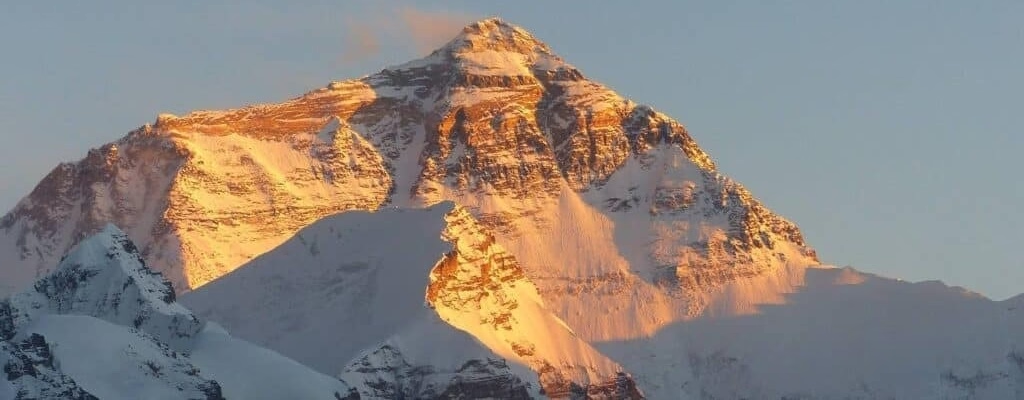
International Everest Day, celebrated annually on 29 May, commemorates the historic first successful ascent of Mount Everest by Sir Edmund Hillary and Tenzing Norgay in 1953. Established by Nepal in 2008, the observance honours mountaineering achievements, Sherpa contributions, and the cultural and spiritual significance of Sagarmatha, also known as Chomolungma. As the world’s highest mountain at 8,848.86 metres, Everest represents Nepal’s Himalayan heritage, mountaineering history, and tourism industry.
International Everest Day also highlights the challenges of climbing Mount Everest, including extreme altitude, unpredictable weather, expedition costs, and environmental degradation. From its history and annual celebrations to climbing regulations, conservation efforts, and record-breaking summits, the day offers a broader understanding of Everest and the communities connected to it. Whether you are interested in mountaineering facts or exploring the Himalayas through the Everest Base Camp trek, Kala Patthar, or Gokyo Lakes, understanding this observance reveals why Everest remains a global symbol of adventure, resilience, and responsible mountain tourism.
When Is International Everest Day Celebrated?
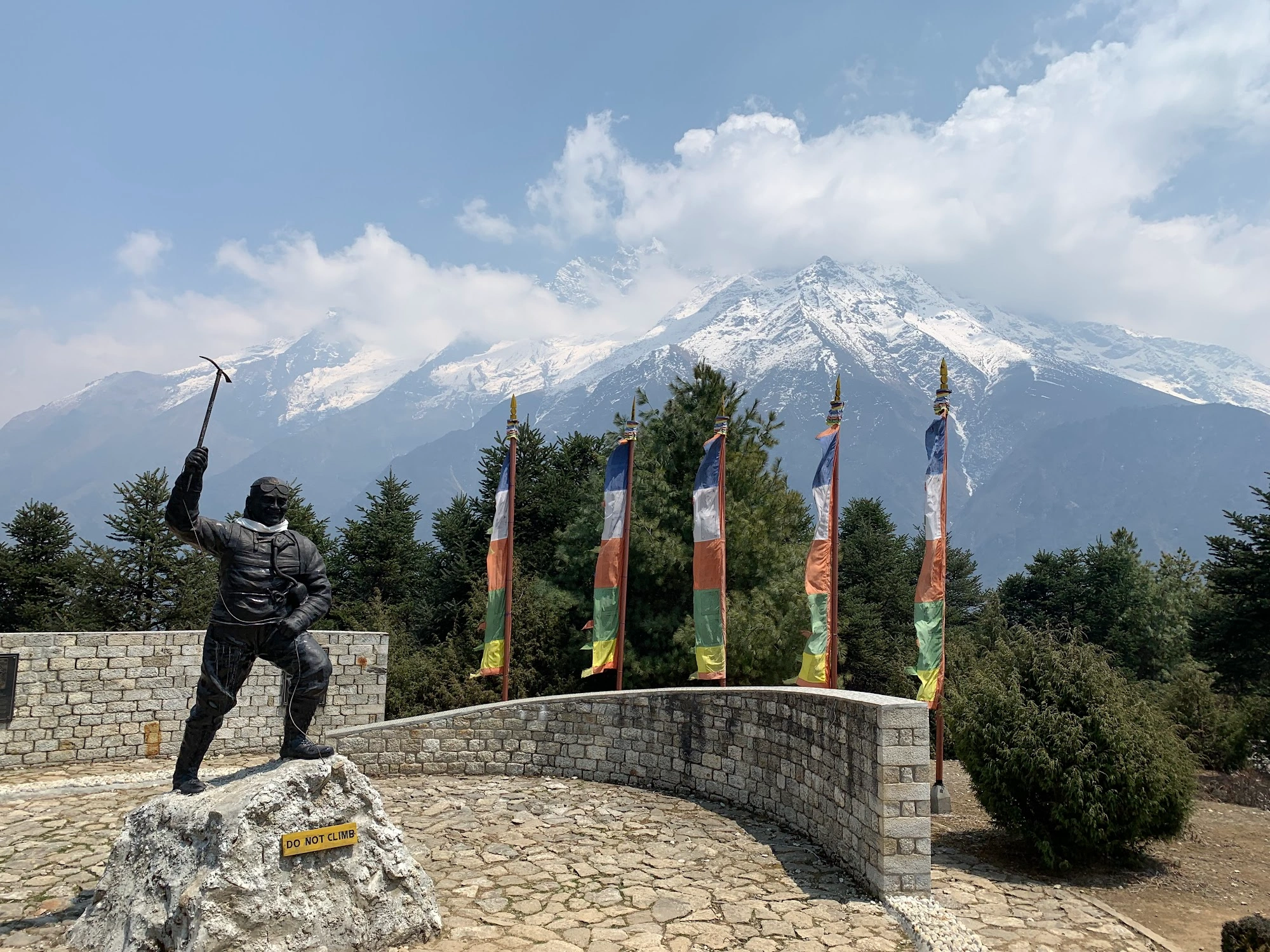
International Everest Day falls on 29 May every year. In 2026 it landed on Friday, 29 May, the 73rd anniversary of the 1953 summit. In 2027 it falls on a Saturday. Nepal also calls the day International Sagarmatha Day, using the mountain's Nepali name.
The date has a second layer in Nepal. Jestha 15 in the Nepali calendar is Republic Day, and in 2026 the two observances coincided on 29 May. Republic Day is a public holiday, Kathmandu hosts the main Everest ceremony, and Nepali embassies abroad hold their own events.
The timing also matches the climbing calendar. The pre-monsoon summit window on Everest closes in the last days of May, so the celebration arrives just as the season's expeditions wrap up. In 2026 the Everest Base Camp field office of Nepal's government recorded 879 summits by 24 May, with about 75 more expected. By the time the speeches begin, the season is nearly over.
Why Is May 29 Observed as International Everest Day?
Nepal observes 29 May because Hillary and Tenzing reached the summit on that date in 1953. Most accounts place the moment in late morning, around 11:30 a.m. The day honours both men and every climber who followed.
The choice of date is simple. The reason Nepal chose to formalise it in 2008 is less obvious. Sir Edmund Hillary died on 11 January 2008, and Nepal's government responded by turning the anniversary into a fixed national and international observance. Tenzing Norgay had died on 9 May 1986.
The word "international" is aspirational. The United Nations does not list the day, and it is separate from International Mountain Day on 11 December. Nepali embassies and diaspora communities carry the observance abroad. In 2026 that included events in Abu Dhabi, Colombo and Richmond, California.
What Is the History Behind International Everest Day?
International Everest Day began in 2008, when Nepal's government decided to commemorate the 1953 first ascent every 29 May. The Nepal Mountaineering Association and the Nepal Tourism Board helped build the programme, which now combines remembrance, awards and tourism promotion.
Who First Celebrated International Everest Day?
Nepal's Ministry of Culture, Tourism and Civil Aviation and the Nepal Tourism Board hosted the first observances on 29 May 2008. They marked the 55th anniversary of the ascent with programmes in Kathmandu and in Solukhumbu, the district that contains Everest.
The Nepal Mountaineering Association, led then by Ang Tshering Sherpa, organised a morning rally in Kathmandu. Tashi Tenzing, grandson of Tenzing Norgay, used the occasion to argue that the government owed Sherpa climbers more recognition for their role in making Nepal known to the world.
That argument has not gone away. In 2026 Nepali media still carried calls for the government to fund guide training and protect high-altitude workers, so that the day is more than a ceremony. New Zealand, Hillary's home country, has not adopted the date as an official national day, which remains a sore point for Nepali organisers.
What Is the History of the First Successful Mount Everest Ascent?
The first successful ascent of Mount Everest took place on 29 May 1953, during the ninth British expedition to the mountain, led by John Hunt. Hillary and Tenzing stood on the summit after a century of survey work and three decades of earlier attempts.
The mountain entered Western records in 1852, when the Great Trigonometrical Survey of India identified Peak XV as the world's highest. Radhanath Sikdar, a Bengali mathematician on the survey, is usually credited with the calculation. The surveyors named it Everest in 1865 after Sir George Everest, a former Surveyor General of India.
British expeditions in 1921, 1922 and 1924 mapped the northern approach from Tibet. In June 1924 George Mallory and Andrew Irvine vanished high on the north ridge. Mallory's body was found in 1999 at about 8,155 metres, and whether the pair reached the top remains unproven. In 1952 a Swiss team, with Tenzing as a member, climbed from Nepal to roughly 8,595 metres before turning back. That route became the foundation for Hunt's plan.
Who Were Sir Edmund Hillary and Tenzing Norgay?
Sir Edmund Hillary was a New Zealand beekeeper and mountaineer born in 1919, and Tenzing Norgay was a Sherpa climber from the Everest region born around 1914. Hillary was 33 on summit day. Tenzing was about 39 and was attempting Everest for the seventh time.
Tenzing began as a high-altitude porter in 1935 and built a reputation for stamina and judgement. His birthplace is still debated, with accounts pointing to either Tibet or the Khumbu valley. After 1953 he directed field training at the Himalayan Mountaineering Institute in Darjeeling.
Hillary turned his fame into aid work. His Himalayan Trust, founded in 1960, built schools, clinics and bridges across Khumbu, including more than 25 schools. Many Sherpa families still name Hillary and Tenzing in the same sentence, which is the reading the day tries to preserve: two partners, not one hero.
How Did Edmund Hillary and Tenzing Norgay Conquer Mount Everest?
Hillary and Tenzing reached the summit through the Khumbu Icefall, the Western Cwm, the Lhotse Face and the South Col, then climbed the southeast ridge on 29 May 1953. The expedition used open-circuit bottled oxygen and a chain of high camps stocked by Sherpa porters.
Hunt ran the climb as a logistics operation with roughly 400 people. On 26 May, Charles Evans and Tom Bourdillon reached the South Summit at about 8,749 metres but turned back when their oxygen equipment failed. Hunt then chose Hillary and Tenzing for the second attempt. On 28 May they pitched a tent at about 8,500 metres, supported by George Lowe, Alfred Gregory and Ang Nyima.
Summit day started badly. Hillary's boots had frozen overnight, and he spent two hours thawing them over the stove. The pair left at 6:30 a.m., reached the South Summit at about 9 a.m. and then faced a 12-metre rock step, later named the Hillary Step. Hillary wedged his way up a crack between the rock and the ice. Tenzing followed, and the final stretch along the ridge brought them to the top at about 11:30 a.m.
They stayed about 15 minutes. Tenzing buried sweets and biscuits in the snow as an offering. Hillary left a small cross. Neither man summited alone, and neither man ever claimed that the other was second.
What Challenges Did the First Everest Expedition Face?
The 1953 expedition faced extreme cold, thin air, an unstable icefall, unreliable oxygen sets and no weather forecasts. Each problem threatened the whole plan, and the team solved most of them through months of preparation and Sherpa labour.
The Khumbu Icefall cost the team days of route-finding. Oxygen equipment failed on the first summit attempt, which is why Evans and Bourdillon turned around 100 metres of vertical gain from the top. Clothing was wool, down and cotton gabardine, far heavier and colder than today's layers.
What most retellings skip is the information gap. Hunt worked without satellite forecasts. The team read the sky and the wind, and everyone knew the monsoon, due in early June, would end the season.
How Did the First Successful Everest Summit Change Mountaineering?
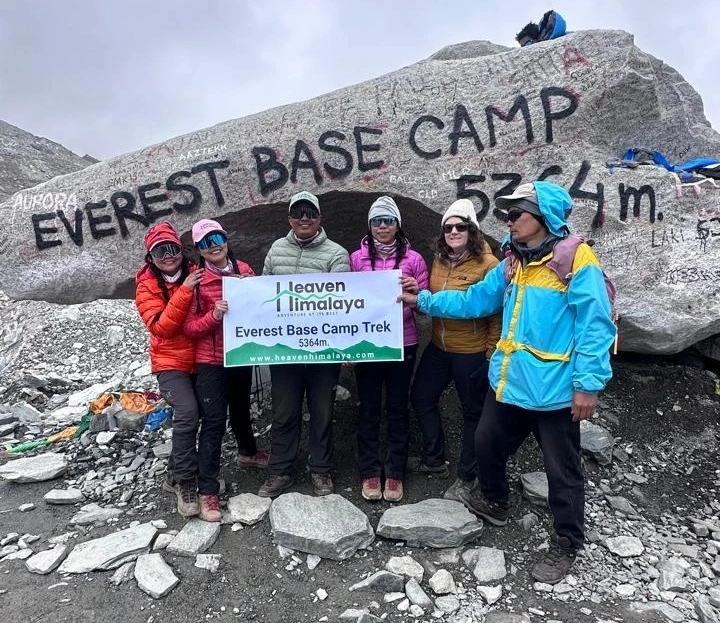
The 1953 summit accelerated the race for the 8,000-metre peaks, opened Everest to national expeditions and created the modern Sherpa guiding profession. All 14 peaks above 8,000 metres had been climbed by 1964.
The records that followed changed what climbers thought possible. Junko Tabei of Japan became the first woman on top in 1975. Reinhold Messner and Peter Habeler climbed without bottled oxygen in 1978, and Messner went alone in 1980. Commercial guiding grew through the 1990s, and the 1996 disaster showed the cost of crowded summit days.
The 2026 spring season shows where that path has led. Nepal issued a record 492 permits by 8 May and 494 by the end of the season. A record 274 climbers summited on 20 May alone, though the historic single-day mark remains the 354 summits recorded during the 2019 season. Kami Rita Sherpa reached the top for the 32nd time on 17 May at 10:12 a.m., while climbers like Phunjo Lama and others continue to push boundaries and redefine women's mountaineering records on the peak. Kami Rita Sherpa's 32nd summit is the clearest example of how Sherpa expertise now defines modern mountaineering records.
Why Is Mount Everest Important to Nepal and the World?
Mount Everest is the highest point on Earth at 8,848.86 metres, a sacred mountain for Sherpa Buddhists, and the centre of Nepal's mountain tourism economy. It anchors a UNESCO World Heritage Site, a global climbing culture and an international research field on climate and altitude.
Where Is Mount Everest Located?
Mount Everest sits in the Mahalangur Himal on the border between Nepal and the Tibet Autonomous Region of China, at about 27.99° N and 86.93° E. On the Nepali side it belongs to Solukhumbu District in Koshi Province.
Nepal and China jointly announced the current height, 8,848.86 metres, in December 2020. The figure replaced the older Indian survey value of 8,848 metres and the Chinese value of 8,844.43 metres. Neighbouring giants include Lhotse at 8,516 metres, Makalu at 8,485 metres and Cho Oyu at 8,188 metres.
The southern slopes lie inside Sagarmatha National Park, which covers 1,148 square kilometres and gained UNESCO World Heritage status in 1979. Two classic climbing routes exist: the southeast ridge from Nepal, used in 1953 and by most 2026 climbers, and the northeast ridge from Tibet.
Why Is Mount Everest Known as Sagarmatha and Chomolungma?
Sagarmatha is the Nepali name, usually translated "Forehead of the Sky," and Chomolungma is the Tibetan name, usually translated "Goddess Mother of the World." The English name Everest dates only to 1865.
Local communities used their own names for centuries before the survey. Nepal adopted Sagarmatha as the official name in the 1960s, built from Sanskrit roots, because the mountain had no single Nepali name in common use. Tibetans have called it Chomolungma, spelled Qomolangma in Chinese transliteration, far longer.
The naming question is not settled. Some Nepali writers argue that the day deserves the name Sagarmatha Day alone, since the English name honours a surveyor who never saw the peak. This article uses both names for that reason.
What Is the Cultural and Spiritual Significance of Mount Everest?
For Sherpa Buddhists, Everest is a sacred mountain protected by deities, and for many Nepali Hindus the Himalaya is the home of Shiva. These beliefs shape how expeditions begin, how climbers behave and how local communities treat the summit.
Before climbing, Sherpa crew and clients attend a puja at Base Camp, led by a lama. Sherpa crews traditionally wait for the ceremony before stepping onto the icefall. Prayer flags, mani walls and chortens line the trail through Khumbu, and Tengboche Monastery hosts the Mani Rimdu festival each autumn.
What many visitors overlook is that the puja has real schedule effects. In 2026 an unstable serac above the Khumbu Icefall delayed route-fixing for weeks. Sherpa crews work to two clocks at once: the ice and the ritual.
How Does Mount Everest Contribute to Nepal's Tourism Industry?
Mount Everest generates climbing royalties, trekking income, flight revenue and thousands of jobs in Khumbu and Kathmandu. By mid-May 2026 Nepal's government had earned Rs 1.07 billion from Everest permits alone, out of Rs 1.24 billion in total mountaineering royalties.
The royalty for a foreign climber on the standard route rose from $11,000 to $15,000 effective 1 January 2025. That increase, a 36 percent jump, did not reduce demand. Climbers from 55 countries received permits, and Chinese climbers formed the largest group with 109 permits.
The bigger economic footprint comes from trekkers, who far outnumber climbers. They pay for lodges, guides, porters, flights to Lukla and meals in every village from Lukla to Gorak Shep. A climbing permit is a headline number. The trekking economy is the sustained one.
How Is International Everest Day Celebrated in Nepal?
Nepal celebrates International Everest Day with a Kathmandu rally, an award ceremony, local programmes in Solukhumbu and conservation messages. The 2026 slogan was "World's Highest Peak Sagarmatha: Nepal's Identity and Pride."
What Events and Activities Take Place on International Everest Day?
The main events are a morning rally in Kathmandu, a formal ceremony with ministers and mountaineering associations, awards for climbers and awareness programmes on safety and the environment. Embassies abroad add tourism promotion events.
Climbers and Sherpa guides march with banners and portraits of Everest legends. Recent rallies have started in Thamel and ended at the Nepal Tourism Board hall. The Trekking Agencies' Association of Nepal and the Thamel Tourism Development Council join the march.
Abroad, the format shifts toward diplomacy. On 29 May 2026 the Nepal Embassy in Abu Dhabi held a ceremony that opened with a video message from Foreign Minister Shisir Khanal. In Colombo, Sri Lanka's Deputy Minister of Defence spoke about a "Peak to Beach" tourism link between the two countries. The Consulate General in San Francisco hosted officials, academics and entrepreneurs in Richmond.
How Do Sherpa Communities Celebrate International Everest Day?
Sherpa communities in Solukhumbu mark the day with local programmes, prayers and recognition of family members who work or died on the mountain. The Khumbu events are smaller than Kathmandu's but closer to the people the day honours.
The Sherpa connection is personal. Khumbu families supply a large share of Everest's high-altitude workers, and many households have lost a relative. The 18 April 2014 avalanche in the Khumbu Icefall killed 16 Nepali mountain workers, and the 2015 earthquake avalanche at Base Camp killed 19 people. Those dates sit in village memory.
A common pattern appears every year. Sherpa speakers use the occasion to raise insurance, pay and safety. In 2026 tourism workers publicly called for the government to treat the day as more than a formality. The most useful way to honour Sherpa climbers is to hire fairly and pay on time.
How Does Nepal Honor Everest Climbers and Mountaineering Legends?
Nepal honours climbers with the Sagarmatha National Award, the Tenzing Hillary Award, special badges for Everest summiteers and public recognition of record holders. The government also presents the awards in front of the mountaineering community.
The Sagarmatha special badge has gone to more than 100 Everest climbers at a single ceremony. Records get formal attention too. Kami Rita Sherpa, born in Thame in 1970, first summited in 1994, and his 32 ascents now stand as a world record. Hari Budha Magar, a former British Gurkha, became the first double above-knee amputee to summit in 2023.
The honours reflect a shift in emphasis. Early celebrations focused on Hillary and Tenzing. Today the programme names guides, women climbers and climbers with disabilities, which gives the day a broader and more accurate reading of who climbs Everest.
How Does International Everest Day Promote Nepal's Himalayan Tourism?
International Everest Day promotes Himalayan tourism by giving Nepal a yearly global news hook, a diplomatic stage and a link between the summit story and trekking trips. Embassies, airlines and agencies use it to reach travellers.
Nepal also pairs the day with policy. Nepal has also sought to pair the day with policy, envisioning platforms like the Sagarmatha Sambaad to launch national climate conversations tied to the mountain's conservation.
In real-world use, travellers react to Everest Day coverage by booking the following spring or autumn. One trekker who walked with us in May 2026 timed her arrival at Base Camp for 29 May. Dates like that turn a distant mountain into a personal deadline.
What Are the Major Challenges of Climbing Mount Everest?
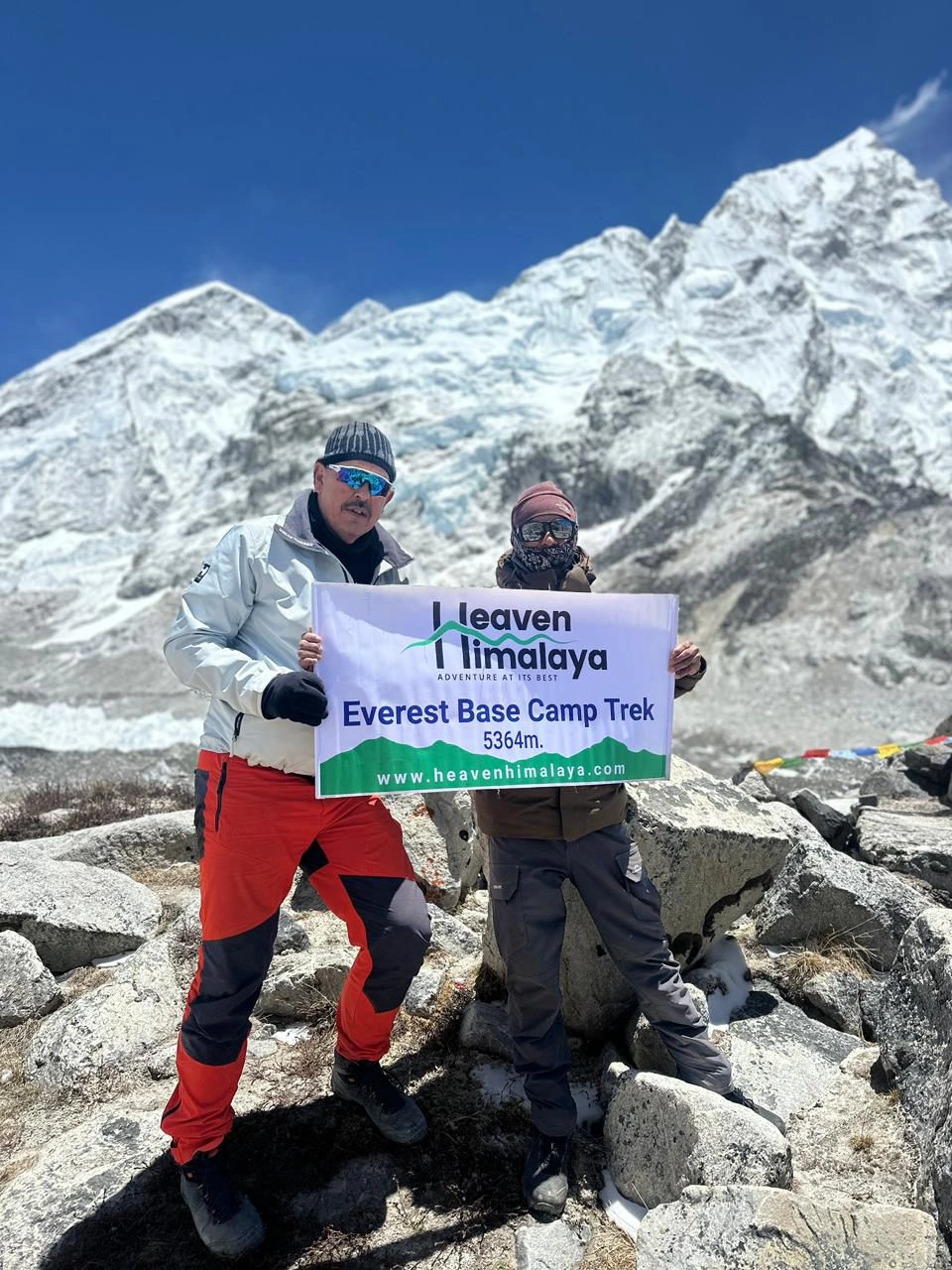
The major challenges of climbing Mount Everest are extreme altitude, bitter cold, physical and mental exhaustion, objective hazards, strict permit rules and high cost. A full expedition lasts about two months, and summit day is only a small part of the risk.
What Are the Physical and Mental Challenges of Everest Climbing?
Everest demands months of cardiovascular and strength training, plus the mental ability to endure cold, hunger, noise and delay. Climbers spend about 40 to 60 days at altitude, and most lose weight and muscle even with perfect nutrition.
Physical preparation covers long loaded hikes, stair work and prior high-altitude trips. Mental preparation covers monotony. Climbers wait days for weather, share small tents and rotate between camps before the summit push.
A common mistake we see is treating Everest as a fitness test alone. Strong athletes fail on judgement: they ignore early symptoms, hide fatigue from guides or push past a turnaround time. The climbers who succeed follow instructions from their Sherpa guides without argument.
How Do Altitude Sickness and the Death Zone Affect Climbers?
Altitude sickness is the body's reaction to low oxygen, and the Death Zone is the area above 8,000 metres where the body cannot acclimatise and slowly deteriorates. On the summit, air pressure drops to roughly one third of sea level.
Altitude illness comes in three forms: acute mountain sickness (headache, nausea, dizziness), high-altitude pulmonary oedema (fluid in the lungs) and high-altitude cerebral oedema (swelling of the brain). The last two are emergencies. The only reliable treatment is descent, with oxygen and medication as support.
More than 300 people have died on Everest since records began, according to the Sagarmatha Pollution Control Committee, and about 200 bodies remain on the mountain, many in the Death Zone. Trekkers at far lower elevations face a milder version of the same risk, our guide to altitude sickness covers symptoms and prevention on the Base Camp trail. Most climbers breathe bottled oxygen from Camp III upward. The Wilderness Medical Society advises sleeping no more than 300 to 500 metres higher each night above 3,000 metres, with a rest day every 3 to 4 days. Trekkers on the Base Camp route follow the same rule.
What Are the Weather and Environmental Risks on Mount Everest?
The main weather and environmental risks are jet-stream winds, summit temperatures from minus 20 to minus 40 degrees Celsius, avalanches, icefall collapse and shrinking glaciers. The pre-monsoon window in May is short and crowded.
Winter winds above 160 kilometres per hour make the summit unreachable, so climbers wait for the jet stream to move north in May. The Khumbu Icefall remains the most dangerous section. In 2026 a massive serac above the route delayed fixing for weeks, then a clear window opened on 17 May and sent hundreds of climbers upward at once.
Climate change adds a slower hazard. According to the International Centre for Integrated Mountain Development, Himalayan glaciers lost ice 65 percent faster between 2011 and 2020 than in the previous decade. A study in Nature Portfolio's Climate and Atmospheric Science found that the South Col Glacier thinned by up to 55 metres in 25 years.
What Permits and Regulations Are Required to Climb Mount Everest?
Climbers need a mountaineering royalty permit from Nepal's Department of Tourism, a licensed guide, insurance, a medical certificate and a waste-clearance process through the Sagarmatha Pollution Control Committee. The spring royalty is $15,000 per foreign climber, trekkers heading only to Base Camp face a lighter process, covered in our guide to Everest Base Camp trek permits.
Autumn royalties drop to $7,500 and winter and summer royalties to $3,750. Nepal requires one licensed guide or high-altitude worker for every two climbers on 8,000-metre peaks. The Sagarmatha Pollution Control Committee charges a $600 Khumbu Icefall fee and holds a refundable $4,000 garbage deposit.
The proposed 7,000-metre prior-summit requirement requires careful verification. Nepal's tourism bill would require a prior summit of a 7,000-metre peak in Nepal, and many operators already screen for that experience. Sources disagree on whether it was fully enforced in 2026, so confirm the current requirement with the Department of Tourism and your operator. China halted commercial expeditions on the north side in spring 2026, which pushed demand onto the Nepal route.
How Much Does an Everest Expedition Cost?
An Everest expedition from Nepal costs about $33,000 to $230,000 per climber in 2026, with a median near $55,000 and total spending $15,000 to $25,000 above the operator price. The royalty alone is $15,000.
Three price tiers appear in the market. Budget Nepali operators charge roughly $33,000 to $45,000 for basic Sherpa support and oxygen. Standard Western-guided programmes run about $65,000 to $95,000. Premium private expeditions exceed $100,000.
The operator price rarely covers everything. Personal gear, insurance, international flights, tips for Sherpa staff, extra oxygen and training trips add $15,000 to $25,000, according to Global Summit Guide's 2026 analysis. A cheap quote often means thinner oxygen supply, fewer guides or weaker rescue planning. Ask what happens if the summit window closes, and ask who holds the rescue contract.
How Can Climbers Protect Mount Everest's Environment?
Climbers protect Everest by carrying out their waste, following Nepal's segregation rules, choosing responsible operators and limiting their footprint at every camp. The 2026 rules are the strictest the mountain has seen.
What Environmental Problems Threaten Mount Everest?
Mount Everest faces waste accumulation, human waste, abandoned equipment, glacier melt, crowding and water contamination. Decades of expeditions left oxygen cylinders, tents, ropes and bodies above the snowline.
Cold prevents decomposition, so rubbish stays intact for years. Some waste at the higher camps has begun to reach meltwater sources lower in the valley. Crowding intensifies the problem: record permit numbers in 2026 meant more people at Base Camp and the higher camps in a short window.
Glacier retreat compounds the issue. As ice thins, old waste and bodies surface. The Sagarmatha Pollution Control Committee says that most climbers' bodies stay on the mountain because recovery is costly and dangerous. The problem is physical, financial and ethical at once.
How Does Mountaineering Waste Affect the Everest Region?
Mountaineering waste pollutes snow, ice and streams, harms Khumbu communities that depend on clean water and damages the mountain's image. Human waste is the hardest part, because it freezes and then thaws into the glacier system.
Building on the 2014 rule requiring each climber to bring back at least 8 kilograms of garbage, the Sagarmatha Pollution Control Committee also strictly enforced the mandatory return of human waste. Climbers and high-altitude workers going above Camp II must carry down at least 2 kilograms. Mountain rangers stationed at Camp II verify the waste before descent.
Waste must be sorted into seven categories, including plastics, metals, glass, organic matter and hazardous material. Climbers must use committee-issued disposal bags for human waste above Base Camp, and Base Camp requires collection barrels. Teams that fail these checks do not receive a Garbage Clearance Letter. Nepal has also proposed turning the refundable $4,000 deposit into a non-refundable environmental fee.
What Sustainable Tourism Practices Help Preserve Mount Everest?
Sustainable practices include refilling bottles instead of buying plastic, carrying waste out, supporting local lodges, using fair porter conditions and travelling in small groups. They apply to trekkers as much as climbers.
On the Base Camp trail, bottled water creates the largest trash stream. A steripen, filter, or purification tablets remove most of it. Trekkers also reduce impact by choosing lodges that burn less wood, packing out batteries and respecting trail etiquette on narrow bridges.
Porter welfare belongs on this list. Weight limits, proper clothing, insurance and shelter at altitude protect people, which is the human side of sustainability. Operators that publish their porter policies are easier to trust.
How Can Climbers Support Responsible Everest Expeditions?
Climbers support responsible expeditions by choosing licensed operators, paying fair Sherpa wages, following turnaround times, carrying out waste and respecting local customs. Their choices set the standard for the whole season.
Ask operators for specifics: guide-to-client ratio, oxygen flow rates, insurance for Nepali staff and waste plan. Check that the company is licensed and registered with Nepal's authorities. Avoid operators that cut prices by cutting safety.
Respect extends to the summit rules of behaviour. Climbers stay on fixed lines, avoid blocking the route at the top and obey the lama's blessing and local taboos. Responsible climbing in 2026 means accepting that Everest is a workplace for thousands of Nepalis.
How Can You Explore Mount Everest Without Climbing to the Summit?
You can explore Mount Everest by trekking to Everest Base Camp, Kala Patthar, Gokyo Lakes or the Three Passes, or by taking a scenic flight or helicopter tour. Most visitors see Everest this way, because the trek needs no technical skill.
What Are the Best Everest Trekking Routes in Nepal?
The best Everest trekking routes are the Everest Base Camp trek, the Gokyo Lakes trek, the Three Passes trek, the Everest View trek and the Cho La Pass crossing. Each suits a different fitness level and time frame.
The Base Camp trek takes 12 to 14 days and reaches 5,364 metres. The Gokyo Lakes route climbs Gokyo Ri at 5,357 metres and looks across the Ngozumpa Glacier to Everest, Lhotse and Makalu. The Three Passes trek links Kongma La, Cho La and Renjo La, all above 5,300 metres, and takes about 18 to 20 days.
The Everest View trek reaches Namche Bazaar, Khumjung and Tengboche in 5 to 7 days and suits families and limited schedules. Trekkers weighing the Cho La crossing can read our guide on How to Choose the Best Trekking Company for the Everest Cho La Pass Trek.
What Makes the Everest Base Camp Trek a Popular Himalayan Adventure?
The Everest Base Camp trek is popular because it combines the world's highest mountain, Sherpa villages, teahouse lodging and a manageable difficulty level for fit non-climbers. It needs no technical skills and no previous mountaineering experience.
The route starts with a flight to Lukla at 2,860 metres. In peak seasons many flights depart from Manthali Airport in Ramechhap instead of Kathmandu, which adds an early-morning transfer. The standard route passes Namche Bazaar at 3,440 metres, Tengboche at 3,867 metres, Dingboche at 4,410 metres and Gorak Shep at 5,164 metres.
Two permits are required: the Sagarmatha National Park entry permit and the Khumbu Pasang Lhamu Rural Municipality permit. Together they cost roughly NPR 5,000 to 6,000, about $40 to $50. The old TIMS card is no longer required in this region.
When Is the Best Time to Visit the Everest Region?
The best times to visit the Everest region are March to May and late September to November. Spring brings rhododendron blooms and active climbing expeditions. Autumn brings the clearest skies after the monsoon. Winter is cold and quiet, and the monsoon brings cloud and flight delays.
What most people overlook is the Base Camp calendar. Expedition tents stand at Base Camp from roughly late March to late May. A trekker who wants to see climbers must arrive in April or early May. Visiting on 29 May means the camp is already emptying. In autumn the site is mostly bare rock and ice.
Winter treks are possible, with night temperatures at Gorak Shep far below freezing, and some lodges closed. Our guide to the Everest Base Camp Trek in December 2026 covers that season in detail, and the page on the Best Time to Trek in Nepal compares all four seasons.
What Can You Experience During an Everest Base Camp Trek?
An Everest Base Camp trek lets you cross suspension bridges, visit Sherpa monasteries, stay in teahouses, reach Base Camp at 5,364 metres and watch sunrise on Everest from Kala Patthar at 5,545 metres. The trek takes about 12 to 14 days.
Base Camp surprises many trekkers. You cannot see the summit of Everest from there, because Nuptse blocks the view. The classic Everest photograph comes from Kala Patthar, usually at sunrise from Gorak Shep. Plan the climb for a clear morning and keep spare days for weather.
Other highlights include the Sagarmatha National Park museum in Namche, the monastery at Tengboche, the Khumbu Glacier and the memorials at Thukla Pass for climbers who died on the mountain. Pack with care using the Trekking Packing List, because layers matter more than gadgets at 5,000 metres.
How Can Heaven Himalaya Help You Experience the Everest Region?
Heaven Himalaya is a Kathmandu-based trekking company that arranges guided Everest region treks for international trekkers, from permits and lodging to guides and porters. We run Everest Base Camp, luxury and customised itineraries from our Kathmandu office.
Plan your Everest region trip
We are a direct local operator with an office at Gitanjali Chowk, Dathu Sadak, Kathmandu, a 5.0 rating from 160 Tripadvisor reviews, affiliations with the Nepal Mountaineering Association and the Trekking Agencies' Association of Nepal, and 24/7 customer care.
Can Heaven Himalaya Help You Explore Mount Everest Through Guided Treks?
Yes. Heaven Himalaya guides treks to Everest Base Camp and Kala Patthar, and our itineraries cover guides, porters, permits and lodging. The package page lists exact inclusions, and we can arrange helicopter options for trekkers short on time.
Our Everest Base Camp Trekking itinerary runs 14 days and is priced between $1,399 and $1,499 per person at the time of writing. For a higher level of comfort, the Everest Base Camp Luxury Trek runs 16 days at $2,399. Trekkers who want to try a technical climb can look at our Ama Dablam Expedition and Peak Climbing options, and those short on days can ask about Helicopter Tours.
Our advice is simple. Book the flight buffer days. Travel with a guide and a porter. Treat the first symptoms of altitude illness as information, not inconvenience. Those three habits decide more trips than fitness does.
What Are the Key Takeaways About International Everest Day and Mount Everest?
International Everest Day, observed on 29 May, honours the 1953 first ascent by Hillary and Tenzing, celebrates Sherpa and Nepali climbers and promotes safe, responsible Himalayan tourism. Mount Everest stands at 8,848.86 metres and shapes Nepal's identity and economy.
The main points from this guide:
Date and origin: 29 May, formalised by Nepal in 2008 after Hillary's death, with the 73rd anniversary in 2026.
Names: Sagarmatha in Nepal, Chomolungma in Tibet, Everest since 1865.
First ascent: Hillary and Tenzing summited on 29 May 1953 with the Hunt expedition.
2026 season: a record 492 to 494 permits, 274 summits in a single day on 20 May, and 32 summits for Kami Rita Sherpa.
Rules and costs: $15,000 royalty, 1 guide per 2 climbers, an 8-kilogram waste return and total expedition costs of $33,000 to $230,000.
Risks: altitude illness, the Death Zone, weather, avalanche, icefall collapse and glacier loss.
Environment: a 2-kilogram waste return above Camp II, mandatory segregation and a $4,000 deposit.
Without climbing: trek to Everest Base Camp, Kala Patthar, Gokyo or the Three Passes, best in March to May or late September to November.
International Everest Day works best as a prompt for action. Learn the history, respect the Sherpa communities, carry out your waste and choose a trip that treats Everest as a living mountain. The Everest Base Camp Trekking route is the most accessible way to stand in its shadow and understand why 29 May still matters.