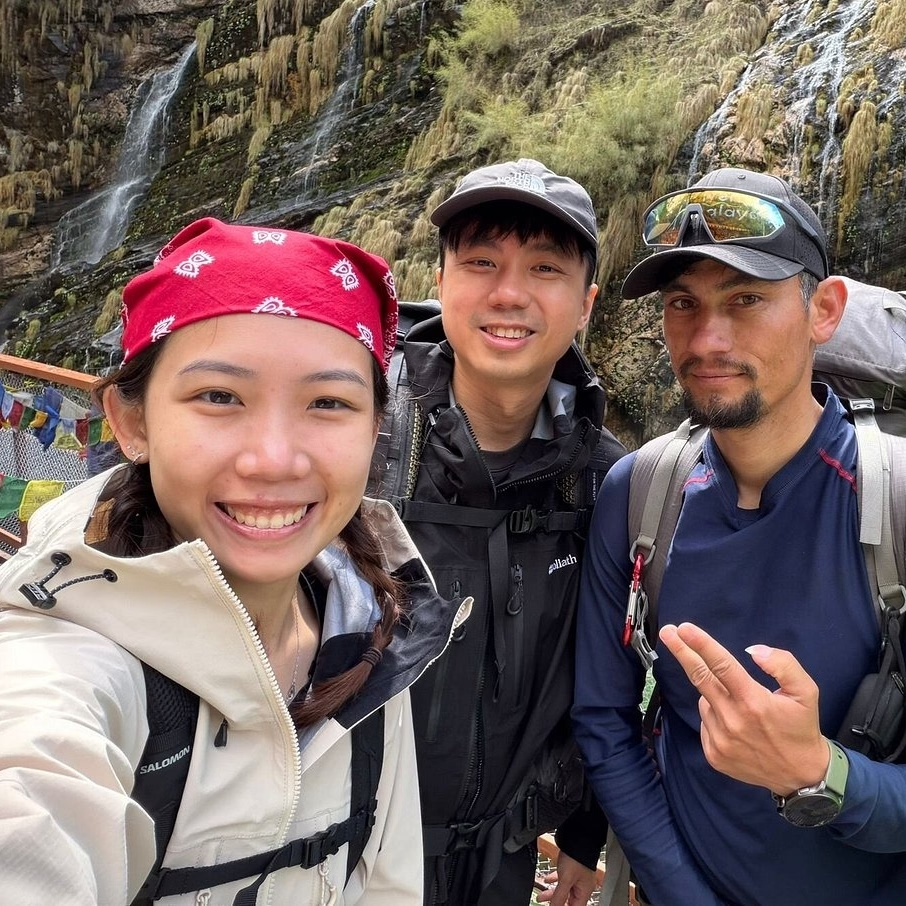
Step into the Annapurna trails and experience every part of the journey, from steep climbs and quiet forests to rushing waterfalls and snowy mountain paths. Walk through traditional villages, meet local people, and enjoy the changing scenery as you climb higher toward the unforgettable views of Annapurna Base Camp.
DestinationNepal
Duration15 days
Trip DifficultyModerate
ActivitiesTrek
Max. Elevation4130m.
Group Size1-15
VehicleCar, Deluxe AC Bus
AccommodationHotel & Guesthouse
MealsB.L.D
Annapurna Base Camp Trek: A Journey to the Himalayas
The Annapurna Base Camp Trek (ABC) Package is a hiking trip that takes you close to the Annapurna massif in Nepal and showcases the magnificent, colossal, and majestic side of the mountains.
With this two-week tour package, you walk to the base camp of the world’s 10th-highest mountain, Mt. Annapurna. Very few tourist areas can outmatch the glory and beauty of this Nepali gem.
Trekking to the base camp of Annapurna I (the 10th highest mountain in the world) will be adventurous and exciting. Also, it is suitable for every trekker, as the Annapurna base camp trekking package is of moderate to mild difficulty.
Also called the ABC Trek, it is full of fantastic walks through diverse landscapes and gorges. Likewise, the fauna of a wide variety is interspersed with terraced paddy fields along with the indigenous people’s villages belonging to Gurung families.
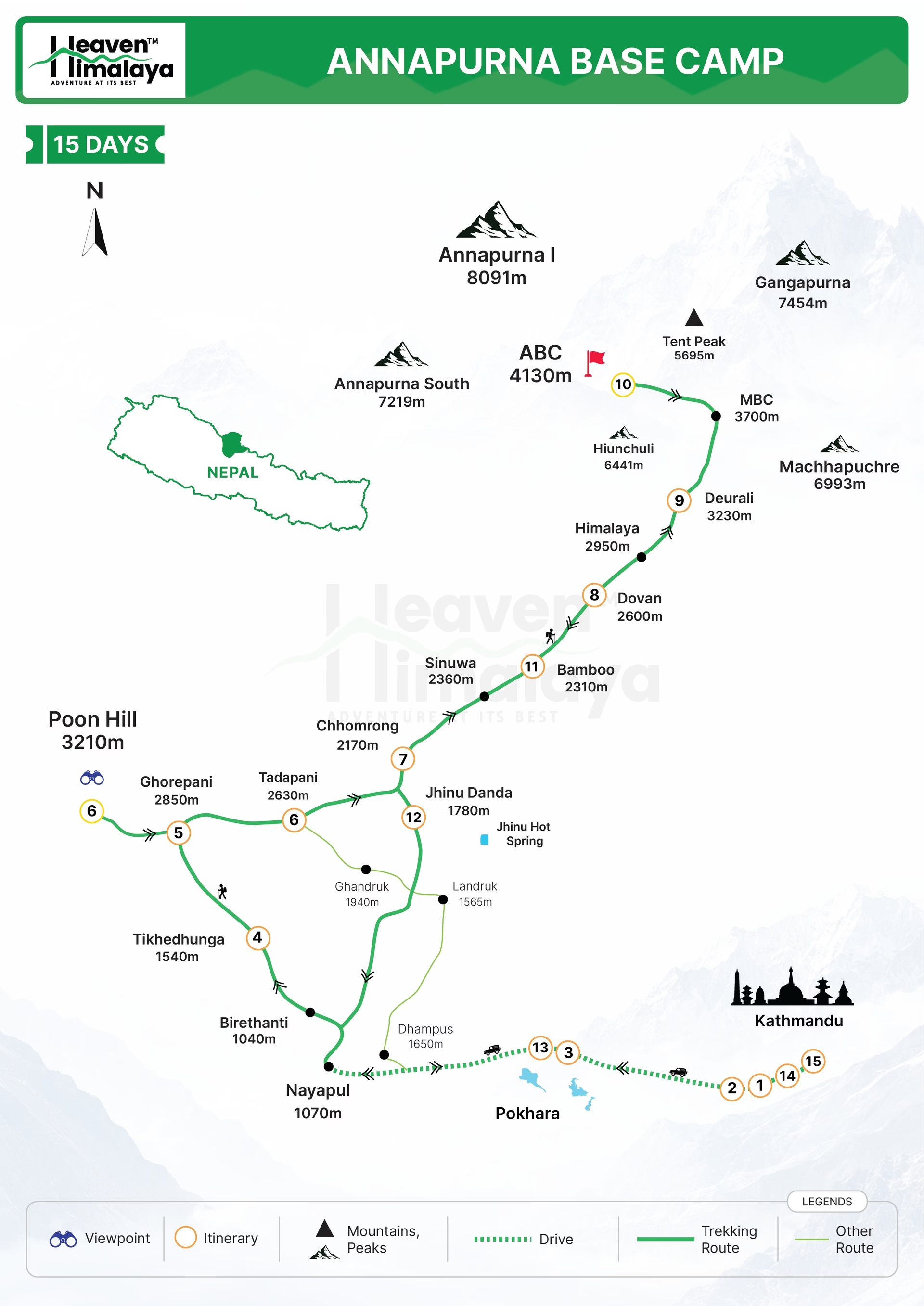
The Annapurna base camp trek route begins with a road trip from Kathmandu to Pokhara, where the journey continues with a drive to Nayapul, the trailhead of the trek. From here, you’ll head out to Tikhedhunga. Along the route, you’ll encounter gorgeous bamboo forests, cascading waterfalls, and serene water streams.
The next destination is Ghorepani, reached by climbing steep stone steps in Ulleri village, crossing suspension bridges, and traversing dense forests. Ghorepani village rewards you with spectacular panoramic views of snow-clad peaks. An early morning hike to Poon Hill provides an unobstructed sunrise view over the Annapurna massif.
After witnessing the marvelous sunrise view from Poon Hill, continue your trek to Tadapani. Descending from Tadapani leads you to Chhomrong village, which lies in the middle of rhododendrons and oak forests. This large Gurung settlement offers an immersive cultural experience.
Pass through the villages of Sinuwa and Bamboo to reach Dovan. Again trekking from forested areas, you’ll pass the Himalaya Hotel, Hinko Cave, and an old avalanche area before arriving at Deurali. As the trail steeps, you may feel the symptoms of altitude sickness.
Arrive at Machhapuchhre Base Camp (MBC) before reaching Annapurna Base Camp (ABC). The trail is comparatively easy but poses high-altitude challenges. At ABC, relish a 365-degree panoramic view of mountains, ice, and glaciers.
The following morning, witness the captivating sunrise over the massive Annapurna range. After soaking in the beauty of ABC, you’ll make a return trip to Pokhara via Bamboo, Sinuwa, Chhomrong, and Jhinu Danda.
At Jhinu Danda, rejuvenate with a refreshing hot shower bath in the natural hot springs. After that, you trek to Nayapul and drive back to Pokhara. Finally, you’ll take a long road journey to Kathmandu, your ultimate stop on your Nepal trip. Conclude this memorable adventure with a flight back to your home country.
Major Highlights
Stunning 360 degree views of Annapurna I, Machapuchhare and Hiunchuli
Trek through rice terraces, rhododendron forests and apline meadows
Gurung and Magar villages with rich culture and warm hospitality
Machapuchhare Base Camp stop before Annapurna Base Camp
Natural hot springs at Jhinu Danda
Flora and Fauna sightings: Himalayan monal (Nepal's national bird), langurs, diverse alpine flowers
Golden sunrise and sunset over the Annapurna Massif, especially breathtaking at the Annapurna Base Camp
Moderate difficulty, doable for fit beginners with preparation
Annapurna Base Camp Trek Package for 2026
The Annapurna Base Camp Trek Package is one of the best trekking trips, and the place sees thousands of travelers in a single season.
With Heaven Himalaya’s trekking tour package to Annapurna Base Camp for 2026, you introduce yourself to the uniquely balanced human and ecosystem. You can see the transcending natural beauty and the rich cultural diversity of the region.
The route is heaven for those who love walking and hiking in the wilderness. This trekking trip takes you inside thick forests filled with rhododendrons, fir, oak trees, green pastures, stone-paved trekking stairs, etc. All the while, you can interact with the locals and share your stories and experiences with them.
Besides, on your way to the base camp of Mt. Annapurna, you will come across the unique beauty of a close view of Mt. Machapuchhare (6995 meters), which will melt your heart.
It’s a tour package for two weeks. However, we can customize the Annapurna Base Camp Trek package from 7 days minimum to 15 days maximum to facilitate your trip and make it the best trekking experience you will ever have.
In summary, the Annapurna Base Camp hiking package is a popular choice among outdoor adventurers worldwide.
If you want to take a circuit around the Annapurna region, then we have the Annapurna Circuit Trek designed to meet your interests.
Airport transfers – pick up and drop in a private vehicle
All ground transportation during entire Annapurna Base Camp tour
Full day Guided Sightseeing in Kathmandu Valley (UNESCO Heritage Sites: Boudhanath, Swyambhunath, Patan and Pashupatinath)
A tour guide, entrance tickets and a private transport for Kathmandu Tour
Your accommodation in a 3-star category hotel in Kathmandu and Pokhara with breakfast plan
Your accommodation in best guesthouses available (on twin sharing basis) throughout the trekking journey
Full board meals (breakfast, lunch, and dinner) during trekking days in the mountains
Supplementary snacks: energy bars, crackers, cookies, etc.
Seasonal fresh fruits are dessert every evening after dinner.
All paper works
National park and heritage sites entry tickets
Trekkers Information Management System (TIMS) and trekking permits in Annapurna.
A licensed, English-speaking, experienced guide
An assistant guide with a group of 6+ members
Porters to carry your bags (1 for two clients)
All the costs of guide and porters including accidental insurance
Duffel bag, sleeping bags for the trek (to be returned to us after the trek)
Heaven Himalaya T-shirts, Annapurna trekking route map and a travel completion certificate
Farewell Dinner at a typical Nepalese restaurant with traditional music and dance
An oximeter to measure your oxygen and Pulse level during the trek in the mountain, it’s very useful for all the trekkers to be aware of the high altitude sickness.
Compressive first aid box (Guide will carry it throughout the trek).
Emergency rescue operation assistance is arranged in case of complex health conditions (funded by your Travel Insurance)
All applicable government taxes and service charges.
Exclusions
Nepal entry visa fees ($50 USD for 15 days tourist visa and it can be obtained at the Airport of Kathmandu on arrival!)
Travel insurance
Extra accommodation and meals behind schedule the schedules of this trekking trip program
All kinds of beverages including, alcoholic and nonalcoholic as well as hot and cold drinks
Additional costs by out of management control due to the landscape, weather conditions, illness, changes in government policies, strikes, physical conditions, etc.
Personal expenses such as shopping, hot and cold drinks, hot shower, hard and soft alcohols, snacks, hot and cold water, Wi-Fi, battery re-charge fee,
Travel insurance has to cover emergency rescue evacuation from high-altitude up to 6000 m.
Personal trekking equipment for this trek
Tipping and Gratitude to the guides and staff (Recommended by Nepali culture )
Any other expenses that are not mentioned in the Price Inclusive section of this trek
Dates & Availability
Note to Travelers
Kindly note that Start Dates are your date of arrival in Nepal, and End Dates are the dates of leaving Nepal.
We specially quoted and specified the below list of start dates for the group joining option. Let us know if the below start dates do not work for you- we will surely add your available days to fit your interest. Upcoming Trip Start Dates
Guaranteed - We guarantee trips to run
Available - Trip is available to run when the minimum group size is met.
Limited - Hurry, only a few seats are available
29Sep
Sep 29 – Oct 14, 2026
Available
$1,250
30Sep
Sep 30 – Oct 15, 2026
Available
$1,250
Departure & return
Status
Price
Actions
29Sep
Sep 29 – Oct 14, 2026
Available
$1,250
30Sep
Sep 30 – Oct 15, 2026
Available
$1,250
All prices per person, twin share. Subject to availability — Annapurna Base Camp Trek dates fill quickly in peak season.
15 days Annapurna Base Camp Trek Itinerary
Day 01 :Arrival in Nepal
Elevation: 1,400m
Duration: 25-30 mins
Accommodation: Hotel
Meals: Breakfast and Lunch Included
When you land at Kathmandu International Airport, someone from Heaven Himalaya will greet you and take you to your hotel. If the traffic is okay, it won’t take long. At the hotel, your guide will help you check-in.
After a quick freshen you can take a walk around nearby places with your guide to learn about the people, culture, and food of Nepal.
Day’s Highlight: Get to know Nepalese culture, connect with locals, and dive into the diverse world of language, food, and lifestyle. Kathmandu offers a unique glimpse into the background of Nepalese people.
Overnight stay in Kathmandu.
Day 02 :Kathmandu Valley Sightseeing and Trek Preparation
Elevation: 1,400m
Accommodation: Hotel
Meals: Breakfast Included
On your second day in Kathmandu, soak in the cultural richness of the city. The streets of this city are lined with traditional houses and temples that blend seamlessly with modern buildings and malls.
After breakfast, you’ll embark on a private Kathmandu Valley sightseeing tour with your guide. The city is a melting pot of cultures, religions, and traditions. You’ll have an opportunity to visit some prominent UNESCO World Heritage sites inside Kathmandu Valley.
Begin your tour by visiting the sacred Hindu temple of Pashupatinath temple on the banks of the Bagmati river. Next, you’ll tour around the iconic Buddhist stupas of Swayambhunath (Monkey Temple) and Boudhanath.
Finally, conclude the tour at Kathmandu Durbar Square, home to centuries-old temples, palaces, courtyards, and statues.
Return to the hotel after the Kathmandu sightseeing tour. Attend a brief meeting where your guide will discuss the upcoming trek. They’ll go over the ABC trek itinerary, check your gear, and address any concerns or questions you may have. If you need any last-minute trekking gear, you can do some shopping in Thamel.
Day’s Highlights: An interesting world heritage sightseeing tour in the Kathmandu valley, covering Pashupatinath, Boudhanath, Swayambhunath, and Kathmandu Durbar Square.
Overnight stay in Kathmandu.
Day 03 :Drive to Pokhara (822 m/2,697 ft) 6 to 7 hours drive
Elevation: 822m
Duration: 6 hrs
Accommodation: Hotel
Meals: Breakfast Included
Today, you’ll take a road journey to Pokhara, a charming city serving as the gateway to the Annapurna region.
Nestled by lakes and surrounded by trekking trails, Pokhara is a picturesque tourist hub in Nepal. The drive follows the Prithivi Highway, linking Kathmandu and Pokhara.
The road trip unfolds the serene beauty of Nepal’s rural side, featuring lush green hills, dense forests, picturesque villages, terraced fields, cascading waterfalls, and pristine rivers.
Along the route, enjoy the panoramic mountain views of the Himalayas, including Annapurna, Dhaulagiri, and Machhapuchhre.
Once you reach Pokhara, settle into your hotel. Freshen up quickly and take a stroll along the shores of Phewa Lake. The lake is perfectly calm offering reflections of the Himalayas. Walking around the lake-side path is one of the most relaxing things to do in Pokhara.
Go to bed early tonight— as your ABC trek starts tomorrow!
Day’s Highlights: Scenic road trip from Kathmandu to Pokhara, providing a glimpse into Nepaleserural life.
Overnight stay in Pokhara.
Day 04 :Drive to Nayapul and Trek to Tikhedhunga (1,540m/5,050ft) 1 hour drive and 6 to 8 hours trek
Elevation: 1,070m
Duration: 1 hr
Accommodation: Guesthouse
Meals: Breakfast, Lunch, and Dinner Included
Today is your first day of trekking. A short ride takes you to Nayapul, the starting point for this ABC trek. After an hour’s drive, you reach Nayapul, a small village sitting next to the river and Pokhara Baglung highway.
From Nayapul, you’ll begin your walk towards Tikhedhunga. The trekking routes unfold with magnificent views of the majestic Himalayan peaks, quaint villages, green pastures, terraced fields, and waterfalls along the Bhurungdi Khola.
Along the way, you’ll pass by several vibrant villages like Birethanti, Lamdawali, Sudame, and Hile. This is one of the common trekking routes that connects the main other trails of the Annapurna region like the Annapurna Circuit trek, Khopra Danda trek, Mohare Danda trek, etc.
At Birethanti, there is a permit check post where you need to show your trekking permits. The guide will help you register your details.
Continue the trek to Tikhedhunga, where you’ll spend a night. Once you reach the teahouse, you can change into comfortable clothes and rest. Explore the scenic village, surrounded by staggering mountain vistas.
Day’s Highlights: A short, scenic drive from Pokhara lakeside to the Nayapul trailhead. Hiking through the forest trail and enjoying the majestic view of Mount Machhapuchhre. Passing captivating villages like Birethanti, Sudame, and Hile, offering a taste of rural life.
Overnight stay in Tikhedhunga.
Day 05 :Trek to Ghorepani (2,850m/9,350ft) 5-6 hours trek
Elevation: 2,850m
Duration: 5-7 hrs
Accommodation: Guesthouse
Meals: Breakfast, Lunch, and Dinner Included
Today you’ll trek towards the enchanting Ghorepani village, nestled within the Annapurna Conservation Area. This village holds significance as one of Nepal’s renowned hill stations.
The village earned its name from ancient traders who, in their resting stop, allowed their horses (ghodas) to drink water (pani), giving rise to the name Ghorepani. Today, it serves as a popular stop for trekkers, especially those on the Poon Hill trek.
The trail presents a moderate challenge due to the elevation gain, featuring sections with steep stair climbs. Beyond the Magar village of Ulleri, the terrain levels out but retains a moderate difficulty. As you head towards Ghorepani, you’ll enter into the dense rhododendron forests.
Finally, after crossing the villages of Banthanti and Nangethanti you arrive at Ghorepani village. Surrounded by Annapurna and Machhapuchhre mountains, it’s one of the largest Gurung villages in Nepal. While you stay there, you can learn about Gurung culture and traditions.
Day’s Highlights: Trek through culturally rich villages like Ulleri, Banthanti, and Nangethanti amidst majestic mountains. Enjoy a sunset view over the Himalayas including Annapurna and Dhaulagiri ranges.
Overnight stay in Ghorepani.
Day 06 :Hike to Poon Hill (3,210m/10,531ft) and Trek to Tadapani (2,500m/8,200ft) 6 to 7 hour trek
Elevation: 3,210m
Duration: 1 hr
Accommodation: Guesthouse
Meals: Breakfast, Lunch, and Dinner Included
Begin your day with an early morning hike to Poon Hill, where the awe-inspiring sunrise over the majestic Himalayan peaks awaits. The journey begins before dawn, ascending a steep stone staircase. As you climb, stay hydrated and pace yourself, taking moments to catch your breath.
Once you reach the Poon Hill viewpoint, immerse yourself in the breathtaking sunrise, casting a golden glow on the snow-capped mountains of Annapurna, Dhaulagiri, Lamjung Himal, Nilgiri, and Machhapuchhre.
After this mesmerizing experience, we will descend to Ghorepani village for breakfast. Later, you’ll continue your trek to Tadapani village.
Day’s Highlights: Marvel at the stunning sunrise against the backdrop of Himalayan wonders, including Annapurna South, Machhapuchhre (Fishtail), Dhaulagiri, and Nilgiri.
Overnight stay in Tadapani.
Day 07 :Trek to Chhomrong (2,170m/7,119ft) 5 to 6 hour trek
Elevation: 2,170m
Duration: 5-6 hrs
Accommodation: Guesthouse
Meals: Breakfast, Lunch, and Dinner Included
Today’s trek leads you through magnificent landscapes, fascinating villages, and dense forests. The hike begins by going downhill into the valley, crossing suspension bridges over Kimrong Khola. After passing Taglung village, you’ll climb up to Chhomrong village.
Chhomrong is the last permanent settlement along the ABC trekking route and is famous for thousands of stone steps. From here, you can see the impressive Machhapuchhre and Annapurna South. As you continue your trek, these gorgeous peaks will be your companions.
When you reach Chhomrong village, take some time to explore. It’s a large settlement mainly inhabited by Gurung and Magar communities. Exploring the village will give you a glimpse into the rich culture and lifestyle of the Gurung and Magar people.
Day’s Highlights: Trekking to Chhomrong village, meeting the the Gurung and Magar communities, and exploring their culture and lifestyle. The village, surrounded by lush green hills, provides captivating sights of the Annapurna and Machhapuchhre mountains.
Overnight stay in Chhomrong.
Day 08 :Trek to Dovan (2,600m/8,530ft) 6 to 7 hour trek
Elevation: 2,600m
Duration: 5-7 hrs
Accommodation: Guesthouse
Meals: Breakfast, Lunch, and Dinner Included
Today you’ll begin your trek from the charming Chhomrong village, known for its stone-paved streets and marvelous mountain views. Start your day with a hearty Himalayan breakfast while enjoying the impressive mountain scenery. As you set out, descend steeply through a series of stone steps leading you to the Chhomrong Khola (river). En route, soak in the beauty of the hills and terraced fields surrounding you.
After crossing the Chhomrong Khola, the path takes you uphill through a forested area. After walking for a couple of hours, you reach Sinuwa village, a popular lunch stop for trekkers heading to Annapurna Base Camp.
Continuing your journey, the trail winds through lush bamboo forests alongside the Modi Khola. Soon you’ll arrive at Bamboo Village, surrounded by bamboo thickets. This village offers basic accommodation options and serves as a common overnight stop for ABC trekkers.
Later, the trail leads through dense forests of oak and rhododendron, eventually reaching Dovan.
Day’s Highlights: Trek through scenic routes with beautiful valleys, dense forests, and breathtaking views of the Annapurna and Machhapuchhre mountains.
Overnight stay at Dovan.
Day 09 :Trek to Deurali (3,200m/10,498ft) 5 to 6 hour trek
Elevation: 3,200m
Duration: 6-7 hrs
Accommodation: Guesthouse
Meals: Breakfast, Lunch, and Dinner Included
Today you’ll cross one of the most exciting parts of the ABC trail as you navigate an area prone to avalanches.
You’ll begin your trek from Deurali village and pass the forested areas of pine, rhododendrons, and bamboo trees. First, you’ll reach a place called the Himalaya, which is located below Hiunchuli Peak and the large Hinko Cave.
From the Himalayas, hike up to Hinko Cave, then cross the old avalanche area to reach Deurali.
Close to Deurali, you might feel the air is thin. While the terrain is not too tough and is filled with big rocks, you might need some extra effort to get through this trekking section.
Day’s Highlight: Adventurous trekking through an avalanche-prone area, surrounded by the scenic beauty of the Himalayan landscape.
Overnight stay in Deurali.
Day 10 :Trek to Annapurna Base Camp (4,130m/13,550ft) via Machhapuchhre Base Camp (MBC) (3,700m/12,139ft), 6 to 7-hour trek
Elevation: 3,700m
Duration: 4-5 hrs
Accommodation: Guesthouse
Meals: Breakfast, Lunch, and Dinner Included
Today is when you’ll finally reach the last stop of our journey, Annapurna Base Camp. But before that, you’ll pass by another base camp of the alluring Machhapuchhre Peak, known as Machhapuchhre Base Camp (MBC).
The trail from Deurali is steep and leads further up to the MBC beneath the towering North West Face of Machhapuchhre Peak, also called Fishtail Mountain.
At MBC, take a short break and, if you choose, stay overnight in the basic accommodation options for an overnight stop. Many trekkers choose to rest here before an early morning hike to ABC.
Moving on from MBC, your path leads to Annapurna Base Camp, the ultimate destination of your trek. The climb takes less than an hour to enter the Annapurna Sanctuary, which is surrounded by mountains on all sides.
The trail from MBC to ABC is relatively flat and easy, but the high altitude can affect you differently as you approach the trek’s highest point.
Upon reaching ABC, you’ll be captivated by the picturesque place, surrounded by ice and glaciers within the towering mountain range of Annapurna I.
Take in the breathtaking panorama of Annapurna’s massive peaks at the base camp, including the beautiful sunset over the snowy mountains. As the sun sets, the mountains transform, painted in beautiful colors against the calming evening sky.
Day’s Highlights: Hiking to the base of the 10th world’s tallest peak, Annapurna I (8,091m). Enjoying a splendid sunset over the Annapurna Mountains.
Overnight stay in Annapurna Base Camp.
Day 11 :Trek to Bamboo (2,310m/7,579ft) 5 to 6 hour trek
Elevation: 2,310m
Duration: 5-6 hrs
Accommodation: Guesthouse
Meals: Breakfast, Lunch, and Dinner Included
Today, wake up early to witness the breathtaking sunrise over the lofty peaks of the Annapurna mountain range and Machhapuchhre peak.
As the first ray of sun emerges behind the snowy peaks, a glorious light spreads, creating a mesmerizing canvas-like view. It’s a truly enchanting experience.
After soaking in the sunrise from ABC, savor a hot breakfast against the backdrop of magnificent Himalayan views.
The return journey follows the same route, mostly downhill and relatively easy. As you trek back, you’ll gradually lose altitude. After a few hours of walking, you’ll reach Bamboo Village.
Day’s Highlight: Witnessing the sunrise over Annapurna (8,091m) from Annapurna Base Camp. Standing in the middle of the Annapurna Sanctuary, you’ll see impressive peaks like Singu Chuli (8,501m), Bharha Chuli (7,647m), Annapurna III (7,555m), Gangapurna (7,454), Annapurna South (7,219m), Tare Kang (7,069m), Machhapuchhre (6,993m), Patal Hiun Chuli (6,441m), and Gandhwara Chuli (6,248m).
Overnight stay in Bamboo.
Day 12 :Trek to Jhinu Danda (1,780m/5,839ft) (Hot Spring) 5 to 6-hour trek
Elevation: 1,780m
Duration: 5-7 hrs
Accommodation: Guesthouse
Meals: Breakfast, Lunch, and Dinner Included
Today you’ll begin your hike from Bamboo Village with a short climb, then wind through the trail to Sinuwa Danda. Descend to the Chhomrong River and climb long stone steps to reach Chhomrong village.
Take a small lunch break in Chhomrong before walking down to Jhinu village for the night. Jhinu is known for its natural hot spring pools by the Modi River.
Once you arrive in Jhinu, treat yourself to a relaxing hot water bath at the springs. The warm water will ease any soreness from the trek. Ending your ABC adventure with a dip in these natural hot springs is both refreshing and rejuvenating.
Day’s Highlights: Enjoy a soothing bath in the natural hot springs of Jhinu Danda, washing away the fatigue from days of trekking in the mountains.
Overnight stay in Jhinu Danda.
Day 13 :Trek to Nayapul and Drive to Pokhara
Elevation: 1,070m
Duration: 5-6 hrs
Accommodation: Guesthouse
Meals: Breakfast, Lunch, and Dinner Included
Today is the last day of your trek, where you’ll get to relish the marvelous hilly views of the ACAP region. Follow the Modi Khola, enjoying a few hours of pleasant walking until you reach Birethanti village.
The trail is mostly flat, making it the most enjoyable walk of your ABC trip. After about one and a half hours of walking, you’ll arrive at Nayapul. From there, approximately an hour's drive will take you to Pokhara.
Day’s Highlights: Relish the picturesque hilly landscape of the ACAP region. A scenic short drive back to Pokhara brings the perfect end to your adventurous ABC journey.
Day 14 :Drive to Kathmandu; 7 to 8 hours of driving
Elevation: 1,400m
Duration: 7-8 hrs
Accommodation: Guesthouse
Meals: Breakfast, Lunch, and Dinner Included
Start your day early as you hit the road back to Kathmandu. Following the same highway from earlier in the journey, the drive provides ample opportunities to reminisce about the wonderful memories you made during the Annapurna base camp trek in Nepal. Enjoy the countryside scenery once again as you make your way back.
Once you arrive in Kathmandu, you can quickly freshen up and head towards the lively Thamel area for a taste of Nepal’s nightlife. Alternatively, if you prefer a relaxing evening with good food, there are plenty of options near your hotel.
Day’s Highlight: A scenic road trip from Pokhara to Kathmandu, treating you to views of picturesque terraced fields, pleasant villages, lush green hills, rivers, waterfalls, etc.
Day 15 :Final Departure (Farewell)
Elevation: 1,400m
Accommodation: Hotel
Meals: Breakfast Included
On your last day in Nepal, it’s time to wave goodbye to the beautiful Himalayan country. Heading back home, our friendly Heaven Himalaya representative will drop you off at Kathmandu International Airport three hours before your flight.
As you leave, remember that it’s not goodbye forever but “see you soon” for more adventures in Nepal. Reach out to us when you are ready for more Himalayan exploration!
Altitude profileMax 3,700 m
Create a Bespoke Itinerary
Customize your Himalayan adventure with personalized itineraries for unforgettable experiences!
Unforgettable First Trek to Annapurna Base Camp & Poon Hill
We had an amazing experience with Heaven Himalaya for our first trekking trip to Annapurna Base Camp and Poon Hill. We were actually recommended to them by a friend, and we’re incredibly thankful we chose to go with them. It was truly an unforgettable 2 weeks in Nepal.Our guide, Hari, was attentive, thoughtful, and always made sure we were comfortable and enjoying the journey. He was constantly on the ball, supporting us every step of the way and helping to adjust the itinerary whenever needed. Despite a few slight hiccups during the trip, he remained calm, flexible, and proactive in making arrangements to ensure everything went smoothly.Our porter, Anis, was also incredibly reliable and supportive throughout the trek. He consistently checked in on us and made sure our needs were always taken care of along the way.A special thank you as well to Ram, who was very helpful in coordinating everything behind the scenes and ensuring the trip ran smoothly from start to finish.Beyond the trek…
KKimi Anderson
Truly Exceptional Trekking Experience with Heaven Himalayas
I rarely write public reviews, but our experience with Heaven Himalayas was so exceptional that I felt compelled to share it. My husband, 19-year-old daughter, and I recently travelled to Nepal and completed the Annapurna Base Camp Circuit trek — our first trek and first time in Nepal.After doing extensive research comparing itineraries, inclusions, and costs, we chose Heaven Himalayas — and we’re so glad we did. From the very beginning, Ram was incredibly patient and responsive, answering all my pre-trip questions (and there were many!) about everything from sleeping bags and e-sims to mosquito spray.When we arrived in Nepal, Ram personally greeted us at the airport and provided a thorough trek briefing. We were then introduced to our guide, Shankar, whose professionalism and warmth immediately put us at ease. He helped us catch an earlier flight to Pokhara, sorted all logistics smoothly, and introduced us to Porzo, our wonderful porter.Throughout the trek, Shankar and Porzo took exc…
NNida Masood
Solo (female) trekk to Annapurna Base Camp
I did the Annapurna Base Camp hike in mid-November, and Heaven Himalaya made the entire experience smooth and stress-free. Booking was easy, and their responses on WhatsApp were always prompt and helpful.As a solo female traveler, I appreciated how well everything was organized. They helped me with gear selection, forex exchange, and every small detail. When I arrived in Kathmandu, all logistics were taken care of, including airport transfers and trail arrangements. I didn’t have to worry about a thing.
Jieyi P
Highly Recommended Travel Agency in Nepal
I had an amazing experience in Nepal! From Kathmandu- Pokhara- Annapurna Base Camp trekking - Pokhara day tour- Kathmandu with Heaven Himalayan. Their services were exceptional, with a responsive team that made the trip enjoyable.Our guide, Mr. Mahendra, was professional and knowledgeable, ensuring our safety, while porters Mr. Prakash and Mr. Megh were caring and attentive. Our journey filled with laughter and fun with their supports and accompany.I highly recommend Heaven Himalayan for a well-organized and satisfying adventure!
What to Pack
Trekking wears
Upper Body
T-shirts (preferably quick-dry and breathable) (day)
Parka/windbreaker (day)
Rain gear/poncho
Inner thermal (at night)
Fleece or warm mid-layer (evenings and higher altitude)
Fleece jacket
Down jacket (night)
Lower Body
Undergarments
Trekking pants (preferably stretchable, quick-dry, and water-resistant) (day)
Rain gear
Inner thermal (at night)
Fleece/wool pants (night)
Handwear
Lightweight fleece or wool gloves
Heavyweight gloves
Footwear
Trekking boots
Hiking socks
Trekking sandals
Cotton socks
Gaiters (optional)
Running shoes (optional)
Note:Make sure your trekking boots are well broken-in and that you have worn them for some time before the trek. Avoid bringing brand-new boots, as they may cause blisters, discomfort, or foot pain during long days of walking.
Trekking Accessories
Duffle bag**
Trekking backpack
Sleeping bag**
Trekking poles**
Trekking Map**
Water bottle
Head torch with extra batteries
Raincoat
Face mask
Crampons (optional)
Binoculars (optional)
Sleeping bag liner (optional)
Daypack cover (optional)
Head wear
Sun cap or brimmed hat
Sunglasses
Neck gaiter
Balaclava
Bandana or headscarf
Other Essentials
Medical Kit
Altitude & Trekking related medications
Acetazolamide (Diamox) for Altitude sickness
Parcetamol - headache & fever relief
Ibuprofen - Pain relief
Stomach Medications
Antacids
Oral Rehydration salts ( Jeebanjal)
Motion Sickness (Vomiting) medicines
First Aid Supplies
Bandages
Blisters Plaster
Handyplasts
Antiseptic wipes
Medical Tapes
Skin Protection
Moisturizer
Lip Balm
Sun screen
Eye Protection
Sunglasses (both UV rays and snow glare)
Lubricating eye drops
Other Essentials
Oxymeter
Thermometer
Water Purification Tablets (Chlorine, Iodine, Chlorine dioxide tablets)
Hand sanitizer
Note: When you trek with a reputable agency, your guide is trained to handle altitude-related issues and carries a basic first-aid kit with essential medical supplies. You should still bring personal medications, but they look after you throughout the trek.
Travel Documents
Passport, with at least 6 months validity
4 copies of passport
4-5 Passport size photo
Physical Trek Map (Digital Route Map)
Visa (available at kathmandu airport)
Insurance
Trekking permits
Cash ( min. 400$)
Miscellaneous Items
Solar charger
Garbage bag
Book/diary/card games
Solar power bank
Camera (optional)
Extras (for men)
Small mirror
Razor and shaving cream
Pee bottle (optional)
Extras (for women)
Feminine wipes
Sanitary napkins
Nail brush and clippers
Tweezer
Important Note: We provide a duffle bag, sleeping bag, and down jacket and expect them to be returned at the end of the trip. We also provide trekking maps, and our experienced trekking guide will assist you in utilizing and understanding the map effectively. This map is yours to keep as a memorable souvenir.
At the end of the trip, to express our gratitude for choosing Heaven Himalaya, we extend to you a Heaven Himalaya T-shirt and trip achievement certificate. These items are more than tokens; they are our way of showing appreciation for your trust in us.
Toiletries and Personal Hygiene
Toothbrush and toothpaste
Personal first aid kit
A small bar or soap bottle
Dry shampoo
Quick-drying towel
Deodorants
Hand sanitizer
Lip balm with SPF
Wet wipes or baby wipes
Water purification tablets or water filters
Altitude sickness drugs (diamox)**
Hairbrush
Hand and face moisturizing cream
Sunscreen cream with high SPF
Toilet paper
Antibiotics and painkillers
Skin blister repair kit
**Please consult with your guide before using any medication.
Best Time for Annapurna Base Camp Trek
The best time for the Annapurna base camp trek is during the spring season (March–May) and the autumn season (September–November).
The weather in spring is mildly hot, and the night is chilly according to the altitude level. In the spring, the rhododendron flowers will cover the hills on the Annapurna trekking route, which makes your ABC hike even more colorful.
Similarly, the days are warm and nights are cold in autumn, depending upon the altitude in Nepal. Although there won’t be any rhododendrons, the sky remains clear. You can see the unrestricted views of the sunrise at the tips of Dhaulagiri, Annapurna, etc.
The weather at Annapurna Base Camp becomes mild during this peak season of the ABC trek. There is less chance of rain and snowfall, and the skies remain clear. You’ll have enthralling views of the mountains like Annapurna, Machhapuchhre, Dhaulagiri, etc. Thus, these seasons are best for trekking in the Annapurna region of Nepal.
Base Camp Annapurna trekking routes are clear and less crowded. The sky is clear, and the chance of precipitation is also low. Henceforth, if you are from a cold country, winter can also be the best season for your ABC Trek.
Annapurna Trekking Difficulty
The difficulty level of the Annapurna base camp trek is moderately challenging. It depends on things like how long you walk each day, how high up you go, and what the weather is like.
The ABC trek is not tricky like some other high-altitude treks in Nepal, but it’s still good to be in decent shape.
Usually, during the trek, you’ll walk about 10 to 12 kilometers for 6 to 7 hours each day. So, it’s a good idea to start getting fit before you go to Nepal. Being ready both physically and mentally and having the right gear is important for a successful trek.
With some training and planning, even if you are new to trekking in Nepal, you can do this Annapurna base camp trek.
Annapurna Base Camp Trek Distance
The Annapurna base camp trek takes a 14-day roundtrip. The total trekking distance is approximately 110 to 115 kilometers, which includes hiking to the Poon Hill viewpoint. If you skipped Ghorepani Poon Hill in the ABC trek itinerary, then the trek is shorter.
You’ll approximately hike 9 to 10 km daily for 5 to 7 hours on average. However, the hiking distance can vary based on the trek’s starting and ending points and any side trips taken.
This particular ABC trekking package starts and ends at Nayapul, with an additional side trip to Ghorepani Poon Hill.
Food and Drinks
While trekking in the Annapurna region, you usually have three meals a day: breakfast, lunch, and dinner.
Breakfast is served early in the morning from 6 to 8 am and options vary based on the trek altitude. Choices include toast, chapati, or Tibetan bread with hash brown potatoes, along with a boiled or omelet egg, and tea or coffee. Other breakfast options consist of pancakes, oatmeals, cereals, paratha, french toast, veggie soup, and more.
Lunch and dinner menus are quite similar and are typically enjoyed at a teahouse on the way or where you spend the night. Lunch is usually between 11 am and 1 pm.
For both meals, options include Dal Bhat, a famous dish with steamed rice, lentil or pulse soup (Dal), seasonal vegetables, salad, and pickles. Additional choices encompass curry made with chicken or mutton, thukpa, noodle soups, momo (dumplings), fried rice, spaghetti, pasta, and pizza.
Snacks are advisable during the afternoon gap before dinner or while trekking. Tea house staff can provide options like instant noodles or you can carry lightweight snacks such as mix bars, energy bars, cookies, chocolate, or protein bars. Note that snacks may be limited and expensive at higher altitudes, so it’s beneficial to carry your own.
For drinks, you’ll get an option of Tibetan tea, milk tea, black tea, ginger lemon tea, and green tea. You can also have milk or black coffee. To prevent altitude sickness, hot lemon with ginger honey and garlic soup are recommended.
Soft beverages such as coca-cola, canned juice, and energy drinks are readily accessible in the Annapurna trails. Alcoholic options like locally produced alcohol (Raksi), whiskey, rum, beer, and vodka are also available, but it’s not advisable to drink alcohol as it increases the risk of altitude sickness.
Drinking Water Options
Staying adequately hydrated is crucial for trekking. You have to consume at least 4 liters or more of water to counter sweat-induced water loss.
While natural water sources like rivers and springs are abundant on the ABC trails, they are unsafe for direct consumption. To address this, tea shops heat water and offer it to trekkers. Boiled water is available for free at tea houses, but at tea shops, a small fee of USD 1 or 2 may be charged.
An alternative is purifying tap water using purification tablets. It’s advisable to carry a water bottle with a built-in filtration system, allowing you to filter water from natural sources along the trail.
If you prefer the conveniences of bottled water, mineral water bottles are available for purchase at around $2 to $3. Although we strictly discourage the use of one-time plastic bottles on the trek path due to the increasing issue of plastic waste on the Annapurna trails.
Toilet and Shower Facilities
Along the ABC trekking route, toilet and shower facilities vary in standard and availability. Most tea houses have indoor toilets and showers, and some even have attached bathrooms, but the amenities may not match those of city areas.
At lower elevations, tea houses typically provide Western-style toilets with automatic flushing systems. Some have private attached bathrooms, while others feature common facilities.
However, as you ascend to higher altitudes, common bathrooms outside the teahouses become more prevalent, featuring traditional squat-style toilets with manual flushing using a bucket.
Additionally, the Annapurna region is remote, so it’s advisable to bring toilet paper, as most tea houses do not provide it in their facilities.
Hot shower facilities are available throughout the ABC trekking route for an additional fee. While lower trekking trails often have hot shower options at every teahouse, they become rare as you reach the base camp area. Moreover, if available, the cost of hot showers tends to be relatively expensive.
Electricity and Battery Charging
During the ABC trek, electricity is available at all the tea houses where you’ll spend the night.
At lower elevations, electricity is primarily generated from hydropower. But at higher altitudes, solar energy is used for lights and power, though it can be affected by poor weather. To be prepared, bringing personal torch lights and power banks is advisable.
Charging electronic devices is possible along the Annapurna Base Camp trails, but charging ports are usually not available in individual rooms. Instead, you can charge your device in the common dining room.
Keep in mind that some tea houses may charge a nominal fee, typically a few hundred rupees, for charging your smartphone and camera.
Communication (Internet and Phone Connectivity)
Internet and phone connectivity are available during the Annapurna Base Camp trek. But they may be limited and unreliable, particularly at higher altitudes.
While it is advisable to carry a mobile phone with a local SIM card for emergencies, the signal may be weak or unavailable in certain areas.
Additionally, some tea houses along the trek route offer Wi-Fi for a small fee. However, connectivity in these places may be slow and infrequent.
Travel Insurance for Annapurna Base Camp Trek
If you are planning the Annapurna trek, it is highly recommended to get travel insurance that covers all potential additional expenses arising from various health issues, injuries, or accidents, including helicopter rescue and associated treatment costs.
In addition to covering medical expenses, your policy should extend to include all extra activities planned to be undertaken during your stay in Nepal. Essential components of the insurance should involve coverage for death, misplaced luggage, theft, and flight cancellations or delays.
Given that the Annapurna base camp trek takes you above the elevation of 4,000 meters, the policy must provide coverage for altitudes up to 4,500 meters. This ensures comprehensive protection against the challenges posed by the high-altitude terrain during the trek.
Currency Exchange
All over Nepal, the official currency is Nepalese Rupee (NPR), and it is widely acceptable. Therefore, before commencing the trek, it’s best to exchange other currencies to Nepal Rupee in Kathmandu or Pokhara.
In Kathmandu and Pokhara, there are several legitimate money-exchange counters that provide reasonable exchange rates.
It’s worth noting that while trekking to the ABC, there are few ATMs along the route, but their reliability may not be comparable to those in cities.
Additionally, it’s important to be aware that tea houses along the trek routes typically accept only cash and do not accommodate card payments.
Extra Expenses
There are various extra expenses associated with trekking in Nepal, including pre-trek, during the trek, and post-trek. Pre-trek extra expenses include securing travel insurance, covering visa fees, and acquiring any required trekking gear.
Throughout the trek, it’s essential to budget for extra services like hot showers, Wi-Fi usage, charging electronic devices, as well as snacks, and beverages. Additionally, after the trek, there may be expenses related to souvenir purchases and providing tips for guides and porters.
Trekking Permits for Annapurna Base Camp Trek
Like any other trek in the Annapurna region of Nepal, the ABC trek requires three different permits:
TIMS Card (Trekking Information Management System): Priced at NPR 1,000 for SAARC citizens and NPR 2,000 for others.
Annapurna Conservation Area Permit (ACAP): Foreigners are required to pay NPR 3,000, while SAARC nationals can obtain it for NPR 200.
Local Area Permit. This permit is a recent addition, and for details regarding its cost and other information, please get in touch with us.
Accommodation in ABC Trek
Annapurna base camp trek route is well-established where you’ll find a range of accommodations, from standard teahouses to luxurious lodges.
Although teahouses are basic, they are comfortable. Most tea houses have twin rooms with two beds and traditional furnishings. You’ll also get a thin mattress, a pillow, and a warm blanket.
At lower elevations, in luxurious hotels, more spacious rooms with attached bathrooms are available, but as you ascend, the accommodations become simple with minimal furniture.
Likewise, beyond Chhomrong, a last permanent settlement, the Annapurna Conservation Area Project (ACAP) regulates and restricts the construction of lodges to preserve the natural environment and wildlife in the sanctuary. Consequently, accommodation options become limited in this area.
For instance, in Himalaya, there are only two to three operating lodges.Therefore, it’s advisable to pre-book through a registered trekking agency, especially during the peak trekking season.
Vibrant Ecosystem and Biodiversity in ABC Trekking
Annapurna Base Camp Trek takes you through some astonishing sections that traverse through dense forests, hills, and farmlands.
Did you know?
The dense jungle of rhododendron, oak, and fir on the route is home to various species of flora and fauna. If you are traveling in spring, it will amaze you with the colorful forests full of rhododendron flower blossoms.
With the Base Camp Annapurna trek, you will observe a variety of wild species that include animals like Mountain Thar, Snow Leopards, Jackals, Blue Sheep, etc. You will also see birds like Kokla, the colored Impeyan, the colorful Pheasant (the national bird of Nepal), and many more.
The region treasures various species of butterflies and insects. There are over 100 species of mammals, 60 species of reptiles and amphibians, 450 species of birds, and nine distinct types of rhododendrons in this region. So, you can imagine how rich the Annapurna region is in terms of ecosystems and biodiversity.
Extra Information
Luggage
During the ABC trek, one porter will be carrying two people’s luggage. It is recommended to limit the weight of your backpack to 10–12 kg. If you have a backpack, bag, or suitcase you have used on your journey to Kathmandu, you can safely store it at the hotel in Kathmandu.
Risks and Responses
Altitude Sickness Risk
Hiking to the base of the world’s 10th-highest mountain means you are susceptible to high-altitude sickness. But the risk of altitude sickness increases if you do a trek without enough acclimatization. The golden rule to avoid altitude sickness is to go slowly and avoid ascending too rapidly. Additionally, staying well-hydrated, ensuring sufficient sleep, and adhering to the “climb high, sleep low” principle are crucial measures.
Landslide/Avalanche Risk
While the Annapurna base camp trek is extremely safe, certain sections of the trek route pose risks during unfavorable seasons like summer and winter. The steep mountain slopes between Deurali and Machhapuchhre Base Camp are prone to landslides in the rainy season and avalanches in winter. To avoid or minimize this risk, you need to pick the right trekking season, ensuring a safer and more secure journey.
FAQs
Annapurna Base Camp Trek Frequently Asked Questions
General-Annapurna Base Camp
What is the Annapurna Base Camp Trek?
The Annapurna Base Camp Trek takes you into the Annapurna Sanctuary and up to Annapurna Base Camp at 4,130 meters. The route passes through Poon hill viewpoint, Chhomrong, Bamboo, and Machhapuchhre Base Camp before reaching ABC.
What is the highest point of the Annapurna Base Camp Trek?
The highest point of the trek is Annapurna Base Camp at 4,130 meters (13,550 feet). The route also passes through Machhapuchhre Base Camp at 3,700 meters before reaching ABC.
What is the best time to do the Annapurna Base Camp Trek?
Spring (March to May) and autumn (September to November) are the most suitable seasons for the Annapurna Base Camp Trek. The weather is generally more stable during these months, giving you better conditions for walking and mountain views.
What can you see during the Annapurna Base Camp Trek?
The trek offers views of Annapurna I, Machhapuchhre, Hiunchuli, and Annapurna South. Along the route, you also pass through Gurung and Magar villages, Poon Hill, Machhapuchhre Base Camp, and the natural hot springs at Jhinu Danda.
What kind of accommodation is available during the trek?
You stay in local guesthouses and teahouses during the trekking section. The rooms are generally on a twin-sharing basis, with basic facilities available along the trail.
Is altitude sickness a concern on the Annapurna Base Camp Trek?
Altitude sickness can be a concern as the trail climbs above 4,000 meters. The risk becomes more noticeable around Deurali and above, so maintaining a steady pace, staying hydrated, and paying attention to symptoms are important.
What makes the Annapurna Base Camp Trek different from other treks in Nepal?
The Annapurna Base Camp Trek takes you directly into the heart of the Annapurna Sanctuary and ends at a base camp surrounded by mountains on all sides. It offers a close-up Himalayan experience with a 360° view of peaks such as Annapurna I, Annapurna South and Machhapuchhre.
What makes this trek special is the variety along the trail. In one journey, you experience the Poon Hill sunrise viewpoint, Machhapuchhre Base Camp, traditional Gurung and Magar villages, forests, waterfalls, alpine landscapes, and the natural hot springs at Jhinu Danda. Few treks in Nepal combine so many highlights in a single route.
Difficulties of ABC Trek
How difficult is the Annapurna Base Camp Trek?
The Annapurna Base Camp Trek is a moderate trek, but the increasing altitude and several hours of walking each day make it physically demanding. The sections from Deurali to Machhapuchhre Base Camp and ABC require more effort because of the higher elevation. This Annapurna Base Camp trek guide will help you plan for your journey to ABC.
How long is the Annapurna Base Camp Trek?
The standard Heaven Himalaya package is 15 days, including travel to and from Kathmandu and the trekking days. The itinerary includes 10 trekking days from Nayapul to Poon hill to ABC and back to Nayapul, with the highest point at 4,130 meters.
Is the Annapurna Base Camp Trek suitable for beginners?
Yes, fit beginners can do the ABC trek with proper preparation. However, the trek reaches 4,130 meters and includes several long uphill and downhill sections, so regular walking or hiking practice before the trek is useful.
Permits for Annapurna Base Camp trek
What permits are required for the Annapurna Base Camp Trek?
Loading…
How much do the permits for the Annapurna Base Camp Trek cost?