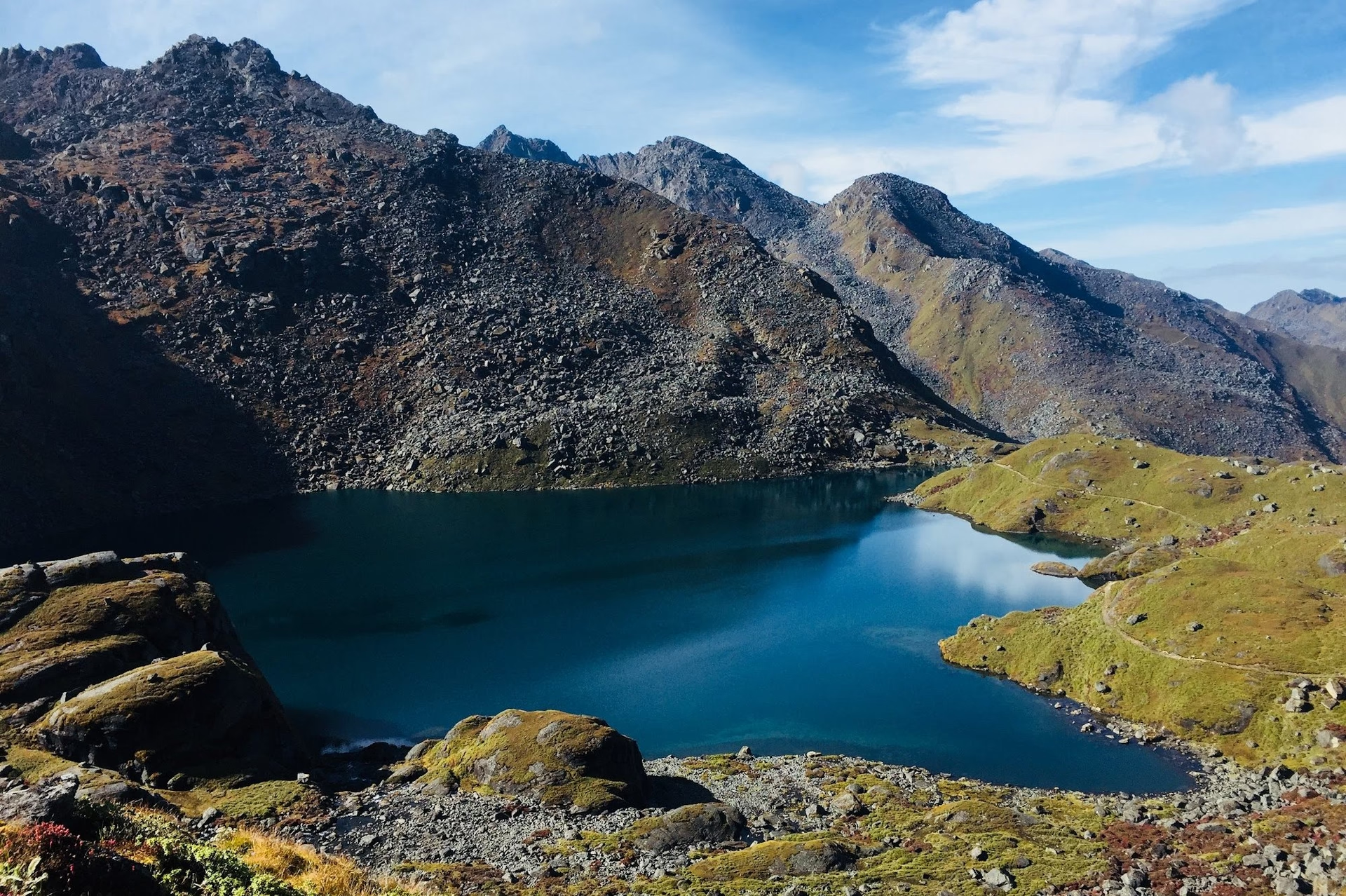
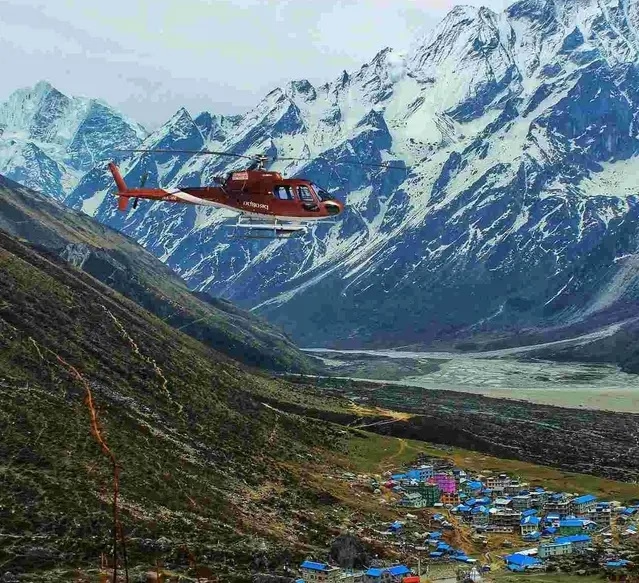
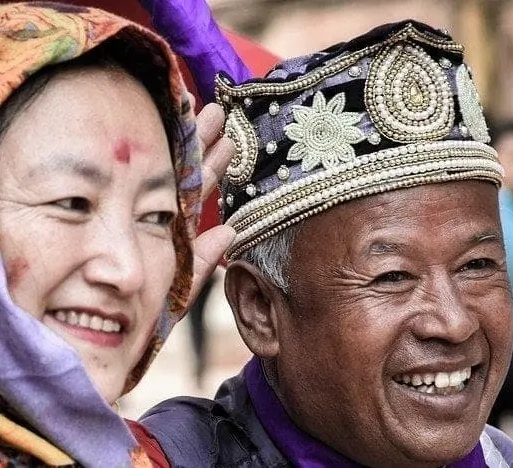
The Langtang trek trails through peaceful forests, rushing waterfalls, mountain paths, and wide open valleys. Pass through traditional Tamang villages, meet local people, and experience their culture and way of life while enjoying views of snow-covered peaks as you trek deeper into the Langtang Valley.
DestinationNepal
Duration10 days
Trip DifficultyTibet
ActivitiesTrek
Max. Elevation3800m.
Group Size15+
VehiclePrivate Jeep, Car
AccommodationCar, Deluxe AC Bus
MealsB.L.D
Langtang Valley Trekking Trip Note
The latest flash flood in Rasuwa has had an impact on a number of communities as well as on the roads that lead to the Langtang area and the neighbouring trekking regions. Since rescue and recovery operations are still ongoing, the road conditions and travel arrangements might stay uncertain for the coming days. We extend our thoughts to all who have been affected by this disaster. Trekkers are advised to keep themselves informed, to allow for some flexibility in their itineraries, and to follow the most recent local updates both before and during their trip.
Langtang Valley Trek: Nature, Culture, and the Himalayas
The mountains are here forever, but we don’t have such a long life to put things off for tomorrow. So, if you are thinking of hiking to the beautiful mountainside in Nepal, then the Langtang Valley is the right trekking destination. With our 10-day Langtang Valley trekking, you travel to remote Nepal and get a chance to interact with indigenous people from different cultures. So, why wait for the right time and day if you want to go on a brief adventure in the mountains? This is the best Langtang Valley Trek package for you. Pack your bag and take a ride to one of the best trekking destinations in Nepal.
Major Highlights
Short and scenic trek near Kathmandu Valley
Ideal for beginners and those with limited time
Less crowded with off-the-beaten-path trails
Trek to Kyanjing Gompa for majestic views of Langtang Himal
Interact with the local Tamang and other indigenous communities
Visit Monasteries, traditionally stone houses and wooden porches
Rich in flora and fauna such as Himalayan monal (Nepal's national bird) and Krishna Peacock (Nepal's national butterfly) plus chances to spot red panda if you're lucky
Visit the famous Yak Cheese Factory in Kyanjin Gompa
Natural Experiences with Langtang Valley Trek Package
The Langtang Valley is filled with mesmerizing views of the belt of the Langtang Himalayas. It has a relatively untouched diversity of flora and fauna, beautiful landscapes, and waterfalls. And you can experience the purest side that nature offers. Also, the trek to the Langtang region opens up the gateway to the unprecedented kingdom of the great Himalayas.
The place is rich in natural beauty; majestic waterfalls, mesmerizing diverse landscapes, deep forests of bamboo, oak, and blooming rhododendrons. The Himalayas in the Langtang Valley also provide shelter to old villages rich in culture. As well, beautiful paddy terraces and many monasteries are full of welcoming smiles.
If you are lucky, you will get to see the rare snow leopard, red panda, or at least some Langoor monkeys with the Langtang Valley Trekking.
Why Langtang Valley Trekking?
Langtang Rasuwa, one of the closest trekking destinations to Kathmandu, offers an unrivaled combination of natural beauty and cultural riches. The people in these places are mostly Tamang and Tibetan, whose culture goes back hundreds of years. The craftsmanship, dress, traditionally built stone houses, and beautifully carved wooden porches reflect the solitude and serenity of the Himalayan scenery.
Langtang is one of the best destinations on the short trek. It is moderate in difficulty level. It is most popular among trekkers looking for a wonderful trekking experience within a short time. The trail is also near Kathmandu city, some 165 km to the north of Kathmandu. Besides, Langtang Valley Trekking is easy to plan and execute in a week-long stay.
If you have already been there, then there is also an alternative way to Langtang Valley Trek, which starts with an hour’s drive to Sundarijal.
From Sundarijal, you will hike through Shivapuri National Park to Chisapani, Kutumsang, Tharepati, Sherpagaun, Tarkeghyang, Shermathang, and back to Kathmandu.
If you have a few more days for trekking, you can walk to Gosainkunda Lake, a sacred lake in the mountain’s lap with the Langtang Gosainkunda Trek.
Langtang Valley Trekking Timeline: Distance, Altitude & Time Breakdown
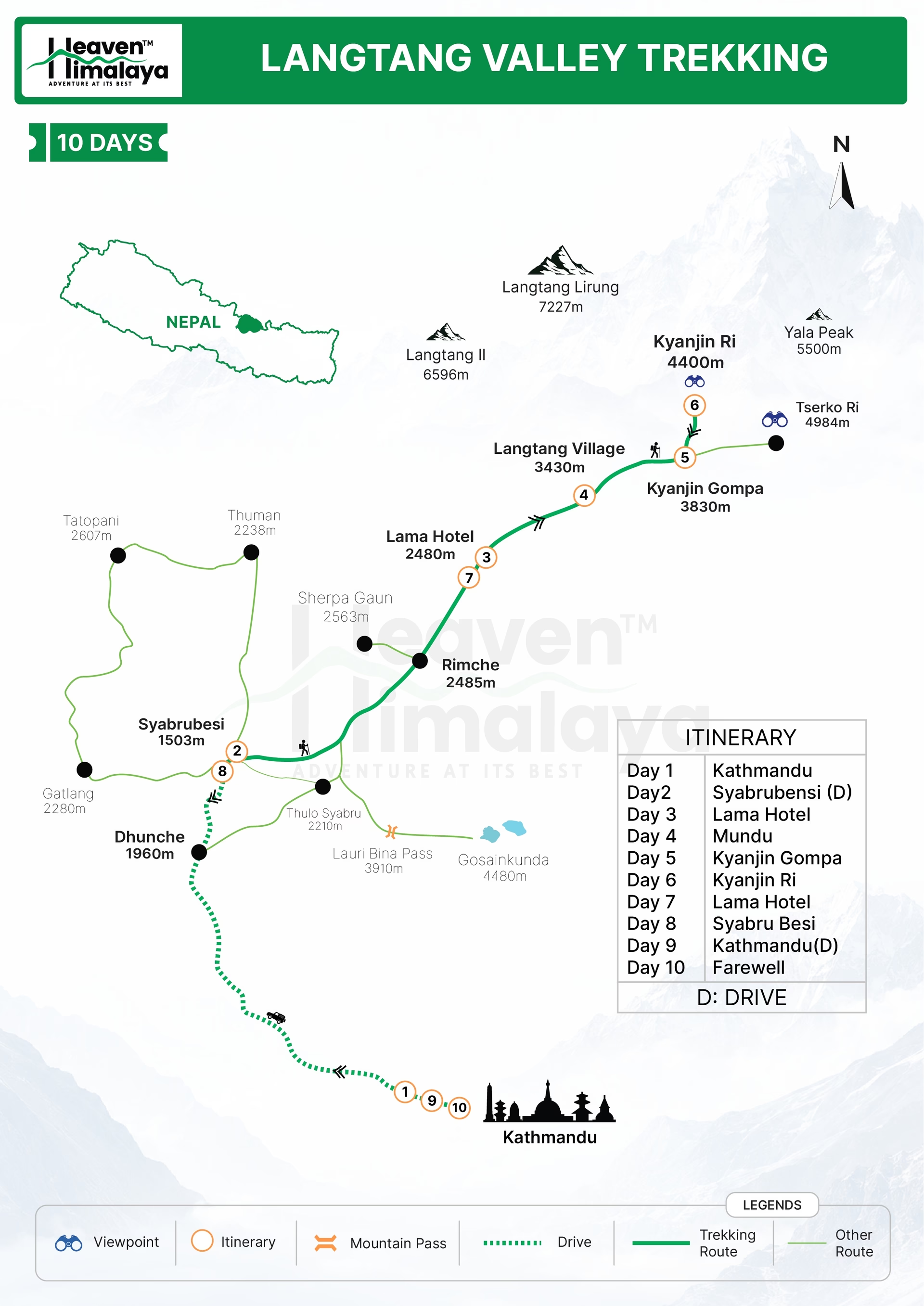
Day 1: Arrival in Kathmandu (Airport Pickup)
Day 2: Drive to Syabru Besi (1,462m/4,795ft), Duration: 6-7 Hours
Day 3: Syabru Besi to Lama Hotel (2,500m/8,210ft) Duration: 5-6 Hours
Day 4: Lama Hotel to Mundu via Langtang Village (2,470m/8,103ft) Duration: 6 Hours
Day 5: Trek to Kyanjing Gompa (3,798m/12,495ft) Duration: 4-5 Hours
Day 6: Langtang Day Hike to Chorkari Ri (5,050 m) Duration: 5-6 hours.
Day 7: Kyanjin Gompa to Lama Hotel (2,500m/8,210ft) Duration: 4-5 Hours
Day 8: Lama Hotel to Syabru Besi (1,462m/4,795ft) Duration: 5-6 Hours
Day 9: Drive to Kathmandu (Duration 6-7 hours)
Day 10: End of the Langtang Valley Trek (Farewell / Airport Drop-off)
Airport transfers–pick up and drop in a private vehicle
All ground transportation in a private vehicle (Car or a Jeep)
Your accommodation in a 3-star category hotel in Kathmandu with a breakfast plan
Your accommodation in the best guesthouses available (on a sharing basis) during the trek
Breakfast, lunch, and dinner throughout the Langtang trekking journey
All paper works
National Park and Heritage Sites entry tickets
Trekkers Information Management System (TIMS) and trekking permits
A licensed, English-speaking, experienced guide along with a porter (1 for two clients)
All the costs of guide and porter, including accidental insurance
Duffel bag, and sleeping bags (to be returned to us after the Langtang trek)
T-shirts, a route map, and a travel completion certificate
All applicable government taxes and service charges.
First aid kit
Exclusions
Meals (lunch and dinner) in Kathmandu
International airfare
Nepal entry visa fees (USD 50 for a tourist visa, and it can be obtained at the airport in Kathmandu on arrival!)
Travel Insurance
Personal refreshment items like cold drinks, snacks, etc.
Personal utility items like laundry, telephone expenses, electricity charges, etc.
Personal Langtang trekking gear.
Tips for guides and porters
Dates & Availability
Note to Travelers
Kindly note that the Start Dates are your date of arrival in Nepal for the Langtang Valley Trek Trek, and the End Dates are the dates of leaving Nepal.
We specially quoted and specified the below list of start dates and Upper Mustang Trek Cost for the group joining option. Let us know if the below start dates do not work for you- we will surely add your available days to fit your interest.
Upcoming Trip Start Dates
Guaranteed - We guarantee Langtang Valley Trek trips to run.
Available - Langtang Valley trip is available to run when the minimum group size is met.
Limited - Hurry, only a few seats are available.
Select Departure Date
No fixed group departures right now — run Langtang Valley Trekkingprivately with your own group. Pick a preferred start date and we'll confirm availability.
Loading calendar…
Sold out dates
Group-size discounts will be applied in the next step.
Select a start date from the calendar.
All prices per person, twin share. Subject to availability — Langtang Valley Trekking dates fill quickly in peak season.
10 days Langtang Valley Trekking Itinerary
Day 01 :Arrival in Kathmandu
Elevation: 1,400m
Duration: 25 mins
Accommodation: Guesthouse
Meals: Breakfast, Lunch, and Dinner Included
A hearty welcome to the land of natural beauty and the city of temples, Kathmandu, the capital city of Nepal. As soon as you come out of the airport terminal, you will see our team member standing by your nameplate and the company's name. He will receive you with a warm welcome and assist you with a vehicle to reach your booked hotel in Kathmandu. Then, there will be a brief description of the Langtang Valley Trek Itinerary.
If you arrive at the Thamel early, have some time, then can go shopping or visit Thamel. Get relaxed and prepare for the sightseeing trip the next day. Spend a comfy night at the hotel.
Accommodation: Hotel
Meal: Breakfast (Included)
Day 02 :Drive to Syabru Besi (1,462m/4,795ft) Duration: 6-7 Hours
Elevation: 1,462m
Accommodation: Guesthouse
Meals: Breakfast, Lunch, and Dinner Included
After having breakfast, our guide will pick you up and take you on a ride to Syabru Besi. We cover 122 km of distance within 6-7 hours of the time. The drive may be irregular, and bumpy along with unpaved roads, but still worth it because of the beautiful scenery that follows us. Above all, we will have the most adorable scene of the perennial Trishuli River.
From Trishuli, we drive to Dhunche and finally to Syabru Besi. Once you reach Syabru Besi, the scenic view of Bhote Koshi Valley and the Himalayas, including the Annapurnas, Manaslu, Ganesh Himal, and the peaks of the Langtang region will spice things up.
Tonight, spend a comfortable night at the lodge.
Day 03 :Syabru Besi to Lama Hotel (2,500m/8,210ft) Duration: 5-6 Hours
Elevation: 2,500m
Today, your trekking days in the Langtang Valley Trek itinerary will begin. We will begin the trek from Syabru Besi. The distance from Syabru Besi to Lama Hotel is about 11.3 km. After breakfast, we walk towards Lama Hotel crossing the Bhote Koshi River, and Langtang Khola. During the day, you will climb uphill until Dovan for two hours. Then to Pairo for about an hour. After enjoying the views from Pairo, we go on an hour hike to Bamboo. We also trek along the Langtang National Park. Thus, if you are lucky, you may also get a glimpse of rare animals like red pandas and Himalayan black bears.
From bamboo, we continue the Langtang trek journey, passing through beautiful rhododendron and the oak forest. After about 1 hour and 15 minutes, we will reach Rimche. Last, the Lama Hotel is about a 20-minute hike from Rimche.
The Langtang journey from Syabru Besi to Lama Hotel takes you to the Tibetan culture and lifestyle. You will explore the vibrant culture and lifestyle of the local Tamang people. Besides, the trail crosses streams, suspension bridges, and breathtaking waterfalls. Thus, today, you will have a great trekking day full of natural scenery.
Tonight, stay and relax at a hotel. Enjoy the tasty food and prepare for tomorrow's trek to Langtang village.
Accommodation: Hotel
Meal: Breakfast, Lunch, and Dinner (Included)
Day 04 :Lama Hotel to Mundu via Langtang Village (2,470m/8,103ft) Duration: 6 Hours
Elevation: 2,470m
Accommodation: Guesthouse
Meals: Breakfast, Lunch, and Dinner Included
Today we will walk to an elevation of 2470 at the Mundu. We will cover 14.7 km of distance via the Langtang village.
After breakfast, we prepare for our trek to Mundu. Remember, the most fascinating and outstanding view of the mountains is on the way.
Throughout the journey, you will get insights into the local lifestyle of Tamang and other communities. Likewise, you will have the experience of rare wildlife and different species of flora, which is the most spectacular impact of your journey. Moreover, the eye-catching views of the Langtang Lirung, Ganesh Himal, Naya Kanga, and Dorje Lakpa keep your stick to them all the time.
After about 6-7 hours of hike, you will reach Mundu. The Earthquake that hit Nepal in 2015 demolished the place. However, they have fought back and built amazing hotels and lodges for tourists to stay in.
Tonight, spend quality time at the provided accommodation.
Day 05 :Trek to Kyanjing Gompa (3,798m/12,495ft) Duration: 4-5 Hours
Elevation: 3,798m
Today is one of the most exciting days in the entire Langtang Valley Trek. After breakfast, we begin our hike, gradually climbing uphill. We walk along the yak pastures with the most influential view of the beautiful surroundings. Besides, we walk along the Sindum and Yamphu villages, crossing several streams and moraines, which adds a unique flavor to the popular trekking route.
Throughout the journey, we see different Buddhist shrines, prayer wheels, and prayer flags. The other most interesting part of the trail is the Buddhist Mani wall made of stones of distinct shapes and sizes with some important religious mantras.
The route takes us through Laja Khola, which provides panoramic views of Kyanjin Gompa and icefall from Lirung and Kinshung. The spectacular ice faces and tumbling glaciers of Langtang Lirung are the most graceful and the most astounding site of this trip. After an eminent hike of 5 hours, we reach Kyanjing Gompa. Tonight, relax and spend quality time at a guest house near Kyanjin Gompa.
Day 06 :Langtang Day Hike to Chorkari Ri (5,050 m) Duration: 5-6 hours.
Elevation: 5,050m
This is the major highlight day of the entire Langtang Valley Trek. Today, we will spend a relaxing tour around the Kyanjin Gompa.
Early in the morning, the guide will take you to a place with the most splendid scene of Kyanjin Gomba and the surrounding mountains.
The surroundings of Kyanjin Gompa offer astonishing views of Langtang Lirung, Genjempol, and Kenga Himal ranges, and Ganjala Peak. We will also walk to the cheese factory to taste the famous yak cheese.
Then, we resume our Langtang hiking journey with a hike to Chorkari Ri (5050m). The trail leads you to the stunning views of the Himalayas, green lush forest, and several streams. We get to see the wonderful Langtang Peak. Just to the right of Langtang Lirung is the amazing scene of Changbu and Yubra separated by a large glacier with a steep gradient. To the Northeast, Yalla Peak adds its ethereal beauty.
After the sight view, we walk back to the village to spend the night at a lodge.
Day 07 :Kyanjin Gompa to Lama Hotel (2,500m/8,210ft) Duration: 4-5 Hours
Elevation: 2,500m
After breakfast, we will descend to the Lama Hotel. You will pass through a familiar path having the most spectacular view of nature, mountains, hills, streams, glaciers, yak grazing, alpine forests, and many others. As we descend, we stop at the lodge for refreshment and relaxation, and to enjoy the delicious food. The trek may be steep downhill at some points, so be more cautious while you descend.
Passing down, we try to cover some spectacle sight which we missed earlier. Capture pictures and videos of the surrounding lake, beautiful pine forest, village people, and the children playing. Overnight, stay at a guesthouse.
Day 08 :Lama Hotel to Syabru Besi (1,462m/4,795ft) Duration: 5-6 Hours
Elevation: 1,462m
Start the day with the astonishing sunrise view over the hills. This will be another simple downhill trek of around 5-6 hours.
Completing breakfast, we begin our journey back to Syabru Besi with the eye-catching views of the Himalayas. To get to Syabru Besi either we consider our way back through the same path crossing pine, rhododendron forest, Bamboo, and rivers, or explore your day to Langtang Valley and move through an alternative route. This will be another simple downhill trek of around 5-6 hours.
Anyway, our guide will help you out with what to do based on the temperature, climate, strength, and season you come. Whatever the route we select, we go down to Syabru Besi and stay at the guesthouse tonight.
Day 09 :Drive to Kathmandu (Duration 6-7 hours)
Accommodation: Guesthouse
Meals: Breakfast, Lunch, and Dinner Included
Today, leaving the peaceful Syabru Besi, we drive back to Kathmandu.
Along our way back to Kathmandu, we will have spectacular views of the beautiful Himalayas, rivers, and hills. Besides, you will pass through several villages, farms, small shops, fruit sellers, and pleasant views of Majestic Mountain, waterfalls, paddy fields, and the woods, which won't let you be bored in the vehicle.
After seven hours of drive, we reach Kathmandu. Take a hot shower, relax, and remember the days we spent in the Langtang. In the evening, you can stroll around Thamel exploring the vibrant culture, or buy some souvenirs for your family.
Tonight, spend your comfy night in the hotel.
Day 10 :End of the Langtang Valley Trek (Farewell)
Elevation: 1,400m
Duration: 25 mins
Accommodation: Hotel
Meals: Breakfast Included
Our Langtang trip itinerary ends today. It's an honor for us to take you to the Langtang village. Thank you for your support during the trip. Hope you have enjoyed the trek. We hope you had a great time here in Nepal. May your journey be free from stress and you reach your home town safely.
On this last day, our officer will drop you at the International airport 3 hours earlier than your flight time. We will bid you bye and hope to meet again.
Altitude profileMax 5,050 m
Create a Bespoke Itinerary
Customize your Himalayan adventure with personalized itineraries for unforgettable experiences!
Excellent solo Nar Phu Valley Trek with Heaven Himalaya
Just completed the Nar Phu Valley Trek as a solo traveler and couldn't be happier with how it was organized.From the start, communication was clear. A proper pre-trip gear check meant I knew exactly what I needed and what the guide would provide. They arranged a sleeping bag and trekking poles for hire, which saved me carrying my own.Accommodation throughout felt genuine and welcoming rather than touristy, a real Nepalese experience rather than a tourist-trail one. Transport to and from the trailhead was reliable and comfortable.What really stood out was my guide Hari's ability to read my pace. Early on I struggled a bit with the altitude, and he slowed things right down without making it a big deal. Once I'd acclimatized, we picked up the pace significantly. Hari was genuinely flexible day to day depending on how I was feeling, rather than sticking rigidly to a fixed itinerary.I also picked up a stomach bug partway through the trek. Hari talked through the options with me calmly and…
Jojo Y
Second time in Nepal with Heaven Himalaya
This is my second time in Nepal with Heaven Himalaya & I am writing this with gratitude & appreciation for my guide Hari, my porter Arun, as well as the entire team.This was meant to be my birthday trip, I had requested to summit EBC on the actual day of my birthday (29/5/2026), and i made it happen with the help & support of Hari and Arun.Hari has been very thoughtful and attentive throughout the trip, making sure to constantly ask/check if I’m feeling okay as we ascended to higher altitudes.As it got colder higher up on the mountains, Hari thoughtfully delivered hot water to my room every night to help me deal with the extremely cold nights.On my birthday itself, Hari also resourcefully brought a “Happy Birthday” candle which he got from Namche to the summit, and we created our own birthday “cake” using the candle and an apple. That was a very beautiful memory & amazing experience.As I was traveling alone as a female, Hari also did his best to find me the most comfortable accommodat…
CCharlotte B
EBC Hike in May 2026
Last month in May 2026, I did the Everest Base Camp hike with Heaven Himalaya, and it was absolutely amazing. From the start they made everything easy . My guide Bishal, which he said meant thulo in nepali was so helpful and patient; he knew everything about the trail and mountains and also made us laugh all the time.Our porter Krishna was a star! He carried our bags without complaining and always had a smile, telling us funny stories in the evenings. I don't know what we would have done without him.The trek itself was so hard but so worth it. The views are just mindblowing; waking up every morning to see the mountains covered in snow is something I will never forget. Bishal and Krishna made sure we were safe and happy all the way.Reaching Kala Patthar at sunrise was unreal, seeing Everest in the golden light was like a dream. Bishal and Krishna were there with us every step, cheering us on and making it so special.I would absolutely recommend Heaven Himalaya for everyone. They are no…
Tina
Exceptional Service and a Birthday to Remember
They say the mountains humble you, but what I didn't expect was how deeply the people of Nepal would touch my heart.Couldn't have asked for a better crew for our Everest Base Camp - Cho La Pass - Gokyo adventure. From day one, Shankar, Ganesh, Dawa, and Prince treated us with so much kindness, patience, and care that it never felt like we were just another hiking group to them.They became our family in the mountains.Our guide, Shankar, was exceptional. Calm, knowledgeable, dependable, and always looking out for us every step of the way. He knew the mountains like the back of his hand and made us feel safe even during the toughest parts of the trek. When weather conditions in Lukla became unpredictable and visibility was poor, he immediately took action and arranged a helicopter to Kathmandu so we wouldn't miss our international flights. In moments of stress, that level of leadership and quick thinking means everything.It was my birthday during the trek, so I felt incredibly special wh…
Jarin Lam
Unforgettable First Trek to Annapurna Base Camp & Poon Hill
We had an amazing experience with Heaven Himalaya for our first trekking trip to Annapurna Base Camp and Poon Hill. We were actually recommended to them by a friend, and we’re incredibly thankful we chose to go with them. It was truly an unforgettable 2 weeks in Nepal.Our guide, Hari, was attentive, thoughtful, and always made sure we were comfortable and enjoying the journey. He was constantly on the ball, supporting us every step of the way and helping to adjust the itinerary whenever needed. Despite a few slight hiccups during the trip, he remained calm, flexible, and proactive in making arrangements to ensure everything went smoothly.Our porter, Anis, was also incredibly reliable and supportive throughout the trek. He consistently checked in on us and made sure our needs were always taken care of along the way.A special thank you as well to Ram, who was very helpful in coordinating everything behind the scenes and ensuring the trip ran smoothly from start to finish.Beyond the trek…
Dan
Truly Unforgettable!!!
My friend and I booked the 14 day Annapurna Circuit with Tilicho Lake trek. The whole experience was amazing. Ram made it easy to alter the trip to our specific needs. We added flights, cut off 2 days of trekking, requested single rooms, and he quickly got us a quote and booked! Hari was our guide on the trek and he was fantastic! He attended to all our needs and safely guided us for the entire time. He did an excellent job of getting us the best rooms, served our meals every day, and did everything in his power to make sure us old men(63 and 74) made it over the Pass! Our porter, Denise, was equally impressive! I still don't know how he carried our bags for 10 days! Clear blue skies, endless views, majestic mountains, deep river valleys, friendly people, a truly unforgettable trip!!!
What to Pack
Trekking wears
Upper Body
T-shirts (preferably quick-dry and breathable) (day)
Parka/windbreaker (day)
Rain gear/poncho
Inner thermal (at night)
Fleece or warm mid-layer (evenings and higher altitude)
Fleece jacket
Down jacket (night)
Lower Body
Undergarments
Trekking pants (preferably stretchable, quick-dry, and water-resistant) (day)
Rain gear
Inner thermal (at night)
Fleece/wool pants (night)
Handwear
Lightweight fleece or wool gloves
Heavyweight gloves
Footwears
Trekking boots
Hiking socks
Trekking sandals
Cotton socks
Gaiters (optional)
Running shoes (optional)
Note:Make sure your trekking boots are well broken-in and that you have worn them for some time before the trek. Avoid bringing brand-new boots, as they may cause blisters, discomfort, or foot pain during long days of walking.
Trekking Accessories
Duffle bag**
Trekking backpack
Sleeping bag**
Trekking poles**
Trekking Map**
Water bottle
Head torch with extra batteries
Raincoat
Face mask
Crampons (optional)
Binoculars (optional)
Sleeping bag liner (optional)
Daypack cover (optional)
Headwears
Sun cap or brimmed hat
Sunglasses
Neck gaiter
Balaclava
Bandana or headscarf
Other Essentials
Medical Kit
Altitude & Trekking related medications
Acetazolamide (Diamox) for Altitude sickness
Parcetamol - headache & fever relief
Ibuprofen - Pain relief
Stomach Medications
Antacids
Oral Rehydration salts ( Jeebanjal)
Motion Sickness (Vomiting) medicines
First Aid Supplies
Bandages
Blisters Plaster
Handyplasts
Antiseptic wipes
Medical Tapes
Skin Protection
Moisturizer
Lip Balm
Sun screen
Eye Protection
Sunglasses (both UV rays and snow glare)
Lubricating eye drops
Other Essentials
Oxymeter
Thermometer
Water Purification Tablets (Chlorine, Iodine, Chlorine dioxide tablets)
Hand sanitizer
Note: When you trek with a reputable agency, your guide is trained to handle altitude-related issues and carries a basic first-aid kit with essential medical supplies. You should still bring personal medications, but they look after you throughout the trek.
Travel Documents
Passport, with at least 6 months validity
4 copies of passport
4-5 Passport size photo
Physical Trek Map (Digital Route Map)
Visa (available at kathmandu airport)
Insurance
Trekking permits
Cash ( min. 400$)
Miscellaneous Items
Solar charger
Garbage bag
Book/Diaries
Playing Cards/ Card games
Snacks for Quick Energy and Treat ( Energy Bars, Trail mix and Nuts, Salty snacks)
Solar power bank
Camera (optional)
Important Note: We provide a duffle bag, sleeping bag, and down jacket and expect them to be returned at the end of the trip. We also provide trekking maps, and our experienced trekking guide will assist you in utilizing and understanding the map effectively. This map is yours to keep as a memorable souvenir.
At the end of the trip, to express our gratitude for choosing Heaven Himalaya, we extend to you a Heaven Himalaya T-shirt and trip achievement certificate. These items are more than tokens; they are our way of showing appreciation for your trust in us.
Toiletries and Personal Hygiene
Toothbrush and toothpaste
Personal first aid kit
A small bar or soap bottle
Dry shampoo
Quick-drying towel
Deodorants
Hand sanitizer
Lip balm with SPF
Wet wipes or baby wipes
Water purification tablets or water filters
Altitude sickness drugs (diamox)**
Hairbrush
Hand and face moisturizing cream
Sunscreen cream with high SPF
Toilet paper
Antibiotics and painkillers
Skin blister repair kit
**Please consult with your guide before using any medication.
Why Trek to Langtang Valley? Key Highlights
A short, accessible trek close to Kathmandu — rich in wildlife, culture, and mountain charm.
Close to Kathmandu: Just a short drive away, making it one of the most accessible Himalayan treks.
Short& Easy Trek: Ideal for beginners or those with limited time; usually 7–10 days.
Less Crowded: Compared to Everest and Annapurna, Langtang offers quieter trails and villages.
Wildlife: Spot Himalayan thar, langurs, red pandas, and the colorful Himalayan Monal (Nepal’s national bird).
Butterflies: Langtang is home to many mountain butterflies, including Nepal’s national butterfly, the Krishna Peacock (a striking swallowtail).
Tibetan Culture: Experience monasteries, prayer flags, yak herders, and warm local hospitality.
Yak Cheese Factory: Kyanjin Gompa hosts a well-known yak cheese factory established with Swiss support. Trekkers can often visit to learn how traditional yak cheese is made, and taste or buy some as a unique mountain treat. (Opening depends on season and conditions.)
Mustang Coffee: A local specialty of coffee, butter, and liquor, perfect for chilly evenings.
Camping: Pristine rivers and wide riverbeds make Langtang excellent for camping in nature.
Scenery: Breathtaking views of snow peaks, alpine meadows, and rhododendron forests.
Difficulty of the Langtang Valley Trek
Trekking in the Langtang Valley is moderate. Technical climbing abilities, ropes, or specialized mountaineering gear are not necessary. Walking for several hours every day, climbing on uneven trails, and acclimating to higher altitudes present the biggest obstacles.
The average trekking day consists of five to seven hours of walking. The trail features rocky sections, stone steps, forest paths, and steady uphill climbs. Due to the lengthy ascent and increasing altitude, the stretch from Lama Hotel to Langtang Village is among the most difficult.
As you get closer to Kyanjin Gompa at about 3,870 meters, altitude becomes a more significant factor. The optional treks to Tserko Ri (about 4,984 m) or Kyanjin Ri (4,773 m) are more demanding and call for adequate acclimatization.
Is the Langtang Valley Trek Suitable for Beginners?
Yes. Beginners can complete the Langtang Valley Trek if they have a reasonable fitness level and prepare beforehand. Previous Himalayan trekking experience is not required.
Regular walking, hill walking, stair climbing, and basic cardio training can help prepare for the long days on the trail. A steady pace, enough rest, and proper acclimatization are more important than walking fast.
In short: Langtang is not an easy walk, but it is a realistic first trek for a reasonably fit beginner.
Best Time for Langtang Valley Trek
The best time for the Langtang Valley Trek is spring (March to May) and autumn (September to November). These seasons bring more stable weather, clearer mountain views, and better trail conditions. Autumn, especially October and November, often offers the clearest views after the monsoon. Spring adds blooming rhododendrons and warmer days.
Winter and monsoon are also possible, but they need more preparation. Winter brings cold temperatures and snow at higher elevations, while monsoon brings rain, muddy trails, cloud cover, and a higher risk of landslides.
Can You Trek Langtang Valley in Winter?
Yes, but winter is best for trekkers who are prepared for cold and snow. December to February has fewer people and can offer clear skies and snow-covered mountain views. Higher parts of the trail can become icy or snowy, and some teahouses may close during the coldest periods.
Can You Trek Langtang Valley During Monsoon?
Yes, but June to August is not the best time for most trekkers. Heavy rain can make lower trails muddy and slippery, while clouds often block mountain views. Landslides can also affect trails and road access.
Which Season Should You Avoid?
For the best overall experience, avoid the peak monsoon months of July and August. If your main goal is clear Himalayan views and comfortable trail conditions, choose spring or autumn instead.
How Do You Get to Langtang Valley
The Langtang Valley Trek starts at Syabrubesi, a small town that serves as the main trailhead. From Kathmandu, you travel by road through Trishuli and Dhunche before reaching Syabrubesi. The drive usually takes around 6–8 hours, depending on road and traffic conditions.
From Syabrubesi, the trek follows the Langtang Khola through forests and mountain villages. The trail passes Lama Hotel, Ghoda Tabela, Langtang Village, and Mundu before reaching Kyanjin Gompa at around 3,870 m. From Kyanjin Gompa, trekkers can take optional hikes to Kyanjin Ri or Tserko Ri.
The standard route is an out-and-back trek, so you return to Syabrubesi along the same valley before driving back to Kathmandu.
How Far Is Langtang Valley from Kathmandu?
Syabrubesi is about 120 km north of Kathmandu by road. The journey takes about 6–8 hours by bus or jeep.
The walking route from Syabrubesi to Kyanjin Gompa covers about 30 km one way, with the exact distance varying by the route and stops used.
What Can You Experience on the Langtang Valley Trek
The Langtang Valley Trek offers natural scenery, mountain culture, and views of the Himalayas. Before reaching Kyanjin Gompa, the Langtang Valley's center, the route passes through forests, rivers, traditional villages, alpine meadows, and glacial valleys. Trekking allows you to see a range of landscapes, from open high-altitude regions to dense woodland.
The views of the mountains are the main highlights of the trek. At 7,227 meters, Langtang Lirung dominates the valley, while Dorje Lakpa, Gangchempo, and Langshisha Ri are peaks farther away. Panoramic views of the Langtang Himalayan Range can be found at popular viewing locations like Tserko Ri and Kyanjin Ri.
The trek occurs in Langtang National Park, which has rhododendron forests, alpine vegetation and a wide variety of wildlife; tourists have the opportunity to see animals including the Himalayan tahr, the musk deer and a number of bird species. A further special experience is a visit to the yak cheese factory near Kyanjin Gompa, one of the oldest places in Nepal for the production of mountain cheese.
Tamang Culture and Heritage
The Langtang region is home to the Tamang people, whose culture shapes much of the trekking experience. Traditional villages, stone houses, prayer wheels, and local farming practices can be seen throughout the valley.
The 2015 earthquake caused severe damage across the region, but local communities rebuilt their villages and tourism infrastructure. Today, trekking in Langtang also supports the livelihoods of families who depend on tourism.
Travelers seeking a stronger cultural focus can extend their journey along the Tamang Heritage Trail, which highlights traditional villages, customs, and local lifestyles.
Religious and Spiritual Highlights
Buddhism is deeply rooted in the Langtang Valley. Prayer flags, mani walls, chortens, and monasteries appear throughout the trekking route, reflecting the region's Tibetan Buddhist heritage.
Kyanjin Gompa is the valley's most important monastery and spiritual center. Surrounded by mountains and glaciers, it remains a place of worship for residents and visitors alike.
For those interested in a religious extension, Gosainkunda is a sacred lake located beyond the standard Langtang Valley route. It attracts thousands of Hindu and Buddhist pilgrims during the Janai Purnima festival each year.
Teahouses on the Langtang Valley Trek
Teahouses are the main form of accommodation on the Langtang Valley Trek. Following the 2015 earthquake, many lodges and villages across the region were rebuilt. Today, trekkers can find comfortable teahouses throughout the route, although facilities become more basic at higher elevations.
Most teahouses offer twin-sharing rooms with two single beds, a mattress, a pillow, and a blanket. Private rooms may be available in lower villages such as Syabrubesi and Lama Hotel, but they become limited near Langtang Village and Kyanjin Gompa, especially during the peak trekking seasons.
Rooms
Rooms are simple and designed for overnight stays rather than luxury. Lower-elevation teahouses often provide better bedding and larger rooms. At higher elevations, rooms become more basic, so a sleeping bag is recommended, especially during spring, autumn, and winter. During busy months, rooms can fill quickly, making booking helpful.
Toilets
Most teahouses have shared toilet facilities. Flush toilets are common in lower villages, while higher elevations may have simpler systems. Toilet paper is not always provided, so carrying your own is recommended.
Showers
Hot showers are available at many teahouses for an additional charge($2-$5). Gas-heated or solar-heated showers are common. Availability may depend on weather conditions and the location of the lodge.
Heating
Dining halls usually have a central heating stove during cold evenings. Rooms are generally unheated, so warm clothing is important, especially at higher elevations.
Electricity and Charging
Most teahouses provide electricity for charging phones, cameras, and power banks. Charging is often free at lower elevations but may require a small fee in higher villages.
Wi-Fi
Wi-Fi is available at many teahouses along the route, although speed and reliability vary. Connections generally become slower and less stable as you gain altitude.
Food and Drinks Available on the Langtang Valley Trek
Teahouses along the Langtang Valley Trek serve a range of Nepali, Tibetan, and basic international meals. Food choices are more varied at lower elevations and become slightly more limited higher up the valley.
Breakfast
Common breakfast options include:
Tibetan bread
Chapati
Porridge
Pancakes
Eggs prepared in different styles
Muesli and oats
Tea and coffee
Lunch and Dinner
Lunch is usually served at teahouses along the trail. Dal Bhat becomes your friend during the trek, and it provides the essential energy for your trek. Popular choices include:
Dal Bhat
Fried rice
Noodle dishes
Thukpa (noodle soup)
Momos
Pasta and simple curry dishes
Drinks
Tea is the most common drink on the trail. Black tea, milk tea, ginger tea, lemon tea, and herbal teas are widely available. Coffee, hot chocolate, soft drinks, and bottled beverages can also be purchased at most teahouses.
Water Availability and Safety
Drinking water is available throughout the trek. Trekkers can buy boiled water, fill reusable bottles at teahouses, or use designated refill stations where available. Bottled water is also sold along the route but becomes more expensive at higher elevations.
To reduce plastic waste, many trekkers carry a reusable bottle together with water purification tablets, a filter bottle, or a purification system. This is usually the most practical and environmentally friendly option.
Note:There are no ATMs on the Langtang trekking route. Carry enough Nepali rupees from Kathmandu to cover personal expenses such as drinks, snacks, charging fees, Wi-Fi, and showers.
Mobile Network and Wi-Fi on the Langtang Valley Trek
Mobile coverage is available on much of the Langtang Valley Trek, although signal strength varies by location and weather conditions. Both Nepal Telecom (NTC) and Ncell operate in the region, but NTC generally offers broader coverage along the trekking route.
NTC signal is available in many villages, including Syabrubesi, Langtang Village, and Kyanjin Gompa. Ncell coverage is available in some lower sections of the trek but becomes less reliable at higher elevations.
Most teahouses offer Wi-Fi for an additional fee. While suitable for messaging and basic browsing, internet speeds can be slow, and connections may be affected by weather and network demand.
Trekkers should not expect uninterrupted connectivity throughout the journey. If staying connected is important, carrying an NTC SIM card usually provides the best coverage in the Langtang region.
Do You Need a Guide or Porter for the Langtang Valley Trek?
A guide is now required for most foreign trekkers in Nepal's trekking regions under current trekking regulations. Even when regulations allow flexibility, many trekkers choose to hire a guide for safety, local knowledge, route support, and logistical assistance.
Guides help with navigation, accommodation arrangements, permit checks, weather updates, and communication with local communities. They can also assist during emergencies and provide valuable insight into the region's culture, history, and traditions.
A porter is optional but can make the trek more comfortable by carrying the majority of your luggage. This allows trekkers to walk with a lighter daypack and conserve energy during long trekking days.
Can You Trek Langtang Valley Independently?
Independent trekking rules can change based on Nepal government regulations. Trekkers should verify the latest requirements before travel.
Even when independent trekking is permitted, trekkers are responsible for route planning, accommodation bookings, permits, navigation, and emergency management. For first-time visitors to Nepal, trekking with a guide often provides a smoother and safer experience.
Travel Inurance and Safety on the Langtang Trek
Even though the Langtang Valley Trek is regarded as a moderate Himalayan trek, preparation is still crucial. Trekkers reach altitudes where altitude sickness can happen and spend several days above 3,000 meters. Additionally, the weather in the mountains can change rapidly, particularly in the spring, fall, and winter.
It is highly advised that all hikers purchase travel insurance. Trekking activities, emergency medical care, trip interruptions, and helicopter evacuation if necessary should all be covered by an appropriate policy. Some villages have access to medical facilities, but evacuation to Kathmandu may be necessary for more advanced care.
Proper acclimatization, maintaining hydration, walking at a comfortable pace, and keeping an eye on the weather are all essential for trek safety. Serious health problems can be avoided by heeding your guide's advice and reporting symptoms as soon as possible.
Does Travel Insurance Cover High-Altitude Trekking?
Not all travel insurance policies automatically cover high-altitude trekking. Before purchasing a policy, check the maximum altitude covered and confirm that trekking activities are included.
Your policy should ideally include:
High-altitude trekking coverage
Emergency medical treatment
Helicopter evacuation
Trip cancellation or interruption protection
Repatriation coverage where applicable
Always read the policy wording carefully, as altitude limits and exclusions vary between providers.
Altitude and Acclimatization
The standard Langtang Valley Trek reaches Kyanjin Gompa at 3,870 meters, while side hikes to Kyanjin Ri or Tserko Ri take trekkers above 4,500 meters. At these elevations, some people may experience symptoms of Acute Mountain Sickness (AMS).
Common symptoms include:
Headache
Loss of appetite
Nausea
Dizziness
Fatigue
Difficulty sleeping
The best prevention is a gradual ascent, adequate hydration, proper rest, and avoiding unnecessary exertion. If symptoms become worse, the safest response is to stop ascending and descend to a lower elevation.
Trek Responsibly in Langtang
Langtang is home to fragile mountain ecosystems, wildlife habitats, and traditional communities. Responsible trekking helps protect the region while supporting local livelihoods.
Simple ways to trek responsibly include:
Carry a reusable water bottle instead of buying plastic bottles.
Use water purification tablets or filters where possible.
Dispose of waste properly and avoid littering.
Stay on established trails.
Respect wildlife and avoid disturbing animals.
Follow local customs at monasteries and religious sites.
Ask permission before taking close-up photographs of people.
Support local teahouses, guides, porters, and businesses.
Small actions from individual trekkers help preserve Langtang's natural and cultural heritage for future visitors and local communities.
FAQs
Langtang Valley Trekking Frequently Asked Questions
General
What is the Langtang Valley Trek?
The trek to Langtang Valley is a hike in northern Nepal and leads you through Langtang National Park, various Tamang villages, forests, mountain valleys and high-altitude areas until you reach Kyanjin Gompa; it is also possible to hike to viewpoints like Kyanjin Ri and Tserko Ri.
What is the location of the Langtang Valley Trek?
The Langtang Valley Trek is located in the Rasuwa District, which is north of Kathmandu and near the border with Tibet. It begins near Syabrubesi and proceeds along the Langtang Valley to Kyanjin Gompa, a site within Langtang National Park.
What is the highest point on the Langtang Valley Trek?
The main trekking route reaches Kyanjin Gompa at about 3,870 m. With the Tserko Ri side hike, the highest elevation reached is about 4,985 m. Tserko Ri is the highest viewpoint usually incorporated in the Langtang Valley Trek.
What is Langtang National Park?
Langtang National Park is a reserve which includes the Langtang area and safeguards forests, alpine scenery, wildlife, and natural habitats. It contains animals including the red panda, the Himalayan black bear, the musk deer, the Himalayan tahr, and a number of bird species.
What are the best seasons for Langtang Valley Trek?
Spring (from March to May) and autumn (from September to November) are the best seasons since these months generally offer better mountain views and more reliable trail conditions; it is possible to go hiking in winter if you are properly prepared, but during the monsoon period there is rain, slippery trails, clouds and a greater risk of landslides.
Is it safe to trek alone to Langtang?
Langtang is a popular area for trekking, but under the present regulations in Nepal trekkers taking the Langtang route must have both a licensed trekking guide and a TIMS card issued by an agency. Although it is possible to trek on your own, you will have to arrange the necessary guide and permits through a registered trekking agency.
What are the extensions of the Langtang Valley Trek?
The key additions are the Tamang Heritage Trail and Gosaikunda`. The Tamang Heritage Trail Trek involves spending time in traditional Tamang villages, and the Gosaikunda route leads you to the holy Gosaikunda Lake Trek. As a result, the trek can take a different path rather than simply involving a return along the original trail, the starting or ending point varying according to the itinerary.
What is the Langtang Trek like when compared to the Everest Base Camp Trek?
The single biggest advantage of Langtang Valley Trek over EBC trek is its shorter and closer to Kathmandu so it doesn't require a flight. The Everest Base Camp Trek is more popular, mainly because of the chance to reach the base of Mount Everest and see famous peaks such as Everest, Lhotse, and Ama Dablam.
However, Langtang has its own beauty. The trail takes you through the Langtang Valley, where you can enjoy mountain views, glaciers, forests, traditional Tamang villages, and Buddhist culture along the way. With fewer trekkers than the Everest route, Langtang can also give you more time to enjoy the nature and experience the local way of life of Nepalese people. It is a perfect trek if you want an adventure that combines nature, culture, and mountain scenery without the crowds of the more popular Everest route.
Permits for Langtang Valley Trek
What documents are needed to obtain Langtang Trek permits?
Foreign trekkers usually need a valid passport and information from their passport in order to obtain the necessary trekking documents, and a passport-sized photograph is used when applying for TIMS. When you trek with Heaven Himalaya, the company takes care of getting the required permits and filling in the TIMS forms as part of the organized trek.
What permits are needed for the Langtang Valley Trek?
A Langtang National Park entry permit and a TIMS card are needed if you are doing the standard Langtang Valley Trek. According to the present information from the Nepal Tourism Board, the Langtang Trek is one of the treks for which a licensed guide and a TIMS card issued by an agency are required. The present Langtang National Park entry fee is NPR 3,000 for foreign nationals, NPR 1,500 for SAARC nationals, and NPR 25 for Nepali citizens. The current TIMS fee is NPR 2,000 for non-SAARC citizens and NPR 1,000 for SAARC citizens.
Trekkers' Well-Being & Safety
Is emergency helicopter evacuation possible?
Loading…
What happens if I become sick during the trek?
Loading…
How do you ensure trekker safety in remote areas?
Loading…
Visa and Arrival
Can I get a visa on arrival in Nepal?
Loading…
Does Nepal provide a Visa on Arrival?
Loading…
How can I buy a SIM card in Nepal?
Loading…
Where can I exchange money upon arrival in Nepal?
Loading…
Booking, Deposit & Payment
What payment methods do you accept?
Loading…
What are the Cancellation and Refund Policy ?
Loading…
Can I postpone my trek after booking?
Loading…
How do I book the Everest Region Treks?
Loading…
Similar Travel Packages
You may also like these handpicked adventures similar to Island Peak Climbing with EBC for an exceptional travel experience.


.avif&w=1920&q=75)