

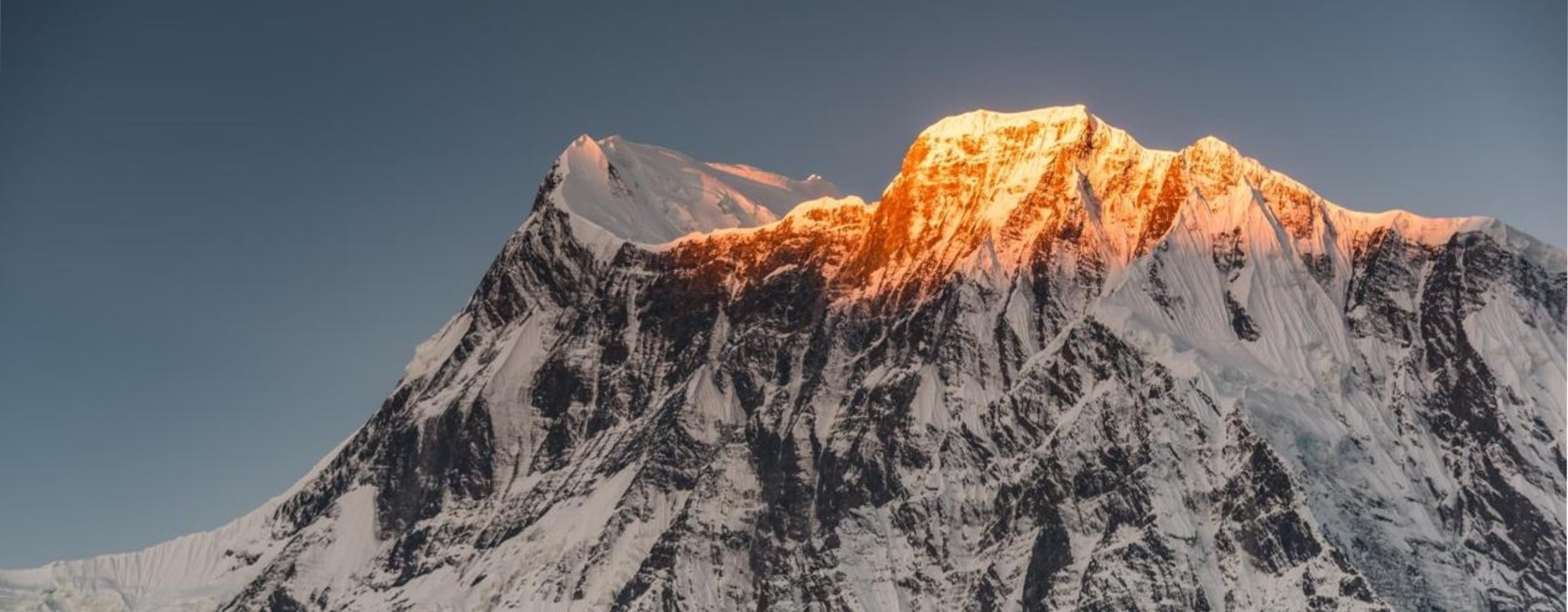
Best Time to Trek in Nepal
The best time to trek in Nepal is autumn (late September to November) and spring (March to May), when favorable weather, clearer mountain views, and accessible trails create ideal conditions for Himalayan trekking. October is the best month overall for high-altitude adventures such as Everest Base Camp, the Annapurna Circuit, and Thorong La Pass, while April offers blooming rhododendron forests, warmer temperatures, and excellent mountain scenery.
Winter is better suited to lower-altitude treks such as Poon Hill and Helambu, whereas monsoon trekking favors rain-shadow destinations such as Upper Mustang and Dolpo, where rainfall is significantly lower. The right trekking season depends on altitude, regional climate, snowfall, trail accessibility, and personal travel preferences.
Choosing the best season for trekking in Nepal also means balancing crowd levels, travel costs, festival dates, permits, and transportation logistics. This guide compares all four trekking seasons and twelve months, identifies the best trekking windows across the Everest, Annapurna, Langtang, Manaslu, and Upper Mustang regions, and explains how temperature, rainfall, snowfall, and daylight affect trail conditions.
You will also find practical advice on avoiding crowds, choosing budget-friendly departures, packing appropriate trekking gear, managing altitude-related risks, and booking flights, teahouses, and permits in advance. Whether you are planning your first Himalayan trek or preparing for a demanding high-pass adventure, this guide helps you select the right route and travel dates for a safer, more rewarding experience.
Which Seasons Are Best for Trekking in Nepal?
Autumn (September–November) and spring (March–May) are the 2 best trekking seasons in Nepal. Autumn delivers the clearest mountain views and the most stable weather. Spring delivers blooming rhododendron forests and warmer days. Winter suits low-altitude routes. Monsoon suits rain-shadow regions only.
The table below compares the 4 Nepal trekking seasons across weather, crowds, and best-fit routes.
Season | Months | Weather | Crowds | Best for |
Spring | March–May | Warming days, afternoon cloud from May | High | Rhododendron trails, Everest, Annapurna |
Autumn | September–November | Dry, clear, stable | Highest | Views, high passes, first-time trekkers |
Winter | December–February | Cold, dry, short days | Low | Poon Hill, Helambu, low-altitude routes |
Monsoon | June–August | Heavy rain south of the Himalaya | Lowest | Upper Mustang, Dolpo, Nar Phu |
Autumn and spring deliver similar trek-ability but reward different priorities. Choose autumn for visibility. Choose spring for scenery and warmth. Winter and monsoon each demand a specific route choice, not a general plan.
Why Is Spring a Popular Season for Trekking in Nepal?
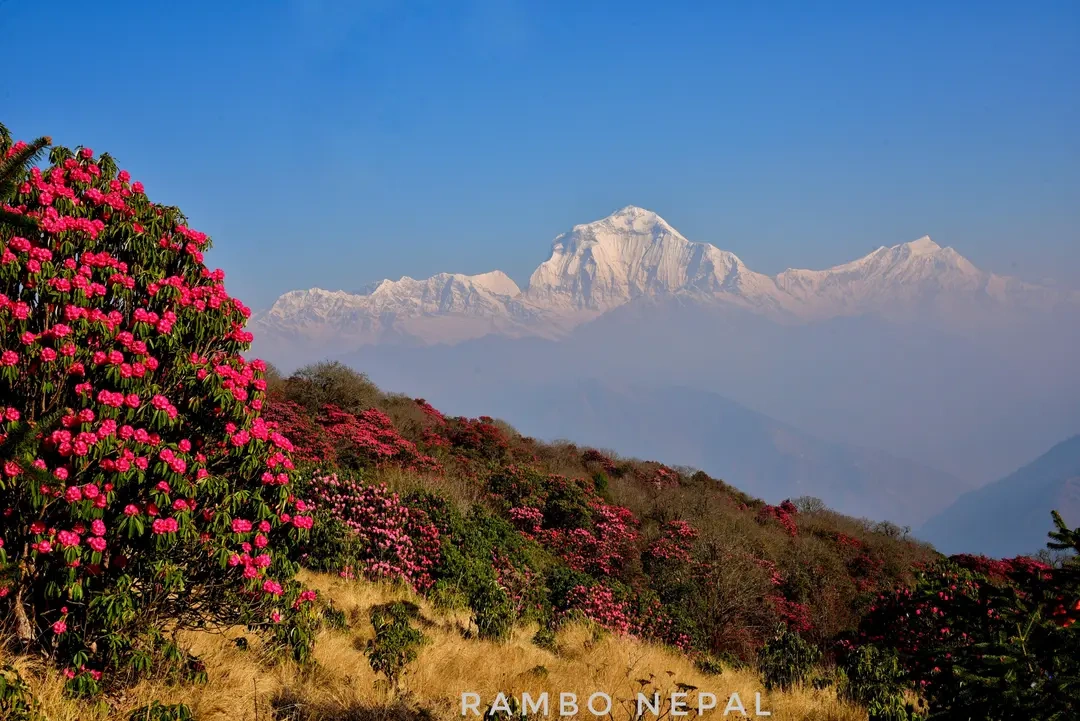
Spring is popular because daytime temperatures climb steadily, snow retreats from the passes, and rhododendron forests bloom between 2,000 and 3,500 m. March starts cold, April hits the balance, and May turns warm with afternoon cloud.
Rhododendron, Nepal's national flower, blooms in waves. Forests near 2,000 m turn red and pink in March, and blooms climb past 3,000 m by late April. The trails around Ghorepani in the Annapurna region and the forests below Namche Bazaar in the Everest region carry the strongest displays.
Spring is also expedition season. According to the Nepal Tourism Board, spring 2025 brought 127 expedition teams and 1,168 mountaineers from 73 nationalities to Nepal's peaks. Trekkers on the Everest Base Camp trail share the path with yak caravans loaded with expedition gear, and Base Camp itself fills with tents. Autumn Base Camp looks bare by comparison.
The trade-off is haze. Pre-monsoon dust and humidity soften distant ridgelines from late April, especially below 3,000 m. Early-morning starts recover the view. Crowds follow the good weather: arrivals reached 119,390 between mid-March and mid-April 2026, according to the Nepal Tourism Board.
Why Is Autumn Considered the Best Trekking Season in Nepal?
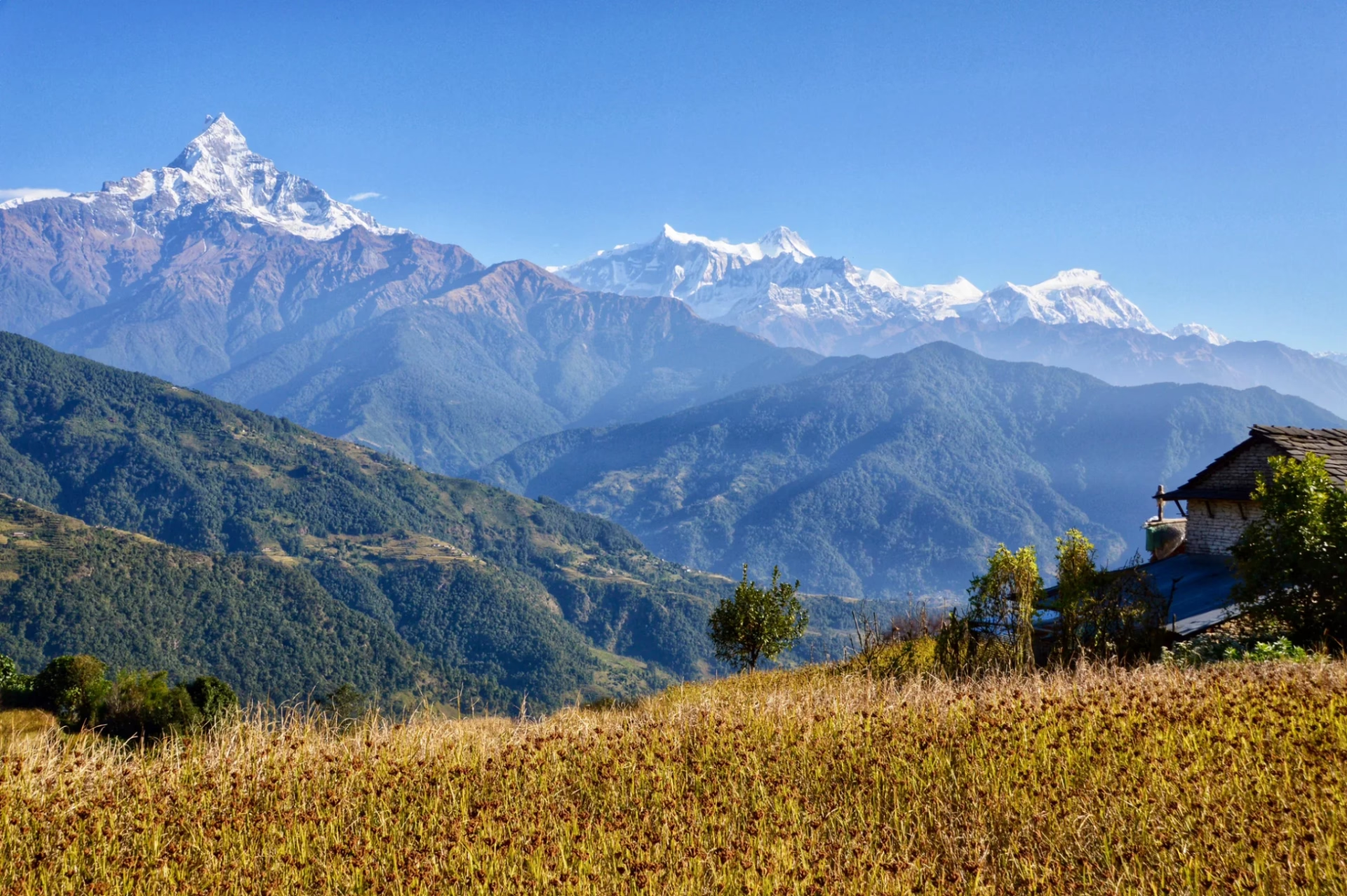
Autumn ranks first because the monsoon rains wash dust from the air, skies stay clear, and weather holds steady from late September to mid-November. Visibility peaks, high passes open, and Lukla flights run on their best schedule.
The post-monsoon period (the weeks after the rains withdraw in early October) leaves forests green, rivers full, and the air sharp. October flights to Lukla show the best reliability of the year, according to Everest trekking operators. Passes such as Thorong La (5,416 m) carry the lowest snow risk in October.
Stable does not mean guaranteed. Heavy snowfall between 24 and 27 September in a past season fully blocked the Thorong La trail until the Muktinath Hotel Association cleared it on 6 October.
Two festivals shape the autumn calendar for Nepali trekkers. Dashain, Nepal's largest festival, falls in late September or October. Domestic buses sell out, and some lodge families close for celebrations. Tihar, the festival of lights, follows within a month. Book road transport early for both.
Is Winter a Good Time for Trekking in Nepal?
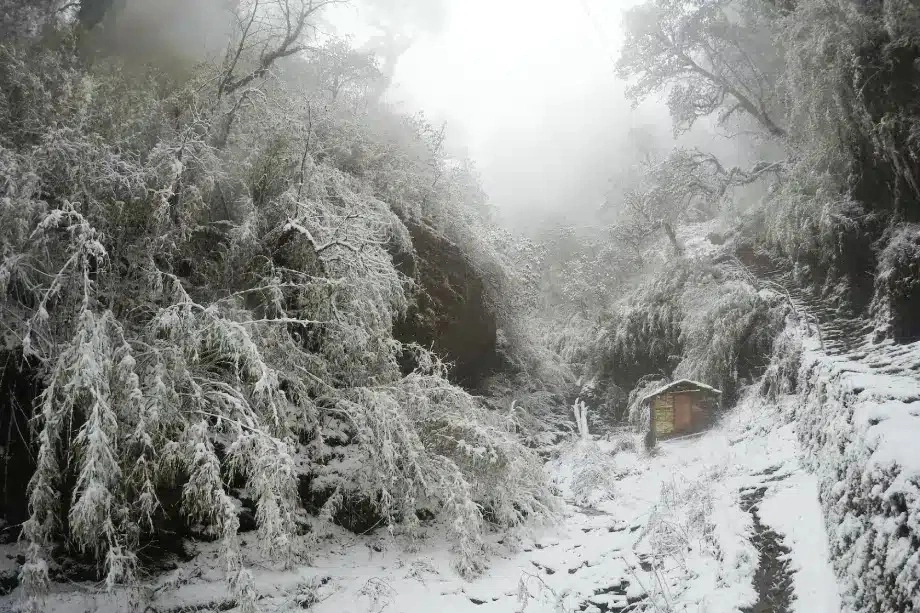
Winter is good for treks below 3,500 m and risky above 4,500 m. Days run dry and crisp, trails stay quiet, and views sharpen. Nights at Everest Base Camp altitude fall to -20°C to -30°C, and Kathmandu daylight shrinks to about 10 hours 30 minutes.
Winter rewards routes with low sleeping altitudes: Poon Hill (3,210 m), Helambu, and the Chisapani–Nagarkot ridge. Direct Kathmandu–Lukla flights also return once the peak-season Manthali shuttle ends, which shortens the journey to the Everest region.
High routes behave differently. Avalanche risk on the upper Annapurna Base Camp trail rises after fresh snow, Thorong La closes for days after storms, and several lodges above 4,000 m shut for the season. The Three Passes route stays off the winter menu entirely.
Can You Trek in Nepal During the Monsoon Season?
Yes. You can trek in Nepal during the monsoon (June–August) in rain-shadow regions: Upper Mustang, Dolpo, Nar Phu, and the upper Manang valley. The Annapurna and Dhaulagiri ranges block monsoon clouds from these areas. Regions south of the main Himalaya turn wet, leech-prone, and landslide-prone.
A rain shadow is a dry zone on the leeward side of a mountain range. According to Marvel Treks, Pokhara receives over 3,000 mm of rain from June to September, while Upper Mustang records roughly 250 mm in a full year, according to Trekking Team Nepal. The two places sit a few dozen kilometres apart.
Monsoon rain also declines from east to west. Khumbu in the Everest region does not sit behind the main rain shadow, so Everest Base Camp stays wet and cloudy from June through early September. Lukla flights cancel often, and trails below Namche slide.
Leeches thrive below 2,500 m in monsoon forest, and road sections to trailheads wash out. Rain-shadow treks also cost more than standard routes because of permits and logistics. Plan Upper Mustang first if you want to trek between June and August.
What Is the Best Month to Trek in Nepal?
October is the best month to trek in Nepal, followed by April, November, and March. October combines the lowest snow risk, the clearest views, and the most reliable Lukla flights. April adds rhododendron blooms and long days. Both months fill fast.
The table below scores each month out of 5 for general trekking conditions on the main routes (Everest, Annapurna, Langtang), with the main advantage and main risk.
Month | Main advantage | Main risk |
January | Sharp views, empty trails | Nights near -20°C, snow on passes |
February | Late-winter clarity | Snow above 4,000 m |
March | Stable weather, early blooms | Cold nights, late storms |
April | Rhododendrons, long days | Crowds, lowland haze |
May | Warm days, expedition buzz | Afternoon cloud, hot lowlands |
June | Rain-shadow routes only | Monsoon onset |
July | Green hills, quiet trails | Landslides, flight cancellations |
August | Upper Mustang, Dolpo | Peak rain, leeches |
September | Drying trails, fewer people | Early rain, Lukla cancellations |
October | Clearest skies, best flights | Peak crowds |
November | Dry, calm, thinning crowds | Cold nights, early sunsets |
December | Quiet trails, crisp air | Short days, closed lodges |
Scores shift by region. The sections below break down the 7 months that matter most.
Is March a Good Month for Trekking in Nepal?
Yes. March is good for trekking below 4,000 m and demanding above it. Weather stabilizes, lower forests start to bloom, and arrivals stay below April's peak. The Nepal Tourism Board recorded 121,687 arrivals in March 2025.
Temperatures show the gap between valley and altitude. Mid-altitude Annapurna villages reach 5–15°C by day and drop to between -5°C and 5°C at night, according to Himalayan Hero. Nights at Everest Base Camp fall near -15°C.
Late-season storms add risk. A single March storm closed Thorong La for an extended period in a past season and forced Annapurna Circuit trekkers to turn back at Upper Pisang. Choose Poon Hill, Langtang, or Everest Base Camp for March, and carry a -15°C sleeping bag.
Why Should You Trek in Nepal in April?
April is the peak spring month: skies run clear, rhododendrons bloom, and days stretch past 12 hours. The Nepal Tourism Board recorded 116,490 arrivals in April 2025, so teahouses and flights fill early.
April balances warmth and clarity better than any other month. Snow clears from mid-altitude trails, higher passes open, and the haze of May has not yet arrived. Nepali New Year falls in mid-April, which adds festival color to village stops.
The cost of this balance is crowding. Everest Base Camp trekkers fly from Manthali Airport in Ramechhap, 132 km from Kathmandu, and the Annapurna Circuit's Manang and Thorong La stages sell out. Reserve flights and lodges at least 4 months ahead for April departures.
Is May Too Hot for Trekking in Nepal?
No. May is warm above 3,000 m and hot below 1,500 m. Everest Base Camp daytime temperatures reach 5–10°C, according to Everest Trekking Routes. Afternoon cloud builds, and the monsoon reaches the Annapurna region around mid-June.
The Nepal Tourism Board counted 102,626 arrivals in May 2026, up 19.03 percent on May 2025. India supplied 40,782 of them, or 39.74 percent, which makes May the month when Indian trekkers and pilgrims dominate trail traffic.
Start walking at 6:00 am in May. Lowland sections and the Mustang stretch of the Annapurna Circuit turn uncomfortably hot by midday, according to Kandoo Adventures. Tiji, the three-day masked festival of Lo Manthang, usually lands in May and gives Upper Mustang a strong cultural draw.
Is September a Good Month for Trekking in Nepal?
September remains a transitional, wet month. While rain begins to taper toward the end of the month, the monsoon officially extends into early October, meaning trails usually stay damp and clouds often obscure the peaks. The Nepal Tourism Board recorded 88,248 arrivals in September 2026, about 31 percent below October 2025's 128,443.
Early September brings frequent Lukla cancellations, leeches in low forest, and cloud over the peaks. Late September may offer brief morning weather windows and lush green valleys, but trekkers should still expect high humidity, afternoon showers, and potential flight delays until the monsoon fully withdraws in October. The Manaslu region and the Larke Pass trail reopened in September 2026 after weather improved, according to Travel Extra.
Rain-shadow routes work best in September. Upper Mustang and Nar Phu stay dry, and crowds stay thin before the October rush. Dashain traffic can overlap with the last days of the month.
Why Is October One of the Best Months to Trek in Nepal?
October wins on 4 counts: the lowest snow risk on high passes, the clearest views, the most reliable Lukla flights, and stable temperatures. The Nepal Tourism Board recorded 128,443 arrivals in October 2025, the busiest month of the year.
Experienced Khumbu operators rate October as the best month for the Three Passes route. The monsoon has ended, daytime temperatures stay moderate, and snowfall stays light. October also holds the strongest case for Annapurna Circuit crossings of Thorong La.
Crowds carry a cost. According to The Himalayan Times, a 3-day weather halt in a past October stranded around 2,000 tourists in Manthali and 1,500 in Lukla. Add 2 buffer days to any October Everest itinerary. A shared helicopter from Ramechhap to Lukla costs 400–600 per person as a backup. Read the full month breakdown in Everest Base Camp Trek in October 2026: Weather & Costs.
Is November a Good Month for Trekking in Nepal?
Yes. November delivers clear skies, little rain or snow, and thinning crowds, with cold nights as the main cost. Nights at Everest Base Camp fall below -18°C, according to Everest Trekking Routes, and Kathmandu sunset reaches 5:14 pm by 1 December.
Late November suits trekkers who want October's weather without October's crowds. Visitor numbers drop after Tihar, and teahouse common rooms empty out. Annapurna Circuit trekkers find November and December quiet, but Thorong La snow can force delays or detours, according to Responsible Travel.
Pack a down jacket rated to -10°C and a sleeping bag rated to -15°C. The highest lodges, such as those around Gorak Shep, begin closing in the final week of the month.
Can You Trek in Nepal From December to February?
Yes, on low and mid-altitude routes. High passes close or turn dangerous. The shortest day arrives on 21 December with about 10 hours 22 minutes of daylight in Kathmandu. Everest Base Camp nights reach -20°C to -30°C, according to Himalayan Hero.
January brings the heaviest Thorong La snow. According to Responsible Travel, heavy January snowfall makes the pass treacherous, and many trekkers find the route blocked. Treat a full Annapurna Circuit crossing in winter as an expert-only plan.
Winter works well for Poon Hill, Helambu, the lower Langtang valley, and Kathmandu Valley rim walks. Views are crisp, lodges give discounted rooms, and you share the trail with few other trekkers. Carry a -20°C sleeping bag, insulated boots, and microspikes.
What Is the Best Time to Trek in Nepal by Region?
Each Nepal trekking region has its own window: Everest, Annapurna, and Langtang peak in October–November and March–May, while Upper Mustang works from April to October. Altitude and rain-shadow position explain the differences.
The 6 sections below give the exact window, a permit cost, and the main hazard for each region. Permit fees and rules change between seasons, so confirm current figures with your operator before booking.
When Is the Best Time to Trek in the Everest Region?
The best time to trek in the Everest region is mid-March to May and late September to mid-November. Skies clear, Lukla flights run most reliably, and Sagarmatha National Park trails stay open at every altitude.
Everest trekkers pay two mandatory fees: the Sagarmatha National Park permit costs NPR 3,000, and the Khumbu Pasang Lhamu Rural Municipality permit costs NPR 3,000 for foreign nationals.
Lukla logistics decide the experience. During March–May and September–November, flights to Lukla depart from Manthali Airport in Ramechhap, 132 km east of Kathmandu, according to Nepal Hiking Team. The flight lasts 15–20 minutes, compared with 30–35 minutes from Kathmandu. A Manthali–Lukla return ticket costs around $400 per person. Trekkers leave Kathmandu by road around 2:00 am to reach early departures.
When Should You Trek to Everest Base Camp?
Trek to Everest Base Camp in October for the best conditions, or in April for the best spring balance. Everest Base Camp (5,364 m) and the Kala Patthar viewpoint (5,545 m) deliver their clearest panoramas in those 2 months.
Temperature drops about 16°C between Lukla (2,860 m) and Base Camp. May daytime temperatures reach 5–10°C, while November nights fall below -18°C. April lets you stand in a working expedition camp, and October lets you stand in a quiet one.
A standard Everest Base Camp trek runs 12–14 days with acclimatization stops at Namche Bazaar and Dingboche. Add 2 buffer days for Lukla weather. Compare itineraries on Everest Base Camp Trekking.
What Is the Best Time to Trek in the Annapurna Region?
The best time to trek in the Annapurna region is March–May and October–November. Spring brings rhododendron forests at Ghorepani, and autumn brings clear views of Annapurna I and Dhaulagiri.
The Annapurna Conservation Area (ACAP) is the protected zone covering all Annapurna treks. Trekkers require two permits: the ACAP entry permit (NPR 3,000) and the mandatory TIMS card (NPR 2,000), both of which must be processed through a registered trekking agency. Annapurna Base Camp (4,130 m) and Poon Hill (3,210 m) sit south of the Himalayan crest and receive heavy monsoon rain.
Winter adds avalanche risk on the upper Annapurna Base Camp trail after fresh snowfall. Pick March, April, or October for Annapurna Base Camp, and choose November for the quietest trails.
When Is the Best Time to Trek the Annapurna Circuit?
October and November are best for the full Annapurna Circuit, with March and April next. Thorong La Pass (5,416 m) carries the lowest closure risk in those months.
A motor road now reaches Manang and Muktinath, according to Wikipedia, which leaves only the Thorong La crossing and the Ghorepani section without road access. The trek stays worthwhile in October and November, and trekkers use jeeps to skip road stretches.
Snow decides the calendar. Thorong La closes for days after heavy snowfall, and springtime crossings sometimes need microspikes. North of Manang, the circuit sits in a rain shadow, which keeps the upper half walkable in June and July. Start the Thorong La crossing between 4:00 and 5:00 am to finish before afternoon wind.
When Is the Best Time to Trek in the Langtang Region?
The best time to trek in the Langtang region is October–November and March–May. Langtang lies within a six-hour drive of Kathmandu, which makes it the most accessible high-Himalayan trek in Nepal.
Trekking in this region requires a Langtang National Park permit (NPR 3,000) and a mandatory TIMS card (NPR 2,000). The April 2015 earthquake destroyed Langtang village and killed nearly 300 people, according to Al Jazeera. The community has since rebuilt lodges and trails, and visitors support that recovery directly.
Kyanjin Gompa (3,870 m) anchors the route, with Langtang Lirung (7,227 m) filling the northern skyline. Monsoon landslides make the approach unreliable from June to September, and winter snow closes the upper valley. Explore a 10-day option on Langtang Valley Trekking.
Can You Trek in Upper Mustang During the Monsoon?
Yes. Upper Mustang is Nepal's best-known monsoon trek. The Annapurna and Dhaulagiri ranges block almost all monsoon moisture, and the region records roughly 250 mm of rain in a full year, according to Trekking Team Nepal.
Upper Mustang is a restricted area requiring a special $500 permit and a minimum of two trekkers. Additionally, under current Nepal Tourism Board regulations, independent trekking is banned for foreign nationals across all national parks and conservation areas in Nepal (including Annapurna and Langtang). You must hire a government-licensed guide through a registered local agency. According to Peregrine Treks, book permits at least 8 weeks ahead in peak monsoon months.
Walk in the morning. Afternoon winds along the Kali Gandaki valley strengthen, and clouds delay Pokhara–Jomsom flights. Tiji (May) and Yartung (August) bring Lo Manthang's festival calendar into the window. See the full route on Upper Mustang Trek.
How Do Weather and Climate Affect Trekking in Nepal?
Altitude, monsoon rain, snowfall, and daylight set Nepal's trekking conditions. Temperature falls about 6.5°C per 1,000 m of elevation gain, monsoon rain concentrates between June and September, and winter daylight shrinks to about 10.5 hours.
Each factor interacts with the others. A clear October morning at 5,000 m still starts below freezing, and a warm May afternoon at 3,000 m still ends in cloud. The 4 sections below translate each factor into planning decisions.
How Does Temperature Vary Across Nepal's Trekking Regions?
Temperature drops by about 6.5°C for every 1,000 m you climb. Kathmandu sits at 1,317 m, Lukla at 2,860 m, and Everest Base Camp at 5,364 m, a gain of 2,504 m that cuts temperatures by roughly 16°C.
Seasonal swings stack on top of altitude. Mid-altitude Annapurna villages reach 5–15°C by day in March, according to Himalayan Hero. Everest Base Camp reaches 5–10°C by day in May, falls below -18°C at night in November, and drops to -20°C to -30°C at night in winter.
Match sleeping gear to the coldest stage of the route, not the starting village. A -15°C bag covers spring and autumn up to 5,000 m. Winter needs -20°C.
How Do Rainfall and Snowfall Affect Trekking Conditions?
Rainfall shapes trail safety between June and September, and snowfall shapes pass access between December and April. Pokhara receives over 3,000 mm of rain from June to September, while Upper Mustang receives roughly 250 mm per year.
The monsoon reaches Nepal around mid-June. While it historically withdrew by late September, the Department of Hydrology and Meteorology now officially marks the standard withdrawal date as October 2, and heavy rains frequently linger into the first or second week of October. Eastern Nepal receives more rain than western Nepal, which makes Everest wetter than Dolpo. Rain brings landslides, trail mud, leeches below 2,500 m, and flight cancellations at Lukla and Jomsom.
Snow closes Thorong La most often between December and February, though storms also strike in March and late September. Checkpoints such as Koto in the Marsyangdi valley relay closure news. Add 2 buffer days to any pass crossing, and confirm trail status with your guide the evening before.
When Can You Expect the Clearest Mountain Views in Nepal?
The clearest mountain views arrive between mid-October and late November, in the first 3 hours after sunrise. The post-monsoon air carries the least dust and humidity, and cloud builds after mid-morning.
Spring views soften from late April as haze builds below 3,000 m. Winter views stay sharp, though cold limits how long you stand outside. Monsoon cloud hides the Himalaya from Pokhara and Namche for most of June to August.
Plan viewpoint climbs around sunrise. Kala Patthar at dawn in October produces the strongest Everest panorama of the year, and Poon Hill at first light delivers Annapurna and Dhaulagiri before cloud arrives. Sleep near the viewpoint instead of climbing from a lower lodge.
How Do Daylight Hours Affect Trekking Plans?
Daylight in Kathmandu runs about 14 hours in June and about 10 hours 24 minutes in December. Winter sunrise arrives near 6:47 am and sunset near 5:12 pm. Mountain valleys lose direct sun earlier than those times.
Winter itineraries need earlier starts and shorter days. A 6-hour walking day in December starts at 7:00 am and ends before 3:30 pm, which leaves time to reach the lodge before temperatures plunge. Summer and early autumn days give 2 extra hours of margin.
Big-day starts break the daylight rule. Thorong La crossings and Kala Patthar sunrise climbs begin between 4:00 and 5:00 am with a headlamp, in every season. Pack spare batteries, since cold drains them fast.
How Can You Choose the Best Time to Trek in Nepal?
Choose the best time by matching 4 factors: experience level, crowd tolerance, budget, and route altitude. Beginners pick October or April on routes under 4,200 m. Crowd-avoiders pick late November, early March, or September rain-shadow routes. Budget trekkers pick winter or early September.
Write down the 3 dates you can travel, then check each against the region windows above. The 5 sections below cover the decisions that matter most.
What Is the Best Trekking Season in Nepal for Beginners?
Beginners trek best in October–November or April, on routes below 4,200 m. Weather is stable, flights are reliable, and lodges operate at full capacity, which makes problems easy to fix.
Three routes suit first-time trekkers: Poon Hill (3,210 m, 4–5 days), Langtang Valley (9 nights, 10 days), and Annapurna Base Camp (4,130 m). All 3 keep sleeping altitudes moderate.
According to the CDC Yellow Book, above 3,000 m, increase your sleeping elevation by no more than 500 m per day and take a rest day every 3–4 days. Warm spring weather masks early altitude symptoms because dehydration accelerates in the heat, so drink 3 litres per day. Skip winter for a first high-altitude trek.
When Should You Trek in Nepal to Avoid Crowds?
Avoid crowds with late November, early March, late May, September, or rain-shadow routes. September 2026 drew 88,248 arrivals, about 31 percent below October 2025's 128,443, according to the Nepal Tourism Board.
Region choice beats month choice. Langtang, Manaslu, and Nar Phu carry fewer trekkers than Everest or Annapurna in the same month. The Manaslu Circuit crosses Larke Pass (5,106 m) and reopened in September 2026, according to Travel Extra. Explore Manaslu Circuit Trek for a quieter autumn alternative.
Dashain and Tihar thin foreign crowds on the trail but swell domestic traffic on roads and at viewpoints like Poon Hill. Start midweek and skip popular overnight stops like Namche Bazaar and Annapurna Base Camp on weekends.
What Is the Cheapest Time of Year to Trek in Nepal?
January–February and June–August are the cheapest windows, with early September and December next. Lodges discount rooms, operators discount packages, and flights cost less when demand falls.
Three cost drivers move with the season: package pricing, lodge rates, and flight logistics. Airlines revised Kathmandu–Lukla and Ramechhap–Lukla fares from 1 March 2026, and a Manthali–Lukla return ticket costs around $400 per person. Direct Kathmandu flights run outside peak months.
Cheap seasons carry trade-offs. Winter cuts lodge access above 4,000 m, and monsoon cuts visibility. Rain-shadow treks cost more than standard routes, according to Peregrine Treks, so Upper Mustang saves nothing on price. Save money with a shoulder-season departure in early March or late November instead.
What Should You Pack for Different Trekking Seasons in Nepal?
Pack layers for every season, then add season-specific gear: sun protection for spring, a -10°C down jacket for autumn, a -20°C sleeping bag for winter, and rain gear with leech protection for monsoon.
All seasons share a core kit. Carry broken-in boots, trekking poles, a headlamp, water purification tablets, a power bank, and a first-aid kit.
Spring kit:
Pack a sun hat, sunglasses, and SPF 50 sunscreen
Bring a lightweight rain shell for afternoon showers
Carry a -10°C sleeping bag for March nights
Autumn kit:
Pack a down jacket rated to -10°C
Bring insulated gloves and a warm hat
Carry a -15°C sleeping bag above 4,000 m
Winter kit:
Pack a -20°C sleeping bag and insulated boots
Bring microspikes for icy sections
Carry glacier glasses for snow glare
Monsoon kit:
Pack a poncho, gaiters, and waterproof stuff sacks
Bring leech socks and insect repellent
Carry quick-dry layers and spare socks
Gear hire in Kathmandu covers sleeping bags and poles, which saves luggage weight on a first trek.
How Far in Advance Should You Book a Nepal Trek?
Book 4–6 months ahead for October and April departures, 8 weeks ahead for Upper Mustang permits, and 4–6 weeks ahead for winter or monsoon treks. Spring 2027 windows open for booking now.
Peak-season Lukla seats sell out first, and Annapurna Circuit teahouses in Manang and near Thorong La fill quickly, according to Kandoo Adventures. Booking early also locks in domestic transport during Dashain, when bus tickets disappear.
Late bookers still find options. Shoulder months and rain-shadow routes keep availability, and a lead time of 6 weeks has worked for May Everest Base Camp departures. Buy travel insurance that covers helicopter evacuation up to 6,000 m before you pay a deposit.
How Can Heaven Himalaya Help You Plan the Best Time to Trek in Nepal?
Heaven Himalaya Treks & Expedition is a Kathmandu-based local operator that plans treks across Nepal, Tibet, Bhutan, and India. The company lists affiliations with the Nepal government, the Nepal Tourism Board, TAAN, NMA, and KEEP, and holds a 5.0 rating from 160 Tripadvisor reviews.
We operate as a direct local operator without middle-agent commissions. Our catalog covers 55 trekking trips, 9 photo expeditions, 5 peak climbs, and 3 helicopter tours, which gives us a route for every season in this guide.
The listed prices below match the seasons covered above.
Trek | Length | Listed price | Best window |
Langtang Valley Trekking | 9 nights, 10 days | $760 | Oct–Nov, Mar–May |
Annapurna Base Camp Trek | 14 nights, 15 days | $1,250 | Mar–May, Oct–Nov |
Manaslu Circuit Trek | 13 nights, 14 days | $1,399 | Sep–Nov, Mar–May |
Everest Base Camp Trekking | 13 nights, 14 days | $1,499 | Oct–Nov, Mar–May |
Annapurna Circuit with Tilicho Lake Trek | 17 days | $1,460 | Oct–Nov, Mar–Apr |
Upper Mustang Trek | 17 nights, 18 days | $2,499 | Apr–Oct |
Prices come from the Heaven Himalaya website at the time of writing and change by season and group size. Reviewers describe itineraries adjusted to their pace, buffer days added for weather, and gear hire arranged before departure.
Can Heaven Himalaya Help You Choose the Right Trekking Season?
Yes. Heaven Himalaya matches your dates, fitness, and budget to a route and season, then builds buffer days into the itinerary. Share 3 details and you receive a tailored recommendation: your possible travel dates, your trekking experience, and your daily budget.
Two paths work. Pick a route first and we confirm its best window, or pick a window first and we recommend the route with the best conditions in it. Nepali trekkers and international trekkers both get plans that account for holiday travel, flight logistics, and permit lead times.
Plan Your Trek with Heaven Himalaya Tell us your dates and we match them to the right route, season, and buffer plan. WhatsApp: +977 985 1273867 · Phone: 014957403 · Email: info@heavenhimalaya.com Office: Gitanjali Chowk, Dathu Sadak, Kathmandu, Nepal
What Should You Know Before Choosing the Best Time to Trek in Nepal?
The best time to trek in Nepal is October for conditions, April for scenery, and a rain-shadow route for the monsoon. Region, altitude, crowds, and budget decide which of those 3 answers fits you.
Use this checklist before you book:
Pick October for the clearest skies and the most stable passes
Choose April for rhododendron blooms and long days
Select late November or early March for good weather with thinner crowds
Book Upper Mustang or Nar Phu for any June–August departure
Add 2 buffer days for Lukla flights and Thorong La snow
Pack for the coldest night of the route, not the first night
Confirm permits, fees, and insurance with your operator before paying a deposit
Nepal's trekking calendar rewards early planning. Spring 2027 booking opens now, and the October 2027 rush follows the same pattern as October 2025's 128,443 arrivals. Match your dates to your region, and the best time to trek in Nepal becomes a clear, specific month.