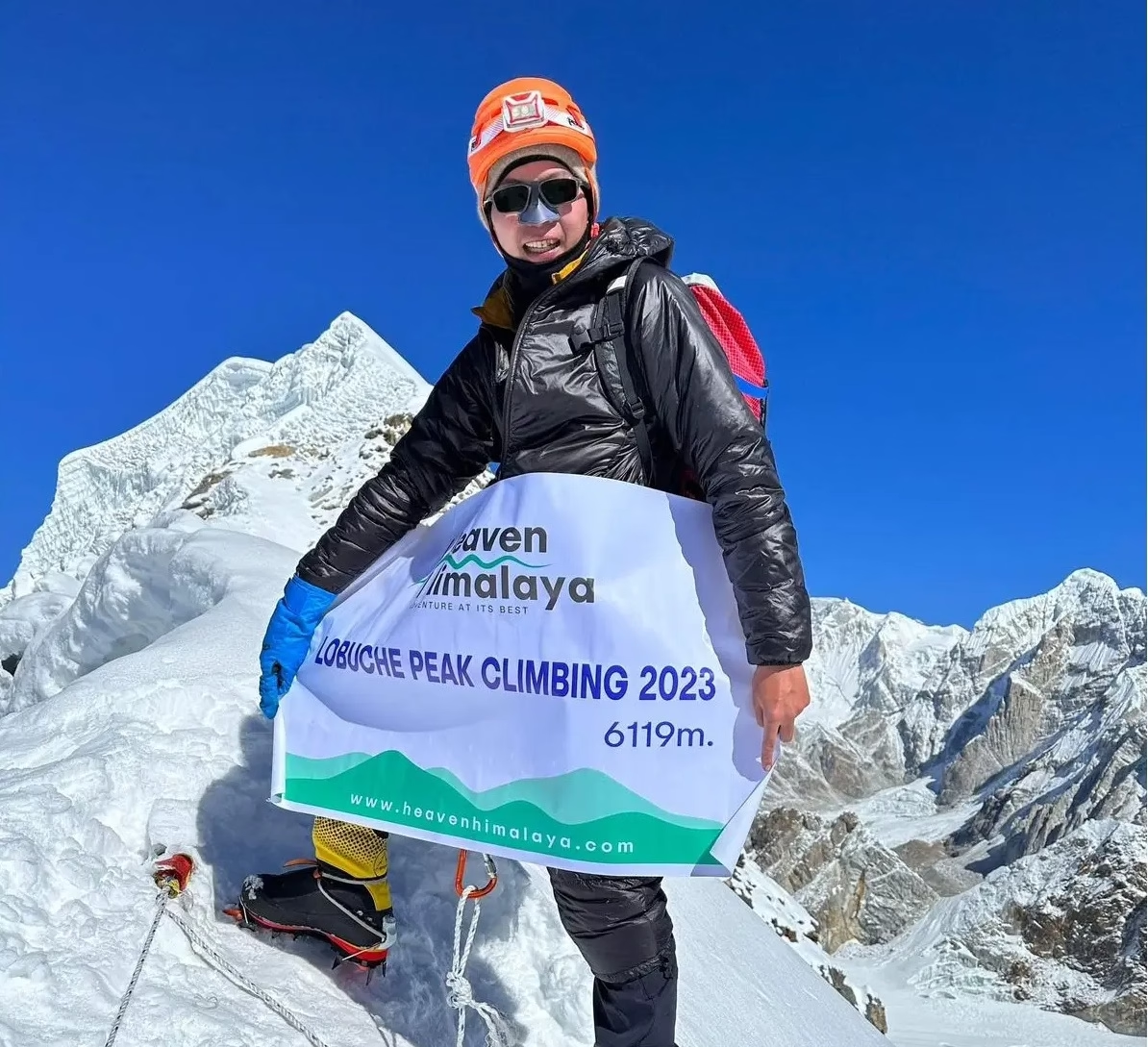
Trek along Nepal’s iconic Everest Base Camp trail, witness the majestic Everest and surrounding Himalayan peaks at their finest, and experience the rich culture, traditions, and way of life of the Sherpa people up close
DestinationNepal
Duration14 days
Trip DifficultyModerate
ActivitiesTrek
Max. Elevation5545m.
Group SizeMax. 20 Pax
VehicleCar & Flight
AccommodationHotel & Guesthouse
MealsB.L.D
Iconic ViewpointKalapatthar, Hotel Everest View
Lukla Flight Information
Nowadays, the Kathmandu to Lukla flight is often diverted to the Ramechhap/Manthali airport, especially during the peak months of March, April, May, October, and November.
Thus, if you're planning a trip during these months, we will have to drive 4-5 hours from Kathmandu to the Manthali Airport in the Ramechhap district to board the flight to Lukla. During the remaining months (including January, February, June, July, August, September, and December) you will have a normal flight from Kathmandu to Lukla.
Please be aware that Lukla flight decisions solely depend on the airlines and the Civil Aviation Authority in Nepal. Further, weather complications, natural calamities, and airport traffic congestion are some reasons for the delay or cancellation of flights.
Thus, in such cases, you have two options: either take a helicopter ride from Kathmandu or increase the itinerary time frame. The emergency fund we mentioned above comes in handy in such situations. We do not cover the helicopter ride or extra days. We hope the weather is good every day. But if the situation persists and you have no option for either a helicopter ride or extra days, then our team will work with you to arrange alternate plans.
Introduction to Everest Base Camp Trek
Are you dreaming of standing beneath the world's highest peak?
The Everest Base Camp (EBC) trek delivers that thrill without the risks of a summit push. This hike takes you to the base camp of the world's highest peak (5,364m), offering jaw-dropping panoramas of Mt. Everest (8,848 m), Cho Oyu (8188 m), Lhotse I (8516 m), Nuptse (7861 m) and Ama Dablam.
Although our straightforward 14-day Nepal trek begins in Kathmandu, the real trek starts in Lukla, the gateway to the Khumbu Valley.
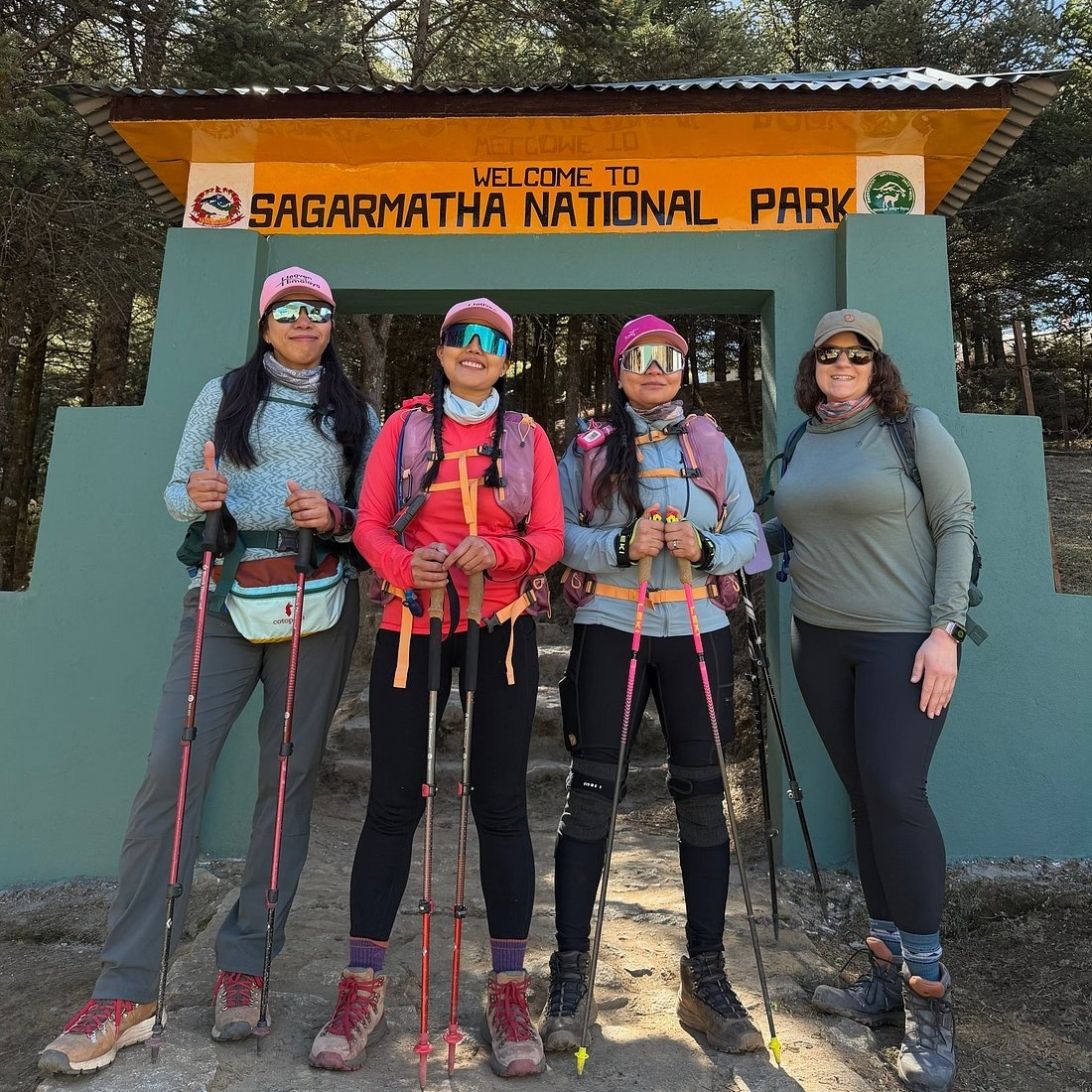
From Lukla, you'll follow the Dudh Koshi River through Sagarmatha National Park. Passing through several authentic Sherpa settlements like Chheplung, Phakding, Bengkar, Toktok, Monjo, and Jorsalle, you reach Namche Bazaar- the perfect acclimatization stop amid Sherpa markets and mountain views.
The next phase of the journey continues to the spiritual center ofTengboche Monastery, then onward to Dingboche, Lobuche, and Gorakhshep. You'll have fun trekking beside the massive Khumbu Glacier to reach Everest Base Camp, where you can spot colorful climber tents during peak climbing months (April and May).
However, the true highlight of this EBC trek for many is the dawn hike to Kala Patthar(5,545m). Standing on this summit ridge offers a marvelous sunrise and the best close-up views of Everest- arguably better than the view from base camp itself.
This EBC trek is not a luxury holiday; it is a pure adventure on a high-Himalayan trail. You'll spend your night in basic teahouses with simple rooms and meals. Hot showers, Wi-Fi, and device charging facilities are available, but a small fee applies. In the mountains, these luxuries cost a few extra bucks.
This is the challenging trek; however, with our carefully planned itinerary for proper acclimatization, any hiker with good fitness and determination can achieve this dream.
Still, not ready to trek? Try out the EBC Helicopter Tour for a luxury alternative.
Ready for your Everest moment? Secure dates and expert Sherpa guides- book now for 2026!
EBC Trek Major Highlights
Looking for the highlights of the Mount Everest Base Camp trek? Well, there are many
You take a trip to the Khumbu District of Nepal on an energizing and picturesque trip to Lukla.
We pass an all-around, stamped trail to the EBC, with fascinating Sherpa towns up and down the route.
It is a chance to learn about Sherpa individuals, their conventional culture, and their way of life.
The trail runs over the fringe of Sagarmatha National Park, that stretches out over a wide scope of geological and altitudinal districts enhanced with assortments of vegetation and fauna.
Namche Bazaar, a vivacious town in the Khumbu District of Nepal, is the only entryway to the Mount Everest region.
Tengboche Religious Community-a spiritual focus and Monastries along the way which are deeply embedded in the Sherpa Culture.
Everest Base Camp, the base camp of the world's highest mountain, Mount Everest (8848.86 m),
Hike to Kala Patthar, from where one can enjoy the sunrise views amid the panoramic views of the mountains in the Everest region.
Mesmerizing views of mountains, Gokyo lakes, glaciers, and the Everest district from the sky
At Heaven Himalaya, we have experienced high-altitude mountain guides who have led countless trekking groups to the base camp. Since our establishment, we have helped over 1,000 adventurers complete their EBC trek. Our travel packages are available for tourists of all ages and are customizable according to fitness levels.
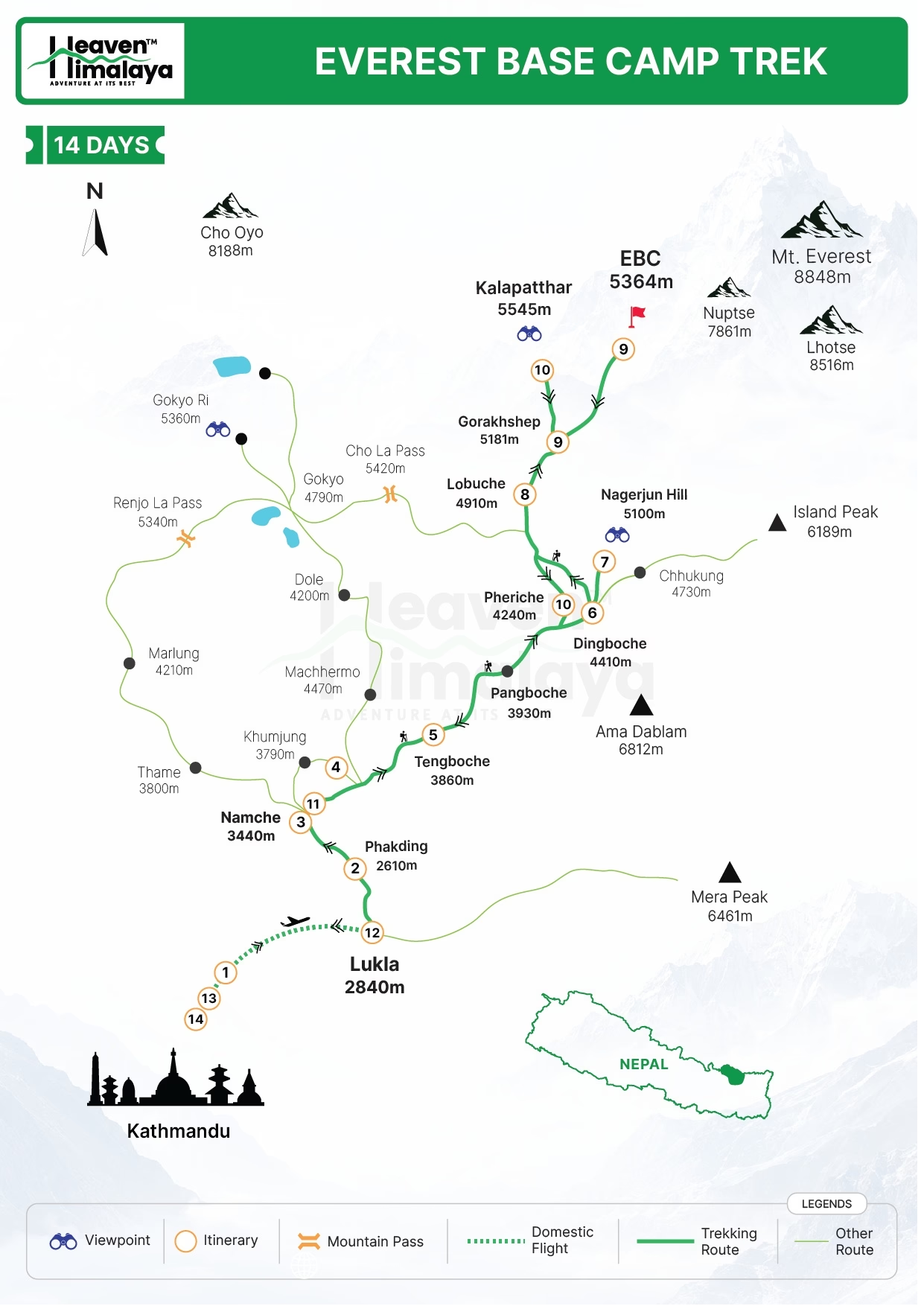
First, you fly to Kathmandu, the capital of Nepal. Next, you take a flight to Lukla Airport, either from Ramechhap or Kathmandu. After Lukla, the trail takes you through Sherpa villages such as Phakding, Namche Bazaar, Tengboche, Dingboche, Lobuche, and Gorakshep, ultimately leading you to Mount Everest Base Camp.
The time of year for a Mount Everest tour is from March to mid-May and from late September until late November. During these periods, the weather remains calm, with a bright sky and little to no rain.
The difficulty of the Everest Base Camp Trek is considered moderate due to it being a hike on a well-established trail. However, it does involve walking in mountainous terrain and at high altitudes.
Route Choices for the EBC Trek
There are two base camps, the North (5,150 m) and South (5,364 m), and the southern part of Nepal is more popular than the Chinese side, which requires a complex permit system.
The EBC Trek in Nepal is one of the most popular adventure trips worldwide, with multiple routes available to choose from based on your length of stay, adventure plans, and determination.
The Traditional walking route to EBC starts in Jiri and leads to Lukla. But our standard Mount Everest Base Camp Trek begins at Lukla and passes through villages like Phakding, Namche, Tengboche, Lobuche, and Gorakshep to reach the base camp. It's a more popular route, making it relatively safer. Thus, you encounter several fellow trekkers and tourists on the way.
In this travel package, we offer the classic and most popular Everest Base Camp Trek itinerary, which is a fantastic choice for any adventurer.
One-way Everest Base Camp Trek with Helicopter return to Kathmandu
Suppose you have fewer days available or are reluctant to exert your body harshly via long days of trekking activity. You can use a helicopter to return to Kathmandu after your base camp summit. There's a helipad near Gorak Shep (5164 meters) from where you fly directly to Kathmandu airport.
This is a more comfortable and relaxing way to experience trekking to the highest mountain.
Why Us?
When you choose to book an Everest Base Camp trek package with Heaven Himalaya, you'll already be ahead of other trekkers in terms of service and benefits.
A local mountain trekking guide with extensive knowledge of the routes will accompany you. Booking with us means you'll walk with Sherpa locals and support their livelihood.
While foreign companies offer similar trips to Everest Base Camp, they can't do it on their own. They hire government-registered companies like us in Nepal. Booking with them means you'll pay intermediaries' fees out of your pocket.
By planning your trip with us, you'll pay the lowest cost with no commission fees. Additionally, you'll benefit from
A focus on clients' safety, with our trip organized with the utmost safety in mind
The best price guarantee
Free transfers from the airport to the hotel and back in a private vehicle
Trained, government-licensed local guides who have an entire knowledge of local routes
Support for locals to earn their living through tourism
An oximeter for monitoring oxygen levels while on a high-altitude EBC trek
Guides with medical kits to handle situations that may arise
Arrangements for sleeping bags and down jackets
Free storage at the Heaven Himalaya office store for extra luggage during your tour
A duffel bag to transfer your items from luggage to be carried during the journey
A free porter to help carry your heavy bags.
From Short Treks to Luxury Lodges: Everest Base Camp Tours for Every Traveler
The Mount Everest Base Camp Trek is an incredible journey that offers breathtaking views of the landscape, mountains, and hills. You experience the chill of fresh mountain air coming down from the world’s tallest peak during this once-in-a-lifetime trek. If you have time constraints, then we have an 11-day Everest Base Camp Short Trek.
For those seeking an even greater challenge, you can choose to go on an amazing Mt. Everest expedition or heli tour up to or from the base camp. We also have other trekking tours that include a tour of the EBC, such as the Three High Passes Trek, EBC, Gokyo, and Chola Pass Trek.
If you’re looking for a luxurious experience during the EBC Trek in Nepal, we offer a luxury lodge trip with 5-star hotel accommodations. Alternatively, if you're short on time or want a more comfortable trek, you can take the Everest Base Camp Trek with a helicopter return. With this, you trek to base camp and fly back to Kathmandu after the tour.
All the Mount Everest trips that connect with the base camp offer new, raw experiences. However, the several interconnected and challenging trekking trails may confuse you, leading you to get lost. Nevertheless, the end product is worth it.
With us, you can join an Everest group tour or take a private trip.
Everest Base Camp Trekking Timeline: Distance, Altitude & Time Breakdown
Day 01: Arrival at the international airport in Kathmandu and transfer to the hotel. Overnight at a hotel. Kathmandu Airport (1,400 m / 4,593 ft) to the hotel in Thamel. Time Required: 30-minute drive. Distance to be covered: 6 kilometers (3.7 miles) approx.
Day 02: Flight to Lukla (2,840 m) from Kathmandu and then trek to Phakding Lukla (2,840 m / 9,318 ft) to Phakding (2,610 m / 8,562 ft), Time Required: 4 hours, Distance to be covered: 6.2 kilometers (3.85 miles) approx.
Day 03: Trek from Phakding to Namche Bazaar. Overnight at a guesthouse in Namche. Phakding (2,610 m / 8,562 ft) to Namche Bazaar (3,440 m / 11,283 ft), Time Required: 6 hours, Distance to be covered: 9.4 kilometers (5.84 miles) approx.
Day 04: Acclimatization Day at Namche Bazaar Namche Bazaar (3,440 m / 11,283 ft) to Everest View Hotel (3,962 m / 12,995 ft) and back. Time Required: 3–4 hours, Distance to be covered: 4.2 kilometers (2.6 miles) approx. (round trip)
Day 05: Trek from Namche Bazaar to Tengboche. Overnight at a guesthouse.Namche Bazaar (3,440 m / 11,283 ft) to Tengboche (3,860 m / 12,680 ft), time required: 5 hours. Distance to be covered: 9.2 kilometers (5.72 miles) approx.
Day 06: Trek from Tengboche to Dingboche. Overnight at a guesthouse. Tengboche (3,860 m / 12,680 ft) to Dingboche (4,410 m / 14,464 ft), Time Required: 5 hours, Distance to be covered: 9.1 kilometers (5.65 miles) approx.
Day 07: Acclimatization Day at Dingboche Dingboche (4,410 m / 14,464 ft) to Nagerjun Hill (~5,616 m / 18,425 ft) and back. Time Required: 4–5 hours, Distance to be covered: ~5 kilometers (3.1 miles) approx. (round trip)
Day 08: Trek from Dingboche to Lobuche. Overnight at a guesthouse. Dingboche (4,410 m / 14,464 ft) to Lobuche (4,910 m / 16,105 ft), Time Required: 5 hours, Distance to be covered: 11–12 kilometers (6.8 to 7.5 miles) approx. Straight-line distance: 7 kilometers (4.3 miles)
Day 09: Trek from Lobuche to Gorakshep and Everest Base Camp, then return to Gorakshep. Overnight at a guesthouse. Lobuche (4,910 m / 16,105 ft) to Gorakshep (5,181 m / 16,990 ft) to Everest Base Camp (5,364 m / 17,594 ft) and back to Gorakshep, Time Required: 8 hours, Distance to be covered: 12–13 kilometers (7.45 to 8.1 miles) approx.
Day 10: Trek from Gorakshep to Kala Patthar and descend to Pheriche. Overnight at a guesthouse. Gorakshep (5,181 m / 16,990 ft) to Kala Patthar (5,545 m / 18,192 ft) to Pheriche (4,240 m / 13,910 ft), Time Required: 7 hours, Distance to be covered: 13 kilometers (8 miles) approx.
Day 11: Descend from Pheriche to Namche. Overnight at a guesthouse. Pheriche (4,240 m / 13,910 ft) to Namche Bazaar (3,440 m / 11,283 ft), Time Required: 7 hours, Distance to be covered: 14 kilometers (8.7 miles) approx.
Day 12: Descend from Namche to Lukla. Overnight at a guesthouse. Namche Bazaar (3,440 m / 11,283 ft) to Lukla (2,840 m / 9,318 ft), Time Required: 7 hours, Distance to be covered: 13.5 kilometers (8.4 miles) approx.
Day 13: Fly back from Lukla to Kathmandu or Ramechhap and transfer to the hotel. Lukla (2,840 m / 9,318 ft) to Kathmandu (1,400 m / 4,593 ft) or Ramechhap, Time Required: 25–30 minutes flight + 4–5 hours drive (if Ramechhap). Distance (by air): 138 kilometers (85.7 miles) approx.
Day 14: Farewell and transfer to Kathmandu Airport for final departure. Hotel in Thamel to Kathmandu Airport (1,400 m / 4,593 ft), Time Required: ~30 mins drive, Distance to be covered: 6 kilometers (3.7 miles) approx.
Round-trip flight (Kathmandu-Lukla) with departure taxes
All ground transportation for the entire Mt. Everest Base Camp Trek is in a private vehicle, including the airport transfers.
2 nights' accommodation in a 3-star category hotel in Kathmandu with breakfast plan
12 nights and 13 days of accommodation in the guesthouses available (on a twin-sharing basis) after leaving Kathmandu until you are back here again. We also provide personal bathrooms with hot showers in Phakding, Lukla, and Namche.
12 daily meals with breakfast, lunch, and dinner throughout the EBC trekking journey
Snacks of fresh, seasonal fruits on the trekking days
National Park and Heritage Sites entry tickets
Two trekking permits (SNP and KPL Rural Municipality Permit)
A licensed, English-speaking, experienced Everest trekking guide
An assistant guide with a group of 6+ members
Porters to carry your baggage during your Everest journey (1 for two clients)
All the costs for food, accommodation, salary, and other equipment for the guide and porter, including accidental insurance
Duffel bag and sleeping bags to use during trekking
Heaven Himalaya T-shirts, a route map, and a travel completion certificate
An oximeter to measure your oxygen and pulse level during the trek in the mountain is very useful for all the trekkers to be aware of the high altitude sickness.
Compressive first aid box (the guide will carry it throughout the trek).
Emergency rescue operation assistance is arranged in case of complex health conditions (funded by your travel insurance).
All paperwork and applicable government taxes and service charges.
Exclusions
Nepal entry visa fees (USD 50 for a tourist visa, and it can be obtained at the airport in Kathmandu on arrival!)
Travel insurance
Extra accommodation and meals behind schedule the scheduled times of this trekking trip program
All kinds of beverages, including alcoholic and nonalcoholic, as well as hot and cold drinks
Any additional costs beyond the planned itinerary due to flight delays, cancellations, weather conditions, illness, changes in government policies, strikes, or any other unforeseen circumstances beyond our control: including extra days of accommodation and meals
Personal expenses such as shopping, hot and cold drinks, hot shower, hard and soft alcohols, snacks, hot and cold water, Wi-Fi, battery recharge fees,
Travel insurance has to cover emergency rescue evacuation from high altitudes up to 6000 m.
Personal trekking equipment for this trek
Tipping and Gratitude to the guides and staff (Recommended by Nepali culture)
Any other expenses that are not mentioned in the Price Inclusive section of this trek
Dates & Availability
Note to Travelers
Our Everest Base Camp Trek costs include all ground costs, fully personalized benefits, and a free porter. We are a local tour operator, so the quote you get is the best price, with no mid-commission fees.
Kindly note that the start dates are your dates of arrival in Nepal, and your end dates are the dates of your departure from Nepal. Select a date and add several people, and then proceed to make a reservation.
Besides, the trekking fees mentioned here cover your 14-day itinerary. An additional cost will be generated if you have extra days in Kathmandu or would like to add or subtract the number of trekking days.
All prices per person, twin share. Subject to availability — Everest Base Camp Trek dates fill quickly in peak season.
14 days Everest Base Camp Trek Itinerary
Day 01 :Arrival in Kathmandu, Nepal, at Tribhuvan International Airport
Elevation: 1,400m
Duration: 30 m
Accommodation: Hotel
Meals: Breakfast Included
Welcome to the capital city of Nepal, Kathmandu. The valley is the land of pure mysticism and spirituality. Kathmandu is known as the "city of temples." Whether you come by road or by air, our representative will greet and warmly receive you.
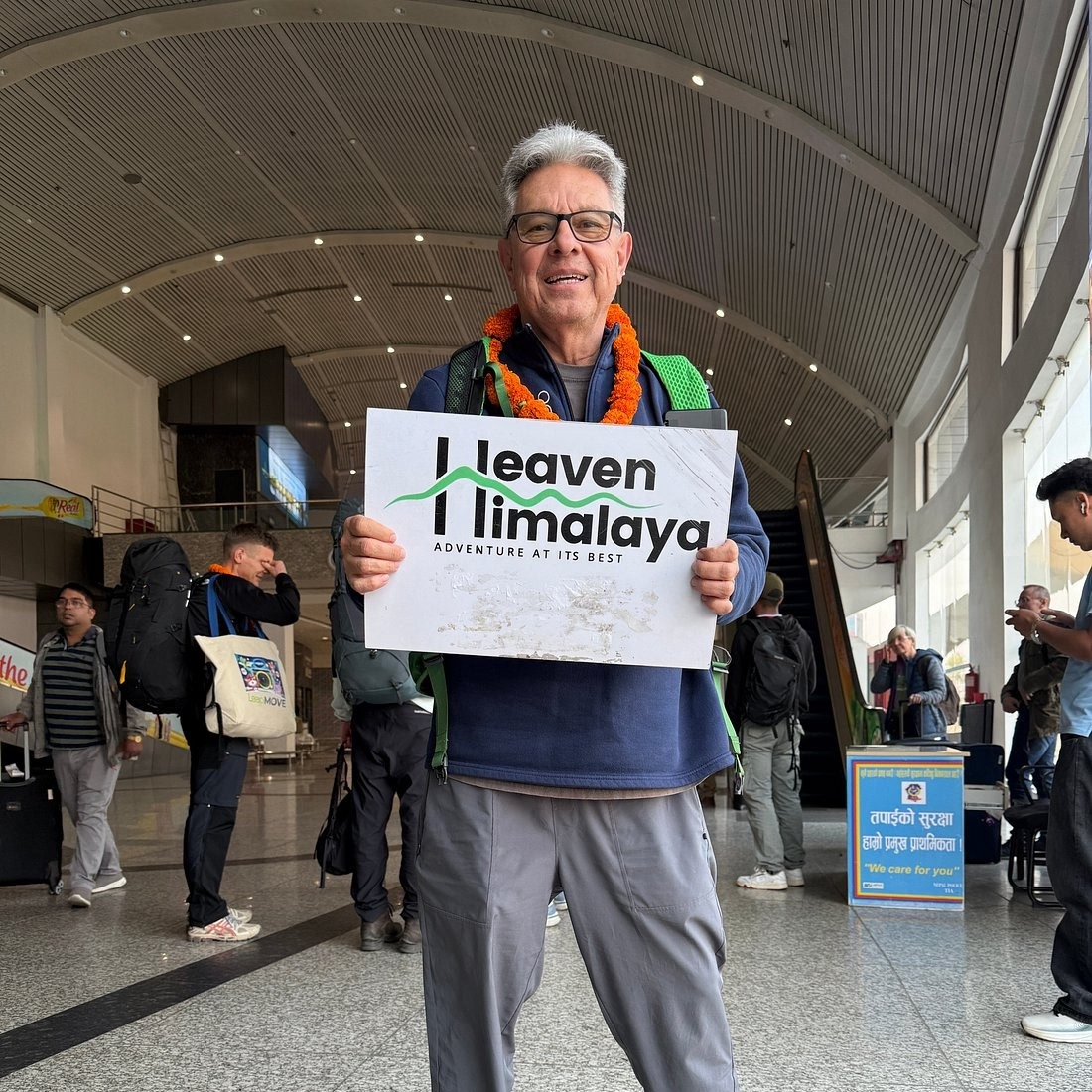
If you come via air, our staff will wait for you outside of the airport terminal. Please look for someone with a placard with your and the company’s names written on it. After he or she welcomes you, they will then support you with the transportation to transfer from your booked hotel to Kathmandu.
You will have nothing planned for the day, so take a rest and gather the energy to walk on the trails. Otherwise, if you have some personal gear to buy, you can go shopping in Thamel in the evening. You will spend a night in a hotel.
Accommodation: Hotel Meal: Breakfast (included)
Day 02 :Flight to Lukla and start EBC trekking to Phakding
Elevation: 2,840m
Duration: 3 hours
Accommodation: Guesthouse
Meals: Breakfast, Lunch, and Dinner Included
After breakfast at the hotel, our guide will come to pick you up for an exciting flight to Lukla. All the flights to Lukla will either be from Kathmandu Airport or Ramechhap Airport and are scheduled in the morning. It’s because the wind picks up in the afternoon and it becomes hard to fly.
The flight to Lukla is itself a rare adventure and will chill your bones. As soon as you leave Kathmandu, you will be greeted by the green hills and the surrounding mountains. The scenery is worth watching. The Tenzing Hillary Airport is one of the most extreme high-altitude airports in the world. So, flying between the high green hills and landing on a narrow lane at the base of the mountains will surely skip your heart a bit.
After a thrilling flight, you will start your trek to Everest Base Camp. Before the start, you will meet porters at the airport who will carry most of your loads.
After you make yourself ready, the tour guide will make his way along the busy street to the start of the trek down to Phakding. You will walk along the Dudh Koshi River and the alpine forest with the amazing sounds of nature. You will then cross the suspension bridge to reach Phakding. Walking above the swinging bridge will add a thrill to your journey.
Then, head to a local teahouse and rest your bags. Later, visit nearby villages or chill in the teahouse. We will have a long hiking day tomorrow. So, take enough rest. Tonight, you will spend your time in the best guest house available.
Note: During peak season (March, April, May, October & November), flights to Lukla may operate from Ramechhap (Manthali Airport) instead of Kathmandu. This means you will wake up early, drive 4–5 hours from your hotel in Kathmandu to Ramechhap, and then fly from Ramechhap directly to Lukla. Please note that the cost of this drive is NOT included in the package and will be charged separately.
Day 03 :Phakding to Namche Bazaar
Elevation: 3,440m
Duration: 6 Hours
Accommodation: Guesthouse
Meals: Breakfast, Lunch, and Dinner Included
After breakfast, you will start your Everest trekking journey and make your way to Namche Bazaar. It’s a strenuous walk uphill, but the beautiful scenes, pristine air, and the quest to reach the top keep you going.
We will stop multiple times on the way to soak in some stunning views. As you reach Monjo, you will pass Sagarmatha National Park, a UNESCO World Heritage Site. The national park is rich in endangered flora and fauna. If you are lucky, you will have a glimpse of some.
On the way to Namche, you pass some attractive Sherpa villages, Monjo, and Jorsale. Namche Bazaar itself is an attractive town in the Khumbu region of Nepal.
Known as the gateway to Everest, Namche is a Sherpa town where you can do your last-minute shopping. The place has various shops, cafeterias, a cyber café, hotels, lodges, and guest houses. The banks, ATMs, money exchanges, and lively local markets invite tourists traveling to the Everest Region of Nepal.
Tonight, you will end your day at a local teahouse owned by the Sherpa family. Enjoy a hot shower and a delicious dinner before you go to sleep.
Walking Distance: 10–12 kilometers Walking Duration: 6 Hours Accommodation: A local tea house (owned by the Sherpa family). Meal: Breakfast, Lunch, and Dinner (Included)
Day 04 :EBC Acclimatization Day: Hike to Everest View Hotel
Elevation: 3,962m
Duration: 2-3 Hours
Accommodation: Guesthouse
Meals: Breakfast, Lunch, and Dinner Included
Today is the rest day for your body. It’s a day kept aside for adapting to a new environment at Namche Bazaar. In the days to come, you will trek to high altitudes with thin air so it’s very important to make your body adapt to a new environment. Your guide will take you around Namche to the viewpoint and Sherpa Museum.
Following the panoramic views of the highest mountains, you will hike to the Everest View Hotel, one of the highest-situated hotels in the world.
The views are clearer as you hike uphill. Enjoy the spectacular views of the majestic mountains, Ama Dablam, Mt. Everest, Lhotse, Nuptse, Thamserku, Khumbila, and Kwangde, from the place near the hotel. And then we head down to Namche, as it’s an acclimatization day, so we won’t be gaining altitude.
Later today, you will visit the Everest Photo Gallery, Museum, and many more in Namche.
Spend a night at a guesthouse in Namche.
Walking Distance: 3–4 kilometers Duration: 2–3 hours Accommodation: Guest House Meal: Breakfast, Lunch, and Dinner (Included)
Day 05 :Trek to Tengboche
Elevation: 3,860m
Duration: 5 Hours
Accommodation: Guesthouse
Meals: Breakfast, Lunch, and Dinner Included
Leaving Namche, we follow a trail to Tengboche. Trekkers refer to the track from Namche to Tengboche as the most scenic hiking route in the entire Everest Base Camp Trek.
At first, we descend to the Dudh Koshi Valley at Phungi Thanka and make our way uphill to Tengboche at a slow pace. You will be officially standing between the mountains.
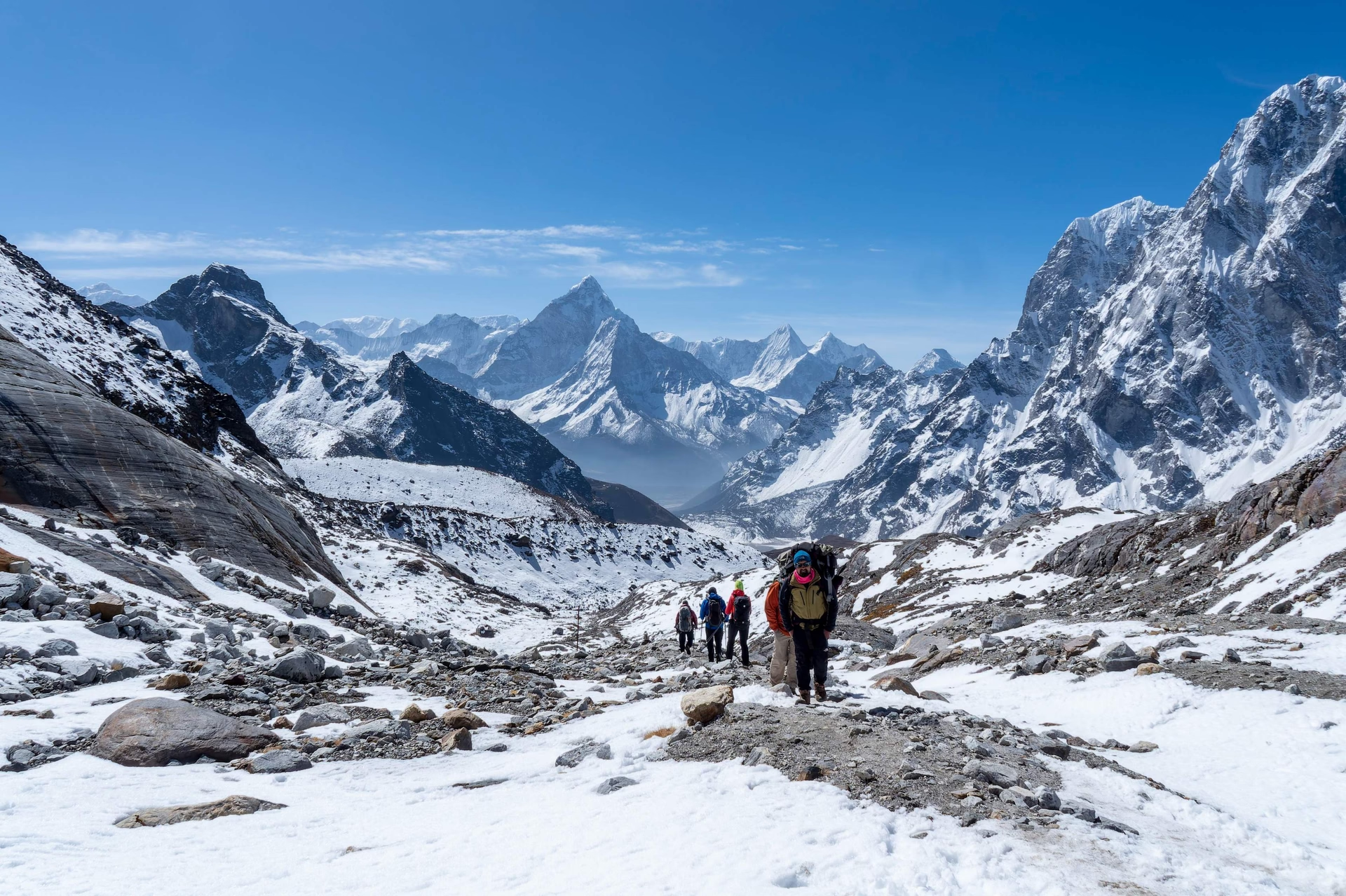
Mt. Ama Dablam, Mt. Lhotse, Mt. Nuptse, and Mt. Everest are some of the highest mountains that will watch you hike the beautiful trail. You will hike across the Imja Khola to the spiritual center of the Khumbu Region, Tengboche.
At Tengboche, you visit the famous Buddhist shrine, Tengboche Monastery. It’s an old monastery at a high altitude that offers some incredible views of the Everest region. Make sure you see the amazing murals and statues in the monastery.
Further, one can see Ama Dablam just above the monastery. Surrounded by pines and azaleas and backed up by Ama Dablam, one cannot imagine a location more beautiful than this. Tonight, you will spend a night at Tengboche, a locally operated guest house.
Walking Distance: 10–11 kilometers Duration: 5 hours Accommodation: Guest House Meal: Breakfast, Lunch, and Dinner (Included)
Day 06 :Tengboche to Dingboche
Elevation: 4,410m
Duration: 5 Hours
Accommodation: Guesthouse
Meals: Breakfast, Lunch, and Dinner Included
After breakfast, we will continue our Everest Base Camp Trek journey with an amazing ascent with beautiful views of gigantic mountains and passing deep valleys.
Before leaving, forget the cozy warmth of your bed and get outside to catch the once-in-a-lifetime experience of the sunrise over Ama Dablam Mountain. It will be a wonderful moment to cherish throughout life.
After the sunrise moment, we descend the Imja River and follow a trail to the high-altitude Sherpa village of Dingboche. We follow a scenic path full of mountain views and picturesque landscapes to Pangboche village from the river.
At an elevation of 3900 meters, the village is in a dramatic location with appealing pictures of mountains in the background. Enjoying the views of gigantic mountains such as Everest, Mt. Ama Dablam, Mt. Lhotse, etc., we keep on walking to the hamlets of Dingboche.
Mani walls, prayer flags, prayer wheels, agriculture fields, and settlements of yak herders guard the trails to Dingboche.
Dingboche is referred to as Summer Valley. As you reach the vast pasture, you will see yaks grazing in it. As you reach Dingboche at a height of 4,410 meters, you may feel the effects of thin air at a high altitude. Calm down and drink plenty of liquids. Keep yourself hydrated all the time.
Here, our trekking guide will check your oxygen level with an oximeter and monitor if you are fit to trek. Otherwise, he will give you some medications to prevent you from getting altitude sickness. The best thing we can do here is slow down and don’t ascend further if you are showing symptoms of altitude sickness.
Have a positive mindset and a firm determination to trek to the base camp of the world’s highest mountain, Mt. Everest. Tonight, spend your time at a local guest house and have a night of cozy, warm sleep.
Walking Distance: 11–12 kilometers Duration: 5 hours Accommodation: Guest House Meal: Breakfast, Lunch, and Dinner (Included)
Day 07 :EBC Acclimatization Day: Hike to Nagerjun Hill and Return
Elevation: 4,410m
Duration: 4-5 Hours
Accommodation: Guesthouse
Meals: Breakfast Included
It’s another day set aside for acclimatization. As we keep passing high altitudes, we need to acclimatize to ensure our health and safety. Today, adjust yourself to the high altitude and prepare yourself for the stimulating hike to Everest Base Camp.
In the daytime, after breakfast, we hike to nearby Mount Nagerjun to catch some panoramic views of the mountains around us. At a height of 5100 meters, Nagerjun Hill is a beautiful viewpoint in the Everest locale.
From Nagerjun, we relish some fantastic views of lofty peaks such as Lobuche, Thamserku, Taboche, Kangtega, Mt. Ama Dablam, Nuptse, Cholatse, and many others in the range.
The hike is also a golden opportunity to get a striking glance at Mt. Makalu, the fifth-highest mountain in the world. After some refreshing moments spent on the hill, we get down to exploring the settlements in Dingboche.
Tonight, you rest yourself at a guest house.
Walking Distance: 5–6 kilometers Duration: 4-5 hours Accommodation: Guest House Meal: Breakfast, Lunch, and Dinner (Included)
Day 08 :Dingboche to Lobuche
Elevation: 4,910m
Duration: 5 Hours
Accommodation: Guesthouse
Meals: Breakfast, Lunch, and Dinner Included
With every passing day, you are making your way closer to Everest Base Camp. As we continue taking elevations, you might find yourself tussling a bit. Maintain a slow pace and communicate everything you feel with your guide.
Today, after breakfast, we will start the trek to Lobuche at an elevation of 4910 m. First, we follow a trail between wide valleys until we get to Dughla. After passing some yak pastures, we reach Lobuche.
Now, the trails are bare and filled with snow. You are now trekking above the treeline. So, you will feel the absence of trees and green hills. All you see is snow and bare hills. You can’t find any permanent Sherpa settlements over here in Lobuche. The striking views of high mountains just beside the tea houses will surround you.
Enjoy the views and have a warm sleep early in the night. Tomorrow, you will trek to your final destination, Everest Base Camp, the base camp of the world’s highest mountains.
Walking Distance: 11–12 kilometers Duration: 5 hours Accommodation: Guest House Meal: Breakfast, Lunch, and Dinner (Included)
Day 09 :Lobuche to Gorakshep, Everest Base Camp, and back to Gorakshep
Elevation: 5,181m
Duration: 8 Hours
Accommodation: Guesthouse
Meals: Breakfast, Lunch, and Dinner Included
Finally, the wait is over.
Now, you are into the most routine days of your entire journey. After an early breakfast, we head to Gorakshep, at a height of 5181 meters. The place is also sparsely populated, with only a few guesthouses that operate during trekking seasons.
As we reach Gorakshep, the guide will take you to a guest house where you can leave your heavy gear. As you get back to Gorakshep to spend the night, you can choose to leave your heavy gear at a guest house.
Then we make our way to Everest Base Camp. It’s a moment of pride for everyone. It’s been a week since you've been waiting for the day.
You trek through the Khumbu Glacier, the world’s highest glacier, at a height of 4900 m. The glacier resembles a moon and is 12 kilometers long. As you walk through the ice formations and small pools of water, you will have your best moment.
Be careful; you may hurt your foot in scree and your heart in joy. Soon, you reach the final destination of the trek, i.e., Everest Base Camp.
You explore the area and witness the glory of the highest peaks rising just before you. Wander around the base camp and capture the moment in photos. Celebrate the moments with your teammates and guides. You are now standing in the base camp of the world’s highest mountain, Mt. Everest.
You cannot see Mt. Everest from the base camp, as it hides between Mt. Lhotse and Mt. Nuptse. After we collect memories around the expedition trails, the campsite of the Sagarmatha expedition group, and the Khumbu icefall, we return to Gorakshep.
Tonight, spend a cozy, warm sleep. Tomorrow, we will see Mount Everest with our own eyes.
Walking Distance: 14–15 kilometers Duration: 8 hours Accommodation: Guest House Meal: Breakfast, Lunch, and Dinner (Included)
Day 10 :Gorakshep-Kala Patthar, then trek back to Pheriche
Elevation: 5,545m
Duration: 7 Hours
Accommodation: Guesthouse
Meals: Breakfast, Lunch, and Dinner Included
Today, you will have the closest view of Mt. Everest through the naked eye. It’s the other most-awaited day of your EBC trekking journey.
So, wake up early before the sun and head towards Kala Patthar at 5545 meters. It’s the highest point of your trekking journey. Soon, you will reach the highest vantage point. As the sun peeks through the highest mountain, you will forget all the distress.
From Kala Patthar, we catch the golden rays of the sun falling over Mt. Everest’s glittering snow, along with other towering peaks in the range. Bless yourself at the feet of the majestic mountains on earth.
Take photos and videos of the moment to show it to the world. You then trek back to Gorakshep. After breakfast, start trekking downhill to Pheriche.
There’s a small settlement in Pheriche. There's a clinic run by the Himalayan Rescue Association (HRA). As you arrive at Pheriche, enjoy the nearby views and go into your room to rest after a Himalayan dinner.
Walking Distance: 13–14 kilometers Duration: 7 hours Accommodation: Guest House Meal: Breakfast, Lunch, and Dinner (Included)
Day 11 :Pheriche to Namche
Elevation: 3,440m
Duration: 7 Hours
Accommodation: Guesthouse
Meals: Breakfast, Lunch, and Dinner Included
Wrapping up your peak climbing journey, we head back to Sherpa Town in Namche. The trail is long. The mountain views don’t end yet. So, stop at intervals to grasp some more views of the Everest region.
Appreciating the mountains, we descend slowly from communities like Orsho, Somare, Pangboche, and Tengboche to Namche.
After you arrive at Namche, take a hot shower and end your day. You may ask your guide to take you to some local cafes to enjoy the baked cookies or your favorite coffee.
Tonight, spend a warm night at a guesthouse, recalling base camp while looking at your photos and videos.
Walking Distance: 14–15 kilometers Duration: 7 hours Accommodation: Guest House Meal: Breakfast, Lunch, and Dinner (Included)
Day 12 :Namche to Lukla
Elevation: 2,840m
Duration: 7 Hours
Accommodation: Guesthouse
Meals: Breakfast, Lunch, and Dinner Included
With the impressive mountain sights behind you, you descend to Lukla. We descend along Jorsale, Monjo, and Phakding to Lukla. The lush forests and amazing mountainous terrain will keep us engaged throughout the trek. Remember to take in the last-minute views of the gigantic mountains and enjoy the last minutes of your Everest hiking.
In the evening, celebrate the success of your EBC with all your crews and teammates. Thank everyone, especially the porters who helped carry your goods. There will be a celebration moment among the hiking crew.
Sing and dance along with the porters and guides with boundless local brew rounds. You may also offer tips as an encouragement to your porter, guides, and assistant guides before the night. You will meet most of the porters and assistant guides for the last time in Lukla.
Tonight, have some good sleep, recalling the Everest memories.
Walking Distance: 18–19 kilometers Duration: 7 hours Accommodation: Guest House Meal: Breakfast, Lunch, and Dinner (Included)
Day 13 :Fly back from Lukla Waving to the EBC Trail.
Elevation: 1,400m
Duration: 1 hour
Accommodation: Hotel
Meals: Breakfast Included
Your trek concludes with an adventurous flight. Enjoy the sights and bid farewell to the mountains and hills. The flight from Lukla Airport will either be to Ramechhap or Kathmandu Airport, depending on the time of year. Either way, you will fly again with a sight of the highest mountains. You will recognize most of them through your window.
After spending so many days in the mountains, the city of Kathmandu will surprise you again. After you land in TIA, our guide will transfer you to your hotel. Enjoy your day walking around the streets of Nepal's capital.
There are some great restaurants in Thamel and other places as well. Enjoy the food of your choice, as you may not find all the dishes you want in the mountains throughout your EBC journey.
Flight Duration: 20 Minutes (Ramechhap to Lukla) and 40 minutes (Lukla to Kathmandu) Accommodation: Hotel Meal: Breakfast (included)
Day 14 :End of Everest Base Camp Trek (Farewell)
Elevation: 1,400m
Bidding farewell to the capital city, you head to the airport. One representative from our team will transfer you to the airport to catch your scheduled flight.
If you want to extend your Nepal holiday for a longer session, you may let us know. We will help you with the plans.
We trust that you shared some incredible memories with us. Thank you, and have a safe journey home.
Breakfast is included.
Altitude profileMax 5,545 m
Create a Bespoke Itinerary
Customize your Himalayan adventure with personalized itineraries for unforgettable experiences!
This is my second time in Nepal with Heaven Himalaya & I am writing this with gratitude & appreciation for my guide Hari, my porter Arun, as well as the entire team.This was meant to be my birthday trip, I had requested to summit EBC on the actual day of my birthday (29/5/2026), and i made it happen with the help & support of Hari and Arun.Hari has been very thoughtful and attentive throughout the trip, making sure to constantly ask/check if I’m feeling okay as we ascended to higher altitudes.As it got colder higher up on the mountains, Hari thoughtfully delivered hot water to my room every night to help me deal with the extremely cold nights.On my birthday itself, Hari also resourcefully brought a “Happy Birthday” candle which he got from Namche to the summit, and we created our own birthday “cake” using the candle and an apple. That was a very beautiful memory & amazing experience.As I was traveling alone as a female, Hari also did his best to find me the most comfortable accommodat…
CCharlotte B
EBC Hike in May 2026
Last month in May 2026, I did the Everest Base Camp hike with Heaven Himalaya, and it was absolutely amazing. From the start they made everything easy . My guide Bishal, which he said meant thulo in nepali was so helpful and patient; he knew everything about the trail and mountains and also made us laugh all the time.Our porter Krishna was a star! He carried our bags without complaining and always had a smile, telling us funny stories in the evenings. I don't know what we would have done without him.The trek itself was so hard but so worth it. The views are just mindblowing; waking up every morning to see the mountains covered in snow is something I will never forget. Bishal and Krishna made sure we were safe and happy all the way.Reaching Kala Patthar at sunrise was unreal, seeing Everest in the golden light was like a dream. Bishal and Krishna were there with us every step, cheering us on and making it so special.I would absolutely recommend Heaven Himalaya for everyone. They are no…
Tina
Exceptional Service and a Birthday to Remember
They say the mountains humble you, but what I didn't expect was how deeply the people of Nepal would touch my heart.Couldn't have asked for a better crew for our Everest Base Camp - Cho La Pass - Gokyo adventure. From day one, Shankar, Ganesh, Dawa, and Prince treated us with so much kindness, patience, and care that it never felt like we were just another hiking group to them.They became our family in the mountains.Our guide, Shankar, was exceptional. Calm, knowledgeable, dependable, and always looking out for us every step of the way. He knew the mountains like the back of his hand and made us feel safe even during the toughest parts of the trek. When weather conditions in Lukla became unpredictable and visibility was poor, he immediately took action and arranged a helicopter to Kathmandu so we wouldn't miss our international flights. In moments of stress, that level of leadership and quick thinking means everything.It was my birthday during the trek, so I felt incredibly special wh…
Irina Anderson
The best experience ever, even when nothing goes as it was planned
This is the second time we book tour via Heaven Himalaya. Last year we did Poon Hill treck and we trust this company so much and our last experience was so perfect that when we started to plan this year's tour we had no doubt what company to choose. Originally we planned EBC me and my husband together, but I got sick on the way to Namche and had to go back to Lukla and return to Kathmandu. But though we had sudden changes the company made immediate changes without any troubles for us. Even more, while my husband proceeded his treck to the Everest the company rearranged my trip in a second and I first visited the city of Chitwan and got acquainted with a tropical part of Nepal and then we went to Bhaktapur and Nagarkot. The company is prepared to any changes you can make and you feel taken care of all the time. So there is no doubt which company we choose the next time we go to Nepal and we definitely shall.
NNed Hayward
Amazing
Exceptional, had the best time in Nepal with Heaven Himalaya. The nicest people with the most fantastic views. My guide Diwash was the loveliest guy, had great laughs and chats with him, would night recommend him. Thank you to everyone at Heaven Himalaya, will certainly be coming back.
Juan Carlos
Great team for the EBC trek
I decided to trek to Everest Base Camp and chose to go with Heaven Himalaya for convenience and safety. Their 14-day package was reasonably priced and included everything—permits, accommodation, and flights to Lukla—which made planning much easier.From the beginning, Ram (the owner) was extremely responsive and answered all my questions clearly, which gave me confidence in booking.When I arrived in Kathmandu, my guide Dipak picked me up, and from day one I felt I was in good hands. He was friendly, attentive, and very experienced. My porter, Krishna, was quieter but incredibly strong and dependable.Throughout the trek, both Dipak and Krishna went above and beyond to ensure my safety and comfort—especially on some difficult sections of the trail. There were moments I struggled, and they supported me however needed, even carrying my backpack when I was exhausted.One moment that stood out: on the final day, Krishna had already reached Lukla but came back along the trail to help carry my…
Everest Base Camp Trek Video
What to Pack
Clothing
First, you need a base layer of clothes for the EBC Trek, depending on the weather. A warm white layered jacket, summer pants, a thick layered jacket well insulated for winter, and a raincoat for the rainy season
Likewise, other gear includes trekking shirts, hats, sunglasses, gloves, sunscreen, wool socks, hiking boots, and hiking sandals. It is better to use hiking poles for steep, slippery, and uneven roads.
Also, here's a list of gear for the Everest Base Camp Trek.
Upper Body
T-shirts (preferably quick-dry and breathable) (day)
Parka/windbreaker (day)
Rain gear/poncho
Inner thermal (at night)
Fleece T-shirts (night)
Fleece jacket
Down jacket (night)
Lower Body
Undergarments
Trekking pants (preferably stretchable, quick-dry, and water-resistant) (day)
Rain gear
Inner thermal (at night)
Fleece/wool pants (night)
Hands
Light/outdoor gloves (day)
Warm winter gloves, fleece or woolen gloves (night)
Footwear
Thin socks (day)
Warm woolen socks (at night)
Hiking boots (preferably GORE-TEX) with spare shoelaces
Floaters or sandals
Knee support (optional)
Head, Face, and Neck
Sun hat or cap (day)
Fleece beanie/woolen cap (night)
Balaclava (optional)
Sunglasses
Sunscreens
Moisturizers
Lip Balm
Face towel
Scarf
Neck gaiters
Other Essentials
Others (Optional)
Thermo flask
Portable water filter/purification tablets
Earplug
A Universal Adaptor
Camera, memory card, and charger
Reading books or maps
Binoculars
Watch
Snack
The items with a "*" sign are the special equipment that can be provided to you by Heaven Himalaya upon your request. You can ask for items like duffels and sleeping bags. You shall return these items upon completion of the trek or climb.
We will also provide you with a basic first-aid kit. However, if you are a regular user of medicine and have your own, you can bring it with you.
Staying Safe on the EBC Trek: What You Need to Know
Heaven Himalaya prioritizes the safety of its visitors. While on the trail, our trained guide will accompany you. Kindly note that if there are any safety concerns, we may customize or cancel your itinerary.
You will also have some free time to explore on your own after we accomplish the goal of that day. So, during that free time, you can explore on your own.
But remember, do not go far away from the guide. Except for the representative from Heaven Himalaya, don’t give your belongings to someone to carry or support you along the journey.
We strongly recommend that you keep your important documents and valuable items with you safely. You might also want to use a neck wallet or a money belt to keep them safe. However, hotels we use in cities have a deposit box with a lock, which is more secure to keep your important things. But, along the EBC route, you might not find a deposit box, so keep them locked in your bag.
Although you will have a porter to carry your duffel bag, keep important documents with you and carry them yourself. While sharing rooms in guesthouses, keep your important things next to you and in a safe place.
Here are some measures to follow:
Unexpected medical emergencies
If you are a regular user of any medicine, carry it with you under your doctor’s prescription. If you feel you need some medical help or are allergic to anything, explain it to your guide. He will help you out. If it’s a very urgent situation, we will use a helicopter evacuation to bring you to Kathmandu for a check-up.
Also, always have a better understanding of altitude sickness. If you think you have any symptoms and cannot continue the trek, you can tell your guide. We will figure out a solution for that.
Protests and demonstrations
Although there are no protests or demonstrations along the Everest Base Camp route, you have to be careful about that.
If you find any such cases, do not enter them or leave the area immediately. Do not stay there looking for a wonderful photo opportunity.
Hotel Safety
All the hotels we use are very safe for travelers. However, if you plan to take any extra service on your own that’s not specified in the itinerary, it’s your responsibility to look after yourself.
Some cases include: Don’t go swimming if you don’t know how to swim. Similarly, while visiting the corners of Thamel looking to buy some souvenirs or something, keep your important things in the hotel. Do not carry them with you always.
Emergency Fund
Please make sure you have access to a few extra hundred dollars in case you need it the right way. It will come in handy in circumstances that are beyond our control, such as landslides, earthquakes, etc. Also, it will help you if you want to buy something, like some souvenirs or paintings, that fascinate you and you can’t leave them there.
We take all measures into account for your safety. If you have any questions, you can call us at +977 9851273867 or email us at info@heavenhimalaya.com.
Emergency Contact
We will ask you for the details of a person to be used as an emergency contact at your side. So, while filling up the form, make sure you fill in the correct details of the person and his or her relationship with you.
The best time to trek to Everest Base Camp
Traditionally, the best months for the Everest Base Camp trek have been March, April, and May in the spring, as well as September, October, and November in the fall. These months typically offer stable weather conditions, clear skies, and more moderate temperatures, making for a more enjoyable trek.
However, climate change has been affecting weather patterns, including in the Himalayan region. In recent years, only April, May, October, and November have continued to be popular and recommended months for the EBC trek due to their relatively stable weather.
During spring (March, April, and May), the weather is calm, with a clear sky and bright days suitable for high-altitude climbs.
Likewise, colorful rhododendron flowers and trees with new leaves around the trail are eye-catching. One disadvantage of the spring hike to EBC is that the trail is crowded and busy.
During the autumn months (September, October, and November), temperatures are moderate with clear skies. Also, there’s less chance of problematic rain or snowfall. Although you may get a slight rainfall on some days, the scenic views after the rain are breathtaking. The autumn season is also one of the best times for trekking. People crowd this season.
Besides, if you travel in October, you may be part of the famous Mani Rimdu festival. Buddhists celebrate the ancient festival in monasteries like Tengboche Monastery for 19 days on Mount Everest. Just as per tradition, the locals have specified the dates for the celebration of Mani Rimdu as the 20th, 21st, and 22nd of October.
Other than that, June, July, and August are the months of challenges. The roads are muddy and slippery. This is the off-season, so trekking is peaceful with less disturbance and has clear and stunning views of the Himalayas.
Finally, December, January, and February are the off-season because of the extreme cold in the mountains. The temperatures are as low as -17 °C. However, some also choose these winter months for the EBC hike, as it is the right time if you want to avoid crowds. If you wish to trek in the winter, you need to prepare more. Many eager travelers have trekked during this time as well.
However, choose any time for the trek, as Heaven Himalaya is always there for you to assist.
Seasonal Weather Conditions
The weather and climate in Base Camp vary with the seasons. So, we divide the weather conditions and environment into four different seasons: spring, monsoon, autumn, and winter.
During spring (March to May), the weather is warm and dry. Visibility is clear, making it a perfect trekking season for Everest. Likewise, during the monsoon (June to August), the rain makes the path wet. Even the visibility is unclear because of patches of cloud. So, we do not recommend trekking during the monsoon.
Autumn (September to November) is also a perfect time for the Everest Base Camp Trek. During this time, the weather is dry and bright, and visibility is complete.
Winter (December to February) is too cold. The path is full of snow, which makes walking difficult. Do not expect the mountains to be warm. It is always cold on top. Afternoon: The weather gets windy with strong breezes. Still, trekking is possible during early or late winter in Nepal.
Where You’ll Stay on the Everest Base Camp Trek: Teahouses and Lodges
Depending on the level of service you choose, there are various accommodation facilities available on the EBC Trek. You will find some excellent hotels near local teahouses.
During the trek, we stay at various teahouses and guest houses, offering comfortable accommodation facilities. The rooms and restrooms at guesthouses are clean and comfortable, although they are quite simple. The lodges usually have a wooden-style bed with a sheet, cover, and pillow.
Likewise, there’s a communal dining area that serves healthy local food and some international dishes. For an extra cost, you can usually get additional amenities such as an electric blanket, Wi-Fi, and a hot shower. You can also buy snacks and drinks at the teahouses.
At lower altitudes, you may have access to Western-style toilets, but as you ascend, you will typically encounter squat toilets or more basic toilet facilities. Thus, it is advisable to bring your toilet paper, as it may not be available in some lodges.
Understanding the Everest Base Camp Trek Difficulty Level
We classify the trip to the base camp as a moderate-level trek. One needs to walk for around six to seven hours on average for approximately twelve days.
Although it’s a moderate hike, there are many difficulties in the hiking routes. Walking is peaceful, but sustaining the rising elevation can be hard sometimes. It requires no techniques or experience for the trek, but previous experience may be an advantage.
Although training is not a compulsion for the trip, it requires a level of stamina and endurance. Here, we will guide you to train for the Everest base camp.
As the hike demands a continuance capacity, routine exercises like walks and aerobics may help you maintain your body’s stamina. Likewise, we recommend hiking in some hilly areas for a few weeks before trekking. Besides, you can work on your cardio and strength endurance at a gym center.
Although it’s not a mountaineering activity like any marathon run, it might be hard sometimes. Waking at high altitudes with a scant amount of oxygen can challenge you with no experience trekking. So aerobic training can be helpful for you to walk at high altitudes with low oxygen.
We have the habit of not carrying any heavy bags unless it’s a long adventure journey. So, hiking to some nearby hills with a rucksack on your back for at least a week before the commencement of the EBC trip is commendable.
Training for your Everest Base Camp Trek depends on your health and physical fitness. Besides, mental preparation and a powerful will to reach the destination are what you need to have for your successful journey ahead.
How Long Is the Everest Base Camp Trek? Distance, Route & Travel Options
The Everest Base Camp (EBC) Trek covers a total length of approximately 130 km or about 80 miles, round trip, starting from Lukla and returning. If starting from Namche Bazaar and returning, the distance is about 51.2 km. The straight-line distance from Kathmandu to Everest Base Camp is roughly 153 kilometers.
This trek is a long and iconic hiking adventure, well-known worldwide, that takes you to the foothills of Mt. Everest. It allows you to explore Sherpa villages and natural heritage sites along the way.
The time required to complete the Everest Base Camp hiking journey depends on the specific route and means of transportation you choose. If approaching from Nepal’s side, you can complete the trek in 8, 12, or 14 days. Alternatively, a helicopter ride from Kathmandu Airport takes just 45 minutes.
With Heaven Himalaya, the short Everest Base Camp trek will typically take 14 days, including 2 days allocated for acclimatization on the itinerary. The daily walking distance averages around 8 to 13 km, with a duration of 5-7 hours of trekking each day.
The starting point of this beautiful hike is Lukla. To begin the journey, you’ll need to take an early morning flight from Kathmandu or Ramechhap, depending on the time of the year. For treks during April, May, October, and November, you’ll fly to Lukla from Ramechhap, which takes about 20 minutes. According to the Civil Aviation Authority of Nepal (CAAN), there are no direct commercial flights from Kathmandu to Lukla during these months due to traffic congestion at Kathmandu Airport. However, for other months, you can take a direct flight from Kathmandu to Lukla, which usually takes around 45 minutes.
Upon your arrival at Lukla Airport (Tenzing Hillary Airport), known as one of the world’s most challenging airports, your trek will officially commence.
Food and Drinks on the Everest Base Camp Trek
We do breakfast around 7-8 a.m. Most of the tea houses offer French toast, honey toast, toast bread with eggs and cheese, plain toast, and egg items. Other options include chapati, oat porridge, fried or mashed potatoes, etc.
These breakfasts are excellent for your hike to Everest Base Camp. We have other options on the menu, depending on the place or the accommodation you choose.
For Lunch and Dinner, we get foods like cereals, grains, and rice. At lunch, they serve food containing carbohydrates in abundance. Although every item is available, we don’t recommend non-veg items during the tour. A vegan diet is fresh and also good for a hike.
We have lunch from around noon to 1 p.m. They typically serve traditional Nepali dishes such as Dal Bhat, which contains cooked rice, boiled lentils, vegetable curries, and pickles. However, you will also find noodles, momo items, pasta, macaroni, pizza, sandwiches, and spaghetti in some places.
We have dinner at around 7:30–8:00 p.m. You will get dinner according to the lodge menu, which includes traditional Nepali and some Western food.
Remember, food items vary from place to place, but the food we take is good enough for trekking.
Besides, if you are keen on trying some Sherpa food, you can try Su Chya (butter tea), Tsampa, or Tibetan bread for breakfast. Likewise, other Sherpa foods are Veg Shakpa (Sherpa Stew), Shyaphale, Veg Thukpa (noodle soup), Riki Kur (potato pancakes), Ting Momo, and Rilduk (soup with potato lumps).
For drinks, most of the teahouses and hotels serve a wide range of coffee, tea, hot lemon, hot juice, chocolate, milk, etc. Some hotels offer cappuccinos, Americanos, and café lattes. Avoid drinking and smoking during your trip.
For water facilities, during the trek to EBC, you can get tap water everywhere, but it’s not safe to drink, so it’s better to keep a water purification tablet with you. The local government has banned plastic bottles since January 2020.
Better yet, bring your reusable bottle and make sure your bottle can hold hot water as well. You can also get bottled water, but it will cost you some money. Also, you need to pay for the hot water. So, it’s better to carry some Nepalese cash with you.
Boiling water is preferable as you go to high altitudes, and it is also safe and convenient. As you go up, altitude sickness might take place, so keep yourself hydrated and have a sip of water from time to time.
Staying Connected on the EBC Trek: Wi-Fi, SIM Cards & Charging Info
Since 2010, there has been a 3G connection on the Everest Base Camp Trek route. The Swedish company TeliaSonera has installed multiple base stations in different spots along the trek. This starts with Lukla and provides connectivity for the entire EBC trail.
NTC and NCELL mobile networks are best for you during your journey. When you arrive in Nepal, get a Nepalese SIM card and buy tourist data packs.
Besides, most of the lodges provide Wi-Fi services, charging $5–6 for an unlimited package, and some of them also provide free Wi-Fi services.
Another option is to enroll in the Everest Link Card, which is easily available at stores in the Everest region. Purchase cards of 50 MB to 100 MB, which is enough for your trip. The price of the card varies from place to place.
Charging phones and other electronic gadgets on the route
The battery gets drained quickly at high altitudes because of the cold, so you need to charge your devices more. You can charge your phone and other electronic gadgets at the lodge, but you need to pay an extra fee for the lodge you stay in. The cost also varies from place to place.
Sometimes there won’t be electricity or there’s low voltage, so carry batteries that last for three days. The best option for charging gadgets on the Everest Base Camp Route is to carry a portable power bank and a solar charger with you.
Don’ts and Must-Know Tips Before Your Everest Base Camp Trek
High-altitude regions are risky zones. So do not trek alone. Always travel with a friend or a guide. It’s because we never know what might happen and when in the high-altitude regions.
Avoid walking too fast. Take your time and stroll gradually. Walking fast may tire you out. It is because, with each step, we get closer to Mt. Everest; we gain some altitude. Hence, it may harm your health.
Acclimatization days are beneficial to cope with rising elevation and prevent altitude sickness. Thus, do not skip the days set for acclimatization.
Do not go to restricted areas. Always stay on the trail.
Don’t leave plastics and other waste on the trekking trail. Ask your guide to dispose of it for you.
Always respect locals and behave pleasantly.
Don’t trespass in excitement, seeing the high-altitude mountains around you. Everyone feels excited and happy to see the world’s high mountains right in front of them. Enjoy the adventure, but do not trespass in the risky areas. Otherwise, it may keep you at risk and ruin your Everest Base Camp trekking journey.
Before you go,
The last point of the Everest trek, where an ATM is available for collecting money, is at Namche Bazaar.
Varieties of food within a fixed menu are available during the trek. However, it is recommended to opt for vegetarian and local Nepali food during the EBC trek.
Be alert to the symptoms of altitude sickness. If you notice any, consult with your trekking guide and opt for preventive measures.
If you do not find any gear for the Everest Base Camp trek in your home country, then do not worry; those are readily available for sale or rent in Kathmandu.
Make sure you go through the complete Everest Base Camp Trek Guide before stepping into Lukla.
If you are a regular user of any kind of medicine, explain it to your guide beforehand.
Drones are not legal in the mountains, so if you are looking forward to capturing outstanding pictures or videos with drones, seek permission from the local government.
So, get ready to experience the thrill of trekking on one of the world’s best treks. Heaven Himalaya is here to make your dream come true.
How to Fly a Drone on the Everest Trek: Laws, Permits & Regulations
Everest is a highly restricted area for flying drones. Most of the trekking route falls inside the Sagarmatha National Park, which is why the drones are highly regulated and require special permissions from the concerned authorities. Also, the Everest locale is one of the highest-trafficked flight routes for helicopters.
Although it’s harder to get permission, you can still fly drones on the Everest Base Camp route.
Registration and Authorization
According to current legislation in Nepal, registration with the Civil Aviation Authority of Nepal (CAAN) is mandatory for all drone categories to obtain a flying license.
1. First, visit the Flight Safety Standard Department in Sinamangal, Kathmandu.
2. Submit necessary paperwork, including a completed form as per guidelines.
Copy of the drone’s handbook specifications.
Copy of a valid passport.
Copy of a certificate of company registration (if applicable).
Clear image of the drone displaying its brand, color, and serial number.
Overview of drone applications.
Copy of customs clearance certificate for imported drones.
Copy of the retailer’s VAT bill for locally purchased drones.
3. The Flight Safety Standard Department will carefully review the submitted documentation about your drone
4. If your registration is approved, a certificate verifying entry, including a Unique Identification Number (UIN), will be issued within two to three business days and will be valid for a year.
Note: Even though you get a flying permit, there are certain rules and regulations that you should follow when flying along the trekking route.
FAQs
Everest Base Camp Trek Frequently Asked Questions
General-EBC
How many hours of walking is Everest Base Camp?
You’ll cover a total of around 90 miles on your EBC trek in around 12-14 days. It depends on your exact itinerary and acclimatization hikes.
General Breakdown of Everest Base Camp trek itinerary
Total Duration: 13 -15 days ( including flights from Kathmandu and acclimatization days)
Walking days: 8-9 days to the Base Camp and 3 days to return to Lukla
Total trek distance: 80 miles (130 km) round trip
Daily walking distance: 6 to 9 miles (10-15 km) each day
Daily walking time: 5 to 7 hours each day
What is the Everest Base Camp Trek?
The Everest Base Camp Trek is a world-famous high-altitude trekking journey to the base of Mount Everest (8,848.86m), the highest mountain on Earth. The trail lies in the Khumbu region of Nepal and combines dramatic Himalayan landscapes, traditional Sherpa villages, Buddhist monasteries, suspension bridges, and teahouse trekking culture.
This trek is not just about reaching Base Camp, but also about experiencing the lifestyle of the Everest region, panoramic mountain views, and a gradual ascent into high-altitude terrain above 5,000 meters.
What should I pack for the Trek?
You should pack layered clothing suitable for changing temperatures.
Essential items include: warm jacket, thermal layers, gloves, trekking boots, wool socks, hat, and personal essentials.
Layering is more effective than carrying heavy clothing. For more detials you can check out this packing list.
How much will it cost to go to Everest Base Camp?
The cost for the standard 14 days Everest Base Camp trek package with Heaven Himalaya is US$1580. But the price depends on the group size as it decreases with increase in the group size.
No. of Person
Price
1
USD 1580
2 - 4
USD 1499
5 - 8
USD 1399
9 - 14
USD 1299
15 and above
USD 1199
The cost covers the entire trek logistics and Lukla flights except your personal expenses like hot water, coffee, charging, showers, snacks etc. on the trek.
How hard is it to climb Everest Base Camp?
EBC trek is considered a moderately challenging trek. It covers around 90 miles round trip over 12-14 days reaching a maximum altitude of 5364m at Everest Base Camp and 5,545m at Kalapatthar. Trekkers generally trek around 5-7 hours daily. Trek to EBC is not technical but the hardest part is the altitude where many trekkers face altitude sickness.
Most people with a good level of fitness, determination, and proper preparation can successfully complete the trek. A well-planned itinerary with adequate acclimatization days greatly improves your chances of having a safe and enjoyable experience in the Everest region.
What's the oxygen level at Everest Base Camp?
Everest base camp sits at an altitude of 5,364m above sea level. Air gets thinner with increase in altitude, so at EBC it reduces to around 50% to that at the sea level. The body gets less oxygen,so as a result trekkers face shortness of breath, fatigue etc.
Therefore, proper acclimatization, hydration and gradual ascent are essential to help your body adjust at high altitude and risk the chance of altitude sickness.
How much fitness is required for the Trek?
The Trek does not require mountaineering skills or elite athletic fitness, but a good level of physical fitness is essential. You should be comfortable walking 5–7 hours a day for 10–14 consecutive days on uneven mountain trails while carrying a light daypack. The greatest challenge is not the distance itself but the high altitude, where lower oxygen levels can make even gentle uphill sections feel more demanding. If you can comfortably hike, jog, cycle, or participate in regular cardiovascular exercise several times a week, you are likely capable of preparing for the trek. With proper training, acclimatization, and determination, most healthy individuals can successfully complete the trek.
Best time to Trek
Why trek with Heaven Himalaya?
When you choose to book a trek package with Heaven Himalaya, you'll already be ahead of other trekkers in terms of service and benefits. A local mountain trekking guide with extensive knowledge of the routes will accompany you. Booking with us means you'll walk with Sherpa locals and support their livelihood. While foreign companies offer similar trips to Everest Base Camp, they can't do it on their own. They hire government-registered companies like us in Nepal. Booking with them means you'll pay intermediaries' fees out of your pocket. Other perks of travelling with us are:
A focus on clients' safety, with our trip organized with the utmost safety in mind
The best price guarantee.
Free transfers from the airport to the hotel and back in a private vehicle
Trained, government-licensed local guides who have an entire knowledge of local routes.
Support for locals to earn their living through tourism.
An oximeter for monitoring oxygen levels while on a high-altitude trek, guides with medical kits to handle situations that may arise.
Arrangements for sleeping bags and down jackets.
Free storage at the Heaven Himalaya office store for extra luggage during your tour
A duffel bag to transfer your items from luggage to be carried during the journey A free porter to help carry your heavy bags.
What is the best time to trek in Nepal?
Spring (March to May) and autumn (September to November) offer the most stable weather, clear mountain views, and ideal trekking conditions for trekking
Which month is best for Trek?
October is generally considered the best month to trek to EBC as it falls after the monsoon season, bringing stable, dry weather, clear blue skies, and the best mountain visibility. November and April follow closely behind. Since April is a spring month, you can see a variety of flowers blooming along the trekking trails, which is a wonderful sight.
https://heavenhimalaya.com/how-good-is-spring-season-for-trekking-in-nepal/
Is it possible to trek during winter?
Loading…
Permits for Everest Region
Where can I issue permits for the EBC trek and where are the checkpoints along the trek?
Loading…
What are the permits required for the trek?
Loading…
What is the cost of the permits required for the trek?
Loading…
Trekkers' Well-Being & Safety
How do you ensure trekker safety in remote areas?
Loading…
Is emergency helicopter evacuation possible?
Loading…
What happens if I become sick during the trek?
Loading…
Is the Trek safe for first-time trekkers?
Loading…
Booking, Deposit & Payment
What payment methods do you accept?
Loading…
What are the Cancellation and Refund Policy ?
Loading…
Can I postpone my trek after booking?
Loading…
How do I book the Everest Region Treks?
Loading…
Female Packing List for the EBC
Can I rent or buy female gear for the Everest Base Camp Trek in Kathmandu?
Loading…
I get acne easily if I don’t wash my face regularly, so should I have to bring micellar water and pads?
Loading…
I sweat a lot. Where can I dry my wet clothes after a long hiking day?
Loading…
Should I bring shower flip-flops for the EBC Hike?
Loading…
Should I have to carry a plastic bag to keep my used tampons?
Loading…
Can I wash my clothes in the guesthouses?
Loading…
Altitude Sickness
Can I prevent altitude sickness naturally without taking medications?
Loading…
Is it hard to breathe because of altitude illness?
Loading…
Do healthy people get altitude sickness in Nepal?
Loading…
What does high altitude illness do to your body?
Loading…
What Causes Altitude Sickness?
Loading…
Am I likely to get altitude sickness on my Everest Base Camp Trek?
Loading…
What are some high-altitude treks where I am likely to experience altitude sickness?
Loading…
Accommodation in Everest
How are toilet facilities on the EBC trail?
Loading…
Is it safe to trek to Everest Base Camp?
Loading…
When can you trek to Everest Base Camp?
Loading…
Are Everest base camp teahouses open year-round?
Loading…
Is it possible to spend the night at Everest Base Camp?
Loading…
Can I charge my electronic devices?
Loading…
Are there hot showers on the Everest Base Camp Trek?
Loading…
Is there access to Wi-Fi during the Everest Base Camp Trek?
Loading…
Do I need a sleeping bag for the Everest Base Camp Trek?
Loading…
Is the Everest Base Camp Trek crowded?
Loading…
Where do I stay on the Trek?
Loading…
What extra amenities are available in the Everest region?
Loading…
Similar Travel Packages
You may also like these handpicked adventures similar to Island Peak Climbing with EBC for an exceptional travel experience.


.avif&w=1920&q=75)