
Trekking to Lo Manthang: Upper Mustang Trek Guide
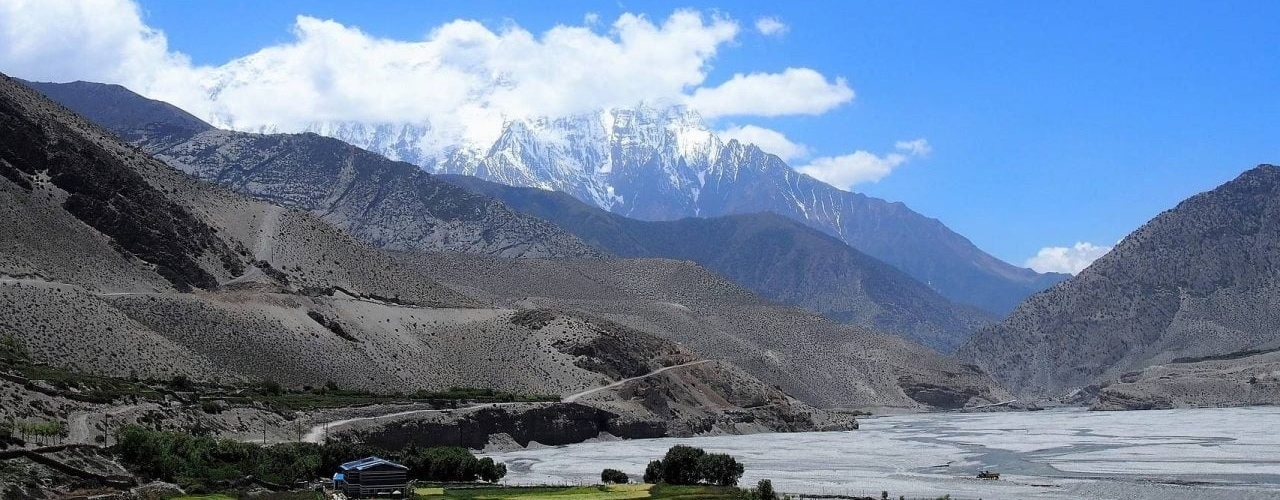
Trekking to Lo Manthang is a high-altitude Himalayan adventure in Upper Mustang, Nepal, leading to a historic walled city at 3,840 meters. Known for its Tibetan Buddhist monasteries, ancient cave settlements, red-rock canyons, and traditional Loba culture, the Lo Manthang trek offers a distinctive experience unlike forested Himalayan routes. Located in the rain shadow of the Annapurna and Dhaulagiri ranges, Upper Mustang combines dramatic desert landscapes with centuries-old cultural heritage, including Jampa Lhakhang, Thubchen Gompa, and the famous Tiji festival.
The Lo Manthang trek typically takes 10 to 18 days, with routes crossing remote villages and high-altitude passes reaching approximately 4,200 meters. The best trekking seasons are spring and autumn, while successful planning requires understanding the trek's difficulty, acclimatization needs, transportation options, and Upper Mustang permit regulations. This guide explains the trekking itinerary, permit costs, budget, accommodation, packing essentials, safety precautions, and cultural attractions to help you plan a rewarding Upper Mustang trekking adventure.
Where Is Lo Manthang and Why Is It Famous for Trekking?
Lo Manthang is a walled town at 3,840 m in Upper Mustang, north-central Nepal, close to the Tibetan border. It is famous among trekkers because it is the last intact medieval walled capital in Nepal, reached along the Kali Gandaki valley through a region that stayed closed to outsiders until 1992.
Lo Manthang is the largest settlement in Upper Mustang, a high-desert sub-region of Mustang district. North of town the road climbs to Kora La (4,660 m), the Tibet border crossing. South of it the Kali Gandaki river cuts between Dhaulagiri (8,167 m) and Annapurna I (8,091 m), a gorge that ranks among the deepest on earth by some measures.
What Makes Lo Manthang the Cultural Heart of Upper Mustang?
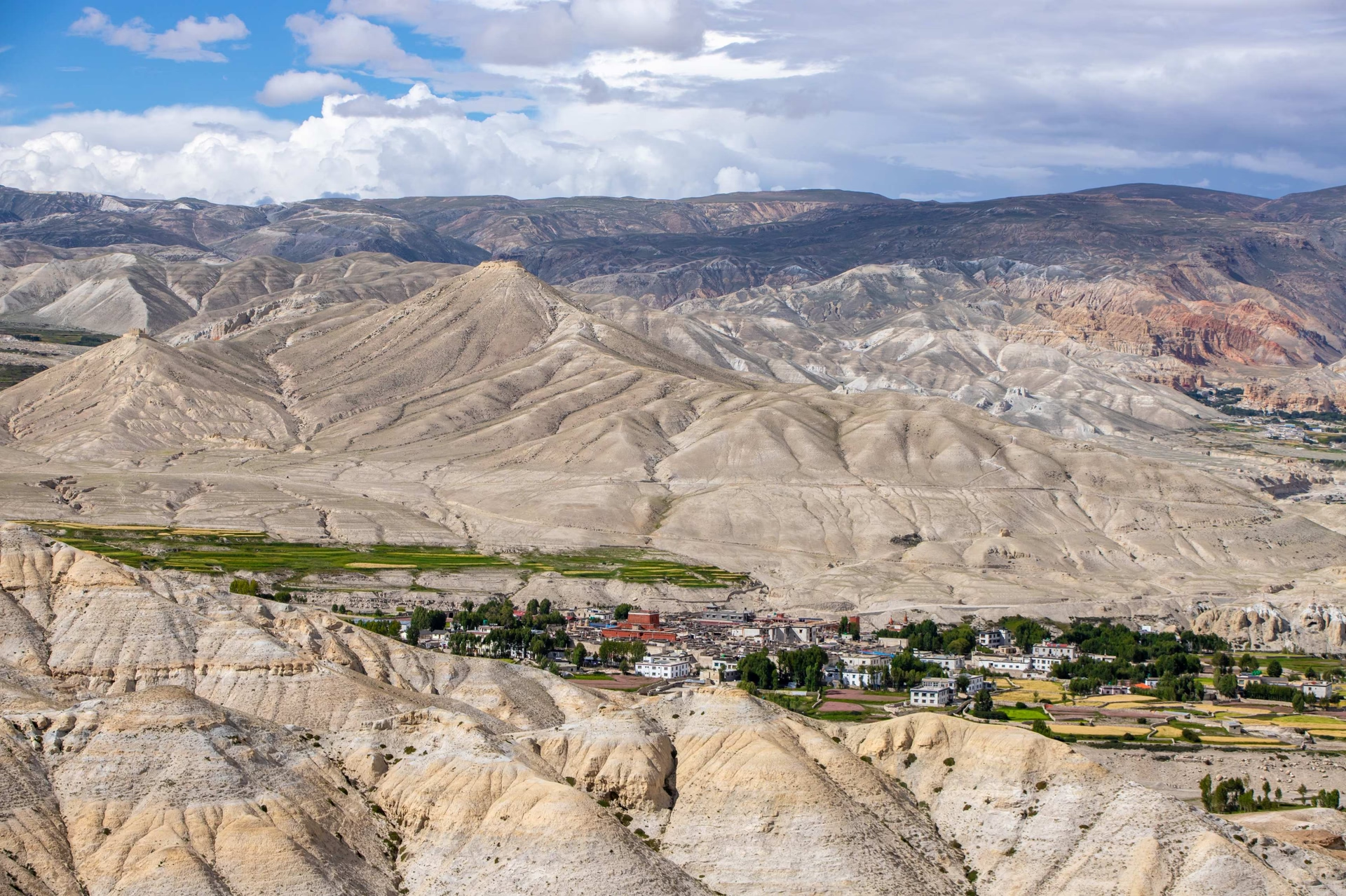
Lo Manthang is the cultural heart of Upper Mustang because it was the capital of the Kingdom of Lo from 1380 until 2008. King Ame Pal, a Buddhist warrior from western Tibet, founded the walled city in 1380, and his line ruled from it for more than 600 years.
The kingdom survived as a Nepali dependency after the Gorkha annexation in the late 18th century, and the Pal kings kept administrative roles. Nepal officially abolished its national monarchy on May 28, 2008, leading to the dissolution of the Mustang kingdom's administrative authority later that year. The last king, Jigme Dorje Palbar Bista, died on 16 December 2016.
The culture outlived the title. Locals, called Lobas, speak a Tibetan dialect and follow Tibetan Buddhism, and they stage the Tiji festival inside the walls each spring.
How Does Lo Manthang Differ From Other Himalayan Trekking Destinations?
Lo Manthang differs from other Himalayan destinations in 4 ways: rain-shadow weather, a Tibetan cultural setting, permit-controlled entry, and a goal that is a town rather than a peak. Most Nepali treks end at a base camp or a pass. This one ends at a capital city.
Compare it with the Annapurna Circuit Trek or the Annapurna Base Camp Trek. Upper Mustang has less rain, fewer trekkers and almost no forest. An Annapurna day climbs through rhododendron and bamboo, while a Mustang day crosses open ridges. Annapurna villages also sit closer together, so Mustang asks for more planning around lunch stops and water.
The permit system is the other split. Annapurna needs a conservation area permit. Upper Mustang needs that plus a Restricted Area Permit, which only a registered agency can obtain. A common mistake we see is budgeting Mustang like a standard teahouse trek. The permit alone adds US$400 to US$600.
What Are the Main Attractions of Lo Manthang?
The 5 main attractions of Lo Manthang are the city wall, Jampa Lhakhang, Thubchen Gompa, Chode Gompa and the royal palace. Outside town, the Chhoser caves, Lo Gekar (Ghar Gompa) and the cliffs of the Kali Gandaki valley fill out the trip.
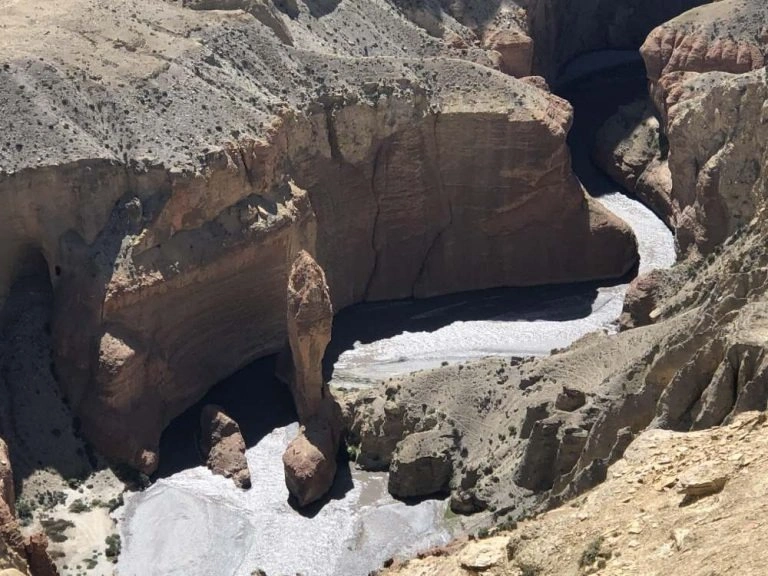
The wall is about 753 m long (2,472 ft) and 8 m high, with 14 towers and one wooden gate on the east side. Jampa Lhakhang dates to 1387 and carries gold mandalas on its first and second floors. Thubchen Gompa, from the early 15th century, has an assembly hall painted in natural pigments. Chode Gompa, from 1757, runs a monastic school. The five-story royal palace, the Monkhar, stands in the middle of town.
Tiji, held in May or early June, and Yartung, a horse-racing festival in August, add two more reasons to time a visit.
What Is the Best Time for Trekking to Lo Manthang?
The best time for trekking to Lo Manthang is March to May and September to November. Spring brings the Tiji festival and clear skies. Autumn brings the steadiest weather and the sharpest mountain views. Summer works because of the rain shadow, and winter closes many lodges.
Choosing between spring and autumn is mostly a choice between culture and crowds. Choosing summer or winter is a choice about risk.
Which Months Offer the Best Weather for the Lo Manthang Trek?
Late April to mid-June and September to mid-November offer the best weather for the Lo Manthang trek. Skies stay clear, passes stay open, and the daily wind pattern is predictable.
Wind is the factor guides mention first. The Kali Gandaki valley works as a funnel, and gusts build from late morning and peak in the afternoon. Start walking at 7:00 a.m. and you finish most exposed ridge sections before the worst of it.
First-time Himalayan trekkers do best in October, when lodges are fully staffed. Culture seekers choose Tiji: the 2026 festival ran 13 to 15 May, and local operators list 1 to 3 June for 2027, so confirm the lunar-calendar dates with your agency before booking flights.
Is Trekking to Lo Manthang Possible During the Monsoon Season?
Trekking to Lo Manthang is possible during the monsoon, from June to August, because Upper Mustang lies in the Annapurna rain shadow. The valley stays dry while southern Nepal floods. The real monsoon risk is the flight from Pokhara to Jomsom. National Disaster Preparedness Baseline Assessment's Mustang district profile places at 3,573 km² overall with a 2021-census population of 14,596 across the whole district
Jomsom flights leave in the morning, before cloud and wind close the gorge. In monsoon months cancellations stack up, and a 1-day delay often becomes 3. Heaven Himalaya's own trip notes say summer is drier than other parts of Nepal but flights can be delayed, which matches the pattern. Roads from Pokhara can also close from landslides near Beni and Tatopani.
Build a spare day into any June to August schedule.
What Are the Seasonal Temperatures and Weather Conditions in Upper Mustang?
Daytime temperatures in Upper Mustang run 8 to 18°C in spring and autumn, with nights from -5 to 5°C at 3,800 m. Summer days reach the low 20s and winter nights fall to -15°C. Wind, not snow, shapes most days.
The table below gives typical conditions at Lo Manthang by season. These are approximate ranges, and readings vary by year and by altitude.
Season | Months | Daytime | Night | Main Condition |
Spring | March to May | 8 to 18°C | -5 to 3°C | Clear skies, Tiji, afternoon wind |
Summer | June to August | 15 to 22°C | 5 to 10°C | Dry valley, flight delays |
Autumn | September to November | 10 to 18°C | -3 to 5°C | Stable weather, best visibility |
Winter | December to February | 0 to 8°C | -15 to -8°C | Snow, many lodges closed |
Winter ranks last because lodge closures complicate logistics even for experienced trekkers.
How Difficult Is the Trekking Route to Lo Manthang?
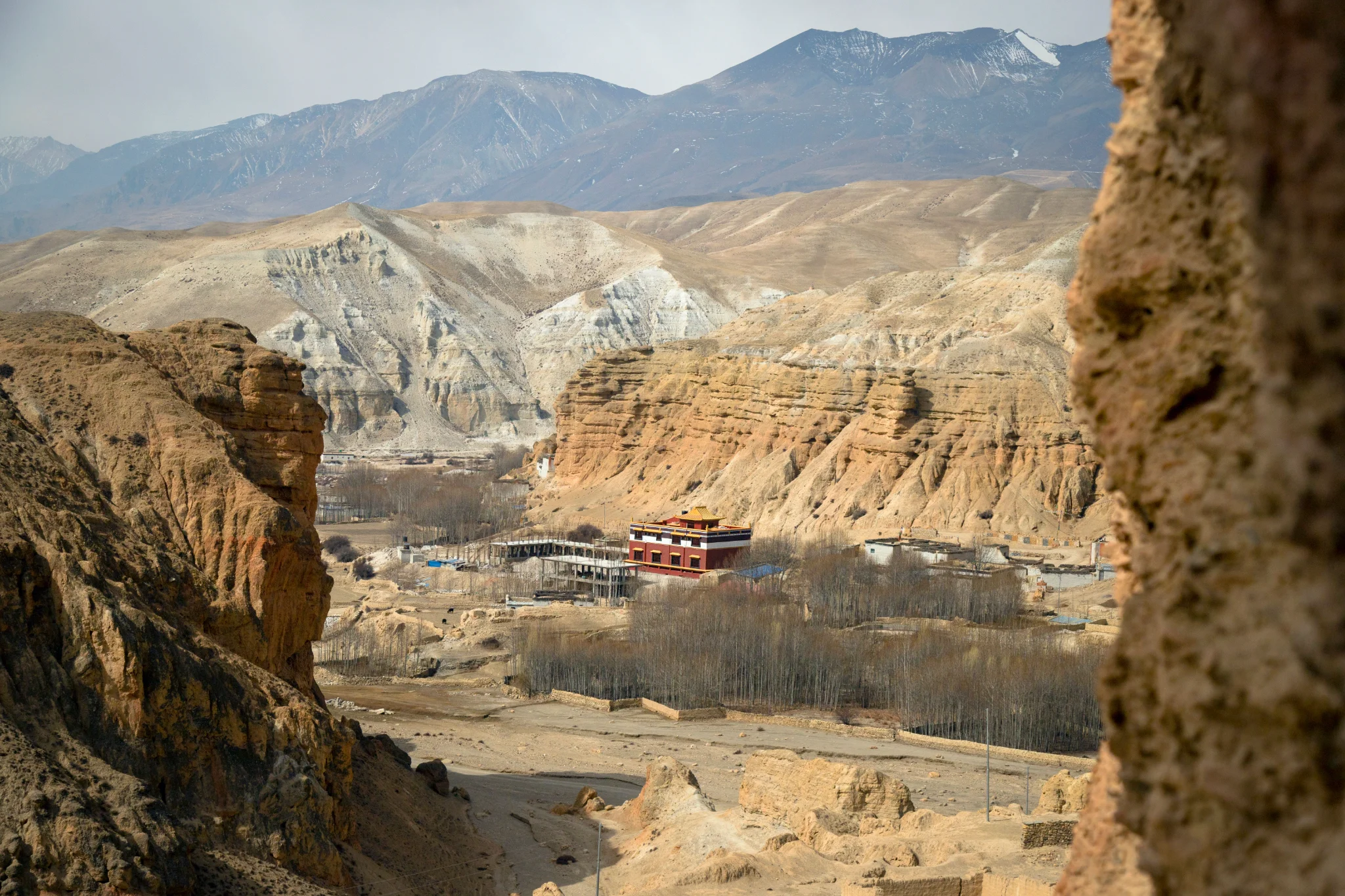
The Lo Manthang trek is moderate in difficulty, with daily walks of 4 to 7 hours, no technical climbing, and passes between 3,800 and 4,300 m. Altitude, wind and remote stretches create the challenge, not steepness.
Heaven Himalaya rates its 18-day itinerary as moderate, and the profile agrees: no glacier travel, no fixed ropes, well-worn trails. What the route has is sustained time above 3,500 m, and that is the real test.
How Many Days Does the Lo Manthang Trek Take?
The Lo Manthang trek takes 10 to 18 days, depending on how much you walk and how you travel from Kathmandu. A 10-day trip drives to Kagbeni and walks 8 days. A 14-day trip adds acclimatization. An 18-day itinerary covers the full loop on foot.
The table compares 3 common formats. Restricted-area days drive the permit cost, so they matter.
Format | Total Days | Days in Restricted Area | Best For |
Drive in, walk, drive out | 10 | 8 | Limited time, strong fitness |
Balanced trek with spare days | 12 to 14 | 10 to 12 | First-timers, photographers |
Fly to Jomsom, full loop via Muktinath | 18 | about 10 | Slow acclimatization, city days included |
Heaven Himalaya's 18-day route spends days 1 to 3 in Kathmandu and Pokhara, starts walking at Kagbeni on day 4, reaches Lo Manthang on day 9, and returns through Tangbe, Tetang and Muktinath before the flight out of Jomsom on day 16.
What Is the Highest Altitude Reached During the Lo Manthang Trek?
The highest altitude on the Lo Manthang trek is about 4,200 m, at the PA Pass on the return route. Lo Manthang itself sits at 3,840 m. The main outbound passes are Nyi La (4,010 m) and Lo La (about 3,960 m).
Sources disagree because the trail has variants. The Ghar Gompa route over Choku La reaches about 4,290 m, the PA Pass between Tangbe and Tetang is listed at 4,210 m, and Gyu La, on the way to Muktinath, tops out at 4,077 m.
Sleeping altitude matters more than any single pass. Every night between Syangboche and Lo Manthang falls between 3,500 and 3,850 m, and that long exposure produces most altitude symptoms.
What Level of Fitness Is Required for Trekking to Lo Manthang?
The Lo Manthang trek requires the ability to walk 5 to 7 hours a day for 8 or more consecutive days at 3,000 to 4,000 m. Aerobic fitness matters more than strength, and some days on the short itineraries run 21 to 23 km.
Train for 8 to 12 weeks, following the same steps used to prepare for high-altitude trekking elsewhere in Nepal. Walk or hike 3 to 4 times a week, add one 3-hour hike with a 6 kg pack, and include stairs or hill repeats.
Fitness does not prevent altitude sickness. Fit people often get it because they climb faster than their bodies adapt, and the flight from Pokhara to Jomsom (2,720 m) starts the altitude clock before the walking does.
Is the Lo Manthang Trek Suitable for Beginners?
The Lo Manthang trek suits beginners who have already walked 5 to 6 hours a day, accept a guide-led structure, and add acclimatization days. The terrain is gentle and the trail is clear. Remoteness is the real constraint.
Mustang has long gaps between villages, and on the PA Pass day trekkers carry lunch. Heaven Himalaya's itinerary flags that day as long and remote.
A first-timer does best with a 12 to 14 day schedule, one spare day, a guide who checks oxygen saturation daily, and insurance that covers evacuation above 4,500 m.
What Is the Lo Manthang Trek Route and Itinerary?
The Lo Manthang trek route follows the Kali Gandaki valley from Kagbeni (2,800 m) north through Chele, Syangboche, Ghami and Tsarang to Lo Manthang (3,840 m), then returns by the same corridor or a loop via Tetang and Muktinath. Walking days run 5 to 7 hours.
The best itineraries walk the old trade trail and the ridge paths the jeep road bypasses, and use a vehicle only for long, dusty road sections.
How Do You Travel From Kathmandu to the Lo Manthang Trek Starting Point?
You travel from Kathmandu to Kagbeni, the Upper Mustang entry point, by combining a Kathmandu to Pokhara transfer with a Pokhara to Jomsom flight or jeep ride. The drive to Pokhara takes 7 to 8 hours. The flight to Jomsom takes about 25 minutes.
Three options reach the trailhead:
Fly Pokhara to Jomsom (about US$120 to US$130 one way), then drive about an hour or walk 3 to 4 hours to Kagbeni.
Jeep Pokhara to Kagbeni (US60toUS80 per person when sharing, around 10 hours), or book a full Upper Mustang jeep tour if you'd rather drive the whole route instead of walking it.
Driving from Kathmandu to Kagbeni takes 15 to 18 hours due to the rough off-road conditions in the Kali Gandaki gorge, making a broken journey with an overnight stop in Pokhara highly recommended.
Flying in and driving out is the usual compromise. Wind often cancels Jomsom flights, so keep one spare day and expect your agency to rebook you onto a jeep if the flight fails.
What Are the Major Stops Along the Lo Manthang Trekking Route?
The major stops are Kagbeni, Chele, Syangboche, Ghami, Tsarang and Lo Manthang, and on the return, Tangbe, Tetang and Muktinath. Each overnight sits between about 2,800 and 3,850 m.
The table lists a typical outbound sequence. Operator figures differ by about 50 m between sources, so read the numbers as close approximations.
Stop | Approx. Altitude | What Marks It |
Kagbeni | 2,800 m | Medieval gateway village, first checkpoint |
Chele | 3,050 to 3,110 m | First night inside the restricted zone |
Syangboche | 3,800 m | Biggest climb of the trek, about 745 m gain |
Ghami | 3,520 to 3,560 m | Long mani wall, Nyi La pass (4,010 m) on the way |
Tsarang | about 3,560 m | Monastery and fort above a green village |
Lo Manthang | 3,840 m | Walled capital, 2 nights recommended |
Respect the Chele to Syangboche day. It gains about 745 m in sleeping altitude, more than the 300 to 500 m daily guideline the Himalayan Rescue Association gives for sleeping elevation above 3,000 m. Walk slowly and drink at least 3 liters.
What Can You Experience During a Day in Lo Manthang?
A full day in Lo Manthang covers the walled city, 3 main monasteries, the royal palace exterior, and an afternoon trip to Chhoser, Jhong Cave or Nyphu Gompa. Plan 6 to 8 hours of exploring at an easy pace.
A workable day goes like this. Start at 7:30 a.m. with butter tea and a walk along the outer wall while the light is low. Visit Jampa Lhakhang and Thubchen Gompa when caretakers open the doors, usually mid-morning, and carry cash for entry tickets. Eat lunch in a courtyard lodge, then take a jeep or a 3 to 4 hour round walk to the cave villages around Chhoser. Be back for sunset on your lodge roof, when the whitewash turns orange.
Photography inside the temples is restricted, and caretakers enforce it. Opening times vary because caretakers hold the keys, so ask your guide to arrange visits the evening before.
Can You Extend the Lo Manthang Trek to Explore More of Upper Mustang?
Yes, you can extend the Lo Manthang trek by 2 to 4 days to visit Ghar Gompa, Luri Gompa, Yara or the Korala border area. Each extra day inside the zone adds US$50 in permit fees.
The extensions worth the money, in order:
Add a day for Lo Gekar (Ghar Gompa), a monastery traditionally linked to Padmasambhava and the 8th century.
Spend a second day in Lo Manthang for the Chhoser cave complexes.
Time your arrival for the 3 days of the Tiji Festival in Nepal.
Return by the Tetang and Muktinath loop, which ends at a Hindu and Buddhist pilgrimage site, check Muktinath weather in September if you're timing a shoulder-season exit.
Foreigners heading to the Korala border point from Chhusang via Lo Manthang can now apply online, according to a March 2026 report. Korala arrangements differ from standard permits, so ask your agency.
What Permits Are Required for Trekking to Lo Manthang?
Trekking to Lo Manthang requires 2 Upper Mustang trek permits: a Restricted Area Permit for Upper Mustang and an Annapurna Conservation Area Permit (ACAP). A registered Nepali trekking agency applies for both. Individuals cannot apply directly.
Checkpoints at Kagbeni and Lo Manthang inspect the original permit, so carry paper copies even when issue is digital. Permits are single-entry, non-transferable and non-refundable.
How Much Does the Upper Mustang Restricted Area Permit Cost?
The Upper Mustang Restricted Area Permit (RAP) costs US500perpersonforthefirst10days,andUS50 for each additional day. The Nepal cabinet announced the Upper Mustang permit fee change on 18 November 2025, and the Kathmandu Post reported it that week.
Rising Nepal's TRN Online reported on 23 March 2026 that daily billing was now in force in Mustang. Umesh Paudel, chief of the ACAP area office in Lo Manthang, said the new rule would ease travel for solo trekkers and business visitors. Some government pages still show the old fee, so confirm the current rate with your agency before paying.
The table shows permit costs for a typical trek.
Permit | Cost | Notes |
Restricted Area Permit | US$50 per day | 8 days = US$400, 10 days = US$500, 14 days = US$700 |
ACAP permit | NPR 3,000 (about US$22) | NPR 1,000 for SAARC nationals |
TIMS card | NPR 2,000, or none | Agencies differ, so ask yours |
The per-day model rewards short trips, which most guides overlook. A standard itinerary with 8 to 10 days inside the restricted zone requires the base US$500 permit fee, as the government does not prorate the first 10 days. The extra days outside Mustang add nothing to the permit.
Do You Need a Licensed Guide and a Trekking Agency for Lo Manthang?
Yes, a licensed guide and a government-registered trekking agency are mandatory for Lo Manthang. The rule covers solo travelers and jeep tours. One guide can take up to 7 trekkers, and a group of 8 needs a second guide.
Until March 2026, a minimum of 2 foreign trekkers applied. Sagar Pandey, president of the Trekking Agencies Association of Nepal, had publicly questioned the logic of that rule in November 2025, and the solo ban ended a few months later.
The guide earns the fee on this route. Trails branch after Syangboche, lodges give few directions, and the guide handles checkpoints, monastery caretakers and altitude monitoring. Choose an agency that names your guide before you pay, trains staff in altitude illness, and carries a pulse oximeter and first-aid kit.
What Documents Are Required for the Lo Manthang Trek?
The Lo Manthang trek requires 5 documents: a passport valid for 6 months, a Nepal visa, 2 passport photos, a scanned passport photo page, and travel insurance with high-altitude evacuation cover. Your agency collects them for the permit application.
These details cause most delays:
Passports need at least 6 months of validity from your entry date to Nepal.
Tourist visas cost US$50 on arrival, according to Heaven Himalaya's trip notes.
Insurance must name trekking and helicopter evacuation, to at least 4,500 m. Many operators specify 6,000 m.
Documents go to the agency 4 to 6 weeks before departure. Permits usually issue 1 to 7 working days after a guide is assigned.
Digital applications began in early 2026, and permits are issued in Kathmandu or Pokhara, never on the trail. Match your name to your passport exactly. A one-letter mismatch can invalidate the permit at a checkpoint.
How Much Does Trekking to Lo Manthang Cost?
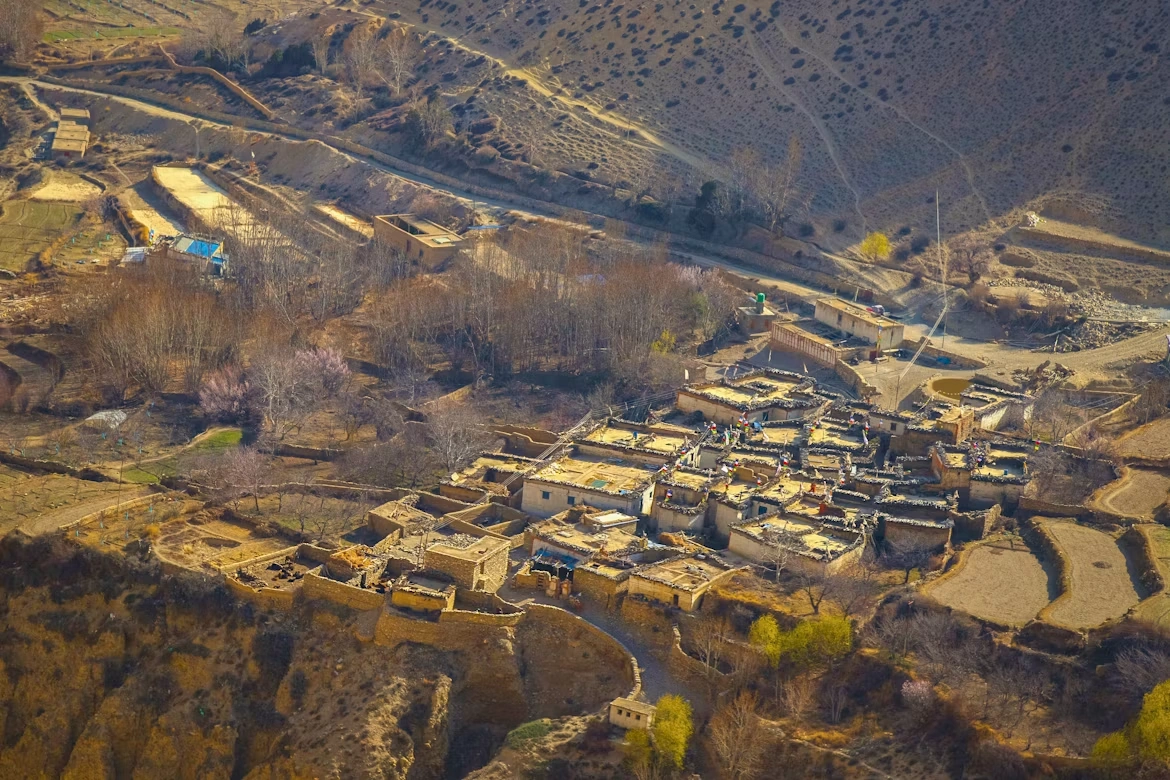
Trekking to Lo Manthang costs US$1,400 to US$2,700 per person in 2026, depending on length, transport, group size and service level. A self-organized 12-day trip runs US$1,429 to US$1,907, and a fully guided package runs US$2,400 to US$2,700.
Heaven Himalaya's 18-day Upper Mustang trek starts at US$2,499 per person for a group of 2 to 3 and falls to US$2,099 for 13 to 20 people. A solo traveler pays US$2,999. Group size explains most of the spread, because guide, jeep and assistant-guide costs divide across more people.
What Factors Affect the Total Cost of the Lo Manthang Trek?
The 6 main cost factors are trek length, group size, transport mode, season, accommodation grade and porter use. Length drives the permit fee. Group size drives each person's share of the guide. Season drives availability.
Typical line items from a self-organized 12-day trek:
Restricted Area Permit: US$500 to US$600
Guide: US$250 to US$350 per person in a group of 2
Porter: US$150 to US$200 per person
Lodges: US$12 to US$20 per room per night
Meals: US$20 to US$30 per day
Jeep, Pokhara to Kagbeni: US$60 to US$80
Tiji departures cost more because the festival fills lodges and lifts jeep rates. Book 3 to 4 months ahead for the May window.
Does the Trekking Package Include Permits, Accommodation, Meals, and Transportation?
A good Lo Manthang package includes permits, accommodation, meals, ground transport, a licensed guide and porters, but excludes international flights, visas, personal gear, tips and drinks. Check the exact list before paying.
Heaven Himalaya's package covers airport transfers, all ground transport, 3-star hotels in Kathmandu and Pokhara with breakfast, guesthouses on the trek with full board, the Restricted Area Permit and ACAP, a licensed guide, one porter per 2 clients, a duffel bag and sleeping bag, and a farewell dinner. It excludes tips, the visa, travel insurance, beverages, personal expenses and extra nights caused by delays.
Three questions expose weak packages. Does the price include the Jomsom flight or only the jeep? Who pays for extra nights when the flight cancels? Does the permit line cover every day inside the zone?
How Can You Budget for Additional Expenses During the Lo Manthang Trek?
Budget US$300 to US$500 on top of the package for tips, drinks, hot showers, charging, snacks, a delay buffer and gear. Many trekkers set aside 10 to 15 percent of the package price for guide and porter tips.
Hot showers cost US$3 to US$5 at most lodges, and charging and Wi-Fi are sold per hour or per device. Carry purification tablets or a filter bottle instead of buying bottled water. Snacks bought in Pokhara save US$30 to US$50 over 12 days.
The delay buffer matters most. A canceled Jomsom flight can add 1 to 2 nights. Keep US$150 to US$250 in cash for that, because ATMs inside Upper Mustang are unreliable. Carry Nepali rupees in small notes, since remote lodges often cannot change large bills.
What Should You Pack for the Lo Manthang Trek?
Pack for 3 conditions on the Lo Manthang trek: strong wind and sun by day, freezing nights at 3,800 m, and dust. A layered clothing system, broken-in boots and sun protection matter more than any specialist gadget.
Most operators supply a duffel bag and sleeping bag. Your daypack carries water, a rain shell, layers, sunscreen and snacks.
What Clothing and Trekking Equipment Are Essential for Upper Mustang?
The essential Upper Mustang kit, drawn from our full Nepal trekking packing list, includes a windproof shell, an insulated down jacket, 2 base layers, trekking trousers, sturdy boots, a sun hat, sunglasses with side shields and a 3-liter hydration system. Add trekking poles for long descents.
Choices that experience favors:
Wear a buff or scarf for dust. Wind and jeep traffic raise fine grit all day, and a dry cough is the most common complaint.
Choose SPF 50 sunscreen and lip balm. The air is thin and dry, and sunburn arrives by 10:00 a.m.
Bring a sleeping bag rated to -10°C for March or November. Lodges supply blankets, but rooms are unheated.
Carry a headlamp and a power bank. Solar charging is slow and priced by the hour.
Pack blister care, electrolyte sachets and a basic first-aid kit.
The usual packing mistake is too much cotton. Cotton holds sweat, and temperatures drop sharply after sunset. Choose merino or synthetic layers.
What Accommodation and Food Options Are Available Along the Lo Manthang Route?
Accommodation along the route is basic teahouse lodging in twin rooms at US12toUS20 per night, with meals served in a shared dining room. Lo Manthang has the widest choice, including a few lodges with attached bathrooms.
Villages before Lo Manthang offer family guesthouses with shared toilets and bucket-hot water. Rooms are unheated, so most trekkers spend the evening around the dining room stove.
Food follows Tibetan highland and Nepali habits: dal bhat, thukpa, momo, Tibetan bread and eggs. Fresh vegetables thin out the farther north you go, so choose dal bhat, which is cooked fresh, over imported meat dishes.
Heaven Himalaya's package provides full board on the trek with a fruit dessert each night. Tell your agency about special diets 4 weeks ahead so the guide can plan lunch stops.
How Can You Prepare for High Altitude and Remote Mountain Conditions?
Prepare for altitude by building acclimatization into the schedule, drinking 3 to 4 liters of fluid a day, and knowing the early altitude sickness symptoms: persistent headache, nausea and unusual fatigue. Descend when symptoms worsen.
The UIAA Medical Commission's peer-reviewed 300–500 m ascent recommendation advises limiting the rise in sleeping altitude to 300 to 500 m a day above 2,500–3,000 m, with two nights at the same altitude every 2 to 4 days of ascent. Mustang breaks that rule once, at Syangboche, then holds you at 3,500 to 3,850 m for 5 nights. The answer stays the same: walk slowly, sleep well and drink.
Acetazolamide (Diamox) is a prescription option many trekkers carry. Ask a travel doctor 6 to 8 weeks before departure, because the drug does not suit everyone. Skip alcohol on the first 2 nights at altitude, and skip sleeping pills.
Remoteness needs its own plan. Mobile signal fades on passes and medical posts are few, so helicopter evacuation is the real safety net. Keep the policy number and emergency line on your phone and on paper.
What Cultural and Natural Attractions Can You Explore in Lo Manthang?
Lo Manthang offers 3 groups of attractions: ancient monasteries, a walled medieval city, and the caves and landscapes around it. Most trekkers need 2 full days to cover the highlights without rushing.
The town sits in a bowl of ochre cliffs and terraced barley fields. Everything of interest lies within a 4-hour walk or a short jeep ride, so one base serves the whole area.
Which Ancient Monasteries and Buddhist Heritage Sites Should You Visit?
Visit 5 monasteries first: Jampa Lhakhang, Thubchen Gompa, Chode Gompa, Lo Gekar (Ghar Gompa) and Tsarang Gompa. Jampa Lhakhang is the oldest in town, from 1387. Lo Gekar has the oldest legend, tracing to the 8th century.
Jampa Lhakhang is a three-story temple about 150 ft long with gold mandalas on its walls. Thubchen Gompa, from the early 15th century, has a hall painted in natural pigments, gold and silver. Chode Gompa dates to 1757 and runs a school for young monks. Lo Gekar sits on the route between Ghami and Drakmar. Tsarang's monastery and fort stand above a green village on the approach to Lo Manthang.
Etiquette matters. Walk clockwise around stupas and mani walls. Ask before photographing, and expect a no inside prayer halls. Carry cash for entry tickets and a small donation. Remove hats and shoes at doors.
What Makes the Walled City of Lo Manthang Historically Significant?
The walled city of Lo Manthang is historically significant because it is the only fully preserved medieval fort town in Nepal, founded in 1380 and ruled by one royal line until 2008. The wall measures about 753 m and has 14 towers.
The design is simple and effective. A single wooden gate on the east side opens onto narrow lanes, whitewashed houses and the four-story royal palace in the middle of town.
Trade built the city. Salt from the Tibetan plateau moved south through Mustang, grain moved north, and the kings of Lo taxed the caravans. That income funded monasteries painted by Tibetan and Newar artists. The caravan trade ended when the Tibetan border closed in the mid-20th century, and restoration work since the 1990s, including projects backed by the American Himalayan Foundation, has stabilized the murals.
Can You Explore Mustang Caves, Himalayan Landscapes, and Traditional Villages?
Yes, you can explore caves, canyons and villages on every Lo Manthang itinerary, starting with the Chhoser cave complex and the cliffs between Kagbeni and Chele. The valley holds an estimated 10,000 cave dwellings.
Researchers describe 3 phases of cave use: burial about 3,000 years ago, residence about 1,000 years ago, and meditation by the 15th century. Some caves became monasteries, including Luri Gompa, Chungsi and Nyphu. In 2007 a shepherd found 55 cave paintings of the life of the Buddha, a discovery that drew art historians from around the world.
Landscape highlights include the ochre cliffs near Ghar Gompa, the Kali Gandaki riverbed with its fossil ammonite stones (shaligram, sacred to Hindus), the long mani wall at Ghami, and ridgelines with views of Nilgiri and Annapurna on the return, a preview of the forested terrain covered in our Annapurna Circuit trek guide. Tangbe, with whitewashed houses and buckwheat fields, and Chhusang, below huge red cliffs, show village architecture at its best. Photographers favor the hour after sunrise, before the wind picks up.
How Can Heaven Himalaya Help You Plan Your Trekking Adventure to Lo Manthang?
Heaven Himalaya plans Lo Manthang treks end to end: permits, guide, transport, accommodation and a schedule built around weather and acclimatization. The team handles the Restricted Area Permit and ACAP and tailors itineraries for Tiji, solo travel and private groups.
Heaven Himalaya Treks & Expedition operates from Gitanjali Chowk, Dathu Sadak, Kathmandu. The company is affiliated with the Nepal Tourism Board, the Trekking Agencies' Association of Nepal (TAAN), KEEP and the Nepal Mountaineering Association. Its Tripadvisor profile shows a 5.0 rating from 160 reviews and Travelers' Choice awards from 2021 to 2025.
Send us your dates and fitness level, and the planners build the route around them. The standard itinerary is on the Upper Mustang Trek page.
Why Choose Heaven Himalaya for a Guided Lo Manthang Trek?
Choose Heaven Himalaya if you want a licensed local operator, transparent inclusions and an itinerary with acclimatization days instead of a rushed schedule. Its 18-day plan lists exact altitudes, passes and inclusions.
You can verify the specifics on the trek page: group pricing from US$2,099 (13 to 20 people) to US$2,999 (solo), one porter per 2 clients, an assistant guide for groups of 6 or more, guide and porter insurance, a pulse oximeter, and rescue coordination funded by your travel insurance.
The company currently runs no fixed group departures for Upper Mustang and offers private departures on your dates, including Tiji. That suits couples, families and small groups, and it costs more per person than a large fixed departure. Weigh that trade-off against any operator you consider.
What Are the Key Takeaways for Planning a Successful Lo Manthang Trek?
The 7 key takeaways are: pick the season, budget the permit, hire a licensed guide, schedule acclimatization, pack for wind, carry spare cash and add a buffer day.
Pick March to May or September to November, and aim for Tiji (1 to 3 June 2027, to be confirmed) if culture is your priority.
Budget US$50 per day inside the zone, plus ACAP at NPR 3,000, and expect US$1,400 to US$2,700 in total.
Hire a registered agency and a licensed guide. Solo trekkers qualify since March 2026, but only with a guide.
Schedule 12 to 14 days for a first high-altitude trek, and treat the Chele to Syangboche day with care.
Pack a windproof shell, a down jacket, a dust buff and a sleeping bag rated for the season.
Carry Nepali rupees in small notes for lodges, showers, charging and tips.
Keep one spare day against Jomsom flight delays.
Trekking to Lo Manthang is not technically hard, and a 10-day permit costs no more than it did before the change. Browse our full Upper Mustang trek package for the day-by-day itinerary and inclusions, or write to the Heaven Himalaya team at info@heavenhimalaya.com for dates and a quote.