
- DestinationNepal
- Duration18 days
- Trip DifficultyModerate
- ActivitiesTrek
- Max. Elevation5550m.
- Group Size15+
- VehicleCar, Deluxe AC Bus
- AccommodationHotel & Guesthouse
- MealsB.L.D
- Starting PointKathmandu (Airport Arrival)
- Ending PointKathmandu (Airport Departure)
Everest Gokyo Chola Pass Trek: The Complete Adventure
The Everest Chola Pass Trek with Gokyo Lakes and the Base Camp is an inclusive 18-day travel package for those who love challenges amidst the mountainous terrain in the Khumbu region of Nepal. The tour can be customized to be completed in two weeks, too.
The all-inclusive itinerary includes a visit to most of the popular sights of the Everest locale, such as Tengboche Monastery, Namche Bazaar, Gorakshep, Lukla, Everest Base Camp, Gokyo Lakes, and crossing Chola Pass (5,420 meters, 17,782 ft).
The hike compels you to get wanderlust with the captivating beauty of mountains, glaciers, valleys, mountain passes, mountain lakes, and many more. Hence, it is an ideal trek package to Everest Base Camp with Gokyo Lakes via the Chola Pass for proficient and passionate high-altitude trekkers.
There is an unending list of wonderful places that you are going to visit on the Gokyo, EBC, and Chola Pass Treks. You are going to make uninterrupted memories on the High Chola Circuit and also walk to a popular high pass on Everest.
First things first, this trek takes you to the base camp of the highest mountain in the world. It’s probably the number one wish on the bucket list of every person who loves to travel.
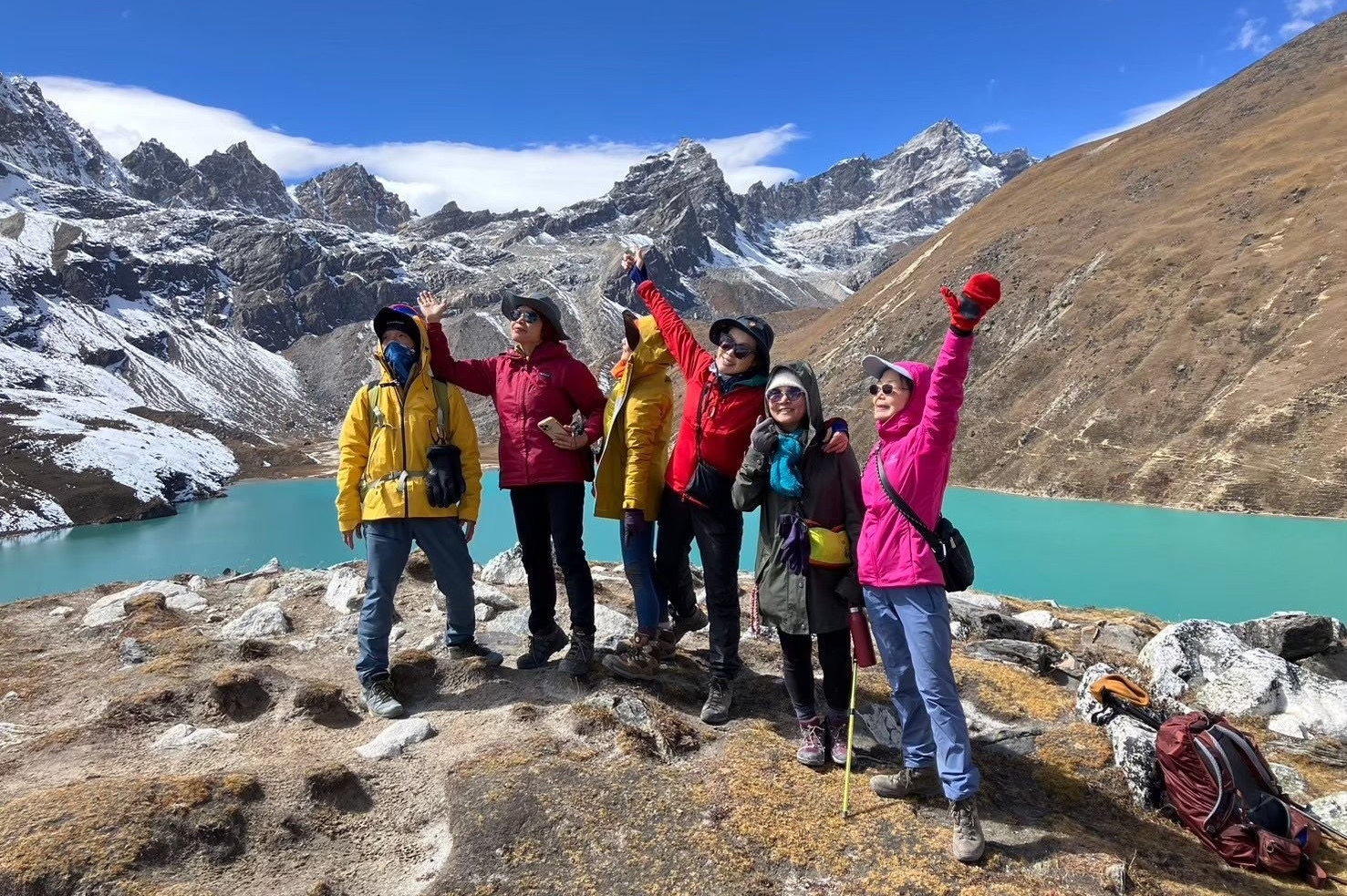
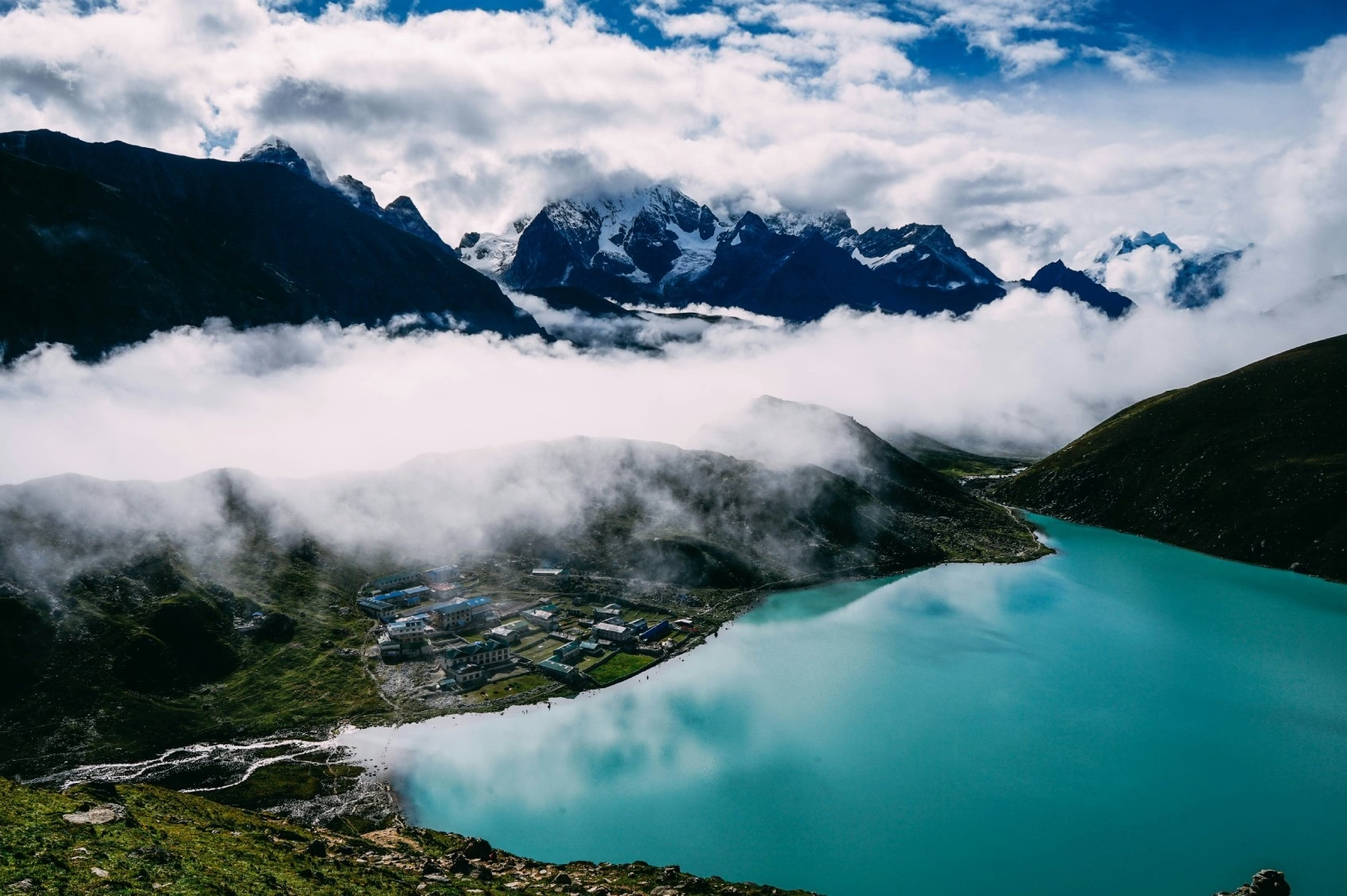
Then the trek takes you to some heavenly locations, like Gokyo Valley. From here, you can admire the beauty of tranquil, emerald-green mountain lakes embedded beautifully in the snow-clad mountainous terrain.
Above all, the adventure of crossing the Chola Summit Pass on the Everest Chola Pass Trek is unbeatable in terms of natural magnificence.
Why choose Chola Pass trekking with EBC and Gokyo Lakes?
The trek to Chola Pass is a wonderful journey that introduces you to a different definition of beauty. With the Chola Pass, Gokyo Lake, and Everest Base Camp hikes, you take a deep dive into the Sagarmatha National Park and explore its geographical variations and biodiversity.
Similarly, the beautiful Sherpa villages, people, culture, and lifestyle are unique aspects of this journey. It gives you some insights into the Sherpa people, their culture, their traditions, and the Tibetan Buddhist religion.
On the journey t
o the Base Camp showers, you will see some incredible views of mountains like Mt. Everest, Mt. Ama Dablam, Mt. Nuptse, Mt. Lhotse, Mt. Cho-Oyu, Mt. Thamserku, and many more.
As the trail traverses from the base camp to the Chola Pass, the landscapes get wilder. With the glaciers, icefalls, and, above all, the dazzling Gokyo Lakes, Everest Chola Pass trekking is worth a try!
Everest Base Camp Trek with Gokyo Lake and Chola Pass Hiking Route
Trekking to Chola Pass is a superb combo with the treks to Chola Pass, EBC, and Gokyo Lake. It starts with an exhilarating flight to Lukla and follows the classic trail to Everest Base Camp.
The trail traverses through the National Park and climbs via several Sherpa villages to Namche. From the sherpa town, the trail ascends to Tengboche and the pastures of Dingboche.
Further, we walk along the trail and pass Lobuche and Gorakshep on the way to the campsite. From the base camp, we follow a trail that leads us to Chola Pass. We cross the pass and head towards the Gokyo valley.
Finally, enjoying the fascinating beauty of Gokyo lakes against the backdrop of the beautiful Himalayas, we descend to Lukla via Namche. This way, we conclude our Everest Base Camp trek via Chola Pass.
Heaven Himalaya offers a fascinating trek for your kind perusal. You can join our group or opt for a private Chola Pass trek. For more information about the guaranteed dates, please let us know. Our quality and service are exceptional, and you will feel the difference once you join us.
So, come forward and join us for an outstanding journey to Base Camp and Chola Pass in the Everest region of Nepal. March to May and September to November are the most recommended times for the Everest Chola Pass Trek.
Hightlights of the EBC, Gokyo and Chola Pass Trek
The panoramic views of mountains in the Everest region, such as Mt. Everest, Mt. Lhotse, Mt. Cho-Oyu, Mt. Nuptse, Mt. Makalu, and Mt. Ama Dablam.
Traditional Sherpa villages, Sherpa people, and their unique culture, customs, and lifestyle
Hike to Kalapatthar for a lovely sunrise view
Cross Chola pass and trek to Gokyo Lakes
A challenging journey to the Everest Base Camp with Gokyo Lakes via Chola Pass
Takes you deep into the Sagarmatha National Park and allows you to explore its geographical variations and biodiversity
Tranquil emerald mountain lakes embedded beautifully in the snow-clad mountainous terrain in Gokyo Valley
Alternate Routes
Option 1: The shorter alternative trekking package for those who want to visit EBC will be the 14-day Everest Base Camp Trek. It's a well-established trail that takes you on a journey to base camp and Kala Patthar via several sherpa villages.
Option 2: Another option is the Gokyo Lakes Trek, which is a 12-day journey to the highest freshwater lake system in the world. It takes you on a journey to the pristine lakes and the most scenic point on Everest, Gokyo Ri. You can also choose to trek to Everest Base Camp, adding a few days to the Gokyo trip.
Option 3: For those who need a more relaxing way of visiting base camp, they can go with the Everest Base Camp Trek with Helicopter Return Package. It involves a trip to base camp along the main trail, which is followed by a return helicopter flight to Kathmandu.
Option 4: The Everest Three High Passes Trek is a better alternative for a long, similar, and strenuous journey. The classic trip also includes crossing two other high mountain passes, Kongma La and Renjo La Pass, along with a trip to Gokyo Lakes, Chola Pass, and Base Camp.
Quick Itinerary of the EBC, Gokyo and Chola pass Trek
Day 1: Arrival in Kathmandu Aiport (1,400m/4,593ft)
Day 2: Kathmandu to Lukla and then to Phakding (2,610m/8,697ft)
Day 3: Phakding to Namche (3,440m/11,286ft)
Day 4: Acclimatization Day in Namche (3,440m/11,286ft)
Day 5: Namche to Tengboche (3,860m/12,664ft)
Day 6: Tengboche to Dingboche (4,410m/14,469ft)
Day 7: Acclimatization Day in Dingboche (4,410m/14,469ft)
Day 8: Dingboche to Lobuche (4,910m/16,108ft)
Day 9: Lobuche - EBC - Gorakshep (5,181m/16,994ft)
Day 10: Gorakshep - Kala Patthar - Gorakshep - Dzongla (4,830m/15,843ft)
Day 11: Dzongla to Dragnak via Chola Pass (5,420m/17,782ft)
Day 12: Dragnak to Gokyo Lakes (4,790m/15,710ft)
Day 13: Gokyo Lakes - Gokyo Ri - Dole (4,200m/13,779ft)
Day 14: Dole to Namche (3,440m/11,286ft)
Day 15: Namche to Lukla (2,840m/9,317ft)
Day 16: Lukla to Kathmandu (1,400m/4,593ft)
Day 17: Free Day in Kathmandu (1,400m/4,593ft)
Day 18: Farewell (Airport Transfer)
Cost Details
Inclusions
Airport transfers – pick up and drop off in a private vehicle.
All ground transportation is in a private car, Scorpio, or a Hiace.
4 N/5 D accommodation in a 3-star category hotel in Kathmandu with a breakfast plan
14 N/15 D accommodation in the best guesthouses available (on a twin-sharing basis) during the Chola Pass trekking journey.
Full Day sightseeing to UNESCO heritage sites in Kathmandu including transport, entrance tickets, and city tour guide.
14 Full Board Meals (Breakfast, Lunch, and Dinner) throughout the tour except in Kathmandu
All paper works
National park and heritage sites entry tickets
Two-way flight ticket to/from Lukla
Trekkers Information Management System (TIMS), trekking permits, and climbing permits
A licensed, English-speaking, experienced, and professional trekking guide along with a porter (1 for two clients)
All the costs of guide and porter including accidental insurance
Duffel bag, sleeping bags (to be returned to us after the Chola Circuit trek)
Heaven Himalaya T-shirts, route map, and a travel completion certificate
All applicable government taxes and service charges.
First aid kit
Exclusions
Meals (lunch and dinner) in Kathmandu
International airfare
Nepal entry visa fees (USD 50 for a tourist visa, and it can be obtained at the airport in Kathmandu on arrival!)
Travel Insurance
Personal refreshment items like cold drinks, snacks, etc.
Personal utility items like laundry, telephone expenses electricity charges, etc.
Personal trekking gear for Everest Base Camp Trek with Gokyo Lakes via Chola Pass.
Tips for guides and porters
Dates & Availability
Note to Travelers
Our EBC, Gokyo and Chola Pass Trek costs include all ground costs, fully personalized benefits, and a free porter. We are a local tour operator, so the quote you get is the best price, with no mid-commission fees.
Kindly note that the start dates are your dates of arrival in Nepal, and your end dates are the dates of your departure from Nepal. Select a date and add several people, and then proceed to make a reservation.
Besides, the trekking fees mentioned here cover your 18-day itinerary. An additional cost will be generated if you have extra days in Kathmandu or would like to add or subtract the number of trekking days.
Read the cancellation and rescheduling terms and conditions.
Select Departure Date
No fixed group departures right now — run EBC, Gokyo and Chola Pass Trekprivately with your own group. Pick a preferred start date and we'll confirm availability.
Group-size discounts will be applied in the next step.
Select a start date from the calendar.
All prices per person, twin share. Subject to availability — EBC, Gokyo and Chola Pass Trek dates fill quickly in peak season.
18 days EBC, Gokyo and Chola Pass Trek Itinerary
Day 01 :Arrival in Kathmandu
- Elevation: 1,400m
- Duration: 25 mins
- Accommodation: Hotel
- Meals: Breakfast Included
A representative from our team will wait for you at the arrival terminal of Kathmandu International Airport.
Make sure that you look after a person with your nameplate! The representative will welcome you and transfer you to your hotel in Kathmandu.
As you check into the hotel, the representative will give you a synopsis of our plans. Tonight, spend your time at a hotel in Kathmandu.
Day 02 :Fly to Lukla and start the Chola Pass Trek with a trek to Phakding (2610 m/8562 ft), duration: 3 hours
- Elevation: 2,840m
- Duration: 45 Mins
- Accommodation: Guesthouse
- Meals: Breakfast, Lunch, and Dinner Included
We pick you up in the early morning and escort you to the domestic terminal of Kathmandu airport. Here, we catch a flight that will take us to the Lukla Airport in the Khumbu region of Nepal.
The region is probably one of the most loved and frequented trekking regions in Nepal. It takes pride in having the world’s highest mountain, i.e., Mount Everest. The flight to Lukla is full of magnificent mountain views.
As you land in Phakding, meet our remaining crew in Lukla for your journey ahead. From Lukla, we follow a trail that drops to the Dudhkoshi River and goes up gradually along a well-marked path to Phakding.
Tonight, spend your time at a guesthouse in Phakding.
Day 03 :Trek to Namche (3440 m/11283 ft), duration: 6 hours
- Elevation: 3,440m
- Duration: 6-7 hrs
- Accommodation: Guesthouse
- Meals: Breakfast, Lunch, and Dinner Included
The days are going to get more interesting ahead. As we leave Phakding, we follow a trail that traverses through Sagarmatha National Park.
We march ahead through a forested area enriched with various species of flora and fauna. We pass interesting Sherpa villages like Monjo and Jorsale on the way to Namche.
The trail from Phakding to Namche undulates up and down many times. It can be quite tiring, but the pristine air, amazing views, and the quest to reach the top of the world will keep you going.
Tonight, spend your time at a guesthouse in Namche.
Day 04 :Acclimatization Day: Day hike to Everest View Hotel (3,880 m/12,729 ft), Duration: 3 hours
- Elevation: 3,880m
- Duration: 3 hrs
- Accommodation: Guesthouse
- Meals: Breakfast, Lunch, and Dinner Included
Today, you are at Namche, which means you are already at around 3440 meters. Therefore, we stop and take our time to acclimatize in Namche.
Namche Bazaar is a vibrant town in the Khumbu region. It is the only gateway to Everest, crowded with hotels, lodges, cyber cafes, shops, and many more.
After breakfast in the guesthouse, we hike up to the Everest View Hotel. From here, one can get some close-up views of mountains in the Everest region. You will be blessed with some fascinating views of mountains like Mt. Everest, Mt. Ama Dablam, Mt. Lhotse, Mt. Nuptse, Mt. Cho-Oyu, Mt. Thamserku, Mt. Tawache, and many more.
After exploring the place for a while, we return to Namche overnight. On the way, we visit a photo gallery, a museum, and a few Sherpa villages.
Tonight, we are staying at a guesthouse in Namche.
Day 05 :Trek to Tengboche (3860 m/12680 ft), duration: 5 hours
- Elevation: 3,860m
- Duration: 5 hrs
- Accommodation: Guesthouse
- Meals: Breakfast, Lunch, and Dinner Included
Leaving Namche, we follow a trail that climbs up to Tengboche at an elevation of 3860 meters. It’s a simple way up to Tengboche, and the route offers some incredible views of Mt. Everest along with other mountains like Mt. Ama Dablam, Mt. Lobuche, and many other adjacent peaks.
At first, we descend to the Dudhkoshi Valley at Pungi Thanka and slowly ascend to Tengboche.
At Tengboche, we visit a popular monastery known as the Tengboche monastery. It is an old Buddhist monastery on the way to Everest. It is not just known for its spiritual significance but also its amazing location.
One can see the great Mt. Ama Dablam rising just above the monastery. Likewise, the views of Mt. Everest, Mt. Nuptse, Mt. Lhotse, Mt. Lobuche, and many other mountains in the region look magnificent from here.
Tonight, we stay at a guesthouse in Tengboche.
Day 06 :Trek to Dingboche (4410 m/14464 ft), duration: 5 hours
- Elevation: 4,410m
- Duration: 5 hrs
- Accommodation: Guesthouse
- Meals: Breakfast, Lunch, and Dinner Included
Moving ahead from Tengboche, we follow a trail that descends to the Imja River. From the river, we follow a scenic trail full of mountain views and picturesque landscapes to Pangboche village.
The village, at an elevation of 3900 meters, is in a dramatic location with appealing views of mountains in the backdrop.
Enjoying the majestic views of mountains like Mt. Everest, Mt. Amadablam, and Mt. Lhotse, we ascend to the pastures of Dingboche. We pass various pastures and summer settlements of yak herders until we open to the vast pasture of Dingboche.
We also refer to Dingboche as a summer valley. In winter, it is fully covered by snow, but in summer, it looks wonderful with grassland and yak herding in it. Tonight, we stay at a guesthouse in Dingboche.
Day 07 :Acclimatization Day: Short hike to Nagerjun (5,616 m/18,425 ft), duration: 5 hours
- Elevation: 5,616m
- Accommodation: Guesthouse
- Meals: Breakfast, Lunch, and Dinner Included
As we rise to the high-elevation region with passing trekking days, we need to acclimatize to ensure our health and safety. Hence, today we stay in Dingboche for acclimatization. In the daytime, after breakfast, we hike up to Nagerjun.
Nagerjun, at an elevation of 5616 meters, is a beautiful viewpoint that lies just above Dingboche on the edge of Chhukung Valley.
As we walk towards Nagerjun, the trail gets steep, which makes walking a bit difficult, but the spellbinding views of the mountains from Nagerjun make the walk worth it.
From Nagerjun, we will relish some amazing views of Lobuche Peak, Thamserku, Taboche, Kangtega, Mt. Ama Dablam, and many other peaks in the range.
The hike is also an opportunity to get a stunning glimpse at Mt. Makalu, the fifth-highest peak in the world. After some refreshing moments at the top, we drop to Dingboche for the night.
Tonight, we stay at a guesthouse in Dingboche.
Day 08 :Trek to Lobuche (4,910 m/16,728 ft), duration: 5 hours
- Elevation: 4,910m
- Duration: 5 hrs
- Accommodation: Guesthouse
- Meals: Breakfast, Lunch, and Dinner Included
Over time, we are getting closer to Everest Base Camp. Today, we leave Dingboche and make our way to Lobuche, at an elevation of 4910 meters.
From Dingboche, we follow the trail that takes us to the wide valley until we reach Dughla. From here, we move ahead to the Trekkers' Aid Post at Pheriche, at an elevation of 4240 meters.
In this post, we can see a few Western doctors treating the trekkers voluntarily. Further, we walk along the valley, passing some yak pastures on the way, before reaching Lobuche.
Tonight, we will spend our time at a guesthouse in Lobuche.
Day 09 :Trek to Everest Base Camp (5364 m/17594 ft) and back to Gorakshep (5,181 m/16,994 ft) Duration: 8 hours
- Elevation: 5,364m
- Duration: 6-7 hrs
- Accommodation: Guesthouse
- Meals: Breakfast, Lunch, and Dinner Included
Finally, the wait is over. We are into one of the most anticipated days of our entire trekking journey.
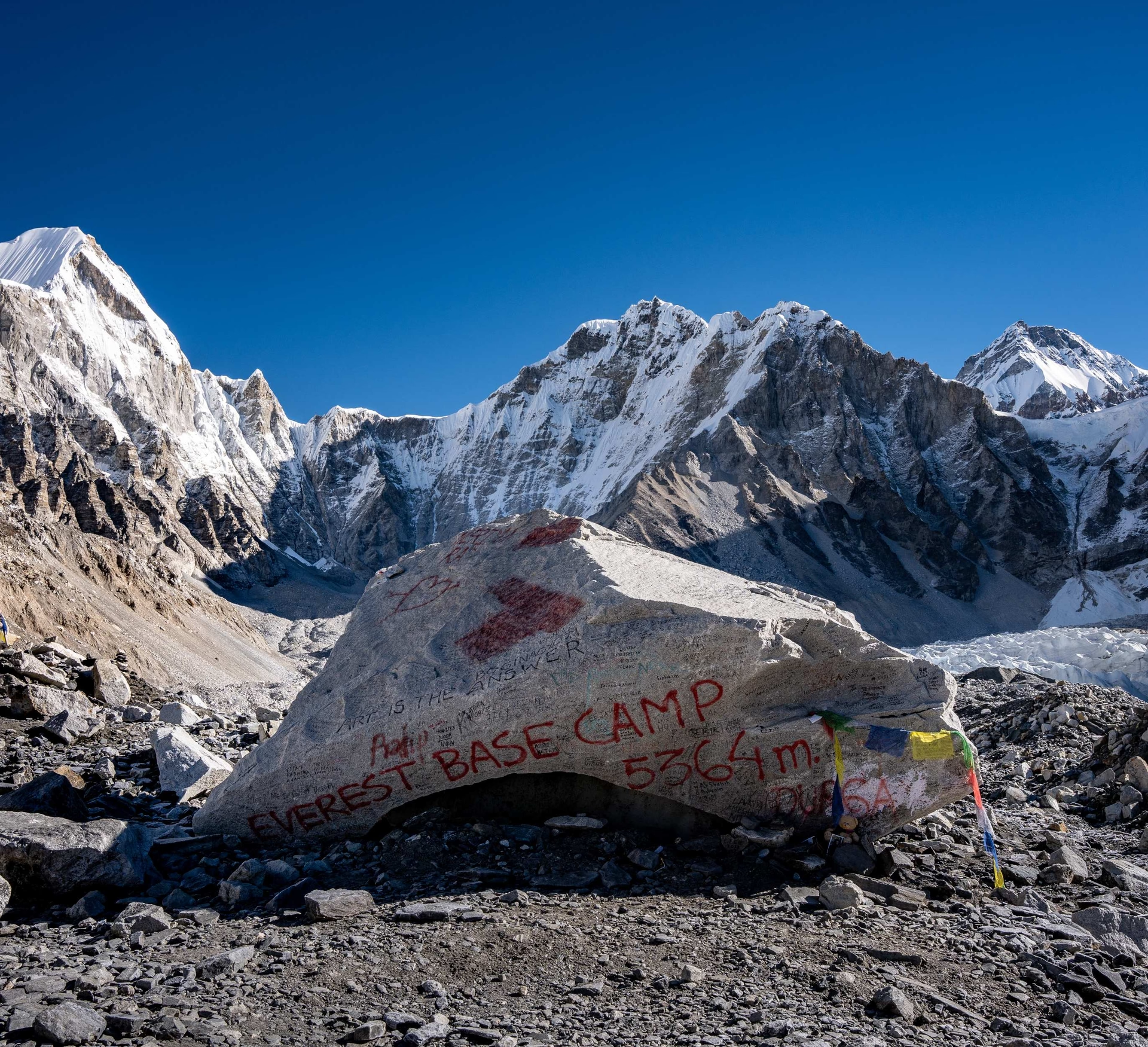
After breakfast in Gorekshep, we walk towards Everest Base Camp, the base camp of the world’s highest mountain. It is a moment of pride for anyone. We explore the area and witness the glory of the mountains that rise just before us.
Though Mt. Everest hides between Mt. Lhotse and Mt. Nuptse, the views of other mountains are simply incredible.
As we explore the base camp and capture the moment in photos, we return to Gorekshep for an overnight stay.
Tonight, we will spend our time at a guesthouse in Gorekshep.
Day 10 :Hike to Kalapattar (5,550 m/18,190 ft) and trek to Dzongla (4,830 m/15,840 ft), Duration: 6-7 hours
- Elevation: 5,545m
- Duration: 1.5-2 hrs
- Accommodation: Guesthouse
- Meals: Breakfast, Lunch, and Dinner Included
It is another most-awaited day of our trekking journey. In the early morning, we wake up and hike to Kalapatthar.
Kalapatthar is one of the most renowned viewpoints in the Everest region of Nepal. It is popular for sunrise views and panoramic views of mountains in the Everest region, including the mighty Mt. Everest.
From Kalapatthar, we catch the golden rays of the sun falling over the glittering snow of Mt. Everest, along with other towering peaks in the range.
After some quality time at Kalapatthar, we descend to Dzongla. Tonight, spend your time at a guesthouse in Dzongla.
Day 11 :Trek to Dragnak (4700 m/15415 ft) via Chola Pass (5,420 m/17,782 ft), duration: 7 hours
- Elevation: 5,420m
- Duration: 6-9 hrs
- Accommodation: Guesthouse
- Meals: Breakfast, Lunch, and Dinner Included
Get set for a tough yet rewarding day of our journey. Today, we start our day early with around three hours of walking towards Chola Pass.
As we are walking in the high altitudinal region, walking itself is an enormous task here. Even the path is quite terrifying, with dangerous passes and avalanches all around. Sometimes rocks may fall from above; hence, we must be careful.
As we climb up to the pass, we cross it at an elevation of 5420 meters and descend downhill along a slippery path full of rocks to Dragnak. It takes us around three hours from the pass to reach Dragnak.
Tonight, spend your time at a guesthouse in Dragnak.
Day 12 :Trek to Gokyo Lakes (4,790 m/15,710 ft), Duration: 2–3 hours
- Elevation: 4,790m
- Duration: 3-5 hrs
- Accommodation: Guesthouse
- Meals: Breakfast, Lunch, and Dinner Included
After an energizing breakfast in Dragnak, we head along a rough trail toward the Gokyo Valley. The trail is too challenging and unstable.
Gokyo Lake is not so far from Dragnak, but walking along the glacier takes time. One needs to be very careful while walking.
In around three to four hours, we reach Gokyo Valley, from where we can enjoy the heavenly beauty of the mountains and lakes (Gokyo lakes) against the backdrop of the beautiful Himalayas.
Tonight, spend your time at a guesthouse in Gokyo.
Day 13 :Hike to Gokyo Ri (5,483 m/19,083 ft) and trek to Dole (4,200 m/13,775 ft), Duration: 6-7 hours
- Elevation: 5,483m
- Duration: 3 hrs
- Accommodation: Guesthouse
- Meals: Breakfast, Lunch, and Dinner Included
Today, we wake up early and hike up to Gokyo Ri for amazing views of Gokyo Lakes and mountains. Gokyo Ri is one of the popular viewpoints in the Everest region of Nepal.
At an elevation of 5360 meters, Gokyo RI offers some stunning views of mountains like Mt. Everest, Mt. Lhotse, Mt. Makalu, Mt. Cho-Oyu, and many other peaks.
The small mountain lakes from above look fantastic. The blue-colored lakes shine like emeralds in the beautiful snow. Enjoying some magnificent views from the Ri, we descend to Dole for the night.
Tonight, spend your time at a guesthouse in Dole.
Day 14 :Trek to Namche (3,440 m/11,285 ft), Duration: 6 hours
- Elevation: 3,440m
- Duration: 6 hrs
- Accommodation: Guesthouse
- Meals: Breakfast, Lunch, and Dinner Included
After breakfast in Dole, we descend to Namche Bazaar. The first part of our trek today is downhill up to Phorte Thangna, and from here, the trail ascends uphill to Mungla Danda.
Again, from here, we go downhill to Lausaha and join the main trail to Everest Base Camp at Namche. Tonight, spend your night at a guesthouse in Namche.
Day 15 :Trek to Lukla (2,840 m/9,317 ft), duration: 6-7 hours
- Elevation: 2,800m
- Duration: 6-7 hrs
- Accommodation: Guesthouse
- Meals: Breakfast, Lunch, and Dinner Included
After enjoying some impressive views of mountains in the Everest region of Nepal from Namche, we start our journey back to Lukla.
We descend via the same well-paved path along Jorsale, Monjo, and Phakding to Lukla. The lush forests and amazing mountainous terrain will keep us engaged throughout the trek. Tonight, spend your night at a guesthouse in Lukla.
Day 16 :End the Chola Pass Trekking and fly back to Kathmandu
- Elevation: 1,400m
- Duration: 45 Mins
- Accommodation: Hotel
- Meals: Breakfast, Lunch, and Dinner Included
In the morning, we take an early flight to Kathmandu. Upon your arrival in Kathmandu, we will drop you off at your hotel in the city.
You have two options for the day—explore the streets and malls for shopping or visit some places you want to explore but are not included in the trek. Tonight, spend your time at a hotel in Kathmandu.
Day 17 :A free day in Kathmandu
- Elevation: 1,400m
- Accommodation: Hotel
- Meals: Breakfast, Lunch, and Dinner Included
It’s a free day in Kathmandu. You can explore the narrow gulleys of Thamel, visit the shops, purchase some souvenirs, or visit any places of interest.
You can also explore some shopping malls around the valley. Tonight, spend your time at a hotel in Kathmandu.
Day 18 :Departure Day (Farewell)
- Elevation: 1,400m
- Accommodation: Hotel
- Meals: Breakfast Included
Today, fly home from Kathmandu or continue your travels to some other destinations around the globe.
We will drop you off at the airport three hours before your scheduled flight. We hope you had a great time with us. Thank you, and have a safe journey home.
Create a Bespoke Itinerary
Customize your Himalayan adventure with personalized itineraries for unforgettable experiences!
Route Map
Download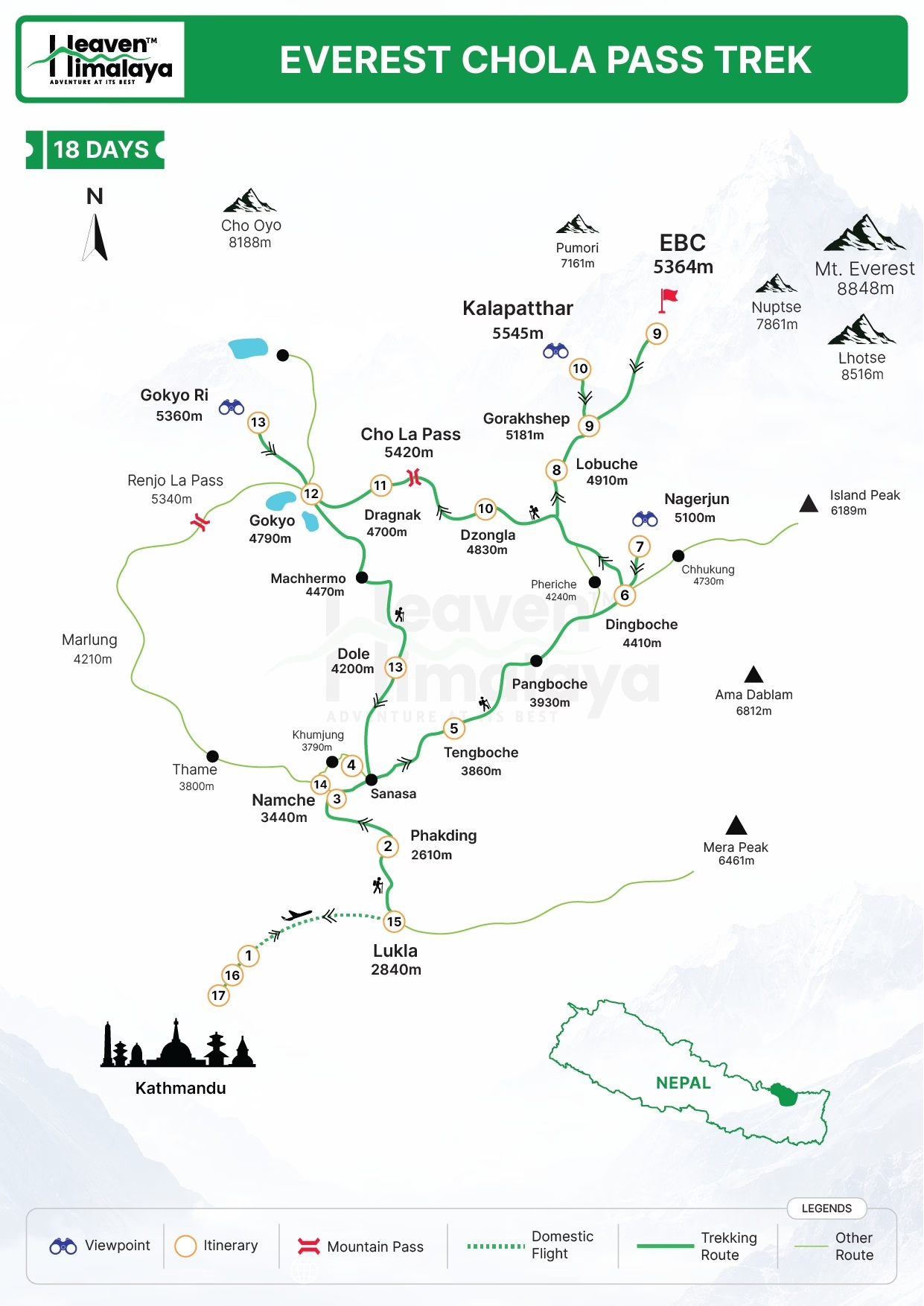
#Shorts
Traveller Reviews
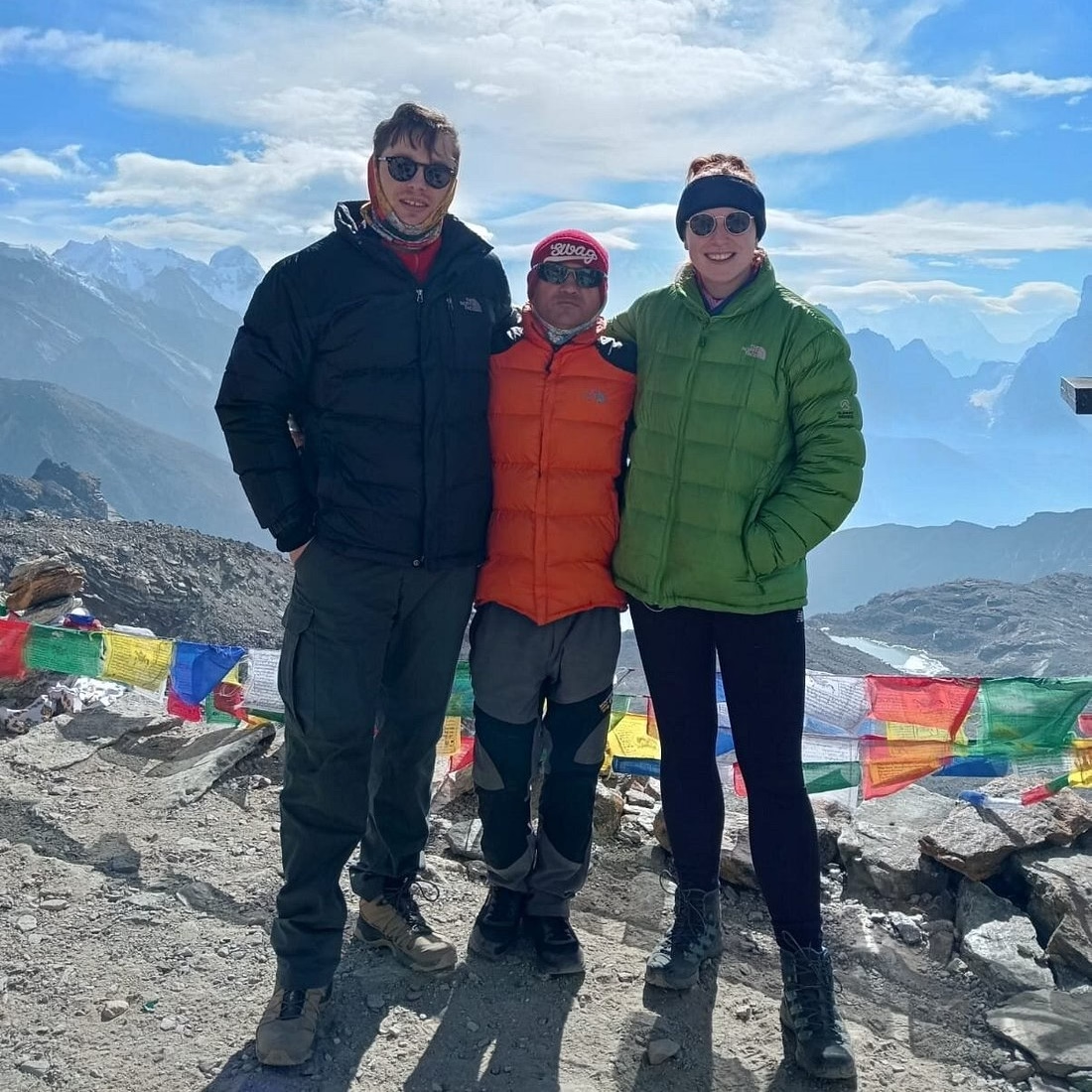
Katie M 10/10 experience would definitely recommend
We booked our trip to Gokyo Valley with Heaven Himalaya not knowing what to expect but I can’t recommend them enough! When we arrived at the airport they were there to greet us and to take us to our hotel. The hotels that they arranged for us were really nice and it was so nice that everything was organised and sorted when we arrived.They organised a day tour of Kathmandu which was really great as we saw all the key sights and our tour guide and driver were great.We then started the 9 day trek which was one of the most incredible experiences. Our guide Dipak was so fun, knowledgeable and we felt safe for the whole trip. He sorted everything out for us for the trip and nothing was too much. He also recommended that we do the Renjo-La Pass which we hadn’t initially planned because he knew that I wanted good views of Everest! Fully recommend Dipak as a guide and we want him again if we come back!!The tea houses we stayed in throughout the trip were ideal and had everything that we needed…
Chola Pass Trekking Equipment and Gear
When deciding what goes into your bag, it is important to check out the characteristics of the trek as well as the season/month in which you are coming to Nepal.
Here's a quick list of essential gear for the Chola Pass trek:
- Nice Hiking Boots: Ensure the boots are broken in, provide ankle support, and are waterproof.
- Season-appropriate Clothing: First, dress up with base layers, insulated mid-layers, and waterproof outer shells.
- Backpack: We provide duffel bags for you. Apart from that, you need a small backpack for your essential items.
- Sleeping Bag: It's provided by Heaven Himalaya to use during the night. There will also be a blanket in each teahouse room we use.
- Trekking Poles: We need trekking poles while walking downhill and on uneven trails.
- Water Purification Tablets: Mineral waters are expensive, so it's always better to carry water purification tablets to use after filling the tap water.
- First Aid Kit: Although our trekking guides have an emergency first aid kit, it's always better to carry your essentials like bandages, antiseptics, pain relievers, and altitude sickness medication.
- Headlamp/Flashlight: This isn't a compulsion, but it becomes useful if you start hiking early in the morning or until late in the evening. You hike in the early morning dark when you head to Kala Patthar in Everest.
- Sun Protection: You will be constantly exposed to UV rays while hiking. Thus, bring dark sunglasses, sunscreen, and a hat to protect your skin from sunburn.
- Maps and Navigation: Heaven Himalaya provides trekking maps for you, and the guide will have GPS navigation as well. So, this isn't necessary when traveling with Heaven Himalaya.
- Snacks and Energy Food: You lose a lot of energy while hiking for hours. Therefore, pack some high-energy snacks like nuts, dried fruits, and energy bars to eat while hiking. This way, you can replenish the lost energy.
- Camera: Bring a good camera to capture the breathtaking views of Mount Everest. Also, make sure you have a few extra batteries for your camera, as there are no stable charging facilities along the Chola Pass trekking route.
If you are thinking about a detailed packing list, then here’s our recommended packing list for trekking in Nepal.
.avif&w=1920&q=75)