Ideal for those seeking a more secluded trekking trail, with the chance to witness the stunning Gokyo Lake, enjoy panoramic Himalayan views from Gokyo Ri, and explore impressive glaciers along the way.
DestinationNepal
Duration12 days
Trip DifficultyModerate
ActivitiesTrek
Max. Elevation5483m.
VehicleCar & Flight
AccommodationHotel & Teahouse
MealsB.L.D
Nowadays, the Kathmandu to Lukla flight is often diverted to the Ramechhap/Manthali airport, especially during the peak months of March, April, May, October, and November.
Thus, if you're planning a trip during these months, we will have to drive 4-5 hours from Kathmandu to the Manthali Airport in the Ramechhap district to board the flight to Lukla.During the remaining months (including January, February, June, July, August, September, and December) you will have a normal flight from Kathmandu to Lukla.
Please be aware that Lukla flight decisions solely depend on the airlines and the Civil Aviation Authority in Nepal. Further, weather complications, natural calamities, and airport traffic congestion are some reasons for the delay or cancellation of flights.
Thus, in such cases, you have two options: either take a helicopter ride from Kathmandu or increase the itinerary time frame. The emergency fund we mentioned above comes in handy in such situations. We do not cover the helicopter ride or extra days. We hope the weather is good every day. But if the situation persists and you have no option for either a helicopter ride or extra days, then our team will work with you to arrange alternate plans.
Gokyo Lake Trek: The Hidden Gem of the Everest Region
The Gokyo Lakes Trek is a unique adventure that uncovers the beauty of Everest’s Gokyo Lakes and Gokyo Ri. The 12-day trekking itinerary is an opportunity to experience nature’s grandeur and iconic landmarks.
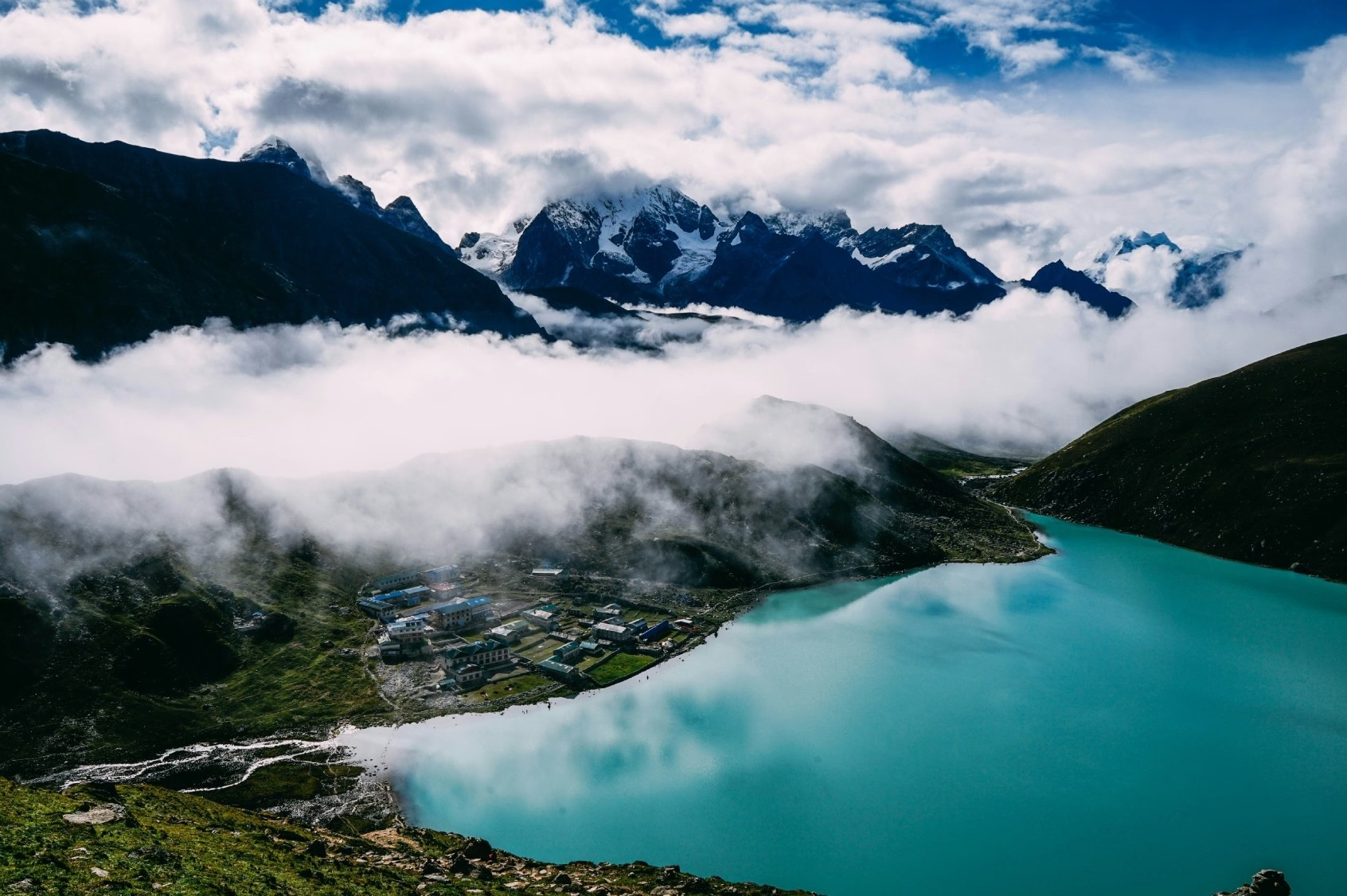
This trip has amazing views of turquoise Gokyo Lakes, Ngozumpa Glacier, and the world’s highest mountains. Among these famous peaks are the majestic Mt. Everest (8,848 m), Mt. Cho Oyu (8,201 m), Mt. Lhotse (8,516 m), and Mt. Makalu (8,463 m).
Gokyo Ri and Gokyo Lakes are ideal if you want a peaceful holiday spot with stunning natural beauty.
The 12-day trip itinerary commences in Kathmandu, where you will take a domestic flight to Lukla. Unlike the traditional Everest Base Camp (EBC) trek, this route offers a unique and less-crowded experience.
The trek begins with two days of hiking to reach Namche Bazaar. Here, you will take a necessary acclimatization stop. From here, rather than following the usual path, you will venture towards Dole, a more secluded and tranquil area of the Khumbu region. Along the way, be prepared to marvel at the immense Ngozumpa Glacier, a true natural wonder.
Gokyo Valley is at the end of Machhermo. This small hamlet is nestled at the foot of Gokyo Ri and on the eastern shore of the third Gokyo Lake. It is also one of the highest settlements in the world.
Later, you will make a challenging ascent to the top of Gokyo Ri, 5,357 m. The summit will reward you with breathtaking vistas of four of the world’s 8,000-metre peaks: Mt. Everest, Lhotse, Makalu, and Cho Oyu. There is an option for a day hike to the 4th and 5th lakes of Gokyo.
After a memorable day spent exploring the wonders of Gokyo, you will retrace your steps along the same trail to Lukla. From there, a flight will take us back to Kathmandu, concluding this exhilarating and unforgettable adventure.
A typical day on the Gokyo Lakes trekking route
The Gokyo Ri and Gokyo Lakes Trek is an adventurous, off-the-beaten-track trek in the Everest region. It involves long days at high altitudes, requiring acclimatization breaks for better health. Every day has exciting experiences worth capturing with your camera. However, the typical day on the entire trek goes as follows, as explained below:
First, you will commence each day after having a delightful breakfast at the teahouse where you spent the night.
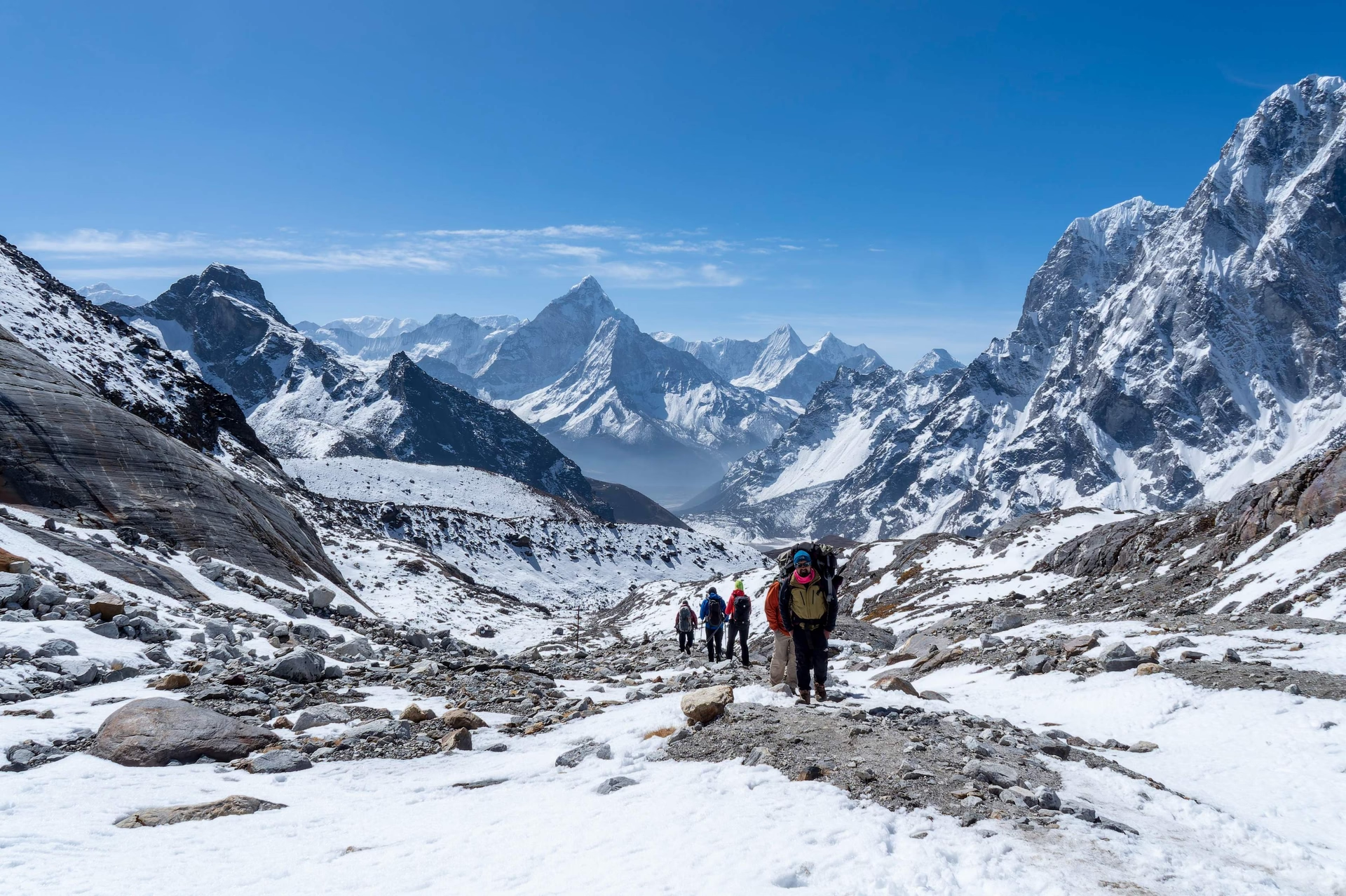
Throughout the Gokyo Trail, be prepared to be amazed by the grandeur of Everest, Lhotse, Makalu, and Cho Oyu.
Normally, you will take a midday stop at small hotels along the trail, which is a much-needed refreshment. During the journey, you will also take frequent breaks to admire the scenery. As you embark on the trail, you will come across yaks, mules, and donkeys gracefully carrying their loads.
Throughout the trip, you will encounter monasteries and Mani walls. Most of them are exquisitely decorated, with vibrant prayer flags fluttering in the mountain breeze. These colorful flags add a spiritual touch to the surroundings, instilling a sense of peace and serenity.
Upon arrival at the teahouses, take the opportunity to rest, freshen up, and explore the surroundings. Visit local monasteries or other places of interest. Engage with locals to gain insights into their daily lives and culture.
You enjoy dinner at the same teahouse where you’ll spend the night. During this time, you can socialize with your guide and fellow trekkers. The guide will provide valuable information about the highlights and details of the next day’s trek. He will mention the route, estimated duration, and notable points to observe.
Before retiring to your room for a good night’s sleep, place your breakfast order for the following day. Ample rest ensures you start each new day with the same enthusiasm and energy.
Highlights of the Gokyo Lakes Trek:
Thrilling flight to Lukala Airport, one of the world’s shortest runways.
The Gokyo Lakes Trek is an alternative route to the classic Everest Base Camp Trek.
Walk on a more peaceful and isolated trail in the Everest region.
Impressive views of towering glaciers, snow-capped mountains, valleys, and lakes.
Soak in the pristine view of dazzling Gokyo Lake.
Explore the breathtaking Gokyo Valley, the most spectacular valley of the Khumbu region
A challenging hike to Gokyo Ri (5,357m), one of the best vantage points of Khumbu.
Witness breathtaking mountain vistas, including Mt. Everest, Cho Oyu, Lhotse, and Makalu.
Marvel at the magnificent sight of Ngozumpa, the longest glacier in the Himalayas.
Enhancing Your Gokyo Lake Trek Experience
You can also extend your Trip to Everest Base Camp, visiting all the EBC, Gokyo Lakes and Chola Pass in a single trip ensuring you get maximum out of your trek.
If you'd rather not retrace your steps, you can do Gokyo Lake with Renjo la Pass trek which is ideal for trekkers seeking quieter and enticing alternative to classic EBC trail.
For those seeking an extra challenge, You can enhance you journey with Lobuche Peak Climbing. This adds a whole new level of adventure, making your trek not only fulfilling but more adventurous and thrilling with a real Himalaya Peak climbing experience.
Why Us?
When you choose to book an Everest Base Camp trek package with Heaven Himalaya, you'll already be ahead of other trekkers in terms of service and benefits.
A local mountain trekking guide with extensive knowledge of the routes will accompany you. Booking with us means you'll walk with Sherpa locals and support their livelihood.
While foreign companies offer similar trips to Everest Base Camp, they can't do it on their own. They hire government-registered companies like us in Nepal. Booking with them means you'll pay intermediaries' fees out of your pocket.
By planning your trip with us, you'll have maximum flexibility and pay the lowest cost with no commission fees.
Additionally, you'll benefit from
A focus on clients' safety, with our trip organized with the utmost safety in mind
The best price guarantee
Free transfers from the airport to the hotel and back in a private vehicle
Trained, government-licensed local guides who have an entire knowledge of local routes
Support for locals to earn their living through tourism
An oximeter for monitoring oxygen levels while on a high-altitude EBC trek
Guides with medical kits to handle situations that may arise
Arrangements for sleeping bags and down jackets
Free storage at the Heaven Himalaya office store for extra luggage during your tour
A duffel bag to transfer your items from luggage to be carried during the journey
A free porter to help carry your heavy bags.
Outline Itinerary – Gokyo Lakes Trek (12 Days)
Day 01: Arrival in Kathmandu (1,400m/4,593ft),15-20 minutes
Day 02: Fly to Lukla (2,800m/9,184ft) & Trek to Phakding (2,652m/8,699ft), 3-4 hrs
Day 03: Trek to Namche Bazaar (3,880m/12,729ft), 5-6 hrs
Day 04: Acclimatization at Namche & Hike to Everest View Hotel (3,880m/12,729ft), 3-4 hrs
Day 05: Trek to Dole (4,038m/13,248ft), 6-7 hrs
Day 06: Trek to Machhermo (4,620m/15,157ft), 5-6 hrs
Day 07: Trek to Gokyo (4,790m/15,710ft), 4-5 hrs
Day 08: Hike to Gokyo Ri (5,483m/17,988ft) & Trek back to Machhermo (4,470m/14,665ft), 3-4 hrs
Day 09: Trek to Namche Bazaar (3,440m/11,286ft), 6-7 hrs
Day 10: Trek to Lukla (2,800m/9,184ft), 7 hrs
Day 11: Fly back to Kathmandu (1,400m/4,593ft), 40 min
Airport transfers–pick up and drop off in a private vehicle.
All ground transportation in a private vehicle (Car, Scorpio, and a Toyota Hiace, depending on the numbers.)
Your 2 Night accommodation in a 3-star category hotel in Kathmandu with a breakfast plan.
Your 9 Nights and 10 Days of accommodation in the best guesthouses available (on twin sharing basis) during the trek. We provide the attached bathroom with hot showers in Lukla, Phakding, and Namche.
Trip food: Breakfast, lunch, and dinner throughout the trekking journey
All paper works
National park and heritage sites entry tickets
Two-way flight ticket to/from Lukla
Trekkers Information Management System (TIMS) and trekking permits
A licensed, English-speaking, experienced Gokyo trekking guide
Porter to carry your bags (1 for 2 clients)
All the costs of guide and porter, including accidental insurance
Duffel bag, and sleeping bags (to be returned to us after the trek)
Heaven Himalaya T-shirts, route map, and a travel completion certificate
All applicable government taxes and service charges.
First aid kit
Free extra luggage storage in Kathmandu.
Exclusions
Meals (lunch and dinner) in Kathmandu
International airfare
Nepal entry visa fees (USD 50 for a tourist visa, and it can be obtained at the airport in Kathmandu on arrival!)
Travel Insurance
Personal refreshment items like cold drinks, snacks, etc.
Personal utility items like laundry, telephone expenses, electricity charges, etc.
Personal trekking gears
Tips for guides and porters
Dates & Availability
Note to Travelers
Our Gokyo LakeTrek costs include all ground costs, fully personalized benefits, and a free porter. We are a local tour operator, so the quote you get is the best price, with no mid-commission fees.
Kindly note that the start dates are your dates of arrival in Nepal, and your end dates are the dates of your departure from Nepal. Select a date and add several people, and then proceed to make a reservation.
Besides, the trekking fees mentioned here cover your 12-day itinerary. An additional cost will be generated if you have extra days in Kathmandu or would like to add or subtract the number of trekking days.
All prices per person, twin share. Subject to availability — Gokyo Lake Trek dates fill quickly in peak season.
12 days Gokyo Lake Trek Itinerary
Day 01 :Arrival in Kathmandu (1,350m/4,429ft)
Elevation: 1,400m
Duration: 15-20 m
Accommodation: Hotel
Meals: Dinner Included
Welcome to the land of the Himalayas! Once you land at the Kathmandu International Airport, a representative from Heaven Himalaya will welcome you. He will help you with your luggage and other airport formalities. Later he will transfer to the hotel in the main city area. You may rest after long hours of flight. Later in the evening, you can explore the city. If you left any trekking gear you can rent or buy in Thamel.
Overnight stay in Kathmandu.
Day 02 :Fly to Lukla and Trek to Phakding (2,652m/8,699ft) 3-4 hrs
Elevation: 2,800m
Duration: 25 MIns
Accommodation: Guesthouse
Meals: Breakfast, Lunch, and Dinner Included
After breakfast at the hotel, our guide will come to pick you up for an exciting flight to Lukla. All the flights to Lukla will either be from Kathmandu Airport or Ramechhap Airport and are scheduled in the morning. It’s because the wind picks up in the afternoon and it becomes hard to fly.
The flight to Lukla is itself a rare adventure and will chill your bones. As soon as you leave Kathmandu, you will be greeted by the green hills and the surrounding mountains. The scenery is worth watching. The Tenzing Hillary Airport is one of the most extreme high-altitude airports in the world. So, flying between the high green hills and landing on a narrow lane at the base of the mountains will surely skip your heart a bit.
After a thrilling flight, you will start your trek. Before the start, you will meet porters at the airport who will carry most of your loads.
After you make yourself ready, the tour guide will make his way along the busy street to the start of the trek down to Phakding. You will walk along the Dudh Koshi River and the alpine forest with the amazing sounds of nature. You will then cross the suspension bridge to reach Phakding. Walking above the swinging bridge will add a thrill to your journey.
Then, head to a local teahouse and rest your bags. Later, visit nearby villages or chill in the teahouse. We will have a long hiking day tomorrow. So, take enough rest. Tonight, you will spend your time in the best guest house available.
Note: During peak season (March, April, May, October & November), flights to Lukla may operate from Ramechhap (Manthali Airport) instead of Kathmandu. This means you will wake up early, drive 4–5 hours from your hotel in Kathmandu to Ramechhap, and then fly from Ramechhap directly to Lukla. Please note that the cost of this drive is NOT included in the package and will be charged separately.
Day 03 :Trek to Namche Bazaar (3,440m/11,283ft) 5-6 hrs
Elevation: 3,440m
Duration: 6-7 hrs
Accommodation: Hotel
Meals: Breakfast, Lunch, and Dinner Included
Early morning you will grab a hot breakfast enjoying the surrounding mountainous landscapes. After finishing it, you will pack your bags and head towards Namche Bazaar. It is the gateway to Mt. Everest. It is also known as a tourist hub in the Everest region.
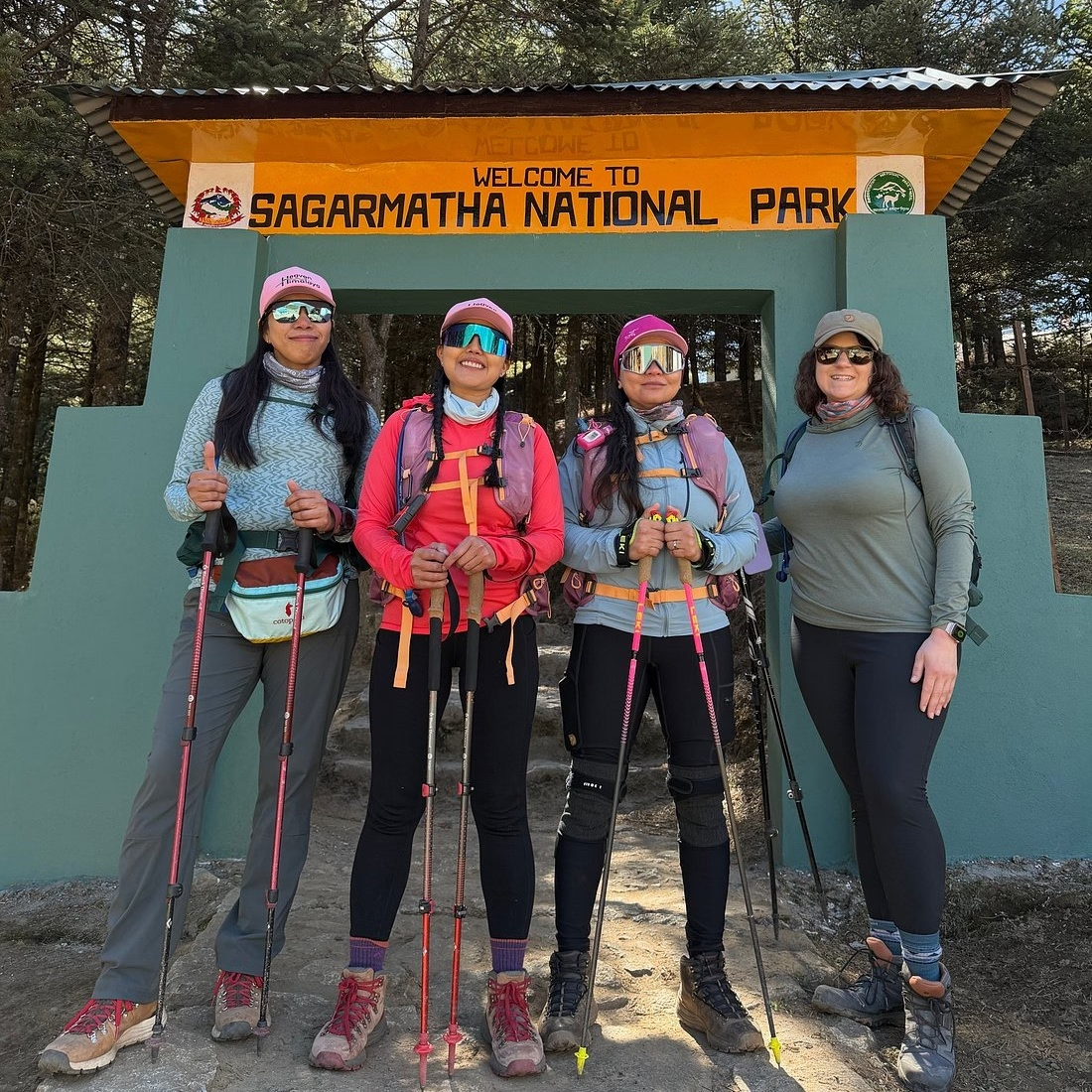
You start your hike along the bank of the Dudh Koshi River. On this day you will cross several thrilling suspension bridges. At last, after traversing through Hillary Suspension Bridge you enter into the Sagarmatha National Park. Here you need to get (if in case you didn’t get it from Kathmandu) or show your trekking permits.
After going through the permit-checking process, you will start climbing up the forest trail. From here you will witness the first magnificent sight of Mt. Everest. After a steep uphill climb, you will reach Namche Bazaar.
Overnight stay in Namche Bazaar.
Day 04 :Acclimatization day at Namche: Short Hike to Hotel Everest View (3,880m/12,730ft) 3-4 hrs
Elevation: 3,880m
Duration: 2-3 hrs
Today you will spend your day enjoying an acclimatization hike to the Hotel Everest View. It is among the highest-placed hotels in the world. Thus, Guinness World Records named it the highest luxury hotel in the world. From the hotel, you will be able to enjoy excellent views of the Everest mountain range including Mt. Everest.
Overnight stay in Namche Bazaar.
Day 05 :Trek to Dole (4,038m/13,258ft) 6-7 hrs
Elevation: 4,038m
Duration: 6-7 Hours
Accommodation: Guesthouse
Meals: Breakfast, Lunch, and Dinner Included
After acclimatization, you are ready to head up to Dole. Early in the morning, you’ll have a delicious breakfast with great Himalayan views. Later you will pack your bags and hit the trail.
Today you will leave the classic EBC trail and head towards the more isolated region of Khumbu. The trail to Dole is very scenic. Walking through rhododendron forest trails you reach Kyanjuma and then Sansa village. From here you will take the main trail to Gokyo Lakes. The trail is uneven and lies just above the Dudh Koshi River’s gorge.
Further, you will reach Mong La Pass from where you can enjoy the sight of Mt. Ama Dablam, Mt. Thamserku, Mt. Tawoche, and Mt. Khumbila. From the pass, you will gradually walk downhill to the Dudh Koshi River. Then after a short uphill climb, it leads you to Phortse. You can relish the magnificent vistas of mountains from this point. After hiking for a few hours through lush forests you will reach Dole. On arrival, you can enjoy the mesmerizing sunset views over the mighty peaks.
Overnight stay in Dole.
Day 06 :Trek to Machhermo (4,470m / 14,665ft) 5-6 hrs
Elevation: 4,470m
Duration: 3-6 hrs
Accommodation: Guesthouse
Meals: Breakfast, Lunch, and Dinner Included
Begin your trek with gentle climbing. You will come across several trailside shrines and lots of prayer flags till Lapharma. From here, you will enjoy an outstanding view of Mt. Cho Oyu, the world’s sixth-highest mountain. En route, you will enjoy the captivating scenery. Some of the world’s tallest peaks including Mt. Kantega and Mt. Thamserku, will enthrall you.
Along the way, you will encounter beautiful yak pastures. While enjoying the picturesque landscape and walking for a couple of hours you enter Luza Valley. And in a short distance, there is a small village of Machhermo. It lies just below the terminal moraine of the Ngozumpa glacier, the longest glacier in the Himalayas.
Overnight stay in Machhermo.
Day 07 :Trek to Gokyo Valley (4,790m/14,665ft) 4-5 hrs
Elevation: 4,790m
Duration: 3-5 hrs
Accommodation: Guesthouse
Meals: Breakfast, Lunch, and Dinner Included
Today’s hike will lead you to pristine Gokyo Valley, the final destination of the trek. After walking for an hour from Machhermo you reach Phanga. This place is dedicated to people who lost their life in landslides.
As you move ahead, take multiple breaks en route and soak in some stunning mountain vistas.
Further, you will cross an iron bridge that leads to Longpongo Lake (4,690m). You will continue your walk through the rough terrain over Ngozumpa Glaciers.
Gokyo Valley is majestically beautiful, adorned by mighty mountains, icy glaciers, and oligotrophic lakes. Once you reach the village, take a breath and immerse yourselves in the beauty of Gokyo lakes and the surrounding Himalayas. This magnificent sight is beyond any description. Gokyo Lakes comprises six of the world’s highest freshwater lakes. Among six, the third lake is stunning and the most visited in the Everest region.
Overnight stay in Gokyo Valley.
Day 08 :Hike to Gokyo Ri (5,357m/18,166ft) and Trek to Machhermo (4,470m/14,665ft) 3-4 hrs
Elevation: 5,483m
Duration: 3-4 hrs
Accommodation: Guesthouse
Meals: Breakfast, Lunch, and Dinner Included
Today you will start your hike before dawn. You have to reach the top of Gokyo Ri Peak to catch the stunning sunrise over the mountains. The distance is not too long but the challenging terrain full of rock, and boulders make this hike difficult.
As you continue to ascend, you might feel exhausted due to thin air. But don’t worry, maintain a slow pace and drink plenty of water. However, this challenging ascent is worth the view. You will witness the sight of the mighty Himalayas, tranquil turquoise Gokyo lakes, and Ngozumpa glaciers at once from the Gokyo Ri.
In addition, you will savor the exquisite beauty of the Himalayas. You will get unobstructed views of four of the highest peaks- Mt Everest (8,848m), Cho Oyu (8,210m), Lhotse (8,516m), and Makalu (8,463m).
After spending a marvelous time at Gokyo village, now it’s time to return. You bid goodbye to Gokyo Valley and trek back to Machhermo village. Tomorrow a long hiking day awaits you. So, take enough rest.
Overnight stay in Machhermo village.
Note: There is an option for side trips to Gokyo 4th and 5th lakes too. But for that, you need to add one extra day to the Gokyo Lakes trek itinerary.
Day 09 :Trek to Namche (3,440m/11,283ft) 6-7 hrs
Elevation: 3,440m
Duration: 6 to 7 hrs
Accommodation: Guesthouse
Meals: Breakfast, Lunch, and Dinner Included
Now you are very close to concluding your journey to the Gokyo Lakes trek. Today you will return to Namche Bazaar. You will walk through the dense forests home to several musk deer and mountain goats.
The trail is narrow downhill and quite steep. You need to take steps gently with the help of trekking poles. Beholding some final views of Mount Everest you will reach Namche Bazaar. The place is full of local cafes, restaurants, and bars. You can request your guide to take you to a cafe or bar.
Overnight stay in Namche Bazaar.
Day 10 :Trek to Lukla (2,860m/9,383ft)- 7 hrs
Elevation: 2,800m
Duration: 2 Days
Accommodation: Guesthouse
Meals: Breakfast, Lunch, and Dinner Included
This is your last day on the Everest trail before flying back to Kathmandu. The trekking path is mostly downhill from Namche to Phakding.
On the trail, you will see beautiful chortens, prayer flags, and mani walls. You will pass through small villages, narrow forests, and suspension bridges over the Dudh Koshi River.
Finally, after a gentle walk through Benkar, you arrive at Phakding. As you continue your hike you reach the small settlement of Toktok. This village offers a unique view of some splendid mountains of the Everest region. Beholding the natural beauty you proceed towards Lukla.
Overnight stay in Lukla.
Day 11 :Fly back to Kathmandu- 40 minutes
Elevation: 1,400m
Duration: 25 m
Accommodation: Guesthouse
Meals: Breakfast, Lunch, and Dinner Included
After early morning breakfast, you will head towards Lukla airport. You will catch the flight as soon as possible. After reaching Kathmandu, you have the rest of the day off to rest.
Later in the evening, you can explore the main city area. You can enjoy Nepalese food with live music in one of the fine restaurants in Thamel or Durbarmarg. You can also do some souvenir shopping.
Overnight stay in Kathmandu.
Day 12 :Final Departure
Accommodation: Hotel
Meals: Breakfast Included
Today your Gokyo Lakes adventure comes to an end! A representative from Heaven Himalaya will drop you at the airport approximately three hours before your scheduled flight. If you wish to extend your vacation in Nepal then you may request to organize other adventurous activities.
Hope to see you soon!
Altitude profileMax 5,483 m
Create a Bespoke Itinerary
Customize your Himalayan adventure with personalized itineraries for unforgettable experiences!
Excellent solo Nar Phu Valley Trek with Heaven Himalaya
Just completed the Nar Phu Valley Trek as a solo traveler and couldn't be happier with how it was organized.From the start, communication was clear. A proper pre-trip gear check meant I knew exactly what I needed and what the guide would provide. They arranged a sleeping bag and trekking poles for hire, which saved me carrying my own.Accommodation throughout felt genuine and welcoming rather than touristy, a real Nepalese experience rather than a tourist-trail one. Transport to and from the trailhead was reliable and comfortable.What really stood out was my guide Hari's ability to read my pace. Early on I struggled a bit with the altitude, and he slowed things right down without making it a big deal. Once I'd acclimatized, we picked up the pace significantly. Hari was genuinely flexible day to day depending on how I was feeling, rather than sticking rigidly to a fixed itinerary.I also picked up a stomach bug partway through the trek. Hari talked through the options with me calmly and…
Jojo Y
Second time in Nepal with Heaven Himalaya
This is my second time in Nepal with Heaven Himalaya & I am writing this with gratitude & appreciation for my guide Hari, my porter Arun, as well as the entire team.This was meant to be my birthday trip, I had requested to summit EBC on the actual day of my birthday (29/5/2026), and i made it happen with the help & support of Hari and Arun.Hari has been very thoughtful and attentive throughout the trip, making sure to constantly ask/check if I’m feeling okay as we ascended to higher altitudes.As it got colder higher up on the mountains, Hari thoughtfully delivered hot water to my room every night to help me deal with the extremely cold nights.On my birthday itself, Hari also resourcefully brought a “Happy Birthday” candle which he got from Namche to the summit, and we created our own birthday “cake” using the candle and an apple. That was a very beautiful memory & amazing experience.As I was traveling alone as a female, Hari also did his best to find me the most comfortable accommodat…
CCharlotte B
EBC Hike in May 2026
Last month in May 2026, I did the Everest Base Camp hike with Heaven Himalaya, and it was absolutely amazing. From the start they made everything easy . My guide Bishal, which he said meant thulo in nepali was so helpful and patient; he knew everything about the trail and mountains and also made us laugh all the time.Our porter Krishna was a star! He carried our bags without complaining and always had a smile, telling us funny stories in the evenings. I don't know what we would have done without him.The trek itself was so hard but so worth it. The views are just mindblowing; waking up every morning to see the mountains covered in snow is something I will never forget. Bishal and Krishna made sure we were safe and happy all the way.Reaching Kala Patthar at sunrise was unreal, seeing Everest in the golden light was like a dream. Bishal and Krishna were there with us every step, cheering us on and making it so special.I would absolutely recommend Heaven Himalaya for everyone. They are no…
Tina
Exceptional Service and a Birthday to Remember
They say the mountains humble you, but what I didn't expect was how deeply the people of Nepal would touch my heart.Couldn't have asked for a better crew for our Everest Base Camp - Cho La Pass - Gokyo adventure. From day one, Shankar, Ganesh, Dawa, and Prince treated us with so much kindness, patience, and care that it never felt like we were just another hiking group to them.They became our family in the mountains.Our guide, Shankar, was exceptional. Calm, knowledgeable, dependable, and always looking out for us every step of the way. He knew the mountains like the back of his hand and made us feel safe even during the toughest parts of the trek. When weather conditions in Lukla became unpredictable and visibility was poor, he immediately took action and arranged a helicopter to Kathmandu so we wouldn't miss our international flights. In moments of stress, that level of leadership and quick thinking means everything.It was my birthday during the trek, so I felt incredibly special wh…
Jarin Lam
Unforgettable First Trek to Annapurna Base Camp & Poon Hill
We had an amazing experience with Heaven Himalaya for our first trekking trip to Annapurna Base Camp and Poon Hill. We were actually recommended to them by a friend, and we’re incredibly thankful we chose to go with them. It was truly an unforgettable 2 weeks in Nepal.Our guide, Hari, was attentive, thoughtful, and always made sure we were comfortable and enjoying the journey. He was constantly on the ball, supporting us every step of the way and helping to adjust the itinerary whenever needed. Despite a few slight hiccups during the trip, he remained calm, flexible, and proactive in making arrangements to ensure everything went smoothly.Our porter, Anis, was also incredibly reliable and supportive throughout the trek. He consistently checked in on us and made sure our needs were always taken care of along the way.A special thank you as well to Ram, who was very helpful in coordinating everything behind the scenes and ensuring the trip ran smoothly from start to finish.Beyond the trek…
Dan
Truly Unforgettable!!!
My friend and I booked the 14 day Annapurna Circuit with Tilicho Lake trek. The whole experience was amazing. Ram made it easy to alter the trip to our specific needs. We added flights, cut off 2 days of trekking, requested single rooms, and he quickly got us a quote and booked! Hari was our guide on the trek and he was fantastic! He attended to all our needs and safely guided us for the entire time. He did an excellent job of getting us the best rooms, served our meals every day, and did everything in his power to make sure us old men(63 and 74) made it over the Pass! Our porter, Denise, was equally impressive! I still don't know how he carried our bags for 10 days! Clear blue skies, endless views, majestic mountains, deep river valleys, friendly people, a truly unforgettable trip!!!
Why choose Gokyo Valley?
Adventurers choose the Gokyo Ri and Gokyo Lakes treks to explore Everest and enjoy a unique and stunning experience. Here are some interesting reasons to choose this trek:
Gokyo Lakes
Gokyo Valley is home to six mesmerizing lakes, each with its own distinct beauty. The freshwater lakes have turquoise-blue waters that reflect the surrounding mountains and landscapes, creating a tranquil and picturesque setting.
The six lakes are: Gokyo Cho (Dudh Pokhari), Thonak Cho, Gyazumpa Cho, Tanjung Cho, Ngojumba Cho, and Kyajumba Cho. Among these names, Gokyo Cho (Dudh Pokhari) is the most famous, and its reflections are particularly enchanting.
Gokyo Ri
Gokyo Ri stands proudly at a height of 5,357 m. The vantage point provides an exceptional 360-degree panorama of the Everest massif.
You can witness some of the world’s highest peaks, including Mt. Everest, Lhotse, Makalu, and Cho Oyu. The sight of these majestic mountains from Gokyo Ri’s summit is truly unforgettable and offers an experience of a lifetime.
Ngozumpa Glacier
The Gokyo Lakes Trek takes you through sections of Ngozumpa Glacier, the longest glacier in the Himalayas. This thrilling part of the journey offers the opportunity to witness the vastness of the glacier from the top of Gokyo Ri.
However, it is essential to exercise caution as the glacier can be unstable, requiring careful navigation.
Lesser Crowds
While the Mount Everest tours attract a significant number of trekkers, the Gokyo Lakes trekking route offers a quieter and more serene alternative.
The route is less crowded, allowing you to enjoy a more peaceful and intimate experience with nature.
Winter Activities
In the winter or at the beginning of spring, the Gokyo Lakes freeze over, creating an icy wonderland. You can enjoy walking or even ice skating on the frozen lakes, adding a unique and adventurous element to the trek.
Authentic Sherpa Culture
Gokyo village, with its highest human settlement at an elevation of 4,750 m, is a charming Sherpa community. The village allows you to immerse yourself in authentic Sherpa culture and traditions.
Witnessing the residents dressed in traditional Sherpa attire and experiencing their way of life adds a cultural dimension to the trek.
Gokyo Lakes Trek Equipments and Gears
The Gokyo Lakes Trek is a challenging, long, high-altitude journey. Throughout the day’s trek, you’ll experience varying weather patterns.
Mornings and nights are cold, while days are warmer. The Gokyo Trail takes you through narrow, lush forests. So even during the spring and autumn, rainfall is possible.
So, there is a chance of encountering four seasons in one day. Given these factors, it’s essential to prepare as if you are embarking on a four-season trek.
Also, when packing, be mindful of the trip’s length and avoid overpacking to minimize the physical stress of carrying a heavy backpack. Consider all key factors while preparing your packing list for the Gokyo Lakes trek. For your convenience, here are a few essential trekking gear and equipment recommendations:
Clothing
Inner Layer: thermal tops and bottoms
Middle Layer: long-sleeve and short-sleeve t-shirts, shorts, trekking pants, or trousers
Outer layer: fleece jacket, down jacket, waterproof jacket, and trousers
The weather is mild and pleasant during these seasons. Mostly clear skies and stable weather characterize spring and autumn in Nepal. These seasons are one of the best for trekking due to favorable weather.
Due to global warming, you may encounter occasional showers towards the end of spring and the beginning of the autumn season. Also, you can expect light snowfall at the end of autumn and the start of spring.
Temperature
During spring, the daytime temperature in the lower elevations, such as Kathmandu and Lukla, ranges from around 15 to 25°C. In the higher trekking regions, the temperatures are cooler but above zero degrees. At higher elevations, the temperature falls during the early morning and night.
Likewise, during autumn, daytime temperatures range from approximately 10 to 20°C. At the end of November, winter was just around the corner. So, the temperature at Gokyo Lake is around -12°C. You will witness a gradual decrease in temperatures with light snowfall in winter.
Crisp Mountain View
Spring and autumn offer excellent visibility for trekking in the Gokyo Lakes. The skies are clear, allowing for stunning panoramic vistas of snow-capped peaks.
The surrounding landscapes are vibrant in the spring. Also, blooming flowers and lush greenery add beauty to the trekking trail.
Similarly, during autumn on the trail, you can notice stunning fall foliage along the trail. You can see how tree leaves beautifully change their color during your hike.
Gokyo Lakes Trek Difficulty
Like most of the Everest treks, the Gokyo Lakes trek is moderately challenging due to the high elevation and remote terrain.
During the Gokyo trek, you can expect to walk for around 5–6 hours per day. But this can vary depending on the altitude gain and fitness level of the trekkers.
Beginners who are not accustomed to long walks might find this trek particularly demanding. So they need to practice walking for extended periods of time before embarking on the journey.
Similarly, the Gokyo Lakes trails include steep terrain. This makes the trek more challenging than the Everest Base Camp trek.
Preparation
Physical fitness plays a crucial role, and trekkers must be well-prepared. Stamina and physical endurance are equally vital to completing this journey. Along with good physical fitness, mental endurance is equally important to complete this trek.
The accommodation and food options are very basic. Modern amenities, the internet, and communication services will not be available. Prepare yourself mentally and set realistic expectations for the challenges ahead. Thus, to conquer this trek, you must possess resilience, grit, and determination.
We highly recommend you start a training plan at least three months before the trek.
Building stamina, increasing strength, and getting used to walking with a backpack are essential preparation steps. Activities like cycling, swimming, and cardiovascular and strength-building exercises are beneficial for getting ready for the trek.
The journey to Gokyo Valley presents a manageable trail, but ascending Gokyo Ri can be challenging due to its elevation of 5,357 m. So this also increases the chances of getting altitude sickness.
To mitigate the altitude risk, it is crucial to acclimatize gradually along the way. Fortunately, climbing Gokyo Ri doesn’t require any mountaineering or technical climbing skills. So this trek is accessible to those without extensive climbing experience, too.
Overall, the region’s isolation, off-the-beaten trails, high elevation, and challenging ascents and descents heighten the Gokyo Lakes Trek’s difficulty.
Compared to the other trekking routes, it demands more from trekkers. So, this trek is ideal for those seeking a greater challenge in the Everest Himalayas.
Gokyo Lakes Trek Distance from Lukla
In total, the distance of the Gokyo Lakes trek from Lukla is 92 km (52 miles). However, to complete this distance, you need 12 days, including acclimatization days. The starting and ending points of the trekking tour are Lukla and
But if you plan to combine the Gokyo trek with Everest Base Camp and Chola Pass, then the length of the trek increases. Thus, the distance of the trek may vary depending on the specific itinerary, side trips, and variations in the trekking route.
Permits and Entry Fees for the Gokyo Lakes Hike
Permits are the same for the entire Everest region. You need two permits for the Gokyo Ri and Gokyo Lakes Trek:
Sagarmatha National Park Permit
The Gokyo Trail goes through Sagarmatha National Park in Nepal. So, it is mandatory to get this national park permit. You can get this permit from Kathmandu or Monjo. The cost of the permit is NRS 3,000 per person (subject to change).
Khumbu Pasang Lhamu Rural Municipality Permit
In 2018, the local government of the Khumbu region started to issue the Pasang Lhamu Rural Municipality permit. Since then, this permit has also replaced the Tourism Information Management System (TIMS) card.
Meanwhile, you will get this permit only in Monjo or Namche. The cost of this local permit is NRS 2,000 per person.
Food and Drinks for Gokyo Lakes Trekking
The teahouses and hotels of the Gokyo Lakes trek offer both Nepalese and Western cuisine. Most of the hotels serve similar food menus. Mostly, you will get the option of the local staple dish, dal bhat, for lunch and dinner. It is simple, yet delicious and fulfilling.
For breakfast, you have bread, omelets, muesli, porridge, boiled eggs, etc. Additionally, you will get tea and coffee options for drinks. Besides, at Namche, there are several bakery-cafés. So you can get fresh-baked cake, cookies, and coffee.
Many hotels also serve vegetarian and vegan meals, as per requirements. But for these special foods, you have to speak to the hotel owners or travel agencies before trekking. So that they can prepare accordingly.
Moreover, due to the rugged terrain, the goods must be carried for several days using porters or yaks. So the cost of food increases. Food is relatively cheaper in the lower valleys.
Gokyo Lakes Trek Accommodation
Accommodation on the Gokyo trekking route
During the Everest Gokyo Lakes Trek, the accommodations can be categorized into two types. Up to Namche, you will find spacious rooms with attached bathrooms.
Also, in most lodges, you will get various amenities such as nice furniture, electric blankets, hot showers, charging facilities, and Wi-Fi. Some lower-elevation towns even have luxury lodges for more comfort.
However, as you progress from Namche towards Gokyo, the accommodations become more basic. The room typically has two single beds and limited furniture. But you will have all the essential amenities, such as a comfortable bed, pillow, and blanket. It’s advisable to carry a warm sleeping bag to cope with the cold nights in the Gokyo Valley.
As you ascend higher, the attached bathroom will be scarce. Most teahouses have common bathrooms in the backyard. Only luxurious hotels offer rooms with an attached bathroom.
On the Gokyo Lakes itinerary, especially beyond Namche, the number of teahouses decreases. This results in very basic facilities at higher altitudes. So, it is essential to prepare for simpler accommodations.
Also, the cost of accommodation tends to increase with altitude. So plan your budget accordingly.
Communication (Internet and Phone Connectivity)
Staying connected during the Gokyo Lakes trek is essential to keeping your loved ones updated about your trekking progress. Fortunately, up to Namche Bazaar, there are several communication options available.
Most hotels have Wi-Fi services, and the local phone network is also reliable. You can even purchase data packages from mobile network operators like NTC or NCELL for internet access while in the villages.
However, as you continue the trek and ascend in altitude, communication becomes more challenging. In villages like Dole and Machhermo, internet connectivity is limited, and the network may not be reliable, especially on the trails.
The Everest Link, a dedicated Internet Service Provider (ISP) for the Everest region, offers internet access through satellite networks. But it is only available at certain hotels via their hotspots.
Electricity and Water
Along the Gokyo Lakes Trek route, electricity is available. You don’t have to worry about charging your electronic devices.
However, you need to pay a small fee to charge devices like phones, cameras, iPods, etc. Above Namche, electricity is solar-powered, depending on sunny weather. So consider bringing a portable solar charger.
Likewise, staying hydrated is vital to avoid altitude sickness. Safe drinking water options include purifying stream water with tablets or filters, buying mineral water (USD 1 to 3), or getting boiled water from teahouses for a small charge.
As you go higher, the cost might increase.
Toilet and shower facilities
The Gokyo Lakes route is more remote than the EBC trail. So you might worry about the toilet and shower facilities in Gokyo Valley. But for your comfort, there are clean and comfortable toilets on the trail.
Up until Namche Bazaar, most tea houses had Western-style sitting toilets. However, beyond Namche, places like Dole and Machhermo feature squat toilets. So, for some travelers, it might be a different experience. While many tea houses offer indoor toilets, not all of them have attached bathrooms.
On the trip to Gokyo Valley, you will find hot shower facilities available at every hotel or lodge. We offer complimentary hot showers until the Namche Bazaar to ensure a comfortable start to your trek.
However, beyond Namche, hot water for showers will be provided using a bucket system. And there will be an additional charge for the service. Please be prepared to pay extra if you wish to enjoy a hot bath beyond Namche Bazaar.
Risks and responses- Altitude sickness
The Gokyo Ri and Gokyo Lakes Trek is a high-altitude trek. So, it poses a significant risk of altitude sickness, also known as acute mountain sickness (AMS). It is due to the rapid ascent to altitudes above 5,000m.
The thin air at such a high elevation can be challenging to adapt to. So, to ensure a safe and enjoyable trek, it’s important to take the following precautions:
Acclimatise: Allow your body to adjust to the increasing altitude. Plan rest days during the trek to give your body a chance to acclimatize gradually.
Ascend slowly; Avoid rapid ascent. Gradually increases your elevation. Allow your body to cope with the changes in air pressure and oxygen levels.
Stay hydrated. Drink plenty of water to stay hydrated. Dehydration can exacerbate the effects of altitude sickness.
Recognize symptoms: Be aware of the symptoms of altitude sickness. It may include headaches, nausea, dizziness, and fatigue. If you experience any of these, inform your trekking guide immediately.
Descend if necessary: If symptoms of altitude sickness worsen, it’s crucial to descend to a lower altitude promptly. Do not ignore any warning signs, as they can lead to severe health issues.
Luggage
The maximum weight allowed for your main pack is 20–25 kg (lbs) when using a porter service.
For the Lukla flight, the weight limit is 10 kg of luggage and 5 kg of hand luggage. If your luggage exceeds these limits, an additional charge of two to three dollars per kilogram will apply.
Travel Insurance
For a trek to Gokyo Lakes and Gokyo Ri, having appropriate travel insurance is essential, especially one that covers altitudes above 5,000m. Regular travel insurance may not cover such high altitudes. So, it’s crucial to ensure your insurance policy specifically covers this aspect.
Prior to embarking on the trek, carefully review your travel insurance. Make sure it includes all necessary provisions such as flight cancellations, loss of travel luggage, accidents, altitude sickness, and, notably, helicopter rescue coverage.
This comprehensive insurance will provide you with peace of mind and the necessary support in case of any unforeseen events during your memorable journey to Gokyo Ri and the stunning Gokyo Valley.
Currency Exchange
On the Gokyo Lakes trail, most tea houses exclusively accept Nepalese Rupee (NPR) cash. While some luxurious lodges may accept Mastercard and Visa. But they might impose higher rates for emergency transactions.
Likewise, ATMs are scarce in the Everest region. You can find a few ATMs in Lukla and Namche Bazaar, but they are not reliable. To ensure you have enough funds, you can withdraw enough cash in Kathmandu before embarking on your Gokyo Ri trek.
Additionally, it’s essential to exchange your currency beforehand. Kathmandu offers various options, such as banks, certified forex exchange counters, hotels, and Kathmandu International Airport, where you can exchange your currency easily before setting off on your memorable Gokyo adventure.
Extra Expenses
Most tea houses in Gokyo Valley will charge for Wi-Fi, hot showers, and charging electronic devices. You have to pay for extra food and drinks such as tea, coffee, snacks, etc. that are not included in the package.
Moreover, it is customary in Nepal to show appreciation to the hardworking guides and porters who accompany you on your journey.
These dedicated individuals spend more than a week away from their families to help you navigate the challenging mountain terrain. Thus, offering a tip is a common practice. The amount is entirely at your discretion.
FAQs
Gokyo Lake Trek Frequently Asked Questions
Best time to Trek
Why trek with Heaven Himalaya?
When you choose to book a trek package with Heaven Himalaya, you'll already be ahead of other trekkers in terms of service and benefits. A local mountain trekking guide with extensive knowledge of the routes will accompany you. Booking with us means you'll walk with Sherpa locals and support their livelihood. While foreign companies offer similar trips to Everest Base Camp, they can't do it on their own. They hire government-registered companies like us in Nepal. Booking with them means you'll pay intermediaries' fees out of your pocket. Other perks of travelling with us are:
A focus on clients' safety, with our trip organized with the utmost safety in mind
The best price guarantee.
Free transfers from the airport to the hotel and back in a private vehicle
Trained, government-licensed local guides who have an entire knowledge of local routes.
Support for locals to earn their living through tourism.
An oximeter for monitoring oxygen levels while on a high-altitude trek, guides with medical kits to handle situations that may arise.
Arrangements for sleeping bags and down jackets.
Free storage at the Heaven Himalaya office store for extra luggage during your tour
A duffel bag to transfer your items from luggage to be carried during the journey A free porter to help carry your heavy bags.
General-EBC
What should I pack for the Trek?
You should pack layered clothing suitable for changing temperatures.
Essential items include: warm jacket, thermal layers, gloves, trekking boots, wool socks, hat, and personal essentials.
Layering is more effective than carrying heavy clothing. For more detials you can check out this packing list.
How much fitness is required for the Trek?
The Trek does not require mountaineering skills or elite athletic fitness, but a good level of physical fitness is essential. You should be comfortable walking 5–7 hours a day for 10–14 consecutive days on uneven mountain trails while carrying a light daypack. The greatest challenge is not the distance itself but the high altitude, where lower oxygen levels can make even gentle uphill sections feel more demanding. If you can comfortably hike, jog, cycle, or participate in regular cardiovascular exercise several times a week, you are likely capable of preparing for the trek. With proper training, acclimatization, and determination, most healthy individuals can successfully complete the trek.
Visa and Arrival
Does Nepal provide a Visa on Arrival?
Yes, Nepal offers a Visa on Arrival for citizens of most countries at Tribhuvan International Airport in Kathmandu. The process is generally straightforward: complete the arrival form, pay the applicable visa fee, and receive your visa upon entry.
However, Visa on Arrival eligibility depends on your nationality. Citizens of certain countries, including Afghanistan, Iraq, Somalia, Nigeria, Syria, Ethiopia, and Ghana, are required to obtain a visa in advance through a Nepalese embassy or diplomatic mission before traveling.
To make your arrival smoother, we recommend completing the online visa application form before your trip, ideally one to two weeks prior to departure. This can significantly reduce processing time at the airport and help you avoid unnecessary delays.
As immigration policies may change, we strongly advise checking the latest visa requirements through official Nepal immigration sources or your nearest Nepalese embassy before traveling.
How can I buy a SIM card in Nepal?
Buying a SIM card in Nepal is simple and can be done upon arrival at Tribhuvan International Airport or at authorized telecom outlets throughout Kathmandu. The two main carriers are Ncell and Nepal Telecom (NTC). You will need your passport and a passport-sized photo for registration.
Ncell offers the fastest 4G and is suitable for urban areas while NTC has more geographic reach making it more suitable in remote areas and high altitude trekking circuits. If you want peace of mind, you can get both. Both the carriers also offers eSIMs, if you phone supports them.
Where can I exchange money upon arrival in Nepal?
You can exchange foreign currency at the currency exchange counters located inside Tribhuvan International Airport after landing in Kathmandu. Exchange services are also widely available in tourist areas such as Thamel. Major currencies like USD, EUR, GBP, and AUD are commonly accepted for exchange. We recommend carrying some Nepali Rupees before starting your Everest trek, as ATM and banking facilities become limited in the higher mountain regions.
Trekkers' Well-Being & Safety
How do you ensure trekker safety in remote areas?
Trekkers' safety remains our utmost priority. From the beginning of the trek, we make you aware of the accommodations, challenges along the trekking trails, gear requirements, and other essential information about trekking in remote areas. Apart from that, we follow proper acclimatization schedules, monitor weather conditions, maintain regular communication, and prioritize safety over itinerary schedules.
Is emergency helicopter evacuation possible?
Yes, in the case of serious medical emergencies occurring during the majority of trekking and remote travel packages in Nepal, an emergency helicopter evacuation can be arranged. Such an evacuation can be organised for conditions like severe altitude sickness, serious injury, or in any other situation in which immediate medical attention is required but road access is not available.
The guide or trekking agency will be able to arrange the evacuation in conjunction with the helicopter operator and the other rescue services concerned. Nevertheless, helicopter flights are subject to a number of factors including weather conditions, visibility, position, the availability of the helicopter and the state of the landing site. It is essential to have travel insurance which specifically includes emergency helicopter evacuation and coverage for the altitude of your trip.
What happens if I become sick during the trek?
Our trekking guides are trained in first aid, altitude sickness recognition, and emergency response procedures. They monitor trekkers closely, check your health condition regularly throughout the trek, and try to identify any issues at the earliest stage. Under any precarious situation, they can arrange medical assistance, itinerary adjustments or emergency evacuation, if necessary.
Is the Trek safe for first-time trekkers?
Yes, it’s actually very possible. Although it’s located at an altitude more than 5,000m, the trek doesn’t require technical climbing skills. If trekkers take necessary precautions against altitude sickness and determination, they can successfully complete the journey each year with proper preparation, pacing, and guidance.
Lukla Flights
Do accidents happen frequently at the Lukla airport ?
Loading…
winter trekking in Nepal
Is December a good time to trek in Nepal?
Loading…
How do you stay warm on winter treks?
Loading…
What is the best season for trekking in Nepal?
Loading…
What do you wear on a winter trek?
Loading…
Do I need a guide for winter treks in Nepal?
Loading…
Can I trek alone during the winter in Nepal?
Loading…
Similar Travel Packages
You may also like these handpicked adventures similar to Island Peak Climbing with EBC for an exceptional travel experience.


.avif&w=1920&q=75)
.avif&w=1920&q=75)