Embark on a memorable journey around the Annapurna Circuit, crossing Thorang La pass, world highest Tilicho Lake, valleys mountain deserts and exploring Nepalese cultures and traditions in this 17-day adventure.
DestinationNepal
Duration17 days
Trip DifficultyModerate
ActivitiesTrek
Max. Elevation5416m.
Group Size1-15
VehicleCar, Deluxe AC Bus
AccommodationHotel & Guesthouse
MealsB.L.D
The Annapurna Circuit with Tilicho Lake Trek combines the classic round-Annapurna adventure with a side trip to the world’s highest glacial lake, Tilicho Lake at 4,919m. This trek takes you through diverse landscapes, from subtropical valleys and rhododendron forests to high alpine terrain, while showcasing the cultural richness of Gurung, Thakali, and Manangi communities. Crossing the famous Thorong La Pass (5,416m) offers breathtaking Himalayan views, while the visit to the turquoise Tilicho Lake adds a unique highlight to the journey. This trek is perfect for those seeking both the iconic Annapurna Circuit experience and the thrill of exploring one of Nepal’s most beautiful high-altitude lakes.
Annapurna Circuit with Tilicho Lake Trek: Route Overview
One of the most amazing trekking packages to the Annapurna region of Nepal is the Annapurna Circuit with Tilicho Lake Trek. The tour offers the overwhelming beauty of the mountains in abundance. The hiking package extends to the spectacular mountainous terrain, mountain life, people, and a high-altitude freshwater lake.
Considered one of the famous treks such as ABC Trek and ACT Trek, Tilicho Lake Trekking takes you through some diversified sections that range from subtropical to alpine terrain. One can traverse through a diverse ecosystem full of scenic landscapes and authentic culture.
Walking from the deepest gorge in the world, i.e., Kali Gandaki gorge, to the highest mountain pass in the world, i.e., Thorong La pass, the trek combines Annapurna Circuit Trek and Tilicho Lake Trekking.
Overall, the hike is rewarding for the mountain’s beauty, biodiversity, people, culture, and lifestyle.
The Annapurna Tilicho Lake Trek introduces you to the magnificence of the enormous Annapurna massif. The panoramic beauty of mountains in the Annapurna range, such as Mt. Annapurna, Mt. Dhaulagiri, Mt. Manaslu, Mt. Macchapucchre, Mt. Tukuche, Mt. Nilgiri, and Mt. Hiunchuli, is incredible.
Similarly, the serene Tilicho Lake’s shimmering beauty, which lies quaint in the backdrop of snow-clad mountains, is another major attraction of the trek.
Besides, ascending to the Thorong La pass at an elevation of 5416, the highest pass in the world, is a delight that tests your capacity and rewards you with the splendor of mountains and high-altitude mountainous terrain.
Tilicho Lake: the Highest Altitude Lake in the World
Tilicho Lake is one of the most beautiful lakes in Nepal. This high-altitude lake lies in the backdrop of snow-clad mountains in the Manang District of Nepal. The lake is 85 m (279 ft) in-depth, and there is no habitat for any aquatic organisms in the lake. Tilicho Lake is famous among trekkers and has gained popularity as a new trekking destination in Nepal.
The Journey of the Annapurna Circuit with Tilicho Lake Trek :
The Annapurna Tilicho Lake Trek starts with a long drive to Besisahar and then to Jagat. We drive along a highway route, enjoying the scenic views of rivers, hills, trees, and the countryside, with traditional houses to Besisahar. From Besisahar, we take a jeep that will drive us to Jagat. Annapurna Circuit Trekking starts right after that! We follow a beautiful route that passes various villages and farmlands on the way to Pisang village.
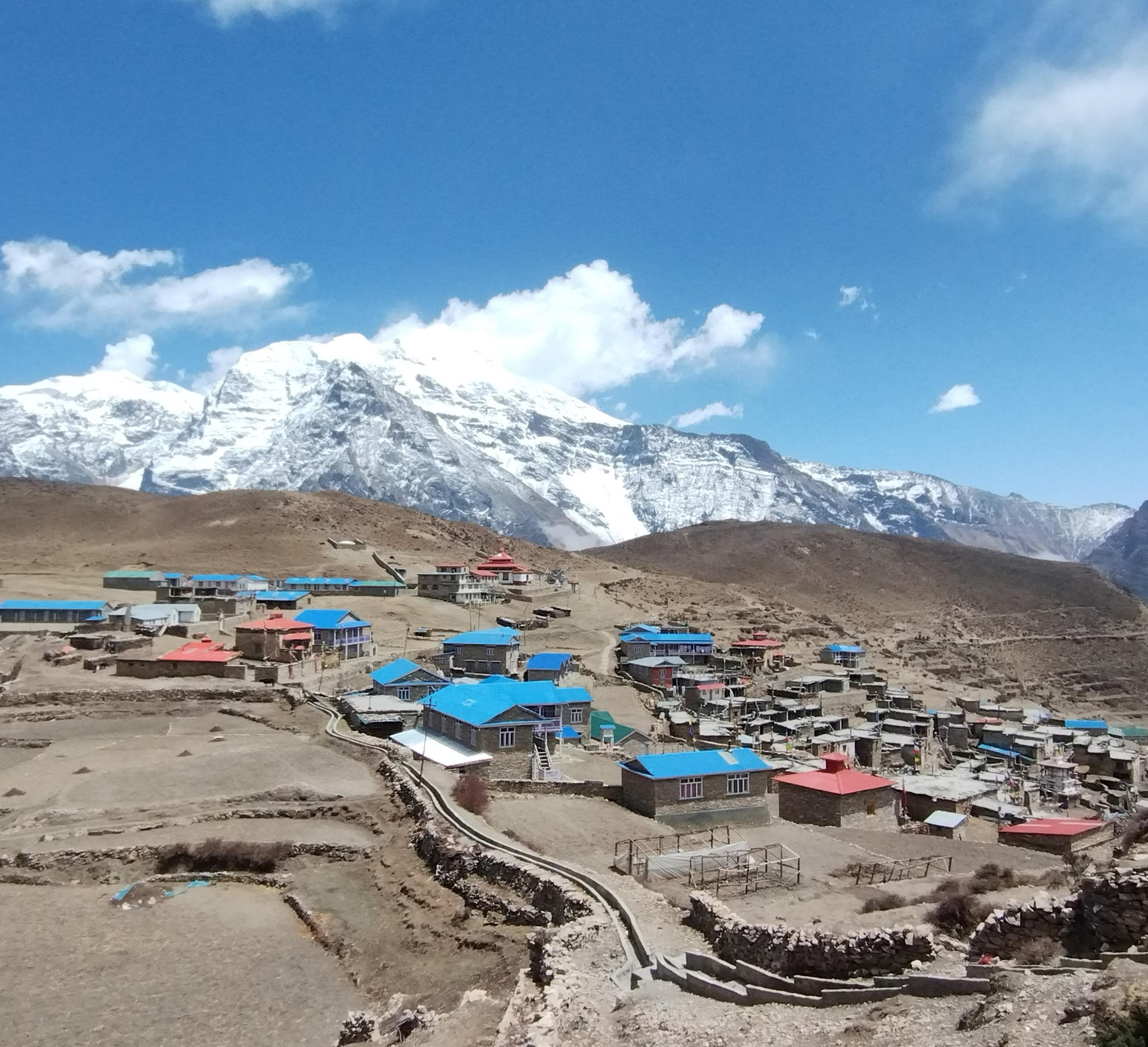
As we pass the Pisang village, we can see the Pisang peak looming right above us. We head towards the spectacular town of Manang. It’s a wild and beautiful village that offers some spectacular views of mountains and mountainous terrain. The traditional houses, people, monasteries, stupas, and everything about this village are so inspiring.
Leaving Manang, we divert from the significant route of the Annapurna Circuit Trek and head towards Tilicho Lake.
Following a scenic route full of coniferous trees, we open up to a pasture famous as Siri Kharka. During the walk, we will be blessed with some stunning views of Gungang Himal and Mt. Chulu. The trail then extends to Tilicho Lake, which is nothing less than a slice of heaven. In the shadows of the beautiful Himalayas, the serene lake, a walk to the lake is worth it.
From Tilicho Lake, we walk back to join the Annapurna Circuit and head towards Yak Kharka. The landscape gets more wild and more beautiful as we head toward Yak Kharka.
Return via Thorang La Pass
Following the route towards the world’s highest pass, we walk up to Thorong La Phedi, the last settlement before the pass, and climb up to Thorong La Pass. Crossing the pass can be a troublesome task, but it’s worth it. The beautiful views of mountains, wild terrain, and the Annapurna massif will keep us engaged. Then we trek to Muktinath.
Muktinath is a religious center for Hindu and Buddhist pilgrims. Both Hinduism and Buddhism have their mythology related to this place.
Here, we can explore the temple and a monastery nearby, accompanied by mountains such as Mt. Annapurna, Mt. Dhaulagiri, Mt. Manaslu, Mt. Macchapucchre, Mt. Tukuche, Mt. Nilgiri, and Mt. Hiunchuli.
Finally, we walk towards Jomsom, a beautiful town inhabited by Gurung people, and fly back to Pokhara to end our trek.
Highlights of the Annapurna Base Camp with Tilicho Lake Trek
The deepest gorge in the world, i.e., Kali Gandaki gorge
The highest mountain pass in the world, i.e., Thorong La pass
Rewarding Tilicho Lake Trek via Annapurna Circuit in terms of mountain beauty, biodiversity, people, culture, and lifestyle.
The magnificence of the great Annapurna massif
Tilicho Base Camp and Tilicho Lake
Manang village and Pisang village
Stunning views of mountains such as Mt. Annapurna, Mt. Dhaulagiri, Mt. Manaslu, Mt. Macchapucchre, Mt. Tukuche, Mt. Nilgiri, Mt. Hiunchuli, etc
Muktinath temple
Local people, local villages, and local lifestyle
Ready for an exciting hiking journey to Tilicho Lake and Thorong La Pass?
The trek rewards you with some spellbinding beauty of the mountains and the Annapurna Region. With so much diversity in terms of landscapes, ecosystems, biodiversity, and people, trekking in the Annapurna Circuit and Tilicho Lake is among the most cherished treks in the Annapurna region of Nepal.
For anyone seeking a challenging trek in the Annapurna region, the Annapurna Circuit with Tilicho Lake Trek is the best choice.
The best seasons to opt for the Tilicho Lake trek are March to May and September to November. However, Heaven Himalaya conducts the trek package throughout the year. If you are looking forward to this hike, make sure you send us an inquiry. We will make your trip a memorable experience.
Outline Itinerary-Annapurna Base Camp With Tilicho Lake
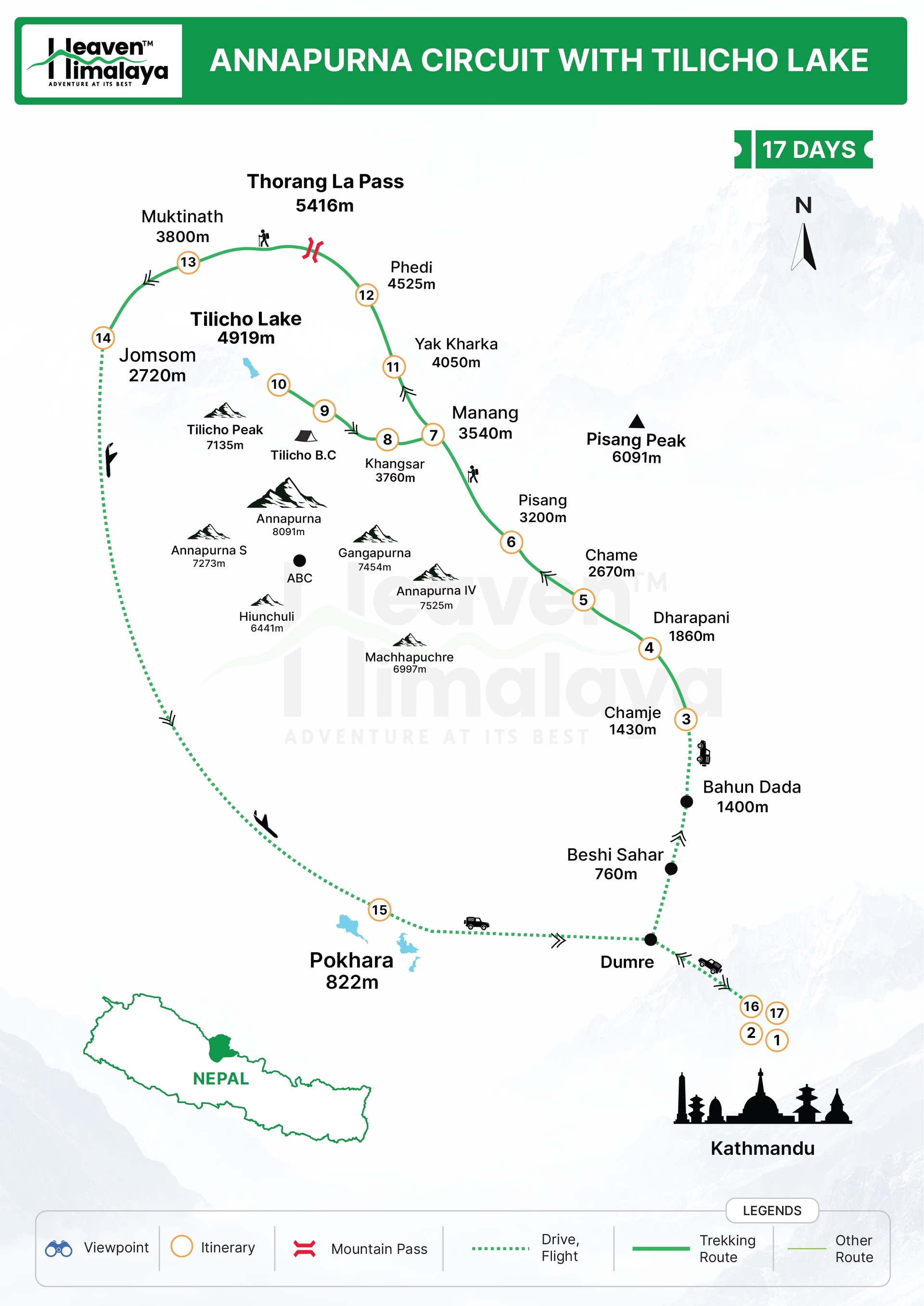
Day 01: Arrival in Kathmandu (1,400m/4,593ft)
Day 02: Kathmandu Sightseeing Tour (1,400m/4,593ft)
Day 03: Drive to Chamje (1,430 m / 4,691 ft) – 7–8 hrs
Day 04: Trek to Dharapani (1,860 m / 6,102 ft) – 6 hrs
Day 05: Trek to Chame (2,670 m / 8,759 ft) – 5–6 hrs
Day 06: Trek to Pisang (3,200m/10,827ft) – 5 hrs
Day 07: Trek to Manang (3,540 m / 11,614 ft) – 4 hrs
Day 08: Trek to Khangsar (3,760m/12,336ft) – 3–4 hrs
Day 09: Trek to Tilicho Base Camp (4,140m/13,583ft) – 4–5 hrs
Day 10: Hike to Tilicho Lake (4,949m/16,237ft) & Return to Base Camp – 5–6 hrs
Day 11: Trek to Yak Kharka (4,050 m / 13,287 ft) – 3–4 hrs
Day 12: Trek to Thorong La Phedi (4,525m/14,845ft) – 3–4 hrs
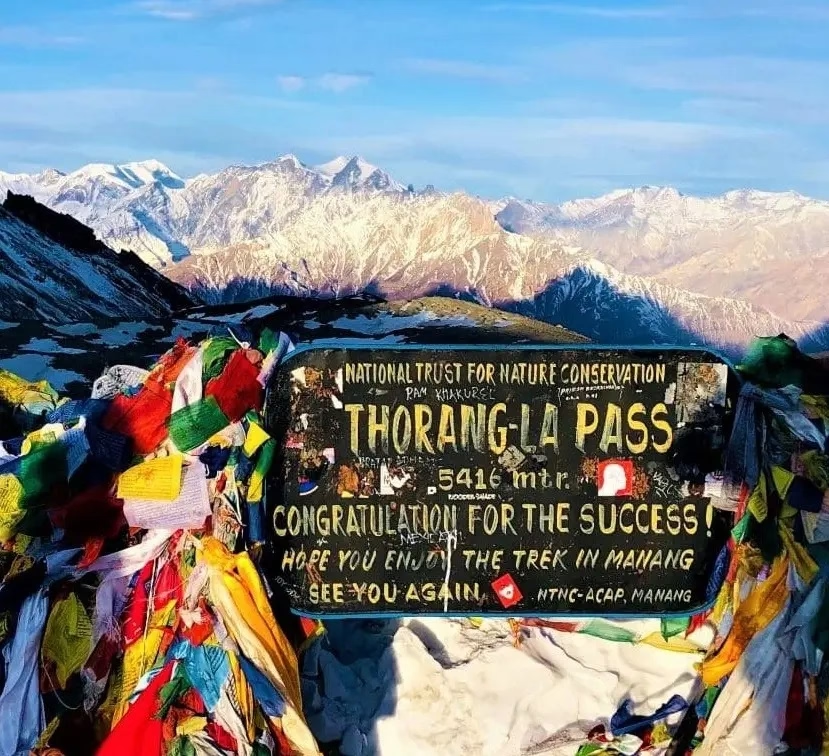
Day 13: Cross Thorong La Pass (5,416m/17,769ft) & Trek to Muktinath (3,800m/12,467ft) – 7–8 hrs
Day 14: Trek to Jomsom (2,720 m / 8,923 ft) – 4–5 hrs
Day 15: Fly from Jomsom to Pokhara (822 m/2,697 ft)
Day 16: Drive from Pokhara to Kathmandu (1,400m/4,593ft) – 6–7 hrs
Your accommodation in a 3-star category hotel in Kathmandu and Pokhara with a breakfast plan
Your accommodation in the best guesthouses available (on a twin-sharing basis) during the trek with breakfast, lunch, and dinner throughout the Annapurna Circuit with Tilicho Lake Trekking journey.
All paper works
National park and heritage sites entry tickets
Flight from Jomsom to Pokhara
Trekkers Information Management System (TIMS) and trekking permits
A licensed, English-speaking, experienced trekking guide, along with a porter (1 for two clients)
All the costs of guide and porter including accidental insurance
Duffel bag, and sleeping bags (to be returned to us after the trek)
Heaven Himalaya T-shirts, route map, and a travel completion certificate
All applicable government taxes and service charges.
First aid kit
Exclusions
Meals (lunch and dinner) in Kathmandu and Pokhara
International airfare
Nepal entry visa fees (USD 50 for a tourist visa, and it can be obtained at the airport in Kathmandu on arrival!)
Travel Insurance
Personal refreshment items like cold drinks, snacks, etc.
Personal utility items like laundry, telephone expenses, electricity charges, etc.
Personal trekking gears
Tips for guides and porters
Dates & Availability
Note to Travelers
Start dates are when your trek begins, and end dates are when the trip ends and you leave Nepal.
We specially quoted and specified the below list of start dates for the group joining option. Let us know if the below start dates do not work for you; we will surely add your available days to fit your interest.
Guaranteed: We guarantee Annapurna Wtth Tilicho Lake trips to run.
Available: The trip is available to run when the minimum group size is met.
Limited: Hurry; only a few seats are available.
Select Departure Date
No fixed group departures right now — run Annapurna Circuit with Tilicho Lake Trekprivately with your own group. Pick a preferred start date and we'll confirm availability.
Loading calendar…
Sold out dates
Group-size discounts will be applied in the next step.
Select a start date from the calendar.
All prices per person, twin share. Subject to availability — Annapurna Circuit with Tilicho Lake Trek dates fill quickly in peak season.
17 days Annapurna Circuit with Tilicho Lake Trek Itinerary
Day 01 :Arrival in Kathmandu.
Elevation: 1,400m
Duration: 20-30 min
Accommodation: Hotel
Meals: Breakfast Included
A representative from our team will wait for you at the arrival terminal of Kathmandu airport. Make sure you look after a person with your nameplate! The representative will welcome you and transfer you to your hotel in Kathmandu.
As you check into the hotel, the representative will give you a synopsis of our plans. Tonight, spend your time at a hotel in Kathmandu.
Day 02 :Sightseeing Tour in Kathmandu.
Elevation: 1,400m
Duration: 5-6 hrs
Accommodation: Hotel
Meals: Breakfast, Lunch, and Dinner Included
The sightseeing tour in Kathmandu includes a guided tour of the art, historical, and cultural monuments around Kathmandu that have been listed under the UNESCO World Heritage Site charts. Today, after breakfast, your tour guide will pick you up for a city tour.
The tour starts from Kathmandu Durbar Square, a historical palace that dates back to the 16th century during the Malla reign in Nepal's medieval period. The palace is a vast complex with a palace, courtyards, and temples. The structure is beautifully crafted with various wood, metal, and stonework. We explore the periphery of the palace and visit a museum inside the palace.
After exploring the palace, we head to the Swayambhunath stupa, a large stupa placed on a hilltop surrounded by various Buddha statues and monasteries. Next, we drive to Pashupatinath temple, the oldest Hindu temple with many temples and statues that date back to ancient times.
Finally, we head to the Boudhanath Stupa, a huge stupa placed on a three-layered Mandela. We visit all these beautiful heritage sites and end our day with a drive to your hotel in Kathmandu. Tonight, spend your time at a hotel in Kathmandu.
Day 03 :Drive to Chamje (1,430 m / 4,691 ft). Duration 7-8 Hours
Elevation: 1,430m
Duration: 7-8 hrs
Accommodation: Guesthouse
Meals: Breakfast, Lunch, and Dinner Included
Get set for an overland drive along the highway route to Chamje! Early in the morning, after breakfast, we set off for a drive from Kathmandu to Chamje. Initially, we follow a highway route along the Trishuli River, full of lush and scenic views of the countryside.
Then, afterward, we followed a route along the Marshyangdi River. The drive for the day goes along a zigzag hilly path. Today's drive is an opportunity to explore the countryside of Nepal, the local people, and their rural lifestyle. We pass Besisahar and continue further to Chamje.
Tonight, spend your time at a guesthouse in Chamje.
Day 04 :Trek to Dharapani (1,860 m / 6,102 ft). Duration: 6 Hours
Elevation: 1,860m
Duration: 5 to 6 Hrs
Accommodation: Guesthouse
Meals: Breakfast, Lunch, and Dinner Included
It is the first day of our trek where we walk. Moving ahead with our trekking journey, we follow a beautiful trail that passes through terraced farmlands and the dense forests of rhododendron to enter the Manang region.
On the way, we pass some villages like Tal, Karte, etc., and traverse through the landslide affected area to Dharapani.
Tonight, spend your time at a guesthouse in Dharapani.
Day 05 :Trek to Chame (2,670 m / 8,759 ft). Duration: 5-6 Hours
Elevation: 2,670m
Duration: 5 to 6 hrs
Accommodation: Guesthouse
Meals: Breakfast, Lunch, and Dinner Included
Leaving Dharapani, we follow a trail to Chame with some amazing views of Mt. Manaslu in sight. We pass through a few landslide affected areas and pass some villages on the way to Chame.
The villages on the way are like those of the Tibetan villages. We can notice the strong dominance of Tibetan Buddhist religion, culture, and lifestyle in those villages. It is a simple walk along with a few villages and pine forests to reach Chame. It is the Manang district headquarter and administrative center that offers some incredible views of Lamjung Himal and Annapurna II.
Tonight, spend your time at a guesthouse in Chame.
Day 06 :Trek to Pisang (3,200m/10,499 ft.). Duration: 5 Hours
Elevation: 3,200m
Duration: 5 hrs
Accommodation: Guesthouse
Meals: Breakfast, Lunch, and Dinner Included
From Chame, we follow a steep and narrow path through the dense forests of pine and rhododendron. The trail takes us to a dramatic rock face whose curves rise 1500 meters from the river.
Furthermore, we proceed to Pisang. Today, the trail blesses us with some magnificent views of Himalayan peaks. From Pisang village, we can see the Pisang peak rising right over us.
Tonight, spend your time at a guesthouse in Pisang.
Day 07 :Trek to Manang (3,540 m / 11,614 ft) Duration: 4 Hours
Elevation: 3,540m
Duration: 4 hrs
Accommodation: Guesthouse
Meals: Breakfast, Lunch, and Dinner Included
Today, we leave the Pisang and head towards the Manang valley to join the route of the Annapurna Circuit. Two routes take us to Manang from Pisang.
Amongst the two routes, we follow one that passes through Geru in Upper Pisang. The route is more scenic, with some admirable views of Annapurna Himal and Pisang Peak in the backdrop.
As we open up to the Manang valley, we can feel the change in our surroundings. The climate becomes cold and dry. On the way, we visit the Barge monastery, which is the largest monastery in the Manang district.
Tonight, spend your time at a guesthouse in Manang.
Day 08 :Trek to Khangsar (3,760m/12,335.96 ft.) Duration: 3-4 Hours
Elevation: 3,760m
Duration: 3-4 hrs
Accommodation: Guesthouse
Meals: Breakfast, Lunch, and Dinner Included
From Pisang, we make our way up towards the village of Khangsar. We follow a trail that goes down along the gorge with some captivating views of Tilicho Peak right over us.
While enjoying the Annapurna region's magnificence, we pass a few interesting settlement areas on the way to the Khangsar River.
On the way, we visit the Tore monastery. A little further from the Khangsar River, we reach Khangsar village.
Tonight, spend your time at a guesthouse in Khangsar.
Day 09 :Trek to Tilicho Base Camp (4140m/ 13,582 ft.) Duration: 4-5 Hours
Elevation: 4,140m
Duration: 4 to 5 hrs
Accommodation: Guesthouse
Meals: Breakfast, Lunch, and Dinner Included
After breakfast at the guesthouse, we head towards Khagsar. We climb up through the grassy fields enjoying some gorgeous views of hills, valleys, and mountains. We have to climb up a steep path to ascend to Tilicho Base Camp.
From the base camp, one can enjoy some astounding views of the Tilicho peak and other landscapes.
Tonight, at a guesthouse in Tilicho Base Camp.
Day 10 :Explore Tilicho Lake (4,949m/16,236 ft.) and return to Base Camp. Duration: 5-6 Hours.
Elevation: 4,949m
Duration: 7-8 hrs
Accommodation: Guesthouse
Meals: Breakfast, Lunch, and Dinner Included
We start our day with an ascent up through the moraines at the edge of the mountain. As we ascend, we will be blessed with some captivating views of the Tilicho peak, Nilgiri Himal, Khangsar Himal, and Muktinath.
On reaching Tilicho Lake, the highest lake in the world, we will experience the mother lake's divine beauty. The azure lake in the backdrop of the Himalayas looks mesmerizing. After enjoying the majestic views of the mountains and their reflection in the crystal clear lake of Tilicho, we head back to Tilicho Base Camp.
Tonight, at a guesthouse in Tilicho Base Camp.
Day 11 :Trek to Yak Kharka (4,050 m / 13,287 ft) Duration: 3 - 4 Hours
Elevation: 4,050m
Duration: 3-4 hrs
Accommodation: Guesthouse
Meals: Breakfast, Lunch, and Dinner Included
Leaving the base camp, we descend and head towards Tenki village, which lies just above Manang village. Moving onwards, we continue up to move out of the Marshyangdi valley and turn northwest. We pass various pastures and small juniper trees on the way and climb up towards the village of Ghunsa.
We leave Ghunsa and travel through meadows, rivers, and man-made walls to another small village called Yak Kharka. It is also a large meadow that marks the end of the tree line area.
Tonight, spend your time at a guesthouse in Yak Kharka.
Day 12 :Trek to Thorong La Phedi (4,525 m / 14,845 ft) Duration: 3 - 4 Hours
Elevation: 4,525m
Duration: 3-4 hrs
Accommodation: Guesthouse
Meals: Breakfast, Lunch, and Dinner Included
Today, we head towards the foot of the Thorong La pass. It is a small but busy place that caters to trekkers who climb up the Thorong La pass. After breakfast in Yak Kharka, we continue along the trail that climbs uphill to Ledar village.
From Ledar, we climb up and pass a few cliffs on our way to Thorong La Phedi. The place offers some majestic views of the Annapurna Himal and Chulu mountain ranges.
Tonight, spend your time at a guesthouse in Thorong La Phedi.
Day 13 :Cross Thorong La Pass (5,416m/17,769 ft.) and trek to Muktinath (3,800m/12,467 ft.) Duration: 7-8 Hours
Elevation: 5,416m
Duration: 7-8 hrs
Accommodation: Guesthouse
Meals: Breakfast, Lunch, and Dinner Included
We wake up early and finish our breakfast for a climb up to Thorong La pass. It is the highest point in the world at an elevation of 5416 meters. We climb up the pass and treat our eyes to some astonishing views of mountains in the Annapurna and Chulu mountain ranges.
After enjoying the mountain views, we descend to Thorong La Phedi and start moving ahead towards Muktinath. Muktinath is a popular pilgrimage site in the region that offers some stunning mountains in the Annapurna panorama.
Tonight, spend your time at a guesthouse in Muktinath.
Day 14 :Trek to Jomsom (2,720 m / 8,923 ft). Duration: 4-5 Hours
Elevation: 2,720m
Duration: 44 Mins
Accommodation: Guesthouse
Meals: Breakfast Included
Leaving Muktinath, we descend along the bank of the Kali Gandaki River to the Jomsom. It’s a beautiful day walk with astonishing views of wild landscapes, mountains, valleys, rivers, and many more.
When we reach Jomsom, we can visit an ecological museum in Jomsom if interested. Enjoy the great hospitality of local people in the guesthouses of Jomsom.
Tonight, spend your time at a guesthouse in Jomsom.
Day 15 :Fly to Pokhara
Elevation: 822m
Duration: 20 Mins
Accommodation: Hotel
Meals: Breakfast, Lunch, and Dinner Included
After breakfast, we will transfer you to Jomsom Airport to catch an early flight to Pokhara. We will enjoy the flight with some wonderful views of mountains in the region.
Furthermore, we check into a hotel in Pokhara and rest for a while. Then we get ready to explore the lakeside area.
We stroll along the Phewa Lake bank and spend some quality time boating on the serene lake water. In the evening, we can spend our leisure time at the restaurants and clubs in Pokhara. Excellent food, live music, and a relaxed mood after such an interminable day of trekking will keep you delighted.
Tonight, spend your time at a hotel in Pokhara.
Day 16 :Drive to Kathmandu. Duration: 6-7 Hours
Elevation: 1,400m
Duration: 6 hrs
Accommodation: Hotel
Meals: Breakfast, Lunch, and Dinner Included
Today, after breakfast at the hotel, we got on our ride to drive back to Kathmandu. We follow the same scenic route along the Prithvi Highway to Kathmandu.
Upon arrival, we will transfer you to a hotel in Kathmandu.
Tonight, spend your time at the hotel in Kathmandu.
Day 17 :Departure (Farewell to Annapurna Circuit Trek with Tilicho Lake Trek)
Elevation: 1,400m
Accommodation: Hotel
Meals: Breakfast Included
Today, fly home from Kathmandu or continue your travels to some other destinations around the globe. We will drop you off at the airport three hours before your scheduled flight.
We hope you had a good time with us. As you take heaps of memories of Nepal with you, have a safe journey home. Thank you.
Altitude profileMax 5,416 m
Create a Bespoke Itinerary
Customize your Himalayan adventure with personalized itineraries for unforgettable experiences!
My friend and I booked the 14 day Annapurna Circuit with Tilicho Lake trek. The whole experience was amazing. Ram made it easy to alter the trip to our specific needs. We added flights, cut off 2 days of trekking, requested single rooms, and he quickly got us a quote and booked! Hari was our guide on the trek and he was fantastic! He attended to all our needs and safely guided us for the entire time. He did an excellent job of getting us the best rooms, served our meals every day, and did everything in his power to make sure us old men(63 and 74) made it over the Pass! Our porter, Denise, was equally impressive! I still don't know how he carried our bags for 10 days! Clear blue skies, endless views, majestic mountains, deep river valleys, friendly people, a truly unforgettable trip!!!
T Ted R
Highly Recommend Heaven Himalaya
I recently completed a 24-day, three-circuit tour with Heaven Himalaya, exploring the Tsum Valley, Manaslu, and Annapurna Circuits. This was my first trip to Nepal, and it was an outstanding experience.From the outset, Heaven Himalaya impressed me with their professional communication. They hosted two informative Zoom calls to prepare us for the trip and to address any questions we had. Once in Nepal, they continued to handle unexpected changes seamlessly—like when some of our party decided to forgo a high-altitude pass or when our in-country flight was unexpectedly canceled. Knowing that Heaven Himalaya was always taking care of us and would competently handle any unforeseen circumstances allowed me to let go of any concerns and totally immerse myself in enjoying this remarkable country.I also can not speak highly enough of our guide and porters: Shankar Adhikari, Babu and Anish. They were not only friendly companions but also exceptionally attentive to our needs. Trekking involves a…
What to Pack
Trekking wears
Upper Body
T-shirts (preferably quick-dry and breathable) (day)
Parka/windbreaker (day)
Rain gear/poncho
Inner thermal (at night)
Fleece or warm mid-layer (evenings and higher altitude)
Fleece jacket
Down jacket (night)
Lower Body
Undergarments
Trekking pants (preferably stretchable, quick-dry, and water-resistant) (day)
Rain gear
Inner thermal (at night)
Fleece/wool pants (night)
Handwear
Lightweight fleece or wool gloves
Heavyweight gloves
Footwear
Trekking boots
Hiking socks
Trekking sandals
Cotton socks
Gaiters (optional)
Running shoes (optional)
Note:Make sure your trekking boots are well broken-in and that you have worn them for some time before the trek. Avoid bringing brand-new boots, as they may cause blisters, discomfort, or foot pain during long days of walking.
Trekking Accessories
Duffle bag**
Trekking backpack
Sleeping bag**
Trekking poles**
Trekking Map**
Water bottle
Head torch with extra batteries
Raincoat
Face mask
Crampons (optional)
Binoculars (optional)
Sleeping bag liner (optional)
Daypack cover (optional)
Head wear
Sun cap or brimmed hat
Sunglasses
Neck gaiter
Balaclava
Bandana or headscarf
Other Essentials
Medical Kit
Altitude & Trekking related medications
Acetazolamide (Diamox) for Altitude sickness
Parcetamol - headache & fever relief
Ibuprofen - Pain relief
Stomach Medications
Antacids
Oral Rehydration salts ( Jeebanjal)
Motion Sickness (Vomiting) medicines
First Aid Supplies
Bandages
Blisters Plaster
Handyplasts
Antiseptic wipes
Medical Tapes
Skin Protection
Moisturizer
Lip Balm
Sunscreen cream with high SPF
Eye Protection
Sunglasses (both UV rays and snow glare)
Lubricating eye drops
Other Essentials
Oximeter
Thermometer
Water Purification Tablets (Chlorine, Iodine, Chlorine dioxide tablets)
Hand sanitizer
Note: When you trek with a reputable agency, your guide is trained to handle altitude-related issues and carries a basic first-aid kit with essential medical supplies. You should still bring personal medications, but they look after you throughout the trek.
Travel Documents
Passport, with at least 6 months validity
4 copies of passport
4-5 Passport size photo
Physical Trek Map (Digital Route Map)
Visa (available at kathmandu airport)
Insurance
Trekking permits
Cash ( min. 400$)
Miscellaneous Items
Solar charger
Garbage bag
Book/diary/card games
Solar power bank
Camera (optional)
Extras (for men)
Small mirror
Razor and shaving cream
Pee bottle (optional)
Extras (for women)
Feminine wipes
Sanitary napkins
Nail brush and clippers
Tweezer
Important Note: We provide a duffle bag, sleeping bag, and down jacket and expect them to be returned at the end of the trip. We also provide trekking maps, and our experienced trekking guide will assist you in utilizing and understanding the map effectively. This map is yours to keep as a memorable souvenir.
At the end of the trip, to express our gratitude for choosing Heaven Himalaya, we extend to you a Heaven Himalaya T-shirt and trip achievement certificate. These items are more than tokens; they are our way of showing appreciation for your trust in us.
Toiletries and Personal Hygiene
Toothbrush and toothpaste
Personal first aid kit
A small bar or soap bottle
Quick-drying towel
Hand sanitizer
Lip balm with SPF
Wet wipes or baby wipes
Hairbrush
Hand and face moisturizing cream
Toilet paper
Antibiotics and painkillers
Skin blister repair kit
**Please consult with your guide before using any medication.
Trekking Permits for the Annapurna Circuit with Tilicho LakeTrek
For the Annapurna Circuit trek, two trekking permits are required: the Annapurna Conservation Area Permit(ACAP) and the Trekkers' Information Management System (TIMS) card.
The ACAP permit serves as an entry ticket, granting access to the conservation area. You can obtain this permit in Kathmandu, Pokhara (Nepal Tourism Board), or Besisahar (the trailhead). The ACAP permit costs NPR 3,000 (around USD 25) for foreign nationals and NPR 1,000 for SAARC nationals. Children under 10 can trek for free.
Next, the TIMS card costs NPR 2,000 for foreign nationals and NPR 1,000 for SAARC nationals. Since April 2023, the "Green TIMS" (for solo trekkers) has been effectively discontinued for the ACT route. If you're a foreign national, then you must have a "Blue TIMS" (Organized Group Trekkers) issued by a registered travel agency in Nepal like Heaven Himalaya.
To obtain Annapurna Circuit trekking permits, you need to submit your original passport or a clear photocopy, a visa copy, four passport-sized photos, and your travel insurance policy number.
The ACAP permit is valid for the entire trek within the conservation area. At the same time, the TIMS card helps track the movements of trekkers for safety purposes. You must carry both permits throughout your trek. Checkpoints, especially in Besisahar, Chame, and Manang, are very strict. If you arrive without a guide and a Blue TIMS card, authorities might turn you back.
If you plan to extend your trek into restricted areas, such as Nar-Phu Valley or Upper Mustang, you'll need special permits for these restricted areas. These Annapurna circuit trek permit requirements vary depending on the specific region you want to explore. Likewise, if you're going to add a side trip to Tilicho Lake, then you don't need an extra permit; your standard ACAP permit covers it.
Accommodation on the Annapurna Circuit with Tilicho Trek
Teahouses and small lodges provide accommodation on the Annapurna Circuit trek route. There are three different types of teahouses. The basic teahouses are family-run lodges with thin plywood walls, twin beds, and shared toilets. These types of hotels are common above Manang, Yak Kharka, and Thorong Phedi.
Most standard accommodation options on the circuit are mid-range teahouses featuring twin rooms with wooden beds, mattresses, pillows, and blankets. Some of them have rooms with attached bathrooms, paid hot showers, and Wi-Fi. In lower, main towns like Chame, Manang, Muktinath, and Jomsom, you can find luxury lodges with rooms with attached western toilets, reliable hot showers, and stronger Wi-Fi.
A simple rule: as the altitude goes up, the luxury goes down. Higher up, rooms are colder, walls are thin, and there is usually no heating in bedrooms. Hence, a good sleeping bag is strongly recommended. At Thorong Phedi, you’ll find a dormitory-style room. These are very basic, noisy, and cold, serving only as a resting place before the pass.
Below approximately 3,000 meters, many lodges offer Western-style flush toilets and gas or solar-heated hot showers (often at an additional cost). Above 3,500 meters, there are mostly shared squat toilets outside the main building, and to flush, you need to use a bucket and a mug. Hot water showers, which are available in buckets, cost extra and may be limited in availability. Toilet paper is usually not provided, so please bring your own.
Electricity on Annapurna Circuit is mostly available, powered by local hydro or solar sources. However, power outages can occur due to storms or peak usage. You can charge your phones, cameras, and power banks in the dining hall for a small fee at most teahouses, especially higher up. Thus, the accommodation price of the Annapurna Circuit is just the entry fee—the real costs are incurred after adding extra amenities such as hot showers, charging, and Wi-Fi.
Difficulty Level of Annapurna Circuit with Tilicho LakeTrek
The difficulty level of the Annapurna Circuit trek is rated as moderately to highly challenging, suitable for fit beginners. Most trekkers find this circuit trek difficult due to its length, altitude, and varied terrain. It is non-technical; no ropes, crampons, or ice axes are needed, but it is physically demanding.
Altitude is one of the most significant difficulty factor during this circuit trek. The trek starts at ~800m at Besisahar and climbs to 5,416m at Thorong La Pass, where only 50% of the oxygen available at sea level is present. Even marathon runners can fail here if they rush, so you need to slow your pace and let your body adapt to the thin air. Most trekkers feel fine until Manang (3,500m). Above this point, every step requires significantly more effort.
The hardest single day of the entire Annapurna Circuit is crossing Thorong La Pass. It is a long 10 to 12-hour day hike. You'll start at pre-dawn, and the climb to the top is steep and relentless. The air is also very thin here. After celebrating at the top, you must descend 1,600m to Muktinath (3,800m). This creates massive strain on the knees and quadriceps.
Unlike a weekend hike, this is a long circuit trek that requires continuous walking for 5-7 hours daily for 14 consecutive days. Even with a porter, carrying a daypack with water, layers, and a camera wears you down over two weeks.
The Annapurna circuit trekking goes through varied terrain, include rocky paths, steep ascents/ descents, loose scree, narrow ridges, suspension bridges, and jeep tracks. So, you'll encounter a few flat trails; it is constantly "up a little bit, down a little bit." You might climb 500m to descend 200m to cross a river, then climb back up. Once you cross the Mustang side, a fierce wind howls through the valley every day after 11:00 AM. Walking against this headwind while sand blasts your face is physically draining and mentally frustrating.
One last infamous reason is traveler's diarrhea, from which many trekkers have to quit the trek. Food hygiene standards in the teahouse are basic. Regarding food poisoning, it weakens you rapidly, making physical hiking feel ten times harder.
Training for the Annapurna Circuit with Tilicho LakeTrek
To accomplish the Annapurna Circuit trek, you don't need to be an athlete, but you do need to be "mountain fit." Therefore, training for the Annapurna Circuit trek should focus on developing stamina and leg strength.
The key component to include in your training routine is cardiovascular fitness. You need to train your body to work hard with less oxygen. Running, cycling, swimming, and brisk walking are good cardiovascular exercises. You should be able to sustain a steady heart rate for 45-60 minutes without feeling completely exhausted.
The Annapurna Himalayas consist of thousands of stone steps. So, for a daily climbing practice, find a tall building or stair machine at the gym. Ideally, use the backpack to simulate the weight you'll carry during the trek. This will strengthen your calves and quadriceps, preparing you for the vertical climb.
Similarly, leg strength is equally important to protect your joints, especially during the long descent from Thorong La Pass. Squats, lunges, calf raises, and step-downs can help build strong muscles. After your legs, you now need your shoulders and back to be stronger to carry weight. You can go for long hikes on weekends wearing your hiking boots and a backpack.
The strong core protects your lower back from pain after days of walking on uneven terrain with a bag. Planks, leg raises, or yoga can improve balance and stability, which is quite essential for the rocky, loose trails near the pass.
Mental preparation for the Annapurna circuit trek is often overlooked. But while trekking in Nepal, you need to get comfortable with being uncomfortable. So, if possible, train in bad weather. Learn to keep moving when you are wet, cold, or tired. This mental resilience is precisely what you need for the summit push on Thorong La Pass.
Altitude sickness during the Annapurna Circuit Trek
At sea level, your body gets plenty of oxygen with every breath. As you go higher, the air pressure drops, meaning there are fewer oxygen molecules in every lungful of air.
At Thorong La Pass, there is roughly 50% less oxygen available compared to sea level. To compensate, your body breathes more rapidly, and your heart beats more forcefully. If you ascend too quickly, your body cannot adapt fast enough, leading to "Acute Mountain Sickness" AMS. During the Annapurna Circuit trek, the danger starts at Manang (3,540m) and peaks at Thorong La Phedi (4,525m).
Generally, AMS symptoms usually appear 6-12 hours after arrival at a new altitude. You can categorize symptoms into three categories:
Green Zone (Mild/Normal Adjustment)
Slight headache (like a mild hangover).
Shortness of breath when walking uphill.
Disturbed sleep (waking up gasping for air is common).
Almost half of all trekkers will get mild symptoms, especially at High Camp. If you experience mild symptoms, take paracetamol, drink plenty of water, and refrain from further activity.
Orange Zone (Moderate AMS)
Severe headache that painkillers don't fix.
Nausea or vomiting (loss of appetite is a key sign).
Extreme fatigue and dizziness.
If you get moderate AMS, then descend immediately. Don't sleep at this altitude.
Red Zone (Life-threatening)
HAPE (Fluid in Lungs): Coughing up pink fluid, bubbling sound in chest, breathless even when sitting still.
HACE (Swelling of the Brain): Confusion, hallucination, inability to walk in a straight line.
Here are some golden rules to prevent altitude sickness:
The "Climb High, Sleep Low" Rule. On the Annapurna circuit trek, in Manang (3,540m), you hike up to Ice Lake (4,600m) or Gangapurna Lake during the day, then return to Manang to sleep. This helps your body produce more red blood cells.
The "300m Rule". Above 3,000m, you should not increase your sleeping altitude by more than 300-500 meters per day. In this itinerary, the trek from Manang to Thorong La is split into 3 days (Manang -> Yak Kharka -> Thorong Phedi.
Hydration: "The 4-Liter Rule". At high altitude, your body loses water twice as fast. So, you must drink 3-4 liters of water daily. Check if your urine is dark yellow; this means you're dehydrated and at high risk of AMS.
Taking Diamox which is a diuretic medicine that helps your body breathe more efficiently and metabolize oxygen more effectively.
Drinking the "Garlic Soup" is beneficial as garlic is a natural blood thinner that helps improve circulation. You'll easily see it on every teahouse menu.
FAQs
Annapurna Circuit with Tilicho Lake Trek Frequently Asked Questions
Best time to Trek
Why trek with Heaven Himalaya?
When you choose to book a trek package with Heaven Himalaya, you'll already be ahead of other trekkers in terms of service and benefits. A local mountain trekking guide with extensive knowledge of the routes will accompany you. Booking with us means you'll walk with Sherpa locals and support their livelihood. While foreign companies offer similar trips to Everest Base Camp, they can't do it on their own. They hire government-registered companies like us in Nepal. Booking with them means you'll pay intermediaries' fees out of your pocket. Other perks of travelling with us are:
A focus on clients' safety, with our trip organized with the utmost safety in mind
The best price guarantee.
Free transfers from the airport to the hotel and back in a private vehicle
Trained, government-licensed local guides who have an entire knowledge of local routes.
Support for locals to earn their living through tourism.
An oximeter for monitoring oxygen levels while on a high-altitude trek, guides with medical kits to handle situations that may arise.
Arrangements for sleeping bags and down jackets.
Free storage at the Heaven Himalaya office store for extra luggage during your tour
A duffel bag to transfer your items from luggage to be carried during the journey A free porter to help carry your heavy bags.
What is the best time to trek in Nepal?
Spring (March to May) and autumn (September to November) offer the most stable weather, clear mountain views, and ideal trekking conditions for trekking
Is it possible to trek during winter?
Yes, winter trekking is possible. If you can handle the cold and snowy conditions at higher altitudes, you can enjoy the tranquility and solitude of the trails. You also get to witness the Himalayas in their full glory, as the region receives regular snowfall. The biggest perk is that accommodations and meals are available at discounted rates. While spring, summer, and autumn treks in Nepal have their own allure, embarking on a winter trek promises a distinctive and enchanting adventure. So, with proper winter preparation and professional guidance, trekking in winter is absolutely possible. https://heavenhimalaya.com/winter-treks-in-nepal/
Top Trekking Packages of Nepal
Which trek should I choose?
If you want easy trekking with great views, try Poon Hill or the Kathmandu Valley. If you want adventure, culture, and remote landscapes, choose Upper Dolpo, Upper Mustang, or the high passes in Everest. Each trek offers a mix of nature, mountains, culture, and unforgettable experiences.
Which treks are suitable for beginners?
Easy treks include Poon Hill, Everest View Trek, and Kathmandu Valley Trek. These trails are shorter, less challenging, and provide beautiful mountain and nature views.
Annapurna Region
Is travel insurance necessary for Annapurna Trekking Tours?
Travel insurance is highly recommended for trekking in the remote and high-altitude environment of Annapurna. Medical emergencies may require costly transport by helicopter, and travel insurance can provide financial coverage for such situations.
What are some tips for preparing for Annapurna trekking tours?
To prepare for the varied terrain of Annapurna, it is recommended to walk or run daily before the trek begins. It’s also important to book with a reputable trekking agency to ensure safety and support during the trek.
Booking, Deposit & Payment
What payment methods do you accept?
You can make the payment through major credit cards, international bank (SWIFT) transfers or cash payments in ktm before the trek begins. But a deposit of 20% is required to book the trek and remaining payment can be settled in Nepa, on your preferred payment method.
What are the Cancellation and Refund Policy ?
You must note that your down payment is non-refundable in the event of cancellation. You have to mail us at info@heavenhimalaya.comat least 15 days prior to your trip departure date. Sometimes the cancellation can be because of unpredictable events (including extreme natural occurrences, safety or political concerns, or unexpected airport shutdowns), where you’ll have the option to reschedule your trek. Your deposited sum will be transferred to your upcoming trip.
Can I postpone my trek after booking?
Yes, most trekking companies allow date changes. Deposits are often adjusted as credit depending on company policy.
How do I book the Everest Region Treks?
Loading…
Visa and Arrival
Can I get a visa on arrival in Nepal?
Loading…
Does Nepal provide a Visa on Arrival?
Loading…
How can I buy a SIM card in Nepal?
Loading…
Where can I exchange money upon arrival in Nepal?
Loading…
Similar Travel Packages
You may also like these handpicked adventures similar to Island Peak Climbing with EBC for an exceptional travel experience.