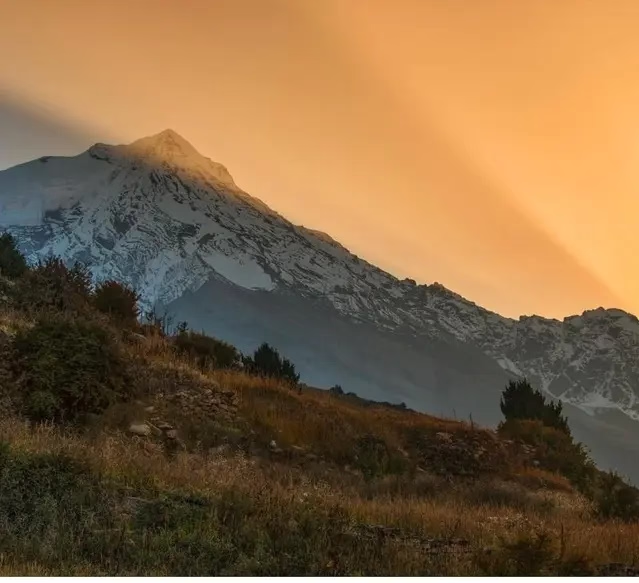
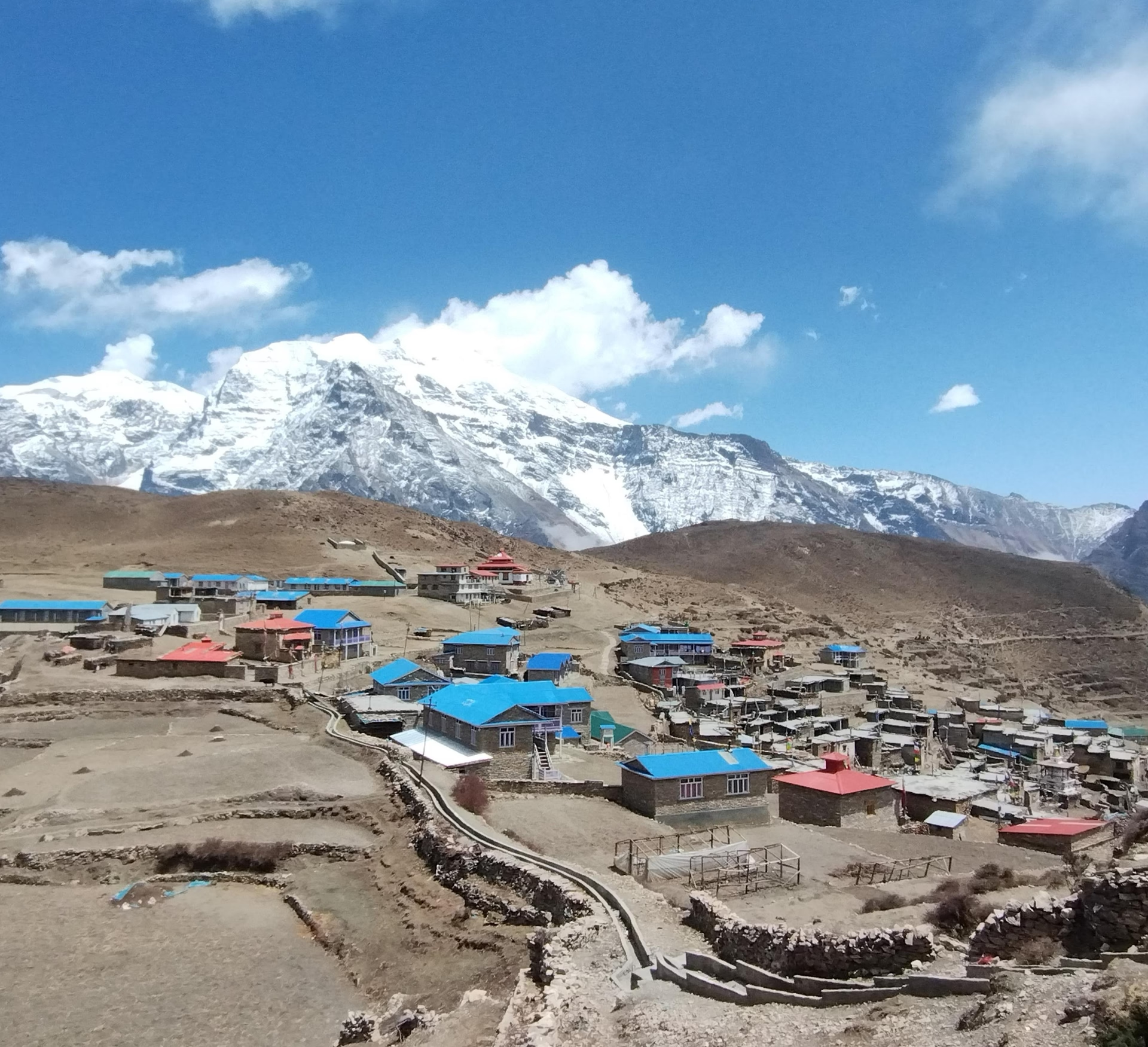
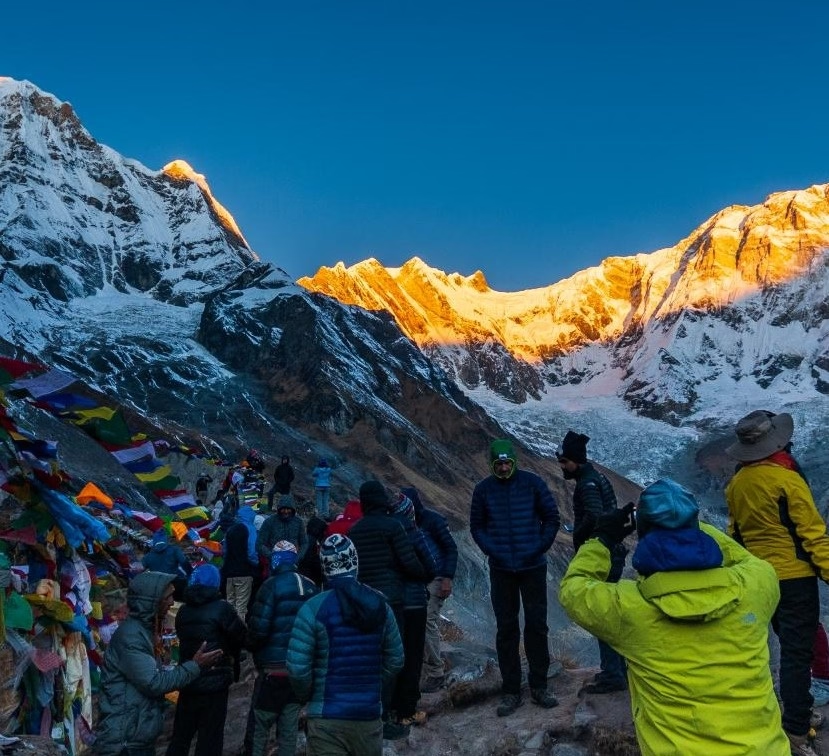
Embark on a memorable journey around the Annapurna Circuit, crossing Thorang La pass, valleys mountain deserts and exploring villages filled with Gurung and Thakali culture in this 14-day adventure.
DestinationNepal
Duration18 days
Trip DifficultyVery Strenuous
ActivitiesTrek
Max. Elevation5416m.
Group Size1-15
VehicleCar, Deluxe AC Bus
AccommodationGuesthouse
MealsB.L.D
The Annapurna Circuit with Poon Hill Trek combines the classic circuit adventure with the famous sunrise viewpoint of Poon Hill. The journey follows the diverse Annapurna Circuit trail through lush valleys, alpine forests, and high mountain passes, including the challenging Thorong La Pass at 5,416m. Adding the hike to Poon Hill (3,210m) offers breathtaking sunrise views over Annapurna, Dhaulagiri, Machhapuchhre, and Nilgiri, making the trek even more rewarding. Blending dramatic landscapes, cultural encounters with Gurung, Thakali, and Manangi communities, and iconic Himalayan panoramas, this trek is a perfect choice for those who want the full Annapurna experience with an extra scenic highlight.
Annapurna Circuit with Poon Hill Trek: 18-Day Adventure
Annapurna Circuit is the most popular trekking destination, with high passes standing over 5400 meters above sea level. Here, the travel package, Annapurna Circuit with Poon Hill Trek, is an 18-day trekking journey in Nepal that combines spirituality and adventure in the shadow of the majestic Annapurna massif.
The circuit tour sets up brilliant difficulties for those who give much room to adventure, thrill, and the knowledge that it develops within the soul about nature, people, culture, and values. For this reason, going on a trek to Annapurna Circuit is a pure experience of self-discovery within.
The Best of the Annapurna Circuit Trek Package
Also called the Annapurna Round Trek, the route passes many ethnic villages from various backgrounds. Each of them has unique ecological and social systems, resembling a vast living museum of different lifestyles and experiences. It reflects peace and harmony among the fellow tribes.
We pass through the Manaslu and Annapurna slants on this Annapurna Circuit Trek package. Once we pass the pilgrimage and trading trails, the circuit showcases a wide variety of Gurung and Magar traditional qualities.
Take a trek to the Muktinath temple to refresh your soul. It is one of the prime points of the trip, along with the mystic Kagbeni village trip. Muktinath is a sacred shrine that holds equal significance to both Hindu and Buddhist followers around the world. The surrounding field is barren, filled with dry landscapes.
From there, you will reach the gorgeous high passes that separate two valleys in Manang. The Annapurna Circuit Trek Package likewise comprises a walk to the world’s deepest gorge, cut by the river Kali Gandaki.
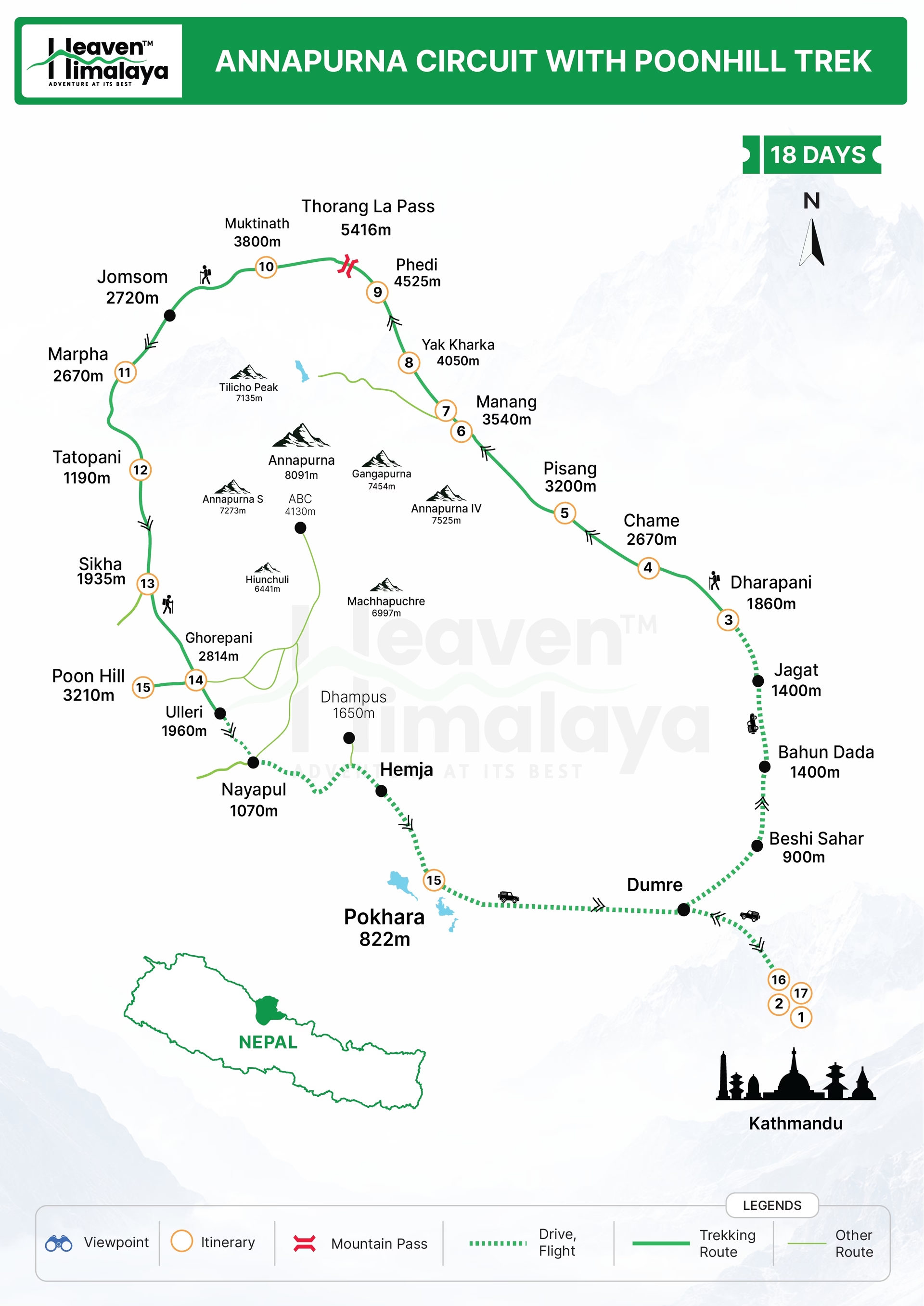
Outline Itinerary-Annapurna Circuit with Poon Hill
Day 01: Arrival in Kathmandu (1,400m/4,593ft) (Tribhuvan International Airport)
Day 02: Kathmandu Sightseeing (1,400m/4,593ft) & Trek Preparation
Day 03: Drive to Dharapani (1,860m/6,102ft)
Day 04: Trek to Chame (2,670m/8,759ft)
Day 05: Trek to Pisang (3,300m/10,827ft)
Day 06: Trek to Manang (3,540m/11,614ft)
Day 07: Acclimatization Day in Manang (3,540m/11,614ft)
Day 08: Trek to Yak Kharka (4,050m/13,287ft)
Day 09: Trek to Thorong Phedi (4,525ft/14,845ft)
Day 10: Cross Thorong La Pass (5,416m/17,769ft) & Trek to Muktinath (3,800m/12,467ft)
Day 11: Trek to Marpha (2,670m/8,760ft)
Day 12: Drive to Tatopani (1,190m/3,805ft) & Relax in Hot Springs
Day 13: Trek to Sikha (1,935m/6,348ft)
Day 14: Trek to Ghorepani (2,850m/9,350ft) – 7 hrs
Day 15: Hike to Poon Hill (3,210m/10,531ft) – Trek to Ulleri & Drive to Pokhara
Day 16: Fly or Drive to Kathmandu (1,400m/4,593ft)
Day 17: Reserve/Leisure Day in Kathmandu (1,400m/4,593ft)
Airport transfers–pick up and drop in a private vehicle
All ground transportation in a private vehicle (Kathmandu - Jagat, Nayapul- Pokhara, and then Pokhara - Kathmandu)
Your 2 Night accommodation in Kathmandu and 1-night accommodation in Pokhara will be in a 3-star category hotel with a breakfast plan.
Your accommodation in the best guesthouses available (on twin sharing basis) during the trek.
Three-day meals include breakfast, lunch, and dinner throughout the classic Annapurna Circuit trekking, except in Kathmandu and Pokhara.
All paper works
National park and heritage sites entry tickets
Trekkers Information Management System (TIMS), ACAP, and other necessary trekking permits for Annapurna Circuit Trek.
A licensed, English-speaking, experienced guide
Porter to carry your items on the trek. (Two clients will share one porter.)
All the costs of guide and porter, including salary, meals, and accidental insurance.
Heaven Himalaya Duffel bag, and sleeping bags (to be returned to us after the trek)
T-shirts, a route map, and a travel completion certificate
All applicable government taxes and service charges.
First aid kit
Exclusions
Meals (lunch and dinner) in Kathmandu and Pokhara
International airfare
Nepal entry visa fees (USD 50 for a tourist visa, and it can be obtained at the airport in Kathmandu on arrival!)
Travel Insurance
Personal refreshment items like cold drinks, snacks, etc.
Personal utility items like laundry, telephone expenses, electricity charges, etc.
Personal trekking gear for Annapurna Circuit Trek.
Tips for guides and porters and other trekking staff.
Dates & Availability
Note to Travelers
Check out the best prices for the Poon Hill Trek.
Kindly note that Start Dates are your dates of arrival in Nepal, and End Dates are the dates of leaving Nepal.
We specially quoted and specified the below list of start dates for the group joining option. Let us know if the below start dates do not work for you; we will surely add your available days to fit your interest.
Upcoming Trip Start Dates
Guaranteed: We guarantee Annapurna Circuit trips to run.
Available: The Annapurna Circuit trip is available to run when the minimum group size is met.
Limited: Hurry; only a few seats are available.
Select Departure Date
No fixed group departures right now — run Annapurna Circuit with Poon Hill Trekprivately with your own group. Pick a preferred start date and we'll confirm availability.
Loading calendar…
Sold out dates
Group-size discounts will be applied in the next step.
Select a start date from the calendar.
All prices per person, twin share. Subject to availability — Annapurna Circuit with Poon Hill Trek dates fill quickly in peak season.
18 days Annapurna Circuit with Poon Hill Trek Itinerary
Day 01 :Arrival at Kathmandu's Tribhuvan International Airport
Elevation: 1,400m
Accommodation: Hotel
Meals: Breakfast Included
Welcome to Kathmandu, the capital city of Nepal. As you land in the valley, you will immediately notice the smell of ancient monuments, sculptures, artistic temples, and magnificent art.
If you come by air, our staff will wait for you outside of the airport terminal. He/she stands there by your nameplate and the company name. They will greet and warmly receive you. Then they will support you with transportation to transfer you to your hotel in Kathmandu.
Take a rest and gather the energy to walk on the trails. Also, if you have some personal gear to buy, you can go shopping in Thamel in the evening. You will spend the night in a hotel.
Day 02 :Sightseeing and cultural visit in Kathmandu and trek preparation day
Elevation: 1,400m
Accommodation: Hotel
Meals: Breakfast Included
In the sightseeing tour, we will cover some UNESCO-listed world heritage sites in Kathmandu like Kathmandu Durbar Square, Swayambhunath Stupa, Pashupatinath temple, and Boudhanath Stupa. The sightseeing tour shall be very explorative and informative. One can get some unique insights into the art, culture, and history of Nepal. Kathmandu Durbar Square depicts Nepal’s rich history and the subtle taste of Malla kings in terms of art and architecture.
Swayambhunath stupa and Boudhanath stupa reflect the richness of the Buddhism religion prevalent in Nepal, and the Pashupatinath temple is a center for all the Hindu people worldwide. Nepal is a country with Hindu people dominance. Hence, the temple is honored with much respect and pride.
At last, we head to Boudhanath stupa, a colossal stupa put on a three-layered Mandela. We visit all these dazzling heritage goals and end our day with a drive back to your hotel. Tonight, spend your time a hotel in Kathmandu.
Day 03 :Drive to Dharapani (1860m/6102ft)
Elevation: 1,860m
Duration: 10-12 hrs
Accommodation: Guesthouse
Meals: Breakfast, Lunch, and Dinner Included
After breakfast at the hotel, the guide will pick you up for a drive to Besisahar. We drive to the location by private vehicle along the route of the Prithvi Highway.
During your drive, the Trishuli River will accompany you for hours. Then the pleasing beauty of hills, mountains, farmland, bridges, fruit sellers, and quiet villages will be there with you during the other hours of driving. After 6-7 hours of driving, we will reach Besisahar.
From Besisahar, we head to Jagat, the beginning point of our Annapurna Circuit Trek. Jagat is a beautiful place nestled between the lofty peaks of Annapurna and Manaslu. We take around 8–9 hours to reach Jagat from Kathmandu, covering a distance of 185 km approx.
When we arrive at our destination, our guide will take us to your guesthouse. Freshen up, make yourself comfortable and collect energy for trekking. Getting excited for the days to come, we will spend our nights there with a cozy, warm sleep.
Then, we continue our drive to Dharapani at a height of 1960 m. The route passes through impressive wide valleys. For today, we will stay at the guest house in Dharapani and spend the night there.
Day 04 :Trek to Chame (2670m/8759ft)
Elevation: 2,670m
Duration: 5-6 hrs
Accommodation: Guesthouse
Meals: Breakfast, Lunch, and Dinner Included
After a local morning meal, we resume our Annapurna Circuit Trek route. Tie up your shoelaces and get ready for a long trekking day. Today, we cover 17 km of the journey and climb over 700 m of altitude.
We pass through beautiful villages such as Bagarchhap, Danakyu, Timang, Thanchok, and Koto. Get along with the presence of subtropical forests, arid landscapes, bizarre rock formations, and majestic panoramas of the great Himalayas.
First, we hike for 2 hours to reach Timang at an altitude of 2750 m. Enjoy the beauty of nature as we pass through the Marshyangdi river valley. From Timang, we walk for 1 hour and 40 minutes to Koto, at a height of 2600 m.
Finally, with outstanding views of Mt. Manaslu (8156m) and Ngadi Chuli (also known as Peak 29), we reach Chame in about an hour. Chame is the administrative headquarters of Manang District, rising at an altitude of 2670 m. We relax and enjoy our food in the guesthouse and spend the night there.
Day 05 :Trek to Pisang (3300m/10827ft)
Elevation: 3,200m
Duration: 5-6 hrs
Accommodation: Guesthouse
Meals: Breakfast, Lunch, and Dinner Included
Today's major highlights are the huge apple orchard, Paungda Danda rock, majestic mountain vistas, prayer wheels, and deep pine forests.
First, the day begins in a village, past prayer wheels into the forest route. We hike under the Lamjung Himal along the vertical rocks of the Marsyandi valley near the Paunda Danda Rock. The rock towers over 1500 m. Locals refer to it as the "Gateway to Heaven."
Following these breathtaking views, we set out on a four-hour hike to lower Pisang. The route is simple and easy compared to other days. Then, traveling through the pine forest, we go to Upper Pisang. We take some rest, enjoy the views, and walk back and stay at the guesthouse. Spend the night at the lodge under the beautiful peaks.
Day 06 :Trek to Manang (3540m/11614 ft)
Elevation: 3,540m
Duration: 4 hrs
Accommodation: Guesthouse
Meals: Breakfast, Lunch, and Dinner Included
The entire Annapurna Circuit trekking route we will walk today is decorated with natural and cultural heritage. First, we move to Ghyaru at an altitude of 3,730 m. It takes around 2 hours. As we move through, you can feel the influence of the Tibetans and Buddhists. We pass through green forests, and beautiful mani walls with stone tablets inscribed with mantras.
After that, we trek to Ngawal, which takes us around 1 hour and 35 minutes. The path climbs upward at a much steadier incline. From there, we tumble down to the valley, crossing the forest for 2 hours to Braga. We will spend some time in Braga. There are stupas and a beautiful monastery. After we explore Braga, we walk for half an hour to reach Manang, our last point for today.
Today, there's the option of two routes to follow from Pisang to Manang: the southern route and the northern route. The southern trail is easier and less demanding than the northern trail.
You will choose to go in any of these ways. Also remember, our guide can use any route depending on the present situation over there. Spend the night in Manang at a comfortable local hotel.
Day 07 :Acclimatization day at Manang, (3540m/11614 ft)
Elevation: 3,540m
Accommodation: Guesthouse
Meals: Breakfast, Lunch, and Dinner Included
Day 7 is our acclimatization day or rest day. This is a rest day to adapt to the local changing environment. If you are interested, we will do a few days’ walks. Some possibilities include hiking to Praken Gompa. Another option is to attempt a challenging hike to Ice Lake (4500m). Also, the guide will arrange some small hikes in the afternoon.
There are many guest houses, coffee shops, hotels, and restaurants in Manang. Today, enjoy small hikes, and food, and talk to local people to get to know their lifestyle. If you want to buy some gear, you can do so as there are many small shops. Relish your day and watch the sunset from your residence in the evening.
Day 08 :Trek to Yak Kharka (4,050m/13,287ft)
Elevation: 4,050m
Duration: 3-5 hrs
Accommodation: Guesthouse
Meals: Breakfast, Lunch, and Dinner Included
From Manang, we start our journey to Yak Kharka. We pass tall trees on our way toward the alpine grass and junipers. We pass through villages to grassy meadows where horses and yaks graze.
From Manang, we reach Ghunsang, which takes around 2 hours. We enjoy views of snowy mountains, the river meandering through the valley, and a small lake.
Soon you will be ahead of the Firs and junipers. Also, there are no vehicles or village settlements, so you just have clear views of the stunning peaks all around you. During the day, you will get to know Tibetan Buddhism and its presence on the route. There are no longer any day walks for today.
So, walking slowly, we will climb to Yak Kharka (Yak Huts). It is the yak herders' place. They bring their yaks or other animals to graze in the grassy meadows. Tonight, sleep comfortably at local lodgings. Drink plenty of water at regular intervals. From today onwards, you may feel a sign of high altitude, so if you see any symptoms, explain them to your guide.
Day 09 :Trek to Thorong Phedi (4,525m/14,845ft)
Elevation: 4,525m
Duration: 3-4 hrs
Accommodation: Guesthouse
Meals: Breakfast, Lunch, and Dinner Included
This is another short day of trekking on the Annapurna Circuit Route. It also aids in acclimatization. First, we hike to Ledar, then to Deurali Tea House, and finally to Thorong Phedi.
We begin our journey in Yak Kharka, where we begin our journey in Yak Kharka.To Deurali Tea House, passing through Jarang Khola and similar views of mountains, bridges, grassland, and rivers. As we hike further, the scenery becomes wider and more beautiful.
After 3–4 hours of walking, we reach Thorang Phedi at an altitude of 4,600 m. "Phedi" means base in English. Thus, Thorang Phedi is the base of the Thorang La Pass, our tomorrow's goal. If you are lucky enough, we may glimpse blue sheep, snow leopards, Lammergeyers, and griffons.
Tonight, we will spend the night at a lodge.
Day 10 :Cross Thorong La Pass (5416m/17,769ft) to reach Muktinath (3800m/12,467ft)
Elevation: 5,416m
Duration: 3-4 hrs
Accommodation: Guesthouse
Meals: Breakfast, Lunch, and Dinner Included
Today we rise early and begin our Annapurna Circuit Trekking journey. We hike from Thorong Phedi to High Camp, then cross the two Thorong-La Passes and hike to Muktinath to spend the night. Thus, you may feel tough as you pass through strong winds in the upper region.
First, we walk to the high camp, which takes around 50 minutes. It's a kilometer of uphill walking. From the high camp, we walk to the transit point at Thorang La Pass, the highest point on the Annapurna Circuit Trek.
The pass reveals views of snowy mountains extending into the Tibetan territory. At the summit, you see prayer flags and congratulatory messages. Appreciate your achievements so far and enjoy the beauty of the mountains. Take some pictures and celebrate the success with your group members.
We begin our trek to Muktinath after spending some time at the mountain pass. The route is full of snow, mud, and loose gravel. The road is very slippery in places, so keep your walk slow and balanced. We have views of Annapurna, Gangapurna, and the heavily glaciated peak of Khatungkang to motivate you and keep your focus on the trails.
We arrived at Muktinath (3800 m) after five hours of walking. This is a holy site for both Hindus and Buddhists. The major attractions of the site are the Jwalamai temple, with a spring and an eternal flame, and the 108 water spouts that pour holy water. Every year, over 1,000 disciples come to visit this place. Enjoy the religious site, and tonight we will spend our time at a hotel.
Day 11 :Trek to Marpha (2670m/8,760ft)
Elevation: 2,670m
Duration: 6-8 hrs
Accommodation: Guesthouse
Meals: Breakfast, Lunch, and Dinner Included
Today, we start our journey by passing through ancient caves and traversing through Kagbeni village in the Kali Gandaki valley. The road is gravel and dusty. From Kagbeni, we start our journey to Jomsom, which is a distance of 10 km. Jomsom is a small town in the Himalayas. There is a comprehensive school and a beautiful monastery, along with an entire row of little shops and guesthouses. The place is busy with travelers.
From Jomsom, we cross to Kali Gandaki Gorge, which is the deepest George in the world. You will pass through many authentic villages. The houses are white with wooden window shutters. Finally, we reach Marpha, the land of apples.
Day 12 :Drive to Tatopani (1,190m/3,805ft), and relax in natural hot spring
Elevation: 1,190m
Duration: 2-3 hrs
Accommodation: Guesthouse
Meals: Breakfast, Lunch, and Dinner Included
After crossing the river and climbing over some massive boulders, we arrive in Kopchepani in 2 hours. Along the route, we drive through small villages and small grasslands. As we pass through green, forested areas, we get a glimpse of the dusty road that notifies us we have reached Kopchepani.
Enjoy some of the surrounding scenery and take pictures and videos of mountains, houses clinging to the green slopes, and waterfalls. Also enjoying the view of the Rupse waterfall streaming down right underneath the dusty track, we drive downhill.
Later, we pass through more populated local villages on our way to Tatopani. It is a beautiful place with gardens, flowers in bloom, and lots of greenery.
After we arrive, we rest in the hotsprings and end our day with a walk around villages.
Day 13 :Tatopani to Sikha, (1935 m/6,348 ft)
Elevation: 1,935m
Duration: 3-4 hrs
Accommodation: Guesthouse
Meals: Breakfast, Lunch, and Dinner Included
The trek from Tatopani to Sikha begins with a steep ascent, quickly leaving behind the noise of road construction as it winds through terraced fields and lush greenery. As the trail climbs, trekkers pass through the peaceful village of Guthre, where vibrant flowers and stunning valley view’s offer a brief respite. Continuing uphill, the path leads through the spread-out village of Ghara. The final stretch to Sikha is challenging but rewarding, with panoramic mountain views and the village’s charming houses providing a serene and welcoming end to the day's journey.
After you arrive, you will check-in the teahouse.
Day 14 :Trek to Ghorepani (2850m/9,350ft): 7 hours.
Elevation: 2,810m
Duration: 7 Hours
Accommodation: Guesthouse
Meals: Breakfast, Lunch, and Dinner Included
After breakfast, we continue our journey, crossing the river and the forest area to Ghorepani. We pass through a small farmhouse and climb stone steps at some points.
Continuing our Annapurna Circuit Trek journey with the views of the surrounding mountains, pockmarked with houses clinging to the slopes, we cross Chitra village.
As the route is long, we stop at least three times for tea or lunch. Today we have to climb some major sections of the hill. If you have any difficulties, explain them to your guide.
We arrive in Ghorepani, the busiest village on the Annapurna Circuit, after 7 hours of walking and climbing. Tonight, spend some quality time at a guest house in Ghorepani.
Day 15 :Hike to Poon Hill (3,210m/10531ft) and then trek to Ulleri, and drive to Pokhara.
Elevation: 3,210m
Duration: 1 hr
Accommodation: Hotel
Meals: Breakfast, Lunch, and Dinner Included
In the early morning, we continue our classic Annapurna Circuit journey to Poon hill. This is going to be the last trip on the travel package. We will hike through different villages all along the trail, observing the local culture of the people.
This is the shortest trek, taking you to Gurung and Magar villages. The hike is easy, passing through a farm field, a forest of pine and oak, and different species of rhododendron flowers. On the entire journey, you will see panoramic views of the Annapurna, Dhaulagiri, Nilgiri, Machhapuchhare, and many other peaks.
The major attraction of this trip is Poon Hill itself. Enjoy the sunrise view from Poon Hill. Enjoy the sunrise view from Poon Hill. After watching the sunrise from Poonhill, we will then step back to Ghorepani. From there, we travel to Nangethanti, Birethanti and then to Ulleri. Passing through the terraced fields and some well-maintained trails, we reach Ulleri in a few hours.
From Ulleri, we take a Jeep and drive to Pokhara. After you arrive in Pokhara, you can visit the lakeside to enjoy the panoramic views of the lake, hills, and dense surrounding trees.
You'll find many excellent shops and malls around there. Have a look and do some shopping. Tonight, pack your bag and get ready to go to Kathmandu with a relaxing warm sleep at a pleasant hotel in Pokhara.
Day 16 :Fly or Drive to Kathmandu
Elevation: 1,400m
Duration: 6 hrs
Accommodation: Hotel
Meals: Breakfast Included
After breakfast, we drive to Kathmandu via the same route as the Prithvi Highway. Enjoy the last moments of your Annapurna Circuit Trip from the window, with views of green hills and the Trishuli River. Soon, after about 5–6 hours of driving, we arrive in Kathmandu, the starting and ending point of your classic Annapurna Circuit Trek.
Then, the guide will drop you off at your hotel. There are no other programs for today. Thus, either take some rest or visit some places in Kathmandu. You can go shopping around Thamel to buy some gifts from Nepal for your family. Tonight, recollect the trekking memories and have a good time at a magnificent hotel in Kathmandu.
Note: You can also opt out for a flight to Kathmandu from Pokhara. The flight cost will be additional.
Day 17 :Reserve day in Kathmandu
Elevation: 1,400m
Accommodation: Hotel
Meals: Breakfast, Lunch, and Dinner Included
It’s an extra day in Kathmandu just for contingency. Sometimes, things may not go as swiftly as intended. Sometimes flight delays/cancellations, poor weather, or ill health can cause a barrier to your journey. Hence, a contingency day on the trip will always be helpful. In case you finished the trek on time, you can use this day for resting or shopping in Kathmandu.
Day 18 :Final Departure (Farewell from Annapurna Circuit Trek)
Elevation: 1,400m
Accommodation: Hotel
Meals: Breakfast Included
I'm sorry to say that your tour ends today. You will have two options for today: fly home or continue your vacation in Nepal. If you have any plans, please let us know about them.
Our representative will drop you off at the airport 3 hours earlier than your scheduled flight. We hope you had a great time and enjoyed our trip. Thank you and have a safe journey.
Altitude profileMax 5,416 m
Create a Bespoke Itinerary
Customize your Himalayan adventure with personalized itineraries for unforgettable experiences!
Excellent solo Nar Phu Valley Trek with Heaven Himalaya
Just completed the Nar Phu Valley Trek as a solo traveler and couldn't be happier with how it was organized.From the start, communication was clear. A proper pre-trip gear check meant I knew exactly what I needed and what the guide would provide. They arranged a sleeping bag and trekking poles for hire, which saved me carrying my own.Accommodation throughout felt genuine and welcoming rather than touristy, a real Nepalese experience rather than a tourist-trail one. Transport to and from the trailhead was reliable and comfortable.What really stood out was my guide Hari's ability to read my pace. Early on I struggled a bit with the altitude, and he slowed things right down without making it a big deal. Once I'd acclimatized, we picked up the pace significantly. Hari was genuinely flexible day to day depending on how I was feeling, rather than sticking rigidly to a fixed itinerary.I also picked up a stomach bug partway through the trek. Hari talked through the options with me calmly and…
Jojo Y
Second time in Nepal with Heaven Himalaya
This is my second time in Nepal with Heaven Himalaya & I am writing this with gratitude & appreciation for my guide Hari, my porter Arun, as well as the entire team.This was meant to be my birthday trip, I had requested to summit EBC on the actual day of my birthday (29/5/2026), and i made it happen with the help & support of Hari and Arun.Hari has been very thoughtful and attentive throughout the trip, making sure to constantly ask/check if I’m feeling okay as we ascended to higher altitudes.As it got colder higher up on the mountains, Hari thoughtfully delivered hot water to my room every night to help me deal with the extremely cold nights.On my birthday itself, Hari also resourcefully brought a “Happy Birthday” candle which he got from Namche to the summit, and we created our own birthday “cake” using the candle and an apple. That was a very beautiful memory & amazing experience.As I was traveling alone as a female, Hari also did his best to find me the most comfortable accommodat…
CCharlotte B
EBC Hike in May 2026
Last month in May 2026, I did the Everest Base Camp hike with Heaven Himalaya, and it was absolutely amazing. From the start they made everything easy . My guide Bishal, which he said meant thulo in nepali was so helpful and patient; he knew everything about the trail and mountains and also made us laugh all the time.Our porter Krishna was a star! He carried our bags without complaining and always had a smile, telling us funny stories in the evenings. I don't know what we would have done without him.The trek itself was so hard but so worth it. The views are just mindblowing; waking up every morning to see the mountains covered in snow is something I will never forget. Bishal and Krishna made sure we were safe and happy all the way.Reaching Kala Patthar at sunrise was unreal, seeing Everest in the golden light was like a dream. Bishal and Krishna were there with us every step, cheering us on and making it so special.I would absolutely recommend Heaven Himalaya for everyone. They are no…
Tina
Exceptional Service and a Birthday to Remember
They say the mountains humble you, but what I didn't expect was how deeply the people of Nepal would touch my heart.Couldn't have asked for a better crew for our Everest Base Camp - Cho La Pass - Gokyo adventure. From day one, Shankar, Ganesh, Dawa, and Prince treated us with so much kindness, patience, and care that it never felt like we were just another hiking group to them.They became our family in the mountains.Our guide, Shankar, was exceptional. Calm, knowledgeable, dependable, and always looking out for us every step of the way. He knew the mountains like the back of his hand and made us feel safe even during the toughest parts of the trek. When weather conditions in Lukla became unpredictable and visibility was poor, he immediately took action and arranged a helicopter to Kathmandu so we wouldn't miss our international flights. In moments of stress, that level of leadership and quick thinking means everything.It was my birthday during the trek, so I felt incredibly special wh…
Jarin Lam
Unforgettable First Trek to Annapurna Base Camp & Poon Hill
We had an amazing experience with Heaven Himalaya for our first trekking trip to Annapurna Base Camp and Poon Hill. We were actually recommended to them by a friend, and we’re incredibly thankful we chose to go with them. It was truly an unforgettable 2 weeks in Nepal.Our guide, Hari, was attentive, thoughtful, and always made sure we were comfortable and enjoying the journey. He was constantly on the ball, supporting us every step of the way and helping to adjust the itinerary whenever needed. Despite a few slight hiccups during the trip, he remained calm, flexible, and proactive in making arrangements to ensure everything went smoothly.Our porter, Anis, was also incredibly reliable and supportive throughout the trek. He consistently checked in on us and made sure our needs were always taken care of along the way.A special thank you as well to Ram, who was very helpful in coordinating everything behind the scenes and ensuring the trip ran smoothly from start to finish.Beyond the trek…
Dan
Truly Unforgettable!!!
My friend and I booked the 14 day Annapurna Circuit with Tilicho Lake trek. The whole experience was amazing. Ram made it easy to alter the trip to our specific needs. We added flights, cut off 2 days of trekking, requested single rooms, and he quickly got us a quote and booked! Hari was our guide on the trek and he was fantastic! He attended to all our needs and safely guided us for the entire time. He did an excellent job of getting us the best rooms, served our meals every day, and did everything in his power to make sure us old men(63 and 74) made it over the Pass! Our porter, Denise, was equally impressive! I still don't know how he carried our bags for 10 days! Clear blue skies, endless views, majestic mountains, deep river valleys, friendly people, a truly unforgettable trip!!!
What to Pack
Trekking clothes
Upper Body
T-shirts (preferably quick-dry and breathable) (day)
Parka/windbreaker (day)
Rain gear/poncho
Inner thermal (at night)
Fleece or warm mid-layer (evenings and higher altitude)
Fleece jacket
Down jacket (night)
Lower Body
Undergarments
Trekking pants (preferably stretchable, quick-dry, and water-resistant) (day)
Rain gear
Inner thermal (at night)
Fleece/wool pants (night)
Handwear
Lightweight fleece or wool gloves
Heavyweight gloves
Trekking Footwears
Trekking boots
Hiking socks
Trekking sandals
Cotton socks
Gaiters (optional)
Running shoes (optional)
Note: Make sure your trekking boots are well broken-in and that you have worn them for some time before the trek. Avoid bringing brand-new boots, as they may cause blisters, discomfort, or foot pain during long days of walking.
Trekking Accessories
Duffle bag**
Trekking backpack
Sleeping bag**
Trekking poles**
Trekking Map**
Water bottle
Head torch with extra batteries
Raincoat
Face mask
Crampons (optional)
Binoculars (optional)
Sleeping bag liner (optional)
Daypack cover (optional)
Trekking Headwears
Sun cap or brimmed hat
Sunglasses
Neck gaiter
Balaclava
Bandana or headscarf
Other Essentials
Medical Kit
Altitude & Trekking related medications
Acetazolamide (Diamox) for Altitude sickness
Parcetamol - headache & fever relief
Ibuprofen - Pain relief
Stomach Medications
Antacids
Oral Rehydration salts ( Jeebanjal)
Motion Sickness (Vomiting) medicines
First Aid Supplies
Bandages
Blisters Plaster
Handyplasts
Antiseptic wipes
Medical Tapes
Skin Protection
Moisturizer
Lip Balm
Sunscreen cream with high SPF
Eye Protection
Sunglasses (both UV rays and snow glare)
Lubricating eye drops
Other Essentials
Oxymeter
Thermometer
Water Purification Tablets (Chlorine, Iodine, Chlorine dioxide tablets)
Hand sanitizer
Note: When you trek with a reputable agency, your guide is trained to handle altitude-related issues and carries a basic first-aid kit with essential medical supplies. You should still bring personal medications, but they look after you throughout the trek.
Travel Documents
Passport, with at least 6 months validity
4 copies of passport
4-5 Passport size photo
Physical Trek Map (Digital Route Map)
Visa (available at kathmandu airport)
Insurance
Trekking permits
Cash ( min. 400$)
Miscellaneous Items
Solar charger
Garbage bag
Book/diary/card games
Solar power bank
Camera (optional)
Extras (for men)
Small mirror
Razor and shaving cream
Pee bottle (optional)
Extras (for women)
Feminine wipes
Sanitary napkins
Nail brush and clippers
Tweezer
Important Note: We provide a duffle bag, sleeping bag, and down jacket and expect them to be returned at the end of the trip. We also provide trekking maps, and our experienced trekking guide will assist you in utilizing and understanding the map effectively. This map is yours to keep as a memorable souvenir.
At the end of the trip, to express our gratitude for choosing Heaven Himalaya, we extend to you a Heaven Himalaya T-shirt and trip achievement certificate. These items are more than tokens; they are our way of showing appreciation for your trust in us.
Difficulty Level of Annapurna Circuit with Poon HillTrek
The difficulty level of the Annapurna Circuit trek is rated as moderately to highly challenging, suitable for fit beginners. Most trekkers find this circuit trek difficult due to its length, altitude, and varied terrain. It is non-technical; no ropes, crampons, or ice axes are needed, but it is physically demanding.
Altitude is one of the most significant difficulty factor during this circuit trek. The trek starts at ~800m at Besisahar and climbs to 5,416m at Thorong La Pass, where only 50% of the oxygen available at sea level is present. Even marathon runners can fail here if they rush, so you need to slow your pace and let your body adapt to the thin air. Most trekkers feel fine until Manang (3,500m). Above this point, every step requires significantly more effort.
The hardest single day of the entire Annapurna Circuit is crossing Thorong La Pass. It is a long 10 to 12-hour day hike. You'll start at pre-dawn, and the climb to the top is steep and relentless. The air is also very thin here. After celebrating at the top, you must descend 1,600m to Muktinath (3,800m). This creates massive strain on the knees and quadriceps.
Unlike a weekend hike, this is a long circuit trek that requires continuous walking for 5-7 hours daily for 14 consecutive days. Even with a porter, carrying a daypack with water, layers, and a camera wears you down over two weeks.
The Annapurna circuit trekking goes through varied terrain, include rocky paths, steep ascents/ descents, loose scree, narrow ridges, suspension bridges, and jeep tracks. So, you'll encounter a few flat trails; it is constantly "up a little bit, down a little bit." You might climb 500m to descend 200m to cross a river, then climb back up. Once you cross the Mustang side, a fierce wind howls through the valley every day after 11:00 AM. Walking against this headwind while sand blasts your face is physically draining and mentally frustrating.
One last infamous reason is traveler's diarrhea, from which many trekkers have to quit the trek. Food hygiene standards in the teahouse are basic. Regarding food poisoning, it weakens you rapidly, making physical hiking feel ten times harder.
Trekking Permits for the Annapurna Circuit with Poon HillTrek
For the Annapurna Circuit trek, two trekking permits are required: the Annapurna Conservation Area Permit(ACAP) and the Trekkers' Information Management System (TIMS) card.
The ACAP permit serves as an entry ticket, granting access to the conservation area. You can obtain this permit in Kathmandu, Pokhara (Nepal Tourism Board), or Besisahar (the trailhead). The ACAP permit costs NPR 3,000 (around USD 25) for foreign nationals and NPR 1,000 for SAARC nationals. Children under 10 can trek for free.
Next, the TIMS card costs NPR 2,000 for foreign nationals and NPR 1,000 for SAARC nationals. Since April 2023, the "Green TIMS" (for solo trekkers) has been effectively discontinued for the ACT route. If you're a foreign national, then you must have a "Blue TIMS" (Organized Group Trekkers) issued by a registered travel agency in Nepal like Heaven Himalaya.
To obtain Annapurna Circuit trekking permits, you need to submit your original passport or a clear photocopy, a visa copy, four passport-sized photos, and your travel insurance policy number.
The ACAP permit is valid for the entire trek within the conservation area. At the same time, the TIMS card helps track the movements of trekkers for safety purposes. You must carry both permits throughout your trek. Checkpoints, especially in Besisahar, Chame, and Manang, are very strict. If you arrive without a guide and a Blue TIMS card, authorities might turn you back.
If you plan to extend your trek into restricted areas, such as Nar-Phu Valley or Upper Mustang, you'll need special permits for these restricted areas. These Annapurna circuit trek permit requirements vary depending on the specific region you want to explore. Likewise, if you're going to add a side trip to Tilicho Lake, then you don't need an extra permit; your standard ACAP permit covers it.
Accommodation on the Annapurna Circuit Poon Hillq Trek
Teahouses and small lodges provide accommodation on the Annapurna Circuit Poon Hill trek route. There are three different types of teahouses. The basic teahouses are family-run lodges with thin plywood walls, twin beds, and shared toilets. These types of hotels are common above Manang, Yak Kharka, and Thorong Phedi.
Most standard accommodation options on the circuit are mid-range teahouses featuring twin rooms with wooden beds, mattresses, pillows, and blankets. Some of them have rooms with attached bathrooms, paid hot showers, and Wi-Fi. In lower, main towns like Chame, Manang, Muktinath, and Jomsom, you can find luxury lodges with rooms with attached western toilets, reliable hot showers, and stronger Wi-Fi.
A simple rule: as the altitude goes up, the luxury goes down. Higher up, rooms are colder, walls are thin, and there is usually no heating in bedrooms. Hence, a good sleeping bag is strongly recommended. At Thorong Phedi, you’ll find a dormitory-style room. These are very basic, noisy, and cold, serving only as a resting place before the pass.
Below approximately 3,000 meters, many lodges offer Western-style flush toilets and gas or solar-heated hot showers (often at an additional cost). Above 3,500 meters, there are mostly shared squat toilets outside the main building, and to flush, you need to use a bucket and a mug. Hot water showers, which are available in buckets, cost extra and may be limited in availability. Toilet paper is usually not provided, so please bring your own.
Electricity on Annapurna Circuit is mostly available, powered by local hydro or solar sources. However, power outages can occur due to storms or peak usage. You can charge your phones, cameras, and power banks in the dining hall for a small fee at most teahouses, especially higher up. Thus, the accommodation price of the Annapurna Circuit is just the entry fee—the real costs are incurred after adding extra amenities such as hot showers, charging, and Wi-Fi.
Training for the Annapurna Circuit Poon Hill Poon Hill Trek
To accomplish the Annapurna Circuit trek, you don't need to be an athlete, but you do need to be "mountain fit." Therefore, training for the Annapurna Circuit Poon Hill trek should focus on developing stamina and leg strength.
The key component to include in your training routine is cardiovascular fitness. You need to train your body to work hard with less oxygen. Running, cycling, swimming, and brisk walking are good cardiovascular exercises. You should be able to sustain a steady heart rate for 45-60 minutes without feeling completely exhausted.
The Annapurna Himalayas consist of thousands of stone steps. So, for a daily climbing practice, find a tall building or stair machine at the gym. Ideally, use the backpack to simulate the weight you'll carry during the trek. This will strengthen your calves and quadriceps, preparing you for the vertical climb.
Similarly, leg strength is equally important to protect your joints, especially during the long descent from Thorong La Pass. Squats, lunges, calf raises, and step-downs can help build strong muscles. After your legs, you now need your shoulders and back to be stronger to carry weight. You can go for long hikes on weekends wearing your hiking boots and a backpack.
The strong core protects your lower back from pain after days of walking on uneven terrain with a bag. Planks, leg raises, or yoga can improve balance and stability, which is quite essential for the rocky, loose trails near the pass.
Mental preparation for the Annapurna circuit Poon Hill trek is often overlooked. But while trekking in Nepal, you need to get comfortable with being uncomfortable. So, if possible, train in bad weather. Learn to keep moving when you are wet, cold, or tired. This mental resilience is precisely what you need for the summit push on Thorong La Pass.
Altitude sickness during the Annapurna Circuit Poon Hill Trek
At sea level, your body gets plenty of oxygen with every breath. As you go higher, the air pressure drops, meaning there are fewer oxygen molecules in every lungful of air.
At Thorong La Pass, there is roughly 50% less oxygen available compared to sea level. To compensate, your body breathes more rapidly, and your heart beats more forcefully. If you ascend too quickly, your body cannot adapt fast enough, leading to "Acute Mountain Sickness" AMS. During the Annapurna Circuit Poon Hill trek, the danger starts at Manang (3,540m) and peaks at Thorong La Phedi (4,525m).
Generally, AMS symptoms usually appear 6-12 hours after arrival at a new altitude. You can categorize symptoms into three categories:
Green Zone (Mild/Normal Adjustment)
Slight headache (like a mild hangover).
Shortness of breath when walking uphill.
Disturbed sleep (waking up gasping for air is common).
Almost half of all trekkers will get mild symptoms, especially at High Camp. If you experience mild symptoms, take paracetamol, drink plenty of water, and refrain from further activity.
Orange Zone (Moderate AMS)
Severe headache that painkillers don't fix.
Nausea or vomiting (loss of appetite is a key sign).
Extreme fatigue and dizziness.
If you get moderate AMS, then descend immediately. Don't sleep at this altitude.
Red Zone (Life-threatening)
HAPE (Fluid in Lungs): Coughing up pink fluid, bubbling sound in chest, breathless even when sitting still.
HACE (Swelling of the Brain): Confusion, hallucination, inability to walk in a straight line.
Here are some golden rules to prevent altitude sickness:
The "Climb High, Sleep Low" Rule. On the Annapurna circuit trek, in Manang (3,540m), you hike up to Ice Lake (4,600m) or Gangapurna Lake during the day, then return to Manang to sleep. This helps your body produce more red blood cells.
The "300m Rule". Above 3,000m, you should not increase your sleeping altitude by more than 300-500 meters per day. In this itinerary, the trek from Manang to Thorong La is split into 3 days (Manang -> Yak Kharka -> Thorong Phedi.
Hydration: "The 4-Liter Rule". At high altitude, your body loses water twice as fast. So, you must drink 3-4 liters of water daily. Check if your urine is dark yellow; this means you're dehydrated and at high risk of AMS.
Taking Diamox which is a diuretic medicine that helps your body breathe more efficiently and metabolize oxygen more effectively.
Drinking the "Garlic Soup" is beneficial as garlic is a natural blood thinner that helps improve circulation. You'll easily see it on every teahouse menu.
FAQs
Annapurna Circuit with Poon Hill Trek Frequently Asked Questions
Best time to Trek
Why trek with Heaven Himalaya?
When you choose to book a trek package with Heaven Himalaya, you'll already be ahead of other trekkers in terms of service and benefits. A local mountain trekking guide with extensive knowledge of the routes will accompany you. Booking with us means you'll walk with Sherpa locals and support their livelihood. While foreign companies offer similar trips to Everest Base Camp, they can't do it on their own. They hire government-registered companies like us in Nepal. Booking with them means you'll pay intermediaries' fees out of your pocket. Other perks of travelling with us are:
A focus on clients' safety, with our trip organized with the utmost safety in mind
The best price guarantee.
Free transfers from the airport to the hotel and back in a private vehicle
Trained, government-licensed local guides who have an entire knowledge of local routes.
Support for locals to earn their living through tourism.
An oximeter for monitoring oxygen levels while on a high-altitude trek, guides with medical kits to handle situations that may arise.
Arrangements for sleeping bags and down jackets.
Free storage at the Heaven Himalaya office store for extra luggage during your tour
A duffel bag to transfer your items from luggage to be carried during the journey A free porter to help carry your heavy bags.
Blog
Is solo trekking allowed?
Yes, it available in Annapurna Region except restricted areas.
Annapurna Region
Are food and water easily accessible during Annapurna Trek?
Food and water are readily available at tea houses and lodges along the trekking route but they can be costlier at higher elevation because of transportation(carried by donkeys and people) and supply costs . However, it’s recommended to carry a sleeping bag for accommodation.
Is altitude sickness a concern during Annapurna trek?
Altitude sickness is a concern for those trekking to higher elevations, such as base camp or Thorang La Pass. It is important to acclimate properly to avoid altitude sickness.
How long does the Annapurna Circuit Trek take?
The length of the Annapurna Circuit Trek varies depending on the starting and ending points and the route taken, but on average, it is around 260 kilometers. The trek can be completed in 10 to 21 days, depending on the pace and level of fitness of the trekkers.
Top Trekking Packages of Nepal
How long are the trekking trips?
Short treks like Poon Hill or Kathmandu Valley can take 2–6 days. Medium treks such as Mardi Himal or Annapurna Circuit take 8–15 days, while long and remote treks like Upper Dolpo or Amphu Lapcha can take 16–25 days.
Altitude Sickness
What are some high-altitude treks where I am likely to experience altitude sickness?
During peak trekking seasons (spring and autumn), booking in advance is recommended, especially in Ghorepani where lodges can fill up quickly. If you trek with a local agency, accommodation is usually arranged for you throughout the trek.
What type of accommodation is available on the Ghorepani Poon Hill Trek?
Accommodation is mainly in local teahouses and lodges run by Nepali families. Rooms are usually twin-sharing with basic bedding, while bathrooms are often shared. Larger villages like Ghorepani and Ghandruk may offer rooms with attached bathrooms and additional comforts.
Visa and Arrival
Can I get a visa on arrival in Nepal?
Yes, Nepal provides a visa on arrival for most nationalities. The process is straightforward:
you fill out an arrival form, pay the visa fee, and receive your visa at the airport.
However, visa eligibility depends on nationality, and some countries are not eligible for visa on arrival.
Citizens of certain countries (such as Afghanistan, Iraq, Somalia, Nigeria, Syria, Ethiopia, Ghana, etc.) are required to apply for a visa in advance through a Nepal embassy.
We always recommend checking updated visa rules before traveling, as policies may change.
Does Nepal provide a Visa on Arrival?
Loading…
How can I buy a SIM card in Nepal?
Loading…
Where can I exchange money upon arrival in Nepal?
Loading…
Trekkers' Well-Being & Safety
Is the Trek safe for first-time trekkers?
Loading…
What happens if I become sick during the trek?
Loading…
How do you ensure trekker safety in remote areas?
Loading…
Booking, Deposit & Payment
What payment methods do you accept?
Loading…
What are the Cancellation and Refund Policy ?
Loading…
Can I postpone my trek after booking?
Loading…
How do I book the Everest Region Treks?
Loading…
Similar Travel Packages
You may also like these handpicked adventures similar to Island Peak Climbing with EBC for an exceptional travel experience.


.avif&w=1920&q=75)