

Best Time to Visit Everest Base Camp | EBC Trek's Best Month

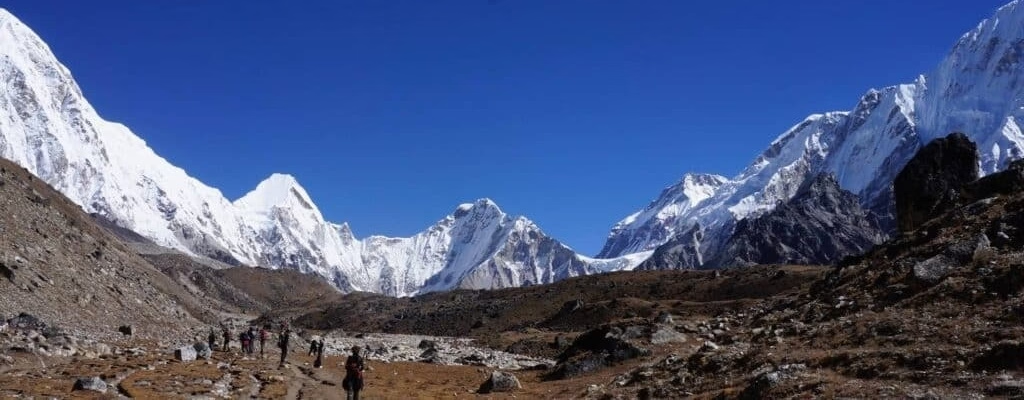
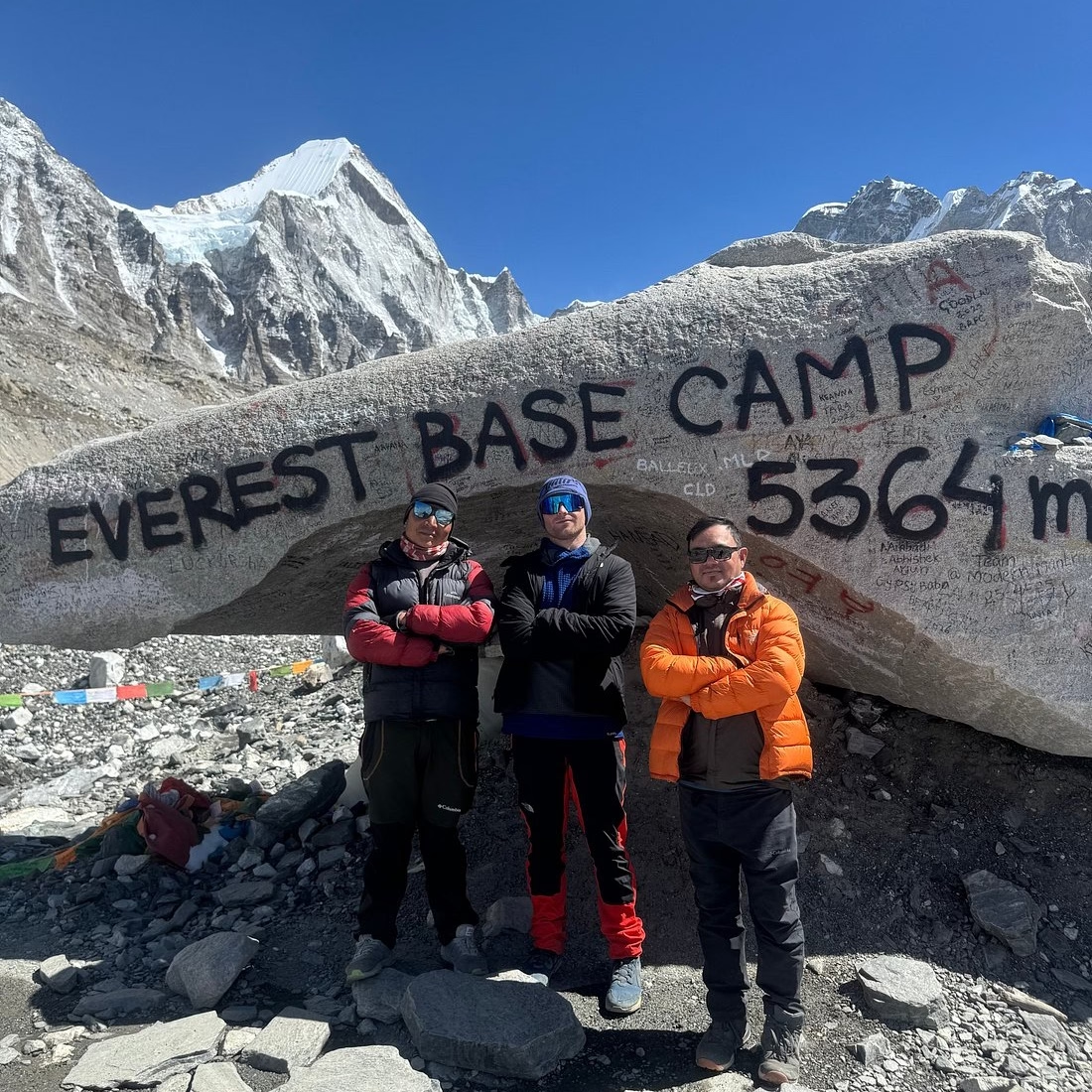
The best time to visit Everest Base Camp (EBC) is October to early November and late March to May, when weather conditions, mountain visibility, and trail accessibility are generally most favourable for trekking in Nepal’s Khumbu region. Located at 5,364 metres beneath Mount Everest, Everest Base Camp is the destination of a high-altitude Himalayan trek that typically takes 12–14 days from Lukla.
Autumn offers clear skies, stable weather, and panoramic views of Everest, Lhotse, Nuptse, and Ama Dablam, while spring brings warmer daytime temperatures, blooming rhododendron forests, and the annual Everest expedition season. Late November and early December provide quieter trails, whereas winter and monsoon conditions introduce greater challenges through extreme cold, snowfall, rainfall, poor visibility, and flight disruptions.
Choosing the right season for the Everest Base Camp trek depends on more than weather alone. Monthly temperatures, daylight hours, rainfall, snow and ice, trail congestion, teahouse availability, and Lukla flight reliability all influence trekking comfort, safety, and cost. Acclimatization, altitude sickness prevention, seasonal equipment, trekking permits, and additional days for weather delays also shape a successful itinerary.
This comprehensive guide compares all four trekking seasons and month-by-month conditions, helping beginners, experienced trekkers, and photographers select suitable travel dates, prepare for the challenges of high-altitude trekking, and plan a realistic Everest Base Camp adventure.
What Are the Best Months to Trek to Everest Base Camp?
The best months to trek to Everest Base Camp are October, November, April, March, and May, in that order. October pairs the clearest views with the most stable weather. April adds warmth and flowers. November trades warmth for quieter trails. March loses points for cold, and May loses points for haze and afternoon cloud.
The following table rates every month on its main strength and its main drawback, using conditions typical for the Khumbu trail.
Month | Rating | Main strength | Main drawback |
March | Very good | Dry air, clearing skies, light crowds | Snow above Dingboche, nights near −14°C at Gorak Shep |
April | Excellent | Warm days, rhododendron bloom, lively base camp | Heavy traffic, afternoon cloud |
May | Good | Warmest trekking month, Everest summit season | Haze, afternoon storms |
June–August | Poor | Green valleys, empty lodges | Rain, hidden peaks, flight cancellations, landslides |
September | Fair | Fading monsoon, lush trails | Early showers, uneven flights |
October | Excellent | Clearest views, stable weather | Largest crowds, full lodges |
November | Very good | Clear skies, thinner crowds | Cold nights, short days |
December | Good | Quiet trails, crisp light | Nights near −18°C |
January–February | Fair (expert only) | Solitude, frequent flights | Extreme cold, snow, closed lodges |
Two stable windows dominate the table: post-monsoon (late September–November) and pre-monsoon (March–May). Four rules of thumb turn the table into a decision:
Choose mid-October to early November for the clearest views and the most reliable weather.
Choose April for flowers, warmth, and the base camp expedition scene.
Choose late November or early December for quiet trails under stable skies.
Choose March or late May for lighter crowds inside the spring window.
Why Is Spring One of the Best Seasons for Everest Base Camp?
Spring is one of the best seasons for Everest Base Camp because daytime temperatures climb through March, April, and May, rhododendron forests bloom below Tengboche, and expedition tents fill base camp from early April to late May. Gorak Shep (5,164 m), the last village before base camp, reaches typical daytime highs of 2°C in April and 5°C in May.
April sets the standard. According to the Sagarmatha National Park office in Namche, 694 trekkers entered the park on a single day, 21 April 2025. The bloom of lali gurans (rhododendron), Nepal's national flower, colours the forest between Phakding and Namche from late March to late April and peaks between 2,500 and 3,500 m.
May is the warmest month and the hazier one. Pre-monsoon dust and smoke from the Indo-Gangetic Plain soften long-distance views, and afternoon cloud builds earlier each week.
The most common mistake is expecting a quiet base camp. In spring, EBC works as a camp for hundreds of climbers and support staff, and the Everest summit window opens in mid-to-late May. Autumn base camp sits almost empty, which suits photographers who want the glacier without tents.
Why Is Autumn Ideal for the Everest Base Camp Trek?
Autumn is ideal for the Everest Base Camp trek because the monsoon has washed dust from the air, high-pressure systems hold the weather steady, and visibility peaks between mid-October and mid-November. Lukla flights run on their best schedule, and Tengboche monastery hosts the Mani Rimdu festival in October or November, depending on the lunar calendar.
Popularity is the price. The Sagarmatha National Park office recorded 8,902 arrivals between mid-September and mid-October 2024, about 1,000 a day at the peak. In early October 2026, Kantipur reported Manthali–Lukla flights rising as the season opened, with 9 flights from Manthali on a single Saturday.
Timing inside autumn matters. The first days of October still carry post-monsoon moisture, and mid-October onward delivers the sharpest air. Dashain, Nepal's largest festival, runs through the second half of October 2026, and Tihar follows in early November. Domestic buses and flights fill during both.
Autumn carries real risk too. In October 2014, remnants of Cyclone Hudhud triggered a blizzard on the Annapurna Circuit that killed at least 40 people. Bay of Bengal storms reach the Himalaya in October, which is why every itinerary, even in the best season, needs 2 buffer days.
Can You Trek to Everest Base Camp in Winter?
You can trek to Everest Base Camp in winter (December–February), but the trek demands 4-season gear, 2 to 3 extra days, and comfort with night temperatures near −20°C at Gorak Shep. Skies stay clear, flights run often, and trails stay nearly empty.
Early December is the best slice of winter. It keeps late-autumn clarity with a fraction of the crowds. January is the coldest month, with typical Gorak Shep highs near −8°C.
Most lodges above Dingboche close in January and February, leaving only 1 to 2 caretaker teahouses open at Dughla, Lobuche, and Gorak Shep, so have your guide confirm every night's bed before departure. Bedrooms have no heating, and the dining-room stove burns only from late afternoon to about 9 PM. Water bottles freeze overnight, so store them upside down inside an insulated sleeve; the ice then forms at the base, not the cap.
In winter (December to February), Lukla flights operate directly from Kathmandu rather than Manthali, though thick morning valley fog at Kathmandu Airport frequently delays early departures in December and January. Snow closes high passes such as Cho La, while the EBC route itself stays passable. Winter suits experienced cold-weather trekkers. First-timers choose the first 2 weeks of December and no later.
Is the Monsoon Season Suitable for the Everest Base Camp Trek?
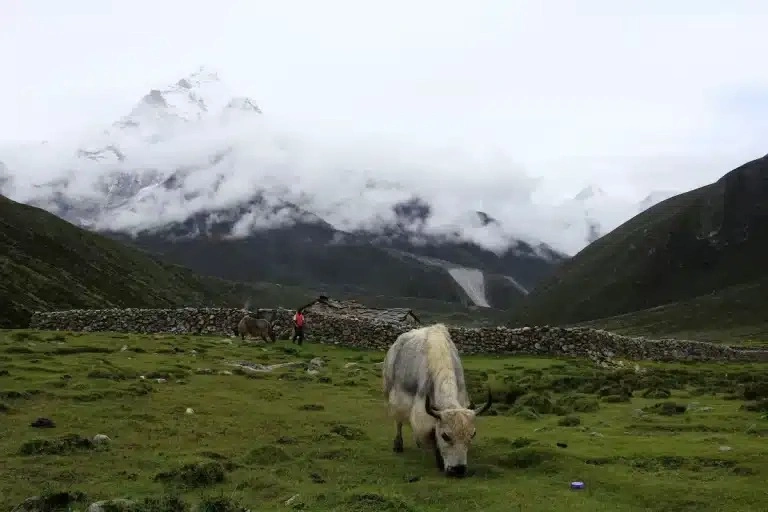
The monsoon (June to mid-September) is not suitable for most Everest Base Camp trekkers because heavy rain, cloud-covered peaks, landslide-prone access roads, and frequent Lukla cancellations outweigh the benefit of empty trails. According to Nepal's Department of Hydrology and Meteorology, the monsoon delivers about 80% of the country's annual rainfall.
Park data shows the effect. The Sagarmatha National Park office counted only 125 trekkers between mid-July and mid-August 2024, against 1,331 in the following month and 8,902 in the month after that.
Monsoon offers real upsides: lush forest, discounted lodge rates, and silent villages. The costs are slippery stone steps, swollen streams, grounded Lukla flights, and landslide-blocked roads along the Kathmandu–Ramechhap highway and the overland Jeep route through Salleri and Thamdanda. Mist hides Everest on most days, and the high basin around EBC receives cloud and snow in place of rain.
Trekkers whose only free window is June to August choose rain-shadow regions such as Upper Mustang or Upper Dolpo. Both receive far less monsoon rain than Khumbu.
How Does the Weather Change at Everest Base Camp Throughout the Year?
Weather at Everest Base Camp moves through 4 seasons: pre-monsoon (March–May), monsoon (June–mid-September), post-monsoon (late September–November), and winter (December–February). Altitude adds a second layer. Air cools about 6.5°C per 1,000 m climbed, so Gorak Shep runs roughly 15°C colder than Lukla on the same day.
Each day follows the same rhythm in every season. Mornings start clear and still. Valley cloud climbs the slopes by 10–11 AM, wind builds through the afternoon, and temperatures collapse once the sun leaves the valley. That rhythm explains why trekkers walk from 6:30–7:00 AM and reach their lodge by 2:00–3:00 PM.
In real-world use, the forecast for Namche (3,440 m) misleads trekkers heading to Lobuche. Check a mountain-specific forecast, such as Meteoblue, at 5,000 m rather than at village level.
What Are the Average Temperatures at Everest Base Camp by Month?
At Gorak Shep, the village beside base camp, typical highs range from −8°C in January to 7°C in July, and typical night lows range from −20°C in January to −1°C in July. Base camp itself, 200 m higher, runs 1–2°C colder.
The table below lists typical daytime highs at 3 stops and typical night lows at Gorak Shep, in degrees Celsius. Values combine published operator trail averages with the standard 6.5°C-per-1,000-m lapse rate.
Month | Lukla high (2,860 m) | Namche high (3,440 m) | Gorak Shep high (5,164 m) | Gorak Shep night low |
January | 8 | 3 | −8 | −20 |
February | 10 | 5 | −6 | −18 |
March | 12 | 8 | −2 | −14 |
April | 15 | 11 | 2 | −10 |
May | 18 | 14 | 5 | −6 |
June | 20 | 16 | 6 | −3 |
July | 21 | 17 | 7 | −1 |
August | 21 | 17 | 7 | −1 |
September | 19 | 15 | 5 | −5 |
October | 16 | 12 | 3 | −10 |
November | 12 | 8 | −2 | −14 |
December | 9 | 4 | −6 | −18 |
Wind chill pushes felt temperatures 5–10°C below these figures on exposed ridges above Lobuche. Midday sun in the dry seasons feels warm, so trekkers shed layers at Namche and re-layer within 30 minutes of stopping.
How Cold Does It Get at Everest Base Camp at Night?
At night, Gorak Shep drops to −10°C to −14°C in October and November, −14°C in March, and −18°C to −20°C from December to February. Namche stays between 2°C and −5°C in spring and autumn, and wind chill pushes the felt temperature at higher stops lower still.
Teahouse bedrooms (simple lodge rooms with plywood walls and a bed) have no heating. Room temperature tracks the outside air within a few degrees.
Four habits control night comfort:
Pick a sleeping bag with a comfort rating of −15°C for autumn and March–April (−10°C in May), and −20°C for winter.
Fill a leak-proof 1-litre bottle with boiled water and place it at your feet.
Store tomorrow's batteries, water filter, and socks inside the bag.
Keep a dedicated wide-mouth pee bottle in your bedroom so you avoid a freezing 3 AM trip down the unheated corridor to a shared toilet at Lobuche or Gorak Shep.
Trekkers overlook the last item most often, and it matters most at Lobuche and Gorak Shep.
How Much Rainfall and Snowfall Can You Expect During the EBC Trek?
Rain concentrates between June and September, while snow can fall above 4,500 m in any month. October, November, and December are the driest months on the trail, and January to March bring the heaviest winter snow.
Winter storms arrive as western disturbances, moisture-bearing fronts that cross the Himalaya from the Mediterranean and Central Asia. April and May bring convective afternoon storms, short thunderstorms that build over the slopes after midday. During the monsoon, base camp receives snow and cloud while Lukla and Phakding receive rain.
After a heavy snowfall, flights usually resume within 1 to 2 days. Shaded trail sections above Lobuche stay icy for 2 to 3 days. Build that lag into your schedule rather than into your hopes.
How Do Daylight Hours Affect the Everest Base Camp Trek?
Khumbu sits near 28°N, so daylight runs from about 10 hours 30 minutes in late December to about 13 hours 50 minutes in late June. Sunrise arrives near 5:45 AM in mid-October and near 6:45 AM in mid-December.
Mountain ridges shorten the usable day. Direct sun leaves the Dingboche and Lobuche valleys about an hour before official sunset, and the temperature drops within minutes.
Planning follows from those numbers. Start walking by 7:00 AM and reach the lodge by 2:30 PM from October to February. Leave Gorak Shep for Kala Patthar at 4:00–4:30 AM to stand on the summit at first light. Carry a headlamp with fresh batteries, because the descent from a sunset visit happens in the dark.
Which Month Is Best for Clear Mountain Views on the Everest Base Camp Trek?
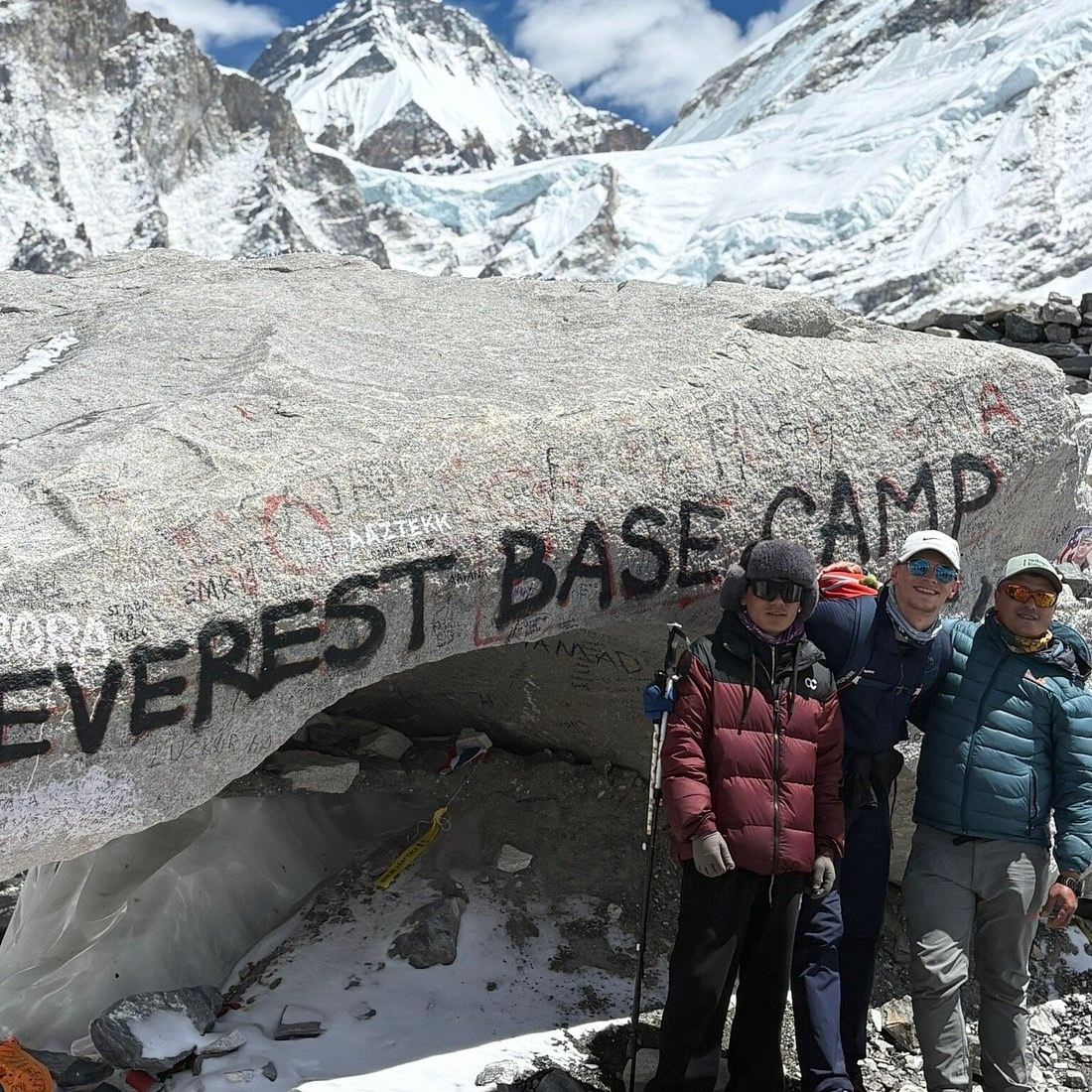
October is the best month for clear mountain views on the Everest Base Camp trek, followed by November and April. After the monsoon, the air holds the least dust and moisture, and Ama Dablam, Lhotse, Nuptse, Thamserku, and Kangtega stand sharp from sunrise until about 10 AM.
Time of day matters as much as month. In every season, mornings deliver the best views and afternoons deliver cloud. A trekker who walks late loses the view, even in October.
When Can You See the Best Views of Mount Everest?
You see the best views of Mount Everest at sunrise from Kala Patthar (5,545 m) on clear mornings between mid-October and mid-November, and in April. Base camp itself offers no view of the summit, because Nuptse blocks the line of sight.
The first glimpse comes much earlier. Everest appears from the Everest View Hotel above Namche (3,880 m) and again from Tengboche (3,867 m), where it rises behind the Nuptse–Lhotse wall.
Everest stands at 8,848.86 m, according to the 2020 joint Nepal–China survey, yet it looks shorter than Lhotse and Nuptse from Gorak Shep. Perspective explains the effect: the nearer peaks fill the frame. In winter, strong winds strip snow from the summit pyramid, and Everest turns dark against the sky.
Which Season Offers the Clearest Skies and Best Visibility on Everest Base Camp?
Autumn offers the clearest skies and best visibility on the Everest Base Camp trail. Post-monsoon air carries the least haze, and visibility often exceeds 100 km on mornings in late October and November.
The 4 seasons rank as follows:
Autumn: the sharpest, most stable air of the year.
Winter: crisp skies with strong winds and frozen hands.
Spring: good mornings, with pre-monsoon haze that ICIMOD research has documented over the Himalaya.
Monsoon: the poorest visibility, with cloud covering the peaks for days.
The ranking shifts by altitude. Haze concentrates below 4,000 m, so Kala Patthar often stays clear while Namche sits in a milky layer.
How Does Weather Affect Photography Along the Everest Base Camp Trail?
Weather affects photography through 4 variables: light quality, haze, cloud timing, and cold. Autumn gives clean light, spring gives colour and softer distance, winter gives contrast, and monsoon gives drama with few clear windows.
Specific advice follows from those variables. Shoot Everest from Kala Patthar at sunrise and the Khumbu Glacier at sunset. Shoot Ama Dablam from Dingboche or Pangboche before 9 AM. Photograph Tengboche monastery with Ama Dablam behind it, and use a polarising filter in October to deepen the sky.
Cold drains lithium-ion batteries fast, so carry spares inside your jacket. Condensation fogs lenses when a cold camera enters a heated dining room. Leave the camera in its bag for 20 minutes to warm gradually.
When Is the Best Time to Avoid Crowds on the Everest Base Camp Trek?
The best time to avoid crowds is late November, early December, and early-to-mid March, which pair stable weather with far lighter trail traffic. June to August is quieter still, but the weather costs outweigh the solitude for most trekkers.
Crowds concentrate on 3 bottlenecks: the climb to Namche, the stretch between Dingboche and Lobuche, and the Gorak Shep lodges. Season decides how severe each one becomes.
Which Months Are the Busiest on the Everest Base Camp Trail?
The busiest months are October and April, with May and early November close behind. According to the Sagarmatha National Park office, peak autumn days average about 1,000 entries, and Baisakh (mid-April to mid-May) topped monthly arrivals in the 2023/24 fiscal year, a year with 55,979 visitors in its first 11 months.
Flights show the same peak.
Congestion creates its own hazards. Yak trains share the narrow trail and the suspension bridges, so step to the uphill side of the path whenever a train approaches. Yaks push trekkers toward the drop, never the reverse.
When Can You Enjoy a Quieter Everest Base Camp Experience?
You enjoy a quieter Everest Base Camp experience in late November, early December, early-to-mid March, and late May. January and February are quieter again, with the weather penalties described above.
Route choices cut crowds in any season. Sleep at Pangboche or Phortse instead of the standard stops, leave Gorak Shep by 6:30–7:00 AM so you reach base camp ahead of the groups arriving from Lobuche, and walk the hours between 6:00 and 8:00 AM, when trails run emptiest.
The Gokyo Lakes valley shares the first 3 days with the EBC route and then branches into a far quieter trail.
How Does Trekking Season Affect Accommodation Availability on Everest Base Camp Trek?
Trekking season controls accommodation availability: in October and April, lodges at Lobuche and Gorak Shep fill by early afternoon, while in winter and monsoon, plenty of beds remain but some lodges close. Booking ahead through a trekking operator secures beds in peak weeks.
Teahouses take no online reservations. Operators confirm rooms by phone or radio, and porters carry the message ahead. Luxury lodge chains such as Yeti Mountain Home book out months in advance for autumn.
Room rates stay low in every season, because lodges earn from meals and expect you to eat dinner and breakfast on site. Arrive before 2:00 PM in peak weeks. Late arrivals sleep on dining-room benches, and the lodge heater is the only warmth.
When Is the Best Time to Trek to Everest Base Camp for Beginners?
For beginners, the best time to trek to Everest Base Camp is mid-October to mid-November, or April. These windows pair stable weather with the strongest support network: the busiest trail, the seasonal Himalayan Rescue Association (HRA) aid post at Pheriche, and the most guides and porters working the route.
First-timers also gain from company. A crowded trail in a peak month means more fellow trekkers, more lodge staff, and faster help when conditions turn.
Which Season Offers the Most Comfortable EBC Trekking Conditions?
Spring and autumn offer the most comfortable EBC trekking conditions. April delivers the warmest nights at lower and mid-level villages, and mid-October to early November delivers the steadiest, driest weather.
Typical Namche highs reach 11°C in April and 12°C in October, with Gorak Shep nights near −10°C in both months. Phakding (2,610 m) feels like t-shirt weather by midday in spring, while autumn mornings start at 4–6°C.
Choose April for warmth and colour, or October for certainty. Both beat winter and monsoon by a wide margin.
How Do Weather and Trail Conditions Affect Everest Base Camp Trekking Difficulty?
Weather and trail conditions change trekking difficulty by adding cold, mud, snow, or wind to the same route. The standard route stays moderate in spring and autumn, and turns hard in winter and monsoon.
The table below summarises how each season changes the trail underfoot and the effort required.
Season | Trail condition | Difficulty |
Spring | Dry, firm, snow above Dingboche in March | Moderate |
Autumn | Dry, firm, cold mornings | Moderate |
Winter | Icy shaded sections, deep cold, short days | Hard |
Monsoon | Wet stone steps, mud, swollen streams | Hard |
Daily walking runs 4 to 7 hours on most days. The Lobuche–Gorak Shep–EBC day is the longest, at 7 to 9 hours, and it falls where the air holds about half the oxygen of sea level.
When Should Beginners Consider Acclimatization and Rest Days During Everest Base Camp Trek?
Beginners schedule acclimatization days at Namche Bazaar (3,440 m) and Dingboche (4,410 m), then add a third pause at Dughla (4,620 m) or a buffer day. The Wilderness Medical Society advises that above 3,000 m, sleeping elevation rises by no more than 500 m per day, with a rest day every 3 to 4 days.
The standard itinerary nearly meets that guideline. The sleeping profile runs: Namche 3,440 m, Tengboche 3,867 m (+427 m), Dingboche 4,410 m (+543 m), Lobuche 4,940 m (+530 m), and Gorak Shep 5,164 m (+224 m). Two jumps slightly exceed 500 m.
Inserting a night at Dughla splits the Dingboche–Lobuche leg into +210 m and +320 m. Use rest days for "climb high, sleep low" walks, such as Nangkartshang Peak (5,083 m) from Dingboche, rather than lying in bed.
What Are the Main Risks of Trekking to Everest Base Camp in Different Seasons?
The main risks are altitude sickness in all seasons, snow and ice in winter and early spring, cold injury in winter, slips and landslides in monsoon, and Lukla flight delays in every season. No month removes altitude risk, and no month removes weather risk. Season only changes which risk leads.
A trekker who identifies the leading risk for the chosen month packs, schedules, and insures for it. The next 4 sections cover the risks in order of how often they disrupt a trek.
How Does Altitude Sickness Risk Affect Everest Base Camp Trekking Plans?
Altitude sickness risk shapes every Everest Base Camp plan, because acute mountain sickness (AMS) strikes roughly half of all trekkers above 4,000 m when ascent is fast. A landmark 1976 Lancet study by Peter Hackett and colleagues at Pheriche recorded AMS in 52.5% of trekkers overall, and in 68% of those who flew directly to Lukla rather than walking in from lower elevations.
Under the revised Lake Louise Score definition, AMS is diagnosed as a headache at altitude plus at least 1 of 3 other symptoms: gastrointestinal upset (nausea, vomiting, or loss of appetite), fatigue or weakness, or dizziness and light-headedness. Mild AMS calls for a rest day and no further ascent. Worsening AMS calls for descent.
Three warning signs demand immediate descent: loss of balance, breathlessness at rest, and confusion. These point to cerebral or pulmonary oedema, and both kill quickly.
Season changes the response. Storms slow descent and ground helicopters, so winter and monsoon trekkers carry a larger safety margin. The HRA staffs its Pheriche aid post (4,371 m) in the 2 peak seasons and gives altitude talks to trekkers. Discuss acetazolamide prophylaxis with your doctor before you leave; the Wilderness Medical Society lists 125 mg twice daily as the standard dose.
When Can Snow and Ice Make the Everest Trail More Challenging?
Snow and ice make the trail harder from December to March, after late-April storms, and above 4,500 m in any month following fresh snowfall. The trouble spots are the shaded stretches above Dingboche, the moraine path to Lobuche, the glacier-edge track from Gorak Shep to base camp, and the upper slope of Kala Patthar.
Microspikes (light traction devices that strap over boots) handle packed ice on all four. Trekking poles add balance on moraine. In winter, start after 8:00 AM, when sun softens the ice on east-facing sections.
Stone steps near Namche and Phakding glaze over in December and January, and falls there cause more injuries than falls on the high passes. Slow your pace on shaded steps.
How Can Weather Delays Affect Flights to Lukla?
Weather delays flights to Lukla because Tenzing–Hillary Airport has a runway about 527 m long with a steep slope, and pilots fly under visual flight rules, so cloud, fog, or crosswind cancels departures. A cancelled flight pushes the whole trek back by a day or more.
Because Kathmandu Airport restricts daytime STOL departures during peak months, most spring and autumn flights leave from Manthali (Ramechhap), roughly 140 km southeast of Kathmandu via a 4-to-6-hour overnight drive along the BP Highway, though limited early-morning direct flights and helicopter shuttles remain available from Kathmandu.
Under 2026 airline tariffs for foreign nationals, Manthali–Lukla flights cost roughly US$360–$380 round trip (plus US$30–$50 each way for the road transfer), while direct Kathmandu–Lukla flights cost about US$430–$460 round trip. When fixed-wing flights are grounded, shared helicopter seats serve as a fallback at roughly US$350–$450 per person from Manthali or US$500–$650 per person from Kathmandu.
Protect yourself with 3 habits: schedule 2 buffer days at the end, book your international flight 2 to 3 days after the planned return, and buy insurance that covers helicopter evacuation to 6,000 m.
What Gear Is Essential for Different Everest Base Camp Trekking Seasons?
Essential gear shares a core of 5 items in every season: broken-in waterproof boots, a down jacket, a waterproof shell, a sleeping bag, and sun protection. Season then adds specialist items.
Spring and autumn: microspikes for March and early April, insulated gloves, and a −15°C sleeping bag (−10°C suffices in May).
Winter: expedition-weight down parka, insulated mittens, gaiters, and a −20°C sleeping bag.
Monsoon: rain jacket, poncho, pack cover, dry bags, and gaiters.
Cotton is the most common mistake we see. It stays wet and chills you, so choose merino or synthetic base layers. Buying new boots a week before the trek is the second. Most Lukla flights cap luggage at 15 kg (typically 10 kg duffel plus 5 kg daypack), so rent bulky items such as sleeping bags and down parkas in Thamel.
How Should You Plan Your Everest Base Camp Trek Around the Best Season?
Plan around the best season by fixing a 2-to-3-week target window, booking 4 to 6 months early for October and April, and budgeting 14 days. Work backward from that window: lock flights and lodges first, then start 8–12 weeks of hill training, then buy insurance and gear.
The 3 sections below cover booking lead time, packing by season, and trek length.
How Far in Advance Should You Book an Everest Base Camp Trek?
Book 4 to 6 months ahead for October and April departures, and 2 to 3 months ahead for other months. Lukla and Manthali seats are finite, Lobuche and Gorak Shep have few beds, and licensed guides commit early to peak dates.
Today's date makes the spring 2027 window live: April 2027 departures open for booking from October to December 2026.
For foreign nationals, 2026 permits cost NPR 3,000 for the Sagarmatha National Park entry permit (NPR 1,500 for SAARC nationals) and NPR 3,000 for the Khumbu Pasang Lhamu Rural Municipality entry permit, roughly US$45–50 combined. You or your operator can obtain the national park permit at the Nepal Tourism Board office in Kathmandu or at the Monjo entrance gate, while the rural municipality permit is issued only upon arrival at the Lukla checkpost (or Monjo for overland trekkers).
In the Everest region, the Khumbu Pasang Lhamu Rural Municipality permit replaces the national TIMS card, and local authorities still permit independent trekking as of 2026, though hiring a licensed guide remains strongly recommended for altitude safety, flight rebooking, and securing peak-season lodge beds.
What Should You Pack for the Everest Base Camp Trek by Season?
Packing changes by season mainly in 6 areas: sleeping bag rating, insulation, traction, rain protection, hand protection, and sun protection. The table below sets each area side by side for the 4 seasons.
Item | Spring (Mar–May) | Autumn (Oct–Nov) | Winter (Dec–Feb) | Monsoon (Jun–Sep) |
Sleeping bag comfort rating | −15°C (March–April) to −10°C (May) | −15°C | −20°C | −5°C |
Insulation | Light down jacket plus fleece | Warm down jacket (600–800 fill) | Expedition down parka | Light down jacket |
Traction | Microspikes (March–early April) | Optional | Microspikes plus gaiters | Waterproof boots plus gaiters |
Rain protection | Waterproof shell | Waterproof shell | Hard-shell jacket and trousers | Shell, poncho, pack cover, dry bags |
Hand protection | Liner plus gloves | Liner plus insulated gloves | Liner plus mittens | Light gloves |
Sun protection | SPF 50+, category 3–4 sunglasses | SPF 50+, category 3–4 sunglasses | SPF 50+, category 4 sunglasses | SPF 50+, category 3 sunglasses |
Ultraviolet radiation rises about 10% per 1,000 m of altitude, so sun protection stays on the list in every season, snow or no snow. Add a headlamp with spare batteries, water purification tablets, trekking poles, and a personal first-aid kit to every season's bag.
How Many Days Should You Allow for the Everest Base Camp Trek?
Allow 12 days at minimum, 14 days for comfort, and 16 days in winter or monsoon. The 12-day standard runs: Lukla to Phakding, Namche, Namche rest day, Tengboche, Dingboche, Dingboche rest day, Lobuche, Gorak Shep with base camp, Kala Patthar with Pheriche, Namche, Lukla, and Kathmandu.
Beginners add a Dughla stop for gentler altitude gain, and every trekker adds 1 to 2 buffer days for weather. A 14-day plan absorbs one cancelled flight without touching your international departure.
Winter and monsoon plans add 2 more days, because flights cancel more often and snow or rain slows the trail.
How Can Heaven Himalaya Help You Choose the Best Time for Your Everest Base Camp Trek?
Heaven Himalaya helps you choose the best time by matching 5 inputs to the season: your fitness, cold tolerance, budget, photography goals, and available leave. A first-time trekker with 2 weeks free in late October receives a different plan from a photographer who wants empty trails in early December.
Plan with Heaven Himalaya. Share your preferred month and your trekking experience, and the team will recommend a season-matched window with realistic alternatives. Contact Heaven Himalaya to compare dates before you book flights.
Can Heaven Himalaya Help You Plan an Everest Base Camp Trek in the Ideal Season?
Yes, Heaven Himalaya plans Everest Base Camp treks for the ideal season by building itineraries around acclimatization days and flight buffers, then handling permits, guides, and lodge bookings. Each plan covers the details this guide describes.
Itinerary design with rest days at Namche and Dingboche and 1 to 2 buffer days
Licensed guide and porter assignment
Sagarmatha National Park and Khumbu Pasang Lhamu permits
Lukla flights from Kathmandu or Manthali
Lodge reservations at Lobuche and Gorak Shep in peak weeks
A season-specific packing list
Ready to pick your dates? Send Heaven Himalaya your target month, and receive an itinerary and quote built for that season.
What Are the Key Takeaways About the Best Time to Visit Everest Base Camp?
The best time to visit Everest Base Camp is October to early November and late March to May. The points below summarise the decision.
Autumn (mid-October to mid-November): clearest views, steadiest weather, biggest crowds.
April: warm days, rhododendron bloom, a busy base camp.
November and early December: quiet trails, clear skies, cold nights near −14°C to −18°C.
Winter (January–February): extreme cold and mostly closed high-altitude lodges, for experienced trekkers only.
Monsoon (June–August): rain, hidden peaks, and flight cancellations; 125 trekkers entered the park in one mid-July to mid-August 2024 stretch.
Sunrise at Kala Patthar (5,545 m): the only reliable Everest summit view near base camp.
Altitude: a 500 m sleeping-elevation cap above 3,000 m, with rest days at Namche and Dingboche.
Planning: 14 days, 2 buffer days, and bookings 4 to 6 months early for October and April.
Pick your season by priority: views, warmth, or solitude. Then book early, add buffer days, and respect the altitude. The best time to visit Everest Base Camp is the window that fits your fitness and your calendar, inside the October–November and March–May seasons.