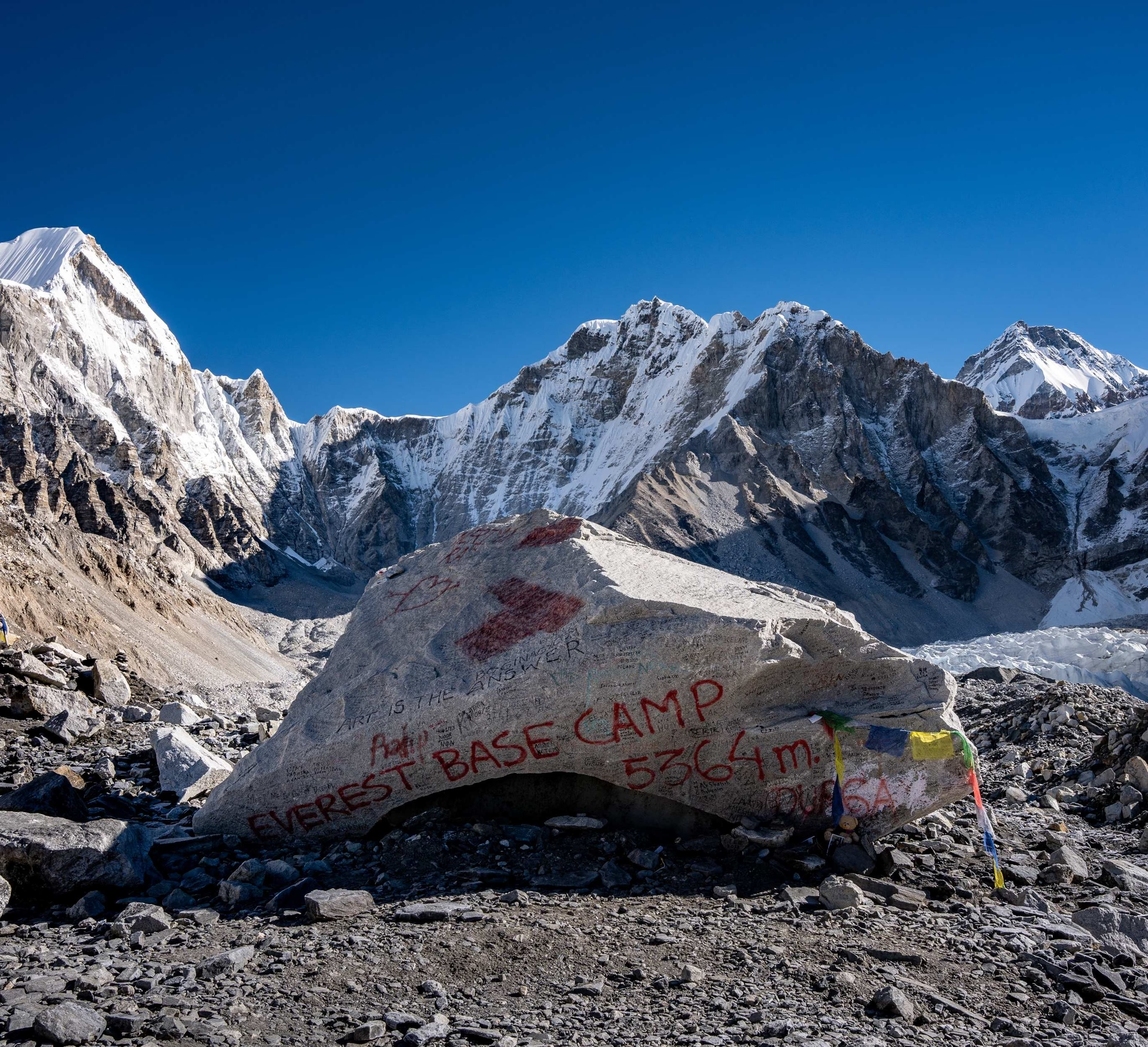
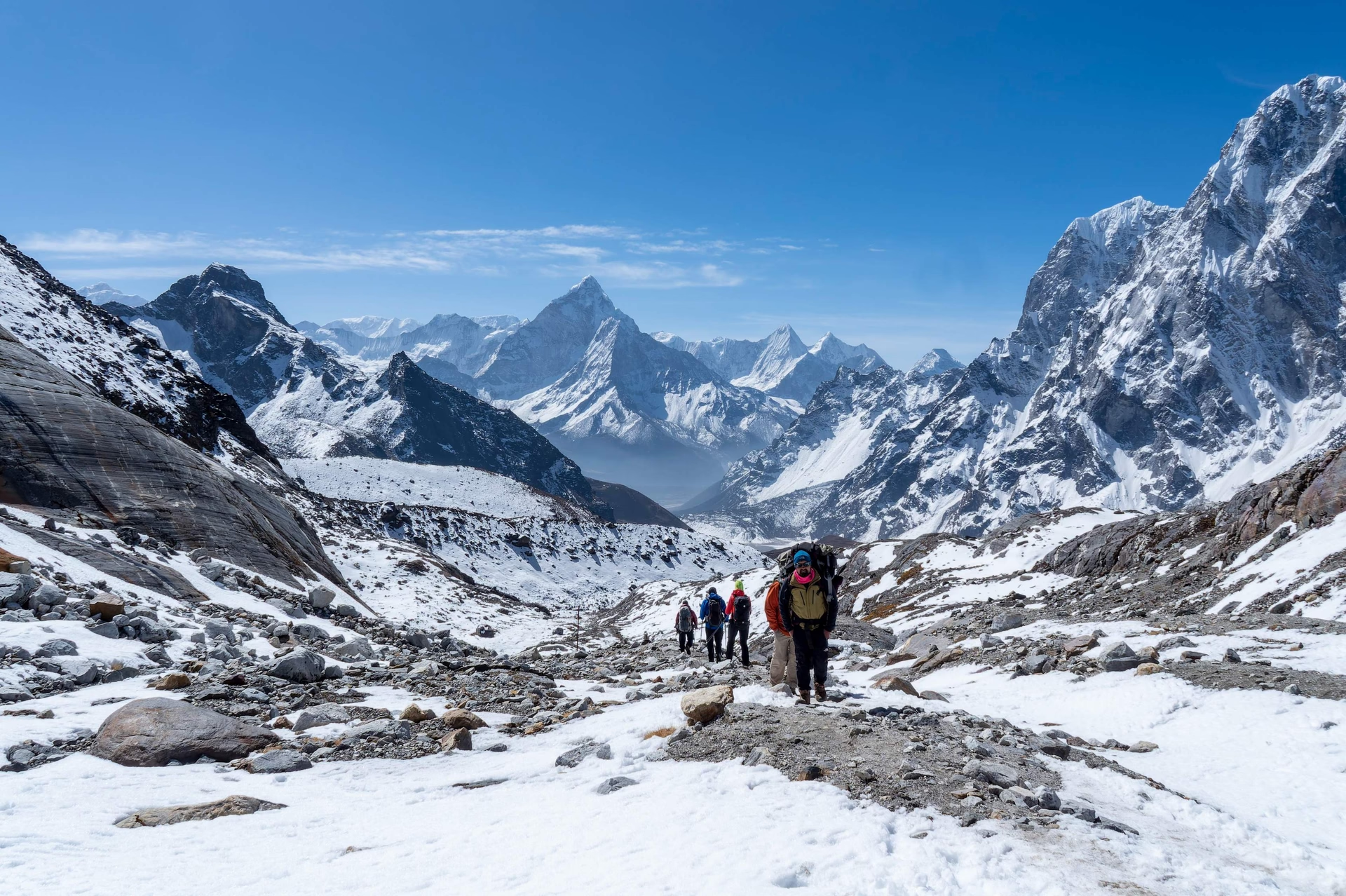
Experience the beauty of the Everest region and reach Everest Base Camp on a time-efficient 11-day trek.
DestinationNepal
Duration11 days
Trip DifficultyModerate
ActivitiesTrek
Max. Elevation5545m.
Group Size2-15
VehicleCar & Flight
AccommodationHotel & Guesthouse
MealsB.L.D
Starting PointKathmandu
Ending PointKathmandu
Nowadays, the Kathmandu to Lukla flight is often diverted to the Ramechhap/Manthali airport, especially during the peak months of March, April, May, October, and November.
Thus, if you're planning a trip during these months, we will have to drive 4-5 hours from Kathmandu to the Manthali Airport in the Ramechhap district to board the flight to Lukla.During the remaining months (including January, February, June, July, August, September, and December) you will have a normal flight from Kathmandu to Lukla.
Please be aware that Lukla flight decisions solely depend on the airlines and the Civil Aviation Authority in Nepal. Further, weather complications, natural calamities, and airport traffic congestion are some reasons for the delay or cancellation of flights.
Thus, in such cases, you have two options: either take a helicopter ride from Kathmandu or increase the itinerary time frame. The emergency fund we mentioned above comes in handy in such situations. We do not cover the helicopter ride or extra days. We hope the weather is good every day. But if the situation persists and you have no option for either a helicopter ride or extra days, then our team will work with you to arrange alternate plans.
Overview of the Everest Base Camp Short Hike
The 11-day Everest Base Camp short hike is a quick form of the standard Mount Everest trek. This itinerary is for people with limited time who want to finish the EBC trek safely in under two weeks without using a helicopter.
Our short Everest base camp hike is budget-friendly and perfect for those with limited time. The 11-day itinerary doesn’t use the expensive helicopter and also has an acclimatization day in between to help you acclimatize.
Everest Base Camp’s weather and temperature vary depending on the seasons. The best time for an Everest base camp hike is during the autumn and spring. These seasons have the ideal weather for outdoor walks. The temperature is pleasant, hiking trails are dry, and visibility is outstanding during this period.
During Spring (March to May), Everest Base Camp has mild daytime temperatures (around 10°C) and freezing temperatures at night. The skies are clear, with stunning views of the surrounding mountains.
However, the weather can still become more unpredictable. In early spring, there might be snowfall, and at the end, there are chances of rainstorms.
In Autumn, from late September to November, the temperature at EBC is similar to spring. This season has stable weather, clear skies, and dry trail conditions. As this is peak trekking season in Nepal, trails and accommodations can be crowded.
The summer months from June to August are the monsoon months in Nepal. Though it doesn’t rain in EBC, the lower trekking regions receive heavy rain. The trails are wet, muddy, and slippery. Landslides add extra risks during the monsoon trek.
Similarly, the winter months from December to February are very cold at EBC. The weather is rough, and the temperature is below zero degrees. The trail is full of snow, days are shorter, and mornings and nights remain frozen.
Thus, for these reasons, winter and summer are the least chosen seasons for our short Everest base camp hikes.
Quick Everest Base Camp Hiking Trail Distance
The average distance of the Everest Base Camp short hike is 130 km, or 65 km each way. This is the trail length from Lukla to EBC and back. Usually, you will walk for approximately 5 to 6 hours, covering 3 to 8 km per day.
Lukla Airport is the both starting and ending point of this short hike.
How difficult is the short 11-day EBC Hike?
In terms of our trek grade, the short Everest Base Camp hike is moderately difficult. You will walk uphill and downhill for days through the rocky path, which might be quite challenging. But we do have a rest day in our 11-day package, so this should help you acclimatize and also take a rest in between.
The EBC Short Trek is a high-altitude hike. Thus, the most challenging aspect of this tour is the altitude itself. Acute mountain sickness and other altitude-related illnesses are quite common. But to avoid this, our guides will brief you about it and explain how we cope with changing altitudes. Also during the tour, we go on slower walks, climbing only a few hundred meters each day.
Staying hydrated and acclimatizing well are other important things you can do to stay fit and not get caught up in altitude sickness.
The next challenging aspect of the short trek is the length of the trail. We walk for days and between 3 and 8 km each time. Hiking continuously for 10 days can be tough. But, of course, this will not be a normal walk. The trail is mostly off-beat. Sometimes you have to hike on rocky and icy terrain.
Before embarking on this journey, we suggest you go for short uphill hikes with a backpack. Uphill hiking helps you build stamina and readiness for a challenging adventure. Begin with a training plan at least six weeks in advance. Engage yourself in fitness and cardio training, such as cycling, swimming, running, and jogging. Similarly, meditation, yoga, and breathing exercises will help you remain focused and mentally prepare for the trek.
Despite the few challenges, the short Everest Base Camp hike doesn’t require prior trekking expertise. But being in good shape and physically fit is a win.
Typical Day During our short hike to Everest Base Camp
On the Everest base camp hike, the trek days vary from 10 to 14 days, depending on the itinerary. Our package takes 11 days.
Hiking hours fluctuate from 3 hours to 9 hours per day, depending on the terrain and destinations you have to cover.
However, most of the days during the short EBC hike follow the same pattern. The early morning begins with a hearty breakfast, enjoying the grand mountain views. On the breakfast menu, there is toasted bread, boiled eggs, porridge, etc. After having breakfast, you’ll pack your bag and hit the track.
Each day on the route unfolds the majestic beauty of the mountains. As you walk through enchanting forest trails, you’ll cross several suspension bridges over the Dudh Koshi River. Take moments to pause, catch your breath, and savor the breathtaking views along the way. Pack some snacks as some days may require long hours of walking to reach your destination.
During the day hike, you eat your lunch in a teahouse somewhere in the middle of the trail. Get a big bite of either Nepalese or Western cuisine. Most of the trekkers enjoy the delicious Dal Bhat.
Later, you continue your trek, or if you arrive at the final destination of the day, then you will get time to rest or explore the surroundings.
As the evening sets in, our guide takes you to the teahouse, where you’ll spend the night. Some tea houses offer hot showers, providing a chance to freshen up after a long hiking day.
Next, you can hang out with friends, play some cards, or engage in lively conversation. A hot dinner awaits you, followed by a brief discussion of the next day’s trek highlights with your trekking guide. Then you retire to your room for a restful night’s sleep. This pattern repeats throughout most of the days on the trek, offering a comforting routine during the incredible journey.
Food and Drinks
You can get diverse food options in Everest Base Camp short Hike, ranging from local to Western cuisine. Breakfast options include toast bread, Tibetan bread, omelets, boiled eggs, porridge, and rice pudding. We provide you with a breakfast meal with tea or coffee.
For lunch and dinner, we have dal bhat, a staple Nepalese dish. You can also choose to eat dishes like pizza, momos (dumplings), noodles, soups, pasta, and fried rice.
However, as you ascend to higher elevations, food becomes more basic. Some teahouses also offer Western foods.
We give you plenty of nourishing options to keep yourself energized during the EBC journey.
Here’s a list of what you eat on the Everest Base Camp Trek.
Accommodation
Heaven Himalaya offer’s offers a wide range of accommodation options for our 11-day Everest Base Camp short hike. Until Namche, you have a comfortable stay in hotels with hot showers and private bathrooms. There’s a communal dining area for socializing.
As you climb higher, the accommodation on the EBC Route will be basic, with smaller rooms and common bathrooms.
Toilet and Shower Facilities
On the EBC trail, there are teahouses with several amenities. Many lodges we stay at during the 11-day Everest Base Camp short hike offer Western-style toilets and hot shower facilities. Whereas, beyond Namche, most lodges have squat-toilets options. Also, the availability of hot showers becomes limited in higher regions. Regardless, lodges offer hot bucket water showers at an extra cost.
Electricity and Water During Short Mount Everest Hike
Throughout the short EBC hiking route, there is continuous access to electricity. They generate electricity through hydroelectricity in the lower area and use solar power in the higher area. So, during gloomy weather, electricity may not be available.
To charge electronic devices, you can carry power banks along the route. Charging devices is not a problem, although some higher-elevation teahouses may charge a fee for their service.
Regarding drinking water, there are three options available. The first option is to purify stream or tap water with water purification tablets before drinking.
The second option is to get boiled water from teahouses. You can refill your bottle with boiled water, but it may come with an extra cost, particularly at higher elevations. The third option is plastic water bottles, but they are not cost-effective.
Communication (Internet and Phone Connectivity)
Along the EBC trail, you can expect to find cellular network coverage at most tea houses. However, in some areas, especially on forest trails, the network signals are weak or not available.
Likewise, some teahouses offer free Wi-Fi services, allowing you to connect to the Internet. However, as you approach a higher region, certain tea houses may charge a fee for internet access and may become limited. Due to the challenging terrain and remote locations, the internet speed available may be slower and intermittent.
A Quick Explanation of the 11-Day Itinerary for the Short Everest Base Camp Hike
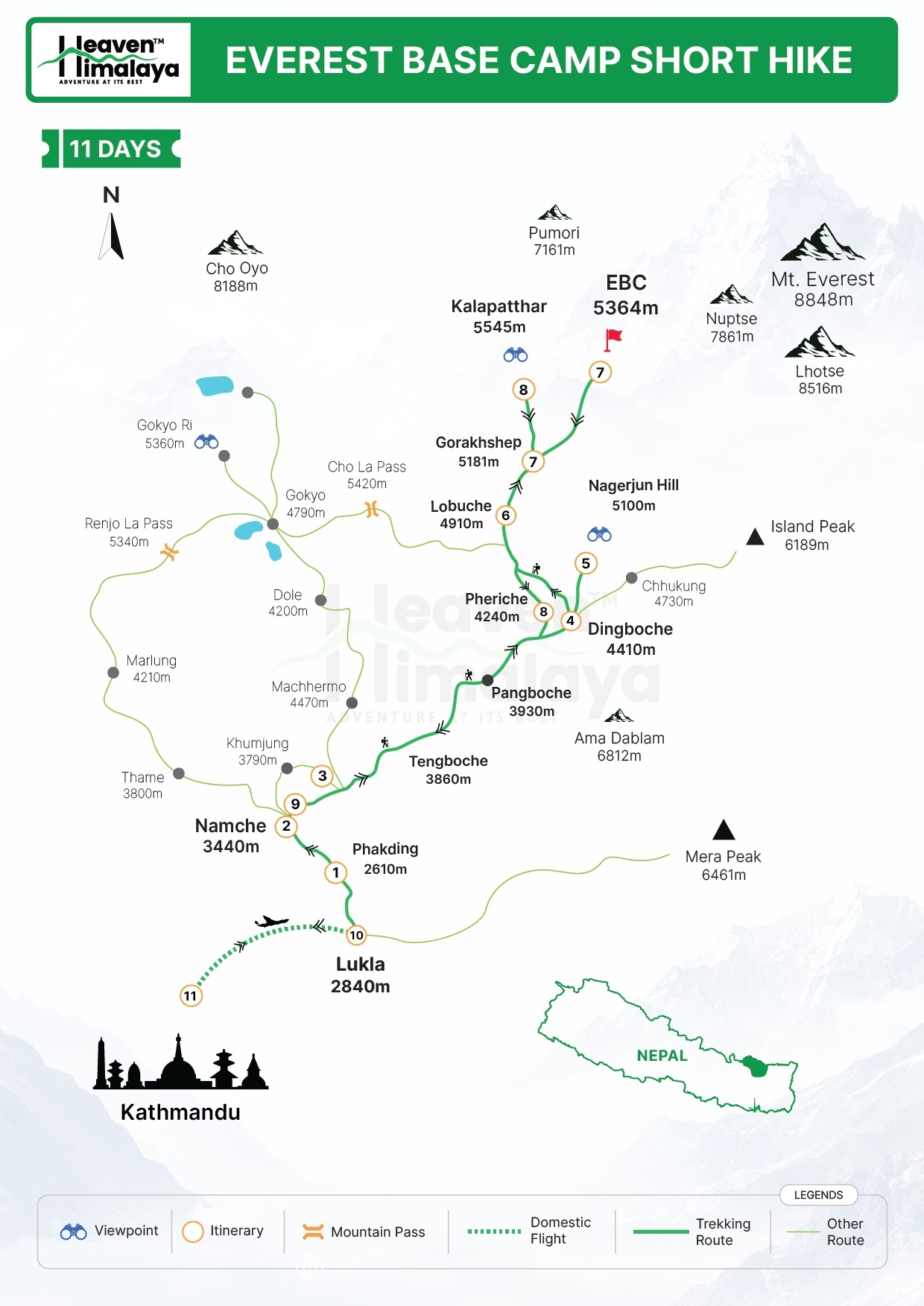
The short Everest base camp hike begins with a 45-minute mountain flight from Kathmandu to Lukla. On the first day, landing at Lukla, you trek towards the Phakding. The following day, you approach Namche Bazaar, the gateway to Mount Everest
While trekkers take an acclimatization stopover at the Namche Bazaar, we will gradually move forward on the trail. We will be taking a rest day for acclimatization either on the next day or the following day. From Namche, the trail takes you to Tengboche. The location has a famous Tengboche Monastery, one of the largest gompas in the Khumbu region. We visit there too.
On the following day, you leave Tengboche and trek toward Dingboche. After Namche, this village is another popular acclimatization stop en route to the base camp. You take a well-deserved rest day at Dingboche, where you’ll go on an acclimatization hike to Nagarjuna Hill.
This acclimatization hike will bless you with a grand view of the entire Dingboche Valley, the Imja Khola River, and mountain scenery. From the top of the hill, enjoy the stunning views of Ama Dablam, Lhotse, and other towering peaks.
After spending a day at Dingboche, you are now ready to ascend to Lobuche. Now you are one step closer to Everest Base Camp (5,364 m/17,598 ft). Further, you head to Gorak Shep and ascend to the epic Everest Base Camp.
The next day, early in the morning, you hike to Kala Patthar (5,545 m/18,192 ft). Enjoy the amazing sight of a sunrise view over the mighty Mount Everest and other surrounding peaks. Also, the magnificent sight of the Khumbu Glacier will add amazing beauty to enjoy.
After spending some of the best moments in EBC and Kala Patthar, you head back to Pheriche and Namche in two days. Although the downhill hike is easy, it can sometimes be tricky. Use your trekking poles.
Finally, on day 10, you head to Lukla.
Later on day 11, our guide transfers you to the airport to catch an early morning flight to Kathmandu. After you land here at Kathmandu Airport, our team will whisk you to your respective hotels. This way, your 11-day Everest Base Camp short hike ends.
Highlights of Everest Base Camp Short Hike
A thrilling flight from Kathmandu to Lukla Airport
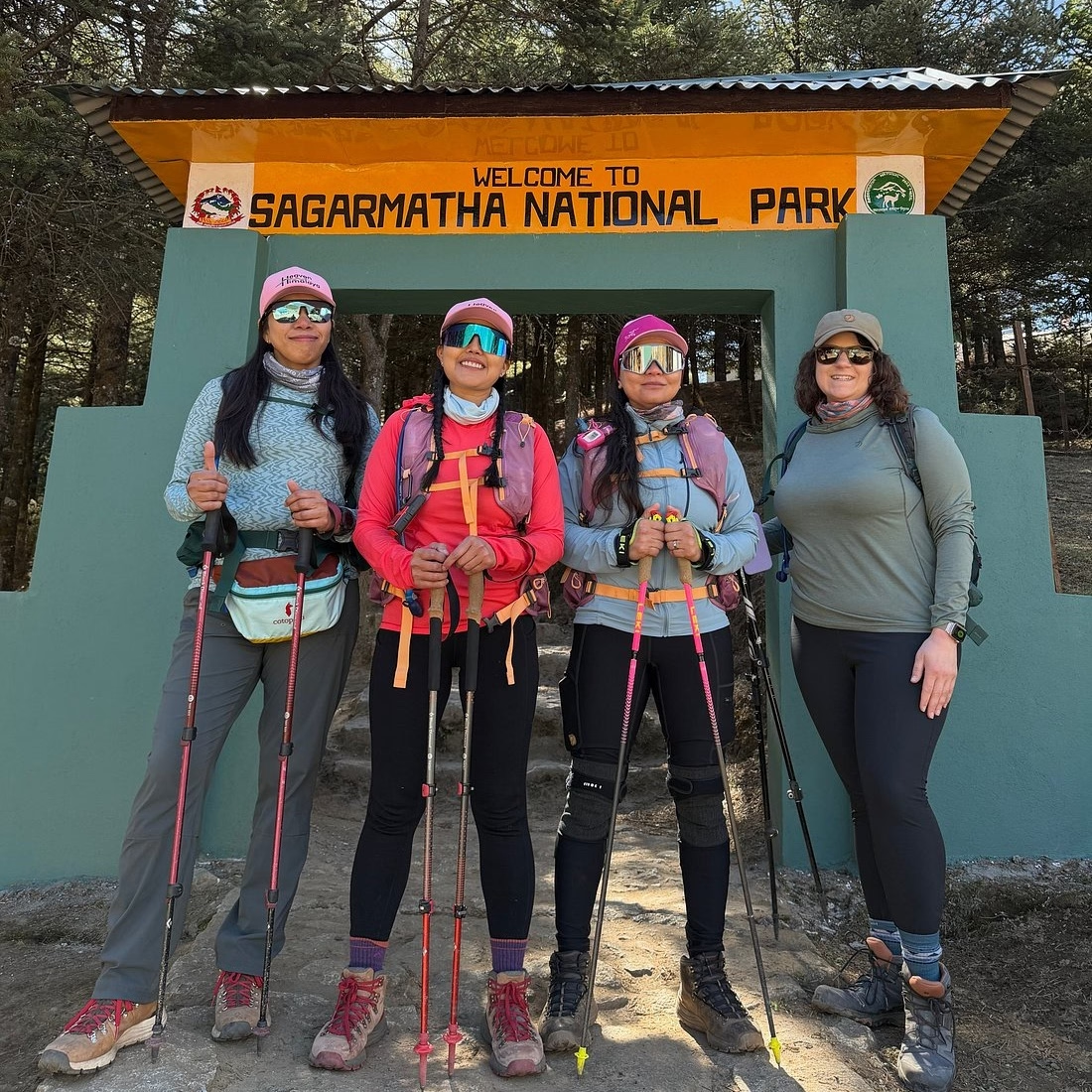
Hiking routes pass through the famous Sagarmatha National Park, listed by UNESCO as a World Heritage Site.
Namche Bazaar town is a famous tourist hub and the Sherpa capital, full of markets, restaurants, and cafes.
Hike to the base of Mt. Everest (8,848m), the highest peak in the world.
Explore Tengboche monastery, the largest and most prominent monastery in the Khumbu region.
Exciting and challenging side trip to Nagarjun Hill (5,616m) from Dingboche.
Experience the authentic Sherpa culture, traditions, lifestyle, and hospitality.
Walk through the dense forest and lush vegetation of the Everest region.
Behold the magnificent sunrise view over the mighty peaks from Kala Patthar.
Excellent mountain views, including Everest, Lhotse, Nuptse, Ama Dablam, Thamserku, etc.
Marvel at the splendid view of Khumbu Glacier and Khumbu Icefall.
Outline Itinerary – Everest Base Camp Short Hike (11 Days)
Day 01: Fly to Lukla & Trek to Phakding (2,610m/8,562ft) – 3/4 hrs
Day 02: Trek to Namche Bazaar (3,440m/11,286ft) – 5/6 hrs
Day 03: Trek to Tengboche (3,860m/12,664ft) – 5/6 hrs
Day 04: Trek to Dingboche (4,410m/14,469ft) – 5/6 hrs
Day 05: Acclimatization hike at Dingboche (5,616m/18,425ft) – 5/6 hrs
Day 06: Trek to Lobuche (4,910m/16,108ft) – 6/7 hrs
Day 07: Trek to Gorak Shep (5,181m/16,994ft) & Hike to Everest Base Camp (5,364m/17,598ft) – 5/6 hrs
Day 08: Hike to Kala Patthar (5,545m/18,192 ft) & Trek to Pheriche (4,240m/13,910ft) – 7/8 hrs
Day 09: Trek to Namche Bazaar (3,440m/11,286ft) – 5/6 hrs
Round trip flight (Kathmandu- Lukla) with departure taxes.
All ground transportation for the entire trip on a private vehicle, including airport transfers.
10 nights and 11 days of accommodation in the best guesthouses available (on a twin-sharing basis)
We also provide personal bathrooms with hot showers in Phakding, Lukla, and Namche.
Daily meals with breakfast, lunch, and dinner throughout the journey until you're back in Kathmandu.
Snacks of fresh seasonable fruits on the trekking days.
National Park and heritage sites entry tickets
Two trekking permits (SNP and KPL Rural Municipality Permit)
A licensed, English-speaking, experienced Everest trekking guide
All the costs for food, accommodation, salary, and other equipment for the guide, including accidental insurance.
Duffel bag and sleeping bags to use during trekking
Heaven Himalaya T-shirts, route map, and a travel completion certificate
All paper works and other applicable government taxes and service charges.
First aid kit
Exclusions
Porters to carry your baggage during your Everest journey (1 Porter- 280 USD)
International airfare
Nepal entry visa fees (USD 50 for a tourist visa, and it can be obtained at the airport in Kathmandu on arrival!)
Travel Insurance
Soft drinks, including mineral water bottle
Personal refreshment items like cold drinks, snacks, etc.
Personal utility items like laundry, telephone expenses, electricity charges, etc.
Personal gears.
Internet, phone calls unless they're free to use.
Tips for guides and porters
Dates & Availability
Note to Travelers
Our Everest Base Camp Short Hike costs include all ground costs, fully personalized benefits, and a free porter. We are a local tour operator, so the quote you get is the best price, with no mid-commission fees.
Kindly note that the start dates are your dates of arrival in Nepal, and your end dates are the dates of your departure from Nepal. Select a date and add several people, and then proceed to make a reservation.
Besides, the trekking fees mentioned here cover your 11-day itinerary. An additional cost will be generated if you have extra days in Kathmandu or would like to add or subtract the number of trekking days.
No fixed group departures right now — run Everest Base Camp Short Hikeprivately with your own group. Pick a preferred start date and we'll confirm availability.
Loading calendar…
Sold out dates
Group-size discounts will be applied in the next step.
Select a start date from the calendar.
All prices per person, twin share. Subject to availability — Everest Base Camp Short Hike dates fill quickly in peak season.
11 days Everest Base Camp Short Hike Itinerary
Day 01 :Fly to Lukla and Trek to Phakding (2,612 m/8,562 ft)—45 minutes' flight and 3 to 4 hours' trek
Elevation: 2,840m
Duration: 25 Mins
Accommodation: Guesthouse
Meals: Breakfast, Lunch, and Dinner Included
After breakfast at the hotel, our guide will come to pick you up for an exciting flight to Lukla. All the flights to Lukla will either be from Kathmandu Airport or Ramechhap Airport and are scheduled in the morning. It’s because the wind picks up in the afternoon and it becomes hard to fly.
The flight to Lukla is itself a rare adventure and will chill your bones. As soon as you leave Kathmandu, you will be greeted by the green hills and the surrounding mountains. The scenery is worth watching. The Tenzing Hillary Airport is one of the most extreme high-altitude airports in the world. So, flying between the high green hills and landing on a narrow lane at the base of the mountains will surely skip your heart a bit.
After a thrilling flight, you will start your trek. Before the start, you will meet porters at the airport who will carry most of your loads.
After you make yourself ready, the tour guide will make his way along the busy street to the start of the trek down to Phakding. You will walk along the Dudh Koshi River and the alpine forest with the amazing sounds of nature. You will then cross the suspension bridge to reach Phakding. Walking above the swinging bridge will add a thrill to your journey.
Then, head to a local teahouse and rest your bags. Later, visit nearby villages or chill in the teahouse. We will have a long hiking day tomorrow. So, take enough rest. Tonight, you will spend your time in the best guest house available.
Note: During peak season (March, April, May, October & November), flights to Lukla may operate from Ramechhap (Manthali Airport) instead of Kathmandu. This means you will wake up early, drive 4–5 hours from your hotel in Kathmandu to Ramechhap, and then fly from Ramechhap directly to Lukla. Please note that the cost of this drive is NOT included in the package and will be charged separately.
Day 02 :Trek to Namche Bazaar (3,440 m/11,286 ft): 5 to 6 hours trek
Elevation: 3,440m
Duration: 5-6 hrs
Accommodation: Guesthouse
Meals: Breakfast, Lunch, and Dinner Included
Your journey on the famous EBC trail begins with a gentle ascent to the breathtaking Kongde Ri viewpoint. Passing through an ancient chorten, you enter the beautiful valley of Bengkar. The trail then leads you to Monjo, the gateway to the Sagarmatha National Park.
Continuing your trek, cross the confluence of Dudh Koshi and Bhote Koshi at Larja Dobhan. Next, make a steep ascent to a magnificent viewpoint. From there, relish the awe-inspiring vistas of majestic mountains, including Ama Dablam, Lhotse, Tabohce, and others.
After approximately an hour and a half of hiking, you reach the vibrant Namche Bazaar. This famous Sherpa town is full of restaurants, trekking shops, bakery cafes, hotels, etc. You can explore the town and visit the Sherpa Cultural Museum to get insight into Sherpa culture, mountaineering history, and other information. This is just the beginning of the adventure that awaits you on this iconic trail toward Everest Base Camp.
Overnight stay in Namche Bazaar.
Day 03 :Trek to Tengboche (3,860 m/12,664 ft): 5 to 6 hours' trek
Elevation: 3,860m
Duration: 5 to 6 Hours
Meals: Breakfast, Lunch, and Dinner Included
You start your day in Namche, filled with excitement for the journey ahead. Your destination is the renowned Tengboche Monastery. This monastery offers breathtaking views of majestic peaks such as Mt. Everest, Ama Dablam, and Lhotse.
As you walk for an hour, the trail gradually descends to the river, where you’ll encounter a picturesque bridge adorned with vibrant prayer flags. The trail goes down after passing Khyangjuma and takes you to Imja River bridge. From there, the trail path continues to Phunki Tenga.
Then the next leg of the journey involves a two- to three-hour ascent to the enchanting Tengboche village. If you arrive before 3 p.m., you can attend a daily ceremony where the monks sing and chant for half an hour. Being a part of this ceremony, you’ll get a beautiful insight into Tibetan Buddhism.
Overnight stay in Tengboche.
Day 04 :Trek to Dingboche (4,410 m/14,469 ft): 5 to 6 hour trek
Elevation: 4,410m
Duration: 5 to 6 Hours
Accommodation: Guesthouse (Shared Bathroom)
Meals: Breakfast, Lunch, and Dinner Included
Your hike begins with a gentle climb leading to the charming village of Deboche. As you continue through the valley, you’ll be greeted by the sight of a glacier river flowing below and snowy peaks in the distance.
En route, pass through Pangboche village, where you have the opportunity to explore the oldest monastery in the Khumbu region. After a brief exploration, move forward on a winding trail. Eventually, you reach the small settlement of Somare. From here, follow the path alongside the Imja River, making your way toward Dingboche village.
Continue your climb and reach the top of the ridge, where the grand panorama of Ama Dablam rewards your efforts. After a short descent, you reach Dingboche, also known as the summer settlement. Dingboche village relies on farming, benefiting from the summer rains brought by the monsoon. The sight of yaks grazing adds beauty to the picturesque scenery.
Overnight stay in Dingboche.
Day 05 :Acclimatization day at Dingboche (5,616 m/18,425 ft): 5 to 6 hours trek
Elevation: 4,410m
Duration: 3 hour
Accommodation: Guesthouse (Shared Bathroom)
Meals: Breakfast, Lunch, and Dinner Included
Dingboche holds significance among climbers and trekkers exploring the Everest region. This village serves as an important acclimatization stop during the EBC trek, preparing you for the higher altitudes ahead. So, today’s hike leads to Nagarjuna Hill at 5,100m of altitude.
During today’s acclimatization hike, you’ll savor some amazing mountain views. The range of Lobuche, Taboche Peak, Thamserku, Kangtega, and Ama Dablam will stun you. Also, while you are gradually climbing up the hill, you get the mesmerizing sight of Pheriche.
Finally, after hours of hiking, you reached the top of Nagarjun. Behold the most astonishing Himalayan scenery, beautiful valleys, and varying landscapes. After spending some wonderful time, get back to Dingboche. The trail will be a bit windy while returning. Later, if you get some time, you can explore the village and interact with the locals.
Overnight stay in Dingboche.
Day 06 :Trek to Lobuche (4,910 m/16,109 ft): 6 to 7 hours trek
Elevation: 4,910m
Duration: 6 to 7 Hours
Accommodation: Guesthouse
Meals: Breakfast, Lunch, and Dinner Included
Today you start by ascending in the northwestern direction, passing through the tiny village of Dusa. After a few hours of walking, you reach Dughla (Thukla), which lies at the endpoint of the Khumbu glacier.
After rest, climb to Thukla Pass at 4,830m. This pass is also known as the memorial viewpoint of the Everest Base Camp Trek. Here, you will encounter over 100 memorials honoring climbers and Sherpas who lost their lives during Everest summit attempts. You can take a moment to pay your respects to these great souls.
Further, proceed over the lateral moraine formed by the debris of the Khumbu glacier. The mesmerizing views of several mountain peaks, including Nutpse and Lhotse, dominate the trail. After 1-2 hours of trekking, you arrive at Lobuche village. You can rest and explore the beautiful surroundings.
Overnight stay in Lobuche.
Day 07 :Trek to Gorak Shep (5,181 m/16,994 ft) and Hike to EBC (5,364 m/17,598 ft). 5 to 6 hour trek
Elevation: 5,181m
Duration: 3 to 4 Hours
Accommodation: Guesthouse
Meals: Breakfast, Lunch, and Dinner Included
Today marks a significant day as you approach the majestic Mt. Everest, the world’s highest peak. Leaving behind Lobuche, the trek becomes more challenging due to the rough terrain and high altitude.
Continue your journey; you’ll navigate through boulders and cross the Lobuche Pass at 5,110m. The sight of the magnificent Khumbu glacier awaits you as you walk along the rubbled tributary glacier.
Soon you’ll reach Gorak Shep, situated just below the Kala Patthar. Once a summer yak herding meadow, Gorak Shep is now a popular destination for trekkers aiming to ascend Kala Patthar and reach Everest base camp.
Take a short break, leave your backpack behind, and head towards Everest Base Camp. The trail to base camp takes around 3 hours and involves challenging ups and downs over the Khumbu Glacier.
Upon reaching the base camp, you will be surrounded by towering peaks. Take your time to absorb the grandeur of the Himalayas, capturing unforgettable pictures and moments. Later, you return to Gorak Shep.
Overnight stay in Gorak Shep.
Day 08 :Hike to Kala Patthar (5,545 m/18,192 ft) and Trek to Pheriche (4,240 m/13,910 ft)—7 to 8-hour trek
Elevation: 5,545m
Duration: 4 to 5 Hours
Accommodation: Guesthouse
Meals: Breakfast, Lunch, and Dinner Included
Today is a breathtaking day of your trek as you hike to the most picturesque viewpoint in the Everest region, Kala Patthar. Starting before dawn, you embark on the challenging trail to catch an early sunrise over the mighty Everest.
While the trail is arduous, rely on the headlight and take your time to ascend to the summit of Kala Patthar. Though you may catch your breath several times, don't rush. Instead, immerse yourself in the beauty of the surroundings. Once you make it to the top, relish the intimate view of the majestic Everest and its surrounding peaks.
After a wonderful moment at Kala Patthar, return to Gorak Shep. And then make your way to Pheriche, passing through the villages of Lobuche and Dughla. Pheriche has a clinic run by the Himalayan Rescue Association to provide medical aid.
Overnight stay in Pheriche.
Day 09 :Trek to Namche Bazaar (3,440 m/11,286 ft): 5 to 6 hours trek
Elevation: 3,440m
Duration: 5 to 6 Hours
Accommodation: Guesthouse
Meals: Breakfast, Lunch, and Dinner Included
Today’s trek takes you back along the familiar route you followed to Everest Base Camp. Starting from Pheriche, you descend the trail and pass through Somare village. Continuing, you traverse Pangboche and Deboche, eventually arriving at Tengboche village.
As the journey unfolds, you reach Phunke Tenga and Khyangjuma. A brief descent then leads you back to Namche Bazaar. Take a moment to relax and savor a rejuvenating hot shower. You can celebrate the achievements of your Everest base camp hike.
This day offers a blend of familiar paths and new experiences as you revisit cherished destinations along your memorable adventure.
Overnight stay in Namche Bazaar.
Day 10 :Trek to Lukla (2,840 m/9,317 ft): 7-hour trek
Elevation: 2,840m
Duration: 2 Days
As the majestic Himalayan views surround you, you savor a hearty breakfast to begin your last day on the EBC trail. Your journey starts with a descent from Larja Dobhan, passing through places like Jorsalle, Monjo, Toktok, Bengkar, and Phakding. Along the way, you’ll cross several suspension bridges over the glistening Dudh Koshi River.
As you continue, immerse yourself in the charm of quaint settlements like Ghat, Nurning, and Champlung. Finally, you reach the familiar town of Lukla, where your unforgettable Everest base camp trek began.
Overnight stay in Lukla.
Day 11 :Fly back to Kathmandu in 45 minutes.
Elevation: 1,400m
Duration: 25 MIns
Accommodation: Hotel
Catch an early flight from Lukla to Kathmandu, enjoying the stunning aerial views. Reminisce about the pleasant moments in the Everest region as you land at Kathmandu International Airport. From there, board your flight back home.
But if you wish to extend your stay in this beautiful country, we offer enticing trekking and tour packages. Feel free to reach out to our expert team for further assistance. Your satisfaction is our priority.
Altitude profileMax 5,545 m
Create a Bespoke Itinerary
Customize your Himalayan adventure with personalized itineraries for unforgettable experiences!
Excellent solo Nar Phu Valley Trek with Heaven Himalaya
Just completed the Nar Phu Valley Trek as a solo traveler and couldn't be happier with how it was organized.From the start, communication was clear. A proper pre-trip gear check meant I knew exactly what I needed and what the guide would provide. They arranged a sleeping bag and trekking poles for hire, which saved me carrying my own.Accommodation throughout felt genuine and welcoming rather than touristy, a real Nepalese experience rather than a tourist-trail one. Transport to and from the trailhead was reliable and comfortable.What really stood out was my guide Hari's ability to read my pace. Early on I struggled a bit with the altitude, and he slowed things right down without making it a big deal. Once I'd acclimatized, we picked up the pace significantly. Hari was genuinely flexible day to day depending on how I was feeling, rather than sticking rigidly to a fixed itinerary.I also picked up a stomach bug partway through the trek. Hari talked through the options with me calmly and…
Jojo Y
Second time in Nepal with Heaven Himalaya
This is my second time in Nepal with Heaven Himalaya & I am writing this with gratitude & appreciation for my guide Hari, my porter Arun, as well as the entire team.This was meant to be my birthday trip, I had requested to summit EBC on the actual day of my birthday (29/5/2026), and i made it happen with the help & support of Hari and Arun.Hari has been very thoughtful and attentive throughout the trip, making sure to constantly ask/check if I’m feeling okay as we ascended to higher altitudes.As it got colder higher up on the mountains, Hari thoughtfully delivered hot water to my room every night to help me deal with the extremely cold nights.On my birthday itself, Hari also resourcefully brought a “Happy Birthday” candle which he got from Namche to the summit, and we created our own birthday “cake” using the candle and an apple. That was a very beautiful memory & amazing experience.As I was traveling alone as a female, Hari also did his best to find me the most comfortable accommodat…
CCharlotte B
EBC Hike in May 2026
Last month in May 2026, I did the Everest Base Camp hike with Heaven Himalaya, and it was absolutely amazing. From the start they made everything easy . My guide Bishal, which he said meant thulo in nepali was so helpful and patient; he knew everything about the trail and mountains and also made us laugh all the time.Our porter Krishna was a star! He carried our bags without complaining and always had a smile, telling us funny stories in the evenings. I don't know what we would have done without him.The trek itself was so hard but so worth it. The views are just mindblowing; waking up every morning to see the mountains covered in snow is something I will never forget. Bishal and Krishna made sure we were safe and happy all the way.Reaching Kala Patthar at sunrise was unreal, seeing Everest in the golden light was like a dream. Bishal and Krishna were there with us every step, cheering us on and making it so special.I would absolutely recommend Heaven Himalaya for everyone. They are no…
Tina
Exceptional Service and a Birthday to Remember
They say the mountains humble you, but what I didn't expect was how deeply the people of Nepal would touch my heart.Couldn't have asked for a better crew for our Everest Base Camp - Cho La Pass - Gokyo adventure. From day one, Shankar, Ganesh, Dawa, and Prince treated us with so much kindness, patience, and care that it never felt like we were just another hiking group to them.They became our family in the mountains.Our guide, Shankar, was exceptional. Calm, knowledgeable, dependable, and always looking out for us every step of the way. He knew the mountains like the back of his hand and made us feel safe even during the toughest parts of the trek. When weather conditions in Lukla became unpredictable and visibility was poor, he immediately took action and arranged a helicopter to Kathmandu so we wouldn't miss our international flights. In moments of stress, that level of leadership and quick thinking means everything.It was my birthday during the trek, so I felt incredibly special wh…
Jarin Lam
Unforgettable First Trek to Annapurna Base Camp & Poon Hill
We had an amazing experience with Heaven Himalaya for our first trekking trip to Annapurna Base Camp and Poon Hill. We were actually recommended to them by a friend, and we’re incredibly thankful we chose to go with them. It was truly an unforgettable 2 weeks in Nepal.Our guide, Hari, was attentive, thoughtful, and always made sure we were comfortable and enjoying the journey. He was constantly on the ball, supporting us every step of the way and helping to adjust the itinerary whenever needed. Despite a few slight hiccups during the trip, he remained calm, flexible, and proactive in making arrangements to ensure everything went smoothly.Our porter, Anis, was also incredibly reliable and supportive throughout the trek. He consistently checked in on us and made sure our needs were always taken care of along the way.A special thank you as well to Ram, who was very helpful in coordinating everything behind the scenes and ensuring the trip ran smoothly from start to finish.Beyond the trek…
Dan
Truly Unforgettable!!!
My friend and I booked the 14 day Annapurna Circuit with Tilicho Lake trek. The whole experience was amazing. Ram made it easy to alter the trip to our specific needs. We added flights, cut off 2 days of trekking, requested single rooms, and he quickly got us a quote and booked! Hari was our guide on the trek and he was fantastic! He attended to all our needs and safely guided us for the entire time. He did an excellent job of getting us the best rooms, served our meals every day, and did everything in his power to make sure us old men(63 and 74) made it over the Pass! Our porter, Denise, was equally impressive! I still don't know how he carried our bags for 10 days! Clear blue skies, endless views, majestic mountains, deep river valleys, friendly people, a truly unforgettable trip!!!
What to Pack
Trekking wears
Upper Body
T-shirts (preferably quick-dry and breathable) (day)
Parka/windbreaker (day)
Rain gear/poncho
Inner thermal (at night)
Fleece or warm mid-layer (evenings and higher altitude)
Fleece jacket
Down jacket (night)
Lower Body
Undergarments
Trekking pants (preferably stretchable, quick-dry, and water-resistant) (day)
Rain gear
Inner thermal (at night)
Fleece/wool pants (night)
Handwear
Lightweight fleece or wool gloves
Heavyweight gloves
Footwear
Trekking boots
Hiking socks
Trekking sandals
Cotton socks
Gaiters (optional)
Running shoes (optional)
Note: Make sure your trekking boots are well broken-in and that you have worn them for some time before the trek. Avoid bringing brand-new boots, as they may cause blisters, discomfort, or foot pain during long days of walking.
Trekking Accessories
Duffle bag**
Trekking backpack
Sleeping bag**
Trekking poles**
Trekking Map**
Water bottle
Head torch with extra batteries
Raincoat
Face mask
Crampons (optional)
Binoculars (optional)
Sleeping bag liner (optional)
Daypack cover (optional)
Head Wear
Sun cap or brimmed hat
Sunglasses
Neck gaiter
Balaclava
Bandana or headscarf
Other essentials
Medical Kit
Altitude & Trekking related medications
Acetazolamide (Diamox) for Altitude sickness
Paracetamol - headache & fever relief
Ibuprofen - Pain relief
Stomach Medications
Antacids
Oral Rehydration salts (Jeebanjal)
Motion Sickness (Vomiting) medicines
First Aid Supplies
Bandages
Blisters Plaster
Handyplasts
Antiseptic wipes
Medical Tapes
Skin Protection
Moisturizer
Lip Balm
Sun screen
Eye Protection
Sunglasses (both UV rays and snow glare)
Lubricating eye drops
Other Essentials
Oximeter
Thermometer
Water Purification Tablets (Chlorine, Iodine, Chlorine dioxide tablets)
Hand sanitizer
Note: When you trek with a reputable agency, your guide is trained to handle altitude-related issues and carries a basic first-aid kit with essential medical supplies. You should still bring personal medications, but they look after you throughout the trek.
Travel Documents
Passport, with at least 6 months validity
4 copies of passport
4-5 Passport size photo
Physical Trek Map (Digital Route Map)
Visa (available at Kathmandu airport)
Insurance
Trekking permits
Cash ( min. 400$)
Miscellaneous Items
Solar charger
Garbage bag
Book/diary/card games
Solar power bank
Camera (optional)
Extras (for men)
Small mirror
Razor and shaving cream
Pee bottle (optional)
Extras (for women)
Feminine wipes
Sanitary napkins
Nail brush and clippers
Tweezer
Important Note: We provide a duffle bag, sleeping bag, and down jacket and expect them to be returned at the end of the trip. We also provide trekking maps, and our experienced trekking guide will assist you in utilizing and understanding the map effectively. This map is yours to keep as a memorable souvenir.
At the end of the trip, to express our gratitude for choosing Heaven Himalaya, we extend to you a Heaven Himalaya T-shirt and trip achievement certificate. These items are more than tokens; they are our way of showing appreciation for your trust in us.
Toiletries and Personal Hygiene
Toothbrush and toothpaste
Personal first aid kit
A small bar or soap bottle
Dry shampoo
Quick-drying towel
Deodorants
Hand sanitizer
Lip balm with SPF
Wet wipes or baby wipes
Water purification tablets or water filters
Altitude sickness drugs (diamox)**
Hairbrush
Hand and face moisturizing cream
Sunscreen cream with high SPF
Toilet paper
Antibiotics and painkillers
Skin blister repair kit
**Please consult with your guide before using any medication.
Best Time for Everest Base Camp Short Hike
Everest Base Camp’s weather and temperature vary depending on the seasons. The best time for an Everest base camp hike is during the autumn and spring. These seasons have the ideal weather for outdoor walks. The temperature is pleasant, hiking trails are dry, and visibility is outstanding during this period.
During Spring (March to May), Everest Base Camp has mild daytime temperatures (around 10°C) and freezing temperatures at night. The skies are clear, with stunning views of the surrounding mountains.
However, the weather can still become more unpredictable. In early spring, there might be snowfall, and at the end, there are chances of rainstorms.
In Autumn, from late September to November, the temperature at EBC is similar to spring. This season has stable weather, clear skies, and dry trail conditions. As this is peak trekking season in Nepal, trails and accommodations can be crowded.
The summer months from June to August are the monsoon months in Nepal. Though it doesn’t rain in EBC, the lower trekking regions receive heavy rain. The trails are wet, muddy, and slippery. Landslides add extra risks during the monsoon trek.
Similarly, the winter months from December to February are very cold at EBC. The weather is rough, and the temperature is below zero degrees. The trail is full of snow, days are shorter, and mornings and nights remain frozen.
Thus, for these reasons, winter and summer are the least chosen seasons for our short Everest base camp hikes.
Quick Everest Base Camp Hiking Trail Distance
The average distance of the Everest Base Camp short hike is 130 km, or 65 km each way. This is the trail length from Lukla to EBC and back. Usually, you will walk for approximately 5 to 6 hours, covering 3 to 8 km per day.
Lukla Airport is the both starting and ending point of this short hike.
How difficult is the short 11-day EBC Hike?
In terms of our trek grade, the short Everest Base Camp hike is moderately difficult. You will walk uphill and downhill for days through the rocky path, which might be quite challenging. But we do have a rest day in our 11-day package, so this should help you acclimatize and also take a rest in between.
The EBC Short Trek is a high-altitude hike. Thus, the most challenging aspect of this tour is the altitude itself. Acute mountain sickness and other altitude-related illnesses are quite common. But to avoid this, our guides will brief you about it and explain how we cope with changing altitudes. Also during the tour, we go on slower walks, climbing only a few hundred meters each day.
Staying hydrated and acclimatizing well are other important things you can do to stay fit and not get caught up in altitude sickness.
The next challenging aspect of the short trek is the length of the trail. We walk for days and between 3 and 8 km each time. Hiking continuously for 10 days can be tough. But, of course, this will not be a normal walk. The trail is mostly off-beat. Sometimes you have to hike on rocky and icy terrain.
Before embarking on this journey, we suggest you go for short uphill hikes with a backpack. Uphill hiking helps you build stamina and readiness for a challenging adventure. Begin with a training plan at least six weeks in advance. Engage yourself in fitness and cardio training, such as cycling, swimming, running, and jogging. Similarly, meditation, yoga, and breathing exercises will help you remain focused and mentally prepare for the trek.
Despite the few challenges, the short Everest Base Camp hike doesn’t require prior trekking expertise. But being in good shape and physically fit is a win.
Typical Day During our short hike to Everest Base Camp
On the Everest base camp hike, the trek days vary from 10 to 14 days, depending on the itinerary. Our package takes 11 days.
Hiking hours fluctuate from 3 hours to 9 hours per day, depending on the terrain and destinations you have to cover.
However, most of the days during the short EBC hike follow the same pattern. The early morning begins with a hearty breakfast, enjoying the grand mountain views. On the breakfast menu, there is toasted bread, boiled eggs, porridge, etc. After having breakfast, you’ll pack your bag and hit the track.
Each day on the route unfolds the majestic beauty of the mountains. As you walk through enchanting forest trails, you’ll cross several suspension bridges over the Dudh Koshi River. Take moments to pause, catch your breath, and savor the breathtaking views along the way. Pack some snacks as some days may require long hours of walking to reach your destination.
During the day hike, you eat your lunch in a teahouse somewhere in the middle of the trail. Get a big bite of either Nepalese or Western cuisine. Most of the trekkers enjoy the delicious Dal Bhat.
Later, you continue your trek, or if you arrive at the final destination of the day, then you will get time to rest or explore the surroundings.
As the evening sets in, our guide takes you to the teahouse, where you’ll spend the night. Some tea houses offer hot showers, providing a chance to freshen up after a long hiking day.
Next, you can hang out with friends, play some cards, or engage in lively conversation. A hot dinner awaits you, followed by a brief discussion of the next day’s trek highlights with your trekking guide. Then you retire to your room for a restful night’s sleep. This pattern repeats throughout most of the days on the trek, offering a comforting routine during the incredible journey.
Accommodation
Heaven Himalaya offer’s offers a wide range of accommodation options for our 11-day Everest Base Camp short hike. Until Namche, you have a comfortable stay in hotels with hot showers and private bathrooms. There’s a communal dining area for socializing.
As you climb higher, the accommodation on the EBC Route will be basic, with smaller rooms and common bathrooms.
Toilet and Shower Facilities
On the EBC trail, there are teahouses with several amenities. Many lodges we stay at during the 11-day Everest Base Camp short hike offer Western-style toilets and hot shower facilities. Whereas, beyond Namche, most lodges have squat-toilets options. Also, the availability of hot showers becomes limited in higher regions. Regardless, lodges offer hot bucket water showers at an extra cost.
Electricity and Water During Short Mount Everest Hike
Throughout the short EBC hiking route, there is continuous access to electricity. They generate electricity through hydroelectricity in the lower area and use solar power in the higher area. So, during gloomy weather, electricity may not be available.
To charge electronic devices, you can carry power banks along the route. Charging devices is not a problem, although some higher-elevation teahouses may charge a fee for their service.
Regarding drinking water, there are three options available. The first option is to purify stream or tap water with water purification tablets before drinking.
The second option is to get boiled water from teahouses. You can refill your bottle with boiled water, but it may come with an extra cost, particularly at higher elevations. The third option is plastic water bottles, but they are not cost-effective.
Communication (Internet and Phone Connectivity)
Along the EBC trail, you can expect to find cellular network coverage at most tea houses. However, in some areas, especially on forest trails, the network signals are weak or not available.
Likewise, some teahouses offer free Wi-Fi services, allowing you to connect to the Internet. However, as you approach a higher region, certain tea houses may charge a fee for internet access and may become limited. Due to the challenging terrain and remote locations, the internet speed available may be slower and intermittent.
Food and Drinks
On the trail from Lukla to Everest base camp, there are diverse food options ranging from local to Western cuisine. Breakfast options include toast bread, Tibetan bread, omelets, boiled eggs, porridge, and rice pudding. We provide you with a breakfast meal with tea or coffee.
For lunch and dinner, we have dal bhat, a staple Nepalese dish. You can also choose to eat dishes like pizza, momos (dumplings), noodles, soups, pasta, and fried rice.
However, as you ascend to higher elevations, food becomes more basic. Some teahouses also offer Western foods.
We give you plenty of nourishing options to keep yourself energized during the EBC journey.
Here’s a list of what you eat on the Everest Base Camp Trek.
FAQs
Everest Base Camp Short Hike Frequently Asked Questions
General-EBC
What is the Everest Base Camp Trek?
The Everest Base Camp Trek is a world-famous high-altitude trekking journey to the base of Mount Everest (8,848.86m), the highest mountain on Earth. The trail lies in the Khumbu region of Nepal and combines dramatic Himalayan landscapes, traditional Sherpa villages, Buddhist monasteries, suspension bridges, and teahouse trekking culture.
This trek is not just about reaching Base Camp, but also about experiencing the lifestyle of the Everest region, panoramic mountain views, and a gradual ascent into high-altitude terrain above 5,000 meters.
How much will it cost to go to Everest Base Camp?
The cost for the standard 14 days Everest Base Camp trek package with Heaven Himalaya is US$1580. But the price depends on the group size as it decreases with increase in the group size.
No. of Person
Price
1
USD 1580
2 - 4
USD 1499
5 - 8
USD 1399
9 - 14
USD 1299
15 and above
USD 1199
The cost covers the entire trek logistics and Lukla flights except your personal expenses like hot water, coffee, charging, showers, snacks etc. on the trek.
How much fitness is required for the Trek?
The Trek does not require mountaineering skills or elite athletic fitness, but a good level of physical fitness is essential. You should be comfortable walking 5–7 hours a day for 10–14 consecutive days on uneven mountain trails while carrying a light daypack. The greatest challenge is not the distance itself but the high altitude, where lower oxygen levels can make even gentle uphill sections feel more demanding. If you can comfortably hike, jog, cycle, or participate in regular cardiovascular exercise several times a week, you are likely capable of preparing for the trek. With proper training, acclimatization, and determination, most healthy individuals can successfully complete the trek.
Best time to Trek
Why trek with Heaven Himalaya?
When you choose to book a trek package with Heaven Himalaya, you'll already be ahead of other trekkers in terms of service and benefits. A local mountain trekking guide with extensive knowledge of the routes will accompany you. Booking with us means you'll walk with Sherpa locals and support their livelihood. While foreign companies offer similar trips to Everest Base Camp, they can't do it on their own. They hire government-registered companies like us in Nepal. Booking with them means you'll pay intermediaries' fees out of your pocket. Other perks of travelling with us are:
A focus on clients' safety, with our trip organized with the utmost safety in mind
The best price guarantee.
Free transfers from the airport to the hotel and back in a private vehicle
Trained, government-licensed local guides who have an entire knowledge of local routes.
Support for locals to earn their living through tourism.
An oximeter for monitoring oxygen levels while on a high-altitude trek, guides with medical kits to handle situations that may arise.
Arrangements for sleeping bags and down jackets.
Free storage at the Heaven Himalaya office store for extra luggage during your tour
A duffel bag to transfer your items from luggage to be carried during the journey A free porter to help carry your heavy bags.
What is the best time to trek in Nepal?
Spring (March to May) and autumn (September to November) offer the most stable weather, clear mountain views, and ideal trekking conditions for trekking
Which month is best for Trek?
October is generally considered the best month to trek to EBC as it falls after the monsoon season, bringing stable, dry weather, clear blue skies, and the best mountain visibility. November and April follow closely behind. Since April is a spring month, you can see a variety of flowers blooming along the trekking trails, which is a wonderful sight.
https://heavenhimalaya.com/how-good-is-spring-season-for-trekking-in-nepal/
Is it possible to trek during winter?
Yes, winter trekking is possible. If you can handle the cold and snowy conditions at higher altitudes, you can enjoy the tranquility and solitude of the trails. You also get to witness the Himalayas in their full glory, as the region receives regular snowfall. The biggest perk is that accommodations and meals are available at discounted rates. While spring, summer, and autumn treks in Nepal have their own allure, embarking on a winter trek promises a distinctive and enchanting adventure. So, with proper winter preparation and professional guidance, trekking in winter is absolutely possible. https://heavenhimalaya.com/winter-treks-in-nepal/
Trekkers' Well-Being & Safety
Is the Trek safe for first-time trekkers?
Yes, it’s actually very possible. Although it’s located at an altitude more than 5,000m, the trek doesn’t require technical climbing skills. If trekkers take necessary precautions against altitude sickness and determination, they can successfully complete the journey each year with proper preparation, pacing, and guidance.
What happens if I become sick during the trek?
Our trekking guides are trained in first aid, altitude sickness recognition, and emergency response procedures. They monitor trekkers closely, check your health condition regularly throughout the trek, and try to identify any issues at the earliest stage. Under any precarious situation, they can arrange medical assistance, itinerary adjustments or emergency evacuation, if necessary.
Is emergency helicopter evacuation possible?
Yes, in the case of serious medical emergencies occurring during the majority of trekking and remote travel packages in Nepal, an emergency helicopter evacuation can be arranged. Such an evacuation can be organised for conditions like severe altitude sickness, serious injury, or in any other situation in which immediate medical attention is required but road access is not available.
The guide or trekking agency will be able to arrange the evacuation in conjunction with the helicopter operator and the other rescue services concerned. Nevertheless, helicopter flights are subject to a number of factors including weather conditions, visibility, position, the availability of the helicopter and the state of the landing site. It is essential to have travel insurance which specifically includes emergency helicopter evacuation and coverage for the altitude of your trip.
Booking, Deposit & Payment
What payment methods do you accept?
Loading…
What are the Cancellation and Refund Policy ?
Loading…
Can I postpone my trek after booking?
Loading…
How do I book the Everest Region Treks?
Loading…
Visa and Arrival
Can I get a visa on arrival in Nepal?
Loading…
Does Nepal provide a Visa on Arrival?
Loading…
How can I buy a SIM card in Nepal?
Loading…
Where can I exchange money upon arrival in Nepal?
Loading…
Permits for Everest Region
Where can I issue permits for the EBC trek and where are the checkpoints along the trek?
Loading…
What are the permits required for the trek?
Loading…
What is the cost of the permits required for the trek?
Loading…
Similar Travel Packages
You may also like these handpicked adventures similar to Island Peak Climbing with EBC for an exceptional travel experience.


.avif&w=1920&q=75)
.avif&w=1920&q=75)