

Annapurna Circuit Trek Guide 2026: Route, Cost, Itinerary & Best Time

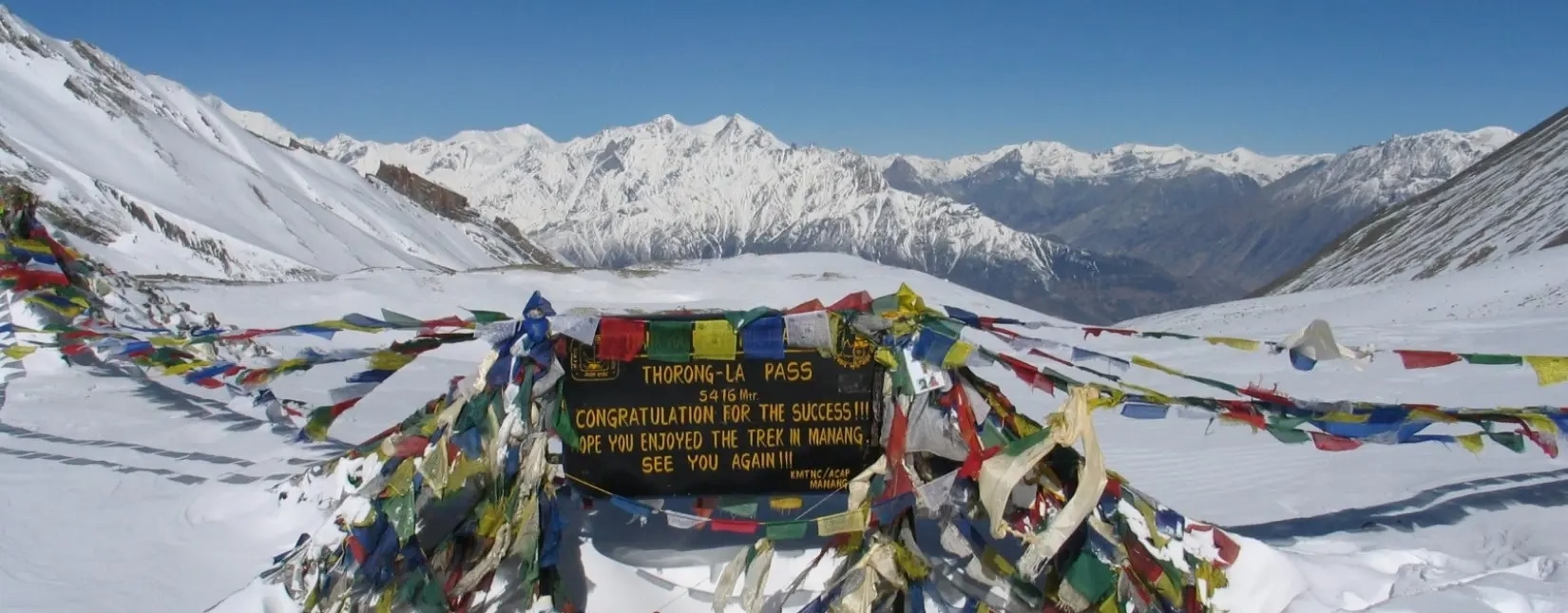
If there's one trek in Nepal that truly feels like a full Himalayan journey, it's the Annapurna Circuit Trek. Starting from green valleys and river gorges and slowly climbing all the way up to the dramatic Thorong La Pass, this trek isn't just a trail; it's a complete shift of landscapes, cultures, and experiences in one single route.
If there's one trek in Nepal that truly feels like a full Himalayan journey, it's the Annapurna Circuit Trek. Starting from green valleys and river gorges and slowly climbing all the way up to the dramatic Thorong La Pass, this trek isn't just a trail; it's a complete shift of landscapes, cultures, and experiences in one single route.
This is one of Nepal's classic trekking routes, and for good reason. In just a couple of weeks, you walk through traditional villages, cross suspension bridges, explore high mountain valleys like Manang, and finally step over one of the highest trekking passes in the world. It's the kind of Himalayan trekking adventure that stays with you long after the journey ends.
In this blog, we'll break everything down in a simple way: the route, difficulty, cost, best time, itinerary options, permits, and all the practical details you actually need before planning the trek. By the end, you'll be confident to go on this journey.
What Is The Annapurna Circuit Trek
The Annapurna Circuit Trek is the kind of journey people dream about when they think of trekking in Nepal. It's a long mountain trail that circles around the Annapurna Range, taking you through quiet villages, deep valleys, forest trails, rivers, and high Himalayan landscapes before finally crossing the famous Thorong La Pass.
What makes this trek so special is how much the experience changes from day to day. In the lower sections, you walk past waterfalls, green hills, and traditional Gurung villages.
A few days later, the scenery starts to feel completely different: dry cliffs, snowy peaks, Tibetan-influenced villages, and wide open mountain valleys. That contrast is one of the biggest reasons why trekkers from around the world still consider it one of the best long-distance treks in the country.
Another thing people love about this classic trekking circuit in Nepal is that it feels like more than just a hike. You're not simply walking toward one destination. Every day brings a different landscape, culture, and atmosphere, which makes the entire journey feel immersive from start to finish.
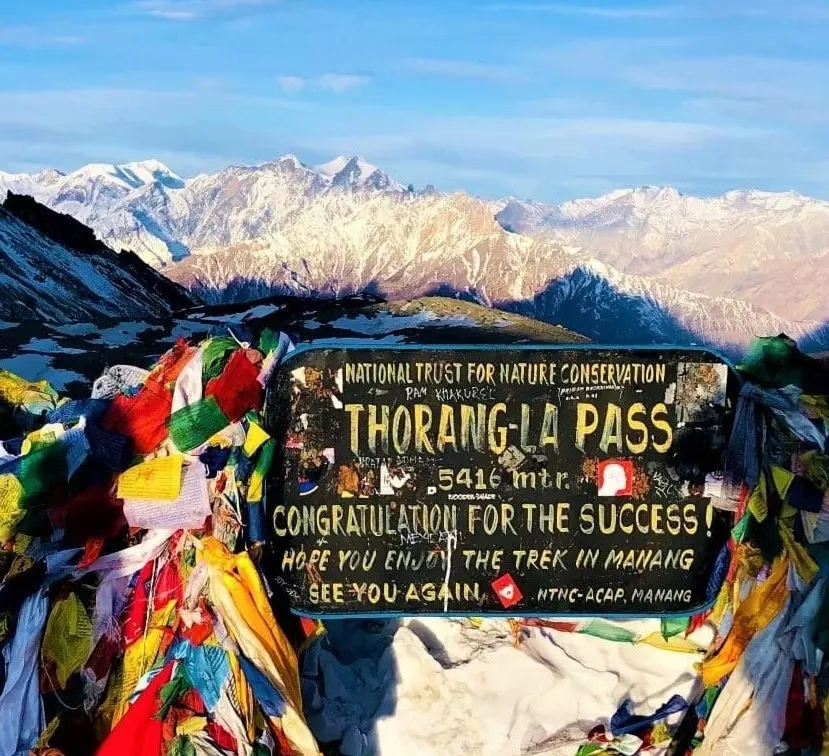
And of course, reaching Thorong La itself is a huge moment. Standing above the clouds with massive Himalayan peaks all around you is the kind of experience that stays in your memory long after the journey is over.
Annapurna Circuit Trek Route Overview
The Annapurna Circuit journey usually starts from Besisahar, although many trekkers now drive further ahead to places like Dharapani or Chame to avoid some of the road-access sections. From there, the trail slowly climbs through forests, riverside villages, and the beautiful Marsyangdi Valley toward the higher Himalayas.
As the trek continues, you pass through villages like Pisang before reaching Manang, one of the most important acclimatization stops on the trail. After Manang, the landscape becomes drier and more rugged as you head toward the famous Thorong La, the highest point of the trek. Crossing the pass is one of the biggest highlights of the entire journey.
Once you cross the pass, the trail descends to Muktinath and continues toward Jomsom through the windy landscapes of the Kali Gandaki region. If you have extra time, you can also take a side trip to Tilicho Lake (the world's highest lake), which adds a few more days to the adventure.
Overall, the map of the Annapurna Circuit route is much more than a simple mountain trail. It's a journey through changing landscapes, cultures, climates, and some of the most unforgettable scenery in Nepal.
Annapurna Circuit with Poon Hill Trek
View detailsAnnapurna Circuit Trek Difficulty
The difficulty of the Annapurna Circuit Trek is generally considered moderate to challenging. It isn't a technical climb, but the journey does involve long walking days, changing terrain, and high altitude, especially as you get closer to Thorong La Pass.
Most days involve around 5 to 7 hours of walking through forests, mountain villages, rocky trails, and alpine landscapes. The toughest part is usually crossing the pass, where the thin air can make the hike feel more exhausting than usual. Since this is a high-altitude trek in Nepal, proper acclimatization is very important.
The good thing is that beginners can still complete the trek with decent fitness and preparation. You don't need trekking experience, but regular walking, basic stamina, and a slow pace on the trail can make a huge difference.
Best Time For Trek
The best time to do the Annapurna Circuit Trek is usually during spring and autumn, as both seasons offer stable weather, beautiful mountain views, and comfortable trekking conditions. These are also considered the peak trekking seasons in Nepal for most Himalayan routes.
Spring (March To May)
Spring is one of the most beautiful times to do the trek. The weather is usually clear, the temperatures are pleasant, and the lower trails are filled with blooming rhododendron forests. The mountain views are also fantastic during this season.
Autumn (September To November)
Autumn is the most popular trekking season in Nepal. The skies are generally very clear after the monsoon, making the mountain scenery especially sharp and dramatic. The trails are busier, but the overall weather is usually the most stable.
Winter (December To February)
Winter trekking is possible, but it can get extremely cold at higher elevations. Heavy snowfall may also affect trails around Thorong La Pass, and some tea houses may remain closed in remote sections.
Monsoon (June To August)
Monsoon brings heavy rain, muddy trails, clouds, and leeches to the lower sections. However, the rain-shadow areas in upper Manang and Mustang receive less rainfall compared to other trekking regions in Nepal.
Trekking Cost & Budget Breakdown
The cost of the Annapurna Circuit Trek can vary a lot depending on how you choose to travel, but overall it's considered one of the more affordable long Himalayan treks. Most trekkers typically plan for it as part of their trekking budget in Nepal, and the cost can be adjusted based on their comfort level and support requirements.
To keep it simple, the main costs come from a few key areas:
Permits: You'll need an Annapurna Conservation Area Permit (ACAP) and Trekkers' Information Management System (TIMS).
Food: Meals in teahouses along the trail are simple but add up over the days.
Accommodation: Basic mountain lodges (teahouses) are available throughout the route.
Transport: Getting to and from the trailhead (like Besisahar or Pokhara side trips).
Guide/porter (optional but recommended): Adds safety, comfort, and local insight.
On a basic level, you can undertake it as a budget-independent trek or opt for a guided package, which is more convenient and stress-free. Independent trekkers spend less but have to manage everything on their own, while guided treks cost more but include logistics, food, accommodation, and support throughout the journey. If you're planning it seriously, you can check out our Annapurna Circuit Trek - 15 days package for a well-organised and hassle-free experience.
Customize Your Annapurna Circuit Trek
Besides that, you can also customize your itinerary according to your preferences, as each route offers a unique experience and its own special highlights.
Annapurna Circuit Trek with Tilicho Lake
You can visit the magnificent Tilicho Lake (4,919 m), one of the world's highest lakes, by taking a short side trip from Yak Kharka. It adds around 2–3 extra days to the standard itinerary, but the effort is truly worth it for the stunning views and unforgettable experience.
Nar Phu Valley Trek
Trekking in the restricted Nar Phu Valley is a completely different experience that lets you see what life is like near the Tibetan-Nepalese border. Since the trail is remote and less crowded, it offers a more raw and authentic trekking experience. A restricted area permit is required for this trek, and it adds around 4–5 extra days to your itinerary.
Upper Mustang Jeep Tour
Upper Mustang feels like a completely different world on its own. Since you reach Mustang and Jomsom at the end of your trek, you can extend your journey with a jeep tour to Lo Manthang and explore its magnificent monasteries and unique villages. The dry desert-like landscape offers a completely different side of Nepal, making it hard to believe you are still in the same country known for its green hills.
Annapurna Circuit with Poon Hill Trek
By adding Poon Hill to your trek, you will get the complete Annapurna Circuit experience. The trail takes you to the beautiful Ghorepani–Poon Hill region, offering stunning sunrise views and a 180-degree panorama of the Annapurna and Dhaulagiri ranges. If you trek during spring, the hills are covered with blooming rhododendrons (Laliguras), creating a view you will never forget.
You can enjoy a beautiful documentary(music only) of blooming Rhododendron Forest of Poonhill anddifferent areas in Annapurna Region
North Annapurna Base Camp Trek (Maurice Herzog Trail)
Although the southern Annapurna Base Camp trek is more popular, this is the original route used by climbers to summit Mt. Annapurna. It is also the trail used by Maurice Herzog during the first ascent of Annapurna in 1950 A.D. At base camp, you will be welcomed by the beautiful Panchakunda Lake, dramatic mountain views, and many waterfalls along the trail, making it a peaceful and rewarding journey.
The exciting part is that these are not the only trekking options in the Annapurna region. There are many more trails to explore, but these are some of the most popular ones or routes that are gaining popularity among trekkers. Each trail offers a unique experience, different from the standard Annapurna Circuit route, adding something special to your journey that you will remember for a lifetime.
Permits Information
Before starting the trek, it's important to know that you'll need a couple of basic trekking permits in Nepal to enter the Annapurna Region. Don't worry, it sounds more complicated than it actually is, and most trekkers get it sorted pretty easily in Kathmandu or Pokhara.
The main one is the ACAP. This is required for everyone entering the region, and it basically helps support conservation work and local communities along the trail. You'll need to carry it with you because it gets checked at various checkpoints during the trip, especially in places like Besisahar, Chame, and other trail sections.
In most cases, the permits for the Annapurna Circuit Trek are checked by authorities at trail checkpoints, so you don't really have to worry once you're on the route. Just make sure you keep them safe and accessible in your daypack.
Accommodation & Food On The Trek
On the Annapurna Circuit Trek, you'll mostly stay in simple mountain lodges or teahouses, which are found in almost every village along the trail. This style of tea house trekking in Nepal is what makes the whole journey easy and accessible. You don't need camping gear, just a good sleeping bag and a bit of adventure spirit.
Rooms in most tea houses are very basic but comfortable enough after a long day of walking. You'll usually get a twin-sharing room with two beds, a mattress, a pillow, and a blanket.
Bathrooms are mostly shared, especially as you go higher, and things get simpler the deeper you go into the mountains. It isn't luxury, but it's a warm, local, and very real trekking experience.
Food on the trail is actually quite decent and filling. The most common meal is dal bhat (rice, lentils, and vegetables), which is basically the fuel for trekkers in Nepal.
You'll also find noodles, soups, fried rice, pasta, and sometimes pancakes or eggs in lower villages. It's simple food, but it keeps you going strong for long trekking days.
Altitude Sickness & Safety Tips
One of the biggest things to be aware of during the trek is altitude sickness, which trekkers can experience as they climb higher into the mountains. Since the trail reaches Thorong La, the thinner air at high altitude can affect anyone, even experienced trekkers. Common symptoms usually include headache, nausea, dizziness, loss of appetite, and unusual fatigue.
The good news is that most problems can be avoided with proper acclimatization in the Himalayas. That's why trekkers usually spend an extra day in Manang before heading higher. Giving your body time to adjust makes a huge difference during the journey.
A few simple habits also help a lot:
Walk slowly instead of rushing. ( Helps your body to adapt to increasing altitude)
Stay hydrated throughout the day.
Avoid gaining altitude too quickly.
Listen to your body if symptoms get worse.
Overall, the Annapurna Circuit is considered a safe trek when done at a steady pace with proper acclimatization and preparation.
Annapurna Circuit Trek Itinerary
A well-balanced itinerary for the Annapurna Circuit usually takes around 15 days and gives you enough time to enjoy the journey without rushing through the mountains.
Day-To-Day Itinerary
Day 01: Arrival at Kathmandu (1,400 m/4,593 ft) and transfer to the hotel in Thamel. Time Required: 30 minutes drive. Distance: 6 km (3.7 miles). Overnight at the hotel.
Day 02: Drive from Kathmandu to Besisahar (760 m/2,493 ft). Time Required: 6 to 7 hours. Distance: 150 km (93 miles). Overnight at the guesthouse.
Day 03: Drive from Besisahar to Jagat (1,300 m/4,265 ft). Time Required: 4 to 5 hours. Distance: 35 km (22 miles). Overnight at the guesthouse.
Day 04: Trek from Jagat to Dharapani (1,860 m/6,102 ft). Time Required: 5 to 6 hours. Distance: 14 km (8.7 miles). Overnight at the teahouse.
Day 05: Trek from Dharapani to Chame (2,670 m/8,760 ft). Time Required: 5 to 6 hours. Distance: 12 km (7.5 miles). Overnight at the guesthouse.
Day 06: Trek from Chame to Upper Pisang (3,300 m/10,827 ft). Time Required: 4 to 5 hours. Distance: 9 km (5.6 miles). Overnight at the guesthouse.
Day 07: Trek from Upper Pisang to Manang (3,540 m/11,614 ft) via Ghyaru (3,410 m/11,188 ft) & Ngawal (3,530 m/11,581 ft). Time Required: 6 to 7 hours. Distance: 14 km (8.7 miles). Overnight at the guesthouse.
Day 08: Acclimatization Day in Manang, day hikes to Ice Lake (4,000 m/13,123 ft), Braga Monastery (3,600 m/11,811 ft), and Gangapurna Lake (3,700 m/12,139 ft). Time Required: 2 to 6 hours, depending on the hike. Distance: 5 to 12 km (3 to 7 miles). Overnight at the guesthouse.
Day 09: Trek from Manang to Yak Kharka (4,050 m/13,287 ft). Time Required: 4 to 5 hours. Distance: 10 km (6.2 miles). Overnight at the guesthouse.
Day 10: Trek from Yak Kharka to Thorong Phedi (4,525 m/14,848 ft). Time Required: 4 to 5 hours. Distance: 8 km (5 miles). Overnight at the guesthouse.
Day 11: Cross Thorong La Pass (5,416 m/17,769 ft) via High Camp (4,925 m/16,155 ft) and trek to Muktinath (3,800 m/12,467 ft). Time Required: 9 to 12 hours. Distance: 16 to 18 km (10 to 11 miles). Overnight at the guesthouse.
Day 12: Trek from Muktinath to Kagbeni (2,810 m/9,219 ft). Time Required: 4 to 5 hours. Distance: 11 km (6.8 miles). Overnight at the guesthouse.
Day 13: Trek from Kagbeni to Jomsom (2,720 m / 8,923 ft). Time Required: 3 to 4 hours. Distance: 10 km (6.2 miles). Overnight at the guesthouse.
Day 14: Fly or drive from Jomsom to Pokhara (910 m/2,985 ft). Flight time: 20 minutes. Drive: 6 to 7 hours (170 km/105 miles). Overnight at the hotel.
Day 15: Drive or fly from Pokhara to Kathmandu and Departure. Flight time: 25 minutes. Drive: 6 to 7 hours (200 km/124 miles).
Conclusion
The Annapurna Circuit Trek is a complete mountain journey through changing landscapes, remote villages, high Himalayan passes, and unforgettable scenery. From the green valleys below to the dramatic crossing of Thorong La Pass, every part of the trail feels different, which is what makes the entire trekking experience in the Annapurna Region so special.
Whether you're trekking for the mountain views, learning about local culture, personal challenge, or simply to experience a true Himalayan adventure in Nepal, the trek offers all of it in one incredible journey. And with the right planning, pace, and local support, it becomes enjoyable for both experienced hikers and well-prepared beginners.