

Best Time for Annapurna Base Camp Trek: 2026 Guide
Planning your ABC trek? The time of year you choose can significantly shape your experience. Learn the best time to visit, expected weather, trail conditions, and key factors that can influence your overall trekking experience.

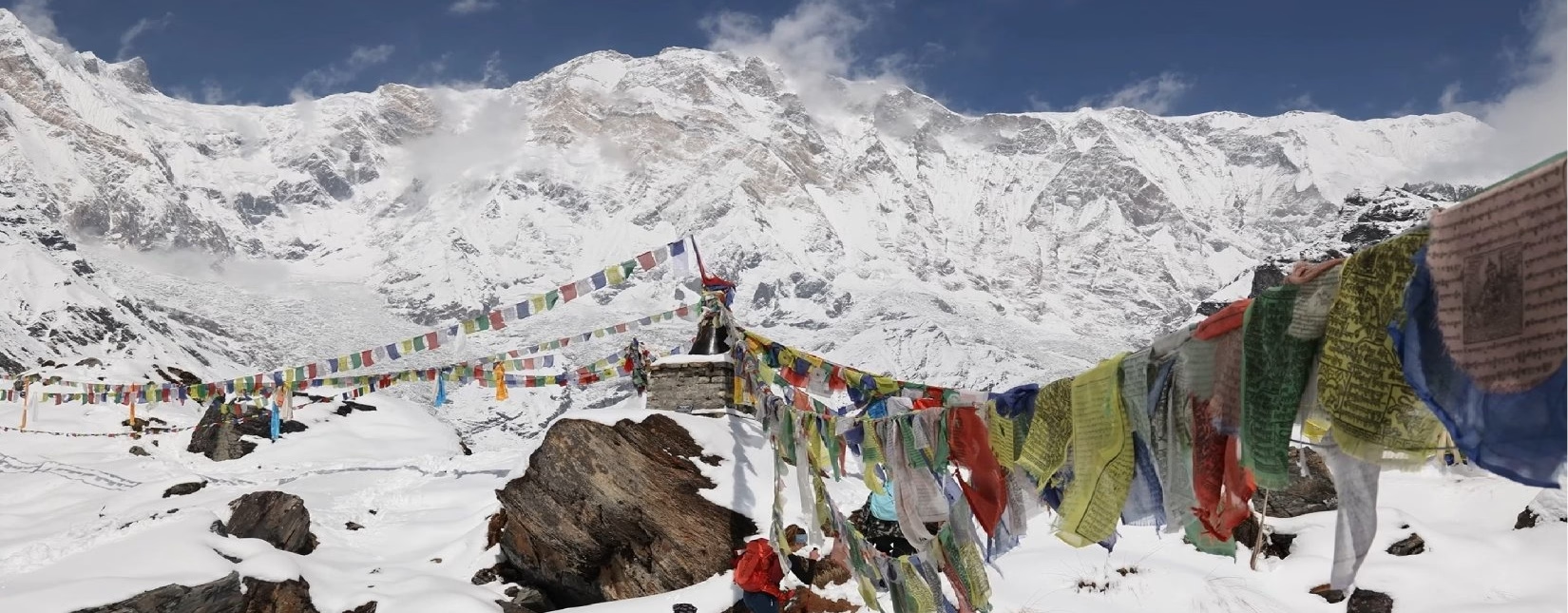
The best time for the Annapurna Base Camp trek is October to mid-November and late March to April, when stable weather, dry trails, clear Himalayan views, and dependable tea house services create the most favorable trekking conditions. Annapurna Base Camp (ABC), at 4,130 m, sits within the Annapurna Sanctuary, a glacial basin surrounded by Annapurna I (8,091 m), Annapurna South (7,219 m), Machhapuchhre (6,993 m), and Hiunchuli (6,441 m).
The trek crosses several climate zones as it rises from the lower valleys through rhododendron and oak forests to the alpine terrain above Deurali, making temperature, rainfall, snowfall, cloud cover, and altitude important factors when choosing a trekking month.
October and November offer the clearest mountain views and driest trail conditions, while March and April combine warming temperatures, blooming rhododendrons, and long daylight hours. December to February brings colder nights, snow, shorter days, and higher avalanche exposure but rewards experienced trekkers with quieter trails. June to August falls within the monsoon, when heavy rainfall, leeches, landslides, swollen streams, and cloud cover make the ABC route less predictable.
Trail traffic, tea house availability, transportation, trekking costs, permits, guide requirements, and buffer days also vary by season. This guide compares each month and trekking season so you can choose the best time for the Annapurna Base Camp trek based on mountain visibility, weather stability, crowd levels, safety, budget, and trekking experience.
Which Months Are Best for the Annapurna Base Camp Trek?
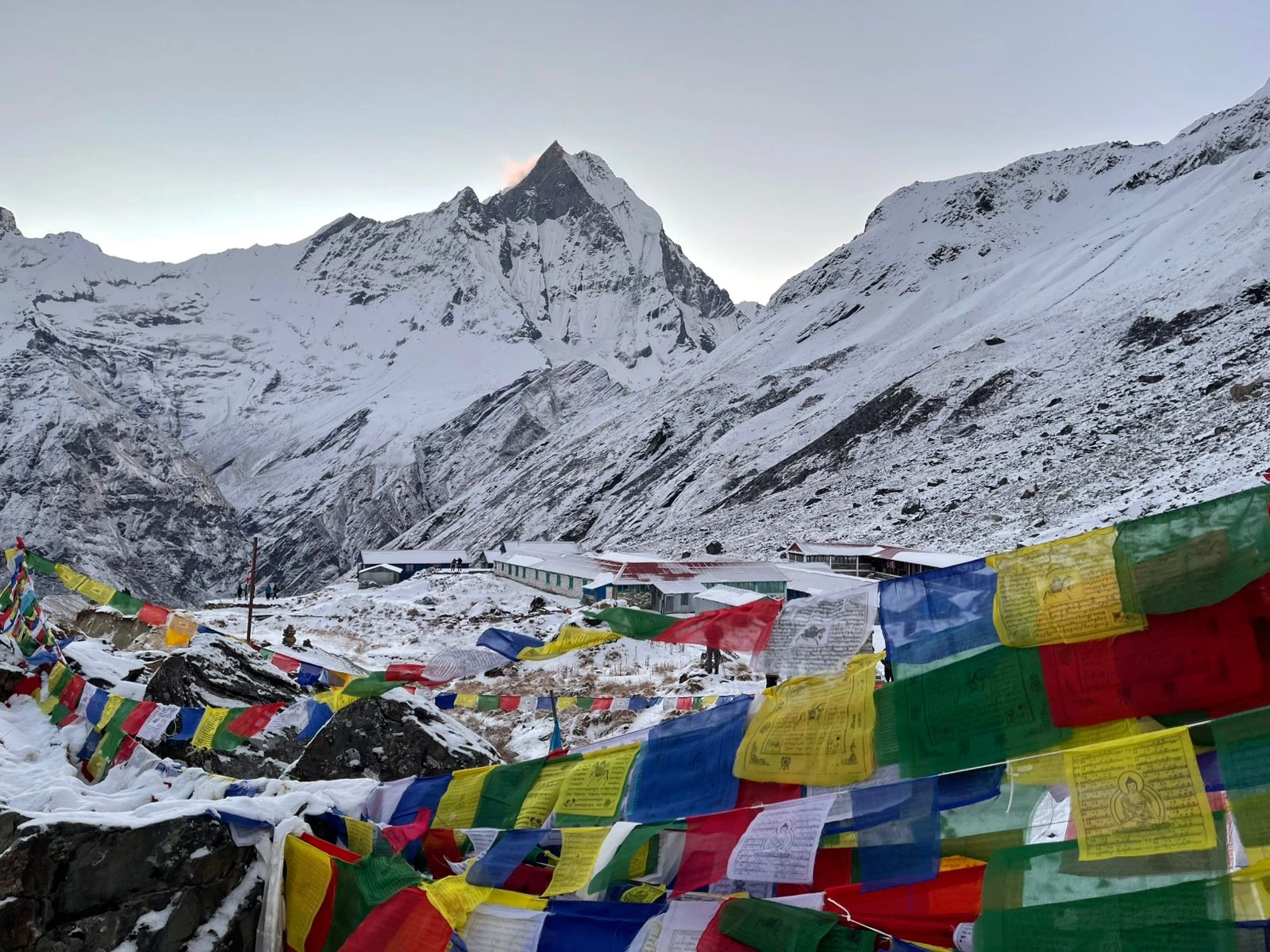
October, November, March, and April are the best months for the Annapurna Base Camp trek. These 4 months offer dry trails, clear mornings, and open lodges at every stop. December to February works with cold-weather preparation. May works with an early start each day. June to August brings monsoon rain and poor views.
The table below rates each month on 4 factors: night temperature at ABC, weather risk, mountain views, and trail traffic. Night lows come from Pokhara's 1981 to 2010 climate normals, adjusted by the standard cooling rate of 6.5°C per 1,000 m and checked against trail reports. Real nights vary by 3 to 4°C between years.
Month | Typical night low at ABC | Main weather risk | Mountain views | Trail traffic |
January | -12 to -20°C | Snow, avalanches on the upper trail | Excellent on clear days | Very low |
February | -10 to -15°C | Snow, hard frost | Excellent on clear days | Low |
March | -8 to -10°C | Snow patches, afternoon cloud | Very good | Moderate |
April | -4 to -6°C | Afternoon haze | Good to very good | Very high |
May | -3 to 0°C | Pre-monsoon showers, haze | Fair to good | Moderate |
June | 0 to 2°C | Monsoon onset | Poor | Very low |
July | 0 to 2°C | Heavy rain | Poor | Very low |
August | 0 to 2°C | Heavy rain, landslides | Poor | Very low |
September | -1 to 1°C | Showers early, clearing late | Fair to good | Moderate |
October | -4 to -6°C | Rare late-month snow | Excellent | Very high |
November | -8 to -10°C | Cold nights | Excellent | High, falling |
December | -10 to -14°C | Snow possible | Excellent | Low |
April and October carry the most trekkers. January, February, and the monsoon months carry the fewest. The 2 quietest windows that still deliver workable weather are the first half of December and the first half of March.
Why Is Spring a Popular Season for the Annapurna Base Camp Trek?
Spring is popular because March to May combines warming days, blooming rhododendron forests, and stable pre-monsoon skies. Pre-monsoon means the weeks before the summer rains arrive in mid-June.
The forests between Ghorepani and Chhomrong flower with Rhododendron arboreum, Nepal's national flower, which the Nepali language calls lali gurans. Lower slopes bloom in March, and higher slopes follow in April. Spring also draws the biggest single-month crowd of the year. ACAP recorded 44,763 foreign arrivals in April 2025, the busiest month between January and October that year.
First-time trekkers like spring because afternoon highs at the lower villages sit near 20°C. Photographers like it for the contrast of pink forest and white peaks in the same frame.
Why Is Autumn Considered the Best Trekking Season for the Annapurna Base Camp Trek?
Autumn is the best trekking season because the monsoon washes dust from the air and leaves the clearest skies and driest trails of the year. The rainfall data explains why. Pokhara averages about 641 mm of rain in September and about 140 mm in October, a 78% drop in one month. November averages about 18 mm.
ACAP calls Asoj (17 September to 17 October) and Kartik (18 October to 16 November) the peak trekking months in the region. Terraced villages such as Ghandruk and Chhomrong turn gold during the millet and rice harvest. Night temperatures at ABC stay between -4°C and -10°C, which a good sleeping bag handles.
Can You Trek to Annapurna Base Camp in Winter?
Yes, you can trek to Annapurna Base Camp in winter, from December to early February, but cold, snow, and avalanche risk demand serious preparation. Night lows at ABC fall between -10°C and -20°C. Skies stay crisp and clear on most mornings.
Winter also brings solitude. ACAP counted only 9,359 foreign arrivals in January 2025, which is 4.8 times fewer than April. The price is risk. An avalanche on 17 January 2020 between Deurali and Himalaya killed 7 people, including 4 South Korean trekkers and 3 Nepali guides. Lodge availability also thins above Deurali in January and February, so confirm bookings before you commit.
Is the Annapurna Base Camp Trek Possible During Monsoon?
The Annapurna Base Camp trek is possible during the monsoon, from June to early September, but rain, leeches, landslides, and cloud cover cut both safety margins and views. Pokhara receives about 669 mm in June, 940 mm in July, and 866 mm in August.
Lodges stay open and the hills turn vivid green. The trade-off is that most mornings above Deurali start clear and close in by late morning. Trekkers who want monsoon-season walking without the rain can look to the Annapurna Conservation Area's northern districts, such as Upper Mustang, which sit in the Himalayan rain shadow. The ABC trail has no such protection.
What Is the Weather Like During the Annapurna Base Camp Trek?
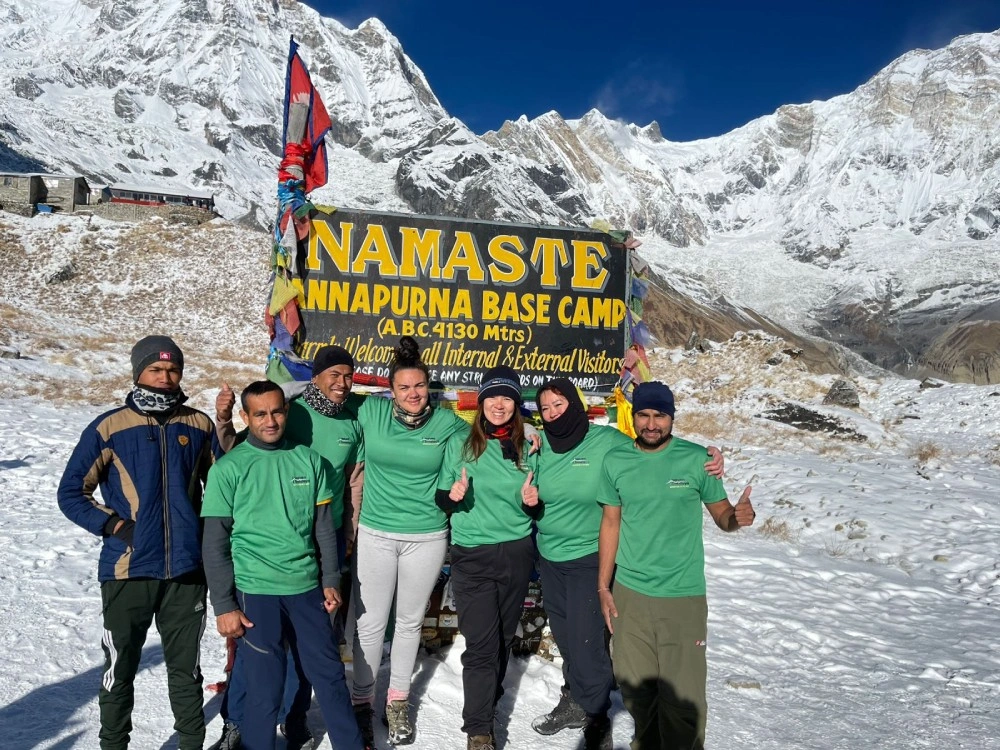
The weather on the Annapurna Base Camp trek changes with both season and altitude. The trail climbs from about 1,070 m at Nayapul to 4,130 m at ABC, a gain of roughly 3,060 m that cools the air by about 20°C. A warm afternoon at the trailhead and a freezing night at the top belong to the same day.
Four variables drive decisions: temperature, altitude, rainfall, and snow. Each one gets its own breakdown below.
What Temperatures Can You Expect at Annapurna Base Camp?
Expect daytime highs of 6 to 12°C and night lows of -4 to -10°C at Annapurna Base Camp during the main seasons of spring and autumn. Winter highs fall between -2°C and 5°C, and winter night lows reach -12°C to -20°C. Monsoon temperatures sit in a narrow band, from about 0°C at night to 9°C by day.
The monthly table above shows the night lows. Pack for the night, not the afternoon. Tea house rooms have no heating, so the room temperature tracks the outdoor temperature within a few degrees. A sleeping bag comfort-rated to -10°C covers October to April for most trekkers. Wind chill matters most at dawn, when trekkers stand still at the viewpoint above ABC waiting for first light. Add a down jacket, a windproof shell, and insulated gloves to the bag for that hour.
How Does Weather Change With Altitude of Annapurna Base Camp Trek?
Weather changes with altitude on the Annapurna Base Camp trek at a rate of about 6.5°C per 1,000 m of ascent. Pokhara reaches an average April high of about 30°C. Apply the cooling rate to the 3,300 m between Pokhara and ABC, and the same afternoon lands near 8°C at the top.
The trail passes through 3 distinct climate bands:
Subtropical farmland below 1,800 m, with terraces, banana groves, and warm afternoons
Temperate forest of oak and rhododendron between 1,800 m and 3,000 m, with frequent mist
Alpine terrain above Deurali (3,230 m), with no trees, strong sun, and fast-changing cloud
Clouds climb the Modi Khola valley from Pokhara each day, which is why views above Deurali peak before 9 a.m. in every season. Plan the climb to ABC around that pattern. Start from Himalaya Hotel or Deurali by 6:30 a.m. so that you reach MBC (3,700 m) and ABC before the valley cloud arrives.
How Much Rainfall Can You Expect During Each Season of Annapurna Base Camp Trek?
Rainfall on the Annapurna Base Camp trek peaks from June to September, when about 80% of the annual total falls. The table below shows seasonal rainfall at Pokhara, the gateway city, using 1981 to 2010 climate normals. Pokhara averages about 3,900 mm per year.
Season | Months | Pokhara rainfall | Share of annual total |
Spring | March to May | about 547 mm | 14% |
Monsoon | June to September | about 3,116 mm | 80% |
Post-monsoon | October to November | about 158 mm | 4% |
Winter | December to February | about 80 mm | 2% |
The numbers confirm that October and November hold the driest trail days. Lumle, a village on the lower route near Pokhara, records more than 5,600 mm per year, the highest in Nepal. Valley stations differ from ABC itself, but the seasonal pattern carries up the trail. Heavy rain at 2,000 m arrives as snow above 3,500 m.
How Does Snow Affect the Annapurna Base Camp Trek?
Snow affects the Annapurna Base Camp trek most from December to March, with late-October and April storms as the exceptions that catch trekkers off guard. Snow slows walking, hides the trail on the moraine near ABC, and loads the slopes above Deurali with avalanche risk.
The late-October 2025 storm shows the pattern. The late-October 2025 storm shows the pattern. The Himalayan Times reported on 30 October that snow had covered ABC since the night of 27 October, forcing authorities to close the trail and leading to the rescue of 72 stranded tourists from the area. A severe cyclonic storm over the Bay of Bengal was forecast to add 20 to 40 cm more across the Annapurna range. October 2014 brought a similar early storm, which killed at least 39 people across the Annapurna and Dhaulagiri regions.
Three rules protect trekkers on snow days. Wait in the lodge after fresh snowfall until local guides confirm the slope is stable. Treat the stretches from Himalaya to Deurali and from Deurali to MBC as the avalanche-prone sections. Add 1 or 2 buffer days to the itinerary in any month from October to April. Confirm that your travel insurance covers trekking above 4,000 m and helicopter evacuation.
What Are the Advantages of Trekking to Annapurna Base Camp in Spring?
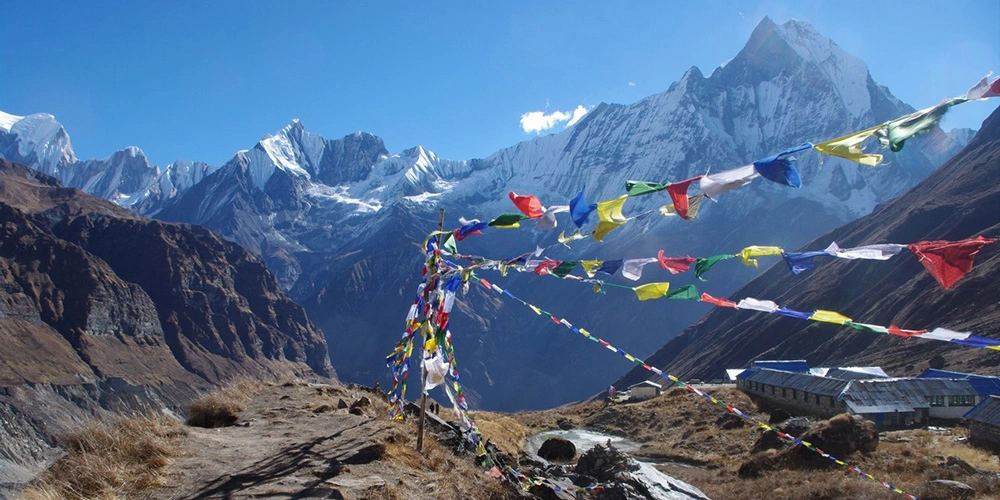
Trekking to Annapurna Base Camp in spring offers 5 advantages: warm afternoons, rhododendron blooms, long daylight, stable pre-monsoon weather, and fully open lodges. Day length at this latitude stretches past 12 hours from late March, which gives slow walkers extra margin on the 6 to 7 hour climb from Deurali to ABC.
Spring also rewards trekkers who want snow in the scenery without winter cold. The upper sanctuary keeps its white cover into April, while the valley below turns green.
What Can You Expect From March to May in Annapurna Base Camp Trek?
From March to May, expect warming temperatures, a long run of dry days, and a slow loss of mountain clarity as haze builds toward the monsoon. Each month feels different on the trail.
March is the coldest and clearest month of spring. Night lows at ABC sit near -8°C to -10°C, snow patches linger above Deurali, and trail traffic stays moderate. April brings the rhododendron peak, the warmest days, and the crowds. Nights ease to -4°C to -6°C. May is warm and hazy, with pre-monsoon showers and occasional hail in the afternoon. Nepal's monsoon normally arrives in mid-June, so May trekkers should finish each day's walk before 2 p.m.
What Are the Mountain Views on Annapurna Base Camp Trek Like in Spring?
Mountain views on the Annapurna Base Camp trek in spring are sharp in March, good in April, and softer in May. Dust and humidity build with the heat, so distant ranges such as Dhaulagiri fade first. The close peaks around ABC stay vivid, including Annapurna I, Annapurna South, Gangapurna, Annapurna III, and Machhapuchhre.
The sunrise at Poon Hill (3,210 m) is the standard long-range view, and it clears best in March. For the ABC amphitheater itself, sleep at ABC rather than day-tripping from MBC. Morning light on Annapurna I at first sun is the reward that justifies the extra night, and clouds rarely interfere before 9 a.m.
How Busy Is the Annapurna Trail During Spring?
The Annapurna trail is busy in spring, and April is the busiest month of the year. ACAP's April 2025 count of 44,763 foreign arrivals is 4.8 times its January count. ACAP chief Dr Rabin Kadariya told The Himalayan Times that Pokhara hotel occupancy reached as high as 90% across the peak months of Baisakh and Jestha, which run from mid-April to mid-June.
Part of that spring surge comes from South Asian visitors, whose numbers rise before the monsoon, and part of it heads to Muktinath by road rather than to ABC. The ABC trail still fills. Lodges at MBC and ABC reach capacity by mid-afternoon in peak weeks. Reserve rooms through your agency, walk the upper sections early, and plan shorter days if the beds look scarce.
What Are the Advantages of Trekking to Annapurna Base Camp in Autumn?
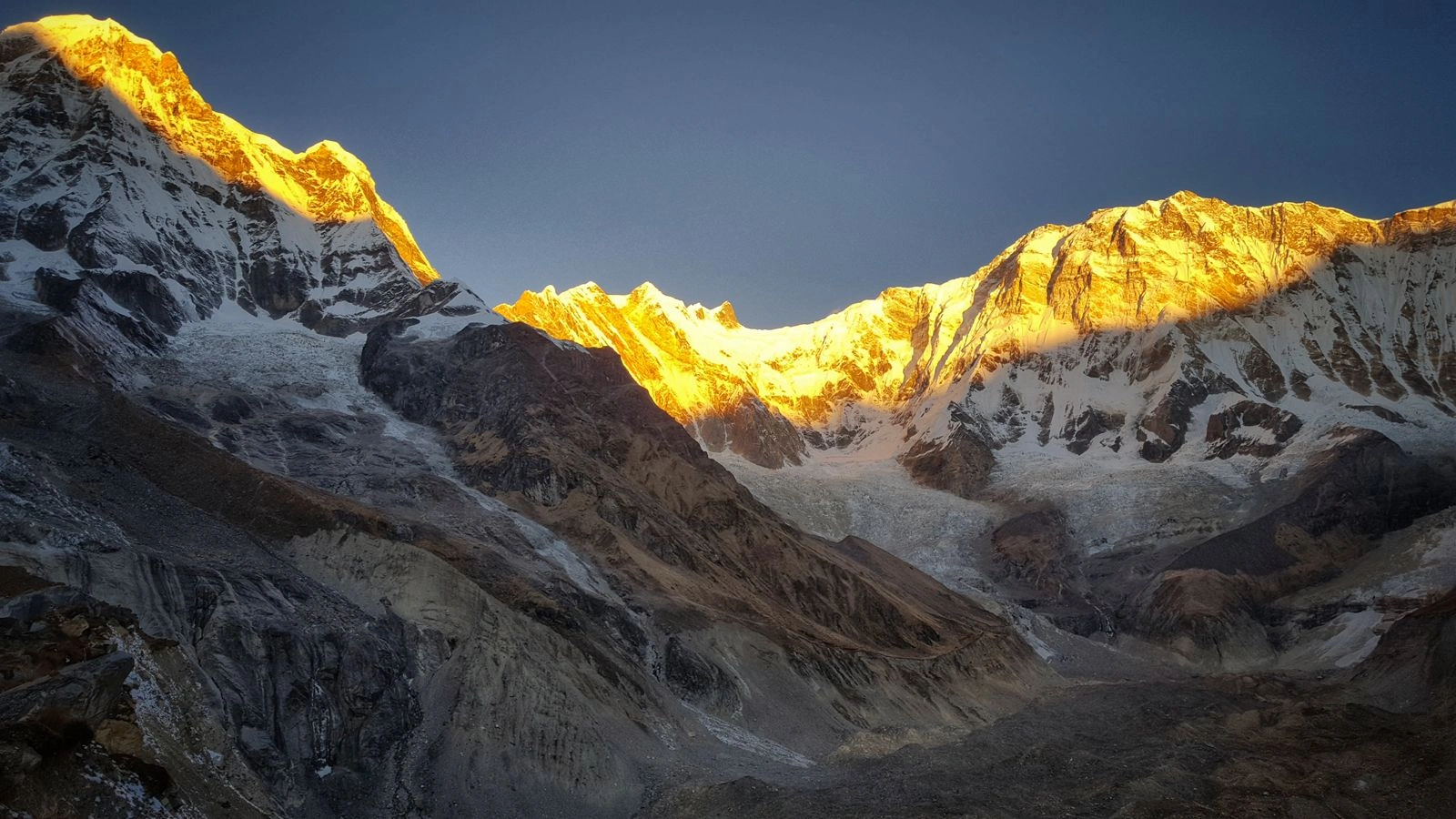
Trekking to Annapurna Base Camp in autumn offers 5 advantages: the clearest skies of the year, the driest trails, steady temperatures, harvest-season villages, and festival access. Autumn also delivers the most predictable itinerary. A 15-day schedule drawn up in July rarely needs rearranging in October.
The trade-off is traffic. Autumn is the season when everyone else reads the same weather data and picks the same weeks.
What Can You Expect From September to November in Annapurna Base Camp Trek?
From September to November, expect rain to fade in September, perfect conditions in October, and rising cold in November. The 3 months behave differently.
September is a transition month. Pokhara still collects about 641 mm, so lower sections stay wet and leeches linger in the bamboo forests. Skies clear in the last 10 days of the month. October delivers the dry trail, daytime highs near 6 to 12°C at ABC, and night lows of -4°C to -6°C. November turns colder, with nights of -8°C to -10°C and highs of only 2 to 8°C. Skies stay clear, and crowds thin after Tihar, the festival of lights, which falls on 7 to 11 November in 2026.
Why Is October Popular for the Annapurna Base Camp Trek?
October is popular for the Annapurna Base Camp trek because it pairs the first fully dry weeks after the monsoon with mild temperatures and the best mountain visibility of the year. Rainfall falls from 641 mm in September to 140 mm in October, and the air is at its cleanest.
ACAP recorded 30,547 foreign visitors in Asoj 2025, and it recorded 33,310 in Kartik 2024. Dashain adds a logistical layer in 2026. The festival runs from 11 to 25 October, with Vijaya Dashami on 21 October. Roads, buses, and flights between Kathmandu and Pokhara fill with Nepali families in the days before the main day, so reserve transport early.
October carries one real risk. Remnants of Bay of Bengal cyclones brought heavy snow to the Annapurna region in October 2014 and again in late October 2025. Trekkers who walk in the first 3 weeks of the month avoid most of that exposure.
How Busy Is the Annapurna Trail During Autumn?
The Annapurna trail is very busy in autumn, with the heaviest traffic from late September to early November. ACAP's Asoj 2025 figure of 30,547 foreign visitors included 20,528 from outside South Asia. That is 67% of the total, which means autumn crowds are mostly international trekkers heading for the trails, unlike the spring peak.
The upper villages fill first. Start each day from Himalaya or Deurali early, carry your own backup plan for a second lodge, and leave one rest day open before ABC. Late November is the quieter autumn option, because trekkers accept colder nights in exchange for emptier trails and free beds.
Can You Trek to Annapurna Base Camp During Winter or Monsoon?
Yes, you can trek to Annapurna Base Camp during winter or monsoon, but each season removes a safety margin that spring and autumn provide: warmth in winter, and dry trail and visibility in the monsoon. Success in these seasons depends on guides, extra days, and gear, not on stamina alone.
Both seasons suit a specific type of trekker, covered below.
What Are the Challenges of Winter Trekking to Annapurna Base Camp?
Winter trekking to Annapurna Base Camp presents 5 challenges: extreme cold, deep snow, avalanche exposure, short days, and reduced lodge services. Night lows reach -20°C at ABC in January. Daylight shrinks to about 10.5 hours, which compresses the 6 to 7 hour climb from Deurali.
Snow turns the final approach into slow, careful walking, and the 2020 avalanche near Deurali shows why. Some lodges above Deurali close or reduce services in the coldest weeks. Trekkers pack a -15°C sleeping bag, microspikes, insulated boots, and a face covering. A guide who knows the slope history decides whether the day continues or ends.
What Are the Challenges of Monsoon Trekking to Annapurna Base Camp?
Monsoon trekking to Annapurna Base Camp presents 5 challenges: heavy rain, leeches, landslides, swollen streams, and cloud-covered peaks. Pokhara records about 940 mm in July alone, and the stone staircases between Chhomrong and Bamboo turn slick.
Leeches thrive in the bamboo forests around Bamboo and Dovan, so trekkers tuck trousers into socks and carry salt. Landslides close sections of the road to Nayapul and delay buses on the Kathmandu to Pokhara highway. Flights run late. Morning views above Deurali still appear on some days, but a full panorama is never guaranteed. Pack waterproof layers, a pack liner, gaiters, and 2 spare days.
Who Should Consider Off-Season Trekking to Annapurna Base Camp?
Experienced trekkers, flexible travelers, and photographers should consider off-season trekking to Annapurna Base Camp. Each group trades comfort for something specific.
Experienced trekkers get empty trails and attention from lodge owners. Flexible travelers, such as teachers on a July break or remote workers who set their own schedule, can wait for weather windows. Photographers get dramatic cloud light in the monsoon and crisp frost in winter. First-time high-altitude trekkers and anyone on a fixed return flight do better in spring or autumn, because delays have no cost to absorb. Off-season trekkers also benefit from a licensed guide and an itinerary with built-in buffer days.
How Can You Choose the Best Time for Your Annapurna Base Camp Trek?
Choose the best time for your Annapurna Base Camp trek by ranking 3 priorities: mountain views, fewer crowds, and cost. Each priority points to a different window.
Priority | Best window | Backup window |
Clear mountain views | Mid-October to mid-November | Late March to mid-April |
Fewer crowds | First half of December | February, first half of March |
Lower cost | Early December | Early March |
Match the row to your top priority, then check your own flexibility. A fixed holiday week narrows the choice faster than any weather chart.
Which Trekking Season Is Best for Clear Mountain Views on Annapurna Base Camp Trek?
Autumn, from mid-October to mid-November, is the best trekking season for clear mountain views on the Annapurna Base Camp trek. The monsoon rain has cleaned the air, and the pre-winter jet stream has not yet started pushing storms.
Late March to mid-April is the best spring match, before haze builds. Winter mornings are also clear, but short days and extreme cold limit time at the viewpoint. Whatever the season, the best light comes at sunrise and the early morning hours. Spend the night at ABC to catch both the evening glow and first light on Annapurna I.
Which Season on Annapurna Base Camp Trek Is Best for Fewer Crowds?
Early December is the best season on the Annapurna Base Camp trek for fewer crowds, with stable skies and about one-third of the traffic seen in peak months. ACAP counted 9,359 foreign arrivals in January 2025, the quietest month of that year. April brought 44,763.
February and the first half of March are the next best options for solitude. Night temperatures at ABC in December sit between -10°C and -14°C, so a high-quality sleeping bag and a flexible schedule are the price of empty trails. Monsoon months have the fewest trekkers of all, but the weather cost is high.
Which Season on Annapurna Base Camp Trek Is Best for Budget Travelers?
Early December and early March are the best seasons on the Annapurna Base Camp trek for budget travelers, because demand sits below peak levels while weather stays stable. Permit fees do not change by season. The ACAP permit costs NPR 3,000 (about $21), and the TIMS card costs NPR 2,000 for foreign nationals (NPR 1,000 for SAARC). Since Nepal banned independent trekking in 2023, you must hire a licensed guide and obtain your TIMS card through a registered agency.
Savings come from Pokhara hotels, transfers, and package pricing, which all soften outside the April and October peaks. Trail costs follow altitude, not season. A simple meal near the top costs NPR 1,000 to 1,500 (roughly $7 to $11), a litre of boiled water costs NPR 150 to 300, and charging a phone costs $2 to $3. Plastic water bottles are banned in the conservation area, so carry a reusable bottle and purification tablets.
A shorter route also cuts cost. The Short Annapurna Base Camp Trek covers the route in 6 days and removes several nights of lodge, guide, and porter expenses.
How Can Heaven Himalaya Help You Plan the Best Time for the Annapurna Base Camp Trek?
Heaven Himalaya helps you plan the best time for the Annapurna Base Camp trek by matching your dates, fitness, and priorities to a season, then building the itinerary, permits, transport, and lodge bookings around that match. A planning call or message settles 4 questions up front: which month, which route length, which comfort level, and how much buffer to carry.
The standard Annapurna Base Camp Trek runs 15 days and adjusts from 7 days to 15 days to fit your calendar. The itinerary reaches ABC through Machhapuchhre Base Camp. We arrange ACAP and TIMS permits, ground transport from Kathmandu through Pokhara to Nayapul, tea house bookings at the busy upper villages, and a licensed guide who reads the weather each morning. Trekkers who want an easier return can ask about finishing with a helicopter flight.
Our advice for first-time clients is consistent. Pick the month first, because the month determines the gear list, the daily schedule, and the buffer days.
Can Heaven Himalaya Arrange an Annapurna Base Camp Trek in Your Preferred Season?
Yes, Heaven Himalaya can arrange an Annapurna Base Camp trek in your preferred season, whether you choose spring, autumn, winter, or the monsoon. The route stays the same. The pacing, the buffer days, the gear list, and the lodge plan change with the season.
Spring and autumn itineraries book out early, so send your target month, group size, and fitness background as soon as you have them. Winter and monsoon itineraries add rest days, a stricter weather-day policy, and extra briefing on snow and leech management.
What Are the Key Takeaways About the Best Time for the Annapurna Base Camp Trek?
The best time for the Annapurna Base Camp trek is October to mid-November, with late March to April as the strongest alternative. The 7 points below summarize the decision.
Choose October for the clearest views and driest trails, and finish before the last week to avoid snow risk.
Choose April for rhododendron blooms, and reserve rooms early because April is the busiest month.
Choose early December for the best balance of solitude, stable skies, and lower cost.
Choose January only with winter gear, a guide, and flexible days, because avalanche risk and -20°C nights apply.
Choose the monsoon only with leech protection, waterproofs, and 2 spare days.
Pack for the night low at ABC, which sits between -4°C and -14°C in the main trekking months.
Reserve 1 or 2 buffer days in every season, because weather decides the final approach to 4,130 m.
Timing shapes the whole experience, from the first step at Nayapul to sunrise at base camp. Pick the season that matches your priorities, prepare for its specific risks, and the best time for the Annapurna Base Camp trek becomes your time.