

10 Best Nepal Treks for September–October 2026

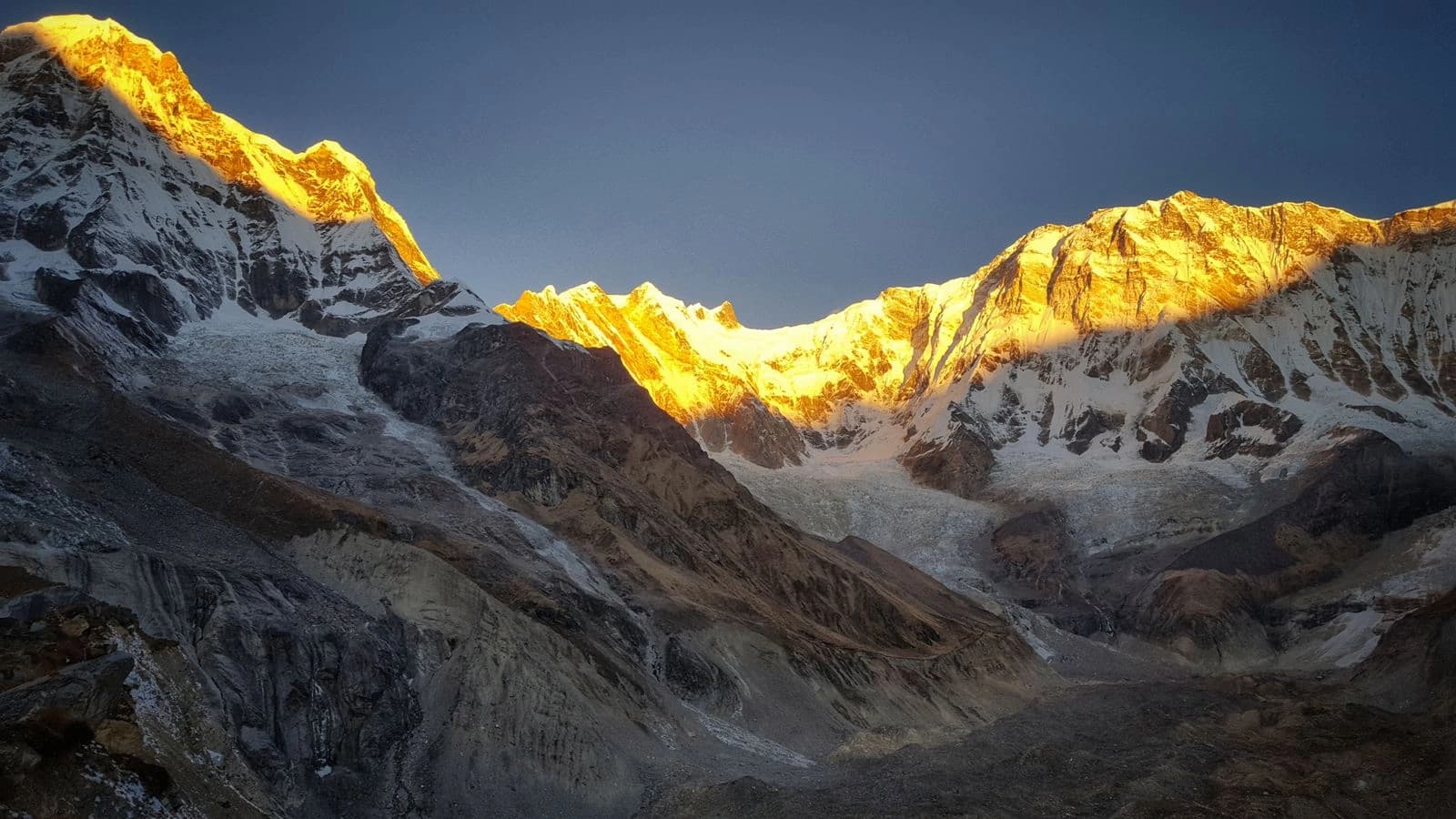
Nepal's September-to-October trekking season covers everything from short Himalayan viewpoints to demanding high-altitude and restricted-area circuits. The best Nepal treks for September to October include Everest Base Camp, Annapurna Circuit, Annapurna Base Camp, Manaslu Circuit, Upper Dolpo, Upper Mustang, Mardi Himal, Gokyo Lakes, Ghorepani Poon Hill, and Kanchenjunga Circuit.
Late September and October generally offer the clearest mountain views, drier trails, and more stable conditions after the monsoon, while the first half of September can still bring rain, muddy paths, leeches, cloud, and swollen streams at lower elevations.
The season also creates sharply different trekking environments: the Everest and Annapurna regions combine established teahouses with expansive mountain panoramas, Upper Mustang and Upper Dolpo sit within rain-shadow landscapes, and Manaslu and Kanchenjunga provide more remote Himalayan experiences with restricted access.
Choosing among these Nepal treks requires more than comparing scenery. Trek duration ranges from 4–6 days on Ghorepani Poon Hill to 20–24 days on Upper Dolpo, while maximum elevations range from 3,210 meters at Poon Hill to more than 5,400 meters on routes such as Everest Base Camp, Annapurna Circuit, and Gokyo Lakes.
Weather, altitude, acclimatization, physical difficulty, trail conditions, permit requirements, accommodation, flight reliability, budget, and crowd levels all influence which trek fits a September-to-October itinerary.
This guide compares each route across those practical factors, explaining what trekkers can expect from the weather and mountain views, how demanding each trail is, what permits and preparation are required, and which trek best matches a specific timeframe, fitness level, and preference for popular trails or remote Himalayan landscapes.
Comparison Table Between Best Nepal Treks for September–October 2026
The table below summarizes duration, maximum altitude, difficulty grade, and approximate 2026 permit cost per person for all 10 treks, giving a single reference point before the detailed breakdown of each route.
Trek | Duration | Max Altitude | Difficulty | Approx. 2026 Permit Cost (per person) |
Everest Base Camp | 12–14 days | 5,364 m | Moderate–Strenuous | ~US$45 |
Annapurna Circuit | 12–18 days | 5,416 m | Strenuous | ~US$45–50 |
Annapurna Base Camp | 7–12 days | 4,130 m | Moderate | ~US$45–50 |
Manaslu Circuit | 14–18 days | 5,106 m | Strenuous | ~US$160–205 |
Upper Dolpo | 20–24 days | 5,151 m (Kang La) | Strenuous | ~US$1,000–1,200 (US$500 for first 10 days, then US$50/day) |
Upper Mustang | 10–15 days | 3,840 m | Moderate | ~US$500–750+ (US$500 for first 10 days, then US$50/day) |
Mardi Himal | 5–7 days | 4,500 m | Moderate | ~US$40–50 |
Gokyo Lakes | 12–14 days | 5,357 m | Moderate–Strenuous | ~US$45 |
Ghorepani Poon Hill | 4–6 days | 3,210 m | Easy–Moderate | ~US$45–50 |
Kanchenjunga Circuit | 18–24 days | 5,143 m (Pangpema) | Strenuous | ~US$95–115 |
Two patterns stand out immediately: permit cost scales with remoteness rather than difficulty alone, and the four restricted-area treks (Manaslu, Upper Dolpo, Upper Mustang, Kanchenjunga) cost noticeably more in government fees than open routes of comparable or greater physical demand, since restricted-area pricing reflects controlled access rather than trail difficulty.
Three practical decisions determine which of these 10 treks fits a given trip best:
First, match trek length to actual vacation days plus 2 to 3 buffer days for flight delays or weather, since Lukla and Taplejung flights both carry real cancellation risk during peak October traffic.
Second, weigh altitude against prior trekking experience honestly, since acute mountain sickness affects fit and unfit trekkers alike above 3,500 meters and does not respond to willpower.
Third, decide early whether crowds or solitude matter more for the trip, since that single preference splits this list cleanly into the six open, well-trodden routes (Everest Base Camp, Annapurna Circuit, Annapurna Base Camp, Mardi Himal, Ghorepani Poon Hill, and Gokyo Lakes) and the four restricted, low-traffic routes (Manaslu, Upper Dolpo, Upper Mustang, Kanchenjunga) that cost more but deliver a genuinely different kind of Himalayan trip.
1. Everest Base Camp Trek
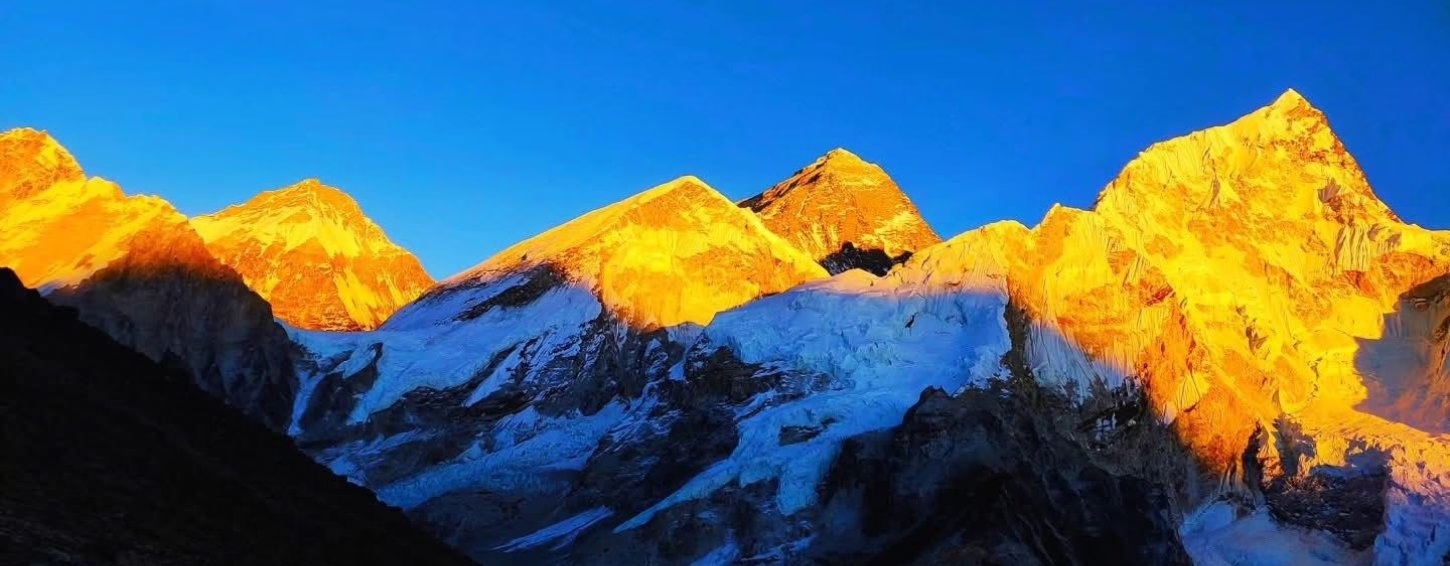
Everest Base Camp sits at 5,364 meters in the Khumbu region of northeastern Nepal. The trek follows the classic route through Namche Bazaar, Tengboche, and Dingboche to the foot of the world's highest mountain. It ranks as Nepal's most recognized trekking route, drawing roughly 30,000 to 50,000 trekkers a year. Autumn remains the busiest and clearest season on this trail.
What Makes Everest Base Camp Trek Ideal in September and October?
October delivers Everest Base Camp's clearest, most stable weather window of the entire year, with Everest, Lhotse, Nuptse, and Ama Dablam visible on most mornings. The monsoon typically clears the Khumbu region by the last week of September, and the following six to eight weeks bring dry air, minimal cloud buildup, and consistently flyable conditions for the Lukla flight.
Late September carries a real trade-off most guides skip over: trails are still recovering from monsoon runoff, and side streams near Phakding and Jorsalle can run high. Trekkers who prioritize photography and mountain visibility over solitude get the best return by departing in the second or third week of October, once trail conditions catch up to the clear skies overhead.
What Weather and Trail Conditions Can You Expect on Everest Base Camp Trek?
Daytime temperatures in the Khumbu during September and October range from 15°C to 20°C at lower elevations and drop to between -5°C and 5°C at Gorak Shep and Kala Patthar above 5,000 meters. Nighttime temperatures at Base Camp elevations fall well below freezing by mid-October, so a sleeping bag rated to -15°C is a practical minimum, not an upgrade.
Trail surfaces are stone and packed earth through most of the route, turning to scree and moraine past Lobuche. The one weather risk this season carries that spring does not: October is peak trekking traffic, and Lukla's small airstrip backs up flights for a day or two when morning fog rolls in, so a one-day buffer before any international flight home is not optional planning, it is required planning.
How Difficult Is the Everest Base Camp Trek?
Everest Base Camp Trek is a moderate-to-strenuous trek covering roughly 130 kilometers over 12 to 14 days, reaching 5,364 meters at Base Camp and up to 5,644 meters at Kala Patthar, with no technical climbing required. Daily walking runs 5 to 7 hours, and the itinerary builds in two dedicated acclimatization days at Namche Bazaar and Dingboche, which most trekkers cannot skip without raising their altitude sickness risk substantially.
The most common mistake on this trek is treating the acclimatization days as rest days rather than as short hikes to a higher point before returning to sleep lower, which is exactly what the "climb high, sleep low" principle requires for the body to adjust. Permits for autumn 2026 total roughly NPR 6,000 (about US$45): a Sagarmatha National Park entry permit, priced at NPR 3,000 for foreigners per the Nepal Tourism Board fee schedule, and a Khumbu Pasang Lhamu Rural Municipality permit, both purchased in Kathmandu or at the Monjo checkpoint.
A TIMS card is no longer required in the Khumbu region, since the municipality permit replaced it in 2018, though a licensed guide has been mandatory since 2023. Trekkers preparing for this route benefit most from cardiovascular training that mimics sustained ascent, such as stair climbing with a loaded pack, rather than flat-ground distance running, since the trek's demand comes from hours of steady uphill walking at altitude rather than raw speed.
2. Annapurna Circuit Trek
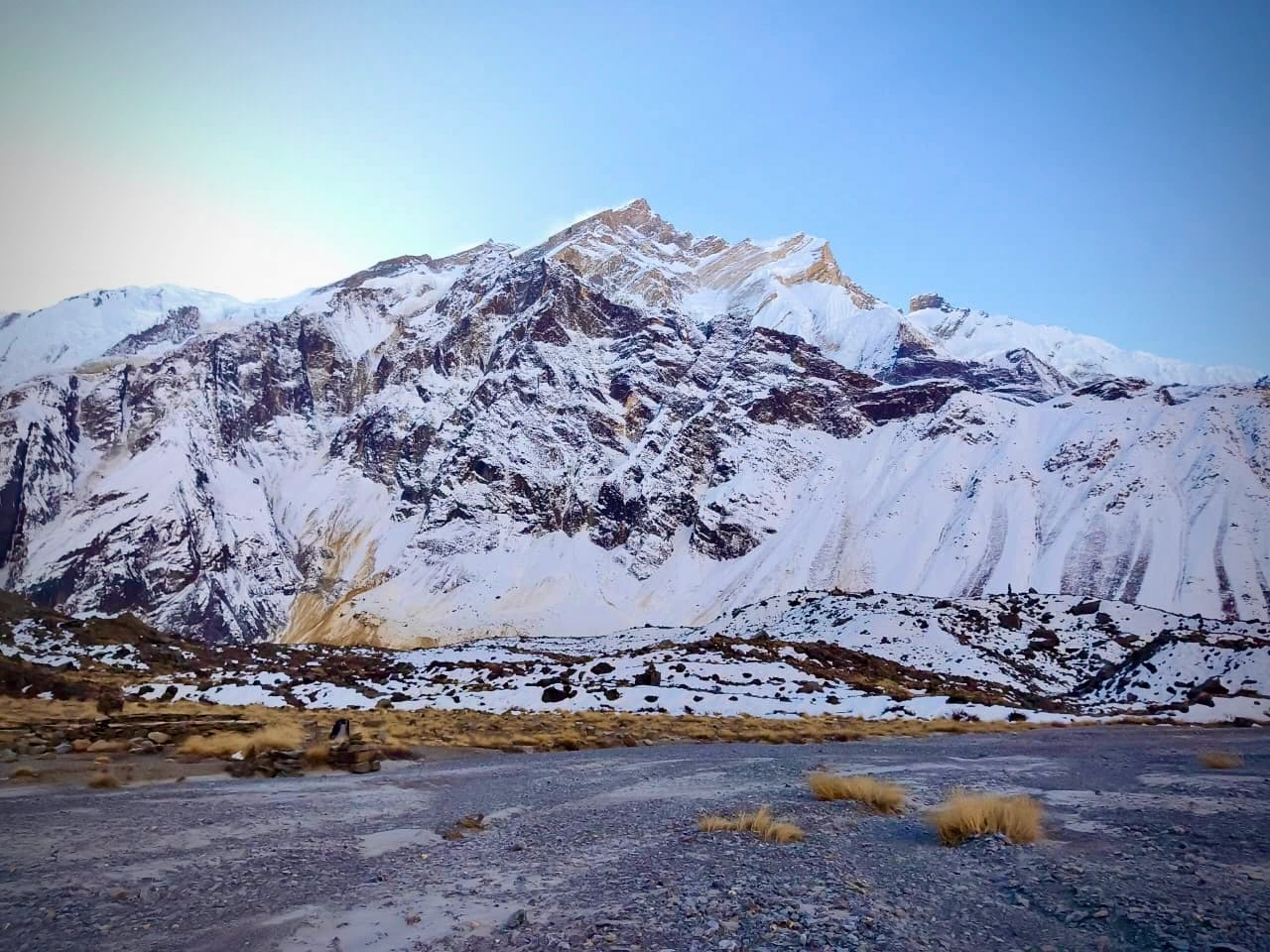
The Annapurna Circuit Trek loops around the Annapurna massif through the Marsyangdi and Kali Gandaki valleys. Thorong La Pass at 5,416 meters marks the trek's highest and most demanding point. The route mixes subtropical lowlands, alpine forest, and high desert within a single itinerary. Road construction has shortened the classic trail but not its core challenge.
What Makes the Annapurna Circuit Trek Special During September and October?
The Annapurna Circuit crosses from the wet, forested southern slopes into the dry, high-desert Manang valley, so autumn trekkers experience two distinct climates within a single trek. October is the trek's single busiest and clearest month, with Thorong La Pass typically snow-free and passable in a single push.
A detail most trip-planning content leaves out: because Manang sits in the rain shadow of the Annapurna massif, the trail's second half often stays dry even during the tail end of monsoon in early September, making this one of the few long treks where a first-week-of-September departure is genuinely workable rather than a compromise.
What Weather and Mountain Views Can You Expect?
Temperatures range from around 20°C in the lower Marsyangdi valley to below freezing at Thorong Phedi and High Camp before the pass crossing. Manang and the upper valley receive under 500mm of rainfall annually against more than 3,000mm on the Pokhara side of the range, which is why views of Annapurna II, Gangapurna, and the Chulu peaks stay sharp even when clouds sit over the lower trail.
Wind on Thorong La Pass picks up sharply after 10 a.m., which is the operational reason every itinerary starts the pass crossing between 4 and 5 a.m., not a tradition for tradition's sake.
How Challenging Is the Annapurna Circuit Trek?
The Annapurna Circuit is a strenuous 12-to-18-day trek covering 160 to 230 kilometers, depending on the start and end points, with Thorong La Pass at 5,416 meters as the trek's technical and physical high point. Road construction has shortened the walkable trail in several lower sections since the early 2010s, and most operators now start trekking from Chame or Koto by jeep, cutting 3 to 4 days off the classic route without cutting the difficulty of the pass itself.
Acute mountain sickness risk peaks in the two days before the pass crossing, and the single most common planning mistake is scheduling too few nights at Manang (3,519m) for acclimatization before pushing higher. Permit costs for 2026 run NPR 3,000 (about US$25-30) for the Annapurna Conservation Area Permit, plus a TIMS card at roughly US$20 for independent trekkers or US$10 through an agency.
3. Annapurna Base Camp Trek
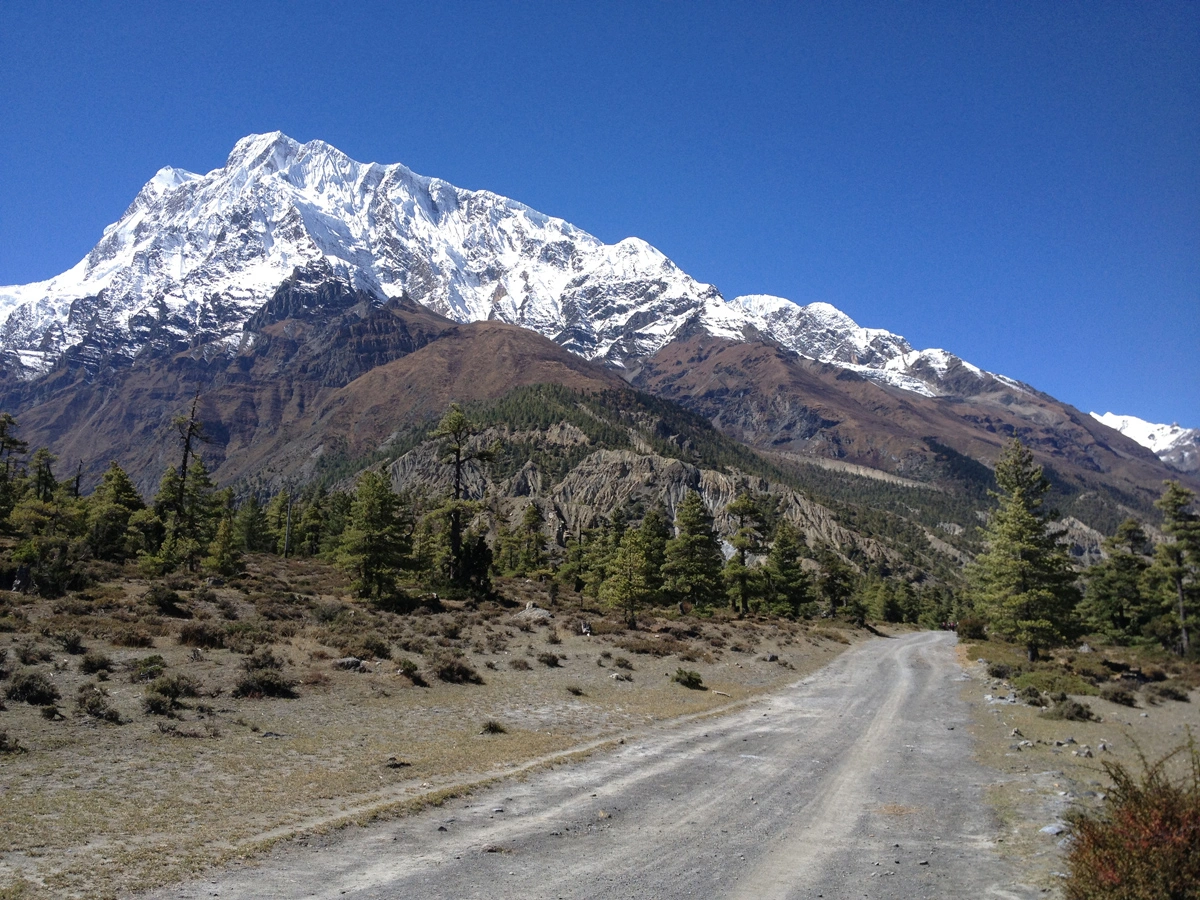
Annapurna Base Camp Trek sits inside a natural bowl of peaks at 4,130 meters. The trail winds through Gurung and Magar villages, rhododendron forest, and terraced farmland. It remains one of Nepal's most accessible high-mountain treks for a one- to two-week trip. Autumn sharpens the amphitheater view of Annapurna I and Machhapuchhre.
What Makes Annapurna Base Camp Trek Suitable for Autumn?
Annapurna Base Camp sits inside a natural amphitheater of peaks that becomes fully visible only once monsoon cloud clears, making October the single best month of the year to see Annapurna I, Hiunchuli, and Machhapuchhre from the same viewpoint. Rhododendron forests along the lower trail carry autumn color rather than spring's flowering display, and river crossings that run dangerously high in July and August drop to safe, manageable levels by late September.
Trekkers choosing between Annapurna Base Camp and the longer Circuit for a single autumn trip generally pick ABC when the goal is maximum mountain scenery in the fewest days. For a month-by-month breakdown of temperatures and crowd levels, see our detailed guide to Annapurna Base Camp in September.
What Can You Expect From the Weather and Scenery?
Daytime temperatures at Base Camp (4,130m) in October average 10°C to 15°C, dropping to near freezing overnight, while lower stops like Chhomrong and Jhinu Danda stay comfortably above 15°C. The trail passes through four distinct zones in a single trek: subtropical terraced farmland, temperate rhododendron and oak forest, alpine meadow, and finally the glacial bowl at Base Camp itself, a vertical range most single treks in the world cannot match.
The natural hot springs at Jhinu Danda, reached on the return leg, sit right at river level and offer one of the only points on any Nepal trek where soaking sore legs is part of the official itinerary rather than an improvised stop.
How Difficult Is the Annapurna Base Camp Trek?
Annapurna Base Camp is a moderate trek covering roughly 60 to 70 kilometers over 7 to 12 days, topping out at 4,130 meters, which keeps altitude sickness risk lower than treks that cross 5,000 meters. Daily stages run 4 to 6 hours over well-maintained stone stairways, and the trek requires no technical skill, though the stairways themselves are a genuine cardiovascular test that surprises trekkers who assume "moderate" means easy.
The most frequent oversight is underestimating the stone steps between Chhomrong and Sinuwa, which climb and descend repeatedly rather than gaining altitude in one steady push. Permits are the same Annapurna Conservation Area Permit required for the Circuit, NPR 3,000, plus a TIMS card, with no separate restricted-area fee since ABC sits entirely within the standard conservation area.
Because ABC stays below 4,200 meters throughout, it works well as a first high-altitude trek for travelers building toward Everest Base Camp or the Annapurna Circuit in a future season, since it tests trail fitness and teahouse living without the added altitude risk those longer treks carry.
4. Manaslu Circuit Trek
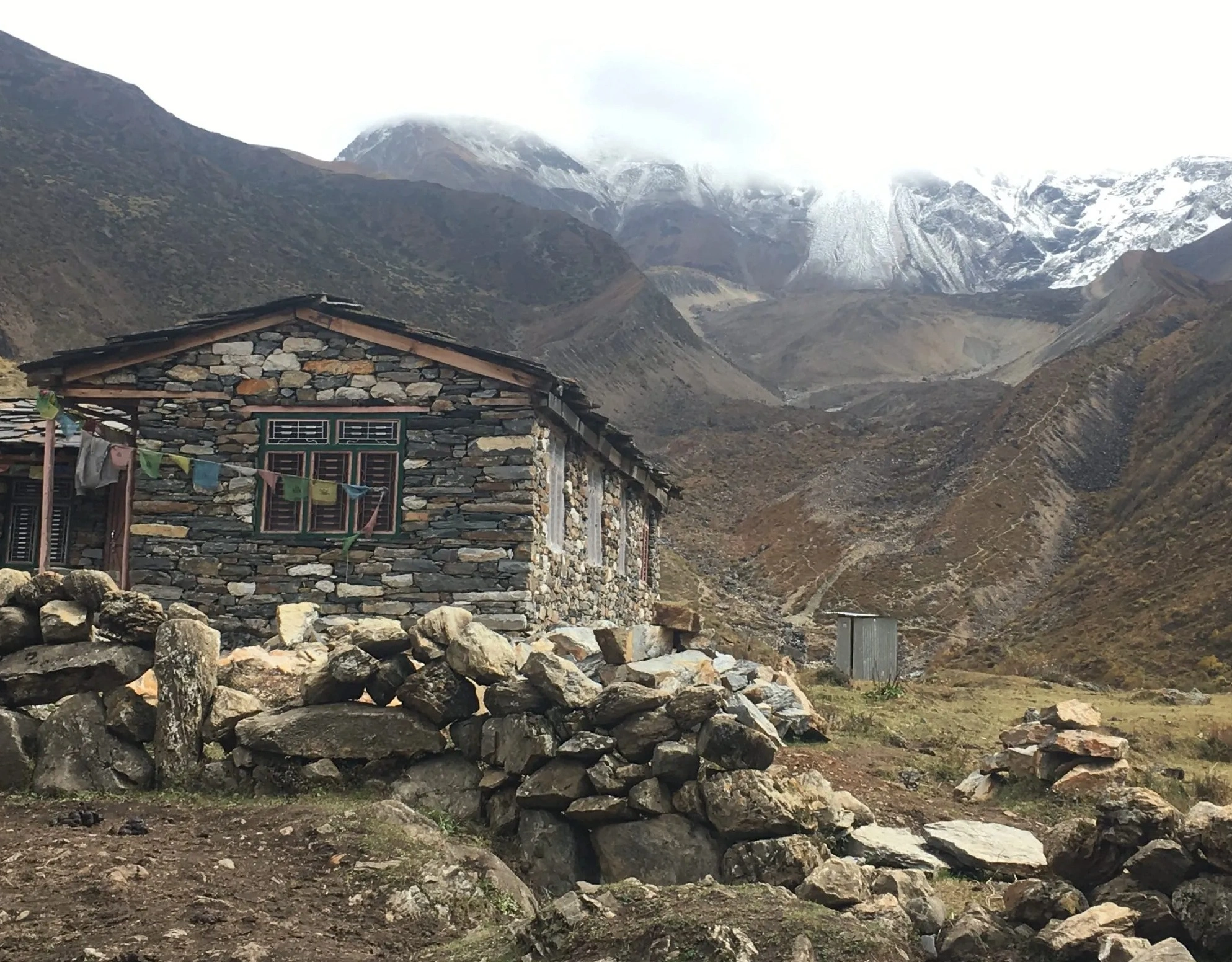
Manaslu Circuit Trek circles the world's eighth-highest mountain through the Nubri and Tsum valleys. Larke La Pass at 5,106 meters caps the trek's most demanding day. The region has operated as a restricted area since 1991, keeping visitor numbers low. Autumn brings the region's clearest views and heaviest permit-season traffic.
What Makes the Manaslu Circuit Trek Unique During Autumn?
Manaslu Circuit combines Everest-level mountain scale with Annapurna Circuit-style cultural variety while receiving a fraction of the foot traffic, because the region has been a government-restricted area since 1991 and requires a licensed guide and a minimum group of two. Autumn brings the clearest views of Manaslu (8,163m) itself, the world's eighth-highest peak, along with the Nubri and Tsum valleys' Tibetan Buddhist monasteries and mani walls.
September and October also happen to be the region's peak permit season, which means the trek costs more in permit fees than the same route in spring, a trade-off travelers rarely see explained before they book. Travelers weighing spring against autumn permit costs can compare full seasonal pricing in our guide to the best time to trek Manaslu.
What Weather and Mountain Landscapes Can You Expect?
Temperatures drop from around 20°C at Soti Khola (700m) at the trek's start to well below freezing at Samdo and Dharamsala before the Larke La Pass crossing. The route runs through subtropical river gorges for the first several days, then Tibetan-influenced high desert around Samagaon and Samdo, where Manaslu's north face dominates the skyline on clear mornings.
The Nubri valley's rain shadow keeps the upper trail notably drier than the lower gorge sections, so trekkers should expect genuinely different weather within a single day's walk as the trail climbs out of the valley floor.
How Difficult Is the Manaslu Circuit Trek?
The Manaslu Circuit is a strenuous 14-to-18-day trek covering about 177 kilometers, crossing Larke La Pass at 5,106 meters, and ranks harder than Everest Base Camp because of its longer daily stages and less-developed teahouse infrastructure. A licensed guide and a Restricted Area Permit are mandatory, and solo trekking without an agency-arranged group is not permitted.
Permit costs for the September-to-November peak season run US$100 for the first seven days plus US$15 for each additional day, on top of a Manaslu Conservation Area Permit, issued separately by Nepal's National Trust for Nature Conservation, at roughly US$30, and a partial Annapurna Conservation Area Permit at US$30 for the trail's final stretch near Dharapani.
A common mistake is underestimating Larke La Pass day itself, which typically runs 8 to 9 hours from Dharamsala to Bimthang and demands an early, cold-weather start well before sunrise.
5. Upper Dolpo Trek
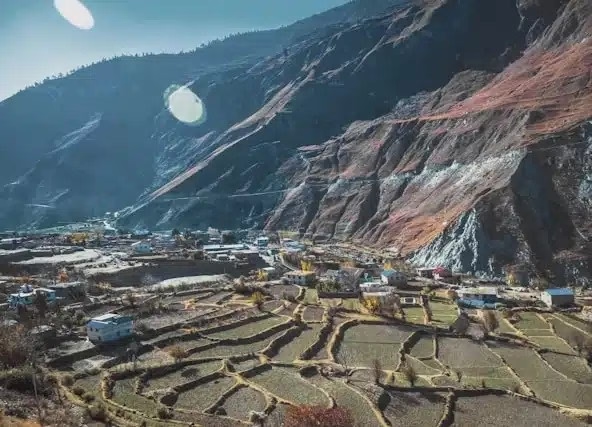
Upper Dolpo sits north of the main Himalayan range in one of Nepal's most isolated corners. Shey Phoksundo Lake and ancient Bon and Buddhist monasteries define the trek's cultural core. Camping replaces teahouse trekking for most of the route. Only 500 to 700 foreign trekkers reach this region each year.
What Makes Upper Dolpo Different From Other Nepal Treks?
Upper Dolpo receives only 500 to 700 foreign trekkers a year, compared with roughly 30,000 to 50,000 on Everest Base Camp, making it Nepal's most genuinely remote long-distance trek open to travelers. The region only opened to foreign trekkers in 1989 and preserves a Tibetan Buddhist culture that has changed little since.
Autumn timing matters more here than on any other trek in this list: Upper Dolpo sits north of the main Himalayan range in a rain shadow so pronounced that trekking is realistically possible only from June through October, with September and October offering the added benefit of stable high passes after the summer snowmelt.
What Weather and Remote Landscapes Can You Experience?
Daytime temperatures in September and October range from 15°C in lower Dolpo villages to below 0°C at Shey Gompa (4,500m) and along the high passes near Kang La (5,151m). The landscape shifts from Shey Phoksundo Lake, the deepest lake in Nepal at 145 meters, to stark high-altitude desert that resembles Tibet more than the rest of Nepal.
Trekking here means camping rather than teahouse-to-teahouse travel for most of the route, since infrastructure in the restricted zone remains minimal even by Nepal's remote-region standards.
How Difficult Is the Upper Dolpo Trek?
Upper Dolpo is a strenuous, camping-based trek covering 20 to 24 days and crossing multiple passes above 5,000 meters, ranking it among Nepal's hardest treks due to remoteness rather than technical terrain. Rescue evacuation takes considerably longer here than in the Everest or Annapurna regions, which raises the practical stakes of every acclimatization decision along the route.
Permit costs for 2026 total roughly US$500 to US$570 per person: a Lower Dolpo restricted-area permit at US$20 per week, a Shey Phoksundo National Park entry fee of US$30, and the Upper Dolpo restricted-area permit, historically fixed at US$500 for the first 10 days with US$50 per additional day.
Nepal's Department of Immigration enforces a fixed Restricted Area Permit cost of US$500 for the first 10 days for Upper Dolpo, with a US$50 charge for each additional day, so confirming this fixed base rate with a registered agency is essential before budgeting for your trip.
6. Upper Mustang Trek
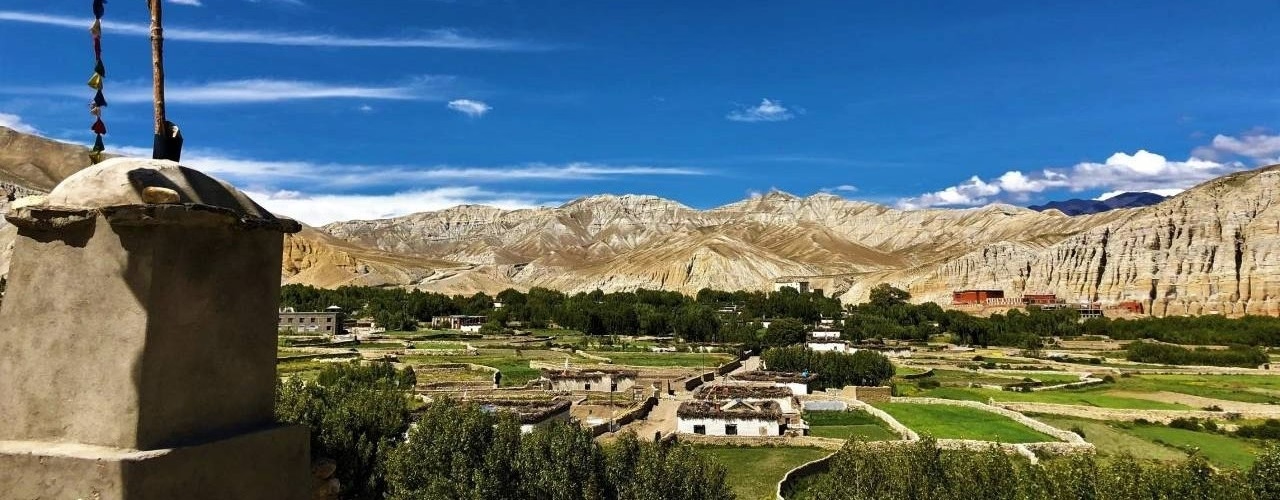
Upper Mustang Trek occupies a Trans-Himalayan desert bordering the Tibet Autonomous Region. Lo Manthang, the walled former capital of the Kingdom of Lo, anchors the trek's cultural highlight. The region's rain shadow keeps trekking possible even through the summer monsoon. A 2026 permit reform has made shorter visits considerably more affordable.
What Makes Upper Mustang Suitable for Autumn Trekking?
Upper Mustang lies almost entirely in the Annapurna range's rain shadow, keeping the region dry through the monsoon and turning September into a viable early-season month here when most of Nepal is still wet. The walled city of Lo Manthang, capital of the former Kingdom of Lo since 1380 CE, only opened to foreign visitors in 1992 and still limits access through a restricted-area permit.
October adds crisp visibility to Mustang's already-dry climate, making it one of the most reliable months for photographing the region's cave monasteries and canyon formations.
What Weather and Landscapes Can You Expect in Upper Mustang?
Daytime temperatures in September and October run 15°C to 20°C, dropping to near freezing at night, with annual rainfall under 300mm across most of the restricted zone. The terrain resembles a Trans-Himalayan desert: eroded canyon walls, wind-carved rock formations, and centuries-old cave monasteries carved directly into cliff faces near Chhoser and Chhusang.
Afternoon winds funnel through the Kali Gandaki gorge with real force, which is why most itineraries schedule the longer walking days for morning hours.
How Difficult Is the Upper Mustang Trek?
Upper Mustang is a moderate trek, easier than Everest Base Camp or the Annapurna Circuit, covering 10 to 15 days with a maximum altitude around 3,840 meters at Lo Manthang, and no high-altitude pass crossing. Nepal's Department of Immigration maintains the strict Restricted Area Permit cost of US$500 per person for the first 10 days for Upper Mustang, with a US$50 charge for each additional day, meaning shorter Mustang itineraries still carry the mandatory US$500 base fee.
Nepal's regulations strictly maintain the two-person minimum group requirement for restricted areas, meaning solo trekkers cannot obtain a permit without joining at least one other trekker and a licensed guide. An Annapurna Conservation Area Permit at NPR 3,000 and a TIMS card at roughly US$20 apply on top of the restricted-area fee.
Because these costs stack together and change periodically, it's worth confirming the current total against our full breakdown of Upper Mustang trek permits before booking.
7. Mardi Himal Trek
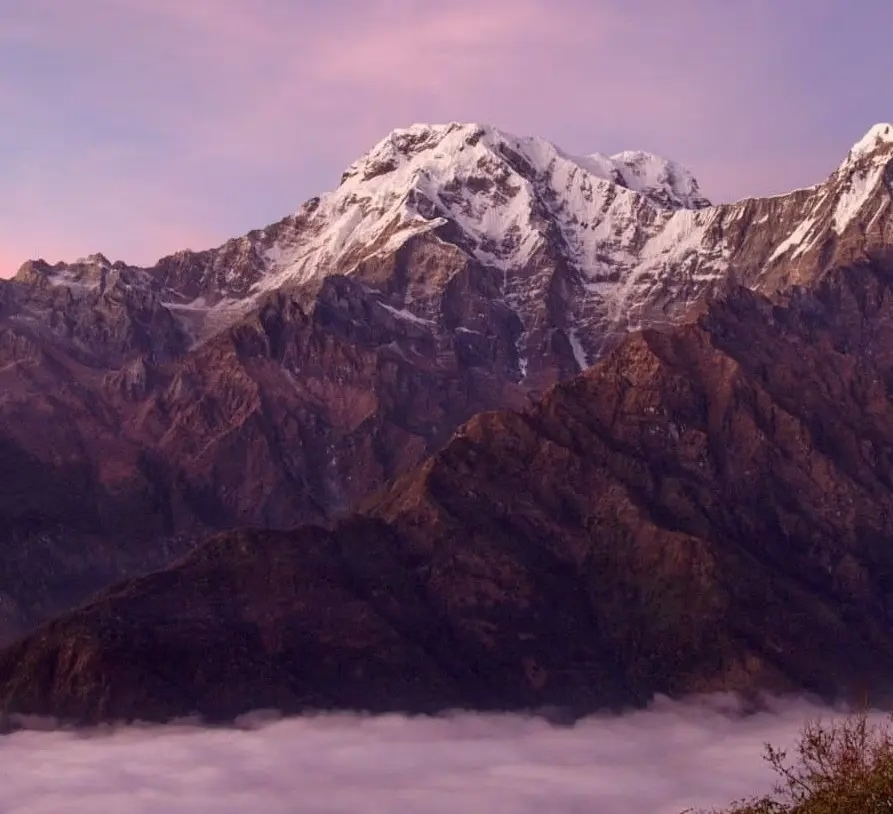
Mardi Himal Trek follows a narrow ridge with direct views of Machhapuchhre and the Annapurna range. The trek reaches a viewpoint at 4,500 meters in as few as 5 days. It carries far less traffic than Annapurna Base Camp despite comparable scenery. Autumn clears the ridge of the low cloud common in other seasons.
What Makes Mardi Himal Trek Attractive During Autumn?
Mardi Himal delivers close-up views of Machhapuchhre (Fishtail) and the Annapurna range in 5 to 7 days, making it the shortest genuinely high-mountain trek on this list and ideal for travelers with limited vacation time. The ridge-line trail opened to regular trekking only in the last 15 years and still carries far fewer trekkers than Poon Hill or Annapurna Base Camp, despite comparable views.
Autumn clears the ridge of the low cloud that hangs over it for much of the monsoon, turning what is a forest walk in July into a genuine mountain panorama by late September. Trekkers deciding between Mardi Himal and Poon Hill, the two shortest treks in this guide, generally choose Mardi Himal for a closer, higher-altitude mountain encounter and Poon Hill for an easier trail with a comparably wide sunrise panorama.
What Mountain Views and Weather Can You Expect?
Temperatures at High Camp (3,580m) in October range from 10°C during the day to near freezing overnight, milder than any comparable-altitude stop on Everest Base Camp or the Annapurna Circuit. The final push to the Mardi Himal viewpoint (4,500m) delivers a direct, unobstructed view of Machhapuchhre's summit from a distance most other treks cannot match, since the mountain is closed to climbers and rarely seen this close from any other trail.
Forest sections lower on the route hold autumn mist most mornings, clearing by mid-morning as the sun warms the ridge.
How Difficult Is the Mardi Himal Trek?
Mardi Himal is a moderate trek covering roughly 40 kilometers over 5 to 7 days, reaching a maximum altitude of 4,500 meters, and suits trekkers with good fitness but no prior high-altitude experience. The route's short length concentrates altitude gain into fewer days than Annapurna Base Camp, which raises mild altitude-sickness risk despite the trek's reputation as an easier alternative.
No restricted-area permit applies; the total permit cost for 2026 comes to roughly US$50 for an independent trekker, combining an Annapurna Conservation Area Permit at US$30 and a TIMS card at US$20, or closer to US$40 when booked through a registered agency.
8. Gokyo Lakes Trek
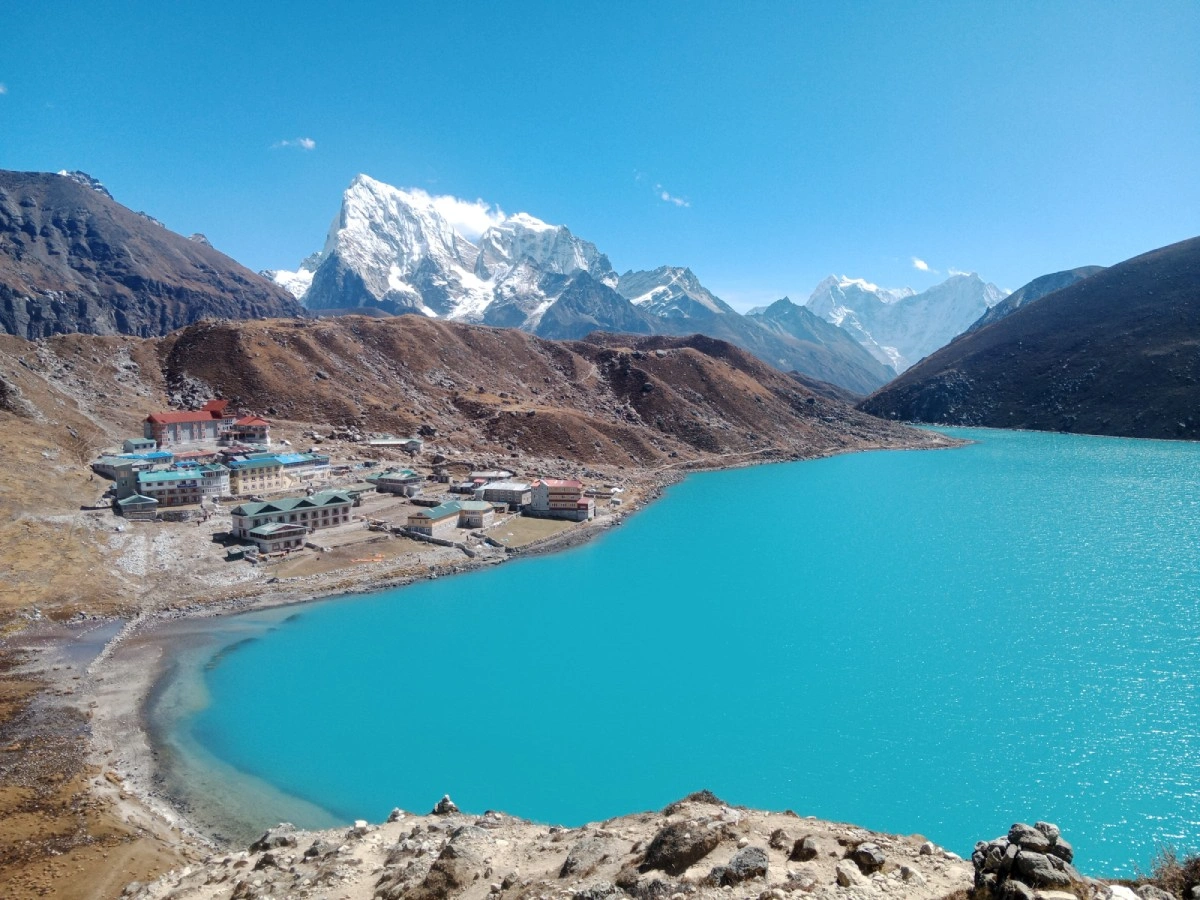
Gokyo Lakes trek leads to a valley of six sacred glacial lakes below Cho Oyu and Everest. Gokyo Ri at 5,357 meters offers a panorama of four peaks above 8,000 meters. The Ngozumpa Glacier, Nepal's largest, runs alongside the trail. Fewer trekkers reach Gokyo than the neighboring Everest Base Camp route.
What Makes the Gokyo Lakes Trek Special in Autumn?
Gokyo Lakes trades Everest Base Camp's crowded final stretch for a quieter valley holding six sacred glacial lakes and arguably better mountain views from Gokyo Ri than Kala Patthar itself. Autumn's clear skies matter more here than almost anywhere else in the Khumbu, since the lakes' reflective color, ranging from turquoise to deep blue depending on glacial melt, depends entirely on direct sunlight and calm water.
October adds the added advantage of a partially frozen lake surface late in the month, which locals and repeat visitors consider the most photogenic period of the year.
What Weather and Himalayan Views Can You Expect?
Daytime temperatures around Gokyo (4,750m) run 5°C to 12°C in September and October, dropping below freezing overnight, similar to Everest Base Camp's altitude-equivalent stops. From Gokyo Ri (5,357m), the panorama takes in four peaks above 8,000 meters, including Everest, Cho Oyu, Makalu, and Lhotse, an unusually wide 8,000-meter skyline for a single viewpoint.
The Ngozumpa Glacier, Nepal's largest glacier, runs directly alongside the lakes and adds a genuinely different landscape from the rock-and-scree terrain most of the Everest region trail passes through.
How Difficult Is the Gokyo Lakes Trek?
Gokyo Lakes is a moderate-to-strenuous trek covering 90 to 100 kilometers over 12 to 14 days, sharing the same permits and difficulty profile as Everest Base Camp but with a marginally lower summit altitude at Gokyo Ri's 5,357 meters versus Kala Patthar's 5,644 meters.
Trekkers combining Gokyo with the Everest Base Camp trail via the Cho La Pass (5,420m) add real technical difficulty, since the pass involves a glacier crossing that requires basic crampon use in most seasons. Permits match the Everest Base Camp trek exactly: the Sagarmatha National Park entry fee and Khumbu Pasang Lhamu Rural Municipality permit, totaling roughly NPR 6,000.
9. Ghorepani Poon Hill Trek
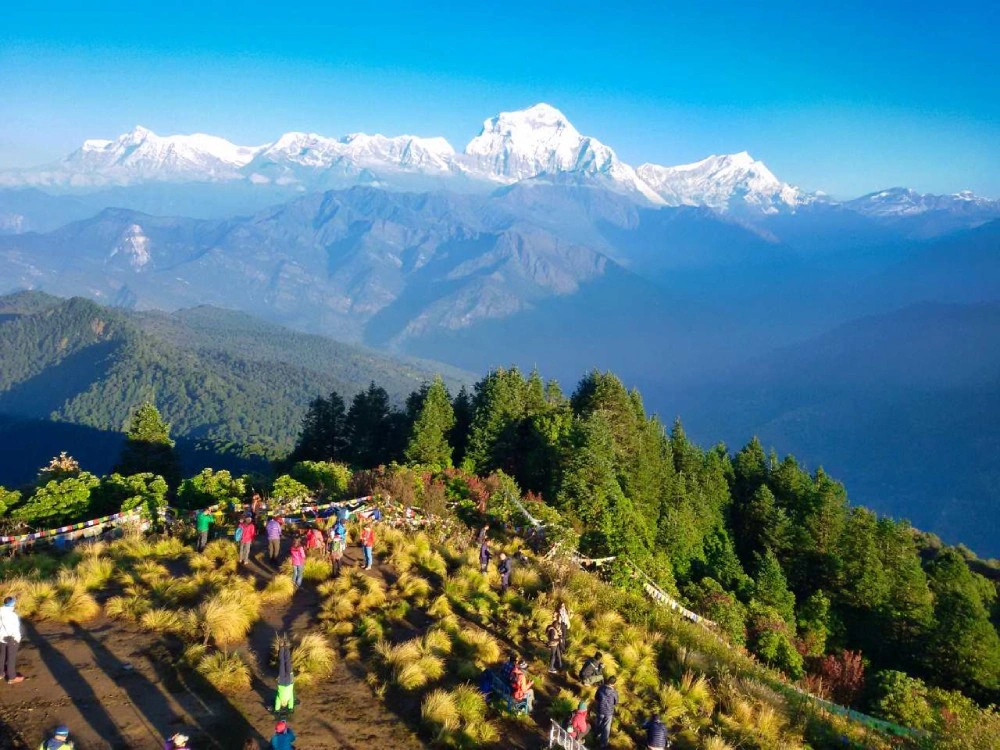
Ghorepani Poon Hill Trek is Nepal's shortest widely trekked route to a genuine Himalayan sunrise. The viewpoint at 3,210 meters overlooks Dhaulagiri, Annapurna, and Machhapuchhre. The trek suits beginners, families, and travelers with limited time. Autumn adds clear skies to a trek already known for reliable low-altitude weather.
What Makes Ghorepani Poon Hill Trek Suitable for Autumn?
Ghorepani Poon Hill is the shortest trek on this list at 4 to 6 days, making it the most accessible option for travelers who want a genuine Himalayan sunrise without committing to two or more weeks of trekking. The route sits low enough in altitude that it avoids most of the acute mountain sickness risk that limits who can attempt the longer treks in this guide.
Rhododendron forest that blooms bright pink and red in spring instead carries golden autumn foliage in September and October, alongside far clearer mountain views than the hazy spring season typically allows.
What Weather and Sunrise Views Can You Expect?
Poon Hill's viewpoint (3,210m) sees October sunrise temperatures around 5°C to 10°C, mild compared to every other trek in this guide, which is part of why it draws large numbers of trekkers of all fitness levels. The sunrise panorama from Poon Hill takes in Dhaulagiri (8,167m), Annapurna South, Annapurna I, and Machhapuchhre in a single sweep, arguably the best return on effort of any viewpoint in Nepal.
Morning cloud occasionally rolls in from the south during early September, another reason late September through October remains the more reliable window for a clear sunrise.
How Difficult Is the Ghorepani Poon Hill Trek?
Ghorepani Poon Hill is an easy-to-moderate trek covering roughly 45 kilometers over 4 to 6 days, with a maximum altitude of 3,210 meters, making it suitable for reasonably fit beginners, families with older children, and trekkers short on time.
The steep stone staircase between Tikhedhunga and Ulleri, roughly 3,300 steps, is the trek's single hardest stretch and surprises trekkers who expect the trek's overall "easy" rating to apply evenly across every day. Permit costs match Annapurna Base Camp: an Annapurna Conservation Area Permit at NPR 3,000 and a TIMS card at roughly US$20, with no restricted-area fee required.
10. Kanchenjunga Circuit Trek
Kanchenjunga Circuit Trek circles the base of the world's third-highest mountain in Nepal's far east. The route reaches both the North and South Base Camps within a single itinerary. It remains one of the least-visited restricted areas in the country. Autumn offers the clearest and most stable conditions for the trek's high passes.
What Makes the Kanchenjunga Circuit Trek Unique in Autumn?
Kanchenjunga Circuit circles the base of the world's third-highest mountain (8,586m) through Nepal's far eastern corner, a region so remote that it sees a small fraction of the visitors that reach Everest or Annapurna in an entire season. The restricted zone opened to organized trekking groups only in 1988 and still requires a licensed guide and government permit.
Autumn brings the clearest views of both the North and South Base Camps in a single circuit, along with stable high-pass conditions across Selele La and the trek's other crossings above 4,000 meters.
What Weather and Mountain Scenery Can You Expect?
Temperatures range from 20°C in the lower Tamur valley forests to below freezing at Pangpema (5,143m) near the North Base Camp, with the trek's eastern location giving it slightly wetter autumn conditions than the Annapurna or Everest regions. Dense rhododendron and bamboo forest lower on the trail gives way to alpine meadow and finally the glacial moraine surrounding Kanchenjunga itself.
The region also holds some of Nepal's best chances of spotting red pandas and Himalayan black bears, since the Kanchenjunga Conservation Area sees far less foot traffic than the country's more popular parks.
How Difficult Is the Kanchenjunga Circuit Trek?
Kanchenjunga Circuit is a strenuous 18-to-24-day trek covering both North and South Base Camps, crossing several passes above 4,000 meters, and ranks among Nepal's most physically demanding treks due to its sheer length and remoteness. Emergency evacuation options are limited compared to the Everest or Annapurna regions, and the trek requires previous high-altitude experience to attempt safely.
Permit costs for 2026 total roughly US$105 to US$125 per person for a standard circuit: a Restricted Area Permit at US$20 per week for the first four weeks (US$25 per week after) and a Kanchenjunga Conservation Area Permit at NPR 3,000, among the most affordable permit structures of any restricted trek in Nepal despite the trek's difficulty.
How Can Heaven Himalaya Help You Choose the Right Nepal Trek for September to October?
Choosing among these 10 treks comes down to four factors: available days, fitness and altitude tolerance, appetite for crowds versus solitude, and budget for permits. Heaven Himalaya, a Kathmandu-based trekking company registered with the Trekking Agencies' Association of Nepal (TAAN), the Nepal Tourism Board, and the Nepal Mountaineering Association, matches trekkers to routes based on these same four factors rather than defaulting every client to Everest Base Camp.
A trekker with 5 days and no high-altitude experience fits Ghorepani Poon Hill or Mardi Himal; a trekker with 3 weeks and prior trekking history fits Manaslu, Upper Dolpo, or the Kanchenjunga Circuit. Heaven Himalaya's guides hold licenses through the Nepal Mountaineering Association and carry direct route experience across every trek in this guide, which shapes realistic itinerary pacing rather than generic day-counts copied from a brochure.
Can Heaven Himalaya Help You Plan a September to October Nepal Trek?
Heaven Himalaya handles the full planning load for a September-to-October trek: permit processing (including Restricted Area Permits that cannot be obtained independently for Manaslu, Upper Dolpo, Upper Mustang, and Kanchenjunga), licensed guide and porter arrangement, Lukla or Taplejung flight booking, and teahouse or camping logistics along each route.
Because autumn is Nepal's busiest trekking season, teahouse beds along Everest Base Camp, Annapurna Circuit, and Annapurna Base Camp fill weeks in advance during October, and booking through an established local operator secures accommodation that independent trekkers arriving without reservations frequently cannot find past the first few days.
Booking timing matters as much as trek choice. Everest Base Camp and Annapurna Circuit itineraries for the second half of October benefit from confirmation at least 6 to 8 weeks ahead, since Lukla flight seats and prime teahouses book out first. Restricted-area treks such as Manaslu and Upper Mustang need longer lead times still, generally 3 to 4 weeks minimum, because the Restricted Area Permit requires passport scans and processing through Nepal's Department of Immigration before departure.
Trekkers weighing two or three routes from this guide can request a side-by-side itinerary and cost comparison before committing, which is typically faster and more accurate than piecing quotes together from separate blog posts. Trekkers can reach Heaven Himalaya directly to build an itinerary around specific dates, fitness level, and trek preference from the 10 routes covered in this guide.
What Are the Key Takeaways About the Best Nepal Treks for September to October?
September and October remain Nepal's most reliable window for clear Himalayan views, though the reliable stretch typically begins in the third week of September rather than the first. Everest Base Camp and the Annapurna Circuit deliver the highest-profile mountain views for trekkers with 12 or more days and prior fitness preparation, while Ghorepani Poon Hill and Mardi Himal suit shorter timelines and first-time high-altitude trekkers.
Manaslu, Upper Dolpo, Upper Mustang, and the Kanchenjunga Circuit reward trekkers seeking fewer crowds and willing to pay restricted-area permit fees that range from roughly US$50 to over US$500 depending on the route and season. Restricted Area Permits for Upper Mustang and Upper Dolpo remain firmly set at a premium base cost of US$500 for the first 10 days, making proper budgeting and confirmation with a registered trekking agency essential before finalizing any autumn booking.