

Everest Base Camp Trek in October 2026: Weather & Costs
Discover the key details of an October Everest Base Camp trek, including the route, itinerary, acclimatization, altitude challenges, accommodation, food, fitness, and expenses etc.

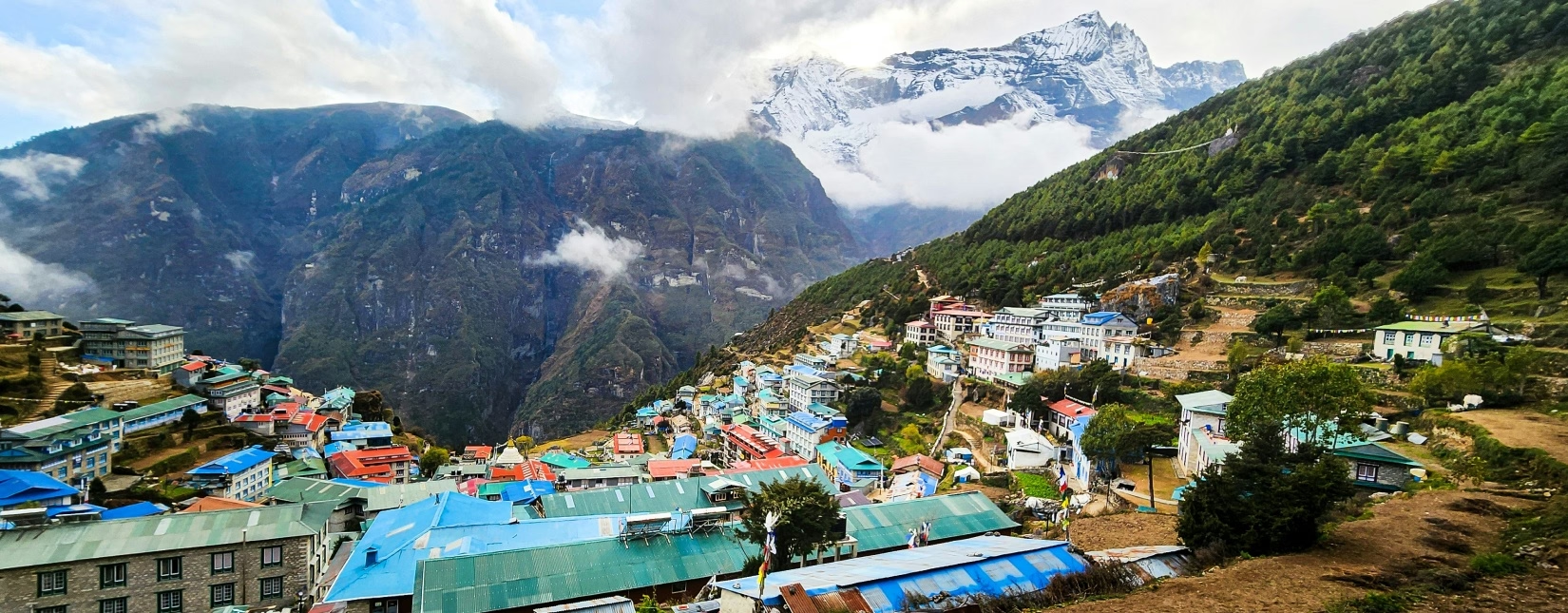
The Everest Base Camp Trek in October is a high-altitude trekking journey through Nepal's Khumbu region, following the classic route from Lukla through Namche Bazaar, Tengboche, Dingboche, Lobuche, and Gorak Shep to Everest Base Camp at 5,364 meters.
October falls within Nepal's peak autumn trekking season, when post-monsoon conditions typically bring dry trails, stable weather, low humidity, and clear views of Mount Everest, Ama Dablam, Lhotse, Nuptse, and Makalu.
The season also brings heavier trail traffic, higher teahouse demand, tighter flight availability, and increased trekking costs, while Dashain can add another layer of travel and accommodation pressure across Nepal and the Khumbu.
Planning an October Everest Base Camp trek requires more than choosing the right departure date. Trekkers need to understand the 12–14 day itinerary, daily walking distances, elevation gain, temperatures from Lukla to Kala Patthar, altitude acclimatisation, acute mountain sickness (AMS), fitness preparation, cold-weather layering, trekking equipment, teahouse accommodation, dal bhat and hydration options, trail safety, Lukla or Ramechhap flight logistics, permits, travel insurance, and 2026 trekking costs.
The standard route is non-technical, but the climb from 2,860 meters at Lukla to 5,364 meters at Base Camp and 5,545 meters at Kala Patthar makes gradual ascent and well-scheduled acclimatisation essential.
This guide brings those October-specific conditions together to help Nepali and international trekkers prepare for the route, weather, altitude, logistics, and expenses before starting the journey.
Why Is October Considered a Popular Month for the Everest Base Camp Trek?
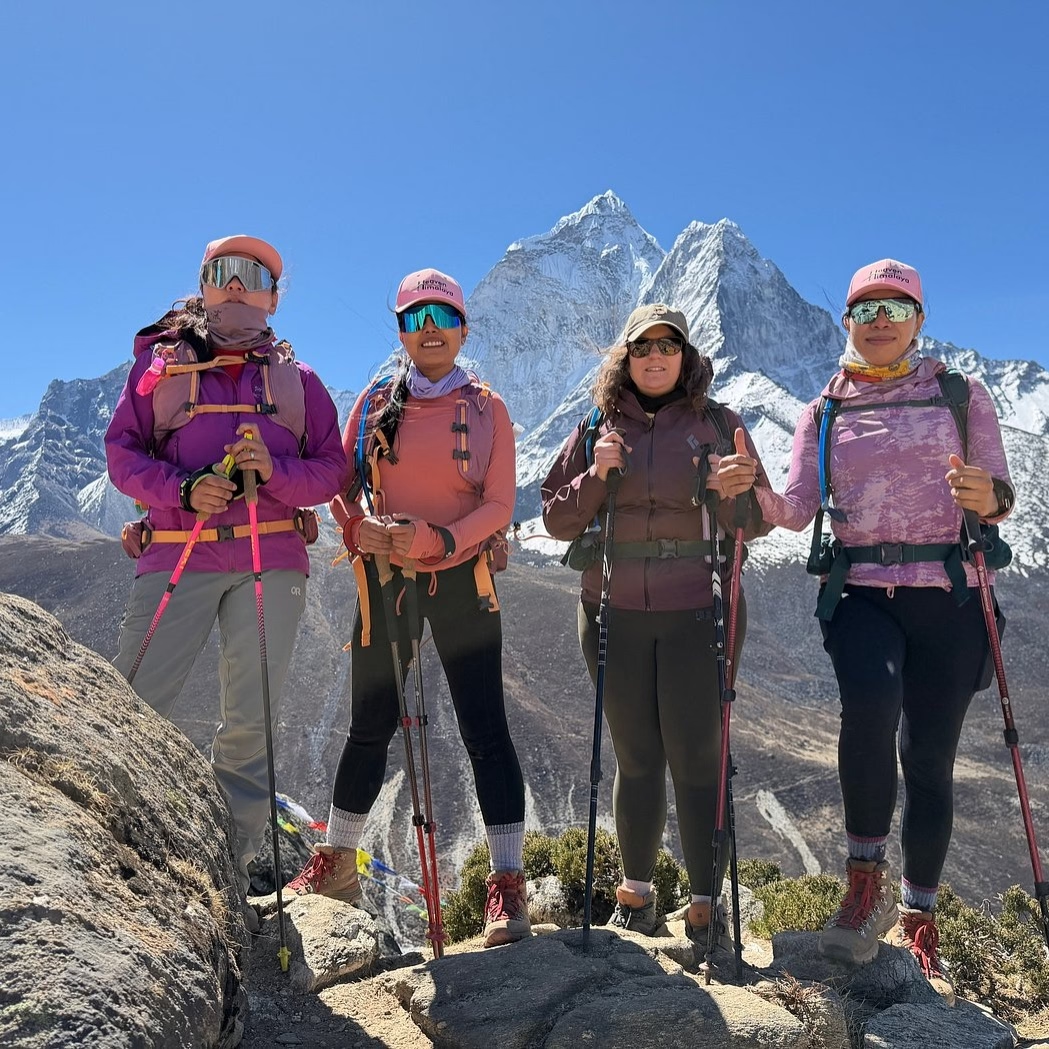
October is the most-booked month for the Everest Base Camp trek because the monsoon has fully retreated, humidity and airborne dust drop to their yearly low, and Lukla flights run with the fewest weather-related delays of any month.
The monsoon clears the Khumbu region by mid-to-late September, and the rain that fell through August washes dust and haze out of the atmosphere rather than leaving it suspended, as happens in the pre-monsoon months of March and April. The result is a dry trail, a stable jet stream, and mountain visibility that outranks every other season on record.
Three additional factors compound the demand:
First, Dashain, Nepal's longest and most significant festival, runs from October 11 to October 25, 2026, with the main Tika day on October 21. Trekkers on the trail during this window see genuine Sherpa and Nepali household celebrations rather than a staged cultural show.
Second, daylight runs 8 to 9 hours a day in October, long enough to complete standard trekking stages without a pre-dawn start on most days.
Third, October sits at the midpoint of Nepal's two peak seasons (spring and autumn) without spring's dust or winter's cold, which is why trekking agencies across the Khumbu report their highest client volume of the calendar year during this month.
The trade-off is congestion. Because so many trekkers converge on the same 12 to 14 day window, teahouses fill quickly and popular viewpoints get crowded at sunrise. A trekker who values solitude over guaranteed clear skies typically does better in late November; a trekker prioritizing visibility and stable weather does better in October despite the crowds.
What Weather Can You Expect on the Everest Base Camp Trek in October?
Everest Base Camp trek weather in October is dry, stable, and cold at altitude, with daytime sun, near-zero rainfall, and clear skies on the large majority of trekking days. Rainfall drops below 20mm for the month, a sharp decline from the 50 to 70mm still falling in early September as the monsoon tapers off. Average wind speed sits at 8 to 11 km/h, mild enough that wind chill rarely becomes the dominant discomfort factor below 4,500 meters, though it intensifies sharply above Lobuche.
How Clear Are the Mountain Views on the Everest Base Camp in October?
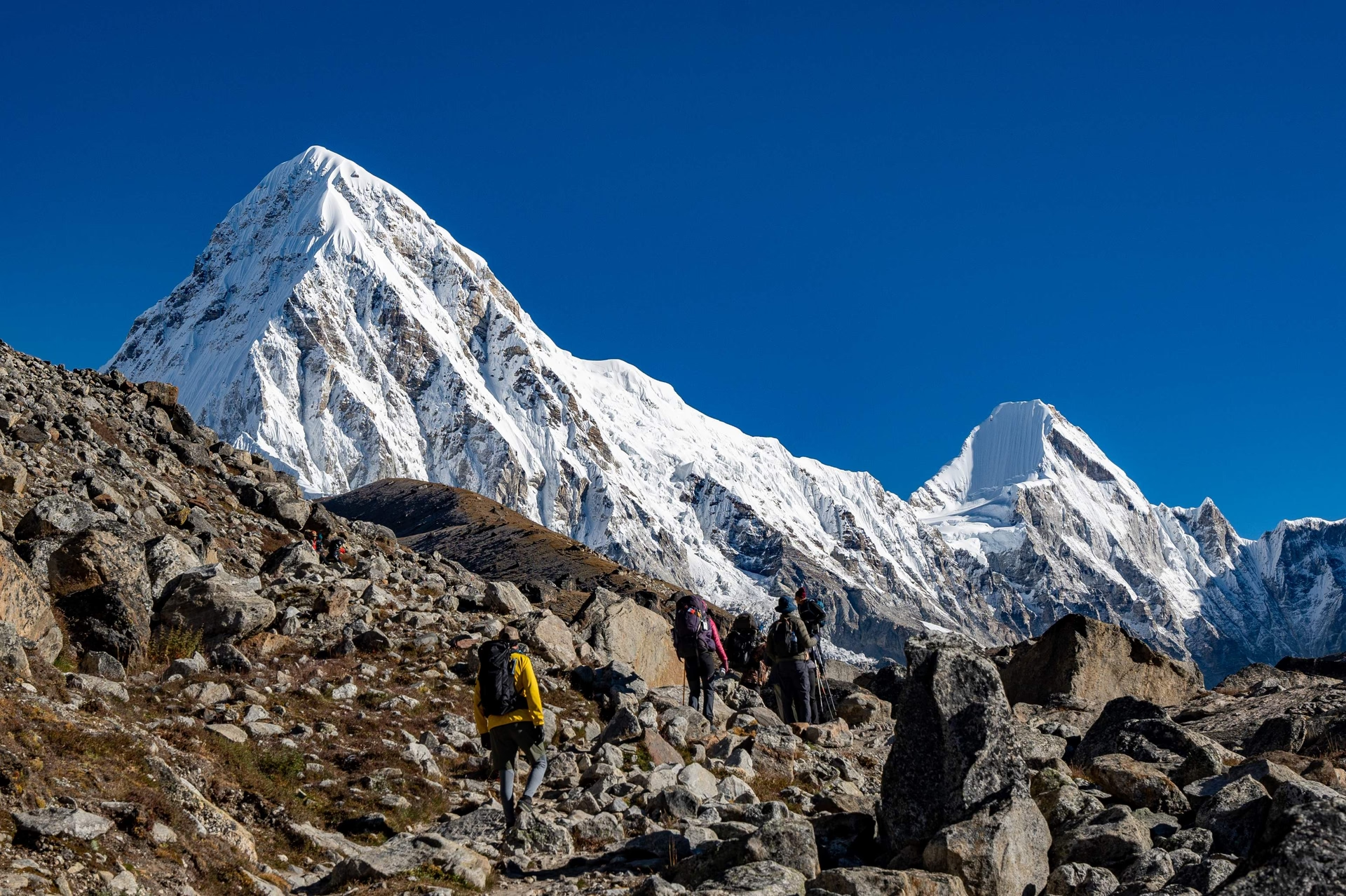
Mountain views during the Everest Base Camp trek in October rank as the clearest of any month, with Everest, Lhotse, Nuptse, Ama Dablam, and Makalu visible on nearly every trekking day. The dust and haze that accumulate over the pre-monsoon months have not yet built back up, and the monsoon rain has scrubbed particulate matter from the lower atmosphere.
Morning visibility is consistently the strongest part of the day: cloud buildup from valley convection typically starts by early-to-mid afternoon, which is precisely why every well-run itinerary schedules high passes, viewpoint side-trips, and photography stops before 11 a.m. A trekker who sleeps in and starts trekking stages at 9 or 10 a.m. loses the best visibility window of the day, not just extra daylight.
What Are the Daytime and Nighttime Temperatures at Everest Base Camp in October?
Temperatures on the Everest Base Camp trek in October fall steadily with elevation, running from a comfortable 15°C to 18°C by day in the lower Khumbu to below -10°C at night near Base Camp itself. Trekkers frequently underestimate how much this range shifts across a 12-day itinerary, since a single average figure quoted online rarely reflects the actual walk.
The following table separates temperature by elevation band, since this is the detail most competing guides collapse into one number.
Elevation Band | Representative Villages | Daytime Temperature | Nighttime Temperature |
Lower Khumbu (2,600–3,440m) | Lukla, Phakding, Namche Bazaar | 15°C to 18°C | 3°C to 8°C |
Mid Khumbu (3,860–4,410m) | Tengboche, Dingboche | 10°C to 14°C | -5°C to 0°C |
High Khumbu (4,900–5,364m) | Lobuche, Gorak Shep, Everest Base Camp | 5°C to 12°C | -10°C to -15°C |
Kala Patthar pre-dawn push (5,545m) | Kala Patthar summit | Below freezing | -15°C to -20°C with wind chill |
This table shows why layering strategy matters more than any single jacket purchase: the same trekker experiences a 25°C to 30°C daily temperature swing between a warm afternoon in Namche and a pre-dawn ascent of Kala Patthar four days later.
What Is the October Everest Base Camp Trek Route Like?
The Everest Base Camp trek route in October follows the standard Lukla-to-Base-Camp trail through Sagarmatha National Park, gaining roughly 2,500 vertical meters over eight to nine days of ascent with two built-in acclimatization stops. The trail itself does not change by season, but October's dry conditions mean firmer footing, fewer landslide-damaged sections, and none of the leech activity that affects the lower forested stretches in September.
How Does the Everest Base Camp Trek Itinerary Typically Unfold in October?
A standard Everest Base Camp trek itinerary in October runs 12 to 14 days round-trip from Kathmandu, including two acclimatization days, one buffer day for weather, and a scenic or helicopter return. The itinerary opens with a short mountain flight from Kathmandu (or Ramechhap during peak-season flight redistribution) to Lukla's Tenzing-Hillary Airport at 2,860m, followed by a gentle three-hour walk to Phakding.
From there, the route climbs steadily to Namche Bazaar, holds an acclimatization day, continues through Tengboche and Dingboche, holds a second acclimatization day, then pushes through Lobuche to Gorak Shep before the final approach to Everest Base Camp and the pre-dawn climb of Kala Patthar. Descent typically takes half the time of the ascent, since altitude is no longer the limiting factor.
Which Villages and Landmarks Do You Visit Along the Everest Trail?
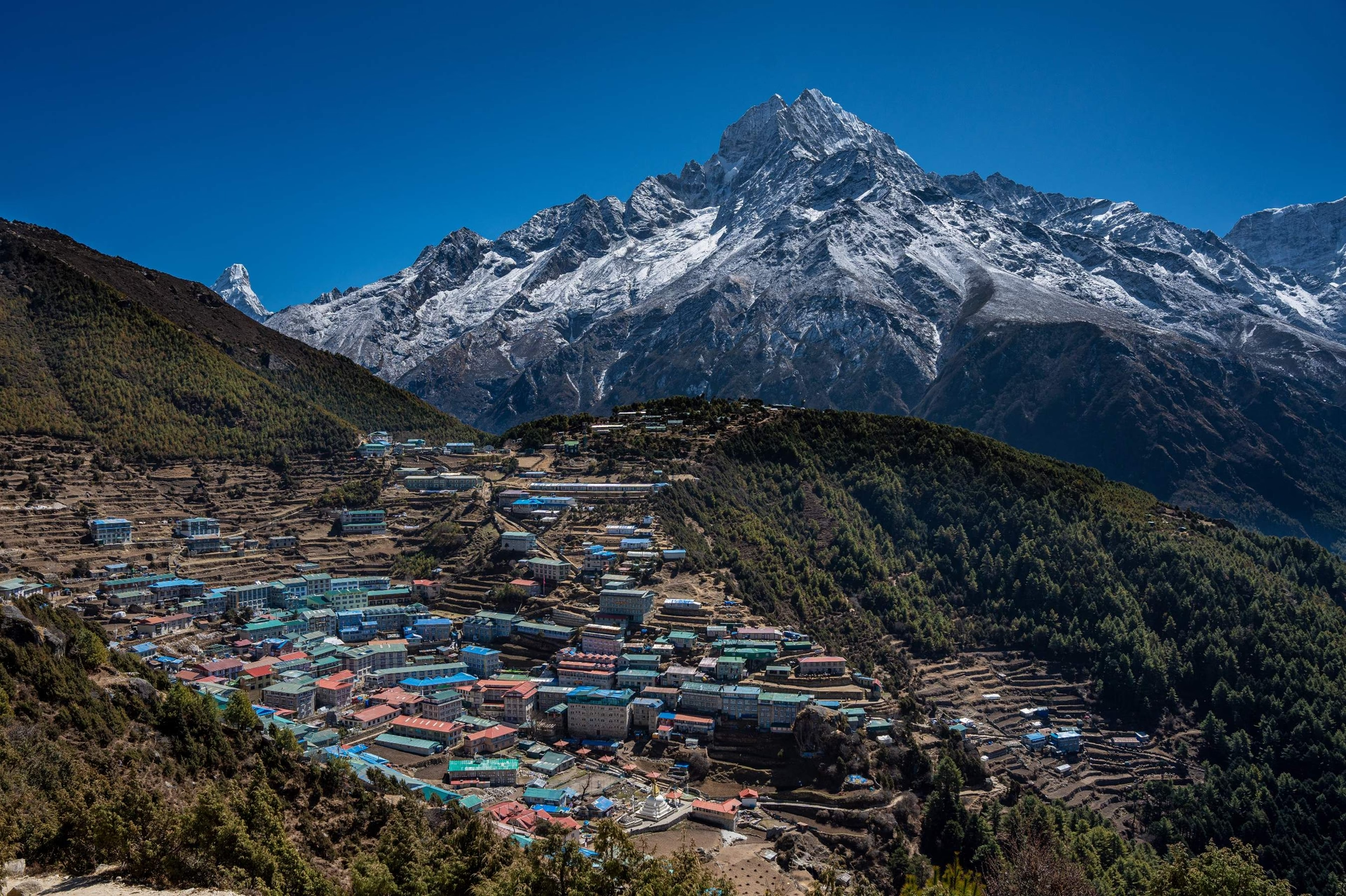
The Everest Base Camp trail passes through nine principal villages: Lukla, Phakding, Namche Bazaar, Tengboche, Dingboche, Dughla, Lobuche, Gorak Shep, and Everest Base Camp itself, plus the Kala Patthar viewpoint above Gorak Shep. Namche Bazaar functions as the trail's commercial and cultural hub, with a Saturday market, bakeries, and the Sagarmatha National Park entry checkpoint.
Tengboche hosts the region's most significant Tengboche Buddhist monastery, home to daily monk prayer sessions open to trekkers. Dughla marks the Everest memorial site, a hillside of chortens built for climbers who died on the mountain, and most trekkers treat it as a natural rest point rather than a photo stop.
Khumjung, a short detour above Namche, rewards the extra hour of walking with a working Sherpa village and the Everest View Hotel above it.
However, the true first glimpse of Everest on the standard route actually occurs a day earlier at Tope Danda, a designated viewpoint situated during the steep climb from the Hillary Bridge to Namche Bazaar. Trekkers building extra acclimatization time into their schedule typically route through Khumjung rather than repeating the direct Namche-to-Tengboche trail.
What Are the Key Highlights Between Lukla and Everest Base Camp?
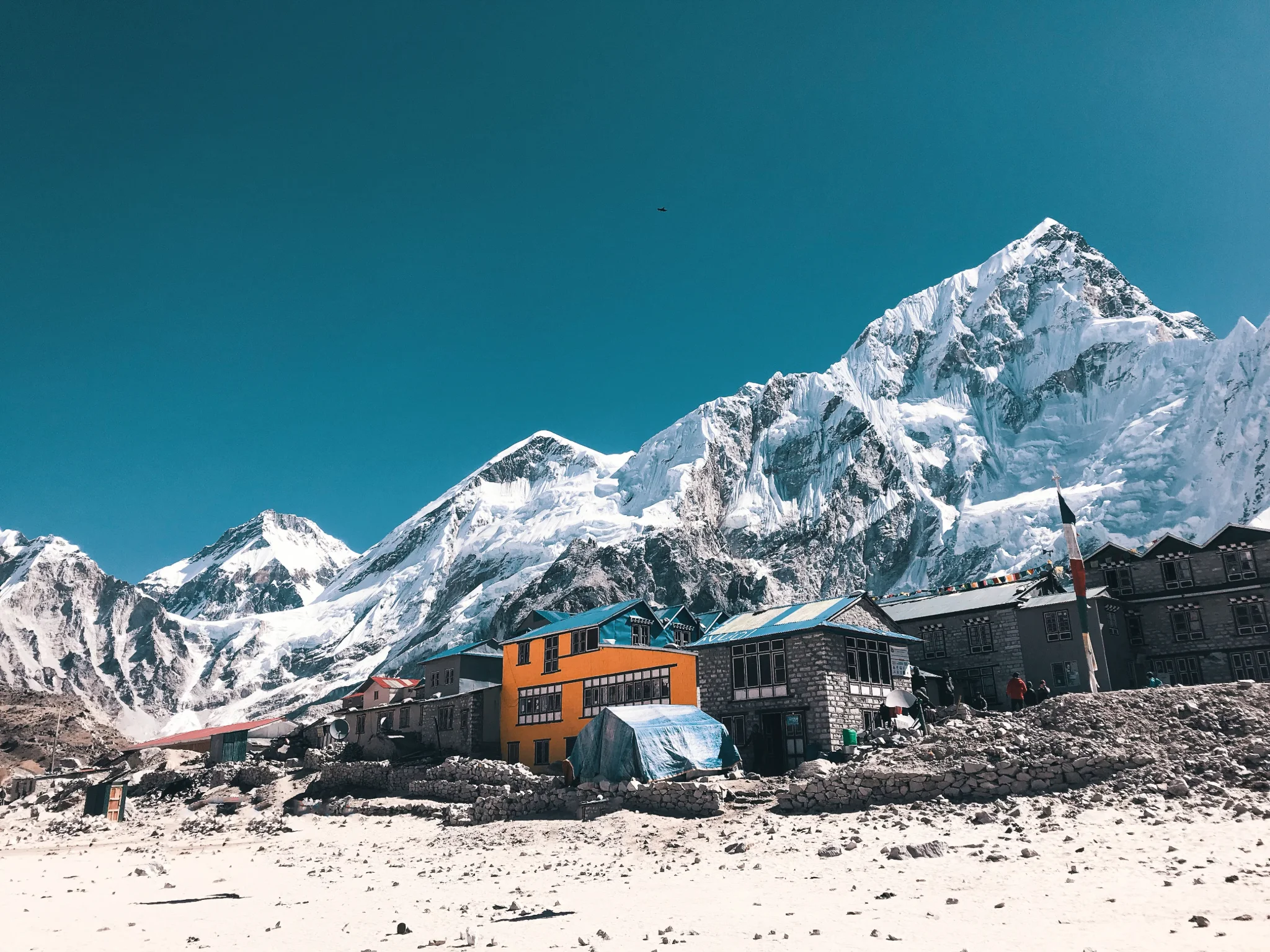
The key highlights between Lukla and Everest Base Camp are the Dudh Kosi suspension bridges, the first Everest viewpoint above Namche, Tengboche Monastery, the Khumbu Glacier moraine, and the summit views from Kala Patthar.
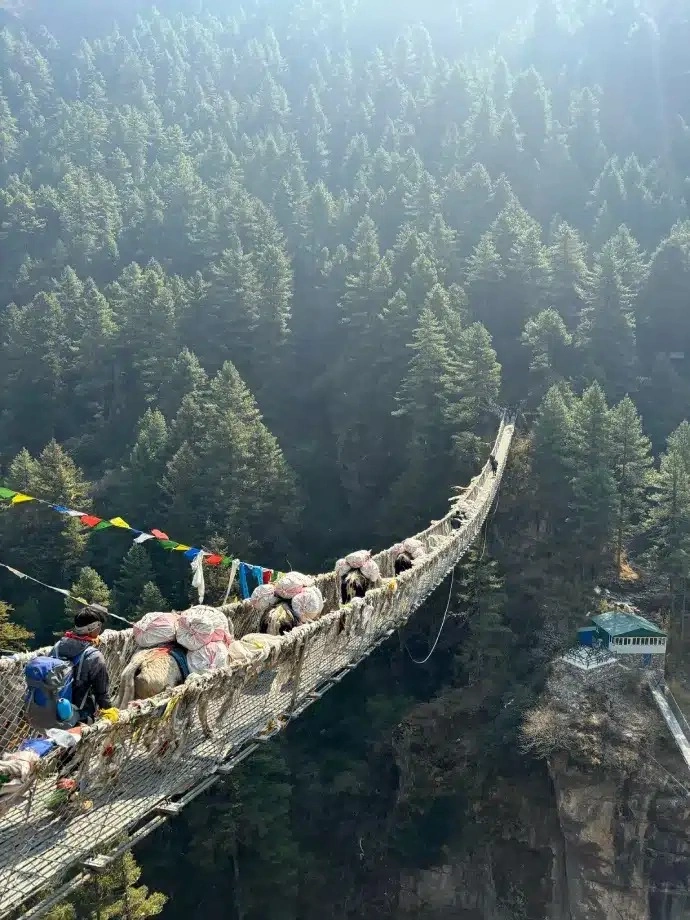
The Hillary Suspension Bridge, the highest and longest of the route's crossings, suspended over the Dudh Kosi river, sits between Jorsale and Namche Bazaar, just before the steep final ascent into Namche and consistently ranks as trekkers' most photographed non-mountain landmark. Kala Patthar, not Everest Base Camp, delivers the trip's best Everest panorama, since Base Camp itself sits too close to Everest's shoulder for a direct summit view.
How Difficult Is the Everest Base Camp Trek in October?
The Everest Base Camp trek in October is a moderately strenuous, non-technical hike where the primary challenge is altitude adaptation rather than terrain difficulty. No ropes, crampons, or climbing skill are required on the standard route. The difficulty comes from sustained daily walking at progressively thinner air, combined with cold mornings and uneven stone-and-dirt trail surfaces.
How Many Hours Do You Walk Each Day on Everest Trail in October?
Daily walking time on the Everest trail in October ranges from four hours on short acclimatization days to seven or eight hours on the longest stages, covering 8 to 15 kilometers per day depending on elevation. Distances shrink as altitude increases: a trekker covers roughly 15km on the flatter Phakding-to-Namche stage but only 5 to 6km on the Gorak-Shep-to-Base-Camp-and-back day, because thinner air and steeper terrain cut walking pace by nearly half above 5,000 meters.
Which Altitudes and Ascents Should You Prepare For Everest Base Camp Trek?
Trekkers on the Everest Base Camp trek gain altitude from Lukla at 2,860m to Everest Base Camp at 5,364m and Kala Patthar at 5,545m, a net elevation gain of roughly 2,700 meters over eight ascending days. The Himalayan Rescue Association and most trekking medicine guidelines recommend limiting net sleeping-altitude gain to 300–500 meters per day above 3,000 meters, with a rest day scheduled every 1,000 meters of net gain.
A well-built October itinerary follows this pattern closely between Namche (3,440m) and Dingboche (4,410m), which is exactly why both acclimatization days sit at those two points rather than higher up the trail.
How Does Altitude Affect Everest Base Camp Trekkers in October?
Altitude reduces available oxygen by roughly 50% at Everest Base Camp compared to sea level, slowing pace, disrupting sleep, and raising the risk of acute mountain sickness (AMS) regardless of season. AMS is the body's response to reduced oxygen partial pressure at altitude, causing headache, nausea, fatigue, and disrupted sleep in its mild form.
The Himalayan Rescue Association's Pheriche aid post treated 593 trekkers, guides, and local residents in a single fall season, including 44 severe cases, according to the organization's own 2024 season report, underscoring how common altitude-related care remains along this stretch of trail. October's cold, dry air does not reduce this risk compared to other seasons, altitude physiology stays constant regardless of temperature.
What Fitness Level Do You Need for the Everest Base Camp Trek?
The Everest Base Camp trek requires a moderate-to-good cardiovascular fitness base, built through 8 to 12 weeks of hill-walking, stair-climbing, or hiking training carrying a loaded daypack. A trekker capable of walking 5 to 6 hours on varied terrain with a 5–7kg daypack, on consecutive days, meets the physical baseline.
Strength training is secondary to cardiovascular endurance and time spent on your feet, the trek rewards steady, sustainable pace over speed, since a fast ascent without matching acclimatization increases AMS risk rather than reducing overall trek time in any meaningful way.
A practical training block breaks into three phases. Weeks one through four build a cardiovascular base with three to four sessions of hiking, stair-climbing, or incline treadmill walking at 45 to 60 minutes each. Weeks five through eight add load and duration, moving to back-to-back weekend hikes of 3 to 5 hours carrying a loaded daypack, ideally on hilly or stepped terrain that mimics the Khumbu's stone staircases.
The final two weeks before departure taper volume while keeping intensity, since arriving at Lukla fatigued from overtraining undermines acclimatization as much as arriving unfit. Trekkers based in flat regions substitute stair-climbing machines or repeated stadium-step sessions for hill training with comparable results.
What Should You Pack for the Everest Base Camp Trek in October?
Packing for the Everest Base Camp trek in October means layering for a 25°C to 30°C daily temperature swing rather than packing for one fixed climate, since lower villages stay mild while high camps drop well below freezing. A duffel bag for porter or yak transport, plus a daypack for personal items carried on the trail, covers the two-bag system nearly every operator requires.
Which Clothes Are Suitable for October Trekking in Everest?
Suitable clothing for October trekking in Everest follows a three-layer system: a moisture-wicking base layer, an insulating mid-layer (fleece or light down), and a windproof, water-resistant outer shell. Lower-altitude days call for light, breathable trekking shirts and convertible trousers; higher-altitude days from Dingboche upward call for thermal base layers worn continuously, including at night inside the sleeping bag.
Cotton clothing is the single most common packing mistake, it traps moisture against skin and dries slowly at altitude, which accelerates heat loss compared to synthetic or merino wool fabrics.
What Trekking Boots and Equipment Should You Bring for Everest Base Camp Trek?
Trekking equipment for Everest Base Camp centers on broken-in, ankle-support trekking boots, telescopic trekking poles, a headlamp, UV-protective sunglasses, and a 4-season sleeping bag rated to at least -15°C. Boots need a minimum of 50 to 80km of prior use before departure to prevent blisters on the trail's stone-and-dirt surfaces.
Trekking poles reduce knee strain by a documented margin on steep descents, particularly on the Namche and Lukla descent stages where fatigue peaks. A headlamp with spare batteries is non-negotiable for the pre-dawn Kala Patthar ascent, which starts three to four hours before sunrise.
The table below defines the core equipment list by category, since scattering items across prose makes it easy to miss one during final packing.
Category | Essential Items | Notes |
Footwear | Broken-in trekking boots, camp shoes, 3–4 pairs wool socks | Break in boots 50–80km before departure |
Sleep system | -15°C rated sleeping bag, silk liner | Rooms are unheated above Namche |
Head and hands | Headlamp + spare batteries, sun hat, warm hat, liner gloves, insulated gloves | Two glove layers cover both sun and cold-hand scenarios |
Health | Personal first-aid kit, Diamox (with medical advice), water purification tablets, sunscreen SPF 50+ | Confirm altitude medication with a doctor before travel |
Documents | Passport copies, permit copies, travel insurance details, passport photos | Photos are needed for permit processing in Kathmandu |
Do You Need Warm Layers for Everest Base Camp in October?
Warm layers are essential for Everest Base Camp in October, since nighttime temperatures at high camps drop to -10°C to -15°C even though the same day's midday sun can feel warm at lower elevations. A down jacket rated for temperatures below -15°C, insulated gloves, a warm hat covering the ears, and thermal base layers cover the core cold-weather gap that daytime sun exposure disguises.
Trekkers who pack based on daytime comfort alone consistently under-pack for the nights at Dingboche, Lobuche, and Gorak Shep.
What Should You Pack for Rain, Wind, and Cold Conditions of Everest Trail?
Rain, wind, and cold protection on the Everest trail in October means a waterproof shell jacket, waterproof trousers, a pack cover, and windproof gloves, even though October's rainfall probability stays under 20mm for the entire month.
The low rainfall figure covers the statistical average, not a guarantee, short afternoon showers still occur in the lower Khumbu forest sections, and wind chill above Lobuche can turn a dry, sunny day uncomfortable within minutes once the sun drops behind a ridge. Packing for worst-case conditions costs little extra weight and removes one entire category of trip risk.
What Are the Accommodation and Food Options on the October Everest Base Camp Trek?
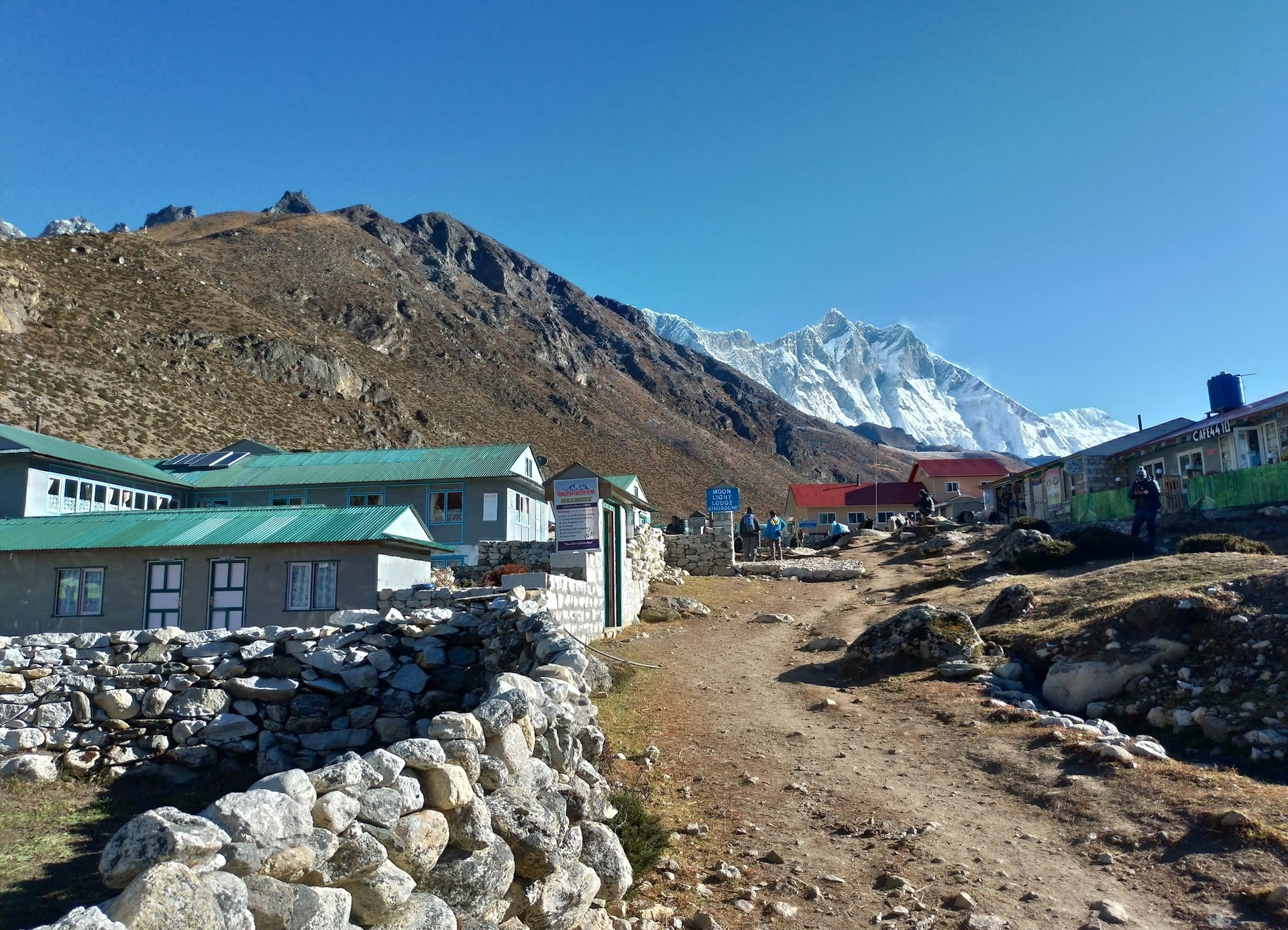
Accommodation on the EBC trek in October consists entirely of teahouses, small, family-run lodges offering private rooms with shared bathrooms at lower elevations and increasingly basic facilities above Dingboche. A teahouse is a locally-operated guesthouse built specifically to serve trekkers, typically combining a dining hall heated by a central stove with simple twin-bed rooms.
What Are Teahouses on Everest Trail Like During the October Trekking Season?
Teahouses on the Everest trail during October run at or near full capacity most nights, with private twin rooms costing $5 to $15 depending on altitude and negotiating power, and shared dorm-style rooms appearing at the busiest lodges when private rooms sell out.
Below Namche, most teahouses offer attached bathrooms and occasional hot showers; above Dingboche, shared outdoor bathrooms and paid hot showers ($3 to $6) become standard, and heating is limited to the communal dining room in the evening. Rooms are typically unheated overnight, which is the primary reason a properly rated sleeping bag matters more than room selection.
What Food and Drinks Are Available Along the Everest Trail?
Food along the Everest trail centers on dal bhat (lentils, rice, and vegetable curry), noodle and pasta dishes, potato preparations, soup, and basic bakery items, with prices rising roughly 10 to 15% per 500 meters of elevation gained. Dal bhat carries particular practical value on this trek: most teahouses offer free refills, which makes it the most calorie-efficient meal option for a physically demanding day.
Bottled water is not the recommended hydration method above Namche, plastic waste management on the trail is limited, and boiled or filtered water (often available for a small fee) combined with a personal filter or purification tablets is the lower-impact, lower-cost choice most experienced guides now recommend over buying bottled water at every stop.
Garlic soup appears on nearly every teahouse menu above Namche, tied to a long-standing local belief among Sherpa guides that it helps with altitude adjustment. No clinical study confirms a direct effect on AMS, but the soup is hot, hydrating, and easy to digest at altitude, which gives it real practical value regardless of the folklore behind it.
Black tea, ginger-lemon-honey tea, and instant coffee are available at every stop; alcohol and carbonated drinks are worth avoiding above 3,000m, since both interfere with the body's acclimatization process and worsen dehydration in an already dry climate.
How Should You Prepare for Busy Teahouses in October?
Preparing for busy teahouses in October means booking rooms one stage ahead through a guide or agency, arriving at each stop by early-to-mid afternoon, and building flexibility into the itinerary for the two acclimatization days when trail traffic peaks.
Independent trekkers without a guide or advance booking face the real possibility of dorm-only availability or a longer walk to the next village during the second half of October, when Dashain travel coincides with peak international arrivals. A trekker traveling with an organized group rarely encounters this problem, since agencies pre-book rooms across the entire season.
How Can You Prepare for Altitude and Safety on the Everest Base Camp Trek in October?
Preparing for altitude and safety on the Everest Base Camp trek in October means following a gradual ascent profile, monitoring for AMS symptoms daily, staying hydrated, and carrying a clear descent plan rather than relying on October's good weather to offset altitude risk. October's clear skies affect visibility and comfort, not oxygen availability, and altitude illness strikes trekkers on sunny October days exactly as it does in any other season.
How Can You Reduce the Risk of Altitude Sickness?
Reducing altitude sickness risk comes down to five measurable habits: ascending no more than 300–500 meters in sleeping altitude per day above 3,000m, drinking 3 to 4 liters of water daily, avoiding alcohol and sedatives above 3,000m, eating enough calories to match the trek's energy demand, and descending immediately at the first moderate symptom rather than pushing through it.
A 2025 Nepal Health Research Council-registered study spanning 36 years of Himalayan trekking data found AMS incidence as high as 45% under current Lake Louise criteria, with body mass index, not age, sex, or smoking status, the only statistically significant predictor of risk.
The takeaway for booking a group trek: confirm the itinerary includes both standard acclimatization days before committing, since a compressed schedule is the single biggest controllable AMS risk factor.
What Acclimatization Days Are Included in the Everest Base Camp Trek?
Standard Everest Base Camp itineraries include two acclimatization days: one at Namche Bazaar (3,440m) and one at Dingboche (4,410m), each built around a "climb high, sleep low" day hike rather than a full rest day. On an acclimatization day, trekkers hike up to a higher elevation, commonly the Everest View Hotel above Namche, or Nagarjun Hill above Dingboche, then descend to sleep at the lower village altitude, which stimulates the body's altitude adaptation more effectively than simply resting in place.
What Safety Challenges Can Occur on the Everest Trail in October?
Safety challenges specific to the October Everest trail include Lukla and Ramechhap flight congestion from peak-season demand, overcrowded acclimatization schedules on group treks trying to match everyone's flight dates, and Dashain-related staff shortages at teahouses and among porters returning home for the festival.
Flights to Lukla operate from Ramechhap's Manthali Airport rather than Kathmandu during the busiest trekking months, adding a roughly four-hour road transfer that catches unprepared trekkers off guard.
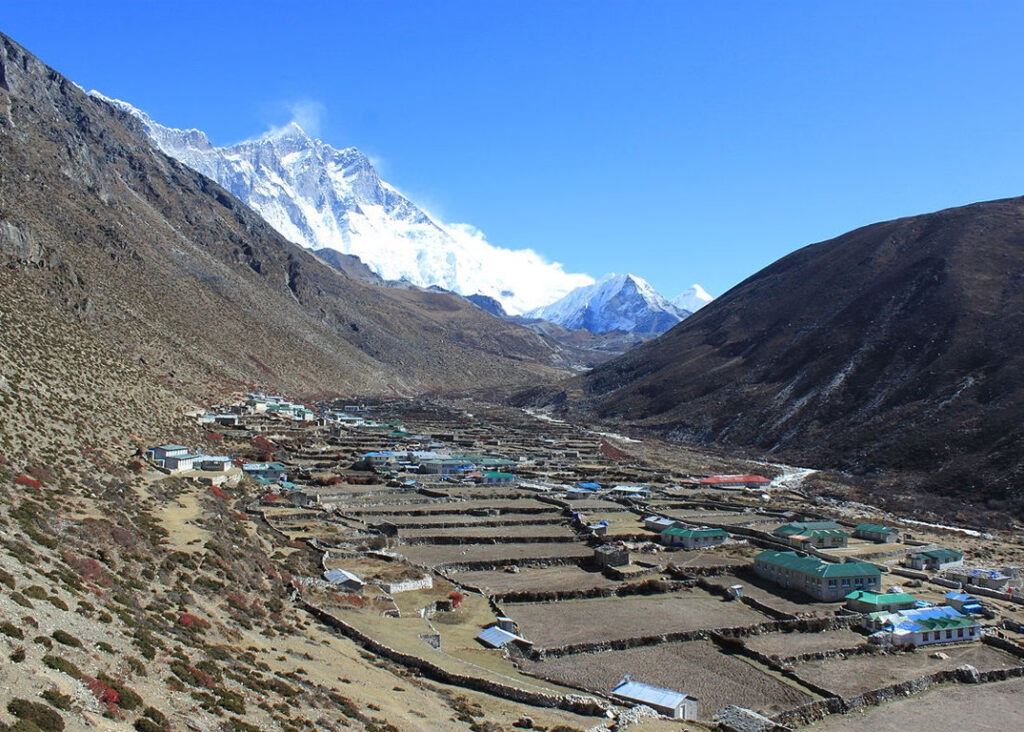
The Himalayan Rescue Association, founded in the early 1970s according to its own volunteer program page, has staffed the Pheriche post every trekking season since, a direct response to the concentration of altitude-related cases in the Dingboche-Pheriche area.
How Much Does the Everest Base Camp Trek in October Cost?
The Everest Base Camp trek in October costs between $1,300 and $1,600 for a budget independent trek and $1,500 to $2,500 per person for a standard guided package, with luxury or helicopter-return packages ranging from $3,500 to $6,500.
October's peak-season status pushes prices toward the higher end of each range compared to the shoulder months of late November or early December, since flight seats, teahouse rooms, and guide availability all tighten under the same demand that produces the best weather window of the year.
What Expenses Are Included in an October Everest Base Camp Trek?
A standard October Everest Base Camp package typically includes the Sagarmatha National Park entry permit, the Khumbu Pasang Lhamu Rural Municipality permit, Lukla flights, teahouse accommodation, three daily meals on the trail, and a licensed guide.
The Sagarmatha National Park permit costs NPR 3,000 plus a mandatory 13% VAT (totaling NPR 3,390, approximately $25 to $28) for non-SAARC foreign nationals, NPR 1,500 plus VAT for SAARC nationals, and NPR 100 for Nepali citizens.
The Khumbu Pasang Lhamu Rural Municipality permit costs NPR 2,000 to 3,000 (approximately $15 to $23) for foreign nationals. The TIMS (Trekkers' Information Management System) card is no longer required for the Everest region specifically, since the municipality permit now serves that tracking function, Nepali trekkers should still confirm current requirements with the Nepal Tourism Board before departure, since regional permit rules are updated periodically.
The table below breaks down a typical standard guided package by category, since bundled quotes rarely show where the money actually goes.
Cost Category | Typical Range (USD) | Included in Standard Package |
Sagarmatha National Park permit | 22–28 | Yes |
Khumbu Pasang Lhamu Rural Municipality permit | 15–23 | Yes |
Lukla round-trip flight | 440–460 | Yes |
Teahouse accommodation (11–13 nights) | 55–195 | Yes |
Guide and porter wages | Varies by operator | Yes |
Meals on the trail | Varies by altitude | Usually yes |
Travel insurance with helicopter evacuation | 40–150 | No, arranged independently |
Tips for guide and porter | 10–15% of trip cost | No, paid directly at trek end |
Nepali trekkers booking independently bypass international flight costs and pay significantly lower domestic rates for Lukla flights and permits, bringing a domestic budget trek closer to the 250–400 (NPR 35,000–55,000) range.
Which Additional Costs Should You Budget For Everest Base Camp Trek?
Additional costs to budget for the Everest Base Camp trek include Lukla round-trip flights (440–460), hot showers and device charging fees at teahouses (3–6 per use above Namche), boiled or filtered drinking water, WiFi access cards, personal travel insurance covering helicopter evacuation above 5,000m, and guide/porter tips (customarily 10–15% of the total trip cost).
Travel insurance with high-altitude helicopter evacuation coverage is the one line item trekkers most often underestimate, a single emergency evacuation from Base Camp or Gorak Shep can cost several thousand dollars without it, and standard travel insurance policies frequently exclude altitudes above 4,000 or 5,000 meters by default.
How Can Heaven Himalaya Help You Prepare for the Everest Base Camp Trek in October?
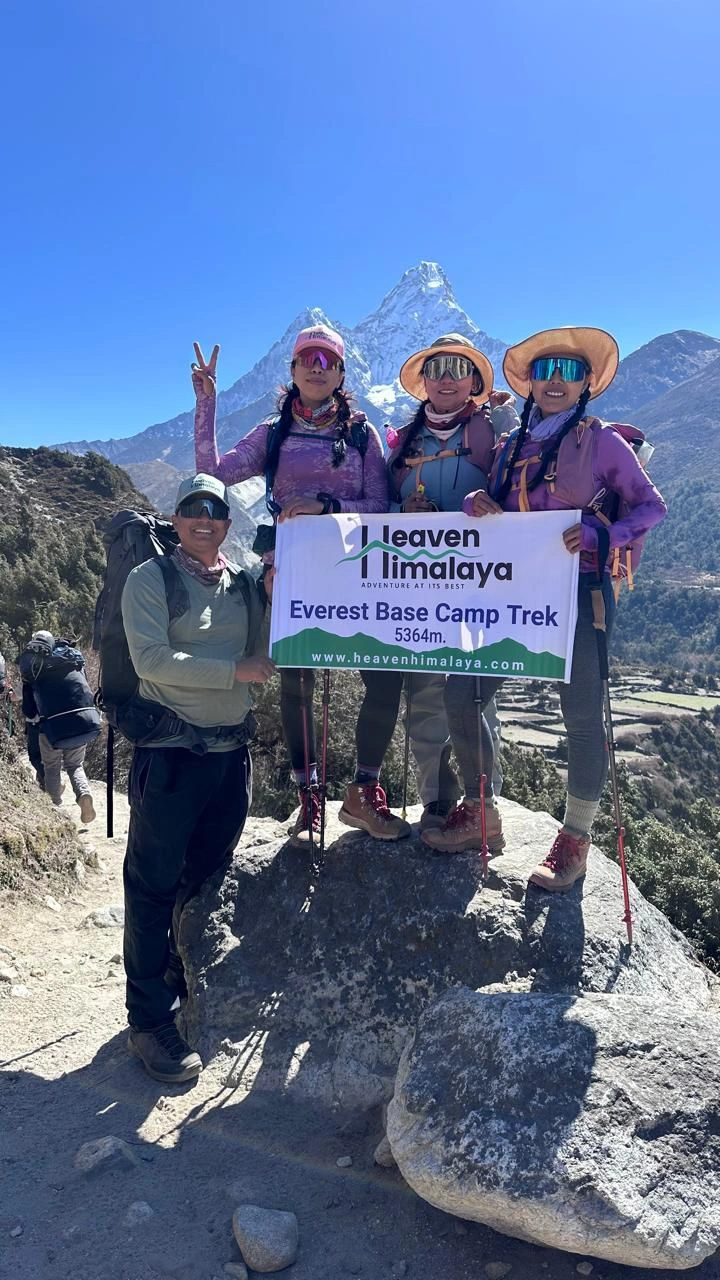
Heaven Himalaya prepares Everest Base Camp trekkers through government-licensed guides, pre-booked teahouse accommodation across the full October season, a fixed two-acclimatization-day itinerary, and direct pre-departure support from Kathmandu.
As a registered member of the Trekking Agencies Association of Nepal (TAAN), Heaven Himalaya has guided more than 1,000 trekkers to Everest Base Camp, with local Sherpa guides and porters who know the trail's October conditions, festival-season staffing patterns, and Ramechhap flight logistics firsthand.
Can Heaven Himalaya Arrange a Safe and Well-Planned Everest Base Camp Trek in October?
Heaven Himalaya arranges safe, well-planned Everest Base Camp treks in October by building both acclimatization days into every itinerary as standard, confirming teahouse bookings ahead of the peak-season rush, and briefing every trekker on AMS symptoms and descent protocol before departure from Kathmandu.
The team handles permit processing, Lukla or Ramechhap flight coordination, airport transfers, and daily itinerary adjustments for weather, so trekkers arrive focused on the walk itself rather than the logistics around it. Trekkers planning an October date, whether flying in from abroad or joining from within Nepal, can reach out for a tailored itinerary built around their fitness level, available days, and return preference.
Everest Base Camp Short Hike
View detailsWhat Are the Key Takeaways About the Everest Base Camp Trek in October?
The Everest Base Camp trek in October delivers the year's clearest mountain visibility, driest trail conditions, and lowest flight-disruption rate, at the cost of higher teahouse demand and elevated trekking prices compared to the shoulder seasons. Daytime temperatures stay comfortable through the lower Khumbu before dropping below -10°C at night near Base Camp, which makes layering strategy more important than any single piece of gear.
The route itself is non-technical, but altitude remains the trek's real challenge. While pre-trip cardio training is essential for enduring the daily physical grind of the trail, two properly scheduled acclimatization days at Namche and Dingboche remain the decisive factors in reducing acute mountain sickness risk.
Budgeting $1,500 to $2,500 for a standard guided package, securing helicopter-capable travel insurance, and booking teahouses ahead of the Dashain travel surge round out the practical preparation that separates a smooth October trek from a stressful one. For both Nepali trekkers building a domestic itinerary and international trekkers planning their first Himalayan trip, October remains the season where preparation pays off most visibly, the weather rewards trekkers who show up ready for it.