

How Pleasant Spring is for Trekking in Nepal?

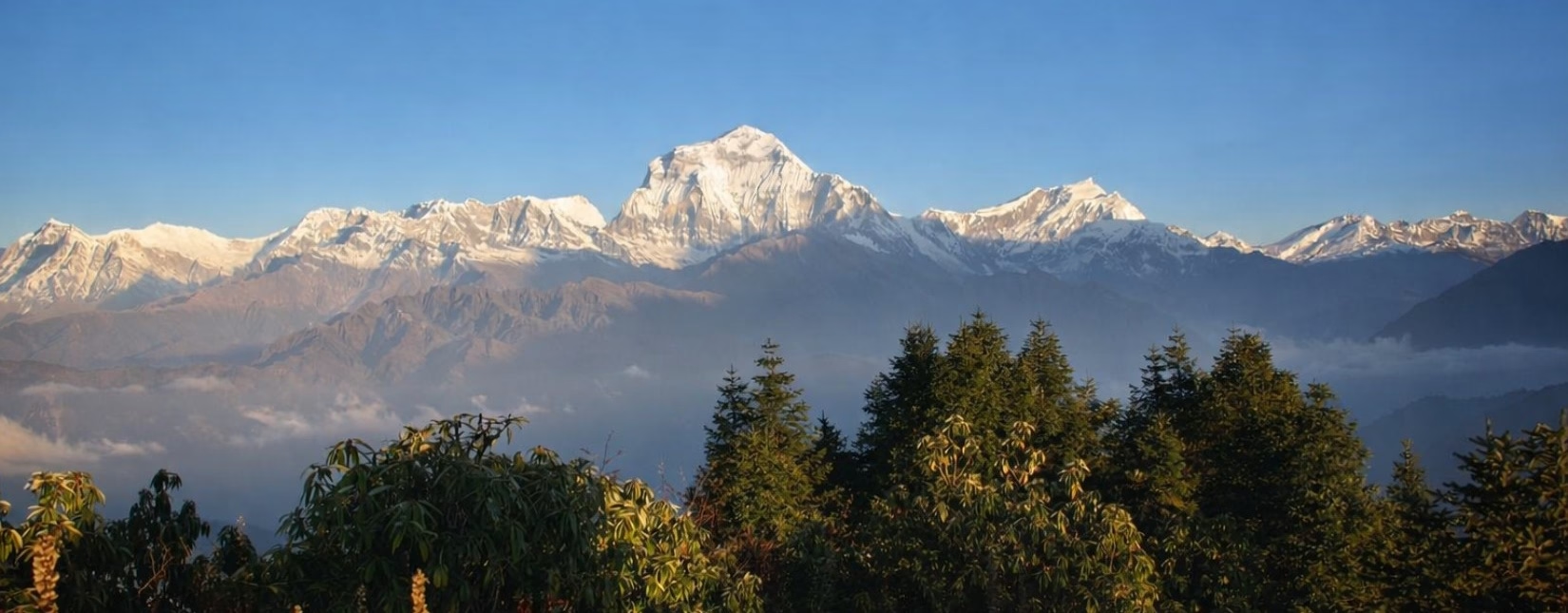
Spring is a prime trekking season in Nepal, defined by the transition from winter conditions to the pre-monsoon period between March and May. The season combines warmer trail conditions, longer daylight, generally clear mornings, accessible mountain routes, and widespread rhododendron blooms across Nepal’s middle hills. Trekking conditions vary sharply with elevation: lower trails can become hot during the day, while destinations above 4,000 meters remain cold and exposed to snow, wind, and freezing nights.
April generally provides the strongest balance of temperature, mountain visibility, trail accessibility, and flowering landscapes, while March retains greater snow risk at high passes and May brings increasing cloud, rainfall, and thunderstorms.
Spring works well across Nepal’s major trekking regions, including the Everest, Annapurna, Manaslu, and Langtang areas, while rain-shadow destinations such as Upper Mustang offer a drier alternative. The season also brings active mountain life, busy trekking trails, fully operating teahouses, expedition activity in the Everest region, and some of the best rhododendron displays around Ghorepani-Poon Hill, Langtang, and eastern Nepal.
Successful spring trekking depends on choosing the right month and altitude, starting high sections early, preparing for rapid weather changes, allowing for flight or trail delays, managing altitude gain, and carrying equipment for both warm valleys and sub-zero high camps. The sections below examine spring weather, rainfall, visibility, temperatures, routes, crowds, accommodation, wildlife, packing, altitude safety, permits, and practical trip planning to show exactly how good spring is for trekking in Nepal.
Why Is Spring Considered One of the Best Seasons for Trekking in Nepal?
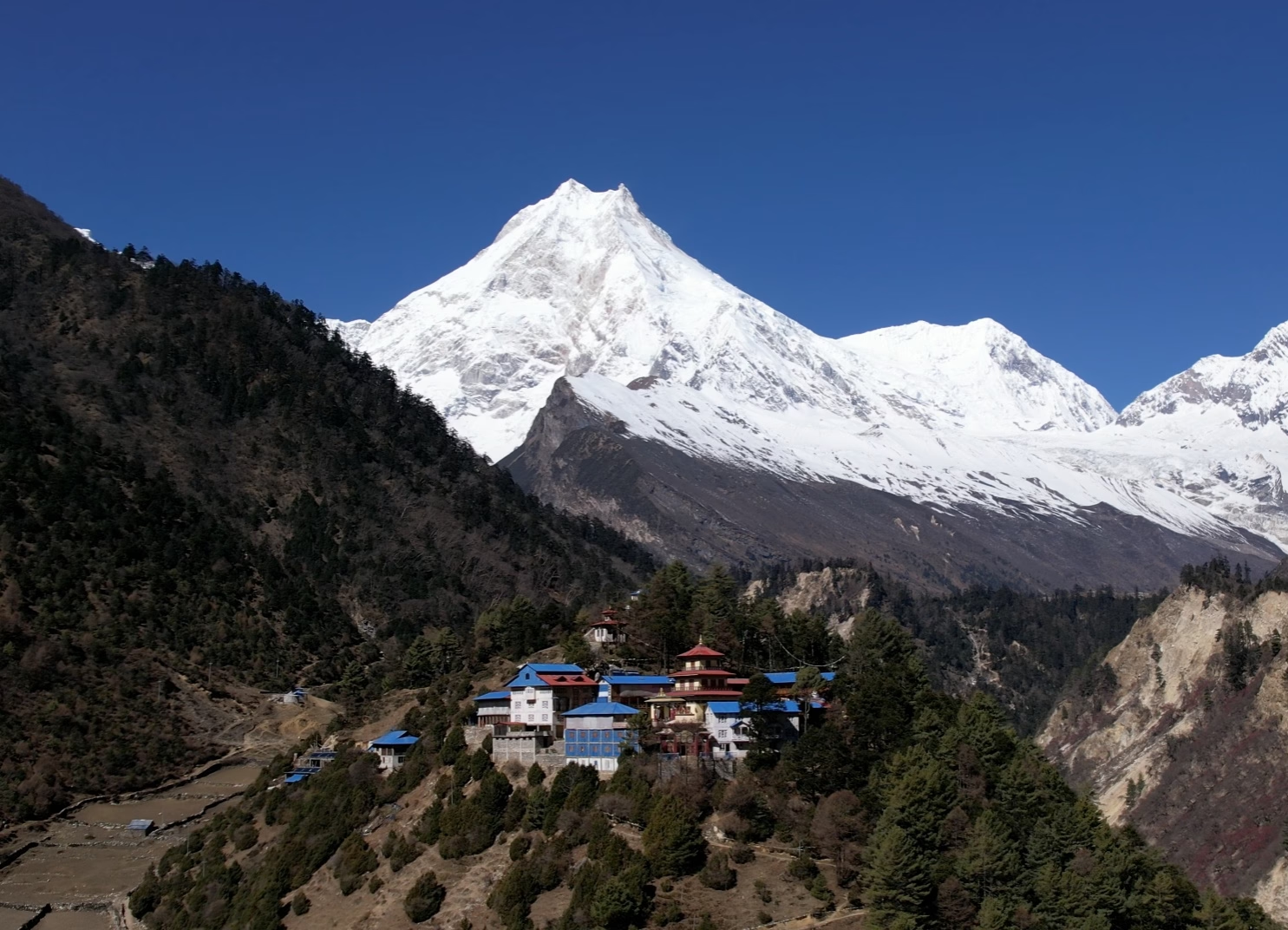
Spring ranks among the best trekking seasons in Nepal because four conditions line up: moderate temperatures, long daylight, passable high passes, and the blooming of Nepal's national flower, the rhododendron. Autumn matches spring on stability. Spring wins on color and night warmth.
Five factors explain the ranking:
Temperature: Daytime highs reach 10 to 16 °C at 2,500 to 3,500 m, against 5 to 10 °C in winter.
Daylight: Kathmandu gets about 12 hours of daylight in March and 13.5 hours by late May.
Passes: Thorong La (5,416 m) and Larkya La (5,106 m) open to regular crossings by April. March crossings depend on that year's snowfall.
Flowers: Rhododendron arboreum, called laliguras in Nepali, blooms on hillsides between 1,500 and 3,500 m.
Access: Teahouses, family-run mountain lodges with twin rooms and a shared dining room, operate along every main route.
Spring has three weaknesses: pre-monsoon haze that softens distant views, afternoon cloud from April, and thunderstorms in May. Autumn air is cleaner because the monsoon has washed the dust out. Spring suits trekkers who rank color and warmth above maximum visibility. Autumn suits those who rank them the other way round.
What Weather Can Trekkers Expect in Nepal During Spring?
Trekkers can expect dry mornings, warming days, and freezing nights above 3,500 m, with cloud building each afternoon from April. Nepal averages 226 mm of rain across March to May, and almost all of it falls in afternoon and evening bursts rather than all-day rain.
Two numbers shape every spring plan: how warm the trail gets and how much rain arrives.
How Warm Are Nepal's Trekking Routes in Spring?
Nepal's spring trekking routes run warm below 3,000 m (15 to 30 °C by day) and cold above 4,000 m (below 0 °C at night). Air temperature falls about 6.5 °C for every 1,000 m of climbing, so a 30 °C afternoon in Pokhara becomes a freezing night at Gorak Shep.
March is the coolest month, with lingering snow above 4,000 m. April balances warmth and clarity. May is the warmest and the cloudiest. Pokhara and Kathmandu reach the high 20s to low 30s °C by May.
The most common packing mistake is dressing for the summit only. The first two days, whether you start at Nayapul, Phakding, or Syabrubesi, run 25 °C and above. Trekkers who wear their cold-weather layers from the first morning arrive at the first lodge soaked in sweat, and wet clothing gets cold fast at the next altitude band.
How Much Rainfall Does Nepal Receive During Spring Trekking?
Nepal receives an average of 226 mm of rain between March and May, but spring 2026 broke the pattern. DHM recorded roughly 330 to 340 mm, the wettest pre-monsoon since its records began in 1981 across 126 stations.
May carried the surplus. DHM reported above-normal May rainfall with a peak around 29 May, and Anarmani Birta in Jhapa district received 208 mm in 24 hours. Heavy rain also fell in Kaski, Lamjung, and Gorkha, the foothills of the Annapurna and Manaslu regions. The monsoon then reached eastern Nepal on 19 June 2026, and June rainfall came in below normal.
The timing matters more than the total. March and April departures sit before the wettest weeks. Late-May departures meet the heaviest showers, plus landslide-prone trails in the middle hills. Geography matters too. The Pokhara valley and the southern Annapurna slopes catch the heaviest rain, while Manang and Mustang sit in a rain shadow and stay dry. A trekker who finishes the high sections before mid-May avoids the worst of a wet year.
What Makes Spring Weather Good for Trekking in Nepal?
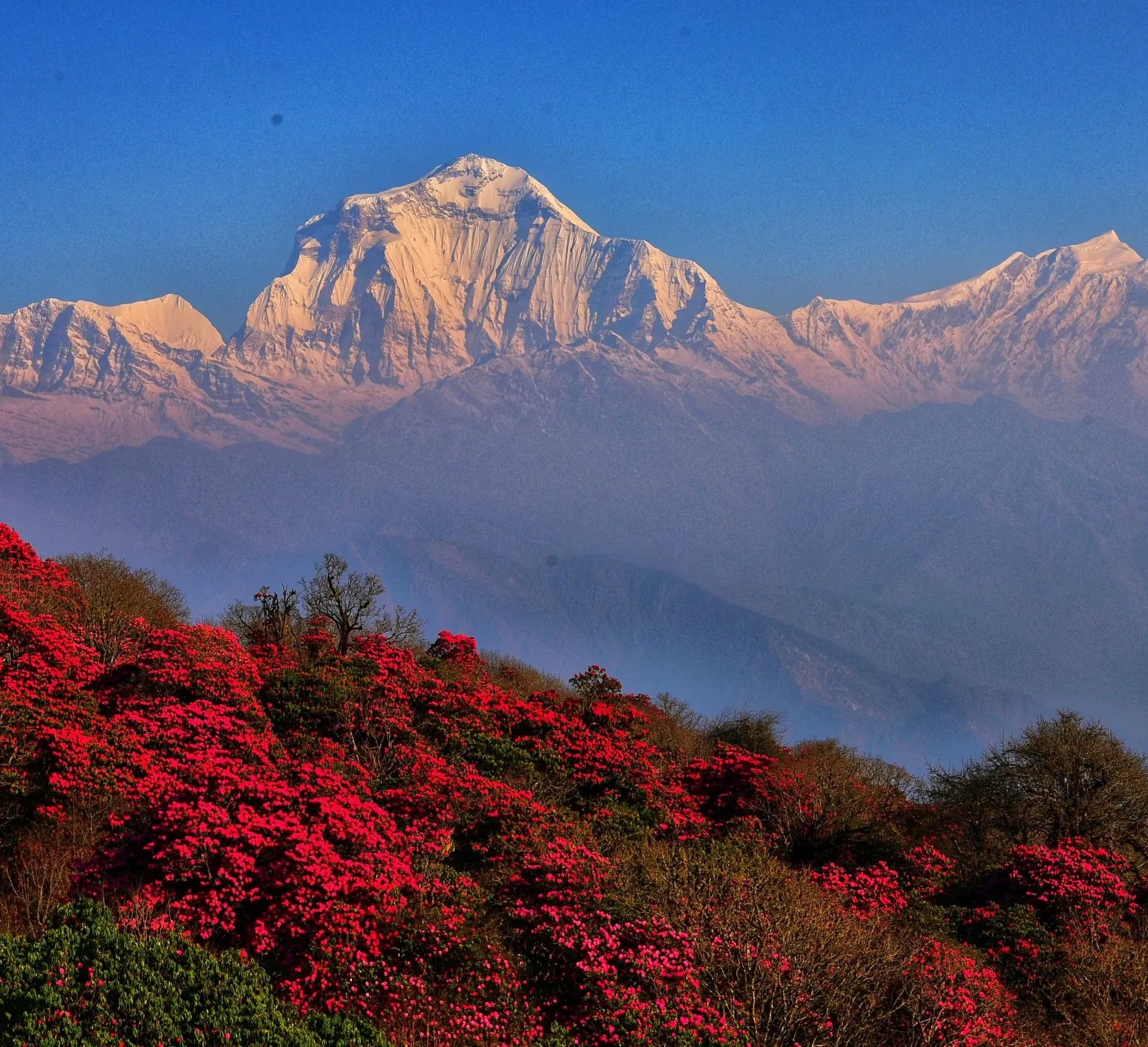
Spring weather works for trekking because of three conditions: low rainfall before the monsoon, clear mornings, and temperatures between 10 and 16 °C at teahouse altitudes. The result is trail days that start cold and bright, warm by midday, and close before the afternoon cloud thickens.
How Do Clear Skies Affect Spring Trekking Conditions?
Clear skies in spring appear mostly between sunrise and 10 a.m., and they decide when you walk, fly, and photograph. Valley heating pushes moisture upward through the morning, so cloud forms by noon on most April and May days.
The clear window changes three decisions:
Summit viewpoints: Poon Hill (3,210 m) and Kala Patthar (5,545 m) deliver their best views at sunrise, before cloud covers the peaks.
Flights: Lukla's runway sits at 2,860 m, and crosswinds and cloud close the airfield by late morning. Early departures protect your schedule.
Pass crossings: Thorong La crossings start around 4 a.m. because wind builds after 10 a.m.
Most trekkers treat the 5:30 a.m. alarm as a cost. In spring it is the whole point of the season. The mountain you see at 6:00 a.m. often disappears by 11:00, and a trekker who sleeps in sees a cloud bank where the peaks stood.
How Does Spring Visibility Compare With Other Trekking Seasons?
Spring visibility ranks second to autumn, comparable to winter, and far ahead of the monsoon. The table below compares four Nepal seasons by months, view quality, and main limitation.
Season | Months | View quality | Main limitation |
Spring (pre-monsoon) | March to May | Good in the morning | Dust and smoke haze, afternoon cloud |
Monsoon | June to August | Poor | Heavy cloud and rain |
Autumn (post-monsoon) | September to November | Best | Highest demand |
Winter | December to February | Excellent clarity | Extreme cold, snow on passes |
Haze is the factor most spring guides skip. Dust and smoke from agricultural burning and forest fires accumulate over the lowlands and middle hills before the rains clear them, and the Himalaya fades into a milky distance when seen from Pokhara or Kathmandu in April and May. The haze thins with altitude. Above 3,500 m the air sharpens, and the views at Dingboche, Manang, and Samagaun match anything autumn offers.
The table shows that spring trades a small amount of clarity for warmer nights and flowers. Winter trades far more, in the form of cold and closed passes.
What Are Day and Night Temperatures Like in Spring at Different Altitudes?
Spring day temperatures range from 24 to 31 °C in the valleys to below 0 °C above 5,000 m, and night temperatures drop to −15 °C at the highest camps. The table below shows typical April ranges for four altitude bands. March runs 3 to 5 °C colder and May 3 to 5 °C warmer.
Altitude band | Example places | Day (°C) | Night (°C) |
800 to 1,500 m | Pokhara, Kathmandu, Syabrubesi | 24 to 31 | 10 to 20 |
2,500 to 3,500 m | Lukla, Ghorepani, Namche Bazaar | 10 to 16 | 0 to 5 |
3,500 to 4,500 m | Manang, Dingboche, Annapurna Base Camp | 6 to 12 | −10 to −3 |
4,500 to 5,500 m | Lobuche, Gorak Shep, Thorong Phedi | −2 to 6 | −15 to −8 |
Sun and wind distort these numbers. A sunny rest stop at 4,000 m feels like 15 °C, and the same spot in shade with a 30 km/h wind feels like 0 °C. Nights matter most because teahouse bedrooms have no heating. The dining room stove goes out by 9 p.m., and a sleeping bag rated to −15 °C is the standard answer for any lodge above 4,000 m.
Which Trekking Routes in Nepal Are Best in Spring?
Everest Base Camp, Annapurna Base Camp, the Annapurna Circuit, the Manaslu Circuit, and the Langtang Valley all work in spring. The table below compares each by high point, typical duration, and spring fit.
Route | High point | Typical days | Spring fit |
Everest Base Camp | 5,364 m (Kala Patthar 5,545 m) | 12 to 14 | Strong, best in April |
Annapurna Base Camp | 4,130 m | 7 to 10 | Strong, best for flowers |
Annapurna Circuit | 5,416 m (Thorong La) | 12 to 15 | Good, snow risk in March |
Manaslu Circuit | 5,106 m (Larkya La) | 14 to 16 | Good, quieter than Annapurna |
Langtang Valley | 4,773 m (Kyanjin Ri) | 7 to 9 | Strong, shortest option |
The sections below add the detail the table leaves out.
Is Everest Base Camp Trek Good in Spring?
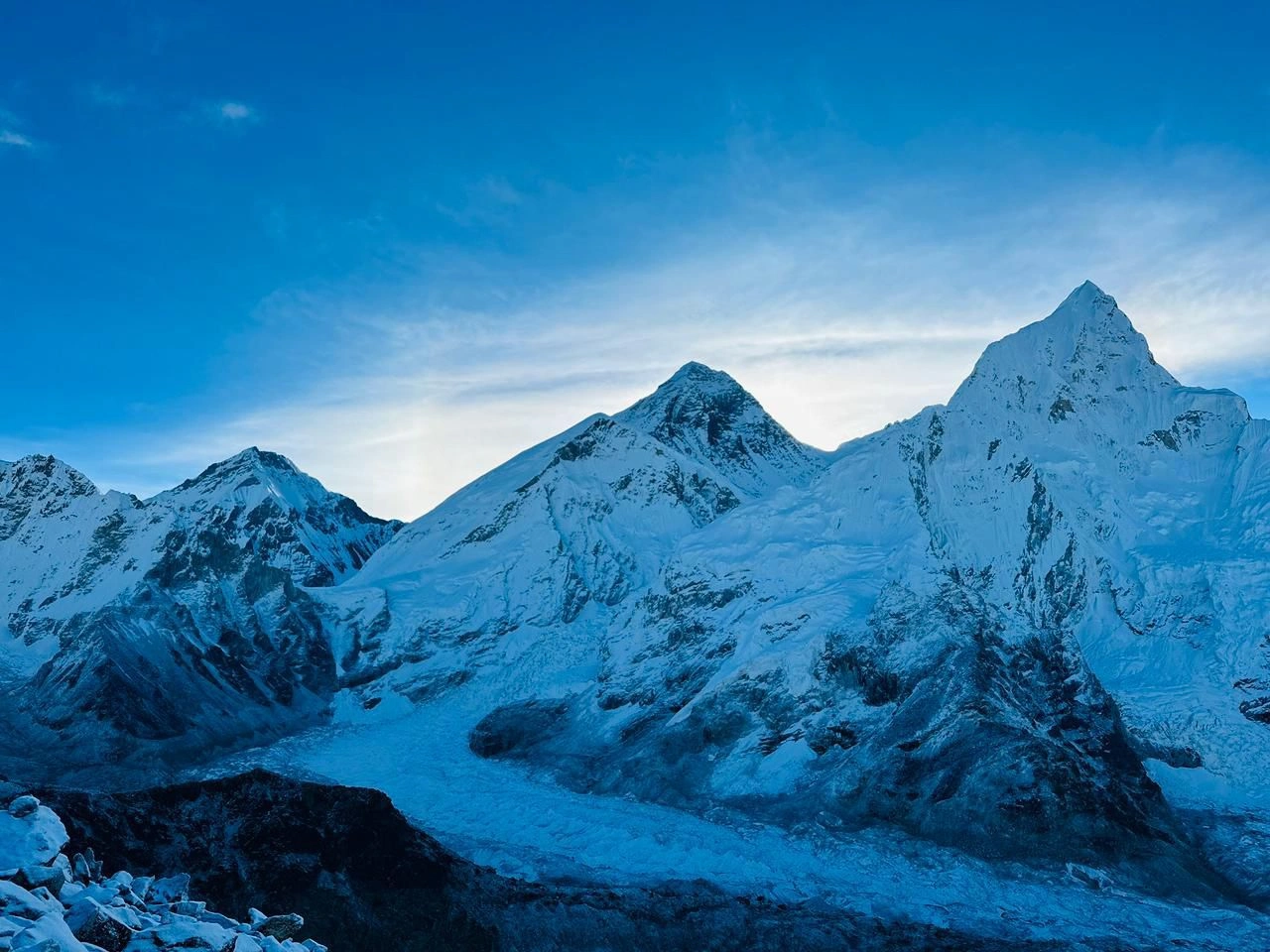
Yes. Everest Base Camp is one of the strongest spring treks, and April is its best month. The route climbs from Lukla (2,860 m) through Namche Bazaar (3,440 m) and Dingboche (4,410 m) to Gorak Shep (5,164 m), with Base Camp at 5,364 m.
Spring is also climbing season. NTB reported 127 expedition teams with 1,168 mountaineers from 73 nationalities in spring 2025, and 472 climbers secured permits for Everest. Base Camp is a working tent city then, which gives the destination energy that autumn lacks.
Flights need planning. During March to May, most Lukla flights depart from Manthali Airport in Ramechhap, about 130 km east of Kathmandu. Many trekkers leave Kathmandu between 1 and 2 a.m. to catch flights that start around 6 a.m. Build two buffer days into the itinerary, because a cancelled morning slot pushes everyone to the next day. Rhododendrons line the trail up to Tengboche (3,867 m), and Gorak Shep nights drop to −10 to −15 °C in April.
Is Annapurna Base Camp Trek Good in Spring?
Yes. Annapurna Base Camp (ABC, 4,130 m) is the best spring trek for flowers, and April is its best month. The route passes Chhomrong, Himalaya, Deurali, and Machhapuchhre Base Camp (3,700 m), and the lower forests flush red and pink from late March.
Two cautions apply. Snow still covers the upper valley in March, and the Deurali to Machhapuchhre stretch carries avalanche risk after fresh snowfall. The southern slopes also catch the heaviest pre-monsoon rain, and Kaski and Lamjung received heavy rain in May 2026. Finish before mid-May.
ACAP recorded 48,513 foreign visitors at the start of the 2026 season, and March rose by 11,679 over March 2025. Add Poon Hill (3,210 m) for the blooms. The Ghorepani to Tadapani section runs through one of the densest rhododendron forests on the trekking map.
Is Annapurna Circuit Trek Good in Spring?
Yes, with a snow caveat in March. The Annapurna Circuit crosses Thorong La (5,416 m) between Manang (3,540 m) and Muktinath. April and May give the most reliable crossings.
Jeep roads now reach Manang and Muktinath, so many trekkers shorten the classic 18-day walk to 10 to 14 days by driving some sections. The trail between Upper Pisang and Ghyaru remains among the best on the route. Manang sits in the rain shadow, so May rain that soaks Pokhara leaves the upper circuit mostly dry. Start the pass crossing around 4 a.m. Wind builds after 10 a.m. and turns the final descent into a cold slog.
Is Manaslu Circuit Trek Good in Spring?
Yes. The Manaslu Circuit ranks second to autumn and offers far fewer people than Annapurna. The route circles Manaslu (8,163 m) and crosses Larkya La (5,106 m) from Samagaun (3,530 m).
Manaslu is a restricted area. The Restricted Area Permit costs USD 75 for the first 7 days between December and August, plus USD 10 per day after that. The Manaslu Conservation Area Permit costs NPR 3,000, and the Annapurna permit adds NPR 3,000 for the final section. Restricted-area rules require a minimum of two trekkers and a licensed guide.
Lower forests bloom with rhododendron from Jagat toward Deng. March snow can close the pass, so April and early May are the safe windows. Gorkha recorded heavy rain in May 2026, and the Budhi Gandaki valley trail suffers landslides after downpours.
Are Langtang Valley Treks Suitable for Spring?
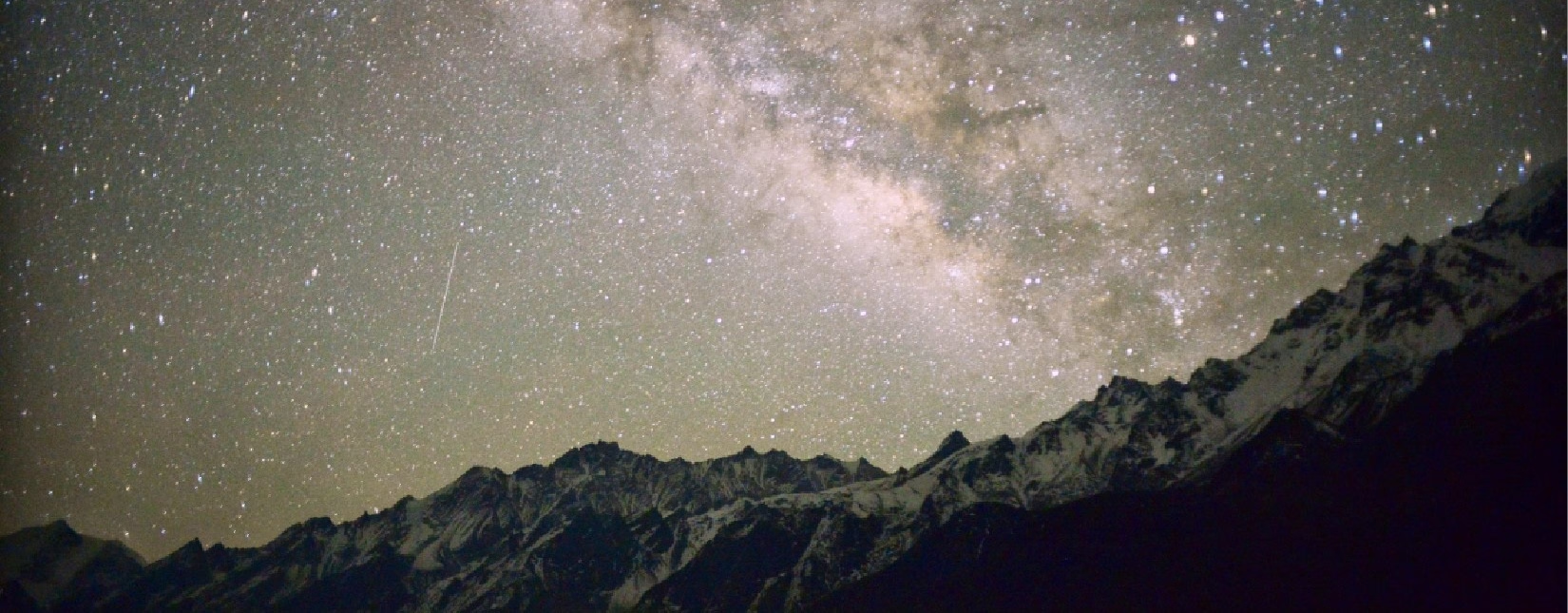
Yes. Langtang Valley is one of the best spring choices for time-limited trekkers. The trailhead at Syabrubesi (1,503 m) sits a 7 to 8 hour drive from Kathmandu, and the trek reaches Kyanjin Gompa (3,870 m) in 3 to 4 days.
Rhododendron tunnels fill the lower forest. Kyanjin Ri (4,773 m) gives close views of Langtang Lirung, and Tserko Ri (4,984 m) extends the stay by a day. Langtang village was rebuilt after the 2015 earthquake, and the Tamang communities along the trail run family teahouses with local yak cheese. The valley also shelters red panda habitat, though sightings are rare.
Which Off-the-Beaten-Path Treks Are Best in Spring?
Kanchenjunga, Upper Mustang, Tsum Valley, and Mardi Himal rank as the best off-the-beaten-path spring treks. Each trades convenience for solitude.
Kanchenjunga: The far-eastern trek reaches Pangpema (5,143 m) beneath Kanchenjunga, the third-highest peak on Earth. The eastern hills hold Nepal's densest rhododendron diversity. The Tinjure-Milke-Jaljale (TMJ) region shelters 28 of Nepal's roughly 33 species.
Upper Mustang: The restricted kingdom of Lo (Lo Manthang, 3,840 m) lies in the rain shadow and stays dry. Afternoon winds are strong, so plan to walk in the morning.
Tsum Valley: The restricted valley beside Manaslu holds monasteries such as Mu Gompa (3,700 m) and an old Tibetan-influenced culture.
Mardi Himal: The ridge trek above Pokhara climbs to a viewpoint near 4,500 m through rhododendron forest. It draws fewer people than Annapurna Base Camp, but it is no longer empty.
Restricted areas need permits arranged through a registered agency. Add buffer days, because remote trails recover slowly from landslides.
What Can Trekkers See During Spring in Nepal?
Spring trekkers see blooming rhododendron forests, snow-capped peaks above 8,000 m, and active wildlife. The three sections below cover each in turn.
Where Can Trekkers See Rhododendron Blooms in Spring?
Rhododendron blooms appear along Ghorepani-Poon Hill, Langtang Valley, the Everest trail to Tengboche, and the eastern TMJ region, with the best window from late March to late April. Lower hills bloom first, and higher ridges follow into early May.
Nepal holds about 33 rhododendron species, and Rhododendron arboreum (laligurans) is the national flower. Its blooms range from deep red to pink and white. The Ghorepani to Tadapani forest, near Poon Hill, gives the densest and most accessible display. Langtang offers rhododendron tunnels in the lower valley.
Bloom timing shifts from year to year with winter snow and spring temperature. Aim for the second and third weeks of April for the lower and middle trails, and add a few buffer days if flowers are the main goal.
Can Spring Trekkers See Snow-Capped Himalayan Peaks?
Yes. Spring trekkers see snow-capped giants including Everest (8,849 m), Lhotse (8,516 m), Dhaulagiri (8,167 m), Manaslu (8,163 m), and Annapurna I (8,091 m). Winter snow still coats the upper slopes, so the peaks look brightest in March and April.
By May, snow retreats from the lower faces and the peaks look darker and rockier. Photograph at dawn. Cloud covers the summits by late morning. Early in the season, a plume of wind-blown snow often streams from Everest's summit.
What Wildlife and Landscapes Can Be Seen in Spring?
Spring trekkers see Himalayan tahr, musk deer, langur monkeys, blue sheep, and the Himalayan monal (danphe), Nepal's national bird. Snow leopards and red pandas live in Langtang, Annapurna, and Sagarmatha, but sightings are rare luck, not a plan.
Birdsong fills the rhododendron forests as spring breeding begins. Terraced fields in the middle hills turn green with wheat and barley, and yak herders move their animals to higher pastures through April and May. The landscape changes in layers as you climb: terraced farmland, then oak and rhododendron forest, then alpine meadow, then glacier moraine. A good spring trek crosses all four.
How Busy Are Nepal's Trekking Trails in Spring?
Nepal's trekking trails are busy in spring, with March and April forming the peak. NTB counted 120,516 arrivals in March 2026, 107,934 in April, and 102,626 in May. Trails thin out by late May as the monsoon approaches.
How Does Spring Crowding Compare With Autumn?
Spring crowding runs about 6 percent below the autumn peak. October 2025 recorded 128,443 arrivals, the busiest month of that year, against 120,516 in March 2026. May 2026 came in 15 percent below March.
These totals include non-trekkers, so trail density differs from the headline. ACAP's 48,513 foreign visitors in the 2026 season split into 32,020 SAARC (South Asian) nationals and 16,493 visitors from other regions. The busiest stretches are the road-accessible villages such as Ghorepani, where domestic holiday crowds fill lodges around the Nepali New Year in mid-April. A four-day holiday in May 2026 also filled Pokhara's hotels.
NTB said the West Asia conflict disrupted air access and trimmed April arrivals from some Western markets. Check the 2027 situation before assuming quiet trails. March and May departures give the thinnest crowds. Start walking by 6:30 a.m. to stay ahead of group departures.
What Are Accommodation and Teahouse Conditions Like in Spring?
Spring teahouses are fully open, basic, and unheated except for the dining room. A teahouse offers a twin room with a mattress and blankets, a shared bathroom above 3,000 m, and meals from a set menu.
Typical conditions in spring:
Rooms: Rooms cost roughly USD 3 to 10 a night in lower villages when you eat dinner and breakfast there. Prices climb above 4,000 m.
Heat: The dining room stove lights in the evening and dies by about 9 p.m. Bedrooms stay as cold as the air outside.
Extras: Hot showers, device charging, and Wi-Fi cost extra, and charges rise with altitude.
Food: Dal bhat (rice, lentils, and vegetables) is the reliable choice. Skip meat above Namche, where refrigeration is weak.
Peak-day lodges fill fast, and late arrivals sleep in dining rooms. In May, lower lodges feel warm at night. Higher ones stay cold.
Should Trekkers Book Spring Accommodation in Advance?
Yes. Book flights and key lodges 3 to 4 months ahead for April departures. Lukla seats are limited, and rooms at Dingboche, Lobuche, Gorak Shep, and Manang fill during peak weeks.
Most teahouses run first-come, first-served, so guides phone ahead from the previous village to hold rooms. Agencies reserve blocks of rooms months early. Independent bookings carry more risk, because a missed room at 4,900 m means a cold night in the dining room or a long walk down. March and mid-May bookings need less lead time.
What Should You Pack for Spring Trekking in Nepal?
Pack for 30 °C heat at the trailhead and −15 °C at the high camps. That means a four-layer clothing system, a sleeping bag rated to −15 °C, waterproof boots, and sun and rain protection, all inside a duffel of about 15 kg or less. Lukla flights cap luggage near that weight.
What Clothing Layers Are Best for Spring Conditions?
Layering with a base, mid, insulating, and shell layer works best because spring temperatures swing 30 °C between the lowlands and the high camps. Add or remove layers as the day warms.
Base layer: Merino or synthetic long-sleeve tops and thermal leggings
Mid layer: A 200-weight fleece or light synthetic jacket
Insulation: A down jacket with 600 to 800 fill power for evenings and summit mornings
Shell: A waterproof, breathable jacket and trousers
Accessories: Warm hat, liner gloves, insulated gloves, and a buff
Add two quick-dry T-shirts and one pair of shorts for the first two warm days. Cotton stays wet and chills you, so leave it at home.
What Footwear and Trekking Gear Are Essential?
Waterproof mid-cut boots, trekking poles, and a sleeping bag rated to −15 °C are the essential gear items. Break boots in over at least four weeks of walking.
Other items that earn their weight:
Poles: Poles cut knee load on the long descents.
Traction: Gaiters and microspikes help on March snow, especially at Thorong La and Larkya La.
Lighting: A headlamp is necessary for 4 a.m. starts.
Water: Carry 2 liters plus purification tablets or a filter.
Rent the sleeping bag and down jacket in Kathmandu if you trek once. Rental runs only a couple of dollars a day, and the gear saves luggage weight.
Do Trekkers Need Rain and Sun Protection in Spring?
Yes. Trekkers need both, because afternoon showers and strong ultraviolet (UV) radiation occur on the same trek. The World Health Organization notes UV levels rise about 10 percent for every 1,000 m of altitude.
Sun kit: SPF 50+ sunscreen, SPF lip balm, a brimmed hat, and category 4 sunglasses with side shields. Snow glare burns the underside of the nose and chin.
Rain kit: a waterproof shell, a pack cover, and dry bags for electronics and sleeping gear. May brings pre-monsoon thunderstorms and hail at 3,000 to 4,500 m. Keep the shell at the top of your daypack, because a clear morning turns wet in 30 minutes.
How Should You Prepare for Spring Trekking in Nepal?
Prepare with 8 to 12 weeks of cardio and leg training, a gradual altitude plan, and a flexible itinerary. Train three to four times a week. Include one long hike a week carrying 8 kg for 5 to 6 hours. The sections below cover weather, altitude, and planning.
How Can You Prepare for Changing Mountain Weather in Spring?
Prepare for changing mountain weather by starting at dawn, carrying all your layers in the daypack, and building one or two buffer days. The daily pattern is predictable: clear mornings, midday cloud, afternoon wind or thunder.
Walk the longest and highest sections before noon. DHM publishes daily forecasts, and your guide will check them each evening. Travel insurance must cover emergency helicopter evacuation to your maximum altitude. A weather delay in Lukla or a landslide on the Budhi Gandaki trail costs days, and buffer days turn those delays into inconvenience instead of a missed flight home.
What Should You Know About Altitude Sickness in Spring?
Altitude sickness (acute mountain sickness, AMS) affects trekkers above 2,500 m, and spring conditions give no protection. Slow ascent is the only reliable prevention.
According to the US Centers for Disease Control and Prevention, above 3,000 m, increase your sleeping altitude by no more than 500 m per day and add a rest day every 3 to 4 days. AMS symptoms are headache, nausea, dizziness, fatigue, and poor sleep.
Two emergencies need immediate descent: high-altitude cerebral edema (confusion and loss of coordination) and high-altitude pulmonary edema (breathlessness at rest and a wet cough). Acetazolamide is a common preventive drug, and a doctor decides whether it suits you.
Warm weather and the Lukla flight create a spring-specific trap. The flight skips the gradual climb. A standard Everest itinerary sleeps at Phakding (2,610 m), then Namche (3,440 m), an 830 m gain that exceeds the guideline, so the rest day at Namche is not optional. Warm lower valleys also tempt trekkers to rush. Walk slower than you feel you can.
How Can You Plan a Safe and Comfortable Spring Trek?
Plan a safe and comfortable spring trek by matching the route to your fitness, choosing March or April, and booking a licensed guide. Follow these six steps:
Choose a route that fits your fitness and your days.
Pick a March, April, or early-May window based on your priority: cold and quiet, flowers, or warmth.
Reserve Lukla flights and key lodges 3 to 4 months ahead.
Insure the trek, with helicopter evacuation cover to your maximum altitude.
Train for 8 to 12 weeks.
Confirm permits and guide rules with a registered agency.
Permits cost NPR 3,000 each for Sagarmatha National Park, the Annapurna, Manaslu, and Langtang areas, plus a local Khumbu fee of NPR 3,000. Guide and TIMS (Trekkers' Information Management System) requirements change between seasons and vary by region, so confirm them before you pay for anything.
How Can Heaven Himalaya Help You Plan Spring Trekking in Nepal?
Plan your spring trek with Heaven Himalaya. We are a Nepal-based trekking agency. We plan spring treks from first question to last transfer: route selection, permits, flights, licensed guides, porters, acclimatization schedules, and teahouse reservations. Tell us the month you want, the flowers or the clear peaks you care about, and how many days you have. We build the itinerary around that, with buffer days built in for Lukla delays and wet weather.
Spring decisions turn on small details. A trekker who wants rhododendrons walks in the second and third weeks of April. A trekker who wants quiet picks March or late May. We lay these trade-offs out before you book, not after you land.
Can Heaven Himalaya Arrange a Spring Trek Suited to Your Route and Experience?
Yes. Heaven Himalaya arranges spring treks by route, fitness level, and group size.
Our usual matches:
First-time trekkers: Ghorepani Poon Hill or Langtang Valley, 5 to 9 days, moderate altitude
Experienced walkers: Annapurna Base Camp or Everest Base Camp, 8 to 14 days
Seasoned high-altitude trekkers: Manaslu Circuit, Annapurna Circuit, or Kanchenjunga, 14 days or more
Send us your dates, your experience, and your priorities. We reply with a day-by-day itinerary, permit details, and a gear list. Start at heavenhimalaya.com.
What Are the Key Takeaways About Spring Trekking in Nepal?
Spring is one of the two best trekking seasons in Nepal. The key points:
Spring runs March to May, with daytime highs of 10 to 16 °C at 2,500 to 3,500 m and nights down to −15 °C at the highest camps.
Nepal averages 226 mm of pre-monsoon rain. Spring 2026 reached roughly 330 to 340 mm, mostly in May, so March and April departures fared best.
Mornings are clear, afternoons turn cloudy, and haze softens views below 3,500 m.
Everest Base Camp, Annapurna Base Camp, the Annapurna Circuit, Manaslu, and Langtang all work, and April is the strongest month for most.
Rhododendrons bloom from late March to late April, and Ghorepani-Poon Hill gives the densest display.
March 2026 drew 120,516 arrivals, about 6 percent below the autumn 2025 peak of 128,443.
Book flights and lodges 3 to 4 months ahead, and keep one or two buffer days.
Ascend slowly above 3,000 m: no more than 500 m of extra sleeping altitude a day.
Spring offers color, warmth, and long days, and it rewards trekkers who plan around the clear mornings.