

Annapurna Base Camp Trek in September 2026: Trail & Weather

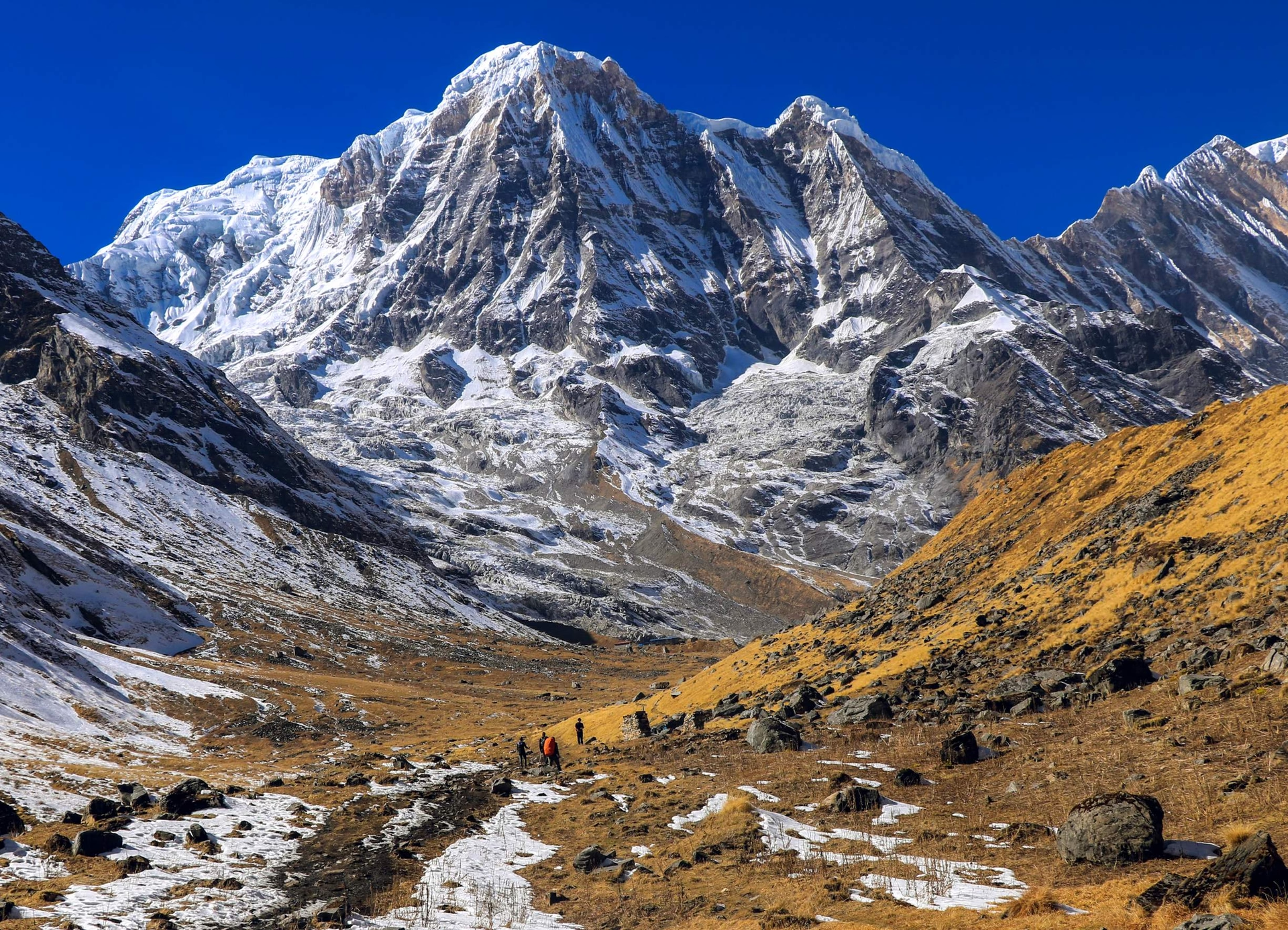
The Annapurna Base Camp Trek in September is a Himalayan trekking route in Nepal that enters its transition from the summer monsoon to the autumn trekking season. Conditions change significantly throughout the month: early September can bring humid weather, afternoon rainfall, muddy stone steps, leeches, cloud cover, and localized landslide risk, while late September generally brings drier trails, clearer mountain views, and cooler alpine conditions.
The route climbs from the lower elevations around Nayapul and Ghandruk through Chhomrong, Bamboo, Himalaya, Deurali, and Machhapuchhre Base Camp to Annapurna Base Camp at 4,130 meters, creating substantial differences in temperature, rainfall, terrain, and visibility along the journey. September therefore offers a distinct trekking experience, combining lush forests, full waterfalls, quieter trails, and gradually improving Himalayan views with more variable conditions than the peak autumn months.
Planning the Annapurna Base Camp Trek in September requires more than following a standard October or November trekking plan. Trekkers need to understand the month-by-month and elevation-based weather pattern, choose appropriate rain gear and footwear for wet and slippery trails, prepare for leeches and possible landslides, manage altitude above 3,000 meters, and schedule daily walks around the typical afternoon rainfall window.
A suitable itinerary also needs flexibility for weather delays, early morning starts, teahouse logistics, trekking permits, and the licensed-guide requirement for foreign trekkers. This guide explains the September weather, rainfall, temperatures, trail conditions, mountain visibility, trekking difficulty, advantages and disadvantages, packing requirements, safety measures, altitude preparation, accommodation, permits, and practical planning considerations you need to decide which part of September best fits your Annapurna Base Camp trek.
What Weather Can You Expect on the Annapurna Base Camp Trek in September?
September weather on the Annapurna Base Camp trek splits into two distinct halves. The first two weeks carry the tail of the monsoon, with humid air, cloud buildup, and afternoon showers. The second half turns progressively drier, clearer, and cooler as high-pressure autumn air pushes the monsoon trough south of Nepal.
This transition does not happen on a fixed calendar date. DHM's official monsoon monitoring bulletin, which puts Nepal's normal withdrawal date at October 2, shows that in practice recent monsoon seasons have withdrawn even later, by eight days in 2025 and thirteen days in 2023, so trekkers starting in the third week of September should still expect a realistic chance of lingering monsoon conditions rather than assuming autumn has fully arrived.
Trekkers starting before mid-September should plan around wetter conditions; trekkers starting after the third week generally walk into stable, autumn-like weather.
How Much Rain Falls Along the Annapurna Base Camp Trail?
The lower and middle sections of the Annapurna trail sit in one of Nepal's wettest microclimates; per the DHM's September 2025 precipitation summary, which recorded 122.3% of normal rainfall nationally, Nepal's September rainfall ran well above its long-term normal, with some stations logging more than 24 rainy days in the month, underscoring why an early-morning start matters most in this window.
Nayapul, Tikhedhunga, Ghandruk, and Chhomrong sit below 2,200 meters and absorb the heaviest share of this rainfall, since moisture-laden air rising from the Pokhara valley condenses fastest at these lower elevations.
Rain in September follows a predictable daily rhythm rather than falling continuously. Mornings are usually dry and clear, cloud builds through midday, and showers arrive in the early-to-late afternoon before clearing again by evening. This pattern matters for planning: a 7 AM start gives you 5 to 6 hours of dry trekking before the risk of rain increases. Trekkers who sleep in and start at 9 or 10 AM walk directly into the wettest window of the day, which is a mistake we see repeated by first-time visitors every September.
What Temperatures Can You Expect at Different Altitudes on Annapurna Trail?
Temperature on the ABC trek depends entirely on altitude, dropping approximately 6.5°C for every 1,000 meters gained. In Ghandruk (1,940m), daytime temperatures sit between 15°C and 22°C. In Chhomrong (2,170m), expect slightly cooler days in the same range, with mild evenings. At Deurali (3,230m), daytime temperatures fall to 10°C–15°C, and at Annapurna Base Camp itself (4,130m), daytime highs run 5°C to 10°C, with nighttime lows dropping to -2°C to -5°C.
Location | Elevation | September Day Temp | September Night Temp |
Ghandruk | 1,940m | 15°C – 22°C | 8°C – 12°C |
Chhomrong | 2,170m | 13°C – 20°C | 6°C – 10°C |
Deurali | 3,230m | 10°C – 15°C | 0°C – 4°C |
Annapurna Base Camp | 4,130m | 5°C – 10°C | -5°C – -2°C |
This table shows why a single-layer packing strategy fails on this trek: the temperature swing between Ghandruk and ABC on the same September day can exceed 15°C, and the swing between afternoon and pre-dawn at Base Camp can exceed 10°C on its own.
How Does September Weather Change From Lower to Higher Elevations?
The Annapurna Base Camp trail crosses four distinct climate zones between Nayapul (1,070m) and Base Camp (4,130m). The trail climbs from the warm, humid subtropical zone near Nayapul into a cooler temperate forest zone as you approach Chhomrong, with these lower and middle elevations absorbing most of the month's rainfall. The temperate forest zone from Chhomrong to Deurali carries rhododendron and oak forest with milder, more variable weather.
The alpine zone from Deurali to Machhapuchhre Base Camp (MBC) turns open, windier, and noticeably colder, with cloud moving fast across exposed ridgelines. The high-altitude sanctuary from MBC to ABC sits inside a natural amphitheater of 7,000m and 8,000m peaks that generates its own localized weather, independent of conditions lower on the trail.
This zone-by-zone shift means a trekker can leave Chhomrong in warm sunshine and reach Himalaya or Deurali in cold drizzle within four hours. Checking a single weather forecast for "Annapurna" is close to useless; conditions must be read zone by zone, and local teahouse owners often have a better real-time read on the next zone's weather than any app.
How Does September Weather Affect Mountain Views?
Mountain visibility in September improves week by week rather than staying static. Early September mornings often deliver clear views of Machhapuchhre and Hiunchuli before cloud rolls in by mid-morning, then obscures the sanctuary through the afternoon. By the third week, dry air displaces the moist monsoon layer, and views of Annapurna I, Annapurna South, and Machhapuchhre hold clear for longer stretches, sometimes through an entire day.
The practical implication: trekkers targeting reliable, all-day mountain panoramas should weight their itinerary toward late September. Trekkers who prioritize solitude, waterfalls, and dramatic cloud-and-peak photography over guaranteed clear skies get real value from an early-to-mid September start, since cloud breaks in this window often produce more striking light than the flat blue skies of peak October.
What Are the Trail Conditions for Annapurna Base Camp in September?
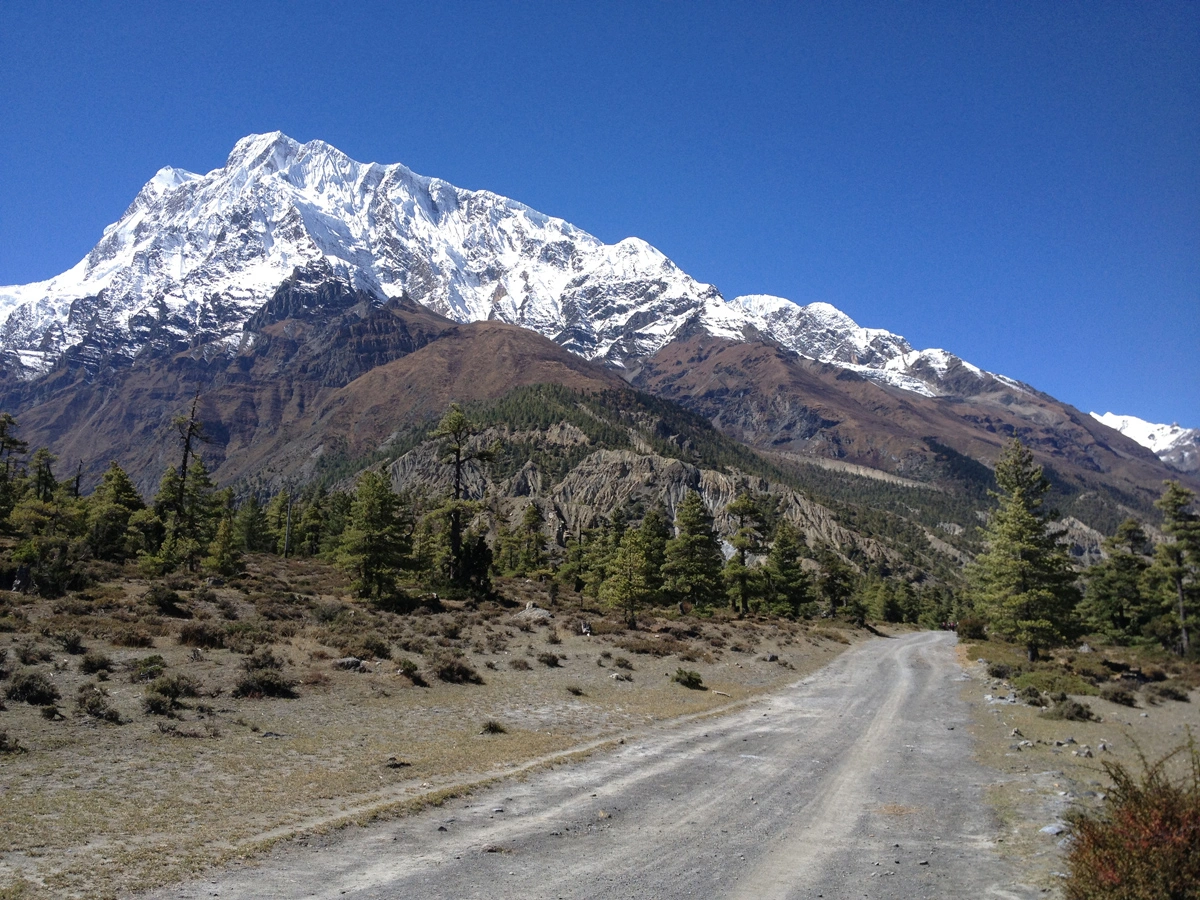
Trail conditions on the Annapurna Base Camp route in September range from muddy and slow in the first half of the month to firm and fast-walking by the final week. The same rainfall pattern that defines September weather directly shapes what your boots meet on the ground each day.
How Muddy and Slippery Are the Trails After Monsoon?
Stone staircases and forest sections between Nayapul and Chhomrong carry the highest mud risk in September, since accumulated monsoon rainfall saturates the soil and the stone steps stay damp long after rain stops. Moss growth on stone surfaces, common on the older sections of trail near Kimrong and Chhomrong, creates a slip hazard that is easy to underestimate because it looks like solid rock.
Mud severity drops through the month in a predictable order: lower elevation sections dry first, followed by mid-elevation forest, with the alpine zone above Deurali clearing last because thinner soil and less vegetation there hold less moisture to begin with. A trekker starting September 5 will spend four to five days navigating genuinely muddy trails on the ascent, while a trekker starting September 25 may see almost none.
Are Leeches Still a Problem on the Annapurna Base Camp Trek?
Leeches remain active on the Annapurna trail through most of September, concentrated in the humid forest sections below 2,500 meters between Nayapul, Tikhedhunga, Ghandruk, and Chhomrong. Leech activity depends directly on ground moisture, so the same rainfall pattern narrowing through the month also reduces leech density week by week.
What most trekkers overlook is where leeches actually attach: not from the trail surface itself, but from wet vegetation brushing bare skin along narrow forest sections. Long trousers tucked into gaiters block the majority of contact, and a 20% DEET repellent sprayed on boots, socks, and lower trouser legs each morning reduces the rest. A pinch of salt or a lit match removes an attached leech instantly; pulling one off by hand increases infection risk by leaving mouthparts embedded in the skin.
Leech bites themselves rarely cause more than mild, short-lived bleeding, since the leech's saliva contains a natural anticoagulant that keeps the wound open for several minutes after detachment. Cleaning the bite with an antiseptic wipe and covering it with a small plaster prevents the only real complication, secondary infection from trail dust or dirty hands, and most bites heal without any lasting mark within a week.
How Do Landslides and Trail Closures Affect the Annapurna Base Camp Route?
Landslide risk on the ABC trail concentrates on specific unstable slopes rather than the entire route, most notably around the approach to Chhomrong, sections near Jhinu Danda, and occasional slides along the steep drop into and climb out of the Modi Khola gorge. Risk peaks in the first half of September, when saturated hillsides from the preceding monsoon months remain unstable, and drops sharply once soil dries out later in the month.
Licensed guides check local conditions each morning before departure and reroute or delay a start when a specific section shows fresh instability. This is one of the clearest, most concrete reasons the mandatory-guide rule introduced for the Annapurna Conservation Area in 2023 matters more in September than in drier months: a guide's real-time local knowledge of which slope moved overnight is not something a map or app can replace.
Which Sections of the Annapurna Trail Are Most Challenging in September?
The Nayapul-to-Ghandruk stone staircases and the Chhomrong-to-Bamboo descent-and-forest section present the greatest September-specific difficulty, combining slick stone steps, leech exposure, and the steepest sustained elevation changes on the lower trail. The climb from Chhomrong down to the Chhomrong Khola and back up the far side is short in distance but demanding underfoot when wet, since the stone steps on both banks turn slippery within minutes of rain.
Above Deurali, the challenge shifts from footing to weather exposure: this section runs through open, avalanche-prone terrain below Machhapuchhre's south face, and sudden cloud or light snow at this elevation reduces visibility fast even in September. Guides typically push groups through this stretch early in the morning, before afternoon cloud builds, rather than treating it as a flexible midday walk.
Is September a Good Time for the Annapurna Base Camp Trek?
September works well for trekkers who value solitude, lush scenery, and lower costs, and works less well for trekkers who need guaranteed clear mountain views on a fixed, short itinerary. The right answer depends on which week of September you choose and what you are optimizing for.
What Are the Advantages of Trekking to Annapurna Base Camp in September?
September delivers five clear advantages over the peak autumn months of October and November. Trail traffic runs noticeably lower than October: per NTB's official 2025 arrival statistics, showing October drew 128,443 arrivals versus September's 78,711, roughly 50,000 fewer international visitors entered Nepal in September than in October, which translates directly into quieter teahouses and more attentive service along the Annapurna route.
Forests and terraced hillsides reach peak greenery, since the preceding monsoon months leave vegetation denser and more vivid than the drier landscape of October. Waterfalls along the Modi Khola run at their fullest volume of the year. Teahouse rooms are easier to secure without advance booking, since operators are not yet at full autumn capacity. Airfare and package pricing also tend to sit below October and November peak-season rates, since demand has not yet reached its seasonal high.
What Are the Disadvantages of Trekking to Annapurna Base Camp in September?
September carries four specific trade-offs against later autumn months. Rain remains a realistic daily possibility through at least the first half of the month, which slows pace and increases gear demands. Mountain views are inconsistent in early September, with cloud frequently obscuring peaks for hours at a time.
Trail surfaces stay muddier and more slippery than the firm, dry paths of October, adding time and caution to daily walking. Leeches remain present in lower forest sections, which some trekkers find genuinely unpleasant regardless of how manageable the actual risk is.
How Does September Compare With the Peak Autumn Trekking Season of Annapurna Base Camp?
October and November offer more reliable clear skies and firmer trails; September offers greener landscapes, thinner crowds, and lower prices in exchange for less predictable weather. The comparison is not a simple better-or-worse ranking, it is a trade between visual reliability and experiential character.
Factor | September | October–November (Peak Autumn) |
Rainfall | Moderate, tapering through the month | Minimal to none |
Mountain views | Inconsistent early, strong late-month | Consistently clear |
Trail conditions | Muddy early, firm late-month | Dry and firm throughout |
Crowd levels | Low to moderate | High |
Landscape color | Lush, deep green | Drier, golden-brown |
Teahouse availability | Easy, flexible | Requires advance booking in peak weeks |
Typical pricing | Lower shoulder-season rates | Peak-season rates |
Trekkers choosing between the two seasons should weigh whether guaranteed photography conditions or a quieter, greener, more affordable trek matters more to their specific trip goals.
Can Beginners Trek to Annapurna Base Camp in September?
First-time trekkers considering the Annapurna Base Camp trek for beginners can complete it in September, provided they book with a licensed guide, choose a standard 7-to-9-day itinerary with built-in acclimatization days, and accept slower pace on wet sections.
The trek's maximum altitude of 4,130 meters sits well below the threshold where technical mountaineering skill becomes necessary, and teahouse accommodation exists at every overnight stop, removing the need for camping experience.
What changes for a beginner specifically in September is footing confidence. First-time trekkers unfamiliar with stone staircases underestimate how much slower wet, mossy steps require compared to dry ones, and guides typically build 20% to 30% more time into daily walking estimates for September groups than for October groups covering the identical route.
What Should You Pack for Annapurna Base Camp in September?
September packing for Annapurna Base Camp requires a rain-and-layering system built for both active monsoon-tail humidity below 2,500 meters and near-freezing alpine nights above 4,000 meters. A single trek packing list optimized for dry-season October trekking will leave you cold, wet, or both at some point on a September trek.
Which Rain Gear Is Essential for September Trekking?
A waterproof, breathable rain jacket with taped seams and a rain cover for your backpack form the non-negotiable core of September rain gear. Waterproof rain trousers matter more in September than in any other trekking month, since afternoon showers combined with wet vegetation on narrow trail sections soak untreated trouser fabric within minutes.
A large dry bag or waterproof pack liner protects electronics, documents, and a spare set of dry clothes even when the pack cover itself fails in sustained rain, a detail most packing lists skip entirely, despite pack covers routinely leaking at the shoulder straps in heavy downpours.
What Footwear Works Best on Wet Annapurna Trails?
Waterproof hiking boots with aggressive, deep-lugged soles outperform trail runners or lighter shoes on the muddy, mossy stone sections common in September. Ankle support matters more this month than in dry conditions, since uneven, slick footing increases twist and roll risk on the steep stone staircases between Nayapul and Chhomrong.
Trekking poles are not optional in September; they are a core safety item. Poles reduce knee strain on long descents and provide a critical third and fourth point of contact on slippery stone steps, cutting slip incidents noticeably on the sections guides flag as highest-risk. Gaiters, often treated as optional gear in dry months, earn their weight in September by keeping mud, water, and leeches out of boot tops.
Which Clothing Layers Are Suitable for September Temperatures?
A three-layer system, moisture-wicking base layer, insulating mid layer, and waterproof outer shell, handles the full temperature range from humid 22°C lowlands to freezing 4,130m Base Camp nights. Base layers should be synthetic or merino wool rather than cotton, since cotton retains moisture and stops insulating once wet, a real risk given September's humidity.
A midweight fleece or synthetic insulated jacket covers evening temperatures at teahouses between 2,000m and 3,500m, while a down jacket becomes necessary specifically at Deurali, MBC, and ABC, where night temperatures fall below freezing even during the warmer half of September.
Packing two to three pairs of trekking socks, rather than one, addresses a September-specific problem: wet socks from a rainy morning rarely dry fully overnight in humid teahouse air, and starting a fresh day in damp socks increases blister risk noticeably. Wool-blend socks resist odor and retain some insulating value even when damp, which makes them a better September choice than pure cotton.
What Backpack Essentials Help During the September Monsoon Transition?
Beyond rain protection, September packing should include a headlamp with spare batteries, water purification tablets or a filter, a basic first-aid kit, and quick-dry trekking towels. Quick-dry towels matter specifically in September because humidity slows drying time for standard cotton towels, often leaving them damp and cold by the next morning.
A dedicated dry stuff sack for sleeping-bag-adjacent items, sleeping bag liner, spare socks, and a warm hat, keeps at least one full set of dry, warm gear available even after a full day of rain, which experienced September trekkers treat as a baseline safety margin rather than a luxury.
How Should You Prepare for the Annapurna Base Camp Trek in September?
Preparation for a September Annapurna Base Camp trek centers on four areas: footing on wet trail, altitude management, physical fitness, and weather-driven safety decisions. Each area demands slightly different preparation than a standard dry-season autumn trek.
How Can You Prepare for Wet and Slippery Trail Conditions of Annapurna?
Practicing descents on uneven, wet terrain before the trip builds the specific balance and footing skill that September trail conditions demand. Trekkers who train exclusively on flat pavement or treadmills arrive with cardiovascular fitness but without the ankle stability and balance reflexes that stone staircases require, and this gap shows up fastest on wet, mossy steps.
Shortening stride length on wet descents, keeping weight centered over the feet rather than leaning back, and planting trekking poles ahead of each step reduce slip incidents more effectively than footwear choice alone. Guides consistently identify rushed downhill pace, not the trail surface itself, as the leading cause of September slip injuries, one of several common trekking mistakes on Annapurna Base Camp worth reviewing before departure.
How Can You Manage Altitude on the Annapurna Base Camp Trek?
Altitude sickness risk on the Annapurna Base Camp trek becomes relevant above 3,000 meters, and standard itineraries build in acclimatization through gradual elevation gain rather than a dedicated rest day, since the trek's structure naturally staggers ascent. A sustainable ascent rate above 3,000m keeps net elevation gain to roughly 300–500 meters per day of sleeping altitude, which the standard Chhomrong–Bamboo–Himalaya–Deurali–MBC–ABC sequence follows closely.
Common early symptoms, headache, mild nausea, and disturbed sleep, call for a stop in ascent, increased fluid intake, and monitoring rather than pushing forward. Symptoms that worsen rather than stabilize, particularly confusion, loss of coordination, or breathlessness at rest, require immediate descent regardless of itinerary plans; this is a firm rule among licensed guides operating in the Annapurna Conservation Area, not a flexible guideline.
What Fitness Level Is Needed for Annapurna Base Camp in September?
A moderate fitness level, the ability to walk 5 to 7 hours a day on hilly terrain for multiple consecutive days, covers the physical demand of the Annapurna Base Camp trek. This does not require technical climbing fitness or elite endurance training, but it does require more than casual weekend-walker conditioning.
September specifically raises the fitness bar slightly above dry-season trekking because wet, muddy sections slow pace and increase the physical cost of each step through added caution and muscle stabilization. Building general cardiovascular fitness alongside stair-climbing or hill-walking training for 6 to 8 weeks before departure prepares most trekkers adequately for September conditions.
How Can You Stay Safe During Changing September Weather?
Starting each trekking day by 7 AM, before afternoon cloud and rain typically build, is the single most effective September safety habit. This single scheduling choice avoids the majority of weather-related slowdowns and visibility problems that catch late-starting trekkers on exposed sections above Deurali.
Checking with your guide or teahouse host each morning for local conditions ahead, not just a generic weather app forecast, catches localized landslide or trail-damage information that broader forecasts miss entirely. Carrying a fully charged phone with an offline map, alongside your guide's communication setup, adds a practical safety layer without adding meaningful pack weight.
What Practical Tips Make the Annapurna Base Camp Trek Easier in September?
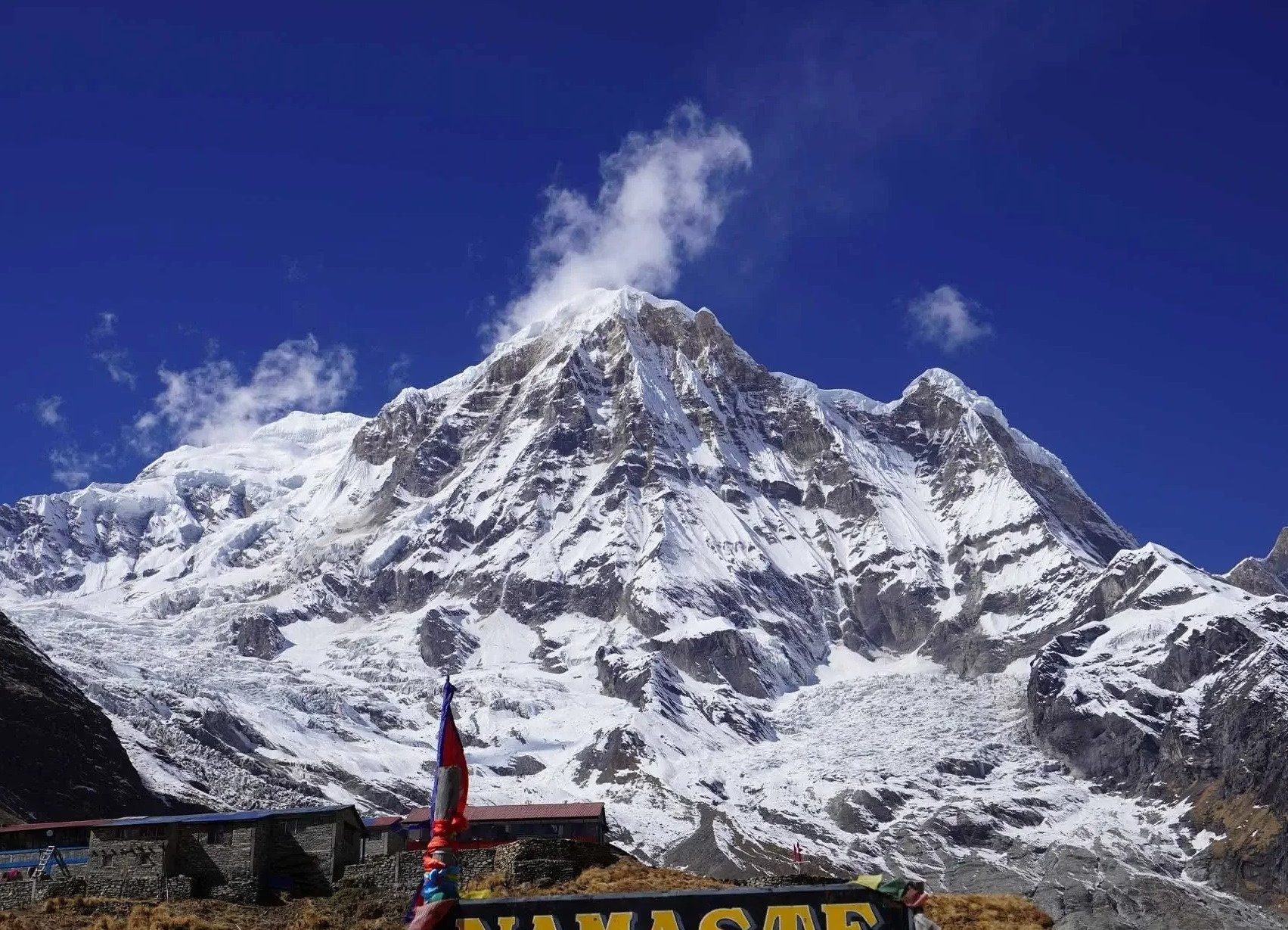
Beyond gear and fitness, four operational factors shape how smoothly a September trek runs: accommodation planning, daily distance pacing, a contingency plan for heavy rain, and correct permits.
What Should You Know About Accommodation and Teahouses in September?
Teahouses along the Annapurna Base Camp route stay open and operational throughout September, with lower occupancy than October making room availability straightforward without advance booking in most cases. Rooms are basic, twin beds, shared or squat-style bathrooms at higher elevations, and charged device-charging at most lodges, but every overnight stop between Nayapul and ABC has functioning teahouse infrastructure.
What differs in September specifically is drying capacity. Fewer trekkers on the trail means fewer competing bodies for limited dining-room space near the kitchen fire, which becomes the only realistic place to dry wet boots and jackets overnight, a genuine advantage of the quieter shoulder season that rarely gets mentioned.
Teahouse room rates typically run low, since lodges recover their margin through meals rather than lodging, most owners expect trekkers to eat dinner and breakfast where they sleep. A standard dal bhat set meal costs more at higher elevations, since every kilogram of rice, lentils, and vegetables above Chhomrong arrives by porter or mule rather than road, and pricing along the trail reflects that transport cost directly.
Carrying small-denomination Nepali rupees matters in September specifically, since the lower trekker volume means fewer teahouses keep large change reserves on hand.
How Should You Plan Daily Trekking Distances Around September Weather?
Building shorter afternoon walking windows and starting each stage earlier than a standard October itinerary keeps daily distances realistic given September's afternoon rain pattern. A typical 7-to-9-day itinerary allocates 4 to 6 hours of walking per day; in September, front-loading that window toward the morning, rather than splitting it evenly across the day, avoids the highest-rain hours.
Guides operating September itineraries commonly build a slightly more conservative daily distance than their October schedules for the identical route, accepting one additional overnight stop on longer itineraries in exchange for a lower-stress pace through muddy sections.
What Should You Do If Heavy Rain Disrupts Your Trek?
Waiting out sustained heavy rain at the nearest teahouse rather than pushing through it is standard, guide-recommended practice, since visibility loss and trail-surface risk both increase sharply during active downpours. While heavy rain is typically concentrated in the afternoon, if an unseasonal morning downpour does occur, delaying your departure by 1 to 3 hours rarely threatens your overall timeline.
Itineraries with a built-in buffer day absorb weather delays without forcing a rushed final push to Base Camp. Trekkers on tightly scheduled itineraries without a buffer day face a harder choice between pushing through unsafe conditions or missing planned connections, which is precisely why licensed operators build flexibility into September-specific itineraries rather than reusing a fixed October schedule.
What Permits and Trekking Requirements Apply in September?
Every trekker entering the Annapurna Base Camp route needs an Annapurna region trekking permit, specifically an Annapurna Conservation Area Permit (ACAP), currently NPR 3,000 for foreign nationals and NPR 1,000 for SAARC nationals, alongside a Trekkers' Information Management System (TIMS) card, currently NPR 2,000, a combined cost of roughly NPR 5,000, or about US$38.
Children under 10 years old are exempt from the ACAP fee. Both permits require passport details and passport-sized photos, and both are checked at multiple checkpoints along the trail, including Ghandruk and Chhomrong.
Since April 2023, foreign trekkers in the Annapurna Conservation Area must trek with a licensed guide booked through a registered agency; trekking without a guide is no longer permitted for foreign nationals in this region. This requirement carries specific added value in September: a licensed guide's real-time knowledge of unstable trail sections and local rain patterns directly reduces the landslide and slip risks described earlier in this guide.
How Can You Plan the Annapurna Base Camp Trek in September With Heaven Himalaya?
Heaven Himalaya, a Kathmandu-based trekking and expedition operator, arranges licensed guides, porters, permits, and teahouse itineraries for the Annapurna Base Camp trek package, including September departures timed around the specific week-by-week weather shifts described throughout this guide.
Can Heaven Himalaya Help You Plan a Safe September Annapurna Base Camp Trek?
Heaven Himalaya structures September itineraries with the built-in flexibility this transitional month requires, earlier daily starts to beat afternoon rain, guides trained to read local landslide and trail-condition risk in real time, and permit arrangement handled before departure so trekkers arrive at the trailhead with ACAP and TIMS documentation already in place.
Their guides and porters work the Annapurna Sanctuary route across every month of the year, giving them direct, current knowledge of which sections need extra caution in a given September rather than generic, dated route information.
If you are weighing an early-September departure for solitude and greenery against a late-September start for clearer skies, a conversation with a locally based operator who treks the route through the actual transition weeks is more useful than any single blog post, including this one.
What Are the Key Takeaways for Trekking to Annapurna Base Camp in September?
The Annapurna Base Camp Trek in September rewards trekkers who plan around a transitional month rather than expecting either full monsoon or full autumn conditions. Rain and mud concentrate in the first half of the month and below 2,500 meters; clarity, firm trails, and classic autumn mountain views build through the second half. Leeches and landslide risk stay real but manageable with the right gear, pace, and a licensed guide's local judgment. Packing for both humid lowland afternoons and freezing high-camp nights, starting each day early, and building schedule flexibility for rain turn a potentially difficult shoulder-season trek into one of the most rewarding times of year to walk into the Annapurna Sanctuary, quieter, greener, and increasingly clear-skied with every passing day of the month.