

10 Best Places to Visit in Nepal in October 2026
Learn about the Place you can visit in Nepal in October 2026

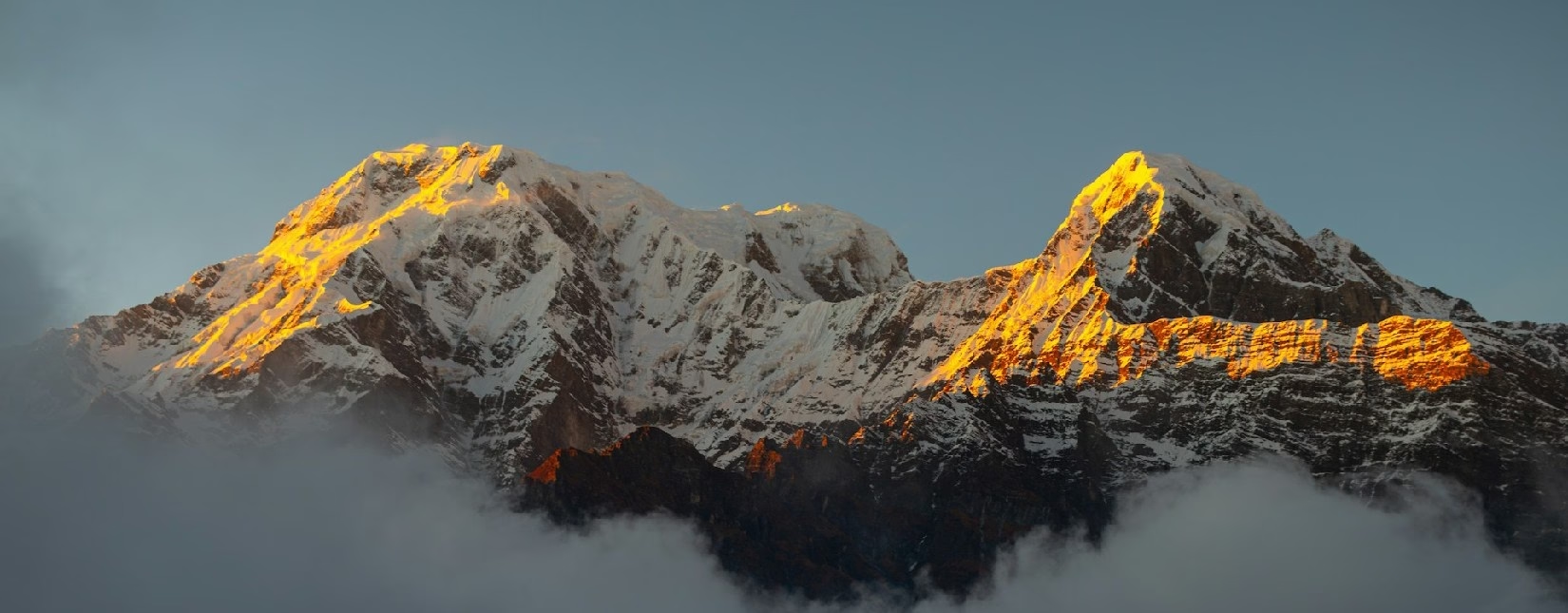
The best places to visit in Nepal in October are destinations that combine clear autumn skies, improved mountain visibility, dry trekking trails, cultural heritage, wildlife experiences, and comfortable travel conditions after the monsoon. Kathmandu and Pokhara provide gateways to Nepal’s major cultural and Himalayan regions, while the Everest and Annapurna regions offer high-altitude trekking around Mount Everest, Annapurna I, Machapuchare, Thorong La, and Manang.
Chitwan National Park adds jungle safaris and one-horned rhinoceros sightings, Upper Mustang offers a dry trans-Himalayan landscape and Tibetan-influenced culture, and Nagarkot, Lumbini, and Bandipur provide Himalayan viewpoints, Buddhist heritage, and traditional Newar architecture. October is particularly suitable for combining these destinations because rainfall decreases, visibility improves, and many high-altitude trails become more reliable as the monsoon retreats.
Traveling in Nepal in October 2026 also requires planning around altitude, trekking permits, transport, accommodation, and Dashain, which runs from 11 to 24 October. Everest, Annapurna, Upper Mustang, and Manang require different acclimatization strategies and permit arrangements, while lower-altitude destinations such as Kathmandu, Pokhara, Chitwan, Lumbini, and Bandipur suit cultural sightseeing, wildlife, and shorter breaks.
Peak-season demand can fill teahouses, domestic flights, tourist buses, and popular trekking routes, while Dashain can change opening hours and transport availability. This guide compares the 10 best places to visit in Nepal in October by weather, altitude, attractions, trekking routes, mountain views, wildlife, cultural experiences, costs, permits, travel time, and practical considerations, helping travellers match each destination with their itinerary, fitness level, and October travel dates.
1. Kathmandu
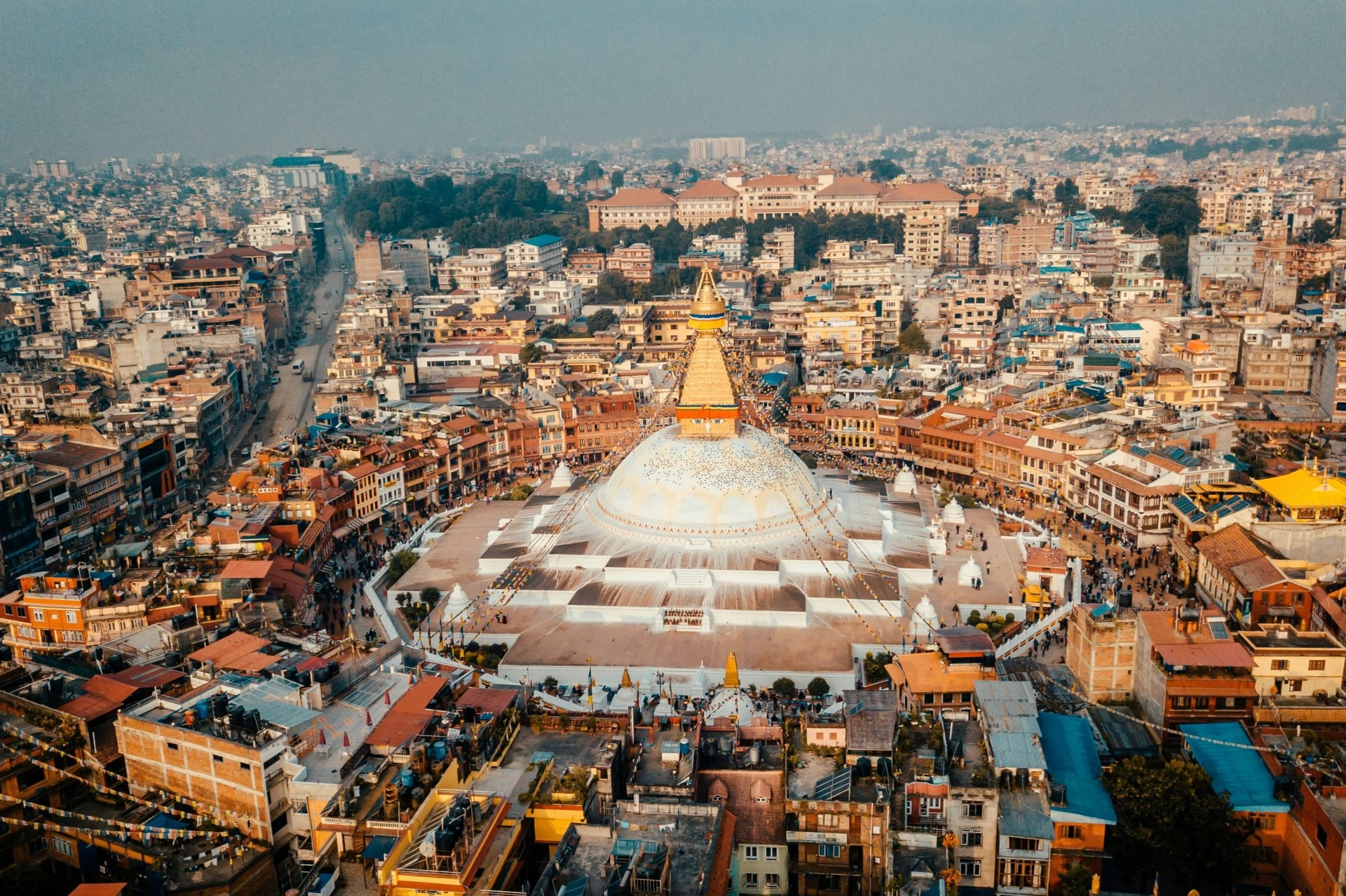
Kathmandu is Nepal's capital and the entry point for nearly every October itinerary. The city sits at 1,400 metres, and its valley holds seven UNESCO World Heritage monument zones, inscribed in 1979.
What Can You See and Do in Kathmandu in October?
Kathmandu in October delivers 24–26°C days, 12–15°C nights, and the start of Dashain. You see seven UNESCO monument zones in clear air, watch the Phulpati procession on 17 October, and move through lighter traffic as residents leave for their home villages.
Rainfall drops to roughly 40–90 mm for the month, against 300+ mm at the monsoon peak. Mountain views from the valley rim are sharpest in the first half of October. Haze returns on windless afternoons in the last week.
Dashain reshapes the calendar. Ghatasthapana falls on 11 October, Phulpati on 17 October, and Maha Ashtami on 18 October. Maha Navami and Vijaya Dashami follow between 19 and 20 October, depending on the panchang ruling.
Bamboo swings (ping) go up in courtyards and kites fill the rooftops. Government offices and most shops close on the core days, while the tourist restaurants and gear shops of Thamel keep trading.
The mistake we see most: trekkers land on 17 October and plan to buy permits at the Nepal Tourism Board counter in Bhrikutimandap. That counter closes on Saturdays and public holidays, and most days between 17 and 24 October qualify. Buy permits and book long-distance buses before 16 October.
Nepali travellers heading home for tika book intercity buses and domestic flights weeks ahead, because seats sell out first around Dashain.
Which Kathmandu Attractions Should You Not Miss?
Do not miss Boudhanath, Swayambhunath, Pashupatinath, Kathmandu Durbar Square, and Patan Durbar Square. Foreign visitors pay NPR 400, 200, 1,000, 1,000, and 1,000 respectively, a total of NPR 3,600 (about USD 27). Nepali citizens pay lower fees or none.
Walk the kora, the clockwise circuit, around Boudhanath at dusk, when Tibetan pilgrims light butter lamps.
Climb the eastern staircase of Swayambhunath at 7 a.m., before the day-trip crowds arrive.
Watch the evening aarti at Pashupatinath from the east bank of the Bagmati River. Non-Hindus stay outside the inner sanctum.
Time your Durbar Square visit for Maha Navami, when Taleju Temple opens to the public for one day of the year.
Cross to Patan Durbar Square for Newar metalwork and the Patan Museum.
From Kathmandu, a 25-minute flight or a 6–7 hour tourist bus reaches Pokhara.
2. Pokhara
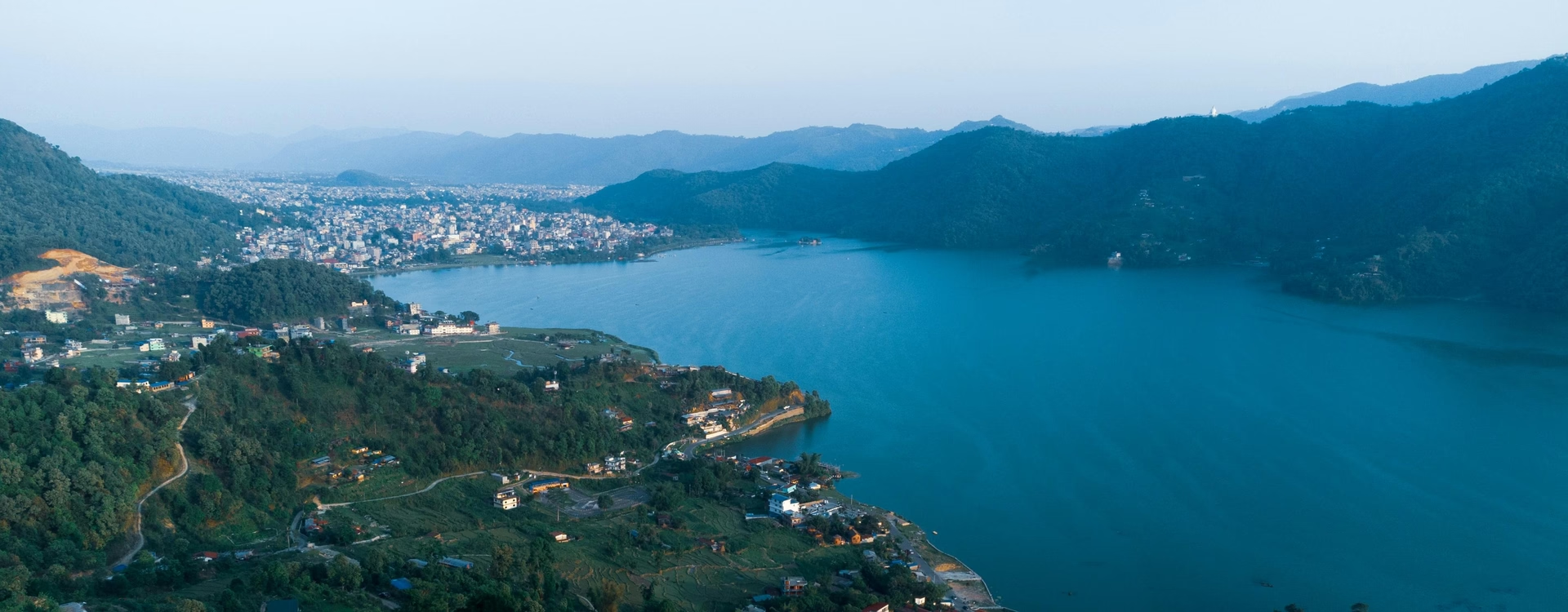
Pokhara is a lakeside city at 827 metres, about 200 km west of Kathmandu, and the main gateway to the Annapurna region.
What Can You See and Do in Pokhara in October?
Pokhara in October offers 26–28°C days, sunrise reflections of Machapuchare (6,993 m) on Phewa Lake, and the year's best paragliding air. Rainfall totals 90–160 mm, the highest among Nepal's main tourist cities, and most of it falls in the first ten days.
Cloud builds over the Annapurna range by mid-morning, so mountain views belong to the 5:30–9:00 a.m. window. Photographers reach the lakeshore at dawn. Late risers see grey.
Dashain runs quieter here than in Kathmandu. Restaurants and shops stay open, which makes Pokhara the practical base for festival days. Pokhara Regional International Airport opened in January 2023, and the 25-minute Kathmandu flight remains the fastest way in.
Which Pokhara Attractions and Experiences Should You Not Miss?
Do not miss the Sarangkot sunrise, a tandem paragliding flight, Phewa Lake boating, the World Peace Pagoda, and the International Mountain Museum. A 30-minute tandem flight costs about USD 90–120 for foreign visitors and NPR 7,000–9,000 for Nepali residents.
Catch sunrise at Sarangkot (1,592 m), where the Annapurna range lights up before the valley does.
Fly with a licensed operator and certified pilot between 9 a.m. and 3 p.m., when thermals run steadiest. Since the new airport opened, flight paths sit beside Phewa Lake rather than directly above it.
Row to the Tal Barahi Temple on the lake's island at 7 a.m., before boat traffic builds.
Hike to the World Peace Pagoda for the lake-and-range view at sunset.
Study Himalayan climbing history at the International Mountain Museum.
3. Everest Region
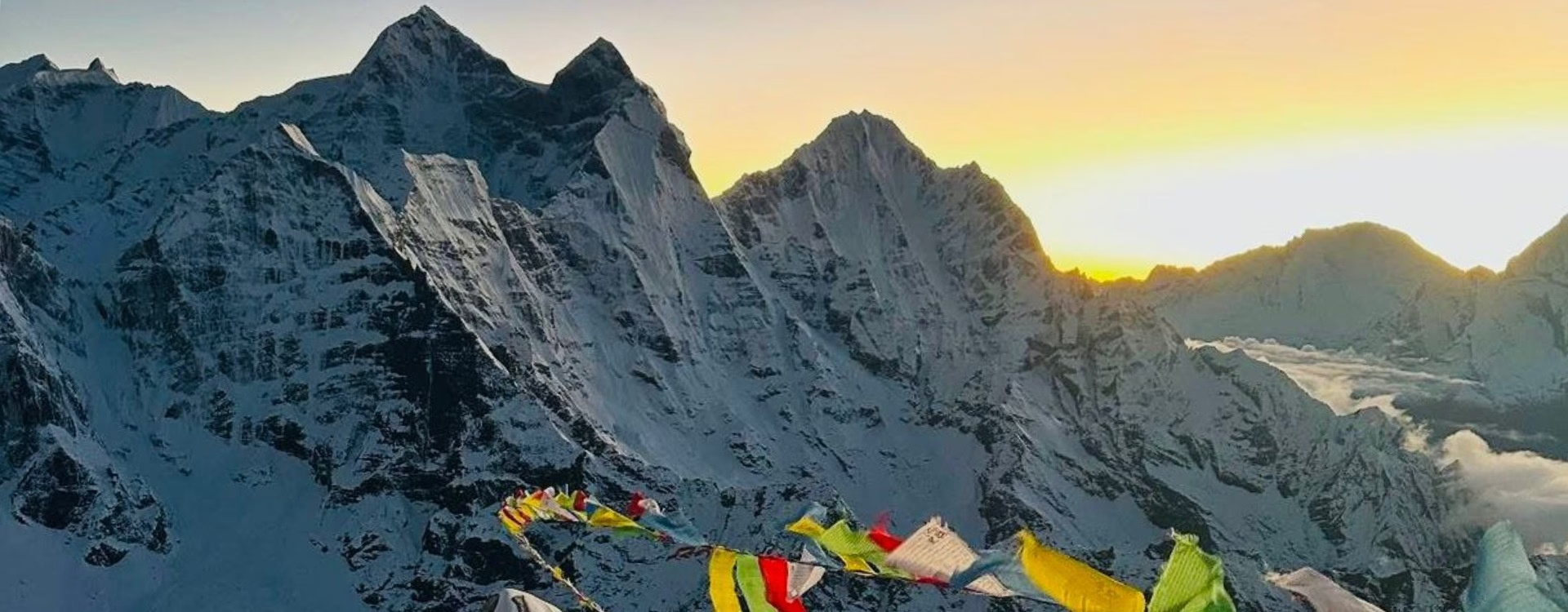
The Everest region, known locally as Khumbu, is the Sherpa homeland beneath Mount Everest (8,849 m). Sagarmatha National Park protects 1,148 km² of it.
What Makes October Ideal for the Everest Region?
October suits the Everest region because monsoon cloud clears, dust settles, and trails run dry. Days reach 10–16°C at Namche Bazaar (3,440 m), while nights fall to −15°C near Everest Base Camp. The clearest mountain views arrive between 6 a.m. and 10 a.m.
The monsoon leaves eastern Nepal last. A trek that starts on 20 October meets less residual cloud and fewer showers than one that starts on 5 October.
Nepal logged 128,443 international arrivals in October 2025, about 13.6% of all January-October arrivals in the Nepal Tourism Board's October 2025 Tourism Insights, which is why Namche Bazaar teahouses and Lukla-route flights fill early. Teahouses in Namche Bazaar, Dingboche, and Lobuche fill by early afternoon, so a walker who arrives at 3 p.m. finds no bed. Reserve rooms through your agency and reach each stop by 1 p.m.
In peak season, most Lukla flights depart from Manthali Airport in Ramechhap, 4–5 hours by road from Kathmandu. Passengers leave Kathmandu around 1–2 a.m. for 6–9 a.m. departures. Tickets run USD 180–260 one way. Build two buffer days into the return leg, because cloud grounds Lukla flights even in October.
Mani Rimdu, the Sherpa masked-dance festival at Tengboche Monastery (3,867 m), follows the Tibetan lunar calendar and takes place from 26–28 October in 2026. Operators publish different public days, so confirm with Tengboche before you fix flights.
Which Everest Region Treks and Viewpoints Can You Explore?
The Everest region offers five main options: Everest Base Camp (5,364 m), Kala Patthar (5,545 m), Gokyo Lakes with Gokyo Ri (5,357 m), the Three Passes circuit, and the Ama Dablam (6,812 m) viewpoint at Tengboche.
Everest Base Camp takes 12–14 days. Everest itself hides behind Nuptse from the camp, and first-timers often miss this. The summit view comes from Kala Patthar at sunrise. Gokyo Ri delivers a quieter alternative, with turquoise lakes and views of Everest, Lhotse, Makalu, and Cho Oyu. The Three Passes circuit adds 18–21 days of hard walking for experienced trekkers.
According to current municipal and national park schedules, foreign trekkers pay two fees: NPR 3,000 for the Sagarmatha National Park permit and NPR 3,000 for the Khumbu Pasang Lhamu Rural Municipality permit. The total is NPR 6,000 (about USD 45). Nepali citizens pay NPR 100 for the park. Both permits sell on the trail at Lukla or Monjo, in rupee cash, and the Khumbu does not require a TIMS card. For the full document checklist and Jiri-route extras, see our guide to Everest Base Camp trek permits.
Limit net sleeping-altitude gain to 300–500 metres per day above 3,000 metres, with rest days at Namche Bazaar and Dingboche. The most common mistake: skipping the Namche rest day to stay ahead of the crowd. Cold nights demand a sleeping bag rated to −15°C, and What Should You Pack for Nepal in October? lists the full kit. For route comparisons, see 10 Best Nepal Treks for September–October 2026.
4. Annapurna Region
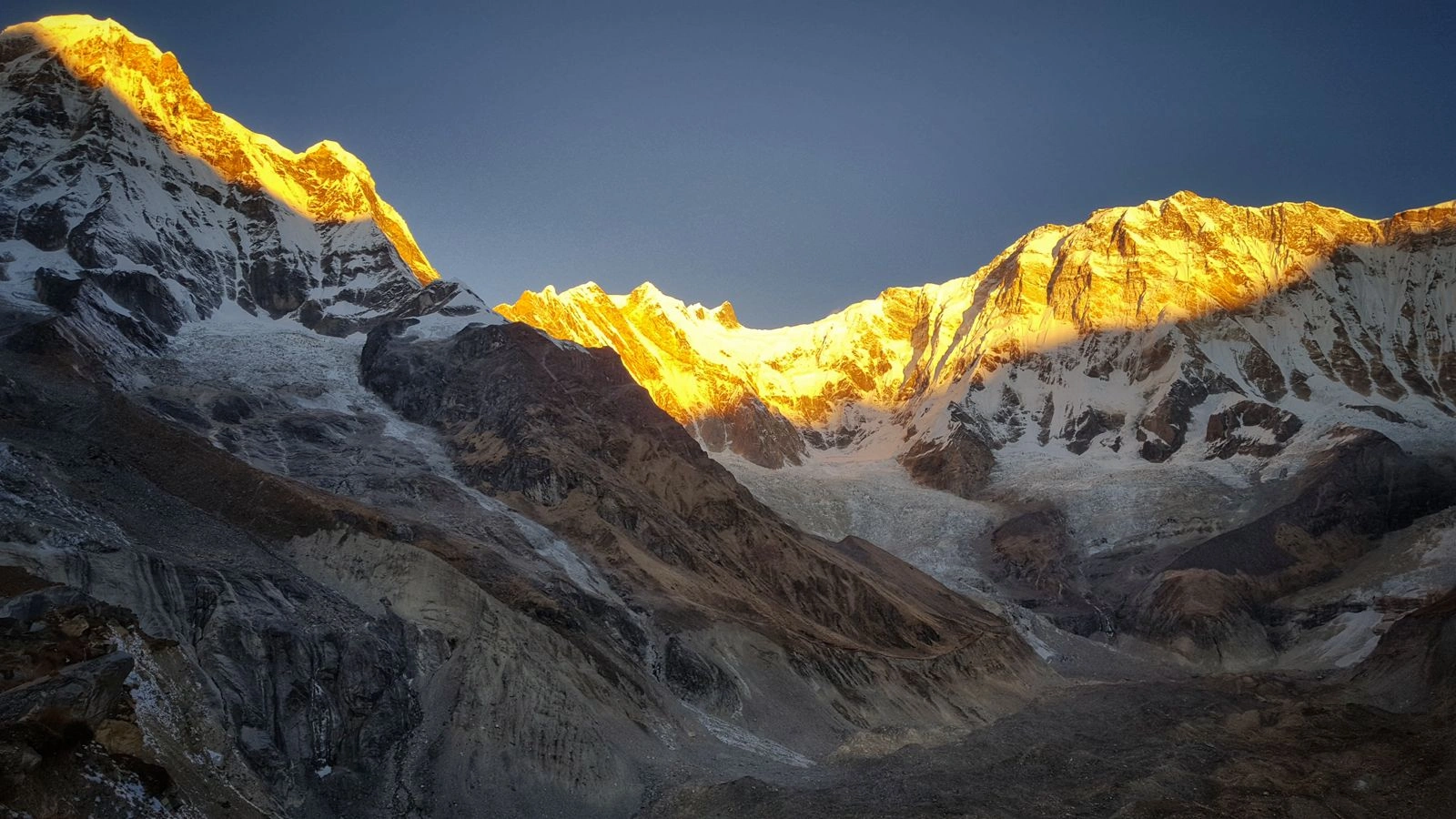
The Annapurna region sits inside the Annapurna Conservation Area, Nepal's largest protected area at 7,629 km². It frames Annapurna I (8,091 m), Dhaulagiri (8,167 m), and Machapuchare (6,993 m).
Which Annapurna Treks Are Suitable for October?
Five Annapurna treks suit October: Ghorepani Poon Hill (3,210 m, 4–6 days), Mardi Himal (4,500 m, 5–7 days), Annapurna Base Camp (4,130 m, 7–10 days), the Annapurna Circuit (Thorong La, 5,416 m, 12–18 days), and the Tilicho Lake side trip (4,919 m).
October is the safest window for Thorong La, because the first heavy snow risk builds after mid-November. Walk the circuit counterclockwise from Besisahar. Jeeps now reach Manang, but driving skips acclimatization, so walk the upper sections. Our Annapurna Circuit trek guide breaks down the full route.
Early October brings mud and leeches on lower forest sections of the southern approaches. By 20 October the trails have dried. Post-flood, the Annapurna region remains operational, though monsoon damage still affects individual road sections. Confirm the Besisahar road status before departure.
The Annapurna Conservation Area permit costs NPR 3,000 (about USD 23) for foreign nationals and NPR 1,000 for SAARC nationals, and children under 10 enter free. Annapurna-region trekkers travel with a licensed guide under the rule in force since April 2023. Your agency confirms any TIMS card a route still requires.
Nepali trekkers favour Poon Hill and Mardi Himal for the Dashain holiday week. Teahouses on both fill early, so book ahead.
What Mountain Views and Experiences Can You Expect?
Annapurna treks deliver close views of Annapurna I, Annapurna South, Machapuchare, Dhaulagiri, and Gangapurna, plus Gurung villages, rhododendron forest, and hot springs at Jhinu Danda.
Poon Hill starts before dawn. A 45-minute climb from Ghorepani at about 4:45 a.m. rewards you with the classic Dhaulagiri–Annapurna panorama. Annapurna Base Camp sits inside a 360-degree amphitheatre of peaks. Afternoon cloud collects in the sanctuary, so guides schedule the final approach for early morning.
Mardi Himal follows a high ridge with the Machapuchare face at arm's length and far fewer walkers than the Base Camp trail. Ghandruk offers Gurung culture on the way down. On the circuit, Muktinath (3,800 m) rewards the pass crossing with a temple sacred to both Hindus and Buddhists.
5. Chitwan National Park
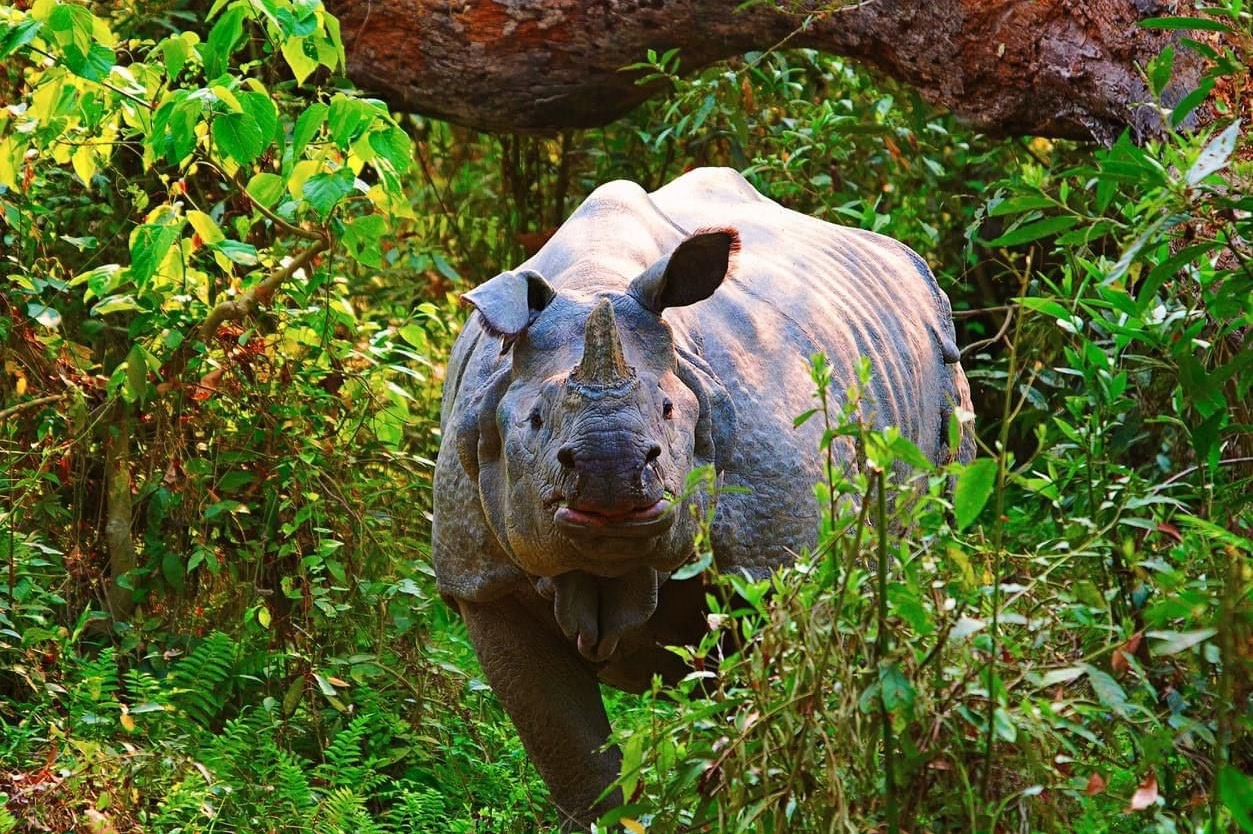
Chitwan National Park is Nepal's first national park, established in 1973. UNESCO listed it as a World Heritage Site in 1984, and it covers 952.63 km² of Terai grassland and sal forest.
What Wildlife Can You See in Chitwan in October?
Chitwan in October shows greater one-horned rhinoceros, gharial crocodiles, spotted deer, wild boar, and 543 recorded bird species. Chitwan is Nepal's best-known tiger habitat: the 2026 national tiger census counted 145 tigers in the park and its buffer zone, up from 128 in 2022, within a national total of 429.
Nepal's last national count, in 2021, found 752 rhinos, 694 of them in Chitwan; the postponed national rhino census has been delayed again for budget reasons, and 133 rhinos have died in and around Chitwan over five years, so treat 752 as a five-year-old baseline. Guides report rhino sightings on over 90% of shared jeep safaris. Tiger sightings run under 15% across a three-day stay, so plan for rhinos and treat a tiger as a bonus.
October is a transition month. Grass stands tall after the monsoon and hides animals until the winter cutting. Days reach 31°C and nights hold near 19°C. Migratory birds arrive from November. Choose river-based options in October, because canoe rides and watchtowers overcome the tall grass.
Sauraha, on the park's eastern edge, offers 30+ lodges at every price. Meghauli, in the west, runs quieter. Book before Dashain, because domestic travellers fill buses and flights.
Which Jungle Activities Can You Enjoy in Chitwan?
Chitwan offers four core activities: jeep safaris, canoe rides on the Rapti River, guided jungle walks, and Tharu village visits. Foreign visitors pay NPR 2,000 (about USD 15) park entry per day, SAARC visitors pay NPR 1,000, and Nepali citizens pay NPR 150.
Board a canoe at dawn for river mist, gharials, and kingfishers.
Join a half-day jeep safari at 2 p.m. for rhinos on the grasslands.
Walk with a naturalist guide and hold 20 metres from any rhino, because charging animals reach 55 km/h.
Attend an evening Tharu stick-dance performance in a village near Sauraha.
Many operators no longer sell elephant-back rides for welfare reasons, so choose jeep, canoe, or walking options. A two-night package runs USD 150–300 per person. Chitwan also makes a soft landing after a high trek: warm air, flat ground, and 150 metres of altitude. Our Chitwan National Park tour slots neatly onto the end of a trek itinerary.
6. Upper Mustang
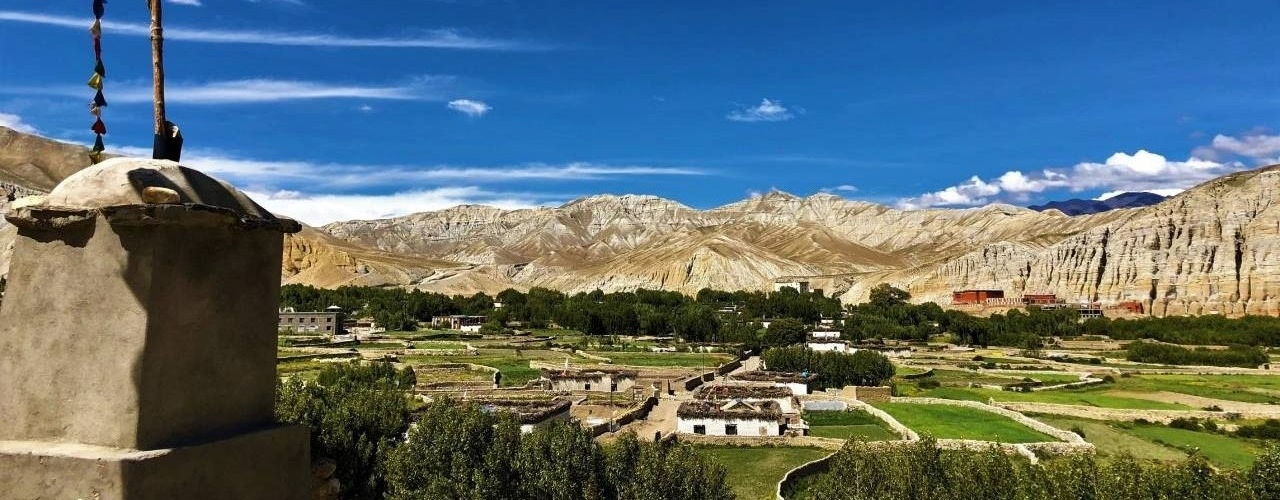
Upper Mustang is the former Kingdom of Lo, a restricted trans-Himalayan desert north of Kagbeni. Its walled capital, Lo Manthang (3,840 m), dates to 1380 and the reign of King Ame Pal.
What Makes Upper Mustang Special in October?
Upper Mustang sits in the Himalayan rain shadow, so October brings almost no rain, deep blue skies, and far fewer trekkers than Everest or Annapurna. Restricted-area permits cap numbers, and the region stays dry even when the south holds monsoon leftovers.
The Kali Gandaki wind defines the daily rhythm. Mornings run calm, and by 10–11 a.m. a strong wind funnels up the valley, carrying fine dust. Start walking at 7 a.m. and pack a buff or scarf for your face. The landscape rewards the effort: ochre cliffs, eroded pinnacles, whitewashed chortens, and barley fields against bare hills.
The Tiji festival in Lo Manthang, held in mid-May, draws the region's crowds. October gives you the same monasteries with quieter lanes.
Which Trekking Highlights Can You Experience in Upper Mustang?
Upper Mustang highlights include Lo Manthang's royal palace and four major monasteries, the five-storey Chhoser sky caves, and the villages of Chele, Ghami, and Charang. The trek takes 10–14 days, and a 4WD jeep route shortens the journey to 4–6 days.
The permit is the main planning task. The Restricted Area Permit is now charged at the USD 50-per-day Upper Mustang permit rate rather than the old flat USD 500 for ten days, so a short Lo Manthang jeep trip costs far less than it once did. You add the Annapurna Conservation Area permit at NPR 3,000. A registered trekking agency processes the permit, and a licensed guide is mandatory. Rules on minimum group size shifted in 2026, so your agency confirms the current requirement before booking. Full packages run USD 1,500–4,000+, depending on trek, jeep, or helicopter style.
Jeeps reach Lo Manthang in about two days, which is fast for 3,840 metres. Pace the itinerary with a rest day, or you arrive with a headache instead of an appetite for the palace. For route options, difficulty, and lodging, read our Upper Mustang travel guide.
7. Nagarkot
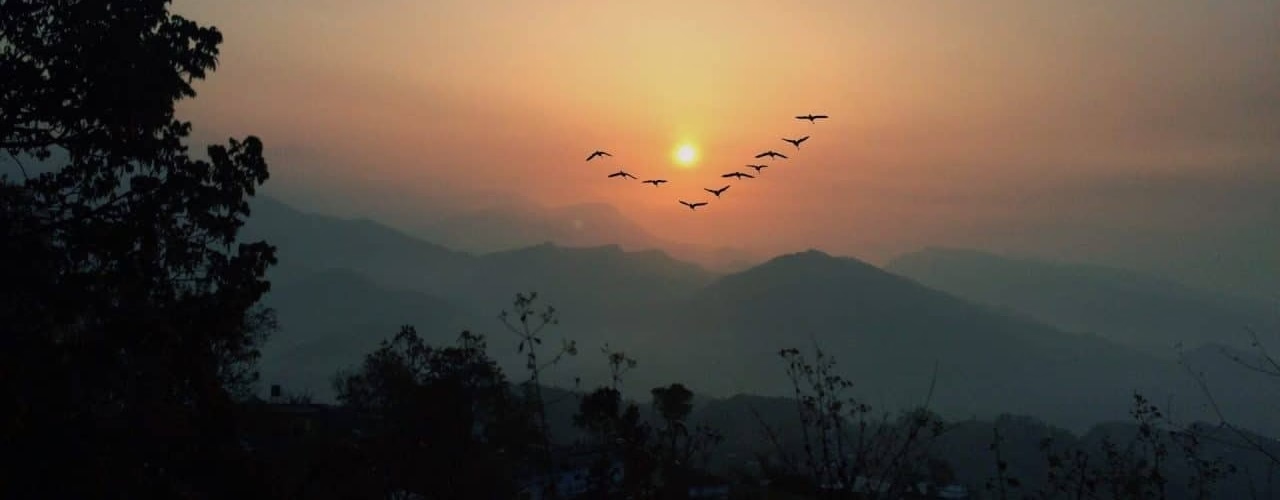
Nagarkot is a ridge-top hill station at 2,195 metres, 32 km east of Kathmandu, known for Himalayan sunrise panoramas.
What Himalayan Views Can You See From Nagarkot in October?
From Nagarkot you see eight of Nepal's 13 Himalayan ranges on clear October mornings, including Langtang, Ganesh Himal, Manaslu, Annapurna, Jugal, Rolwaling, Mahalangur, and Numbur. Everest appears as a small dark pyramid on the clearest days.
Sunrise arrives between about 5:45 and 6:10 a.m. in October. Reach the view tower before first light, because the clearest window closes as cloud builds by 8–9 a.m. Carry binoculars for Everest and a jacket for the cold ridge. The drive from Kathmandu takes 1.5 hours, and a taxi costs NPR 3,000–5,000. Sleeping overnight beats a same-day dash: you skip the 3 a.m. start and catch both sunset and sunrise.
Which Activities Can You Enjoy in Nagarkot?
Nagarkot offers four activities: sunrise at the view tower, the 12 km hike to Changu Narayan (4–5 hours), the 15–18 km trail to Dhulikhel (6–7 hours), and road cycling on the paved climb.
The Changu Narayan hike descends through pine forest, terraced fields, and Tamang villages to a temple that ranks among the oldest in the Kathmandu Valley. Foreign visitors pay about NPR 350 at the gate. The Dhulikhel trail suits fitter walkers and ends near 1,550 metres. Nepali families use the Dashain holiday for this route as a one-day valley escape, so start early to keep the trail to yourself.
8. Lumbini
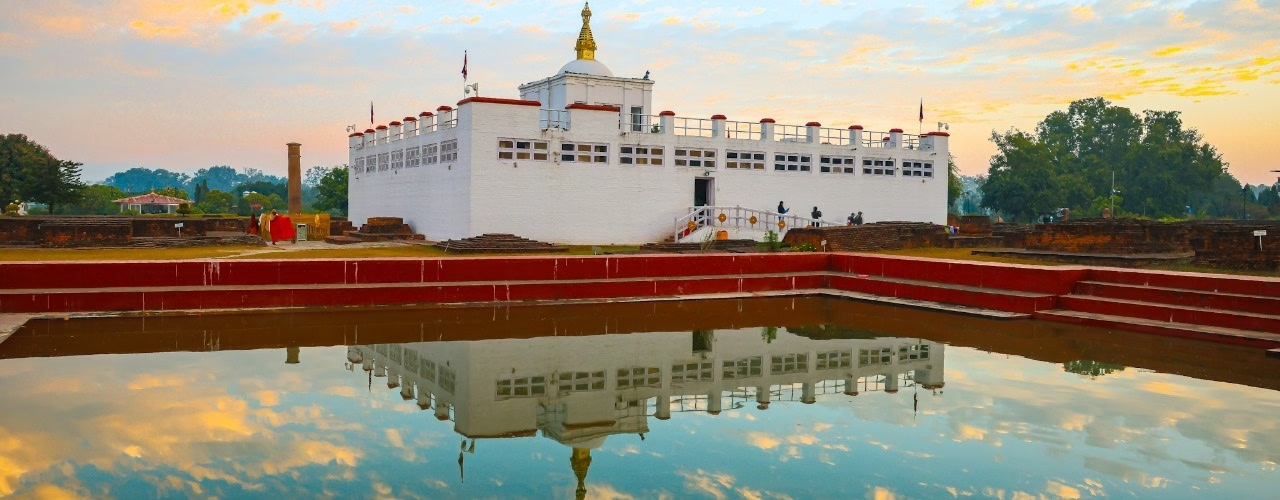
Lumbini is the birthplace of Siddhartha Gautama, the Buddha, in Nepal's southern Terai, and UNESCO inscribed it as a World Heritage Site in 1997.
What Can You Explore in Lumbini in October?
Lumbini in October offers flat, walkable pilgrimage grounds with 30°C afternoons and cooler mornings. You reach it by a 30–35 minute flight from Kathmandu to Gautam Buddha International Airport in Bhairahawa, or by an 8–10 hour bus ride.
The airport sits 22 km from the Sacred Garden. Distances inside Lumbini run long, and the Sacred Garden lies about 3 km from the World Peace Pagoda. Hire a bicycle for about NPR 200 a day and ride between 6 and 9 a.m. Afternoons turn hot.
Most visitors squeeze Lumbini into half a day. Two days let you add Tilaurakot, the ruins of the ancient Shakya capital about 27 km west, which few tourists visit. Lumbini pairs neatly with Chitwan (150 km, 4 hours) or Pokhara (260 km, 6 hours).
Which Buddhist Sites Should You Visit in Lumbini?
Visit six sites in Lumbini: the Maya Devi Temple, the Ashoka Pillar, the Sacred Pond, the Monastic Zone, the World Peace Pagoda, and Tilaurakot.
The Maya Devi Temple marks the spot where Queen Maya Devi gave birth to Siddhartha around 563 BCE. Emperor Ashoka erected the sandstone Ashoka Pillar beside it in 249 BCE, and its Brahmi inscription records the Buddha's birth here, which makes it the oldest written evidence for the site. The Sacred Pond is where tradition says Maya Devi bathed before the birth. Our guide to the birthplace of Buddha adds more history on Lumbini's temples and gardens.
The Monastic Zone holds 20+ monasteries built by Buddhist nations. A 1.4 km central canal divides it into an East wing (Theravada) and a West wing (Mahayana and Vajrayana). Visit both to see how one tradition spread into two architectural languages. The Lumbini Development Trust sets the Sacred Garden fee for foreign visitors in the NPR 200–500 range, so carry small notes and confirm at the gate. Dress modestly and remove shoes at shrines.
9. Bandipur
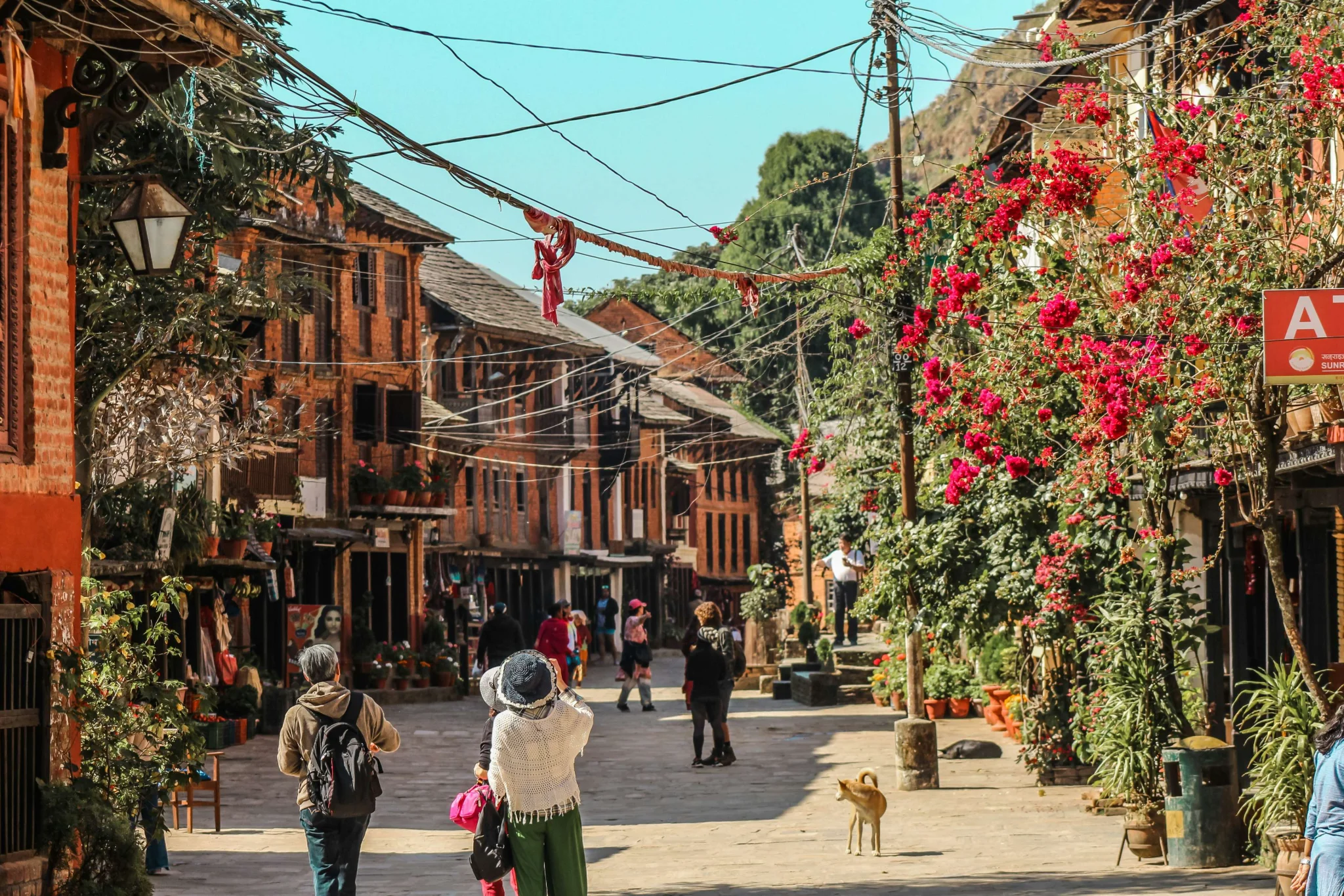
Bandipur is a car-free Newar hill town at 1,030 metres between Kathmandu and Pokhara, 76.5 km from Pokhara.
What Makes Bandipur Worth Visiting in October?
Bandipur earns an October visit for its car-free 18th-century Newar bazaar, sunrise Himalayan views from Thani Mai, and mild autumn days. It offers a slow overnight stop on the Kathmandu–Pokhara route.
The town began as a trading post on the old east–west route. The highway later bypassed it, which froze its brick-and-wood architecture in place. The Nepal Tourism Board lists Bandipur among Nepal's traditional towns. Pedestrian stone streets, carved windows, and the old Padma Library building give the bazaar its character.
Reach Bandipur by bus from Dumre on the Prithvi Highway, then a short uphill ride. Pokhara lies about 2 hours 10 minutes away by bus. Carry cash, because the nearest ATMs sit in Dumre. The Khadga Devi Mandir hosts the Khadga Jatra festival in October, and a homestay host tells you the current date.
Which Cultural and Scenic Experiences Can You Enjoy in Bandipur?
Bandipur offers five experiences: strolling Bandipur Bazaar, hiking 30–40 minutes to Thani Mai for sunrise, exploring Siddha Gufa cave, visiting Khadga Devi Mandir, and walking to the Magar village of Ramkot.
Thani Mai, on Gurungche Hill, delivers the best view: Dhaulagiri, Annapurna, Manaslu, Ganesh Himal, and Langtang Lirung on a clear morning, with mist filling the valley below. Siddha Gufa is Nepal's largest cave. It charges a small entry fee (about NPR 150), requires a local guide and flashlight, and includes slippery sections with ladders and ropes. Ramkot, a 2-hour walk west, shows Magar architecture and farm life. Eat a Newari set meal with bara pancakes before you leave.
10. Manang
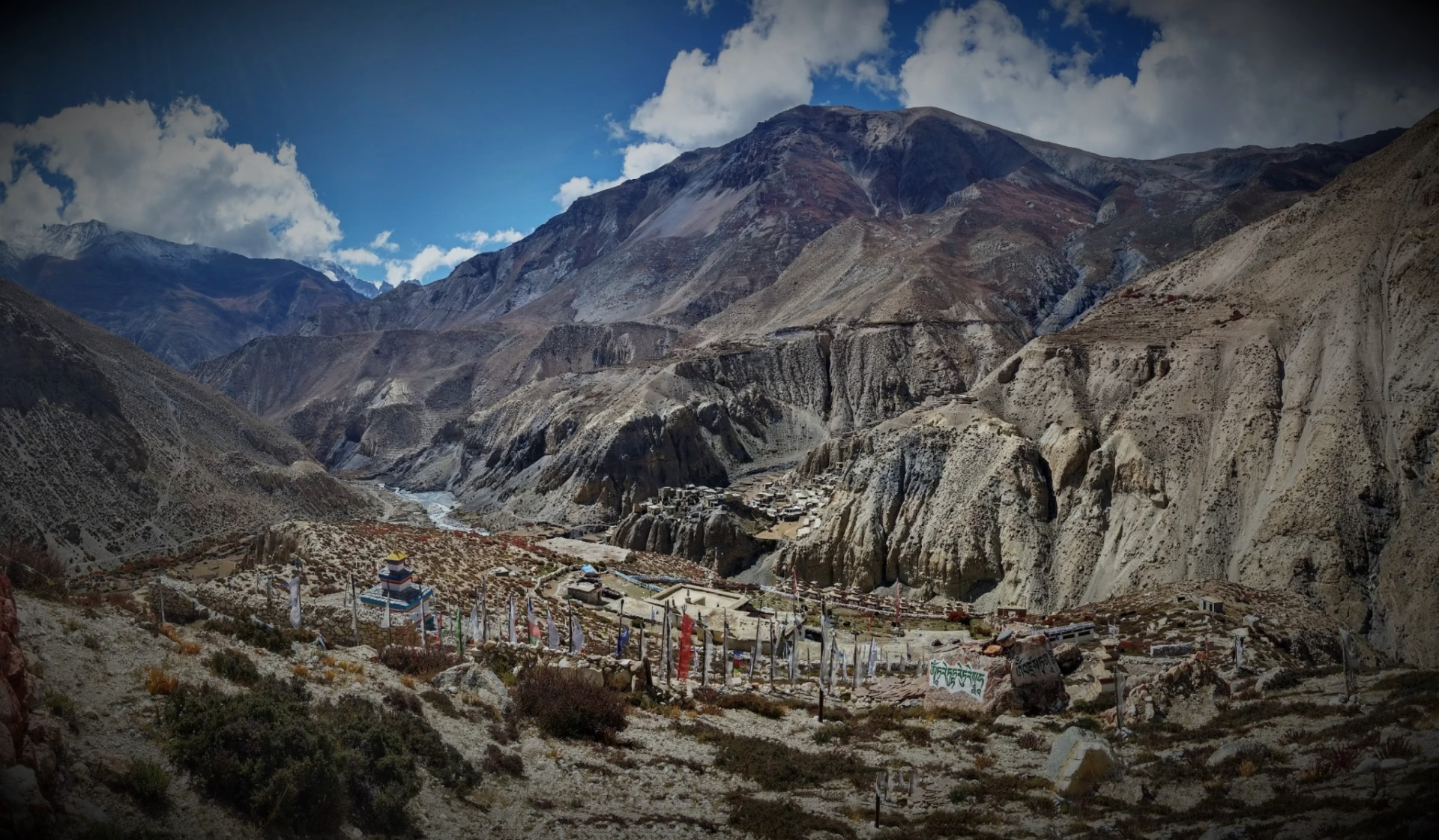
Manang is a Tibetan-influenced village at 3,540 metres in the Marsyangdi valley, and the main acclimatization stop on the Annapurna Circuit.
What Makes Manang Special for an October Visit?
October makes Manang special because Thorong La (5,416 m) stays snow-free, the sky runs clear, and the village fills with trekkers acclimatizing for the pass. Altitude illness is a real risk on the Annapurna Circuit: in a 2026 survey of trekkers at the Manang aid post, AMS incidence ranged from 19% to 45% depending on the scoring definition, and the aid post treated 337 altitude cases among 2,904 visitors in 2018-2023, so treat the Manang rest day as part of the itinerary.
Gangapurna's glacier wall looms directly above the rooftops, and Annapurna II, III, and IV line the horizon. The village offers 20–25 lodges, bakeries, and a Himalayan Rescue Association clinic, which helps trekkers judge whether their symptoms warrant a descent. Learn the early warning signs of altitude sickness before you leave Kathmandu. A motorable road now reaches Manang. Drivers who skip the walk skip acclimatization, so the upper section is worth walking. Nights drop below freezing, and dining rooms with wood stoves become the social centre.
Which Trekking Experiences Can You Have Around Manang?
Around Manang you can hike to Gangapurna Lake (1.5–2 hours), Braga Monastery (30 minutes), Ice Lake (4,620 m, 5–7 hours round trip), and the Tilicho Lake side trip (4,919 m, 2–3 extra days).
The rule is simple: climb high, sleep low. Ice Lake pushes you to 4,620 metres, then returns you to 3,540 metres for the night, which trains your body for the 5,416-metre pass. Start by 7 a.m., because clouds arrive by midday. Braga holds a monastery some 500–600 years old, and the Milarepa Cave (4,200 m) sits an hour above it. Tilicho crosses a landslide-prone slope, so go early and confirm conditions with the Manang checkpoint. Treat the acclimatization day as part of the trek, not a delay.
How Can You Explore the Best Places to Visit in Nepal in October With Heaven Himalaya?
Heaven Himalaya is a Kathmandu-based trekking and expedition operator that arranges permits, licensed guides, teahouse bookings, and Lukla flight logistics for October departures. The company runs treks, peak climbs, photo expeditions, wildlife tours, and helicopter tours across Nepal.
The company lists affiliations with the Nepal Tourism Board, the Trekking Agencies' Association of Nepal (TAAN), the Nepal Mountaineering Association (NMA), and the Kathmandu Environmental Education Project (KEEP). Managing Director Ramhari Adhikari began guiding in 2008 and has led groups to Everest Base Camp, Annapurna Base Camp, and Island Peak (6,189 m). The office sits at Gitanjali Chowk, Dathu Sadak, Kathmandu.
Can Heaven Himalaya Help You Plan a Nepal Trip Around These October Destinations?
Yes. Heaven Himalaya builds October itineraries that link these 10 places around your fitness, your dates, and Dashain. Send a travel window and your priorities, and the team returns a route with permits, flights, and rest days built in.
Four sample combinations show the range:
A 16-day Everest loop: 2 nights in Kathmandu, a 12-day Everest Base Camp trek, and 2 nights in Chitwan to recover.
A 7-day Nepal culture tour: Kathmandu, Nagarkot, Bandipur, Pokhara, and Chitwan.
An 18-day Annapurna Circuit: an acclimatization stop in Manang, a Thorong La crossing, and a Pokhara finish.
A 14-day Upper Mustang trek: Lo Manthang as the turning point, with Kathmandu and Pokhara bookends.
Plan your October route with Heaven Himalaya. Peak-season flights, permits, and teahouses sell out first, and Do You Need to Book October Treks in Advance? explains the timeline (2–3 months ahead). Browse the Everest Base Camp Trek or Wildlife Tours, then use Contact Us, message +977 985 1273867 on WhatsApp, or write to info@heavenhimalaya.com.
What Are the Key Takeaways About the Best Places to Visit in Nepal in October?
The best places to visit in Nepal in October split into two groups: warm, low-altitude places (Kathmandu, Pokhara, Chitwan, Lumbini, Bandipur, Nagarkot) and high-altitude trekking regions (Everest, Annapurna, Manang, Upper Mustang).
Choose your altitude first, then your place: warm valleys for culture and wildlife, high regions for trekking.
Book flights, teahouses, and guides 2–3 months ahead, because Dashain (11–24 October 2026) tightens transport and staff availability.
Start high-altitude treks after 20 October, when monsoon tail cloud fades.
Budget for fees: NPR 6,000 for Everest, NPR 3,000 for Annapurna, USD 50 per day for Upper Mustang, and NPR 2,000 per day for Chitwan.
Acclimatize at Namche Bazaar, Dingboche, and Manang, and limit sleeping-altitude gain to 300–500 metres per day above 3,000 metres.
Buy permits before 16 October, because Kathmandu offices close on Saturdays and public holidays.
Confirm road and flight status before leaving, especially for Langtang and Manaslu after the August 2026 floods.
The best places to visit in Nepal in October reward early planning: pick your altitude, book ahead, and start walking once the monsoon's last cloud clears.