

10 Best Treks in Nepal (2026): Top Routes & Tips

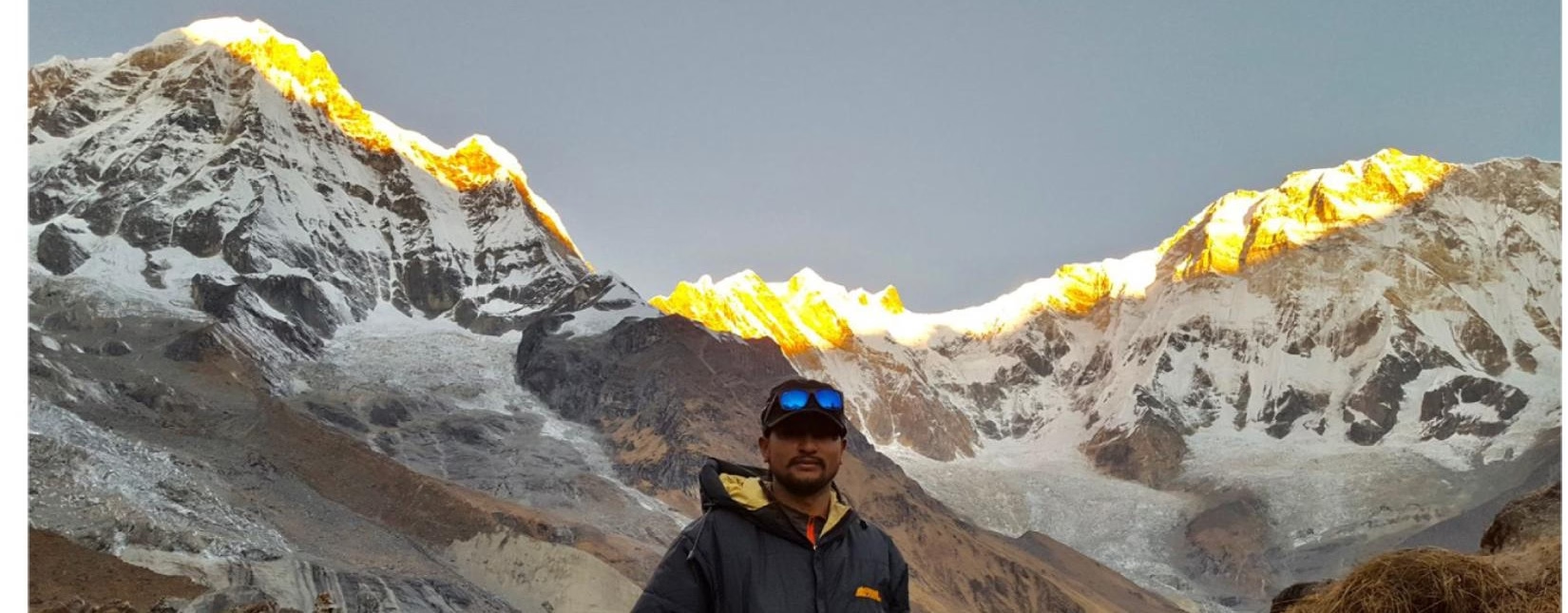
The best treks in Nepal combine dramatic Himalayan scenery, high-altitude trails, mountain villages, ancient monasteries, and distinct regional cultures. The 10 routes covered in this guide, Everest Base Camp, Annapurna Circuit, Annapurna Base Camp, Manaslu Circuit, Langtang Valley, Upper Mustang, Mardi Himal, Gokyo Lakes, Kanchenjunga, and Ghorepani Poon Hill, range from 4 to 25 days and from 3,210 m to 5,545 m. Each trek offers a different experience:
Everest Base Camp and Gokyo Lakes deliver iconic Khumbu mountain views, Annapurna and Manaslu combine major Himalayan passes with diverse landscapes, Upper Mustang reveals a high-desert Tibetan cultural landscape, Langtang and Mardi Himal provide shorter mountain journeys, and Kanchenjunga offers remote wilderness for experienced trekkers.
Choosing the right Nepal trek depends on your available days, fitness, altitude experience, preferred scenery, cultural interests, and travel season. Short routes such as Ghorepani Poon Hill and Mardi Himal suit first-time trekkers, while Annapurna Base Camp and Langtang Valley offer moderate multi-day adventures; Everest Base Camp, Gokyo Lakes, Annapurna Circuit, and Manaslu demand greater altitude preparation, and Kanchenjunga requires the most time and experience. Upper Mustang stands apart for its rain-shadow climate and restricted-area access.
The guide compares each route by difficulty, highest altitude, duration, highlights, best trekking months, permits, and 2026 trail and road conditions, including recent access changes affecting Langtang and Manaslu.
Comparison Table of Best Treks in Nepal
The table compares the 10 treks by region, duration, highest point, difficulty, and best months. Difficulty ratings assume a healthy adult with a guide and a standard acclimatization schedule.
Trek | Region | Duration | Highest point | Difficulty | Best months |
Everest Base Camp | Khumbu | 12–14 days | 5,545 m (Kala Patthar) | Moderate to challenging | Mar–May, Oct–Nov |
Annapurna Circuit | Annapurna | 12–18 days | 5,416 m (Thorong La) | Challenging | Mar–May, Oct–Nov |
Annapurna Base Camp | Annapurna | 7–12 days | 4,130 m | Moderate | Mar–May, Oct–Nov |
Manaslu Circuit | Manaslu | 12–16 days | 5,160 m (Larkya La) | Challenging | Mar–May, Sep–Nov |
Langtang Valley | Langtang | 7–10 days | 4,984 m (Tserko Ri) | Moderate | Mar–May, Oct–Nov |
Upper Mustang | Mustang | 10–14 days | 3,950 m (Lo La) | Moderate | Mar–Nov |
Mardi Himal | Annapurna | 5–7 days | 4,500 m | Easy to moderate | Mar–May, Oct–Nov |
Gokyo Lakes | Khumbu | 12–15 days | 5,357 m (Gokyo Ri) | Challenging | Mar–May, Oct–Nov |
Kanchenjunga | Kanchenjunga | 20–25 days | 5,143 m (Pangpema) | Very challenging | Mar–May, Oct–Nov |
Ghorepani Poon Hill | Annapurna | 4–5 days | 3,210 m | Easy | Mar–May, Oct–Nov |
Short treks suit first-time Himalayan walkers. Long treks reward trekkers with prior altitude experience.
1. Everest Base Camp Trek
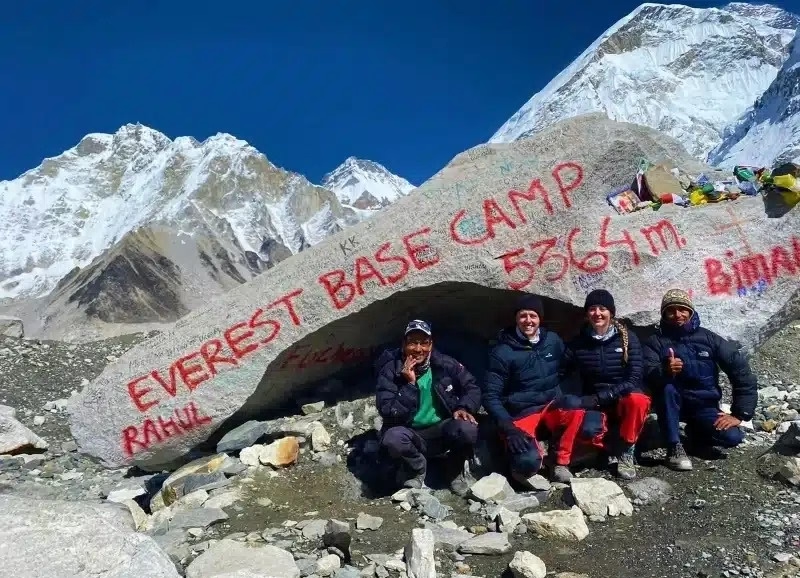
Everest Base Camp is the most famous trek in Nepal. The 130 km round trip from Lukla takes 12–14 days. The trail climbs from 2,860 m to 5,545 m at Kala Patthar. Sherpa culture and Himalayan scale define every day.
What makes the Everest Base Camp Trek so iconic?
The Everest Base Camp Trek is iconic because it ends at the foot of Mount Everest (8,849 m) and crosses Sagarmatha National Park, a UNESCO World Heritage Site since 1979, past Sherpa villages, monasteries, and the Khumbu Glacier.
Base camp sits at 5,364 m and offers no view of the summit. Kala Patthar (5,545 m) delivers the Everest panorama, and most trekkers climb it the morning after Gorak Shep. The 130 km round trip starts at Lukla (2,860 m). In peak months, Lukla flights have departed from Ramechhap (Manthali) airport, a 4–5 hour drive from Kathmandu, so confirm the airport at booking.
How difficult is the Everest Base Camp Trek?
The Everest Base Camp Trek is moderate to challenging. It takes 12–14 days, involves 5–7 walking hours daily, and tops out at 5,545 m. Altitude, not terrain, ends most attempts.
According to the CDC Yellow Book, trekkers above 3,000 m limit each night's gain in sleeping elevation to 500 m and add a rest day every 3–4 days; the CDC's 2026 edition's AMS risk-stratification table classifies ascents that skip this extra acclimatization day as "high risk" above 3,400 m. The standard itinerary builds in 2 rest days, at Namche Bazaar (3,440 m) and Dingboche (4,410 m). The mistake we see most often is a compressed 9–10 day schedule that removes both.
Himalayan Rescue Association volunteer doctors staff an aid post at Pheriche (4,371 m). Headache, nausea, and broken sleep above 4,000 m signal a descent, not a push. Eight weeks of stair climbing and loaded day hikes prepare legs and lungs.
What are the best highlights of the Everest Base Camp Trek?
The 5 best highlights of the Everest Base Camp Trek are Namche Bazaar, Tengboche Monastery, Dingboche, Everest Base Camp, and Kala Patthar.
Namche Bazaar (3,440 m) serves as the Sherpa trading hub, with a Saturday market and views of Thamserku (6,623 m).
Tengboche Monastery (3,867 m) is the largest gompa in Khumbu and frames Ama Dablam (6,812 m).
Dingboche (4,410 m) hosts the acclimatization hike to Nangkartshang Peak (5,083 m).
Everest Base Camp (5,364 m) sits beside the Khumbu Icefall and, in April–May, a tent city of climbing expeditions.
Kala Patthar (5,545 m) gives the Everest–Nuptse–Lhotse panorama.
Clouds build after 10 a.m., so a sunrise ascent of Kala Patthar is the dependable window.
When is the best time to trek to Everest Base Camp?
The best time to trek to Everest Base Camp is October–November and March–May. Autumn gives the clearest skies. Spring gives rhododendron forests below Namche and warmer nights above Dingboche.
According to the Kathmandu Post, Dashain runs 11–25 October 2026, which tightens flights and teahouse beds. Early November delivers the same views with thinner crowds. December–February brings nights below −15 °C at Gorak Shep. June–August brings cloud, leeches, and flight cancellations.
Permits in 2026 total about US$45: NPR 3,000 for Sagarmatha National Park and NPR 3,000 for the Khumbu Pasang Lhamu Rural Municipality trek card. Some older pages still list NPR 2,000 for the local card.
2. Annapurna Circuit Trek
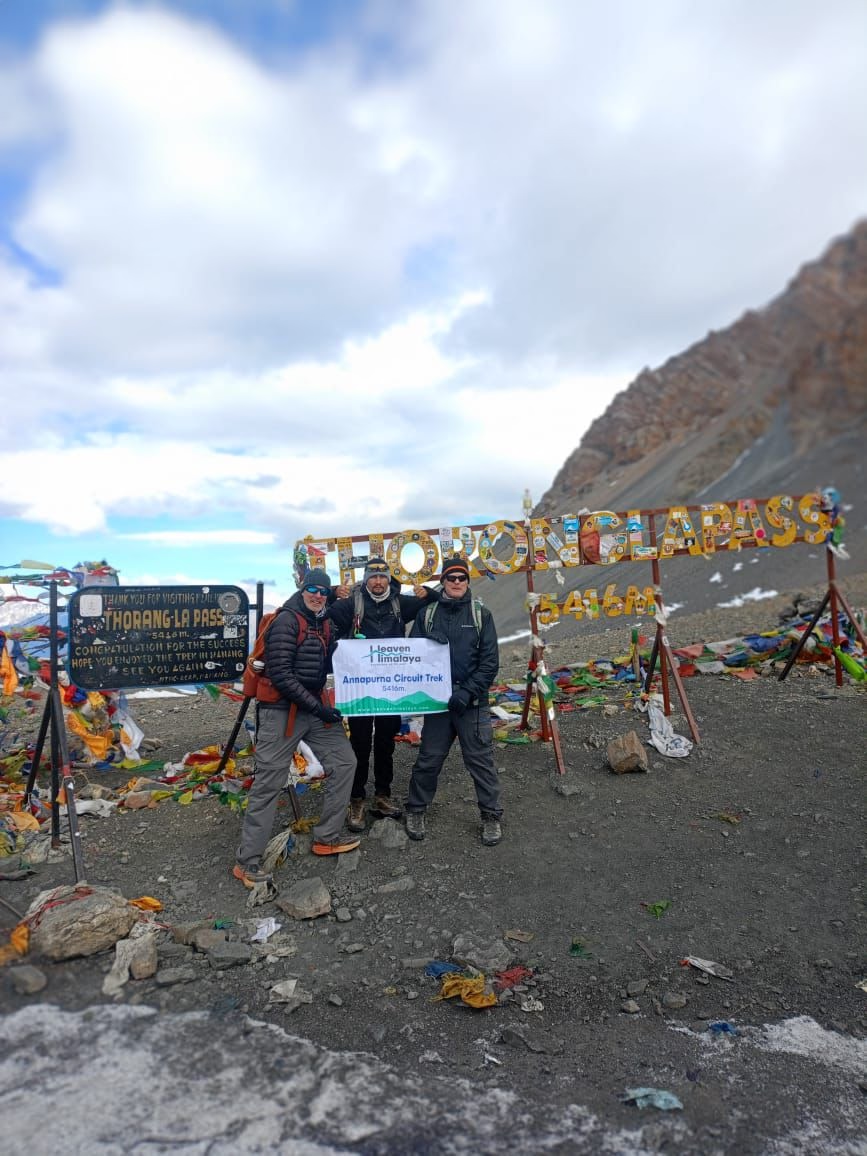
The Annapurna Circuit is the classic long-distance trek in Nepal. It crosses Thorong La at 5,416 m in 12–18 days. The route links 2 valleys, the Marsyangdi and the Kali Gandaki. Landscapes shift almost daily from subtropical farmland to alpine desert.
What makes the Annapurna Circuit Trek unique?
The Annapurna Circuit Trek is unique because it loops the entire Annapurna massif, crosses Thorong La (5,416 m), and links two opposite valleys: the green Marsyangdi and the arid Kali Gandaki.
Over 12–18 days, the terrain shifts from rice terraces near 800 m to Tibetan-style villages above 3,500 m. The Kali Gandaki gorge then runs between Dhaulagiri (8,167 m) and Annapurna I (8,091 m) and ranks among the deepest gorges on Earth.
Roads changed the route. Most 2026 itineraries drive from Besisahar to Jagat, Dharapani, or Chame (2,670 m) and walk from there, which trims 3–4 days. The trade-off is less gradual acclimatization, which the Manang rest day offsets.
How challenging is the Annapurna Circuit Trek?
The Annapurna Circuit Trek is challenging. It takes 12–18 days, includes 5–7 walking hours on regular days, and demands a 9–12 hour crossing of Thorong La at 5,416 m.
Pass day starts at 4–5 a.m. from Thorong Phedi (4,450 m) or High Camp (4,925 m). The trail then descends 1,600 m to Muktinath (3,800 m). Winds build after 10 a.m. A blizzard killed at least 43 people near the pass in October 2014, and guides now check forecasts the evening before every crossing.
Direction matters. Guides walk counter-clockwise, from Besisahar to Muktinath, because clockwise trekkers gain 1,600 m from Muktinath to the pass in one day. Skipping the Manang rest day is the most common cause of turnbacks that we see.
What are the major highlights along the Annapurna Circuit?
The 5 major highlights along the Annapurna Circuit are Manang, the Upper Pisang high trail, Tilicho Lake, Thorong La, and Muktinath.
Manang (3,540 m) offers acclimatization hikes to Gangapurna Lake, Ice Lake, and Braga Monastery.
Upper Pisang high trail opens views of Annapurna II (7,937 m) from the villages of Ghyaru and Ngawal.
Tilicho Lake (4,919 m) adds 2–3 days as a side trip and ranks among the highest lakes in the world.
Thorong La (5,416 m) delivers the Dhaulagiri and Annapurna panorama.
Muktinath Temple (3,800 m) holds sacred status for Hindus and Buddhists.
When should you trek the Annapurna Circuit?
The best time to trek the Annapurna Circuit is October–November and March–May. October and November deliver the most stable skies at Thorong La, while spring brings rhododendron blooms to the lower trail.
Heavy snow closes Thorong La often between December and February, and many lodges above Manang shut. Monsoon landslides threaten the lower road sections from June to August, although the rain-shadow villages of upper Manang stay drier. According to Nepali press reports in late September 2026, repairs on the Besisahar–Chame and Pokhara–Baglung roads targeted Dashain, so confirm road status before departure.
The Annapurna Conservation Area Permit costs NPR 3,000 (about US$22).
3. Annapurna Base Camp Trek
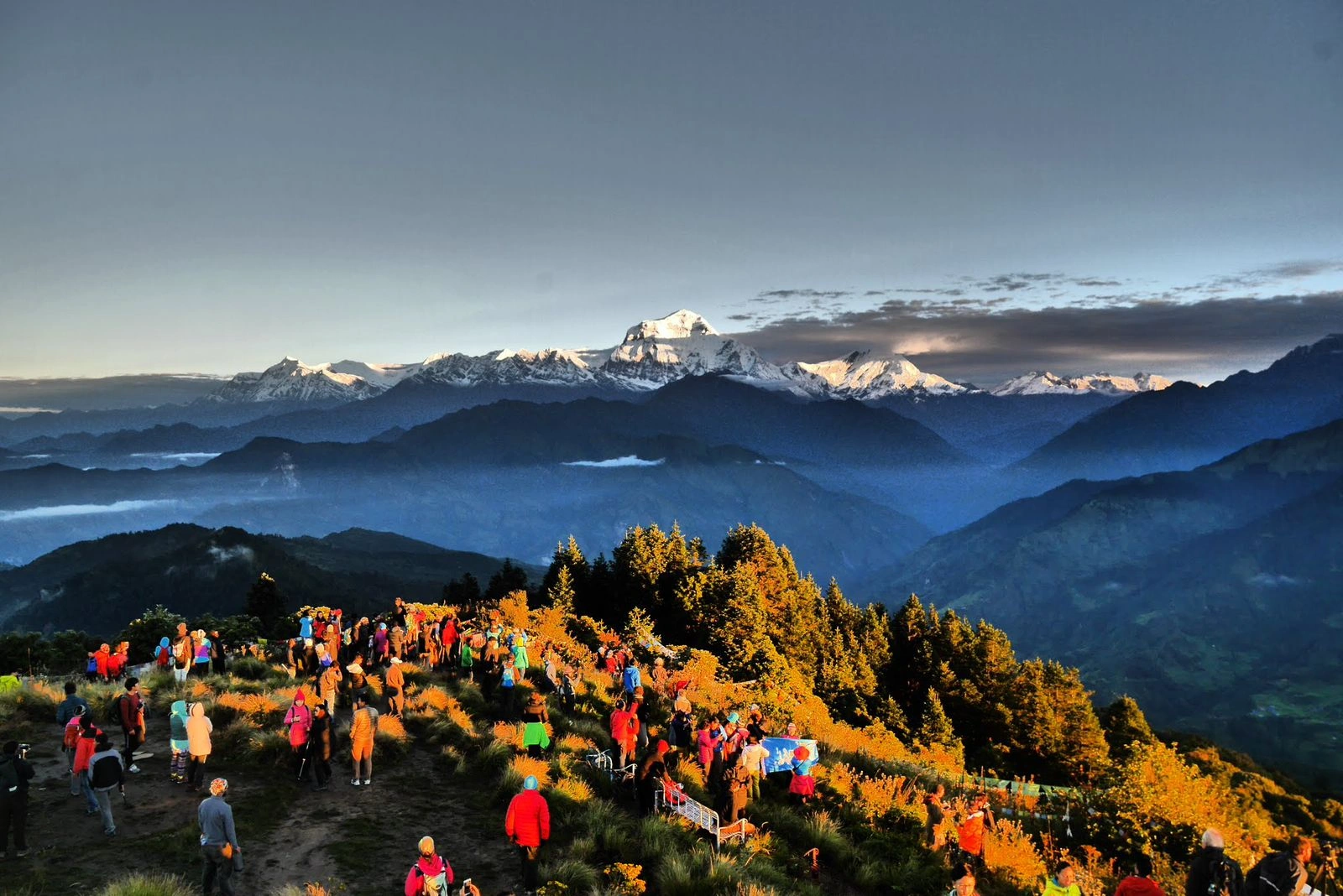
Annapurna Base Camp is the most popular sanctuary trek in Nepal. It reaches 4,130 m in 7–12 days from Pokhara. The trail climbs through Gurung villages and bamboo forest. Peaks above 7,000 m surround the final camp.
What can you expect on the Annapurna Base Camp Trek?
The Annapurna Base Camp Trek takes 7–15 days to reach 4,130 m inside the Annapurna Sanctuary, a glacial basin encircled by Annapurna I (8,091 m), Annapurna South (7,219 m), Gangapurna (7,455 m), Hiunchuli (6,441 m), and Machhapuchhre (6,993 m).
The route starts at Nayapul, about 1.5 hours by road from Pokhara. It climbs through Gurung villages such as Ghandruk and Chhomrong, then follows the Modi Khola through bamboo forest to Machhapuchhre Base Camp (3,700 m). Lodges operate on every stage.
How difficult is the Annapurna Base Camp Trek?
The Annapurna Base Camp Trek is moderate. It involves 5–7 walking hours daily, a maximum of 4,130 m, and no technical terrain. Thousands of stone steps cause more fatigue than altitude.
The steepest steps lie between Ghandruk and Chhomrong and again on the climb out of the Chhomrong Khola gorge. Between Dovan and Deurali, avalanche chutes cross the trail in winter and early spring, and guides time the crossing for morning hours.
The common mistake we see is a rushed ascent from Deurali (3,200 m) to base camp in one day. Sleeping at Machhapuchhre Base Camp first spreads the 930 m gain over 2 days and cuts headache risk and the wider chance of altitude sickness.
What are the main attractions of the Annapurna Base Camp Trek?
The 4 main attractions of the Annapurna Base Camp Trek are the Annapurna Sanctuary sunrise, Machhapuchhre, Ghandruk, and the Jhinu Danda hot springs.
Annapurna Sanctuary at 4,130 m gives a 360° ring of peaks lit gold at dawn.
Machhapuchhre ("Fishtail", 6,993 m) remains unsummited, because Nepal closed it to climbing after a 1957 British attempt stopped short of the top.
Ghandruk (1,940 m) preserves Gurung stone houses and a village museum.
Jhinu Danda (1,780 m) offers natural hot springs beside the river on the descent.
What is the best season for the Annapurna Base Camp Trek?
The best season for the Annapurna Base Camp Trek is March–May and October–November. Spring brings blooming rhododendrons, and autumn brings the clearest views of the sanctuary walls.
December–February brings heavy snow and the highest avalanche risk between Dovan and Deurali. June–August brings leeches and cloud on the lower trail. Late-September 2026 press reports list the Pokhara–Baglung highway, which serves Nayapul, among roads under monsoon repair, so confirm the drive time with your operator. The Annapurna Conservation Area Permit costs NPR 3,000 per person.
4. Manaslu Circuit Trek
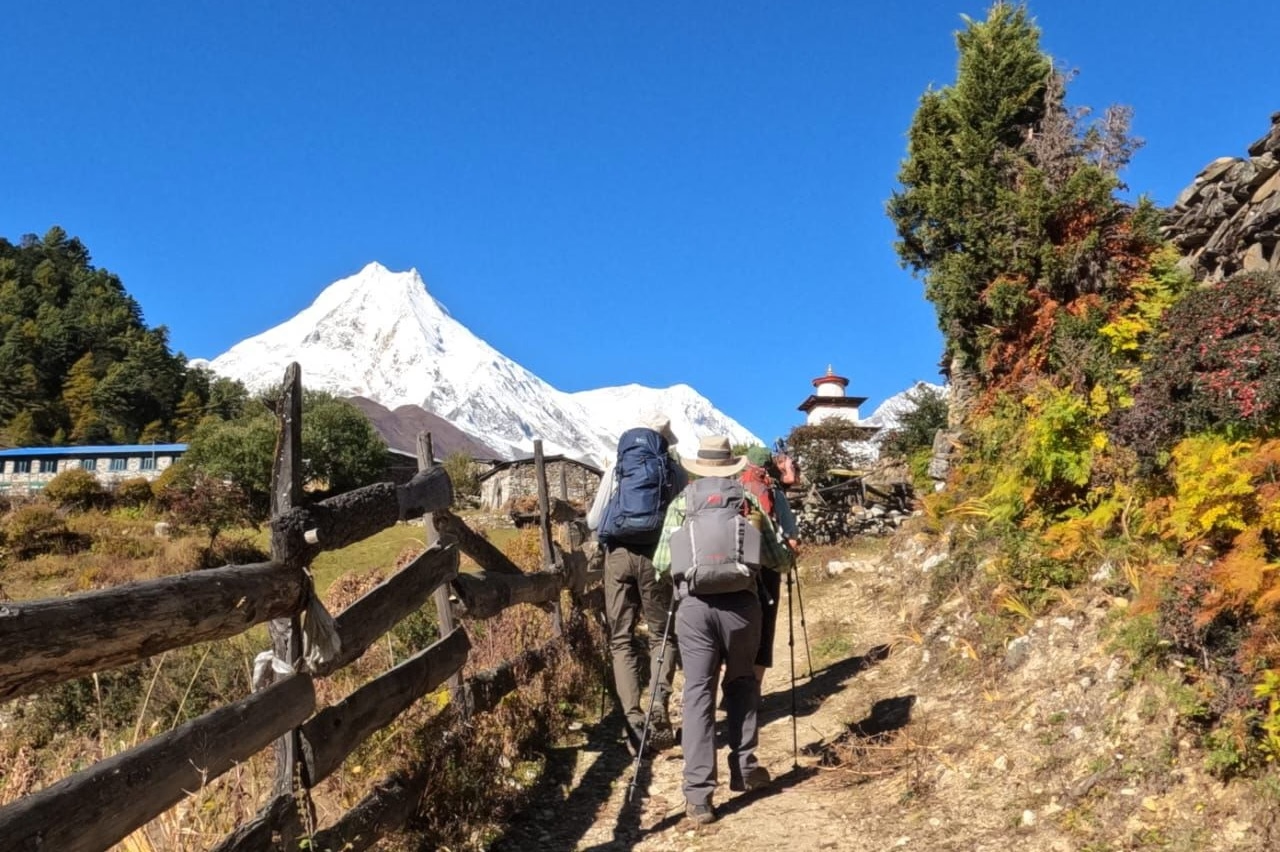
The Manaslu Circuit is Nepal's premier restricted-area trek. It circles the eighth-highest mountain on Earth in 12–16 days. The trail rises from 710 m to the 5,106 m Larkya La. Tibetan-Buddhist villages and quiet lodges mark the route.
What makes the Manaslu Circuit Trek different from other Nepal treks?
The Manaslu Circuit Trek differs from other Nepal treks because it is a restricted-area route. A licensed guide and three permits (including the ACAP for the exit route) regulate entry, which keeps trail traffic well below Everest and Annapurna levels.
Manaslu (8,163 m), the eighth-highest mountain on Earth, saw its first summit in 1956 by a Japanese team. The trail follows the Budhi Gandaki river from Soti Khola (710 m) through Gurung and Tibetan-Buddhist villages to Larkya La (5,160 m). Reported 2025 trekker figures confirm Manaslu and Upper Mustang as the two most visited restricted areas: Nepal's official Tourism Statistics 2025 puts Manaslu trekker numbers at roughly 14,700–17,700 for the year, far ahead of any other restricted zone.
How difficult is the Manaslu Circuit Trek?
The Manaslu Circuit Trek is challenging. It takes 12–16 days, involves 6–8 walking hours daily, and climbs to the 5,160 m Larkya La after a night at Dharamsala (4,460 m).
Larkya La day lasts 9–10 hours, with a steep ascent over moraine and a long descent to Bimthang (3,590 m). Remote stretches make evacuation depend on helicopters, so insurance must cover them above 5,000 m. Samagaon (3,530 m) hosts the rest day, with hikes to Birendra Lake and Pungyen Gompa.
The 6 September 2026 flood destroyed bridges near Namrung, and the Gorkha district administration suspended the route that day. Local residents built temporary wooden crossings and the trail reopened within days, though permanent bridges remain pending. Confirm current status before departure.
What are the highlights of the Manaslu Circuit Trek?
The 5 highlights of the Manaslu Circuit Trek are the Budhi Gandaki gorge, Lho, Samagaon, Pungyen Gompa, and the Larkya La crossing.
Budhi Gandaki gorge carries the trail past waterfalls, suspension bridges, and mani walls.
Lho (3,180 m) offers the first full view of Manaslu from the Ribung Gompa hillside.
Samagaon (3,530 m) anchors the acclimatization day beneath the Manaslu glacier.
Pungyen Gompa (above 3,800 m) sits on a ridge hike above Samagaon, with close views of the Manaslu glacier.
Larkya La (5,160 m) delivers Himlung Himal, Kang Guru, and Annapurna II in a single panorama.
When is the best time to trek around Manaslu?
The best time to trek around Manaslu is March–May and September–November. Autumn gives the driest trail, and spring gives rhododendron forest in the lower valley.
Snow blocks Larkya La from December to February. The Restricted Area Permit costs US100perweekinSeptember–NovemberandUS75 per week in December–August, with extra days at US15(autumn)orUS10 (other months). The Manaslu Conservation Area Permit costs NPR 3,000, and trekkers who exit through Dharapani add the NPR 3,000 Annapurna permit. A guided Manaslu Circuit Trek package arranges all three permits and the required licensed guide.
5. Langtang Valley Trek
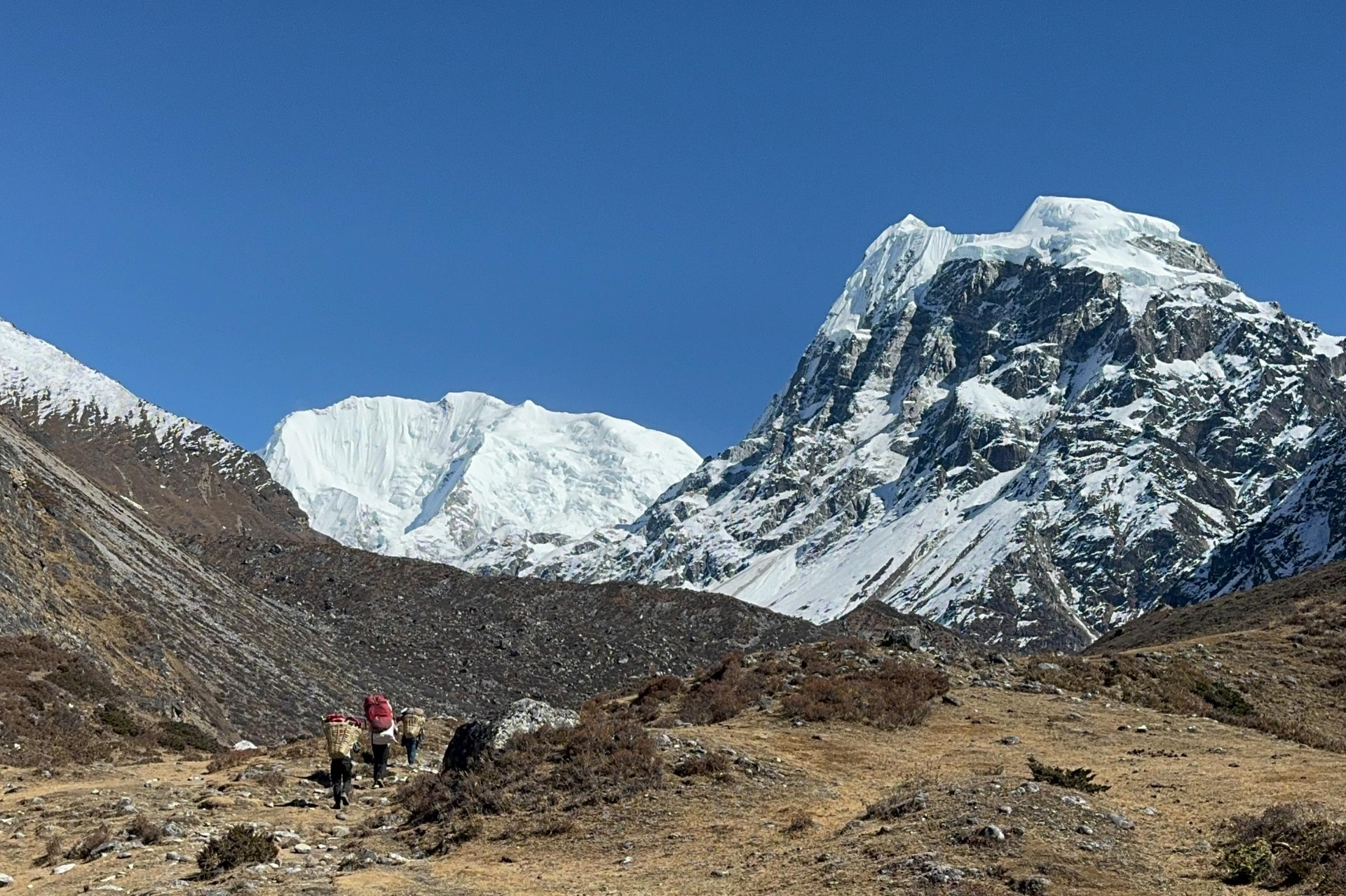
Langtang Valley is the nearest Himalayan trek to Kathmandu. It takes 7–10 days and ends at Kyanjin Gompa (3,870 m). Tamang villages and old forests line the trail. Access in 2026 depends on the Rasuwa road repairs.
What makes the Langtang Valley Trek special?
The Langtang Valley Trek is special because it is the closest Himalayan trek to Kathmandu: a 7–10 day route through Nepal's first Himalayan national park (1976) to Kyanjin Gompa (3,870 m), beneath Langtang Lirung (7,227 m).
Tamang culture shapes the valley, with prayer-flag ridges, yak cheese, and homestays. The April 2015 earthquake buried Langtang village under a landslide, and the community rebuilt it lodge by lodge.
2026 access update (as of 2 October 2026): The 26 August flood damaged Timure and Syabrubesi, the usual trailhead. According to Nepali media and trekking operators, the road to Syabrubesi remained closed on 1 October with no reopening date. Operators report the Langtang Khola trail, a separate drainage, as undamaged.
How difficult is the Langtang Valley Trek?
The Langtang Valley Trek is moderate. It involves 5–7 walking hours daily, a 2,300 m climb from Syabrubesi (1,550 m) to Kyanjin Gompa (3,870 m), and no technical sections.
The climb is steady, which makes acclimatization smoother than on Khumbu routes. A rest day at Kyanjin Gompa is standard. Tserko Ri (4,984 m) is the hardest day, with a 1,100 m ascent in 4–5 hours, so only the well-acclimatized go. Kyanjin Ri (4,773 m) offers a gentler alternative.
What can you see and experience along the Langtang Valley?
Along the Langtang Valley you see Langtang Lirung, Kyanjin Gompa, Tamang villages, and old-growth forest, and you experience yak-cheese tasting and Buddhist rituals.
Langtang village (3,430 m) combines rebuilt lodges with a memorial to the 2015 landslide.
Kyanjin Gompa (3,870 m) hosts a cheese factory and a small monastery.
Tserko Ri (4,984 m) gives a panorama of Langtang Lirung, Shisapangma, and Dorje Lakpa.
When is the best time to trek in Langtang?
The best time to trek in Langtang is March–May and October–November. Autumn gives the clearest peaks, and spring gives rhododendron blooms at 2,500–3,000 m.
Access in 2026 changes this answer. As of 1–2 October 2026, operators advise walking from Dhunche via Thulo Syabru to bypass Syabrubesi. Trekkers with tight holidays choose another route unless the road has reopened in the week before flying. The Langtang National Park Permit costs NPR 3,000.
6. Upper Mustang Trek
Upper Mustang is a high desert beyond the Himalayan rain shadow. The trek lasts 10–14 days and reaches Lo Manthang at 3,840 m. Red cliffs, caves, and monasteries replace the usual alpine scenery. The restricted-area permit costs US$50 per day in 2026.
What makes Upper Mustang different from other trekking regions?
Upper Mustang differs from other trekking regions because it is a rain-shadow high desert of red cliffs and Tibetan-Buddhist culture, and Nepal opened it to foreigners only in 1992, with a restricted-area permit.
The former Kingdom of Lo centers on the walled city of Lo Manthang (3,840 m), founded in 1380. According to Department of Tourism permit data reported by The Rising Nepal, Upper Mustang issued 5,488 restricted-area trekking permits in 2025, roughly 29% above its 2021–2025 average of 4,248, meaning only a small fraction of Mustang's broader visitor traffic continues past Kagbeni into the restricted zone.
How difficult is the Upper Mustang Trek?
The Upper Mustang Trek is moderate. It takes 10–18 days, tops out near 4,000 m, and involves 5–7 walking hours on wind-exposed, dusty trails.
Afternoon winds in the Kali Gandaki valley are the hardest feature, so trekkers start walking by 7 a.m. The altitude stays moderate, with Lo La (3,950 m) as the high pass. A jeep road now reaches Lo Manthang, and guided itineraries walk the old trail where possible and drive the road sections between villages.
What cultural and natural highlights can you experience on Upper Mustang Trek?
The 6 cultural and natural highlights of Upper Mustang are Lo Manthang, Chhoser sky caves, Ghar Gompa, Tsarang, the Kali Gandaki gorge, and the Tiji Festival.
Lo Manthang (3,840 m) preserves a walled medieval city with 3 major monasteries.
Chhoser caves hold hand-carved cliff dwellings, some dating back more than 1,000 years.
Ghar Gompa is a 1,200-year-old monastery tied to Guru Rinpoche.
Tsarang (3,560 m) features a white-walled fort and a monastery library.
Kali Gandaki gorge exposes ancient sea-bed fossils (shaligram stones).
Tiji Festival unfolds over 3 days each May, with masked Buddhist dances in Lo Manthang.
When is the best time to visit Upper Mustang?
The best time to visit Upper Mustang is March–November. The region sits in a monsoon rain shadow, so June–August stays trekkable, and May brings the Tiji Festival.
December–February is too cold for most trekkers. The 2026 permit costs US50 per person per day under the November 2025 amendment, plus NPR 3,000 for the Annapurna Conservation Area Permit. A 10-day stay inside the restricted zone costs US 500, the same as before, while a 7-day stay costs US$350. For the full fee breakdown and application rules, see our guide to Upper Mustang trek permits.
7. Mardi Himal Trek
Mardi Himal is a short ridge trek above Pokhara. It takes 5–7 days and reaches 4,500 m. Forest gives way to open grassland and close mountain views. Crowds stay thinner than on Annapurna Base Camp.
What makes the Mardi Himal Trek popular?
The Mardi Himal Trek is popular because it follows a narrow ridge to 4,500 m in only 5–10 days from Pokhara, with Machhapuchhre (6,993 m) filling the skyline and fewer trekkers than Annapurna Base Camp draws.
Nepal opened the route to trekkers in 2012, and its ridge-walk format has made it a favorite short trek from Pokhara. It starts from Kande, Phedi, or Dhampus and uses lodges throughout. The Annapurna Conservation Area Permit (ACAP) and a Trekkers' Information Management System (TIMS) card are the two permits required.
How difficult is the Mardi Himal Trek?
The Mardi Himal Trek is easy to moderate. It involves 4–6 walking hours daily, reaches 4,500 m, and gains altitude quickly, which makes the final day the hardest.
The trail climbs steadily through Forest Camp (2,600 m), Low Camp (3,050 m), and High Camp (3,580 m). The round trip from High Camp to Mardi Himal Base Camp takes 7–9 hours. Sleeping at Low Camp before High Camp keeps each day's gain in sleeping elevation near 500 m, which protects against headaches on summit day.
What mountain views and landscapes can you see on Mardi Himal Trek?
On the Mardi Himal Trek you see Machhapuchhre, Annapurna South, Hiunchuli, Annapurna III, and Mardi Himal (5,587 m) across rhododendron forest, a grassy ridge, and an alpine base camp.
Forest Camp passes through moss-draped rhododendron and oak forest.
Low Camp (3,050 m) opens the first Machhapuchhre views.
High Camp (3,580 m) sits on an exposed ridge with sunrise views across the Annapurna range.
Mardi Himal Base Camp (4,500 m) places you directly below Mardi Himal's face.
When is the best time to trek Mardi Himal?
The best time to trek Mardi Himal is March–May and October–November. Spring brings rhododendron blooms to the forest section, and autumn brings the clearest views of Machhapuchhre.
Snow covers the upper ridge from December to February, and monsoon leeches infest the forest from June to August. Mardi Himal also works as a short alternative when Langtang or Manaslu schedules shift.
8. Gokyo Lakes Trek
The Gokyo Lakes Trek is the quieter alternative in the Khumbu. It takes 12–15 days and reaches Gokyo Ri at 5,357 m. Six turquoise lakes sit beside Nepal's longest glacier. Four eight-thousanders appear from the summit viewpoint.
What makes the Gokyo Lakes Trek special?
The Gokyo Lakes Trek is special because it follows Nepal's longest glacier to 6 turquoise lakes, then climbs Gokyo Ri (5,357 m), a viewpoint that sees 4 eight-thousanders: Everest, Lhotse, Makalu, and Cho Oyu.
The trail shares the Lukla–Namche section with the Everest Base Camp route, then splits at Namche toward Dole and Machhermo. Crowds thin immediately. Gokyo Ri gives the broader panorama, while Kala Patthar gives the closer Everest. Trekkers who want both view types can combine them on an Everest Cho La Pass trek that crosses from Gokyo to the Everest Base Camp trail.
How difficult is the Gokyo Lakes Trek?
The Gokyo Lakes Trek is challenging. It takes 12–15 days, involves 5–7 walking hours daily, and sleeps at Gokyo (4,790 m), higher than any Everest Base Camp night before Lobuche.
The ascent from Machhermo (4,470 m) to Gokyo adds only 320 m, which helps acclimatization. Gokyo Ri is a 2–3 hour climb from the village. The optional Cho La crossing (5,420 m) adds glacier travel and requires microspikes. Altitude insurance covering evacuation above 5,500 m is standard on this route.
What are the highlights of the Gokyo Lakes and Gokyo Ri?
The 5 highlights of the Gokyo Lakes and Gokyo Ri are the 6 lakes, the Ngozumpa Glacier, Gokyo Ri, Machhermo, and the Cho La crossing.
The 6 lakes, including Gokyo Cho and Thonak Tsho, glow turquoise from September to November.
Ngozumpa Glacier is Nepal's longest, a 36 km river of debris-covered ice.
Gokyo Ri (5,357 m) offers a sunrise panorama of 4 eight-thousanders.
Machhermo (4,470 m) is a small hamlet, known for yeti folklore, that makes the last acclimatization stop before Gokyo.
Cho La (5,420 m) links Gokyo to the Everest Base Camp trail in a single loop.
When is the best time to trek to Gokyo Lakes?
The best time to trek to Gokyo Lakes is October–November and March–May. Autumn gives open turquoise water, and spring gives longer, warmer days.
Lakes freeze partially from December to April, and snow limits the Cho La crossing. Monsoon cloud hides Gokyo Ri. Permits match Everest Base Camp: NPR 3,000 for Sagarmatha National Park and NPR 3,000 for the Khumbu trek card.
9. Kanchenjunga Trek
Kanchenjunga is the most remote classic trek in Nepal. It takes 20–25 days in the far east, near the Sikkim border. The route reaches Pangpema at 5,143 m below the third-highest mountain on Earth. Lodges stay basic and trail traffic stays light.
What makes the Kanchenjunga Trek a remote adventure?
The Kanchenjunga Trek is a remote adventure because it reaches the base of the world's third-highest mountain (8,586 m) through far-eastern Nepal, where lodges stay basic, villages stay small, and trekkers meet few other groups.
The name comes from Tibetan for "Five Treasures of the Great Snow." The Kanchenjunga Conservation Area, established in 1997, protects snow leopard and red panda habitat. Joe Brown and George Band made the first ascent in 1955 and stopped a few feet below the summit to honor Sikkim's sacred beliefs. Access runs through Bhadrapur or Biratnagar, then a drive to Taplejung.
How difficult is the Kanchenjunga Trek?
The Kanchenjunga Trek is very challenging. It takes 20–25 days for both base camps, climbs to Pangpema (5,143 m) on the north side, and crosses passes of 4,290–4,660 m.
The north base camp (Pangpema, 5,143 m) and south base camp (Oktang, 4,730 m) link through Sele La (4,290 m), Sinion La (4,660 m), and Mirgin La (4,480 m). Daily walks last 6–9 hours. Medical facilities are far apart, and evacuation takes longer than in Khumbu. Prior experience above 4,500 m is a firm prerequisite for the full route. Trekkers who meet that bar can plan the Kanchenjunga Base Camp trek with a licensed guide and a realistic 20–25 day schedule.
What are the major highlights of the Kanchenjunga region?
The 5 major highlights of the Kanchenjunga region are Pangpema, Oktang, Ghunsa, the rhododendron forests, and the Limbu and Sherpa culture of Taplejung.
Pangpema (5,143 m) places you at the foot of Kanchenjunga's north face.
Oktang (4,730 m) offers the south-side view from the Yalung Glacier.
Ghunsa (3,595 m) preserves a Tibetan-style Sherpa village with a monastery.
Rhododendron forests below 3,500 m bloom in April and May.
Taplejung villages showcase Limbu culture, including tongba, a warm fermented-millet drink.
When is the best time to trek in Kanchenjunga?
The best time to trek in Kanchenjunga is March–May and October–November. Spring brings rhododendron blooms, and autumn brings stable weather and clear views.
Monsoon rain begins earlier in eastern Nepal, so June–August brings heavy leech and landslide risk. The Kanchenjunga Conservation Area Permit costs NPR 2,000, and the Restricted Area Permit costs US$20 per week.
10. Ghorepani Poon Hill Trek
Ghorepani Poon Hill is the easiest classic trek in Nepal. It takes 4–5 days and peaks at 3,210 m. Rhododendron forests and Gurung villages line the trail. The sunrise view covers Dhaulagiri and the Annapurna range.
What makes the Ghorepani Poon Hill Trek beginner-friendly?
The Ghorepani Poon Hill Trek is beginner-friendly because it takes only 4–5 days, tops out at 3,210 m, and uses lodge-to-lodge trails from Nayapul, about 1.5 hours from Pokhara.
The altitude stays low enough that altitude sickness is rare. The route suits families, first-time trekkers, and travelers with a short window. Lodges at Ulleri, Ghorepani (2,874 m), and Tadapani provide hot meals and warm rooms, and no camping gear is required.
How difficult is the Poon Hill Trek?
The Poon Hill Trek is easy. It involves 4–6 walking hours daily and a maximum altitude of 3,210 m. The Ulleri staircase, with more than 3,000 stone steps, is the hardest section.
The sunrise climb from Ghorepani to Poon Hill gains about 340 m in 45–60 minutes, and many trekkers start by 4:45 a.m. with headlamps. Trekking poles ease knee strain on the long descents.
What can you see from Poon Hill?
From Poon Hill (3,210 m) you see Dhaulagiri (8,167 m), Annapurna I (8,091 m), Annapurna South (7,219 m), Machhapuchhre (6,993 m), Nilgiri (7,061 m), and Tukuche Peak (6,920 m) in a single sunrise panorama.
Dhaulagiri anchors the western skyline.
Annapurna South and Hiunchuli form the central skyline.
Machhapuchhre appears as a sharp pyramid to the north-east.
Rhododendron forests below Ghorepani frame the lower ridges.
When is the best time to trek to Poon Hill?
The best time to trek to Poon Hill is March–May and October–November. March and April bring blooming rhododendrons, Nepal's national flower, and October and November bring the clearest sunrise views.
Snow covers the trail above Ghorepani in winter, and monsoon months bring leeches and cloud. The Annapurna Conservation Area Permit costs NPR 3,000. Poon Hill pairs easily with Mardi Himal or Annapurna Base Camp across 8–10 days.
How Can You Choose the Right Nepal Trek With Heaven Himalaya?
Choose the right Nepal trek by matching 4 variables: days available, altitude comfort, travel month, and the experience you want, whether summit viewpoints, culture, or solitude.
Your priority | Best-fit treks |
4–7 days, first Himalayan trek | Ghorepani Poon Hill, Mardi Himal |
7–10 days, moderate fitness | Annapurna Base Camp, Langtang Valley |
Culture and desert landscapes | Upper Mustang |
Iconic summit views, 12–14 days | Everest Base Camp |
Fewer crowds with Everest views | Gokyo Lakes |
Pass crossing and remoteness | Annapurna Circuit, Manaslu Circuit |
Expedition-style wilderness, 20+ days | Kanchenjunga |
Heaven Himalaya Treks & Expedition is a Kathmandu-based, TAAN- and NTB-affiliated trekking company. Managing Director Ramhari Adhikari has led treks across Everest, Annapurna, Langtang, and Manaslu since 2008, and the company holds Tripadvisor Travelers' Choice awards for 2021 through 2025. Packages typically include a licensed guide, permits, park fees, accommodation, and trail meals.
Plan with Heaven Himalaya: The Everest Base Camp Trek starts from US$1,399 per person. The Annapurna Circuit with Poon Hill Trek runs 18 days from US$1,499. Related routes include the Annapurna Base Camp Trek, the Manaslu Circuit Trek, the Langtang Valley Trek, and the Upper Mustang Trek.
Can Heaven Himalaya Help You Choose a Trek Based on Your Time and Experience?
Yes. Heaven Himalaya matches trekkers to routes using 3 inputs: days available, previous altitude experience, and travel month.
Trekkers with no altitude history start with Poon Hill, Mardi Himal, or Annapurna Base Camp. Trekkers with one 4,000 m trek behind them step up to Everest Base Camp or Langtang. Trekkers with 5,000 m experience choose Gokyo, the Annapurna Circuit, or Manaslu. Kanchenjunga suits veterans of long pass crossings.
Send your dates, fitness level, and budget, and the team replies with a route and day-by-day plan. Because flood damage in 2026 changed access to Langtang and Manaslu, the team checks current trail and road status before confirming departures on those routes.
Contact Heaven Himalaya: WhatsApp or Viber +977 985 1273867, email info@heavenhimalaya.com, or visit the contact page. The office sits at Gitanjali Chowk, Dathu Sadak, Kathmandu. For route-specific planning, read the Annapurna Circuit Trek Guide and the Best Time to Trek in Nepal page.
What Are the Key Takeaways About the Best Treks in Nepal?
The best treks in Nepal span 6 regions, 4 to 25 days, and difficulty from easy to very challenging, so the right choice depends on your days, altitude history, and travel month.
Poon Hill (3,210 m) and Mardi Himal (4,500 m) give first-timers a 4–7 day entry.
Annapurna Base Camp (4,130 m) and Langtang (3,870 m) deliver moderate 7–10 day routes.
Everest Base Camp (5,364 m) and Gokyo Ri (5,357 m) define Khumbu trekking.
Thorong La (5,416 m) and Larkya La (5,160 m) define the great pass crossings.
Upper Mustang costs US$50 per day in 2026.
Kanchenjunga rewards 20–25 days of remote walking.
October–November and March–May are the best months for 9 of the 10 routes, and Upper Mustang also works in the monsoon.
A licensed guide is mandatory on 8 of the 10 treks, though the Everest Base Camp and Gokyo Lakes routes remain exempt, allowing independent trekking, and restricted-area permits are priced in US dollars.
Flood damage in 2026 changed access to Langtang and Manaslu, so confirm status in the week before departure.
Match the route to your calendar and your altitude history, and the best treks in Nepal deliver on both.