

Annapurna Trekking Permits: Complete Guide to Cost, Process & Rules (2026)
Learn about ACAP’s history, purpose, requirements, fees, application process, and importance for trekking in the Annapurna region.

The Annapurna region isn't just Nepal's most popular trekking destination; it's one of the most regulated. Every trekker entering the Annapurna Conservation Area must obtain valid Annapurna Region Trekking Permits, and checkpoints strictly enforce compliance.
Many travelers underestimate the importance of permits until they face penalties or are stopped mid-journey. With varying rules for ACAP and Restricted Area Permits, understanding what applies to your specific trek is essential.
In this detailed guide, we explain the complete permit process, updated 2026 fees, required documents, and key regulations, so you can focus on the mountains, not paperwork.
History & Overview of ACAP
The Annapurna Conservation Area spans an extraordinary elevation range from 790 meters to 8,091 meters at Annapurna I, creating remarkable ecological diversity. Within this vast landscape, trekkers experience everything from subtropical forests and terraced hills to alpine meadows, high Himalayan glaciers, and the arid trans-Himalayan deserts of Manang and Mustang.
ACAP is home to over 1,200 rare wild life and plant species such as the Snow Leopard, Musk Deer, Himalayan Tahr, and more than 500 bird species. The region is generally inhabited by Gurung, Magar, Thakali, Manangi, and Tibetan people. Annapurna Conservation Area Project (ACAP) was established in 1986 and is managed by the National Trust for Nature Conservation (NTNC). It is Nepal's first and largest conservation area, covering approx 7,629 square kilometers across the districts of Kaski, Lamjung, Manang, Mustang, and Myagdi.
The region is also culturally rich, inhabited by Gurung, Magar, Thakali, Manangi, and Tibetan-influenced communities. The rare Mad Honey of Nepal, which is gaining popularity worldwide for its hallucinogenic effects, is also found in the ACAP region and is harvested by the native Gurung community. Through conservation fees and sustainable tourism practices, ACAP plays a vital role in protecting biodiversity while supporting local livelihoods and community development.
Facts Regarding Annapurna Region Trekking Permits
Over 190,000 ACAP permits were issued in 2024.
In 2025, the number crossed 220,000 visitors, showing rising popularity.
Restricted Area Permits (Nar Phu) average around 2,000 - 3,000 annually.
Permit revenue supports conservation, trail maintenance, and local schools.
Check- post registration improves rescue response during emergencies.
Permits Required to Trek in the Annapurna Region
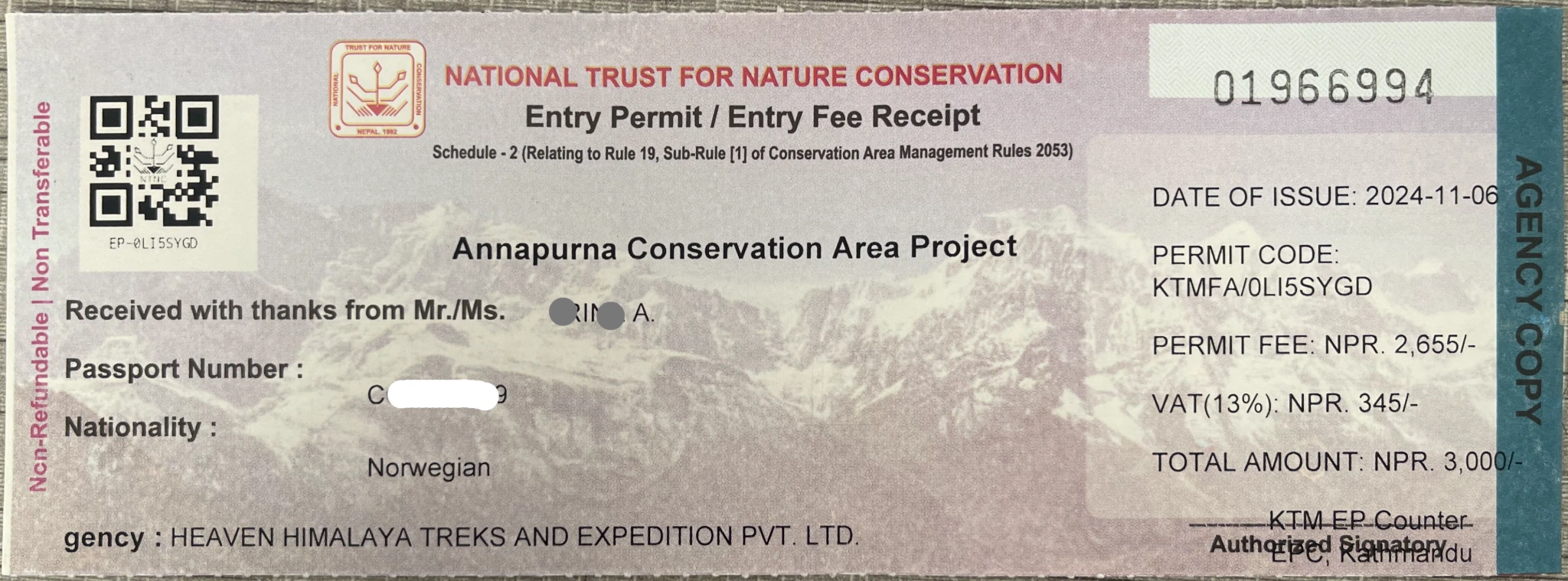
1. ACAP Permit
Established (1968) and issued by NTNC
Purpose: Conservation funding and regulated trekking inside the ACA
Documents Required:
Passport copy
Visa copy
Passport-sized photos
Cost (2026):
Nepalese: NPR 100
SAARC Nationals: NPR 1,500
Foreigners: NPR 3,000
Important Info:
Mandatory for all Annapurna treks
Double fee if issued at a check-post
Children below 10 are exempt from the ACAP permit fee.
The ACAP permit grants entry into the Annapurna Conservation Area. The fee contributes to conservation, waste management, trail building, and community projects.
3. Restricted Area Permit (RAP) – Nar Phu Valley
Issued by: Department of Immigration
Purpose: Regulate entry in culturally sensitive restricted zones
Documents Required:
Passport copy
Visa
Travel Agency application
Minimum 2 trekkers
Cost (2026):
USD 100 per person (first 7 days)
USD 15 per day thereafter'
Important Info:
Mandatory guide
Minimum 2 trekkers
Only via a registered agency
The RAP applies to restricted areas like Nar Phu Valley and Tsum Valley in Manaslu Circuit . Solo trekking is strictly prohibited.
Special Drone Permit in Annapurna Region
The Annapurna Region is renowned not only for trekking but also as a premier destination for photography and cinematography. Numerous international filmmakers and photographers visit the area to shoot movies, documentaries, and capture its breathtaking landscapes, which involves drone shots. Drone usage for filming or photography is strictly prohibited without prior authorization from the relevant authorities, ensuring compliance with local regulations while maintaining safety and environmental protection.
To fly drones:
Permission from Ministry of Information & Communication
Approval from NTNC
Clearance from Civil Aviation Authority
Local administration approval
Filming permits are mandatory for documentaries and commercial shoots. Unauthorized drones can be confiscated, fined, or legally prosecuted.
Note: You can register you drone permit from offical website of CAAN.
Popular Treks in the Annapurna Region
Most Popular Trek in Annapurna Region
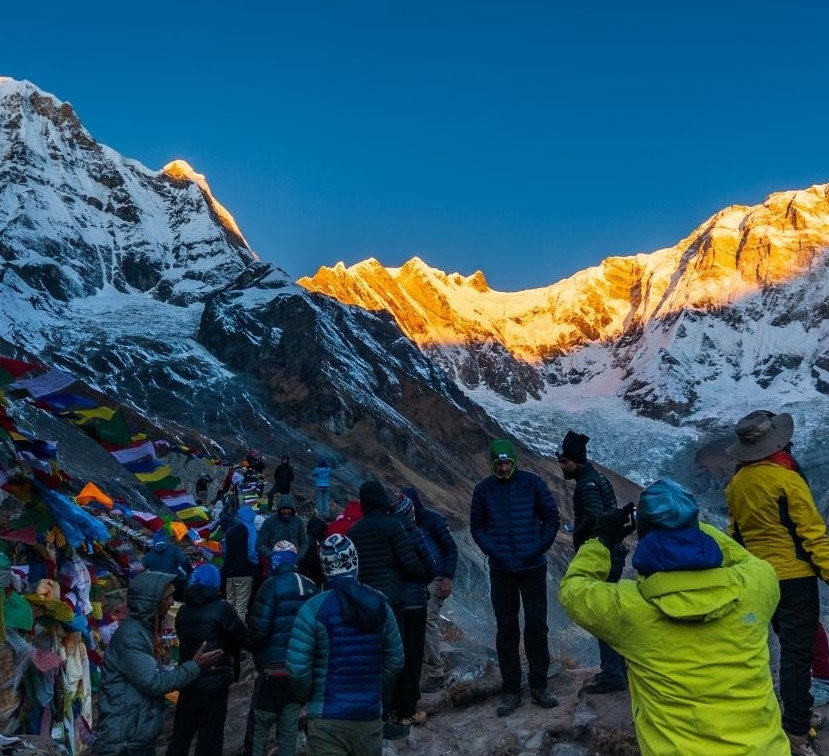
Annapurna Base Camp Trek
View details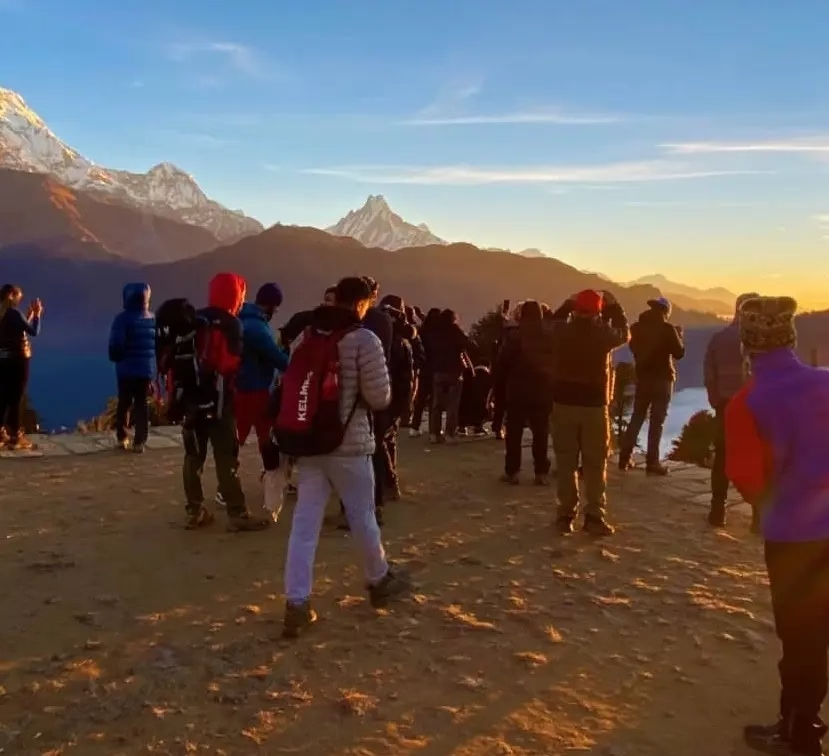
Ghorepani Poon Hill Trek
View detailsMore Adventurous Trek
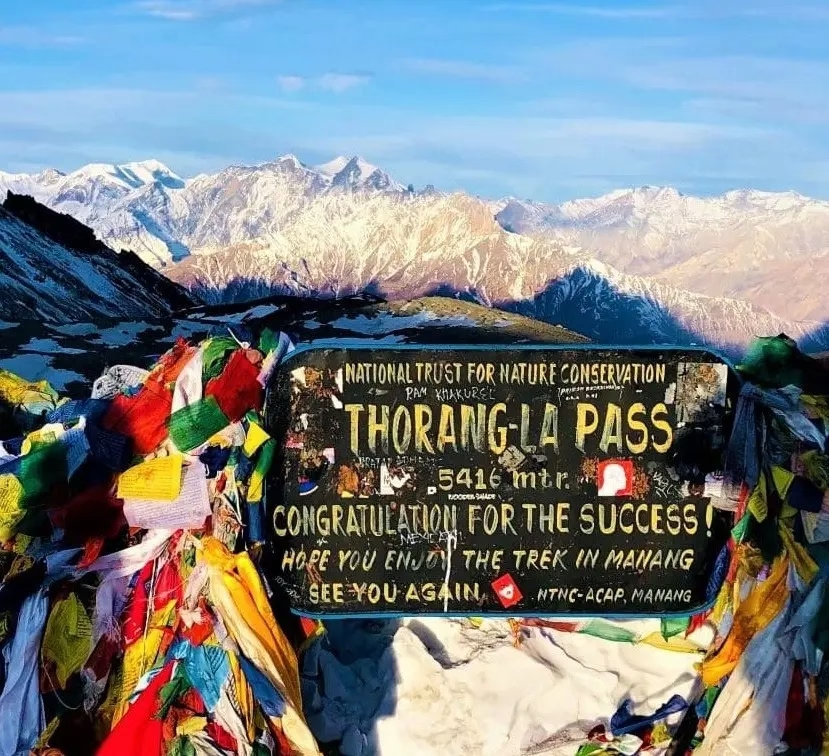
Annapurna Circuit with Poon Hill Trek
View detailsRestricted Area Trek
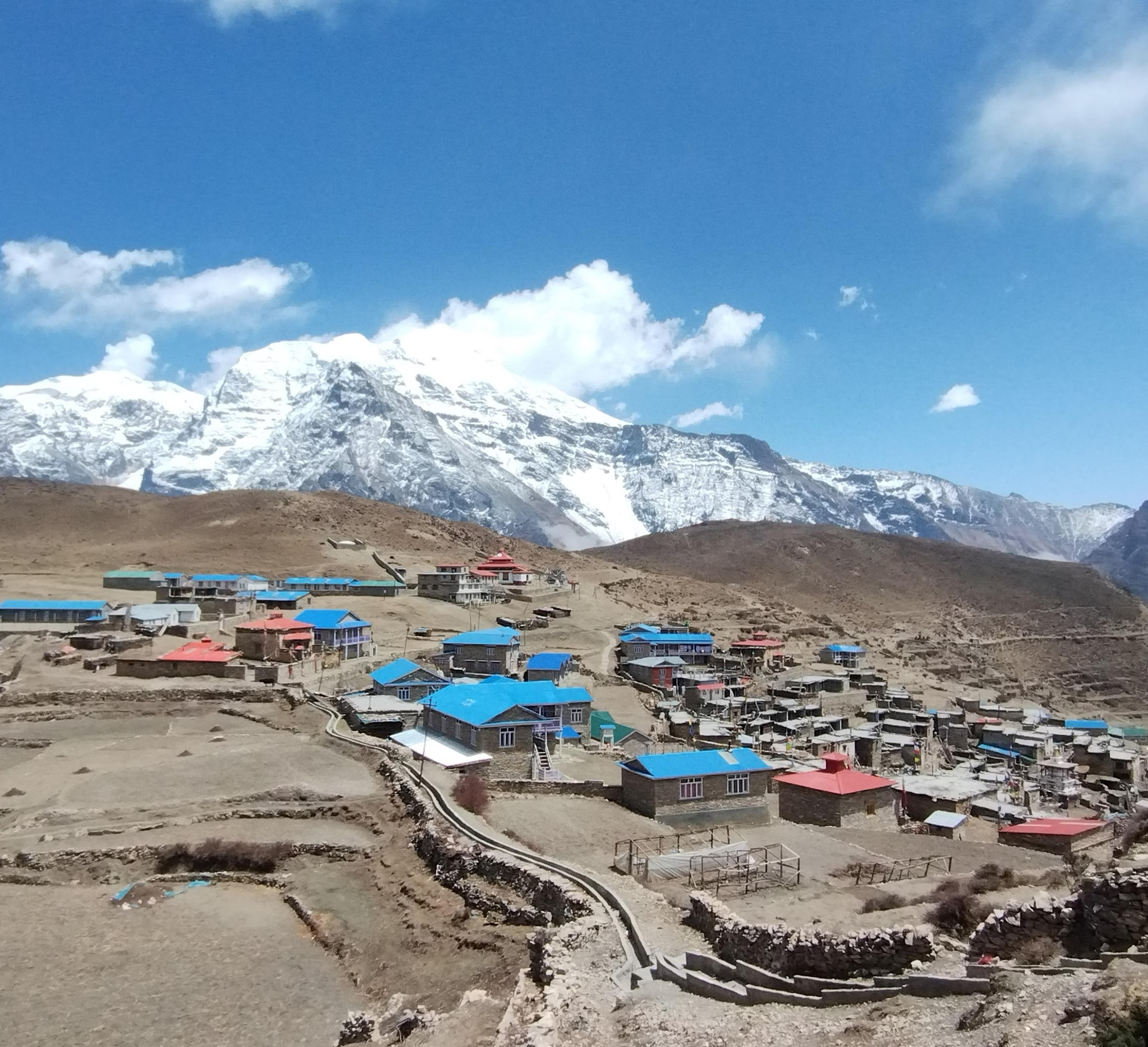
Nar Phu Valley Trek
View detailsImportant Annapurna Region Permit Infos from Nepal Government
In Nepal, trekkers can either trek as a FIT (Free Individual Trekker) or join an organized group. However, some trekking regions are classified as Restricted Areas by the Government of Nepal, where FITs are not permitted. Trekking in these areas requires a special permit obtained from the Department of Immigration, and the Trekking permit info for each restricted region varies depending on the area you plan to visit.
Children below 10 years do not require a permit.
Drones are strictly prohibited unless the concerned authorities have granted prior approval.
The Entry fee is NRs. 3,000 for foreigners, NRs. 1,000 for SAARC nationals (including tax), and an online Payment Gateway Charge (2.9%) extra. Double fees are levied for permits issued at Check-Posts.
Special permits are required for some designated areas, and Manaslu Conservation Area (MCA), which are regulated as restricted in the Annapurna Conservation Area (ACA) and Manaslu Conservation Area (MCA). Permits are available at the Department of Immigration. Mountaineering permits are available at the Nepal Mountaineering Association.
Special permits for documentary filming to be obtained from the Ministry of Information Communication and approvals from NTNC.
Please register at your check-posts along the route. Your cooperation allows us to monitor the flow of tourists and increase your chances of rescue in case of an emergency.
Hunting is prohibited.
Fishing permits are issued by the local Conservation Area Management Committees (Ask at your lodge).
An approval from NTNC is required before collecting scientific specimens.
Please follow the Minimum Impact Code. If you come with an agency, make sure they make the right preparations for safety, legality, and environmental friendliness.
Note: Trekking permits are non-transferable and non-refundable, so please ensure that all entered information is accurate and plan your trekking dates and itinerary carefully.
Annapurna Region Permit Comparison Table (Package Basis – 2026)
Trek | Permits Required | Duration / Max Altitude / Difficulty / Popularity | Validity | Solo Trekking | Check Points | Processing Time |
ABC Trek | ACAP | 7–12 days / 4,130m / Moderate / Very High | Duration of Trek | Yes | Birethanti | Same Day |
Annapurna Circuit Trek | ACAP | 14-18 days / 5,416m / Hard / High | Duration of Trek | Yes | Tal, Dharapani, Manang, Jomsom | Same Day |
Narphu Valley Trek | ACAP, RAP | 10-14 days / 5,320m / Hard / Moderate | Restricted Duration | No | Tal, Dharapani | 1-2 days |
Ghorepani Poonhill Trek | ACAP | 4-5 days / 32,10m / Easy / Very High | Duration of Trek | Yes | Birethanti | Same Day |
North ABC Trek | ACAP | 8-10 days / 4,130m / High / Moderate | Duration of Trek | Yes | Tatopani | Same Day |
Mardi Himal | ACAP | 5-7 days / 4,500m / Moderate / High | Duration of Trek | Yes | Pothana | Same Day |
How to Obtain Annapurna Region Trekking Permit
Choose your trekking route
Prepare passport & visa copies
Decide on solo or agency trekking
Visit the Kathmandu or Pokhara permit office
Pay the required permit fee
Register at your stop along the route. Your cooperation allows us to monitor the flow of tourists and increase your chances of rescue in case of an emergency.
Note: ACAP permit can be processed entirely online but RAP must be processed through an agency physically.
Documents Required
Valid Passport
Nepal Visa
Passport-size photos
Travel Insurance
Agency application (if restricted area)
Where to Obtain Permits
Kathmandu Office: Tourist Service Center, Bhrikutimandap – Central permit office.
Pokhara Office: NTNC Office, Lakeside – Popular for Annapurna trekkers.
Popular Entry Points: Besisahar, Nayapul, Jomsom – On-route verification counters
Tips for Obtaining Permits
Apply one day before the trek departure
Carry printed and digital copies
Use a registered trekking agency
Verify the latest permit prices
Register at every check-post
Important Rules & Regulations
Solo Trekking: Allowed except in restricted areas.
Permit Inspection: Mandatory at all checkpoints.
Validity: Valid for a single entry duration.
Refund: Non-refundable and non-transferable.
Children: Under 10 exempted.
What Happens If You Trek Without a Permit?
Trekking inside the Annapurna Conservation Area without valid permits is considered a legal violation under Nepal's tourism and conservation regulations. Authorities regularly inspect permits at multiple checkpoints along the trail, and failure to present valid documentation can result in serious consequences that may disrupt your entire journey.
Immediate fine at the checkpoint
Double permit charges applied
Possible trek termination
Legal action for restricted areas
No rescue coordination support
You can check out Annapurna Base Camp Trek Guide for proper planning for ABC trek.
Why Use a Registered Travel Agency?
Obtaining Annapurna Region Trekking Permits may seem straightforward, but mistakes in documentation, restricted area regulations, or recent rule updates can cause delays or penalties. A registered trekking agency ensures your permits are processed legally, efficiently, and in compliance with Nepal Government regulations.
Ensures legal permit processing
Handles restricted area applications properly
Provides guide and safety support
Prevents documentation errors
Heaven Himalaya, with over 5 years of experience, has been providing exceptional trekking services throughout Annapurna region. We offer seamless support for obtaining permits and ensuring a smooth trekking experience.
We are a registered company under the laws of the Nepal government, licensed by the ministries, and a member of trekking associations such as TAAN.
We are trusted by the largest travel bands and organizations like Trip Advisor, Trip, Viator, LonelyPlanet, TourHub etc
We have extensive business networks all over Nepal to provide you with a smooth and cost-effective journey.
We are here to provide 24-hour service help for any emergency incidents.
We set a high benchmark for ourselves and are 100% committed to making our customers happy and satisfied.