

Common Mistakes on Annapurna Base Camp Trek: 2026 Guide

The Annapurna Base Camp (ABC) trek is a Himalayan trekking route in Nepal that reaches 4,130 metres (13,550 ft) inside the Annapurna Sanctuary. Although considered a moderate trek, its steep stone staircases, rapid elevation changes, unpredictable mountain weather, and high-altitude terrain create challenges for unprepared trekkers. Poor planning, inadequate physical preparation, and improper acclimatization can lead to altitude sickness, exhaustion, injuries, and unexpected expenses.
The most common mistakes on the Annapurna Base Camp trek include choosing the wrong season, rushing the itinerary, skipping fitness training, ascending too quickly, packing unsuitable gear, ignoring weather conditions, and disregarding local cultural and conservation rules. Understanding these trekking mistakes before departure helps you plan a safer itinerary, manage altitude risks, prepare appropriate equipment, and enjoy a more comfortable journey through the Annapurna Conservation Area.
What Are the Most Common Planning Mistakes on the Annapurna Base Camp Trek?
The 4 most common planning mistakes are choosing the wrong season, building an itinerary that gains altitude too fast, underestimating difficulty, and booking an agency on price alone. Each one is decided before you land in Kathmandu, and each one is expensive to fix on the trail.
Why Is Choosing the Wrong Trekking Season a Common Mistake?
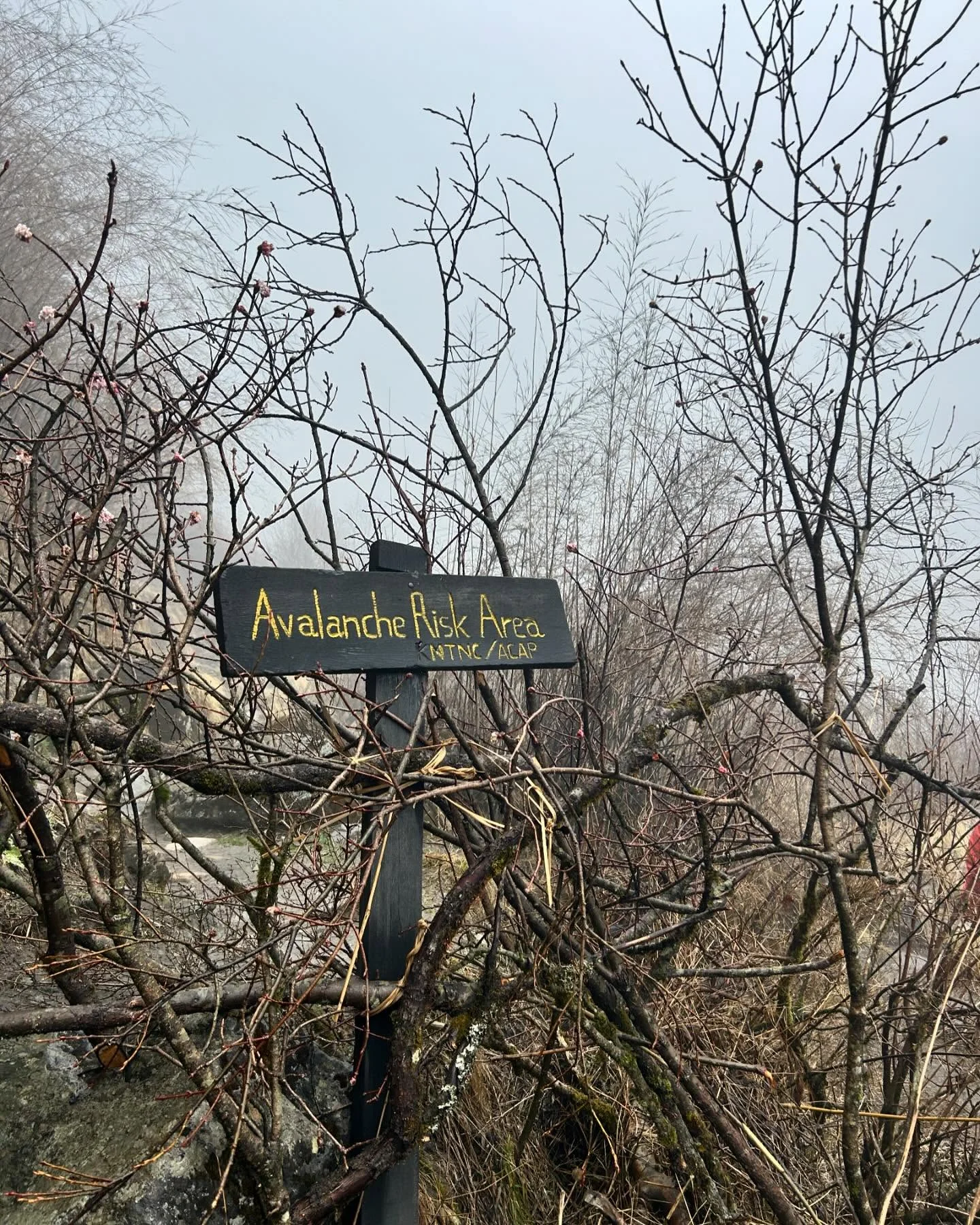
The best seasons for the Annapurna Base Camp trek are autumn (September to November) and spring (March to May). Monsoon (June to August) brings landslides and leeches. Winter (December to February) brings avalanche risk between Deurali and Machhapuchhre Base Camp (MBC).
The table below compares the four seasons on trail condition, night temperature at ABC (approximate), and main risk.
Season | Months | Trail and views | ABC night temperature | Main risk |
Autumn | Sep–Nov | Stable weather, clear mornings | −5°C to −10°C | Full lodges in October |
Spring | Mar–May | Rhododendron bloom below Chhomrong | −10°C or colder in March | Late snowfall, avalanches |
Monsoon | Jun–Aug | Cloud, leeches, wet trail | Mild | Landslides, Deurali to MBC |
Winter | Dec–Feb | Sharp views when clear | −15°C or colder | Avalanches |
Autumn wins on stability, but it carries a booking trap. According to Heaven Himalaya's route data, the settlement of Himalaya has only 2 to 3 operating lodges, because ACAP restricts construction beyond Chhomrong. October demand exceeds that capacity.
Spring carries a snow trap. According to the Kathmandu Post, an avalanche on 24 March 2025 killed a Chinese trekker descending from ABC. A spring date shifts avalanche risk to late-season snowfall. It does not remove it.
The 4 timing errors we see most often:
Booking early September, when monsoon landslides still affect lower sections
Trekking December to February without avalanche-zone experience
Arriving in October without pre-booked lodges above Chhomrong
Assuming spring snow above 3,000 metres is stable
For ABC, the safest windows run from the last week of September through October and from mid-April to mid-May. Our Best Time to Trek in Nepal page compares every region by month.
How Can Poor Itinerary Planning Affect the Annapurna Base Camp trek?
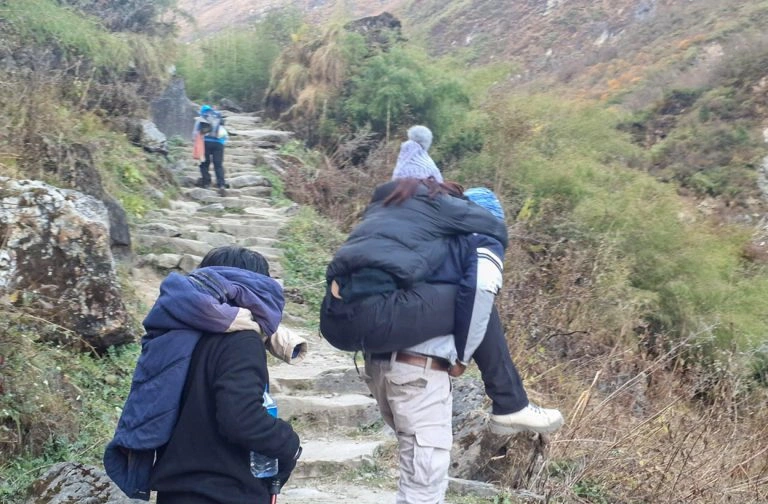
Poor itinerary planning raises altitude sickness risk, removes weather buffer days, and turns a manageable route into a forced march. The usual cause is too much sleeping altitude gained between consecutive nights.
Sleeping altitude, not the height you reach during the day, drives illness risk. CDC's 2026 Yellow Book chapter on high-altitude travel puts AMS at about 25% of visitors sleeping above 2,450 m, and says 2–3 nights at 2,450–2,750 m before going higher is markedly protective. The table shows the nightly gain on Heaven Himalaya's standard 15-day route.
Night | Sleeping altitude | Gain from previous night |
Pokhara | 822 m | – |
Tikhedhunga | 1,540 m | +718 m |
Ghorepani | 2,850 m | +1,310 m |
Tadapani | about 2,600 m | −250 m |
Chhomrong | 2,170 m | −430 m |
Dovan | 2,600 m | +430 m |
Deurali | 3,200 m | +600 m |
MBC (optional night) | 3,700 m | +500 m |
ABC | 4,130 m | +430 m from MBC, +930 m from Deurali |
A direct Deurali-to-ABC day adds 930 metres of sleeping altitude, almost double the guideline. An MBC night splits it into +500 and +430. Heaven Himalaya customises routes from 7 to 15 days, so ask for the MBC night when you book.
Compressed itineraries are worse. Some 5- and 6-day versions climb from Bamboo (2,310 m) to MBC (3,700 m) in one day, a gain of 1,390 metres. Those schedules suit people who live above 2,500 metres. They fail most first-time trekkers.
The second failure is a missing buffer. The Kathmandu–Pokhara drive takes 6 to 7 hours, and weather disrupts domestic flights. Add one spare day before your international departure. It costs one hotel night. The alternative is a missed flight.
Why Should You Research Annapurna Base Camp Trek Difficulty Before Booking?
The Annapurna Base Camp trek is rated moderate: 110 to 115 km round trip, 5 to 7 hours of walking per day, maximum elevation 4,130 metres. The label hides the real difficulty. Stone stairs and repeated climbs tire trekkers more than altitude on days 1 to 8.
Terrain deserves the same weight as altitude and weather. The climb to Ghorepani passes Ulleri, where a staircase of more than 3,000 stone steps gains height with no flat section. Chhomrong adds 2,000 or more steps. The day from Chhomrong to Dovan drops into a river gorge and climbs again several times.
The return surprises trekkers most. On our route, day 12 leaves Bamboo, descends to the Chhomrong Khola, then climbs the long staircase back to Chhomrong before dropping to Jhinu Danda. Trekkers who assume "downhill from ABC" reach that staircase with tired knees.
Before you pay a deposit, collect 5 facts: daily walking hours, daily elevation change, nights above 3,000 metres, rest-day placement, and the MBC option. New to multi-day treks? Our ABC trek for beginners guide walks through exactly what first-timers need to know.
What Mistakes Do Trekkers Make When Choosing a Trekking Agency for Annapurna Base Camp trek?
The 5 most common agency mistakes are choosing on price alone, skipping licence checks, ignoring acclimatization schedules, accepting vague inclusion lists, and overlooking porter welfare. The agency controls your guide, itinerary, evacuation plan and lodge bookings. An agency decision is a safety decision.
Price has a floor. According to Heaven Himalaya's 2026 permit data, ACAP costs NPR 3,000 (about US$23). According to Marvel Treks' 2026 figures, a licensed guide costs US$25 to US$35 per day. Over 10 trekking days the guide alone costs US$250 to US$350, before lodging, meals, transport and porters. A package priced far below that total cuts something: guide pay, porter insurance, or acclimatization days.
Ask every agency 6 questions in writing:
Which registrations does the agency hold with the Nepal Tourism Board and the Trekking Agencies' Association of Nepal (TAAN)?
Who is the licensed guide, and what is the guide-to-trekker ratio?
Which nights sit above 3,000 metres?
Does the guide carry a pulse oximeter and first-aid kit?
Who pays for guide and porter accident insurance?
What is the evacuation procedure, and which insurance cover does the agency require?
Your insurance matters most here. The policy must cover helicopter evacuation to at least 4,500 metres, because ABC sits at 4,130. One porter per two trekkers and a 10 to 12 kg luggage cap per trekker also signal a careful operator.
What Are the Common Physical Preparation Mistakes Before the Annapurna Base Camp Trek?
The 4 common physical preparation mistakes are underestimating the fitness required, skipping structured training, never practising with a loaded backpack, and ignoring rest days and acclimatization. Fitness reduces fatigue and injury. It does not reduce altitude sickness. Trekkers who confuse the two arrive strong and sick.
Why Is Underestimating the Physical Fitness Required a Mistake for ABC Trek?
Underestimating the fitness required leads to exhaustion on days 3 to 8, a slower pace, later arrivals and weaker decisions at altitude. The trek demands aerobic endurance, leg strength and downhill durability, repeated across 10 trekking days.
Heaven Himalaya rates the trek moderate and calls it doable for fit beginners with preparation. A fit beginner walks 2 hours without stopping and climbs 20 flights of stairs without distress. A gym habit alone does not meet that standard.
The CDC Yellow Book 2026 states that training and physical fitness do not affect the risk of altitude illness. A marathon runner and a casual hiker face the same AMS risk on the same itinerary. Build fitness for comfort. Build the itinerary for safety.
How Can Skipping Pre-Trek Training Affect Your Experience?
Skipping pre-trek training causes knee pain on descents, blisters, early fatigue and low mood, and it makes altitude symptoms harder to read. A tired trekker cannot tell whether a headache comes from exertion, dehydration or acute mountain sickness (AMS).
In real-world use, undertraining shows first on the Ulleri staircase and again on the descent to Chhomrong. Eccentric load, the muscle work of lowering your body down a step, hits the front of the thigh and knee. The table gives a 12-week plan built around the route.
Weeks | Sessions per week | Focus | Target |
1–4 | 3 | Aerobic base: brisk walking, cycling or swimming | 45 minutes per session |
5–8 | 4 | Stair climbing, step-ups, squats, lunges, one weekend hike | 3-hour hike, 400 m climbing |
9–11 | 4 | Long hikes with a 6 kg pack, downhill walking | 5- to 6-hour hike, 800 m up and down |
12 | 2 | Easy walks, mobility work, gear check | Full rest the last 3 days |
Add slow stair descents from week 5: walk down 10 floors twice per session. The movement imitates the stone steps below Chhomrong.
Why Should You Practice Hiking With a Loaded Backpack?
You practise with a loaded backpack because your daypack weighs 5 to 8 kg on the trail, and an untrained back, shoulder and hip belt fail at that weight. A porter carries your duffel. You carry water, a rain shell, a warm layer, snacks, sunscreen, camera and documents.
Heaven Himalaya assigns one porter per two trekkers and caps luggage at 10 to 12 kg per trekker. Two litres of water alone weigh 2 kg.
Pack your training bag with the real items. Tighten the hip belt until the weight sits on your hips, and wear the exact boots and socks you plan to wear in Nepal. Every long hike doubles as a gear test, so rubbing straps and loose laces show up in week 9, not at Tikhedhunga. Learn trekking-pole technique at home too, because poles move part of the downhill load from the knees to the arms.
What Happens When You Ignore Rest Days and Acclimatization?
Ignoring rest days and acclimatization raises the chance of AMS and forces an unplanned descent. Acclimatization is the body's adaptation to lower oxygen pressure. According to the CDC Yellow Book 2026, the acute process takes 3 to 5 days after ascent.
The CDC advises one extra acclimatization day for every additional 1,000 metres of sleeping-altitude gain above 3,000 metres. ABC sits 1,130 metres above that line, so the math gives one rest day. Most 15-day itineraries, ours included, hold no dedicated rest day above 3,000 metres.
Place the extra night in 1 of 3 spots:
Chhomrong (2,170 m): plentiful lodges and a full day of Gurung village culture
Deurali (3,200 m): the most effective spot, at the start of the high zone
MBC (3,700 m): the most conservative spot, splitting the final gain
"Climb high, sleep low" already works on this route. The Poon Hill sunrise hike (3,210 m) followed by a night at Tadapani (about 2,600 m) is a textbook case. The CDC also lists 2 nights above 2,750 metres within 14 days of departure as protective, and Ghorepani (2,850 m) supplies the first.
What Are the Biggest Altitude-Related Mistakes on the Annapurna Base Camp Trek?
The 4 biggest altitude mistakes are ascending too quickly, missing early AMS symptoms, ignoring symptoms once they appear, and misunderstanding what hydration and acclimatization do. Altitude illness is the leading medical reason trekkers abort the ABC route.
Three syndromes exist. AMS is the mild form, with headache and nausea. High-altitude cerebral edema (HACE) is brain swelling. High-altitude pulmonary edema (HAPE) is fluid in the lungs. HACE and HAPE are life-threatening.
Why Is Ascending Too Quickly Dangerous in Annapurna Base Camp trek?
Ascending too quickly is dangerous because the body needs 24 to 48 hours to adjust at each new sleeping altitude, and rapid gains outpace that adjustment. Rate of ascent is the most controllable risk factor for AMS, HACE and HAPE.
According to the CDC Yellow Book 2026, the Wilderness Medical Society advises against moving from below 1,200 metres to a sleeping altitude above 2,750 metres in one day. Above 3,000 metres, the limit is 500 metres per night. The CDC adds that even on standard schedules, altitude illness prevalence can approach 30 percent at higher elevations.
The ABC route strains these limits in 3 places:
Tikhedhunga to Ghorepani: +1,310 metres in one day, ending at 2,850 metres
Dovan to Deurali: +600 metres, ending at 3,200 metres
Deurali to ABC without an MBC night: +930 metres, ending at 4,130 metres
The first jump ends below 3,000 metres, where the nightly limit has not started. The second and third carry the real risk. Trekkers call the last push "just one more day." Use the MBC night and keep the daytime pace slow. Guides say bistari, bistari, Nepali for "slowly, slowly," for a reason.
What Are the Early Symptoms of Acute Mountain Sickness?
The early symptoms of acute mountain sickness are a headache plus at least 1 of 4 others: nausea or appetite loss, fatigue, dizziness, and poor sleep. Symptoms often begin on the first night at a new altitude and feel worst on waking, because breathing slows during sleep.
The Lake Louise Score defines AMS as a headache together with one or more of those four symptoms. Check yourself each morning and evening above 2,800 metres. Three signs separate AMS from ordinary tiredness: a headache that painkillers do not clear, appetite loss that persists through a favourite meal, and unsteadiness on a straight line.
HACE shows as loss of coordination, confusion and extreme lethargy. HAPE shows as breathlessness at rest, a cough that turns wet, and exercise ability far below what the altitude explains. Either syndrome is an emergency.
Pulse oximeters give a trend, not a diagnosis. A 2026 BMJ review summary lists pulse oximetry as unreliable for diagnosing AMS, because readings do not track symptoms well. A healthy number does not clear a symptomatic trekker.
Why Should You Never Ignore Altitude Sickness Symptoms?
You never ignore altitude sickness symptoms because mild AMS progresses to HACE or HAPE when the trekker keeps ascending, and both are fatal without descent. Stop going up when symptoms start. Go down when they worsen.
Follow this 3-step response:
Stop ascending. Rest until symptoms resolve completely, per the clinical guidance summarised from the 2026 BMJ review.
Tell your guide. The guide chooses between rest, medication and descent.
Descend at once, by 500 to 1,000 metres, when symptoms worsen or any HACE or HAPE sign appears. At ABC that means walking to Deurali or Himalaya, or calling a helicopter through your insurance.
Concealment is the most dangerous pattern. Trekkers hide a headache because they paid for the trip or because ABC is "only a few hours away." A trekker who says "I have a headache and slept badly" hands the guide the one fact that changes the day's plan.
Alcohol worsens the picture. The International Society of Travel Medicine's July 2025 fact sheet recommends a rest day every 3 days and avoiding alcohol for the first 48 hours at altitude.
How Can Proper Hydration and Acclimatization Reduce Altitude Risks?
Acclimatization reduces altitude risk through slow sleeping-altitude gain, rest nights and symptom monitoring, while hydration supports it by preventing dehydration, which mimics AMS. Water does not prevent altitude sickness. Pace does.
Four litres a day will not protect a trekker who ascends 930 metres in one sleep. Dehydration produces headache, fatigue and dizziness, the same symptoms as AMS, so it muddies diagnosis. Hydration keeps the symptom picture clean.
A reading at ABC proves little on its own: CDC notes SpO2 in AMS is usually normal for the altitude, whereas 50–70% can signal HAPE. A physician prescribes it, and a sulfonamide allergy rules it out. It speeds acclimatization but does not replace a slow itinerary. Tingling fingers and frequent urination are common side effects, so drink more water while taking it.
What Packing Mistakes Should You Avoid on the Annapurna Base Camp Trek?
The 4 packing mistakes are carrying too much or too little gear, forgetting essential clothing, wearing new boots, and bringing equipment that fails in changing Himalayan weather. The trail crosses subtropical forest at 1,070 metres and glacier terrain at 4,130 metres. Your kit covers both.
Why Is Carrying Too Much or Too Little Gear a Mistake?
Carrying too much overloads your porter and slows you down, and carrying too little leaves you cold, wet or unsupported at altitude. The target is 10 to 12 kg in the duffel, plus a 5 to 8 kg daypack.
Overpackers prepare for the worst weather at every altitude. They bring 3 jackets, 5 shirts and a laptop, then exceed the duffel limit in Pokhara. Underpackers trust lodge blankets and skip a proper sleeping bag. Lodge rooms at 3,700 metres have no heating, and ABC nights fall to about −5°C in October and −10°C or lower from December to April.
Rent single-trip items. Heaven Himalaya supplies a duffel, sleeping bag and down jacket for return after the trek, and Thamel shops in Kathmandu rent the same items. A US$250 down jacket worn for 3 cold nights is poor value. Weigh your duffel in Kathmandu and leave the surplus at your hotel. One rule works: an item with no job on the trail stays in Kathmandu.
What Essential Clothing Do Trekkers Often Forget?
Trekkers most often forget 6 clothing items: warm gloves, a wool hat, thermal base layers, enough socks, a sun hat, and camp footwear. Each item is small, and each separates a comfortable evening at 3,700 metres from a miserable one.
Insulated gloves with liners: hands go numb at sunrise on the ABC viewpoint
Wool hat and neck gaiter: heat loss through the head and neck peaks on cold nights
Thermal base layers: keep one dry set for sleeping only
Five pairs of socks: four for walking and one warm pair for sleeping, because one pair is always drying
Sun hat and category 3 sunglasses: UV rises with altitude, and snow glare damages eyes
Camp shoes or sandals: feet need air after 6 hours in boots
Layers beat bulk. Use a moisture-wicking base, an insulating fleece, and a windproof, waterproof shell, then add the down jacket for evenings above 2,800 metres.
Why Should You Avoid Wearing New or Uncomfortable Trekking Boots?
You avoid new or uncomfortable boots because stiff, unbroken leather and tight toe boxes cause blisters and toenail damage within 2 days. Heaven Himalaya's gear advice is direct: wear well broken-in boots and never bring brand-new ones.
Break boots in over at least 4 weeks and 60 km of walking, including downhill. The Ulleri and Chhomrong staircases test toe room on every descent. Leave a thumb's width in front of your toes when you stand, and keep your heel locked on climbs.
Pair boots with a thin liner sock under a merino sock, and carry blister plasters in the daypack, not the duffel. Treat the first hot spot at once. A blister caught at the hot-spot stage costs 2 minutes. At the open-skin stage it costs a day.
What Trekking Equipment Is Essential for Changing Himalayan Weather?
The essential equipment is a waterproof shell, a down jacket, a −10°C sleeping bag, trekking poles, a head torch with spare batteries, water purification, and sun protection. Weather on the route shifts within an hour. A clear sunrise becomes afternoon cloud and evening snow.
Waterproof shell jacket and trousers: the Annapurna foothills see rain in every season
Down jacket: primary insulation from Deurali upward
Sleeping bag rated to −10°C comfort: covers ABC from October through April
Two trekking poles: cut knee load on stone steps
Head torch with spare batteries: cold drains batteries, and lodge power fails in bad weather
Purification tablets or a filter bottle: natural water is unsafe untreated
Power bank and sunscreen: upper lodges run on solar power that fails under cloud, and UV stays severe on cloudy days
Add gaiters from December to April and microspikes when your guide confirms icy sections. Your guide carries the group first-aid kit. For the full gear breakdown by layer and season, see our ABC packing list.
What Dietary and Hydration Mistakes Should You Avoid During the Annapurna Base Camp trek?
The 4 dietary and hydration mistakes are skipping meals, eating the wrong foods, drinking too little water, and failing to plan energy across 10 trekking days. Trekkers burn roughly 3,000 to 4,000 kilocalories on a long day, and appetite falls as altitude rises.
Food on the route is simple and carbohydrate-rich. That suits altitude physiology, because carbohydrates need less oxygen to metabolise than fat.
Why Is Skipping Meals a Bad Idea at High Altitude?
Skipping meals at altitude is a bad idea because appetite loss is an AMS symptom, fuel gaps cause fatigue and cold intolerance, and the body needs more calories, not fewer, to adapt. A skipped dinner at Deurali makes the next morning harder.
The trap is psychological. Above 3,200 metres appetite drops, and trekkers read the drop as permission to skip. Eat anyway, in small portions. Order soup, porridge, noodles or rice, and finish half a plate rather than none.
Heaven Himalaya's menu guidance lists garlic soup, hot lemon with ginger and honey, and dal bhat among the best altitude choices. Dal bhat comes with free refills of rice and lentil soup at most lodges, so eat it freely from day 1 to day 7 while appetite is strong. A skipped meal also hides information: nausea is a core AMS symptom, and guides track meal intake as a health signal.
What Foods Should You Avoid During the Annapurna Base Camp Trek?
The foods to avoid are meat at higher altitudes, raw salads, unpeeled fruit, ice, heavy fried dishes, and alcohol. Each raises stomach-illness risk, and a stomach bug at 3,700 metres dehydrates you faster than at sea level.
Meat: many lodges above Chhomrong keep vegetarian kitchens by local custom, because the sanctuary is regarded as sacred, and meat that does appear has travelled for days on a porter's back without refrigeration
Raw salads and unpeeled fruit: washing water is untreated
Ice in drinks: frozen untreated water carries the same bacteria
Heavy fried food: slow digestion adds nausea to altitude fatigue
Alcohol: the NIH StatPearls review links it to higher altitude illness risk
Excess caffeine: dehydration and poor sleep follow
Carry oral rehydration salts, known as Jeevan Jal in Nepal, and tell your guide at the first sign of diarrhoea. Choose dishes cooked fresh to order, because hot, well-cooked food carries the lowest risk.
Why Is Drinking Too Little Water a Common Trekking Mistake?
Drinking too little water is common because thirst weakens at altitude, cold air hides sweat loss, and dehydration mimics AMS. Heaven Himalaya recommends at least 4 litres of fluid per day on this route.
Dry mountain air pulls moisture from the lungs with every breath, and sweat evaporates before you notice it. Trekkers who wait for thirst arrive at the lodge already behind. Check urine colour: pale yellow is enough, dark yellow means drink more.
Safety is the second half of the mistake. Rivers and springs are unsafe untreated, and 3 options work:
Boiled water from tea houses: free at most lodges, and US$1 to US$2 at tea shops
Chlorine dioxide tablets: 30 minutes to 4 hours, depending on brand
Filter bottles: the lightest option, with no waiting
Bottled water costs US$2 to US$3 and adds plastic to a fragile trail. Start each morning with a full bottle and refill at lodges.
How Can You Maintain Energy Levels Throughout the Annapurna Base Camp trek?
You maintain energy by eating a carbohydrate-rich breakfast, snacking every 90 minutes, drinking steadily, and resting before exhaustion. Energy works like a budget: small regular deposits beat one large one.
A daily rhythm that works:
Breakfast, 6:00 to 7:00 am: porridge, chapati or Tibetan bread, eggs, tea
Mid-morning snack, around 9:30 am: nuts, an energy bar or dried fruit
Lunch, 11:30 am to 1:00 pm: dal bhat, noodle soup or fried rice
Dinner, 6:00 pm: dal bhat or pasta with garlic soup, early enough to protect sleep
Carry your own snacks, because Heaven Himalaya's menu notes that snacks are limited and costly at higher altitude. Pack 6 to 8 items per day of upper trail. Take a 10-minute break every hour with a drink and a bite. That delivers more distance than pushing 3 hours and collapsing.
What Trail Safety Mistakes Can Put Annapurna Base Camp Trekkers at Risk?
The 4 trail safety mistakes are trekking too fast, trekking alone without preparation, ignoring weather and trail conditions, and disregarding the guide's instructions. Avalanche and landslide zones make these mistakes costlier here than on most Nepal treks.
The trail between Himalaya, Hinko Cave and Deurali crosses a steep valley. According to the Nepali Times, the area near Deurali is exposed to avalanches from the flanks of Hiunchuli and Annapurna South, which funnel snow and ice blocks onto the trail.
Why Should You Avoid Trekking Too Fast or Ignoring Your Body?
You avoid trekking too fast or ignoring your body because speed raises exertion, exertion raises altitude sickness risk, and pain warns of injury before it turns serious. A steady pace beats a fast pace every day.
Use the talk test: if you cannot speak a full sentence, slow down. Trekkers who race the first 3 days reach the high camps exhausted, and fast walkers split from the guide's supervision.
Read 4 body signals: knee pain on descents (shorten your stride and use poles), hot spots on the feet (stop and treat), persistent headache (report it), and cold fingers or toes (add a layer before numbness). Early arrival earns nothing at ABC, because the sunrise is the goal, not the finish time.
What Are the Risks of Trekking Alone Without Proper Preparation?
The risks of trekking alone include unreported injury, missed altitude symptoms, wrong turns at junctions, and delayed rescue. A solo trekker has no one to notice a change in speech, gait or behaviour.
Altitude illness impairs judgment. A trekker with early HACE insists they feel fine, and a partner or guide sees the stumble. A trekker who falls between Bamboo and Dovan with weak phone coverage waits for the next passer-by.
As of 2026, Nepal’s “No Guide, No Trek” policy is strictly enforced across the Annapurna Conservation Area. A licensed guide hired through a TAAN-registered trekking agency is mandatory for all foreign trekkers, and trekking without a guide is officially prohibited.
Because unguided trekking is no longer permitted, you must trek with a licensed guide who manages your daily route plan, check-post registrations (now processed digitally via E-TIMS), and emergency communications.
Why Is Ignoring Weather Forecasts and Trail Conditions Dangerous?
Ignoring forecasts and trail conditions is dangerous because snowfall triggers avalanches between Deurali and MBC, monsoon rain triggers landslides, and storms close the upper trail. The route's worst accident shows the pattern.
According to the Himalayan Times, an avalanche near Hinko Cave on 17 January 2020 buried a group descending from ABC. Online Khabar reported that seven people were buried, four South Korean trekkers and three Nepali guides, and that the group began trekking on 15 January despite bad-weather warnings. The Kathmandu Post reported a further fatality in March 2025.
Use 3 weather sources:
Nepal's Department of Hydrology and Meteorology (DHM): regional forecasts
Mountain-forecast services: elevation-specific temperature and snowfall
Your guide and lodge owners: real-time trail conditions
Three rules follow from the record. Cross avalanche-prone slopes in the early morning, when the snowpack is coldest. Wait 24 to 48 hours after heavy snowfall before crossing Himalaya–Deurali–MBC. Cross exposed sections one person at a time without stopping. A cancelled sunrise costs one morning. A buried trail costs far more.
Why Should You Follow Your Guide's Safety Instructions?
You follow your guide's safety instructions because the guide reads weather, snowpack, group health and trail conditions daily, and holds the authority to turn the group around. Good guides decide with information you cannot see.
Instructions fall into 3 categories:
Timing: early departures, and a turnaround at ABC by early afternoon, when cloud and wind build
Route: crossing points, spacing on avalanche slopes, rest stops
Health: symptom reports, water intake, descent decisions
Trekkers who override the guide cause many avoidable rescues. A typical case: the guide says wait at Deurali for weather, one trekker leaves at noon to "beat the group," and a storm arrives. Guides reward honesty, so tell yours how you feel each morning.
What Cultural and Environmental Mistakes Should Trekkers Avoid During Annapurna Base Camp trek?
The 3 cultural and environmental mistakes are disrespecting Gurung and Magar traditions, littering, and breaking Annapurna Conservation Area rules. The trail runs through working villages and a protected area. Both depend on trekkers behaving as guests.
Why Should You Respect Local Gurung and Magar Traditions?
You respect Gurung and Magar traditions because the trail passes through their homes, farms and sacred places, and tourism income reaches these villages through lodges and local labour. Gurung villages such as Ghandruk and Chhomrong, and Magar settlements such as Ulleri, share their daily customs with visitors.
Gurung and Magar are two of Nepal's indigenous communities. Both farm terraced hillsides along the route, and both have long ties to Gurkha military service.
Follow these 7 customs:
Greet people with "Namaste" and palms together
Ask permission before photographing people, homes and ceremonies
Walk clockwise around mani walls, chortens and prayer wheels, keeping them on your right
Remove shoes before entering a home's inner room or a prayer space
Give and receive with your right hand or both hands
Dress modestly, with shoulders and knees covered in villages
Avoid touching anyone's head or pointing your feet at people or shrines
One belief affects the route directly. Local communities regard Machhapuchhre (6,993 m) as sacred. No climber has summited it, and the government closed the peak to climbing after a 1957 expedition stopped short of the top. Never ask a guide for a way up it.
How Can Trekkers Avoid Littering and Environmental Damage?
Trekkers avoid littering and damage by carrying out non-biodegradable waste, refilling instead of buying bottles, staying on marked trails, and leaving plants and wildlife alone. The sanctuary has limited waste infrastructure, and every item left on the trail stays there.
Follow 5 practices:
Carry out batteries, wrappers, sanitary products and tissue
Refill a reusable bottle from boiled lodge water or a purifier
Stay on the marked trail, because shortcuts erode steep slopes
Leave rhododendrons (lali gurans, Nepal's national flower), orchids and stones where they grow
Keep your distance from langurs and the Himalayan monal, and never feed them
Heaven Himalaya strongly discourages single-use plastic bottles because plastic waste is a growing problem on the Annapurna trails. Burning rubbish is never a disposal method.
Why Should You Follow Annapurna Conservation Area Regulations?
You follow Annapurna Conservation Area regulations because the permit funds conservation and community development, the rules protect fragile ecosystems, and check posts enforce compliance. ACAP covers all trekking inside the conservation area, including ABC, Poon Hill, Mardi Himal and the Annapurna Circuit.
The table summarises the 2026 permits for foreign nationals, based on Heaven Himalaya's permit data and published agency sources.
Permit | 2026 cost | Notes |
ACAP (Annapurna Conservation Area Permit) | NPR 3,000 (about US$23) | Required for every foreign trekker |
TIMS card | NPR 2,000 (about US$15) | Included in Heaven Himalaya's package; processed as a mandatory digital E-TIMS via your registered trekking agency. |
Local area permit | Confirm with agency | A recent addition to the route |
The ACAP fee is consistent across sources. A reliable agency handles the paperwork and confirms the current list.
Three regulation mistakes stand out:
Losing the permit: a lost ACAP means a full repurchase, so photograph it and keep the copy on your phone
Skipping check posts: registration at Birethanti, Chhomrong and other posts supports search and rescue
Disturbing the sanctuary: ACAP regulates fuel use, construction and wildlife
How Can You Avoid Common Annapurna Base Camp Trek Mistakes With Heaven Himalaya?
You avoid common Annapurna Base Camp trek mistakes with Heaven Himalaya by choosing a licensed local operator that briefs you in Kathmandu, customises the itinerary, and pairs you with a guide and porter team. Heaven Himalaya Treks & Expedition is based at Gitanjali Chowk, Dathu Sadak, Kathmandu, with 13+ years on Nepal's trails.
Can Heaven Himalaya Help You Prepare for a Safer Annapurna Base Camp Trek?
Yes. Heaven Himalaya prepares you through itinerary customisation, a Kathmandu briefing and gear check, a licensed guide, porter support, and on-trail health monitoring. The company is affiliated with the Nepal Government, the Nepal Tourism Board, KEEP, the Nepal Mountaineering Association and TAAN, and holds a 5.0 rating from 160 TripAdvisor reviews.
How the 15-day Annapurna Base Camp Trek package maps to the mistakes above:
Itinerary: customisable from 7 to 15 days, with an optional MBC night
Preparation: a day-2 briefing and gear check in Kathmandu
Staffing: a licensed English-speaking guide, an assistant guide for groups of 6 or more, and one porter per two clients
Safety kit: a pulse oximeter and first-aid box carried by the guide, plus emergency-rescue coordination funded by your travel insurance
Gear and permits: duffel, sleeping bag and down jacket for return, with ACAP and TIMS handled for you
The package costs US$1,250 per person for 2 to 3 trekkers and US$1,299 for a single traveller. Group rates fall to US$1,050 for 4 to 6, US$947 for 7 to 12, US$899 for 13 to 16, and US$799 for 17 to 22. International flights, the Nepal visa (US$30 for 15 days or US$50 for 30 days on arrival), travel insurance, drinks and tips sit outside the price.
Plan your Annapurna Base Camp trek with a local team. Review the day-by-day plan on the Annapurna Base Camp Trek page, then message Ram on WhatsApp at +977 985 1273867 or email info@heavenhimalaya.com. Share your fitness level, travel month and altitude history, and we reply with a route and sleeping-altitude plan built around you.
What Are the Key Lessons to Remember Before Trekking to Annapurna Base Camp?
The 8 key lessons are: pick autumn or spring, build a slow sleeping-altitude profile, train with a loaded pack, report symptoms early, pack for cold nights, eat and drink on schedule, obey your guide, and respect the people and the place. Each lesson answers one of the common mistakes on the Annapurna Base Camp trek.
Use this checklist in the final week before departure:
Choose a departure from late September to October, or mid-April to mid-May
Confirm the sleeping-altitude plan: no gain above 500 metres per night past 3,000 metres, plus an MBC night if altitude is new to you
Train for 12 weeks with stairs, downhill walking and a 6 kg pack
Check symptoms every morning and evening, and report a headache the same hour
Pack a −10°C sleeping bag, down jacket, gloves, hat and broken-in boots, with the duffel under 12 kg
Drink 4 litres of safe water per day and eat every meal
Obey your guide's decisions on weather, avalanche slopes and descent
Respect Gurung and Magar customs, carry out your waste and keep your ACAP permit
The common mistakes on the Annapurna Base Camp trek are predictable, which makes them preventable. The trekkers who reach 4,130 metres comfortably are not the strongest. They are the most patient. Pick the right season, pace the altitude and pack for the cold, and the Annapurna Sanctuary repays you with one of the great mountain amphitheatres on Earth.