

Everest Base Camp Trek in September: 2026 Trek Guide

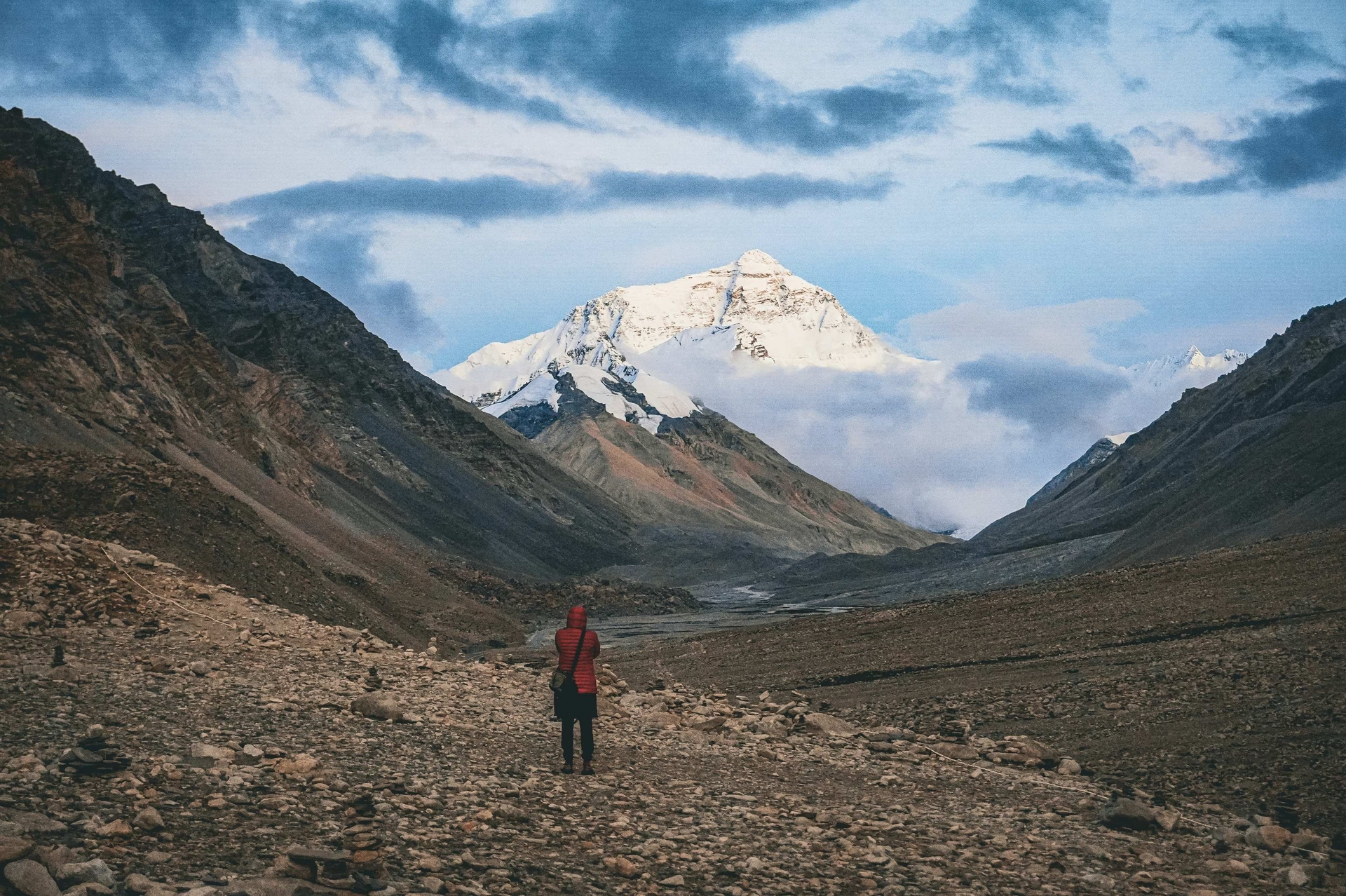
The Everest Base Camp Trek in September is a high-altitude trek through Nepal’s Khumbu region to Everest Base Camp at 5,364 meters, following the classic route from Lukla through Phakding, Namche Bazaar, Tengboche, Dingboche, Lobuche, and Gorak Shep.
September marks the transition from the southwest monsoon to the autumn trekking season, making weather, trail conditions, mountain visibility, and Lukla flight reliability important parts of trek planning. Early September can still bring rain, cloud, wet trails, and flight delays, while the second half of the month generally becomes drier, clearer, and more stable.
A typical 12- to 14-day Everest Base Camp trek in September includes acclimatization stops at Namche Bazaar and Dingboche, 5 to 7 hours of daily walking, and a demanding final ascent above 5,000 meters to Everest Base Camp and Kala Patthar. Trekkers need appropriate layering, waterproof footwear and rain protection, adequate hydration, altitude-aware pacing, travel insurance with high-altitude evacuation coverage, and a buffer for possible Lukla flight disruption.
This guide covers September weather and temperatures, trekking conditions, route and itinerary, acclimatization, difficulty, physical preparation, packing, accommodation, food, 2026 trekking costs, safety, altitude sickness, insurance, and guided Everest Base Camp trek options to help you plan the journey with realistic expectations.
What Is the Weather Like for the Everest Base Camp Trek in September?
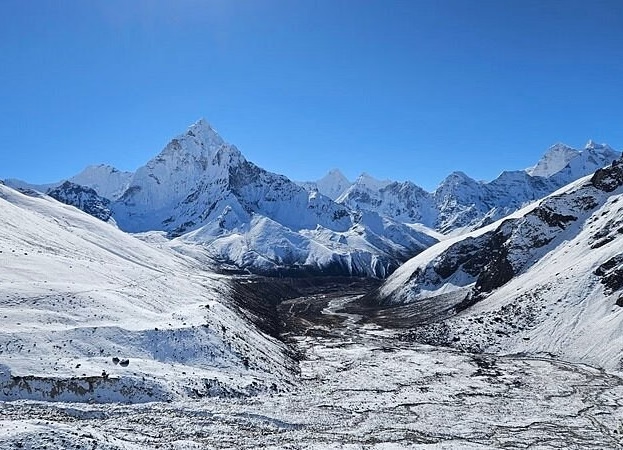
Everest Base Camp weather in September splits into two distinct halves: a humid, cloud-prone first two to three weeks carrying the tail end of the monsoon, and a drying, increasingly stable final week as the monsoon officially withdraws from Nepal. Afternoon cloud buildup is the dominant pattern through most of the month, while mornings stay clearer across almost every day, which is why trekking days are structured to finish walking before early afternoon.
The monsoon does not switch off on a fixed date. It fades gradually across the Khumbu, and in most years the valley is not fully clear of it until around the third week of September. A trek starting September 3 and one starting September 22 are, in practical terms, two different trips on the same route.
How Warm Is It at Lower and Higher Elevations of Everest Base Camp?
Daytime temperatures in September range from 15°C to 20°C at Lukla down to 5°C to 15°C at Everest Base Camp itself, with nighttime temperatures at Base Camp dropping to between -1°C and -5°C. Temperature falls with elevation at a fairly predictable rate: roughly 1°C of daytime warmth disappears for every 150 to 200 meters gained.
Location | Altitude | Daytime Temp (Sept) | Nighttime Temp (Sept) |
Lukla | 2,860 m | 15°C to 20°C | 5°C to 8°C |
Namche Bazaar | 3,440 m | 12°C to 15°C | 4°C to 6°C |
Dingboche | 4,410 m | 8°C to 12°C | -2°C to 2°C |
Everest Base Camp | 5,364 m | 5°C to 15°C | -1°C to -5°C |
What most first-time trekkers overlook: the daytime figure is not the number to pack for. A single overcast afternoon at Dingboche or Lobuche can feel 5°C colder than the table suggests once wind chill and humidity are added in, and indoor teahouse temperatures above 4,000 meters commonly sit near freezing after sunset, heated stove or not.
How Much Rain Can You Expect on Everest Base Camp in September?
Early September brings 50 to 70 millimeters of rainfall concentrated in short afternoon or evening showers, dropping toward negligible levels by the final week of the month. Rain in September is not the sustained, all-day monsoon downpour of July and August. It arrives as a defined afternoon or evening window, which is a completely different planning problem than the rain trekkers picture when they hear "monsoon tail."
Valley floors near Lukla and Phakding hold moisture, haze, and mist longer than the exposed ridgelines above Namche Bazaar, where afternoon wind typically clears cloud cover by evening. Stone steps and river crossings on the lower trail hold water and mud the longest and represent the highest slip risk of the entire route, a detail that matters more for footing than the total rainfall figure does.
How Clear Are the Mountain Views on Everest Base Camp in September?
Morning visibility is generally strong throughout September, while afternoon cloud buildup regularly obscures peaks in the first half of the month before clearing skies take over from roughly the third week onward. Once the monsoon rain stops, the atmosphere stays scrubbed of the dust and agricultural haze that builds up again by spring, so a clear late-September morning can rival or exceed the visibility of an October morning, before dust returns to the valley.
October is famous for consistency, but September at its best delivers an advantage October cannot match: saturated green hillsides paired with a scrubbed-clean sky, rather than the browner, drier landscape of peak autumn. A flexible schedule around Kala Patthar and Base Camp itself usually finds a 15- to 20-minute window of clear sky even on a partly clouded September afternoon.
How Does September Weather Affect Everest Base Camp Trekking Conditions?
September weather shifts the trail from muddy and flight-delay-prone in the first half of the month to dry, stable, and reliably flyable from roughly September 20 onward, without changing the route itself. The weather does not reroute the trek. It changes pacing, footing, and flight predictability.
Three practical effects follow. Guides schedule the day's main walking segment before 1 p.m. to stay ahead of afternoon cloud and rain. Lower trail sections between Lukla and Namche Bazaar move more cautiously in the first half of the month because of mud and slick stone. Lukla flights depart most reliably between 6 a.m. and 9 a.m. all month, since cloud tends to build as the day progresses.
What Is the Everest Base Camp Trek Route in September?
The classic Everest Base Camp route runs from Lukla through Phakding, Namche Bazaar, Tengboche, Dingboche, Lobuche, and Gorak Shep to Everest Base Camp at 5,364 meters, covering approximately 130 kilometers round trip, with an optional side trip to the Kala Patthar viewpoint. September conditions affect the pace at which trekkers move through the lower section of this route; they do not alter which villages the route passes through.
Which Villages and Landmarks Does the September Everest Base Camp Trek Pass Through?
The six main overnight stops are Phakding, Namche Bazaar, Tengboche, Dingboche, Lobuche, and Gorak Shep, each serving a distinct function in the trek's acclimatization plan. Namche Bazaar, the Sherpa capital at 3,440 meters, is the trail's commercial center, with bakeries, gear shops, a Saturday market, and the last dependable internet access before higher elevation.
Tengboche is home to the Khumbu's most significant Buddhist monastery, and trekkers who time their visit well may catch a monk's prayer ceremony. Dingboche sits in a wide, terraced glacial valley used as the second mandatory acclimatization stop. Gorak Shep, at 5,164 meters, is the final overnight settlement on the trail and the launch point for both Everest Base Camp and Kala Patthar.
September carries an added cultural layer for a Kathmandu departure. Indra Jatra, the chariot festival, fills Kathmandu's streets in the month's third week, and Teej, the women's festival, falls in mid-September. Neither event touches the Khumbu trail itself, but both raise domestic travel demand in the capital, so pre- and post-trek hotel bookings are worth confirming early if a September date overlaps them.
How Long Does the Everest Base Camp Trek Take in September?
A standard Everest Base Camp trek in September takes 12 to 14 days round trip from Lukla, including two mandatory acclimatization days at Namche Bazaar and Dingboche. Fourteen days is the realistic minimum once a recommended two-day flight-delay buffer is factored in, as the core trekking route itself requires a strict 12 days of movement. Sixteen-day itineraries exist for trekkers adding the Gokyo Lakes or Cho La Pass extension, or for anyone who prefers a slower, lower-risk ascent profile.
Day | Route Segment | Overnight Altitude |
1 | Kathmandu/Ramechhap to Lukla, trek to Phakding | 2,610 m |
2 | Phakding to Namche Bazaar | 3,440 m |
3 | Acclimatization hike from Namche Bazaar | 3,440 m |
4 | Namche Bazaar to Tengboche | 3,860 m |
5 | Tengboche to Dingboche | 4,410 m |
6 | Acclimatization hike from Dingboche | 4,410 m |
7 | Dingboche to Lobuche | 4,940 m |
8 | Lobuche to Gorak Shep, hike to Everest Base Camp | 5,164 m |
9 | Gorak Shep to Kala Patthar, descend to Pheriche | 4,240 m |
10–11 | Descend through Namche Bazaar to Lukla | 2,860 m |
12 | Fly Lukla to Kathmandu | 1,400 m |
Which Acclimatization Days Are Needed Along the Everest Route?
Two acclimatization days are mandatory on any safe Everest Base Camp itinerary: one at Namche Bazaar (3,440 m) and one at Dingboche (4,410 m), each built around the "climb high, sleep low" principle rather than a full day of rest. Neither day is a day off. Trekkers hike up to a higher point during daylight hours, such as the Everest View Hotel or Khumjung above Namche, or Nangkartshang Hill above Dingboche, then return to sleep at the lower elevation. This stimulates the red blood cell production that drives real acclimatization without exposing the body to a full night at the day's peak altitude.
A mistake we see repeatedly among first-time trekkers on tight schedules: shortening or skipping one of these two days to save a night's accommodation cost. It is the single most common reason a well-prepared, physically fit trekker develops symptoms severe enough to turn back below Everest Base Camp. Net elevation gain between Lukla and Kala Patthar runs close to 3,500 meters, spread across nine ascent days, which keeps the daily gain within the widely followed limit of 300 to 500 meters of sleeping altitude above 3,000 meters.
What Happens During the Final Trek to Everest Base Camp?
The final push runs from Lobuche to Gorak Shep in the morning, followed by a 6- to 7-hour round-trip walk across rocky glacial moraine to reach Everest Base Camp itself before returning to Gorak Shep for the night. This segment is not technical, there is no ice axe or rope work involved, but it is physically the longest single day of the standard itinerary, walked entirely above 5,000 meters with the Khumbu Icefall visible directly ahead and Nuptse, Lhotse, and Pumori closing in on three sides.
Base Camp itself looks markedly different depending on the calendar. In April and May it is a small city of expedition tents supporting Everest summit attempts. In September it is quiet, rock, ice, and prayer flags, with almost no expedition infrastructure, which surprises trekkers expecting the bustling spring scene from photographs. Most itineraries add a pre-dawn hike to Kala Patthar the next morning for the clearest unobstructed view of Everest's summit pyramid, since Base Camp itself does not directly face the mountain.
How Difficult Is the Everest Base Camp Trek in September?
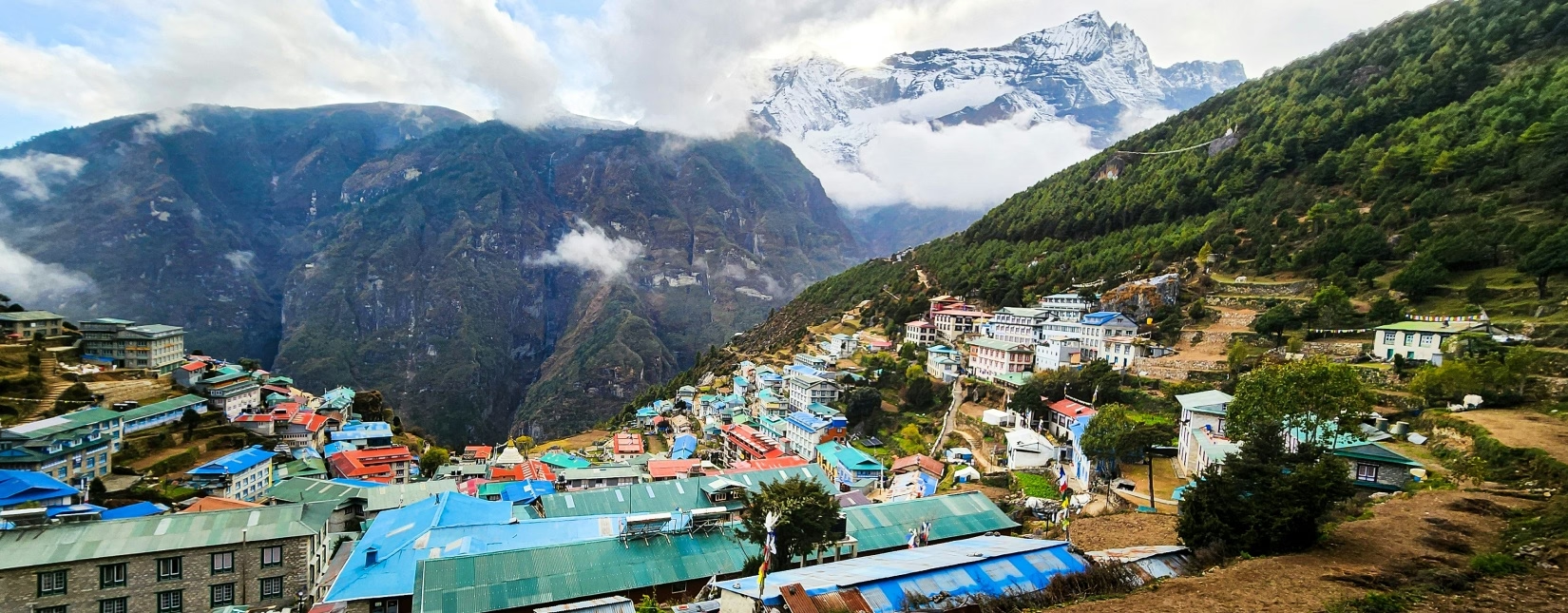
The Everest Base Camp trek is moderately challenging: no technical climbing skill is required, but it demands sustained cardiovascular endurance for 5 to 7 hours of daily walking across 10 to 12 consecutive trekking days at steadily increasing altitude. Difficulty on this route comes overwhelmingly from elevation and duration rather than terrain complexity. Trekkers in their teens and trekkers in their sixties complete it regularly with adequate preparation, and no ice axes, ropes, or climbing experience factor into a standard itinerary.
How Much Daily Walking Is Required on Everest Base Camp Trek?
Most trekkers walk 10 to 15 kilometers per day, logging 15,000 to 25,000 steps depending on terrain and elevation profile, with the longest descent days pushing above 25,000 steps. Shorter acclimatization days sit at the low end of that range, around 12,000 to 15,000 steps, since the goal is elevation gain and controlled exertion rather than distance. The longest days on the itinerary, the descents from Pheriche to Namche Bazaar and from Namche Bazaar to Lukla, run 6 to 7 hours and cover the most ground of the entire trip.
What Elevation Gains Should Trekkers Expect on Everest Base Camp?
Daily ascents typically add 400 to 550 meters of elevation. Because segments like Tengboche to Dingboche push slightly above the medically recommended 300 to 500-meter ceiling, mandatory acclimatization days are critical. The trek climbs from Lukla at 2,860 meters to Kala Patthar at roughly 5,545 meters, a net gain of about 3,500 meters spread deliberately across nine days rather than compressed into a rapid ascent.
One detail worth knowing before checking a map: two reputable sources can list different summit elevations for Kala Patthar, anywhere from 5,545 to 5,644 meters, because older trigonometric survey data and newer GPS measurement disagree slightly. This is a minor cartographic quirk, not a change in the actual climb, and it explains a discrepancy that confuses many first-time researchers of the route.
How Can You Prepare Physically for the September Everest Base Camp Trek?
Effective preparation combines 8 to 12 weeks of cardiovascular training with a loaded daypack, stair climbing or hill repeats, and at least one multi-day practice hike carrying trek-weight gear. Aerobic capacity matters more than raw leg strength for this specific trek. Trekkers who train exclusively for strength while skipping cardio consistently struggle on the trail's long, sustained uphill stretches, where the limiting factor is oxygen delivery, not muscle power.
Building hiking-specific fitness with a weighted pack close to what you will actually carry on the trail translates directly into better pacing at altitude, where every kilogram feels heavier than it did at sea level. Runners and cyclists with strong aerobic bases generally adapt faster to the altitude component than gym-focused strength athletes with an equivalent fitness level. A structured Everest Base Camp training plan helps close that gap before departure.
What Challenges Can Rain and Changing Weather Create on Everest Base Camp?
Rain and shifting weather in September create three specific challenges: muddy, slippery footing on the lower trail, unpredictable Lukla flight delays, and reduced afternoon visibility that can shorten the usable trekking window. Stone steps near river crossings hold moisture longest and present the highest slip risk on the entire route, more so than the mud itself.
Guides adjust departure times around this pattern rather than following a fixed daily schedule, starting earlier when morning skies look clear and building in flexibility for afternoon showers. Trekkers flying in and out of Lukla in the first half of September should build a minimum two-day buffer into both ends of the itinerary specifically to absorb flight delays without risking a missed international connection.
What Should You Pack for the Everest Base Camp Trek in September?
September packing requires a three-zone layering system built around warm, humid conditions below Namche Bazaar, mild and variable weather through the mid-route villages, and cold, sharp day-to-night temperature swings from Dingboche upward. The most common packing mistake in September specifically is under-packing insulation, because daytime warmth at lower elevation feels deceptively mild and lulls trekkers into leaving heavier gear at home.
Which Clothing Layers Are Essential for September Everest Base Camp Trek?
A three-layer system, a moisture-wicking base layer, an insulating mid layer such as fleece or light down, and a waterproof-breathable outer shell, covers the full temperature range encountered on the September route. Below Namche Bazaar, a light long-sleeve shirt and quick-dry trekking trousers handle most daytime walking. Above Dingboche, add a down jacket rated to at least -10°C and thermal base layers for camp evenings, since teahouse rooms above 4,000 meters commonly sit near freezing after dark regardless of the daytime reading.
What Footwear Works Best on Wet and Rocky Trails of Everest Base Camp?
Waterproof, ankle-supporting trekking boots with an aggressive tread outsole handle the mixed mud, wet stone, and loose scree found on the September trail more reliably than trail runners or low-cut hiking shoes. Boots need a minimum of 80 to 100 kilometers of break-in before departure; new boots straight out of the box are a leading cause of blister-related setbacks on multi-day ascents. Gaiters keep mud and grit out of boot tops on the lower, wetter sections and extend boot life, while a lightweight pair of camp shoes gives feet a genuine break at each teahouse in the evening.
Which Rain Protection and Trekking Gear Should You Bring for Everest Base Camp?
Essential rain and trail gear for September includes a waterproof jacket, a pack cover or dry-bag pack liner, gaiters, trekking poles, and a headlamp for early starts before sunrise. Rain protection matters most through roughly the first half of the month, when afternoon showers remain a near-daily possibility, and stays worth carrying as a lightweight precaution through the back half even once the trail dries out, since isolated showers still occur in otherwise stable weather.
Trekking poles reduce knee strain meaningfully on the trek's steep descents, particularly on the wet, uneven stone steps that define the lower trail in September, and are worth packing even for trekkers who rarely use them at home.
What Personal Items Are Useful at High Altitude?
High-altitude essentials include a four-season sleeping bag rated to at least -15°C, water purification tablets or a filter, high-altitude-rated sun protection, a basic first-aid kit with prescribed altitude sickness medication, and a portable power bank for charging above Namche Bazaar. A passport with a minimum of six months' remaining validity, passport-sized photographs, and both required EBC trekking permits round out the essential document list, and a park ranger checks permits at the Monjo checkpoint, so keep them accessible rather than buried at the bottom of a pack.
A basic altimeter watch or a smartphone with an offline GPS altitude app is a genuinely useful, low-cost tool for tracking daily elevation gain against the 300- to 500-meter guideline above 3,000 meters, turning an abstract safety rule into a number you can check each evening.
How Much Does the Everest Base Camp Trek Cost in September?
A standard 12- to 14-day guided Everest Base Camp trek in September costs between USD 1,250 and USD 2,500 per person through a reputable Nepali agency, with independent budget treks starting near USD 950 and luxury or fully customized packages reaching USD 3,000 to USD 5,500. September's shoulder-season status keeps guide, porter, and teahouse rates at standard levels, without the premium pricing that arrives once the October surge begins.
Cost Category | 2026 Budget Range (USD) |
Permits (Sagarmatha National Park + Khumbu municipal fee) | $45–$55 |
Kathmandu–Lukla flights, round trip | $430–$510 |
Teahouse accommodation (12–14 nights) | $200–$500 |
Food on the trail | $350–$490 |
Guide fee ($25–$35/day) | $350–$490 |
Porter fee ($18–$25/day) | $250–$350 |
Travel insurance with high-altitude evacuation cover | $80–$150 |
Nepal visa (30-day) | $50 |
Tips for guide and porter | $120–$200 |
What Is Usually Included in the Everest Base Camp Trek Package?
A standard package typically covers round-trip Lukla flights, a licensed English-speaking guide, porter support, twin-sharing teahouse accommodation, breakfast and dinner on the trail, all required permits, and Kathmandu airport transfers. Reputable agencies also fold staff costs, meaning the guide's and porter's own meals, lodging, and insurance, into the quoted price, which matters both ethically and practically: operators who exclude porter welfare from their contracts create real safety and fairness gaps on the mountain.
What most packages leave out is worth naming explicitly: Lukla flights are sometimes billed separately due to airline ticketing rules even when an agency arranges the booking, and travel insurance, personal gear, trail lunches, hot showers, and Wi-Fi access almost never appear in the base price.
Which Extra Costs Should Trekkers Budget For Everest Base Camp?
Beyond the core package, budget USD 80 to USD 150 for travel insurance with high-altitude evacuation cover, USD 120 to USD 200 for guide and porter tips, and USD 100 to USD 200 for incidental trail expenses such as hot showers, device charging, and snacks.
These incidental costs rise sharply with elevation, since every item above Namche Bazaar travels in by porter or yak. A hot shower running USD 2 to USD 3 in Namche Bazaar can cost USD 8 to USD 10 near Gorak Shep, and a liter of bottled water follows the same curve, USD 2 to USD 4 at Namche versus USD 4 to USD 7 near Base Camp.
A helicopter evacuation from altitude, if one becomes necessary, costs USD 3,000 to USD 5,000 without insurance. Skipping travel insurance to save USD 100 is, without exaggeration, the single largest financial risk anywhere in the Everest Base Camp budget.
How Can You Plan a September Everest Base Camp Trek Within Your Budget?
The highest-impact budget strategies are booking directly with a Kathmandu-registered agency rather than an international platform, eating dal bhat on the trail instead of Western menu items, joining a small group departure to split guide costs, and renting gear in Kathmandu's Thamel district instead of buying it new. International booking platforms typically add a 20 to 30 percent commission on top of the local agency rate without adding any trail-level value, a markup that direct booking removes entirely.
Dal bhat, Nepal's staple rice, lentil, and vegetable set meal with unlimited refills, offers the best calorie-to-cost ratio on the entire trail and is what most guides and porters eat by preference, not necessity. For independent trekkers or those paying out-of-pocket for trail lunches, choosing dal bhat over imported menu items like pizza or pasta saves USD 4 to USD 8 per meal.
What Are the Accommodation and Food Options on the September Everest Base Camp Trek?
Accommodation and food on the Everest Base Camp trail run through family-operated teahouses that offer a private room and a set trail menu, with total daily accommodation and food costs ranging from USD 25 to USD 35 in September. September's lower trekker volume compared with October and November means better access to rooms and shorter waits for meals, a real, tangible benefit of shoulder-season timing beyond the weather itself.
What Are Tea Houses Like Along the Everest Base Camp Route?
Teahouses are simple, family-run lodges offering a twin-share room with thin walls and a shared bathroom at lower altitudes, moving to basic bucket-shower or no-shower facilities above Dingboche, all centered around a shared dining room heated by a single stove.
Room prices actually decrease at higher altitude, from roughly USD 10 to USD 30 in the Phakding to Namche Bazaar zone down to USD 5 to USD 15 above Lobuche, because owners subsidize the room to attract the meal business that carries the real markup.
The unwritten rule across nearly every teahouse on the route is "eat where you sleep." Trekkers who take a cheap room but eat dinner elsewhere sometimes run into real friction with lodge owners, since meal revenue is what actually covers the subsidized room rate, not a minor courtesy.
What Food and Drinks Are Available During the Everest Base Camp Trek?
Trail menus offer dal bhat, fried rice, noodles, soups, pasta, pizza, and boiled eggs, priced from USD 4 to USD 15 per dish depending on altitude, with prices rising 15 to 25 percent for every 500 meters gained. A single Coke bottle carried by porter or yak from Namche Bazaar to Gorak Shep accumulates USD 1.50 to USD 2.50 in transport cost alone before the teahouse adds its own margin, which explains the price jump far better than simple remoteness does.
Food on the EBC trail becomes especially important once appetite changes: September's cooler, more humid air at lower elevations increases appetite loss less than the dry cold of winter, but appetite still drops with altitude for nearly every trekker by the time they reach Dingboche and above.
Guides generally recommend eating on a schedule rather than waiting for hunger cues at altitude, since appetite suppression at 4,000-plus meters does not reflect the body's actual caloric need.
How Can You Stay Hydrated at High Altitude of Everest Base Camp?
Drink 3 to 4 liters of water daily throughout the trek, since dry mountain air and increased respiration rate at altitude cause faster fluid loss than trekkers typically notice. Dehydration thickens the blood and directly impairs the body's ability to deliver oxygen to tissue already starved for it by the thin air, compounding rather than merely adding to altitude stress.
Herbal tea, lemon tea, and hot water with electrolytes count toward the daily total and are genuinely useful for warming up on cold mornings, while caffeine and alcohol work against hydration and are worth minimizing above Namche Bazaar specifically. A refillable bottle paired with purification tablets or a filter cuts both plastic waste and the escalating cost of bottled water at altitude, USD 2 to USD 4 near Namche rising to USD 4 to USD 7 near Gorak Shep.
How Can You Stay Safe and Healthy During the September Everest Base Camp Trek?
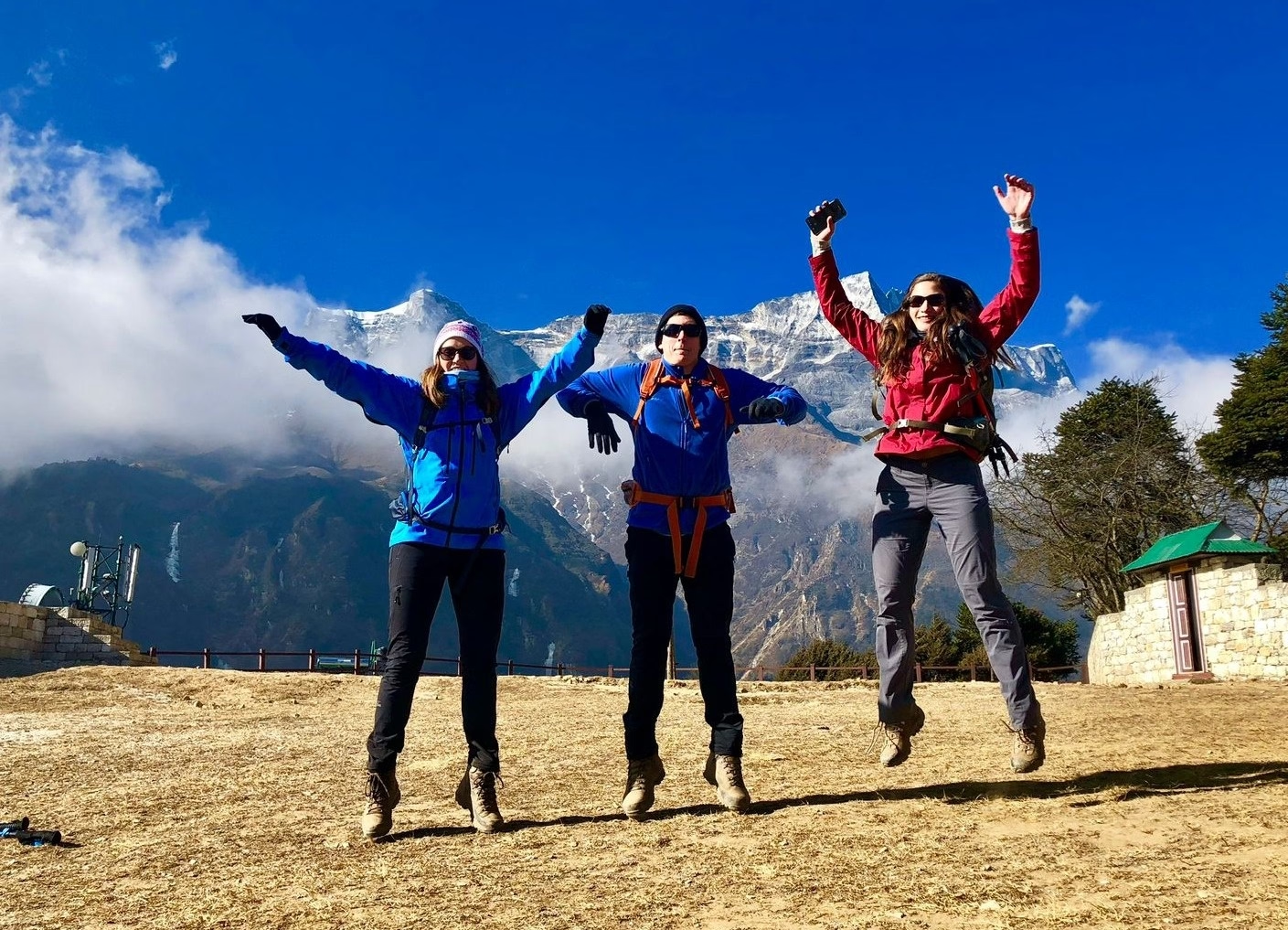
Safety on the September Everest Base Camp trek depends on a paced acclimatization schedule, consistent hydration, flexible daily timing around afternoon weather, and comprehensive travel insurance covering high-altitude evacuation. A properly built 12- to 14-day itinerary with two rest days remains the single strongest defense against the trek's dominant risk, altitude illness, ahead of fitness level, age, or prior trekking experience.
How Can You Reduce the Risk of Altitude Sickness?
Reduce altitude sickness risk by ascending no more than 300 to 500 meters in sleeping altitude per day above 3,000 meters, drinking 3 to 4 liters of water daily, and never continuing to ascend once symptoms appear.
A 2021 Xtreme Everest physiology study in Experimental Physiology, which followed 332 lowland trekkers on an identical ascent profile to 5,300 meters, recorded some degree of Acute Mountain Sickness in 73.5 percent of participants, split between mild and moderate-to-severe cases, with no meaningful difference by age, gender, or prior AMS history.
Early symptoms of altitude sickness, headache, nausea, fatigue, and dizziness, typically appear within 6 to 12 hours of arriving at a new altitude and usually resolve within 12 to 48 hours with rest and hydration at the same elevation. Symptoms that worsen instead of improving, or that include confusion, difficulty walking, or breathlessness at rest, signal High Altitude Cerebral Edema or High Altitude Pulmonary Edema, both of which require immediate descent rather than continued observation.
A randomized, double-blind dosing trial of trekkers headed to Everest Base Camp found AMS incidence of 55.3% on a reduced acetazolamide dose (62.5 mg twice daily) versus 60.0% on the standard dose (125 mg twice daily), suggesting acetazolamide meaningfully lowers AMS risk even at a lower dose, though it should be taken only on a doctor's guidance given its sulfonamide-family side effects.
What Should You Do If September Weather Disrupts the Everest Base Camp Trek?
If September weather delays a Lukla flight or forces a change in trail conditions, build a minimum two-day buffer into the itinerary, keep essential medication and a change of clothes in a carry-on daypack rather than checked luggage, and defer to the guide's real-time read of morning conditions over a fixed schedule.
Flight delays in Nepal cluster in the first half of September specifically, tied to the lingering monsoon's cloud pattern, and cancellation rates run measurably lower than during the peak of the July-August monsoon even in the wettest week of September.
Morning departures between 6 a.m. and 9 a.m. depart most reliably all month, since cloud typically builds through the day rather than clearing. A trekker delayed at Lukla should expect the possibility of a full extra day at the airport before a flight window opens, which is precisely why the buffer matters more than the base itinerary length.
How Can Travel Insurance Protect Everest Base Camp Trekkers?
Comprehensive travel insurance covering high-altitude trekking above 5,000 meters and helicopter evacuation is the single most important financial and safety safeguard for the Everest Base Camp trek, typically costing USD 80 to USD 150 for the full trip. A standard travel policy purchased for general international travel frequently excludes high-altitude trekking entirely, a gap many first-time trekkers only discover after an incident, when it is far too late to correct.
Confirm three specific details before departure: the policy's stated altitude ceiling covers 5,644 meters, the height of Kala Patthar; helicopter evacuation is included rather than offered as a costly add-on; and the insurer accepts direct payment to the helicopter operator rather than requiring the trekker to pay out of pocket and seek reimbursement afterward, since a cash-upfront requirement during a medical emergency at altitude is a genuinely dangerous complication to discover mid-evacuation.
How Can You Plan Your Everest Base Camp Trek in September With Heaven Himalaya?
Heaven Himalaya is a Kathmandu-based trekking operator that arranges guided Everest Base Camp itineraries with licensed guides, porter support, permit processing, and full Kathmandu-to-Kathmandu logistics, and has organized Himalayan treks and expeditions for more than a decade.
The company's core strength for a September departure specifically is timing, its ground team tracks the monsoon-to-autumn transition on the trail in real time and adjusts departure dates, teahouse bookings, and Lukla flight scheduling around the specific week a group is traveling rather than applying a single generic autumn itinerary to every date on the calendar.
Can Heaven Himalaya Arrange a September Everest Base Camp Trek?
Heaven Himalaya arranges Everest Base Camp treks year-round, including customized September departures, and typically recommends starting after the first half of the month once trail conditions dry out and Lukla flight reliability improves.
A typical Everest Base Camp trekking package includes airport pickup on arrival in Kathmandu, hotel accommodation before and after the trek, a licensed guide, porter support, all required permits, and a realistic acclimatization schedule built around the group's fitness level rather than a fixed template.
Trekkers deciding between an early- or late-September start gain the most from a direct conversation with the operator's ground team, who can confirm current Lukla flight patterns, teahouse availability, and trail conditions closer to the actual travel date, along with guidance on combining the standard route with the Gokyo Lakes or Cho La Pass extension for trekkers with extra days available.
What Are the Key Takeaways About the Everest Base Camp Trek in September?
The Everest Base Camp Trek in September rewards trekkers who target the back half of the month over the front half. Dry trails and quieter teahouses arrive after roughly September 20; however, trekkers should prepare for the Ramechhap flight diversion that the Civil Aviation Authority of Nepal (CAAN) has used in recent autumn seasons to route Lukla-bound traffic through Manthali Airport in Ramechhap, confirm the exact 2026 diversion dates on CAAN's official site close to departure, since the window shifts from year to year.
The 12- to 14-day standard itinerary and its two mandatory acclimatization days at Namche Bazaar and Dingboche stay constant regardless of the exact start date, and remain the strongest safeguard against the trek's dominant risk.
Five facts are worth carrying into any final booking decision. Early September still carries real monsoon rain and Lukla flight delay risk, while late September delivers some of the clearest, greenest conditions of the entire trekking year. Daytime temperatures stay manageable across the route even as nights turn genuinely cold from Dingboche upward.
A mid-range guided package runs USD 1,250 to USD 2,500 for the in-Nepal portion, with permits, guide, and porter fees remaining fixed regardless of exact travel dates within the month. Roughly three-quarters of trekkers experience some degree of altitude sickness regardless of fitness level, which is precisely why the built-in rest days are non-negotiable rather than optional.
Comprehensive travel insurance with high-altitude evacuation cover is the cheapest safeguard in the entire trip budget, and the one most frequently skipped by trekkers who never expected to need it.