

Annapurna Base Camp Trek for Beginners: Realistic Guide (2026)

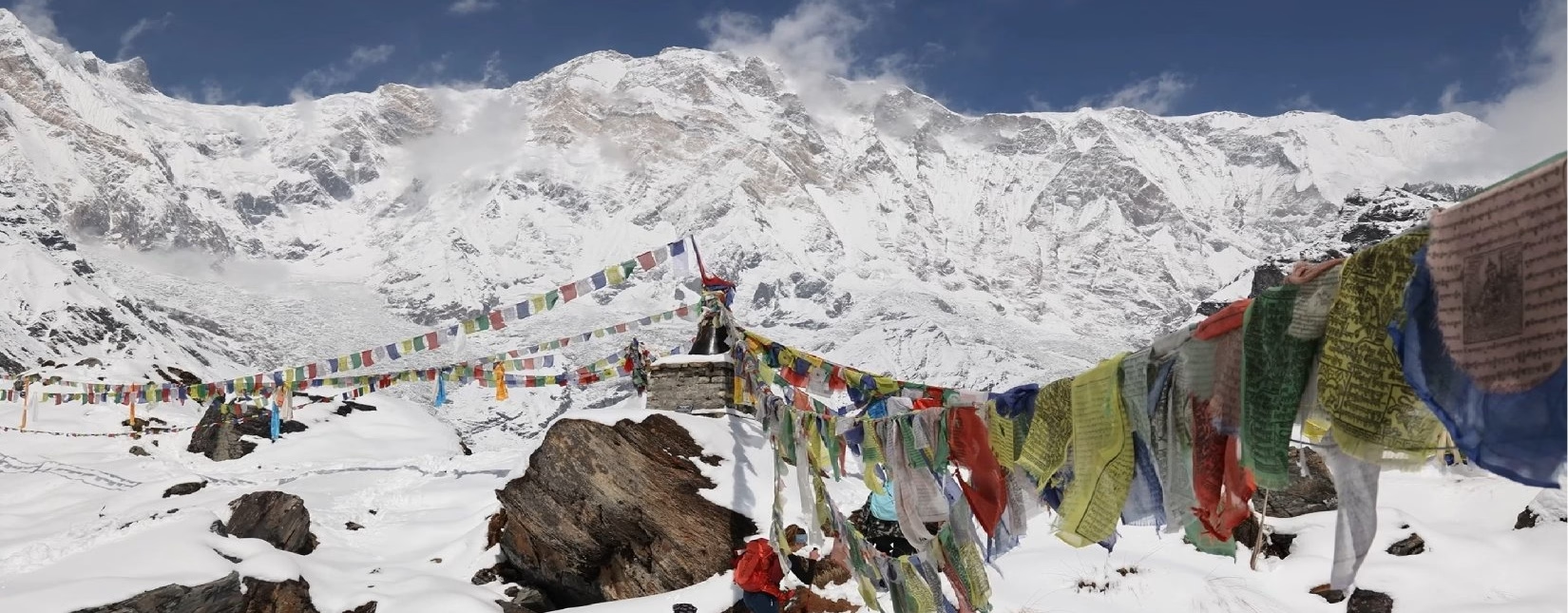
The Annapurna Base Camp trek for beginners is a moderate Himalayan trekking adventure in Nepal's Annapurna Sanctuary, reaching 4,130 m (13,550 ft) amid spectacular views of Annapurna I, Annapurna South, and Machhapuchhre. This teahouse-based journey follows scenic mountain trails, traditional Gurung villages, rhododendron forests, and stone staircases, making it an achievable destination for first-time trekkers with proper physical preparation.
Beginners can complete the Annapurna Base Camp trek without previous mountaineering experience by building fitness, following a gradual itinerary, and understanding altitude acclimatization. From trekking difficulty, training requirements, and the best seasons to itineraries, accommodation, costs, permits, essential gear, and altitude sickness prevention, this guide covers everything you need to plan a safe and rewarding trek with confidence.
What Is the Annapurna Base Camp Trek and Where Does It Take You?
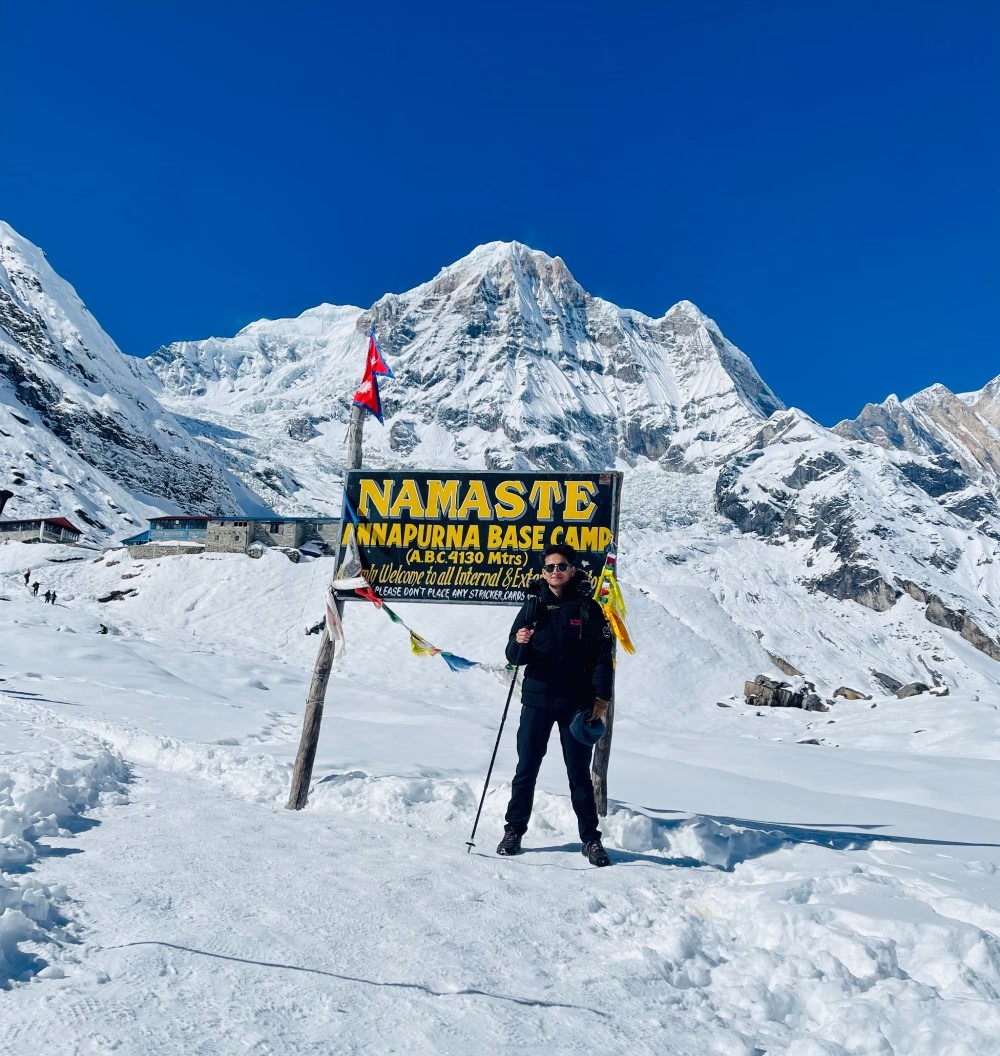
The Annapurna Base Camp (ABC) trek is a teahouse-based Himalayan trek in Nepal's Annapurna Conservation Area. It climbs from the subtropical Modi Khola valley to Annapurna Base Camp at 4,130 m, a glacial basin ringed by peaks above 6,000 m, in 10 trekking days.
The Annapurna Conservation Area (ACAP) was established in 1986 and covers 7,629 km², making it Nepal's largest protected area. The National Trust for Nature Conservation manages it. Annapurna I (8,091 m) is the world's 10th-highest mountain, and a French expedition led by Maurice Herzog made the first ascent of any 8,000 m peak here in June 1950.
ABC sits in the Annapurna Sanctuary, an inner basin enclosed by Annapurna I, Annapurna South (7,219 m), Annapurna III (7,555 m), Gangapurna (7,454 m), Tarke Kang (7,193 m), Hiunchuli (6,441 m), and Machhapuchhre (6,993 m). Machhapuchhre, called Fishtail for its twin summit, has never been climbed. A 1957 British team stopped about 50 m short, and Nepal has kept the peak closed since.
Where Is Annapurna Base Camp Located?
Annapurna Base Camp is located in the Annapurna Sanctuary of Kaski district, Gandaki Province, north-central Nepal, about 37 km north-northwest of Pokhara in a straight line. The Ghorepani–Poon Hill section of the route lies in neighboring Myagdi district.
Road access starts in Pokhara, 200 km west of Kathmandu. Pokhara to the Nayapul trailhead takes about 1 hour by car. Kathmandu to Pokhara takes 6–7 hours by road or roughly 25 minutes by flight, and flights lose seats to weather delays in monsoon and winter.
How High Is Annapurna Base Camp?
Annapurna Base Camp sits at 4,130 m (13,550 ft) above sea level. Machhapuchhre Base Camp (MBC) sits lower at 3,700 m, and Poon Hill, the route's famous sunrise viewpoint, reaches 3,210 m.
ABC sits 3,961 m below the summit of Annapurna I and stands 1,234 m (23%) lower than Everest Base Camp at 5,364 m. Inspired oxygen pressure drops fast as you climb: at 3,000 m it is roughly 69% of the sea-level value, and by the time you reach "very high elevation" (3,500–5,500 m), a band the ABC trail sits in for most of its final days, your body is working with noticeably less oxygen per breath, per the CDC's 2026 Yellow Book chapter on high-altitude travel.
How Long Does the Annapurna Base Camp Trek Take?
The Annapurna Base Camp trek takes 10 trekking days from Nayapul and back, or 15 days door to door including Kathmandu and Pokhara. Shorter versions run 7–11 days, and beginners get the best results from 9 or more trekking days.
Compressed itineraries save time but squeeze acclimatization. A 7-day version often skips Poon Hill and drives deep into the trail, which removes the early altitude exposure that prepares your body for 4,000 m. The 15-day format spreads the climb across Ghorepani, Tadapani, Chhomrong, Dovan, and Deurali, so your body adapts in stages.
Travelers with less time have two gentler options. The Annapurna Family Hike (9 days) and the Annapurna Panorama Trek (10 days) keep views of the same massif at lower altitudes.
Can Beginners Complete the Annapurna Base Camp Trek?
Yes. Fit beginners complete the Annapurna Base Camp trek every season without technical skills. Success depends on 8–12 weeks of training, a gradual ascent, a light daypack, and the discipline to stop climbing when altitude symptoms appear.
Three features make ABC beginner-friendly: a stone-built, well-marked trail, teahouses every few hours, and guides who walk this route dozens of times a year and spot trouble early.
Three groups must wait or seek medical clearance first: people with unmanaged heart or lung conditions, people with chronic knee or hip pain, and people who cannot yet walk 5 hours without stopping. A pre-trip check with a travel physician takes one appointment and answers the question for good.
How Difficult Is the Annapurna Base Camp Trek for First-Time Trekkers?
The ABC trek rates moderate: 4–7 hours of walking per day, 9–12 km daily, and a maximum altitude of 4,130 m. Stone stairs cause most beginner fatigue, with altitude becoming the deciding factor only in the final 2 days.
Four days test beginners hardest:
Day 5 (Tikhedhunga to Ghorepani): Sleeping altitude jumps 1,310 m, and the climb through Ulleri follows more than 3,000 stone steps.
Day 7 (Tadapani to Chhomrong): The trail drops to the Kimrong Khola, then climbs a long staircase back up.
Day 10 (Deurali to ABC): Sleeping altitude rises 930 m, and the air holds 60% of sea-level oxygen.
Day 11 (ABC to Bamboo): The descent loses 1,820 m in one day, which hammers knees and quadriceps.
Compare the difficulty with other Nepal treks. ABC is harder than Poon Hill (3,210 m) and clearly easier than Everest Base Camp (5,364 m) or the Annapurna Circuit, which crosses Thorong La at 5,416 m. For a first Himalayan trek, ABC is the standard choice.
What Level of Fitness Do Beginners Need for ABC Trek?
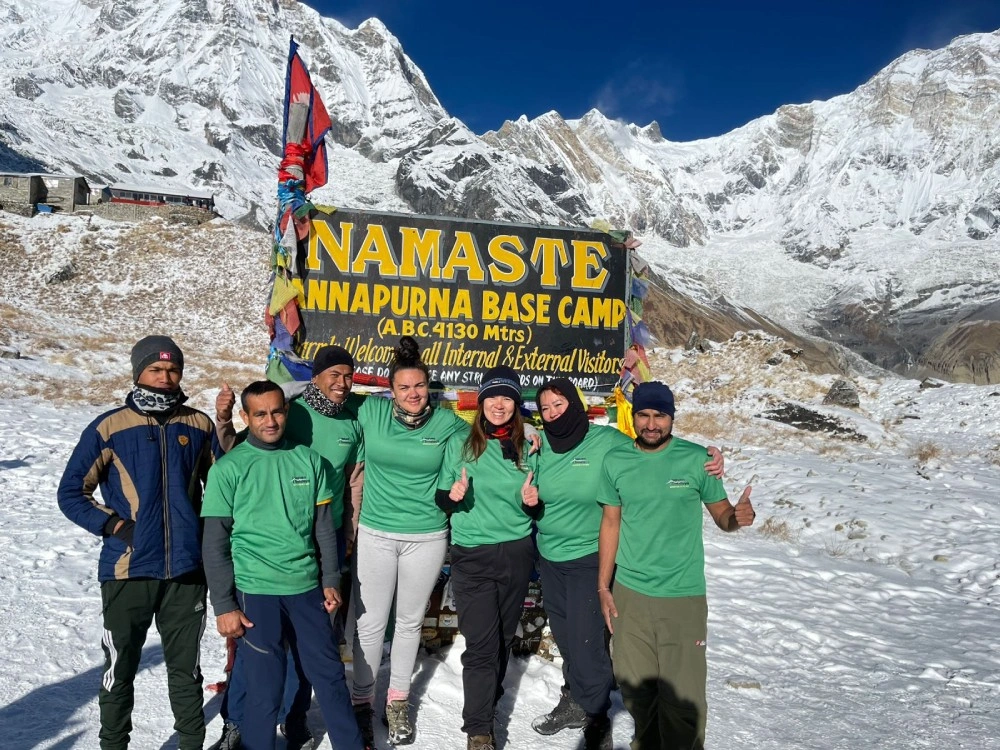
Beginners need cardiovascular fitness for 6 hours of continuous walking, leg strength for 1,000+ consecutive stone steps, and the recovery capacity to repeat both on 8 consecutive days. A practical benchmark is a 5–6 hour hike with a 6–8 kg pack, followed by a comfortable walk the next morning.
Four fitness markers matter most:
Endurance: Walking 5–6 hours at conversational pace on hilly ground.
Leg strength: Climbing 40 minutes of stairs without stopping.
Descending control: Walking downhill for 90 minutes without knee pain.
Recovery: Hiking a second long day after a long first day.
Fitness does not protect against altitude illness. Wilderness medicine literature reports that sea-level fitness confers no protection against altitude illness. Fitness improves comfort and recovery. Pacing and acclimatization prevent sickness.
Do You Need Previous Trekking Experience for Annapurna Base Camp?
No. Previous trekking experience is not required for Annapurna Base Camp, because the route follows marked trails with teahouses, and your guide handles navigation, permits, and lodging. Prior day-hiking in broken-in boots helps.
Three skills matter more than experience. First, walk with trekking poles on stairs, because poles cut knee load on steep descents. Second, manage layers: add a jacket at every rest stop and remove it 10 minutes after you restart. Third, treat hot spots on your feet at the first sting, not after the blister forms.
Poles aren't just for balance on the steep Ulleri and Chomrong stone staircases, a 2013 Journal of Orthopaedic Research gait-modification study using in-vivo knee-implant sensors found that wide, long-pole technique cut medial knee contact force by up to 34% during descent.
The novelty for first-timers is sleeping above 3,000 m. Test your response with one overnight hike above 2,000 m before you fly if your region allows it.
Common mistakes we see: wearing new boots, carrying 15+ kg, skipping poles until the knees complain, and arriving in Kathmandu with no training at all.
What Are the Biggest Challenges Beginners Face on the ABC Trek?
The 6 biggest challenges beginners face on the ABC trek are stone-step fatigue, altitude symptoms above 3,000 m, cold nights, knee strain on descents, stomach upsets, and cloud-covered afternoons. Each has a fix, and most fixes cost nothing.
Stone-step fatigue: Short, steady steps beat long lunges. Rest every 45–60 minutes and keep your pace slow enough to hold a conversation.
Altitude symptoms: Headache, nausea, and poor sleep appear above 3,000 m. Hydrate with 3–4 L daily, skip alcohol, and report symptoms to your guide the same evening.
Cold nights: Temperatures at MBC and ABC typically drop to −5 to −10 °C in peak seasons. Pack a −10 °C sleeping bag and a down jacket, and wear a dry base layer to bed.
Knee strain on descents: Poles, shorter steps, and a firm boot reduce impact. Descend Day 11 slowly, because the downhill is longer than any climb.
Stomach upsets: Eat freshly cooked vegetarian meals above Chhomrong, since most food travels up the trail without refrigeration. Purify all water.
Cloud-covered afternoons: Peaks clear at dawn and cloud over by mid-morning. Wake for sunrise at ABC, even at −10 °C, because the view disappears by 10 a.m.
These six issues cause most beginner setbacks on the trail. Our breakdown of common ABC trek mistakes covers the fixes in more depth.
What Is the Best Time for Beginners to Trek to Annapurna Base Camp?
The best time for beginners to trek to Annapurna Base Camp is autumn (late September to November) and spring (March to May). Both seasons deliver stable weather, clear mornings, and open trails, which lowers risk for first-timers.
The table below compares the 4 Nepal seasons for the ABC trail, including typical night lows at ABC and a beginner rating. Night lows are typical ranges, and storms push them lower.
Season | Months | Trail and views | Typical night low at ABC | Beginner rating |
Autumn | Late Sep–Nov | Dry trail, sharpest views | −5 to −10 °C | Best |
Spring | Mar–May | Rhododendron bloom, warmer days, afternoon haze | −5 to −10 °C | Excellent |
Winter | Dec–Feb | Snow on stairs, avalanche exposure, quiet lodges | −15 °C or lower | Experienced only |
Monsoon | Jun–Aug | Leeches, landslides, cloud-covered peaks | 0 to 5 °C | Not recommended |
Autumn and spring share the top two ratings, so your choice depends on what you want to see. Pick autumn for mountain clarity, and pick spring for flowers and warmer lower valleys. For a full month-by-month breakdown, see our guide to the best time for ABC trek.
Is Spring a Good Season for the Annapurna Base Camp Trek?
Yes. Spring (March to May) is a good season for the ABC trek: daytime temperatures are warm, rhododendrons bloom between Ghorepani and Chhomrong, and the Annapurna region holds nine rhododendron types that color the forest red, pink, and white.
Bloom timing varies by altitude. Lower forests around Tikhedhunga and Ulleri flower first in March, and the 2,500–3,000 m belt peaks in April. Early March still carries snow in the avalanche-prone stretch between Deurali and MBC, so ask your guide about conditions that week.
Spring has one drawback that guidebooks rarely state. Pre-monsoon haze builds from late April, and distant peaks soften by afternoon. Dawn views at ABC and Poon Hill stay crisp, but midday photos lose contrast. April also brings the heaviest trail traffic, so lodge beds above Chhomrong fill early.
Is Autumn the Best Season for First-Time ABC Trekkers?
Yes. Autumn (late September to November) is the best season for first-time ABC trekkers: post-monsoon air is washed clear, rainfall is low, trails are dry, and sunrise views of Annapurna I and Machhapuchhre are the sharpest of the year.
Mid-October to mid-November is the sweet spot. Early autumn still carries residual landslide patches and a few leeches below Ulleri, and late November nights at ABC fall well below −10 °C. Dashain and Tihar, Nepal's two largest festivals, land in October–November and fill buses and flights, so book transport and lodging early.
Can Beginners Do the ABC Trek During Winter or Monsoon?
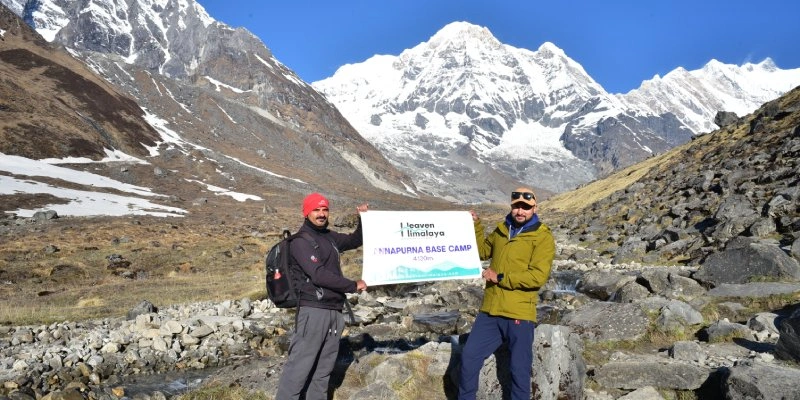
Beginners can trek ABC in winter (December to February) or monsoon (June to August), but both seasons add risk. Winter brings avalanche exposure and nights near −15 °C, and monsoon brings landslides, leeches, and peaks hidden behind cloud.
Heaven Himalaya's route notes identify the slopes between Deurali and MBC as landslide-prone in the rainy season and avalanche-prone in winter. Pokhara receives more than 3,000 mm of rain a year, most of it from June to September. Landslides regularly disrupt roads toward Nayapul, and weather delays flights from Kathmandu.
Winter suits one type of beginner: someone from a cold climate who already handles snow, microspikes, and −15 °C. Lodges above Chhomrong close or run limited menus. Monsoon suits nobody who wants views. When your dates force a choice, pick late February or early March for the lowest-risk shoulder window.
What Is the Annapurna Base Camp Trek Itinerary for Beginners?
A beginner itinerary for the ABC trek follows 4 phases: 2 days of arrival and preparation in Kathmandu, 1 drive to Pokhara, 10 trekking days with a Poon Hill sunrise, and 2 days of return transit. Heaven Himalaya's standard route totals 15 days.
The 15-day format builds acclimatization into the route. Early nights at 2,850 m and 3,200 m prepare your body for 4,130 m, and the Poon Hill morning gives a first taste of 3,200 m before you descend again.
What Is the Recommended 15-Day ABC Trek Itinerary?
The recommended 15-day ABC itinerary runs Kathmandu, Pokhara, Nayapul, Tikhedhunga, Ghorepani, Poon Hill, Tadapani, Chhomrong, Dovan, Deurali, MBC, ABC, Bamboo, Jhinu Danda, and back to Kathmandu. Maximum sleeping altitude is 4,130 m on Day 10.
The table lists each day's overnight stop, sleeping altitude, change from the previous night, and walking time. Altitude changes are calculated from the previous night's stop, and walking times follow Heaven Himalaya's published route.
Day | Route | Sleeping altitude | Change vs. previous night | Walk or drive |
1 | Arrive Kathmandu | 1,400 m | – | Airport transfer |
2 | Kathmandu sightseeing and gear check | 1,400 m | 0 | Guided tour |
3 | Drive to Pokhara | 822 m | −578 m | 6–7 h drive |
4 | Drive to Nayapul, trek to Tikhedhunga | 1,540 m | +718 m | 4–5 h walk |
5 | Trek to Ghorepani | 2,850 m | +1,310 m | 6–7 h walk |
6 | Poon Hill sunrise, trek to Tadapani | 2,630 m | −220 m | 6–7 h walk |
7 | Trek to Chhomrong | 2,170 m | −460 m | 5–6 h walk |
8 | Trek to Dovan via Sinuwa and Bamboo | 2,600 m | +430 m | 6–7 h walk |
9 | Trek to Deurali | 3,200 m | +600 m | 5–6 h walk |
10 | Trek to ABC via MBC | 4,130 m | +930 m | 6–7 h walk |
11 | Sunrise at ABC, trek to Bamboo | 2,310 m | −1,820 m | 5–6 h walk |
12 | Trek to Jhinu Danda (hot springs) | 1,780 m | −530 m | 5–6 h walk |
13 | Trek to Nayapul, drive to Pokhara | 822 m | −958 m | 5–6 h walk, 1 h drive |
14 | Drive to Kathmandu | 1,400 m | +578 m | 7–8 h drive |
15 | Departure | – | – | Airport transfer |
Three readings of this table matter for beginners.
Day 10 breaks the 500 m rule. Above 3,000 m, keep nightly sleeping-altitude gain to roughly 500 m and build in a rest day for every 1,000 m climbed, the graduated-ascent principle laid out in CDC's graduated-ascent guidance for altitudes above 3,000 m, which also covers when a prophylactic dose of acetazolamide is worth discussing with a travel-medicine provider before you fly to Nepal. The fix is a night at MBC: Deurali to MBC adds 500 m, and MBC to ABC adds 430 m. This variant costs one extra day, and Heaven Himalaya customizes itineraries for exactly this reason. Request it when you book.
Day 6 follows "climb high, sleep low." You climb to 3,210 m at dawn, then sleep 580 m lower at Tadapani. That pattern is the best acclimatization tool on the route. Leave Ghorepani about 4:30–5:00 a.m. with a head torch and warm layers, because the 1-hour stair climb starts in the dark.
What Are the Daily Walking Hours and Distances of Annapurna Base Camp Trek?
The ABC trek involves 4–7 hours of walking per day and averages 9–12 km daily. Heaven Himalaya's route, including the Poon Hill detour, covers roughly 110–115 km in total over 10 trekking days.
Walking time depends on stairs more than distance. A 9 km day with 1,000 stone steps takes longer than a 14 km day on a graded path. Sort the 10 trekking days into 2 groups:
Shorter days (4–6 hours): Day 4, Day 7, Day 9, Day 11, Day 12, and Day 13.
Longer days (6–7 hours): Day 5, Day 6, Day 8, and Day 10.
Three pacing rules keep beginners on schedule. Start walking by 7:00–7:30 a.m. so you reach the lodge before wind and cloud rise in the Modi Khola gorge. Use the talk test: slow down when you cannot speak a full sentence. Reach ABC before 2 p.m. to secure a bed and photograph the sanctuary in clear light.
Which Villages and Attractions Do You Visit Along the ABC Trail?
The ABC trail passes 15 named stops: Nayapul, Birethanti, Tikhedhunga, Ulleri, Ghorepani, Poon Hill, Tadapani, Chhomrong, Sinuwa, Bamboo, Dovan, Deurali, Machhapuchhre Base Camp, Annapurna Base Camp, and Jhinu Danda.
Each stop offers a distinct feature, listed here from the trailhead upward:
Nayapul (1,070 m): Trailhead on the Pokhara–Baglung highway.
Birethanti (about 1,025 m): Permit checkpoint where your guide registers your ACAP and TIMS details.
Tikhedhunga (1,540 m): First overnight, set beside the Bhurungdi Khola with waterfall views.
Ulleri (about 2,070 m): Magar village at the foot of the long stone staircase.
Ghorepani (2,850 m): Large Gurung and Magar settlement named for the horses traders once watered here.
Poon Hill (3,210 m): Sunrise viewpoint over Annapurna, Dhaulagiri, Nilgiri, and Machhapuchhre.
Tadapani (2,630 m): Rhododendron-forest stop with close views of Annapurna South and Machhapuchhre.
Chhomrong (2,170 m): The last permanent village on the route and the largest Gurung settlement in the sanctuary.
Sinuwa (about 2,360 m) and Bamboo (2,310 m): Lunch and overnight stops inside bamboo and oak forest along the Modi Khola.
Dovan (2,600 m): Last forested overnight before the trail opens into alpine terrain.
Deurali (3,200 m): Gateway to the avalanche-prone stretch below MBC.
MBC (3,700 m): Base of Machhapuchhre's northwest face.
ABC (4,130 m): The sanctuary floor, ringed by ice and 360° of summits.
Jhinu Danda (1,780 m): Natural hot springs beside the Modi Khola, the standard reward on Day 12.
How Should Beginners Prepare for the Annapurna Base Camp Trek?
Beginners prepare for the ABC trek in 5 areas: physical training, medical clearance, gear, documents and insurance, and altitude planning. Start 12 weeks before departure, and test every piece of gear on a training hike.
Book a travel-medicine appointment 6–8 weeks out. The doctor reviews vaccinations, discusses acetazolamide for altitude, and clears any heart, lung, or joint concerns. Order your passport photos, travel insurance, and boots at the same stage, because boots need weeks of wear.
What Training Should Beginners Do Before the ABC Trek?
Beginners train 8–12 weeks before the ABC trek with 4 weekly sessions: 2 cardio sessions, 1 strength session, and 1 long loaded hike that builds to 5–6 hours. Add stair climbing and back-to-back hiking days in the final month.
The table defines a 12-week plan in 3 phases, with weekly volumes for cardio, strength, and the long hike. Adjust the starting level down if you currently exercise less than twice a week.
Phase | Weeks | Cardio (2 sessions) | Strength (1 session) | Long hike (1 per week) |
Base | 1–4 | 30–40 min brisk walk, cycle, or swim | Squats, lunges, step-ups: 2 × 12 | 2–3 h, 3–4 kg pack |
Build | 5–8 | 45–60 min incline walk or stair machine | Weighted step-ups, calf raises: 3 × 15 | 4 h, 6 kg pack |
Peak | 9–12 | 40 min stair climbing at steady pace | Single-leg squats, core: 3 × 12 | 5–6 h, 7–8 kg pack, two days back to back |
In week 12, cut volume in half so you arrive rested. Practice with trekking poles on every long hike, including downhill sections, because pole technique takes 3–4 sessions to feel natural.
What Should You Pack for the Annapurna Base Camp Trek?
Pack 10–12 kg of gear for the ABC trek: layers for −10 °C nights, broken-in boots, a 25–30 L daypack, a head torch, and a personal medical kit. Porters carry the duffel, and you carry water, a rain shell, a warm layer, and valuables.
Heaven Himalaya supplies a duffel bag, sleeping bag, and down jacket for its package clients, and trekkers return them after the trek. Check what your operator provides before you buy duplicates.
Split your gear into two zones:
Daypack (5–7 kg): Water bottle or bladder, rain shell, fleece, sun hat, gloves, sunglasses, sunscreen, snacks, camera, power bank, head torch, and toilet paper.
Duffel (10–12 kg): Spare clothing, base layers, sleeping-bag liner, toiletries, medical kit, flip-flops, and an extra pair of socks.
What Trekking Gear and Clothing Are Essential for Beginners?
Essential ABC gear is a 3-layer clothing system (base, insulation, shell), waterproof broken-in boots, trekking poles, a −10 °C sleeping bag, a head torch, sun protection, and a water-purification method.
Boots decide the trek. Choose mid-cut waterproof boots with a stiff sole, and wear them for at least 50 km before departure. Brand-new boots cause blisters by Day 3. Rotate 2–3 pairs of merino or synthetic socks, and carry gaiters only for winter and early spring.
Build clothing in layers. Wear a quick-dry base shirt, a fleece or light down mid-layer for evenings, and a waterproof shell for rain and wind. Avoid cotton, which holds sweat and chills you at MBC. Pack insulated gloves, a warm hat, and a neck gaiter for the ABC dawn.
Add these small items that beginners forget:
Water purification: Tablets or a filter bottle, which also save US$2–3 per bottled liter.
Blister kit: Tape, plasters, and antiseptic wipes.
Cash: Teahouses accept rupees only, and cards do not work on the trail.
For a complete rundown of what to bring and what to leave home, check our ABC trek packing list.
What Food and Accommodation Can You Expect Along the Annapurna Trail?
Food and accommodation on the ABC trail are teahouse-based: twin-share rooms with foam mattresses and blankets, shared or attached bathrooms at lower elevations, and menus built around dal bhat, noodles, and eggs. Prices climb with altitude because porters carry supplies uphill.
Breakfast runs 6–8 a.m. and offers Tibetan bread, chapati, porridge, eggs, and pancakes. Lunch falls between 11 a.m. and 1 p.m. Dinner menus repeat lunch: dal bhat (rice, lentil soup, and vegetables), thukpa, momo, fried rice, pasta, and pizza. Dal bhat refills free, which makes it the best value on the menu.
Drinks matter at altitude. Ginger tea, hot lemon with honey, and garlic soup are staples. Alcohol raises altitude-sickness risk, so skip it above 3,000 m.
Facilities simplify as you climb. Western toilets and hot showers are common below Chhomrong. Squat toilets, bucket flushes, and paid showers take over beyond it, and rooms have no heating. Charging costs a few hundred rupees per device, and Wi-Fi is slow and unreliable above Chhomrong. Beyond Chhomrong, ACAP restricts lodge construction, so accommodation is limited and a pre-booked package secures your beds.
How Much Does the Annapurna Base Camp Trek Cost for Beginners?
The Annapurna Base Camp trek costs roughly US$600–1,300 per person for a guided package in 2026, depending on group size, services, and comfort. Heaven Himalaya's 15-day package starts at US$1,250 per person for 2–3 trekkers and falls to US$799 for groups of 17–22.
The table shows Heaven Himalaya's 2026 per-person price by group size, so you see how headcount changes the cost of the same itinerary.
Group size | Price per person |
1 trekker | US$1,299 |
2–3 trekkers | US$1,250 |
4–6 trekkers | US$1,050 |
7–12 trekkers | US$947 |
13–16 trekkers | US$899 |
17–22 trekkers | US$799 |
A solo trekker pays 63% more than a member of a 17–22 person group for the same route. A group of 4–6 saves US$200 per person against a pair. Joining a scheduled group departure is the cheapest legitimate way to cut cost without cutting safety.
What Is Included in the ABC Trek Package Cost?
A full-service ABC package includes airport transfers, ground transport, Kathmandu sightseeing, hotels in Kathmandu and Pokhara, teahouse lodging, three meals daily on the trek, permits, a licensed guide, porters, staff insurance, and basic safety equipment.
Heaven Himalaya's 15-day package covers these items:
Transfers and transport: Private airport pickup and drop, plus all ground transport between Kathmandu, Pokhara, and Nayapul.
Kathmandu tour: Guided visits to Pashupatinath, Boudhanath, Swayambhunath, and the heritage squares, with entry tickets.
Hotels: 3-star rooms with breakfast in Kathmandu and Pokhara.
Trek lodging and meals: Twin-share teahouse rooms, breakfast, lunch, dinner, snacks, and seasonal fruit.
Permits: TIMS card, ACAP, and all national park and heritage entry fees.
Staff: A licensed English-speaking guide, an assistant guide for groups of 6 or more, and 1 porter for every 2 trekkers, all with accident insurance.
Equipment: Duffel bag, sleeping bag, an oximeter for daily oxygen checks, and a guide-carried first-aid kit.
When you compare quotes from any operator, verify 6 points: whether permits are included, the porter-to-trekker ratio, the guide's license, insurance for guides and porters, full-board versus bed-and-breakfast meals, and the evacuation procedure.
What Additional Expenses Should Beginners Budget For Annapurna Base Camp Trek?
Beginners budget US$500–800 beyond the package price for visa, insurance, drinks, tips, hot showers, charging, and gear. Nepal's tourist visa costs US$50 for 30 days, and travel insurance, tips, and daily trail extras account for most of the rest.
The table lists each extra with a typical cost. Figures are typical ranges for 2026 and vary by operator, provider, and season.
Expense | Typical cost | Note |
Nepal tourist visa | US$50 (30 days) | Paid on arrival at Kathmandu airport or arranged online |
Travel insurance | US$70–200 | Varies by age, country, and altitude cover |
Drinks and snacks | US$8–15 per day | Beverages are excluded from most packages |
Hot shower, charging, Wi-Fi | US$2–5 each | Prices rise with altitude |
Tips for guide and porter | US$150–250 total | Pooled per group, based on commonly cited daily rates |
Gear purchases | US$0–300 | Rent or borrow where possible |
Emergency cash buffer | US$400 minimum | Rupees only on the trail |
Choose the 30-day visa. The 15-day visa leaves no buffer for a delayed flight, and extensions cost US$3 per day with a 15-day minimum (US$45).
Can You Complete the Annapurna Base Camp Trek on a Budget?
Yes. Beginners complete the ABC trek on US$600–900 by joining a group departure, trekking in shoulder months, renting gear, and filtering water. Never cut insurance, a licensed guide, or boots to save money.
Five tactics lower cost with no safety penalty:
Join a group: Move from a solo price to a group of 7–12 and save about US$350.
Trek in a shoulder window: Late February, early March, and early December carry lower demand than October and April.
Choose a shorter variant: the short Annapurna Base Camp trek trims two nights of hotels and meals.
Rent gear: Thamel shops rent sleeping bags, jackets, and poles for a few dollars per day, and operators like Heaven Himalaya already supply the bulky items.
Filter water: Tablets cost under US$5 for the trek, against US$20–30 for bottled water.
What Permits and Safety Measures Do Beginners Need for the ABC Trek?
Beginners need 2 mandatory permits for the ABC trek, the Annapurna Conservation Area Permit (ACAP) and the TIMS card, plus travel insurance covering 4,500 m and an altitude-safety plan. A licensed guide handles registration and monitoring.
What Permits Are Required for the Annapurna Base Camp Trek?
The Annapurna Base Camp trek requires an ACAP at NPR 3,000 and a TIMS card at NPR 2,000 for foreign trekkers outside SAARC, together about NPR 5,000 (roughly US$37–40). SAARC nationals pay NPR 1,000 for ACAP and NPR 1,000 for TIMS.
Heaven Himalaya's route notes also list a local area permit, a recent addition, so confirm its cost when you book. Both main permits come from Nepal Tourism Board offices in Kathmandu (Bhrikutimandap) or Pokhara (Damside). Bring your passport and passport-size photos. Your guide registers you at the Birethanti checkpoint on Day 4.
Regulations on TIMS format and mandatory guides changed between 2023 and 2026, and published guidance differs by source. Confirm the current rule with the Nepal Tourism Board or your registered agency before departure. A package operator issues all permits for you, which removes the paperwork risk.
Nepal's Department of Immigration lists US$30 for 15 days, US$50 for 30 days, and US$125 for 90 days. Passports need 6 months of remaining validity.
How Can Beginners Prevent Altitude Sickness During the ABC Trek?
Beginners prevent altitude sickness on the ABC trek by ascending slowly, sleeping no more than 500 m higher per night above 3,000 m, drinking 3–4 L of fluid daily, avoiding alcohol, and descending at the first sign of worsening symptoms.
According to the CDC Yellow Book 2026 chapter by Peter Hackett and David Shlim, travelers above 3,000 m limit sleeping-altitude gain to 500 m per night and add a rest day for every 1,000 m gained. AMS risk isn't flat with elevation, it climbs steeply the higher and faster you ascend. CDC's 2026 Yellow Book AMS-incidence data put the baseline around 25% of visitors sleeping above 2,500 m in places like Colorado, but incidence runs meaningfully higher at the 3,700–4,130 m sleeping altitudes most ABC trekkers hit on nights 4–6 of the standard itinerary. ABC trekkers sleep at 3,200 m, 3,700 m, and 4,130 m, so the risk is real.
Apply these five rules on the trail:
Pace: Walk slowly enough to talk in full sentences.
Hydrate: Drink 3–4 L daily, mostly warm fluids.
Rest: Add the MBC night between Deurali and ABC.
Report: Tell your guide about any headache, nausea, or poor sleep the same evening.
Avoid: Skip alcohol and sleeping pills above 3,000 m.
Learn the warning signs. AMS shows as a headache plus nausea, dizziness, fatigue, or poor sleep. High-altitude cerebral edema (HACE) shows as loss of balance, confusion, or unusual drowsiness. High-altitude pulmonary edema (HAPE) shows as breathlessness at rest and a wet cough. Stop climbing with mild AMS and rest. Descend immediately, usually 300–1,000 m, with HACE or HAPE.
An oximeter helps your guide track trends. Readings in the 80s are typical at 4,000 m, and a falling trend with symptoms matters more than a single number. Ask a travel physician about acetazolamide before you fly, because the CDC lists it for moderate-risk ascent profiles.
Is Travel Insurance Necessary for Annapurna Base Camp?
Yes. Travel insurance is necessary for Annapurna Base Camp, because helicopter evacuation from the sanctuary costs thousands of US dollars. Buy a policy that covers trekking to at least 4,500 m, emergency helicopter rescue, medical treatment, and repatriation.
Commonly quoted evacuation bills run US$3,000–5,000 or more, and operators arrange the flight against your policy. Read four clauses before you buy: the maximum altitude in meters, whether "trekking" is a covered activity, whether evacuation needs hospital pre-approval, and what the policy pays for trip delay or cancellation. Some standard policies cap cover at 3,000 m and leave ABC outside it.
Is Hiring a Trekking Guide or Porter Recommended for Beginners?
Yes. Hiring a licensed guide is recommended for beginners on the ABC trek, and hiring a porter is recommended for anyone who would carry more than 8 kg. Guides manage navigation, pacing, and emergencies, and porters cut your load to a 5–7 kg daypack.
Legal requirements for guides have shifted since 2023, and enforcement differs by route. If you're weighing the trade-offs yourself, our guide on the ABC trek without a guide walks through who can realistically skip one. For most first-timers, though, the practical answer stays the same, for five reasons:
Navigation: Trail junctions around Chhomrong and Sinuwa confuse first-timers.
Pacing: A guide sets the daily speed that acclimatization demands.
Monitoring: A trained guide spots early AMS symptoms before you do.
Logistics: A guide secures beds in the limited lodges beyond Chhomrong.
Emergency response: A guide coordinates descent, evacuation, and insurance calls.
Licensed guides cost roughly US$25–35 per day when hired directly in 2026. Ethical porter practice matters too: the International Porter Protection Group caps loads at 30 kg, and Heaven Himalaya's ratio of 1 porter per 2 trekkers with a 10–12 kg limit per trekker stays well under it.
How Can Heaven Himalaya Make the Annapurna Base Camp Trek Easier for Beginners?
Heaven Himalaya makes the ABC trek easier for beginners with a 15-day acclimatization-paced itinerary, a licensed English-speaking guide, 1 porter per 2 trekkers, a daily oximeter check, a guide-carried first-aid kit, and one price covering permits, meals, and transfers.
Heaven Himalaya operates from Gitanjali Chowk, Dathu Sadak, Kathmandu, with more than 13 years of experience and a 5.0 rating from 160 TripAdvisor reviews. The company holds TripAdvisor Travelers' Choice awards for 2021 through 2026 and is affiliated with the Nepal Tourism Board, the Trekking Agencies' Association of Nepal, and the Nepal Mountaineering Association.
Four features help first-timers specifically. Your Day 2 briefing covers the itinerary, gear check, and altitude plan, and you buy last-minute gear in Thamel. Booking has no fee and carries a best-price guarantee. Customization is available, so ask for an MBC night or a spare buffer day.
View the 15-Day Annapurna Base Camp Trek 2026 itinerary, or compare it with the Annapurna Circuit Trek if you want a longer route.
Can Heaven Himalaya Help Beginners Complete the Annapurna Base Camp Trek Safely?
Yes. Heaven Himalaya supports beginners with daily oximeter readings, a trained guide who monitors altitude symptoms, a first-aid kit carried throughout, emergency rescue coordination through your travel insurance, and flexible itinerary changes when a trekker needs an extra rest day.
The safety setup works in layers. The guide checks oxygen and pulse each day on the trail and adjusts the pace. Porters carry your bag, so your energy goes to walking and breathing. The operator arranges rescue through your insurer if a medical emergency arises, which is why the 4,500 m insurance clause matters. Recent guest reviews from first-time trekkers describe guides who stayed attentive and changed plans when needed.
Ask any operator five questions before you pay: Is the guide licensed? What is the guide-to-trekker ratio? Do staff carry an oximeter and first-aid kit? Are guides and porters insured? What is the evacuation procedure? Heaven Himalaya answers all five, and the team replies on WhatsApp at +977 985 1273867 or by email at info@heavenhimalaya.com.
What Should Beginners Remember Before Starting the Annapurna Base Camp Trek?
Beginners remember 7 things before starting the Annapurna Base Camp trek: train 8–12 weeks, choose spring or autumn, ascend slowly, break in boots, buy insurance covering 4,500 m, hire a licensed guide, and turn back when symptoms worsen.
The Annapurna Base Camp trek for beginners rewards preparation more than strength. Three habits separate trekkers who reach 4,130 m comfortably from those who turn around at Deurali:
Training: Build up to a 5–6 hour loaded hike, and practice descents with poles.
Pacing: Walk slowly, drink 3–4 L daily, and sleep low whenever the route allows.
Humility: Report symptoms the same evening, and descend when they worsen.
ABC has no summit to race. The base camp stays at 4,130 m whether you arrive on Day 10 or Day 11, so add the MBC night, pack for −10 °C, and let the mountain set the tempo.
For first-timers ready to plan, explore our full Annapurna Base Camp Trek package, the Heaven Himalaya team customizes itineraries from 7 to 15 days and answers questions before you commit.