

What to Pack for Winter Trekking in Nepal: Essential Gear

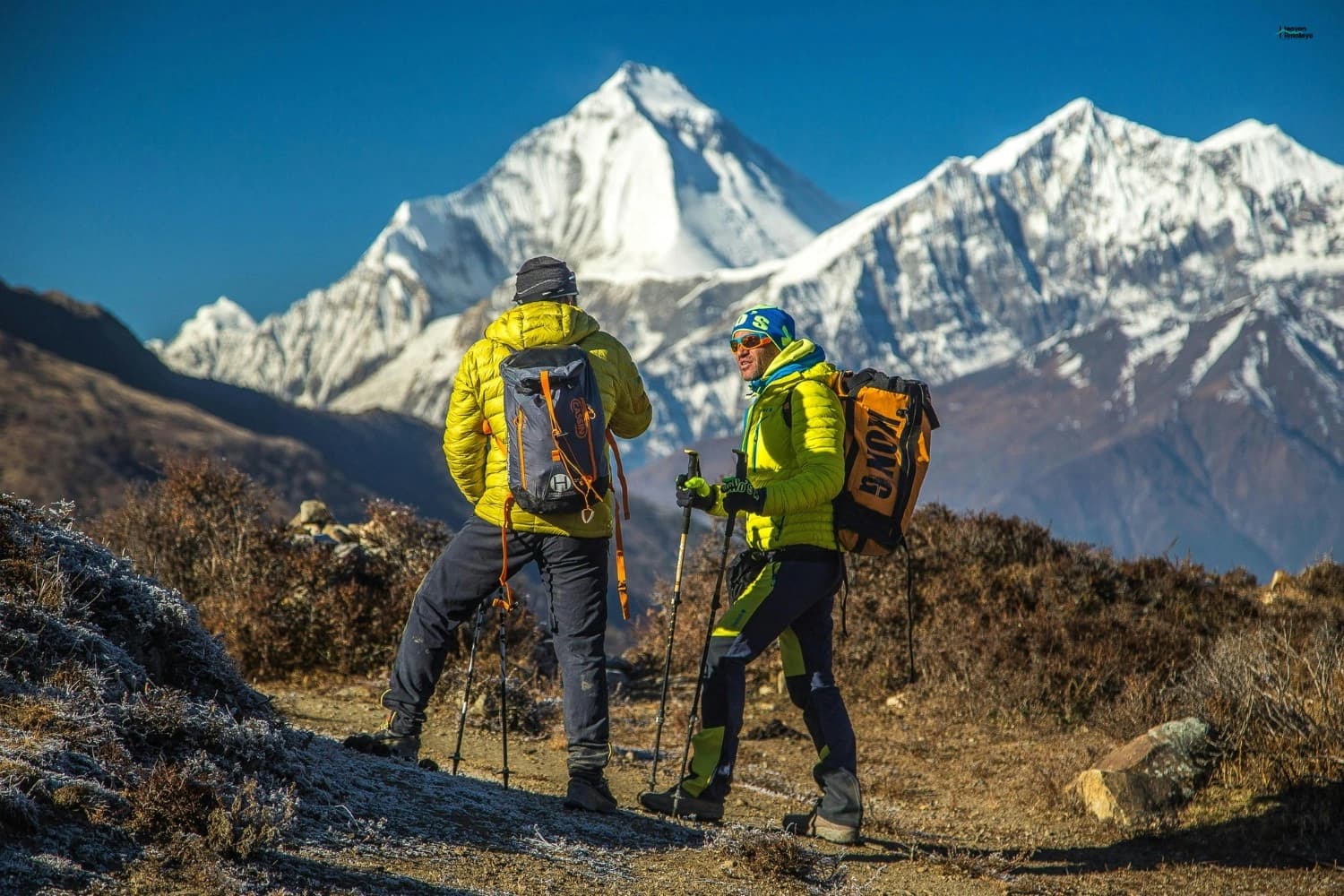
Winter trekking in Nepal requires careful preparation for freezing temperatures, icy trails, strong mountain winds, and changing weather conditions across different altitudes. A well-planned winter trekking packing list includes thermal base layers, insulated down jackets, waterproof trekking boots, gaiters, microspikes, a −15°C sleeping bag, and essential equipment to maintain warmth, safety, and comfort throughout the journey.
From Everest Base Camp and the Annapurna Circuit to Langtang Valley and Ghorepani Poon Hill, packing requirements vary according to altitude, trail conditions, and overnight temperatures. This guide covers essential winter trekking clothing, footwear, backpacks, technical gear, personal items, first aid, food, and hydration, helping you choose the right equipment for Nepal's Himalayan trails between December and February.
What Clothing Should You Pack for Winter Trekking in Nepal?
Pack 5 clothing systems: base layers, a fleece mid-layer, a down jacket, a waterproof-windproof shell, and insulated hand, head, and neck accessories. Layering manages the 40°C swing between warm afternoons in Kathmandu and subzero nights above 4,000 m.
Layering works because each layer does one job: the base layer wicks sweat, the mid-layer and down jacket trap heat, and the shell blocks wind and snow.
The following table defines the 4 layers of a winter trekking system, with the fabric and the quantity we recommend for a 10 to 14 day trek.
Layer | Job | Best fabric | Quantity |
Base layer | Wick sweat, hold warmth | Merino wool or polyester | 2 hiking sets, 1 sleeping set |
Mid-layer | Trap heat while walking | Fleece or light synthetic insulation | 1 fleece, 1 light insulated vest |
Insulation | Hold heat when you stop | Down, 700 to 800 fill power | 1 jacket |
Shell | Block wind, snow, wet | Waterproof, breathable membrane | 1 jacket, 1 pair of trousers |
Cotton is the 1 fabric to leave at home. It holds moisture, loses insulation when damp, and dries slowly in unheated lodges.
The most common winter mistake is wearing too much while climbing. Sweat soaks the base layer on a steep ascent, then chills you at the first rest stop. Guides remove a layer before a climb and add one before a stop.
What Base Layers Keep You Warm During Winter Treks?
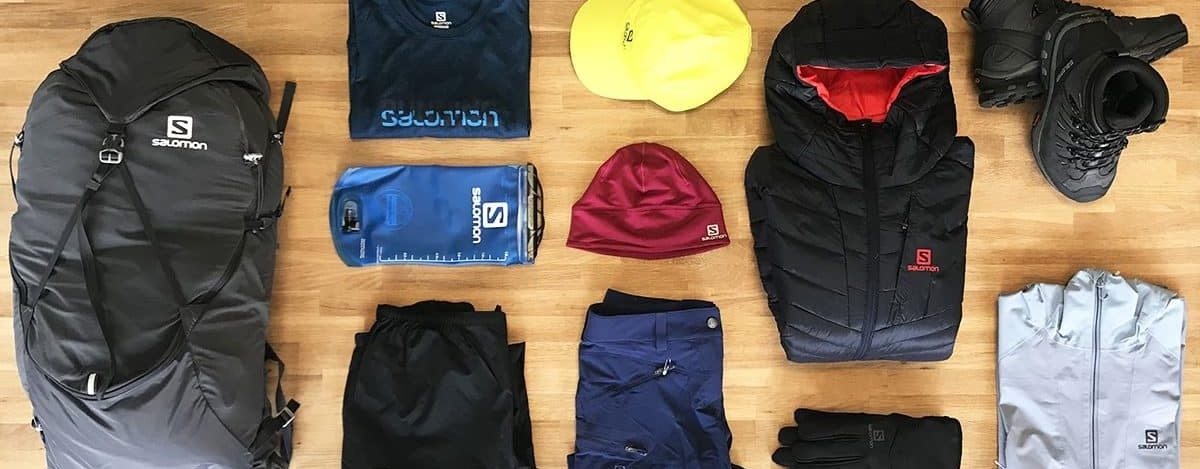
Merino wool or synthetic base layers keep you warm during winter treks because they wick sweat and hold heat when damp. Pack 2 long-sleeve tops and 2 leggings in 150 to 200 g/m² fabric, plus 1 heavier set reserved only for sleeping.
Merino resists odor, so one top lasts 5 to 7 days of walking without washing. Polyester dries faster and costs less, which suits trekkers who rinse clothes in the lodge.
Change into the sleeping set every evening and never sleep in the sweat of the day. Dry damp clothes on your pack, not on the stove, because a sock held too close scorches.
Which Insulated Jackets Are Best for Nepal's Winter Conditions?
A down jacket with 700 to 800 fill power is the best insulated jacket for Nepal's winter conditions, worn over a fleece mid-layer. Down delivers the most warmth per gram, and a hooded jacket handles −18°C evenings at Gorak Shep.
Fill power measures loft, meaning how many cubic inches 1 ounce of down fills. Higher numbers trap more air and weigh less for the same warmth. A 700 to 800 fill jacket with a hood covers every route in this guide.
Synthetic insulation costs less and keeps warmth when damp, but it weighs more and compresses less. Down fails only when wet, and winter in Nepal is dry. The exception is wet snow at Ghorepani and Namche, which is why a shell goes over the down jacket on snowy days.
Check any jacket before you buy it in Thamel. Branded-looking jackets vary widely in real fill weight, so compare the jacket's weight against its spec tag and watch how quickly it re-lofts after you squeeze it flat. A light insulated vest adds another layer for 200 to 300 g.
Should You Pack Waterproof and Windproof Outer Layers?
Yes. Pack a waterproof, windproof, breathable shell jacket and shell trousers. Winter in Nepal is dry, but wind chill removes 8°C to 15°C on ridges such as Kala Patthar, and wet snow soaks insulation without a shell.
A shell does 2 jobs in winter: it stops wind and it keeps snow off your insulation. Wind is the larger threat, because the Poon Hill viewpoint feels 5°C to 8°C colder than the lodge. We see windproof layers and warm hats stay in duffels more than any other items, and the viewpoint punishes that choice within 10 minutes.
Choose a 2.5-layer or 3-layer membrane jacket with underarm zips and a helmet-compatible hood, which runs 400 to 600 g. Choose trousers with full-length side zips, so you pull them over boots and crampons. Skip ponchos, which flap in wind and catch on rock.
What Trekking Pants and Thermal Bottoms Do You Need?
Pack 2 pairs of stretch softshell trekking pants, 2 thermal bottoms, 1 fleece or insulated pair for evenings, and waterproof shell trousers. Softshell pants handle trail days from −5°C to 10°C, and thermals underneath handle altitude above 4,000 m.
Softshell pants with a water-repellent finish block wind and shed light snow. Wear thermals beneath them above 3,500 m, and walk in the softshell pants alone below that line.
Evening wear matters as much as trail wear. After 15:30 the temperature drops quickly, and you sit in an unheated dining room until 20:00. Fleece or lightweight insulated trousers cost 300 to 500 g and make that room comfortable. Skip jeans and cotton leggings.
How Many Pairs of Socks Should You Bring?
Pack 4 pairs of socks: 3 midweight merino trekking pairs and 1 thick wool pair reserved for sleeping. The rotation works because 1 pair dries on your pack while another pair works, and the sleeping pair stays dry all trek.
Rotate socks daily and clip the used pair to the outside of your daypack, where sun and wind dry it. Never sleep in socks you walked in. Add 2 thin liner socks if you blister easily; the footwear section below covers sock material and fit.
What Gloves, Beanies, and Neck Warmers Should You Pack?
Pack 3 hand layers, 2 head pieces, and 1 neck gaiter: liner gloves, insulated gloves, shell mittens, a wool beanie, a sun hat, and a neck gaiter. Hands, ears, and noses cool first because the body protects its core.
Liner gloves give dexterity for cameras and zips. Insulated gloves handle −5°C days. Shell mittens go on above 4,500 m and during Kala Patthar or pass mornings, because mittens keep fingers together and warmer than any glove. Add a wrist leash on each mitten so a gust cannot carry one away.
A wool or fleece beanie covers your ears, and a brimmed sun hat prevents sunburn on bright days at altitude. A merino neck gaiter doubles as a face mask against the dry, cold wind and the dust that triggers the cough many trekkers pick up above Namche. Pack 4 to 6 chemical hand warmers as backup, though they weaken at altitude because oxygen is thinner.
What Footwear Do You Need for Winter Trekking in Nepal?
Winter trekking in Nepal requires waterproof, ankle-supporting trekking boots sized half a size larger than normal, thick wool socks, gaiters, and microspikes. Add lodge footwear: insulated booties or sandals worn with socks.
Feet decide whether a winter trek succeeds, so pack boots first and everything else second. Break boots in over at least 60 km, about 20 hours of walking, before departure. Never buy new boots in Thamel the day before the trek. A pair of trekking boots weighs 1.2 to 1.6 kg, so wear them on the plane to save duffel weight.
Are Insulated Trekking Boots Necessary for Winter Treks?
No. Most winter treks up to 5,400 m require waterproof 4-season trekking boots, not insulated boots. Insulated boots matter on high pass crossings such as Thorong La and Cho La, and for trekkers with poor circulation or Raynaud's syndrome.
Walking generates heat, so feet stay warm in a well-fitted waterproof boot with wool socks. Cold arrives during stops, and that is where a boot's insulation helps. Trekkers who run cold solve the problem more cheaply with a wool sock system and a pair of insulated insoles than with a heavy insulated boot.
Chemical toe warmers weaken at altitude, because the reaction needs oxygen, so plan for warmth that does not depend on them. Stiffer 4-season boots with a thick sole also insulate your foot from frozen ground, which a flexible 3-season boot cannot do. Insulated or double boots belong on glacier crossings above 5,000 m and with anyone who has a cold-injury history.
Should You Bring Waterproof Trekking Boots and Gaiters?
Yes. Waterproof boots with a Gore-Tex or equivalent membrane and gaiters keep snow, slush, and meltwater out. Pack ankle-height gaiters for Poon Hill and Langtang, and knee-high gaiters for deep snow above Lobuche or on Thorong La.
Snow gets into boots from above, through the ankle gap. Gaiters close that gap and keep socks dry. A strap under the boot arch holds the gaiter in place, and a gaiter without a good strap rides up within an hour.
Waterproof membranes trade breathability for protection, so boots sweat inside on long climbs. Air boots out at night, and never place them next to a lodge stove, because heat cracks leather and melts the sole glue. Carry spare laces, since cold makes old laces brittle.
What Socks Prevent Blisters and Keep Your Feet Warm?
Midweight merino wool socks in a seamless, cushioned design prevent blisters and keep feet warm when damp. Pair them with thin liner socks, fit boots with 1 cm of toe room, and tape hot spots at the first sign of friction.
Blisters form from friction and moisture, and winter adds a third cause: a boot made too tight by thick socks. Try on boots wearing the exact socks you will trek in, because a tight boot cuts circulation and makes feet colder than a loose one.
Treat a hot spot the moment it appears. Stop, dry the foot, and apply Leukotape or a hydrocolloid blister plaster. Trim toenails a week before departure, because long nails turn black on 1,000 m descents.
Are Micro spikes or Crampons Necessary for Snowy Trails?
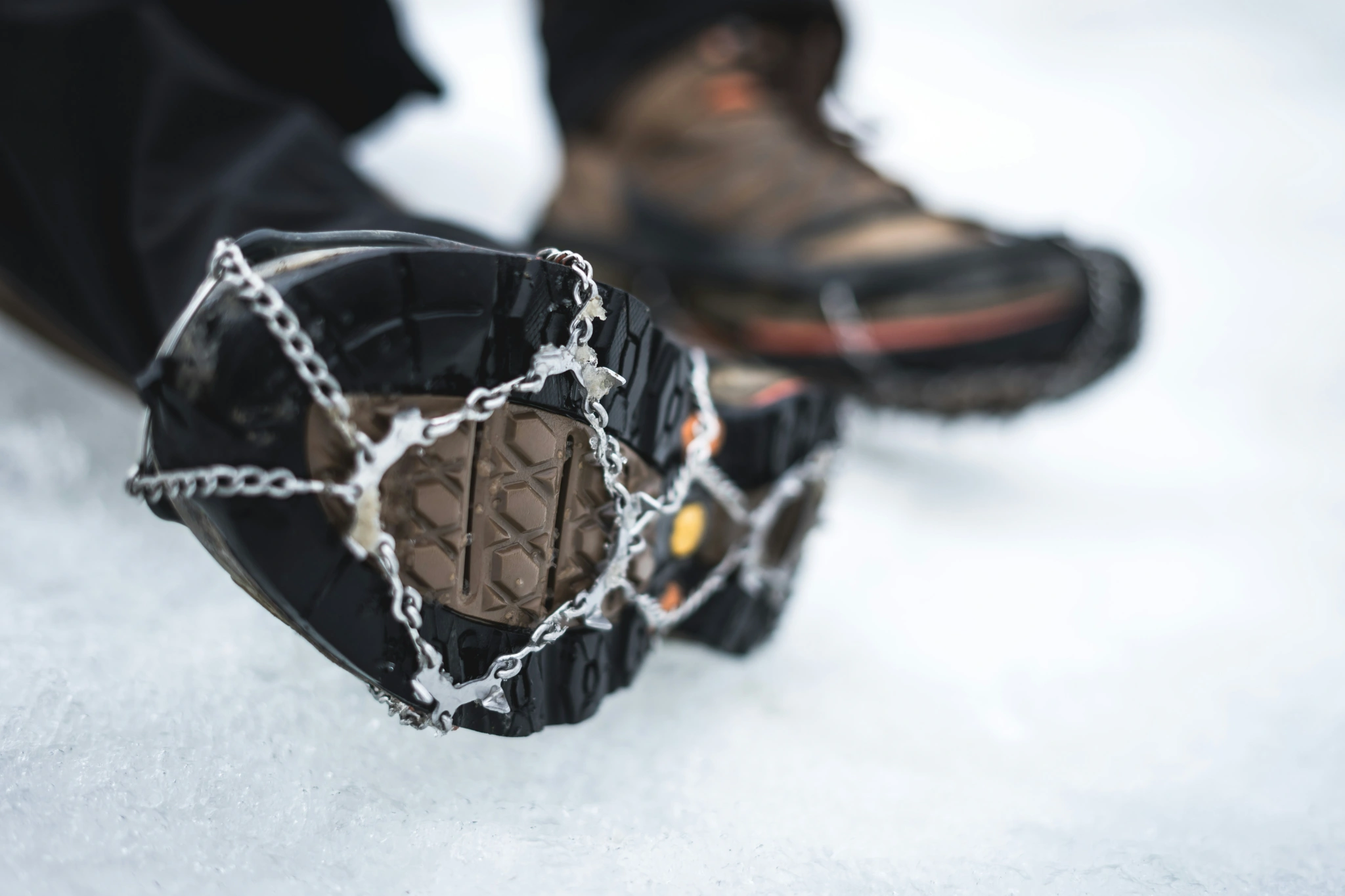
Micro spikes are necessary on snowy and icy Nepal trails from late December, while full crampons are necessary only on high passes such as Thorong La and Cho La. Micro spikes grip packed snow and ice on the Ghorepani steps and the Lobuche moraine.
Micro spikes are elastic chain-and-spike frames that stretch over any boot. They weigh 300 to 400 g and handle the ice that forms on stone steps and shaded switchbacks. Crampons are rigid steel frames with 10 to 12 points that bite into steep ice. Crampons need boots stiff enough to hold them, so check compatibility in Kathmandu before you leave.
Micro spikes have limits. They dull on bare rock, so remove them when the snow ends, and they grip poorly on steep hard ice, where crampons take over. Carry micro spikes on every winter trek above 2,800 m, including Poon Hill.
What Essential Trekking Gear Should You Pack for Winter Trekking in Nepal?
Essential winter gear consists of 6 items: a 30 to 35 L daypack, a −15°C sleeping bag, trekking poles, a headlamp with lithium spares, an insulated bottle system, and UV protection. These 6 items separate comfortable winter treks from miserable ones.
Several of these items rent in Kathmandu for $1 to $3 per day, which makes renting the lighter and cheaper path for travelers who trek once.
What Size Backpack Is Suitable for Winter Trekking?
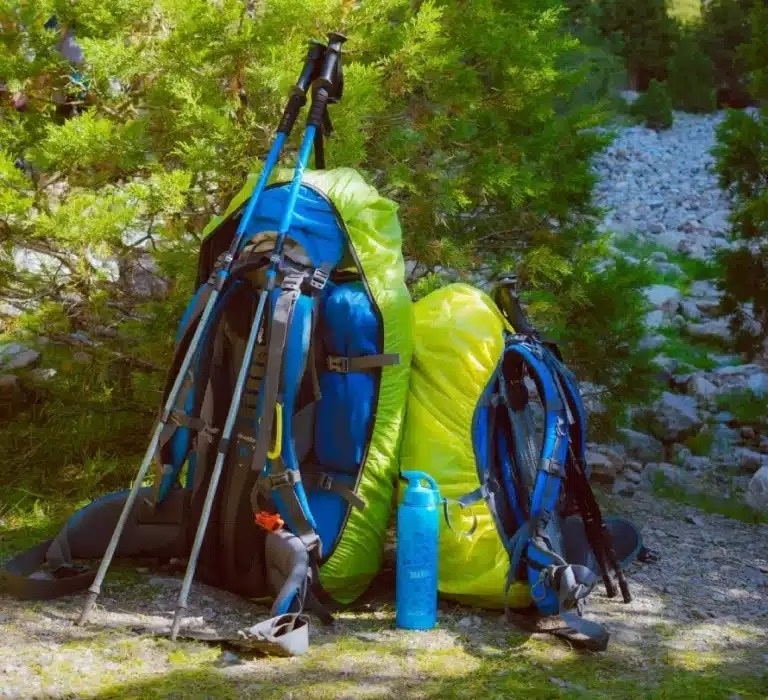
A 30 to 35 L daypack suits winter trekking when a porter carries your 60 to 90 L duffel. Winter layers and a 1 L flask fill more volume than summer gear, and the daypack must stay under 5 kg for the Lukla flight.
Our standard three-season list calls for a daypack under 30 L. Winter adds a down jacket, a shell, and a flask, so 30 to 35 L gives room without tempting you to overpack. Pick a pack with a padded hip belt, a rain cover, and zip pulls large enough to grip in gloves.
The daypack holds everything you use between lodges: 2 L of water, a shell, a down jacket, snacks, sunscreen, sunglasses, a headlamp, documents, and medication. Everything else rides in the duffel with the porter. Line the pack with a waterproof bag, because snow works its way through zips.
Do You Need a Sleeping Bag for Subzero Temperatures?
Yes. Winter trekking requires a sleeping bag with a comfort rating of −15°C or lower, because lodge rooms have no heating and stay within a few degrees of the outdoor night temperature. Rentals cost $1 to $3 per day.
Check the rating standard. The EN/ISO 23537 test gives every bag 3 numbers: comfort, limit, and extreme. The comfort rating suits women and cold sleepers, the limit rating suits men, and the extreme rating is a survival figure you never plan around. Buy or rent by the comfort number.
Down bags weigh 1.5 to 2 kg and compress small. A fleece or silk liner adds roughly 3°C to 5°C and keeps a rented bag hygienic. Rental bags vary in quality, so inspect loft, zips, and smell in the shop and walk away from a flat or damp bag.
Sleeping pads are unnecessary, because lodge beds include a foam mattress. Fill a leak-proof bottle with boiled water at bedtime and place it at your feet for warmth through the night.
Should You Carry Trekking Poles for Snowy Trails?
Yes. Carry a pair of adjustable trekking poles with snow baskets for winter treks. Poles add 2 extra points of contact on ice, reduce knee load on 1,000 m descents, and probe snow depth ahead of each step.
Choose aluminum poles with flip-lock adjustments. Aluminum bends before it snaps, and flip locks work in gloves and resist freezing, while twist locks seize in the cold. Fit snow baskets, because bare tips sink into soft snow.
Adjust poles shorter for climbs and longer for descents, and plant the pole before you move your foot on icy sections. Many operators, including ours, arrange poles for hire.
What Headlamp and Batteries Should You Bring?
Bring a 300-lumen headlamp with a red-light mode and 2 spare sets of lithium AAA batteries. According to Energizer's Ultimate Lithium specifications, lithium cells operate from −40°C to 60°C, while alkaline cells fade in the cold within hours.
Winter changes headlamp use in 2 ways: days end at 15:30, and viewpoint starts such as Poon Hill at 05:15 and Kala Patthar happen in the dark. Rechargeable lithium-ion headlamps drain faster below 0°C, so keep the battery in an inner pocket until you need it, and pack a second small headlamp as backup.
Which Water Bottles and Insulated Flasks Are Best?
Wide-mouth 1 L HDPE bottles and a 1 L vacuum-insulated flask suit winter treks best. Wide mouths resist freezing shut, insulated sleeves slow ice formation, and the flask keeps tea hot for 12 hours.
Carry 2 bottles and 1 flask for 3 L of total capacity, and choose leak-proof bottles, because 1 doubles as a hot-water bottle in your sleeping bag. Skip hydration bladders, since hoses and valves freeze on cold mornings. Store bottles upside down overnight so ice forms at the base and not the lid.
Do You Need Sunglasses and Sunscreen at High Altitudes?
Yes. Pack Category 4 glacier sunglasses with side shields and SPF 50+ sunscreen. According to the World Health Organization, UV exposure rises about 10% per 1,000 m of altitude, and fresh snow reflects up to 80% of UV radiation.
Snow delivers UV from above and below, so skin burns under the chin, inside the nostrils, and on the ears. Apply sunscreen every 2 hours and carry lip balm rated SPF 30 or higher.
Snow blindness, medically called photokeratitis, is a sunburn of the cornea. Symptoms appear 6 to 12 hours after exposure and include gritty, painful, watering eyes. Treatment is darkness and rest for 24 to 48 hours.
Category 4 lenses transmit only 3 to 8% of light, which makes them unsafe for driving, so carry a second pair of everyday sunglasses for the Kathmandu road trips. Keep sunscreen in an inner pocket, because it thickens and separates when frozen.
What Personal Items and Toiletries Should You Bring for Winter Trekking in Nepal?
Bring 5 groups of personal items: hygiene products, blister and first aid supplies, medications, electronics with power banks, and travel documents with cash. Store each group in a labeled waterproof bag so you find items quickly with cold hands.
Cold hands make small tasks slow, so keep tomorrow's items near the top of the duffel and pack a separate night bag with headlamp, toiletries, sleeping base layer, and sleeping socks.
What Personal Hygiene Products Should You Pack?
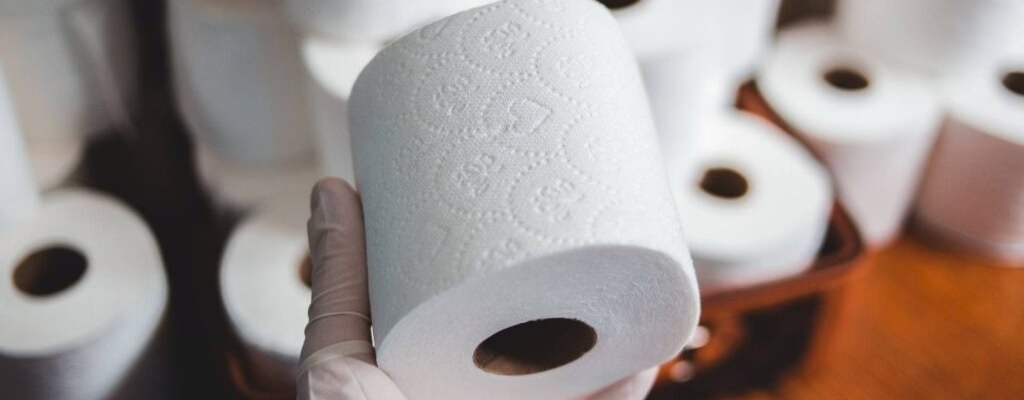
Pack biodegradable wet wipes, hand sanitizer, a quick-dry towel, toilet paper, lip balm, moisturizer, and a toothbrush kit. Above Dingboche, taps freeze and hot showers stop, so wipes replace washing for the final 4 to 5 days.
Skin dries fast in winter air, so moisturizer and lip balm count as essentials. Add a saline nasal spray, because dry air irritates nasal passages at altitude.
Female trekkers pack menstrual products for the full trek plus 2 days, in a sealed bag for carrying used items out. A pee funnel and a labeled 1 L pee bottle keep nights comfortable, because a 3-minute trip to a freezing outdoor toilet at −15°C ends sleep. The bottle goes inside the sleeping bag foot area, and you empty it in the morning.
Alcohol-based hand sanitizer with 60% alcohol or more stays liquid at −20°C. Pack out used wipes and sanitary products, because mountain villages cannot process them.
Which First Aid and Blister Care Supplies Are Essential?
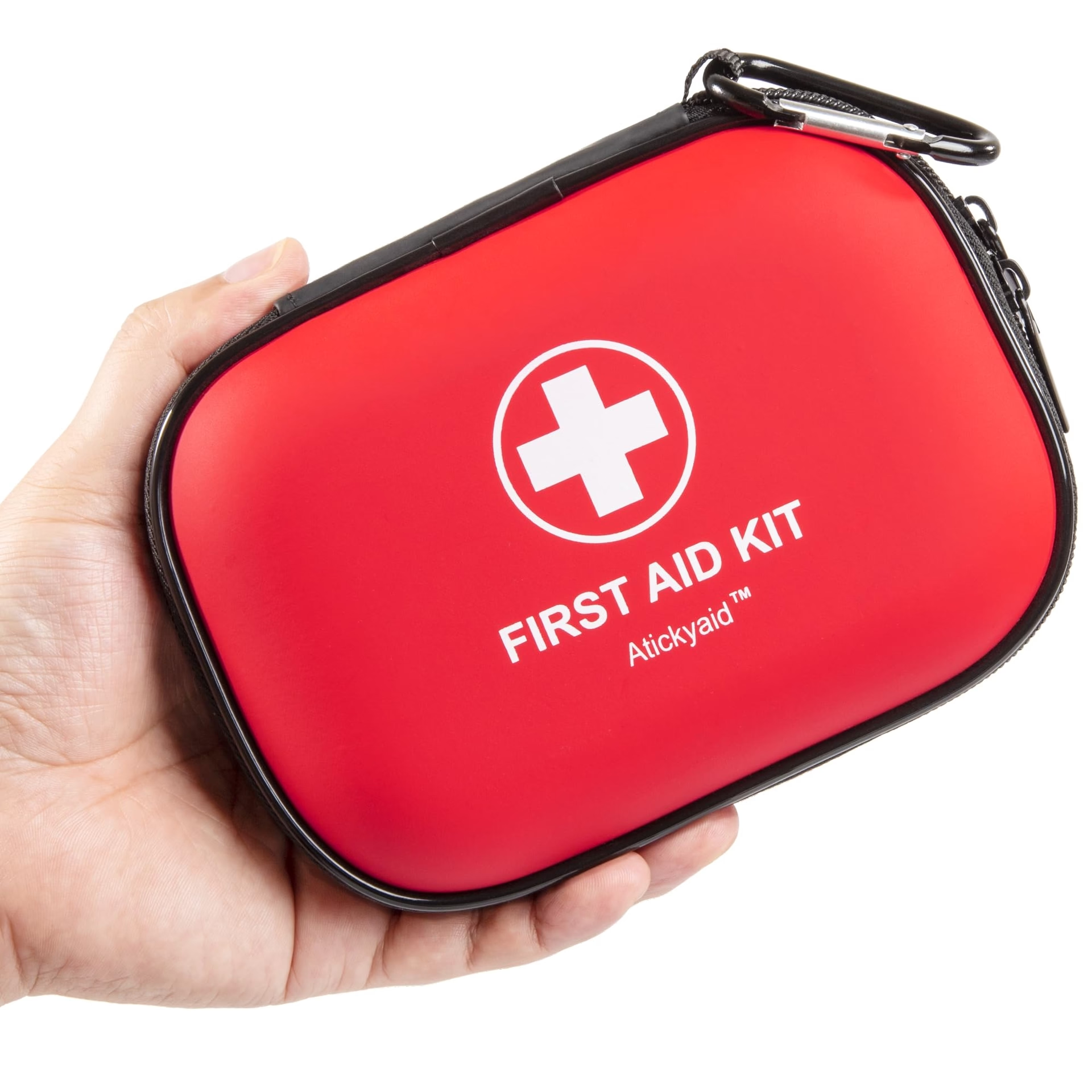
Pack a personal kit with blister plasters, athletic tape, an elastic bandage, antiseptic wipes, oral rehydration salts, pain relievers, loperamide, and throat lozenges. We supply a basic group first aid kit, which does not replace personal blister care or cough relief.
The group kit covers emergencies, and your personal kit covers daily problems. Four items earn the most use on winter treks:
Blister plasters and leukotape: Treat hot spots before they become blisters.
Throat lozenges: Soothe the dry cough that cold, dusty air produces above Namche.
Oral rehydration salts: Replace salts lost to diarrhea or heavy sweat.
Pain relievers: Treat altitude headaches and sore knees.
Add tweezers, safety pins, and a small roll of gauze. Store the kit in the top of the daypack, never in the duffel, because the duffel rides with the porter.
What Medications and Altitude Sickness Supplies Should You Carry?
Carry prescription medicines in original packaging and an altitude plan agreed with your doctor. According to the Wilderness Medical Society's 2019 guidelines, acetazolamide prevents acute mountain sickness and descent treats it. Add a pulse oximeter.
Acute mountain sickness (AMS) is a group of symptoms caused by low oxygen: headache, nausea, dizziness, and fatigue. According to the Wilderness Medical Society's 2019 clinical practice guidelines, the most reliable prevention is slow ascent, with sleeping altitude rising no more than 500 m per day above 3,000 m and a rest day every 3 to 4 days. The same guidelines list acetazolamide as a preventive medicine. A physician decides the dose, and anyone with a sulfa allergy needs a different plan.
Severe headache, vomiting, confusion, or breathlessness at rest signal serious illness. Descent is the only reliable treatment, and travel insurance must cover trekking to 6,000 m with helicopter evacuation.
Check pulse oximeter readings every morning at the same time, sitting down, with warm fingers. Healthy trekkers commonly read 80 to 90% at 4,000 m. The trend and symptoms matter more than the single number. A falling reading with a worsening headache means stop ascending.
What Electronics, Chargers, and Power Banks Should You Bring?
Pack a 20,000 mAh power bank, 2 charging cables, a universal adapter for Nepal's Type C, D, and M sockets, and a camera with 2 spare batteries. Cold cuts lithium-ion capacity, so sleep with batteries inside your sleeping bag.
Lodges charge $2 to $5 per device per charge in higher villages. A 20,000 mAh power bank delivers about 4 phone charges and keeps camera batteries topped up without queueing.
Lithium-ion batteries lose capacity below 0°C and recover when warm. Keep the phone inside a jacket pocket against your body, and switch to airplane mode when you do not need signal. Download offline maps and your trek itinerary before leaving Kathmandu.
Airlines require power banks in carry-on baggage and limit them to 100 Wh, which equals about 27,000 mAh. Nepal Telecom and Ncell SIM cards deliver data in Namche and Lukla, and weaker coverage appears beyond. Treat connectivity above Dingboche as a bonus.
Which Travel Documents and Cash Should You Carry?
Carry your passport, a printed visa receipt, 2 passport photos, insurance details, and Nepali rupees in small notes. According to Nepal's Department of Immigration, tourist visas cost $30 for 15 days, $50 for 30 days, or $125 for 90 days.
Keep documents in a waterproof pouch inside the daypack. Photocopy the passport and photograph the insurance policy number on your phone. Your operator arranges trekking permits, but 2 passport-size photos speed up any extra permit or document.
ATMs work in Kathmandu, Pokhara, and Namche, and nowhere above. Withdraw all trek cash before you fly. Budget $30 to $40 per day in rupees for tea, snacks, device charging, and hot showers below the freezing-pipe line. Carry 100- and 500-rupee notes, because lodges rarely change 1,000-rupee notes at altitude.
What Food and Snacks Should You Pack for Winter Treks?
Pack 3 to 4 snacks per trekking day, roughly 500 kcal in total, plus electrolyte sachets and purification tablets. Lodges serve dal bhat, noodles, and pasta, but prices rise with altitude and appetite falls above 4,000 m.
Winter trekking at 3,500 to 5,000 m burns 3,500 to 4,500 kcal per day, while appetite shrinks. Snacks close that calorie gap between lodge meals.
Which High-Energy Snacks Are Best for Cold Weather?
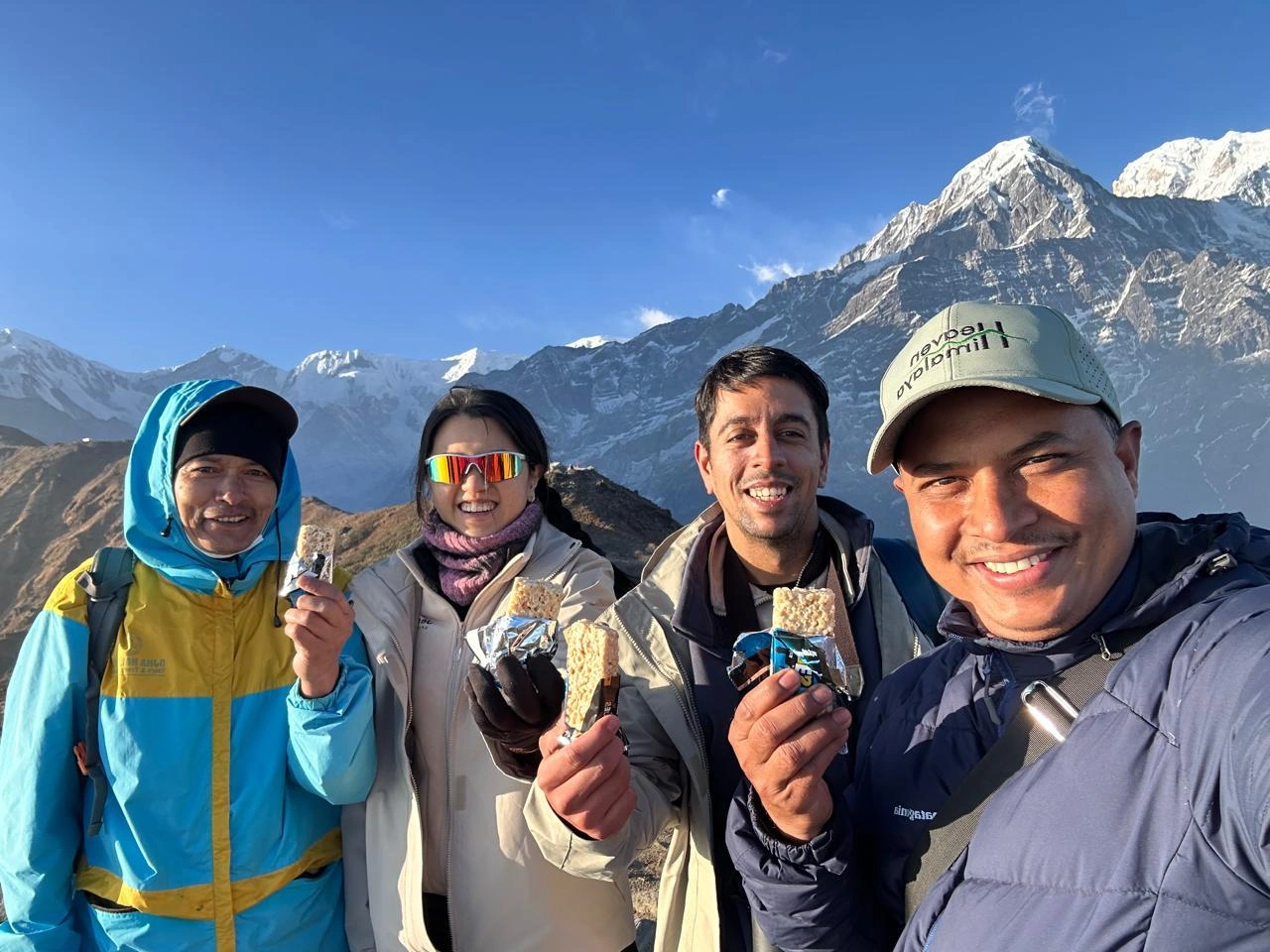
Nuts, dried fruit, chocolate, energy bars, peanut butter sachets, and cheese give the best energy in cold weather. Fat-rich foods stay soft longer than gels, and eating every 3 hours keeps core temperature up.
Fat and carbohydrate together keep you warm longest. A mix of 50 g of nuts, 30 g of dried fruit, and 1 chocolate bar per day supplies about 500 kcal and weighs 150 g. Salted nuts replace sodium as well.
Frozen bars become rock hard, so keep snacks in an inner jacket pocket. Buy snacks in Kathmandu supermarkets before you leave. A bar that costs under $1 in the city sells for $3 or more above Dingboche. Pack 3 flavors, because taste fatigue at altitude makes a favorite snack unappetizing by day 6.
Vegetarian Dal Bhat is the standard lodge meal and fuels well. Vegans and trekkers with dietary needs pack protein bars and nut butter, as menu variety shrinks above 4,000 m.
How Much Drinking Water Should You Carry Each Day?
Carry 2 to 3 litres on the trail and drink 3 to 4 litres in total each day. Cold suppresses thirst and dry air raises fluid loss, so pale yellow urine is your daily gauge.
Split the day into 4 drinking blocks: 1 L before you leave the lodge, 1 L on the morning trail, 1 L with lunch and the afternoon walk, and 1 L in the evening. Tea, soup, and hot lemon count toward the total. Alcohol does not.
Boiled water at lodges costs more with each 500 m of altitude. Refill stations operate in many Khumbu villages, and your guide knows where. According to the Khumbu Pasang Lhamu Rural Municipality, single-use plastic bottles under 1 L have been banned since January 2020, so bottled water is not an option in the Everest region.
Should You Bring Electrolytes and Water Purification Tablets?
Yes. Bring 1 electrolyte sachet per day above 4,000 m and 1 strip of chlorine dioxide tablets per week of trekking. Electrolytes replace salts lost through sweat and urine, and tablets purify water when boiled water is unavailable.
Electrolytes flavor cold water, which encourages drinking on days when thirst vanishes.
For purification, winter favors tablets over filters. Ice crystals crack the hollow-fiber membranes in most filters, and you cannot see the damage. Chlorine dioxide tablets are light and unaffected by freezing. According to manufacturer instructions for chlorine dioxide tablets such as Katadyn Micropur, 30 minutes treats bacteria and viruses, and 4 hours treats Cryptosporidium. Cold water extends contact times, so treat water at night and carry it inside your jacket. Boiling remains the gold standard, and according to the US Centers for Disease Control and Prevention, water boils for 1 minute at low elevation and for 3 minutes above 2,000 m.
How Should You Adjust Your Packing List for Different Winter Treks in Nepal?
Adjust the packing list by highest sleeping altitude: below 3,500 m, pack a three-season core with microspikes; at 4,000 to 5,400 m, add a −15°C bag, mittens, and insulation; on passes above 5,000 m, add crampons, goggles, and 4-season boots.
Altitude drives winter difficulty more than distance. The following table compares 5 winter trekking routes by highest point, winter night range, and the gear additions each one requires.
Trek | Highest point | Winter conditions | Key additions |
Ghorepani Poon Hill | 3,210 m | −2°C to 10°C on trek days | Microspikes, windproof layer, warm hat |
Langtang Valley | 3,800 m | about −10°C at night | −15°C bag, microspikes, waterproof boots |
Everest Base Camp | 5,364 m | −17°C to −20°C at night | Insulated mittens, 800-fill jacket, 3 L insulated bottles |
Annapurna Circuit (Thorong La) | 5,416 m | −10°C to −15°C at night | Crampons, goggles, 4-season boots, knee-high gaiters |
High passes (Cho La, Kongma La, Larke La) | 5,106 to 5,535 m | −10°C to −15°C at night | Crampons, insulated overtrousers, spare headlamp |
Each step up in altitude adds 2 to 3 items to the kit. Our Winter Trekking in Nepal guide lists 15 routes sorted by altitude and difficulty, and the Nepal in Winter 2026–27: Weather, Treks & Travel Guide explains weather and daylight by month.
What Should You Pack for the Everest Base Camp Winter Trek?
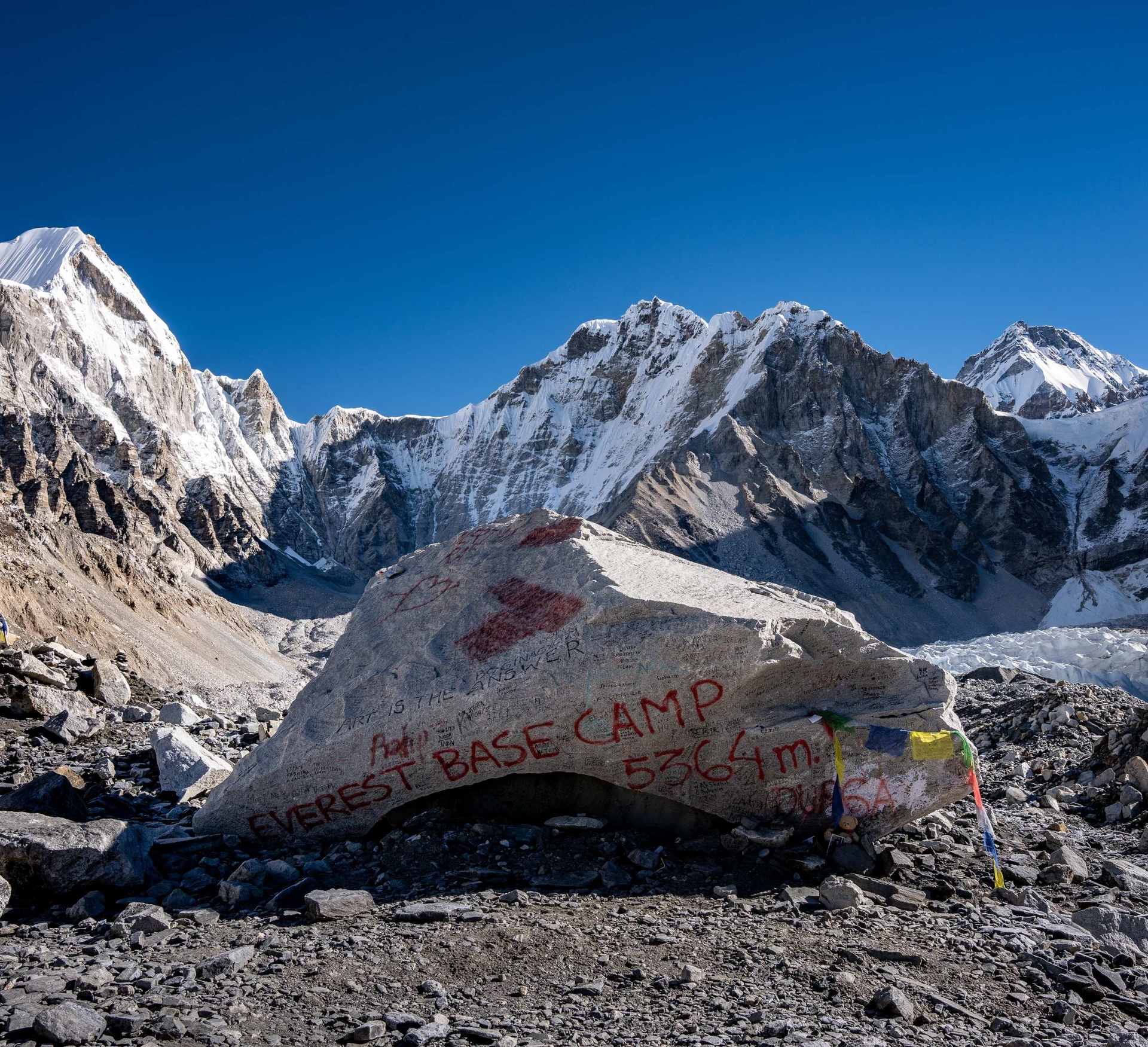
Pack the full winter system for Everest Base Camp: a −15°C sleeping bag, 800-fill down jacket, insulated mittens, microspikes, 4-season boots, and 3 L of insulated bottle capacity. Nights reach −17°C to −20°C above 5,000 m, and rooms have no heating.
Namche Bazaar (3,440 m) sees −7°C nights, Gorak Shep (5,164 m) reaches −18°C, and Kala Patthar (5,545 m) at dawn adds wind chill of 8°C to 15°C on top of that.
Everest packing comes with 3 operational limits:
Flight baggage: 15 kg total on the Lukla flight, so wear boots and your down jacket on board.
Peak dates: Lukla seats sell out 2 to 3 months ahead for 20 December to 5 January.
Buffer days: Fog and wind delay Lukla departures, so plan 2 spare days before the international flight home.
On the night before Kala Patthar, pre-pack your pockets with mittens, a hot-water flask, snacks, a spare battery, and sunglasses, and start by 04:30.
Female trekkers find extra detail in our Female Packing List for Everest Base Camp Trek, and the route itself is described on the Everest Base Camp Trekking page.
Everest Base Camp Trek
View detailsWhat Gear Is Essential for the Annapurna Circuit in Winter?
The Annapurna Circuit in winter requires crampons, 4-season boots, goggles, insulated mittens, and a −15°C sleeping bag for the 5,416 m Thorong La crossing. Snow closes the pass after storms, so spare days and a guide's pass report are essential.
The Annapurna Circuit is the hardest route in this guide to do in winter. Thorong La holds deep snow from December to February, nights at Thorong Phedi (4,540 m) and High Camp (about 4,900 m) fall to −10°C to −15°C, and lodges at the highest settlements close or reduce services. We recommend the full crossing only for experienced winter trekkers with 2 or more spare days in the schedule.
A pass day starts at 03:00 to 04:00 and takes 8 to 10 hours. Pack for that day in your daypack: insulated mittens, balaclava, goggles, a full thermos, 1 spare battery set, and 2 L of water in insulated sleeves. Add crampons if your guide reports hard ice on the climb.
Trekkers without winter experience choose the lower route options. Jomsom and Muktinath (3,710 m) deliver the Annapurna's mountain scenery with trek-day temperatures between −9°C and 0°C. Compare options on the Annapurna Circuit Trek page.
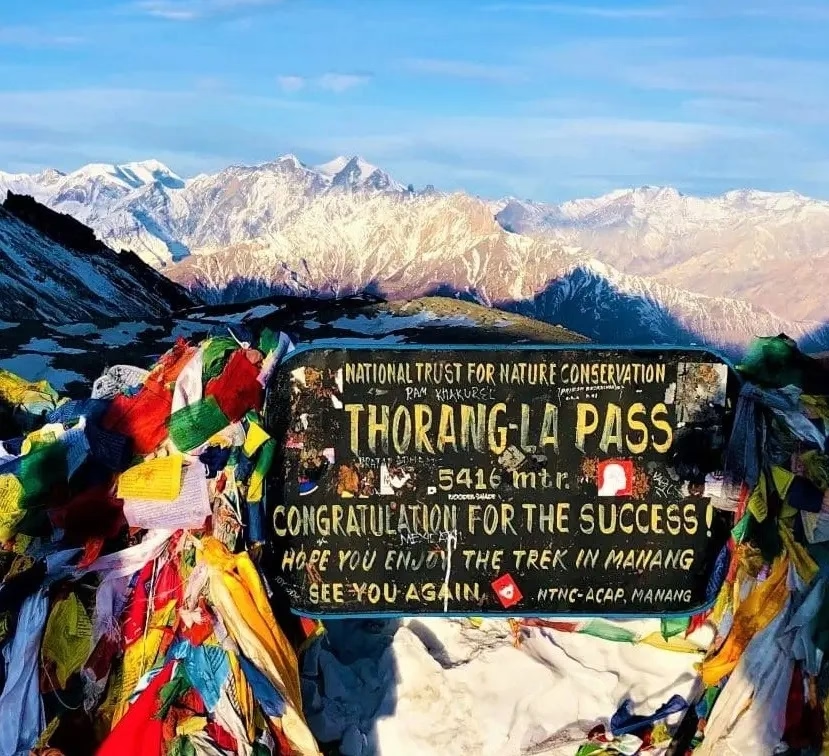
Annapurna Circuit with Poon Hill Trek
View detailsHow Does Packing Differ for Langtang Valley Winter Trekking?
Langtang Valley packing is lighter than Everest packing: a −15°C sleeping bag, 700-fill down jacket, microspikes, and waterproof 4-season boots cover the 3,800 m route to Kyanjin Gompa. No flight means no 15 kg limit.
Langtang Valley starts at Syabrubesi (about 1,500 m) after a 7- to 8-hour road trip from Kathmandu, and nights at Kyanjin Gompa fall near −10°C. The route sees few trekkers from December to February, and snow covers the upper valley from January.
The packing differences from Everest are 3 practical points:
Weight: The road trip removes the 15 kg flight limit, so a larger duffel is possible, though porter rules still apply.
Warmth: A 700-fill jacket and a well-chosen sleeping bag suffice, because altitude stays under 4,000 m.
Entry fee: Langtang National Park charges NPR 3,000 (about $23).
Kyanjin Ri (4,773 m) and Tserko Ri (4,984 m) turn into winter climbs with snow and ice, so microspikes and poles become mandatory kit for those optional side trips. Read the route plan on the Langtang Valley Trekking page.
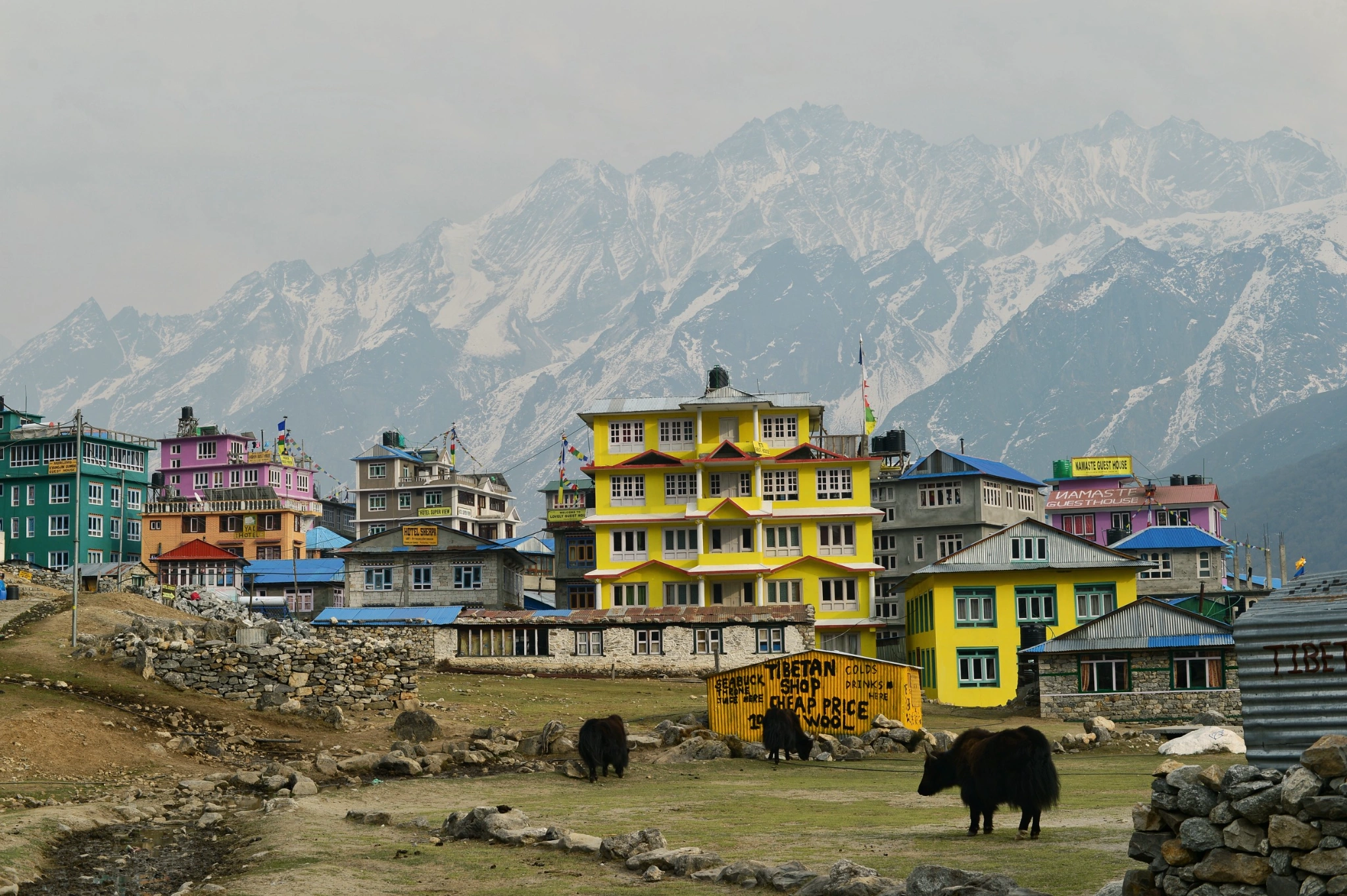
Langtang Valley Trekking
View detailsWhat Additional Equipment Is Needed for High-Altitude Snowy Passes?
High snowy passes such as Thorong La (5,416 m), Cho La (5,420 m), Kongma La (5,535 m), and Larke La (5,106 m) add 8 items: crampons, 4-season boots, goggles, insulated mittens, balaclava, knee-high gaiters, insulated overtrousers, and a spare headlamp.
Once you start up a pass, retreat takes hours, so equipment must work for the full day. Crampons and boots must be compatible, so practice fitting them in a lodge the night before. Cho La includes a glacier section, which is why guides lead every crossing.
Keep the following items in the daypack, not the duffel, on pass days:
Warmth: Down jacket, insulated mittens, balaclava, and hand warmers.
Navigation: Spare headlamp, charged phone, and a printed route card.
Fuel: 1 hot flask, 2 L of water, and 600 kcal of snacks.
Eye protection: Goggles, since wind and spindrift defeat sunglasses.
Pass crossings need 2 to 3 weather buffer days, because storms close passes for days.
How Can You Prepare for a Safe and Comfortable Winter Trek with Heaven Himalaya?
Prepare for a winter trek with Heaven Himalaya in 4 steps: choose a route by altitude and fitness, set dates outside 20 December to 5 January, add 1 to 2 buffer days, and confirm permits, insurance, and gear before departure.
Our winter treks start from Kathmandu with a gear check, and we adjust routes when snow arrives. Share your dates, fitness level, and comfort with cold, and we match you to a route. The Best Time to Trek in Nepal guide compares winter with spring and autumn, which helps if your dates are still open.
6 January to mid-February delivers the thinnest trail traffic, because Christmas demand has passed and spring has not started.
Can Heaven Himalaya Help You Arrange Winter Trekking Gear in Nepal?
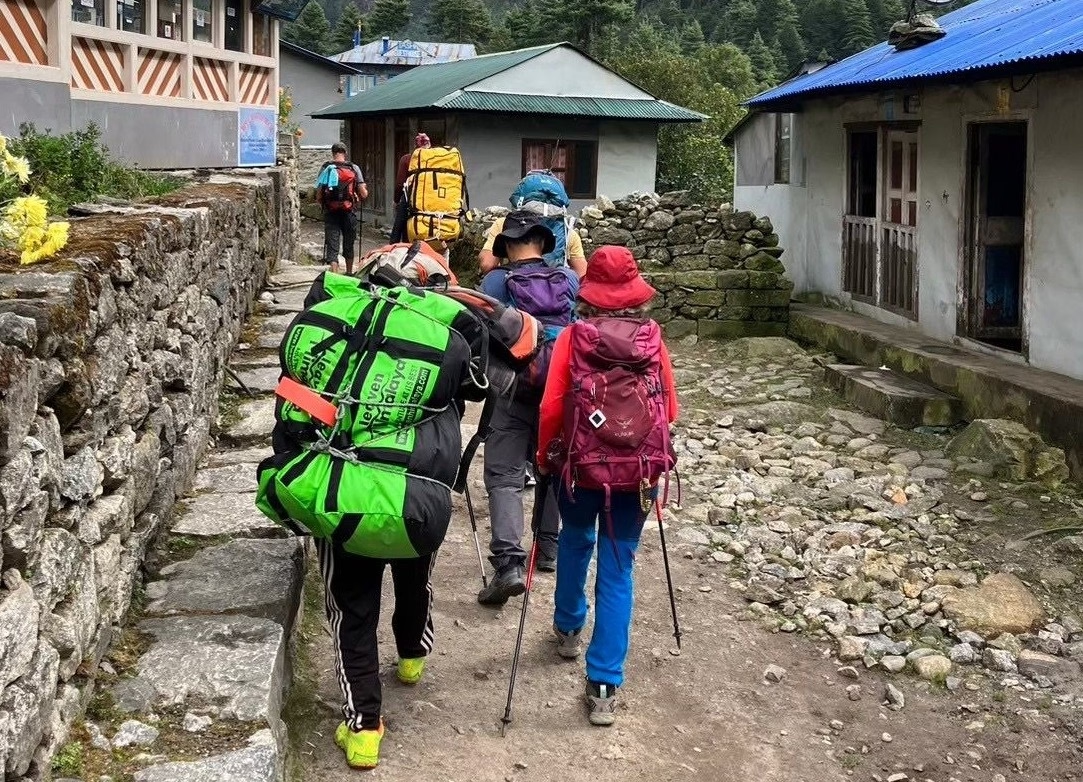
Yes. Heaven Himalaya provides a duffel bag, sleeping bag, and down jacket on request for return after the trek, and supplies a basic group first aid kit. We also run a pre-trip gear check and arrange trekking poles for hire.
Gear arrangements are simple. You tell us what you own, we confirm what the route requires, and you rent or buy the difference in Kathmandu. Plenty of shops in Thamel and the surrounding streets sell and rent trekking gear at reasonable prices. A porter carries up to 25 kg for 2 guests, which keeps each duffel near 12.5 kg and protects the people who carry it.
Plan your winter trek with local experts. Heaven Himalaya Treks & Expedition is a direct local operator based at Gitanjali Chowk, Dathu Sadak, Kathmandu, with a 5.0 rating from 160 Tripadvisor reviews. Message Ram on WhatsApp or Viber at +977 985 1273867, or email info@heavenhimalaya.com. Ask about winter departures, route swaps if snow arrives, and gear hire. Our Recommended Packing List for Trekking in Nepal holds the full year-round checklist.
What Are the Essential Takeaways for Packing for Winter Trekking in Nepal?
The essential takeaways: layer with merino, down, and a shell; protect feet with waterproof boots, gaiters, and microspikes; sleep warm in a −15°C bag; stay fueled and hydrated; and match the kit to the route's highest altitude.
The 10 points below summarize the full packing list.
Layer with 2 merino or synthetic base sets, 1 fleece, 1 down jacket (700 to 800 fill), and a waterproof shell.
Avoid cotton in every layer, from underwear to socks.
Protect hands with 3 layers: liners, insulated gloves, and shell mittens.
Break in waterproof 4-season boots over at least 60 km before departure.
Carry gaiters on every winter trek and microspikes above 2,800 m.
Choose a sleeping bag with a −15°C comfort rating, and rent it to save 1.5 to 2 kg.
Keep headlamp batteries lithium and stored in an inner pocket.
Drink 3 to 4 litres daily, and purify with chlorine dioxide tablets or boiling.
Check pulse oximeter readings each morning, and never ascend with symptoms.
Weigh your bags: 15 kg total for Lukla, and 12.5 kg per duffel with a shared porter.
Altitude sets the list. Poon Hill and Langtang need a lighter kit, Everest Base Camp needs the full winter system, and passes need crampons and goggles on top. A tested, weighed, and labeled winter trekking packing list turns Nepal's coldest season into its clearest and quietest. Share your route and dates with our team, and we confirm the gear before you fly.