

Everest Base Camp Trek Cost 2026/27: Full Price Guide

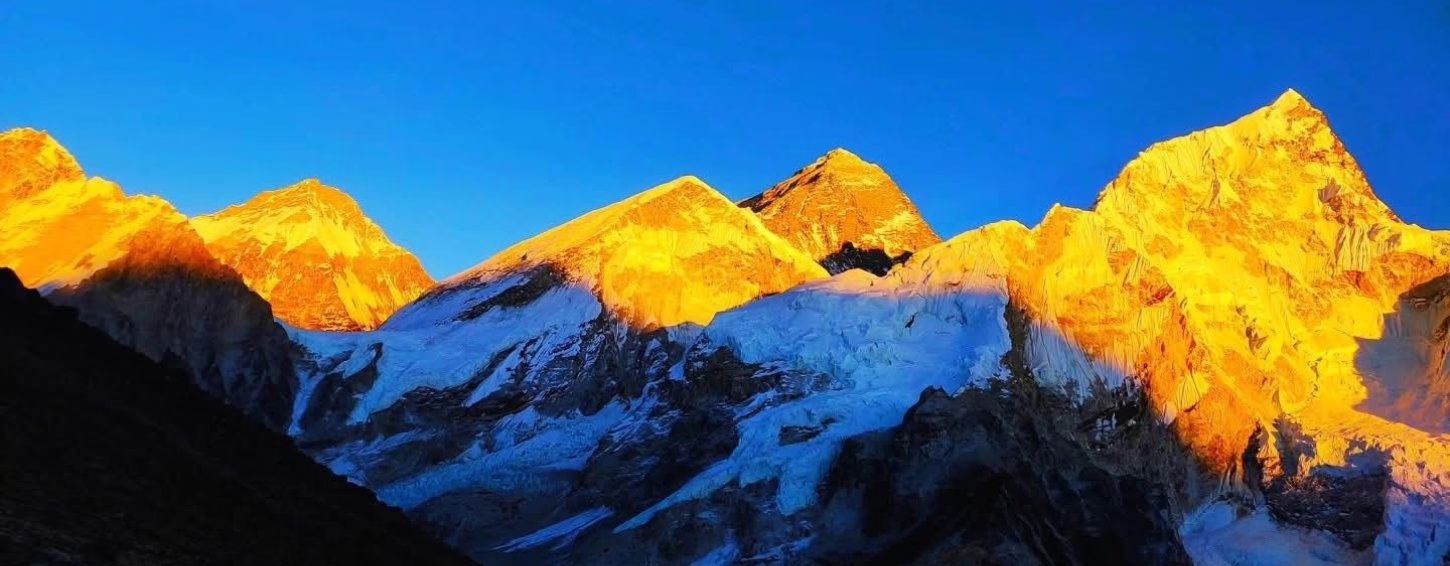
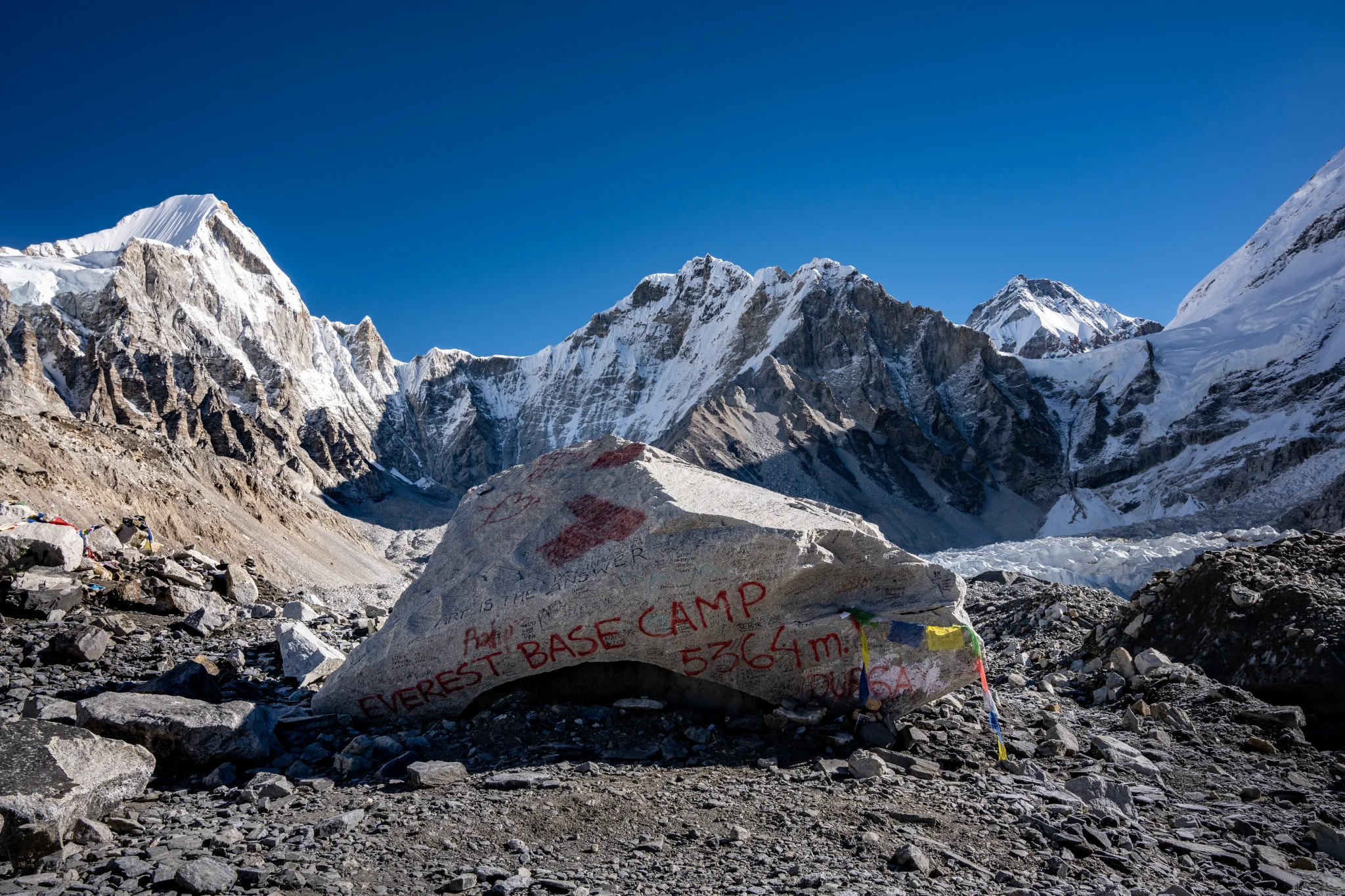
The Everest Base Camp trek is a high-altitude Himalayan adventure in Nepal's Khumbu region, leading to the base of Mount Everest at 5,364 meters. The Everest Base Camp trek cost in 2026/27 ranges from $950 to $1,200 for an independent budget trek, $1,250 to $1,800 for a standard guided package, and $3,000 to $5,000 or more for a luxury expedition. Most trekkers should budget approximately $1,950 to $2,450 per person to cover the complete journey, including additional travel and personal expenses.
The total EBC trek price depends on trekking season, group size, itinerary duration, accommodation, and guide and porter services. Major expenses include Kathmandu–Lukla flights, trekking permits, teahouse accommodation, meals, travel insurance, and high-altitude safety arrangements. This guide explores the complete Everest Base Camp trekking cost, compares independent and guided packages, explains included and additional expenses, and provides practical budgeting tips to help you plan your 2026/27 Himalayan adventure with confidence.
What Is the Average Cost of the Everest Base Camp Trek?
The average Everest Base Camp trek costs $1,250 to $1,800 per person for a guided group package in 2026/27. The price covers flights to Lukla (the mountain airstrip at the trailhead), permits, a licensed guide, porters, and teahouse lodging over 12 to 14 days. Visa, insurance, tips, and personal spending add $400 to $780.
Most trekkers land at $1,950 to $2,450 all-in. That figure comes from a $1,499 package, the 2 to 4 person rate on Heaven Himalaya's 14-day itinerary, plus $460 to $930 in add-ons: the $50 visa, $100 to $250 insurance, $150 to $300 personal spending, $100 to $180 in tips, and $60 to $150 for extra Kathmandu nights and meals.
The package price also hides a cost floor. For a small group, four items set the minimum: the return Lukla flight ($380 to $440), a guide ($300 to $420 for 12 days), a half-share of a porter ($120 to $150), and 11 nights of lodging and meals ($330 to $770). Add permits and 2 Kathmandu hotel nights, and the floor sits at $1,249 to $1,965 before any operator margin. A quote for 2 to 4 people far below $1,250 means a line item went missing. Groups of 15 or more spread guide costs across more people, so a $1,199 price can still be genuine at that size.
How Much Does a Budget Everest Base Camp Trek Cost?
A budget Everest Base Camp trek costs $950 to $1,200 per person when you book flights, permits, and lodging yourself. The figure excludes a guide and assumes 11 nights in teahouses (family-run trail lodges), twin-share rooms, basic meals, and almost no hot showers or charging above Namche Bazaar (3,440 meters).
Fixed costs take most of a budget trip. The return flight to Lukla costs $380 to $440, which is roughly a third to nearly half of the total. Permits ($39 to $45), the visa ($50), and insurance ($100 to $250) bring fixed costs to $570 to $785 before the first meal. The remaining $330 to $770 covers rooms and food on the trail.
A budget trip works for trekkers who have already slept above 4,000 meters, read their own altitude symptoms, and navigate without a guide. In real-world use, the most common mistake on a budget trip is cutting insurance to save $100. Helicopter evacuation from Gorakshep typically costs $5,000 to $7,000+ without coverage, so a skipped policy turns a $100 saving into a potential five-figure loss.
How Much Does a Standard Everest Base Camp Trek Cost?
A standard Everest Base Camp trek costs $1,250 to $1,800 per person on a guided group package. The package bundles the Lukla flights, ground transfers, Kathmandu hotel, permits, a guide, porters, and full-board meals on the trail into one fixed price.
Heaven Himalaya's 14-day itinerary sits inside this range. The package lists $1,580 for 1 person, $1,499 for 2 to 4 people, $1,399 for 5 to 8, $1,299 for 9 to 14, and $1,199 for 15 or more. It includes 2 nights in a 3-star Kathmandu hotel, a sleeping bag and duffel bag, an oximeter, and a first-aid kit.
A package replaces 9 separate purchases: flights, ground transfers, hotel, permits, guide, porter, trail meals, trail lodging, and basic gear. The main advantage is price certainty: one payment replaces 9 transactions in 2 currencies across 3 cities.
How Much Does a Luxury Everest Base Camp Trek Cost?
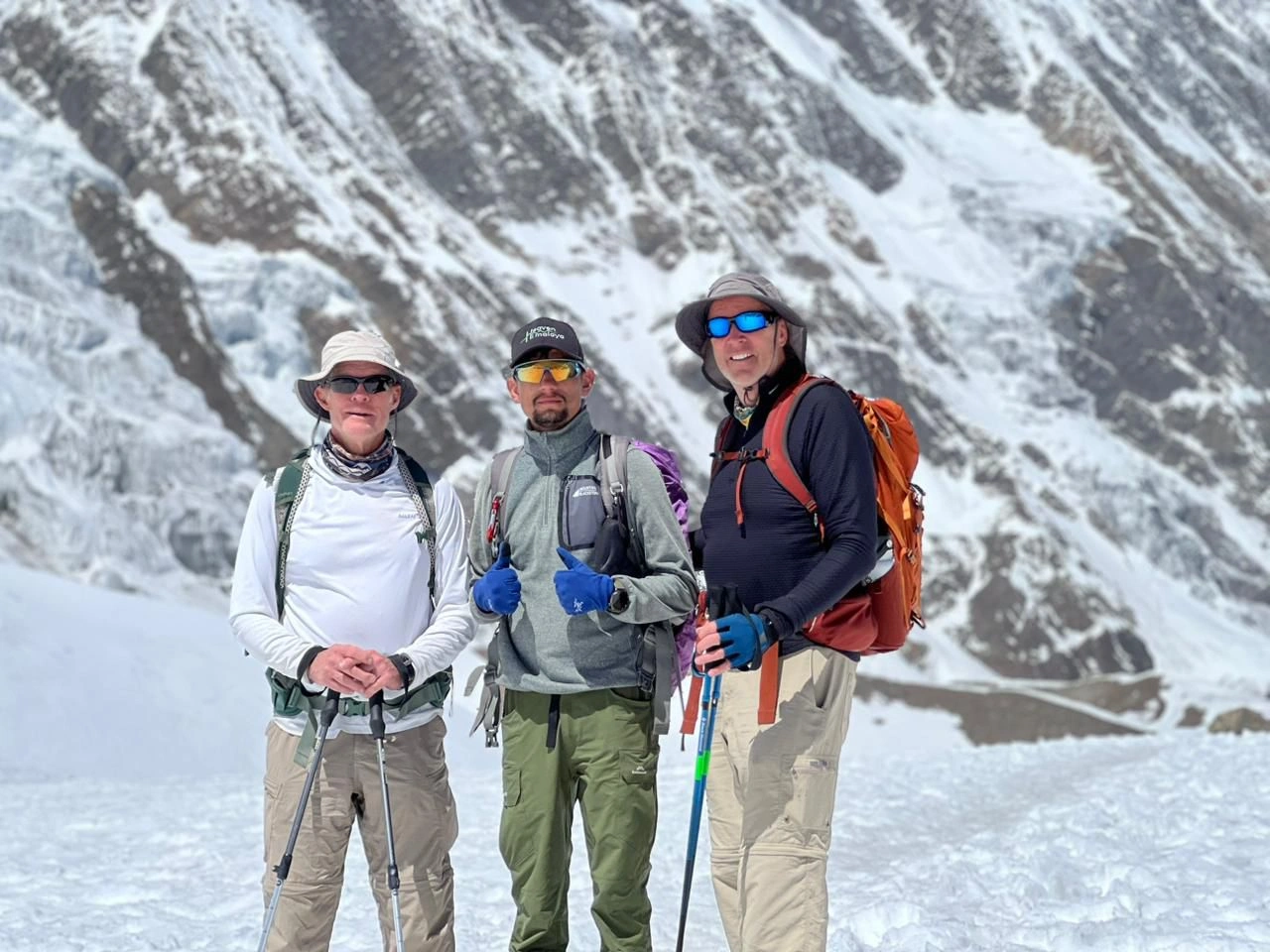
A luxury Everest Base Camp trek costs $3,000 to $5,000 or more per person. The premium pays for private rooms with attached bathrooms, lodges with heating, 1-to-1 guide ratios, and optional helicopter transfers that remove the Lukla flight risk.
Luxury lodges along the Khumbu route price at $320 to $700 or more per night, against $7 to $25 for a standard teahouse. A private single room in an ordinary teahouse adds about $150 across the full trek. A shared helicopter from Kathmandu to Lukla costs $500 to $700 per person, compared with $190 to $220 each way on a scheduled flight.
Luxury buys comfort and schedule control, not altitude immunity. Heated rooms do not reduce altitude sickness risk at Lobuche (4,910 meters) or Gorakshep (5,164 meters), and a helicopter return does not replace an acclimatization day. The Wilderness Medical Society's acute altitude illness guidelines still apply to every traveler.
What Is the Average Daily Cost of the Everest Base Camp Trek?
The average daily cost of the Everest Base Camp trek is $90 to $150 on a guided package and $30 to $70 for an independent trekker's rooms, meals, and drinks. Hired help adds $25 to $35 per day for a guide and $20 to $25 for a porter.
The following table shows daily costs by arrangement.
Arrangement | Daily cost (USD) | Notes |
Independent, no staff | $30 to $70 | Room, 3 meals, hot drinks, and a charge or two |
Independent plus guide | $55 to $105 | Adds $25 to $35 for a licensed guide |
Independent plus guide and porter | $75 to $130 | Adds $20 to $25 for a porter |
Guided group package | $90 to $150 | Heaven Himalaya's 2 to 4 person rate works out to $107 per day |
Daily cost rises with altitude. A room costs $7 to $12 in Phakding and $20 to $25 in Gorakshep, and a plate of dal bhat costs more at 5,164 meters than at 2,610 meters because porters and yaks carry every ingredient up the valley.
What Factors Affect the Everest Base Camp Trek Cost?
Five factors set the Everest Base Camp trek cost: trekking duration, season, group size, accommodation and food choices, and guide or porter hiring. Duration and staffing move the total most, because every extra day multiplies guide, porter, lodging, and meal costs at once.
How Does Trekking Duration Affect the Total Everest Base Camp Trek Cost?
Each extra trekking day adds about $107 on a guided package and $75 to $130 on an independent trek with hired staff. A standard itinerary runs 12 to 14 days. Shorter plans save money but remove acclimatization days, which raises altitude sickness risk.
The following table shows how itinerary length changes cost at package rates.
Itinerary | Days | Cost effect at about $107 per day |
Compressed | 10 to 11 | Saves about $215 against 14 days |
Standard with 2 rest days | 12 to 14 | Baseline, $1,250 to $1,800 |
Extended (Gokyo Lakes or extra rest day) | 16 to 19 | Adds $320 to $535 |
According to the Wilderness Medical Society's 2019 clinical practice guidelines on acute altitude illness, travelers above 3,000 meters limit sleeping elevation gain to 300 to 500 meters per day and schedule a rest day every 3 to 4 days. Heaven Himalaya's 14-day itinerary builds in 2 rest days, one at Namche Bazaar (3,440 meters) and one at Dingboche (4,410 meters).
Cutting a rest day saves roughly $107. An uninsured helicopter evacuation costs $4,000 to $6,000, which is 37 to 56 times the saving. Short itineraries also leave no room for weather: Lukla flights cancel often enough that experienced operators add a buffer of 1 to 3 days, and each buffer day in Kathmandu costs $55 to $100. A common mistake we see is booking the flight home for the day after the trek ends.
How Does the Trekking Season Affect EBC Trekking Costs?
Season affects EBC trekking costs through demand, flight routing, and trail services rather than through large changes in teahouse prices. Peak months (March to May, October and November) add a Ramechhap transfer. Winter and monsoon months cost less to arrange but carry weather and service risks.
Season | Months | Cost pattern | Trade-off |
Spring peak | March to mid-May | Highest demand, Ramechhap flights | Clear skies, crowded lodges |
Autumn peak | Late September to November | Highest demand, Ramechhap flights | Stable weather, early booking required |
Winter | December to February | Lower demand, flights from Kathmandu | Nights below -10°C at Gorakshep, reduced lodge services |
Monsoon | June to August | Lowest demand | Cloud-related flight cancellations, wet trails |
In peak months, scheduled flights to Lukla depart from Manthali Airport in Ramechhap, 130 kilometers and 4 to 5 hours from Kathmandu. Most trekkers leave around 2 a.m. A shared taxi costs NPR 4,000 to 6,000 ($27 to $40) and a private vehicle costs NPR 8,000 to 12,000 ($53 to $80). Heaven Himalaya lists this drive as a separate charge in March, April, May, October, and November.
Compare quotes by season. A winter quote omits the Ramechhap transfer that a peak-season quote includes. A monsoon trek costs less to arrange but costs you views and flight reliability, and Heaven Himalaya does not recommend monsoon departures. What most people overlook is the Ramechhap transfer: it appears in almost no headline price and adds up to $80. Late October and early November give most first-timers the best balance of clear weather and manageable cold.
How Does Group Size Influence the Everest Base Camp Trek Cost?
Group size changes the per-person Everest Base Camp trek cost by up to $381, or 24%. On Heaven Himalaya's 14-day package, a solo trekker pays $1,580 and a group of 15 or more pays $1,199, because guide, vehicle, and assistant-guide costs spread across more people.
Group size | Price per person (USD) |
1 person | $1,580 |
2 to 4 people | $1,499 |
5 to 8 people | $1,399 |
9 to 14 people | $1,299 |
15 or more people | $1,199 |
The solo supplement is small: $81, or 5.4%, above the 2 to 4 person rate. Per-person costs such as flights, permits, lodging, and meals stay the same at any group size, while shared costs shrink as the group grows.
Large groups trade money for flexibility. A group of 15 or more moves at the slowest member's pace and will likely split across two Lukla flights, as strict payload limits restrict the 19-seat aircraft to carrying about 14 to 16 passengers with their gear. Heaven Himalaya caps groups at 20 and adds an assistant guide from 6 trekkers.
How Do Accommodation and Food Choices Affect the Budget of Everest Base Camp Trek?
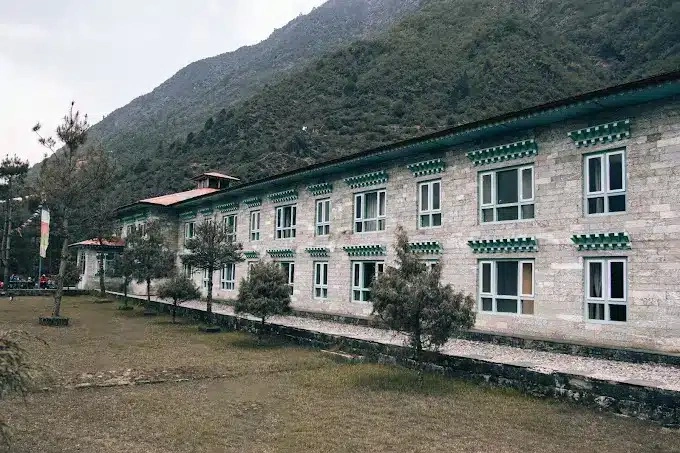
Accommodation and food choices change an independent trekker's budget by $330 to $770 over 11 nights. Rooms cost $7 to $25 per night and meals cost $6 to $14, with prices rising at every step of altitude because every item arrives by porter or yak.
The following table lists typical teahouse prices by altitude zone for 2026/27.
Zone | Twin-share room (per night) | Lunch or dinner |
Phakding and lower villages | $7 to $12 | $6 to $9 |
Namche Bazaar | $10 to $15 | $7 to $10 |
Dingboche and Pheriche | $15 to $20 | $8 to $12 |
Lobuche and Gorakshep | $20 to $25 | $10 to $12 |
Breakfast costs $5 to $8, hot drinks $2 to $5, and snacks $3 to $7. Western dishes run $9 to $14. Dal bhat, a Nepali lentil and rice set, is the cheapest full meal on the menu.
Lodges price rooms low because they expect you to eat there, so trekkers who eat elsewhere sometimes pay a higher room rate. A private single room adds about $150 across the full trek.
Water is the most overlooked line item. Bottled water costs $3 to $6 per liter at altitude, and boiled or filtered water costs NPR 150 to 450 ($1 to $3). At 3 liters per day over 11 days, bottles total $99 to $198 and refills total $33 to $99.
How Does Hiring a Guide or Porter Affect the Everest Base Camp Trek Cost?
Hiring a licensed guide adds $300 to $420 over 12 days, and hiring a personal porter adds $240 to $300. Packages usually bundle both, with one porter shared between 2 trekkers, which cuts each trekker's porter cost to $120 to $150.
A guide's daily rate runs $25 to $35 and a porter's runs $20 to $25. Heaven Himalaya includes a licensed English-speaking guide, one porter per 2 clients, and an assistant guide for groups of 6 or more.
A shared porter carries the duffel bags of 2 trekkers, which keeps each share within the 15 kg Lukla baggage allowance.
A guide delivers value beyond navigation. Guides recognize early altitude symptoms, set the daily pace, arrange lodging in peak season, and coordinate rescue. Ask every operator whether the guide and porters carry insurance and proper clothing, since cheap quotes often shift those costs onto the staff.
What Is Included in the Everest Base Camp Trek Package Cost?
An Everest Base Camp trek package covers Lukla flights, ground transfers, Kathmandu hotel nights, trail lodging and meals, permits, a licensed guide, porters, and basic gear. Visa, insurance, tips, drinks, and personal expenses stay outside the price. Heaven Himalaya's 14-day package, at $1,499 for 2 to 4 trekkers, shows what a complete inclusion list looks like.
The Everest Base Camp Trekking package at $1,499 includes 8 groups of items:
Round-trip Kathmandu to Lukla flights with departure taxes
Private vehicle transfers, including airport pickups and drop-offs
2 nights in a 3-star Kathmandu hotel with breakfast
Guesthouse lodging on the trail
Breakfast, lunch, and dinner on trekking days, plus fresh fruit snacks
Sagarmatha National Park and local municipality permits
A licensed guide, an assistant guide for groups of 6 or more, and 1 porter per 2 trekkers
A duffel bag, sleeping bag, oximeter, and first-aid kit
Read the exclusions with equal care. Heaven Himalaya's package leaves out the Nepal visa, travel insurance, drinks, hot showers, Wi-Fi, charging, personal gear, tips, and costs from delays, cancellations, or weather. The Ramechhap drive is billed separately in peak months, and helicopter rescue or helicopter flights are not covered.
Are Accommodation and Meals Included in the Everest Base Camp Trek Package?
Yes. Everest Base Camp packages include trail lodging and 3 meals per trekking day, plus Kathmandu hotel nights with breakfast. Heaven Himalaya's package covers 2 hotel nights, guesthouse stays on the trail, and fresh fruit snacks. Drinks, snacks beyond the fruit, and Kathmandu lunches and dinners cost extra.
Check 3 details in any quote: the hotel star rating, whether meals cover all 3 daily meals or only dinner, and the single-room policy. Some budget packages cover only breakfast and dinner, which pushes lunch costs ($6 to $12 per meal) onto you.
Are Domestic Flights to Lukla Included in the Everest Base Camp Trek Cost?
Yes. Most Everest Base Camp trek packages include the round-trip flight to Lukla, which costs $380 to $440 and represents 25% to 29% of a $1,499 package. Heaven Himalaya includes the flights and departure taxes. Peak-season Ramechhap transfers and weather delays are excluded.
Lukla (2,860 meters) is the gateway airstrip, served by Tara Air, Summit Air, and other carriers flying 18 to 20 seat aircraft. A scheduled ticket costs $190 to $220 each way. The baggage allowance is 15 kg checked plus 5 kg carry-on, and overweight bags cost NPR 100 to 200 per kilogram.
The exclusions cause most budget surprises. When weather cancels flights, the extra hotel nights, meals, and rebooking costs fall on the trekker unless insurance covers them. Ask the operator who pays for delay days before you pay the deposit.
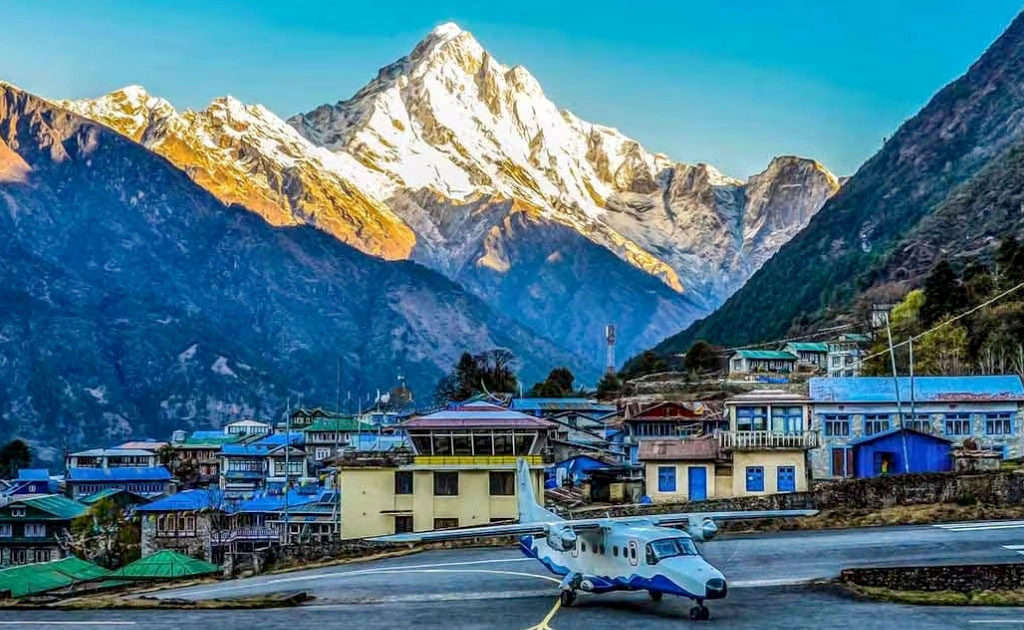
Are Trekking Permits and Entry Fees Included on Everest Base Camp Trek Package?
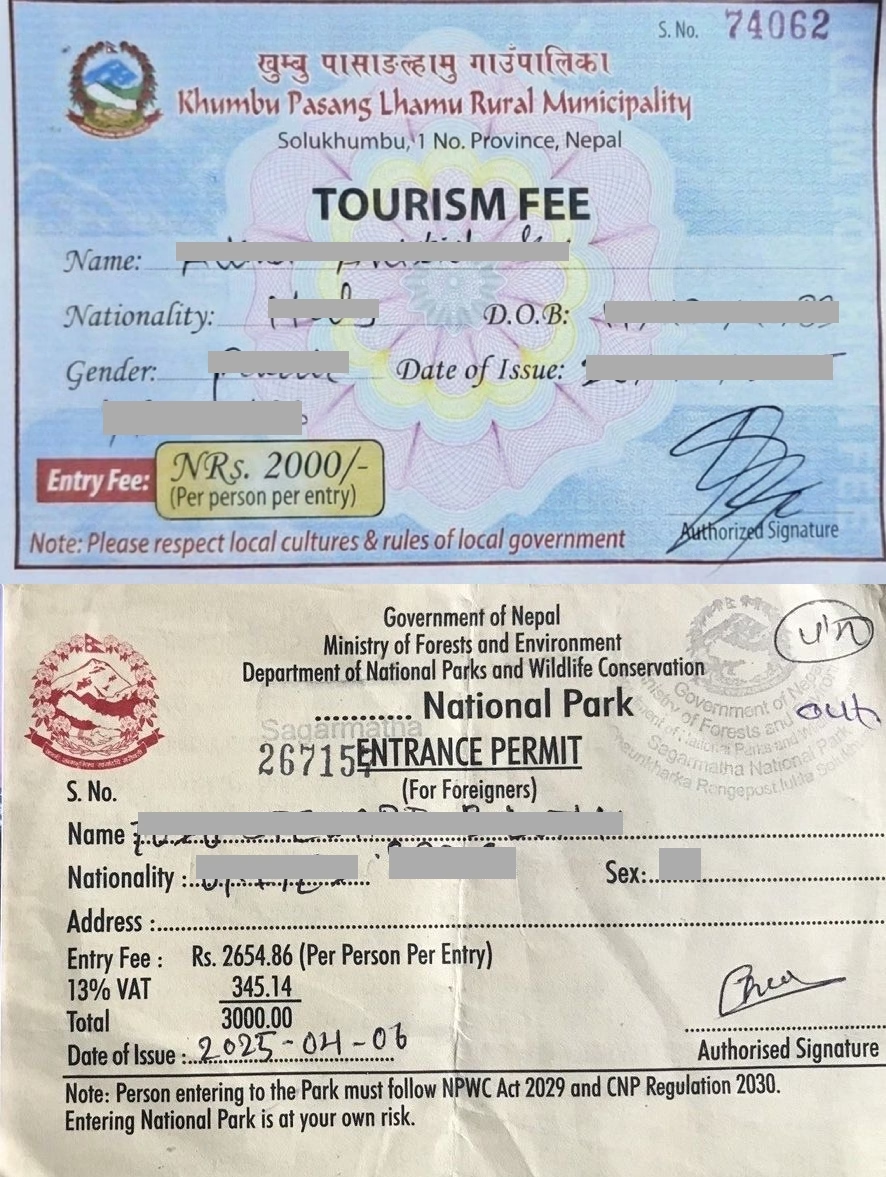
Yes. Everest Base Camp packages include the Sagarmatha National Park permit and the Khumbu Pasang Lhamu Rural Municipality permit, which together cost NPR 6,000, or $39 to $45. Heaven Himalaya's package includes both. Independent trekkers buy them in Kathmandu or at the Monjo and Lukla checkpoints.
Two fees apply on the standard Lukla route. The national park permit costs NPR 3,000 (NPR 3,390 when 13% VAT applies), and the local municipality trek card costs NPR 3,000. Nepal's TIMS card is not collected on the standard Khumbu route under current local practice, though rules change, so confirm before you travel.
Are Guides, Porters, and Their Insurance Included on Everest Base Camp Trek Package?
Yes. Reputable Everest Base Camp packages include a licensed guide, porters, and the staff's own food, lodging, and equipment. Heaven Himalaya provides a licensed English-speaking guide, an assistant guide from 6 trekkers, and 1 porter per 2 clients. Your personal travel insurance is separate.
Two types of insurance get confused. Staff insurance covers the guide and porters against injury and illness, and the operator pays for it. Your travel insurance covers medical care and evacuation for you, and you buy it before you fly. Heaven Himalaya requires evacuation cover up to 6,000 meters.
When a trekker falls ill, the operator coordinates the rescue and the insurer funds it. Operators that promise free evacuation without insurance either pass costs elsewhere or overstate their cover.
What Additional Services Are Included in the Everest Base Camp Trek Package?
Heaven Himalaya's package includes 9 additional services: free airport transfers, a duffel bag, a sleeping bag, an oximeter, a first-aid kit, a guide medical kit, a trek map, a completion certificate, and storage for spare luggage at its Kathmandu office. The operator also advertises a best price guarantee and no booking fees.
The oximeter measures blood oxygen saturation (SpO2) in seconds, and guides track the daily trend rather than a single reading. A resting reading in the 80s is common above 4,500 meters, while a falling trend alongside headache or nausea signals that the group must slow down or descend.
What Are the Additional Expenses During the Everest Base Camp Trek?
Additional expenses add $460 to $930 to a guided Everest Base Camp trek package. They include the Nepal visa, travel insurance, extra Kathmandu nights, personal spending on Wi-Fi, charging, hot showers, and drinks, and tips for guides and porters.
The following table lists each expense and its 2026/27 cost.
Expense | Cost (USD) |
Nepal visa (30 days) | $50 |
Travel insurance (30-day policy with trekking and evacuation cover) | $100 to $250 |
1 to 2 extra Kathmandu nights with meals (budget to mid-range hotels) | $60 to $150 |
Wi-Fi, charging, showers, drinks, and snacks | $150 to $300 |
Tips for guide and porters | $100 to $180 |
Total add-ons | $460 to $930 |
How Much Do Everest Base Camp Trek Permits Cost?
Everest Base Camp trek permits cost NPR 6,000, or about $39 to $45, for most foreign nationals: NPR 3,000 for Sagarmatha National Park and NPR 3,000 for the Khumbu Pasang Lhamu Rural Municipality trek card. Citizens of SAARC countries pay NPR 1,500 and NPR 2,000.
The park permit is sold in Kathmandu and at the Monjo checkpoint. The Khumbu trek card is collected at Lukla or Monjo, and both offices expect cash in rupees plus your passport.
Permit prices barely vary between operators because the park and the municipality set the fees. The $39 to $45 total is about 3% of a standard package price.
How Much Do Kathmandu Accommodation and Meals Cost?
Kathmandu accommodation costs $40 to $70 per night for a 3-star hotel with breakfast and $15 to $30 for a budget guesthouse in Thamel, Kathmandu's tourist district, and meals cost $5 to $12 each. A typical lunch and dinner budget runs $15 to $30 per day.
Most packages cover 2 Kathmandu nights, one before the flight to Lukla and one after the return. Extra nights come from early arrivals, delayed Lukla flights, and rest days before an international flight. Each costs $55 to $100 with meals.
Build 1 to 2 buffer nights into any itinerary that connects to an international flight. Lukla flights cancel in clusters, and a missed connection costs far more than a night in a hotel.
How Much Does Travel Insurance for Everest Base Camp Cost?
Travel insurance for the Everest Base Camp trek costs $100 to $250 for a 30-day policy that covers trekking to at least 5,500 meters and helicopter evacuation. Heaven Himalaya requires cover up to 6,000 meters. Many standard policies stop at 2,500 to 4,000 meters and exclude the trek entirely.
Read 4 clauses before buying: the maximum altitude, whether the policy lists helicopter evacuation, whether it pays the helicopter operator directly, and the medical expense limit. A direct-payment guarantee matters because helicopter operators in Nepal usually want payment confirmation from the insurer before they fly.
Helicopter evacuation from Gorakshep costs $4,000 to $6,000 without insurance. Insurers verify medical necessity, so keep the guide's notes and daily oximeter readings. A policy that costs $150 to protect against a $5,000 bill is the cheapest risk control on the entire budget.
How Much Should You Budget for Wi-Fi, Charging, and Hot Showers?
Budget $35 to $110 for Wi-Fi, charging, and hot showers on the Everest Base Camp trek. Lodges charge $5 to $15 per Wi-Fi session, $3 to $10 per device charge, and $5 to $15 per hot shower, with prices rising at higher altitudes.
Prepaid Airlink Wi-Fi cards cost NPR 1,200 for 24 hours with 5 GB (about $8) or NPR 1,500 for 48 hours with 12 GB (about $10). Coverage weakens above Dingboche.
The $35 to $110 estimate comes from 5 charges ($15 to $50), 2 showers ($10 to $30), and 2 Wi-Fi sessions ($10 to $30). A 20,000 mAh power bank holds 4 to 5 phone charges and cuts the charging line.
How Much Money Should You Carry for Personal Expenses and Tips?
Carry NPR 22,500 to 45,000, or $150 to $300, in rupees for personal expenses, plus $100 to $180 for tips. Namche Bazaar has the last ATMs on the trail, and they run out of cash or lose connectivity often enough that you cannot count on them.
Break the cash into small notes, because teahouses in Lobuche and Gorakshep rarely have change for NPR 1,000 notes. The most common mistake we see is carrying only large notes or only dollars, which forces trekkers into poor exchange rates at the lodge.
Tipping follows an unwritten scale. Pool tips across the group and hand them over at a farewell dinner in Kathmandu. Guides typically receive $8 to $15 per day and porters $5 to $10 per day. Over 12 trail days, that is $96 to $180 for the guide and $60 to $120 per porter, and groups split the guide's share.
How Do Independent and Guided Everest Base Camp Treks Compare in Cost?
An independent Everest Base Camp trek costs $979 to $1,695, and a guided package costs $1,349 to $1,880 once visa and insurance are counted. Going without staff saves up to $820. Hiring a private guide and porter erases that gap and often reverses it.
The table below compares the core cost of each approach, covering flights, permits, visa, insurance, 2 Kathmandu hotel nights, and trail lodging and meals. It excludes tips and personal extras.
Approach | Core cost (USD) |
Independent, no staff | $979 to $1,695 |
Independent plus private guide | $1,279 to $2,115 |
Independent plus guide and porter | $1,519 to $2,415 |
Heaven Himalaya group of 15 or more ($1,199 plus visa and insurance) | $1,349 to $1,499 |
Heaven Himalaya 2 to 4 people ($1,499 plus visa and insurance) | $1,649 to $1,799 |
Heaven Himalaya solo ($1,580 plus visa and insurance) | $1,730 to $1,880 |
Independent figures use a return Lukla flight of $380 to $440, permits of $39 to $45, a $50 visa, insurance of $100 to $250, 2 Kathmandu nights at $80 to $140, and 11 trail nights at $330 to $770.
Is Independent Trekking Cheaper Than Booking an Everest Base Camp Trek Package?
Yes, but only without a guide. An independent trekker with no staff spends $979 to $1,695, which beats every package in the table at the low end. With a hired guide, the independent range overlaps the package range and often exceeds it.
The savings come with 4 trade-offs. You book flights during the peak-season rush yourself, you carry your own pack, you coordinate every lodge, and nobody monitors your altitude symptoms. While the Khumbu municipality currently bypasses the national ban on solo trekking for those flying directly into Lukla, trekkers entering the region overland via Jiri or Phaplu will hit national checkpoints where hiring a guide is strictly enforced. Always verify current local regulations before flying.
Independent trekking suits travelers who have trekked above 4,000 meters before and who read their own symptoms honestly. For a first Himalayan trek, a saving of up to $820 rarely justifies losing a second pair of eyes at 5,000 meters.
How Much Does Hiring a Private Guide Cost?
Hiring a private guide for the Everest Base Camp trek costs $25 to $35 per day, or $300 to $420 over 12 days, before the guide's own meals, lodging, and insurance are settled. A fully private package, with a guide and porter dedicated to you, costs $1,800 to $3,000.
Confirm what the daily rate covers. Some freelance guides quote a rate that excludes their food and lodging, which adds $20 to $30 per day to your bill. Agency-hired guides usually carry staff insurance and rescue coordination, while freelancers often do not.
Is a Group Joining Trek More Affordable?
Yes. A group joining trek lowers the per-person price by $100 to $381 compared with a solo booking. Heaven Himalaya's 14-day rates fall from $1,580 for 1 person to $1,499 for 2 to 4, $1,399 for 5 to 8, $1,299 for 9 to 14, and $1,199 for 15 or more.
Group departures follow fixed dates, so flexible travelers save the most while travelers tied to a specific week lose that option. Groups also set a shared pace. The slowest acclimatizer decides the day, which suits first-timers and frustrates fast hikers.
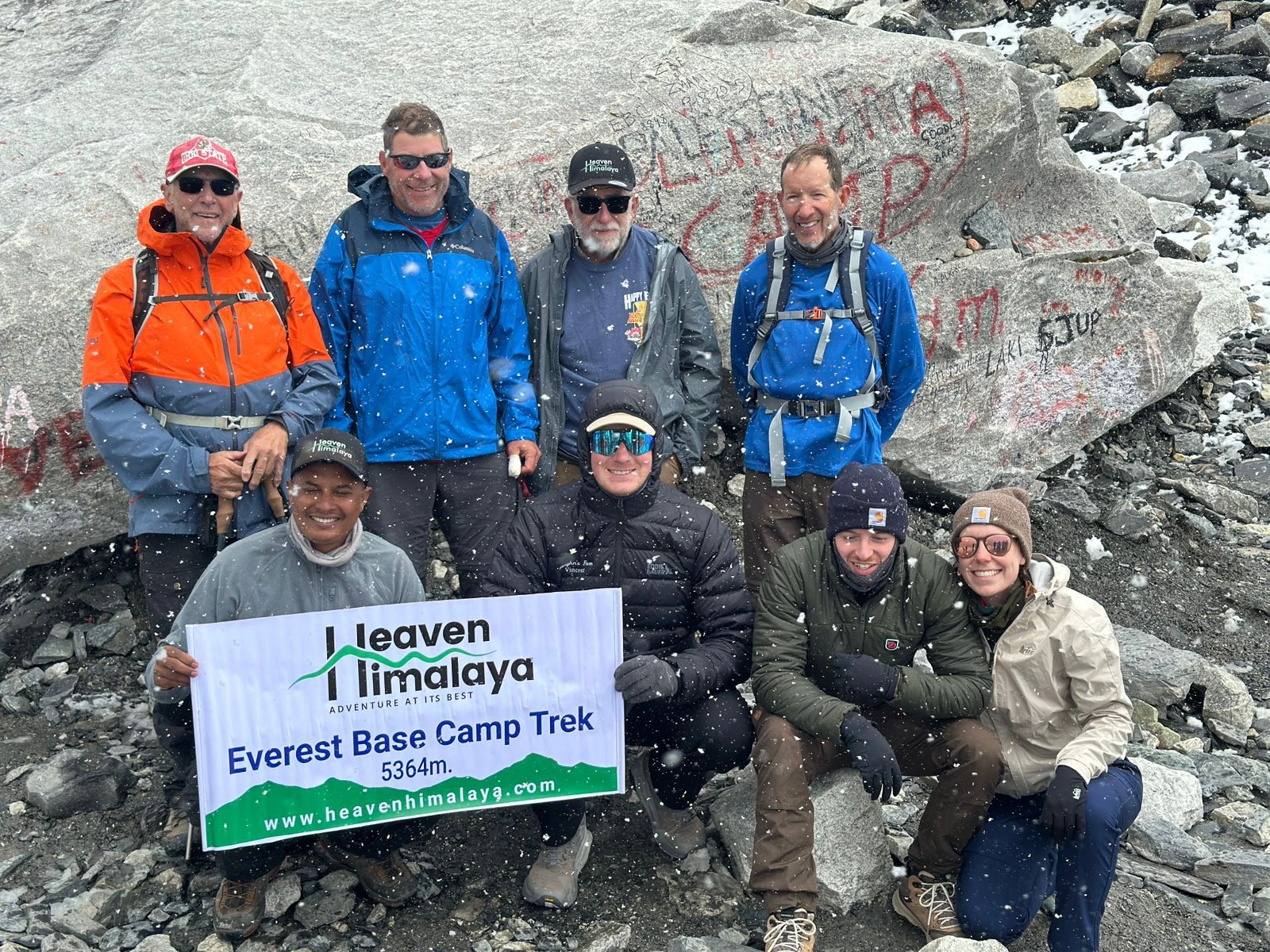
What Are the Benefits of Booking an All-Inclusive Everest Base Camp Trek Package?
An all-inclusive Everest Base Camp trek package gives you 5 benefits: fixed pricing, one point of contact, coordinated flights and transfers, rescue coordination, and fair pay for staff. The package replaces 9 separate purchases with 1 payment in US dollars.
One point of contact means a delayed Lukla flight gets rebooked by someone who speaks to the airline every day. Rescue coordination matters most: the operator arranges the response while your insurer pays the bill.
Fair staff pay is the least visible benefit. A package priced near the cost floor of $1,250 for a small group leaves little room for margin. A package priced far below it pays for the difference somewhere, and the guide and porters usually absorb it.
Before you pay for any package, ask 9 questions:
Does the price include both Lukla flights and departure taxes?
Does the quote state the Ramechhap transfer cost for your travel month?
Does it cover both permits, Sagarmatha National Park and Khumbu Pasang Lhamu?
Does it name the Kathmandu hotel and its star rating?
Does it cover breakfast, lunch, and dinner on every trekking day?
Does it state the guide-to-trekker and porter-to-trekker ratios?
Do the guide and porters carry insurance and proper gear?
Does it say who pays for weather delays?
Does it state the minimum evacuation cover you must buy?
How Can You Save Money on the Everest Base Camp Trek?
You can save money on the Everest Base Camp trek in 4 ways: travel outside peak weeks, cut accommodation and food costs, book early, and bring gear you own instead of renting. Group size and flight routing produce the largest single savings, up to $381 and $80.
When Is the Cheapest Time to Trek to Everest Base Camp?
The cheapest time to trek to Everest Base Camp is December to February or June to August, when demand falls and flights depart from Kathmandu instead of Ramechhap. Cheaper months come with colder nights or cloud-related flight cancellations.
The best compromise is the first 2 weeks of December and late February. Skies are usually clear, trekker numbers have dropped, and Lukla flights often return to Kathmandu once the peak season ends, which removes the 4 to 5 hour Ramechhap drive and $27 to $80 in transfer costs. Dates shift by 2 to 3 weeks each year, so confirm routing with your operator.
How Can You Reduce Accommodation and Food Expenses?
You can reduce accommodation and food expenses by eating dal bhat, eating at the lodge where you sleep, sharing twin rooms, carrying snacks from Kathmandu, and refilling water instead of buying bottles. These habits save $100 or more over a trek.
Dal bhat offers free refills at most lodges, so it gives the most calories per dollar. Eating where you sleep keeps room rates at $7 to $25 instead of higher. Energy bars from Kathmandu supermarkets cost $1 to $2, against $3 to $7 on the trail. Refilling water saves $66 to $99 over 11 days at 3 liters per day.
Skip hot showers above 4,000 meters. At $5 to $15 each, they add chill risk in a cold bathroom, and a pack of wet wipes handles hygiene for a few dollars.
Is Booking Early More Affordable?
Yes, booking early makes the Everest Base Camp trek more affordable by securing availability and a fixed US dollar price, not by triggering large discounts. Lukla seats and teahouse beds in October and November sell out first, and late bookings pay for scarcity.
Book 4 to 6 months ahead for October and November departures and 2 to 3 months ahead for spring. Heaven Himalaya advertises a best price guarantee and no booking or commission fees, so confirm those terms in writing when you reserve.
A deposit on a fixed date reduces flexibility, so read the cancellation terms and the weather-delay clause before you pay.
What Essential Items Should You Bring to Avoid Rental Costs?
Bring 10 essential items to avoid rental costs: trekking boots, a down jacket, thermal layers, gloves, a warm hat, trekking poles, a headlamp, water purification tablets, a power bank, and sun protection. Heaven Himalaya already supplies a sleeping bag and duffel bag, so skip those.
Never rent boots. Blisters from borrowed boots end more treks than altitude does. Rent only bulky, rarely used items: Thamel shops rent down jackets at roughly $1 to $2 per day, or $14 to $28 over a 14-day itinerary, and poles for about $1 per day. A new down jacket costs $150 or more, so renting wins for a single trek.
How Can You Plan Your Everest Base Camp Trek Budget with Heaven Himalaya?
You can plan your Everest Base Camp trek budget with Heaven Himalaya by picking a group-size tier, confirming the inclusion list, and adding $460 to $930 for visa, insurance, tips, extra Kathmandu nights, and personal spending. The package price covers flights, permits, lodging, meals, and staff.
The following table converts each Heaven Himalaya tier into an all-in budget, using the $460 to $930 add-on range from earlier in this guide.
Group size | Package price | All-in budget |
1 person | $1,580 | $2,040 to $2,510 |
2 to 4 people | $1,499 | $1,960 to $2,430 |
5 to 8 people | $1,399 | $1,860 to $2,330 |
9 to 14 people | $1,299 | $1,760 to $2,230 |
15 to 20 people | $1,199 | $1,660 to $2,130 |
Add a reserve of $150 for a Lukla delay. That reserve covers about 2 extra days in Kathmandu.
Can Heaven Himalaya Help You Choose an Everest Base Camp Trek Package Within Your Budget?
Yes. Heaven Himalaya's Kathmandu team matches travelers to a group size, season, and itinerary that fits a stated budget. The operator has run Everest Base Camp treks for more than 13 years and has hosted over 1,000 trekkers, with a 14-day itinerary that peaks at Kala Patthar (5,545 meters).
Send your travel month, group size, and budget, and the team returns a written quote that states the inclusions, the Ramechhap transfer cost for your month, and the current departure dates.
Next step: Review the Everest Base Camp Trekking package for the full itinerary and current prices. Questions go to info@heavenhimalaya.com or WhatsApp +977 985 1273867. The office is at Gitanjali Chowk, Dathu Sadak, Kathmandu, Nepal.
What Are the Key Cost Factors and Budget Considerations for the Everest Base Camp Trek?
The key cost factors of the Everest Base Camp trek are duration, season, group size, accommodation and food, and staffing, and the key budget considerations are visa, insurance, tips, personal spending, and a delay reserve. Together they place a typical guided trek at $1,950 to $2,450 all-in.
The table below summarizes the cost effect of each factor.
Factor | Cost effect (USD) |
Group size (solo to 15 or more) | Up to $381 per person |
Guide hire (independent trekkers) | $300 to $420 for 12 days |
Accommodation and food (independent, 11 nights) | $330 to $770 |
Each extra trekking day | About $107 on a package |
Peak-season Ramechhap transfer | $27 to $80 |
Add-ons (visa, insurance, tips, extras) | $460 to $930 |
Four rules keep the Everest Base Camp trek cost under control. Compare inclusions before prices. Keep both acclimatization days. Carry rupees in small notes. Buy insurance that covers helicopter evacuation to 6,000 meters. A realistic plan for 2026/27 holds a $150 reserve for Lukla delays on top of a $1,250 to $1,800 package and $460 to $930 in extras.