
Annapurna Circuit with Poon Hill Trek
- Book Instantly Directly with local Provider
- The best price guarantee
- No booking fee
- DestinationNepal
- Duration18 days
- Trip DifficultyVery Strenuous
- ActivitiesTrek
- Max. Elevation5416m.
- Group Size15+
- VehicleCar, Deluxe AC Bus
- AccommodationHotel, teahouse and lodge
- MealsB,L,D
Trip Note of Annapurna Circuit with Poon Hill Trek
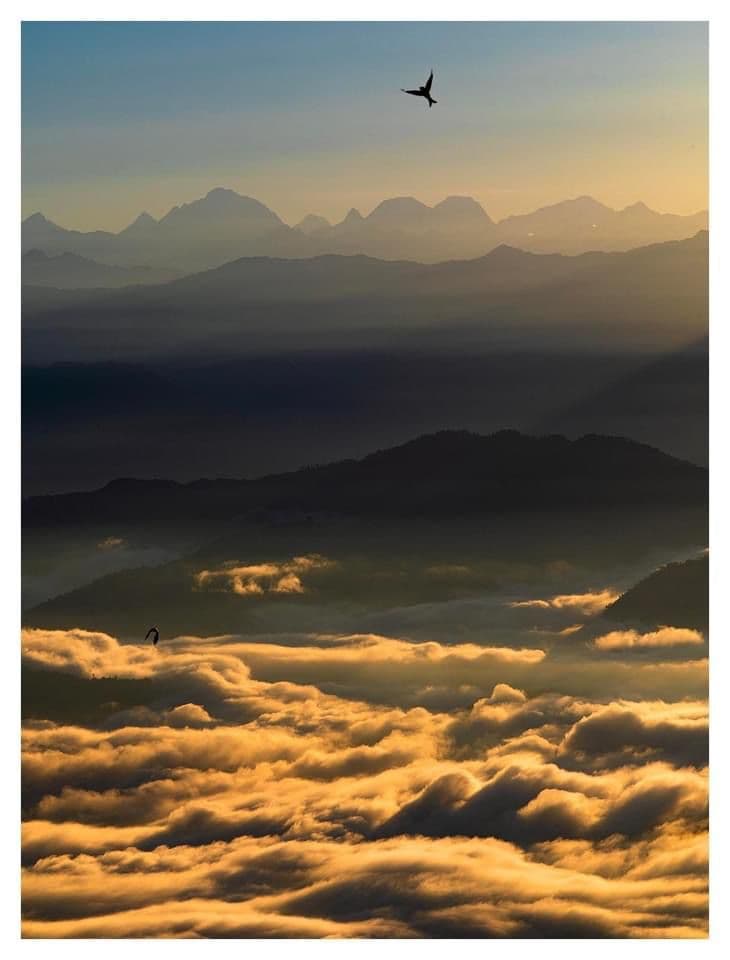
The Annapurna Circuit with Poon Hill Trek combines the classic circuit adventure with the famous sunrise viewpoint of Poon Hill. The journey follows the diverse Annapurna Circuit trail through lush valleys, alpine forests, and high mountain passes, including the challenging Thorong La Pass at 5,416m. Adding the hike to Poon Hill (3,210m) offers breathtaking sunrise views over Annapurna, Dhaulagiri, Machhapuchhre, and Nilgiri, making the trek even more rewarding. Blending dramatic landscapes, cultural encounters with Gurung, Thakali, and Manangi communities, and iconic Himalayan panoramas, this trek is a perfect choice for those who want the full Annapurna experience with an extra scenic highlight.
Annapurna Circuit is the most popular trekking destination, with high passes standing over 5400 meters above sea level. Here, the travel package, Annapurna Circuit with Poon Hill Trek, is an 18-day trekking journey in Nepal that combines spirituality and adventure in the shadow of the majestic Annapurna massif.
The circuit tour sets up brilliant difficulties for those who give much room to adventure, thrill, and the knowledge that it develops within the soul about nature, people, culture, and values. For this reason, going on a trek to Annapurna Circuit is a pure experience of self-discovery within.
The Best of the Annapurna Circuit Trek Package
Also called the Annapurna Round Trek, the route passes many ethnic villages from various backgrounds. Each of them has unique ecological and social systems, resembling a vast living museum of different lifestyles and experiences. It reflects peace and harmony among the fellow tribes.
We pass through the Manaslu and Annapurna slants on this Annapurna Circuit Trek package. Once we pass the pilgrimage and trading trails, the circuit showcases a wide variety of Gurung and Magar traditional qualities.
Take a trek to the Muktinath temple to refresh your soul. It is one of the prime points of the trip, along with the mystic Kagbeni village trip. Muktinath is a sacred shrine that holds equal significance to both Hindu and Buddhist followers around the world. The surrounding field is barren, filled with dry landscapes.
From there, you will reach the gorgeous high passes that separate two valleys in Manang. The Annapurna Circuit Trek Package likewise comprises a walk to the world’s deepest gorge, cut by the river Kali Gandaki.
Outline Itinerary-Annapurna Circuit with Poon Hill
- Day 01: Arrival in Kathmandu (1,400m/4,593ft) (Tribhuvan International Airport)
- Day 02: Kathmandu Sightseeing (1,400m/4,593ft) & Trek Preparation
- Day 03: Drive to Dharapani (1,860m/6,102ft)
- Day 04: Trek to Chame (2,670m/8,759ft)
- Day 05: Trek to Pisang (3,300m/10,827ft)
- Day 06: Trek to Manang (3,540m/11,614ft)
- Day 07: Acclimatization Day in Manang (3,540m/11,614ft)
- Day 08: Trek to Yak Kharka (4,050m/13,287ft)
- Day 09: Trek to Thorong Phedi (4,525ft/14,845ft)
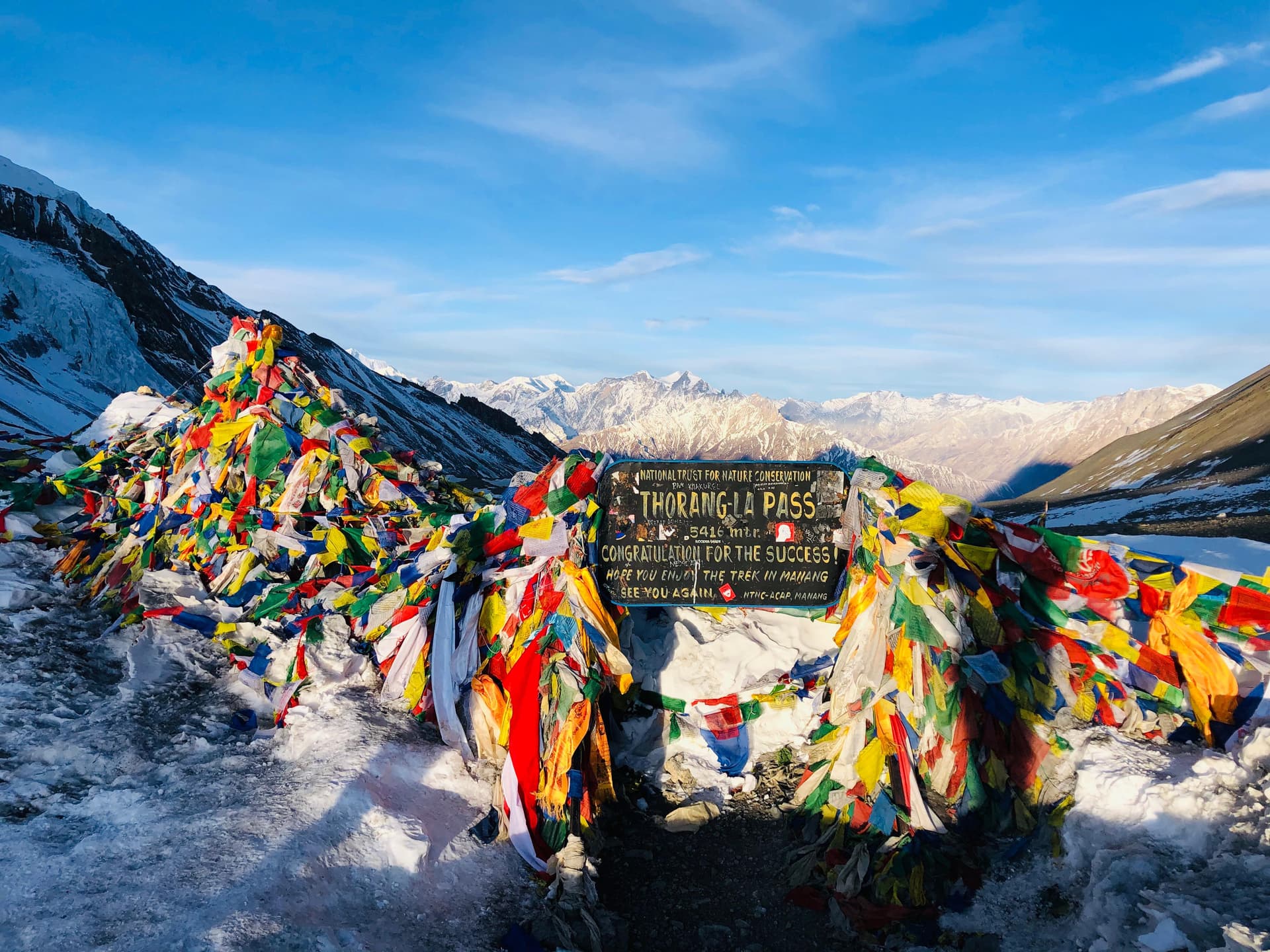
- Day 10: Cross Thorong La Pass (5,416m/17,769ft) & Trek to Muktinath (3,800m/12,467ft)
- Day 11: Trek to Marpha (2,670m/8,760ft)
- Day 12: Drive to Tatopani (1,190m/3,805ft) & Relax in Hot Springs
- Day 13: Trek to Sikha (1,935m/6,348ft)
- Day 14: Trek to Ghorepani (2,850m/9,350ft) – 7 hrs
- Day 15: Hike to Poon Hill (3,210m/10,531ft) – Trek to Ulleri & Drive to Pokhara
- Day 16: Fly or Drive to Kathmandu (1,400m/4,593ft)
- Day 17: Reserve/Leisure Day in Kathmandu (1,400m/4,593ft)
- Day 18: Final Departure (Farewell)
Inclusions/Exclusions
- Airport transfers–pick up and drop in a private vehicle
- All ground transportation in a private vehicle (Kathmandu - Jagat, Nayapul- Pokhara, and then Pokhara - Kathmandu)
- Your 2 Night accommodation in Kathmandu and 1-night accommodation in Pokhara will be in a 3-star category hotel with a breakfast plan.
- Your accommodation in the best guesthouses available (on twin sharing basis) during the trek.
- Three-day meals include breakfast, lunch, and dinner throughout the classic Annapurna Circuit trekking, except in Kathmandu and Pokhara.
- All paper works
- National park and heritage sites entry tickets
- Trekkers Information Management System (TIMS), ACAP, and other necessary trekking permits for Annapurna Circuit Trek.
- A licensed, English-speaking, experienced guide
- Porter to carry your items on the trek. (Two clients will share one porter.)
- All the costs of guide and porter, including salary, meals, and accidental insurance.
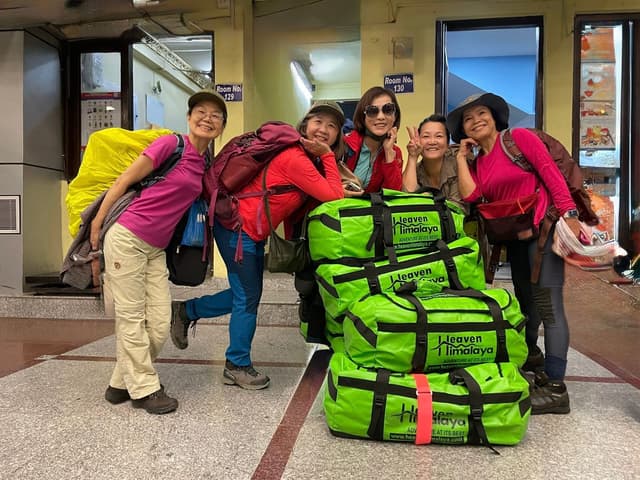
- Heaven Himalaya Duffel bag, and sleeping bags (to be returned to us after the trek)
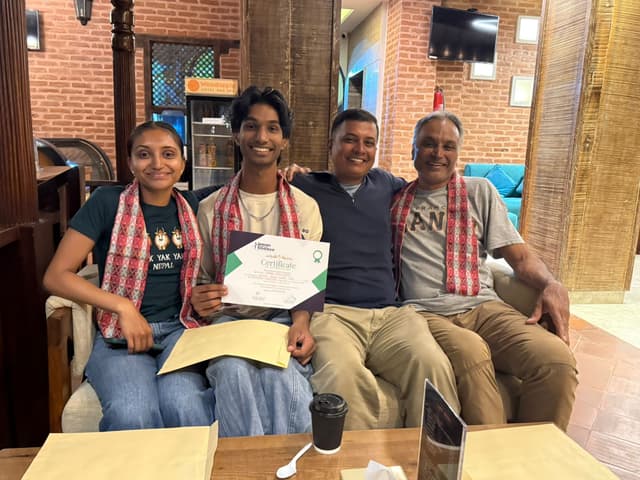
- T-shirts, a route map, and a travel completion certificate
- All applicable government taxes and service charges.
- First aid kit
- Meals (lunch and dinner) in Kathmandu and Pokhara
- International airfare
- Visa costs
- Travel Insurance
- Personal refreshment items like cold drinks, snacks, etc.
- Personal utility items like laundry, telephone expenses, electricity charges, etc.
- Personal trekking gear for Annapurna Circuit Trek.
- Tips for guides and porters and other trekking staff.
Dates & Availability
Note to Travelers
Check out the best prices for the Poon Hill Trek.
Kindly note that Start Dates are your dates of arrival in Nepal, and End Dates are the dates of leaving Nepal.
We specially quoted and specified the below list of start dates for the group joining option. Let us know if the below start dates do not work for you; we will surely add your available days to fit your interest.
Upcoming Trip Start Dates
- Guaranteed: We guarantee Annapurna Circuit trips to run.
- Available: The Annapurna Circuit trip is available to run when the minimum group size is met.
- Limited: Hurry; only a few seats are available.
Select Departure Date
Trip Duration: 18 days
March 2026
Su
Mo
Tu
We
Th
Fr
Sa
1
2
3
4
5
6
7
8
9
10
11
12
13
14
15
16
17
18
19
20
21
22
23
24
25
26
27
28
29
30
31
1
2
3
4
Number of Travelers
How many are traveling?
Total Price
Adult: US $ x 1
US $0
18 days Annapurna Circuit with Poon Hill Trek Itinerary
Day 01: Arrival at Kathmandu's Tribhuvan International Airport
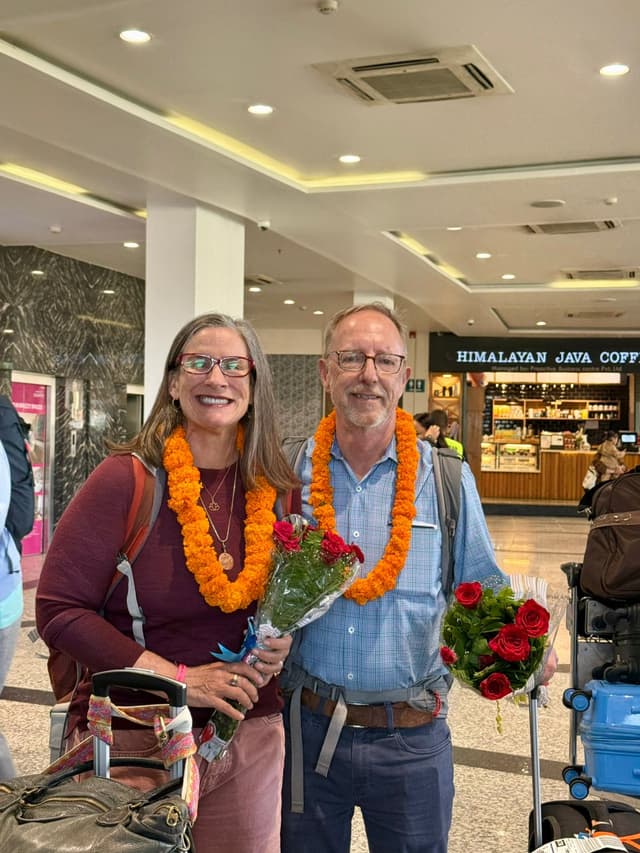
Welcome to Kathmandu, the capital city of Nepal. As you land in the valley, you will immediately notice the smell of ancient monuments, sculptures, artistic temples, and magnificent art.
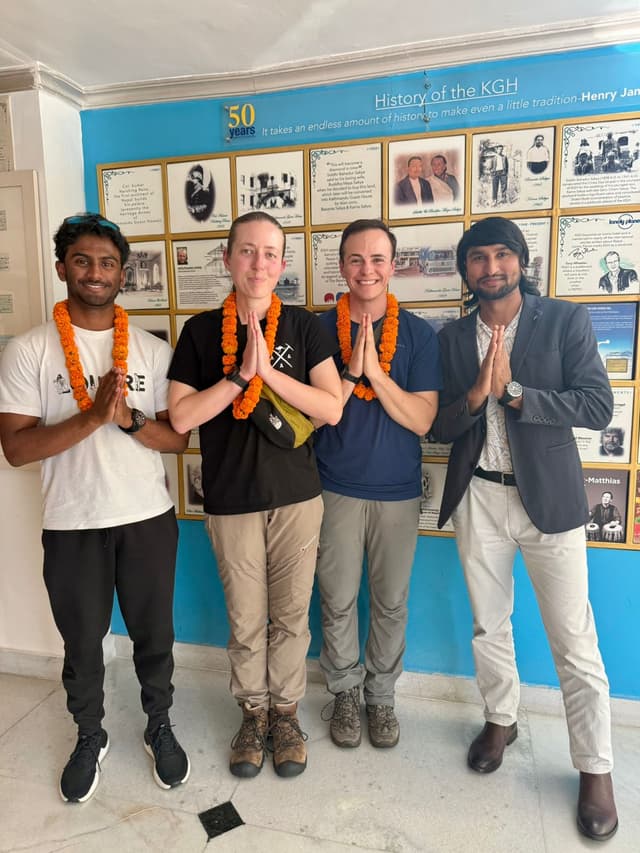
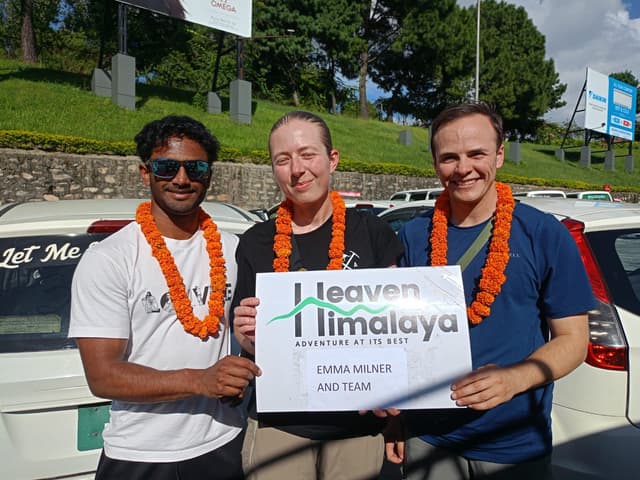
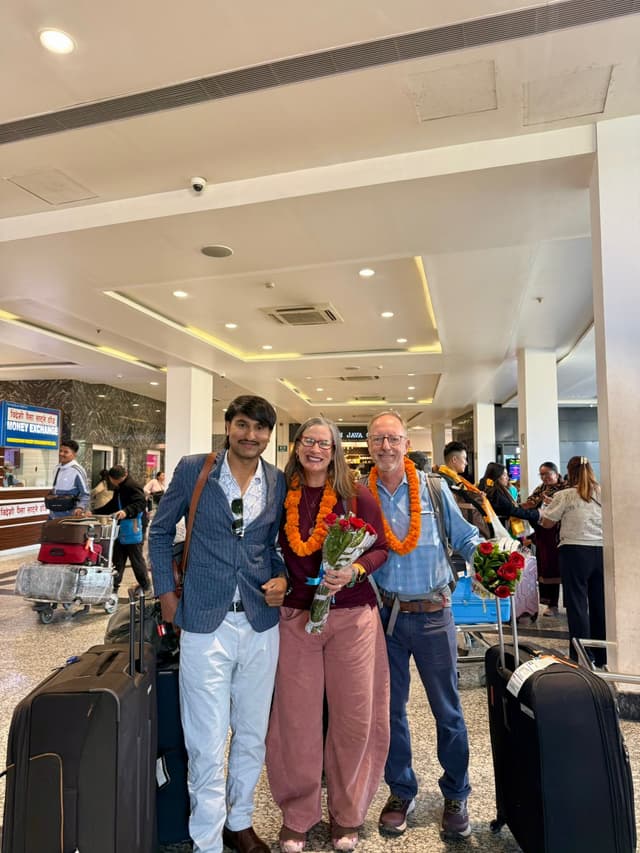
If you come by air, our staff will wait for you outside of the airport terminal. He/she stands there by your nameplate and the company name. They will greet and warmly receive you. Then they will support you with transportation to transfer you to your hotel in Kathmandu.
Take a rest and gather the energy to walk on the trails. Also, if you have some personal gear to buy, you can go shopping in Thamel in the evening. You will spend the night in a hotel.
Day 02: Sightseeing and cultural visit in Kathmandu and trek preparation day
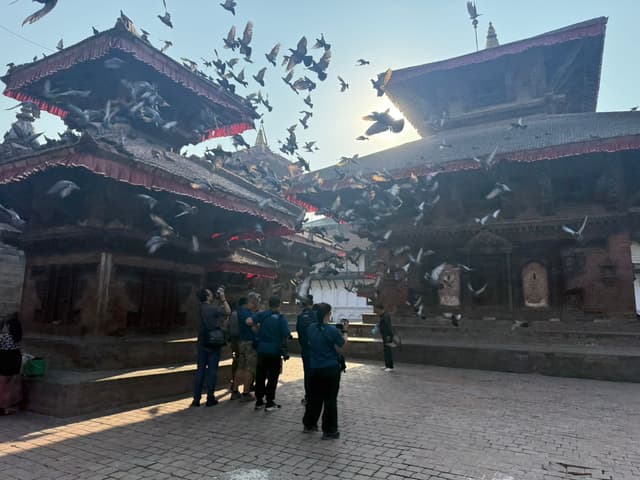
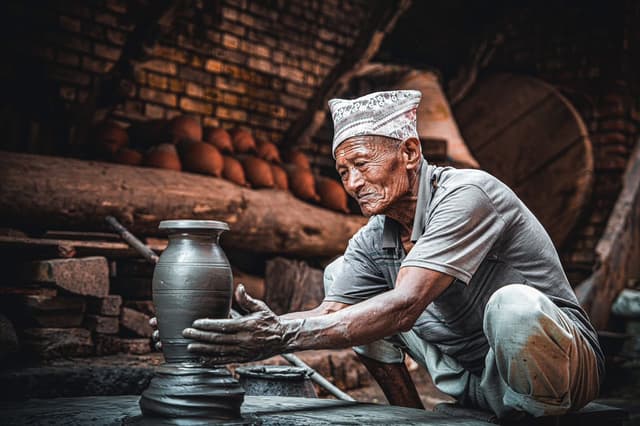
In the sightseeing tour, we will cover some UNESCO-listed world heritage sites in Kathmandu like Kathmandu Durbar Square, Swayambhunath Stupa, Pashupatinath temple, and Boudhanath Stupa. The sightseeing tour shall be very explorative and informative. One can get some unique insights into the art, culture, and history of Nepal. Kathmandu Durbar Square depicts Nepal’s rich history and the subtle taste of Malla kings in terms of art and architecture.
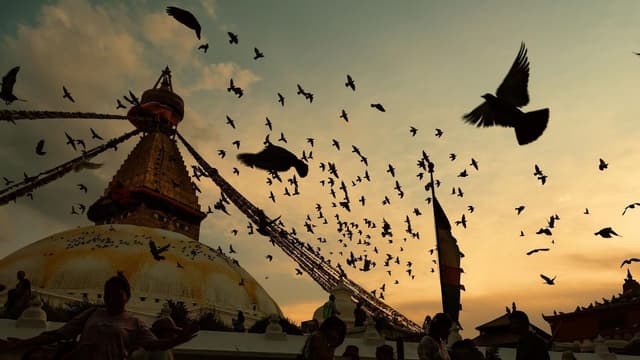
Swayambhunath stupa and Boudhanath stupa reflect the richness of the Buddhism religion prevalent in Nepal, and the Pashupatinath temple is a center for all the Hindu people worldwide. Nepal is a country with Hindu people dominance. Hence, the temple is honored with much respect and pride.
At last, we head to Boudhanath stupa, a colossal stupa put on a three-layered Mandela. We visit all these dazzling heritage goals and end our day with a drive back to your hotel. Tonight, spend your time a hotel in Kathmandu.

Day 03: Drive to Dharapani (1860m/6102ft)
After breakfast at the hotel, the guide will pick you up for a drive to Besisahar. We drive to the location by private vehicle along the route of the Prithvi Highway.
During your drive, the Trishuli River will accompany you for hours. Then the pleasing beauty of hills, mountains, farmland, bridges, fruit sellers, and quiet villages will be there with you during the other hours of driving. After 6-7 hours of driving, we will reach Besisahar.
From Besisahar, we head to Jagat, the beginning point of our Annapurna Circuit Trek. Jagat is a beautiful place nestled between the lofty peaks of Annapurna and Manaslu. We take around 8–9 hours to reach Jagat from Kathmandu, covering a distance of 185 km approx.
When we arrive at our destination, our guide will take us to your guesthouse. Freshen up, make yourself comfortable and collect energy for trekking. Getting excited for the days to come, we will spend our nights there with a cozy, warm sleep.
Then, we continue our drive to Dharapani at a height of 1960 m. The route passes through impressive wide valleys. For today, we will stay at the guest house in Dharapani and spend the night there.


Day 04: Trek to Chame (2670m/8759ft)
After a local morning meal, we resume our Annapurna Circuit Trek route. Tie up your shoelaces and get ready for a long trekking day. Today, we cover 17 km of the journey and climb over 700 m of altitude.
We pass through beautiful villages such as Bagarchhap, Danakyu, Timang, Thanchok, and Koto. Get along with the presence of subtropical forests, arid landscapes, bizarre rock formations, and majestic panoramas of the great Himalayas.
First, we hike for 2 hours to reach Timang at an altitude of 2750 m. Enjoy the beauty of nature as we pass through the Marshyangdi river valley. From Timang, we walk for 1 hour and 40 minutes to Koto, at a height of 2600 m.
Finally, with outstanding views of Mt. Manaslu (8156m) and Ngadi Chuli (also known as Peak 29), we reach Chame in about an hour. Chame is the administrative headquarters of Manang District, rising at an altitude of 2670 m. We relax and enjoy our food in the guesthouse and spend the night there.
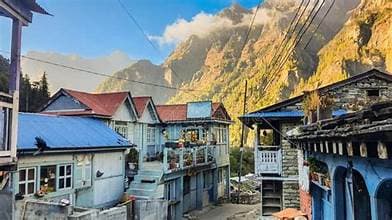


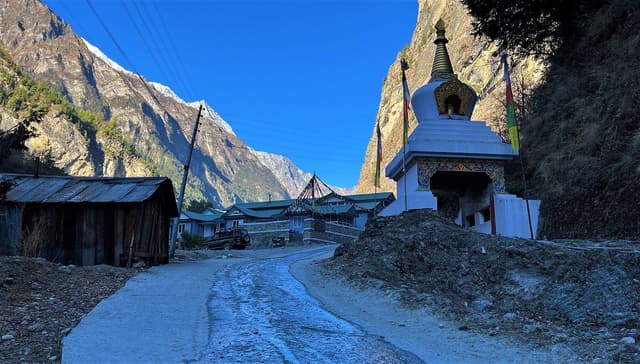
Day 05: Trek to Pisang (3300m/10827ft)
Today's major highlights are the huge apple orchard, Paungda Danda rock, majestic mountain vistas, prayer wheels, and deep pine forests.
First, the day begins in a village, past prayer wheels into the forest route. We hike under the Lamjung Himal along the vertical rocks of the Marsyandi valley near the Paunda Danda Rock. The rock towers over 1500 m. Locals refer to it as the "Gateway to Heaven."
Following these breathtaking views, we set out on a four-hour hike to lower Pisang. The route is simple and easy compared to other days. Then, traveling through the pine forest, we go to Upper Pisang. We take some rest, enjoy the views, and walk back and stay at the guesthouse. Spend the night at the lodge under the beautiful peaks.
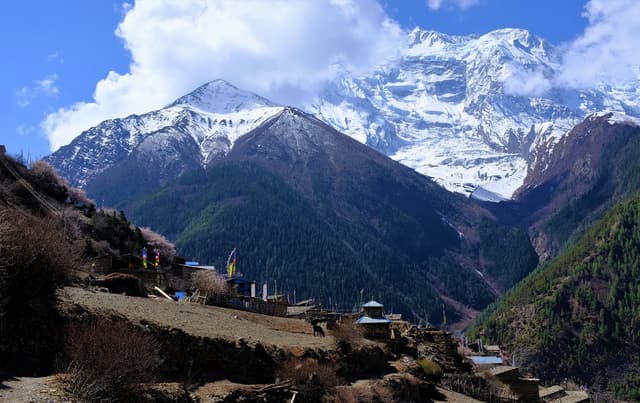


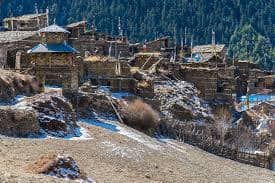
Day 06: Trek to Manang (3540m/11614 ft)
The entire Annapurna Circuit trekking route we will walk today is decorated with natural and cultural heritage. First, we move to Ghyaru at an altitude of 3,730 m. It takes around 2 hours. As we move through, you can feel the influence of the Tibetans and Buddhists. We pass through green forests, and beautiful mani walls with stone tablets inscribed with mantras.
After that, we trek to Ngawal, which takes us around 1 hour and 35 minutes. The path climbs upward at a much steadier incline. From there, we tumble down to the valley, crossing the forest for 2 hours to Braga. We will spend some time in Braga. There are stupas and a beautiful monastery. After we explore Braga, we walk for half an hour to reach Manang, our last point for today.
Today, there's the option of two routes to follow from Pisang to Manang: the southern route and the northern route. The southern trail is easier and less demanding than the northern trail.
You will choose to go in any of these ways. Also remember, our guide can use any route depending on the present situation over there. Spend the night in Manang at a comfortable local hotel.


Day 07: Acclimatization day at Manang, (3540m/11614 ft)
Day 7 is our acclimatization day or rest day. This is a rest day to adapt to the local changing environment. If you are interested, we will do a few days’ walks. Some possibilities include hiking to Praken Gompa. Another option is to attempt a challenging hike to Ice Lake (4500m). Also, the guide will arrange some small hikes in the afternoon.
There are many guest houses, coffee shops, hotels, and restaurants in Manang. Today, enjoy small hikes, and food, and talk to local people to get to know their lifestyle. If you want to buy some gear, you can do so as there are many small shops. Relish your day and watch the sunset from your residence in the evening.


Day 08: Trek to Yak Kharka (4,050m/13,287ft)
From Manang, we start our journey to Yak Kharka. We pass tall trees on our way toward the alpine grass and junipers. We pass through villages to grassy meadows where horses and yaks graze.
From Manang, we reach Ghunsang, which takes around 2 hours. We enjoy views of snowy mountains, the river meandering through the valley, and a small lake.
Soon you will be ahead of the Firs and junipers. Also, there are no vehicles or village settlements, so you just have clear views of the stunning peaks all around you. During the day, you will get to know Tibetan Buddhism and its presence on the route. There are no longer any day walks for today.
So, walking slowly, we will climb to Yak Kharka (Yak Huts). It is the yak herders' place. They bring their yaks or other animals to graze in the grassy meadows. Tonight, sleep comfortably at local lodgings. Drink plenty of water at regular intervals. From today onwards, you may feel a sign of high altitude, so if you see any symptoms, explain them to your guide.


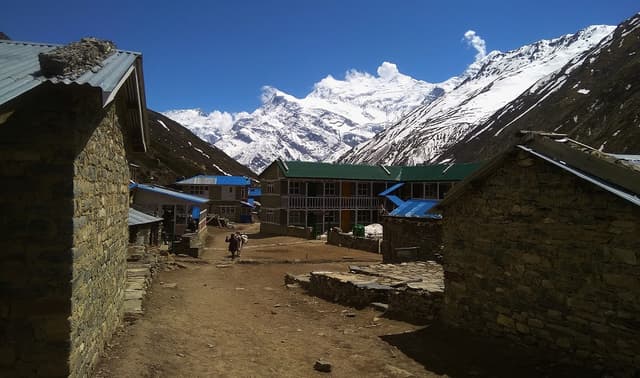

Day 09: Trek to Thorong Phedi (4,525m/14,845ft)
This is another short day of trekking on the Annapurna Circuit Route. It also aids in acclimatization. First, we hike to Ledar, then to Deurali Tea House, and finally to Thorong Phedi.
We begin our journey in Yak Kharka, where we begin our journey in Yak Kharka.To Deurali Tea House, passing through Jarang Khola and similar views of mountains, bridges, grassland, and rivers. As we hike further, the scenery becomes wider and more beautiful.
After 3–4 hours of walking, we reach Thorang Phedi at an altitude of 4,600 m. "Phedi" means base in English. Thus, Thorang Phedi is the base of the Thorang La Pass, our tomorrow's goal. If you are lucky enough, we may glimpse blue sheep, snow leopards, Lammergeyers, and griffons.
Tonight, we will spend the night at a lodge.


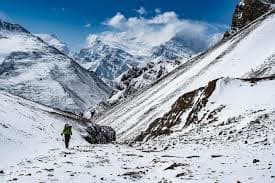
Day 10: Cross Thorong La Pass (5416m/17,769ft) to reach Muktinath (3800m/12,467ft)
Today we rise early and begin our Annapurna Circuit Trekking journey. We hike from Thorong Phedi to High Camp, then cross the two Thorong-La Passes and hike to Muktinath to spend the night. Thus, you may feel tough as you pass through strong winds in the upper region.
First, we walk to the high camp, which takes around 50 minutes. It's a kilometer of uphill walking. From the high camp, we walk to the transit point at Thorang La Pass, the highest point on the Annapurna Circuit Trek.
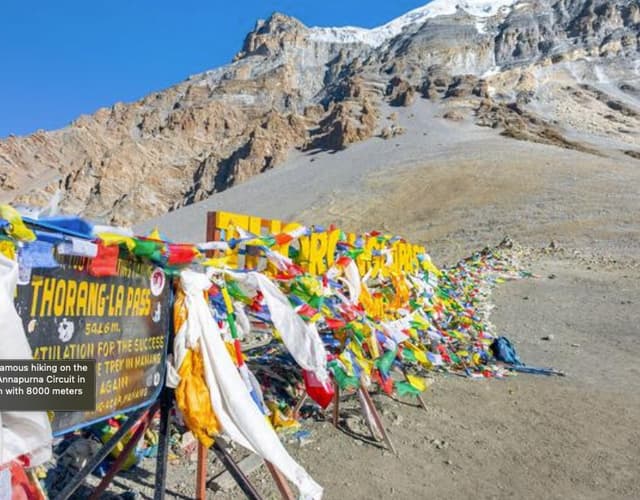
The pass reveals views of snowy mountains extending into the Tibetan territory. At the summit, you see prayer flags and congratulatory messages. Appreciate your achievements so far and enjoy the beauty of the mountains. Take some pictures and celebrate the success with your group members.
We begin our trek to Muktinath after spending some time at the mountain pass. The route is full of snow, mud, and loose gravel. The road is very slippery in places, so keep your walk slow and balanced. We have views of Annapurna, Gangapurna, and the heavily glaciated peak of Khatungkang to motivate you and keep your focus on the trails.
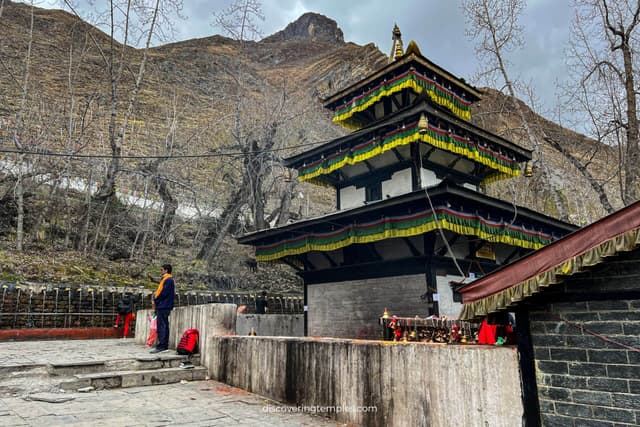
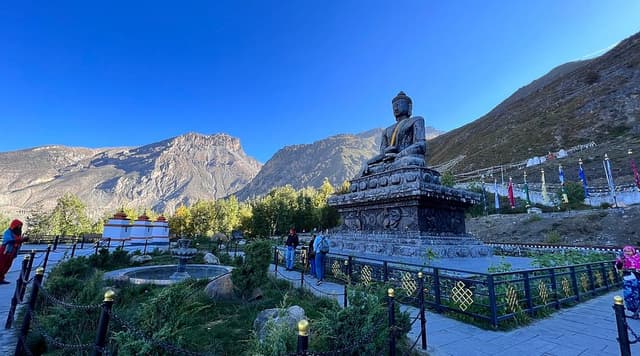
We arrived at Muktinath (3800 m) after five hours of walking. This is a holy site for both Hindus and Buddhists. The major attractions of the site are the Jwalamai temple, with a spring and an eternal flame, and the 108 water spouts that pour holy water. Every year, over 1,000 disciples come to visit this place. Enjoy the religious site, and tonight we will spend our time at a hotel.


Day 11: Trek to Marpha (2670m/8,760ft)
Today, we start our journey by passing through ancient caves and traversing through Kagbeni village in the Kali Gandaki valley. The road is gravel and dusty. From Kagbeni, we start our journey to Jomsom, which is a distance of 10 km. Jomsom is a small town in the Himalayas. There is a comprehensive school and a beautiful monastery, along with an entire row of little shops and guesthouses. The place is busy with travelers.
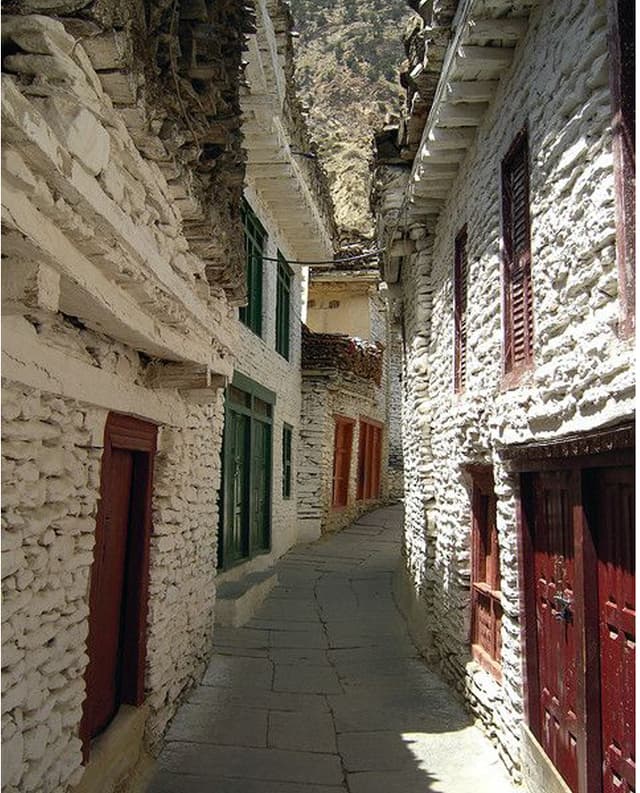
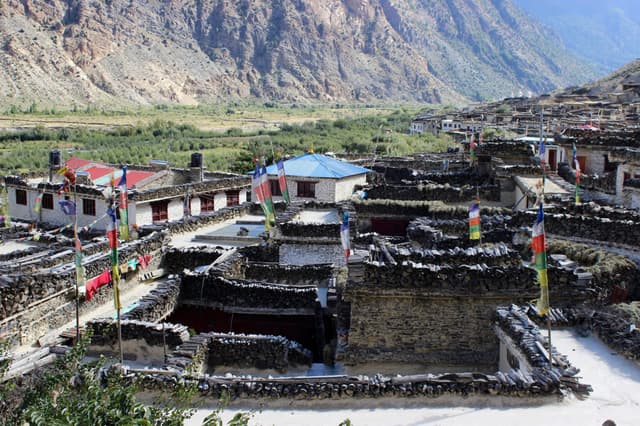
From Jomsom, we cross to Kali Gandaki Gorge, which is the deepest George in the world. You will pass through many authentic villages. The houses are white with wooden window shutters. Finally, we reach Marpha, the land of apples.


Day 12: Drive to Tatopani (1,190m/3,805ft), and relax in natural hot spring
After crossing the river and climbing over some massive boulders, we arrive in Kopchepani in 2 hours. Along the route, we drive through small villages and small grasslands. As we pass through green, forested areas, we get a glimpse of the dusty road that notifies us we have reached Kopchepani.
Enjoy some of the surrounding scenery and take pictures and videos of mountains, houses clinging to the green slopes, and waterfalls. Also enjoying the view of the Rupse waterfall streaming down right underneath the dusty track, we drive downhill.
Later, we pass through more populated local villages on our way to Tatopani. It is a beautiful place with gardens, flowers in bloom, and lots of greenery.
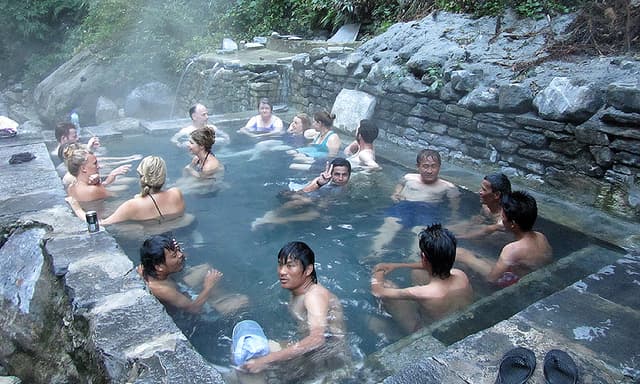
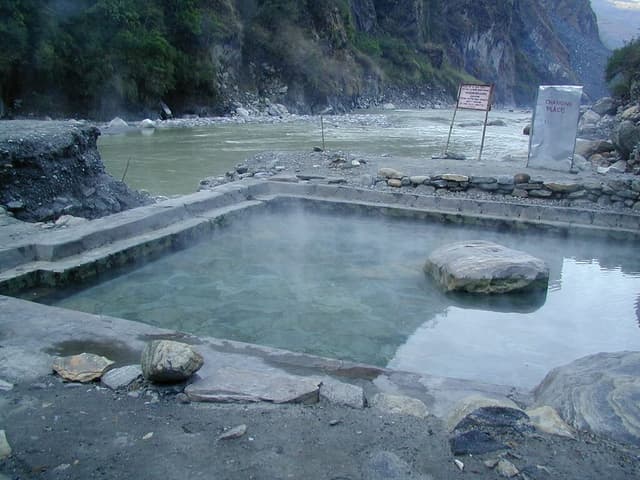
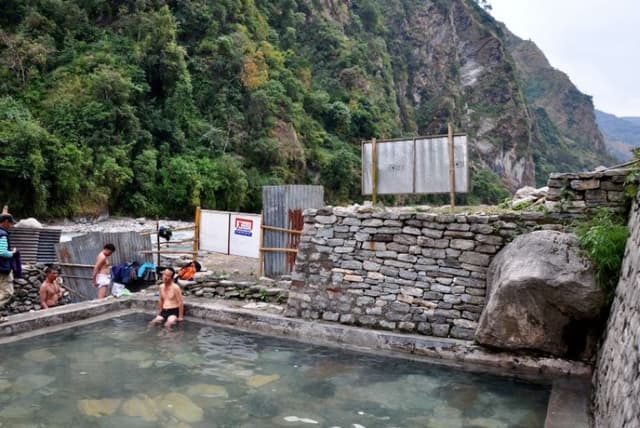
After we arrive, we rest in the hotsprings and end our day with a walk around villages.

Day 13: Tatopani to Sikha, (1935 m/6,348 ft)
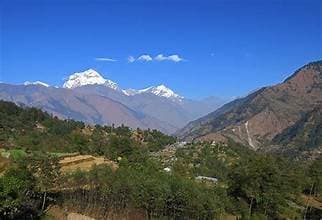
The trek from Tatopani to Sikha begins with a steep ascent, quickly leaving behind the noise of road construction as it winds through terraced fields and lush greenery. As the trail climbs, trekkers pass through the peaceful village of Guthre, where vibrant flowers and stunning valley view’s offer a brief respite. Continuing uphill, the path leads through the spread-out village of Ghara. The final stretch to Sikha is challenging but rewarding, with panoramic mountain views and the village’s charming houses providing a serene and welcoming end to the day's journey.
After you arrive, you will check-in the teahouse.
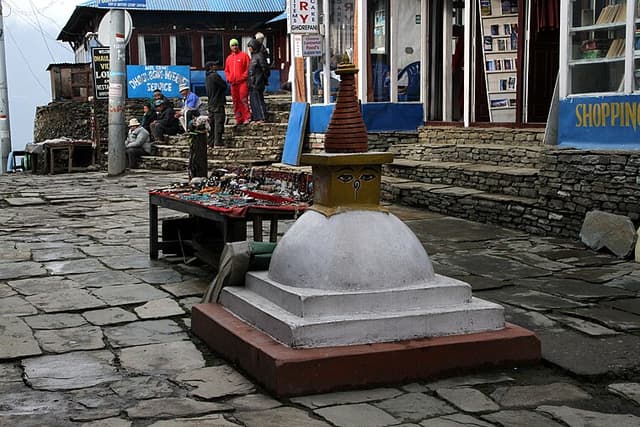
Day 14: Trek to Ghorepani (2850m/9,350ft): 7 hours.
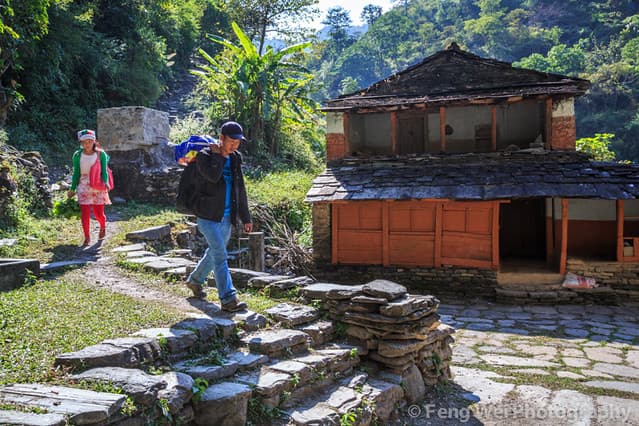
After breakfast, we continue our journey, crossing the river and the forest area to Ghorepani. We pass through a small farmhouse and climb stone steps at some points.
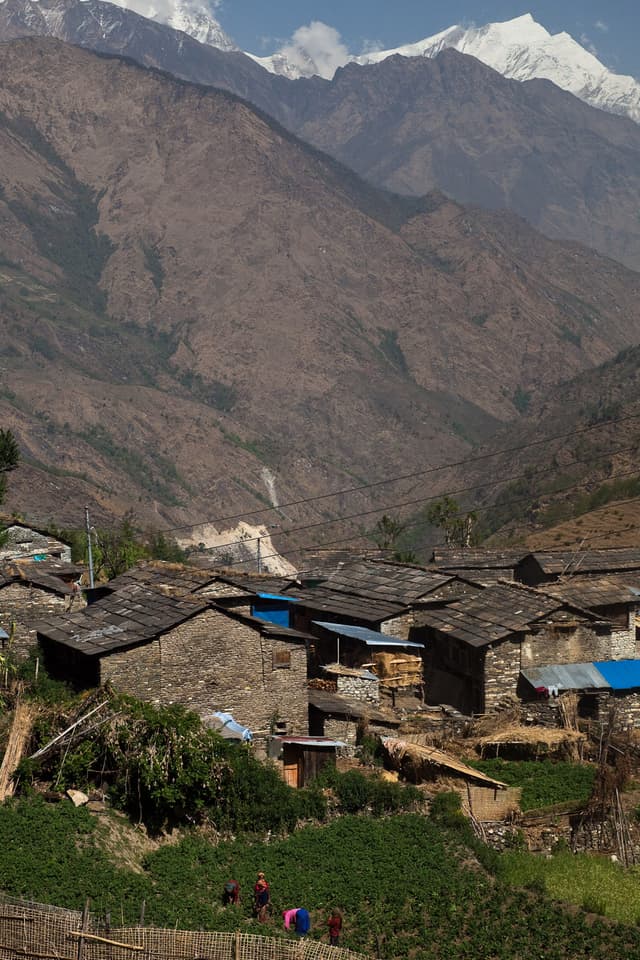
Continuing our Annapurna Circuit Trek journey with the views of the surrounding mountains, pockmarked with houses clinging to the slopes, we cross Chitra village.
As the route is long, we stop at least three times for tea or lunch. Today we have to climb some major sections of the hill. If you have any difficulties, explain them to your guide.
We arrive in Ghorepani, the busiest village on the Annapurna Circuit, after 7 hours of walking and climbing. Tonight, spend some quality time at a guest house in Ghorepani.


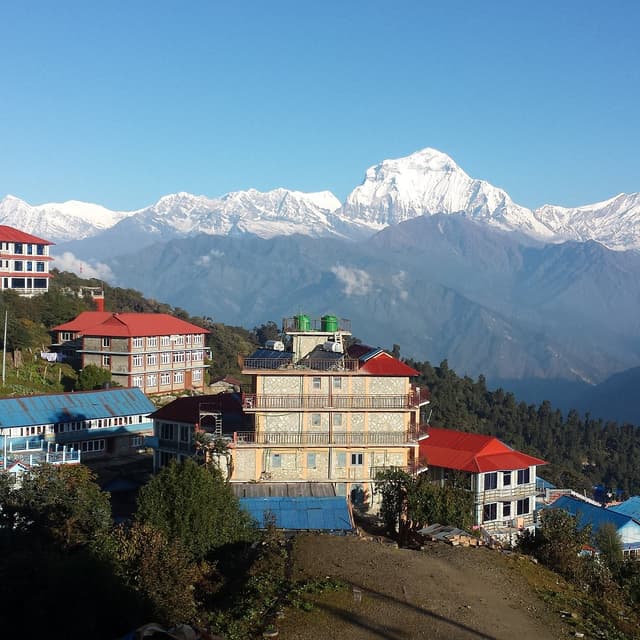
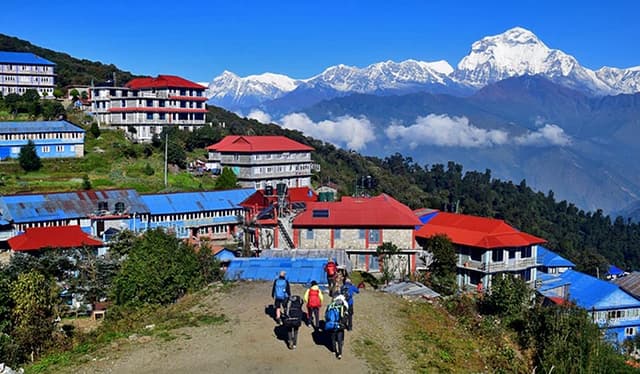
Day 15: Hike to Poon Hill (3,210m/10531ft) and then trek to Ulleri, and drive to Pokhara.
In the early morning, we continue our classic Annapurna Circuit journey to Poon hill. This is going to be the last trip on the travel package. We will hike through different villages all along the trail, observing the local culture of the people.
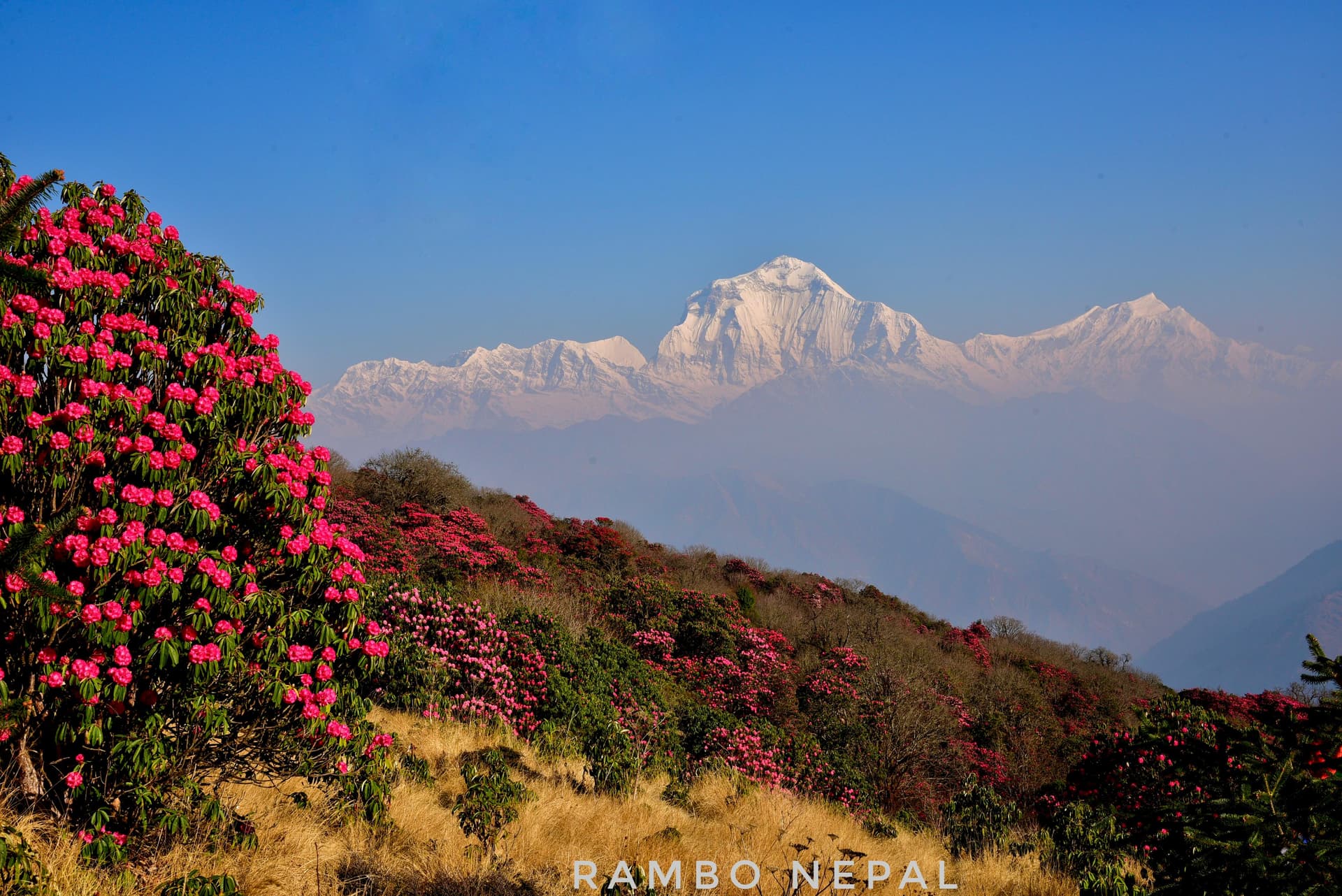
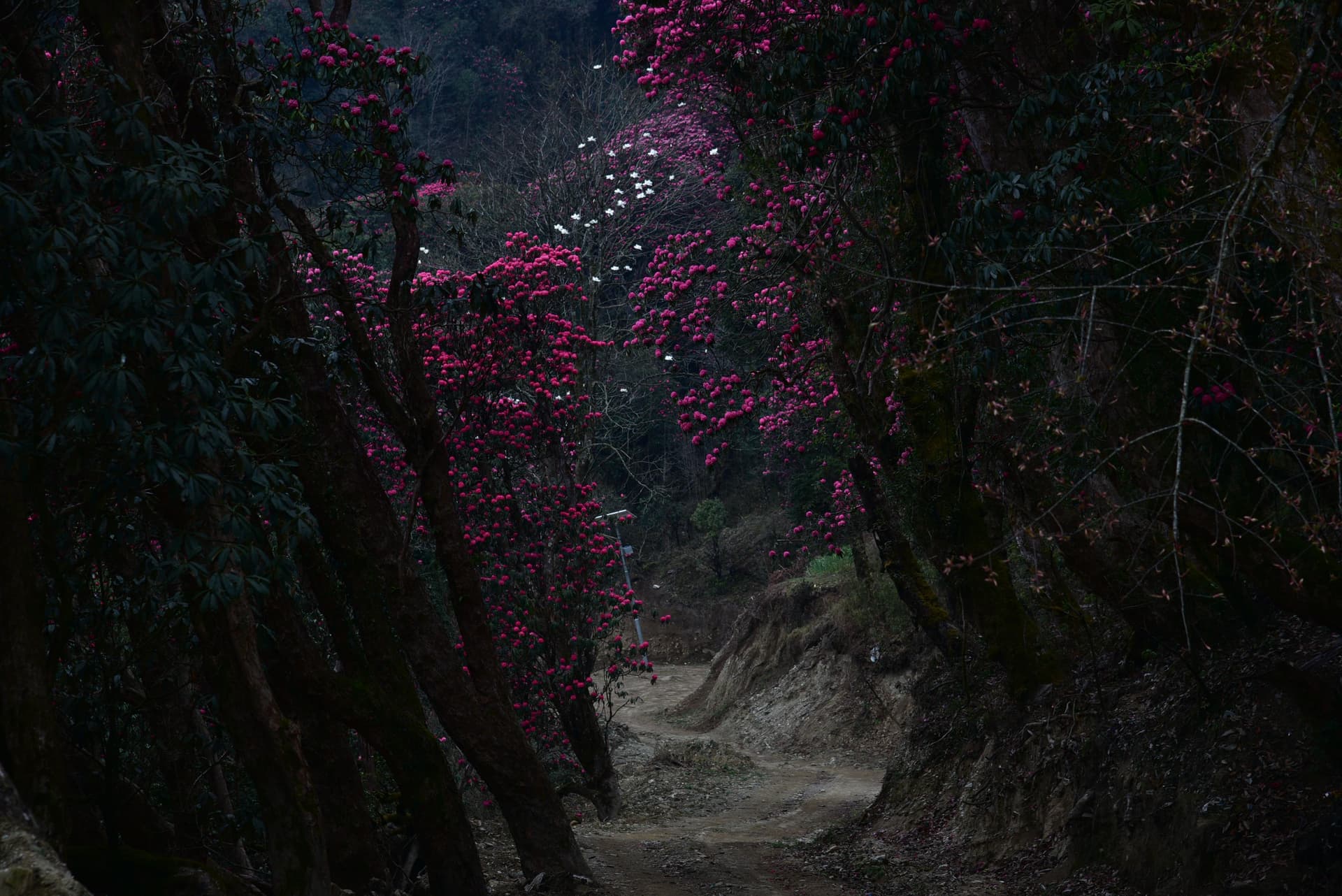
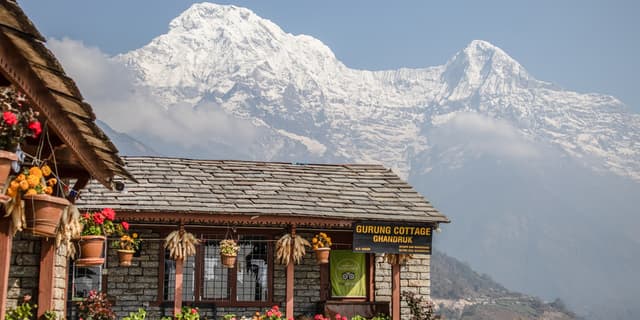
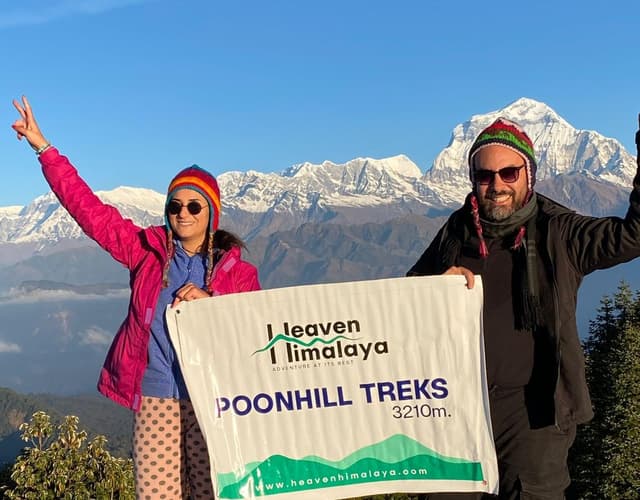
This is the shortest trek, taking you to Gurung and Magar villages. The hike is easy, passing through a farm field, a forest of pine and oak, and different species of rhododendron flowers. On the entire journey, you will see panoramic views of the Annapurna, Dhaulagiri, Nilgiri, Machhapuchhare, and many other peaks.
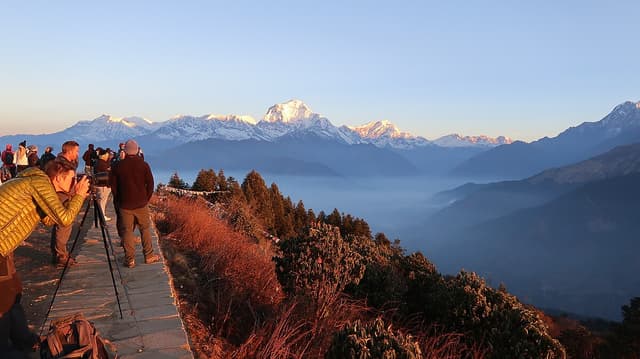
The major attraction of this trip is Poon Hill itself. Enjoy the sunrise view from Poon Hill. Enjoy the sunrise view from Poon Hill. After watching the sunrise from Poonhill, we will then step back to Ghorepani. From there, we travel to Nangethanti, Birethanti and then to Ulleri. Passing through the terraced fields and some well-maintained trails, we reach Ulleri in a few hours.
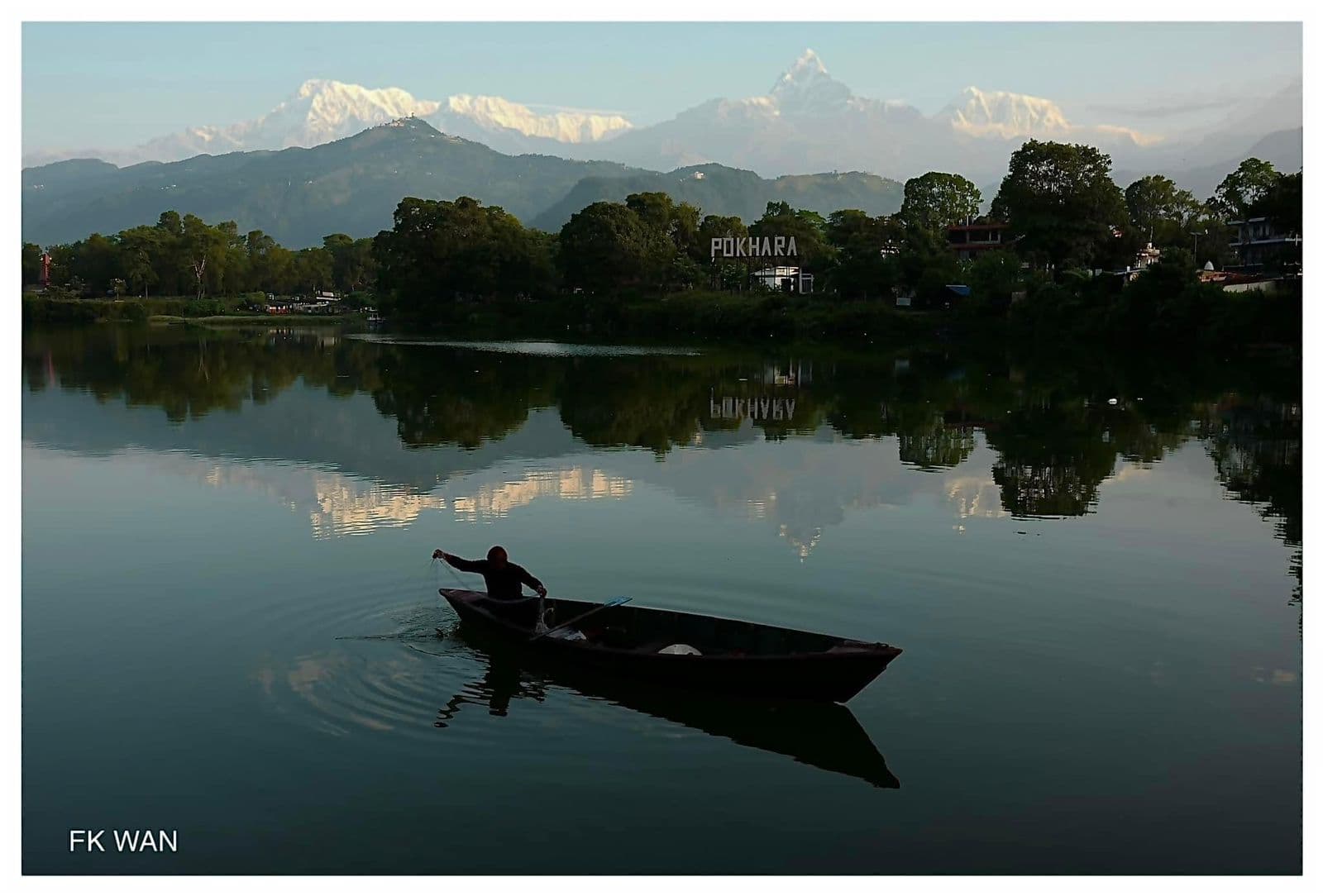
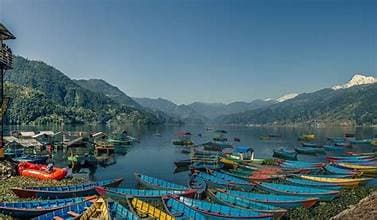
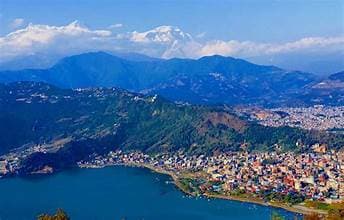
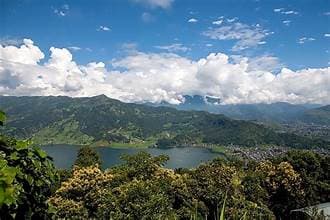
From Ulleri, we take a Jeep and drive to Pokhara. After you arrive in Pokhara, you can visit the lakeside to enjoy the panoramic views of the lake, hills, and dense surrounding trees.
You'll find many excellent shops and malls around there. Have a look and do some shopping. Tonight, pack your bag and get ready to go to Kathmandu with a relaxing warm sleep at a pleasant hotel in Pokhara.


Day 16: Fly or Drive to Kathmandu
After breakfast, we drive to Kathmandu via the same route as the Prithvi Highway. Enjoy the last moments of your Annapurna Circuit Trip from the window, with views of green hills and the Trishuli River. Soon, after about 5–6 hours of driving, we arrive in Kathmandu, the starting and ending point of your classic Annapurna Circuit Trek.
Then, the guide will drop you off at your hotel. There are no other programs for today. Thus, either take some rest or visit some places in Kathmandu. You can go shopping around Thamel to buy some gifts from Nepal for your family. Tonight, recollect the trekking memories and have a good time at a magnificent hotel in Kathmandu.
Note: You can also opt out for a flight to Kathmandu from Pokhara. The flight cost will be additional.
Day 17: Reserve day in Kathmandu
It’s an extra day in Kathmandu just for contingency. Sometimes, things may not go as swiftly as intended. Sometimes flight delays/cancellations, poor weather, or ill health can cause a barrier to your journey. Hence, a contingency day on the trip will always be helpful. In case you finished the trek on time, you can use this day for resting or shopping in Kathmandu.
Day 18: Final Departure (Farewell from Annapurna Circuit Trek)
I'm sorry to say that your tour ends today. You will have two options for today: fly home or continue your vacation in Nepal. If you have any plans, please let us know about them.
Our representative will drop you off at the airport 3 hours earlier than your scheduled flight. We hope you had a great time and enjoyed our trip. Thank you and have a safe journey.

Create a Bespoke Itinerary
Customize your Himalayan adventure with personalized itineraries for unforgettable experiences!
Places You’ll See




Traveller Reviews
Heaven Himalaya Still Best Trekking Company In Nepal
Amazing EBC with Shankar
Excellent Experiemce
Warmest recommendation to our guide
Solo trekk to Annapurna Base Camp
Annapurna Circuit Equipments and Gears
Here are a few important things you need for Annapurna Circuit Trekking.
- Trekking Shirts/Shorts/Trousers
- An insulated jacket
- Base Layer
- Trekking shoes
- A warm fleece jacket
- A Backpack and a walking stick
- Duffel Bag and a sleeping bag (Heaven Himalaya will provide it.)
- Gloves, sunglasses, a towel, and medicine
- general medications,
- raincoat, down jacket, and beanie,
- Metal water bottle.
- Water purification tablets,
- High-quality camera, notebook, cards, book, blisters, knee bands, and hand sanitizer
- Extra snacks
- Visit here to find the complete checklist for trekking in Nepal.
Annapurna Circuit Trekking FAQs
1. General Faqs
What is the Annapurna circuit?
The Annapurna Circuit Trek is a travel package to the mountain ranges of central Nepal in Gandaki Pradesh. Widely known as one of the best long-distance treks in the world, ACT takes you around unique villages, forest areas, hills, and snow-capped mountains.
How long is the Annapurna Circuit Trek?
The Annapurna Circuit Trek is between 160 and 230 kilometers long. The route begins in the low hills of Bhulbhule in the Marshyangdi River Valley at an elevation of 923 meters, continues to the alpine mountains at an elevation of 5416 meters, and ends in Pokhara.
First, we drive to Besisahar in the Lamjung District. The distance between Besisahar and Kathmandu is 177 km, which will take us around 6-7 hours in a private vehicle depending on the traffic along the roads.
From Besisahar, we walk to Thorang la Pass (5,416m). Then, from Thorong La Pass, we hike to Muktinath (3800 meters), which is at a distance of 16km. Finally, we descend along the Annapurna route to Nayapul and end our trek there.
The time duration to complete the trek is 10–14 days for the shorter version and 18–21 days for the full route.
What is the starting and ending point of the trek?
The starting point is Besisahar/Syange/Jagat/Chame/Bulbhule/Manang, whereas the ending point is Muktinath/Jomsom/Tatopani/Hile/Nayapul, depending upon the Annapurna circuit package you choose. However, the trip organized by Heaven Himalaya will start at Besisahar in the Marshyangdi River Valley and end at Nayapul.
What is the best time to go on the Annapurna Circuit Trek?
The best time to go on the Annapurna Circuit Trek is during spring (March, April, and May) or autumn (September, October, and November).
More often, the trekkers choose March, April, October, and November as their months. So, while hiking during these trekking months, you are likely to meet many fellow travelers along the route.
Fall Season
Autumn (sometimes called "fall") is everyone's favorite time of the year. It is a smooth transition from summer to winter. The days are cooler than spring and cozier than winter. You see trees changing their colors and animals preparing to hibernate.
Foremost, the daylight becomes shorter, and the temperature remains moderate. So, fall is the season for everyone. So, the feel of cool weather, the sound of the crunching of brown leaves underfoot, the smell of ripped grains, and the Annapurna circuit trails will have different vibes.
Some also find it nicer because you can have fewer clothes on your body, which will be a lot easier while hiking. Also, you can pack fewer items while packing your bag for trekking in Nepal.
Nepal experiences many great festivals like Dashain and Tihar during autumn. As the festive season flows, the villages around the track lighten up in red and white, and we find children singing melodies as the schools are mostly closed. Therefore, if you travel during this time, you will experience jolly villages.
Besides, during this time of the year, your trekking shoes find a grip. The Annapurna round trails, which were slippery and full of leeches in the summer, will turn normal again. As the rains stop, the temperature drops from 17°C to 4°C. But, Thorong La Pass, the highest reach of the trip, has a daytime temperature of near-4°C as it's always covered in snow.
In spring (the season of rhododendron in Nepal)
Spring is the season of flowers. The trails smell differently during this time, as they are filled with wildflowers that blossom in the winter. Spring is the king of all seasons because it rejuvenates nature.
In Nepal, spring is also called the season of the rhododendron. While on an Annapurna Circuit Journey, you walk along with the rhododendron forests that blanket the hills.
Wintry days move away and are replaced by warm and bright days with average daylight temperatures of 15 °C–20 °C. The mornings and nights are colder as you climb to higher altitudes. Muktinath and the Manang area receive very little rainfall. Thus, the locations are colder in the evenings. Make yourself warm and enjoy the clear, unobstructed views of the hills and majestic peaks.
There is less humidity in the air, and you will be immensely pleased to wander around the high Himalayas. Villages and tourist hubs like Pokhara and Jomsom are bustling with the celebrations of the Nepali New Year Falls in the spring.
Everywhere, the surroundings become livelier: flowers start blooming, trees start growing new delicate leaves, the sky becomes clear and blue, rivers and streams murmur mildly, etc.
You will have the wind blowing through your hair. The remaining fragments of cloud point you to the best views. Indeed, spring is one of the best seasons for trekking in the Annapurna Circuit.
Besides, February to May is also better for trekking. The days are longer and the weather is warm. Thus, you can also consider trekking ACT during these months.
Is trekking to the Annapurna Circuit hard for you?
To some extent, the Annapurna Circuit Trek is a long journey at high altitudes. Some trails along the routes are slippery, contain rocks, and have lots of stairways that make you feel the difficulty while trekking.
In the initial days, you hike with a slow increase in altitude. After crossing Manang, you will find a narrow path leading through a slope that directly looks down to the Marshyangdi River.
Thus, trekkers must be careful with their steps. You will feel the next challenge while trekking through Thorong La Pass. It is a long journey on a sloppy road if you are not prepared. As it's the highest point of the trip, you might feel some signs of altitude sickness. Therefore, trekkers should know their health before traveling.
The weather is also unpredictable, which may cause difficulties during your trek. Once you pass through Thorang La, you descend 1600 meters to the holy and tourist area of Muktinath. Although it invites some challenges, it's a completely doable trek with rewarding views.
Training
As the days of trekking approach, almost everyone has the thought, "Can I do the Annapurna Round Trek"?
Yes, even first-time trekkers in Nepal who have experience in hiking can attempt to do the trek. But, to overcome thoughts like the above, prepare yourself for trekking.
Any physical pieces of training that involve increasing your stamina and endurance capacity are okay?
No, standard gym training is required. But, you can use your treadmill to run and walk. Make your knees, hips, and ankles have the habit of walking. Using the long stairs in case of lifts will also help you walk uphill here on the Annapurna Circuit. Don't forget cardio and strength training, too. The fitter you are, the more it's easier to cope with, and the less oxygen you breathe in the high hills.
We highly recommend trying a long-distance hike with a backpack and your choice of hiking boots and clothes. By trying this, you will know if the backpacks and your other choice of gear are comfortable for you or not. If you feel uncomfortable wearing them, change them and try hiking with new ones. Try carrying a bag with a similar weight to what you will carry on the trails.
To get an actual idea of the weight, pack all your belongings and gear in a bag and carry it while hiking. A carrying bag will increase your shoulder strength. Also, use your hydration pack while practicing hiking.
Doing as recommended above for a few weeks will train you and make you ready to accept the challenges on the route.
One of the hardest parts of trekking on the Annapurna Circuit is altitude sickness. You will walk above 4000 m in most places, so keep yourself prepared for the high altitude.
Some training, such as running, biking, and swimming, will improve your VO2 max. It's the maximum volume of oxygen that your body can use. Also, while walking, the higher you climb, the more you slow down, even on simple paths. This way, you will adapt your body to a high-altitude environment.
Is there a risk of altitude sickness in the Annapurna Circuit?
Yes, there's a minor risk of altitude sickness depending on the person's health and fitness. There is a risk of altitude sickness at altitudes greater than 3000 m. Different people react differently when they move to a higher altitude, so it's better to prepare yourself before moving to a higher altitude.
Mostly, people feel nausea, dizziness, insomnia, increased heart rate, headache, vomiting, exhaustion, and fuzzy vision. Also, the lips, nails, and tongue may turn blue.
If you experience any symptoms or feel uneasy, you can easily communicate this to your guide. He is well-trained and is fit to handle such situations. He will provide you with some medicine or help you reduce your uneasiness. If you feel comfortable, then continue your journey; otherwise, have some rest at your current elevation or move down to a lower elevation.
The following are some precautions you can take to avoid altitude sickness:
Climb slowly: Travel only 1,000 feet each day, and plan a rest day for every 3,000 feet you go higher.
Eat carbs: When you are at a high altitude, you need more calories, so carry plenty of carb-containing food with you.
Avoid alcohol, smoking, or taking sleeping pills during your trip to a higher altitude.
Keep yourself hydrated: Drink water to prevent altitude sickness.
What is the total cost of the Annapurna Circuit trip?
The total cost of the Annapurna Circuit Trek depends on your period and how you travel and spend. For a 10-to-18-day trip, the cost per person can range from USD 1200 to USD 1600 (excluding international flights). And our total price is 1380 USD per person, which is very reasonable.
Other costs for you include international flight tickets, visas, extra food, insurance, hot showers, etc.
The first cost is the visa for Nepal. Your visa cost will depend on your duration of stay.
USD 30 per day for 15 days
USD 50 for 30 days
USD 125 per month for 90 days
Transportation Cost
You can either take a flight or go by land, via bus, a private jeep, or a taxi. If you choose to take a flight, the cost can vary seasonally. Flight tickets are costlier during the peak trekking months, which are Feb–May and Sept–Nov.
Round-trip flight from Kathmandu to Pokhara: approximately USD 215
A local bus from Pokhara to Besisahar (trailhead) costs approximately USD 3.
Local bus from Nayapul to Pokhara (return): approx. USD 3.
And if you are traveling in a group, you can choose to hire a private vehicle in which you can share the cost amongst the group members.
The cost of a local bus from Kathmandu to Besisahar is approximately USD 6–7 (one way).
Private Jeep from Kathmandu to Besisahar: approx. USD 120 to 150 (one way).
Heaven Himalaya handles all your transportation costs when you book the trip with us.
Food and accommodation both cost
On average, you will spend USD 30 to 50 per day on (basic) accommodation, breakfast, lunch, and dinner. The cost of food starts at USD 5 at a low altitude and rises as you go up.
Bottled water costs between $1 and $5.
Tea costs between 0.5 and 2 USD.
Hot water: USD 0.5 to 2 per cup.
Heaven Himalaya will book your accommodations and food.
Travel insurance costs
The average cost for Annapurna Circuit Trekking insurance is $500.
Porter's Cost or Guide Cost
If you want to take a guide, it will cost you around US $22–$30 per day. If you are hiring a guide, then check his valid license issued by the government of Nepal. Check his background and the reviews from past clients. An experienced guide will charge USD 30 per day. A potter charges USD18–20 per day.
Heaven Himalaya handles all the costs of porters and guides.
The Cost of Trekking Equipment
The cost of equipment is difficult to estimate, as it varies from one individual to another. It also depends on how much equipment you already own and how much you will buy or rent. A rough estimate is somewhere around USD 200–500.
Do you need a permit to trek in the Annapurna Circuit?
Yes, trekking to the Annapurna Circuit requires two permits. One is TIMS and the other is an ACAP permit. Both permits are available either in Kathmandu or Pokhara.
TIMS is a basic permit implemented jointly by the Nepal Tourism Board (NTB) and the Trekking Agencies Association of Nepal (TAAN) to ensure the safety and security of every trekker.
ACAP is for the Annapurna Conservation Area entry permit.
Heaven Himalaya will arrange both permits on your behalf; you will only have to provide him with details and passport photos. It is always better to take a photo of your ACAP and TIMS cards and keep them on your phone.
The cost for TIMS per person is:
SAARC nationals: NPR 600, about $6.
All the other nationals: NPR 2000, about $200.
Fees for ACAP permits:
SAARC nationals: NPR 200, about $2.
ALL OTHER COUNTRIES: NPR 2000, about $200 (excluding 13% VAT).
Trekkers under 10 years of age don't require this permit.
What type of accommodation and food do you find there while on an ACT Trek?
During the trek, you will find different accommodation and food facilities. You will find tourist-friendly lodges, guest houses, and teahouses. The lodges are comfortable for your initial stage, but they may vary as you go to higher altitudes.
Accommodations are always sociable places where you can meet many other trekkers. The tea house contains a large dining area with a wood-burning stove. Hikers sit in the dining area to socialize and keep themselves warm by the fire. All guesthouses have blankets. Almost all have hot showers available, which are mostly gas-heated. The rooms are very basic. Usually, they have two single beds, blankets, and sometimes a table and a chair.
Lower lodges have clean, western-style flush toilets, but as you go higher, long-drop normal toilets, which are holes in the ground, become more common. It is better to have some toilet paper on you at all times. You can use any of the other lodges or shops along the way if you need to use the loo.
There is both vegetarian and non-vegetarian food available. Local foods are available, such as dal baht. Most of the lodges also provide western food. You can also have one hot drink for each meal, but if you want to order more, then the average price is 150 Rs per cup of tea, coffee, hot lemon, etc., or 1500 is for a flask. A can of beer is between 600 and 800 Rs. Also, at a high altitude, pay for boiling water.
Likewise, water bottles cost you some other dollars. So, it is better to bring water purification tablets. They are cost-effective and easier to use compared to buying bottled drinking water. Water purification tablets are also better for the environment. You can fill up your bottle from the many water sources you find along the way and use the purification tablets for drinking. We also recommend carrying your water bottles as it reduces waste.
Is it possible to add a visit to Tilicho Lake to your itinerary?
Yes, you can add or customize days on your own, including the locations of your visit. Tilicho Lake can also be visited while on the Annapurna Circuit. But, inform us earlier to customize your Annapurna Circuit itinerary. Kindly note that the costs and trekking days will change when you customize the original itinerary.
Also, check out our Annapurna Tilicho Lake Trek; it might be the one you are looking for.
It's always a good idea to visit Tilicho Lake. It is one of the highest-altitude lakes at a height of 4,919 m. During your visit to the lake, you can find eye-catching views of the Annapurna and Dhaulagiri ranges, as well as other white Himalayas above 5,415 m. The lake collects the glacial melt from the entire northern slopes of Annapurna and Thorang Peak. It is also a holy spot mentioned in the Ramayan, a holy book of the Hindus.
What are the popular mountains you see during your visit to Annapurna Circuit?
Some of the popular mountains you will see while exploring the Annapurna Circuit are:
Annapurna I-Central (8,041 m), Annapurna II (7,937 m), Annapurna III (7,555 m), Annapurna IV (7,525 m), Annapurna South (7,219 m)
Annapurna (7,455 m), Gangapurna (7,647 m)
Khangsar Kang (7,485 m), Tarke Kang (7,202 m)
Lachenal Peak (7,140 m), Tilicho Peak (7,135 m)
North Nilgiri Himal (7,061 m), Central Nilgiri Himal (6,940 m), and South Nilgiri Himal (6,839 m) are the three highest mountains in India.
Machhapuchchhre, a.k.a. Fish Tail Mountain (6,993 m),
Hiunchuli (6,441 m), Gandharba Chuli (6,248 m)
Which is the highest point on the trek?
The highest point on the Annapurna Circuit Trek is Thorang La Pass (5416m/17769 ft), reaching the edge of the Tibetan plateau. It is the point where you can have the best views of the mountains. It is a mountain pass in the north of the Annapurna Himal in central Nepal. Khatung Kang and Yakawa Kang are the mountains that form Thorong La.
The local climate on the western side of the mountain pass is much drier than on the eastern side. There is practically no vegetation on the western side, except where irrigated.
Is there wi-fi on the Annapurna Circuit?
Yes, you can find Wi-Fi at some tea houses at the lower base while trekking to the Annapurna circuit. But as you go up to Thorang and Shree Kharka, you can't find Wi-Fi. But, there's always the option of using mobile networks. You can access the internet on the Annapurna Circuit via a Nepalese SIM card. NCELL and NTC are the two SIM card companies that are popular as the best SIM cards for trekking. Subscribe to the internet package to use the internet via NTC SIM. For a 1GB data package, pay NRS500 ($5), which is valid for 30 days. You can subscribe to less or more data depending on your requirements.
Please remember to buy a Nepalese SIM card for yourself while you are checking out of the airport terminal.
Is this trip worth it to you?
This Thorang La, or the Annapurna Circuit trek, is worth it. This is one of the longest trips in the world where you can experience the unique culture, traditions, mountains, rivers, and forests all at once. The journey takes you to some outstanding destinations like Muktinath, Lower Pisang, Jomsom, etc.
Similarly, trekkers will cross the Thorong La Pass, one of the highest mountain passes in Nepal. The trek then weaves through a dramatic landscape and gives stunning views of mountains like Lamjung Himal, Dhaulagiri, and surrounding peaks.
Every day is a beautiful opportunity to learn new things, embrace beauty, and admire stunning views. Explore Gurung and Thakali villages, whose warm hospitality is one of a kind. They are friendly and beautiful people. From Kalopani to Ghasa, there is a superb, remote (but longer) trail on the east side of the valley.
Is it compulsory to hire guides and porters for Trekking to Classic Annapurna Circuit?
Well, it's not compulsory to hire guides and porters for Annapurna Circuit Trekking, but if you trek with a guide, it will be helpful to you. The guide will have more options for the places to visit. The guide is familiar with the terrain and local weather and is aware of the danger zone. A guide can take you to places that you would never know about. They will point out the things that you would never notice.
A guide can create your itinerary, arrange your accommodations and transportation, and even probably save you money. Guides handle the safety of groups and provide first aid or handle emergencies. The guide will keep you safe when undertaking adventure activities such as safari trips, mountain climbing, trekking, and rafting.
With us, you will have an experienced mountain guide and a porter.
Do you need insurance for a hike to the Annapurna Circuit?
Yes, you need insurance while traveling. It is the major part of traveling. Make insurance that will cover 5,416 meters, as it is the highest spot during the Annapurna Circuit hike. If you buy an insurance package, please include emergency rescue too.
You’ll enjoy your adventure more with the peace of mind that comes from knowing you have the right insurance coverage in place. Besides, insurance helps with everything from lost or stolen luggage to a full helicopter rescue from a mountain.
What is the reasonable weight for a porter to carry?
Nepalese porters are the most energy-efficient load carriers in the world. The standard weight for a porter on the Annapurna Circuit Trek is 25 kg. You will have one porter for two people. So, pack your bag accordingly.
There are two types of porters:
The tourist porter: they carry the backpacks or luggage of tourists, which is limited to a maximum of 25kg–30kg.
The freight porter: they carry all kinds of stuff (building materials, food) up to the teahouses. He carries a load of 70–140 kg.
What are the most popular trekking routes along the Annapurna Circuit Trails?
Some of the popular routes are:
- Ghorepani-Poon hill trek
- Trekking to the Mardi Himal
- Khopra trek,
- Trekking to Muktinath, Jomsom
- Upper Mustang Trek
Are there any alternative routes for Classic Annapurna Circuit?
The alternative routes for trekking are:
Drive straight to Chame, then trek to Jomsom for a 10-day trek.
The classic route is a 19-day trek that begins in Besisahar and ends in Nayapul.
A 16-day trek begins in Bahundanda and ends in Ulleri.
Begin in Besisahar and end in Tatopani on this 15-day trek.
The 13-day trek begins in Besisahar and ends in Jomsom.
Begin from Jagat and end at Tatopani-Twelve Day Trek.
If you have your idea of trails, please email us with a note. We will be happy to customize the Annapurna Circuit Trip to you.