

10 Best Places to Visit in Nepal in November: 2026 Guide

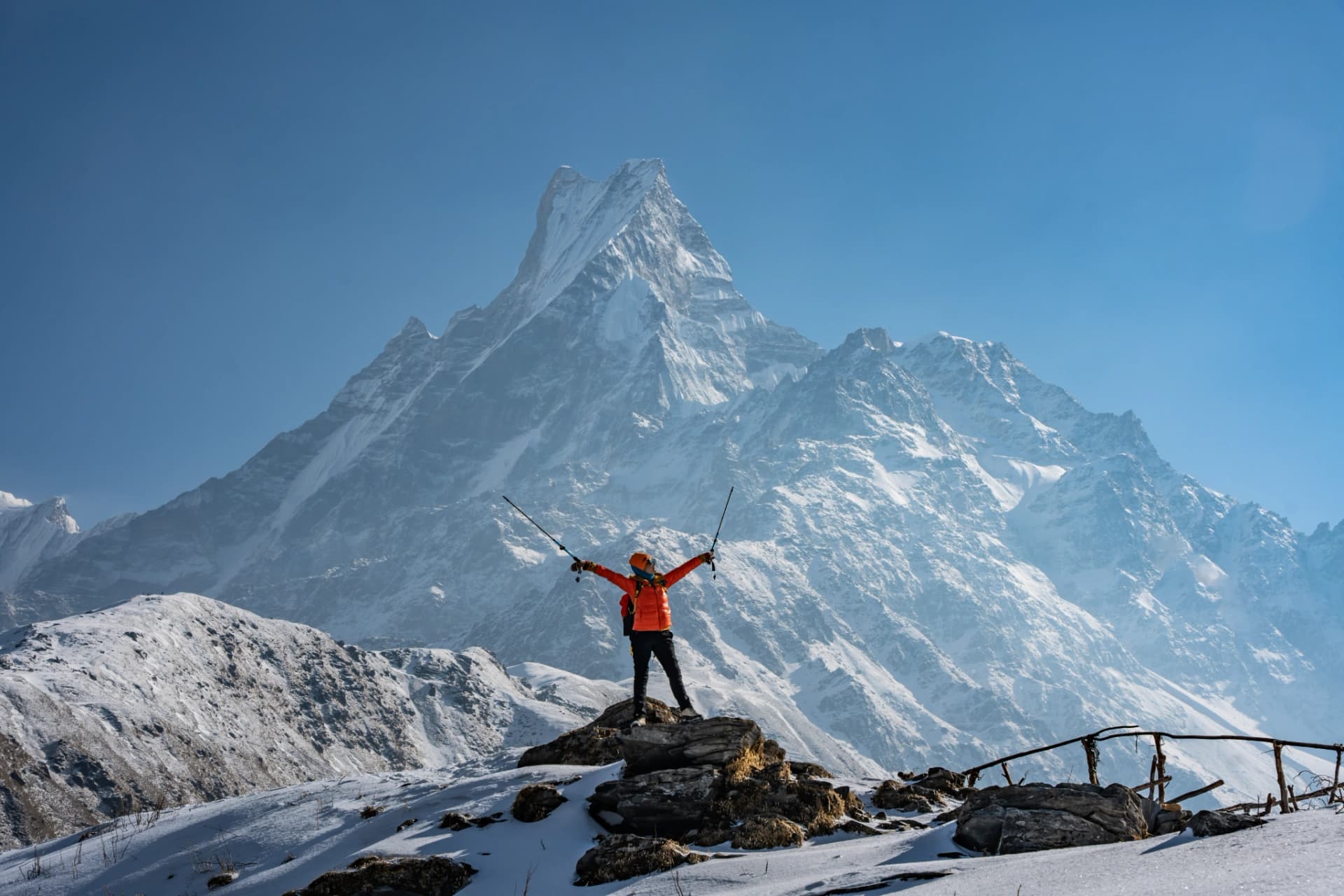
The best places to visit in Nepal in November combine clear Himalayan views, dry trekking trails, comfortable lowland weather, and rich cultural and wildlife experiences. November falls in Nepal's post-monsoon dry season, making it an excellent month for exploring the Everest Region, Annapurna Region, Kathmandu, Pokhara, Upper Mustang, Chitwan National Park, Lumbini, Dhorpatan, Badimalika, and Rara Lake.
High-altitude destinations such as Everest, Annapurna, Upper Mustang, Badimalika, and Rara Lake offer crisp mountain scenery and trekking, while Kathmandu, Pokhara, Chitwan, and Lumbini provide heritage sites, festivals, lakeside activities, wildlife, and Buddhist pilgrimage experiences.
Choosing where to go in Nepal in November depends on altitude, weather, trekking difficulty, available transport, permits, and the type of experience you want. Everest Base Camp and Annapurna routes suit trekkers seeking high Himalayan panoramas, Pokhara works as an adventure and trekking base, Upper Mustang offers dry trans-Himalayan landscapes and Tibetan Buddhist culture, and Chitwan and Lumbini provide warmer alternatives at lower elevations.
Tihar celebrations, limited flights to remote regions, high-altitude cold, seasonal lodge closures, and changing trail conditions also affect November itineraries. This guide compares the 10 best places to visit in Nepal in November by weather, attractions, trekking routes, activities, altitude, permits, costs, and practical travel conditions.
1. Everest Region
The Everest Region, locally called Khumbu, is the Sherpa homeland inside Sagarmatha National Park, a 1,148 square kilometre UNESCO World Heritage Site listed in 1979. The park holds Mount Everest (8,848.86 m), Everest Base Camp (5,364 m), and the Kala Patthar viewpoint (5,644 m).
What Makes November Weather Ideal for Exploring the Everest Region?
November gives the Everest Region dry, stable weather, with daytime highs of 8 to 12°C at Namche Bazaar (3,440 m), almost no rain, and the clearest mountain visibility of the year because the monsoon has washed dust out of the air. Nights fall to between -10°C and -18°C at Gorak Shep (5,164 m).
The first two weeks of November give the best balance of warmth and clarity. The second half brings sharper westerly winds, thinner lodge menus above Dingboche, and ice at the edges of the Gokyo lakes. Sunrise reaches Kala Patthar around 6:15 a.m., so trekkers start climbing at 4:30 a.m. in air near -15°C. Keep phone and camera batteries inside your jacket, because cold drains them within minutes.
Which Trekking Routes and Attractions Can You Explore in the Everest Region?
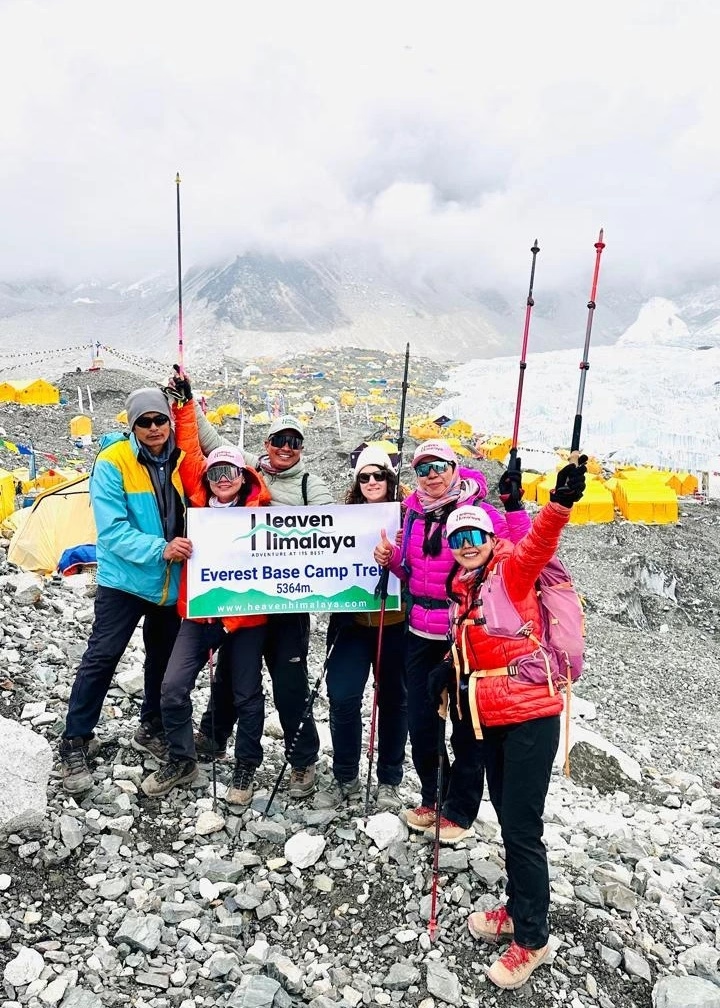
The Everest Region offers 4 November routes: the Everest Base Camp trek (12 to 14 days), the Gokyo Lakes trek (10 to 12 days), the Three Passes trek (16 to 20 days), and the Everest View trek to Tengboche (6 days). Each route starts with a flight to Lukla (2,860 m).
The Everest Base Camp route follows Namche, Tengboche, Dingboche, and Lobuche to Gorak Shep. The Gokyo route climbs to Gokyo Ri (5,357 m), where four of the world's six highest peaks (Everest, Lhotse, Makalu, and Cho Oyu) share one view. Gokyo draws far fewer trekkers than the Namche to Lobuche trunk trail. The Three Passes route crosses Kongma La (5,535 m), Cho La (5,420 m), and Renjo La (5,360 m), and November snow makes it a route for experienced trekkers with crampons.
Tengboche Monastery (3,867 m) hosts the Mani Rimdu masked-dance festival in October or November, depending on the Tibetan lunar calendar. Confirm the date with your guide before you fix your schedule.
What Should You Know Before Visiting the Everest Region in November?
Before visiting the Everest Region in November, secure 2 permits (Sagarmatha National Park at NPR 3,000 and the Khumbu Pasang Lhamu local permit, costing NPR 6,000 (about USD 45) combined), book Lukla flights with 2 buffer days, and schedule 2 acclimatization days at Namche and Dingboche.
The Wilderness Medical Society advises climbers above 3,000 m to raise their sleeping altitude by no more than 500 m per day and to rest every third or fourth day. The most common mistake we see is skipping the Dingboche rest day to save time. Trekkers who skip it arrive at Lobuche with headaches and lose the Kala Patthar sunrise.
Lukla flights leave in the early morning, before cloud builds around 10 a.m., and Tihar demand sells out seats. Operators price 2026 guided, full-board Everest Base Camp packages at USD 800 to 1,400. While national rules mandate guides for most trekking areas, the local Khumbu municipality operates independently and continues to allow solo, unguided trekkers in the Everest Region. Buy travel insurance that covers helicopter evacuation to at least 6,000 m.
2. Annapurna Region
The Annapurna Region is the 7,629 square kilometre Annapurna Conservation Area, Nepal's largest protected area, founded in 1986 and managed by the National Trust for Nature Conservation. It holds Annapurna I (8,091 m), Annapurna Base Camp (4,130 m), Poon Hill (3,210 m), and Thorong La Pass (5,416 m).
What Makes November a Great Time to Explore the Annapurna Region?
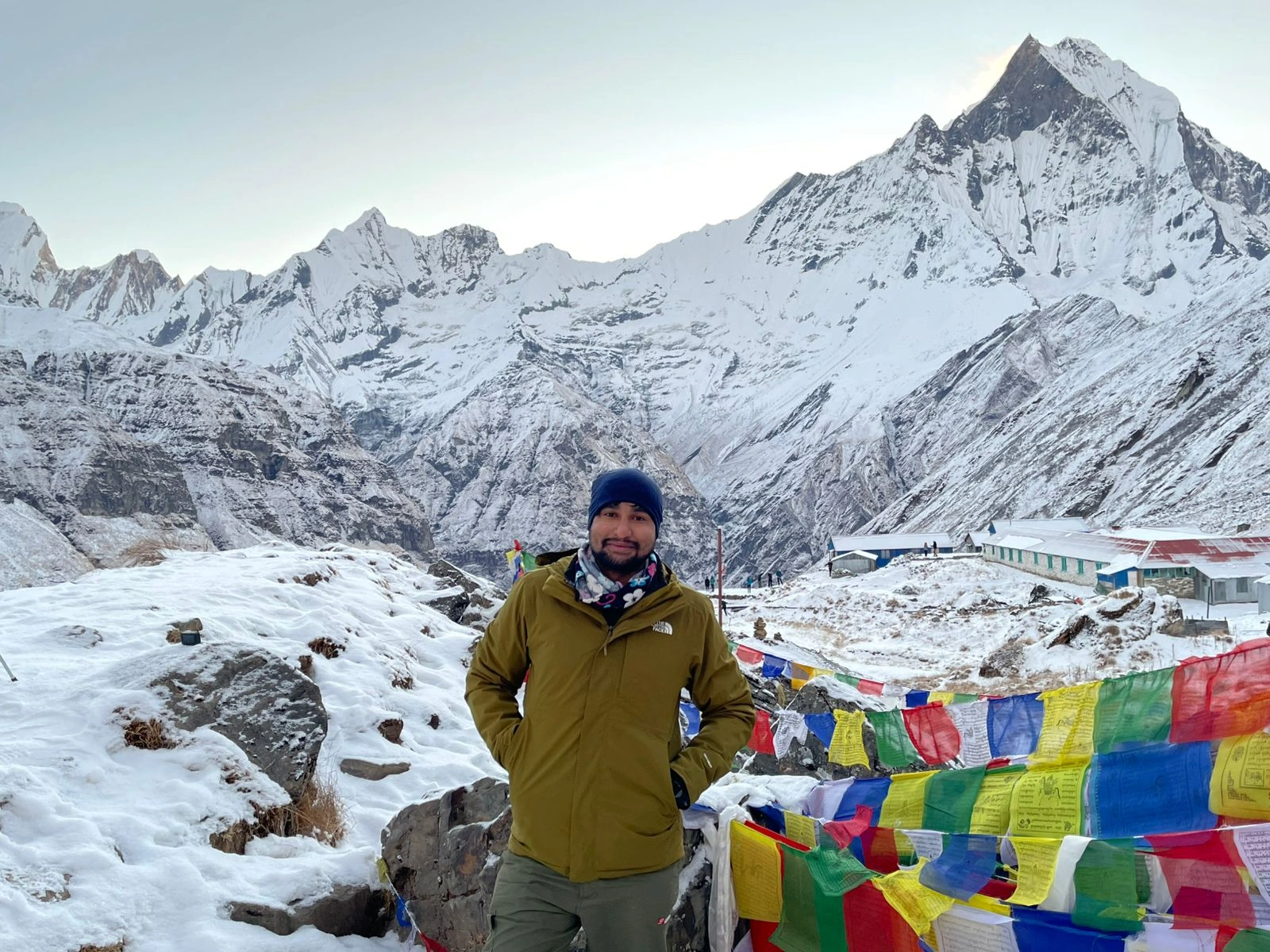
November suits the Annapurna Region because daytime temperatures stay between 12 and 20°C below 3,000 m, rainfall drops near zero, and the Dhaulagiri, Annapurna, and Machhapuchhre skyline stays sharp from the Poon Hill sunrise. The rice terraces around Ghandruk and Tadapani are harvested by early November, and the trails are dry.
The 2026 season has one caveat. Heavy snow fell on Thorong La during the extreme late-monsoon system from September 24 to 27, 2024, and OnlineKhabar reported that the pass trail reopened on October 5 after 20 people cleared it. The Annapurna Conservation Area Project also reported trekkers crossing the pass again on October 3. Late-season storms are the main November risk here, and the October 2014 Thorong La blizzard killed more than 40 people. Treat the pass as a weather-dependent crossing and keep 2 spare days in your plan.
Which Trekking Routes and Highlights Should You Explore in the Annapurna Region?
The Annapurna Region offers 4 November routes: Ghorepani Poon Hill (4 to 5 days), Mardi Himal (5 to 7 days), Annapurna Base Camp (7 to 10 days), and the Annapurna Circuit (12 to 18 days).
Poon Hill is the shortest route and delivers a sunrise panorama of Dhaulagiri, the Annapurnas, and Machhapuchhre. Mardi Himal climbs a forested ridge to the Upper Viewpoint at 4,200 m (and Base Camp at 4,500 m) with Machhapuchhre (6,993 m) at arm's length. Annapurna Base Camp passes Chomrong (2,170 m) and Machhapuchhre Base Camp (3,700 m). The stretch between Deurali and Machhapuchhre Base Camp is avalanche terrain, so guides hold trekkers for a day after fresh snowfall.
The Annapurna Circuit crosses Thorong La and reaches the Muktinath temple (3,710 m). Jeeps now cover the lower Marsyangdi valley, so most trekkers start at Chame and walk the high route from Upper Pisang to Manang.
What Should You Pack for the Annapurna Region in November?
Pack 6 core items for the Annapurna Region in November: a sleeping bag rated to -15°C, a down jacket of 700-fill or higher, a waterproof shell, insulated gloves, microspikes, and a headlamp with spare batteries.
Temperatures drive the list. Tadapani (2,630 m) sees nights near 0 to 3°C, Annapurna Base Camp drops to -8 to -15°C, and Thorong La High Camp (4,850 m) reaches -15 to -20°C. Wear merino or synthetic layers, never cotton. Add trekking poles, purification tablets, and a power bank.
Withdraw cash in Pokhara, because ATMs above Nayapul are rare and unreliable. The ACAP permit costs NPR 3,000 and you will also need a mandatory TIMS card for NPR 2,000 (totaling about USD 37), both of which your agency arranges. Keep your duffel under 10 kg, since your porter carries it up every stair.
3. Kathmandu
Kathmandu is Nepal's capital, sitting at 1,400 m in a valley that holds 7 UNESCO World Heritage monument zones, listed in 1979 and extended in 2006. Every other destination in this guide connects through its Tribhuvan International Airport.
Which Cultural and Historical Attractions Can You Explore in Kathmandu?
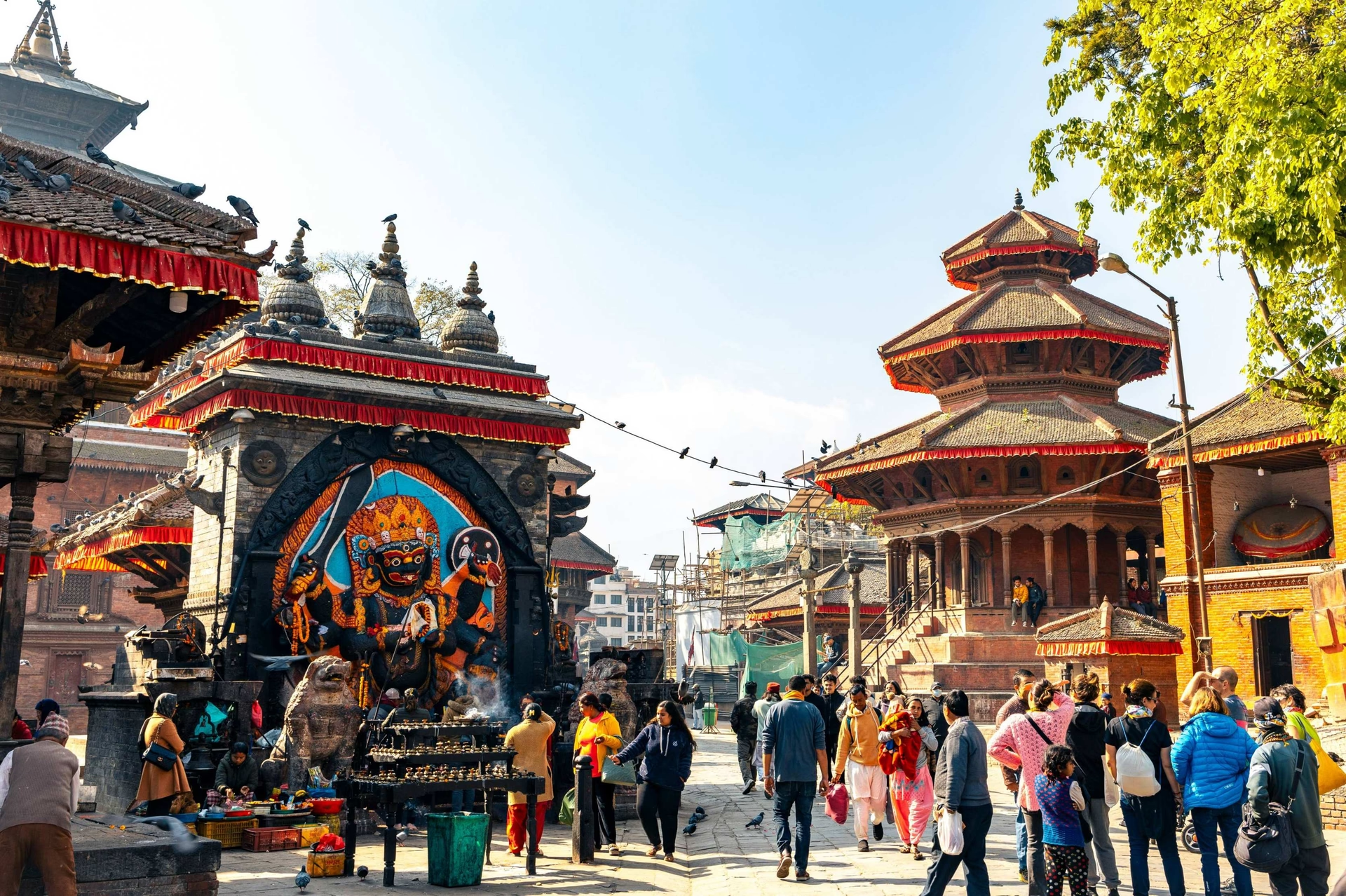
Kathmandu's 7 UNESCO monument zones are Kathmandu Durbar Square, Patan Durbar Square, Bhaktapur Durbar Square, Swayambhunath, Boudhanath, Pashupatinath, and Changu Narayan, with foreign-visitor tickets running from NPR 200 at Swayambhunath to NPR 1,800 at Bhaktapur.
Current foreign-visitor fees are NPR 1,000 each for Kathmandu Durbar Square, Patan Durbar Square, and Pashupatinath, NPR 400 for Boudhanath, and NPR 200 for Swayambhunath. Group them by geography in 3 half-days. Pashupatinath at 7 a.m. pairs with Boudhanath at dusk, when butter lamps light the stupa. Patan and Bhaktapur make a second day. Swayambhunath at sunrise and Kathmandu Durbar Square make a third. The 2015 earthquake damaged all three Durbar Squares, and Patan shows the most restoration progress.
What Is the Weather Like in Kathmandu During November?
Kathmandu in November averages 20 to 22°C by day and 5 to 9°C at night, with almost no rain, clear skies, sunrise between 6:15 and 6:35 a.m., and sunset around 5:15 p.m.
Air quality is the weak point. The valley traps smoke from cooking fires, traffic, and Tihar fireworks, and AQI readings between 100 and 200 are common in late November. Carry an N95 mask and book mountain flights and Nagarkot viewpoints for the early morning, before haze builds.
Which Kathmandu Experiences Should You Include in Your November Trip?
Include 5 Kathmandu experiences in November: Tihar evenings in Patan or Bhaktapur, a sunrise at Nagarkot, a Newari food walk, a Boudhanath kora at dusk, and an hour in the Garden of Dreams.
Tihar 2026 runs from about November 7 to 11. Kukur Tihar honours dogs on November 7, Laxmi Puja falls on Sunday, November 8, and Bhai Tika ends the festival around November 10 or 11, so confirm the date on the Nepali calendar. Households light oil lamps and draw rangoli at doorways, and children sing Deusi-Bhailo door to door.
Nagarkot sits 32 km east at 2,175 m and shows the Himalayan range at sunrise. Eat momo, bara, and chatamari at Newari restaurants in Patan, and spend an hour in the Garden of Dreams (NPR 500). Arrive 2 days before any trek to handle permits and jet lag.
4. Dhorpatan
Dhorpatan Hunting Reserve is Nepal's only hunting reserve, established in 1987 across 1,325 square kilometres of Rukum, Baglung, and Myagdi districts in western Nepal. It lies beneath Dhaulagiri (8,167 m) and spans altitudes from about 2,850 m to above 5,000 m.
What Makes Dhorpatan Special for Nature and Adventure in November?
Dhorpatan stands out in November for 3 reasons: open alpine meadows called patans, a large population of blue sheep and Himalayan tahr, and clear views of Dhaulagiri and Churen Himal with almost no other trekkers on the trail. A patan is a flat high-altitude grassland that grazing herds and wild ungulates share.
The reserve protects blue sheep (bharal), Himalayan tahr, musk deer, Himalayan black bear, snow leopard, and more than 130 bird species. November days reach 10 to 14°C at 3,000 m and nights fall to -2 to -6°C. Rain is rare, and the quiet is the main draw.
Which Activities and Attractions Can You Experience in Dhorpatan?
Dhorpatan offers 4 activities: multi-day trekking (3 to 12 days), blue sheep and tahr watching, birdwatching for the Himalayan monal (Nepal's national bird, called danphe), and camping on the patans.
A short 3 to 5 day trek covers the Dhorpatan valley and Bukipatan grasslands, where blue sheep graze in open view. An extended 10 to 12 day route links the valley with Jaljala and the western slopes of Dhaulagiri. Access runs through Pokhara, Baglung, and Burtibang, and the road to Dhorpatan village takes a full day by jeep.
What Should You Know Before Visiting Dhorpatan in November?
Before visiting Dhorpatan in November, confirm the autumn hunting-block schedule with the reserve office in Baglung, carry a camping kit and cooking fuel, and hire a local guide through a registered agency.
Each autumn the reserve runs a quota-limited trophy hunt for blue sheep and tahr, and one recent season permitted 10 blue sheep and 6 tahr between September and November, according to OnlineKhabar. The reserve is split into 7 hunting blocks. Ask which blocks are active, stay on marked trails, and wear bright clothing.
Teahouses are scarce, and homestays in Dhorpatan village are basic. Entry permits sell at the Department of National Parks and Wildlife Conservation office in Kathmandu and at the reserve gate. The reserve brochure advises against trekking alone.
5. Pokhara
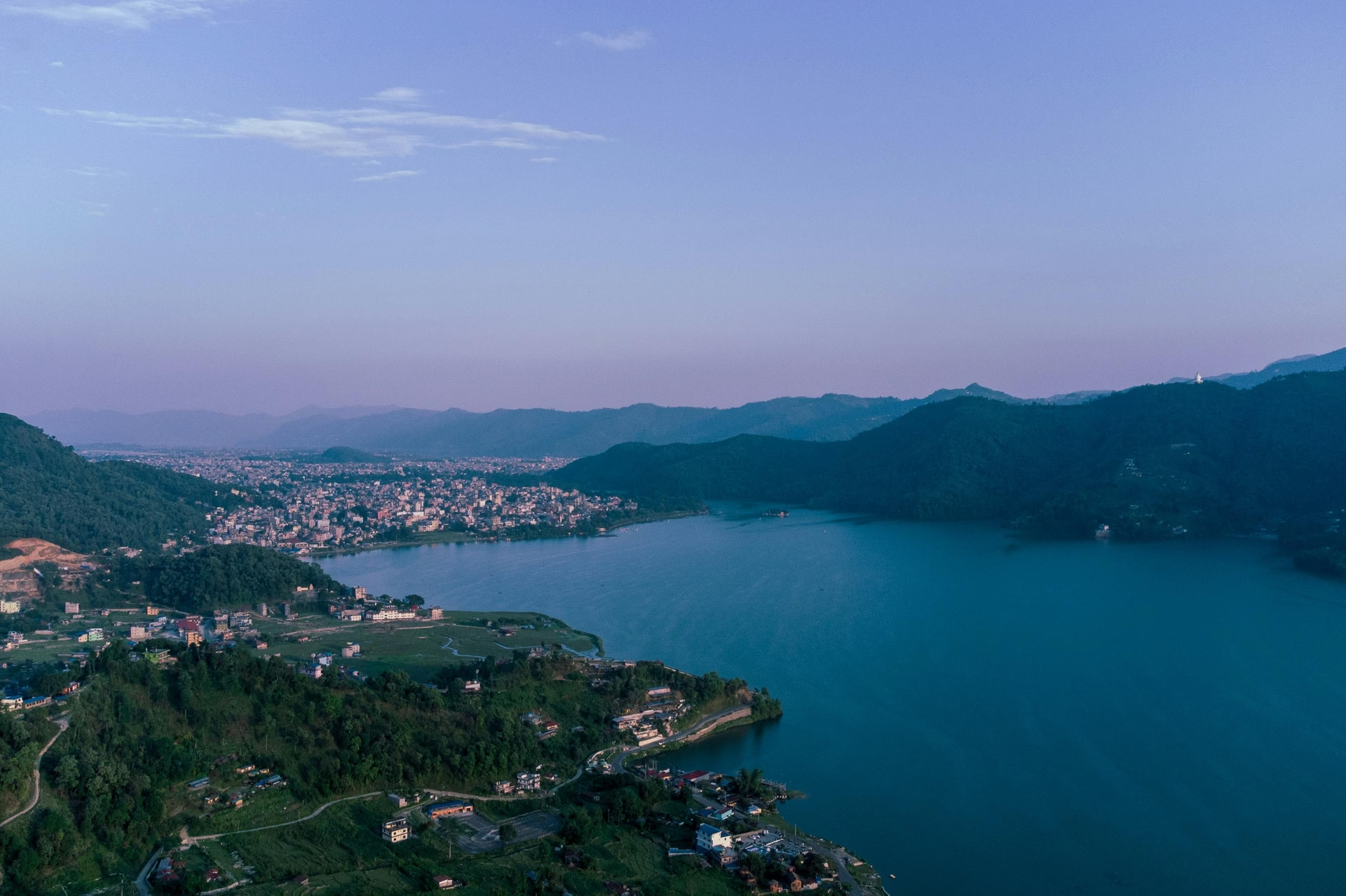
Pokhara is Nepal's lakeside adventure city at 822 m, about 200 km west of Kathmandu. Phewa Lake covers roughly 4.4 square kilometres, and the skyline above it includes Dhaulagiri (8,167 m), Annapurna I (8,091 m), and Machhapuchhre (6,993 m).
What Makes Pokhara Ideal for a November Visit?
Pokhara suits November because daytime highs reach 24 to 26°C, nights hold at 10 to 13°C, rain is near zero, and the Annapurna range stays clear at sunrise. Sunrise arrives around 6:20 a.m.
Pokhara International Airport opened in January 2023, and Kathmandu flights take about 25 minutes, against 6 to 8 hours by road. November also opens the peak paragliding season, because settled air builds steady thermals over Sarangkot. During Tihar, Lakeside lights up with oil lamps and floating candles on Phewa.
Which Attractions and Adventure Activities Can You Enjoy in Pokhara?
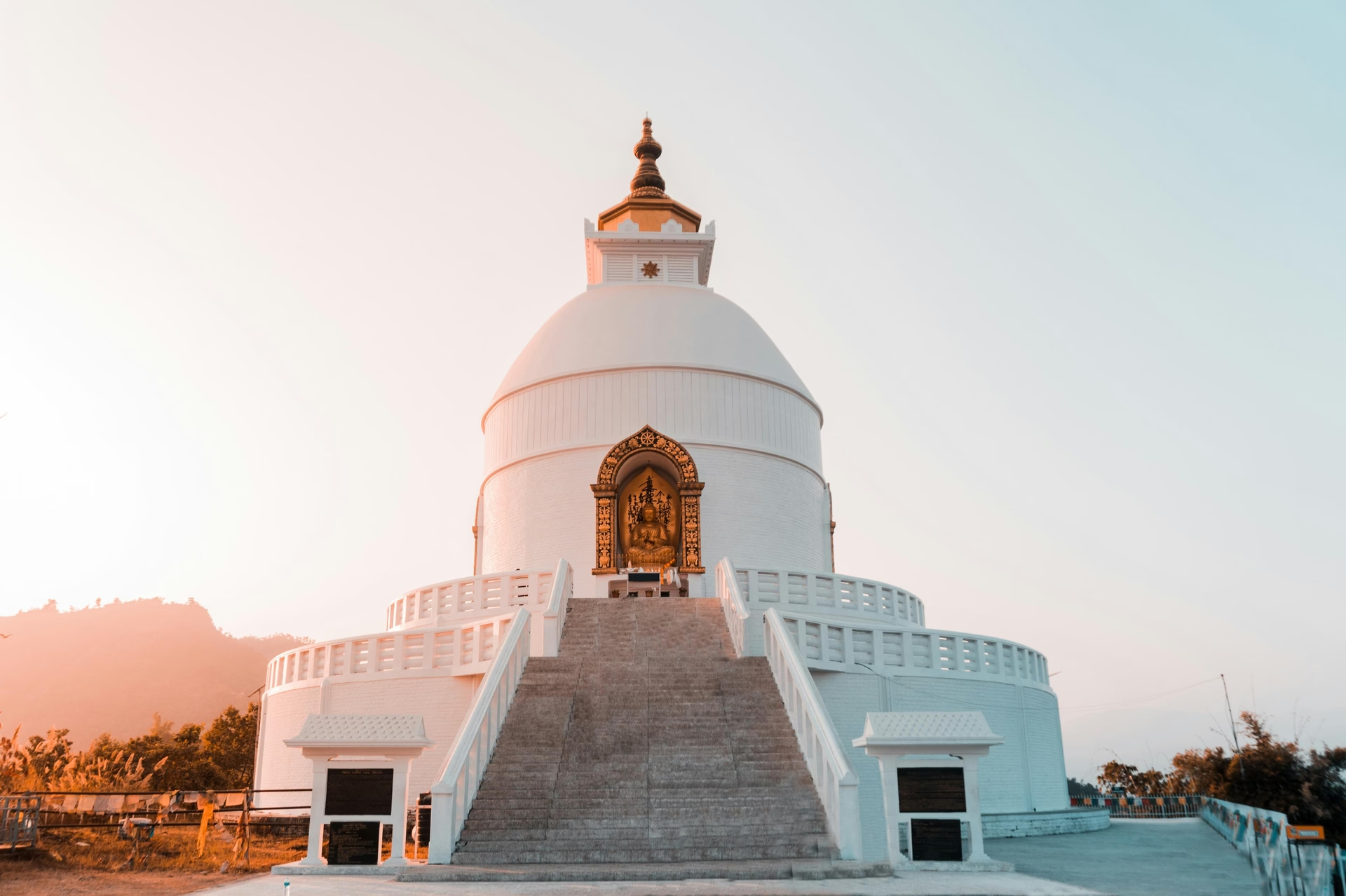
Pokhara offers 6 headline attractions: Phewa Lake boating, the Sarangkot sunrise, tandem paragliding, the World Peace Pagoda, Davis Falls with Gupteshwor Cave, and the International Mountain Museum.
Row to Tal Barahi, the island temple in Phewa, and walk up to the World Peace Pagoda for the lake view. Tandem paragliding launches from Sarangkot (1,592 m) and lands at Lakeside after 20 to 30 minutes. Morning flights between 8 and 10 a.m. give the clearest mountains, and flights after 10:30 a.m. give stronger thermals and longer rides. Choose by what you want.
How Can You Experience the Best of Pokhara in November?
Spend 3 days in Pokhara in November: Day 1 for the Sarangkot sunrise and paragliding, Day 2 for Phewa Lake, Tal Barahi, and the World Peace Pagoda, and Day 3 for Davis Falls, Gupteshwor Cave, and the International Mountain Museum.
Leave Lakeside at 5:15 a.m. for Sarangkot to catch the first light on Machhapuchhre. Book paragliding with a registered operator and ask for the pilot's licence details. Use Pokhara as a base for Poon Hill, Mardi Himal, and Annapurna Base Camp, since Nayapul sits 1.5 hours away by road. Reserve Lakeside hotels 3 weeks ahead for Tihar week, when Nepali families fill the city.
6. Upper Mustang
Upper Mustang is the former Kingdom of Lo, a restricted area in the Annapurna rain shadow on the edge of the Tibetan plateau. Its walled capital, Lo Manthang (3,840 m), dates to 1380, and Nepal opened the region to foreign trekkers in 1992.
What Makes Upper Mustang Unique During November?
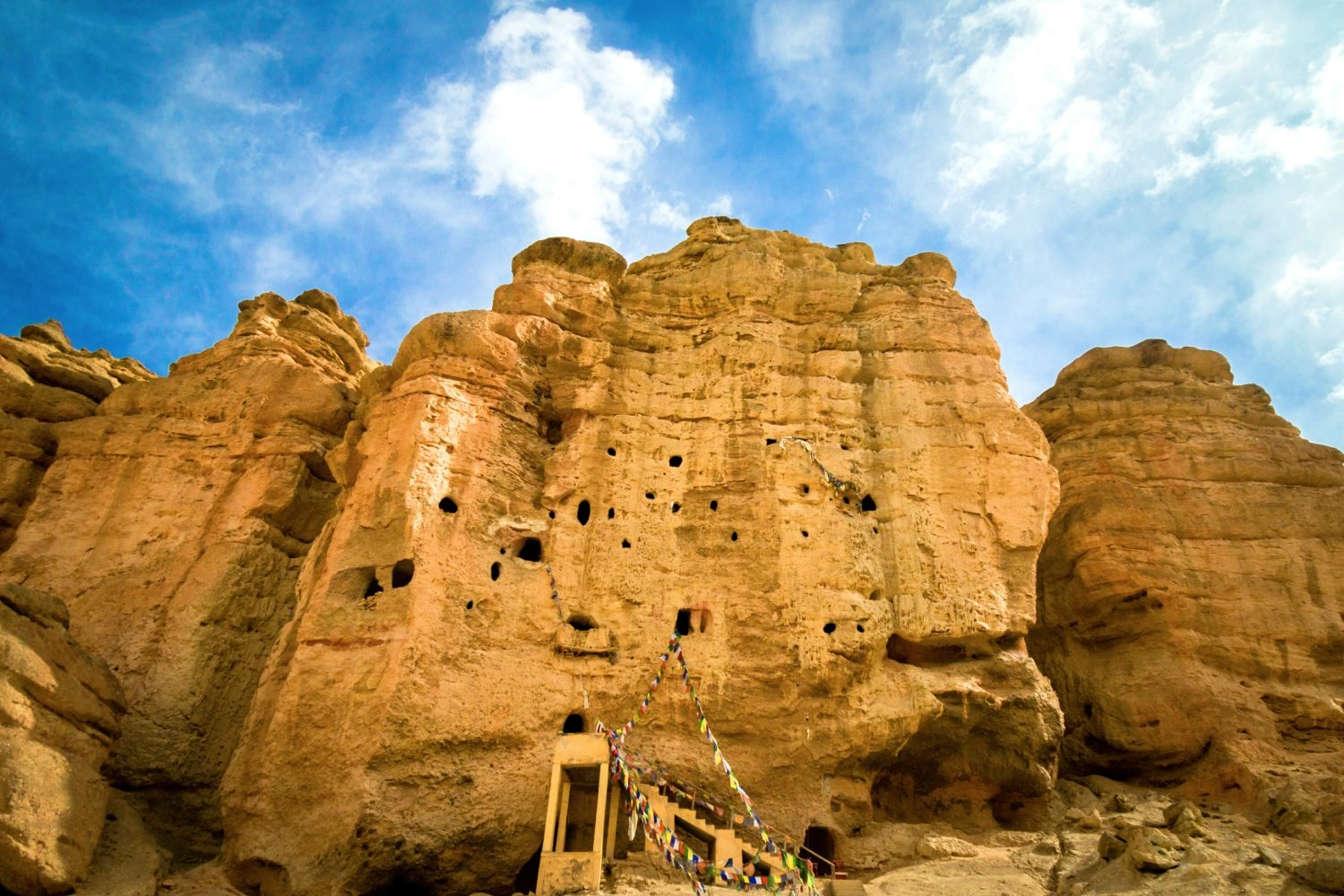
Upper Mustang is unique in November because the rain shadow keeps it dry and clear, the eroded ochre and grey canyons cast long shadows under low sun, and Tibetan Buddhist villages remain open before winter migration begins.
Most Lo Manthang lodges start closing in mid-November, when families move to lower altitudes for winter, so the first two weeks of the month are the safer window. Tiji, the 3-day ritual festival, happens in May. Daytime highs reach 5 to 10°C and nights drop to -8 to -12°C. The Kali Gandaki wind rises after 10 a.m. and blows at 25 to 40 km/h, so walk early.
Which Places and Cultural Attractions Can You Explore in Upper Mustang?
Upper Mustang's main sites are Kagbeni, Chele, Ghami, Tsarang, Lo Manthang, Chhoser, and Ghar Gompa, with the 15th-century monasteries Thubchen Gompa and Jampa Lhakhang inside Lo Manthang.
Kagbeni (2,810 m) is the gateway, where the trail leaves the Kali Gandaki valley. Lo Manthang packs a four-storey royal palace, red-painted monasteries, and mud-brick houses inside a 14th-century wall. Tradition dates Ghar Gompa to the 8th century, and Chhoser has multi-level cave dwellings carved into the cliffs. A jeep road now reaches Lo Manthang. Trekkers walk 7 days out and drive or walk a different route back, which shortens a 14-day trip without losing the best sections.
What Should You Know About Traveling to Upper Mustang in November?
Travel to Upper Mustang requires a USD 500 restricted-area permit for the first 10 days (USD 50 per extra day), an ACAP permit of NPR 3,000, a licensed guide, and a registered agency, with a minimum group of 2 trekkers.
Operators price 2026 full-board packages at USD 2,000 to 2,800. Fly Pokhara to Jomsom in the first morning slot, because wind closes the airstrip after 10 a.m. and cancellations are common. Add 1 to 2 buffer days. Pack a -15°C sleeping bag, a windproof shell, lip balm, and a water bottle for 3 to 4 litres a day, because the air is very dry. Lo Manthang's 3,840 m altitude is moderate, but the 2 nights above 3,800 m still call for a slow first day.
7. Chitwan National Park
Chitwan National Park is Nepal's first national park (1973) and a UNESCO World Heritage Site since 1984. It covers 952.63 square kilometres of sal forest and elephant-grass floodplain in the Terai lowlands.
What Makes November Ideal for Wildlife Experiences in Chitwan?
November is ideal for Chitwan because daytime temperatures sit at 27 to 29°C, nights cool to 10 to 13°C, migratory birds have arrived, and the park logs its busiest visitor months in October and November.
The park recorded 32,252 visitors in October and November in its latest fiscal year, and 10,326 of them came from countries beyond South Asia, according to OnlineKhabar. The trade-off is vegetation. Elephant grass stands 3 to 6 m tall until local communities cut it in January and February, so rhinoceros sightings come from riverbanks and forest edges rather than open grassland. Early morning drives give the best odds.
Which Wildlife and Jungle Activities Can You Enjoy in Chitwan?
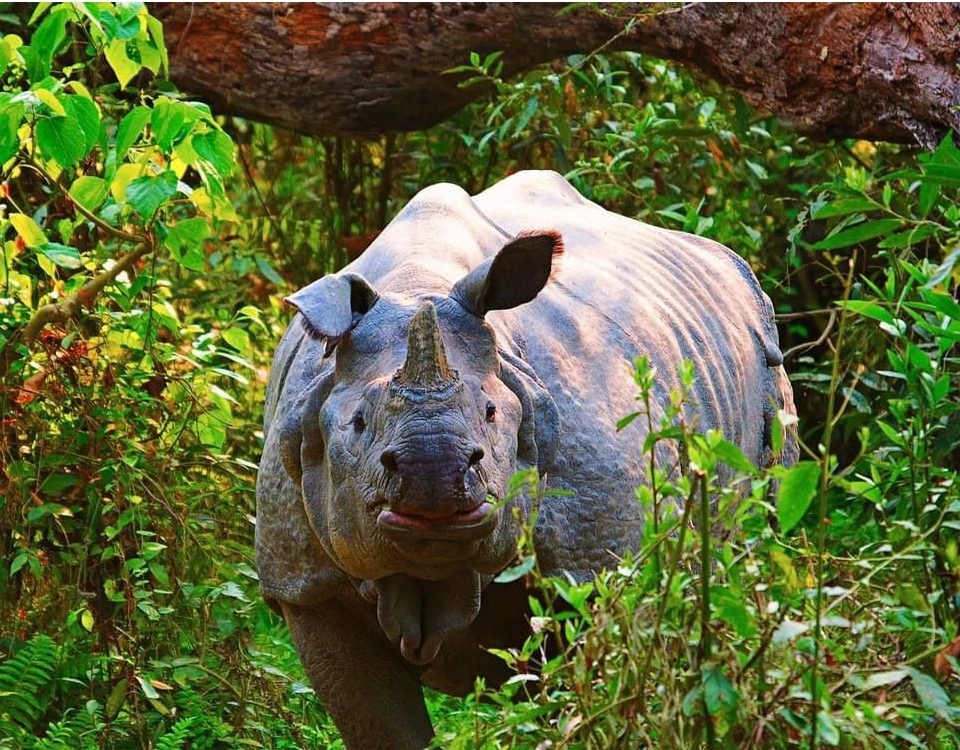
Chitwan offers 5 jungle activities: jeep safari, guided walking safari, Rapti River canoe ride, birdwatching, and a Tharu cultural program, with the one-horned rhinoceros, Bengal tiger, gharial, and sloth bear as headline species.
The 2021 national census counted 694 one-horned rhinoceros in Chitwan, and the 2022 tiger census counted 355 tigers across Nepal. The Gharial Conservation Breeding Centre at Kasara and the Elephant Breeding Centre at Khorsor show conservation work up close. Canoes drift down the Rapti for about an hour past marsh mugger crocodiles and kingfishers.
Foreigners pay NPR 2,000 for park entry and NPR 5,000 per jeep. A cheaper alternative opened in March 2026: the Patihani to Dudhaura buffer zone jeep safari charges foreigners NPR 500 plus NPR 1,000 per jeep and caps trips at 24 per day.
What Should You Know Before Visiting Chitwan National Park in November?
Before visiting Chitwan in November, book Sauraha lodges and jeep slots 2 to 3 weeks ahead for Tihar, budget NPR 2,000 for the park permit and NPR 5,000 per jeep, and hire a registered naturalist for every walking safari.
Walking safaris run with 2 guides. Wear neutral colours, carry a fleece for 10°C mornings, and keep clear of the Rapti water. Confirm the current Kathmandu to Sauraha road route with your operator, because the historic September 2024 floods damaged several bridges in the Trishuli and Malekhu corridors. A 25-minute flight to Bharatpur avoids the road altogether. Nepali domestic visitors peak in October and November too, so choose weekdays.
8. Lumbini
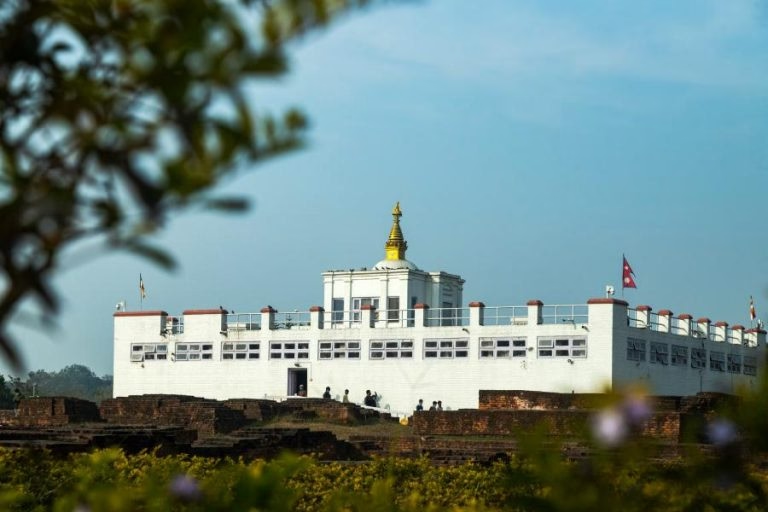
Lumbini is the birthplace of Siddhartha Gautama, the Buddha, set in the Terai at about 150 m and listed as a UNESCO World Heritage Site in 1997. The Maya Devi Temple marks the exact birth spot with a marker stone.
What Makes Lumbini Significant for Travelers and Pilgrims?
Lumbini is significant because tradition dates the Buddha's birth here to 623 BCE, it ranks among the 4 principal Buddhist pilgrimage sites with Bodh Gaya, Sarnath, and Kushinagar, and it holds Emperor Ashoka's pillar of 249 BCE, which records the birth.
German archaeologist Alois Führer and Nepali general Khadga Shumsher Rana identified the pillar in 1896, and its inscription confirmed the site. Pilgrims arrive between October and March, and November is quiet compared with Buddha Purnima in May.
Which Buddhist and Historical Sites Can You Explore in Lumbini?
Lumbini's core sites are the Maya Devi Temple, the Ashoka Pillar, the Puskarini sacred pond, the Eternal Peace Flame, the World Peace Pagoda, and more than 25 monasteries split between an East zone (Theravada) and a West zone (Mahayana and Vajrayana).
The development zone spans 777 hectares, so rent a bicycle or hire an e-rickshaw. Start at 6:30 a.m., before queues form at the Maya Devi Temple, and remove your shoes at the gate. Photography is not allowed inside the temple, and drones need permission from three agencies. The Lumbini Development Trust lists a conservation fee of NPR 700 for third-country visitors, and May 2026 reports described an increase of up to 75 percent, so check the rate at the ticket counter.
Spend a second day on the Kapilvastu circuit. Tilaurakot, the Shakya capital, lies about 27 km west, and Gotihawa and Ramagrama hold Ashokan remains and an undisturbed stupa.
What Is the Weather Like in Lumbini During November?
Lumbini in November is dry and mild, with highs of 26 to 29°C, lows of 10 to 14°C, and morning mist that lifts by 9:30 a.m. Dense fog arrives in the last week of the month and grows heavier through January.
Fog delays flights into Gautam Buddha International Airport in Bhairahawa, so fly in before midday. Combine Lumbini with Chitwan (4 hours by road) and Pokhara (6 hours) for a low-altitude circuit that avoids cold nights entirely.
9. Badimalika
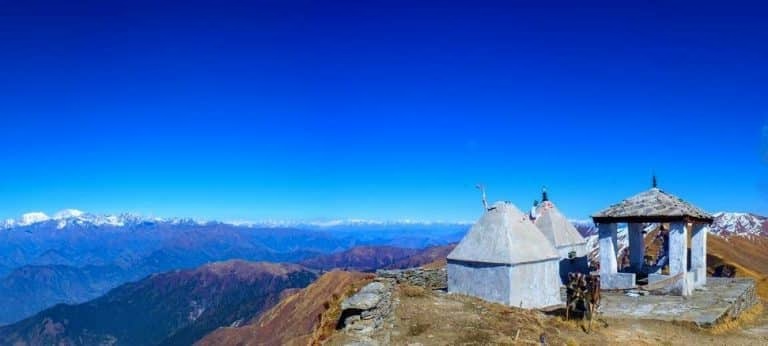
Badimalika is a Hindu goddess shrine at about 4,200 m in Bajura district, Sudurpashchim Province. The two-storey pagoda temple honours Mahakali, Mahalaxmi, and Durga, and pilgrims reach it on foot from the district headquarters at Martadi.
What Makes Badimalika Special for Trekking and Nature Lovers?
Badimalika is special because it joins a 4,200 m pilgrimage temple, unbroken alpine meadows, and direct views of Saipal (7,031 m) and Api (7,132 m) on a route with no tea house chain. Lodges exist only in the lowest farming villages.
That absence keeps the trail empty outside the August festival, when thousands of pilgrims climb to the temple around Janai Purnima. November offers the opposite experience: silence, cold light on the Saipal face, and herders moving livestock down from the patans.
Which Landscapes and Cultural Experiences Can You Discover in Badimalika?
Badimalika's landscapes run from subtropical river valleys near 1,000 m through pine and rhododendron forest to alpine meadows above 4,000 m, and its cultural core is a Shakti Peeth tradition in which priests from Bajura and Kalikot worship together.
According to the Swasthani Brata Katha, the left shoulder of Sati Devi fell on Mallagiri mountain here, and the site took the name Malika. Pilgrims bathe at Triveni Dham, where the borders of Bajura, Kalikot, and Achham meet, before the final climb. Sano Malika temple, 15 minutes from Martadi, serves devotees who cannot make the full journey. Trekkers can extend the route toward Khaptad National Park.
What Should You Know Before Trekking to Badimalika in November?
Before trekking to Badimalika in November, plan a 10 to 12 day camping trip, expect night temperatures of -8 to -15°C at the temple, hire a licensed guide through an agency, and add 2 buffer days for weather and road delays.
Reach Martadi by flying Kathmandu to Nepalgunj and on to Bajura, or by a 12-hour, 327 km bus ride from Dhangadhi. The trek from Martadi takes 2 to 3 days. Carry tents, stoves, and food, since no lodges operate above the lower villages. November is the last practical month before snow closes the upper trail, so go in the first half. Altitude is the real difficulty: the climb from Triveni to the temple is steep, and sleeping near 4,000 m demands a slow pace.
10. Rara Lake
Rara Lake is Nepal's largest freshwater lake, about 10.8 square kilometres at 2,990 m inside Rara National Park in Mugu district, Karnali Province. The park, established in 1976, is Nepal's smallest at 106 square kilometres.
What Makes Rara Lake Beautiful and Accessible in November?
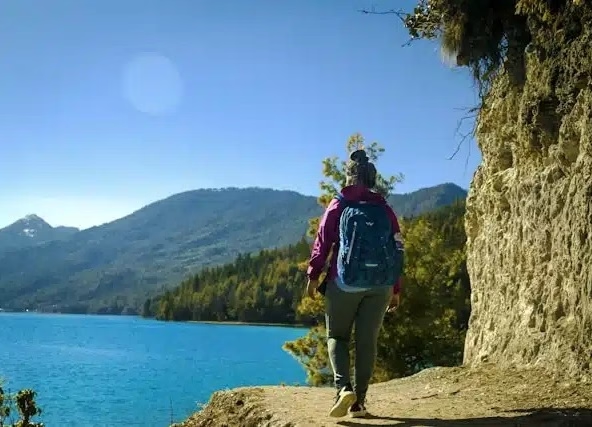
Rara Lake is beautiful in November because dry, clear air deepens the blue of the water, snow dusts the surrounding ridgelines, and a flight to Talcha airport puts the shore within a 2 to 3 hour walk. Autumn, from September to November, is one of the two best seasons.
Days reach 8 to 12°C and nights fall to -2 to -6°C. The standard route flies Kathmandu to Nepalgunj and then 30 to 35 minutes to Talcha. Few remote lakes in Nepal sit this close to a runway.
Which Activities and Attractions Can You Experience Around Rara Lake?
Around Rara Lake you can walk the shoreline, climb to the Murma Top viewpoint, row on the water, watch birds and wildlife, and camp beside the lake.
The park protects red panda, Himalayan black bear, musk deer, Himalayan tahr, and more than 200 bird species. A full lake circuit takes most of a day, and the Murma Top ridge gives the widest view over the water. The park office offers rowboats, and the silence after sunset is the main attraction.
What Should You Know Before Visiting Rara Lake in November?
Before visiting Rara Lake in November, budget NPR 3,000 for park entry and USD 400 to 600 for round-trip domestic flights, add 2 buffer days for Talcha cancellations, and carry a sleeping bag rated to -15°C.
Each flight leg costs USD 100 to 150 one way, and Talcha flights depend on weather. Lodging is basic, and camping is common. Carry cash, because no ATMs operate beyond Nepalgunj. Leave the lake by the end of November, since the edges begin to freeze in December.
How Can You Explore the Best Places to Visit in Nepal in November With a Trekking Agency?
A trekking agency lets you explore the best places in Nepal in November by handling 4 tasks that are hard to manage alone: restricted-area permits, licensed guides and porters, domestic flights with weather buffers, and emergency evacuation.
Upper Mustang requires a registered agency by law, and operators report that 2026 rules require licensed guides on most national park and conservation area routes. The most common planning error we see is booking international flights before checking domestic availability around Tihar. Confirm Lukla, Pokhara, and Jomsom seats first, then buy the long-haul ticket.
Can Heaven Himalaya Help You Plan a November Trip to Nepal?
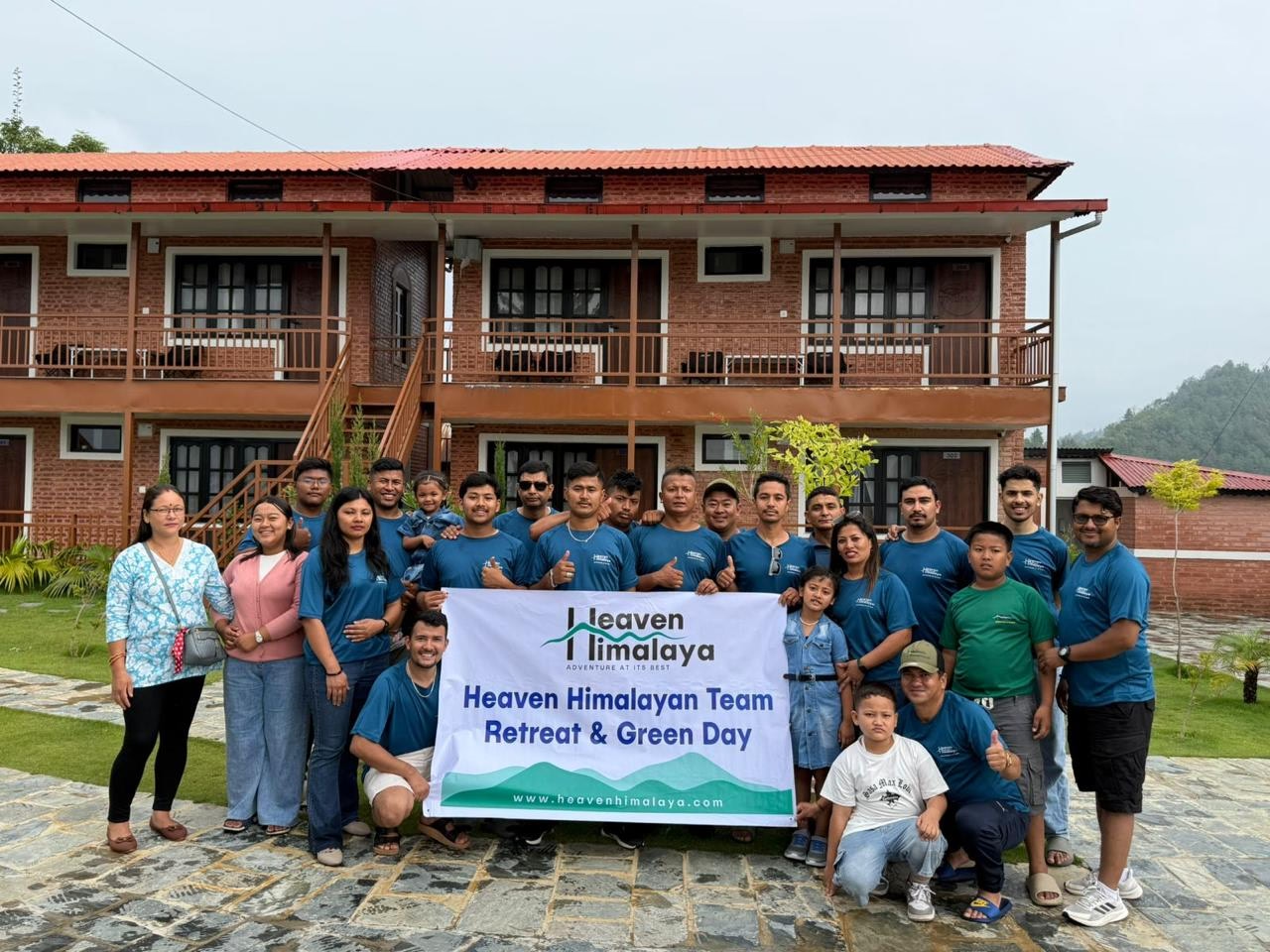
Yes. Heaven Himalaya is a Nepal-based trekking agency that plans November trips to every destination in this guide, including permits, licensed guides, porters, domestic flights, hotels, and ground transport.
Share your dates, fitness level, and interests, and the team matches them to the regions above. Tihar week needs the earliest bookings, so lock in domestic flights and lodges now for any departure between November 5 and 12.
Plan your November trip with Heaven Himalaya. Send your travel dates and the places you want to see, and we will build a day-by-day itinerary with weather buffers and permit costs.
What Are the Key Takeaways About the Best Places to Visit in Nepal in November?
The best places to visit in Nepal in November are the Everest Region, Annapurna Region, Kathmandu, Dhorpatan, Pokhara, Upper Mustang, Chitwan National Park, Lumbini, Badimalika, and Rara Lake.
Choose the Everest Region and Annapurna Region for the clearest high-mountain views, and keep 2 buffer days for Lukla flights and Thorong La weather.
Visit Kathmandu around Tihar (November 7 to 11, 2026) for oil lamps and festival evenings, and carry an N95 mask for late-November air.
Combine Pokhara, Chitwan, and Lumbini for a warm, low-altitude route with highs of 24 to 29°C.
Reach Upper Mustang in the first half of November, before lodges close, with a USD 500 permit.
Pick Dhorpatan, Badimalika, and Rara Lake for solitude, and pack for -15°C nights.
Book domestic flights before international tickets, because Tihar fills seats.
These places to visit in Nepal in November share one advantage: dry, clear weather after the monsoon. Match the altitude to your fitness, secure permits through a registered agency, and the month rewards every route on this list.