

Annapurna Base Camp Trek in November 2026: Cost & Itinerary

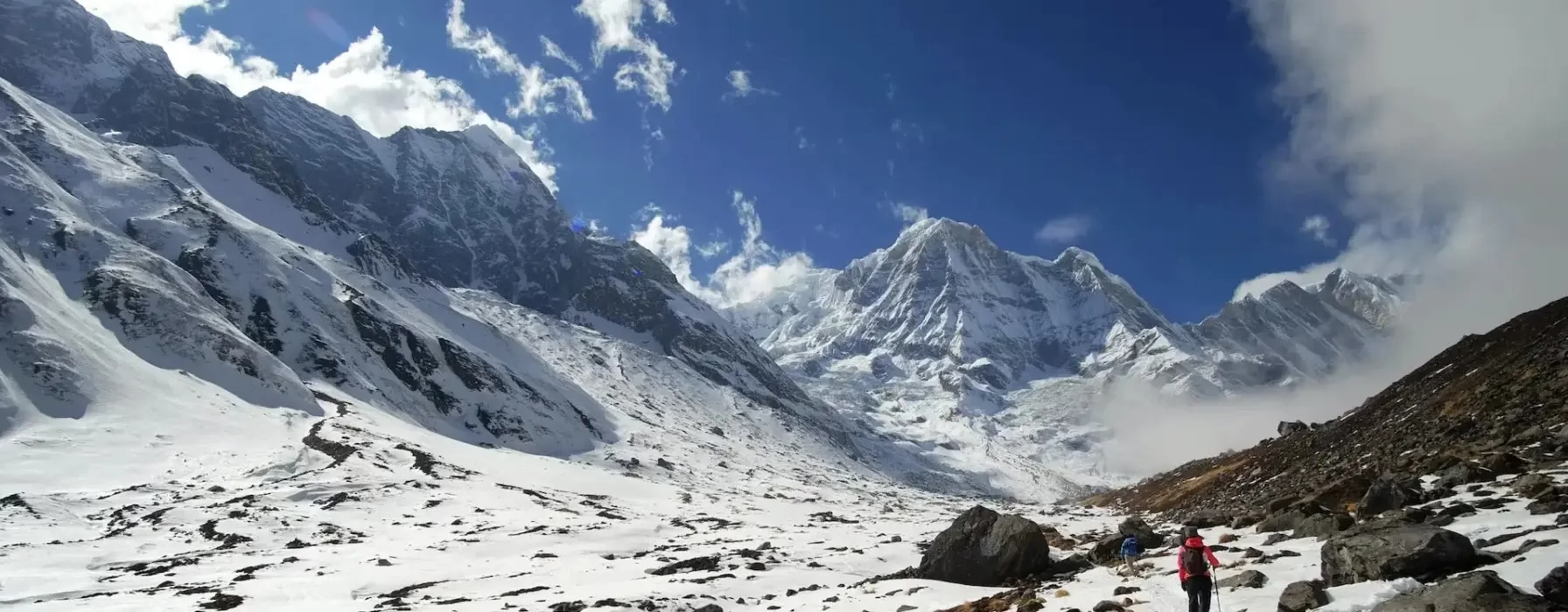
The Annapurna Base Camp (ABC) trek in November is a high-altitude Himalayan trekking route in Nepal that reaches 4,130 m in the Annapurna Sanctuary. November is one of the strongest months for the trek because the post-monsoon landscape brings dry trails, stable weather, low rainfall, crisp mountain visibility, and clear sunrise views of Annapurna I, Machhapuchhre, Annapurna South, Hiunchuli, and Gangapurna.
A typical ABC trek takes 7 to 15 days, with 9 to 10 trekking days offering a practical balance of walking time and acclimatization. Temperatures range from warm conditions around Pokhara to freezing nights at ABC, where lows can reach -6 to -12 °C.
Planning an Annapurna Base Camp trek in November requires more than choosing a departure date. The route involves long stone staircases, 5 to 7 hours of walking per day, increasing altitude, early sunsets, cold nights, and occasional snow above Deurali, making fitness, acclimatization, layering, and appropriate trekking gear essential.
This guide covers the November route and daily itinerary, weather by altitude, mountain views, trekking difficulty, altitude sickness prevention, training, packing, teahouse conditions, sleeping bags and trekking poles, 2026 trek costs, ACAP and TIMS permits, travel insurance, safety requirements, Tihar planning, and guided-trip options for Nepali and international trekkers.
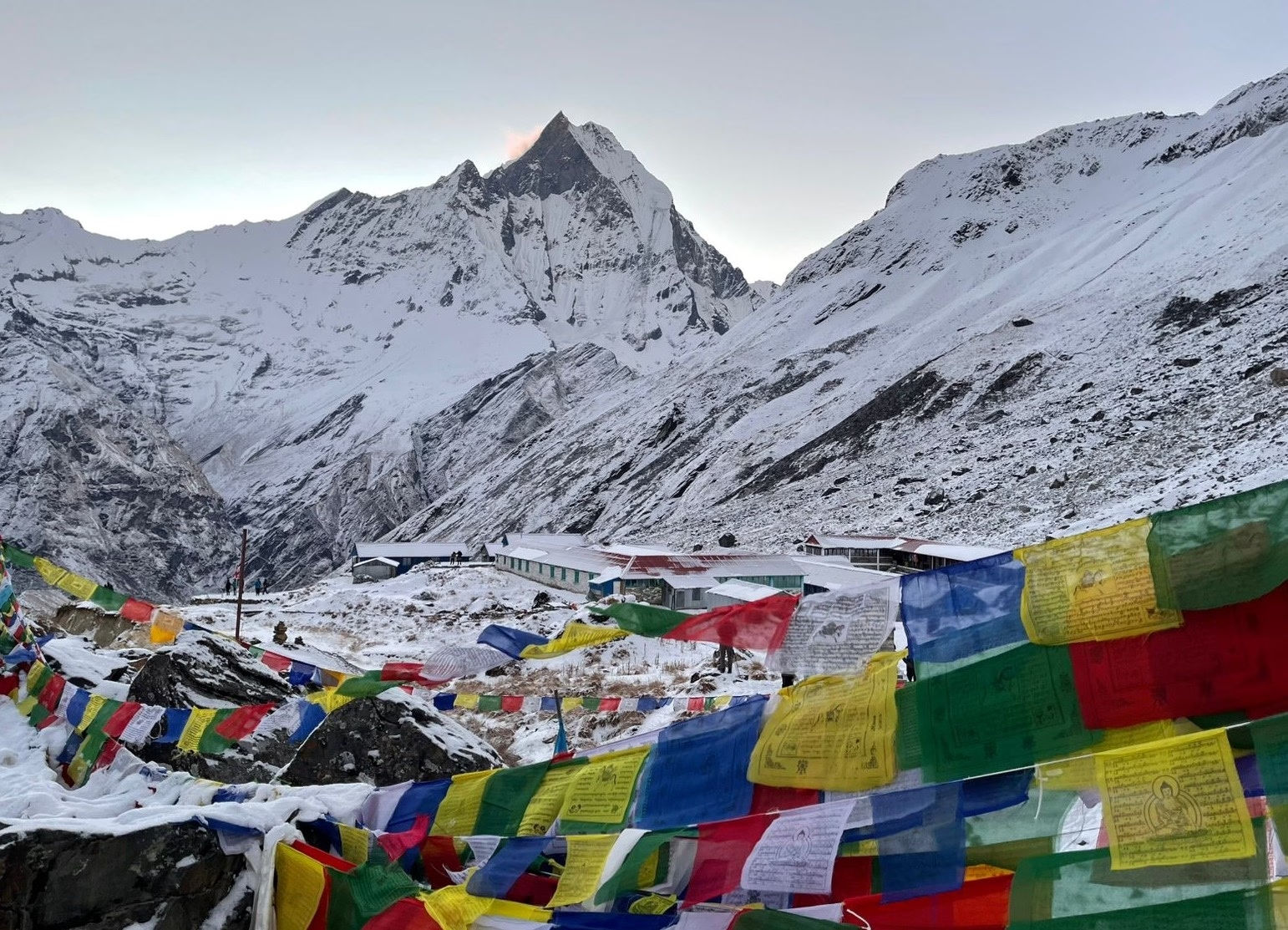
Why Is November Considered an Ideal Month for the Annapurna Base Camp Trek?
November is ideal for the Annapurna Base Camp trek because the monsoon has cleared, rainfall is minimal, the air is dry and sharp, and daytime temperatures stay comfortable up to 4,130 m. The result is long mountain views and firm trails.
Four factors set November apart:
Dry trails: Pokhara, the gateway city, receives under 30 mm of rain in a typical November against more than 800 mm in July, so the stone steps at Ulleri and Chhomrong stay dry underfoot.
Clean air: Four months of monsoon rain wash dust out of the atmosphere, which sharpens the view of Annapurna I, Machhapuchhre, and Hiunchuli.
Stable forecasts: Weather windows last for days, not hours, which makes day-by-day planning reliable.
Festival timing: Tihar lights up the lower villages in the first half of the month, and lodges decorated with marigold garlands and oil lamps.
November has two costs. Nights are colder than in October, and daylight shrinks to about 10.5 hours. Crowds run heaviest from mid-October to the first week of November, then ease after Tihar ends on 10 or 11 November. In our experience, the best window is roughly 12 to 25 November: skies stay clear, trails thin out, and the cold stays manageable with the right layers.
Nepali trekkers can use Tihar as a planning anchor. Trek the week before to be home for Bhai Tika, or start the week after.
What Weather Can You Expect on the Annapurna Base Camp Trek in November?
Expect clear, dry, stable weather in November: warm sunny days below 3,000 m, cold crisp days above it, freezing nights from Deurali upward, and rare light snow near Annapurna Base Camp late in the month.
The trail climbs from 1,070 m at Nayapul to 4,130 m at ABC, so one trek covers three climates:
Lower zone (Nayapul to Chhomrong, 1,070 to 2,850 m): T-shirt weather by day, light fleece by evening.
Middle zone (Dovan to Deurali, 2,600 to 3,230 m): cool bamboo and rhododendron forest, with shade that holds the chill.
Upper zone (Machhapuchhre Base Camp to ABC, 3,700 to 4,130 m): cold, windy, and bright, with frost on every surface at dawn.
Early November brings almost no snow. After 20 November, a passing western disturbance leaves a dusting above Deurali in some years. Our guides watch the sky and the lodge owners' forecasts, and they shift the schedule by a day when needed. Wind is the hidden variable. A 15 km/h breeze at ABC makes 2 °C feel like -4 °C.
How Clear Are the Mountain Views on ABC Trek in November?
Mountain views on the ABC trek in November are among the clearest of the year, with excellent visibility from about 5:30 to 9:30 am, then a gradual build of cloud in the valley by late morning.
Clear air does not mean clear all day. In the Annapurna Sanctuary, warm air rises from the lower valley after about 10 am and carries cloud up the Modi Khola gorge. Many afternoons at ABC are white. Mornings are the prize.
Plan around that pattern. Arrive at Machhapuchhre Base Camp or ABC by early afternoon, rest, then wake before dawn for the view. A common mistake is walking to ABC at midday, reaching a cloud-filled bowl, and leaving the next morning without staying for the sunrise. Haze at lower elevations, especially around Nayapul and Tikhedhunga, thins above 2,500 m.
How Cold Is Annapurna Base Camp in November?
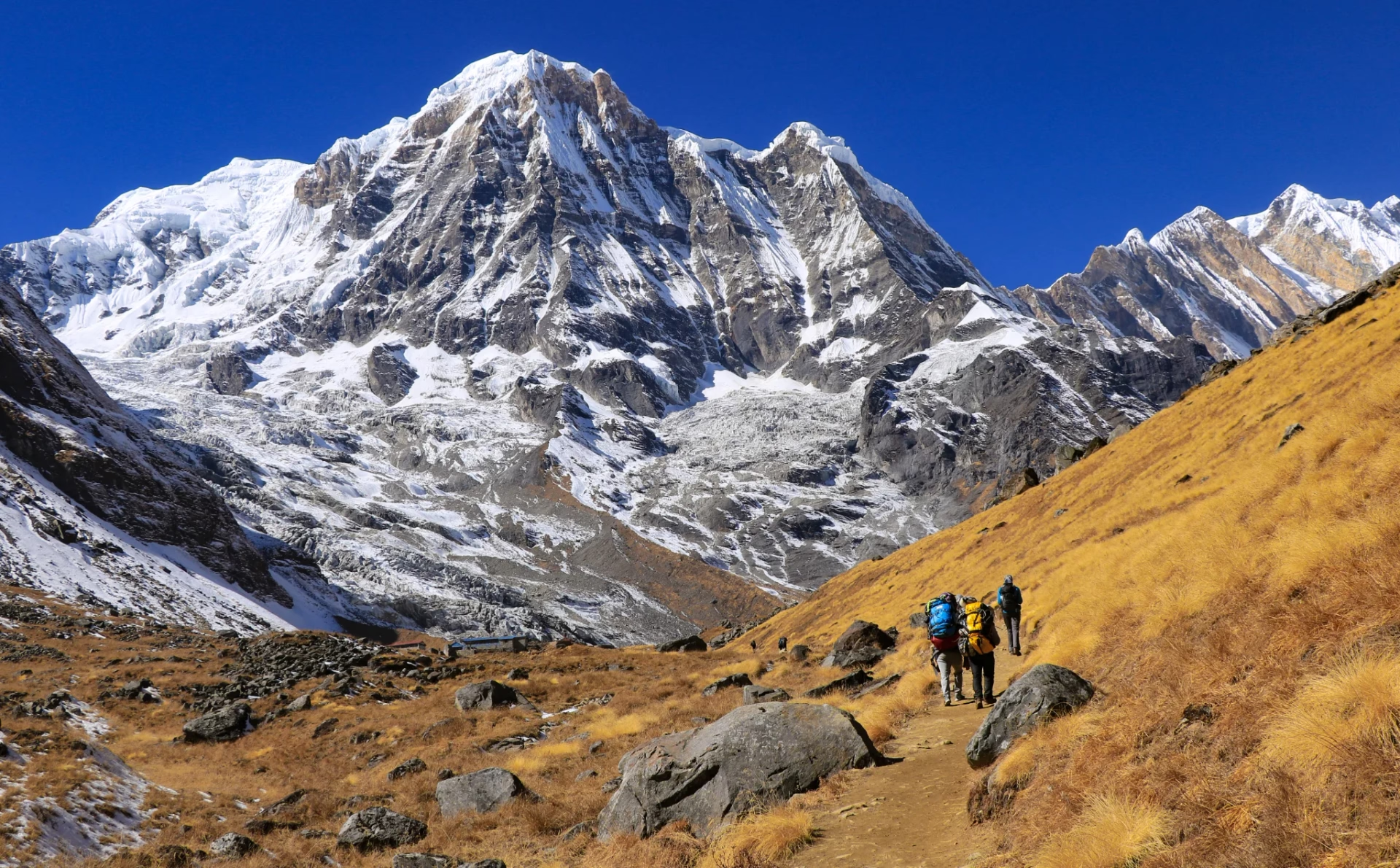
Annapurna Base Camp is cold in November: daytime highs of 3 to 8 °C and night lows of -6 to -12 °C, with the sharpest drop in the last week of the month.
The table below shows typical temperature ranges by stop. They are trail averages from guide experience, not instrument readings, and wind adds a further chill.
Stop | Altitude | Typical day | Typical night |
Pokhara | 822 m | 22-26 °C | 10-14 °C |
Ghorepani | 2,850 m | 10-14 °C | 0 to 4 °C |
Chhomrong | 2,170 m | 14-18 °C | 6-10 °C |
Deurali | 3,230 m | 8-12 °C | -3 to 2 °C |
Machhapuchhre Base Camp | 3,700 m | 6-10 °C | -5 to -8 °C |
Annapurna Base Camp | 4,130 m | 3-8 °C | -6 to -12 °C |
Bedrooms are unheated and the dining room is the only warm space. A -10 °C comfort-rated sleeping bag and a thermal liner handle the night. The cold punishes people who skip layers, not people who start with warm gear.
What Is the Annapurna Base Camp Trek Like in November?
The ABC trek in November is a 10-day teahouse journey of 5 to 7 walking hours per day, with stone staircases, forest, cold clear mornings, and warm dining-room evenings shared with trekkers from around the world.
Days follow a pattern. You wake at about 6 am, eat breakfast, and walk by 7 am. Lunch comes at a teahouse around 11:30 am to 1 pm, and you reach the night stop between 2:30 and 4 pm. By 6 pm everyone is in the dining room. By 8:30 pm most are asleep.
The trail is well marked and busy, which adds safety. It is also physical. Stairs define the first half, thin air defines the second. Nothing is technical, but nothing is a stroll either. Fit beginners can complete ABC trek with proper pacing.
How Long Does the Annapurna Base Camp Trek Take in November?
The Annapurna Base Camp trek takes 7 to 15 days in November: 7 to 9 days for a fast itinerary, 10 to 11 trekking days for a standard one, and 15 days for a full package that includes Kathmandu and Pokhara.
Heaven Himalaya's standard 15-day ABC trek package includes 10 trekking days from Nayapul via Poon Hill to ABC and back. Two days cover Kathmandu arrival and sightseeing, two cover road travel, and one covers departure. Shorter plans cut Poon Hill or ride a jeep to Chhomrong. They save 2 to 3 days and give up some acclimatization.
For November, we recommend 9 to 10 trekking days. Short days are shorter on daylight. A buffer day also absorbs a late-month snow delay, which a tight 7-day schedule cannot.
Short on time? The Mardi Himal Trek offers similar Annapurna views in fewer days.
What Is the Typical Annapurna Base Camp Trek Route in November?
The typical ABC route runs Nayapul, Tikhedhunga, Ghorepani, Poon Hill, Tadapani, Chhomrong, Dovan, Deurali, Machhapuchhre Base Camp, ABC, then back through Bamboo and Jhinu Danda to Nayapul.
The table below lists each trekking day with its sleeping altitude and walking time, based on Heaven Himalaya's 15-day itinerary.
Day | Route | Sleeps at | Walk time |
4 | Nayapul to Tikhedhunga | 1,540 m | 5-6 hrs |
5 | Tikhedhunga to Ghorepani | 2,850 m | 6-7 hrs |
6 | Poon Hill, then Tadapani | 2,630 m | 6-7 hrs |
7 | Tadapani to Chhomrong | 2,170 m | 5-6 hrs |
8 | Chhomrong to Dovan | 2,600 m | 6-7 hrs |
9 | Dovan to Deurali | 3,230 m | 5-6 hrs |
10 | Deurali to MBC to ABC | 4,130 m | 6-7 hrs |
11 | ABC to Bamboo | 2,310 m | 5-6 hrs |
12 | Bamboo to Jhinu Danda | 1,780 m | 5-6 hrs |
13 | Jhinu Danda to Nayapul, drive to Pokhara | 822 m | 4-5 hrs walk |
What Trekking Conditions in November Can You Expect Along the Annapurna Base Camp Trek Route?
Trekking conditions in November are dry and firm on the lower trail, cold and icy in shaded sections above Dovan, and avalanche-aware between Himalaya Hotel and Deurali, with full teahouses and early sunset throughout.
Section by section:
Nayapul to Ghorepani: dusty, warm, and steep, with about 3,300 stone steps climbing to Ulleri.
Tadapani to Chhomrong: forested trail with leaf litter, which hides loose stones.
Chhomrong to Bamboo: a long drop, then a climb, through bamboo forest along the Modi Khola.
Hinku Cave to Deurali: the avalanche-prone stretch. Risk is low in early November and rises after fresh snow.
MBC to ABC: frozen ground at dawn, loose gravel by noon.
Sunset falls at about 5:15 pm. Temperatures plunge within 30 minutes of it. Arrive at your lodge by 3:30 pm. Lodges beyond Chhomrong are limited by ACAP construction rules, so book beds through an agency before the trek.
What Are the Highlights of the Annapurna Base Camp Trek in November?
The highlights of the ABC trek in November are the Poon Hill sunrise, close views of Machhapuchhre, Gurung and Magar village life, the Annapurna Sanctuary amphitheatre, the ABC dawn, and the Jhinu Danda hot springs.
Each delivers something different:
Poon Hill (3,210 m): a golden sunrise with 180-degree view of Dhaulagiri, Nilgiri, and the Annapurna range, 60 minutes from Ghorepani.
Chhomrong (2,170 m): the last permanent settlement on the trail, and a rare place to buy local millet and honey.
Machhapuchhre Base Camp (3,700 m): a close look at the Fishtail's west face.
Annapurna Sanctuary (4,130 m): a glacial basin ringed by 11 peaks above 6,000 m.
Jhinu Danda (1,780 m): hot springs beside the Modi Khola, which loosen legs after the hardest descent.
Most guides list the highlights in the order of the trail. We rank the Sanctuary dawn first and the hot springs second. Nothing else in Nepal feels as complete as warm water after cold altitude.
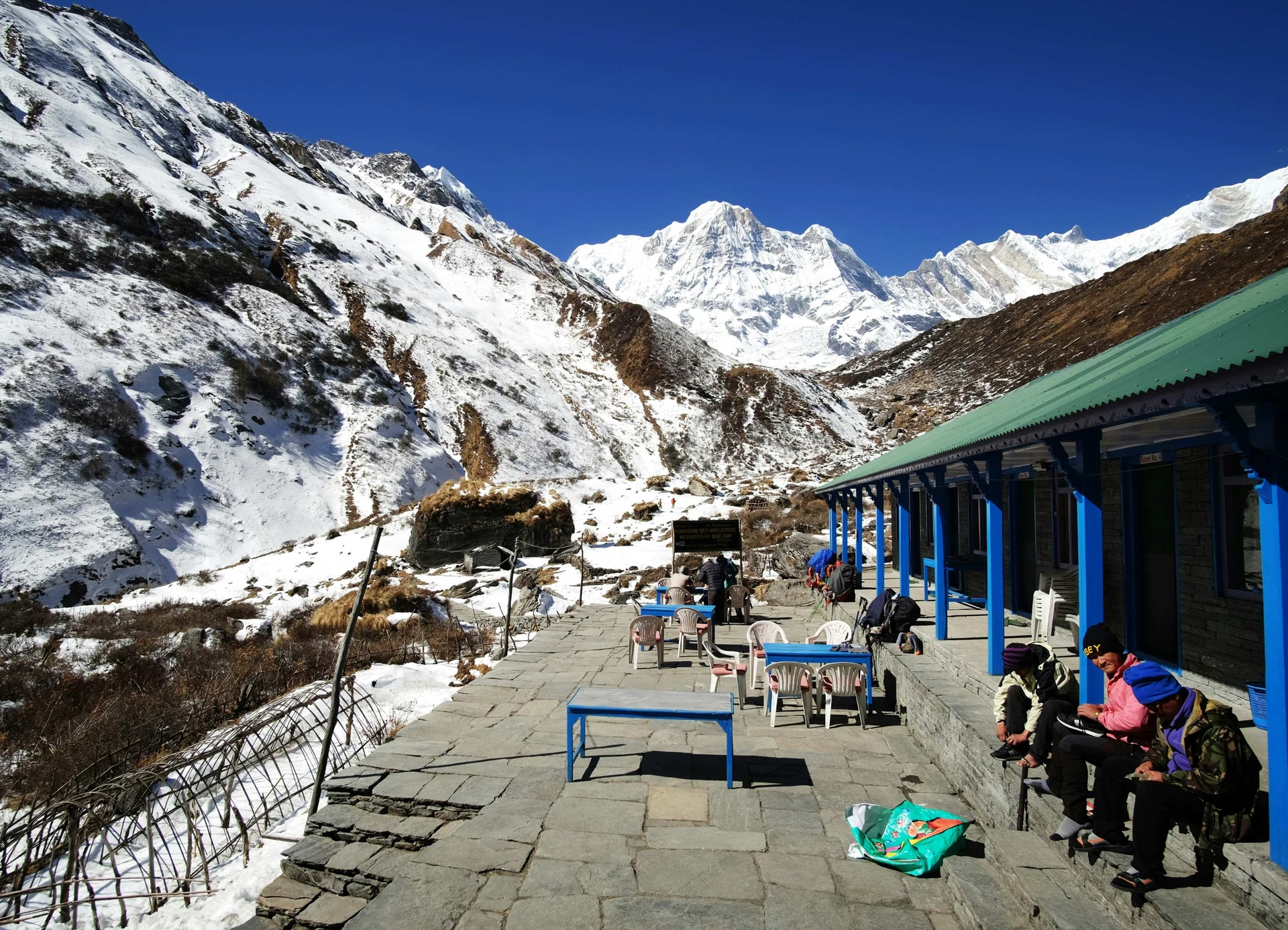
Which Mountains Can You See During the Annapurna Base Camp Trek?
The ABC trek shows at least 11 named peaks, led by Annapurna I (8,091 m), the 10th-highest mountain on Earth, plus Annapurna South, Hiunchuli, Machhapuchhre, Gangapurna, and Annapurna III.
From the Sanctuary, the main peaks are:
Annapurna I: 8,091 m, the highest in the massif.
Barah Shikhar (Varaha Shikhar): 7,647 m.
Annapurna III: 7,555 m.
Gangapurna: 7,454 m.
Annapurna South: 7,219 m.
Tare Kang: 7,069 m.
Machhapuchhre (Fishtail): 6,993 m, never climbed to its summit by permit rule.
Singu Chuli: 6,501 m.
Hiunchuli: 6,441 m.
Gandharva Chuli: 6,248 m.
Tent Peak (Tharpu Chuli): 5,663 m.
From Poon Hill, Dhaulagiri (8,167 m) and Nilgiri join the line. November light makes the snowlines crisp. Each peak holds a distinct shape, and Machhapuchhre changes from a sharp horn to a double-tipped fish tail as you walk around it.
What Makes the November Sunrise at Annapurna Base Camp Special?
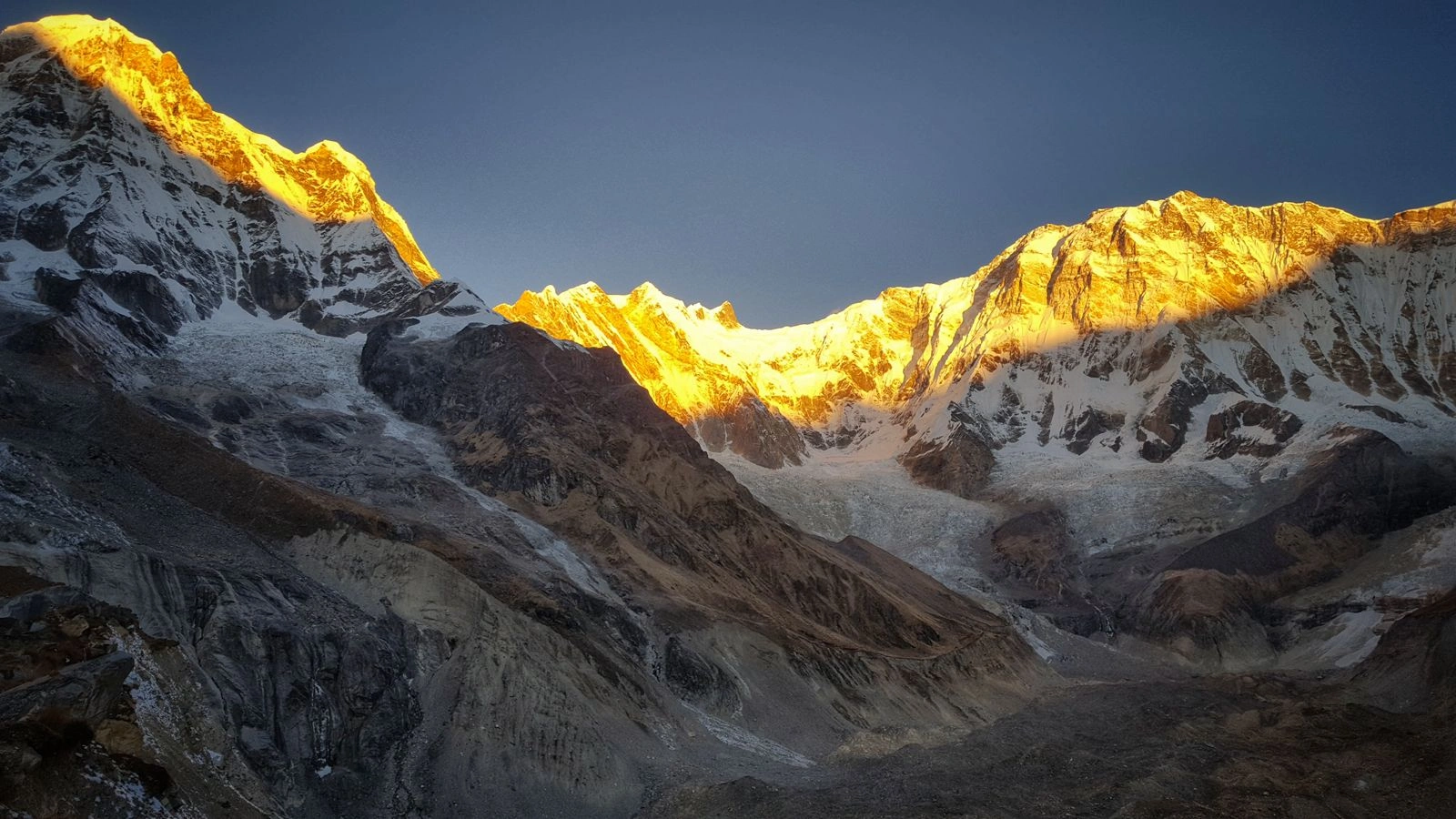
The November sunrise at Annapurna Base Camp is special because dry air, a clear horizon, and a low sun angle light the 7,000 m summits in sequence, from gold to pink to white, over about 40 minutes.
First light strikes the top of Annapurna I at about 6:15 to 6:30 am in early to mid November. Machhapuchhre and Gangapurna follow within minutes. The valley floor stays in blue shadow until almost 8 am, which makes the contrast striking.
Dress before you step outside. A 5:45 am wait at -8 °C ends many trekkers' enthusiasm. Wear the down jacket, a hat, and liner gloves, and carry a thermos of hot tea from the dining room.
The moon calendar adds a bonus in 2026. The new moon falls on 9 November, which gives the darkest night sky of the month for stargazing at ABC. The full moon on 24 November floods the glaciers with silver light.
Which Villages and Landscapes Can You Explore on Annapurna Base Camp Trek?
The ABC trek passes Magar and Gurung villages such as Ulleri, Ghorepani, Tadapani, and Chhomrong, then moves through bamboo and rhododendron forest, the Modi Khola gorge, and the high glacial Sanctuary.
The landscape changes every day:
Birethanti and Nayapul: subtropical valley floor with terraced rice and millet, golden from the late harvest in early November.
Ulleri and Ghorepani: Magar and Gurung hill villages with stone houses and slate roofs.
Chhomrong: a large Gurung settlement, famous for its stone staircase and Machhapuchhre views.
Sinuwa to Dovan: bamboo forest, then oak and rhododendron, home to langurs and the Himalayan monal, Nepal's national bird.
Deurali to ABC: alpine scrub, boulders, and glacier moraine.
Villages are working communities, not museum pieces. Buy tea from family-run shops, ask before photographing homes, and carry out every piece of trash. Wi-Fi exists in most villages up to MBC, usually at a small fee.
How Difficult Is the Annapurna Base Camp Trek in November?
The Annapurna Base Camp trek in November is moderately difficult: 5 to 7 walking hours daily, thousands of stone steps, a maximum altitude of 4,130 m, and cold nights, but no technical climbing or special skills.
Three factors drive difficulty. Stairs strain legs, altitude strains lungs, and cold strains sleep. November adds the third factor and removes mud, rain, and leeches. Most trekkers rate it easier than the same route in monsoon and harder than in spring.
The hardest days are specific:
Day 5 (Tikhedhunga to Ghorepani): a climb of about 1,300 m.
Day 10 (Deurali to ABC): 930 m of gain on thin air.
Day 11 (ABC to Bamboo): a descent of about 1,800 m, which hits the knees.
Day 12 (Bamboo to Jhinu Danda): a surprise second climb of about 600 m back up to Chhomrong.
Most people expect the final day to be easy. It is not. Pace the return as carefully as the ascent.
What Level of Fitness Do You Need for the Annapurna Base Camp Trek?
The ABC trek requires moderate aerobic fitness: the ability to walk 5 to 7 hours daily for 10 days, climb 600 to 1,300 m in a day, and carry a 5 to 7 kg daypack. Fit beginners succeed with 8 to 12 weeks of preparation.
A practical training plan:
Walking: 3 sessions per week of 90 minutes, building to 4 hours on weekends.
Stairs: 2 sessions per week of 30 to 45 minutes, wearing your loaded daypack.
Strength: squats, lunges, and step-ups for quads and glutes.
Back-to-back days: 2 consecutive long walks per fortnight, since trekking is repeated effort.
Nepali trekkers living in the hills often have strong legs and weak lungs for 4,000 m. Trekkers from sea-level cities have the opposite problem. Train for your weak point. Arrange a health check first if you are over 50 or have heart, lung, or blood-pressure conditions.
How Does Altitude Affect the Annapurna Base Camp Trek?
Altitude affects the ABC trek by lowering oxygen availability from 2,800 m upward, which slows pace, disrupts sleep, and causes acute mountain sickness (AMS) in a significant share of trekkers who ascend too fast.
AMS is a cluster of symptoms: headache, nausea, dizziness, and fatigue. According to the Wilderness Medical Society, trekkers above 3,000 m should limit daily sleeping elevation gains to 500 m. To ensure proper acclimatization and safety, Heaven Himalaya's standard November itinerary includes a night at Machhapuchhre Base Camp (3,700 m) before ascending the final 430 m to ABC.
Heaven Himalaya's standard itinerary moves from Deurali (3,230 m) to ABC (4,130 m) in one day, a gain of 930 m. Many trekkers handle it, but the safer pattern for November is to sleep at MBC (3,700 m, +500 m) and walk to ABC (+430 m) the next morning. Request that adjustment at booking.
The altitude profile you sleep at is the key number:
Night | Altitude |
Ghorepani | 2,850 m |
Chhomrong | 2,170 m |
Dovan | 2,600 m |
Deurali | 3,230 m |
MBC | 3,700 m |
ABC | 4,130 m |
How Can You Prepare for Long Trekking Days of Annapurna Base Camp in November?
Prepare for long ABC trekking days by training with loaded stair climbs, breaking in your boots for 40 hours, packing a light daypack, starting at 7 am, drinking 3 to 4 litres daily, and eating a snack every 90 minutes.
November's short days make the schedule tight. Leave by 7 am. Take the longest rest at lunch, not at 2 pm when the cold returns. Walk at a pace that allows you to speak in full sentences. When you breathe too hard to talk, slow down.
Protect your feet. Tape hot spots at the first rub. Change socks at lunch. Choose boots with a half-size of spare room, because feet swell at altitude and shrink on descents.
Hydration matters more in cold air than in warm air because thirst fades. Heaven Himalaya guides carry boiled water at every lodge and track their clients' water intake.
What Should You Pack for the Annapurna Base Camp Trek in November?
Pack for the ABC trek in November with a layered system: moisture-wicking base layers, insulating mid layers, a down jacket, a windproof shell, sturdy boots, a -10 °C sleeping bag, and a 10 to 12 kg duffel limit.
Porters carry one duffel for every two trekkers, so the weight limit is real: 10 to 12 kg per person. Use the Trekking Packing List as a checklist, then adjust for November cold. Leave jeans, cotton, and extra shoes in the Kathmandu hotel storage.
Which Clothes Are Essential for November Annapurna Base Camp Weather?
The essential clothes for November ABC weather are 2 base layers, 1 fleece, 1 insulated down jacket, a windproof and waterproof shell, 2 trekking trousers, thermal bottoms, a warm hat, gloves, and wool socks.
Layer | Item | Spec |
Base | Long-sleeve top (2) | Merino or synthetic |
Base | Thermal bottoms (1) | Heavyweight |
Mid | Fleece jacket (1) | 200 to 300 weight |
Insulation | Down jacket (1) | Rated to -10 °C or lower |
Shell | Rain and wind jacket | Waterproof, breathable |
Legs | Trekking trousers (2) | Quick-dry, stretch |
Hands | Liner gloves + heavy gloves | Two pairs |
Head | Sun hat, warm beanie, neck gaiter | One each |
Feet | Wool socks (4 pairs) | Mid-weight |
Avoid cotton. It holds sweat and chills the body. Keep one dry set of clothes strictly for sleeping and never wear it on the trail.
What Trekking Gear and Equipment Should You Bring for Annapurna Base Camp Trek?
Bring broken-in waterproof boots, a 30 to 40 L daypack, a headlamp with spare batteries, UV-rated sunglasses, a 1 litre insulated bottle, water purification tablets, a power bank, and a basic first-aid kit.
Details that matter in November:
Boots: ankle support, Vibram-style sole, worn for at least 40 hours before departure.
Sunglasses: category 3 or 4 lenses for snow glare near ABC.
Headlamp: 200 lumens or more, since evenings come early.
Power bank: 10,000 mAh or more, kept in your sleeping bag at night because cold drains batteries.
Gaiters or microspikes: optional, but valuable after fresh snow above Deurali.
Cash: NPR in small notes, since teahouses do not accept cards. Heaven Himalaya recommends at least US$400 equivalent.
The pulse oximeter in your guide's kit gives you a daily oxygen saturation reading. Readings between 80 and 90 percent are normal at 4,000 m, but a steady downward trend with symptoms is a warning.
Do You Need Sleeping Bags and Trekking Poles on Annapurna Base Camp Trek in November?
Yes. You need a sleeping bag rated to -10 °C comfort and trekking poles on the ABC trek in November. Teahouse blankets are thin at altitude, and poles reduce knee load on thousands of stone steps and long descents.
Sleeping bag: lodges above Chhomrong have no heating, and nights at MBC and ABC reach -5 to -12 °C. A 4-season bag with a silk or fleece liner fills the gap. Heaven Himalaya provides a sleeping bag, duffel, and down jacket on its packages, to be returned after the trek.
Poles: use two. They shift 20 to 30 percent of load from legs to arms on descents, which matters on the 1,800 m drop from ABC to Bamboo. Adjustable aluminium or carbon poles with rubber tips work on stone steps. Set them shorter for climbing and longer for descending.
What Does the Annapurna Base Camp Trek Cost in November?
The ABC trek in November costs about US800toUS1,400 per person for a guided package, depending on group size, duration, and inclusions. Heaven Himalaya's 15-day package starts at US 1,299 for a solo traveller and US 799 per person for large groups.
Industry-standard guided ABC packages range from US$700 to US$1,200, and private trips range from US$1,000 to US$1,400. Heaven Himalaya's 2026 prices offer premium value within that spread:
Group size | Price per person (15 days) |
1 traveller | US$1,299 |
2 to 3 travellers | US$1,250 |
4 to 6 travellers | US$1,050 |
7 to 12 travellers | US$947 |
13 to 16 travellers | US$899 |
17 to 22 travellers | US$799 |
The price drops with group size because guide, vehicle, and logistics costs split across more people. Compare packages by inclusions, not by headline price.
What Is Included in the Annapurna Base Camp Trek Cost?
The ABC trek cost covers ground transport, Kathmandu and Pokhara hotels, trek guesthouses, full-board trek meals, permits, a licensed guide, porters, equipment loans, insurance for staff, and government taxes.
A typical package includes:
Transfers: airport pickup and drop, Kathmandu to Pokhara, and Nayapul trailhead.
Lodging: 3-star hotels in Kathmandu and Pokhara, twin-share guesthouses on trail.
Meals: breakfast, lunch, and dinner during the trek, plus snacks and evening fruit.
Permits: ACAP and TIMS, with all paperwork.
Staff: licensed English-speaking guide, one porter per two clients, and an assistant guide for groups of 6 or more.
Gear: duffel bag, sleeping bag, and down jacket on loan.
Safety: first-aid kit, an oximeter, and rescue coordination.
Always ask what a quote excludes. The cheapest offers often drop the porter, the Kathmandu hotel, or the permits.
What Additional Expenses Should You Budget For Annapurna Base Camp Trek?
Budget US250toUS500 beyond the package price for visa, travel insurance, drinks, hot showers, charging, Wi-Fi, tips, and gear. Cash needs rise sharply above Chhomrong, where prices climb with every 300 m of altitude.
Typical additional costs:
Nepal tourist visa: US$50 for 30 days, paid on arrival at Tribhuvan International Airport.
Travel insurance: US 60 to US 200 for a 15-day policy with high-altitude and helicopter cover.
Drinks and snacks: tea, coffee, soft drinks, chocolate, and beer. Prices rise with altitude.
Hot showers: usually charged separately, at higher prices above Bamboo.
Charging and Wi-Fi: about US 2 to US 3 for charging and US3toUS5 for Wi-Fi.
Tips: a common guideline is US10toUS15 per day for the guide and US6toUS10 per day for each porter, pooled across the group.
Extra nights: Kathmandu or Pokhara stays if flights or weather change plans.
Nepali trekkers arranging independently pay NPR 100 for the ACAP permit and budget mainly for food and lodging. One 2026 solo trekker's account puts teahouse meals at NPR 400 to 900 each, with dal bhat as the best value because refills are free.
How Can You Prepare for a Safe Annapurna Base Camp Trek in November?
Prepare for a safe ABC trek in November by hiring a licensed guide, choosing a gradual itinerary, carrying correct permits and insurance, monitoring altitude symptoms daily, and checking snow and avalanche conditions above Deurali.
Safety rests on five habits: a slow ascent, a daily oximeter and symptom check, early starts, layered clothing, and a clear emergency plan. Register at every ACAP checkpoint. Check-posts log your passage, which speeds up rescue.
Three November risks need extra attention. Ice forms on shaded steps before 9 am. Snow can cover the trail above Deurali after a late-month storm. Avalanche paths between Hinku Cave and Deurali demand fast, quiet crossing and no stopping. Your guide decides whether to proceed. Respect that call.
What Permits Are Required for the Annapurna Base Camp Trek?
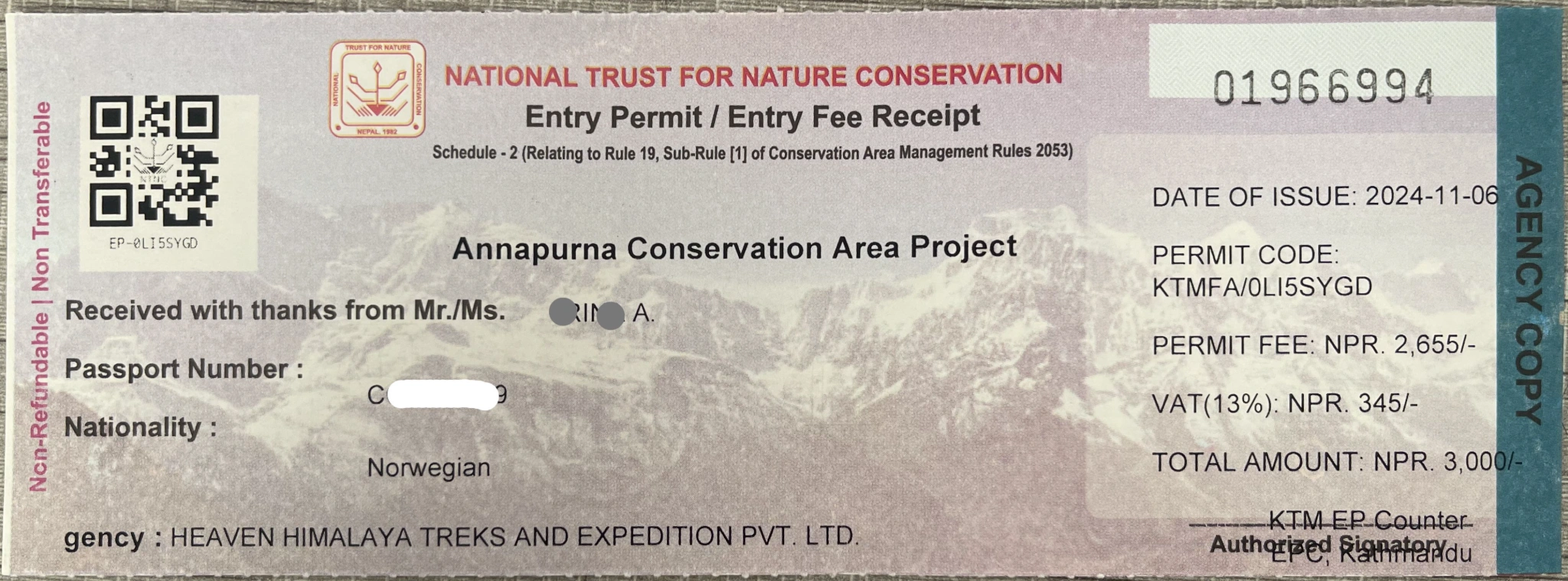
The ABC trek requires an ACAP permit (NPR 3,000 for foreigners, NPR 1,000 for SAARC nationals, NPR 100 for Nepali citizens) and a TIMS card (NPR 2,000 for foreigners), issued through a registered agency.
According to the Annapurna Conservation Area Project (ACAP), established in 1986 and managed by the National Trust for Nature Conservation (NTNC), permits issued at a checkpoint cost double. Children under 10 are exempt from the ACAP fee. The permit is checked at Birethanti and at stops along the trail.
Practical points:
Documents: passport copy, visa copy, passport-size photos, and insurance details.
Offices: Tourist Service Centre in Kathmandu (Bhrikutimandap) and the NTNC office in Pokhara (Damside).
Guide rule: authorities have required licensed guides for foreign trekkers on TIMS-listed routes since April 2023, and sources report that checkpoints enforce ACAP most strictly. A local municipality fee also applies on some sections. Confirm the current rules at booking.
How Can You Prevent Altitude Sickness?
Prevent altitude sickness by ascending slowly, limiting sleeping-altitude gains above 3,000 m to 500 m per day, drinking 3 to 4 litres of water daily, skipping alcohol, and descending at the first sign of worsening symptoms.
Six rules we apply on every departure:
Climb slowly and rest often.
Sleep low: finish the day at the altitude of your safest sleeping stop, not the highest point reached.
Drink 3 to 4 litres of water or tea daily.
Avoid alcohol and sleeping pills at and above Deurali.
Check your oxygen saturation and symptoms each evening.
Descend at least 500 m if symptoms worsen, whatever the schedule says.
Acetazolamide (Diamox) is a prescription medicine some trekkers use for prevention. Ask your doctor before using it. Mild headache and poor sleep are common at 3,700 m and above. Severe headache, vomiting, confusion, loss of balance, or breathlessness at rest are emergencies. Descend immediately and call the guide's emergency contact.
Is Travel Insurance Necessary for the Annapurna Base Camp Trek?
Yes. Travel insurance is necessary for the ABC trek because evacuation from altitude costs thousands of dollars. Your policy must cover trekking to at least 4,500 m, helicopter rescue, medical treatment, and trip delays.
A helicopter flight from MBC or ABC to Pokhara or Kathmandu is the standard rescue method. Without cover, you pay the bill before the flight leaves. Read the policy wording for the phrases "trekking up to 4,500 m" (or higher) and "emergency helicopter evacuation." Standard travel insurance often excludes both.
Carry a printed copy of the policy number, the insurer's 24-hour emergency line, and your passport details. Nepali trekkers confirm with their agency what accident and rescue cover their package includes, since personal cover differs by provider.
How Can Heaven Himalaya Help You Plan the Annapurna Base Camp Trek in November?
Heaven Himalaya helps you plan the ABC trek in November with a licensed local team, permit processing, itineraries tuned for November light and cold, gear on loan, altitude monitoring, and 24-hour support from Kathmandu.
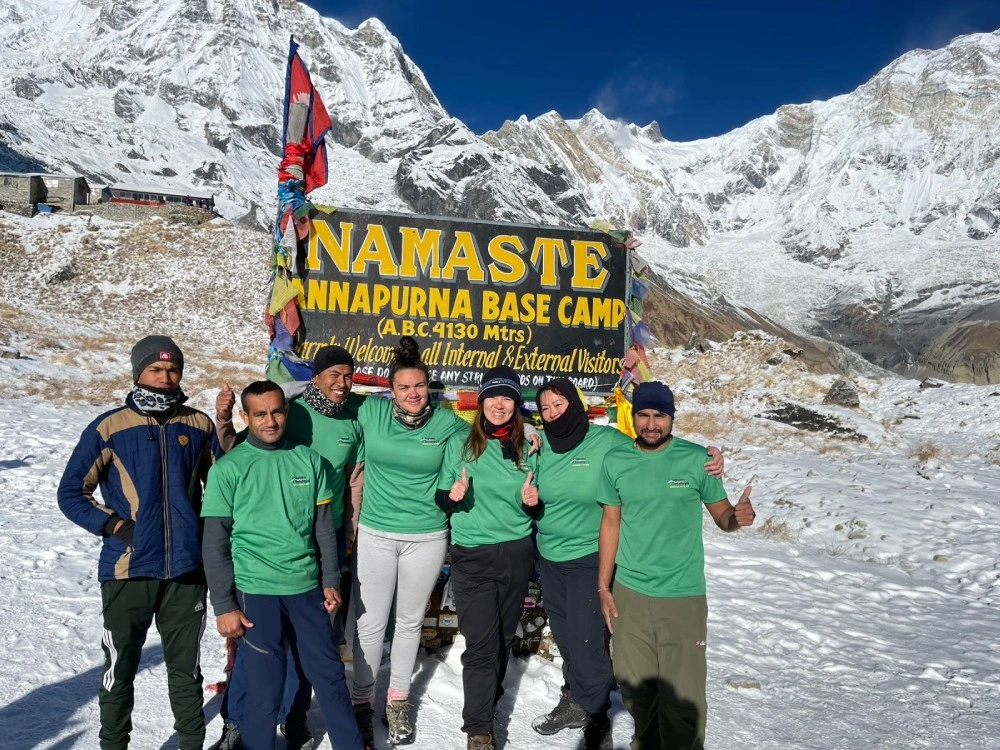
Heaven Himalaya is a registered Nepali trekking company based in Gitanjali Chowk, Dathu Sadak, Kathmandu, and a member of the Trekking Agencies' Association of Nepal (TAAN). Ramhari Adhikari, Managing Director, has guided in Nepal since 2008 across Everest, Annapurna, Langtang, and Manaslu. The company holds a 5.0 rating from 160 Tripadvisor reviews.
Four things shape a November plan:
Guide quality: licensed, English-speaking guides who carry a first-aid kit and an oximeter.
Porter ratio: one porter per two clients.
Group size: 1 to 15 travellers per departure.
Flexibility: itineraries from 7 to 15 days.
Can Heaven Himalaya Arrange a November Annapurna Base Camp Trek?
Yes. Heaven Himalaya arranges November ABC departures as group joins or private trips, with customisable itineraries from 7 to 15 days, airport pickup, permits, guide, porters, lodges, and an optional MBC acclimatization night.
Tell us your dates, group size, and fitness level, and we build the plan. For a Tihar trek, we align your schedule with the festival. For an altitude-conscious plan, we add the MBC night. For tired legs after a short holiday, there is an Annapurna Base Camp helicopter return option.
Book early for the first half of November, when beds at MBC and ABC fill up.
Plan your November trek: Message Ram on WhatsApp or Viber at +977 985 1273867, or visit Contact Us for dates, prices, and a custom itinerary. Questions about permits, gear, or training are welcome before you book.
What Are the Key Takeaways About the Annapurna Base Camp Trek in November?
The Annapurna Base Camp trek in November offers dry trails, clear mornings, and stable weather at 4,130 m, with a moderate difficulty rating, cold nights down to -12 °C, and a cost of roughly US800toUS1,400 for a guided package.
The eight points to carry with you:
Time the trek: 12 to 25 November gives clear skies and thinner crowds, and Tihar (Laxmi Puja on 8 November 2026) shapes early-month planning.
Expect big temperature swings: 22 to 26 °C in Pokhara, -6 to -12 °C at ABC at night.
Plan for 9 to 10 trekking days: slower ascent, a buffer day, and safer acclimatization.
Sleep at MBC before ABC: a 500 m gain beats a 930 m gain.
Wake before dawn: ABC views peak between 5:30 and 9:30 am.
Pack a -10 °C sleeping bag, a down jacket, and two trekking poles.
Carry the right paperwork: ACAP at NPR 3,000 (foreign), NPR 1,000 (SAARC), NPR 100 (Nepali), plus insurance covering helicopter evacuation above 4,500 m.
Hire a licensed guide: safer, legal on TIMS-listed routes, and better for rescue coordination.
The Annapurna Base Camp trek in November rewards preparation. Train for 8 to 12 weeks, layer well, climb slowly, and the Sanctuary delivers one of the best mornings in the Himalayas.