

10 Best Things to do in Kathmandu: Must-See Places

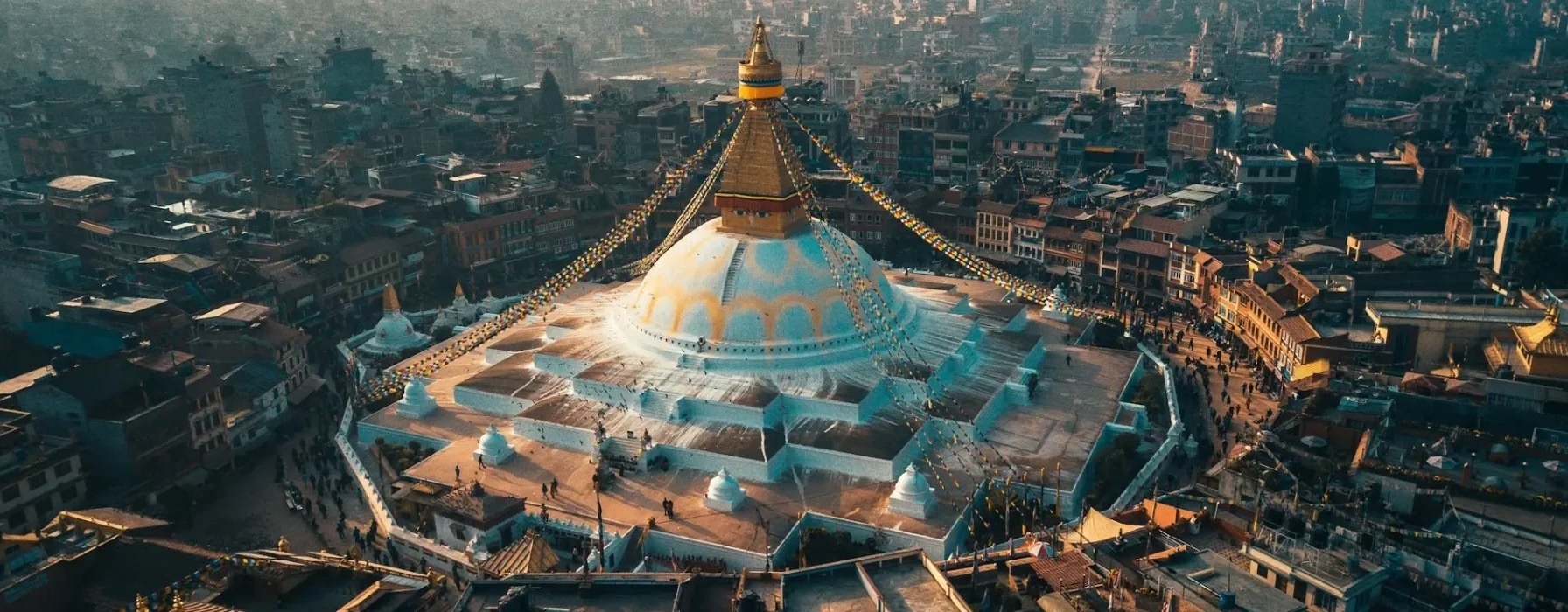
Kathmandu is Nepal’s historic capital and the cultural gateway to the Kathmandu Valley, where centuries-old Hindu and Buddhist traditions, Newari architecture, royal history, religious festivals, local markets, and modern travel culture exist side by side.
The best things to do in Kathmandu go far beyond visiting famous monuments: explore Kathmandu Durbar Square and Patan Durbar Square, walk the pilgrimage circuits of Swayambhunath and Boudhanath, witness the rituals of Pashupatinath, wander through the markets of Asan and Indra Chowk, experience the energy of Thamel, and explore museums, gardens, courtyards, temples, and traditional neighborhoods. A short journey beyond the city adds another layer of history at Bhaktapur, one of the valley’s best-preserved medieval Newar cities.
Kathmandu is easiest to appreciate at a slower pace, with time to understand the stories, rituals, architecture, and everyday life behind its major attractions. Plan at least three to four days for the main sights, and start early when possible to avoid heavier traffic and crowds and to experience temples, markets, and historic squares during their most active hours.
This guide brings together the essential places to visit in Kathmandu with practical advice on how long to spend at each site, when to go, how to get around, what to eat and see nearby, and how to behave respectfully at Hindu and Buddhist religious sites. It also highlights the cultural connections between Kathmandu, Patan, and Bhaktapur, helping you build a more complete Kathmandu itinerary rather than simply checking individual attractions off a list.
1. Explore Kathmandu Durbar Square
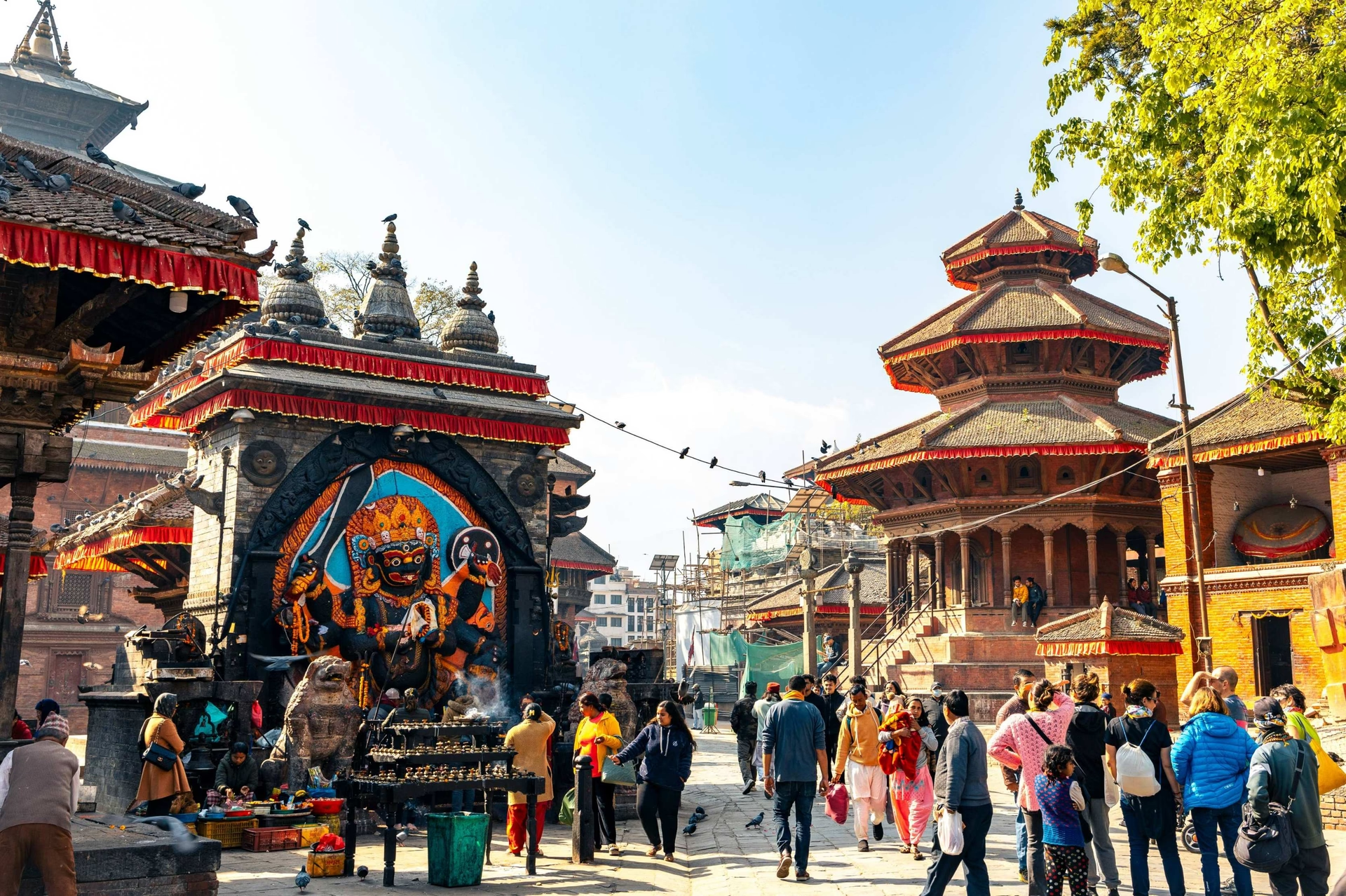
Kathmandu Durbar Square is the historic heart of the city and the place most visitors see first. It sits in the old town, a few minutes' walk from the busy streets of Thamel, and it was the royal center of the Malla kings who ruled the valley for several centuries before the Shah dynasty unified modern Nepal in the eighteenth century.
What Can You See at Kathmandu Durbar Square?
The square is a cluster of temples, palaces, courtyards, and shrines built in the pagoda style that became characteristic of Newar craftsmanship. The wooden carvings are the first thing most people notice. Look up at the struts and lintels of older buildings and you will find erotic and mythological figures, Hindu deities, and intricate lattice work, much of it carved by hand from sal wood.
The Kumari Ghar, the house of the living goddess Kumari, is among the most visited buildings. A young girl chosen from the Newar Shakya community is believed to embody the goddess until she reaches puberty. You will not see her casually. She appears at a window for a few brief moments on certain days, and the building is best appreciated for its architecture even if no one appears.
The Taleju Temple, a towering shrine dedicated to a principal goddess of the Malla kings, rises above the square and is closed to non-Hindus, but you can admire its roofline and the courtyard approaches from the outside.
Why Is Kathmandu Durbar Square Historically Important?
Kathmandu Durbar Square is part of the Kathmandu Valley UNESCO World Heritage Site, inscribed in 1979. The valley's seven monument zones, which include Durbar Squares in Kathmandu, Patan, and Bhaktapur as well as major stupas and temples, were recognized for their exceptional preservation of Nepali artistic and architectural traditions. The site also carries scars. The 2015 earthquake caused severe damage to the area, including the complete collapse of the nearby Dharahara tower.
Today, the city has remarkably recovered: Kathmandu Durbar Square's major monuments are fully restored, and a newly reconstructed, resilient Dharahara Tower officially reopened to the public in 2024, showcasing a living city's incredible recovery. Many visitors find this more meaningful than a pristine version of the square would be, because it shows how a living city recovers.
What Should You Know Before Visiting Kathmandu Durbar Square?
Entry requires a ticket for foreign visitors, sold at the ticket booth near the entrance. Prices and validity rules have changed over the years, so confirm the current rate and whether your ticket covers multiple sites before you buy. Keep your ticket; you may be asked to show it at individual monuments. Bring small denominations of cash because vendors and some ticket counters do not accept cards.
The square is busy from late morning through late afternoon. Arrive early, between seven and nine in the morning, for quiet photographs and a better sense of daily life. Locals come to the square to pray, sell flowers and offerings, and gather in the courtyards. Dress modestly, particularly if you plan to enter any shrine courtyard, and remove shoes when asked. Some touts will offer to guide you.
A licensed guide can add real context, but agree on a fee before starting and be clear about what you want to see. Many guides also work through a trekking agency or hotel, so ask for references if you are unsure.
How Much Time Should You Spend Exploring Kathmandu Durbar Square?
Allow at least two hours for a first visit, and three if you want to sit in a courtyard, watch local life, and look closely at the carvings. The square is compact, but the details reward patience. Plan to return once more in the evening, when the lighting on the older brick and wood is warm and the crowds thin out. The square is also a good orientation point, so use your first visit to map where the other attractions sit relative to your hotel.
2. Visit Swayambhunath Stupa
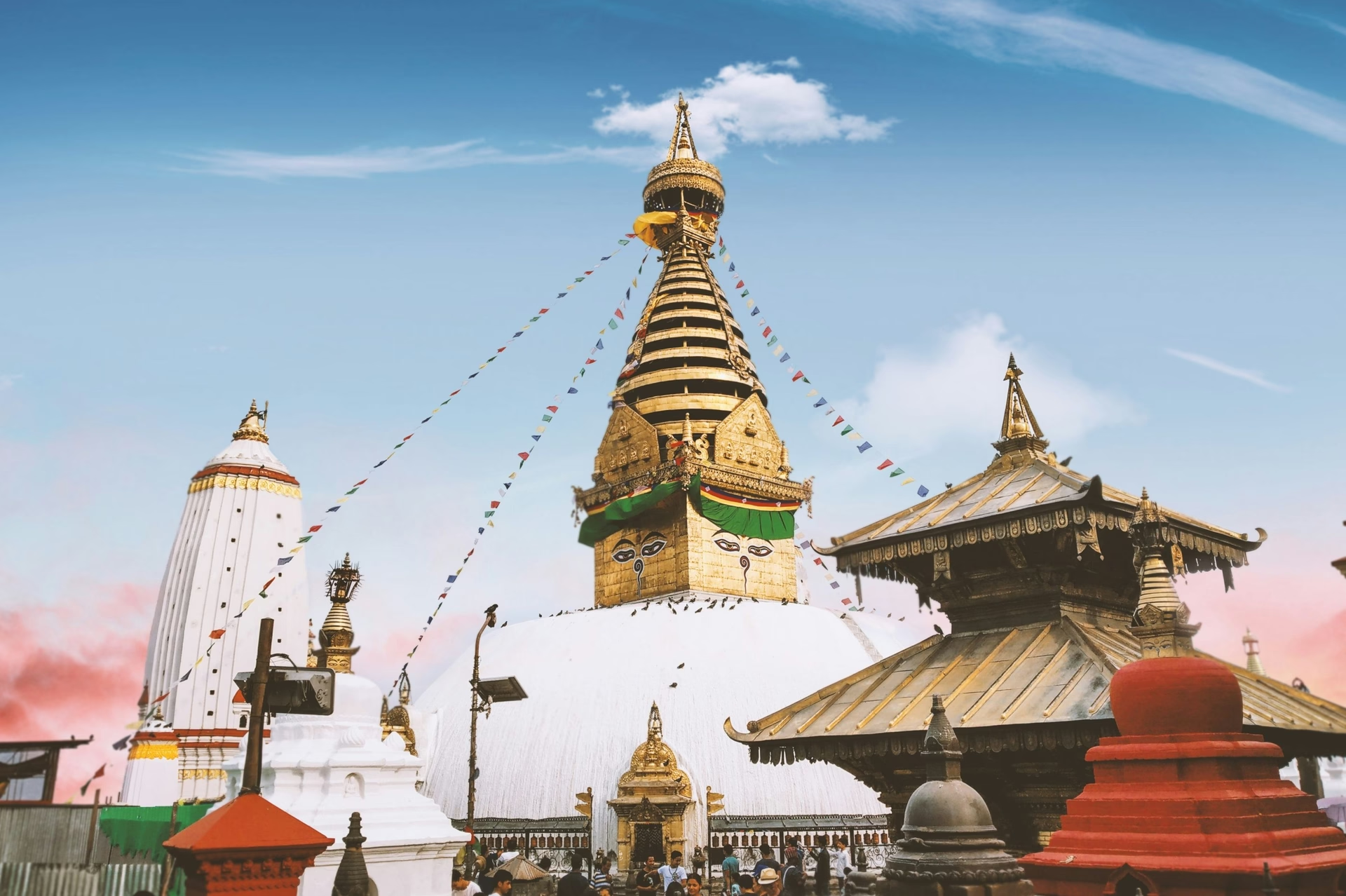
Swayambhunath is one of the most recognizable images of Kathmandu, a white dome topped by a gilded spire and painted eyes that look out over the valley. It sits on a forested hill to the west of the city and is one of the oldest religious sites in the valley, with origins that local tradition dates to the arrival of the first Buddha and the emergence of the valley from a lake.
What Makes Swayambhunath Stupa Known as the Monkey Temple?
The site's nickname comes from the large population of rhesus macaques that live on the hill. They are part of the landscape and will approach visitors looking for food. Do not feed them, and keep bags zipped, sunglasses on your head, and phones secured.
Monkeys can snatch items quickly, and bites, though uncommon, do happen. The monkeys are a charming part of the experience, but treat them as wild animals.
What Can You See Around Swayambhunath Stupa?
The main stupa is the centerpiece, but the complex contains dozens of smaller shrines, prayer wheels, and statues of Buddhist deities. Visitors walk clockwise around the stupa, spinning the prayer wheels as they pass, which is the traditional direction of circumambulation in Tibetan Buddhism.
Look for the Vajra, a ritual object that appears in several places on the grounds, and for the small temples dedicated to Hariti, a protective goddess. Nearby hillside paths offer views over Kathmandu on clear mornings, though the valley is often hazy from pollution and dust in the dry season.
How Can You Reach Swayambhunath Stupa?
The traditional approach is the long staircase of several hundred steps on the eastern side, which takes about fifteen to twenty minutes to climb at a steady pace. The steps are steep in places and can be slippery after rain. There is also a road that winds up the western side, which suits visitors who prefer a taxi or a ride.
Many travelers combine both: take a taxi up and walk down the stairs for the views and to see the vendors and shrines along the way.
What Should You Know Before Visiting Swayambhunath Stupa?
Early morning is the best time, both for light and for fewer tourists. The hill can be cool and windy in winter, so bring a layer. Entry requires a ticket for foreigners, and prices should be confirmed locally. Remove shoes at the stupa itself, and walk clockwise. Photograph respectfully: monks and pilgrims are often engaged in prayer, and people do not appreciate close-up shots taken without asking.
In real-world use, the most common mistake we see is visitors arriving at midday in heavy traffic, climbing the steps in the heat, and leaving disappointed. Go early, carry water, and give yourself time to sit and watch.
3. Visit Boudhanath Stupa
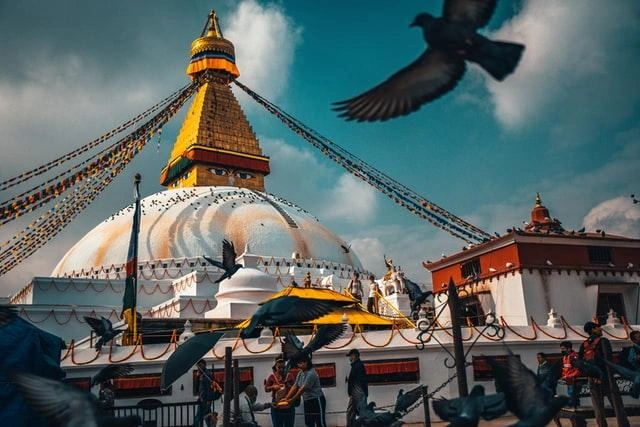
If Swayambhunath feels like a hilltop refuge, Boudhanath is a living neighborhood built around a monumental stupa. It is one of the largest stupas in the world and the center of Kathmandu's Tibetan Buddhist community, and it draws pilgrims, monks, and travelers from across the Himalayan region.
What Makes Boudhanath Stupa One of Kathmandu's Most Important Landmarks?
The stupa is a massive mandala in three dimensions, a structure whose base, dome, and spire represent elements of Buddhist cosmology. Its foundation is a broad platform, and the white dome is surmounted by a square harmika with the painted eyes of the Buddha looking in four directions, a motif shared with Swayambhunath. Boudhanath is also a UNESCO World Heritage Site as part of the Kathmandu Valley designation.
Its significance grew after many Tibetan refugees settled in the area from the 1950s onward, turning the stupa into a center for monasteries, schools, and Tibetan craft and trade.
What Can You Experience Around Boudhanath Stupa?
The circuit around the stupa is lined with restaurants, guesthouses, and shops selling thangka paintings, prayer flags, singing bowls, and incense. You will hear the murmur of mantras and the spin of prayer wheels built into walls and along the kora path. Pilgrims prostrate themselves in full-length bows, often on a cloth mat, while walking clockwise around the base. Many circumambulate the stupa hundreds of times across a day.
Watch from a distance and resist the urge to interrupt. Monasteries in the surrounding streets, such as Shechen Monastery nearby, welcome visitors during open hours and offer quieter moments away from the crowds. For the stupa's history, symbolism, and visiting tips in more depth, read our Boudhanath Stupa guide.
When Is the Best Time to Visit Boudhanath Stupa?
Sunrise and sunset are the two most rewarding times. In the early morning, the circuit is busy with locals completing their daily kora before work, and the monasteries are beginning their chanting. At dusk, the stupa is lit up, butter lamps flicker along the base, and the atmosphere shifts into something almost reverential.
Midday is hot and crowded, particularly around restaurants. Avoid major Buddhist festival days if you prefer a quiet visit, though some of these days offer extraordinary ceremonies if you are prepared for large numbers.
What Should You Know About Visiting Boudhanath Stupa?
Walk clockwise and keep to the outer path if you are not part of the circumambulation flow. Do not touch the prayer wheels or sit on the steps of the stupa itself. Dress modestly and remove shoes when entering monasteries or shrines. Entry to the stupa grounds may be ticketed for foreigners, and the rules can vary, so check locally.
Restaurants around the stupa, many with rooftop views, are a good place to sit and watch the kora, but expect to pay tourist prices. For a more authentic meal, walk a few streets away into the residential lanes, where small momo shops and tea houses serve locals.
4. Explore Pashupatinath Temple
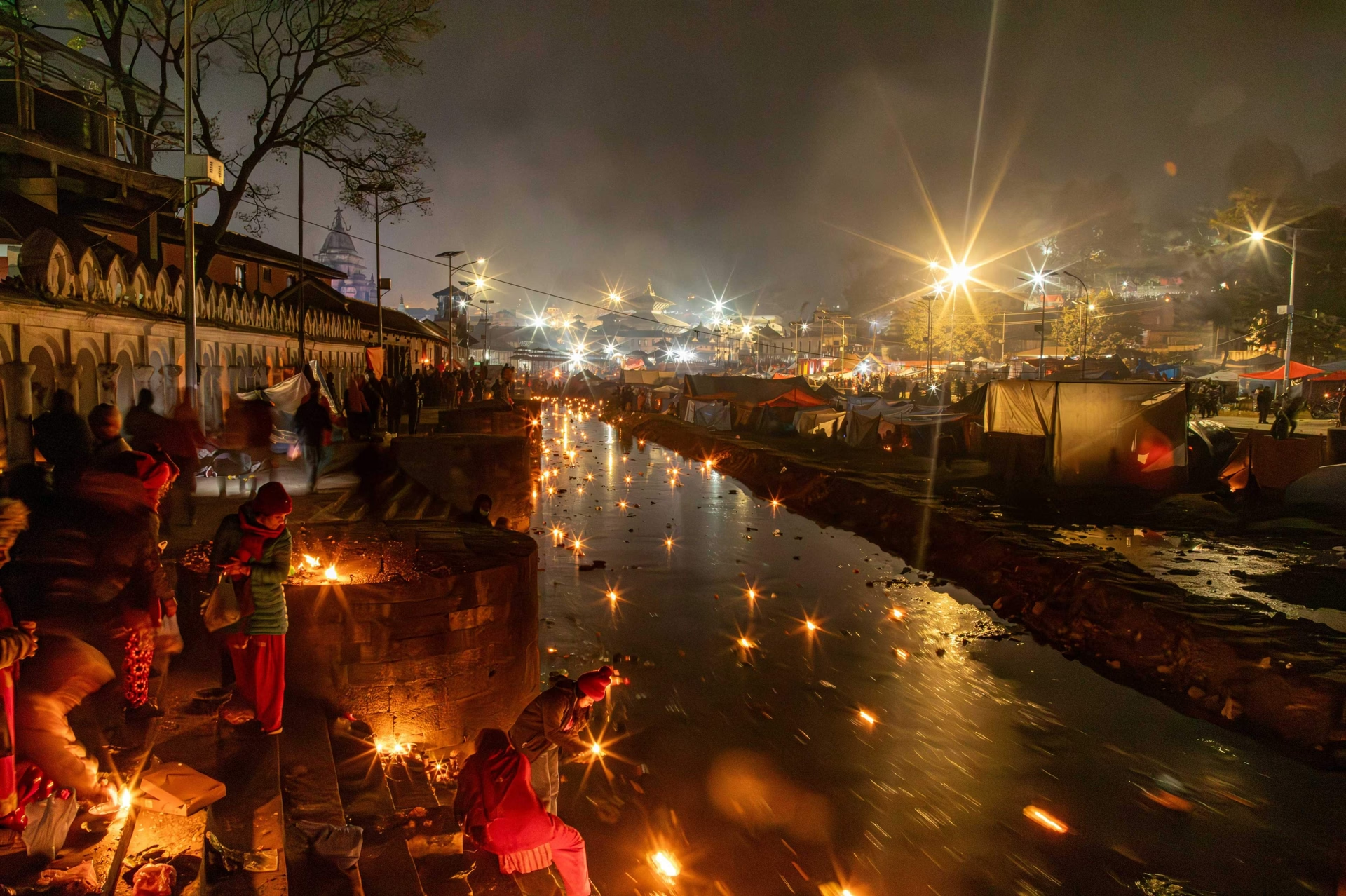
Pashupatinath is one of the most sacred Hindu sites in the world and one of the most emotionally powerful places in Kathmandu. It sits on the banks of the Bagmati River, and its cremation ghats are where Hindu families perform funeral rites for their dead. Visiting requires a degree of sensitivity that many travelers underestimate, but it repays that care with a rare look at a religious tradition in full practice.
Why Is Pashupatinath Temple Sacred to Hindus?
The main temple is dedicated to Pashupati, a form of Shiva, and is considered one of the most important shrines dedicated to him. Hindus believe that dying near Pashupatinath or having cremation rites performed there can bring liberation from the cycle of rebirth.
The temple has been a center of worship for many centuries and is also one of the UNESCO World Heritage Sites in Nepal, inscribed in 1979 with the wider Kathmandu Valley designation. Its pagoda roof is covered in gilded metal, and the inner sanctum houses a lingam that is central to the faith.
What Can You See Around the Pashupatinath Temple Complex?
The complex is large. Along the river you will see rows of cremation platforms, where bodies are laid on wooden pyres, and families gather in quiet grief or ritual observance. You will also see sadhus, the holy men who renounce worldly life and live near the temple, often posing for photographs for a small fee.
Smaller shrines dot the grounds, along with a range of animals, including the sacred cows and monkeys that wander the paths. The atmosphere is intense, sometimes chaotic, and always rooted in ritual.
What Should Visitors Know About Temple Access and Etiquette?
Non-Hindus are not permitted inside the main temple sanctum. You can view the temple from the opposite bank of the Bagmati River, which is also the traditional vantage point for many visitors. Photography at the cremation ghats is generally discouraged. Families are grieving, and cameras can feel like an intrusion. If you are in doubt, do not take photos of people at the cremation sites. Dress conservatively, and avoid shorts and sleeveless tops. Leave shoes at the designated area, and do not step into the water.
Many visitors hire a local guide, who can explain the rituals and help you understand what you are seeing. A respectful guide will also know when to walk you away from a site that is not appropriate for sightseeing that day.
When Is the Best Time to Visit Pashupatinath Temple?
Early morning is often the most peaceful, when the temple is busy with worshippers and the river is calm. The evening aarti, a ceremony of lamps and chanting, takes place at dusk and is one of the most moving experiences in the valley.
Crowds swell during Shivaratri, the festival dedicated to Shiva, which draws pilgrims from across South Asia and can make movement difficult. If you are visiting for the spiritual atmosphere, come on an ordinary day, and expect the evening ceremony to be busy.
5. Visit Patan Durbar Square
Patan, also called Lalitpur, lies across the Bagmati River from Kathmandu and is known as the City of Fine Arts. Its Durbar Square is smaller and calmer than Kathmandu's, and it is often considered the finest concentration of Newar architecture in the valley. Many travelers who have only a short time in the city find Patan the more rewarding of the two squares.
What Can You See at Patan Durbar Square?
The square is filled with temples and palaces built by the Malla kings of Patan, with courtyards that open onto a series of exquisite buildings. The Krishna Mandir, built in 1637, is one of the most photographed structures in the valley. It is covered in carvings depicting scenes from the Mahabharata and Ramayana, and its stone exterior is unlike the brick and wood typical of the valley.
The Golden Gate, a richly decorated gateway to the royal palace, is another highlight, and the Royal Palace itself now houses a museum with artifacts from the Malla and Shah periods.
Why Is Patan Durbar Square Famous for Newari Architecture?
Newari architecture is the tradition of the Newar people, who have lived in the Kathmandu Valley for centuries and built its temples, houses, and courtyards. Patan's buildings showcase the style at its most refined: multi-tiered roofs, carved wooden windows, bronze and brass gilding, and courtyards arranged around water taps and shrines.
The craftsmanship is still alive. Workshops in the surrounding streets produce metalwork and woodwork in the same techniques, and you can often watch artisans at work. Patan is also home to the Patan Museum, housed in a restored palace, which is well regarded for its displays of bronze sculpture and religious art.
What Cultural Experiences Can You Have Around Patan Durbar Square?
Beyond the monuments, the surrounding neighborhoods are full of life. The Mahabouddha temple, a brick temple covered in terracotta tiles, stands on a quiet side street and is a striking contrast to the palace complex. Nearby, small workshops produce thangka paintings and metal crafts, and visitors can often take a short demonstration.
Patan's streets also hold the Newari tradition of festival life, with processions and musical performances during seasonal celebrations. Ask your guide or hotel about upcoming festivals; attending one, with respect for local customs, can be the highlight of a trip.
How Much Time Should You Allow for Patan Durbar Square?
Plan for two to three hours, including time to wander the side streets and visit a museum or workshop. Patan is an easy trip from central Kathmandu by taxi or a short walk if you are staying nearby, and it pairs well with an afternoon at the Durbar Square in Kathmandu. Many visitors do both sites in a single day, starting with the Kathmandu square in the morning and moving to Patan after lunch. If you would rather not handle the logistics yourself, a guided Kathmandu seven world heritage day tour is built around the valley's heritage zones.
6. Wander Around Thamel
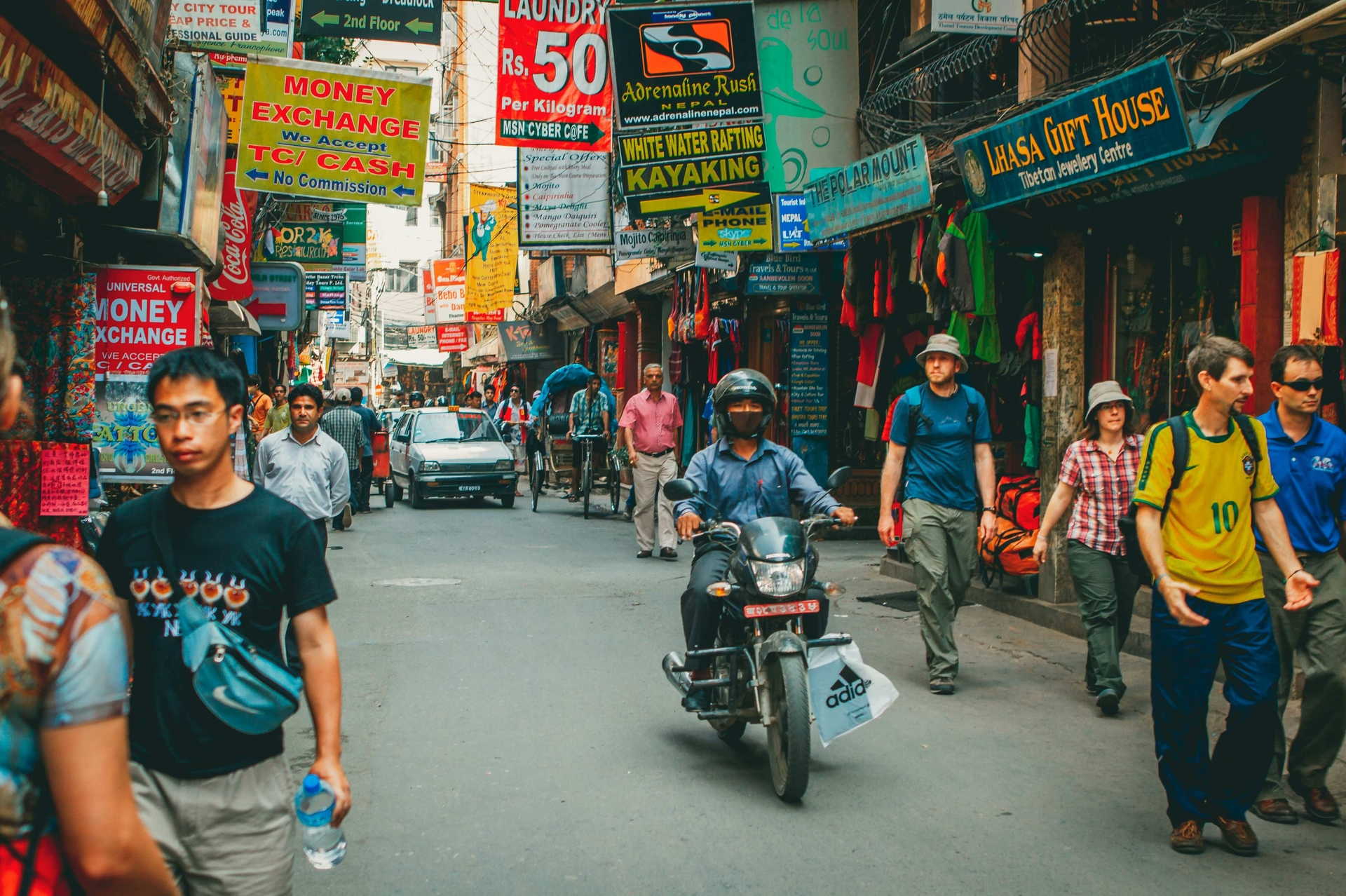
Thamel is the neighborhood most travelers stay in, and for good reason. It is the commercial and social center of tourism in Kathmandu, packed with guesthouses, restaurants, bars, bookshops, and outfitters. It can feel overwhelming, but it is also the easiest place to find what you need, whether that is a hot shower, a cup of coffee, or the right waterproof jacket before a trek.
What Can You Experience in Thamel?
The neighborhood is a maze of narrow lanes lined with shops selling trekking gear, Nepali handicrafts, pashminas, singing bowls, and tea. Music drifts from rooftop bars in the evening, and the streets fill with travelers from all over the world.
In the daytime, you can browse bookshops with well-stocked sections on Himalayan trekking and Nepali history, or stop at a small cafe for a slow breakfast. Thamel is also a useful place to meet other travelers, check trekking conditions, and hear recommendations from people who have just returned from the mountains.
Where Can You Find Food and Shopping in Thamel?
Food in Thamel ranges from Nepali dal bhat sets served in family-run kitchens to Italian, Korean, Mexican, and Japanese restaurants. For an authentic meal, look for places serving dal bhat, the traditional plate of lentil soup, rice, vegetable curry, and pickle, which is refillable and filling. Momo, Nepal's beloved dumpling, is sold at many small shops; the spicy tomato-based achar dipping sauce is worth trying.
For shopping, bargaining is expected in most shops. Start at around half the asking price and settle somewhere reasonable. Be cautious with gear marketed as premium outdoor equipment, as counterfeits are common. If you need trekking equipment, buy from established shops with a clear return policy.
Why Is Thamel Popular With Trekking Travelers?
Thamel is the logistical hub for trekking in Nepal. Most trekking agencies, permit offices, and gear rental shops are concentrated in the area, and many guesthouses have staff who can help arrange permits, transport, and guides. In our experience, the best preparation happens in the first two days in Thamel.
Trekkers use this time to check the weather forecast, buy a sleeping bag liner, test their boots on the city's hills, and sort out insurance. The neighborhood is also where most people sort out their final packing before a trip into the mountains, and our packing list for trekking in Nepal shows what to buy in Thamel and what to bring from home.
When Is the Best Time to Explore Thamel?
Thamel comes alive in the late afternoon and evening, when shops reopen after the midday lull and the restaurants fill with diners. Early mornings are quieter, though some shops do not open until late. Avoid the main street during heavy rain, when drainage can flood the lanes. If you want to see Thamel without the crowds, walk through it at seven in the morning, when delivery trucks, vendors, and residents are the main presence.
7. Explore Asan and Indra Chowk
Asan and Indra Chowk are two connected market areas in the old city of Kathmandu, a short walk from Durbar Square. They have served as trading centers for centuries, and they remain the place where Kathmandu residents buy their spices, vegetables, fabric, and household goods. For travelers who want to see the city as it is lived in, these markets are an essential stop.
What Makes Asan and Indra Chowk Important Local Markets?
Asan has been a marketplace since the medieval period and sits along a trade route that once connected the valley to Tibet and India. Its narrow streets are lined with vendors selling fruit, vegetables, dried goods, flowers, and spices. Indra Chowk, a short distance away, is known for its textiles, jewelry, and metalwork.
Both markets are important to local life, and they tell the story of how the valley's economy has changed over time, from traditional trade routes to modern supply chains.
What Can You Buy in Asan and Indra Chowk?
For visitors, the best purchases are spices, teas, and textiles. Cardamom, cumin, and the distinctive Himalayan spice timur, which has a citrusy peppery flavor, are sold in bulk at many stalls. Tea sellers offer Nepali masala chai and black teas from the hill regions. Textiles include handwoven cotton and dhaka, the traditional fabric of the Nepali hills, which is available in scarves and shawls.
Jewelry shops sell silver and brass pieces. Bargaining is customary, and you should ask for prices in local currency and compare two or three stalls before buying.
What Local Foods Can You Try Around Asan and Indra Chowk?
The markets are rich with local food. Sel roti, a crisp, ring-shaped rice bread, is sold fresh in the mornings and is excellent with tea. Chatamari, a Newar rice-flour pancake topped with minced meat, vegetables, or egg, is a specialty of the old city. For sweets, look for yomari, a steamed dumpling filled with sweetened sesame or molasses, which is a seasonal treat tied to Newar festivals.
Street snacks like chatpate, a spicy mix of puffed rice and vegetables, are inexpensive and satisfying. Eat where vendors have steady crowds of local customers; that is usually the best indicator of freshness. For more dishes worth trying, see our roundup of street foods in Kathmandu.
How Can You Experience These Markets Like a Local?
Visit early in the morning, when vendors are setting up and the market is at its most active. Carry a small bag rather than a large backpack, which can get in the way in crowded lanes. Keep a small amount of cash and avoid flashing expensive items. Ask before taking photos of vendors, and offer a small purchase in return for a picture if they seem reluctant.
A guide who knows the market can introduce you to vendors and explain what you are buying, which adds considerable value. The most useful piece of advice we give travelers is to be patient. The markets run on conversation, and the best finds often come after a few minutes of talking with the seller.
8. Relax at the Garden of Dreams
After a few days of crowds, traffic, and dust, the Garden of Dreams offers a quiet alternative. It is a small, carefully restored garden in the Thamel area, built in the 1920s in a neoclassical style that feels distinctly European in the middle of Kathmandu. It is one of the easiest ways to slow down without leaving the city.
What Makes the Garden of Dreams a Peaceful Escape?
The garden was commissioned by Kaiser Shumsher Rana, a member of the ruling Rana family, and designed to resemble the formal gardens of Europe. Its stone pavilions, fountains, and manicured lawns reflect the architectural tastes of the period. After years of neglect, the garden was restored and reopened to the public, and its tranquility is its main draw.
Walls keep out most of the street noise, and the pace inside is slow and gentle. For travelers who are feeling overwhelmed, it is a useful place to regroup.
What Can You See Inside the Garden of Dreams?
The main features are the central pavilion, the carved stone benches, the water features, and a cafe where you can sit outdoors with a pot of tea. The garden also hosts events and occasionally concerts, so check the schedule if you want to attend something. The building work is a pleasure to examine up close, particularly the plasterwork and column details. Bring a book, sit for a while, and let the place do its work.
Where Is the Garden of Dreams Located in Kathmandu?
The garden is in the Thamel area, a short walk from the main commercial streets. It is well signposted and easy to reach by taxi, rickshaw, or foot. Its location makes it a convenient stop before or after a day in the old city, and it is a short walk from several of the restaurants and cafes that make Thamel popular.
How Much Time Should You Spend at the Garden of Dreams?
An hour is enough for a quick visit, but two hours allows you to sit with a cup of tea, walk the grounds slowly, and perhaps take a photograph or two. It is an excellent place to spend a late afternoon, when the light softens and the garden is less crowded. Entry requires a ticket, and fees should be confirmed at the gate.
9. Visit Narayanhiti Palace Museum
For more than two centuries, Narayanhiti Palace was the official residence of Nepal's royal family, and the palace museum now offers a detailed look at the Shah dynasty and the modern history of the country. The site carries a difficult and emotional story, which makes it one of the more thought-provoking experiences in Kathmandu.
What Can You See Inside Narayanhiti Palace Museum?
The museum occupies the former royal palace, a complex of buildings that combines traditional Nepali architecture with European influences. Inside, visitors see royal living quarters, official reception rooms, and displays of gifts, uniforms, and personal belongings from the royal family.
Portraits of kings and queens line the walls, and exhibits trace the lineage from the unification of Nepal in the eighteenth century through the twentieth century. The displays are informative and give a sense of the scale and formality of royal life.
Why Is Narayanhiti Palace Historically Significant?
Narayanhiti was the setting for one of the most dramatic events in modern Nepali history. In 2001, a massacre at the palace killed King Birendra, Queen Aishwarya, and several other members of the royal family. The event shook the country and contributed to the collapse of the monarchy, which was formally abolished in 2008 after a series of political changes.
The palace later became a museum, opened to the public in February 2009, and its displays reflect the country's transition from monarchy to republic. The museum handles this history with care, and many visitors find that the exhibits add meaning to their understanding of contemporary Nepal.
What Can You Learn About Nepal's Royal History?
The museum offers a useful introduction to the Shah dynasty and the political history that shaped modern Nepal. You will learn about the unification campaigns of Prithvi Narayan Shah, the Rana period that followed, and the gradual political changes that led to the republic.
For travelers interested in politics, the museum provides context for conversations you will have with locals about the monarchy and the country's future. Many Nepalis have strong views on this period, and visitors are wise to listen before offering opinions.
What Should You Know Before Visiting Narayanhiti Palace Museum?
Check opening days and hours before you go, as the museum closes on certain days and keeps irregular schedules. Entry requires a ticket for foreigners. Photography may be restricted in some areas, so look for signage. Dress modestly, and allow time for the full tour, which can take around two hours.
The site is a few kilometers from central Thamel, so a taxi is the most practical way to get there. Plan to combine it with a visit to the Garden of Dreams or the nearby cafes for a relaxed afternoon.
10. Take a Day Trip to Bhaktapur
Bhaktapur, the third of the valley's historic cities, lies about 15 kilometers east of central Kathmandu. It is a medieval Newar city that still feels remarkably intact, with brick streets, pottery workshops, and temples that rise above courtyards and alleys. A day trip there gives a sense of the valley's history that is hard to match elsewhere.
What Can You Explore During a Bhaktapur Day Trip?
Bhaktapur is compact enough to explore on foot in a day, though its lanes are easy to get lost in. The main attractions are the Durbar Square, the Nyatapola Temple, a five-tiered pagoda and one of the tallest temples in Nepal, and the Pottery Square, where artisans throw and fire clay pots on wooden wheels in the open air.
The Palace of 55 Windows, a royal palace with elaborately carved windows, is another highlight. Smaller shrines and courtyards reward slow exploration, and the city's food, particularly its juju dhau, a sweet curd sold in clay pots, is a local specialty.
Why Is Bhaktapur Durbar Square Worth Visiting?
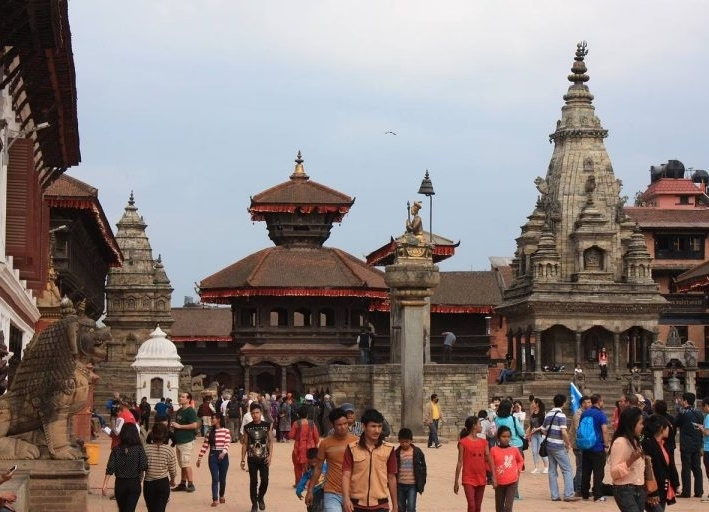
Bhaktapur Durbar Square is one of the most complete medieval squares in the valley. Its temples, palaces, and courtyards date largely from the Malla period, and the carved wooden details and brick facades give it a distinctive character. The square was badly damaged in the 2015 earthquake, and restoration has been ongoing.
Many visitors find the presence of scaffolding and repair work an honest reflection of the effort to protect the city's heritage. The square is also quieter than Kathmandu's, which makes it easier to appreciate the architecture at your own pace.
Can Heaven Himalaya Help You Experience Kathmandu and Bhaktapur?
As a trekking agency based in Nepal, we see many travelers arrive with the goal of climbing into the mountains and very little sense of what the valley offers before they leave. Our team can help you plan a Bhaktapur day tour, arrange a licensed guide who knows the square and its history, and suggest a route that fits your schedule.
We can also connect your sightseeing with your trekking preparation, whether that means checking the weather, arranging transport, or sorting out permits. The aim is not to sell a package but to help you make the most of your time in the valley, and to give you a sense of Nepal's culture that goes beyond the mountain views.
What Are the Key Takeaways About the Best Things to Do in Kathmandu?
Kathmandu rewards travelers who plan around the rhythm of the city. Visit the major sites early in the morning, when light is better and crowds are thinner. Pair the historic squares with the neighborhoods where people live and work, because the contrast between ritual and everyday life is what makes the valley memorable.
Treat sacred sites with the respect they deserve, and listen more than you speak, especially at Pashupatinath and Narayanhiti. Give yourself at least three or four days to see the main sights, and more if you are heading into the mountains. Most of all, let the city surprise you. The best moments we hear about from travelers are rarely the ones on the itinerary. They are the conversations in a tea shop, the sound of bells at dusk, and the sight of a courtyard that nobody else seemed to notice.