

Sailung Hike in November 2026: Weather & Views

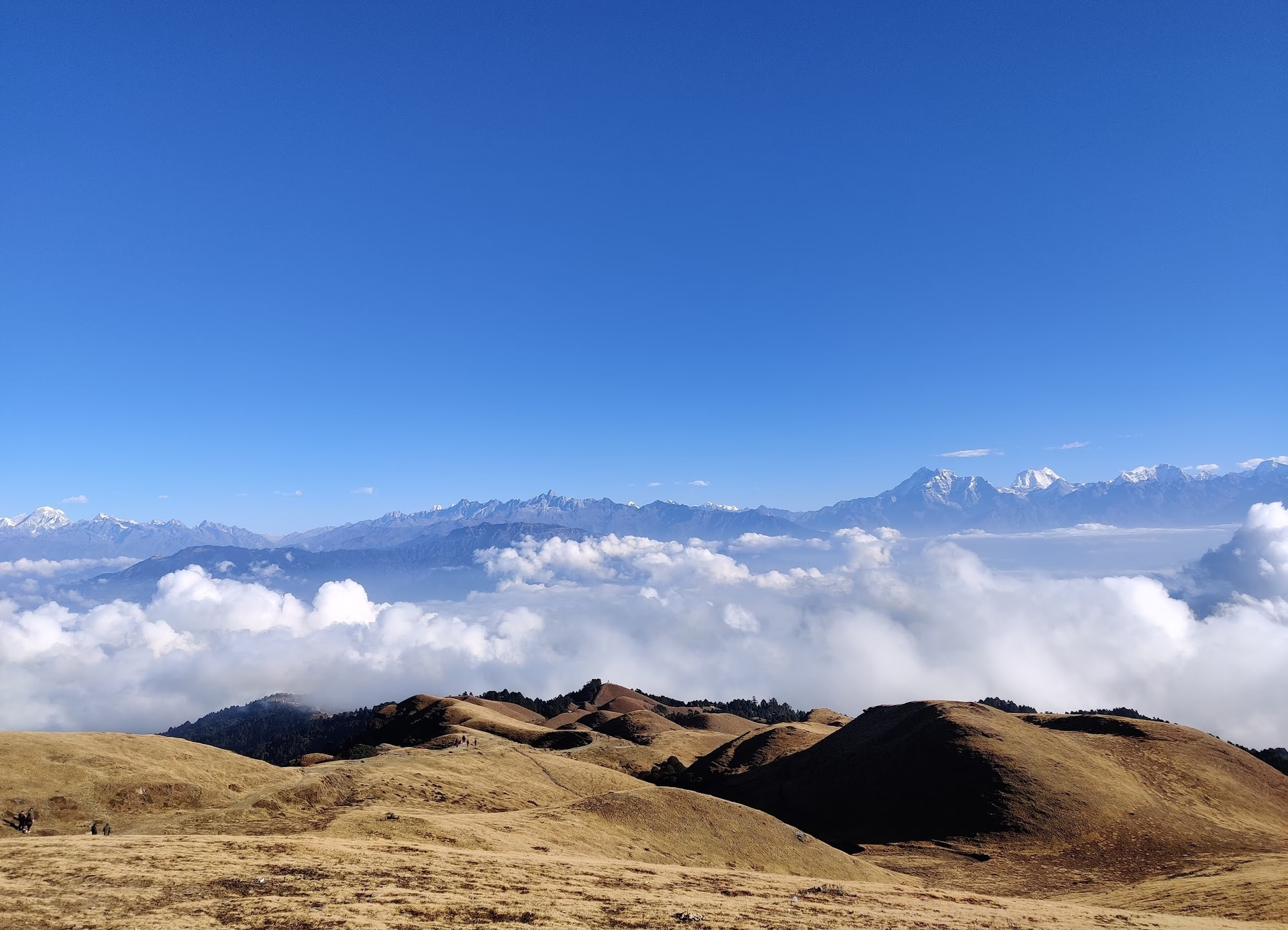
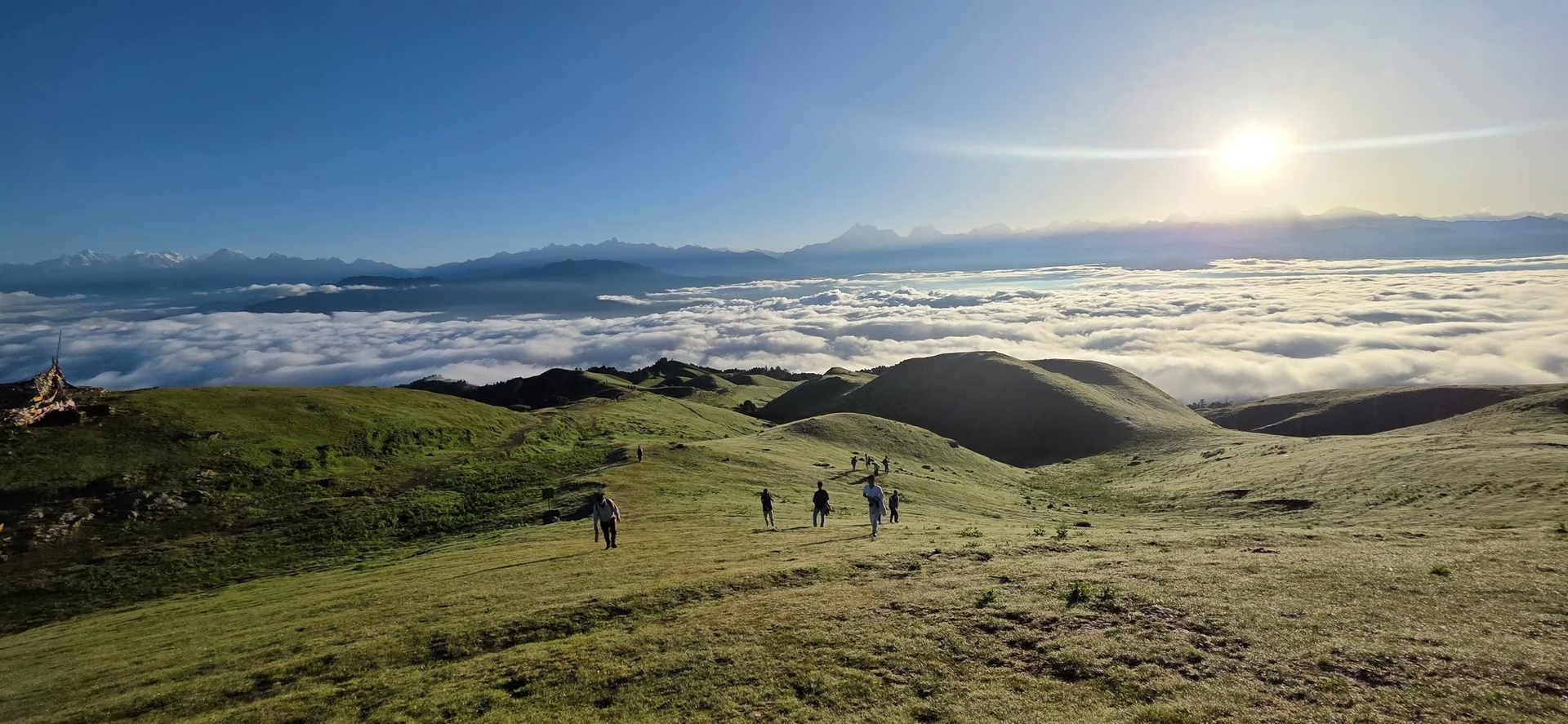
The Sailung hike in November is a short Himalayan trekking experience in Nepal that combines panoramic mountain views, golden alpine grasslands, and authentic Tamang culture. Located on the border of Dolakha and Ramechhap districts, Sailung rises to 3,146 m and features 108 grassy hillocks overlooking Gaurishankar, Langtang, Ganesh Himal, and, on exceptionally clear mornings, Mount Everest.
November's post-monsoon conditions generally bring dry trails, crisp mountain air, and excellent morning visibility, making Sailung an appealing destination for hikers seeking Himalayan scenery without the long itineraries or technical challenges of major trekking routes.
A typical Sailung hiking trip takes 3 days and 2 nights, including a 5–7-hour drive from Kathmandu and a 1.5–3-hour ascent from the trailhead. Along the route, hikers can explore rolling ridgelines, visit Buddhist monasteries and sacred Hindu-Buddhist sites, experience local Tamang hospitality, and enjoy traditional Nepali meals at family-run homestays. However, freezing nights, morning frost, rough dirt roads, and limited facilities require careful preparation.
This guide explains Sailung's November weather, mountain viewpoints, transport options, hiking difficulty, itinerary, packing essentials, accommodation, food, estimated costs, and safety considerations to help you plan a rewarding autumn hike in 2026.
What Makes Sailung Hike Special in November?
Sailung is special in November because the post-monsoon air is dry and still, the 108 hillocks stand free of cloud, and one open ridge gives a panorama of Gaurishankar, Langtang, Ganesh Himal, and on the sharpest mornings, Everest. Crowds stay thin compared with Everest or Annapurna.
Post-monsoon air carries the least dust and moisture of the year in early November. Farmers have finished the harvest, so the terraces below the ridge turn gold and brown. Tamang villages run on a slower rhythm, with woodsmoke rising at dawn and prayer flags snapping in the wind. Frost-glazed grass adds a hard, bright edge to the morning light.
The season also pairs perfectly with Tihar, the festival of lights, which in 2026 falls between November 8 and 12. Villages hang lamps and marigolds, and the hills feel lived in rather than staged.
Where Is Sailung Located in Nepal?
Sailung is a ridge on the border of Dolakha and Ramechhap districts in Bagmati Province, east of Kathmandu. Its main summit, Thulo Sailung, stands at about 3,146 m. The Sailung area includes 3 villages: Pasiban, Tek Sing, and Solambu.
According to Nepal Traveller, the name comes from the Tamang words sai (hundred) and lung (hill), a reference to the hundred-odd hillocks that ripple away from the summit. Tamang families form the main community, with a few Magar and Sherpa households. Most hikers reach the ridge through the road villages of Mudhe, Dhunge, and Kalapani.
Kathmandu sits at roughly 1,400 m. Sailung rises about 1,750 m above it, which explains the sharp temperature gap you feel on arrival.
What Makes Sailung a Unique Hiking Destination in Nepal?
Three features make Sailung unique: an open ridge with no taller neighbours blocking the horizon, 108 grassy hillocks to explore, and a living Tamang-Buddhist culture centred on Sailung Gumba and the local deity Sailung Phoi Sibda Karpo.
According to Nepal Traveller (July 2026), altitude is not what sets Sailung apart, since many Nepali viewpoints sit higher. The ridge stays open on every side, so the horizon never closes. Sailung gives you the full circle.
The spiritual layer matters too. Tamang communities regard Thulo Sailung as the home of their deity, whose name translates as the White Male Lord of the Earth. Nepal Traveller also records that the site holds a sacred place for the guru Padmasambhava. Buddhists and Hindus both visit, and you see a monastery and a Shiva temple within a short walk of each other.
One detail most visitors miss: the forests below the ridge are rhododendron, but they bloom in March and April, not November. A November hike is about views and culture, not flowers.
What Himalayan Peaks Can You See from Sailung?
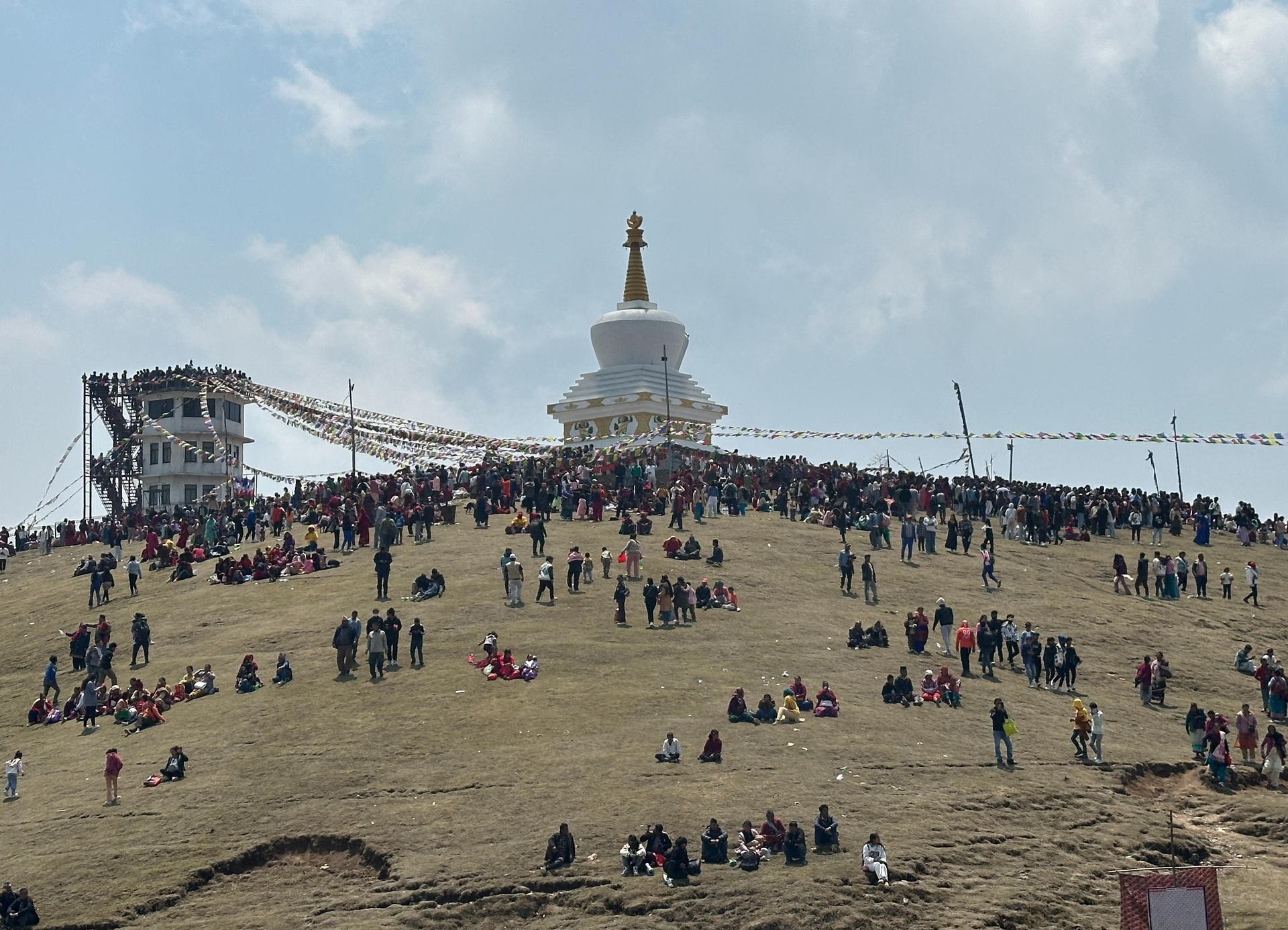
From Sailung you see Gaurishankar (7,134 m), Melungtse (7,181 m), Dorje Lakpa (6,966 m), Langtang Lirung (7,227 m), and Ganesh Himal (7,422 m). On the clearest mornings, Manaslu (8,163 m) and Everest (8,849 m) appear on the horizon.
According to Nepal Traveller, Gaurishankar dominates the northeastern skyline, while the Jugal range including Dorje Lakpa joins Langtang and Ganesh Himal stretching across the northwest. Everest shows up far to the east on sharp days. The Rolwaling range fills much of the northern skyline.
Everest disappoints first-time visitors. It looks small and distant, and nearer Rolwaling peaks often steal the attention. Ask your guide to trace the skyline from Gaurishankar eastward until you reach the dark pyramid of Everest. The best window runs from 6:00 to 9:30 a.m., before valley haze builds.
Why Is Sailung Popular for Short Hikes Near Kathmandu?
Sailung is popular for short hikes because it sits 5 to 7 hours from Kathmandu, lies outside the national parks, offers homestays near the trailhead, and fits a 2-night itinerary. Weekend trekkers skip the flights and long drives that Everest and Annapurna routes demand.
The trail is non-technical, and the climb from the road ends in 1.5 to 3 hours. Local homestays replace the tent. Compared with Kalinchowk, which reaches 3,842 m and has a more developed hill-station feel, Sailung stays quieter and cheaper. Online Khabar quotes locals who say rooms here cost less than at Kalinchowk.
Families, photographers, first-time trekkers, and Kathmandu residents all use Sailung as a shakedown trip before a bigger route.
Is November a Good Time for Sailung Hike?
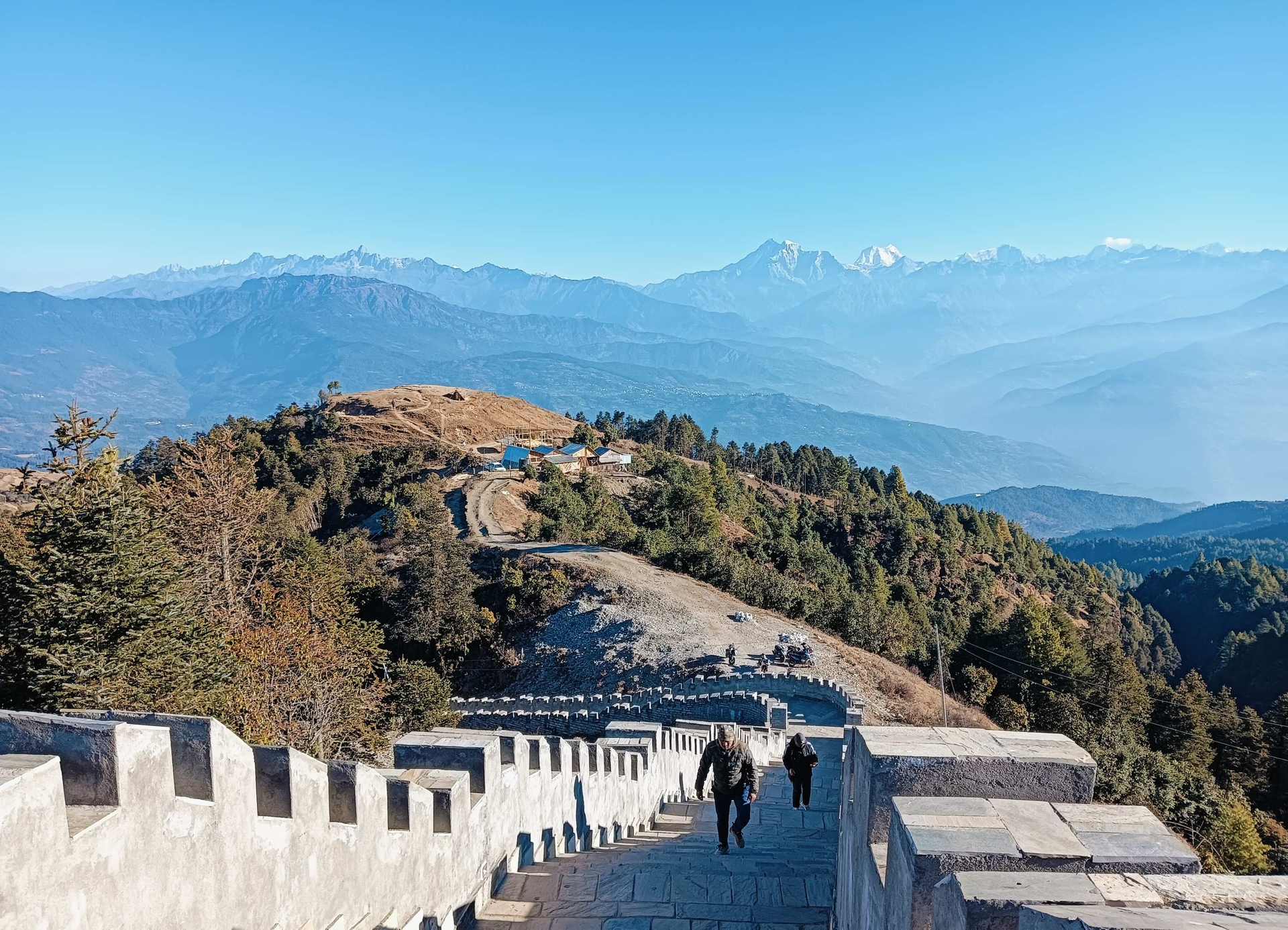
Yes. November sits inside Sailung's autumn window, September to November, which local operators rank as the best season. Skies are clear, trails are firm, and daytime hiking is comfortable. Nights freeze late in the month, so plan for cold rather than rain.
Autumn and spring are the two strong seasons. Spring brings rhododendron bloom and warmer afternoons. November trades flowers for the clearest air of the year. For pure mountain views, we put November ahead of April.
What Is the Weather Like in Sailung in November?
Sailung weather in November is dry, sunny, and cold. Days reach 5 to 10 °C, nights fall between -4 and 2 °C, and rain is rare. Wind sweeps the ridge as the day warms, so the feels-like temperature drops below the thermometer reading.
No weather station operates on the ridge, so published figures rest on lowland data adjusted for altitude. We use the standard drop of about 6.5 °C per 1,000 m. Kathmandu is the reference point, and Sailung sits about 1,750 m higher. That puts the ridge roughly 11 °C colder.
What Are the Average Daytime and Nighttime Temperatures on Sailung in November?
Sailung averages 8 to 10 °C by day and -1 to 2 °C by night in early November. By late November, daytime highs fall to 5 to 8 °C and nights reach -4 to 0 °C. Wind chill lowers the feels-like figure by another 3 to 6 °C.
Kathmandu averages a November high of roughly 23 °C and a low of 8 °C. The table below applies this altitude correction, showing a daily temperature swing on the ridge of roughly 12 to 15 °C.
Location and period | Daytime high | Night-time low |
Kathmandu, November average | 23 °C | 8 °C |
Sailung ridge, early November | 11 to 13 °C | 0 to 2 °C |
Sailung ridge, late November | 8 to 11 °C | -3 to 0 °C |
The numbers show a daily swing of 10 to 14 °C. Dry air holds no heat after sunset, so temperatures fall fast once the sun drops behind the hills. The coldest hour arrives just before sunrise, exactly when you stand on the summit waiting for the light.
How Clear Are the Himalayan Views on Sailung in November?
Views are clearest between 6:00 and 9:30 a.m. November is Nepal’s driest month, typically bringing 0 to 1 day of precipitation. As a result, nearly every morning offers crystal-clear, open skies, and the final weeks of the month guarantee the lowest humidity of the autumn season. Afternoon haze and valley cloud build from late morning. Colder years sometimes start with cloudy early mornings in the first two weeks.
Plan for two sunrises rather than one. A 2-night itinerary gives you a backup morning if cloud sits on the Himalaya at first light. We see groups that squeeze Sailung into a single overnight stay and miss the view by one cloudy dawn. The extra night costs little and protects the main reason you came.
Can You Expect Rain, Snow, or Frost During the Sailung Hike?
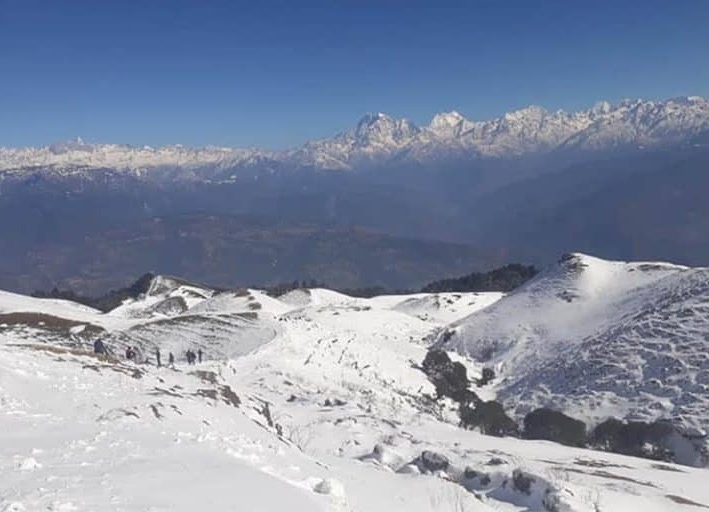
Frost is likely on most November mornings, rain is rare, and light snow is possible in the last 10 days of the month. Snow reliability improves in December and January, when the ridge holds snow for days.
Frost glazes the grass from the second week onward, and the surface turns slick until the sun melts it. Midday mud follows on shaded paths. Rain, when it arrives, comes as a short front, often 1 or 2 days of cloud. Light snow dusts the upper ridge in cold years and can ice the dirt road above Mudhe.
Online Khabar notes that Sailung gets snow in winter, which is the reason some visitors choose December over November. Snow chasers lean toward Kalinchowk, which has more winter infrastructure. We steer November guests toward the clear-sky experience and treat snow as a bonus.
What Are the Advantages and Disadvantages of Hiking Sailung in November?
The advantages are clear skies, stable weather, firm trails, and festival atmosphere. The disadvantages are freezing nights, basic heating in homestays, a short 10.5-hour daylight window, and crowded transport around Tihar.
The table below compares the five factors that matter most when you pick November over another month.
Factor | Advantage | Disadvantage |
Visibility | Clear mornings, long views | Afternoon haze builds |
Trail condition | Dry, firm paths | Frost makes grass slippery |
Temperature | Comfortable daytime hiking | Freezing nights, strong ridge wind |
Crowds | Quiet compared with Everest and Annapurna | Busier Kathmandu roads around Tihar |
Daylight | Reliable sunrise and sunset | Only about 10.5 hours of daylight |
Cold is the biggest trade-off, and layers solve it. Transport is the quiet risk. Buses and jeeps fill before Tihar as people head home, so book your vehicle early and leave Kathmandu before 7 a.m.
How Can You Reach Sailung for a November Hike?
You reach Sailung by driving from Kathmandu to Dhunge or Mudhe in 5 to 7 hours, then hiking 1.5 to 3 hours to the ridge. A private 4WD jeep is the most reliable option in November, since public buses cover only part of the route.
How Far Is Sailung from Kathmandu?
Sailung lies 130 to 173 km east of Kathmandu by road, depending on route and trailhead. The standard drive to Dhunge is roughly 130 km, while longer alternative approaches from the Ramechhap side can push the distance over 160 km. Drive time ranges from 5 to 7 hours.
According to Nepal Traveller (July 2026), the distance runs 130 to 170 km and the drive typically takes 5 to 7 hours. Online Khabar lists 173 km with a 25 km dirt road from Mudhe and roughly 7 hours of travel. The gap between the two figures reflects different trailheads, not a disagreement.
Distance misleads here. A 130 km drive on mountain roads moves slower than 130 km on a highway, so we plan on 6 hours as the safe midpoint.
How Can You Travel from Kathmandu to Sailung by Road?
Travel by private jeep, shared jeep, or public bus. A private jeep takes 5 to 7 hours via Banepa, Dhulikhel, Dolalghat, Lamosangu, Khadichaur, and Mudhe. Public buses leave from Koteshwor, Jadibuti, or the Old Bus Park, heading east along the Araniko Highway toward Mudhe and Charikot. From Mudhe, you hire a local 4WD jeep for the final dirt-road stretch to Dhunge.
Your three options differ in cost, comfort, and flexibility:
Private jeep: door-to-door service, flexible stops, and the best choice for groups of 2 to 5.
Shared jeep: cheaper per seat, with fixed departure times and tighter schedules.
Public bus: the lowest cost, with a bus change and a final jeep or hike, and a full travel day.
Leave before 7 a.m. Traffic through Banepa and Dhulikhel thickens by mid-morning, and the dirt section runs slowly. An early start puts you at the ridge with 2 hours of afternoon light.
What Are the Road Conditions in Sailung During November?
The highway to Mudhe is paved, while the final stretch of about 25 km from Mudhe is dirt. November is dry, so the road stays firm but dusty, with ruts left by the monsoon. Use a 4WD jeep and expect icy patches at dawn.
According to Online Khabar, the final 25 km after Mudhe runs on a dirt road. After the monsoon, drivers patch the worst sections, but ruts and loose stones remain. Shaded corners freeze overnight, so early-morning departures from the ridge need a cautious driver.
Dust is the other November issue. Carry a buff or mask for the dirt section and keep camera lenses covered. Road upgrades continue in the area, so confirm the current road state with your operator a week before departure.
Where Does the Sailung Hike Usually Start?
The Sailung hike usually starts at Dhunge, where jeeps stop and a 1.5 to 3 hour climb leads to the ridge. Alternative trailheads are Kalapani and Mudhe via Deurali. Dhunge offers the shortest ascent and the easiest logistics.
According to Nepal Traveller, hikers climb from villages such as Kalapani or Dhunge for a couple of hours through rhododendron forest and open pasture. Each trailhead suits a different plan:
Dhunge: the standard start, with the shortest climb and easy homestay access.
Kalapani: a similar 2-hour climb through forest and pasture.
Mudhe via Deurali: a longer walk from 2,460 m, suited to full-day trekkers and cyclists.
Pick Dhunge when daylight is tight. Pick Mudhe when you want to walk the whole day and earn the view.
What Can You Expect on the Sailung Hike in November?
Expect an easy to moderate hike over grassy ridge lines and forest paths, cold mornings, long clear views, and quiet Tamang villages. The route climbs to 3,146 m at a steady pace and needs no technical skills or special equipment.
How Difficult Is the Sailung Hike for Beginners?
The Sailung hike is easy to moderate and suits beginners with basic fitness. The trail has no technical sections, no exposed edges, and well-worn paths. The main challenges are altitude above 2,800 m and cold, not steepness.
Most guests who arrive with no trekking history finish comfortably. The hard part is physiological. You drive from 1,400 m to the 2,500 to 2,900 m range in one day and then sleep there. Mild altitude symptoms appear for some people: headache, nausea, and broken sleep.
Common mistakes we see: skipping water, rushing the climb, and drinking alcohol at the homestay. Drink 3 litres of water daily, walk at a pace that lets you talk, and skip the evening drinks. Symptoms that worsen require descent, which is a short drive away.
Fit children and active seniors also complete this route with a guide. Warm clothing matters more than fitness here.
How Long Does the Sailung Hike Take?
The Sailung hike takes 1.5 to 3 hours of climbing from Dhunge to the main ridge, and 5 to 6 hours for a full day of hillock exploring. Most itineraries run 3 days and 2 nights from Kathmandu.
According to Online Khabar, climbing all 108 hillocks takes 3 days. Most guests skip that and pick the best 5 to 8. A standard 3-day plan looks like this:
Drive from Kathmandu to Dhunge, climb to the ridge, and settle into a homestay.
Watch sunrise, explore the hillocks, visit the monastery, and see sunset.
Drive back to Kathmandu by late afternoon.
What Is the Elevation of Sailung Hill?
Thulo Sailung stands at 3,146 m (10,322 ft), the highest point of the Sailung ridge. Some sources round it to 3,150 m. Kathmandu lies at about 1,400 m, so the hill rises roughly 1,750 m above the capital.
Other reference points help planning. Mudhe sits at 2,460 m. Khola Kharka, a common overnight village, appears at heights between 2,600 and 2,950 m depending on the map, so we treat it as roughly 2,800 m. Sleeping below the summit is good practice: you climb high during the day and sleep lower at night, which eases acclimatisation.
What Are the Best Viewpoints and Attractions Along the Sailung Trail?
The top attractions are the Thulo Sailung summit for 360-degree views, Sailung Gumba (a Buddhist monastery), a nearby Shiva temple, the 108 hillocks, the Khola Kharka meadows, and the rhododendron forests below the ridge.
The summit is the headline. Prayer flags flutter across the top, and the Himalayan skyline runs unbroken from Rolwaling to Ganesh Himal. Sailung Gumba sits near the ridge and shows how Tamang Buddhism shapes everyday life. The Shiva temple nearby reflects the shared reverence of Hindu visitors.
The hillocks reward short side walks. Each one frames the Himalaya at a slightly different angle, so photographers walk 3 or 4 of them at dawn. Khola Kharka offers wide meadows, a good place for a picnic lunch or a rest day. Longer treks continue to Khandadevi Temple, but weekend hikers rarely reach it.
Can You Experience Sunrise and Sunset Views from Sailung?
Yes. Sailung offers both. Sunrise in November arrives around 6:15 to 6:35 a.m., and sunset falls around 5:05 to 5:15 p.m. The open ridge gives clear horizons east and west, so one overnight stay delivers both.
According to Nepal Traveller, Sailung ranks as a favourite spot for both sunrise and sunset. The pink glow touches Gaurishankar a few minutes before the sun clears the eastern hills. Be on the summit 30 minutes early, because the colours peak before the sun appears.
Sunset requires planning. With darkness by about 5:30 p.m., you must start descending to the homestay by 4:45 p.m. Carry a headlamp even if you plan to stay close. Evening light on the northern peaks turns copper, and the ridge empties fast once the cold sets in.
What Should You Pack for Sailung Hike in November?
Pack a 3-layer clothing system, an insulated jacket, hat, gloves, sturdy boots, 2 litres of water, a headlamp, sun protection, and cash. Temperatures swing up to 14 °C between afternoon and dawn, so layers matter more than any single heavy item.
What Clothing Is Best for November Weather in Sailung?
Wear a moisture-wicking base layer, a fleece mid layer, and a windproof shell, and carry a down jacket for evenings. Add a warm hat, gloves, and a neck gaiter. Trekking trousers and one pair of thermal leggings cover both day and night.
Avoid cotton. It holds sweat and chills you at the summit. Merino or synthetic base layers dry in minutes. A down jacket with a comfort rating near -5 °C handles sunrise on the ridge. Pack one set of dry sleeping clothes and keep it away from the sweaty day set.
Hands and head lose heat first. Bring liner gloves under a thicker pair for photography, since bare fingers freeze within minutes at dawn.
Which Hiking Shoes and Essential Gear Should You Bring for Sailung Hike?
Bring mid-cut waterproof hiking boots with a grippy sole, 3 pairs of wool socks, a 25 to 35 L daypack, a headlamp, a 2 L water bottle, sunglasses, SPF 50 sunscreen, and a power bank.
Boots matter because frost makes grass slippery and midday thaw brings mud. Break them in before the trip. Wool socks keep feet warm even when damp.
Extra gear that earns its place:
Sleeping bag liner or a bag rated near 0 °C, available for rent in Thamel.
Water purification tablets, for refills at homestays.
Cash in small NPR notes, since no ATM operates near the ridge.
Lip balm and moisturiser, because dry air cracks skin quickly.
Cold drains phone and power bank batteries fast. Keep both in an inner pocket during the day and in your sleeping bag at night.
Do You Need Trekking Poles or Other Cold-Weather Accessories?
Yes. Trekking poles reduce load on the knees during steep descents, and cold-weather accessories such as thermal gloves, a buff, hand warmers, and a thermos make dawn on the ridge comfortable. Poles matter most on frosty, slippery grass.
A pair of poles weighs 400 to 500 g and costs little to rent in Kathmandu. Use them on the descent from the ridge, where loose stones and frozen turf punish weak ankles.
A 500 ml thermos filled with hot water at 5 a.m. makes the summit wait pleasant. Chemical hand warmers fit in gloves and last 6 to 8 hours. A neck gaiter doubles as dust protection on the dirt road.
What Are the Accommodation and Food Options During Sailung Hike?
Accommodation on the Sailung hike means homestays and basic local lodges run by Tamang families, plus camping on request. Food is home-cooked dal bhat, soups, and snacks. Facilities are simple: shared rooms, squat toilets, and limited hot water.
Are Homestays and Local Lodges Available Near Sailung?
Yes. Homestays and basic lodges operate in Dhunge, Khola Kharka, and the Sailung villages, usually with twin or dorm beds, thick blankets, and shared toilets. Rooms cost less than at Kalinchowk, according to locals quoted by Online Khabar.
Capacity is small. A handful of rooms serve each village, so groups above 8 people need advance booking. Some operators use camping instead, because lodges stay few on parts of the route. Heating comes from the kitchen fire, and families welcome guests to sit around it in the evening. Take that invitation. Your room will be cold.
What Food Can You Expect During the Sailung Hike?
Expect dal bhat (rice, lentils, and vegetable curry), dhindo (millet porridge), gundruk soup, thukpa, momo, fried potatoes, eggs, and butter or ginger tea. Meals are mostly vegetarian and cooked on wood fires.
Dal bhat arrives with unlimited refills, which suits hungry hikers. Dhindo is the traditional mountain staple, dense and filling, and worth a try. Gundruk is fermented leafy greens with a sour, savoury taste. Thukpa and momo are Tamang favourites that suit cold evenings.
Vegetarian dishes dominate. Chicken and eggs appear when the family has them, and your guide arranges them in advance. Tell your operator about allergies and strict diets before departure. Avoid alcohol at 2,800 m, since it disrupts sleep and worsens altitude symptoms.
How Can You Prepare for Limited Facilities Along the Sailung Trail?
Prepare by carrying cash in small NPR notes, a power bank, snacks, water purification tablets, toilet paper, and a sleeping bag liner. Expect no ATMs, patchy mobile signal, and limited charging above Dhunge.
Solar panels power most homestays, and charging points are scarce. Follow this routine:
Charge every device fully in Kathmandu.
Download offline maps and your itinerary.
Share your plan with a contact at home.
Pack snacks such as nuts, chocolate, and energy bars for the climb.
Carry small notes for tea, snacks, and tips.
How Much Does Sailung Hike in November Cost?
A Sailung hike from Kathmandu costs about USD 60 to 100 per person on a budget independent plan. A guided private trip costs USD 130 to 200 per person for a group of 4 and USD 200 to 300 per person for 2 travellers.
Prices below are planning estimates for November 2026. Confirm final numbers with your operator.
What Is the Estimated Budget for a Sailung Hiking Trip?
A 3-day, 2-night Sailung trip costs USD 130 to 200 per person for 4 people on a guided private plan. The biggest items are the private jeep (USD 220 to 320 per vehicle), guide (USD 25 to 35 per day), and homestays.
The table below lists typical costs for each part of a 3-day trip, in USD, based on common market rates.
Item | Typical cost |
Private jeep, Kathmandu to Dhunge and back | USD 220 to 320 per vehicle |
Public bus and local jeep | USD 10 to 20 per person |
Homestay with dinner and breakfast | NPR 1,500 to 2,500 per person per night (USD 11 to 19) |
Lunch, snacks, and tea | USD 5 to 8 per day |
Licensed guide | USD 25 to 35 per day |
Porter | USD 15 to 20 per day |
Local fees, tips, and extras | USD 10 to 15 per person |
For comparison, TourHQ lists a 7-day Sailung cultural trek at USD 800 per person, which works out to about USD 115 per day. A short November hike costs less per day because fixed costs spread across fewer nights.
The budget route uses buses and homestays and lands at USD 60 to 100. The private route trades money for time, comfort, and safety margin.
What Factors Affect Transportation, Accommodation, and Guide Costs of Sailung Hike?
Five factors set the price: group size, vehicle type, guide and porter days, accommodation level, and travel dates. Doubling the group from 2 to 4 halves the per-person jeep cost, while festival dates and fuel prices push vehicle rates up.
Group size has the biggest effect. A jeep costs the same whether it carries 2 or 5 people, so travelling with friends cuts transport by half or more.
Vehicle type matters on the dirt road. A 4WD jeep costs more than a sedan taxi, but a sedan will not cope with the Mudhe stretch. Guide days add up when you extend the trip. Accommodation varies between basic homestays and a hotel night in Kathmandu before departure.
Dates move prices too. Tihar week raises vehicle rates and fills seats. Midweek departures often cost less and give you emptier trails. Rental gear such as sleeping bags and poles adds a small cost.
How Can You Plan a Safe and Memorable Sailung Hike in November with Heaven Himalaya?
Heaven Himalaya plans Sailung hikes with licensed guides, private 4WD transfers, pre-booked homestays, and flexible 2 to 4 day itineraries. We adjust dates around festivals and weather windows, and we brief every group on altitude and cold safety.
Can Heaven Himalaya Arrange a Guided Sailung Hike in November?
Yes. Heaven Himalaya arranges guided Sailung hikes in November as private or small-group trips from Kathmandu. Each trip covers transport, guide, homestay booking, meals, and an emergency plan. Contact our team to confirm dates and a quote.
Our itineraries follow the pattern in this guide: early departure, Dhunge start, 2 nights near the ridge, and a Kathmandu return by late afternoon. Families get a gentler pace, and photographers get extra dawn time.
What Are the Key Things to Know Before Planning a Sailung Hike in November?
Before planning a Sailung hike in November, confirm 5 things: your dates relative to Tihar, a 4WD transfer, warm layers rated near -5 °C, altitude pacing, and cash. Book 2 to 3 weeks ahead for November weekends.
Use this checklist:
Check Tihar dates and book transport before the festival rush.
Reserve a 4WD jeep and a licensed guide.
Pack layers, a down jacket, gloves, and a headlamp.
Pace the climb and drink 3 litres of water daily.
Carry cash in small NPR notes and a charged power bank.
The Sailung hike in November suits first-time trekkers, photographers, and anyone who wants Himalayan views without a 2-week commitment. The weather is clear, the culture is close, and the trail forgives beginners. Pack warm, start early, and give yourself two sunrises.