

Ghandruk, Nepal: Gurung Culture & Annapurna Trekking

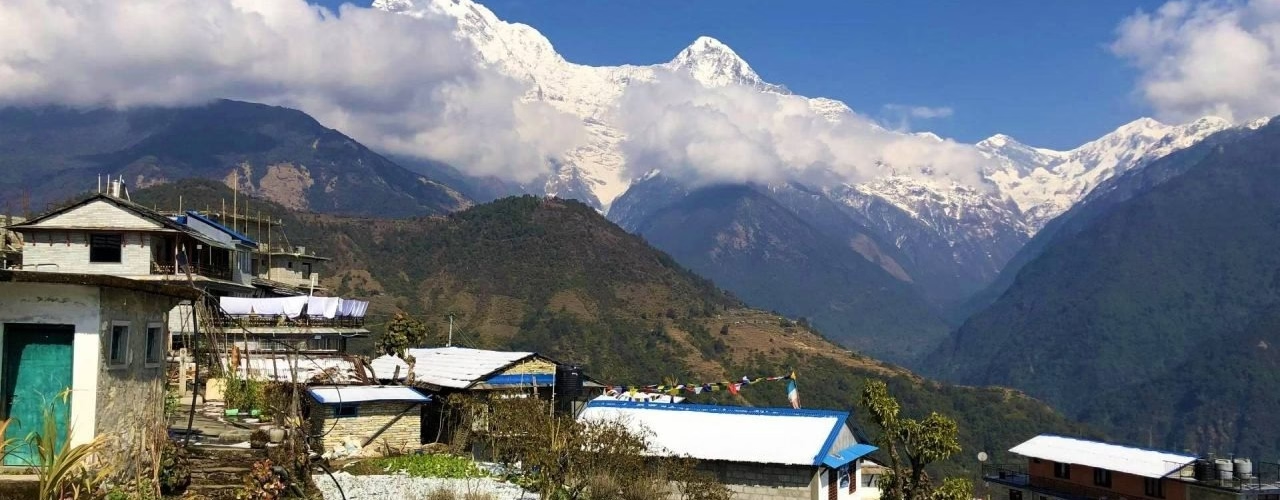
Ghandruk Village in Nepal is a traditional Gurung (Tamu) settlement in the Annapurna region, situated at approximately 1,940 meters in Kaski District, Gandaki Province. Famous for its slate-roofed stone houses, terraced fields, rich cultural heritage, and panoramic views of Annapurna South, Hiunchuli, and Machhapuchhre (Fishtail Mountain), Ghandruk offers an authentic Himalayan village experience within the Annapurna Conservation Area.
Located approximately 42–55 km by road from Pokhara, Ghandruk Village is an ideal destination for cultural exploration, mountain photography, and beginner-friendly trekking. Visitors can explore the Old Gurung Museum, experience traditional homestay hospitality, enjoy local Nepali cuisine, and watch spectacular Himalayan sunrises. The village also connects to the popular Poon Hill and Annapurna Base Camp trekking routes, making it suitable for both short 2–3 day visits and longer Annapurna adventures.
Where Is Ghandruk Village Located in Nepal?
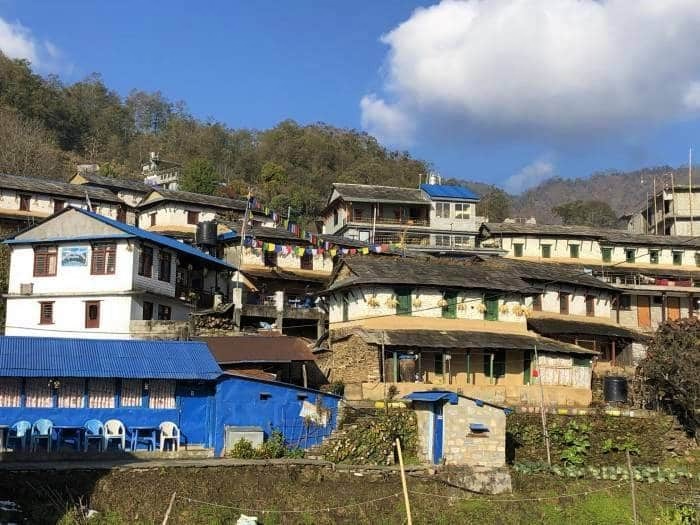
Ghandruk Village is located in Annapurna Rural Municipality, Kaski District, Gandaki Province, at roughly 1,940 m inside the Annapurna Conservation Area. The village spreads across a hillside above the Modi Khola valley, 32 km northwest of Pokhara in a straight line.
Until 2015, Ghandruk was a separate village development committee. Nepal's 2015 local restructuring merged it into Annapurna Rural Municipality. The 2021 census counted 5,316 residents in 1,228 households, and Gurung families make up most of that population, up from 3,635 residents in 963 households recorded for the former Ghandruk VDC in the 2011 CBS ward-level census.
The Annapurna Conservation Area covers 7,629 km2, making it Nepal's largest protected area, according to the Department of National Parks and Wildlife Conservation, and it traces back to a 200 km2 pilot project launched in Ghandruk itself in 1986, before NTNC's ACAP was extended across the wider region.
Published elevations for the village range from 1,940 m to 2,012 m, depending on whether the reading comes from the lower bus park or the upper lodges. Either way, Ghandruk sits well below the 2,500 m line where altitude sickness usually begins.
The table below lists the core attributes of Ghandruk Village.
Attribute | Value |
Elevation | About 1,940 m (published range 1,940 to 2,012 m) |
District and province | Kaski District, Gandaki Province |
Local government | Annapurna Rural Municipality (since 2015) |
Distance from Pokhara | 32 km straight line, 42 to 55 km by road |
Main community | Gurung (Tamu), with Magar, Chhetri, and Kami households |
Population | 5,316 residents, 1,228 households (2021 census) |
Visible peaks | Annapurna South 7,219 m, Gangapurna 7,455 m, Machhapuchhre 6,993 m, Hiunchuli 6,441 m |
Chhomrong lies 5 to 6 hours on foot to the north and Tadapani 3 to 4 hours to the northwest, which makes Ghandruk the link between the Poon Hill and Annapurna Base Camp trails.
How Far Is Ghandruk Village from Pokhara?
Ghandruk is 32 km from Pokhara in a straight line and 42 to 55 km by road, which takes 2 to 4 hours by vehicle. The range exists because road ends differ: Kimche gives the shorter drive, and the Ghandruk bus park gives the longer one.
A private jeep covers Pokhara to Nayapul or Kimche in about 1.5 to 2 hours. A public bus takes 3 to 5 hours because it stops often. The last 10 to 15 km are rough, unpaved road, and that stretch decides your real travel time more than the kilometer count does.
Walking is the other option. Nayapul to Ghandruk is 11 to 13 km on foot by the shorter trail, and it takes 4 to 5 hours with a steady climb of about 870 m. Kimche to Ghandruk takes 30 to 90 minutes.
A common mistake is planning from the distance alone. Travelers see "42 km" and book a same-day return with 2 hours of buffer, and one landslide or late jeep erases it. Add 1 hour for every leg that uses the unpaved road.
How Can You Reach Ghandruk Village from Kathmandu?
You reach Ghandruk from Kathmandu by traveling to Pokhara first, then taking a jeep or bus to Kimche or Ghandruk. The Kathmandu to Pokhara leg is about 200 km by road or a 35-minute flight, and the Pokhara to Ghandruk leg adds 2 to 4 hours.
The table below compares the four ways to cover the Kathmandu to Pokhara leg.
Mode | Duration | Cost per person | Best for |
Domestic flight (Yeti Airlines, Buddha Air, Shree Airlines) | 35 minutes | US$75 to 130 | Short trips, reaching Ghandruk by midday |
Tourist bus from Thamel | 6 to 8 hours | US$15 to 25 | Budget travelers who want a seat and a toilet stop |
Local bus from Gongabu Bus Park | 7 to 9 hours | US$4 to 7 | Lowest cost, flexible schedule |
Private car or 4WD jeep | 5 to 7 hours | US$120 to 180 per vehicle | Groups of 3 or 4, door-to-door transfers |
Flying changes the whole shape of the trip. A morning flight into Pokhara Regional International Airport, a jeep to Kimche, and a 1 to 2 hour walk put you in Ghandruk around midday in good conditions. Book the earliest departure you can find. Mountain weather builds through the day, and afternoon flights cancel more often.
The Prithvi Highway can close for hours after monsoon landslides, which is why we advise road travelers to leave Kathmandu before 7:00 am between June and September.
How Can You Travel from Pokhara to Ghandruk Village?
You can travel from Pokhara to Ghandruk by private jeep, shared jeep, local bus, or a drive to Nayapul followed by a 4 to 5 hour walk. A private jeep costs NPR 6,000 to 10,000 (US$44 to 74) per vehicle, and a shared jeep seat costs NPR 650 to 1,000 (US$5 to 7).
Local buses and shared jeeps run from Pokhara's Baglung Bus Park to Nayapul and Kimche. A bus seat costs NPR 450 to 500 (about US$3.50). Departures cluster in the morning, so aim to be at the bus park by 7:30 am. Confirm the price for a private jeep before you board, and ask whether the quote covers one direction or the round trip.
Most private jeeps stop at Kimche or the Ghandruk bus park, and the road reaches the village in dry weather. During the monsoon or road construction, vehicles may only go as far as Kimche or Vikash Danda. A short walk then finishes the trip, so keep your bag light.
Match the option to your group. Families and travelers with limited time do best with a private jeep to the end of the road. Solo travelers save money with a shared jeep. Fit walkers start at Nayapul.
What Is Ghandruk Village Famous For?
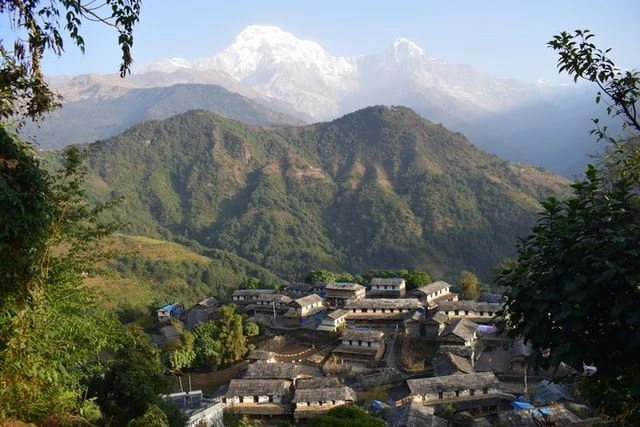
Ghandruk is famous for its traditional Gurung stone houses, the Old Gurung Museum, and close views of Annapurna South, Hiunchuli, and Machhapuchhre. The village is also a major stop on the Poon Hill and Annapurna Base Camp trails.
The village has a road, so reaching a Himalayan viewpoint takes hours, not days.
Why Is Ghandruk Known as a Traditional Gurung Village?
Ghandruk is known as a traditional Gurung village because Gurung (Tamu) families make up most of its population and still live in two-story stone houses with slate roofs. Historians trace Gurung ancestors to migrations through Tibet, and the village stood on an old trade route between Nepal and Tibet.
The Gurung call themselves Tamu. Their houses use stone, wood, and mud, with flat slate roofs and carved door and window frames. Some homes in the old village are more than 100 years old. The rodhi, a public gathering place, still hosts singing and dancing where men and women exchange songs.
Military service is part of the village identity. The British began recruiting Gurkha soldiers in 1815, and Ghandruk men have served in the British, Indian, Singapore, and Nepal armies.
Gurung religion blends shamanist, Buddhist, and Hindu traditions. Tamu Lhosar, the Gurung new year, falls on 30 December each year. Dashain and Tihar, the two big autumn festivals, bring family members home from Pokhara, Kathmandu, and abroad.
What Makes Ghandruk Village Unique in the Annapurna Region?
Ghandruk is unique in the Annapurna region for 4 reasons: road access, a preserved old village, a low altitude of about 1,940 m, and a large community-run lodge network. The village has more than 50 lodges with room for roughly 1,100 to 1,200 guests.
Ghorepani sits at 2,874 m, Chhomrong at about 2,170 m, and Annapurna Base Camp at 4,130 m. Ghandruk gives the same mountain wall with none of the acclimatization planning, which suits children, older travelers, and first-time trekkers. Trekkers choosing between the two often compare Poon Hill vs Annapurna Base Camp trek difficulty before booking.
The trade-off is midday crowding. Day visitors arrive by jeep around 11:00 am and leave by 3:00 pm. What most people overlook is the other 18 hours: the lanes empty at dusk, the light turns amber, and the village sounds like a village again.
What Are the Best Views of Annapurna and Machhapuchhre from Ghandruk?
The best views from Ghandruk show Annapurna South (7,219 m), Gangapurna (7,455 m), Machhapuchhre (6,993 m), and Hiunchuli (6,441 m) in one panorama. On clear days in October and November, Dhaulagiri (8,167 m) appears far to the west.
The best vantage points are the rooftops and terraces of the upper-village lodges. A short walk above the museum opens the widest angle. Views peak before 9:00 am. After that, cloud builds on the southern faces and the peaks shrink into haze.
Machhapuchhre carries a special status. The mountain has been closed to climbers since the 1957 British attempt, which stopped just short of the summit. Local belief holds that the peak belongs to Shiva. Hiunchuli, by contrast, is open to climbers, and trekkers see it as the broad white shoulder beside Annapurna South.
What Are the Best Things to Do in Ghandruk Village?
The 6 best things to do in Ghandruk are to visit the Old Gurung Museum, walk the old village, watch the sunrise, hike to Meshram Baraha temple, join a homestay cooking or weaving session, and trek onward to Tadapani or Chhomrong. Allow 2 nights to fit most of them.
Visit the Old Gurung Museum for costumes, tools, and Gurkha history.
Walk the lanes of Purano Gaun, the old village, in early morning.
Watch the sunrise from an upper-village rooftop.
Hike 45 to 60 minutes from the old village to Meshram Baraha temple.
Join a Gurung cooking or weaving lesson at a homestay.
Trek onward to Tadapani, Chhomrong, or Landruk for a longer route.
Can You Explore Traditional Gurung Culture and Local Museums in Ghandruk?
Yes, you can explore Gurung culture at the Old Gurung Museum (Gurung Cultural Museum), where entry costs NPR 100 (under US$1). The exhibits cover traditional dress, farm tools, weapons, and the history of Gurkha service, with English captions beside most items.
Visitors can try on Gurung clothing for NPR 300 to 400 (US$2 to 3) per hour. Men's outfits include the bhangra and kachhad, and women's include the cholo, fariya, and strings of pote beads. Wearing the outfit with a doko (carrying basket) and namlo (head strap) is a popular photo.
Go in mid-morning after the sunrise crowd thins, or in the late afternoon. Ask a guide or your host family to explain the objects, because the captions describe what an item is and rarely how it was used. Many lodges can arrange an evening song and dance program with a day's notice. Peak-season groups book these early.
Meshram Baraha temple sits a 45-minute to 1-hour hike from the old village, on a forest trail that blooms with rhododendron in spring. Ask before photographing people, especially elders and women working in the fields. A smile and a short "namaste" settle most requests.
Where Can You Find the Best Sunrise and Sunset Views in Ghandruk?
The best sunrise and sunset views in Ghandruk come from the upper-village lodge rooftops and the terraces above the museum, a 5 to 10 minute walk uphill from the main stone lane. Sunrise is the main event, with first light striking Annapurna South and Hiunchuli.
Sunrise arrives at roughly 5:40 am in late April and about 7:00 am in mid-December. Be on the rooftop 30 minutes early. The summits turn orange first, then the glow slides down the faces as the valley fills with light.
Sunset is quieter. Low light warms the slate roofs and stone walls, which makes the village itself the subject, not the peaks. October to December gives the cleanest evening air. Haze in April and May softens distant ridges, so Dhaulagiri rarely appears in spring.
Poon Hill (3,210 m) is a separate sunrise trip that requires a night at Ghorepani and a 45 to 60 minute climb in the dark. Ghandruk's sunrise asks for 5 minutes of stairs and far fewer people.
What Are the Best Photography Spots in Ghandruk Village?
The 5 best photography spots in Ghandruk are the Purano Gaun lanes, the museum courtyard, the terraced fields below the village, the upper-lodge rooftops, and the forest trail to Meshram Baraha temple. Each suits a different light and lens.
Use a wide lens for the stone lanes and a 70 to 200 mm lens to compress Annapurna South and Hiunchuli above the roofs. The terraces look best 30 minutes after sunrise, when side light shows the contour lines of the fields. The forest trail suits spring, when rhododendron blooms stand out against dark trunks.
Carry a spare battery or power bank, because cold nights drain batteries and charging at lodges costs a small fee. Drone flights inside the conservation area require prior government permission. Leave the drone at home unless your operator has secured that approval.
Can You Experience Traditional Gurung Food and Hospitality in Ghandruk Village?
Yes, you can experience Gurung food and hospitality at family homestays and lodges, where rooms start at about US$7.46 per person per night including breakfast and dinner. Hosts serve dal bhat, dhindo, and gundruk, and many run cultural programs on request.
A homestay differs from a lodge in one way: the family cooks, and everyone often eats at one shared table. Hosts explain how the buckwheat is ground, how the roof slates are laid, and which relatives serve abroad. The museum cannot give you that context.
Lunch is usually extra. Ask whether the price includes a cultural program, and carry cash, because homestays rarely accept cards. Arrange cooking and weaving lessons the evening before.
What Is the Ghandruk Village Trek Like?
The Ghandruk village trek is a 2 to 3 day walk of 3 to 5 hours per day on stone steps, through terraced fields and forest, ending in a Gurung village with Himalayan views. Lodges and homestays supply meals and beds every night.
Trails are well marked, and mobile coverage is good in the village. Expect steady climbing on the way up and knee-testing stone staircases on the way down. The scenery changes from subtropical river valley near Nayapul to oak and rhododendron forest near the upper village.
How Difficult Is the Ghandruk Trek for Beginners?
The Ghandruk trek is easy to moderate for beginners, with 300 to 870 m of climbing depending on the start point and no altitude sickness risk at 1,940 m. A fitness benchmark: you can walk comfortably for 3 to 4 hours.
Starting from Kimche, the climb is about 300 m over 1 to 2 hours. Starting from Nayapul, it is about 870 m over 4 to 5 hours. The path is mostly stone steps. Wet steps in the monsoon become slippery, and descending them taxes knees more than ascending taxes lungs.
Real-world advice: trekking poles reduce knee load by a noticeable margin on the way down, and broken-in shoes matter more than any other gear. Children who walk 2 hours without complaint manage the Kimche route. Older travelers do well when they take the jeep to Kimche and set an unhurried pace.
How Many Days Do You Need for the Ghandruk Trek?
You need 2 to 3 days for the Ghandruk trek from Pokhara, 4 to 5 days when you add Poon Hill, and 7 to 10 days when you continue to Annapurna Base Camp. Two nights in Ghandruk give the best chance of a clear morning.
The table below compares the three standard durations.
Option | Days | Daily walking | What it covers |
Ghandruk village only | 2 to 3 | 1 to 5 hours | Village, museum, sunrise |
Ghandruk with Poon Hill loop | 4 to 5 | 4 to 7 hours | Ghorepani, Poon Hill, Tadapani, Ghandruk |
Ghandruk to Annapurna Base Camp | 7 to 10 | 5 to 7 hours | Chhomrong, Himalaya, Annapurna Base Camp (4,130 m) |
A simple 3-day plan works like this:
Drive Pokhara to Kimche (1.5 to 2 hours), walk to Ghandruk (1 to 2 hours), and explore the old village.
Visit the museum, hike to Meshram Baraha temple, and watch sunset from a rooftop.
Catch the sunrise, walk down to Kimche, and drive back to Pokhara by early afternoon.
The tight 2-day version drops the temple hike and sleeps one night. Keep a spare day in the monsoon.
What Is the Best Ghandruk Trek Route from Pokhara?
The best Ghandruk trek route from Pokhara for most travelers is a jeep to Kimche, a 1 to 2 hour walk to Ghandruk, two nights in the village, and the same route back. Walkers who want a full trekking day start at Nayapul instead.
The walking route runs from Nayapul through Birethanti and Syauli Bazaar, 4 to 5 hours uphill past terraced fields, small waterfalls, and forest. Dust and vehicle traffic on the road section from Nayapul to Kimche make the Kimche start more pleasant.
A third route exits through Landruk and Dhampus on foot, returning toward Pokhara in 2 days. It suits travelers with extra time who prefer walking down to riding down.
Match the route to your calendar. With 2 days, take the jeep. With 3 days, walk from Nayapul on the first day and ride out. With 4 or more, move to the Poon Hill loop below.
Can You Combine Ghandruk with the Poon Hill Trek?
Yes, you can combine Ghandruk with the Poon Hill trek in a 4 to 5 day loop from Nayapul through Ulleri, Ghorepani, Tadapani, and Ghandruk. Poon Hill stands at 3,210 m, and Ghorepani sits at 2,874 m.
A standard loop runs as follows:
Drive Pokhara to Nayapul, then walk to Tikhedhunga or Ulleri (3 to 5 hours).
Climb to Ghorepani (4 to 6 hours), passing roughly 3,300 stone steps at Ulleri.
Hike Poon Hill before sunrise (45 to 60 minutes), then walk to Tadapani (5 to 6 hours).
Descend from Tadapani to Ghandruk (3 to 4 hours) and sleep in the village.
Walk or drive to Kimche, then return to Pokhara.
Direction matters. Finishing in Ghandruk puts the long staircase on the way up and the village's easy lanes at the end. Reversing the loop puts the Ulleri steps on the descent, which is harder on the knees. Poon Hill draws large crowds in October, so leave the lodge by 4:45 am to claim a spot.
Our Ghorepani Poon Hill Trekking (9 nights, 10 days) and Poon Hill Luxury Trek (7 nights, 8 days) both run through this country, and we route either one through Ghandruk on request.
When Is the Best Time to Visit Ghandruk Village?
The best time to visit Ghandruk is March to May and October to November, when skies are clear and trails are dry. Spring brings rhododendron bloom, and autumn gives the sharpest mountain visibility.
The table below compares the four seasons, with typical conditions at village level.
Season | Months | Typical day and night | Mountain views | Crowds |
Spring | March to May | 15 to 22 °C / 8 to 12 °C | Good, hazier by May | Moderate to high |
Monsoon | June to August | 18 to 24 °C / 15 to 18 °C | Mostly cloud-covered | Very low |
Autumn | September to November | 14 to 20 °C / 6 to 12 °C | Best of the year from October | Highest |
Winter | December to February | 10 to 15 °C / 0 to 5 °C | Clear mornings | Low |
These are typical ranges, and a single week can swing by 5 °C.
Is Spring a Good Season to Visit Ghandruk?
Yes, spring (March to May) is a good season to visit Ghandruk because rhododendron forests bloom between 2,000 and 3,000 m and morning views stay clear. Blooms peak in April along the Ghorepani and Tadapani trails.
Lali gurans, the red rhododendron, is Nepal's national flower. The forest above the village turns red and pink from the second half of March through April. By late April and May, pre-monsoon haze softens the far ridges, so photograph early.
Lodges fill in April, especially on the Poon Hill loop, so book 2 to 3 weeks ahead. Warm afternoons make spring the easiest season for families.
Can You Visit Ghandruk During the Autumn Trekking Season?
Yes, you can visit Ghandruk during autumn (September to November), and October and November are the clearest, busiest months. Post-monsoon air is clean, and Dhaulagiri often appears on the western horizon.
September still carries the tail of the monsoon, with cloud in the afternoons. October brings dry trails and the longest views. Dashain and Tihar fall between late September and mid-November, and Nepali families travel heavily then. Bus seats and Pokhara jeeps sell out in festival week, so book transport 5 to 7 days ahead.
Lodge prices rise in autumn and rooms in the upper village go first. Reserve at least 2 weeks ahead for October and November. For a month-by-month breakdown of conditions, see our guide to the best time for Annapurna Base Camp trek.
What Is Ghandruk Like During the Monsoon and Winter?
Ghandruk is wet and cloudy during the monsoon (June to August) and cold and clear during winter (December to February). Monsoon brings leeches, landslides, and rare mountain views, and winter brings the lowest crowds and cheapest rooms.
Lumle, on the road toward Nayapul, records some of the highest rainfall in Nepal, above 5,000 mm a year, mostly in the monsoon. Roads may stop at Kimche or Vikash Danda, and stone steps turn slick. A 2-night stay gives the best chance of one clear morning.
Winter mornings are often the clearest of the year. Nights at the village drop to about 0 to 5 °C, and Poon Hill can carry snow. Lodges in Ghandruk stay open, and Tamu Lhosar on 30 December brings Gurung celebrations to the village.
What Accommodation and Food Options Are Available in Ghandruk?
Ghandruk has more than 50 lodges, guesthouses, and Gurung homestays, with room for roughly 1,100 to 1,200 guests and room-and-meals packages from NPR 1,000 to 2,500 (US$7 to 19) per night. Dal bhat is the standard meal.
The village offers 3 types of stay: basic teahouses with shared bathrooms, mid-range guesthouses with attached bathrooms, and family homestays. Upper-village properties have the best views and the most stairs.
Are There Comfortable Teahouses and Guesthouses in Ghandruk?
Yes, Ghandruk has comfortable teahouses and guesthouses by Himalayan trail standards, with private rooms, attached bathrooms in the better lodges, and rooftop mountain views. Hot showers and Wi-Fi cost a small extra fee.
Comfort here means clean bedding, a hot shower, and a heated dining room in winter, not hotel service. Power cuts happen, so keep a power bank and a headlamp ready. Ghandruk has no reliable ATM, and cards are rarely accepted, so carry all the cash you need from Pokhara.
Ask for a mountain-facing room and confirm the bathroom type. In October and November, call 2 weeks before arrival. In our experience, travelers who arrive without a booking in peak weeks end up in the lower village with no view. Loud music stops at 10:00 pm, which keeps the village quiet.
What Local Foods Should You Try in Ghandruk Village?
The 6 local foods to try in Ghandruk are dal bhat, dhindo, gundruk, sel roti, momo, and tongba. Lodges also serve pasta, pancakes, and omelettes, but the Nepali dishes are cooked better and cost less. These village dishes sit within the wider spread of Nepalese food found across the country's regions.
Dal bhat: lentil soup with rice, vegetables, and pickle, with free refills at most lodges.
Dhindo: a thick porridge of buckwheat or millet flour, eaten with gundruk or meat curry.
Gundruk: a sour soup of fermented leafy greens.
Sel roti: a ring-shaped sweet rice bread, common at festivals.
Momo: steamed dumplings with vegetable or buffalo filling.
Tongba: warm fermented millet beer, sipped through a bamboo straw from a wooden or metal vessel.
A local chicken meal costs about NPR 3,500 (US$26) for a group, and chicken barbecue runs about NPR 800 (US$6) per kg. Order heavier dishes by early afternoon so the kitchen can plan. Bottled water costs more than in Pokhara, so carry a filter or purification tablets.
How Much Does a Ghandruk Village Trip Cost?
A Ghandruk village trip costs about NPR 6,000 to 8,000 (US45to60)perpersonforabudget2-dayindependenttripandUS220 to 350 per person for a guided 3-day package from Pokhara. Permits, transport, and lodging make up most of the bill.
The table below lists current unit costs.
Item | NPR | US$ |
ACAP permit (foreign visitors) | 3,000 | About 22 |
TIMS card (foreign visitors, enforcement varies) | 2,000 | About 15 |
Shared jeep seat, Pokhara to Kimche or Ghandruk | 650 to 1,000 | 5 to 7 |
Local bus seat | 450 to 500 | About 3.50 |
Private jeep (per vehicle, confirm one way or round trip) | 6,000 to 10,000 | 44 to 74 |
Lodge room with breakfast and dinner (per night) | 1,000 to 2,500 | 7 to 19 |
Old Gurung Museum entry | 100 | Under 1 |
Gurung dress rental (per hour) | 300 to 400 | 2 to 3 |
Three budgets follow from those rates, excluding the Kathmandu to Pokhara leg. A budget independent trip of 2 days costs NPR 6,000 to 8,000 (US$45 to 60). A comfortable trip of 2 nights with a private jeep shared by 2 people costs NPR 13,000 to 20,000 (US$95 to 150) per person. A guided 3-day package, with licensed guide, permits, transfers, and lodging, costs US$220 to 350 per person depending on group size.
Travelers overspend in 3 places: ACAP permits cost double at a checkpoint, hot showers and charging add up over 3 nights, and last-minute jeep quotes at the bus park run high. Buy the permit in Pokhara and agree on the jeep price in writing.
What Should You Know Before Visiting Ghandruk Village?
Before visiting Ghandruk, confirm 5 essentials: an ACAP permit, enough cash, a 2-night stay, broken-in shoes, and travel insurance. Add a season check, because monsoon and festival weeks change transport and prices.
What Permits Are Required for the Ghandruk Trek?
The Ghandruk trek requires an ACAP permit costing NPR 3,000 (about US$22) for foreign visitors, NPR 1,000 for SAARC nationals, and NPR 100 for Nepali citizens. Children under 10 are exempt.
Buy the permit at the Nepal Tourism Board Tourist Service Center in Bhrikutimandap, Kathmandu, or at the NTNC office in Lakeside, Pokhara. ACAP also accepts online applications through the NTNC e-permit portal. Carry a passport copy and 2 passport photos, and keep the permit ready for check posts such as Birethanti. The fee doubles when issued at a check post.
The TIMS card costs NPR 2,000 for foreign visitors. Enforcement in the Annapurna region has been inconsistent, and a registered agency arranges it with the ACAP permit when you book. While Ghandruk is not a restricted area, the Nepal Tourism Board prohibits Free Independent Trekkers (FITs) nationwide, and Annapurna Rural Municipality has confirmed it enforces this guide mandate locally, meaning all foreign visitors must hire a licensed guide through a registered agency to trek within the Annapurna Conservation Area. Trekking associations continue to push for guide requirements, so confirm the current rule before you travel. Our guide to Annapurna Trekking Permits: Complete Guide to Cost, Process & Rules (2026) walks through the process step by step.
What Should You Pack for a Ghandruk Village Trek?
Pack 9 items for a Ghandruk village trek: broken-in trail shoes, layered clothing, rain gear, trekking poles, a water filter, a power bank, a headlamp, cash, and a small first-aid kit. Keep the bag under 7 kg for a 3-day trip.
Shoes: broken-in trail shoes or light boots with grip for wet stone.
Layers: a base layer, a fleece, and a windproof shell.
Rain gear: a poncho or jacket, plus leech socks from June to September.
Poles: collapsible trekking poles for the descent.
Water treatment: a filter or purification tablets.
Power: a power bank and a headlamp for outages.
Cash: Nepali rupees in small notes, because the village has no reliable ATM.
First aid: blister plasters, painkillers, and rehydration salts.
Sun protection: a hat, sunglasses, and SPF 30 or higher.
Add a down jacket from November to March and for any Poon Hill extension, where mornings fall close to freezing. Most Pokhara guesthouses store luggage free or for a small fee, so pair the trek with a look at things to do in Pokhara before or after. The most frequent mistake we see is brand-new boots and cotton jeans, which blister the feet in the first hour and stay wet all day.
Is Ghandruk Village Safe for Solo Travelers and Families?
Yes, Ghandruk is safe for solo travelers and families because of its low altitude, well-marked trails, good mobile coverage, and tight-knit community. The main risks are slippery stone steps, monsoon landslides, and weather changes.
Solo travelers, including women, often choose Ghandruk as a first trekking stop.While the trail itself is straightforward, the nationwide FIT ban means solo travelers must still be accompanied by a licensed guide. Lodges fill with other trekking groups, and the path from Kimche is short and active, making it an excellent first trek to experience alongside your guide.
For families, the Kimche route suits children who walk 2 hours without complaint. Hold hands on wet steps and skip the Nayapul route with small children. Older travelers benefit from poles and an early start.
Medical care is basic in the village, and Pokhara, 2 to 4 hours by road, has the hospitals. Buy travel insurance that covers trekking and emergency evacuation, extended to 3,500 m if you add Poon Hill. Tell your host your daily plan and check the forecast the evening before.
How Can Heaven Himalaya Help You Explore Ghandruk Village?
Heaven Himalaya Treks & Expedition is a Kathmandu-based trekking company that arranges licensed guides, ACAP permits, private transport, and lodge or homestay stays for Ghandruk Village trips. The company is affiliated with the Nepal Tourism Board, TAAN, KEEP, and the Nepal Mountaineering Association.
We operate from Gitanjali Chowk, Dathu Sadak, Kathmandu, and plan trips directly, without agent commissions. Guests rate the company 5.0 on Tripadvisor. A local operator handles the jeeps, permits, and bookings, and leaves you the walking.
Can Heaven Himalaya Arrange a Ghandruk Village Trek Package?
Yes, Heaven Himalaya can arrange a private Ghandruk village trek as a custom itinerary, or add Ghandruk to a longer Annapurna-region trek. A custom trip covers a licensed guide, permits, transport from Pokhara, and lodge or homestay nights, in the combination you choose.
Ghandruk is not a fixed-departure package, so we build each trip around your dates, group size, and fitness. Typical requests include a 2-day Pokhara loop, a 3-day homestay stay, and a Poon Hill loop that ends in Ghandruk.
The treks below are listed on our Ghandruk page, with prices as of October 2026. Itineraries differ by variant, so ask us to route a trek through Ghandruk.
Trek | Duration | Listed price per person |
8 nights, 9 days | From US$750 | |
9 nights, 10 days | From US$859 | |
12 nights, 13 days | From US$1,050 | |
14 nights, 15 days | From US$1,250 | |
7 nights, 8 days | From US$1,420 |
Plan your Ghandruk trip with us. Send your dates and group size through our contact page, email info@heavenhimalaya.com, or message us on WhatsApp or Viber at +977 985 1273867. We reply with a route, a price, and the permit steps.
What Are the Key Highlights of Visiting Ghandruk Village?
The 8 key highlights of visiting Ghandruk Village are the Gurung stone village, the Old Gurung Museum, Himalayan sunrise views, easy road access, a low altitude of 1,940 m, homestay hospitality, Gurung food, and a gateway position on the Poon Hill and Annapurna Base Camp trails.
Ghandruk Village rewards a slower schedule than most itineraries allow. Sleep 2 nights, walk the old lanes at dawn, eat dal bhat at a family table, and leave after the morning cloud arrives. Three details trip up travelers: an ACAP permit bought before the checkpoint, cash carried from Pokhara, and a jeep seat booked a week ahead in festival season.
For first-time visitors, the simplest plan is a jeep to Kimche, 2 nights in the village, and a morning departure. For trekkers with 4 to 5 days, the Poon Hill loop ends in Ghandruk and adds a 3,210 m sunrise. Either way, Ghandruk Village delivers Annapurna South, Hiunchuli, and Machhapuchhre from a bed at 1,940 m.