

10 Best Things to Do in Pokhara: Top Experiences

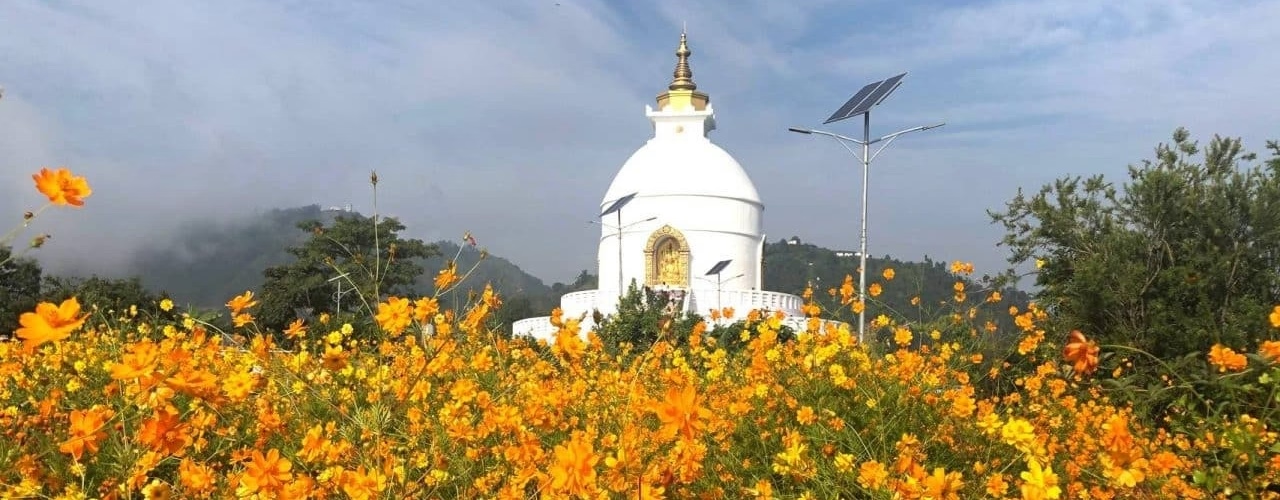
Pokhara is Nepal’s premier lakeside gateway to the Himalayas, where Phewa Lake, the Annapurna range, mountain viewpoints, adventure sports, waterfalls, caves, and cultural landmarks come together in one compact destination. The best things to do in Pokhara range from boating to Tal Barahi Temple and watching sunrise over Annapurna from Sarangkot to tandem paragliding from Mandredhunga, hiking to the World Peace Pagoda, visiting the 108-foot Pumdikot Shiva Statue, and exploring Davis Falls, Gupteshwor Cave, Mahendra Cave, and the Seti River Gorge.
The International Mountain Museum adds Himalayan mountaineering and mountain-culture context, while Begnas Lake offers a quieter alternative to busy Phewa Lake and Lakeside provides access to Nepali food, markets, cafés, trekking gear, and local communities.
A practical Pokhara itinerary takes about 3 to 4 days and works best when activities are arranged around weather, travel time, altitude, and opening hours. October, November, March, and April generally offer the clearest mountain views for Sarangkot, Phewa Lake, the World Peace Pagoda, Pumdikot, and paragliding, while the June-to-September monsoon brings heavy rain, greener landscapes, and stronger waterfalls.
Most sightseeing attractions cost little, while tandem paragliding is the main high-cost activity, making Pokhara accessible across different travel budgets. The city also serves as the starting and finishing point for major Annapurna routes, including the Annapurna Panorama, Annapurna Base Camp, and Annapurna Circuit treks, so sightseeing can be planned before or after trekking rather than treated as a separate trip.
Information Table of Best Things To Do In Pokhara
The following table lists the typical cost, time, and best season for each of the 10 experiences. Costs apply to foreign visitors in 2026 and exclude taxis.
# | Experience | Typical cost | Time | Best season |
1 | Phewa Lake boat ride | NPR 500–900 per hour (USD 4–7) | 1–3 hours | Oct–Nov, Mar–Apr (6–8 am) |
2 | Sarangkot sunrise | Nominal gate fee | 2–3 hours | Oct–Mar |
3 | Paragliding | NPR 8,500–12,000 (USD 65–90) | 30-minute flight, 2–3 hours total | Oct–Nov, Mar–Apr |
4 | World Peace Pagoda | Free (boat extra) | 3–4 hours | Oct–Mar |
5 | Davis Falls and Gupteshwor Cave | About NPR 100 each | 1.5–2 hours | Jun–Sep (falls), any time (cave) |
6 | International Mountain Museum | About NPR 750 (USD 5.60) | 1.5–2.5 hours | Year-round |
7 | Begnas Lake | Free (boat extra) | Half day | Oct–Mar |
8 | Pumdikot Shiva Statue | Free | 1–2 hours | Oct–Mar (mornings) |
9 | Mahendra Cave and Seti Gorge | NPR 100–150 per cave | 2–3 hours | Year-round |
10 | Lakeside and local culture | Free (meals extra) | Evening or half day | Year-round |
1. Enjoy a Boat Ride on Phewa Lake
A Phewa Lake boat ride costs roughly NPR 500 to 900 per hour (USD 4 to 7) with a rower, runs 1 to 3 hours, and reaches Tal Barahi Temple, the island shrine in the middle of the lake. Boats leave from the ghats along Lakeside.
Phewa Lake (also spelled Fewa) sits at 742 m elevation and ranks as the second-largest lake in Nepal; a 2019 peer-reviewed remote-sensing study in the journal Remote Sensing measured its contemporary surface area at 4.02 km² and projects the lake could lose 80% of its storage capacity within 110 to 347 years without watershed intervention. Rowers steer doongas, the brightly painted wooden boats that fill the shoreline. Self-paddled boats cost NPR 450 to 780 per hour, and kayaks run NPR 500 to 800 per hour. Hire a rower for the first ride. Rowers know the wind patterns and the quiet corners.
What Are the Best Places to See Around Phewa Lake by Boat?
The 4 best places to see by boat are Tal Barahi Temple, the Anadu Hill landing below the World Peace Pagoda, the forested southern shore, and the open water mid-lake, where Machhapuchhre mirrors on the surface.
Tal Barahi is a two-storey, pagoda-style shrine dedicated to Barahi, a form of the Hindu goddess Durga. Boats are the only access. The crossing takes 10 to 15 minutes. Shared barges charge from about NPR 150 per person, and private boats cost up to NPR 1,500. Remove shoes at the entrance, cover shoulders and knees, and expect photography limits inside.
The Anadu Hill landing sits on the far shore. A one-way boat ride plus the trail costs about USD 2 to 4 and turns the lake into the ferry for the Pagoda hike in section 4.
What most visitors overlook is the southern shore. Ask the rower to follow the tree line beneath the pagoda hill. The water stays calm there, and egrets and kingfishers work the shallows. A common mistake we see is agreeing a price per hour without confirming that the temple stop falls inside the hour. Agree the price per boat and confirm the route before pushing off.
When Is the Best Time to Enjoy a Phewa Lake Boat Ride?
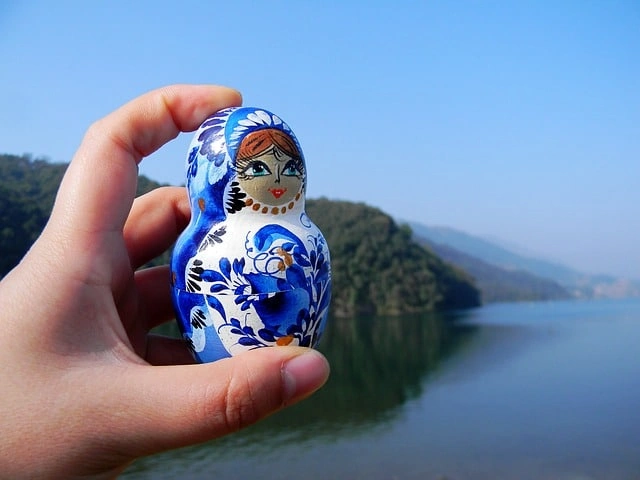
The best time for a Phewa Lake boat ride is 6:00 to 8:00 am in October, November, March, or April, when the air is still, the surface lies flat, and Machhapuchhre (6,993 m) reflects in the water.
Wind builds after 9:00 am, and ripples break the reflection. Late-afternoon rides trade the mirror effect for warm light on the shoreline hills. Photographers book the 6:15 am slot. Families prefer 3:00 pm, when the air is warm and the lake is calm.
June to September fills the lake and greens the hills, but clouds hide the peaks on most days. December to February brings the clearest skies. Mornings on the water sit near 7°C, so wear a fleece and take the life jacket the boatman offers.
2. Watch Sunrise from Sarangkot
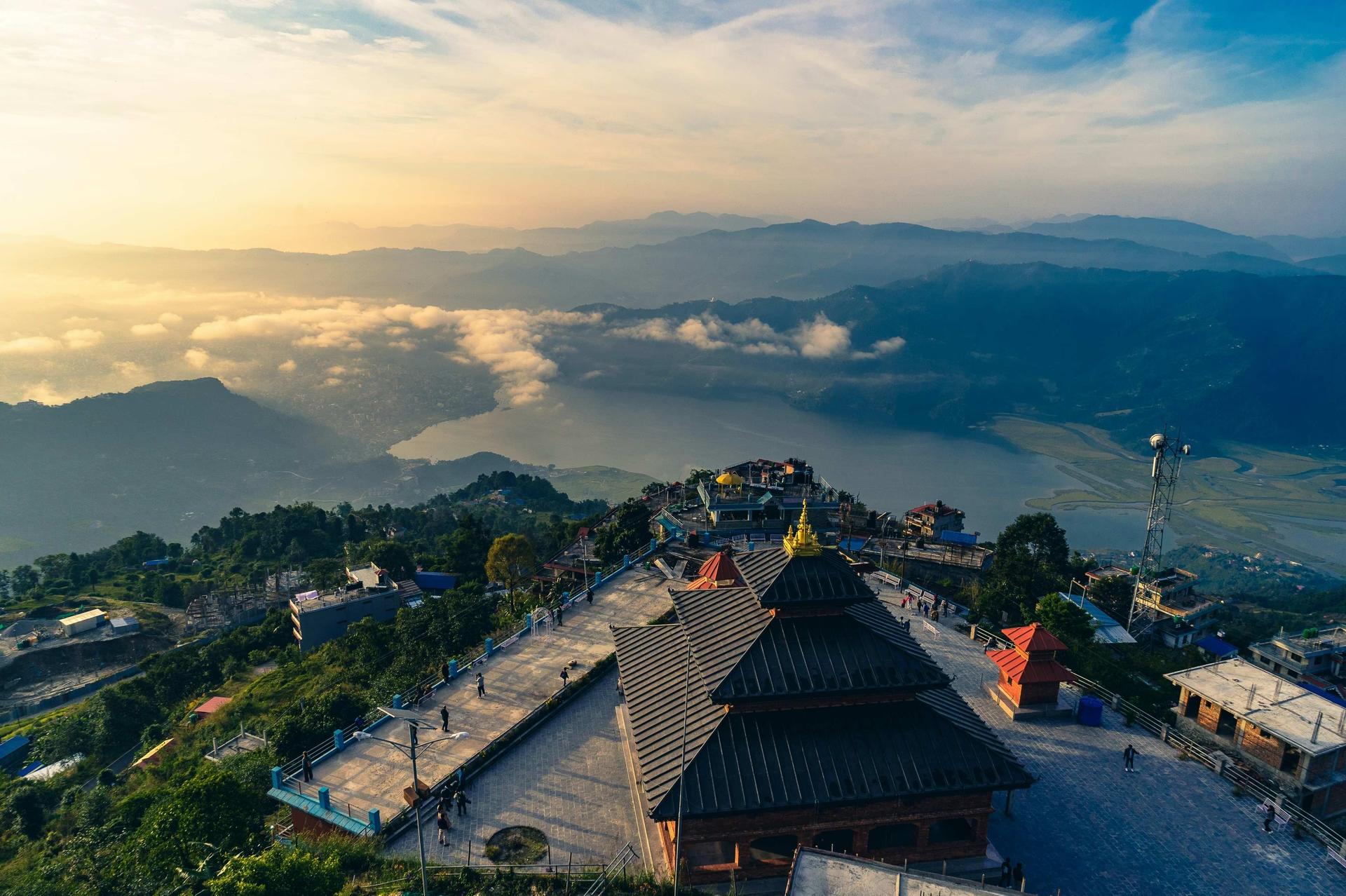
Sarangkot, a 1,592 m hilltop 25 to 40 minutes by taxi from Lakeside, offers the most reliable sunrise view of the Annapurna range. Arrive 20 minutes before dawn, which falls near 5:15 am in June and 6:50 am in December.
Sarangkot is a ridge village above Phewa Lake with a road to the top, a viewing tower, and several guesthouses. Taxis leave Lakeside between 4:30 and 5:30 am, depending on the season. The viewpoint charges a nominal entry fee.
What Makes Sarangkot One of Pokhara's Best Sunrise Viewpoints?
Sarangkot ranks among Pokhara's best sunrise viewpoints because its summit stands about 850 m above Phewa Lake, faces the full Himalayan arc from Dhaulagiri to Manaslu, and has road access to the top.
Height gives Sarangkot an unobstructed line to the north, while lower hills block the same view from the valley floor. Hikers climb from Lakeside in 3 to 4 hours, and many stay overnight in Sarangkot guesthouses to skip the pre-dawn taxi.
Crowds peak from October to November. By first light the viewing tower fills, so arrive 30 minutes early and claim a spot on the open ridge beside it. Kaskikot, a quieter hill village nearby, offers a similar panorama with fewer visitors. A common mistake we see is booking a single sunrise. Clouds decide the morning, so schedule 2 sunrises and keep the first clear one.
What Can You See From Sarangkot on a Clear Morning?
On a clear morning Sarangkot shows 5 major Himalayan peaks: Dhaulagiri (8,167 m), Annapurna I (8,091 m), Annapurna South (7,219 m), Machhapuchhre (6,993 m), and Manaslu (8,163 m), with Phewa Lake and the Pokhara valley below.
The sequence matters. Sunlight touches the summits of Annapurna and Machhapuchhre about 20 minutes before it reaches the valley, turning the snow gold, then white. From November to February, mist often fills the valley and leaves the peaks standing above a layer of cloud.
Views stay clearest between 6:00 and 8:00 am. Cloud builds by 9:30 am in most seasons. Sarangkot sits about 5°C cooler than Lakeside, so dress for 8°C in winter.
3. Go Paragliding Over Pokhara
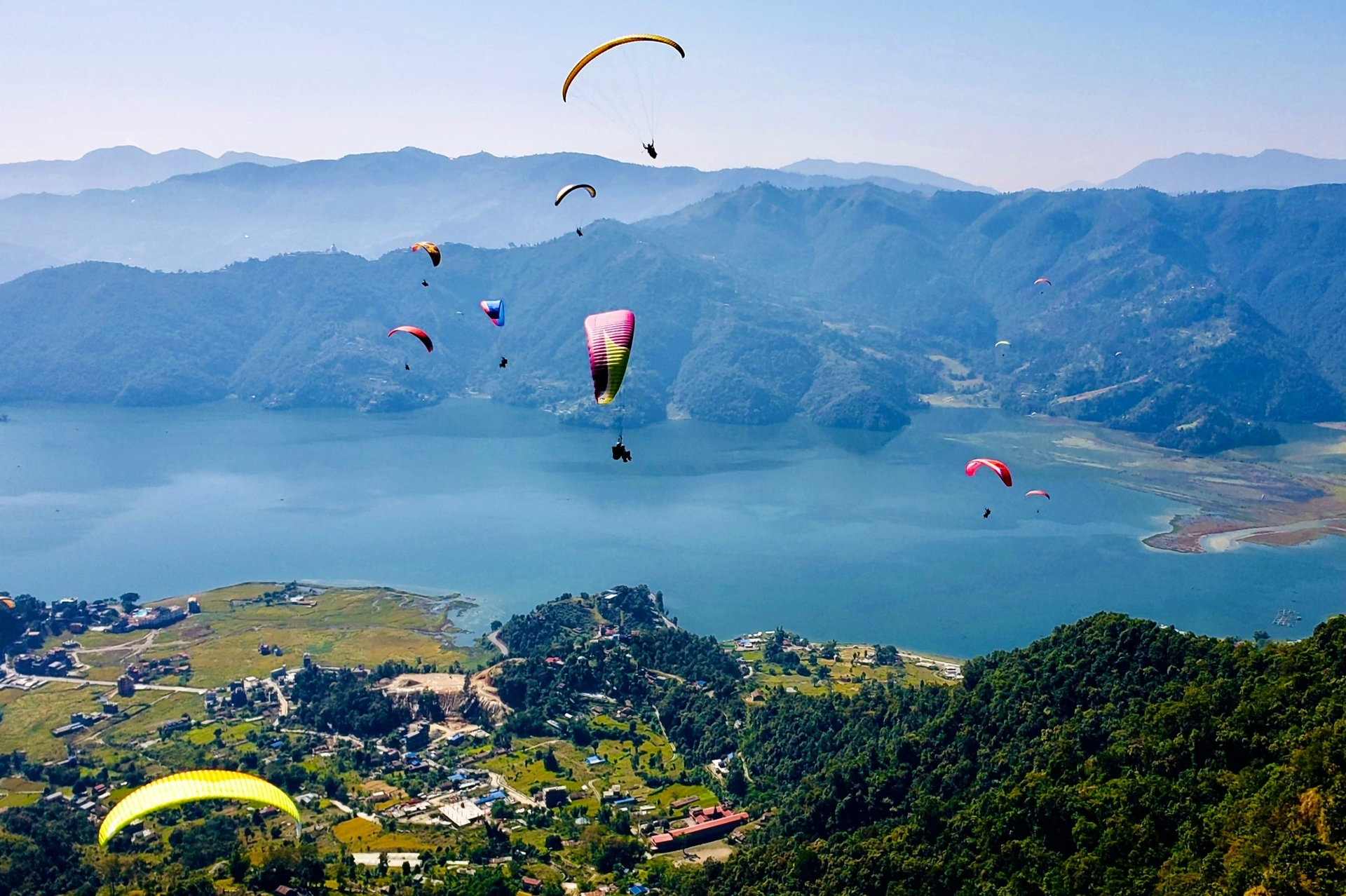
A tandem paragliding flight over Pokhara launches from Mandredhunga (1,780 m), lasts 25 to 30 minutes, and costs roughly NPR 8,500 to 12,000 (USD 65 to 90) in 2026, usually with transfers.
A tandem flight pairs one passenger with one licensed pilot under a single wing. The pilot controls takeoff, the flight path, and the landing. The passenger runs a few steps at launch, and the wing does the rest.
What Makes Pokhara a Popular Paragliding Destination?
Pokhara attracts paragliders because Mandredhunga's roughly 1,000 m drop to the valley generates reliable thermals, the Annapurna range fills the horizon, and landing zones sit near the lake just past Lakeside.
Thermals are rising columns of warm air that lift a paraglider and extend flight time. Flying windows run from about 9:00 am to 3:00 pm, with the strongest lift near midday. October, November, March, and April give the best combination of lift and visibility.
Operators sell 3 flight types. Standard tandem flights last 25 to 30 minutes. Cross-country flights last 40 to 60 minutes and cost NPR 12,000 to 13,000. Acrobatic flights add spins and cost NPR 9,000 to 10,500 for Nepali nationals and USD 90 to 110 for international visitors. Ultralight aircraft flights from Pokhara Airport, at about USD 150 to 250, suit travelers who prefer an enclosed seat.
What Should You Know Before Booking a Paragliding Flight?
Before booking a Pokhara paragliding flight, verify 5 items: the operator's government registration, the pilot's license, the wing and reserve parachute condition, your travel insurance's adventure-sport cover, and what the price includes (transfer, photos, GoPro footage).
Online resellers list the same 30-minute flight from USD 60 to USD 165. The spread reflects reseller margins rather than safety, and booking directly with a registered Pokhara operator usually costs less. Photo and video packages add roughly NPR 1,000 to 2,000.
Operators set age and weight limits, so ask before booking. Eat a light breakfast. Wear closed shoes and sunglasses. Wind and cloud cancel flights often, so never schedule paragliding on your last day in Pokhara. Many standard travel-insurance policies exclude paragliding, so confirm your cover in writing before the flight.
4. Hike to the World Peace Pagoda
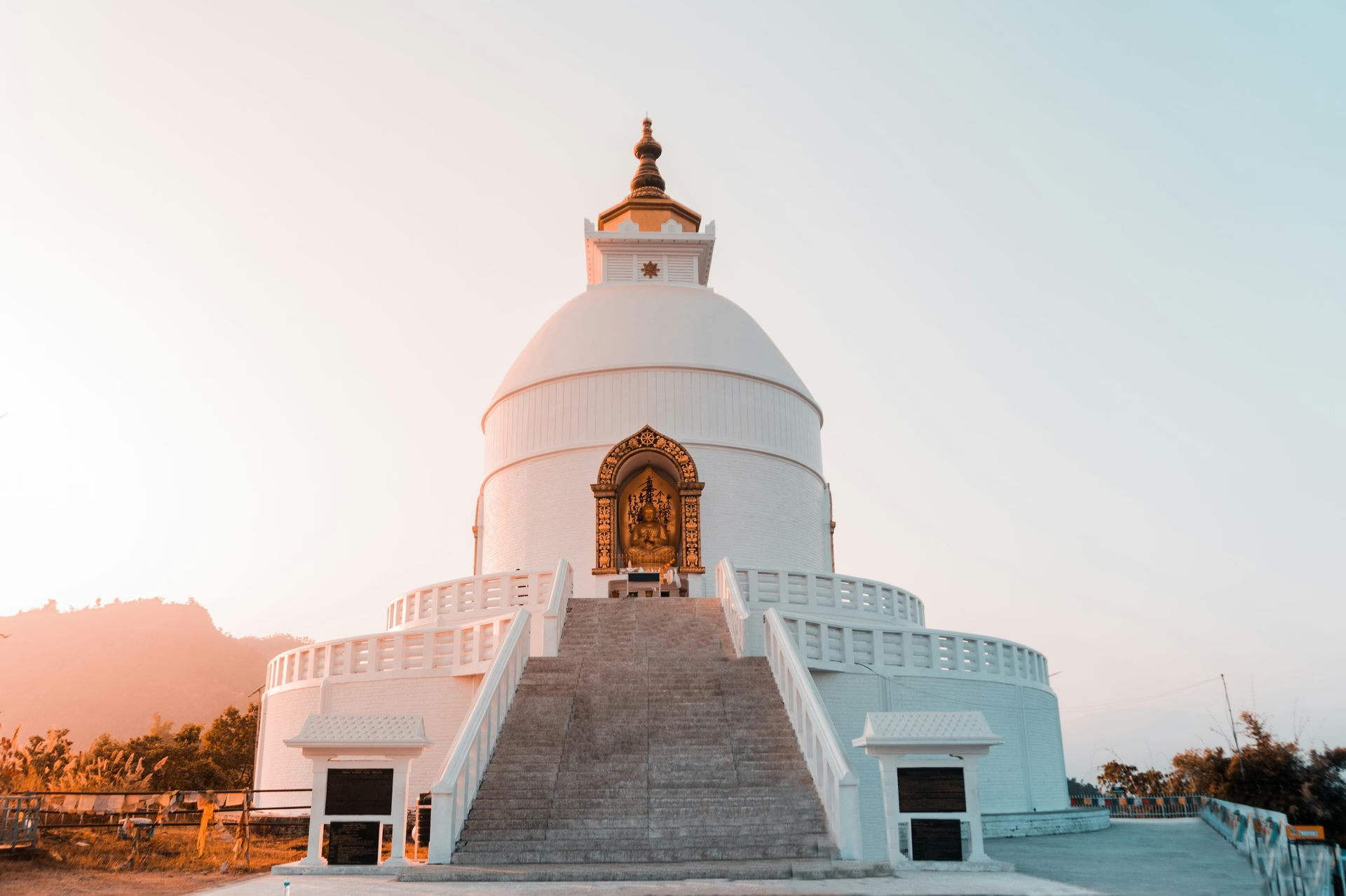
The World Peace Pagoda (Bishwa Shanti Stupa) crowns Anadu Hill, about 360 m above Phewa Lake. The hike takes 1 to 1.5 hours uphill from the lakeshore, and entry is free.
A stupa is a dome-shaped Buddhist shrine. Monks of the Japanese Nipponzan Myohoji order built this white stupa as part of a global network of peace pagodas. Four gilded Buddha statues face the four directions and mark the Buddha's birth (Lumbini), enlightenment (Bodh Gaya), first sermon (Sarnath), and passing (Kushinagar).
How Long Does the World Peace Pagoda Hike Take?
The World Peace Pagoda hike takes 1 to 1.5 hours uphill from the Anadu Hill boat landing and 45 to 60 minutes downhill. The full trip with the 20- to 30-minute boat crossing takes 3 to 4 hours.
The trail climbs stone steps through shaded forest. Start by 7:00 am to finish before the midday heat. Carry 1 liter of water and wear shoes with grip. Leeches appear on forest trails from June to September, so carry salt or repellent in the monsoon.
A road also reaches the hilltop via Chhorepatan, and a taxi from Lakeside takes about 30 minutes. For a one-way route, take the boat across, hike up, then descend by road toward Davis Falls and Gupteshwor Cave, which lie about 3.5 km from the Pagoda.
What Views Can You Enjoy From the World Peace Pagoda?
From the World Peace Pagoda you see Phewa Lake directly below, the full Pokhara valley, and the Annapurna range with Machhapuchhre (6,993 m) at its center.
The Pagoda's open terrace gives a clean 180-degree view over the lake and the city. Morning, between 6:00 and 8:00 am, shows the clearest peaks. Late afternoon gives golden light on the water and the best wide photograph of the valley.
Travelers who want more elevation continue along the ridge. Pumdikot, covered in section 8, sits roughly 400 m higher.
5. Visit Davis Falls and Gupteshwor Cave
Davis Falls and Gupteshwor Mahadev Cave face each other across Siddhartha Highway, about 140 m apart, so one visit of 1.5 to 2 hours covers both. Foreign-visitor tickets run roughly NPR 100 each in most 2026 listings.
Ticket prices vary between listings, so read the board at the counter. Davis Falls is open about 6:00 am to 6:00 pm, and the cave stays open until about 7:00 pm.
Why Is Davis Falls a Popular Attraction in Pokhara?
Davis Falls (Patale Chhango, "underworld falls") is popular because the stream drops into a narrow rock chasm and vanishes underground, a rare sight in Nepal. The falls are strongest from June to September.
The water comes from the Pardi Khola, which drains Phewa Lake. Flow depends on the lake's outlet and on monsoon rain, so in March the falls shrink to a thin stream. The name honors a Swiss visitor who reportedly drowned here in the early 1960s.
In real-world use, 30 to 45 minutes is enough at the falls. Saturday is Nepal's weekend, and domestic crowds peak that day, so visit on a weekday morning. A short walk away, the Tashi Ling Tibetan settlement runs a monastery and a carpet workshop.
What Makes Gupteshwor Cave Worth Visiting?
Gupteshwor Mahadev Cave is worth visiting because it combines a Shiva shrine, a limestone passage believed to date to the 16th century, and an underground viewpoint onto Davis Falls from below.
A spiral staircase leads to the ticket counter and the main chamber, where a Shiva lingam draws worshippers. The public section takes 30 to 45 minutes. A camera fee of about NPR 20 applies in some listings.
The steps are wet and slippery. Wear sandals or shoes with grip and use your phone torch. Skip the guides who approach at the entrance. The ticket is all you need. After the cave, climb to the viewing platform to see the falls from below, which most visitors find more dramatic than the view from the top.
6. Explore the International Mountain Museum
The International Mountain Museum documents Himalayan geology, mountain cultures, and mountaineering history. Foreign visitors pay about NPR 750 (USD 5.60), the museum opens daily from 8:30 am to 5:00 pm, and a visit takes 1.5 to 2.5 hours.
The Nepal Mountaineering Association runs the museum, which opened in 2004 on the airport side of Pokhara. The galleries cover mountain peoples, mountain geography, and mountaineering history, with outdoor displays around the grounds.
What Can You Learn About the Himalayas at the Museum?
The museum teaches 4 subjects: how the Himalaya formed, which communities live in the mountains, which plants and animals inhabit them, and who climbed the world's eight-thousanders.
An eight-thousander is a peak above 8,000 m, and 8 of the world's 14 lie wholly or partly in Nepal. The Himalaya rose from the collision of the Indian and Eurasian plates roughly 40 to 50 million years ago, and according to the U.S. Geological Survey's This Dynamic Earth publication, the range is still rising more than 1 cm a year as that collision continues. Exhibits trace that process through rock samples, relief models, and maps.
The summit history gives the museum its depth. On 3 June 1950, Maurice Herzog and Louis Lachenal made the first ascent of Annapurna I, the first eight-thousander ever climbed. On 29 May 1953, Edmund Hillary and Tenzing Norgay summited Everest. Galleries on Sherpa and other mountain communities show who carried the loads, cooked the meals, and fixed the ropes.
Why Is the Museum Important for Understanding Himalayan Mountaineering?
The museum is important because it presents mountaineering as a human story, from the 1950 Annapurna ascent to modern Sherpa expertise, and it explains the weather, altitude, and risk that govern every Himalayan trek.
A 2-hour visit works as a briefing before any Annapurna trek. Acute mountain sickness, also called altitude sickness, begins above roughly 2,500 m. Poon Hill sits at 3,210 m, Annapurna Base Camp at 4,130 m, and Thorong La on the Annapurna Circuit at 5,416 m. The exhibits make those numbers concrete.
Visit on a rainy afternoon, when views elsewhere vanish. Trekkers learn the most by visiting the day before they leave Pokhara.
7. Relax at Begnas Lake
Begnas Lake, about 13 km southeast of Pokhara, covers 3.28 km² at 650 m elevation and ranks as the third-largest lake in Nepal. The ride from Lakeside takes 30 to 45 minutes, and a half day covers boating, a view tower, and a fresh-fish lunch.
Begnas is the second-largest of the lakes in the Pokhara valley after Phewa. A ridge separates it from neighboring Rupa Lake (1.35 km², 600 m elevation). The area stays quiet on weekdays and attracts local families on weekends.
What Activities Can You Enjoy Around Begnas Lake?
Begnas Lake offers 5 main activities: rowing-boat rides, a fresh-fish lunch at Majhikuna, the Sundari Danda view tower walk, birdwatching at Rupa Lake, and the Thulokote hill hike.
Boating is the most popular activity, and rowers wait at the Majhikuna shore. Cage fisheries on the lake supply the fried fish served in Majhikuna restaurants, a local favorite. From the shore, Sundari Danda View Tower is a 15-minute walk and shows both Begnas and Rupa lakes.
Thulokote requires a longer commitment, with about 3 hours up and 2 hours down. Clear mornings reveal the lakes and the Himalaya from the top. Birdwatchers head to Rupa Lake, where waterbirds gather.
How Does Begnas Lake Compare With Phewa Lake?
Begnas Lake is quieter, smaller, and farther from Lakeside than Phewa Lake, while Phewa offers stronger mountain views, the island temple, and easier access.
The following table compares the 2 lakes by area, elevation, distance, atmosphere, and best use.
Feature | Phewa Lake | Begnas Lake |
Surface area | 5.7 km² | 3.28 km² |
Elevation | 742 m | 650 m |
Distance from Lakeside | Lake edge | About 13 km (30–45 minutes) |
Atmosphere | Busy tourist hub | Quiet, local, rural |
Mountain views | Annapurna range, about 28 km away | Partial views from ridges and Sundari Danda |
Best for | Temple, sunrise reflections, Pagoda ferry | Relaxation, fresh fish, birdwatching |
Phewa wins on views and convenience, and Begnas wins on calm. Trekkers who finish the Annapurna Circuit often choose Begnas as a recovery day, because it asks for nothing more than a boat, a meal, and a seat by the water.
8. Visit Pumdikot Shiva Statue
The Pumdikot Shiva Statue stands 108 feet tall, a 51-foot Shiva on a 57-foot base, at 1,500 m elevation. Completed in 2021, it ranks as the second-tallest Shiva statue in Nepal, and most 2026 visitor reports list free entry.
The Kailashnath Mahadev statue at Sanga holds the title of tallest at 143 feet. At Pumdikot, 108 Shiva lingas encircle the base, and the number 108 carries sacred weight in Hindu and Buddhist tradition. The statue lies above the World Peace Pagoda on the same ridge.
What Can You See From Pumdikot Hill?
From Pumdikot Hill you see the Annapurna range, Machhapuchhre, Phewa Lake, and the entire Pokhara valley from 1,500 m, plus the 108 lingas and the 108-step stairway at the statue's base.
The hill gives the highest vantage in this guide that a taxi reaches. Visitors report about NPR 1,800 for a round trip from Lakeside. Hikers can also continue from the Pagoda, a climb of 40 to 50 minutes. Heaven Himalaya describes that route on its page for the Pumdikot View Tower and Shiva Statue.
The statue draws worshippers as well as sightseers, so dress modestly and remove shoes where signs direct. Statues and towers photograph best against clear skies, so check the morning forecast before leaving.
When Is the Best Time to Visit Pumdikot Shiva Statue?
The best time to visit Pumdikot is 6:00 to 9:00 am from October to March, when skies are clear. Maha Shivaratri, in February or March, draws the largest crowds of worshippers.
Weekday mornings stay quiet. Monsoon clouds from June to September and spring haze from April to May reduce visibility.
For a smart route, go downhill. Take a taxi to Pumdikot at dawn, walk down to the World Peace Pagoda (about 400 m of descent), and cross Phewa Lake by boat. This saves the hardest climb and links 3 sights in one morning.
9. Explore Mahendra Cave and Seti River Gorge
Mahendra Cave lies about 10 minutes by taxi from central Pokhara, and the Seti River Gorge cuts through the city center. Cave tickets cost roughly NPR 100 to 150 for foreign visitors, and a combined visit takes 2 to 3 hours.
Mahendra Cave sits in Batulechaur, north of the city. The Seti viewpoints sit in the center, so combine both with one taxi round trip.
What Makes Mahendra Cave a Unique Natural Attraction?
Mahendra Cave is a limestone cave of about 125 m with lit stalactites and stalagmites. Shepherds discovered it in the 1950s, and it is named after King Mahendra, who inaugurated it.
A stalactite hangs from the cave ceiling, and a stalagmite rises from the floor. Lighting makes the formations easy to follow. A small Shiva shrine sits near the entrance, but the cave feels more natural and less crowded than Gupteshwor. Visit between 9:00 am and 4:00 pm, when staff run the lights.
Bat Cave (Chamero Gufa) lies a 10-minute walk away along the hillside trail and carries a separate ticket of about NPR 100 to 150. Bats roost on the ceiling, so stay quiet and skip the flash. Parts of Bat Cave are narrow, so wear old clothes and shoes with grip.
What Can You Discover Along the Seti River Gorge?
According to the Nepal Tourism Board, the Seti River narrows to about 2 m wide at points while its depth reaches 20 m or more. Limestone sediment turns the water milky white, which gives the river its name ("Seti" means white).
The Seti cuts through the city and disappears underground in places. The best viewpoints are Mahendra Pul, K.I. Singh Bridge, and Prithvi Chowk Bridge, where the river rushes through a deep, narrow channel. Volume peaks from July to September.
Honest advice: visitors treat the gorge as a 20- to 40-minute stop rather than a half-day highlight. Pair it with the caves. Operators run half-day rafting trips on the Seti at Class II to III, which suit beginners and show the valley from the water.
10. Experience Lakeside and Local Culture
Lakeside (also called Baidam) is Pokhara's main tourist district along Phewa Lake's eastern shore. Spend an evening on the waterfront, a morning in the Old Bazaar, and a meal built around dal bhat, momo, or fresh lake fish.
Lakeside grew from a trekkers' camping ground into the city's hub, lined with hotels, restaurants, cafés, and gear shops. Restaurant bills add 13% VAT and often a 10% service charge, so budget for it.
What Are the Best Things to Do Around Pokhara Lakeside?
The 5 best Lakeside activities are a sunset walk on the lake promenade, a yoga or meditation class, a bicycle or e-bike ride along the shore, café-hopping on Lakeside Road, and live music at an evening bar.
Sunset on the promenade turns the lake orange and puts the Pagoda silhouette on the ridge. Yoga studios offer drop-in classes by the lake, and rental shops along the shore lease bicycles by the hour. Lakeside Road also hosts trekking-gear shops that rent down jackets and sleeping bags and sell trekking poles and maps, which makes it the right stop for last-minute trek preparation.
How Can You Experience Local Food, Markets, and Nepali Culture?

Experience local culture through 4 routes: eat Nepali dishes (dal bhat, momo, sekuwa, sel roti), walk the Old Bazaar and Bindhyabasini Temple, visit the Tibetan and Gurung communities, and learn about Gurkha history at the Gurkha Memorial Museum.
Dal bhat is lentil soup with rice and vegetable curry, usually with free refills. Our guide to Nepalese food covers more dishes worth trying across the country. Momo are steamed dumplings. Sekuwa are charcoal-grilled meat skewers, and sel roti is a ring-shaped rice bread. Majhikuna near Begnas serves the best fried lake fish.
The Old Bazaar, about 6 km from Gupteshwor Cave, keeps Newar-style brick architecture and leads to Bindhyabasini Temple. Tibetan settlements around Pokhara date to the years after 1959 and sell hand-knotted carpets. The Gurung communities of the Annapurna foothills share their culture on trails through Ghandruk village. Ask a local guide about visiting a homestay.
How Can You Experience the Best of Pokhara With Heaven Himalaya?
Plan your Pokhara days with Heaven Himalaya.
Heaven Himalaya is a trekking agency that builds Pokhara sightseeing into its Annapurna itineraries. Travelers short on time can join our Pokhara city day tour to see the main sights in one day. We arrange the sunrise taxi, the paragliding transfer, and the Pagoda boat crossing, and we sequence them around your weather window and fitness.
Pokhara rewards flexibility more than speed. Weather decides which sunrise, which flight, and which view works, and a local team re-plans each morning. Our guides recommend 1 buffer day for every 3 sightseeing days, and they place the highest-weather-risk activities, paragliding and Sarangkot, first, so a cancelled day leaves room to try again.
Can Heaven Himalaya Help You Combine Pokhara Sightseeing With Himalayan Trekking?

Yes. Heaven Himalaya combines Pokhara sightseeing with treks that start and end in Pokhara, including the 10-day Annapurna Panorama Trek, the 6-day Short Annapurna Base Camp Trek, and the 15-day Annapurna Circuit Trek.
The Annapurna Panorama Trek climbs to Poon Hill (3,210 m), passes through Ghandruk (2,012 m), and returns to Pokhara on day 8. The Short Annapurna Base Camp Trek flies to Pokhara, drives to Jhinu Danda, and finishes with a drive back on day 6. The Annapurna Circuit Trek crosses Thorong La (5,416 m) and ends in Pokhara.
The sequencing logic is simple. Visit the International Mountain Museum and the Lakeside gear shops before the trek. Take the boat ride, the Begnas rest day, and the paragliding flight after it. A paragliding landing can cause a sprain, and a sprain before a trek costs more than a sprain after one. Explore the full range of Annapurna trekking packages when you are ready to match a trek to your Pokhara days.
What Are the Key Takeaways About the Best Things to Do in Pokhara?
The best things to do in Pokhara fall into 3 groups: lake and viewpoint experiences (Phewa boat ride, Sarangkot, World Peace Pagoda, Pumdikot), adventure and nature (paragliding, Begnas Lake, Mahendra Cave, Seti Gorge), and culture and learning (Davis Falls with Gupteshwor Cave, the International Mountain Museum, Lakeside).
Only paragliding costs more than NPR 1,000 per person. The other 9 experiences total under USD 20 in tickets. A 3-day plan puts this into order:
Start Day 1 with a 6:30 am boat ride, hike to the World Peace Pagoda, and finish at Davis Falls and Gupteshwor Cave.
Rise early on Day 2 for Sarangkot, fly in the late morning, and visit the International Mountain Museum in the afternoon.
Drive to Pumdikot on Day 3, walk down to the Pagoda, then choose Begnas Lake or Mahendra Cave with the Seti Gorge.
Close each evening in Lakeside with dal bhat, momo, or fresh lake fish.
The best things to do in Pokhara reward early starts, a weather buffer, and local guidance, and they pair naturally with the Annapurna treks that begin in the same valley.