

Top 10 Nepalese Food To Try During Nepal Visit

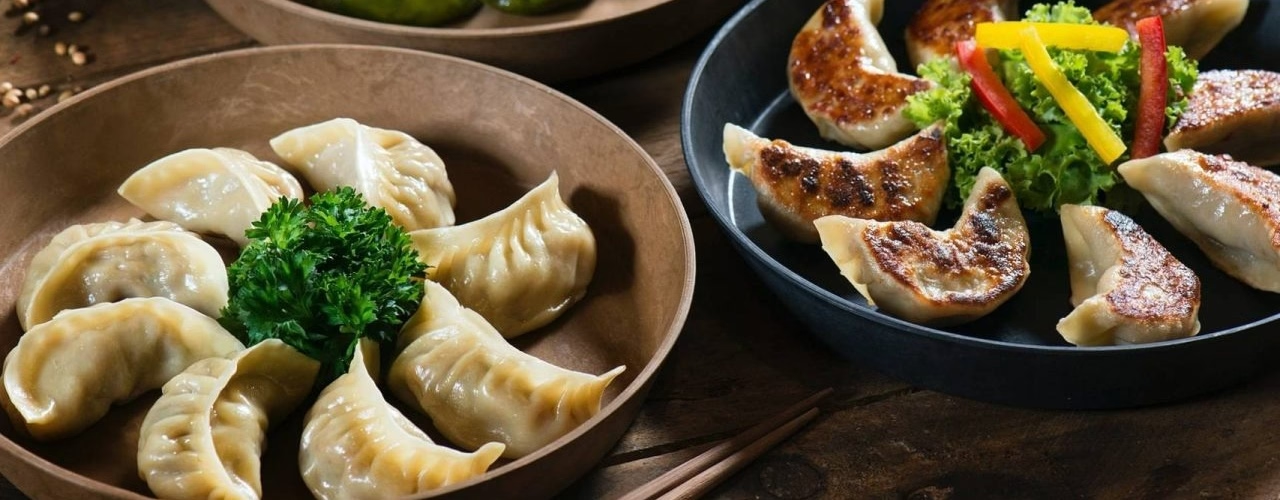
Nepalese cuisine reflects the country’s diverse ethnic communities, Himalayan landscapes, regional ingredients, and centuries-old food traditions. The top 10 Nepalese foods to try during a visit to Nepal include momo, dhido, churpi, thukpa, kwati, gudpak and pustakari, juju dhau, Thakali cuisine, Newari cuisine, and sel roti. From steamed dumplings and hearty mountain soups to fermented specialties, traditional sweets, and festival foods, each dish offers a distinctive taste of Nepal’s culinary heritage.
Exploring traditional Nepali food takes travelers from the Newari kitchens of Kathmandu Valley to Thakali restaurants in Mustang and teahouses along the Everest Base Camp and Annapurna trekking routes. This guide explains the ingredients, preparation methods, traditional accompaniments, cultural significance, and best places to try each specialty, helping visitors discover authentic Nepalese cuisine through local flavors, regional traditions, and memorable food experiences.
1. Nepalese Momo
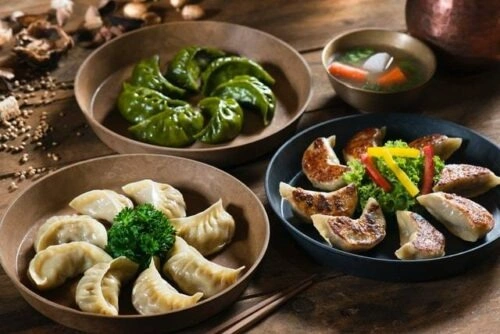
Momo is a dumpling of thin dough wrapped around seasoned filling and cooked, most often by steaming. Newar traders carried it from Tibet into the Kathmandu Valley, and Nepal has since turned it into the country's most popular street food. A plate of momo costs less than a coffee in most of Kathmandu, and it is the one dish every visitor orders by day two.
What Are the Different Types of Nepalese Momo?
Nepalese momo come in 6 main types: steamed, kothey, deep-fried, jhol, chilli (C momo), and tandoori. Each type changes the texture and the heat level. Fillings add a second layer of choice, from buff and chicken to vegetable, paneer, and yak cheese.
Steamed momo is the benchmark. The wrapper turns soft and slightly glossy, and the filling stays juicy. Kothey momo starts steamed and then gets pan-seared on one side, which gives a crisp golden base under a soft top. Deep-fried momo crisps all over. Jhol momo arrives in a warm, tangy broth of tomato, sesame, and chili. Chilli momo tosses fried dumplings with onion, capsicum, and a soy-chili sauce. Tandoori momo is marinated and roasted in a clay oven.
A mistake we see often: first-time visitors order chilli momo on day one and take it for the standard dish. It is a spicy restaurant specialty, not the default. Order steamed buff or chicken momo first, judge the kitchen on that, and then explore.
What Ingredients and Spices Make Momo Delicious?
Momo flavor comes from core ingredients and spices such as ginger, garlic, cumin, coriander, and black pepper, while timur is reserved strictly for the accompanying achar. Timur is Nepal's Sichuan-type pepper (Zanthoxylum armatum), a small dried berry that leaves a citrus tang and a light tingle on the tongue.
The wrapper is just flour and water, rolled thin. The filling mixes minced meat or chopped vegetables (cabbage, onion, spring onion, and carrot) with a measure of fat, which turns to juice during steaming. That juice defines a good momo. Buff momo tend to run juicier than chicken momo because buffalo mince carries more fat.
Eat a momo the right way: pick it up, bite a small corner, sip the hot juice, and then finish it. Biting through the middle sends the broth down your chin.
Where Can Travelers Find the Best Momo in Nepal?
The best momo in Nepal come from the Kathmandu Valley's Tibetan and Newar neighborhoods (Boudhanath, Swayambhu, and Patan), Pokhara's Lakeside, and busy teahouses on the Everest, Annapurna, and Langtang trails. Look for a shop that steams in small, fast-turning batches.
Boudhanath is the center of Kathmandu's Tibetan community, and the lanes around the stupa serve momo closer to Lhasa than to Delhi. Patan's old streets deliver Newar versions, and Thamel's good shops fill with Nepali customers at 1 pm.
On trek, momo are a lunch food. According to HimalayanHero's 2026 cost guide, a meal in Namche costs roughly $5 to $8, and the same meal in Gorakshep costs $10 to $15. Dal bhat comes with free refills and momo do not, so trekkers who eat momo at lunch and dal bhat at dinner finish the day better fueled.
What Sauces and Dips Are Traditionally Served With Momo?
Momo achar, a roasted tomato dip blended with sesame, chili, garlic, and timur, is the traditional sauce for Nepalese momo. Achar means pickle or relish in Nepali, and in momo shops it refers to a fresh, tangy dip rather than a preserved pickle.
A good achar starts with tomatoes that are roasted or boiled until soft, then ground with toasted sesame powder, dried red chili, garlic, salt, and fresh coriander. Some cooks add roasted soybean powder to thicken it. Jhol achar is the thin, soupy version poured over jhol momo.
Heat levels run high. Say "kam piro" (less spicy) when you order, and the kitchen will tone it down. Ask for the chili paste on the side and add it by the half-spoon.
2. Dhido
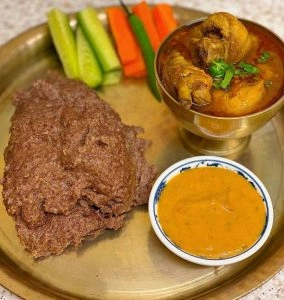
Dhido is a thick, dough-like porridge made by stirring flour into boiling water. It is the everyday staple of Nepal's hills and mountains, especially where rice grows poorly. A plate of dhido tells you more about how rural Nepal eats than any restaurant menu.
How Is Traditional Dhido Prepared and Served?
Traditional dhido is prepared by stirring flour into plain boiling water over a strong flame until the mass turns smooth, glossy, and stiff, then shaping it into a dome and topping it with ghee. The stirring takes about 10 to 15 minutes and takes real arm strength.
The cook sprinkles flour into the pot gradually and works it with a sturdy wooden paddle, pressing out lumps against the pot wall. The finished dough goes onto a plate in a smooth mound, with a dimple in the middle that holds melted ghee.
Dhido is eaten with the right hand. Pinch off a piece, press a hollow into it, scoop up dal or curry, and swallow it with minimal chewing.
What Ingredients Are Used to Make Dhido?
Dhido uses 3 base ingredients, flour, water, and salt, with ghee on top, and the flour defines the type: buckwheat, millet, maize, wheat, or barley. Each flour changes the color, the flavor, and the nutrition.
Buckwheat (phapar) gives a gray-brown dhido with a nutty taste. Finger millet (kodo) gives a dark, earthy dhido and is among the most calcium-dense cereals grown in Nepal. Maize (makai) produces a milder yellow version, wheat is common in lowland homes, and barley dominates in cold valleys such as Manaslu and Mustang.
Buckwheat, millet, and maize contain no wheat gluten, so dhido made from them suits many gluten-free diets. Wheat and barley dhido do not. Tell the cook which flour you want and confirm the pot is clean, because shared pots are common.
What Foods Are Commonly Eaten With Dhido?
Dhido is commonly eaten with dal (lentil soup), gundruk, sinki, seasonal tarkari (vegetable curry), gahat ko jhol (horse gram soup), and ghee. Meat curries of chicken, mutton, or buff join the plate in celebration meals.
Gundruk is leafy greens (mustard, radish, or cauliflower leaves) that are wilted, fermented in a jar, and sun-dried; it tastes sour and savory at once. Sinki applies the same logic to radish taproots. Both preserved vegetables through Himalayan winters long before refrigeration.
Gahat ko jhol, a thin soup of horse gram (a small brown legume), is the classic winter partner. Rural families say it chases off cold, and the combination of hot soup and heavy dough works in a 3,000 m village at dawn.
Order dhido when you arrive at a teahouse, not at dinner. Cooks make it to order, and it takes longer than rice.
Where Can Visitors Try Authentic Dhido in Nepal?
Authentic dhido is served in Thakali kitchens in Kathmandu and Pokhara, in village lodges across Mustang, the Annapurna Circuit, and Manaslu, and in homestays in the Karnali and far-western hills. Kathmandu restaurants that serve a set "khana" menu also stock it.
The most reliable option is a Thakali restaurant, because the Thakali community treats dhido as a point of pride. In the mountains, order it in the lodges of Jomsom, Marpha, and Tukuche in the Thak Khola valley.
Trail note: Teahouses on the Manaslu Circuit Trek route, from Samagaon to Samdo, cook with barley, buckwheat, and potatoes grown in the valley. Ask the lodge a day ahead and the kitchen will prepare dhido for dinner.
3. Churpi
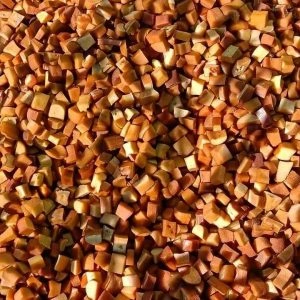
Churpi (also spelled chhurpi) is the Himalayan cheese of Nepal. Herders make it from the milk of yaks, chauri (a yak-cow hybrid), or cows, and it exists in 2 forms: soft and hard. It sits on every Himalayan trading table and in most trekkers' pockets by the end of a trek.
How Is Himalayan Churpi Made From Yak or Cow Milk?
Himalayan churpi is made by churning milk into butter, heating the leftover buttermilk until curds separate, draining the curds in cloth, pressing them, and drying them. Nothing from the churn goes to waste.
Yak milk carries roughly twice the fat of cow's milk. A female yak is called a nak, and herders milk naks at summer pastures above 4,000 m. After churning the butter, they warm the buttermilk until it splits into curds and whey, drain the curds in a cloth bag for several hours, and press them into blocks.
Soft churpi stops here. Hard churpi continues: the blocks are cut into small pieces, strung on thread, and dried in air and smoke for several weeks until they harden to a stone-like texture.
What Is the Difference Between Soft and Hard Churpi?
Soft churpi is fresh, moist, crumbly, and tangy, and cooks into curries within days; hard churpi is dried until rock-hard and chewed slowly as a snack. The 2 types serve different purposes in the Himalayan kitchen.
Soft churpi works like paneer with a sharper flavor. Cooks fry it with chili and tomato for churpi ko tarkari or crumble it into soups. It spoils fast, so it rarely travels far from the village.
Hard churpi lasts for months, and a single piece can last hours in the mouth, which earns it the trekkers' nickname "Himalayan chewing gum." It can also crack a tooth, so soften a piece in your mouth for a minute or drop it into a mug of hot tea.
Why Is Churpi a Popular Snack Among Himalayan Communities?
Churpi is popular because it concentrates milk protein into a snack that survives weeks without refrigeration and carries easily on a high-altitude walk. For herding communities, it is food, trade good, and gift in one.
Sherpa, Tamang, Lhomi, and Manangi families make churpi each summer, sell the surplus in weekly markets, and keep the rest for winter. Protein matters at altitude, where appetite drops and meat is scarce.
The Kyanjin Gompa cheese factory in Langtang, set up with Swiss assistance in the mid-1950s, still turns local yak and chauri milk into cheese, and it is the best place on trek to see the chain from pasture to plate.
Trail note: The Langtang Valley Trekking route ends its climb at Kyanjin Gompa, so the cheese factory sits on the itinerary itself, and a rest day there leaves time to visit it.
Where Can Travelers Buy Authentic Churpi in Nepal?
Travelers buy authentic churpi in Himalayan markets such as Namche Bazaar's Saturday market and Kyanjin Gompa, and in Kathmandu at Thamel shops, Boudhanath stalls, and supermarkets. Hard churpi is sold on strings; soft churpi is sold fresh by weight.
Authentic churpi has an irregular, hand-cut shape and a smoky-sour smell. Ask the seller which valley it comes from and which milk it uses; honest sellers answer immediately.
Check your home country's customs rules before packing it. Many countries restrict dairy imports, and some require a declaration even for dried cheese.
4. Nepalese Thukpa
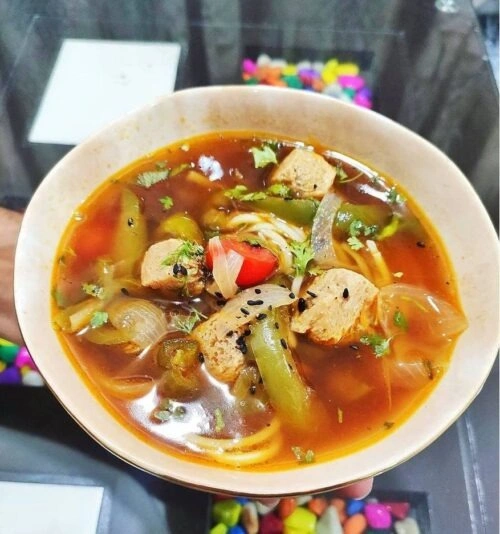
Thukpa is a Tibetan-style noodle soup of broth, noodles, vegetables, and often meat. Tibetan and Sherpa communities brought it south over the passes, and it is now the default cold-weather lunch across Nepal, from Kathmandu's Boudhanath lanes to a lodge at 4,400 m.
What Ingredients Make Traditional Nepalese Thukpa?
Traditional Nepalese thukpa uses 5 building blocks: wheat noodles, a bone or vegetable broth, vegetables, ginger and garlic, and optional meat or egg. Cooks finish the bowl with chopped coriander and a spoon of chili paste.
The broth carries the dish. Kitchens simmer chicken, buff, or mutton bones for hours, or build a vegetable broth from carrot, cabbage, and radish, then season it with cumin, coriander, black pepper, and chili. Noodles go in last so they stay springy. Vegetarian thukpa is standard on trek, because meat above 3,500 m arrives by porter and stays costly.
What Are the Different Types of Thukpa in Nepal?
Nepal serves 5 common types of thukpa: thenthuk, gyathuk, vegetable thukpa, egg thukpa, and meat thukpa (buff, chicken, mutton, or yak). The first 2 differ by noodle; the last 3 differ by what swims in the broth.
Thenthuk uses hand-pulled flat noodles torn from dough straight into the pot, which come out thick and chewy. Gyathuk uses thin, long Chinese-style noodles (gya means Chinese in Tibetan) in a cleaner broth. Vegetable thukpa is the trekker's workhorse, egg thukpa ribbons a beaten egg through the broth, and meat thukpa is the Kathmandu street version.
How Does Himalayan Thukpa Help Warm Travelers in Cold Weather?
Himalayan thukpa warms travelers by delivering heat, fluid, salt, and carbohydrates in one bowl that is easy to eat at altitude. At 4,000 m and above, appetite drops and dry rice becomes hard to finish. Soup goes down more easily.
Overnight temperatures at Gorakshep (5,164 m) fall below freezing in every trekking season, and the cold makes your body burn more fuel. Thin, dry air also strips fluid from the body. A bowl of hot, salty broth replaces both.
Garlic soup holds a strong reputation on the trail as an altitude remedy, but no clinical trial confirms it prevents altitude sickness. According to the CDC Yellow Book’s 2026 altitude-illness guidance, trekkers above 3,000 m should gain no more than 500 m of sleeping altitude per night, with an extra acclimatization day for every further 1,000 m climbed.
Where Can Trekkers Enjoy Thukpa Along Nepal's Trekking Routes?
Trekkers enjoy thukpa in nearly every teahouse on the Everest Base Camp, Annapurna, Langtang, and Manaslu routes, with the best bowls at Namche Bazaar, Manang, Kyanjin Gompa, and Samagaon. The menu appears at breakfast, lunch, and dinner.
Quality follows supply. Below 3,500 m, bowls arrive with fresh carrot, cabbage, and greens. Above 4,000 m, porters and yaks carry in most supplies, so the noodles dominate.
Trail note: The Everest Base Camp Trek passes through Namche Bazaar, Tengboche, and Dingboche, 3 villages where thukpa is on every lodge menu. Our guides pick lodges partly by the quality of the kitchen.
5. Kwati
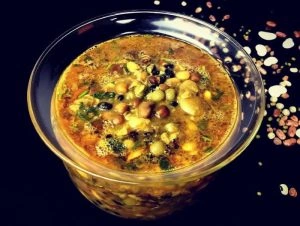
Kwati (also kwanti) is a hot soup of mixed sprouted beans from the Newar community of the Kathmandu Valley. The name comes from Nepal Bhasa: kwa means hot and ti means soup. It is the signature food of one festival, Janai Purnima, and one of the most nutritious dishes in Nepal.
Which Nine Beans and Sprouts Are Used to Prepare Kwati?
Kwati uses 9 traditional sprouted beans and pulses: black gram, green gram, chickpea, field bean, soybean, field pea, garden pea, rice bean, and lentil. Households swap 1 or 2 of the 9 depending on the market and the family recipe.
How Is Traditional Kwati Cooked and Seasoned?
Traditional kwati is cooked by soaking the beans overnight, sprouting them for 2 to 4 days in a damp cloth, boiling them with ginger, garlic, and turmeric, and finishing with a tempering of ghee, cumin, and ajwain. The sprouting is the slow part; the cooking takes under an hour.
The sprouts are ready when the tails reach about 1 to 2 cm; longer sprouting turns the beans bitter. Boiling takes 30 to 45 minutes. The final tarka (tempering) goes in at the end: ghee heated with cumin seeds, ajwain (jwano), dried chili, and sometimes fenugreek. Fresh coriander tops the bowl.
Safety notes matter for travelers. The FDA’s 2022 sprout safety guidance links raw sprouts to 52 reported U.S. foodborne-illness outbreaks and over 2,700 illnesses between 1996 and 2020, which is why kwati recipes call for the beans to be well-cooked before eating. Skip raw sprout salads on trek; eat the boiled kind.
Kwati is served with steamed rice or chiura (beaten rice), plus a pickle on the side.
Why Is Kwati Traditionally Eaten During Janai Purnima?
Kwati is eaten during Janai Purnima because the festival falls on the full moon of Shrawan, in the damp end of the monsoon, when sprouted beans supply protein and warmth. Newars call the day Gunhi Punhi or Kwati Punhi.
The Nepal government’s official 2083 BS holiday notice confirms Janai Purnima (Rakshya Bandhan) as a national holiday on Friday, 28 August 2026, and Nepalis marked it by worshipping Shiva, changing the sacred thread (janai), tying yellow and red threads around the wrist, and eating kwati. The next Janai Purnima falls on 18 August 2027.
The logic behind the dish is seasonal. Shrawan sits between the main crops, fresh greens are limited, and the weather turns cool and wet. Sprouting raises the digestibility of stored beans, so tradition and nutrition point the same way.
Where Can Visitors Taste Authentic Kwati in Nepal?
Visitors taste authentic kwati in Newar homes and Newari restaurants of the Kathmandu Valley, especially in Patan and Bhaktapur during Janai Purnima week. Many Newari restaurants list it year-round, but the festival version is the freshest.
Ask for kwati by name at a Newari restaurant in Patan or Bhaktapur, and request the plain version with rice first. Kwati rarely appears on trekking teahouse menus, so plan to eat it in the Valley before or after your trek.
6. Gudpak and Pustakari
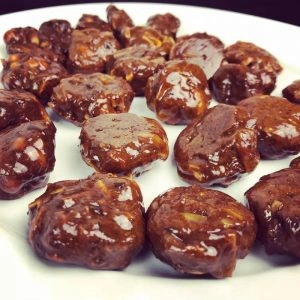
Gudpak and pustakari are 2 traditional Nepalese sweets built on jaggery (gud), ghee, and milk. Both are dense, brown, rich, and far less sugary than a candy bar. Jaggery is unrefined cane sugar, and its caramel-molasses flavor defines both sweets.
What Ingredients Are Used to Make Gudpak?
Gudpak is made from khuwa (reduced milk solids), jaggery, ghee, nuts, dried fruit, and warm spices such as cardamom, cinnamon, and clove. The name joins gud (jaggery) with pak, a portion of cooked sweet.
According to Onlinekhabar's feature on the sweet, makers cook milk, khuwa, ghee, and dried fruits together in a deep pan, then add almonds, cashews, pistachios, coconut, dates, and fox nuts (makhana), with raisins and watermelon seeds on top. Khuwa is cow or buffalo milk simmered for hours until most of the water evaporates.
A variant called sutkeri gudpak adds medicinal herb blends and is made for new mothers. The best gudpak is soft, gooey, and creamy.
How Is Traditional Pustakari Prepared From Jaggery?
Traditional pustakari is prepared by melting jaggery with ghee and milk, cooking the mix until it thickens and pulls from the pan, pressing it into a tray, and cutting it into rectangles topped with coconut, dates, or nuts. The result is a firm, chewy, dark-brown candy.
Cooks stir constantly in a heavy pan, because jaggery scorches fast. The ghee softens the sweetness, so pustakari tastes less sugary than its color suggests.
Families make pustakari at home during Dashain and Tihar and offer it to guests as a welcome. The Tihar festival runs from 6 to 11 November 2026, with Laxmi Puja on 8 November, so sweet-shop trays are full right now.
What Is the Difference Between Gudpak and Pustakari?
Gudpak is soft, creamy, and khuwa-based, while pustakari is firm, chewy, and jaggery-based. The two share ingredients and differ mainly in texture, which comes from how long each is cooked and how much milk it holds.
The following table compares the 2 sweets by base, texture, sweetness, shape, and typical use.
Feature | Gudpak | Pustakari |
Main base | Khuwa (milk solids) | Jaggery with ghee and milk |
Texture | Soft, gooey, moist, creamy | Firm, dense, chewy |
Sweetness | Rich, medium | Mild, ghee-softened |
Shape | Spooned or cut into soft blocks | Cut into flat rectangles |
Typical use | Everyday sweet, new-mother tonic (sutkeri) | Dashain and Tihar offering, guest welcome |
Where Can Travelers Buy These Traditional Nepalese Sweets?
Travelers buy gudpak and pustakari in mithai pasal (sweet shops) across Kathmandu, with a concentration around New Road, and in market stalls throughout the Terai and Pokhara. Both are sold by weight.
Pick a shop with fast turnover, and ask for a taste of a cut piece. Fresh gudpak is soft and brown; dry, crumbly gudpak is old. Pack both in airtight boxes. Because they contain milk solids, check your home country's customs rules, as with churpi.
7. Juju Dhau
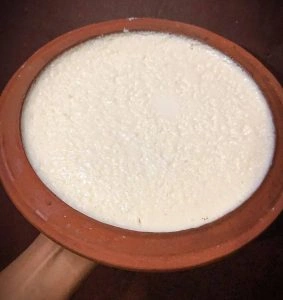
Juju dhau is a sweetened, custard-thick yogurt from Bhaktapur, set in a clay pot. Juju means king and dhau means curd in Nepal Bhasa, so the name translates to "king of curds." A 2024 Khwopa Journal study on juju dhau traces Nepal’s dairy traditions to the Licchavi era and finds that Malla-era “Dhaubhadel” curd specialists once made juju dhau exclusively for the royal court, a craft Bhaktapur’s 62 registered producers still carry on today.
What Makes Juju Dhau Different From Regular Yogurt?
Juju dhau differs from regular yogurt in 3 ways: it uses full-fat buffalo milk, it is sweetened before fermenting, and it sets inside an unglazed clay pot that absorbs moisture. The result is dense, creamy, and caramel-sweet rather than tangy and loose.
Regular Nepalese dhau is plain and sour. Juju dhau reduces buffalo milk with sugar first, which concentrates the solids. The clay pot, called a kataro, draws water from the curd as it sets, and the texture tightens into something close to baked custard. Bhaktapur's potters use a specific local black clay called Kumha Cha to shape these traditional pots.
How Is Traditional King Curd Prepared?
Traditional king curd is prepared by boiling buffalo milk with sugar, filling clay pots in several rounds, adding a spoonful of old curd as a starter, covering the pots, and letting them ferment overnight in a warm place. The process takes patience more than skill.
Makers pour the milk into each pot in 4 rounds so the pot warms evenly. A spoonful of the previous batch of curd acts as the culture. A clay lid seals the top, and by morning the surface is firm and the curd stands up to a spoon.
Why Is Juju Dhau an Important Part of Newari Culture?
Juju dhau is important to Newari culture because it closes the traditional feast, marks celebrations, and links Bhaktapur's dairy farmers to its potters. No Newar bhoj (feast) ends without a serving of curd from a clay pot.
Servers walk the feast line and ladle curd into each guest's portion. Families offer it at weddings, births, and festivals, and on Asar 15 (around 29 June), when Nepalis plant paddy and eat curd with beaten rice, juju dhau sells out across the Valley.
Where Can Visitors Taste Authentic Juju Dhau in Nepal?
Visitors taste authentic juju dhau at the shops around Bhaktapur Durbar Square and the nearby Pottery Square (Taumadhi Tol), including Sukuldhoka, home to one of the first curd shops in town. A small clay pot costs around NPR 50 (about $0.35) at local shops, and tourist-area cafés charge more.
Eat it plain from the pot with a spoon, then walk through the Pottery Square, where potters shape the same pots on open-air wheels. Dusit Princess Kathmandu serves a baked version for travelers who stay in the capital.
Bhaktapur charges foreign visitors a heritage entrance fee, so check the current rate at the gate.
8. Thakali Cuisine
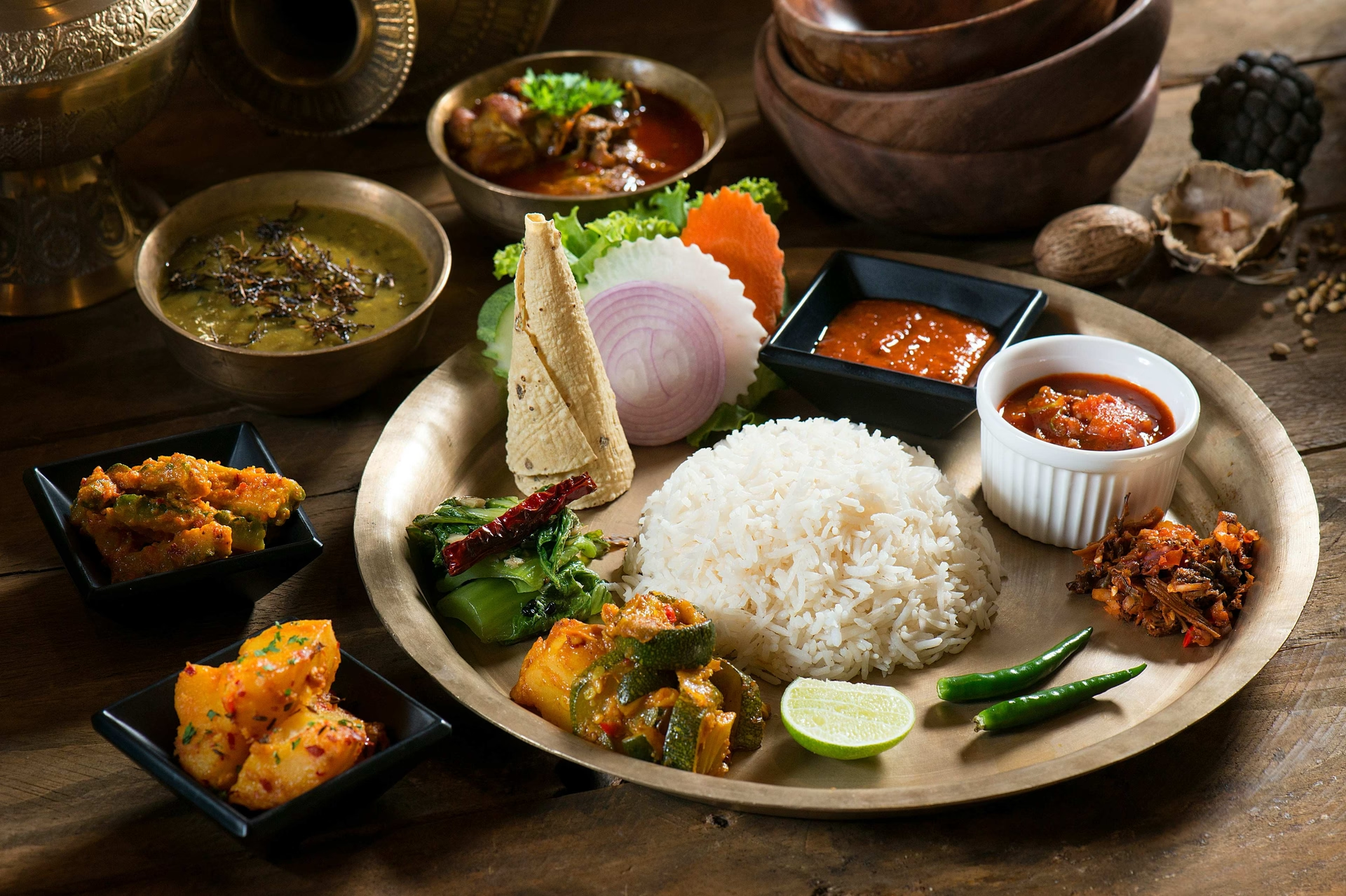
Thakali cuisine is the food of the Thakali people of the Thak Khola valley in Mustang, along the Kali Gandaki river. Thakali families run many of the lodges on the Annapurna Circuit, and their kitchens set the standard for hospitality in the mountains. A Thakali meal is the most complete single-sitting introduction to Nepalese food outside the Kathmandu Valley.
What Dishes Are Included in a Traditional Thakali Thali?
A traditional Thakali thali includes 6 parts: dhido or rice, dal, seasonal tarkari, gundruk, a tomato or timur achar, and a meat or ghee-rich side such as mutton or sukuti. Cooks serve it on a large plate with small bowls.
Dal arrives tempered with ghee and jimbu, a dried Himalayan herb that tastes like a cross between onion and chive. Tarkari changes with the season, the achar adds sour and heat, and timur adds a citrus tingle. Refills are standard practice.
How Are Dal, Bhat, Tarkari, and Dhido Served in Thakali Cuisine?
Thakali cuisine serves dal, bhat (rice), tarkari, and dhido together on one plate, with ghee poured over the dhido and the dal ladled into a bowl for dipping. Diners choose dhido or bhat as the main starch, or take both.
What Makes Thakali Cuisine Different From Other Nepalese Foods?
Thakali cuisine differs from other Nepalese foods in 4 ways: heavy use of ghee, signature Himalayan flavors (timur and jimbu), dhido as an equal partner to rice, and a hospitality tradition built around refills. The flavors are subtler and more aromatic than a standard Kathmandu dal bhat.
Mustang's climate shapes the plate: apples from Marpha, buckwheat, barley, and dried meat. The Thakali also traded along the Kali Gandaki salt route between Tibet and the plains, and that trading life led to the lodge hospitality they are known for today.
Where Can Travelers Enjoy Authentic Thakali Meals?
Travelers enjoy authentic Thakali meals at Thakali restaurants (look for the word "bhanchha," meaning kitchen) in Kathmandu and Pokhara, and in lodges in Marpha, Tukuche, Jomsom, and Kagbeni. Mustang is the source; the city restaurants carry the style.
Trail note: The Annapurna Circuit Trek walks directly through Thak Khola, and the Upper Mustang Trek begins in the same Thakali heartland. Ask your guide to book the dinner stop for a full thali.
9. Newari Cuisine
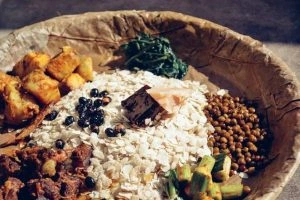
Newari cuisine is the food of the Newar people, the indigenous community of the Kathmandu Valley, and it is the most festival-driven cuisine in Nepal. Newars (who call themselves Newa) have a dish for nearly every full moon, ritual, and life event. Of all 10 foods in this guide, Newari food rewards a slow, curious meal the most.
What Are the Most Popular Traditional Newari Dishes?
The most popular traditional Newari dishes are samay baji, choila, bara, chatamari, yomari, kwati, and juju dhau. Most arrive together on a platter or in a multi-course set called a khaja set.
Samay baji is the ceremonial plate: beaten rice, grilled meat, black soybeans, ginger, a boiled egg, and pickle. Choila is spiced, grilled buffalo meat tossed with mustard oil, ginger, garlic, and chili. Order samay baji first, because it samples 5 to 7 foods in one go.
What Are Yomari, Bara, Chatamari, and Choila?
Yomari is a steamed rice-flour dumpling, bara is a lentil patty, chatamari is a rice-flour crepe, and choila is spiced grilled buffalo meat. All 4 are staples of a Newar table.
Yomari has a pointed, fig-like shape and a filling of chaku (molasses) and sesame. Newars make it for Yomari Punhi, the full-moon harvest festival, which falls on 24 December 2026. Bara is a fried black-lentil patty, plain or topped with egg or minced meat. Chatamari, nicknamed "Newari pizza," is a thin rice crepe topped with minced meat, egg, or vegetables. Choila is the spiciest of the four, so ask for it mild.
How Does Newari Cuisine Reflect Kathmandu Valley's Culture?
Newari cuisine reflects the Kathmandu Valley's culture by tying each dish to a festival, a season, and a ritual role. Food in Newar society is a calendar and a social contract at the same time.
Kwati belongs to Gunhi Punhi, yomari to Yomari Punhi, and juju dhau closes the feast. The cuisine also reflects the Valley's farming base, with rice, buffalo, lentils, and mustard oil at its center, and its trading history, which brought Tibetan momo and spices into the kitchen.
Where Can Visitors Experience Authentic Newari Food in Nepal?
Visitors experience authentic Newari food in Patan (Lalitpur), Bhaktapur, Kirtipur, and the old lanes of central Kathmandu, in small Newa restaurants and at festival tables. The best are family-run kitchens that serve a limited menu.
Look for short or handwritten menus, locals filling the tables, and a kitchen that makes bara and chatamari to order. Time your visit to a festival for the full experience: Yomari Punhi on 24 December 2026 and Janai Purnima on 18 August 2027 are the 2 clearest dates. Start with hot, freshly cooked dishes and treat raw preparations such as kachila (minced raw buffalo) with care.
10. Sel Roti
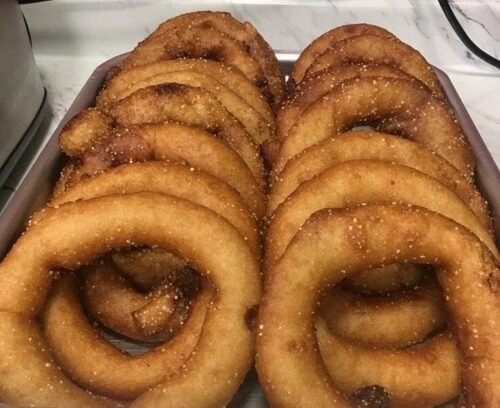
Sel roti is a ring-shaped, deep-fried bread made from rice-flour batter. Crisp at the edge and soft in the center, it is slightly sweet and lightly spiced with cardamom. It is the bread of celebrations in Nepal, and Tihar 2026, running 6 to 11 November, is its busiest week.
What Ingredients Are Used to Make Traditional Sel Roti?
Traditional sel roti uses 6 core ingredients: rice flour, sugar, ghee or oil, milk or water, ripe banana, and cardamom. Cooks add a pinch of salt and sometimes cloves or fennel.
Rice is soaked for several hours and ground to a fine flour, or bought as flour. Sugar sweetens the batter, ripe banana makes the ring tender and helps it brown, and cardamom gives the scent. The right consistency, thick but pourable, decides everything.
How Is Sel Roti Prepared From Rice Flour?
Sel roti is prepared by mixing rice flour with sugar, ghee, milk, and banana into a smooth batter, then pouring it in a circular motion into hot oil and frying each ring until golden on both sides. The pouring technique takes years to master.
Skilled cooks pour the batter through a hand-formed hole or a cloth funnel, drawing a ring directly into the oil. They lift the ring with a stick, turn it once, and drain it. Oil that is too cool soaks into the batter, and oil that is too hot browns the outside before the middle sets.
Why Is Sel Roti Popular During Nepalese Festivals and Celebrations?
Sel roti is popular at festivals because it is made in large batches, keeps for days, and carries symbolic value as an offering and a gift. Families fry it for Tihar, the Dashain festival, weddings, and bratabandha (coming-of-age) ceremonies.
During Tihar, neighbors and relatives exchange plates of sel roti and sweets. At weddings and ceremonies, a pile of sel roti sits alongside vegetable curry and pickle.
Where Can Travelers Find Freshly Made Sel Roti in Nepal?
Travelers find freshly made sel roti at sweet shops and tea stalls throughout Kathmandu and Pokhara in the morning, in family homes during Tihar, and at roadside stalls near major festival sites. It costs under $1 per piece.
Go early. Busy stalls fry their best batches in the morning, and rings run out fast during festival weeks. Eat one hot with aloo achar (spiced potato pickle) or milk tea; reheated sel roti turns chewy.
How Can Heaven Himalaya Help You Experience Nepalese Food During Your Visit?
Heaven Himalaya helps you experience Nepalese food by building food stops into custom itineraries, matching lodges to your meal preferences, and putting a local guide beside you to order, explain, and translate. The company is a Kathmandu-based trekking operator at Gitanjali Chowk, Dathu Sadak, with a 5.0 rating from 160 reviews on Tripadvisor.
Customization is the practical lever. Past clients have added extra Kathmandu days for city tours and buffer days for weather, and the same flexibility covers food. Tell the team your dietary needs, your spice tolerance, and the dishes you most want to taste, and ask for a Bhaktapur curd stop or a Patan Newari lunch.
Timing changes what you eat. Janai Purnima (18 August 2027), Tihar (6 to 11 November 2026), and Yomari Punhi (24 December 2026) each put a different dish at the center of the Valley.
Can Heaven Himalaya Introduce You to Authentic Nepalese Cuisine on a Trek?
Yes. Heaven Himalaya guides introduce trekkers to authentic Nepalese cuisine by ordering regional dishes at each stop, explaining what is on the plate, and steering you toward fresh, well-cooked meals.
On a typical trek day, the guide suggests thukpa or momo at lunch and dal bhat at dinner, books dhido a day ahead where the lodge cooks it, and points out churpi in village markets. Guides also carry basic medical supplies and adjust the pace when a stomach or the altitude objects.
Trekkers on the Annapurna Circuit Trek eat Thakali food in its home valley. Trekkers on the Manaslu Circuit Trek eat barley and buckwheat dishes in Tibetan-influenced villages. Trekkers on the Everest Base Camp Trek eat thukpa and dal bhat at 3,440 m and above.
What Are the Key Takeaways About the Top 10 Nepalese Foods to Try in Nepal?
The key takeaway is that the top 10 Nepalese foods map to places and seasons: momo and thukpa for the Valley and the trail, dhido and churpi for the mountains, kwati, juju dhau, and Newari food for the Kathmandu Valley's festivals, and gudpak, pustakari, and sel roti for celebrations. Each dish rewards a specific time and place.
Nepalese foods reward curiosity more than any other part of a trip. Start with a plate of steamed momo on day 1, finish with a clay pot of juju dhau on the last day, and fill the days between with the other 8. That is how the top 10 Nepalese foods become a travel plan rather than a list.