

Everest Base Camp Trek in November 2026: Weather & Guide

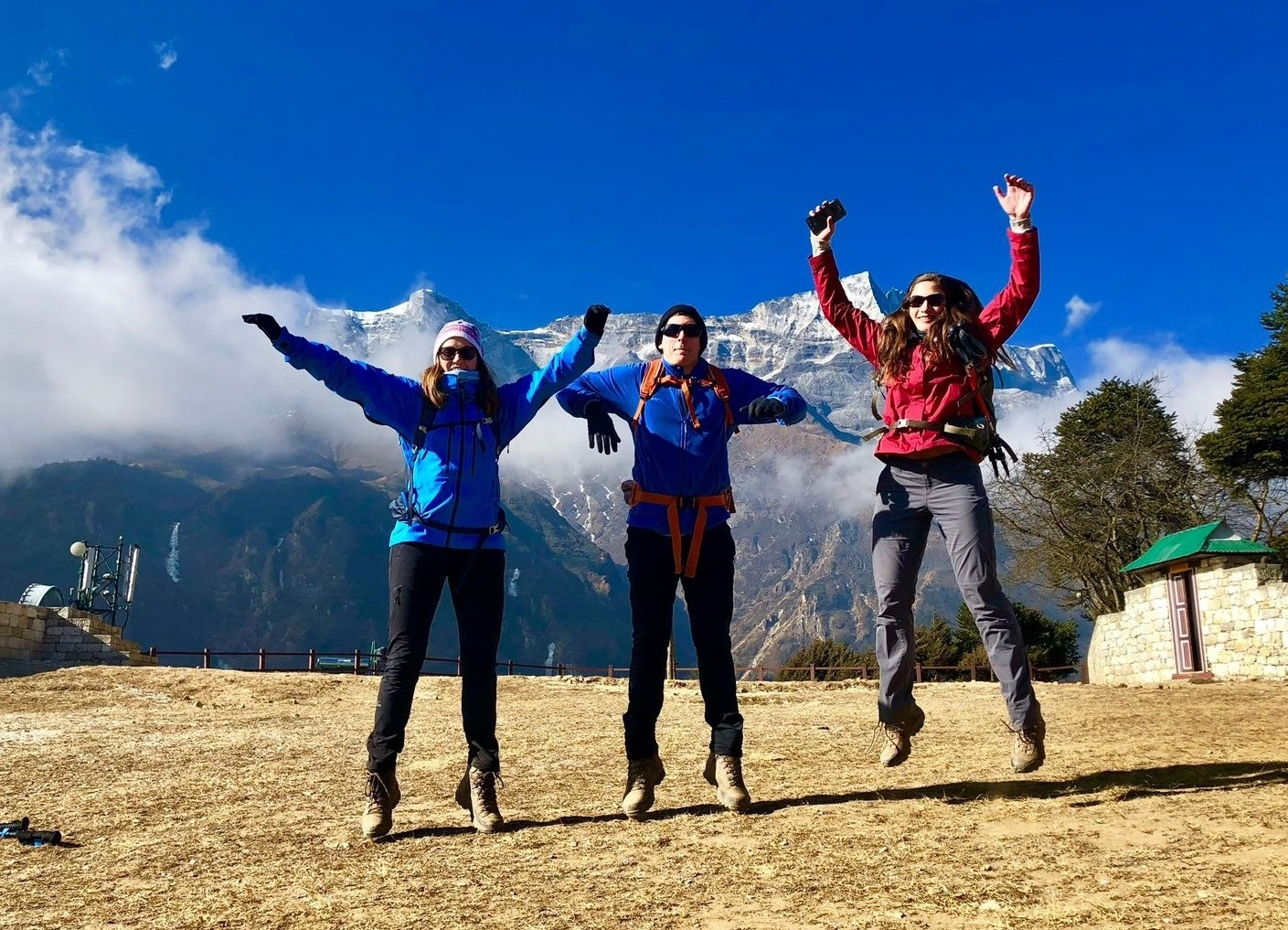
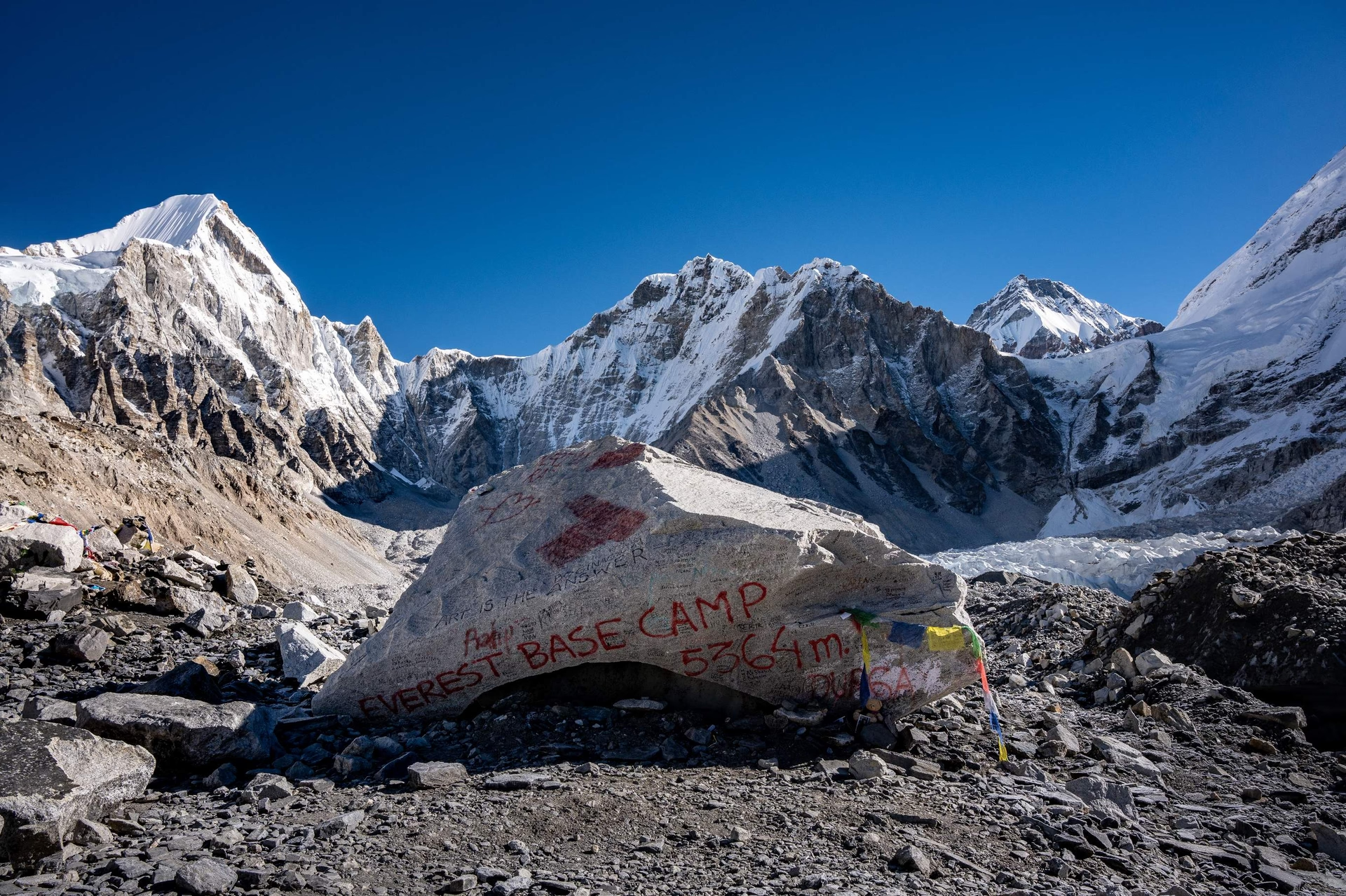
The Everest Base Camp trek in November is a high-altitude Himalayan trekking route in Nepal's Khumbu region that leads from Lukla to Everest Base Camp at 5,364 meters through Sherpa villages, alpine valleys, and some of the world's most recognizable mountain landscapes. November sits between the busy autumn trekking season and the onset of winter, giving the route a distinctive combination of stable, dry weather, low humidity, clear mountain visibility, and increasingly cold conditions at higher elevations.
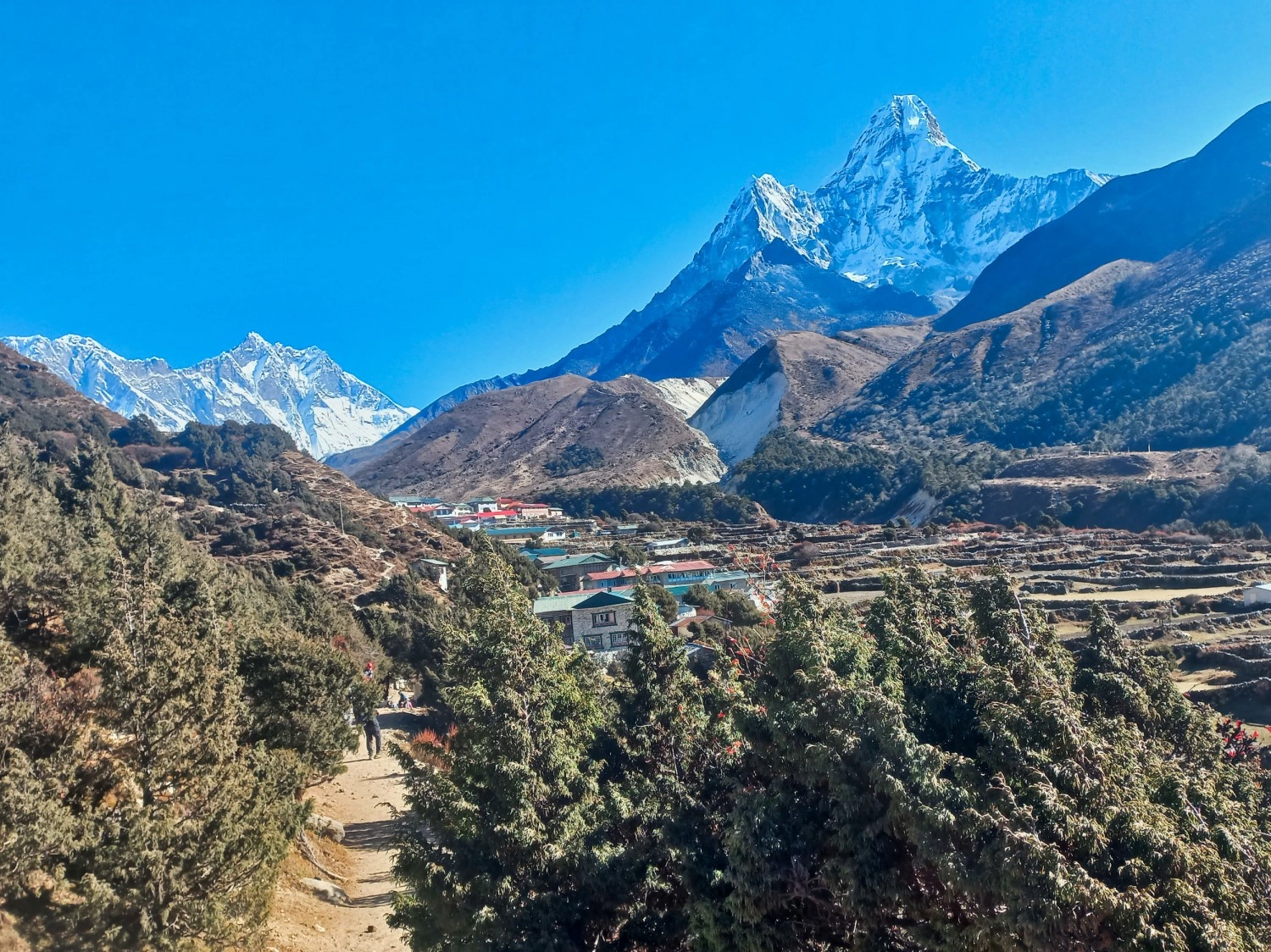
Trekkers pass through Phakding, Namche Bazaar, Tengboche, Dingboche, Lobuche, and Gorak Shep, with acclimatization hikes at Namche and Dingboche and an optional Kala Patthar ascent adding important viewpoints and altitude exposure. Clear mornings commonly reveal Everest, Lhotse, Nuptse, and Ama Dablam, while temperatures above 4,000 meters can fall sharply after sunset and create icy conditions on shaded sections of the upper trail.
Planning an Everest Base Camp trek in November requires more than choosing a departure date because elevation, temperature, daylight, trail conditions, accommodation demand, and flight logistics change throughout the month. Early November retains heavier autumn crowds and stronger lodge demand, while late November brings quieter trails, colder nights, and a greater chance of frost or light snow above 4,500 meters. A suitable itinerary normally allows 12 to 14 trekking days with two acclimatization stops, while preparation should include a -20°C-rated sleeping bag, insulated layers, trekking poles, appropriate traction for icy sections, altitude-sickness awareness, and insurance covering high-altitude evacuation.
The journey also involves Sagarmatha National Park and Khumbu Pasang Lhamu Rural Municipality permits, Lukla flight planning that may involve Manthali Airport, and a realistic budget for trekking packages, accommodation, meals, transportation, connectivity, and personal expenses. This guide brings these November-specific factors together to explain the route, weather, difficulty, gear, altitude preparation, costs, permits, flights, and practical decisions involved in reaching Everest Base Camp during the month.
What Is the Everest Base Camp Trek in November Like?
The Everest Base Camp trek in November combines stable, dry weather with the coldest temperatures of the standard trekking calendar, producing clear mountain views, firm trail conditions, and a noticeable thinning of crowds after the first two weeks. Early November trail conditions resemble peak October: busy teahouses, warm afternoon sun, and steady foot traffic on the Lukla-to-Namche section.
By the third week, nighttime temperatures at Dingboche and Gorak Shep fall into the -15°C to -20°C range, trekker numbers decline, and the trail takes on an early-winter character. Daytime trekking remains comfortable in multiple light layers through most of the month, while mornings require a warm shell until the sun clears the ridgelines.
A common misjudgment among first-time November trekkers is packing based on the mild daytime feel at lower elevations, then arriving at Dingboche or Gorak Shep without gear rated for the overnight drop. The trek's character changes more by elevation than by exact date within the month, so clothing and sleep systems matter more than picking an ideal week.
Why Do Trekkers Choose November for Everest Base Camp?
Trekkers choose November for the Everest Base Camp trek because it offers the clearest mountain visibility of the year, reliable Lukla flight operations, and dry trail conditions without the crowd peak of October. Low humidity after the monsoon keeps cloud buildup to a minimum, so afternoon views stay open longer than in October or the pre-monsoon spring season.
Flight data from recent seasons shows November and December recording the fewest weather-related Lukla disruptions of any month. Lodge rates and availability also improve in the back half of November as the main autumn surge passes, giving trekkers more room to negotiate accommodation and move at a flexible pace.
Compared with the pre-monsoon spring season trek, November avoids the dust and building afternoon haze that often cloud Everest's upper slopes. Compared with December and January, it avoids the deeper cold and reduced teahouse operations of true winter, when some high lodges close entirely.
What Weather Can You Expect on the Everest Base Camp Trek in November?
November weather on the Everest Base Camp trek is dry, stable, and increasingly cold, with daytime temperatures ranging from 10°C to 15°C at lower elevations to near freezing above 5,000 meters, and nighttime lows reaching -15°C to -20°C at Gorak Shep. Precipitation is minimal for nearly the entire month, and humidity drops sharply compared to the September monsoon tail.
The weather pattern shifts gradually: the first half of the month tracks close to October, while the final week introduces the first light snowfall of the winter season at higher elevations. October trends a few degrees warmer with slightly more cloud; December drops another 5°C to 8°C colder at altitude and sees several high lodges close for the season. The sections below break down cold, trail conditions, visibility, crowding, daylight, and route-specific effects.
How Cold Does Everest Base Camp Get in November?
Everest Base Camp and Gorak Shep reach daytime highs near or just below freezing in November, with nighttime lows commonly falling to -15°C to -20°C, dropping further as the month progresses. Lower villages stay noticeably milder: Lukla and Phakding hold daytime temperatures of 10°C to 15°C with nights rarely below -5°C. Namche Bazaar sits in between, with daytime highs around 6°C to 9°C.
The temperature drop accelerates above Dingboche (4,410m), where even midday sun offers limited warmth once wind picks up. Many teahouses and accommodations options above 4,000 meters run short of spare blankets during the busier first half of the month, making a trekker's own cold-rated sleeping bag the determining factor for sleep quality, not the lodge's bedding.
Trekkers who rely on a 3-season sleeping bag commonly report sleepless, shivering nights at Lobuche and Gorak Shep even while wearing every layer they packed; a properly rated bag solves this more reliably than stacking extra clothing inside a bag built for milder conditions.
What Are the November Trekking Conditions on the Everest Base Camp Route?
November trekking conditions are firm and dry for most of the route, with icy patches, frozen puddles, and frosted wooden bridges appearing above Lobuche (4,910m), especially before mid-morning. The lower trail from Lukla to Namche stays dusty rather than icy, since rainfall is nearly absent.
Above Dingboche, overnight frost coats exposed rock and the approach to Kala Patthar and Gorak Shep, so footing requires more attention in the first hour after sunrise than at midday. Late November occasionally brings a light dusting of snow above 4,500 meters, which rarely closes the trail but does raise the value of trekking poles and microspikes for the final two days.
The stream crossings near Dughla and the final approach to Gorak Shep freeze hardest, since both sections sit in shade for much of the morning and catch the coldest overnight air draining down from the glacier.
How Clear Are the Mountain Views on Everest Base Camp Trek in November?
Mountain views on the Everest Base Camp trek in November rank among the clearest of the year, with low humidity and minimal cloud cover producing unobstructed sightlines to Everest, Nuptse, Lhotse, and Ama Dablam on most mornings and many full days. Unlike the pre-monsoon spring season, when afternoon haze and building cumulus clouds often blur distant peaks by midday, November's dry air keeps visibility sharp well past noon on most days.
Photographers favor the month specifically for this reason: Kala Patthar sunrise views in November regularly deliver the crisp, high-contrast panoramas that define classic Everest photography. Spring visibility, by contrast, often degrades by early afternoon as rising heat builds cloud around the peaks, a pattern November's cooler, drier air largely avoids.
How Busy Is the Everest Base Camp Trail in November?
The Everest Base Camp trail stays busy through the first two weeks of November, matching EBC trek October's peak autumn crowds, then thins noticeably from mid-month onward as the main trekking season winds down. Namche Bazaar, Tengboche, and Dingboche see the highest teahouse demand during this window, and advance booking becomes important for groups traveling in the first half of the month.
Trekkers departing after November 15 encounter shorter queues at viewpoints, easier lodge negotiations, and a quieter trail overall, trading slightly colder nights for noticeably more solitude on a route that can otherwise feel crowded at peak-season bottlenecks like the Hillary Bridge and Namche's entrance gate. Groups departing after November 20 typically book Dingboche and Lobuche lodges with same-day availability, a flexibility nearly impossible to find in the first two weeks of the month.
What Are the Daylight Hours on Everest Base Camp Like in November?
Daylight on the Everest Base Camp trek in November runs from roughly 6:15 AM to 5:15 PM, giving trekkers about 11 hours of usable light that shortens by nearly 20 minutes from the start of the month to the end. Guides typically schedule departures between 6:30 and 7:30 AM to reach each day's destination before the afternoon wind picks up and temperatures fall with the sun.
Because darkness arrives quickly once the sun drops behind the ridgelines, most itineraries plan for arrival at the next teahouse no later than 3:00 PM, leaving a buffer for slower pacing at altitude. Guides commonly bring the wake-up call forward by 15 to 20 minutes compared with October departures to offset the shrinking daylight window.
How Does November Affect Everest Trail Conditions?
November affects Everest trail conditions by hardening the ground, freezing stream crossings and shaded bridge surfaces overnight, and introducing patchy ice above 4,500 meters, while keeping the lower route dry and dust-prone rather than muddy. This combination makes November one of the more predictable months for trail footing, since the absence of rain removes the slick mud common in September and early October.
The trade-off is overnight ice: water sources at Lobuche and Gorak Shep can freeze solid by early morning, so guides often carry extra bottled or thermos water to bridge the gap until the sun melts surface ice later in the day. Carrying a spare half-liter of water overnight, kept inside the sleeping bag, prevents the frustration of cracking open a frozen bottle before an early departure.
What Is the Everest Base Camp Trek Route in November?
The Everest Base Camp trek route in November follows the same classic Khumbu path used year-round, climbing from Lukla through the Dudh Koshi valley to Namche Bazaar, Tengboche, Dingboche, Lobuche, and Gorak Shep before reaching Base Camp itself at 5,364 meters. Seasonal differences affect footing and temperature rather than the path itself; no detours or route closures are specific to November.
The full round trip covers approximately 130 kilometers and gains roughly 2,500 meters of net elevation from Lukla to Base Camp. Daily walking distances range from 7 to 15 kilometers, with the shortest days scheduled around the two acclimatization stops and the longest covering the descent from Namche back to Lukla near the end of the trek.
Which Route Does the Everest Base Camp Trek Follow?
The Everest Base Camp trek follows a single main corridor: Lukla (2,840m) to Phakding (2,610m) to Namche Bazaar (3,440m) to Tengboche (3,860m) to Dingboche (4,410m) to Lobuche (4,910m) to Gorak Shep (5,181m) to Everest Base Camp (5,364m), with a side trip to Kala Patthar (5,545m) for the best panoramic views of Everest's summit.
The descent typically retraces the same corridor, though some itineraries vary the return path through Pheriche instead of Dingboche to add route variety and reduce daily elevation changes. Some itineraries branch toward Gokyo Lakes or the Three Passes before rejoining the main trail, but the standard Everest Base Camp route described here follows the direct corridor without these extensions.
What Are the Main Villages and Landmarks Along the Everest Route?
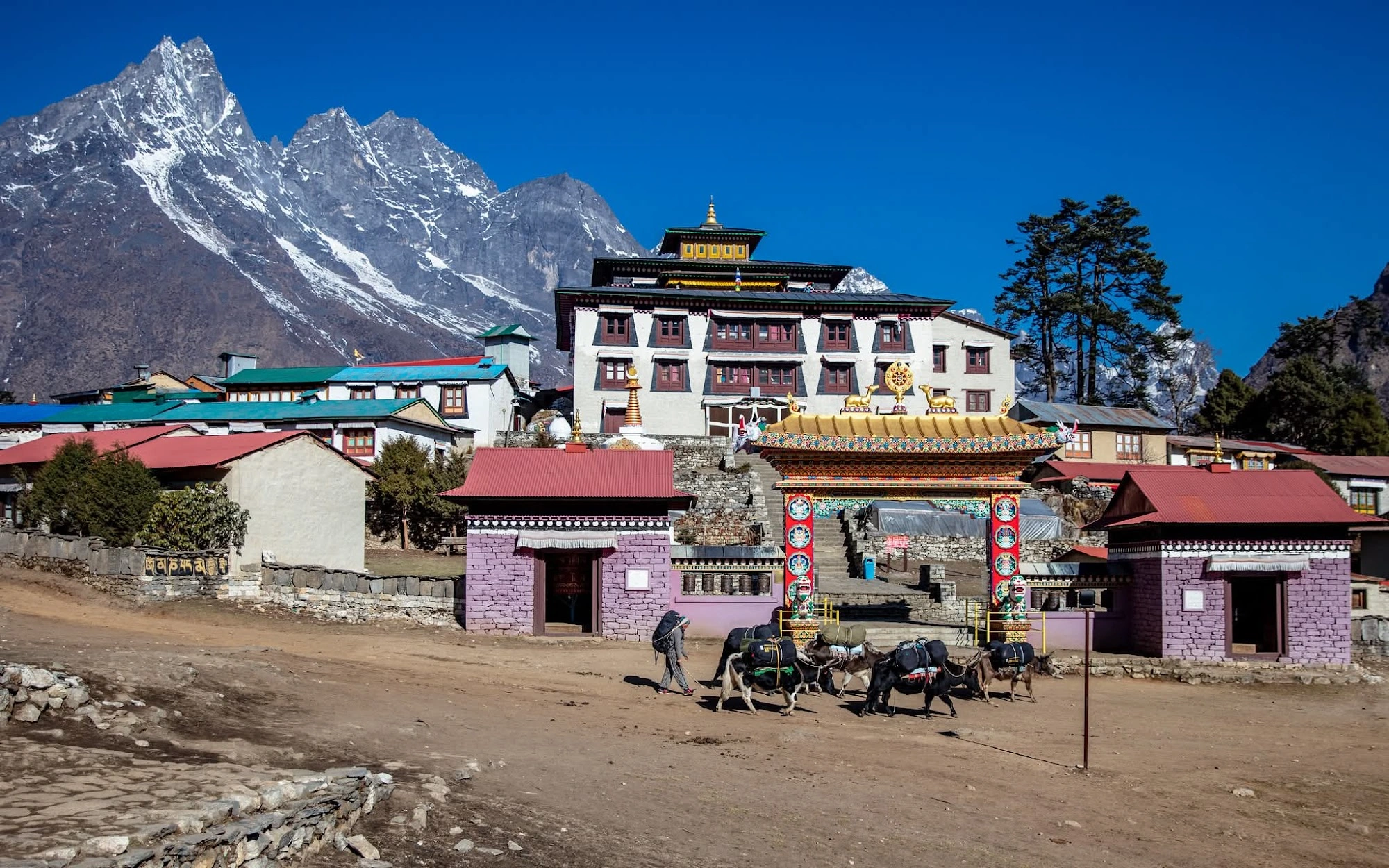
The main villages and landmarks along the Everest Base Camp route include Namche Bazaar, Tengboche Monastery, Dingboche, Lobuche, Gorak Shep, and the Khumbu Glacier, each marking a distinct stage of acclimatization and cultural exposure. Namche Bazaar functions as the Sherpa capital of the Khumbu, with a Saturday market, bakeries, and the Everest View Hotel day hike above town; its market draws traders from across the Khumbu and from Tibet, making it the one stop on the route with genuine shopping beyond trekking gear.
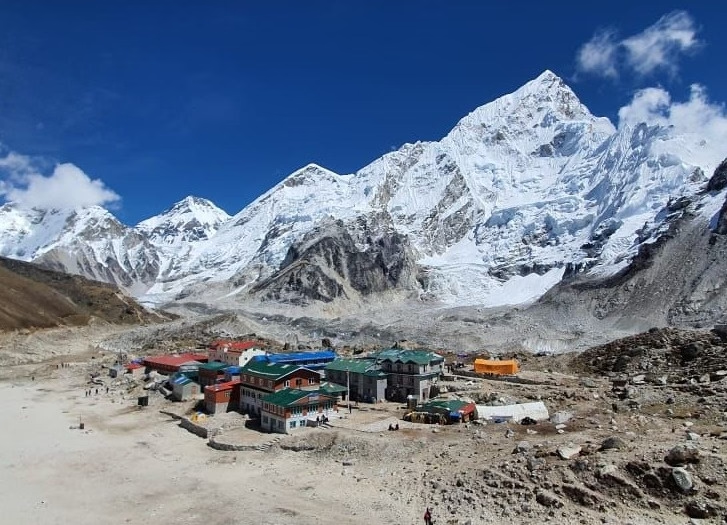
Tengboche Monastery, the largest in the region, sits at 3,860 meters with direct views of Ama Dablam. Dingboche's stone-walled barley fields mark the last substantial farming settlement before the trail turns fully alpine. Gorak Shep, the final overnight stop, sits on a dry lakebed beside the Khumbu Glacier and serves as the launch point for both Base Camp and Kala Patthar.
How Difficult Is the Everest Base Camp Trek in November?
The Everest Base Camp trek in November rates as moderately to strenuously difficult, driven primarily by altitude rather than technical terrain, with daily walking of five to seven hours over uneven but non-technical trail. No climbing equipment, ropes, or technical skill is required; the difficulty comes from sustained elevation gain, thinning oxygen above 4,000 meters, and cold temperatures that add physical strain to otherwise manageable terrain.
November's firm, dry trail surface makes footing easier than the muddy conditions of early autumn, but colder mornings mean trekkers carry more clothing weight and expend more energy maintaining body heat on the upper sections of the route. Compared with the Annapurna Circuit, the Everest Base Camp trek covers less total distance but reaches a higher maximum elevation, which shifts its primary challenge toward altitude management rather than sustained daily mileage.
How Much Altitude Gain Can You Expect During the Everest Base Camp Trek?
The Everest Base Camp trek gains approximately 2,500 meters of net elevation from Lukla (2,840m) to Base Camp (5,364m), with cumulative ascent exceeding 4,000 meters once daily undulations are included. Standard itineraries cap daily net elevation gain at 300 to 500 meters above 3,000 meters to support acclimatization, spreading the climb over eight to nine ascending days rather than compressing it.
The steepest single-day gains occur between Namche and Tengboche and between Dingboche and Lobuche, both of which fall on the two rest-day-adjacent sections of the standard itinerary for this reason. Trekkers coming from sea-level cities sometimes underestimate how much the thinning air affects pace above Dingboche, where even a gentle incline can double the effort of the same gradient at Namche.
What Should You Pack for Everest Base Camp in November?
Packing for Everest Base Camp in November requires a layering system built around a 20°C to 30°C daily temperature swing, a sleeping bag rated to at least -20°C, and gear for icy trail sections above Lobuche. The core packing list divides into four categories: clothing, sleeping and personal essentials, traction and winter gear, and protection against shifting mountain weather, each covered in detail below.
A realistic trekking duffel for November weighs 9 to 12 kilograms once the sleeping bag and down jacket are included, within the standard 10 to 15-kilogram porter weight allowance most agencies apply.
What Clothing Is Suitable for November Temperatures on Everest Base Camp Trek?
Suitable November clothing for the Everest Base Camp trek includes a moisture-wicking base layer, an insulating fleece or light down mid-layer, a heavyweight down jacket rated to at least -20°C, and a waterproof, windproof outer shell. Lower-body layering follows the same system: thermal leggings under insulated trekking pants, with waterproof shell pants for wind protection at Gorak Shep and Base Camp.
A warm hat, a buff or neck gaiter, lightweight liner gloves for dexterity, and insulated mittens for the coldest mornings round out the extremities. Four-season trekking boots with ankle support handle both the dry lower trail and the icy upper sections without needing dedicated mountaineering boots. Cotton layers are best avoided throughout, since damp cotton loses insulating value quickly and dries slowly in the Khumbu's cold, dry air.
Which Sleeping Gear and Personal Essentials Should You Bring for Everest Base Camp Trek in November?
Essential sleeping gear for a November Everest Base Camp trek includes a four-season sleeping bag rated to -20°C or colder, since teahouses above 4,000 meters are unheated overnight and spare blankets run short during busy weeks. A sleeping bag liner adds another 5°C to 8°C of warmth without extra bulk.
Personal essentials include a headlamp with spare batteries, water purification tablets or a filter, a wide-mouth bottle usable as a hot water bottle at night, high-SPF sunscreen, lip balm with sun protection, and any personally prescribed medication, including altitude medication where a physician has approved it in advance. A stuffed sack or spare clothing doubles as a pillow at most teahouses, since few provide more than a thin, sometimes damp, pillow of their own.
Do You Need Crampons or Other Winter Trekking Gear in November?
Standard Everest Base Camp trekking in November does not require full mountaineering crampons, but microspikes become genuinely useful on the icy sections between Lobuche, Gorak Shep, and Base Camp, particularly in the early morning and during the final week of the month. Trekking poles earn their place on every day of the route, reducing knee strain on descents and improving stability on frosted ground.
Gaiters add protection if light snow falls above Dingboche late in the month. Full crampons and an ice axe belong to technical climbing routes, not the standard EBC trek, and carrying them adds unnecessary weight. Rental microspikes are widely available in Namche Bazaar for trekkers who prefer not to carry them from home.
What Should You Pack for Changing Mountain Weather of Everest Base Camp Trek?
Changing mountain weather on the Everest Base Camp trek calls for a packable rain cover for your daypack, dry bags for electronics, UV400 category 3-4 sunglasses for glacier glare, and a quick-access layering system since temperatures can swing 10°C within an hour once the sun drops behind a ridge. Afternoon wind at Dingboche and Lobuche arrives with little warning, so a windproof shell belongs near the top of the daypack rather than buried at the bottom.
A lightweight insulated vest, easy to add under a shell without a full layer change, handles the brief wind gusts common around midday at higher camps. Trekkers who pack layers for quick removal and reapplication adjust faster to the sharp temperature shifts between sun and shade than those relying on a single heavy jacket.
How Can You Prepare for Altitude on the Everest Base Camp Trek?
Preparing for altitude on the Everest Base Camp trek means building in scheduled acclimatization days, recognizing the early symptoms of altitude sickness, and following a conservative ascent rate rather than relying on fitness alone. Cardiovascular fitness shortens recovery time between walking days, but it does not prevent Acute Mountain Sickness, which affects fit and unfit trekkers at similar rates above 3,500 meters.
Guides on a well-run trek check in on symptoms daily rather than waiting for a trekker to report discomfort, since early AMS symptoms are often dismissed as simple tiredness. The three sections below cover required rest days, symptom recognition, and risk-reduction strategy.
What Acclimatization Days Are Needed for the November Everest Base Camp Trek?
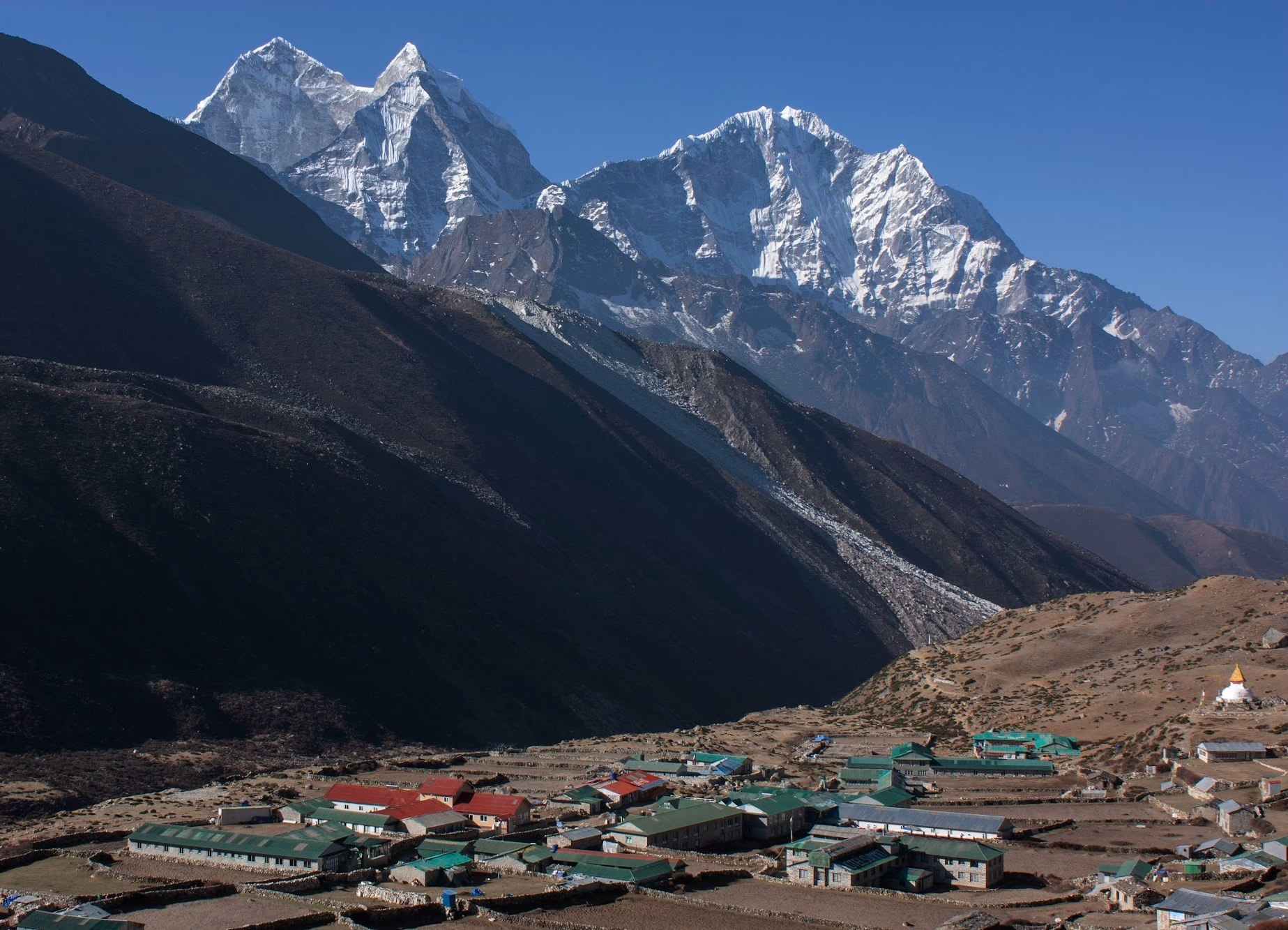
Standard Everest Base Camp itineraries build in two acclimatization days, one at Namche Bazaar (3,440m) and one at Dingboche (4,410m), following the climb-high-sleep-low principle of ascending to a higher elevation during the day before returning to sleep lower. At Namche, the common acclimatization hike goes to the Everest View Hotel (3,880m) or Khumjung village. At Dingboche, trekkers climb Nangkartshang Peak (5,083m) before returning to sleep at the village's lower elevation.
Skipping either rest day to shorten the trek significantly raises the risk of Acute Mountain Sickness in the final approach to Base Camp. Trekkers who compress the Dingboche rest day into a shorter stop report a measurably higher rate of symptoms on the push to Lobuche and Gorak Shep, which is why reputable operators treat these two days as non-negotiable.
What Are the Symptoms of Altitude Sickness?
Mild altitude sickness produces headache, nausea, loss of appetite, dizziness, and disturbed sleep, while severe symptoms including confusion, loss of coordination, breathlessness at rest, and a persistent cough signal High Altitude Pulmonary or Cerebral Edema and require immediate descent. Mild symptoms are common and manageable with rest, hydration, and a pause in ascent; pushing through them instead raises the risk of progression to severe symptoms.
Any sign of ataxia, or loss of coordinated movement, marks a medical emergency on the Everest Base Camp route, where the nearest advanced care sits a flight away in Kathmandu. A simple test many guides use: a trekker who cannot walk a straight line heel-to-toe needs a medical descent regardless of how mild other symptoms seem.
How Can You Reduce the Risk of Altitude Sickness on Everest Base Camp Trek Route?
Reducing altitude sickness risk on the Everest Base Camp route means limiting net sleeping-elevation gain to 300-500 meters per day above 3,000 meters, drinking 3 to 4 liters of water daily, avoiding alcohol above Namche, and trekking with a guide trained to monitor symptoms, often using a pulse oximeter for daily oxygen saturation checks. Some trekkers use acetazolamide (Diamox) as a preventive measure under a physician's guidance before departure.
What most first-time trekkers overlook is pacing within each day, not just across days: walking slower in the first hour after a new elevation milestone reduces symptom onset even when the overall daily gain stays within recommended limits. Skipping even one full liter of the daily water target measurably slows the body's adjustment to each new elevation.
How Much Does the Everest Base Camp Trek Cost in November?
The Everest Base Camp trek in November typically costs between $1,200 and $3,000 per person for a guided group package, with mid-range operators clustering around $1,500 to $2,000 for a 12 to 14-day itinerary, excluding international airfare to Kathmandu. Independent trekking with a mandatory local guide runs close to the lower end of this range once Lukla flights and guide fees are added.
Premium and private departures with upgraded lodges or helicopter return options extend well beyond $3,000. The three sections below break down what a standard package includes, what it leaves out, and how November specifically affects pricing.
What Costs Are Included in an Everest Base Camp Trek Package?
A standard Everest Base Camp trek package includes a licensed guide, porter, teahouse lodging, three daily meals on the trail, domestic flights between Kathmandu (or Manthali) and Lukla, and both required trekking permits. Most operators also include airport pickup and drop-off in Kathmandu and a pre-trek briefing covering gear, altitude, and itinerary.
What the package typically excludes matters just as much: Kathmandu hotel nights outside the trek dates, travel insurance, personal gear, and discretionary spending at teahouses above Namche, all covered in the next section.
What Additional Expenses Should You Budget For Everest Base Camp Trek in November?
Additional November trek expenses include travel insurance with high-altitude and helicopter evacuation coverage, device charging at teahouses (which rises from roughly $2 to $5 per full charge), Wi-Fi (now primarily sold as region-wide prepaid data packages like Everest Link or Airlink, averaging $15 to $25 for 10 GB), hot showers ($3 to $6), bottled or boiled drinking water, snacks, and guide and porter tips.
Insurance deserves particular attention: standard travel policies frequently exclude trekking above 4,000 meters or emergency helicopter evacuation, and a policy without this coverage leaves a trekker fully exposed to rescue costs that can run into the thousands of dollars if a medical descent becomes necessary. A commonly used tipping guideline sets aside $10 to $15 per day for the guide and a similar daily range split among porters, though exact amounts remain a personal decision based on group size and service.
Does November Affect Everest Base Camp Trekking Package Prices?
November affects Everest Base Camp trekking package prices through peak-season demand in the first half of the month, when flights and popular teahouses carry higher rates and tighter availability, while the second half often sees modest price flexibility as the main autumn surge passes.
Since Lukla flights shift to Manthali Airport during this peak window, package prices during early-to-mid November also reflect the added road transfer logistics. Trekkers booking a late-November departure sometimes find better lodge rates and more room to negotiate group pricing, trading a few degrees of nighttime cold for a more flexible budget.
How Should You Plan the Everest Base Camp Trek in November?
Planning the Everest Base Camp trek in November means booking 12 to 14 trekking days plus Kathmandu buffer time, securing both required permits, preparing for Manthali-based Lukla flights, and deciding between an independent or fully guided approach well before departure. The four sections below cover trip length, permits, flight logistics, and the realities of independent trekking during peak autumn season.
How Many Days Do You Need for the Everest Base Camp Trek?
A standard Everest Base Camp trek requires 12 to 14 days on the trail, plus two to three additional days in Kathmandu for arrival, gear checks, and a buffer against Lukla flight delays, bringing the realistic total trip length to 15 to 16 days. Shorter EBC nine to eleven-day trek itineraries exist, usually built around a helicopter return from Base Camp or Gorak Shep, but they compress acclimatization time and suit only trekkers with recent high-altitude experience. Extending beyond 14 days, by contrast, adds comfort and flexibility rather than necessity, giving extra buffer for weather or slower pacing at altitude.
What Permits Are Required for Everest Base Camp?
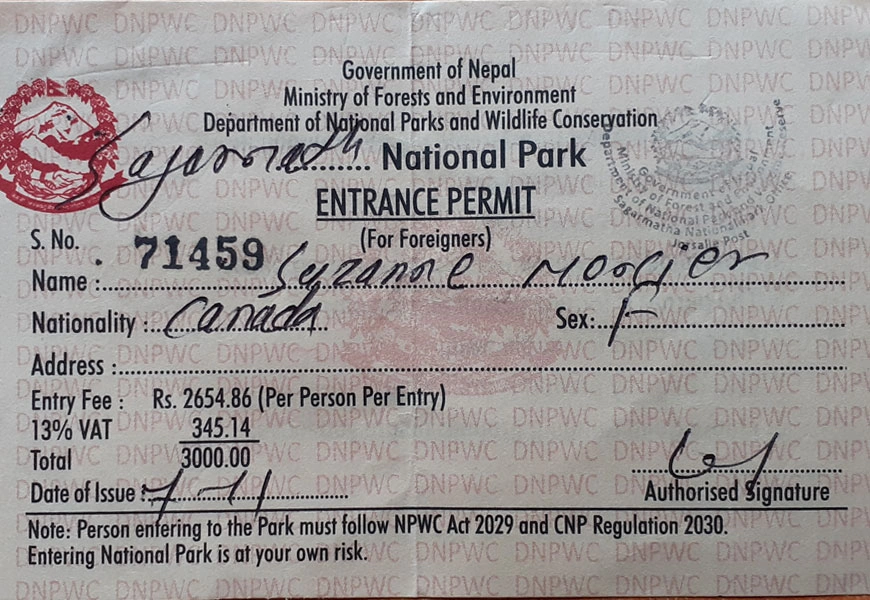
Everest Base Camp requires two permits: the Sagarmatha National Park Entry Permit (NPR 3,000 plus a mandatory 13% VAT, totaling NPR 3,390) and the Khumbu Pasang Lhamu Rural Municipality Permit (NPR 3,000), together costing NPR 6,390, or roughly $48 to $65 depending on exchange rates. The TIMS card, previously required nationwide, no longer applies to the Everest region; the municipality permit replaced it.
The national park permit is available in Kathmandu or at the Monjo checkpoint on the trail, while the municipality permit is issued in Lukla or at Monjo. Trekkers carry several passport photos and a passport copy, since both permits require this documentation at the point of issue. Permit offices generally expect payment in Nepali rupees, so exchanging currency in Kathmandu before departure avoids delays at the Monjo checkpoint.
How Can You Prepare for Flights to Lukla in November?
Preparing for November Lukla flights means expecting departure from Manthali Airport in Ramechhap rather than Kathmandu, since peak-season traffic shifts operations there from September through November, and building at least one buffer day into the itinerary for weather delays. The transfer to Manthali involves a roughly four-hour, 132-kilometer road journey, often starting before dawn to reach the airport for the earliest and most weather-reliable flight window.
November and December post some of the best flight-completion records of the year, but morning cloud can still ground flights for a day or more, and a helicopter charter remains the practical backup when schedules slip. Baggage allowances on these flights are strictly capped at 15 kilograms total per passenger (typically 10 kilograms for checked baggage and 5 kilograms for a hand carry), so porters or a duffel service must handle any overflow gear separately.
Can You Trek to Everest Base Camp Independently in November?
Independent trekking to Everest Base Camp remains possible in November through the Khumbu Pasang Lhamu Rural Municipality's own local permit system, which has continued to operate outside Nepal's broader April 2023 guide requirement that applies to most other trekking regions. This status has shifted more than once since 2023, so confirming current requirements shortly before departure matters more than relying on last season's rules.
Even where a guide is not strictly required, most trekkers choose one anyway: altitude risk, flight disruption, and the language barrier at higher villages make local guidance a practical safeguard rather than just a bureaucratic formality. Insurance providers also increasingly expect evidence of guided travel for high-altitude claims, which narrows the practical appeal of going fully unguided even where it remains legally possible.
How Can Heaven Himalaya Help With Your Everest Base Camp Trek in November?
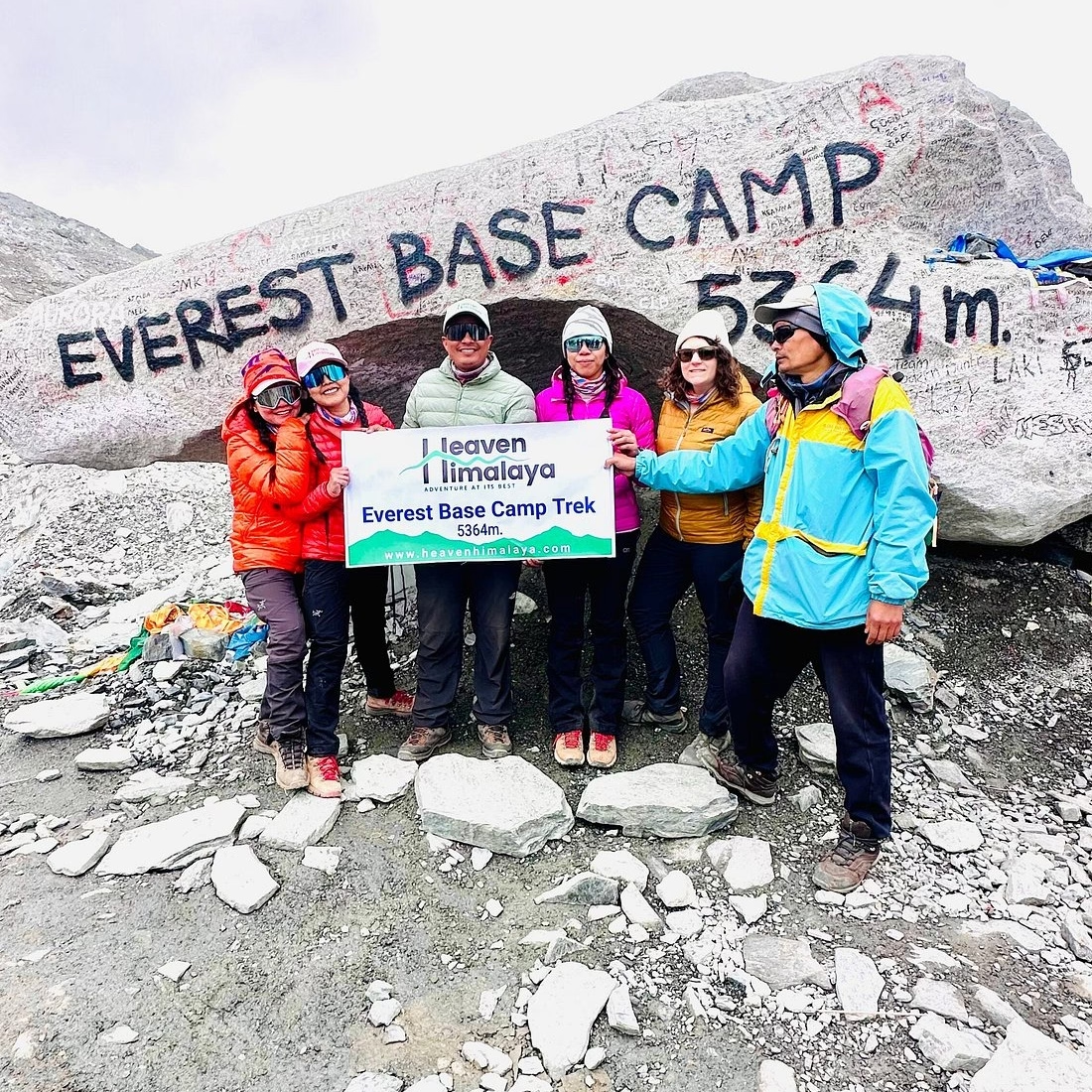
Heaven Himalaya supports Everest Base Camp trekkers through every planning stage: permit processing, Lukla or Manthali flight coordination, teahouse booking, and experienced local guides who lead the trek day to day. The company is registered with the Nepal government, licensed by the Nepal Tourism Board, and holds membership in the Trekking Agencies' Association of Nepal (TAAN) and the Nepal Mountaineering Association (NMA).
Its founding guide has personally led trekking groups to Everest Base Camp more than 100 times, experience that directly shapes how November itineraries are paced around the month's specific cold and crowd patterns.
Can Heaven Himalaya Arrange an Everest Base Camp Trek in November?
Heaven Himalaya arranges Everest Base Camp treks for November departures, including group and private itineraries built around the month's Manthali flight schedule, peak-week lodge availability, and the colder gear requirements of late-autumn trekking.
Itineraries can be adjusted for trekkers who want the clearer early-November skies and busier trail or the quieter, colder conditions of late November. Each booking includes a licensed guide, the required Sagarmatha National Park and Khumbu Pasang Lhamu Rural Municipality permits, and pre-trek guidance on cold-weather gear specific to the departure date.
What Are the Key Takeaways About the Everest Base Camp Trek in November?
The Everest Base Camp trek in November delivers the clearest mountain views of the year, stable dry weather, and reliable Lukla flights, balanced against nighttime temperatures as low as -20°C at Gorak Shep and a crowded trail through mid-month. Plan for 12 to 14 trekking days with two acclimatization days at Namche and Dingboche, budget $1,200 to $3,000 for a guided package plus roughly $45 to $65 in permits, and pack a -20°C sleeping bag alongside a heavyweight down jacket for the upper villages.
Early November suits trekkers who want peak autumn energy and busier teahouses; late November suits those who prioritize solitude and don't mind sharper cold. Either window delivers the Everest Base Camp trek's defining reward: standing below the world's highest mountain under some of the clearest skies of the Himalayan year.