

When Is Winter in Nepal? Winter Trekking Guide (2026–27)

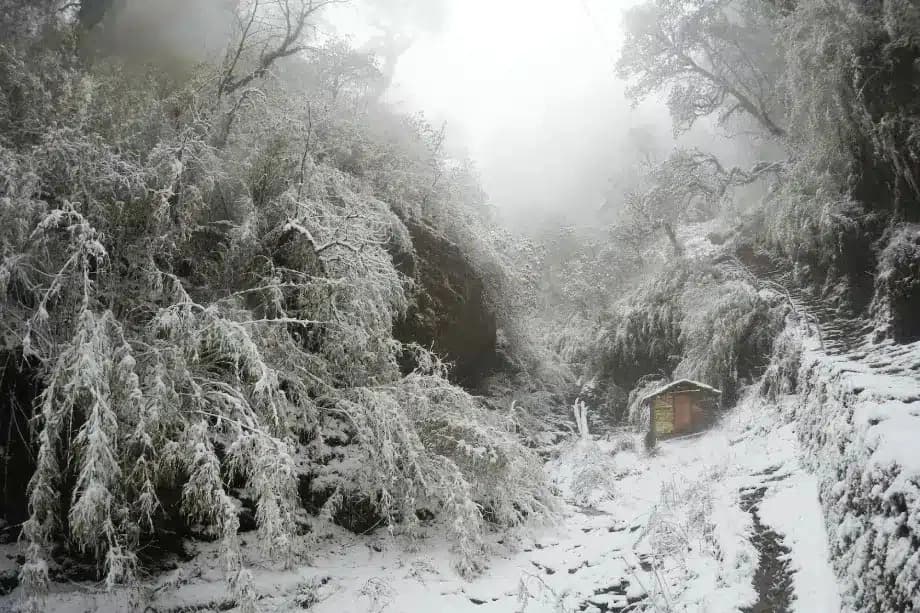
Winter in Nepal is the coldest season of the year, extending from December to February, with January bringing the lowest temperatures across the country. The season is characterized by dry weather, clear mountain views, sunny days, and freezing nights in the Himalayas. Weather conditions vary considerably by elevation, from the relatively warm Terai plains and Kathmandu Valley to snow-covered mountain landscapes above 3,000 meters. Occasional snowfall, cold waves, and western weather disturbances also influence winter conditions across the Everest, Annapurna, and Langtang regions.
Winter is a rewarding time to explore Nepal for travelers seeking quieter trekking trails, panoramic Himalayan views, and fewer crowds. Popular routes such as Everest Base Camp, Ghorepani Poon Hill, and Langtang Valley remain suitable with proper preparation, while high mountain passes and avalanche-prone trails require additional caution. Understanding Nepal's winter weather, regional temperature differences, trekking conditions, and seasonal challenges helps travelers choose the right destination and travel dates. This guide by Heaven Himalaya covers everything from winter temperatures and snowfall to the best trekking months, recommended routes, essential gear, permits, safety precautions, and travel costs.
When Does Winter Start and End in Nepal?
Winter in Nepal starts on 1 December and ends on 28 February, covering three months: December, January, and February. DHM uses this window for its official winter climate reports. The first cold nights arrive in late November, and spring warmth returns in early March.
Nepal runs two calendars side by side. Forecasters and trekking operators use the meteorological calendar above. The traditional Nepali calendar divides the year into six ritu (seasons). Hemanta, the late-autumn season, covers roughly mid-November to mid-January. Shishir, the true winter season, covers roughly mid-January to mid-March. Many Nepalis feel winter arrive with Maghe Sankranti on 14 January.
Calendar dates tell you when winter begins, and altitude tells you when winter reaches you. Villages above 3,500 m freeze every night by late November, while the Terai plains stay warm enough for T-shirts until mid-December.
What Are the Winter Months in Nepal?
The three winter months in Nepal are December, January, and February.
December: the stable, crisp opening of winter, with the warmest conditions of the season and the best flight reliability.
January: the coldest and quietest month, with the lowest temperatures at every elevation.
February: the warming, more changeable month, with late-season snow events and the first signs of spring in the hills.
When Is the Coldest Month in Nepal?
January is the coldest month in Nepal. According to DHM's winter 2026 summary, the season's lowest temperature, −9.5 °C, was recorded at Depalgaun in Jumla district on 8 January 2026. Two stations broke their winter minimum records: Talcha in Mugu recorded −4.1 °C on 29 January, and Tikapur in the Terai district of Kailali recorded −3.3 °C on 5 January.
Kathmandu followed the same pattern in milder form. Morning lows fell to about 3 °C on 11 January 2026 and about 4 °C on 27 January, during a nationwide cold wave.
At high altitude, February can match January. Westerly disturbances (moisture-bearing weather systems that cross Nepal from the west) arrive more often in February, and the snow they leave keeps trails cold and slow. Treat January as the coldest month and February as the snowiest.
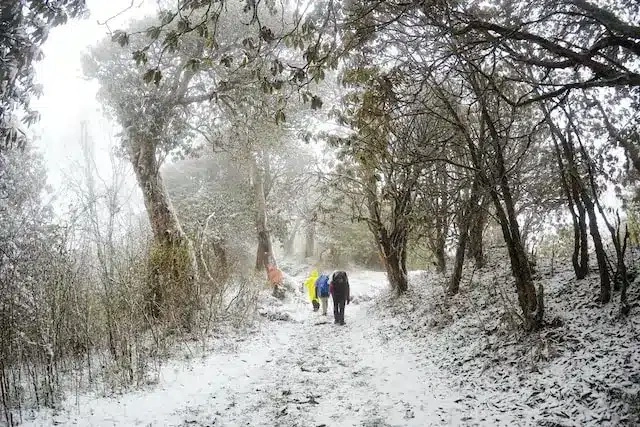
How Does Nepal's Winter Weather Change From December to February?
Winter weather in Nepal moves from crisp and stable in December, to coldest and driest in January, to warmer and more changeable in February. The table below compares the three months by defining feature, night temperature at Gorak Shep (about 5,170 m, the last Everest Base Camp village), and trekking implication. Gorak Shep figures come from Everest-region operator weather logs, because no DHM station sits at that altitude.
Month | Defining feature | Gorak Shep night low | Trekking implication |
December | Stable, clear, mild early in the month | −8 °C in week 1 to −20 °C by week 4 | Best month for first-time winter trekkers; book Christmas–New Year dates early |
January | Coldest, driest, lowest crowds | −22 °C to −28 °C | Choose low and mid-altitude routes or add buffer days on Everest |
February | Warming days, more cloud, snow events | −15 °C to −22 °C | Snow raises avalanche risk on steep trails; late February is the second-best window |
December keeps autumn's stability, so Lukla flights run regularly. January removes every comfort margin: the dining room becomes the only warm room, taps freeze, and daylight lasts about ten hours. February brings longer days, but westerly clouds can hide the views that justified the cold.
What Is the Weather Like in Nepal During Winter?
Winter weather in Nepal is dry, sunny, and cold at altitude. Daytime highs reach about 25 °C in the Terai and 19 °C in Kathmandu, then fall below 6 °C in the northern Himalaya. Nights freeze above roughly 2,700 m. Rain is rare, and seasonal snow stays above about 3,000 m except during strong westerly events.
What Are the Average Winter Temperatures in Nepal?
Average winter temperatures in Nepal range from 25 °C by day in the Terai to below 6 °C by day in the northern Himalaya. The DHM table below lists average daily highs and lows for selected stations during winter 2026 (December 2025 to February 2026).
Station | Region | Elevation | Avg. daily high | Avg. daily low |
Biratnagar Airport | Terai | 72 m | 25.1 °C | 10.9 °C |
Pokhara Airport | Hills | 827 m | 21.2 °C | 9.5 °C |
Kathmandu Airport | Hills | 1,337 m | 18.8 °C | 6.0 °C |
Lumle (Annapurna foothills) | Hills | 1,738 m | 16.3 °C | 6.3 °C |
Dhunche (Langtang gateway) | Hills | 1,993 m | 14.9 °C | 3.6 °C |
Nagarkot | Hills | 2,147 m | 15.0 °C | 4.8 °C |
Jomsom | Himalaya | 2,741 m | 14.1 °C | −0.1 °C |
Lukla Airport | Himalaya | 2,786 m | 11.6 °C | −0.6 °C |
Humde (Manang) | Himalaya | 3,401 m | 10.0 °C | −7.3 °C |
Every 1,000 m of altitude removes roughly 5 to 6 °C from the daytime high. DHM reported that winter 2026 ran warmer than the 1991–2020 normal, with hill stations 0.2 to 2 °C above normal. A normal winter feels 1 to 3 °C cooler than these figures in the hills, so pack for the colder case.
How Cold Does It Get in the Nepalese Himalayas During Winter?
Himalayan villages between 3,400 m and 5,200 m see winter night lows from about −7 °C to −28 °C. DHM's Humde station (3,401 m) averaged −7.3 °C at night across winter 2026, and operator logs place January nights at Gorak Shep between −22 °C and −28 °C.
Atmospheric physics explains the numbers. Air cools by about 6.5 °C per 1,000 m of climb. Start from Kathmandu's 6 °C winter night, climb 3,800 m to Gorak Shep, and the arithmetic lands near −19 °C. Cold waves push the real figure lower.
Wind turns cold into danger. According to the wind-chill formula used by Environment and Climate Change Canada, a 30 km/h wind at −15 °C produces a wind chill near −26 °C. Exposed ridges such as Kala Patthar (5,545 m) deliver that combination on afternoons.
A sunny, windless afternoon at 4,400 m still feels comfortable in a fleece. Trekkers meet the real cold between 4 p.m. and 8 a.m.
Does It Snow in Nepal During Winter?
Yes, snow falls in Nepal during winter, mostly above 3,000 m, but not in Kathmandu city or the Terai. Westerly disturbances deposit snow on the Himalayan and high-hill belts between December and February. Hills around the Kathmandu Valley, such as Phulchoki (2,782 m) and Shivapuri (2,732 m), receive light snow in some winters.
Snow arrives in short events, not as a steady blanket. In winter 2026, DHM recorded little to no precipitation until 23 January, one active week from 23 to 29 January, and a dry spell that lasted until 24 February. Humde in Manang was the only DHM station above its normal precipitation, with 28.9 mm, or 116.1 percent of normal.
Dry winters mean brown valleys, frozen trails, and packed ice above 4,000 m rather than deep powder. Sudden storms still happen: heavy snowfall in late October 2025 halted trekking in the Annapurna and Mustang districts with little warning.
How Much Rainfall and Snowfall Can You Expect in Winter?
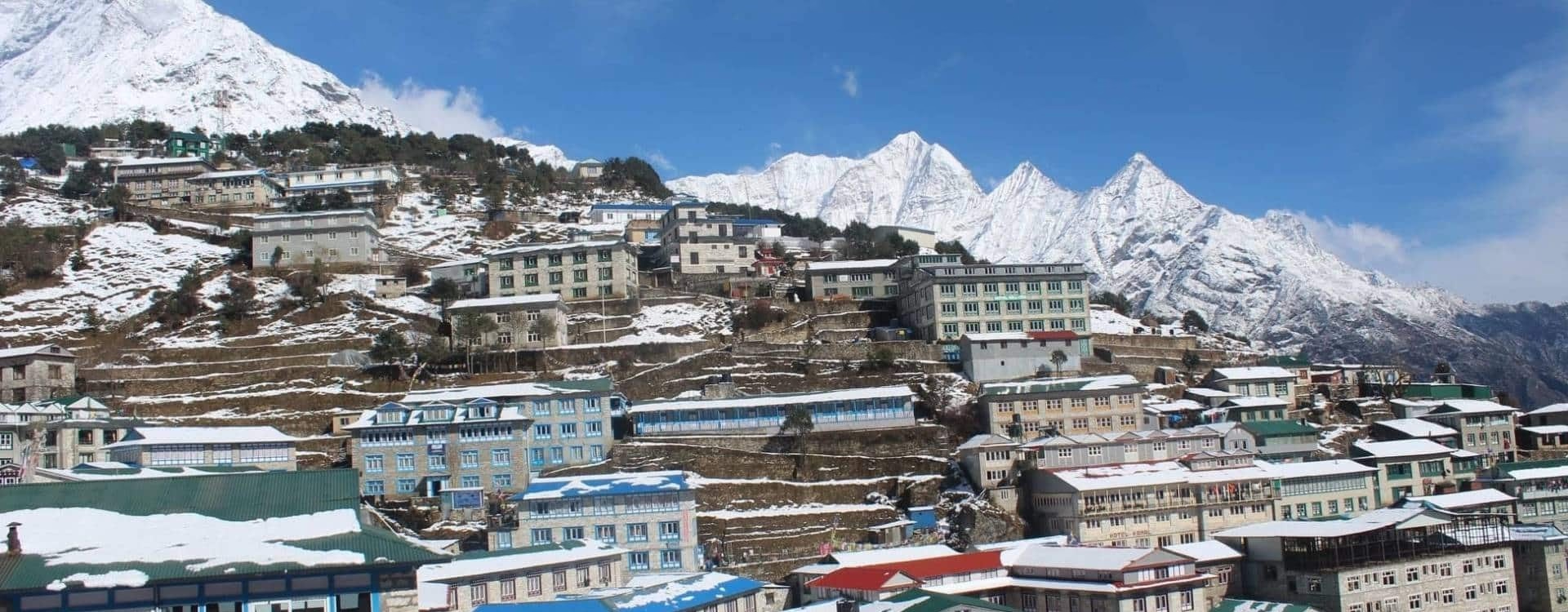
Nepal receives very little winter precipitation: DHM's 1991–2020 normal is 59.8 mm, and winter 2026 delivered only 15.6 mm, or 26.1 percent of normal. DHM called it the fourth consecutive below-normal winter, and the last four rank among the driest on record since 1981.
Distribution: Of 122 stations, 94 recorded precipitation and 28 recorded none. Only Khudi Bazar, Lete, and Lumle logged more than five rainy days (8, 7, and 6).
Geography: Kathmandu Airport recorded 2.2 mm against a normal of 46.6 mm. The Annapurna foothills around Pokhara and Lumle stay the wettest part of the winter map.
Seasonal outlooks have missed before: DHM once forecast above-normal winter rainfall, and the rain never came. Check the three-day DHM forecast before you fly to the mountains.
How Does Winter Weather Differ Across Nepal's Regions?
Winter in Nepal splits into three climate belts by elevation: the Terai plains with warm days and fog, the hills with cool days and cold nights, and the Himalaya with freezing nights and snow. Nepal packs a range from about 60 m to 8,849 m into a country roughly 200 km wide, so three weather zones sit within a day's travel of each other.
What Is Winter Like in Kathmandu and Pokhara?
Kathmandu winters bring sunny 19 °C days and 6 °C nights, and Pokhara runs 2 to 3 °C warmer. DHM's winter 2026 averages were 18.8 °C by day and 6.0 °C by night in Kathmandu, and 21.2 °C by day and 9.5 °C by night in Pokhara.
Kathmandu's cold is an indoor cold. Most homes and many guesthouses lack central heating, so rooms hold 8 to 12 °C on January evenings. Book hotels that list a heater, and pack a thin down layer for the room.
Air quality is the winter factor most guides skip. Cold air traps pollution near the ground, and Kathmandu's Air Quality Index reached a hazardous 250 on 6 January 2025. The Kathmandu Post reported valley-wide readings at the unhealthy-to-hazardous end of the scale in January 2026. According to ICIMOD, December 2025 was noticeably cleaner than December 2024, but pollution climbed again from January. Carry an N95 or FFP2 mask for city days, check an AQI app each morning, and spend clear-air time at Nagarkot (2,147 m) or in Pokhara, where the Annapurna range fills the skyline above Phewa Lake.
How Cold Is the Terai Region During Winter?
The Terai is the warmest region in winter, with daytime highs of 23 to 27 °C and night lows of 10 to 13 °C, but fog and cold waves make mornings harsh. Biratnagar Airport averaged 25.1 °C by day and 10.9 °C by night in winter 2026, and Damak in Jhapa reached 33.5 °C on 20 February.
The Terai's winter problem is fog, not low temperature. Cold, moist air pools over the plain, and visibility drops to as little as 10 m on bad mornings. During the 2025–26 fog, villagers in Mahottari district reported two to three weeks without sun, including 15 or more consecutive days. Fog slows road travel and delays domestic flights, so leave a buffer day before any Terai connection that feeds an international departure.
What Is Winter Like in the Himalayan Mountains?
The Himalayan belt (above roughly 2,500 m) has freezing nights, daytime highs between 0 °C and 14 °C, and snow after westerly disturbances. DHM stations at Jomsom and Lukla recorded winter lows of −0.1 °C and −0.6 °C, and Humde at 3,401 m averaged −7.3 °C.
Daily life follows the sun. Light reaches deep valleys such as Lobuche late and leaves early, so the warm window runs from about 9 a.m. to 3 p.m. A single stove, lit in the late afternoon, heats the lodge dining room. Bedrooms stay unheated. Water pipes freeze overnight, and some lodges above Dingboche close between December and February, although the main Everest Base Camp route keeps lodges open from Lukla to Gorak Shep.
How Does Winter Weather Vary With Altitude?
Winter temperature falls by about 6.5 °C for every 1,000 m of altitude gained. A Kathmandu night low of 6 °C becomes about −19 °C near 5,200 m. The table below translates that rule into six elevation bands, using DHM station data for the lower four and operator logs for the upper two.
Elevation band | Typical winter day | Typical winter night | Example places |
Below 500 m | 23–27 °C | 10–13 °C | Biratnagar, Chitwan plains |
800–1,500 m | 19–22 °C | 6–10 °C | Pokhara, Kathmandu |
1,500–2,200 m | 15–17 °C | 3–6 °C | Lumle, Dhunche, Nagarkot |
2,500–3,500 m | 10–14 °C | −7 to 0 °C | Lukla, Jomsom, Humde |
3,500–4,500 m | −3 to 5 °C | −10 to −18 °C | Namche, Tengboche, Dingboche |
4,500–5,400 m | −5 to 5 °C | −15 to −28 °C | Lobuche, Gorak Shep, Kala Patthar |
Altitude changes risk as well as temperature. Above 2,500 m, trekkers face acute mountain sickness (AMS), and cold adds fatigue and dehydration. Pick the highest sleeping altitude on your itinerary, find its night temperature in the table, and choose gear for that row, not for Kathmandu.
Is Winter a Good Time for Trekking in Nepal?
Yes, winter is a good time for trekking in Nepal on the right routes. It delivers the clearest skies, the quietest trails, and the lowest prices of the year, along with freezing nights, ten-hour days, and closed high passes. Low and mid-altitude treks and the Everest Base Camp trail work well. Pass crossings do not.
What Are the Advantages of Trekking in Nepal During Winter?
Winter trekking in Nepal offers five advantages: crisp visibility, thin crowds, lower costs, dry trails, and festival access.
Crisp visibility: Dry air lifts the haze that blurs monsoon and spring views.
Thin crowds: Trails that carry hundreds of trekkers a day in October carry a few dozen in January.
Lower costs: Hotels in Kathmandu and Pokhara discount winter rates, and operators run off-season pricing.
Dry trails: Mud and leeches disappear below 2,500 m.
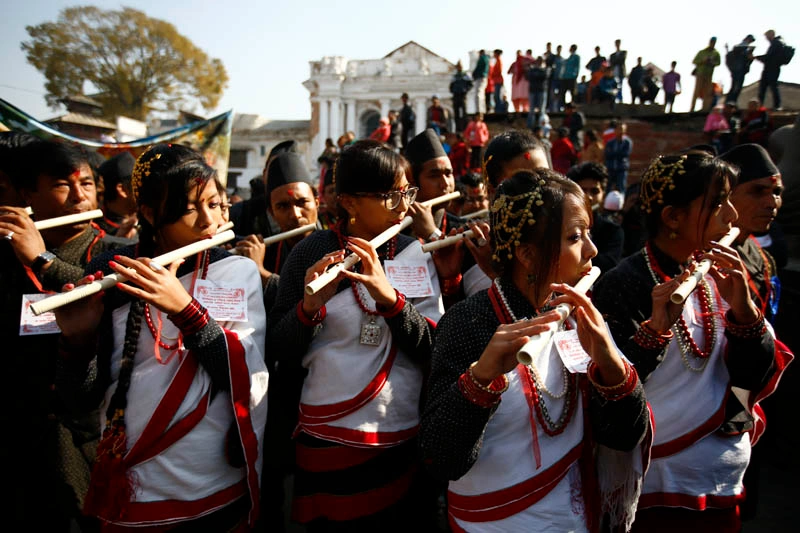
Festival access: Yomari Punhi (late December, Newar community), Tamu Lhosar on 30 December (Gurung community), Maghe Sankranti on 14 January, and Sonam Lhosar in early February all fall in winter.
The common mistake we see: expecting a snow-covered wonderland everywhere. Dry winters produce brown valleys and golden light, with snow only on high ridges and in shadows. Set that expectation before you book.
What Are the Challenges of Winter Trekking in Nepal?
Winter trekking in Nepal has six main challenges: freezing nights, short days, closed passes, flight delays, reduced lodge services, and avalanche risk.
Freezing nights: Bedrooms in teahouses (family-run mountain lodges) hold no heat, so sleep quality depends on your bag and layers.
Short days: The shortest day lasts about 10 hours 15 minutes in Kathmandu, which caps a realistic walking day at 6 hours.
Closed passes: Thorong La, Cho La, and Kongma La turn dangerous (see the passes section below).
Flight delays: Fog and wind delay Lukla flights, and fog delays Terai connections.
Reduced lodge services: Smaller lodges at the highest villages close, menus shrink, and hot showers vanish above 4,000 m.
Avalanche risk: Steep, snow-loaded slopes slide after snowfall and warming.
Warm gear handles the cold, buffer days handle the delays, and route choice handles the passes and avalanches.
Which Winter Trekking Routes Are Suitable for Beginners?
Five winter treks suit beginners: Ghorepani Poon Hill, Dhampus–Australian Camp, Chisapani–Nagarkot, Panchase, and the Everest Panorama trek. A beginner here means a walker with no multi-day trekking experience who can hike 5 to 6 hours a day on stairs and slopes.
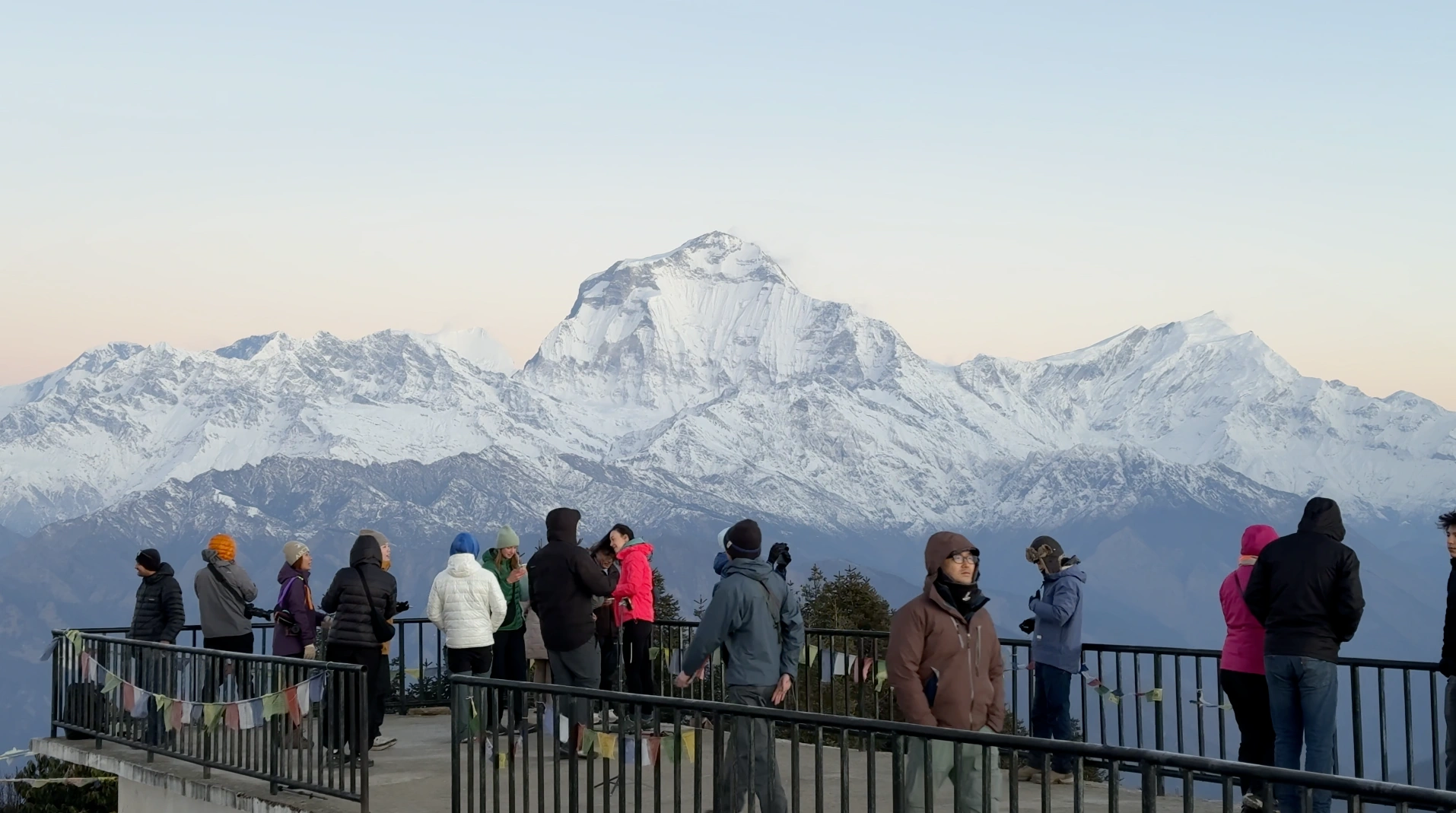
Ghorepani Poon Hill (3,210 m, 4–5 days): The classic sunrise-over-Annapurna trek, with lodges every hour and nights near 0 °C.
Dhampus–Australian Camp (2,060 m, 2–3 days): A short Pokhara-based walk with Machapuchare views and no altitude stress.
Chisapani–Nagarkot (about 2,200 m, 2–3 days): A Kathmandu-based ridge trek with Langtang and Ganesh Himal views on clear mornings.
Panchase (2,517 m, 3 days): A quiet forest ridge above Pokhara with Annapurna and Dhaulagiri views.
Everest Panorama (to Tengboche, 3,867 m): A short Khumbu route with Everest, Lhotse, and Ama Dablam views, without 5,000 m nights.
Fit beginners who accept snow underfoot also manage the Langtang Valley trek (Kyanjin Gompa, about 3,870 m).
Can You Trek to Everest Base Camp in Winter?
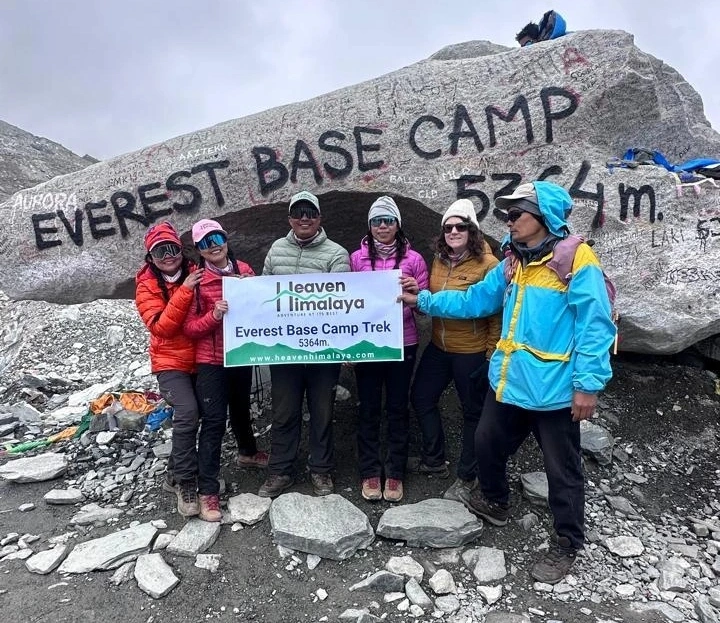
Yes, you can trek to Everest Base Camp (5,364 m) in winter. The trail stays open from December through February, and the lodges at Namche, Tengboche, Dingboche, Lobuche, and Gorak Shep keep operating. It demands more preparation than any other winter route in this guide.
Cold: Night lows reach −15 °C to −28 °C at Lobuche and Gorak Shep. A sleeping bag rated to −20 °C and a down jacket are mandatory.
Ice: From Dingboche (4,410 m) upward, shaded trail sections freeze. Operators record snow and ice on this stretch through January and recommend microspikes above 4,000 m.
Flights: In winter, Lukla flights typically depart Kathmandu, which removes the 4 to 5 hour drive to Ramechhap that spring and autumn trekkers endure. Operator records from 2023 to 2026 show most January days operating normally, but fog and wind still cause delays. Build 2 buffer days at each end of the trek.
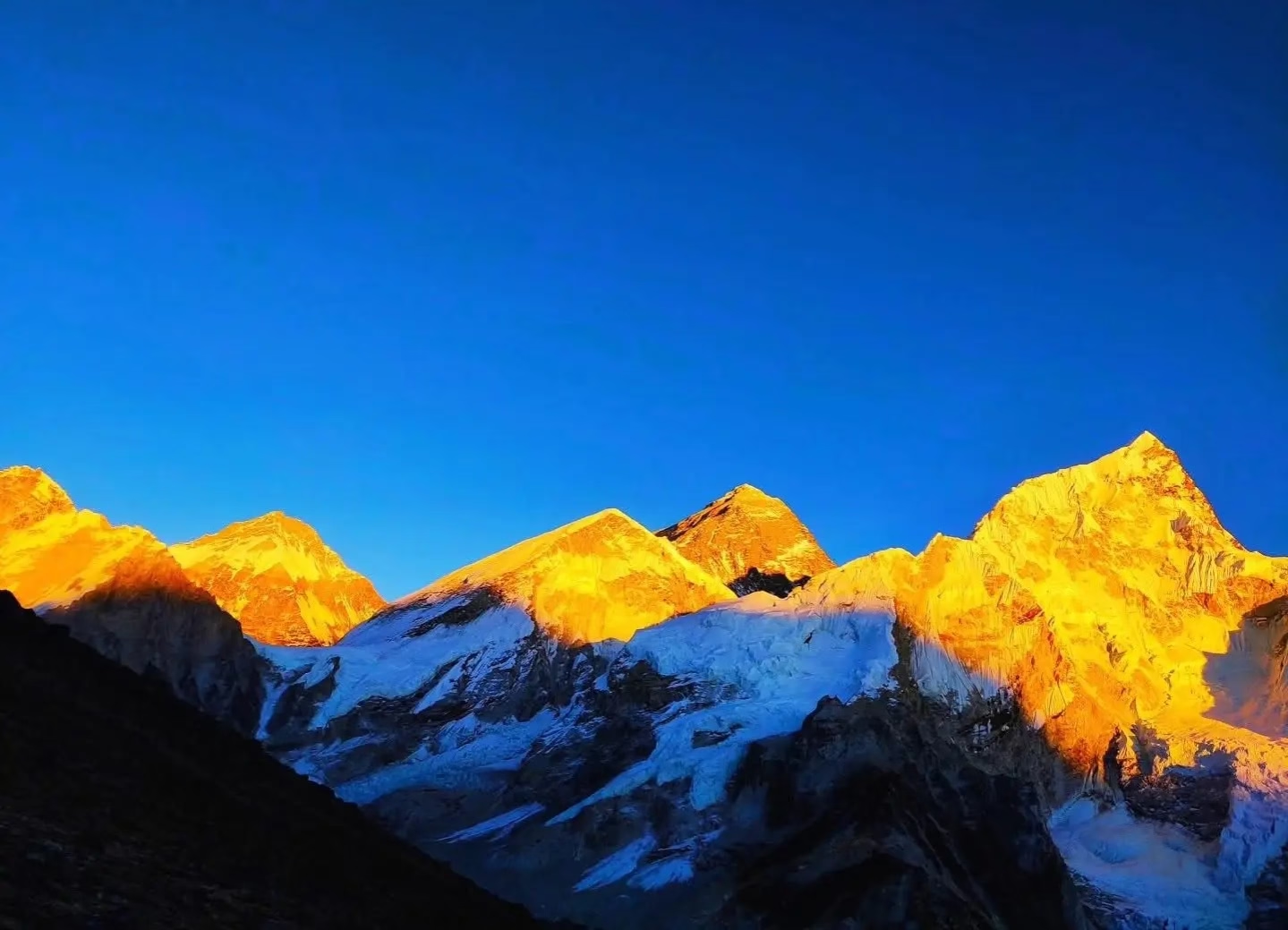
Sunrise at Kala Patthar (5,545 m): Groups leave Gorak Shep around 4:30 a.m. to reach the summit before sunrise, climbing in −20 °C air. Hand warmers and a balaclava make the difference.
First-timer perspective: choose early December, add rest days at Namche and Dingboche, and treat the cold as the main challenge, not the distance. Photographer perspective: January delivers the clearest air, but battery life collapses in the cold, so keep spares inside your jacket. Our guide to Everest Base Camp Trek in December 2026: Weather & Tips covers the early-winter window in detail.
Is the Annapurna Region Suitable for Winter Trekking?
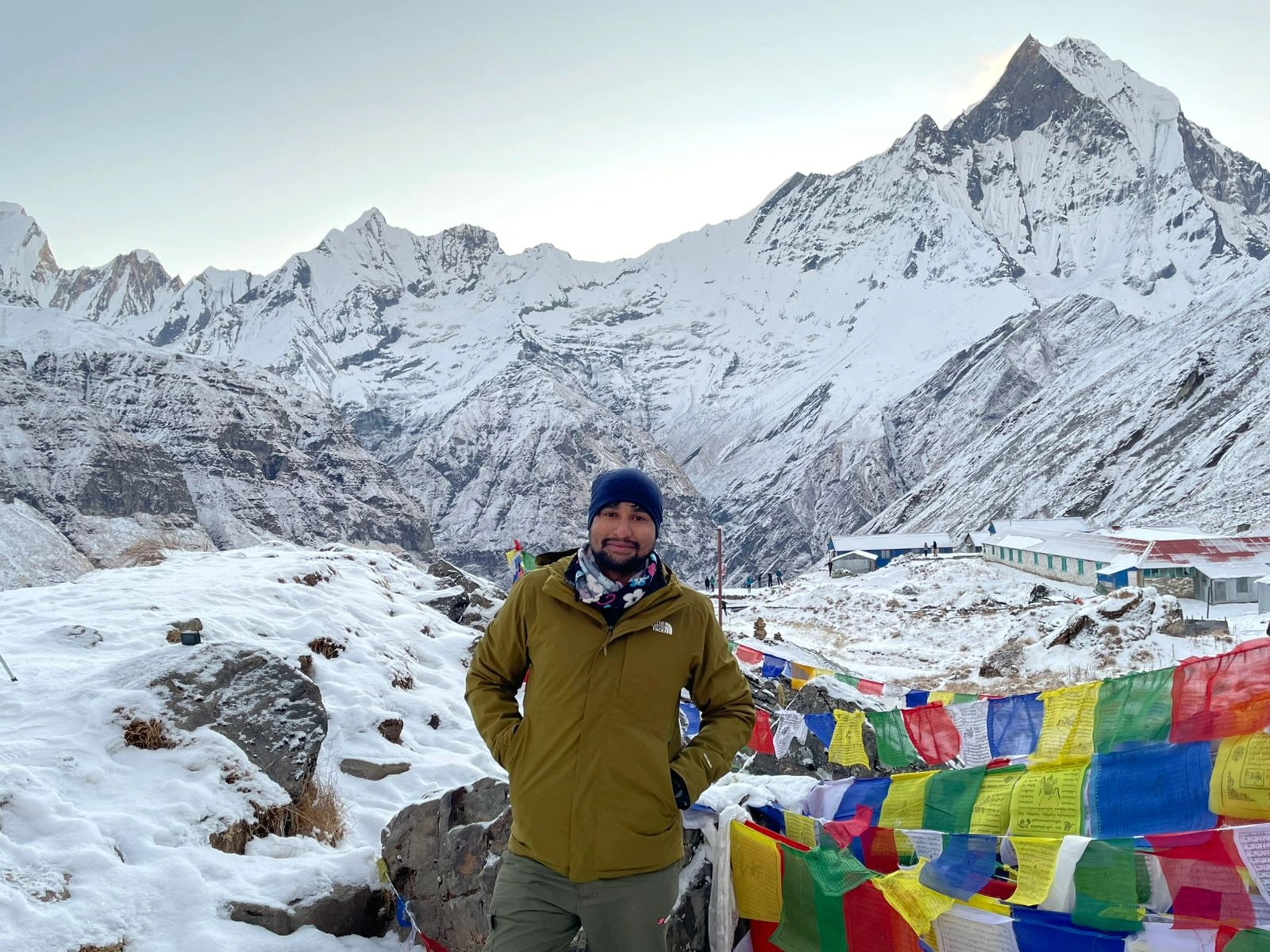
The Annapurna region is partly suitable for winter trekking. Lower routes such as Ghorepani Poon Hill and the Jomsom approach work well. The Thorong La crossing (5,416 m) on the full Annapurna Circuit closes in peak winter, and Annapurna Base Camp (ABC, 4,130 m) carries real avalanche risk after snowfall.
Avalanches on the ABC route concentrate between Deurali, Machapuchare Base Camp (3,700 m), and ABC. On 17 January 2020, an avalanche in this corridor killed seven people, four South Korean trekkers and three Nepali guides, after the group set out despite adverse weather warnings. In late October 2025, authorities in Myagdi and Mustang halted treks after heavy snowfall for the same reason.
The workable approach: trek ABC in the first half of December or the last week of February, after snow settles, with a guide who checks the local snow report each morning. Postpone after any snowfall, even when the sky clears. Our Annapurna Base Camp Trek itinerary builds in weather days for this reason.
Which Low-Altitude Treks Are Best During Winter?
The five best low-altitude winter treks are Chisapani–Nagarkot, Panchase, Ghorepani Poon Hill, the Tamang Heritage Trail, and Pikey Peak. All five keep sleeping altitudes below about 3,600 m, which lowers both the cold and the altitude risk.
Chisapani–Nagarkot: 2 to 3 days from Kathmandu; clear mornings show a long skyline above the valley haze.
Panchase: 3 days from Pokhara; forested, quiet, and mild at lower camps.
Ghorepani Poon Hill: 4 to 5 days; the highest sunrise viewpoint on this list at 3,210 m.
Tamang Heritage Trail (Rasuwa): 7 to 8 days; Tamang culture, hot springs, and a high point near 3,200 m.
Pikey Peak (4,065 m): 5 to 6 days in Solukhumbu; Everest views from a mid-altitude summit, with colder nights than the others.
What Are the Best Months for Winter Trekking in Nepal?
Early December and late February are the best winter trekking windows in Nepal. Both offer mild daytime weather and stable conditions. Mid-December to mid-January delivers the clearest skies and the hardest cold. January suits low-altitude treks, and the first half of December suits Everest Base Camp.
Is December a Good Month for Trekking in Nepal?
Yes, December is the best winter month for trekking in Nepal. Autumn's stable weather lingers into the first two weeks, flights run reliably, and Gorak Shep nights average about −8 °C in week 1 before falling to about −20 °C by week 4. An early-December departure feels a full season warmer than a late-December one.
Early December works for Everest Base Camp, Annapurna Base Camp (before any snowfall), and Langtang Valley. Late December works for treks below 4,000 m. Christmas and New Year dates sell out in the Khumbu lodges, so book at least 8 weeks ahead. Read Nepal in December 2026: Best Treks, Weather & Festivals for a full month breakdown.
Is January Too Cold for Trekking in Nepal?
No, January is not too cold for trekking in Nepal when you choose a suitable route and carry proper gear. It is the coldest month, with Gorak Shep nights between −22 °C and −28 °C and an overnight average of −0.6 °C at DHM's Lukla station. It is also the quietest month, with the clearest air and the best photography light.
January suits low and mid-altitude trekkers, experienced cold-weather hikers on the Everest trail, and photographers who accept the conditions. It does not suit first-time high-altitude trekkers with poor cold tolerance, people with circulation conditions such as Raynaud's syndrome, or anyone planning ABC. Everyone else gets a spectacular trek by adding two buffer days and renting a −20 °C sleeping bag.
Is February a Good Time to Explore the Himalayas?
Yes, February is a good time to explore the Himalayas, especially in the last two weeks. Days lengthen, daytime temperatures climb, and the coldest nights ease. Operator logs show Gorak Shep nights of −15 °C to −22 °C in February, compared with −22 °C to −28 °C in January.
February has two downsides. Westerly disturbances arrive more often, so cloud and snow interrupt the views. Snow on steep slopes plus warming afternoons raises avalanche risk, which makes ABC a late-February decision that depends on the snow report. Sonam Lhosar, the Sherpa and Tamang New Year, falls in early February and adds festival atmosphere to Khumbu villages.
When Is the Best Time for Clear Mountain Views in Winter?
The clearest winter mountain views come 1 to 3 days after a westerly disturbance passes, between 6:30 and 10:00 a.m., and above the valley haze layer at roughly 2,000 m. Rain and snow wash dust from the air, and the cold, dry mornings that follow produce the sharpest skylines of the year.
Rise early: Morning air is calmest and cleanest, and clouds build from about 11 a.m. on westerly days.
Climb above the haze: Viewpoints such as Nagarkot (2,147 m), Poon Hill (3,210 m), and Kala Patthar (5,545 m) beat any city rooftop.
Follow the weather: Plan viewpoint mornings for the day after a snow event clears.
Choose mid-December to mid-January: The driest stretch of winter has the lowest cloud frequency.
What Should You Pack for Winter Trekking in Nepal?
Pack a four-layer clothing system (merino base, fleece mid-layer, down jacket, waterproof shell), a sleeping bag rated to −20 °C, insulated boots with microspikes, and strong sun protection. Rent the heaviest items in Kathmandu to save weight and money, and keep your trek duffel to 10 to 12 kg per person, because porters carry shared loads. Our Trekking Packing List covers the year-round basics.
Which Winter Trekking Clothes Keep You Warm?
Four layers keep you warm on a winter trek: a wicking base, an insulating mid-layer, a down jacket, and a waterproof shell. Layering lets you add or remove heat in minutes as sun, wind, and altitude change.
Wear a merino or synthetic base layer, top and bottom, in 150 to 200 g/m² weight.
Add a fleece or lightweight synthetic mid-layer for walking days.
Carry a down jacket with 700 to 800+ fill power for evenings, breaks, and sunrise starts.
Pack a waterproof, windproof shell jacket and trousers.
Protect hands with liner gloves under insulated mittens; mittens keep fingers warmer than gloves.
Cover your head and neck with a beanie, a balaclava, and a buff.
Bring 3 pairs of thick merino socks, so a damp pair dries while another is in use.
Add insulated pants for Lobuche and Gorak Shep evenings, and sleep in dry base layers only.
What Essential Gear Do You Need for Snow and Ice?
Essential winter gear includes microspikes, trekking poles, gaiters, a −20 °C sleeping bag, glacier sunglasses, and a headlamp with lithium batteries. Microspikes (slip-on rubber frames with steel spikes) handle most winter trails on the Everest route. Crampons and ice axes belong to pass crossings and peak climbs.
Microspikes: Slip them on above 4,000 m, where early-morning trail ice is common.
Insulated boots: Choose a stiff, insulated sole with room for thick socks, and add gaiters to keep snow out.
Sleeping bag: Pick a bag with a −20 °C limit rating, and add a liner for another 3 to 5 °C of warmth.
Eye protection: Wear category 3 or 4 sunglasses; snow reflects UV and causes snow blindness within hours.
Headlamp: Carry spare lithium batteries, which outlast alkaline cells in the cold.
Hot-water bottle: Fill a hard, leak-proof 1 L bottle with boiled water and put it in your sleeping bag at night.
Power bank: Sleep with it inside your bag; cold drains lithium batteries fast.
Winter freezes water filters, so use purification tablets or boiled water.
How Can You Prevent Altitude Sickness and Hypothermia in Winter?
Prevent altitude sickness with a slow ascent, and prevent hypothermia with dry layers, food, and early shelter. AMS is a headache, nausea, and fatigue caused by ascending faster than the body acclimatizes. The severe forms are high-altitude pulmonary edema (HAPE, fluid in the lungs) and high-altitude cerebral edema (HACE, swelling of the brain). Hypothermia is a core body temperature below 35 °C.
According to the Wilderness Medical Society guidelines, above 3,000 m a trekker must not raise their sleeping altitude by more than 500 m per day and takes a rest day every 3 to 4 days. The UK's National Travel Health Network and Centre (NaTHNaC) lists acetazolamide at 125 mg twice daily, started a day before ascent, as the preferred preventive drug for higher-risk itineraries. Ask a travel doctor before you go, because acetazolamide interacts with sulfonamide allergies.
Climb slowly, and sleep no more than 500 m higher each night above 3,000 m.
Schedule acclimatization days at Namche and Dingboche on Everest.
Drink 3 to 4 litres of fluid daily; dry winter air and cold suppress thirst.
Eat regularly, even without appetite, because food fuels warmth.
Stop climbing at the first AMS symptoms, and descend if they worsen.
Check each other for hypothermia: uncontrolled shivering, slurred speech, stumbling, and confusion. Shivering that stops in a cold person signals worsening hypothermia.
Warm a cold trekker with shelter, dry insulation, and warm sweet drinks, and arrange evacuation for severe cases.
Cold blurs symptom-reading, because shivering, headache, and fatigue overlap with AMS. Charcoal heaters in closed bedrooms cause carbon monoxide poisoning, so ventilate any room that burns fuel. Confirm that your travel insurance covers trekking to at least 5,600 m and helicopter evacuation before you book.
What Should Trekkers Know Before Visiting Nepal in Winter?
Know three things before visiting Nepal in winter: which high passes close, which permits and guide rules apply, and what the trip costs. Passes close from December to February; permits cost about NPR 3,000 each (about US$20), and a guided two-week Everest Base Camp trek starts near US$950 per person in 2026.
Are Nepal's High Mountain Passes Open During Winter?
No, Nepal's high passes are mostly closed or unsafe in winter. Thorong La (5,416 m, Annapurna Circuit), Cho La, Kongma La, and Renjo La (Everest region, each between roughly 5,350 and 5,550 m), and Larke La (5,106 m, Manaslu Circuit) accumulate deep snow and ice between December and February.
A pass sometimes opens for a day or two after a dry spell, but "open" differs from "safe". Crossings demand crampons, ice axes, a weather window, and an experienced guide. Checkpoint police and conservation-area staff close passes after storms, and the status changes daily. Trekkers have reached Chame during a heavy storm only to learn at the checkpoint that Thorong La and even Manang had closed. Our guides decline winter pass crossings, and we recommend you do too.
The Gokyo Lakes trek reaches Gokyo (4,790 m) and Gokyo Ri (5,357 m) without a pass, and the Everest Base Camp trek uses no pass at all. Choose an out-and-back route, and winter closures never touch your plan.
Are Winter Trekking Permits and Guides Required in Nepal?
Yes, trekking permits are mandatory in every season, and winter does not lower the fees. The following 2026 fees apply to foreign trekkers on popular routes:
Sagarmatha National Park permit (Everest region): NPR 3,000 (about US$20).
Khumbu Pasang Lhamu Rural Municipality fee (Everest region): reported at NPR 3,000 for 2026, up from NPR 2,000 in earlier seasons; paid in cash at Lukla.
Annapurna Conservation Area Permit (ACAP): NPR 3,000.
Langtang National Park permit: NPR 3,000.
Restricted-area permits (Manaslu, Upper Mustang): special permits that require a licensed guide and a registered agency.
Guide rules have shifted repeatedly since Nepal's mandatory-guide announcement in April 2023. Sources in 2026 still disagree about enforcement in the Everest and Annapurna regions, and some report relaxations for popular routes. Confirm the current rule with the Nepal Tourism Board before you fly. Booking through a registered trekking agency satisfies every version of the rule.
A guide is also the practical winter choice: snow hides trails, and a guide monitors altitude symptoms and calls a helicopter when needed.
How Much Does Winter Trekking in Nepal Cost?
A guided 14-day winter Everest Base Camp trek costs from about US$950 per person in 2026, excluding international flights, and quality itineraries run higher. Packages quoted below roughly US$950 that include Lukla flights, permits, a guide, and a porter omit items, so read the inclusions line by line. The table below lists the main cost components for comparing quotes.
Component | 2026 cost | Note |
Kathmandu–Lukla flight, one way | about US$235–255 | Airlines raised fares in March 2026; return costs about US$470–510 |
Everest permits (park plus local fee) | about NPR 6,000 (US$40) | Paid at Monjo, Lukla, or the Kathmandu tourism office |
Food and drinks on the trail | US$25–50 per day | Prices rise with altitude |
Licensed guide | about US$25–35 per day | Usually bundled in a package |
Porter | about US$20–25 per day | One porter typically carries two trekkers' bags |
Gear rental (jacket, bag, poles) | about US$50–120 for two weeks | Thamel rental shops stock −20 °C bags |
Hot shower, charging, boiled water | US$2–6 each | Cost climbs above 4,000 m |
Helicopter, Kathmandu–Lukla, shared | US$450–700 per person | Fallback when fog grounds fixed-wing flights |
Winter lowers some costs and raises others. Hotels and package prices fall off-season, but gear rental, hot drinks, and buffer-day hotel nights add up. Budget US$150 to US$300 for contingencies such as an extra Kathmandu night. Flights, guide services, and food make up most of the cost, so short low-altitude treks cost a fraction of an Everest trip.
How Can Heaven Himalaya Help You Plan a Winter Trek in Nepal?
Heaven Himalaya is a Kathmandu-based local trekking company (Gitanjali Chowk, Dathu Sadak, Kathmandu) that organizes treks, peak climbs, photo expeditions, and helicopter tours across Nepal, Tibet, Bhutan, and India. The company holds a 5.0 rating from 160 Tripadvisor reviews, has won Tripadvisor Travelers' Choice awards from 2021 to 2025, and is affiliated with the Nepal Tourism Board (NTB), the Trekking Agencies' Association of Nepal (TAAN), and the Nepal Mountaineering Association (NMA).
Three itineraries start most winter conversations: the 14-day Everest Base Camp Trekking route, listed at US$1,499 per person; the 10-day Langtang Valley Trekking route; and the 15-day Annapurna Base Camp Trek route for early-December and late-February windows. Heaven Himalaya adapts each with winter buffer days, gear rental, and a route chosen for your dates.
Can Heaven Himalaya Arrange a Safe Winter Trek Based on Your Travel Dates?
Yes, Heaven Himalaya plans winter treks around your arrival date, departure date, fitness, and experience. A winter itinerary starts from your calendar and works backward to a safe route.
Share your arrival and departure dates, trekking experience, and health history.
Review a route proposal with the right altitude profile, acclimatization days, and weather buffers.
Confirm gear: the team checks your list and arranges sleeping bags, down jackets, and poles for rent in Kathmandu.
Trek with a licensed guide who adjusts the pace daily and carries a first-aid kit.
Traveler reviews published on the Heaven Himalaya website between 2023 and 2026 describe pre-trip gear checks, rented sleeping bags and poles, extra buffer days for weather, a last-minute helicopter return from base camp, and guides who slowed the pace during acclimatization and carried medical supplies. Send your dates to info@heavenhimalaya.com, or message the team on WhatsApp at +977 985 1273867. A short conversation costs nothing.
What Are the Key Takeaways About Winter in Nepal and Trekking Conditions?
Winter in Nepal runs from December to February, peaks in cold in January, stays mostly dry, and suits trekking on low and mid-altitude routes and the Everest Base Camp trail, but not on high passes. Eight takeaways summarize the season:
Dates: Winter covers 1 December 2026 to 28 February 2027; the Nepali Shishir season peaks from mid-January to mid-March.
Coldest month: January, with DHM recording −9.5 °C at Dipal Gaun on 8 January 2026.
Temperatures: Daytime highs run about 25 °C in the Terai, 19 °C in Kathmandu, and below 6 °C in the northern Himalaya; nights freeze above roughly 2,700 m.
Precipitation: Winter 2026 delivered 15.6 mm, 26.1 percent of normal; expect dry trails, ice, and short snow events.
Snow: It falls above about 3,000 m after westerly disturbances, never in Kathmandu city or the Terai.
Best months: Early December and late February for comfort; mid-December to January for the clearest views and the hardest cold.
Safety: Ascend no more than 500 m per night above 3,000 m, rest every 3 to 4 days, wear four layers, and carry a −20 °C sleeping bag.
Planning: Skip the high passes, add two buffer days around Lukla flights, carry insurance that covers helicopter evacuation, and book through a registered agency.
Winter in Nepal rewards trekkers who match the route, the month, and the gear to the conditions. December to February delivers the clearest mountain skies of the year to those who prepare for them. When you are ready to turn your dates into a plan, our team at Heaven Himalaya is one message away.