

Everest Base Camp Trek in December 2026: Weather & Tips

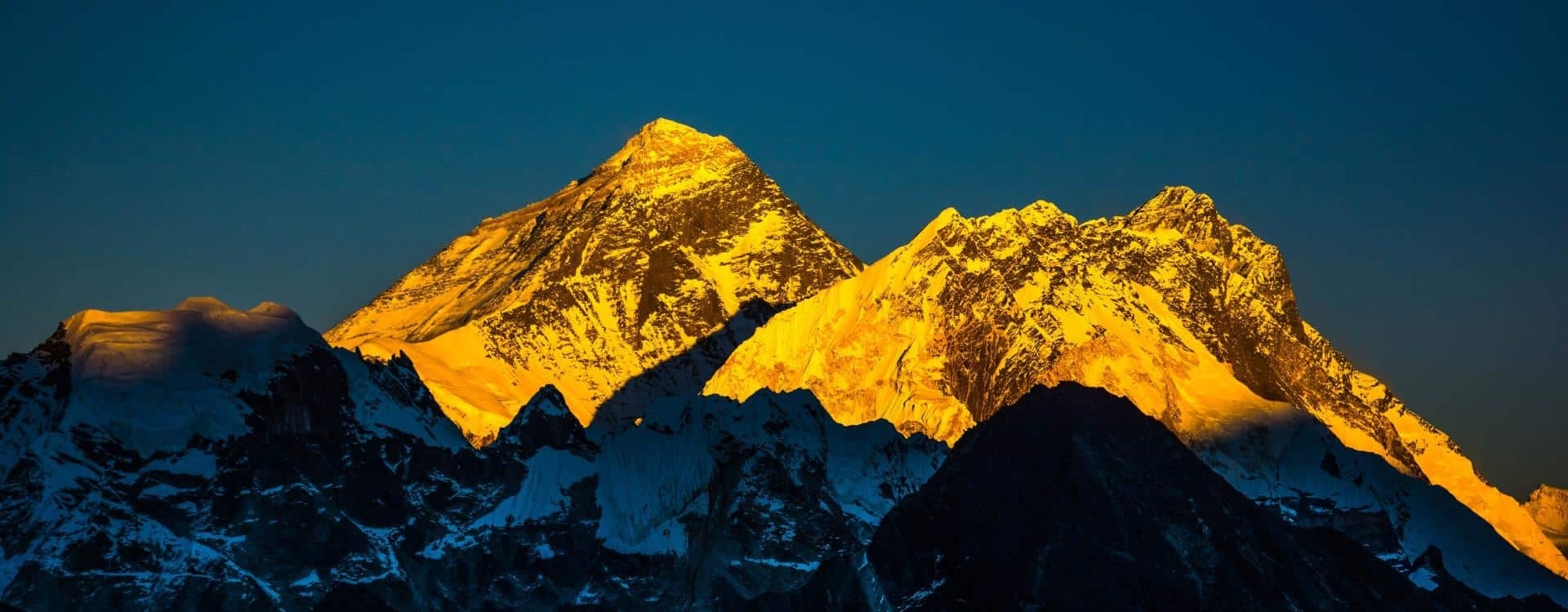
The Everest Base Camp trek in December is a winter trekking adventure in Nepal’s Khumbu region, reaching 5,364 m through the heart of the Himalayas. December offers clear mountain views, quieter trails, and greater tea house availability, but temperatures can drop to -18 °C at Gorak Shep. Short daylight hours, icy trails, and unpredictable Lukla flights make winter preparation essential.
Planning a successful December EBC trek requires a suitable itinerary with acclimatization days, cold-weather trekking gear, reliable accomm
odation, and travel insurance covering high-altitude helicopter evacuation. This guide covers December weather, temperatures, safety, the 14-day EBC trekking itinerary, packing lists, permits, and estimated costs to help you prepare for the journey. It also explains how Heaven Himalaya supports winter trekkers with guided services and practical trip planning.
What Makes the Everest Base Camp Trek in December Unique?
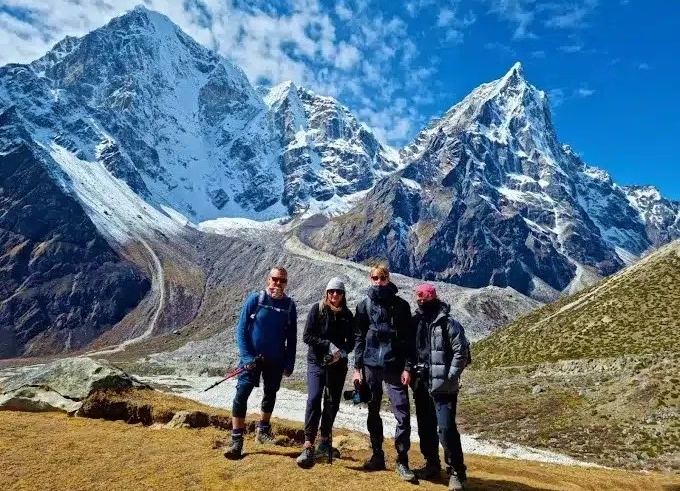
The Everest Base Camp trek in December is unique because it pairs the clearest mountain air of the year with the lowest trekker numbers of the main season and the coldest nights on the route. Everest, Lhotse, Nuptse, and Ama Dablam stand out against deep blue skies from Namche to Kala Patthar.
Everest Base Camp (EBC) sits at 5,364 m on the Khumbu Glacier inside Sagarmatha National Park, a UNESCO World Heritage Site since 1979. The standard round trip from Lukla covers about 130 km. Most trekkers walk it in spring (March to May) or autumn (September to November). December falls outside both windows, which changes almost everything about the experience.
The table below compares December with the two peak seasons across five attributes that shape a trek.
Attribute | December | October (autumn peak) | April (spring peak) |
Trail traffic | Light | Heaviest of the year | Heavy |
Daylight at 27.8° N (mid-month) | 10.4 hours | 11.5 hours | 12.8 hours |
Gorak Shep night low | About -18 °C | Colder than 0 °C, milder than December | Colder than 0 °C, milder than December |
Lukla flight departure point | Usually Kathmandu | Usually Ramechhap (Manthali) | Usually Ramechhap (Manthali) |
Lodge availability | Rooms open without booking | Rooms fill early | Rooms fill early |
December suits trekkers who value space and clear views over warmth. It does not suit trekkers who dislike cold, because the cold is the defining feature of the month.
Why Is December a Special Time to Trek to Everest Base Camp?
December is special because the monsoon moisture is gone, the dust of autumn has settled, and a stable high-pressure system keeps the sky clear on most mornings. Cold air holds less haze, so summits appear sharper than at any other time of year.
Three conditions make December distinct.
Clear mornings: Cloud usually builds after 11:00, so sunrise views at Tengboche, Dingboche, and Kala Patthar are the strongest part of the day.
Quiet trails: The yak trains and group queues of October thin out after the first week of December.
Photographic light: Low winter sun rakes across Nuptse and Lhotse at a shallow angle, which gives snow ridges depth that midday spring light flattens.
What Are the Benefits of Trekking to Everest Base Camp in December?
The 5 main benefits of trekking to Everest Base Camp in December are fewer crowds, clearer views, lower lodge prices, more attention from guides and lodge owners, and a more authentic Sherpa winter atmosphere. Each benefit has a practical trade-off.
Fewer crowds. Narrow suspension bridges between Phakding and Namche rarely hold a queue of 30 trekkers.
Clearer views. Dry air and low humidity improve visibility to the horizon, with Everest visible from Namche viewpoints on most clear mornings.
Lower prices. Lodges negotiate room rates in the off-season, and flights and hotels in Kathmandu cost less than in October.
Better service. Guides and lodge staff handle fewer groups, so meals arrive faster and dining rooms stay warm.
Quiet atmosphere. Monasteries such as Tengboche run their daily prayers without tour-group traffic.
What Are the Challenges of the Everest Base Camp Trek in December?
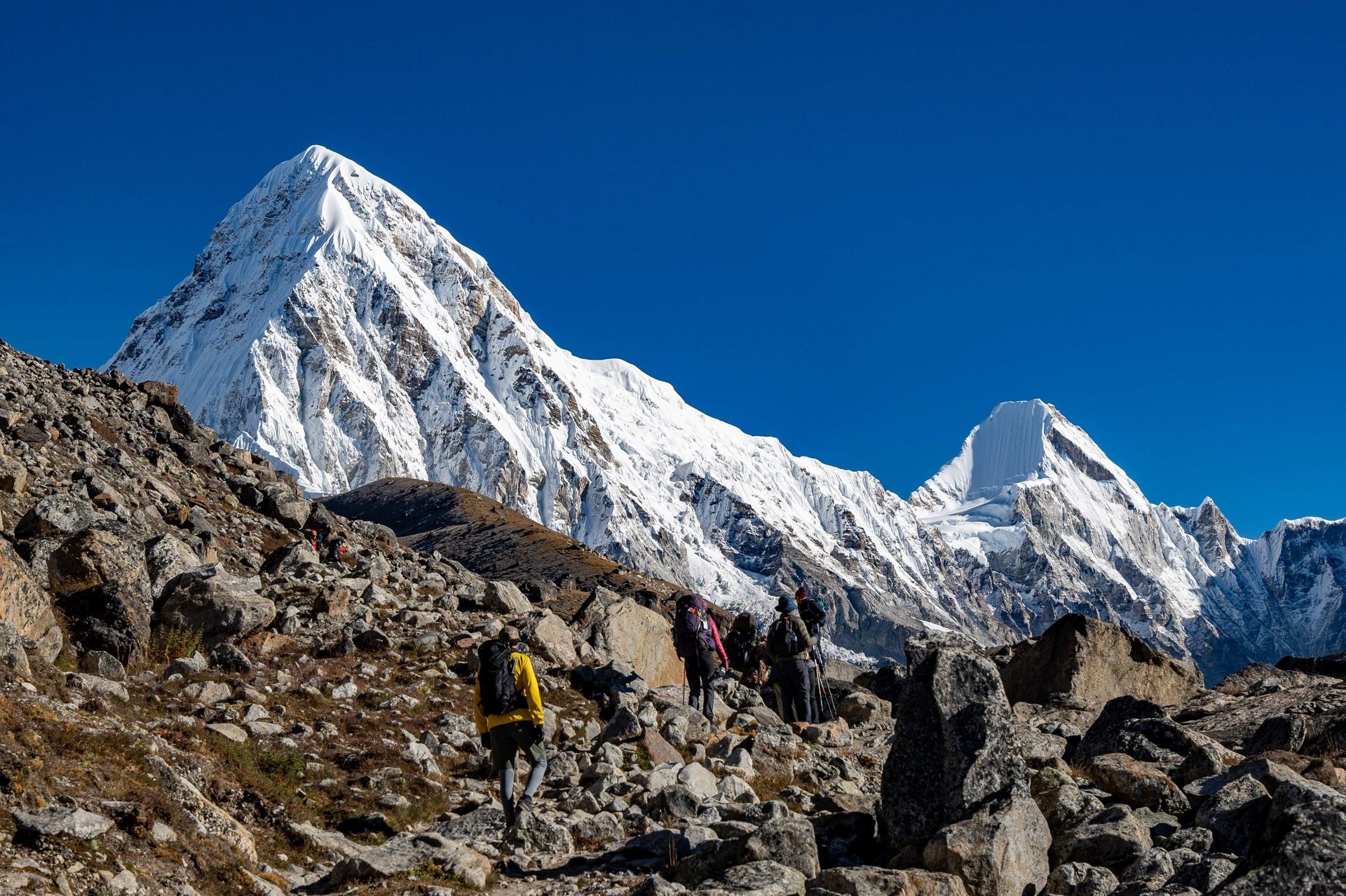
The 5 main challenges of the Everest Base Camp trek in December are extreme night cold, short daylight, icy trail sections, flight delays at Lukla, and reduced services in a few high villages. Preparation addresses each one.
Night cold: Lodge bedrooms have no heating. Water bottles freeze overnight above Dingboche.
Short days: Sunset arrives around 17:05, so every trekking day starts early.
Ice: Shaded sections near Thukla and the Lobuche approach hold hard-packed ice into the afternoon.
Flights: Fog and wind at Lukla (2,840 m) delay departures. Add 1 to 2 buffer days.
Services: A few lodges in small hamlets close for the winter, and hot showers disappear above Dingboche.
Common mistakes we see in December include packing a 3-season sleeping bag, scheduling a tight international flight home, and skipping the acclimatization days to save time. The sections below address each of these.
What Is the Weather Like on the Everest Base Camp Trek in December?
Weather on the Everest Base Camp trek in December is cold, dry, and mostly clear. Daytime highs range from 10 °C at Lukla to 0 °C at Gorak Shep. Night lows range from -2 °C at Lukla to about -18 °C at Gorak Shep. Precipitation is low, and wind is the main variable.
The Khumbu receives most of its annual precipitation during the monsoon (June to September). December sits in the dry window that follows, with low rainfall and low humidity. The Khumbu still receives occasional western disturbances, weather systems that bring snow and wind from the west for 1 to 3 days at a time.
In real-world use, the weather pattern repeats daily. The sky is clear at 06:00, wind rises by 10:00, cloud rolls up the valley by 13:00, and temperatures fall hard once the sun drops behind the ridge. Trekkers who finish walking by 14:00 avoid the coldest and windiest part of the day.
How Cold Does It Get at Everest Base Camp in December?
Everest Base Camp reaches about -17 °C to -20 °C at night in December, with daytime highs near 0 °C. Wind chill lowers the felt temperature by another 8 to 15 °C on exposed ridges such as Kala Patthar.
Altitude, wind, and cloud cover set the real temperature, and clear nights run colder because clouds hold surface heat. Most lodge dining rooms sit around 5 °C to 10 °C when the stove burns, and bedrooms match the outside air within a few degrees.
Cold exposure creates two problems that trekkers underestimate: slow fingers and dead batteries. Keep phones, cameras, and power banks inside a sleeping bag at night. A cold phone shuts down at 30% to 40% charge.
Does It Snow on the Everest Base Camp Trek in December?
Snow falls on the Everest Base Camp trek in December mostly above 4,000 m, with light to moderate accumulation after a western disturbance. Lukla, Phakding, and Namche see little snow. Dingboche, Lobuche, and Gorak Shep carry the most.
Winter snow concentrates at high altitude, while the lower valley stays mostly dry in December. Fresh snow covers the trail, and compacted snow turns to ice by the next morning.
Snow changes the trip in 3 ways: it slows walking pace, it closes the flight window at Lukla for 1 to 2 days, and it raises avalanche risk on steep slopes off the main trail. The standard EBC route avoids major avalanche terrain, but trekkers stay on marked paths and follow the guide in fresh-snow conditions.
How Many Hours of Daylight Are Available for EBC Trekking in December?
EBC trekking in December offers about 10.4 hours of daylight, with sunrise near 06:41 and sunset near 17:05 on 15 December at the latitude of Namche. Valley walls cut the usable light to 8 to 9 hours.
The numbers below show how daylight shifts across the month at 27.8° N.
1 December: sunrise 06:31, sunset 17:03 (10.5 hours)
15 December: sunrise 06:41, sunset 17:05 (10.4 hours)
31 December: sunrise 06:48, sunset 17:12 (10.4 hours)
Deep valleys delay direct sunlight. Dingboche and Lobuche lodges often stay in shade until 08:00 or 08:30, which means the first hour of the day feels coldest. Plan departures around 07:30 and aim to reach the next lodge by 15:30. A headlamp with spare batteries rounds out the daylight gap.
What Are the Temperatures at Key Stops Along the Everest Base Camp Trek?
Temperatures along the Everest Base Camp trek in December fall roughly 6 °C for every 1,000 m of altitude gained. Lukla ranges from -2 °C to 10 °C, while Gorak Shep ranges from -18 °C to 0 °C.
The table below lists approximate December day and night temperatures for the 5 key stops. Figures come from published December ranges for each village, rounded to the nearest degree.
Stop | Altitude | Night low | Day high |
Lukla | 2,840 m | -2 °C | 10 °C |
Namche Bazaar | 3,440 m | -7 °C | 8 °C |
Dingboche | 4,410 m | -13 °C | 3 °C |
Lobuche | 4,910 m | -16 °C | 1 °C |
Gorak Shep | 5,164 m | -18 °C | 0 °C |
Treat these numbers as averages. A cloudless night at Dingboche drops below -15 °C, and a windy day at Gorak Shep feels like -15 °C even at noon. Packing decisions rest on the night low, not the day high.
Is the Everest Base Camp Trek in December Safe?
The Everest Base Camp trek in December is safe for healthy, well-prepared trekkers who acclimatize properly, carry winter gear, and travel with a licensed guide. The main risks are altitude sickness, frostbite, and slips on ice, and each has a known prevention.
Safety in December depends more on preparation than on luck. Healthy adults with no heart or lung conditions complete the route every winter. The trekkers who run into trouble tend to share 3 habits: rushing the ascent, under-layering at night, and ignoring early symptoms.
What Are the Main Risks of Trekking to Everest Base Camp in December?
The 6 main risks of trekking to Everest Base Camp in December are acute mountain sickness, frostbite, hypothermia, dehydration, snow blindness, and falls on icy trails. Altitude sickness dominates every season, and cold adds the other five.
Acute mountain sickness (AMS): Symptoms include headache, nausea, dizziness, and poor sleep above 3,000 m.
Frostbite: Fingers, toes, nose, and ears freeze first, especially when gloves get damp.
Hypothermia: Core temperature falls when wind, wet layers, and fatigue combine.
Dehydration: Dry air and cold suppress thirst, so trekkers drink less than the 3 to 4 litres a day they need.
Snow blindness: UV reflection off snow burns the cornea within hours without category 4 lenses.
Falls: Ice on stone steps and bridge approaches causes sprains and fractures.
Medical support in December runs thinner than in autumn. According to the Himalayan Rescue Association, its aid posts in the Khumbu concentrate on the main trekking seasons, so winter trekkers assume the Pheriche post is closed unless the operator confirms otherwise. Kunde Hospital in Khunde operates year-round and serves as the main medical facility in the valley.
How Can Trekkers Prevent Altitude Sickness in Winter?
Trekkers prevent altitude sickness in winter by limiting sleeping-altitude gain to 300 to 500 m a day above 3,000 m, taking a rest day every 3 to 4 days, drinking 3 to 4 litres of fluid daily, and descending at the first sign of worsening symptoms.
According to the Wilderness Medical Society, trekkers above 3,000 m increase sleeping elevation by 300 to 500 m per day and add a rest day every 3 to 4 days. This pattern defines the 14-day itinerary below. Acetazolamide (Diamox), taken at 125 mg twice a day under a doctor's direction, lowers the risk of AMS for trekkers with a history of altitude trouble.
Prevention in practice looks like this.
Climb high, sleep low. Day hikes above the sleeping altitude, such as Nangkartshang Peak (about 5,080 m) from Dingboche, build acclimatization.
Check oxygen saturation (SpO2) every morning. A pulse oximeter reading in the mid-80s at Dingboche is common. A reading below 80% with symptoms triggers a descent conversation.
Report symptoms the same hour. Severe headache, vomiting, confusion, loss of balance, or breathlessness at rest signal high-altitude cerebral or pulmonary edema, and descent is the only treatment that works.
Skip alcohol and sleeping pills above 3,500 m.
Can Snow and Ice Affect the Everest Base Camp Trekking Route?
Snow and ice affect the Everest Base Camp trekking route most between Dingboche and Gorak Shep, where shaded stone steps, moraine slopes, and the Kala Patthar ascent turn slick after snowfall. Lower sections from Lukla to Namche remain mostly clear.
Traction tools turn a risky day into a routine one. Microspikes or light crampons, paired with trekking poles, cover the icy stretches around Thukla Pass and the Lobuche moraine. Rent them in Kathmandu for about $1 to $3 per day, or carry your own.
One trail rule matters more in winter than any other. Yak trains and porters move on the trail all day, and a loaded yak does not stop. Step to the uphill side of the path and let the animals pass on the drop side. On icy days, this single habit prevents more injuries than any equipment.
Is Travel Insurance Necessary for the Everest Base Camp Trek in December?
Travel insurance is necessary for the Everest Base Camp trek in December, and the policy must cover trekking up to at least 6,000 m, emergency helicopter evacuation, and medical treatment. Operators and many lodges require proof before departure.
Helicopter evacuation is the cost driver. Winter flights run only in daylight and in workable wind, so rescue timing varies, and evacuations from Gorak Shep or Dingboche cost thousands of dollars without cover. Premiums for a qualifying policy run about $55 to $160 for a trek of this length.
Check 3 clauses before buying. First, confirm the maximum altitude (6,000 m minimum). Second, confirm that "helicopter evacuation" appears in writing. Third, confirm that the policy accepts pre-approval of evacuations by the insurer's assistance line, because a pre-approved flight leaves less room for dispute. Carry the policy number and emergency phone line on paper, since phones die in the cold.
What Is the Everest Base Camp Trek in December Itinerary?
The Everest Base Camp trek in December follows a 14-day itinerary from Kathmandu: fly to Lukla, trek through Phakding, Namche, Tengboche, Dingboche, and Lobuche, reach Gorak Shep and Base Camp on day 9, and return by day 14. Two acclimatization days and one buffer day are built in.
The route is the same as in other seasons. The winter difference lies in the pacing: shorter days, earlier starts, and a flight buffer that protects the return home.
How Many Days Are Needed for the Everest Base Camp Trek in December?
The Everest Base Camp trek in December takes 14 days from Kathmandu to Kathmandu, including 12 walking days, 2 acclimatization days, and 1 buffer day for flight delays. Shorter 11 to 12 day packages exist, and they raise altitude-sickness risk.
A 12-day schedule saves 2 days and removes the buffer. In December, that buffer matters. Fog and wind at Lukla cancel flights on some winter mornings, and a trekker without a spare day risks missing the international flight home. Choose 14 days for a first Himalayan trek. Choose 12 only with a flexible return ticket.
Here is the day-by-day plan.
Day | Route | Sleeping altitude | Walking time |
1 | Arrive in Kathmandu, trek briefing | 1,400 m | – |
2 | Fly to Lukla, trek to Phakding | 2,610 m | 3 hours |
3 | Phakding to Namche Bazaar | 3,440 m | 6 hours |
4 | Acclimatization in Namche (Everest View Hotel, Khumjung) | 3,440 m | 3 to 4 hours |
5 | Namche to Tengboche | 3,860 m | 5 hours |
6 | Tengboche to Dingboche | 4,410 m | 5 hours |
7 | Acclimatization in Dingboche (Nangkartshang hike) | 4,410 m | 3 to 4 hours |
8 | Dingboche to Lobuche | 4,910 m | 5 hours |
9 | Lobuche to Gorak Shep, then Everest Base Camp | 5,164 m | 7 to 8 hours |
10 | Kala Patthar at sunrise, descend to Pheriche | 4,370 m | 7 hours |
11 | Pheriche to Namche | 3,440 m | 7 hours |
12 | Namche to Lukla | 2,840 m | 7 hours |
13 | Fly to Kathmandu | 1,400 m | – |
14 | Buffer day or departure | – | – |
The table shows 1 key winter adjustment: day 10 combines the Kala Patthar sunrise with a long descent. Trekkers who prefer a gentler pace add a second Gorak Shep night, which costs 1 extra day.
Which Villages and Landmarks Are Included in the Winter EBC Trek?
The winter EBC trek passes through 9 villages and landmarks: Lukla, Phakding, Namche Bazaar, Tengboche, Dingboche, Lobuche, Gorak Shep, Everest Base Camp, and Kala Patthar. Each stop plays a distinct role in the route.
Lukla (2,840 m): The airstrip town where the trek starts, home to Tenzing-Hillary Airport.
Phakding (2,610 m): A first-night stop along the Dudh Koshi River.
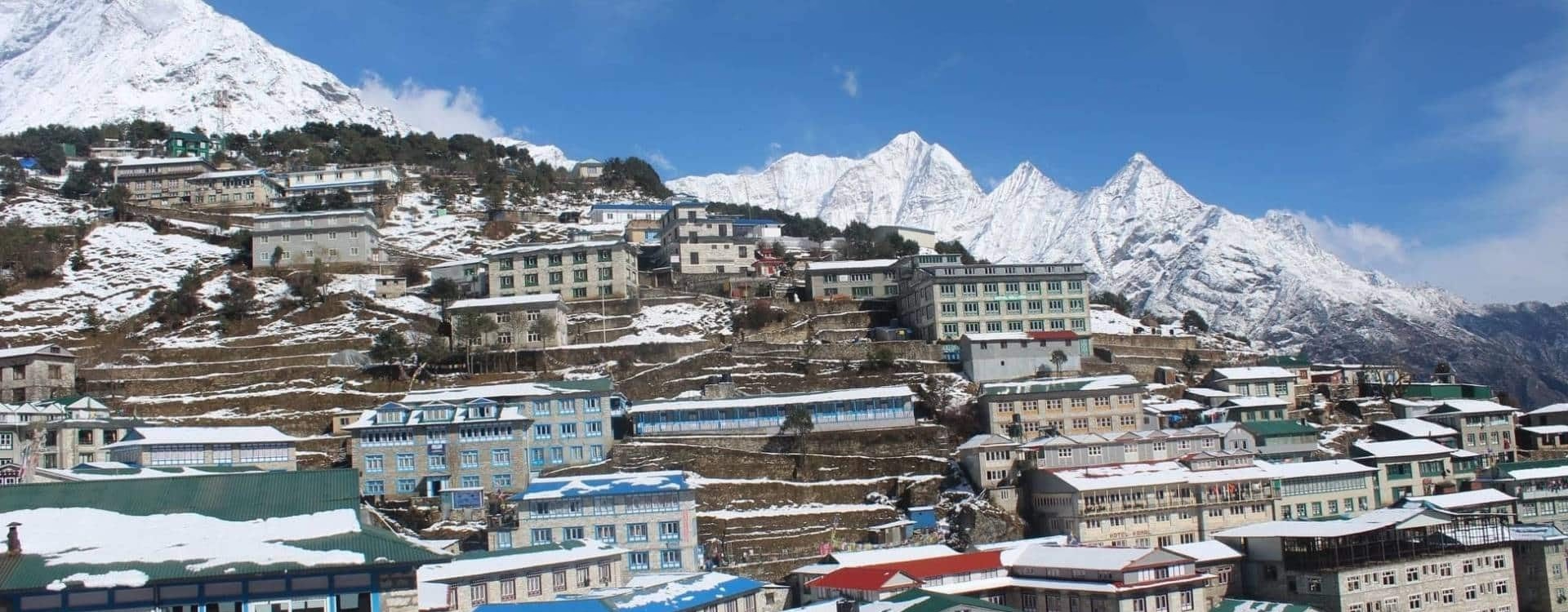
Namche Bazaar (3,440 m): The Sherpa trading hub with bakeries, gear shops, and the last reliable ATM.
Tengboche (3,860 m): The monastery village with direct views of Ama Dablam.
Dingboche (4,410 m): A farming valley village where the acclimatization hike begins.
Lobuche (4,910 m): A cold, windswept stop just above the Thukla Pass memorial chortens.
Gorak Shep (5,164 m): The last lodge settlement, and the base for Kala Patthar.
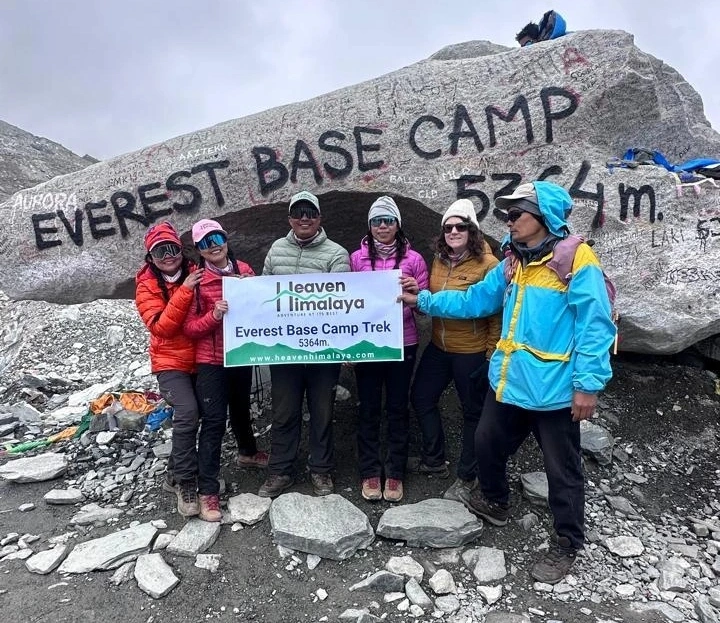
Everest Base Camp (5,364 m): The glacier camp where spring expeditions stage. It sits empty of tents in December.
Kala Patthar (5,545 m): The black ridge that offers the closest summit view of Everest.
One winter detail surprises first-timers. In December, Base Camp has no expedition tents, so the destination looks like a rocky glacier with prayer flags and a marker stone. The view of Everest comes from Kala Patthar, not from Base Camp itself. That is true in every season, but the empty camp makes it obvious.
Are Acclimatization Days Necessary for the December EBC Trek?
Acclimatization days are necessary for the December EBC trek because the body needs 1 to 2 days at one altitude to adapt before climbing higher, and cold nights make adaptation slower. Itineraries without them carry a higher rate of AMS.
The two standard rest days fall at Namche (3,440 m) and Dingboche (4,410 m). Neither day means sitting still. Active acclimatization works better: a short hike up and a return to sleep at the lower altitude. The Namche hike to the Everest View Hotel (3,880 m) and the Dingboche climb toward Nangkartshang both follow the "climb high, sleep low" principle.
Can the Everest Base Camp Trek Be Combined With Kala Patthar in December?
The Everest Base Camp trek combines with Kala Patthar in December as a standard part of the route, with Base Camp visited on the afternoon of day 9 and Kala Patthar climbed at sunrise on day 10. The climb takes 2 to 3 hours round trip from Gorak Shep.
Kala Patthar (5,545 m) gives the clearest Everest view of the trek, and Base Camp gives the sense of arrival. They complement each other, so most itineraries include both.
December adds 2 conditions to the Kala Patthar morning. Temperatures at the summit drop to about -20 °C before sunrise, and wind chill pushes the felt temperature lower. Start the climb at 05:30 with a headlamp, an insulated mitten layer, a face covering, and hot tea in a vacuum flask. Some trekkers choose the sunset climb instead, because afternoon temperatures are 5 to 8 °C warmer and the light on Everest turns gold. Sunrise brings the stronger photographs and the colder start, so the choice trades warmth for light.
What Should You Pack for the Everest Base Camp Trek in December?
Pack for the Everest Base Camp trek in December around the night low of -18 °C, using a layering system of base layer, insulation, and shell, plus a sleeping bag rated to -20 °C comfort. Total weight stays under 15 kg per person for the Lukla flight.
The Lukla flight limits each passenger to 15 kg in total, usually 10 kg checked and 5 kg carried. Anything above that goes by porter at extra cost. Pack lean, and rent the bulky items in Kathmandu's Thamel district.
What Winter Clothing Is Essential for the Everest Base Camp Trek?
Essential winter clothing for the Everest Base Camp trek includes 3 layers: a merino or synthetic base layer, a fleece or light down mid layer, and a waterproof shell, plus a heavy down jacket for evenings and summit mornings. Add insulated trousers for Kala Patthar.
The full clothing list has 9 items.
Base layers: 2 sets of merino or synthetic tops and bottoms
Mid layer: 1 fleece or light synthetic jacket
Down jacket: 700 to 800 fill power, rated to -20 °C
Shell jacket and trousers: Waterproof and windproof
Insulated trousers: For summit mornings and evenings
Gloves: A liner glove, a fleece glove, and an insulated mitten
Hat and buff: A wool beanie and a neck gaiter that covers the nose
Socks: 4 pairs of merino hiking socks plus 1 pair of sleep socks
Underwear: 3 pairs of quick-dry briefs
The most common packing mistake is a single thick jacket in place of layers. Layers adjust to the 20 °C swing between a sunny Namche midday and a Lobuche dawn. A thick jacket overheats at noon and underperforms at night.
Which Trekking Boots and Accessories Are Best for December EBC Trek?
The best trekking boots for the December EBC trek are insulated, waterproof, ankle-supporting boots with a stiff sole and room for 2 pairs of socks, paired with microspikes, trekking poles, and gaiters. Break the boots in over at least 50 km before departure.
Match the accessory list to the conditions.
Boots: Stiff, B2-rated or high-quality 4-season hiking boots, one size larger than street shoes
Camp shoes: Insulated down booties or lodge sandals for the dining room
Microspikes or light crampons: For ice above Dingboche
Trekking poles: Adjustable, with snow baskets
Gaiters: To keep snow out of boots on Kala Patthar
Sunglasses: Category 4 glacier lenses with side shields
Headlamp: With 2 sets of spare lithium batteries, since cold drains alkaline cells quickly
What Sleeping Gear and Personal Essentials Should You Bring?
Sleeping gear for the December EBC trek starts with a sleeping bag rated to -20 °C comfort, a sleeping bag liner, and an insulated pad, plus personal essentials like a water bottle, sunscreen, lip balm, and a basic medical kit. Lodges provide blankets but no heating in rooms.
The sleeping system carries the most weight in the cold. A fleece liner adds roughly 3 to 5 °C of warmth to a -20 °C bag. A 1-litre bottle filled with hot water and tucked into the foot of the bag at bedtime keeps feet warm for hours, and the water stays liquid until morning. Use a wide-mouth insulated bottle, and store it upside down so ice forms at the base and not the cap.
The personal kit holds 8 items.
Water bottles (2 x 1 litre) and an insulated sleeve
Water purification tablets or a filter
SPF 50 sunscreen and SPF lip balm
A pulse oximeter
Blister tape, pain relief, and rehydration salts
Wet wipes and hand sanitizer, because water freezes in lodge bathrooms
A power bank (10,000 mAh) kept inside the sleeping bag overnight
Cash in rupees, since ATMs above Namche are unreliable
Are Tea Houses Open on the Everest Base Camp Trek in December?
Tea houses are open on the Everest Base Camp trek in December at every main stop from Lukla to Gorak Shep, with fewer open lodges in small hamlets and more room availability than in autumn. Owners in some higher villages move down-valley in January and February.
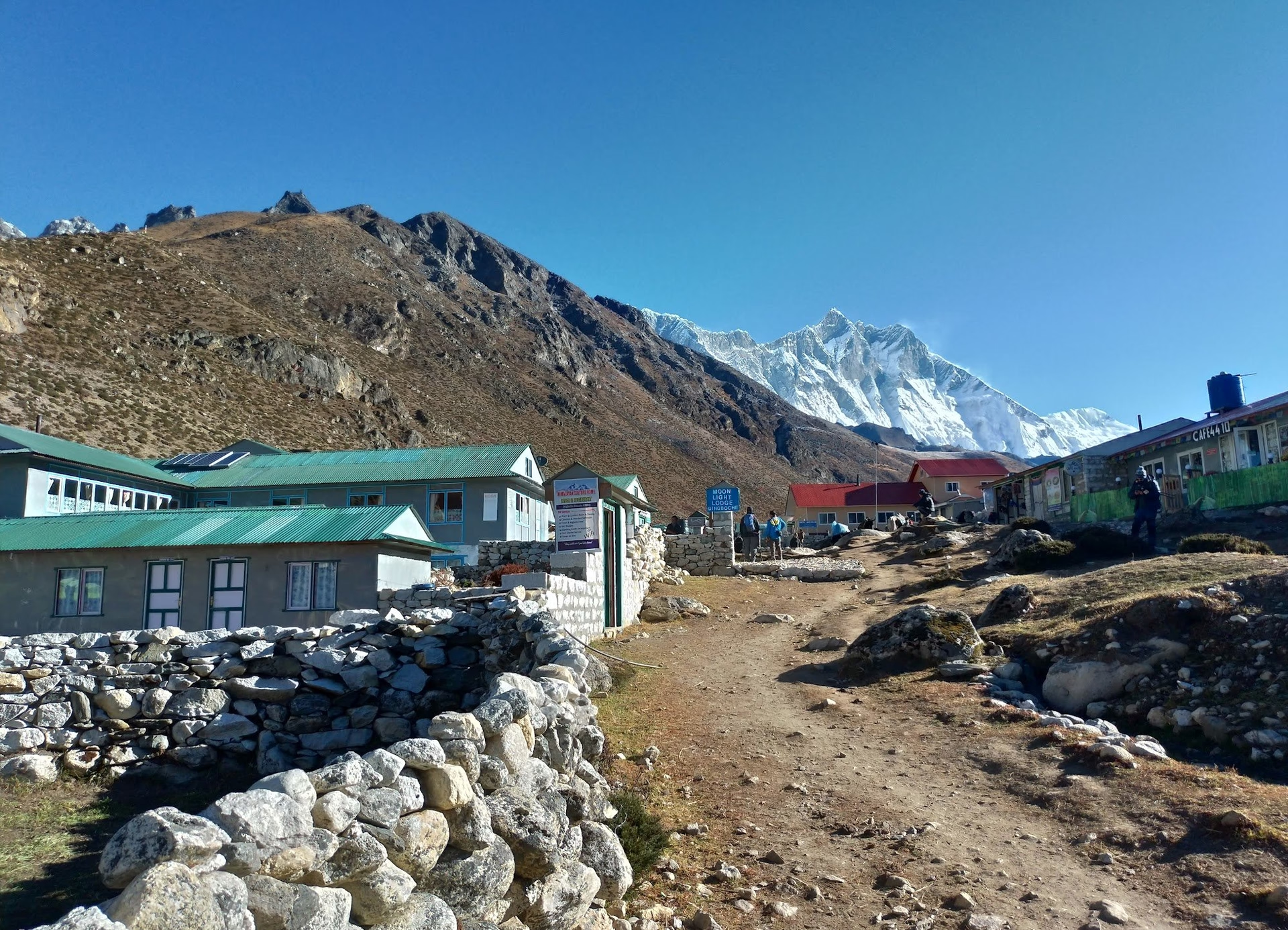
Tea houses are the family-run lodges that supply beds, meals, and hot drinks along the route. In December, the main stops stay staffed: Lukla, Phakding, Namche, Tengboche, Dingboche, Lobuche, and Gorak Shep. A handful of lodges at smaller stops, such as Pangboche and Pheriche, close for the season. Experienced guides know which lodges are open and phone ahead.
What Accommodation Options Are Available During Winter EBC Trek?
Winter accommodation on the EBC trek includes 3 options: basic twin-share tea house rooms, upgraded rooms with attached bathrooms at lower altitudes, and premium lodges in Namche and Lukla. Above Dingboche, nearly all rooms are basic twin-share with shared toilets.
Here is how the options compare.
Basic tea house room: A twin bed with foam mattress, a blanket, a shared toilet, and no heating, usually priced at $5 to $15 per night when you eat your meals at the lodge
Attached-bathroom room: Available in Lukla, Phakding, and Namche, usually $20 to $40
Premium lodge: Hotels such as those in Namche and the Everest View Hotel offer heated rooms and hot showers, from about $60 per night
The dining room stove is the heart of every lodge. Owners light it around 16:00 using firewood or yak dung, and trekkers gather there until 20:00, when the cold sends everyone to bed.
Can You Find Food and Hot Drinks Along the EBC Trekking Route?
Food and hot drinks are available at every tea house on the EBC route, with a menu built on dal bhat, noodles, eggs, soups, and hot tea. Prices climb with altitude because porters and yaks carry every supply.
A winter menu has 5 staples.
Dal bhat: Lentil soup, rice, and vegetable curry, with free refills at most lodges
Noodle soup and fried rice: Quick carbohydrates after a day of walking
Eggs and pancakes: Breakfast standards in every lodge
Garlic soup: A local remedy served for altitude headaches
Hot drinks: Ginger tea, hot lemon, and black tea at roughly $2 to $5 per cup
Skip meat above Namche. Meat travels for days on porters' backs without refrigeration, and vegetarian meals carry lower food-safety risk. Order your dinner when you arrive so the kitchen schedules it, and eat early to stay warm. Pay for hot water, showers, battery charging, and Wi-Fi separately. These add-ons run roughly $2 to $10 each and cost more at higher altitude, and hot showers disappear above Dingboche in winter because pipes freeze.
Should You Book Tea Houses and Flights in Advance?
Book flights in advance and leave tea houses flexible: Lukla flights sell out 2 to 3 months ahead around Christmas and New Year, while December tea houses rarely fill outside the holiday week. Guided trekkers receive both handled by the operator.
Flights deserve the early booking. Lukla runs small aircraft carrying about 16 to 17 passengers, and winter weather cuts the number of flying days. According to the Civil Aviation Authority of Nepal, Lukla flights depart from Kathmandu in the off-season, while spring (March to May) and autumn (September to November) flights shift to Ramechhap (Manthali), roughly 3 to 4 hours by road from Kathmandu. Early December sometimes follows the autumn pattern, so confirm the departure airport with your operator a few days before flying. The Kathmandu to Lukla flight takes 30 to 35 minutes, and the Manthali to Lukla flight takes 15 to 20 minutes.
Tea houses need less planning. A guide phones ahead to hold rooms, and independent trekkers rarely struggle for beds except during the 20 December to 5 January holiday window. Book a flight buffer day regardless, and keep the international flight home at least 2 days after the planned trek end.
Planning a December departure? Heaven Himalaya confirms flights, lodges, and buffer days before you leave Kathmandu. Ask for the winter version of the itinerary.
How Much Does the Everest Base Camp Trek in December Cost?
The Everest Base Camp trek in December costs about $1,350 to $1,900 for a standard guided package from Kathmandu, and $1,737 to $4,625 for a fully independent trip that includes international flights. Luxury packages run from about $3,300.
Winter prices sit at the lower end of each range. Lodge rooms, Kathmandu hotels, and some operator packages carry off-season discounts. The Lukla flight price does not fall with demand, so it remains a fixed cost of about $400 to $500 round trip per person.
What Is Included in the Everest Base Camp Trek Package?
A standard Everest Base Camp trek package includes 8 items: Kathmandu airport transfers, Lukla flights, licensed guide, porter service, tea house accommodation, meals, permits, and a trekking map or route briefing. International flights, visas, insurance, and gear stay separate.
Read the inclusion list line by line. Common exclusions that surprise trekkers are extra meals in Kathmandu, hot showers and charging at lodges, tips, and rescue costs. Tipping follows a rough guide of 10% to 15% of the guide and porter fee, shared across the team.
Are Winter EBC Trekking Permits and Guide Services Required?
Winter EBC trekking permits are required, and a licensed guide is strongly recommended and widely required. Trekkers pay for 2 local permits: the Sagarmatha National Park entry permit and the Khumbu Pasang Lhamu Rural Municipality permit.
Current fees run about NPR 3,000 (roughly $22 to $25) for the national park and NPR 3,000 (roughly $22 to $25) for the rural municipality. The TIMS card is not required in the Everest region, as the Khumbu Pasang Lhamu Rural Municipality replaced it with their own local entry permit in 2017. Fees and rules shift, so confirm exact figures with an operator or the Nepal Tourism Board before paying.
On guide rules, Nepal tightened independent trekking in 2023, and the Everest region kept a more flexible position than restricted areas do. The legal minimum differs from the practical minimum. Winter conditions favor a licensed guide, because guides read weather, check SpO2 each morning, manage lodge logistics, and call a helicopter fast. Visas add $30 (15 days), $50 (30 days), or $125 (90 days) on arrival.
How Can You Budget for Flights, Accommodation, Meals, and Equipment for EBC Trek?
Budget for the Everest Base Camp trek in December by splitting costs into 8 categories: international flights, permits and visa, lodging, meals, guide and porter, gear, insurance, and an emergency fund. The 2026 total ranges from about $1,737 to $4,625.
The table below summarizes 2026 cost ranges in US dollars, drawn from published 2026 estimates and Nepal Hiking's cost breakdown.
Category | 2026 range (USD) | Notes |
International flights | 720 – 1,540 | Varies by origin and booking date |
Permits and visa | 52 – 155 | Includes park, municipality, visa |
Accommodation (12–15 nights) | 125 – 950 | Basic rooms to premium lodges |
Meals and drinks | 155 – 360 | Rises with altitude |
Guide and porter | 420 – 730 | Guide $30–50 per day, porter $25–40 per day |
Gear and equipment | 105 – 520 | Rent vs buy |
Travel insurance | 55 – 160 | With helicopter cover |
Emergency fund | 105 – 210 | Flight delays, extra nights |
Total | 1,737 – 4,625 |
Gear is the easiest category to control. Rent a sleeping bag and down jacket in Thamel for about $1 to $3 per day each, and buy only boots, socks, and base layers. Carry rupees in small notes, because lodges rarely change large bills. Set the emergency fund at $150 or more, since a flight delay in December adds 1 to 2 nights of lodging and meals in Lukla or Kathmandu.
How Can You Prepare for the Everest Base Camp Trek in December With Heaven Himalaya?
Prepare for the Everest Base Camp trek in December with Heaven Himalaya by following a 5-step plan: build endurance for 8 to 12 weeks, confirm gear, secure insurance, book flights early, and join a pre-trek briefing in Kathmandu. Guides then manage the route, pacing, and weather calls.
Physical preparation centers on endurance. Walk or hike 3 to 4 times a week, add 1 long weekend hike with a loaded pack, and include stair or hill training. Cardiovascular fitness helps recovery, but it does not prevent altitude sickness. Cold-weather readiness adds one more task: test your sleeping bag and layers on a cold night at home before you fly.
Can Heaven Himalaya Arrange a Guided Everest Base Camp Trek in December?
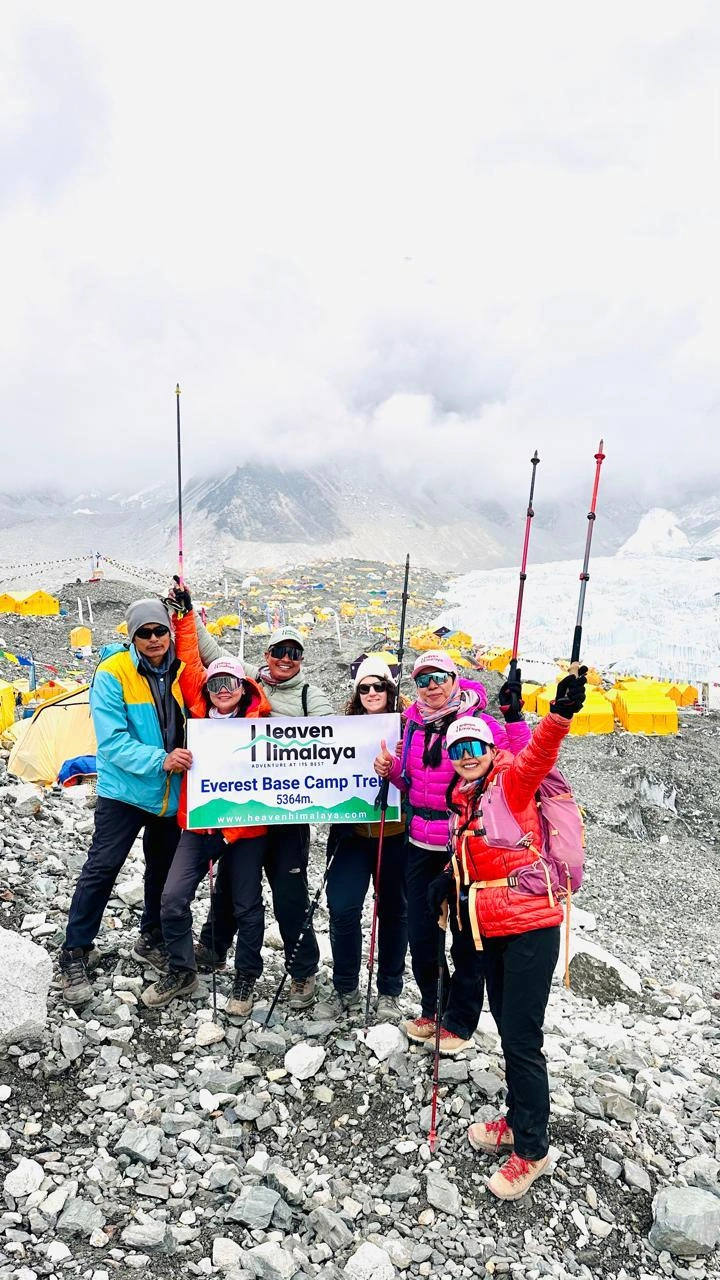
Heaven Himalaya arranges guided Everest Base Camp treks in December, including licensed guides, porters, permits, Lukla flights, tea house stays, and winter-specific buffer days. EBC Itineraries run 14 days for most trekkers and extend for those who want a slower pace.
A guided December trek from Heaven Himalaya covers 4 areas that matter most in winter: pacing that follows altitude guidelines, daily health checks, lodge confirmations in the open villages, and flight rebooking support when Lukla weather delays departures. Group sizes stay small, so pace adjusts to the slowest trekker rather than the fastest.
Ready to compare dates? Contact Heaven Himalaya for a December 2026 departure plan with fixed pricing and a flexible flight buffer.
What Should You Know Before Booking the Everest Base Camp Trek in December?
Before booking the Everest Base Camp trek in December, confirm 6 points: itinerary length, flight buffer, sleeping bag rating, insurance coverage, permit inclusion, and guide license. Each point protects safety, budget, or both.
Use this checklist when you compare operators.
Length: 14 days with 2 acclimatization days beats 11 days for first-timers.
Buffer: A spare day at the end covers Lukla flight delays.
Gear: A -20 °C sleeping bag and a down jacket come included or rentable.
Insurance: The policy covers 6,000 m and helicopter evacuation.
Permits: The price lists the park and municipality permits by name.
Guide: The guide holds a government trekking license and wilderness first-aid training.
The Everest Base Camp trek in December rewards trekkers who respect the cold, plan the buffer day, and acclimatize slowly. Fewer crowds, sharper views, and quiet lodges follow from that preparation. With a 14-day schedule, a -20 °C sleeping bag, and a licensed guide, the December Everest Base Camp trek turns a demanding winter route into one of the most rewarding walks in the Himalaya.