

Trekking to Everest Base Camp in May: Weather & Tips

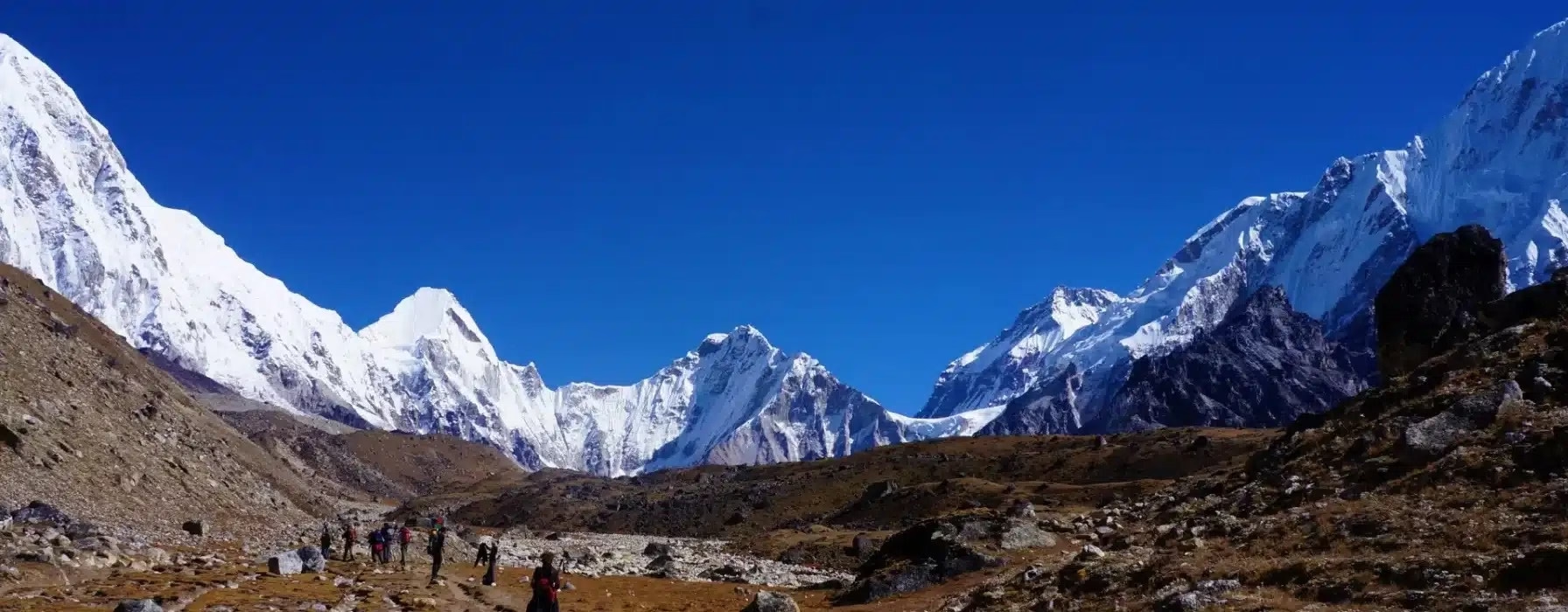
Trekking to Lo Manthang is a high-altitude cultural adventure in Upper Mustang, Nepal, leading to a historic walled city at 3,840 meters in the rain shadow of the Annapurna and Dhaulagiri ranges. The Lo Manthang trek combines dramatic trans-Himalayan landscapes, ancient Tibetan Buddhist monasteries, mysterious cave settlements, traditional Loba culture, and historic villages along the Kali Gandaki valley. Its unique blend of Himalayan scenery and Tibetan heritage makes Upper Mustang one of Nepal’s most distinctive trekking destinations.
Planning a Lo Manthang trek requires choosing the right season, preparing for high-altitude conditions, arranging restricted-area permits, and budgeting for transportation and accommodation. Depending on the route and acclimatization schedule, the trek typically takes 10 to 18 days and passes through remote settlements, mountain passes, and cultural landmarks, including Jampa Lhakhang, Thubchen Gompa, and the famous Tiji festival. This guide covers trekking routes, itineraries, difficulty, permits, costs, accommodation, packing essentials, safety, and guided trekking options to help you plan your Upper Mustang adventure.
Why Is May One of the Best Months for Everest Base Camp Trekking?

May combines about 13 hours of daylight, the warmest trail temperatures of the trekking year, snow-free paths below 5,000 m, and the peak of the Everest climbing season. Mornings deliver the clearest views, and rain risk stays low until about 22 May.
The month splits into 3 phases, and the phase you pick changes the trek more than the month does. The table below compares early, mid, and late May by trail traffic and weather.
Phase | Dates | Trail traffic | Weather pattern |
Early May | 1 to 10 May | Highest; April crowds linger | Clearest air; rhododendrons in flower below 3,500 m |
Mid May | 11 to 22 May | Thinning | Afternoon cloud above 4,000 m; haze starts |
Late May | 23 to 31 May | Lowest | Thunderheads 2 to 3 times a week; humid below Namche |
Mid May suits most trekkers. According to Anadolu Agency, 10 Sherpas opened the 2026 summit route on 13 May, and Everest Chronicle reported around 270 climbers on top on 20 May. October and November deliver sharper long-range clarity because post-monsoon air carries less dust. May trades some of that sharpness for nights about 3°C warmer than April and a front-row view of summit season.
What Is the Weather Like on the Everest Base Camp Trek in May?
May weather is pre-monsoon: dry and warm for the first 3 weeks, with building afternoon cloud, the lightest wind of the year, and showers below 3,500 m after about 22 May.
Monsoon rain reaches central Nepal around mid June, so May sits in the transition window. Wind averages 5 to 10 km/h below 4,000 m and lifts to 15 to 30 km/h near Gorak Shep after 1 PM. Snow retreats above 5,000 m by mid May, leaving bare rock on the Base Camp trail.
How Clear Are the Mountain Views in May?
Views stay sharp from sunrise until about 10:30 AM. Cloud then climbs the valley, and pre-monsoon haze thickens after 15 May, so the clearest skies fall between 1 and 15 May.
Plan around the clock, not the calendar. Leave Namche by 7 AM for the Everest View Hotel hike on Day 4, so Ama Dablam and Everest stand clear before the cloud arrives. Our guides see one mistake every season: trekkers sleep through sunrise at Tengboche, then complain at 2 PM that Ama Dablam vanished. The mountain stayed put. The cloud moved in. Use midday hours for villages, prayer flags, and portraits.
Can You See Mount Everest and Other Himalayan Peaks in May?

Yes. Mount Everest (8,848.86 m) first appears from the viewpoint above Namche Bazaar, reappears at Tengboche, and rises beside Lhotse from Kala Patthar. Base Camp itself hides the summit behind the Nuptse ridge.
That last point surprises first-timers. Base Camp sits in a glacial bowl, and Everest stays out of sight from the tent area. The summit view belongs to Kala Patthar, the 5,545 m ridge above Gorak Shep.
What Are the Daytime and Nighttime Temperatures of Everest Base Camp Trek in May?
Daytime temperatures fall from 16 to 20°C in Lukla to 1 to 4°C in Gorak Shep, and nights drop from 4 to 7°C to between -12 and -8°C. Dawn at Kala Patthar runs -12 to -8°C.
The table below lists typical May ranges by village, rounded from trail readings. Early May sits at the cold end of each range, late May at the warm end.
Village | Altitude | Day (°C) | Night (°C) |
Lukla | 2,840 m | 16 to 20 | 4 to 7 |
Namche Bazaar | 3,440 m | 13 to 17 | 1 to 5 |
Tengboche | 3,860 m | 10 to 14 | -2 to 2 |
Dingboche | 4,410 m | 6 to 10 | -6 to -2 |
Lobuche | 4,910 m | 3 to 6 | -9 to -5 |
Gorak Shep | 5,181 m | 1 to 4 | -12 to -8 |
Temperature falls about 6.5°C per 1,000 m of climb, which explains the 15°C gap between Lukla and Gorak Shep. The numbers look gentle until you stop moving. Above 4,500 m, a standstill at +5°C chills the body fast, and bedrooms carry no heating.
What Are the Main Highlights of the Everest Base Camp Trek in May?
The 5 main highlights are the high-peak skyline of Everest, Lhotse, Nuptse, and Ama Dablam; Namche Bazaar; Tengboche Monastery; spring rhododendron forests; and sunrise from Kala Patthar. May adds the Base Camp climbing activity.
Each highlight sits at a specific point on the route, and May rewards trekkers who time each one.
Which Himalayan Peaks Can You See Along the Everest Route?
You see 8 major peaks above 6,700 m on the standard route: Everest, Lhotse, Makalu, Cho Oyu, Nuptse, Pumori, Ama Dablam, and Kangtega. Heights and best viewpoints:
Mount Everest, 8,848.86 m: Kala Patthar
Lhotse, 8,516 m: Tengboche and Dingboche
Makalu, 8,485 m: Nagerjun Hill above Dingboche
Cho Oyu, 8,188 m: Visible from the Gokyo Valley (blocked from Kala Patthar by the Pumori and Khumbutse ridges)
Nuptse, 7,861 m: Namche viewpoint to Gorak Shep
Pumori, 7,161 m: Lobuche to Kala Patthar
Ama Dablam, 6,812 m: Tengboche to Dingboche
Kangtega, 6,782 m: Namche to Tengboche
What Makes Namche Bazaar and Tengboche Worth Visiting?
Namche Bazaar (3,440 m) is the Sherpa trading town and last ATM stop on the route, and Tengboche (3,860 m) holds the Khumbu's best-known monastery, set against Ama Dablam. Both double as acclimatization stops.
Namche packs a Sherpa Museum, an Everest photo gallery, bakeries, gear shops, and a Saturday market into one bowl-shaped hillside. Tengboche Monastery was founded in 1916 and rebuilt after a 1989 fire. Monks hold afternoon prayers that visitors watch quietly from the back, shoes off. Read more about Tengboche Monastery before you go. The Namche to Tengboche walk descends to the Dudh Koshi before climbing to the monastery, and trekkers call it the most scenic stretch of the route.
Can You Experience Rhododendron Blooms and Spring Landscapes in May?
Yes, in the first half of May. Rhododendron forests flower between Phakding and Tengboche until about 10 May, then fade as the season climbs, while dwarf species near Dingboche bloom into early June.
Rhododendron is Nepal's national flower, and red tree rhododendrons light up the hillsides below 3,500 m in early May. Deboche's forest, just below Tengboche, gives the thickest bloom. The wider spring season for trekking in Nepal follows the same pattern.
What Cultural Experiences Can You Enjoy in Sherpa Villages?
Sherpa culture shows up in 4 places on the trail: the Namche Saturday market, monastery prayers at Tengboche and Pangboche, Buddha Purnima, and the Tenzing-Hillary Everest Marathon finish on 29 May.
Sherpas migrated from eastern Tibet to the Khumbu about 500 years ago, and Buddhism shapes daily life. Mani walls, stone slabs carved with prayers, mark village entrances. Pass them with the wall on your right. When yak trains approach, step to the mountain side of the trail, never the cliff side.
Buddha Purnima, the full-moon birthday of the Buddha, falls on 1 May in 2026 and 20 May in 2027. Butter lamps burn in village shrines that evening. The Tenzing-Hillary Everest Marathon starts at Base Camp every 29 May and ends in Namche, so late-May trekkers share lodges with runners. The Mani Rimdu festival at Tengboche falls in October, so May trekkers miss it.
What Is the Everest Base Camp Trek Itinerary for May?
The classic May itinerary runs 14 days: 2 days in Kathmandu, 12 days on the route including 2 acclimatization days, a Base Camp day, and a Kala Patthar sunrise. Add 2 spare days for Lukla weather.
The route follows the Dudh Koshi and Imja valleys from Lukla through Phakding, Namche Bazaar, Tengboche, Dingboche, Lobuche, and Gorak Shep, then returns on the same trail.
How Many Days Do You Need to Reach Everest Base Camp in May?
You need 12 days from Lukla and back, or 14 days door to door from Kathmandu. Reaching Base Camp takes 8 trekking days with 2 rest days built in.
Shorter plans exist. An 11-day Everest Base Camp short trek compresses the climb, and helicopter returns cut the descent to under 1 hour. Compressed schedules cost acclimatization nights, and nights are the currency of altitude safety. In May, a 14-day plan plus 2 buffer days (16 days total) protects both your health and your flight home.
What Happens on Each Day of the Everest Base Camp Trek?
Each day follows 1 pattern: depart by 7 AM, reach the night's village by early afternoon, and rest before cloud and cold arrive. The table below lists all 14 days with sleeping altitude and walking time.
Day | Route | Sleeps at | Walking time |
1 | Arrive in Kathmandu | 1,400 m | None |
2 | Fly to Lukla; walk to Phakding | 2,610 m | 3 to 4 h |
3 | Phakding to Namche Bazaar | 3,440 m | 6 h |
4 | Acclimatization at Namche; hike to Everest View Hotel | 3,440 m | 3 to 4 h |
5 | Namche to Tengboche | 3,860 m | 5 h |
6 | Tengboche to Dingboche | 4,410 m | 5 h |
7 | Acclimatization at Dingboche; Nagerjun Hill | 4,410 m | 4 to 5 h |
8 | Dingboche to Lobuche | 4,910 m | 5 h |
9 | Lobuche to Gorak Shep and Base Camp; back to Gorak Shep | 5,181 m | 8 h |
10 | Kala Patthar sunrise; descend to Pheriche | 4,240 m | 7 h |
11 | Pheriche to Namche | 3,440 m | 7 h |
12 | Namche to Lukla | 2,840 m | 7 h |
13 | Fly to Kathmandu | 1,400 m | None |
14 | Departure | None | None |
May changes Day 2 more than any other day. Lukla flights leave from Manthali Airport in Ramechhap during spring, a 4 to 5 hour drive east of Kathmandu, so pickup happens around 1 to 2 AM. Sleep early on Day 1. Day 9 is the longest and highest day, and Day 10 drops 1,305 m from Kala Patthar to Pheriche, which punishes knees. Poles earn their space here.
Why Are Acclimatization Days Important at Namche Bazaar and Dingboche?

Acclimatization days give your body time to raise red blood cell counts and adjust breathing before the next climb. Namche (3,440 m) and Dingboche (4,410 m) are the 2 stops where sleeping altitude rises fastest.
The rule is climb high, sleep low. On Day 4, the Everest View Hotel hike gains about 520 m above Namche. On Day 7, Nagerjun Hill gains about 690 m above Dingboche. Both hikers return to sleep lower. According to the Wilderness Medical Society's 2019 altitude-illness guidelines, sleeping altitude above 3,000 m should rise by no more than 500 m per night, with a rest day every 3 to 4 days. This itinerary stays at or near that ceiling. Day 6 gains 550 m, the tightest night, and Day 8 matches the 500 m limit, which is why a rest day sits between them. Skipping a rest day because the weather feels warm is the most common mistake in May.
Can You Visit Kala Patthar During the May Trek?
Yes. Kala Patthar (5,545 m) is the highest point of the trek and the best Everest viewpoint. Hikers leave Gorak Shep around 3:30 AM, climb 364 m in about 2 hours, and reach the ridge before the 5:15 AM sunrise.
May suits the climb. Dawn temperatures run -12 to -8°C, far milder than the -20°C common in winter, and wind stays light before 9 AM. Carry a headlamp, down jacket, thermos of hot tea, and spare gloves, because fingers freeze first during photo stops. Everest's black pyramid appears behind Nuptse, with Lhotse to its left and Pumori across the glacier. Trekkers sleep in Gorakshep the night before, which puts the ridge at the lodge's doorstep. Cloud builds from 10:30 AM, so sunrise is the only reliable slot in May.
How Difficult Is the Everest Base Camp Trek in May?
The Everest Base Camp trek rates moderate on effort and demanding on altitude: 5 to 8 hours of walking per day, no technical climbing, and about half the oxygen of sea level at 5,364 m. Fitness and pacing decide the outcome.
The trek covers about 130 km round trip from Lukla over 12 days, an average of 8 to 13 km per day. Distance is the easy part. Altitude does the damage.
What Level of Fitness Do You Need for the Everest Base Camp Trek?
You need the fitness to walk 6 hours a day for 10 to 12 consecutive days on uneven trails with a 6 to 8 kg daypack. A baseline test: hike 6 hours on Saturday, then 4 hours on Sunday, and walk normally on Monday.
Cardio endurance matters more than strength. Regular hikers, runners, and cyclists adapt quickest. Gym-only athletes underestimate descents, since quadriceps absorb 1,305 m of downhill on Day 10. The training schedule appears in the preparation section below.
How Many Hours Do You Walk Each Day for Everest Base Camp Trek?
Expect 5 to 7 hours of walking on most days, 3 to 5 hours on the 2 acclimatization days, and 8 hours on Day 9, the longest day.
The steepest climb is Day 3, which gains 830 m from Phakding to Namche in about 6 hours and crosses the 3,000 m line. Most days finish in villages by 3 PM. Descent days 11 and 12 each run 7 hours, so the return takes longer than first-timers expect.
Is the Everest Base Camp Trek Suitable for Beginners?

Yes. First-time trekkers complete the route every May, because it needs no technical skill, climbs gradually, and follows teahouse-supported trails. Beginners succeed with 8 to 12 weeks of training and a licensed guide.
May is the gentlest month for beginners: warm lower trails, long daylight, and busy teahouses full of other groups. Our guides name 4 beginner mistakes: walking too fast on Day 3, drinking less because the air feels warm, wearing boots broken in for under a week, and skipping the Dingboche rest day. A guide with an oximeter checks oxygen saturation each day, which keeps small headaches from becoming evacuations.
What Challenges Can You Expect on the Everest Base Camp Trail in May?
May brings 6 specific challenges: crowded teahouses, heat, dust, UV exposure, afternoon wind, and late-month showers.
Crowds: on 21 April 2025, the Sagarmatha National Park office recorded 694 visitors in a single day, and early May inherits that rush
Heat: the Phakding to Namche climb reaches 22°C
Dust: dry lower trails cause the dry cough trekkers call Khumbu cough
UV: According to the WHO's Global Solar UV Index guide, UV radiation rises 10 to 12% for every 1,000 m gained, since a thinner atmosphere absorbs less of it.
Wind: afternoon gusts reach 15 to 30 km/h near Gorak Shep
Showers: late May brings rain risk below 3,500 m
Teahouse beds in Dingboche, Lobuche, and Gorak Shep fill by early afternoon in the first 10 days of May. Advance booking through an operator solves that problem.
What Should You Pack for the Everest Base Camp Trek in May?
Pack a layering system (base layer, fleece, down jacket, waterproof shell, sun protection), broken-in boots, a -10°C sleeping bag, 3 liters of water capacity, and a power bank. Lukla flights allow 10 kg checked plus 5 kg hand luggage.
The full list lives in the packing list for trekking in Nepal.
Which Clothing Layers Are Best for May Weather?
Wear 4 layers by day and add a fifth by night: moisture-wicking base layer, trekking shirt, fleece mid-layer, windproof shell, and a down jacket after sunset above Tengboche. Layers beat bulky jackets, because the temperature swings 15°C between Lukla and Gorak Shep.
Pack these items:
3 quick-dry shirts, including 1 long-sleeve UPF shirt
2 pairs of trekking pants, 1 zip-off for the hot lower trail
1 thermal top and 1 thermal bottom for nights
1 fleece jacket and 1 down jacket rated for -10°C
1 waterproof shell for late-May showers
3 pairs of wool socks, 1 beanie, 1 wide-brim hat, light gloves
Skip heavy mittens, hard-shell pants, and microspikes. The standard trail runs snow-free in May.
What Trekking Boots and Equipment Do You Need?
You need waterproof, mid-cut trekking boots broken in over at least 50 km, 2 trekking poles, a 30 to 40 liter daypack, a headlamp, and 2 insulated 1-liter bottles. Buy boots 3 months ahead. New boots cause more trail misery than any other gear failure.
Poles take weight off the knees on the 1,305 m descent from Kala Patthar. Water purification tablets back up the boiled water teahouses sell, since single-use plastic bottles have been banned in the Khumbu since January 2020. Thamel in Kathmandu rents and sells every item above.
Do You Need a Sleeping Bag for the Everest Base Camp Trek?
Yes. Teahouse rooms carry no heating, and Lobuche and Gorak Shep drop to -12°C at night in May. A sleeping bag with a comfort rating of -10°C keeps you warm, and a silk liner adds 2 to 4°C.
Rental bags cost about $2 per day in Kathmandu. Heaven Himalaya provides a sleeping bag and duffel bag and arranges a down jacket on its package.
What Sunscreen, Sunglasses, and Personal Essentials Should You Bring?
Bring SPF 50+ sunscreen, SPF 30+ lip balm, category 4 glacier sunglasses with side shields, and a hat covering the ears and neck. UV exposure at 5,000 m runs about 50% above sea level.
Apply sunscreen at 7 AM, 11 AM, and 2 PM. Cloud blocks little UV, so overcast days burn as hard as clear ones. Add these essentials:
Toilet paper, wet wipes, and hand sanitizer
Blister plasters and a basic first-aid kit
Power bank of 10,000 to 20,000 mAh
Nepali rupees in small notes
Copies of passport, visa, and insurance
Women trekkers find a female packing list for the Everest Base Camp trek useful. For bathroom realities, read the guide to toilets and showers on an Everest Base Camp trek.
How Much Does the Everest Base Camp Trek Cost in May?
A guided 14-day Everest Base Camp trek in May costs $1,199 to $1,580 per person with Heaven Himalaya, depending on group size, and roughly $1,300 to $1,900 across operators. Budget $2,000 to $2,800 once visa, insurance, tips, and extras are added.
May prices sit at peak-season levels because spring and autumn both fill lodges and flights. The total excludes international flights.
What Is Included in an Everest Base Camp Trek Package?
A standard package covers Lukla flights, Kathmandu hotel nights, teahouse lodging, trail meals, permits, a licensed guide, porters, and staff insurance. For reference, Heaven Himalaya's 14-day package includes:
Round-trip Kathmandu to Lukla flights with departure taxes
2 nights in a 3-star Kathmandu hotel with breakfast
12 nights in twin-share guesthouses
Breakfast, lunch, and dinner on 12 trail days
Sagarmatha National Park and Khumbu Pasang Lhamu permits
A licensed English-speaking guide, plus an assistant guide for groups of 6 or more
1 porter for every 2 trekkers
Oximeter, first-aid kit, and rescue coordination
Price tiers by group size: $1,580 for 1 trekker, $1,499 for 2 to 4, $1,399 for 5 to 8, $1,299 for 9 to 14, and $1,199 for 15 or more. Exclusions: Nepal visa ($50), travel insurance, drinks, showers, Wi-Fi, tips, and helicopter or extra nights after a flight delay. The spring Kathmandu to Ramechhap drive is also charged separately.
How Much Do Flights to Lukla, Accommodation, and Meals Cost?
Lukla flights cost $175 to $257 one way, teahouse rooms $5 to $20 per night, and trail meals $25 to $40 per day, with prices rising with altitude. The table below summarizes 2026 ranges.
Item | Typical 2026 cost |
Ramechhap to Lukla flight (one way) | $175 to $210 |
Kathmandu to Lukla flight (one way) | $215 to $257 |
Kathmandu to Ramechhap shared transfer | $15 to $30 |
Teahouse room per night | $5 to $20 |
Breakfast | $4 to $7 |
Lunch | $6 to $10 |
Dinner | $7 to $12 |
Boiled water per liter | $1 to $5 |
Dal bhat costs $5 to $7 in lower villages and $8 to $15 at Gorak Shep. Rooms often cost less when you eat at the lodge. Namche holds the last ATM on the route, so carry rupees.
Do You Need Permits for the Everest Base Camp Trek?
Yes. 2 permits are required: the Sagarmatha National Park entry permit (NPR 3,000) and the Khumbu Pasang Lhamu Rural Municipality permit (NPR 3,000), about NPR 6,000 or $45 in total.
According to the Nepal Tourism Board's official Sagarmatha National Park fee page, foreigners pay NPR 3,000 for park entry, with the Khumbu Pasang Lhamu Rural Municipality's separate NPR 3,000 permit, raised from NPR 2,000 in 2025, added on top. The Khumbu fee rose from NPR 2,000 to NPR 3,000 during 2025, and a few operators still quote the old rate, so confirm the final amount at booking. The park permit comes from the Monjo gate or Kathmandu, and the Khumbu permit comes from Lukla or Monjo. A TIMS card is not required in the Khumbu. Nepal announced a mandatory licensed-guide rule for foreign trekkers in April 2023, and the Khumbu municipality contested it, so enforcement on the Everest trail has varied. Trekking with a licensed guide settles the question.
How Can You Budget for Guides, Porters, and Personal Expenses?
Budget $25 to $35 per day for a guide, $18 to $25 per day for a porter, $150 to $250 per trekker in tips, and $250 to $450 for showers, charging, drinks, and snacks. Guide and porter wages already sit inside package prices.
Typical tips run $10 to $15 per day for a guide and $7 to $10 per day for a porter. Extras add up above Namche: hot showers cost $3 to $8, device charging $2 to $6, a 24-hour Wi-Fi pass $6 to $8, and hot drinks $2 to $5 per cup. Keep an emergency reserve of $300 to $500, because flight disruptions and early helicopter returns come out of pocket.
How Can You Stay Safe and Prevent Altitude Sickness on the May Trek?
Prevent altitude sickness by raising your sleeping altitude no more than 500 m per night above 3,000 m, resting every 3 to 4 days, drinking 3 to 4 liters of fluid daily, and descending when symptoms worsen.
Warm May days create the main hazard, because trekkers walk faster and drink less when they never feel cold.
What Are the Symptoms of Acute Mountain Sickness?
Acute mountain sickness (AMS) is a headache plus at least 1 other symptom: nausea or poor appetite, fatigue, dizziness, or difficulty sleeping, using the Lake Louise criteria.
Severe forms follow quickly. High altitude cerebral edema (HACE) shows as stumbling, confusion, or extreme drowsiness. High altitude pulmonary edema (HAPE) shows as breathlessness at rest, a wet cough, and chest tightness. Either one requires immediate descent.
A 2022 peer-reviewed study of 366 Everest Base Camp trekkers found 40.5% experienced at least one medical incident on the trail, and nearly half of those incidents were acute mountain sickness. Mild cases improve with a rest day, fluids, and no further climbing. The Wilderness Medical Society lists acetazolamide at 125 mg every 12 hours as the prevention dose, and a doctor prescribes it before departure.
How Can Acclimatization Help Prevent Altitude Sickness?
Acclimatization cuts risk with every extra night spent climbing slowly. The same Pheriche study found AMS risk fell 18.7% for each additional night between Lukla and Pheriche, and low fluid intake raised AMS odds 1.57 times.
A second finding matters for planning: oxygen saturation under 85% at 4,243 m raised AMS odds 2.35 times. A 1991 to 1993 survey of Everest trekkers, reported by the International Society for Mountain Medicine, found people ascending above 400 m per day carried 4 times the AMS risk of those under 300 m per day. 3 daily habits cover the evidence: sleep low, drink 3 to 4 liters, and check oxygen saturation with the guide's oximeter morning and evening. The Himalayan Rescue Association clinic at Pheriche runs a free altitude talk at 3 PM during the season. Skip alcohol and sleeping pills entirely.
What Should You Do if the Weather Delays Your Lukla Flight?
Hold your place, rebook the next morning, and use buffer days. Lukla flights depart between 6 and 9 AM, and afternoon cloud causes most cancellations.
Lukla's runway runs 527 m on a 12% slope between mountain walls, so pilots need clear visibility. According to Radio Nepal, Manthali Airport handles 55 to 60 flights a day in season, and a cancelled morning creates a queue the next day. Options when delays stack up: wait for the next slot, add a night in Lukla or Kathmandu, or hire a helicopter seat from Lukla, which costs $150 to $600 per person shared and $800 or more privately. Book your international departure 2 to 3 days after the Lukla return. Operators handle rebooking, but most exclude helicopter and extra-night costs.
Is Travel Insurance With High-Altitude Evacuation Coverage Necessary?
Yes. Insurance must cover emergency helicopter evacuation from at least 6,000 m, medical treatment, and trip delay. A single rescue flight from the Everest region costs $5,000 to $8,000 without cover.
Check 3 policy details: the altitude ceiling, whether trekking is a covered activity, and the claim procedure. After fraud investigations into inflated rescue claims in Nepal, insurers require pre-authorization before dispatch, and some apply an excess of $500 to $1,500. Your guide coordinates the call with the insurer. Buy the policy at booking, not at the airport, so cancellation cover starts on day 1.
How Can You Prepare for the Everest Base Camp Trek in May?
Book 4 to 6 months ahead, train for 8 to 12 weeks, buy insurance with evacuation cover, confirm your Lukla departure airport a week before flying, and finalize permits and gear 2 weeks out.
Preparation follows a timeline, and each step below fits a calendar slot before departure.
When Should You Book Your May Trek to Everest Base Camp?
Book by December or January for a May departure. Early-May dates fill first, because lodge beds in Lobuche and Gorak Shep run short in the first half of the month.
Booking secures 5 things at once: your Lukla flight seat, Kathmandu hotel, upper-village lodge beds, a guide, and a porter. Waiting until March narrows you to late May or odd start dates. Reserve a date through trip booking and read the cancellation terms before paying.
What Training Should You Do Before the Everest Base Camp Trek?
Train 3 to 4 days a week for 8 to 12 weeks, combining cardio, hill hikes with a loaded pack, and leg strength. A 12-week structure:
Weeks 1 to 4: 3 cardio sessions of 45 minutes plus 1 two-hour hike
Weeks 5 to 8: 4 sessions, including a 4-hour hike with 6 kg
Weeks 9 to 11: 2 consecutive long hikes of 5 to 6 hours with the full daypack
Week 12: taper to light walking and rest
Add step-ups, squats, lunges, and calf raises twice a week for the descent. For a week-by-week plan, follow the Everest Base Camp trek training plan for fitness.
What Accommodation and Food Options Are Available Along the Everest Trail?
Teahouses provide twin-share rooms with foam mattresses, shared toilets, and a heated dining room serving dal bhat, noodles, pasta, momos, eggs, and porridge.
Rooms stay unheated, and the dining room stove lights around 4 PM, which is why trekkers gather there until bedtime. Squat toilets replace Western ones above Namche, and hot showers disappear above Dingboche. Dal bhat comes with free refills in most lodges. Guides recommend vegetarian meals above Namche, because meat travels for days by porter. Browse the details in the guide to Everest Base Camp trek accommodation. Everest Link cards sell Wi-Fi from Namche.
What Packing and Permit Arrangements Should You Complete Before Departure?
Finish 6 tasks before departure: passport check, visa, insurance upload, permit paperwork, cash, and bag weight. Use this checklist:
Confirm a passport valid for 6 months with 2 blank pages
Apply for the Nepal tourist visa online up to 15 days before arrival, or pay $50 for 30 days at Kathmandu airport
Send your insurance policy and passport copy to your operator for permit processing
Carry 2 passport photos
Withdraw NPR 30,000 to 45,000 (about $225 to $335) for extras above Namche
Pack a duffel under 10 kg and leave spare luggage in hotel storage
Confirm the Lukla departure airport 7 days before flying, because the Kathmandu or Ramechhap switch decides your Day 2 wake-up time.
How Can Heaven Himalaya Help You Plan Your Everest Base Camp Trek in May?
Heaven Himalaya is a Kathmandu-based, government-registered trekking operator that has guided more than 1,000 trekkers to Everest Base Camp. Its 14-day package covers flights, permits, lodging, meals, a licensed guide, and porters, with group tiers from $1,199 to $1,580 per person.
Why Choose Heaven Himalaya for Your Everest Base Camp Trek?
Heaven Himalaya offers local ownership, government-licensed local guides, an oximeter on every trek, and a rating of 5.0 from 160 reviews.
The company has operated for over 13 years from Gitanjali Chowk, Dathu Sadak, Kathmandu, and holds Tripadvisor Travelers' Choice awards for 2021 through 2025. It works as a direct local operator, so clients skip intermediary commissions. Guides carry medical kits and check oxygen saturation during the climb. A guest who reached Base Camp on 29 May 2026 wrote that the guide carried a birthday candle up from Namche and brought hot water to the room on the coldest nights. Affiliations include the Nepal Tourism Board, the Trekking Agencies' Association of Nepal, and the Nepal Mountaineering Association.
What Can You Expect From Heaven Himalaya's Everest Base Camp Trek Package?
Expect a 14-day, moderate-grade trek with a maximum altitude of 5,545 m, groups capped at 20, twin-share guesthouses, 3 meals daily, a free private airport transfer, and free luggage storage at the Kathmandu office.
The package includes a duffel bag, a sleeping bag, and 1 porter for every 2 trekkers. In May, flights depart from Ramechhap, and the Kathmandu transfer is billed separately, so confirm it when you book. Variations suit different plans: a helicopter return trek for fewer days, a luxury lodge trek for private rooms, or the Everest Three Passes Trek for a longer circuit.
Ask about available May dates: WhatsApp +977 985 1273867, email info@heavenhimalaya.com, or visit the Everest Base Camp Trek page.
What Are the Key Takeaways for Planning an Everest Base Camp Trek in May?
Trek to Everest Base Camp in May for warm days, long light, and the climbing-season atmosphere, and plan around 6 facts.
Mid May (11 to 22 May) balances clear mornings, thinner crowds, and low rain risk
A 14-day itinerary with 2 acclimatization days and 2 buffer days protects both health and flights
Mornings carry the views, so start walking by 7 AM and reach viewpoints before 10:30 AM
Budget $2,000 to $2,800 in total, including NPR 6,000 in permits and $175 to $257 per Lukla flight leg
Prevent altitude sickness with slow ascent, 3 to 4 liters of fluid daily, and insurance covering helicopter evacuation from 6,000 m
Book 4 to 6 months ahead, because upper-village beds disappear first
A trek to Everest Base Camp in May rewards trekkers who respect the clock, the altitude, and the calendar. Start with the 14-day Everest Base Camp Trek itinerary, lock your dates, and begin training this week.