

Panch Pokhari Trek in October: Weather, Views & Itinerary

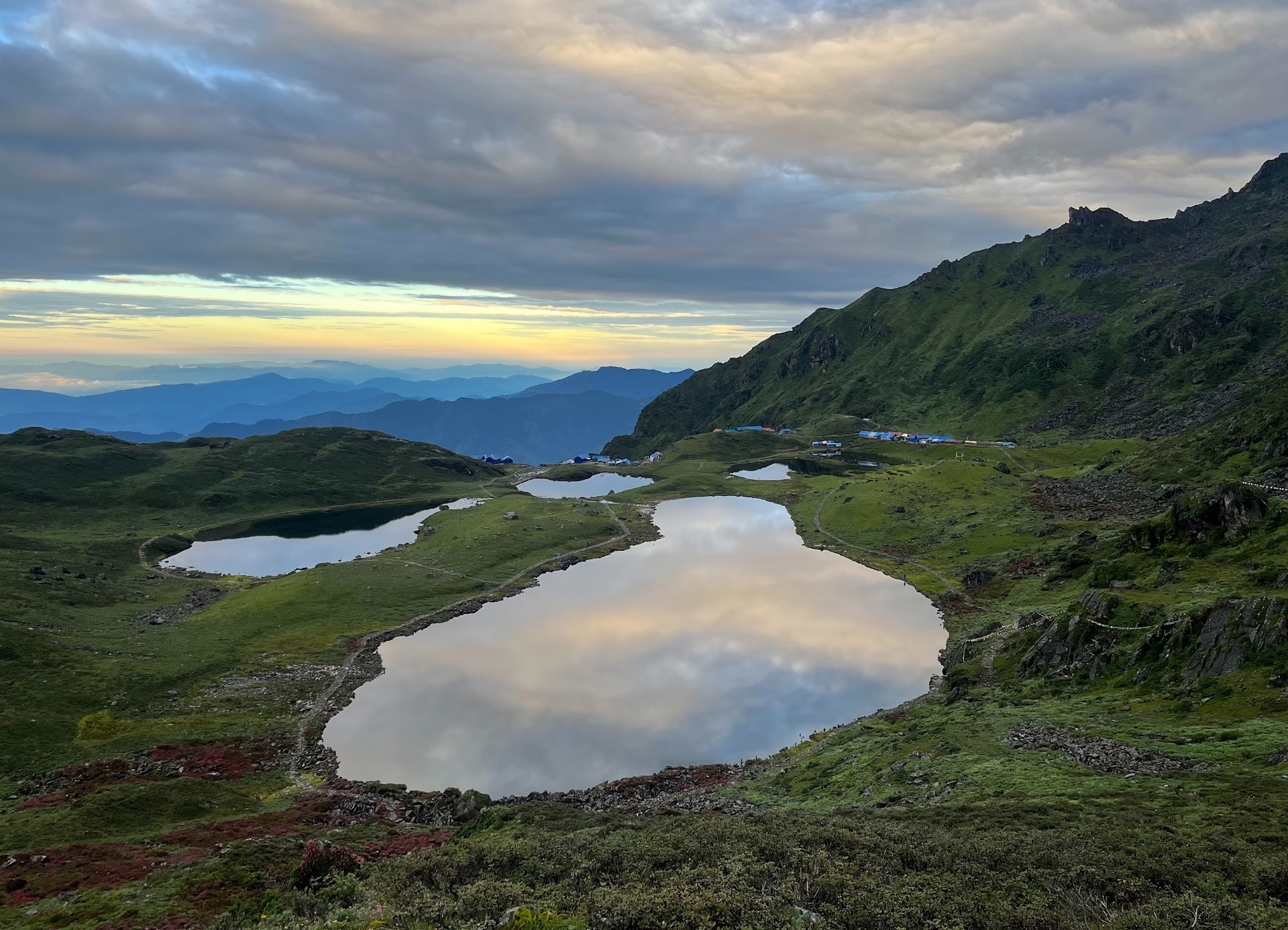
The Panch Pokhari Trek in October is a high-altitude Himalayan journey in Sindhupalchok that combines Tamang and Hyolmo villages, forested mid-hills, alpine landscapes, and five sacred lakes at around 4,100 meters. October places the trek between the retreating monsoon and approaching winter, creating generally dry trails, crisp mountain visibility, strong daytime sunshine, and progressively colder nights as the month advances.
The route can be approached through Chautara or Bhotang/Chhimti, with both variants eventually climbing through Nasimpati at 3,600–3,700 meters to the lakes and the 4,300-meter viewpoint. Clear autumn mornings can expose the Jugal Himal, including Dorje Lakpa and Phurbi Chyachu, as well as wider views toward the Langtang and Rolwaling ranges.
October trekking on Panch Pokhari requires more than choosing a favorable weather window; the rapid elevation gain, steep stone-step sections, limited accommodation between Tupi Danda and Nasimpati, and sub-zero nights near the lakes all influence how the itinerary should be planned. The short Bhotang/Chhimti option generally takes 4–5 trekking days, while the classic Chautara approach takes about 7–8 days, with an additional acclimatization night at Nasimpati worth considering for the shorter itinerary.
This guide covers October weather, temperatures, route conditions, trekking duration, mountain views, villages, accommodation, crowds, Dashain travel, packing, permits, altitude preparation, AMS awareness, and safety, with specific planning considerations for October 2026.
Why Is October Considered a Popular Month for Panch Pokhari Trek?
October sits at the peak of Nepal's autumn trekking season, right after the monsoon clears and before winter snow arrives at high elevation. The monsoon rains typically withdraw from Nepal by late September, and October inherits the washed, dust-free air that follows. Trails dry out within the first one to two weeks of the month, river crossings settle to manageable levels, and the Jugal Himal range stands fully exposed against the sky on most days.
Three factors combine to make this specific window work so well for Panch Pokhari. Stable high-pressure weather patterns dominate central Nepal through October, reducing the afternoon cloud build-up common in spring. Daytime temperatures at the lower and middle elevations of the route stay comfortable for hiking without the summer humidity.
Village life along the trail also returns to its normal rhythm after the harvest, so teahouse operators who scaled back during the monsoon reopen at full capacity by early October.
What Kind of Weather Can You Expect on Panch Pokhari in October?
October weather on the Panch Pokhari Trek delivers dry days, cold nights, and low rainfall, with conditions shifting from mild and green at low elevation to crisp and alpine above 3,500 meters. Rainfall across the route drops sharply compared to September, and most days bring sustained sunshine from mid-morning through early afternoon.
Route section | Elevation | October conditions |
Kathmandu to Chautara / Bhotang | 1,350–1,600m | Warm, humid mornings, clear afternoons |
Sano Okhareni to Hile Bhanjyang | 1,900–3,400m | Mild days, cool evenings, light morning mist |
Nasimpati | 3,600–3,700m | Cold nights, frost possible after mid-month |
Panch Pokhari and viewpoint | 4,100–4,300m | Below-freezing nights, strong daytime sun |
Early October, in the first ten days, still carries a slim chance of a leftover monsoon shower, particularly on the lower forested stretch between the road head and Kami Kharka. Sunshine hours across the region reach 8 to 10 hours a day by mid-month, and dry conditions become increasingly consistent as the month progresses toward its final week.
How Clear Are the Mountain Views on the Panch Pokhari Trek During October?
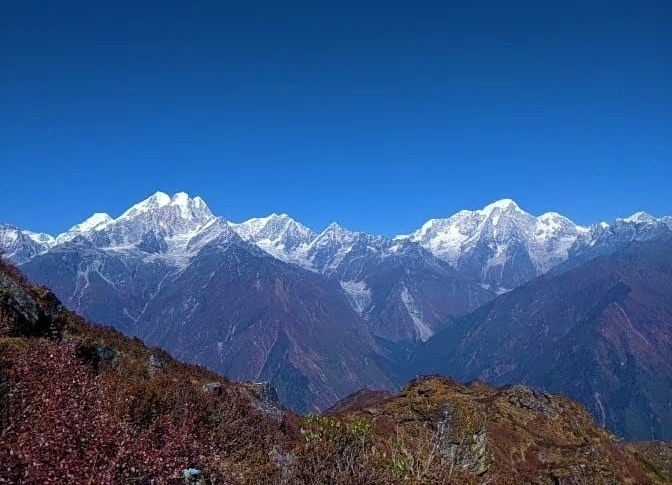
Mountain visibility in October ranks among the best of the year, with clear sightlines to the Jugal Himal, Rolwaling, and Langtang ranges on most mornings. The post-monsoon atmosphere carries far less dust and haze than the pre-monsoon months of April and May, when agricultural burning and rising temperatures thicken the air over the mid-hills.
Morning departures give the sharpest results. Cloud tends to build from the valleys upward as the day warms, so a 6 a.m. start from Nasimpati toward Panch Pokhari usually delivers unobstructed peaks, while an afternoon arrival can meet drifting cloud around the ridgelines. Clear-day visibility from the viewpoint above the lakes regularly extends across the full Jugal Himal skyline, a clarity that spring treks rarely match because of haze and pollen in the air.
What Are the Day and Night Temperatures on the Panch Pokhari Trek in October?
Daytime temperatures in October range from around 20°C near Kathmandu down to single digits at Panch Pokhari, while nights drop below freezing above 3,600 meters. Temperature swings between day and night widen as elevation increases, which is the defining feature of this trek's climate.
Location | Altitude | Day temp (°C) | Night temp (°C) |
Kathmandu / Chautara | 1,400–1,600m | 22–26 | 12–15 |
Sano Okhareni / Kami Kharka | 1,900–2,800m | 18–22 | 6–10 |
Hile Bhanjyang | 3,400m | 12–16 | 0–4 |
Nasimpati | 3,600–3,700m | 8–12 | -3 to 2 |
Panch Pokhari | 4,100–4,300m | 5–10 | -8 to -2 |
Early-October dates run 2 to 4 degrees warmer at night than late-October dates, since the region cools progressively as winter approaches. A trekker starting the walk on October 5 sleeps notably warmer at Nasimpati than one starting on October 28.
This gap is a genuine planning variable: parties booking the back half of the month gain the driest trails of the entire year but also face the coldest nights the trek offers outside of winter.
What Is the Panch Pokhari Trek Route Like in October?
The Panch Pokhari Trek route climbs from mid-hill farmland through oak and rhododendron forest into alpine terrain, following one of two established access points: Chautara or Bhotang/Chhimti. Both routes converge on the same high trail through Nasimpati to the lakes; they differ mainly in starting village, road quality, and overall length.
The Chautara route is the longer, traditional approach, following a wider arc through Sano Okhareni, Kami Kharka, Pauwa Bas, and Hile Bhanjyang before joining the upper trail at Nasimpati. The Bhotang/Chhimti route is shorter and now the more heavily used starting point, climbing more directly through Deurali to Nasimpati.
Both trails share the final push above Nasimpati: three to four hours of ascent through rocky highland terrain to reach the lakes themselves, then a further 30 to 45 minutes up to the viewpoint at 4,300 meters. Jeep roads reach further into the hills each year, which has gradually shortened the walking portion of the trek without removing any of its high-altitude character.
How Many Days Does the Panch Pokhari Trek Take in October?
The Panch Pokhari Trek takes between 4 and 10 days round trip from Kathmandu in October, depending on the starting point and pace chosen. October's stable weather makes it one of the few months where the short itinerary can be booked with confidence, since delay-causing storms are rare.
Route option | Trekking duration | Total trip with Kathmandu days |
Short route (Bhotang/Chhimti) | 4–5 days | 5–6 days |
Classic route (Chautara) | 7–8 days | 9–13 days |
The short route covers roughly 45 to 55 kilometers round trip and suits trekkers with limited leave from work, a common constraint for Nepali domestic trekkers using a long weekend or short holiday block.
The classic Chautara route covers more ground, moves through more villages, and gives the body an extra day of gradual altitude gain before the final push to 4,100 meters, an advantage worth weighing against its shorter counterpart. Commercial packages that add Kathmandu sightseeing and buffer days can stretch the total trip to 12 days or more without adding extra trekking distance.
What Are the Main Villages, Trails, and Landscapes Along the Panch Pokhari Trek Route in October?
The route passes through Tamang and Hyolmo villages including Chautara, Sano Okhareni, Kami Kharka, Pauwa Bas, Hile Bhanjyang, Nasimpati, and Tupi Danda, moving from terraced farmland through dense forest into open alpine ground. Each settlement marks a distinct elevation band and a shift in landscape.
Chautara (1,450–1,600m): district headquarters of Sindhupalchok, the traditional trailhead with terraced fields and a Araniko Highway connection to Kathmandu.
Sano Okhareni (1,965m) and Kami Kharka (2,810m): mixed farmland and lower forest, marking the first real elevation gain of the trek.
Pauwa Bas (3,000m) and Hile Bhanjyang (3,400m): oak and pine forest interspersed with mani walls and prayer flags marking small monasteries along the trail.
Nasimpati (3,600–3,700m): the last major overnight stop before the lakes, with teahouse capacity built for the August pilgrimage season.
Tupi Danda (2,320m): a crucial waypoint on the ascent for the Bhotang route and on the descent for the Chautara route, useful for a rest but with limited supplies.
Panch Pokhari (4,100m): open highland terrain around the five lakes, transitioning to rock and scree toward the viewpoint.
In October, this progression reads as a clean gradient from green valley to bare alpine rock across roughly two and a half vertical kilometers, one of the more compressed elevation profiles among Nepal's short treks.
What Are the Highest Points Reached During the Panch Pokhari Trek?
The highest point most trekkers reach is the viewpoint above Panch Pokhari at approximately 4,300 meters, with the five lakes themselves sitting at around 4,100 meters. This makes Panch Pokhari one of the highest short treks accessible from Kathmandu without a multi-week itinerary.
The lakes rank among the highest-altitude wetlands in the world, a distinction tied to both their elevation and their ecological role as a bird habitat. From the viewpoint, the trail effectively ends; parties who want to push higher would be moving into unmarked, technical terrain toward the Jugal Himal ridgelines, which falls outside the scope of a standard trek and requires mountaineering support.
For nearly every visitor, the round trip between Nasimpati, the lakes, and the viewpoint defines the trek's altitude ceiling.
What Mountain Views Can You See During the Panch Pokhari Trek in October?
Trekkers see the Jugal Himal range in full, including Dorje Lakpa at 6,966 meters, alongside views of the Rolwaling and Langtang ranges, with Langtang Lirung reaching 7,227 meters on clear days. October's dry air makes these sightlines sharper than almost any other month.
The viewpoint above the lakes is the best vantage point on the route, offering a panorama that includes Dorje Lakpa, Phurbi Chyachu at 6,637 meters, and the broader Jugal Himal skyline in one continuous arc, with the five lakes visible below in the same frame. Lower on the trail, at Hile Bhanjyang and Nasimpati, the same peaks appear at a lower angle but with equally clean visibility in October's dry atmosphere.
This combination of a close, unobstructed mountain wall and a short approach trail is uncommon among treks near Kathmandu; most comparable panoramas require a week or more of walking to reach.
What Is the October Trekking Experience Like on the Panch Pokhari Trail?
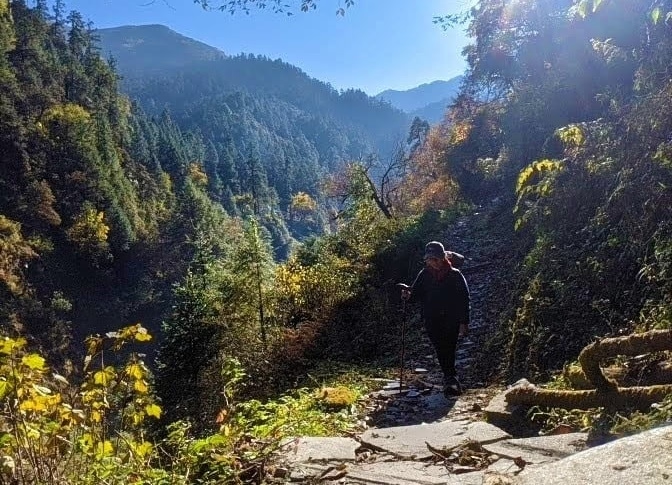
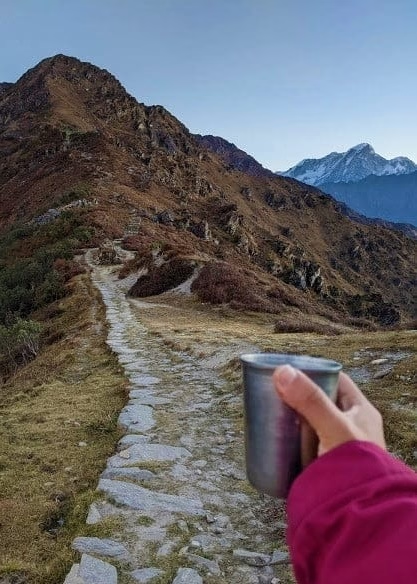
Trekking in October on this trail means dry stone steps, cool forest air in the mornings, and a final alpine push to the lakes under consistently blue skies. The physical experience changes noticeably by elevation band, which shapes how the day feels at each stage.
Below 3,000 meters, the trail runs through shaded forest with a steady, moderate grade broken up by stone staircases, a format that rewards a slow, even pace over speed. Above Nasimpati, the terrain opens into rocky highland ground with thinner air and a sharper incline toward the lakes, where the effort of altitude becomes more noticeable than the effort of the climb itself.
Mornings across the whole route start cold enough for a fleece layer, warm quickly under direct sun by mid-morning, and cool again fast once the sun drops behind the ridgeline in late afternoon, a pattern worth planning meal and rest stops around rather than fighting.
How Busy Is the Panch Pokhari Trek in October?
Panch Pokhari stays noticeably less crowded than Nepal's major October trekking routes, even though October is peak season nationwide. Trails like Everest Base Camp and the Annapurna Circuit fill with international trekking groups this month, while Panch Pokhari draws a much smaller, steadier stream of hikers.
The trek's one true peak crowd period is Janai Purnima in August, a full-moon pilgrimage that brings large numbers of Hindu and Buddhist visitors to bathe in the lakes; this falls well outside October and does not affect the autumn trekking window at all. A separate factor specific to 2026 deserves attention: Dashain, Nepal's largest festival, runs from October 11 to October 25, with the main Tika day falling in the third week of the month.
Many Nepali trekkers and even some teahouse families travel home for Dashain, which can thin out both trail traffic and, occasionally, staffing at smaller lodges during that exact window. International trekkers unaffected by the holiday often find the trail quieter than usual during these two weeks, though calling ahead to confirm a teahouse is open becomes more important than in a typical October.
What Are the Panch Pokhari Trail and Accommodation Conditions Like in October?
Trail conditions in October are firm and dry across nearly the entire route, while accommodation ranges from standard teahouses at lower elevation to basic, high-capacity lodges built for pilgrimage season near the top. Both improve directly with the dry weather this month brings.
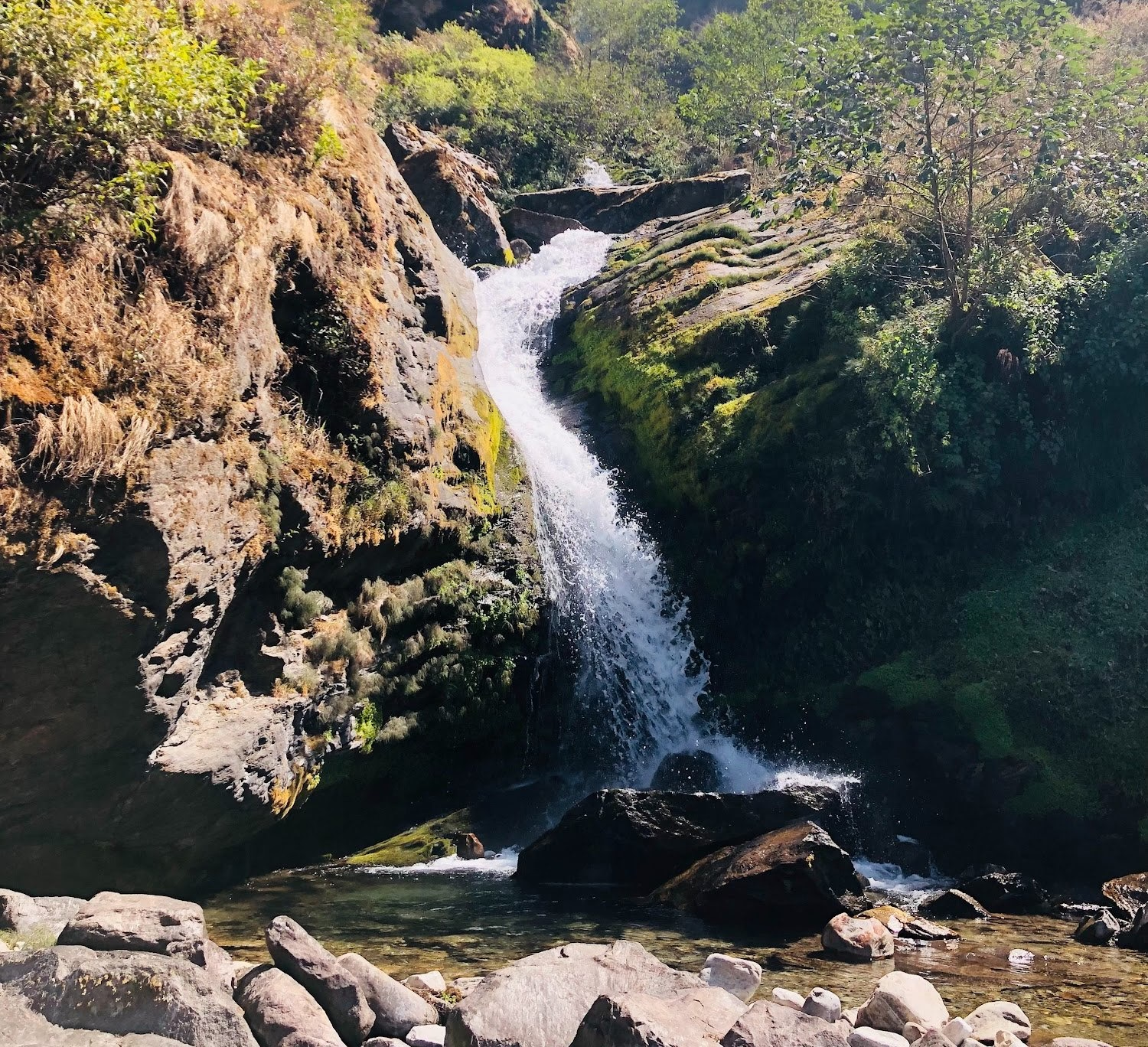
One practical gap matters for planning: there are no teahouses or lodges between Tupi Danda (2,320m) and Nasimpati (3,600–3,700m), a stretch of four to five hours through forest and waterfalls, so carrying snacks and enough water for that section is necessary regardless of season. Nasimpati itself holds lodging built for over 100 pilgrims during Janai Purnima, which means plenty of space in October's smaller trekking crowds.
Panch Pokhari has limited, basic pilgrim shelters and rudimentary teahouses, meaning rooms can fill up quickly in autumn and carrying a -10°C sleeping bag is essential. Electricity across the route runs on solar power with limited evening hours and shared charging points between trekking groups, making a power bank a practical addition rather than an optional one.
Are There Any Festivals or Cultural Experiences to See on the Panch Pokhari Trail in October?
Dashain, Nepal's most important Hindu festival, falls almost entirely within October 2026, running from October 11 through October 25, and overlaps directly with the trekking season. This is the main cultural event trekkers encounter on the trail this month, distinct from the trek's better-known pilgrimage season.
Trekkers moving through Tamang and Hyolmo villages during Dashain notice red tika marks, family gatherings, and swings built from bamboo in village courtyards, all part of the festival's fifteen-day arc. Janai Purnima, the sacred-thread festival most associated with Panch Pokhari, takes place on the August full moon and does not occur during an October visit, a distinction worth knowing since several trek descriptions online blur the two events together.
Tihar, Nepal's festival of lights, falls in November in 2026 and likewise sits outside an October trek window. Along the trail itself, mani walls, prayer flags, and small monasteries near Hile Bhanjyang and Pauwa Bas offer a quieter, everyday layer of Tamang and Sherpa Buddhist culture that has nothing to do with the festival calendar and is present on the trail year-round.
What Wildlife and Natural Scenery Can You Experience on the Panch Pokhari Trek in October?
The trek passes through Langtang National Park's forest zones, home to red pandas, Himalayan monal pheasants, musk deer, and langur monkeys, with October's clear skies adding strong conditions for birdwatching around the lakes. The route's wide elevation range packs several distinct habitats into a short trekking distance.
Red pandas inhabit the temperate bamboo forest between roughly 2,800 and 3,600 meters, the exact band the trail crosses between Kami Kharka and Nasimpati, though sightings remain rare given the animal's elusive habits.
Birdlife is a stronger draw in October specifically: the lakes rank among the world's highest-altitude wetlands, and Nepal's autumn raptor migration passes over the country's mid-hill ridgelines during these same weeks, adding seasonal interest for anyone carrying binoculars.
Forest cover shifts visibly with elevation, running from subtropical growth near the road head through oak and pine at mid-elevation to open alpine scrub above Nasimpati. One correction worth making here: October is not rhododendron season, a common point of confusion since Nepal's rhododendron forests bloom in spring, from March to April; the October forest instead shows early autumn color and the last green growth before winter dormancy.
What Should You Pack for the Panch Pokhari Trek in October?
Packing for October on this trek centers on layered clothing for a wide daily temperature swing, solid trekking gear for stone-step terrain, and basic rain protection for the first week of the month. Because the trek runs short, most trekkers pack a compact kit rather than the fuller loadout needed for longer Himalayan routes. Our full trekking packing list for Nepal covers the complete gear list in more depth; the sections below focus on what October's specific conditions demand.
What Clothing Is Suitable for October Temperatures on the Panch Pokhari Trek?
Layered clothing works best: a moisture-wicking base layer, a mid-weight fleece, and an insulated down jacket for temperatures that swing from 25°C at midday near Kathmandu to below freezing at night near the lakes. Building the layering system around the coldest expected night, rather than the warmest expected day, avoids the most common packing mistake on this trek.
Moisture-wicking base layer (top and bottom) for daytime hiking
Mid-weight fleece or wool sweater for mornings and evenings
Down jacket rated to at least -10°C for Nasimpati and Panch Pokhari nights
Warm hat, gloves, and thick wool socks for camp
Sun hat and sunglasses for exposed alpine sections above Nasimpati
Lightweight trekking trousers, convertible where possible for temperature swings
What Trekking Gear and Equipment Should You Bring on the Panch Pokhari Trek in October?
Essential gear includes broken-in trekking boots, trekking poles, a headlamp, and a sleeping bag rated to at least -10°C, since the trek's stone staircases and cold nights put specific demands on footwear and sleep gear. Equipment choices here matter more than on flatter routes because of the terrain's steep, uneven steps.
Trekking boots with ankle support, already broken in before the trip
Trekking poles for the steep stone-step sections between Kami Kharka and Hile Bhanjyang
Headlamp with spare batteries, since solar lighting runs on limited evening hours
Sleeping bag rated to -10°C or colder for Nasimpati and Panch Pokhari
Power bank for charging at shared solar outlets
Water purification tablets or a filter, particularly for the Tupi Danda to Nasimpati stretch with no lodges
Daypack with rain cover, plus a duffel for a porter if hiring one
Do You Need Rain Gear for the Panch Pokhari Trek in October?
Light rain gear is worth carrying through the first week of October, though it becomes largely unnecessary by mid-month as the post-monsoon weather stabilizes. October's rainfall risk drops fast compared to September, but it does not reach zero on day one of the month.
A packable rain jacket and a rain cover for the backpack cover the realistic risk window, which concentrates on the lower forested section of the trail rather than the alpine terrain near the lakes. Waterproof trousers add weight most trekkers do not use after the first week and can reasonably be left behind for a mid-to-late October departure. Checking a short-range forecast for Sindhupalchok two to three days before departure gives a more precise read than any general seasonal rule.
What Essential Documents and Personal Items Should You Carry for the Panch Pokhari Trek?
International trekkers need a Langtang National Park entry permit and a TIMS card, both arranged through a registered trekking agency, while all trekkers should carry travel insurance covering high-altitude evacuation. Nepali and other SAARC-nationality trekkers benefit from reduced park entry fees compared to other international visitors, an advantage worth confirming before departure.
Langtang National Park entry permit (approximately NPR 3,000 for foreign nationals; NPR 1,500 for SAARC nationals; NPR 100 for Nepali citizens)
TIMS card, issued through a government-registered trekking agency
Passport with a valid Nepal visa for international trekkers; see our Nepal tourist visa guide for entry requirements
Travel insurance with high-altitude rescue and evacuation coverage
Cash in Nepali rupees, since card payment is unavailable along the trail
Copies of insurance documents and emergency contact details, kept separate from the originals
What Are the Main Challenges of the Panch Pokhari Trek in October?
The trek's main challenges are steep, sustained stone-step ascents, a genuine altitude gain to over 4,000 meters, and a long food-and-water gap between Tupi Danda and Nasimpati. None of these require technical skill, but each demands real preparation.
The staircase sections between Kami Kharka and Hile Bhanjyang test leg stamina more than balance or technique, and trekking poles measurably reduce knee strain on the descent. The altitude gain itself catches some trekkers off guard on the shorter itineraries, where a jump from around 1,800 meters to 3,700 meters in a single day exceeds standard acclimatization guidelines, a point covered in more depth below.
Cold nights above 3,600 meters round out the list of real challenges, less a danger than a comfort issue solved directly by the layering system described in the packing sections above.
Is the Panch Pokhari Trek Difficult for Beginners in October?
The Panch Pokhari Trek suits fit beginners, graded beginner-moderate, since it involves no technical climbing but does require stamina for repeated stone-step ascents and comfort with cold, high-altitude camping. October improves the beginner experience specifically by removing the mud and slippery stone steps that monsoon-season trekkers face.
A beginner with some hiking background, comfortable walking six to eight hours a day with breaks, manages this trek without prior high-altitude experience. The short duration works in a beginner's favor, since it limits total exposure to altitude compared to longer classic routes like Everest Base Camp or Annapurna Circuit.
Our trek grading guide breaks down what beginner-moderate means in practical terms across different Nepal treks, useful context for comparing Panch Pokhari against other short options near Kathmandu.
How Should You Prepare for the Altitude and Long Walking Days of the Panch Pokhari Trek?
Preparation centers on cardiovascular training beforehand and a deliberately slow ascent rate on the trail itself, since several short Panch Pokhari itineraries climb faster than standard altitude guidelines recommend. This is one of the more overlooked planning points on this specific trek.
Standard acclimatization guidance limits sleeping-altitude gain to 300 to 500 meters a day above 3,000 meters. The short Bhotang/Chhimti itinerary, by contrast, often climbs from around 1,800 meters to 3,700 meters at Nasimpati in a single day, a gain that outpaces that guideline by a wide margin. Building in an extra acclimatization night at Nasimpati before pushing to the lakes reduces this risk meaningfully and costs only one additional day.
Pre-trip preparation over the four to six weeks before departure, focused on hiking with a loaded pack, stair training, and general cardiovascular fitness, makes the daily six-to-eight-hour walking days noticeably more manageable regardless of the itinerary chosen.
Can October Weather Affect the Panch Pokhari Trekking Route?
October weather rarely disrupts the Panch Pokhari route, though early-month residual rain and late-month cold snaps each affect a narrow slice of the trekking calendar. The month's overall reliability is exactly why it ranks as a top trekking window, but a few edge cases are worth planning around.
The first week of October occasionally carries a leftover monsoon shower on the lower forested trail, capable of turning stone steps slick for a few hours without closing the route. Jeep roads to Chautara and Bhotang/Chhimti are rough by nature, and a heavy early-month rain event can make them slower or temporarily impassable, an access issue rather than a trail issue.
Late-October departures, particularly after the 20th, sometimes meet a light dusting of snow near the lakes and viewpoint as winter approaches, a scenic rather than dangerous development in most years, though it does call for confirming trail conditions with a guide before the final ascent.
What Health and Safety Precautions Should You Follow for a Successful Panch Pokhari Trek?
A successful trek depends on recognizing early symptoms of Acute Mountain Sickness, staying hydrated, purifying all drinking water, and carrying travel insurance with evacuation coverage. These precautions matter even on a short trek, since the route still crosses 4,000 meters.
Acute Mountain Sickness, or AMS, presents as headache, nausea, dizziness, or loss of appetite above roughly 2,500 meters; descending immediately resolves mild cases, and any worsening of symptoms after descent warrants professional evaluation. Drinking three to four liters of water a day reduces AMS risk and offsets the dehydrating effect of dry autumn air.
Purification tablets or a filter cover every water source on the trail, since even clear mountain streams carry bacterial risk. Hiring a licensed guide adds a meaningful safety layer on this specific route, given the gap in lodges and mobile signal between Tupi Danda and Nasimpati, and travel insurance covering helicopter evacuation from altitude closes the loop on worst-case scenarios that self-guided trekkers sometimes overlook.
How Can You Plan the Panch Pokhari Trek in October With Heaven Himalaya?
Planning the trek with Heaven Himalaya starts with choosing between the short Bhotang/Chhimti route and the longer Chautara route based on your available days, then confirming an October start date that fits Dashain's holiday schedule if traveling that specific window. A short conversation with a licensed guide at this stage prevents most of the itinerary mistakes covered earlier in this guide.
Heaven Himalaya has organized Himalayan treks from its Kathmandu office for over a decade, holds Tripadvisor's Travelers' Choice recognition across multiple consecutive years, and works as a government-registered agency affiliated with Nepal's Ministry of Tourism, the Nepal Tourism Board, and the Trekking Agencies' Association of Nepal.
That registration status matters directly for Panch Pokhari, since both the TIMS card and the Langtang National Park permit legally require processing through an agency of this kind. Read more about the team's background on our about us page.
Can Heaven Himalaya Arrange a Panch Pokhari Trek in October?
Yes, Heaven Himalaya arranges the Panch Pokhari Trek in October on both the short and classic route options, with permits, licensed guides, and accommodation handled directly by the team. October's demand rises alongside the season's popularity, so earlier booking secures preferred start dates, particularly around the Dashain period from October 11 to 25.
The team builds itineraries around a trekker's fitness level and available days rather than forcing a fixed schedule, including the option to add an acclimatization night at Nasimpati discussed earlier in this guide. Trekkers weighing Panch Pokhari against a nearby alternative can also compare it with the Langtang Valley Trek, a longer route through the same national park. Reach the team directly through the contact page to confirm October availability.
What Should You Know Before Planning the Panch Pokhari Trek in October?
Before planning an October trek, confirm your route choice, book jeep transport early if traveling near Dashain, add a buffer day for acclimatization, and secure travel insurance with high-altitude evacuation coverage. These five points cover the practical gaps most often missed in general trek planning.
Jeep transport to Chautara or Bhotang/Chhimti fills up fast in the days around Dashain's main Tika period, since much of the country travels for the holiday at the same time; booking two to three weeks ahead avoids the scramble.
An extra acclimatization night, ideally at Nasimpati, addresses the altitude-gain issue specific to the short itinerary and costs one day against a meaningful reduction in AMS risk. Confirming which route variant a package actually follows, Chautara or Bhotang/Chhimti, prevents the itinerary-length surprises that show up in trip reviews more often than any other issue on this trek.
With those pieces in place, October delivers close to the best version of Panch Pokhari the calendar has to offer: clear peaks, dry trails, and a short window between the monsoon and winter snow that makes the five lakes worth the climb.