

Lukla Flights Guide: Kathmandu vs Ramechhap (Manthali)

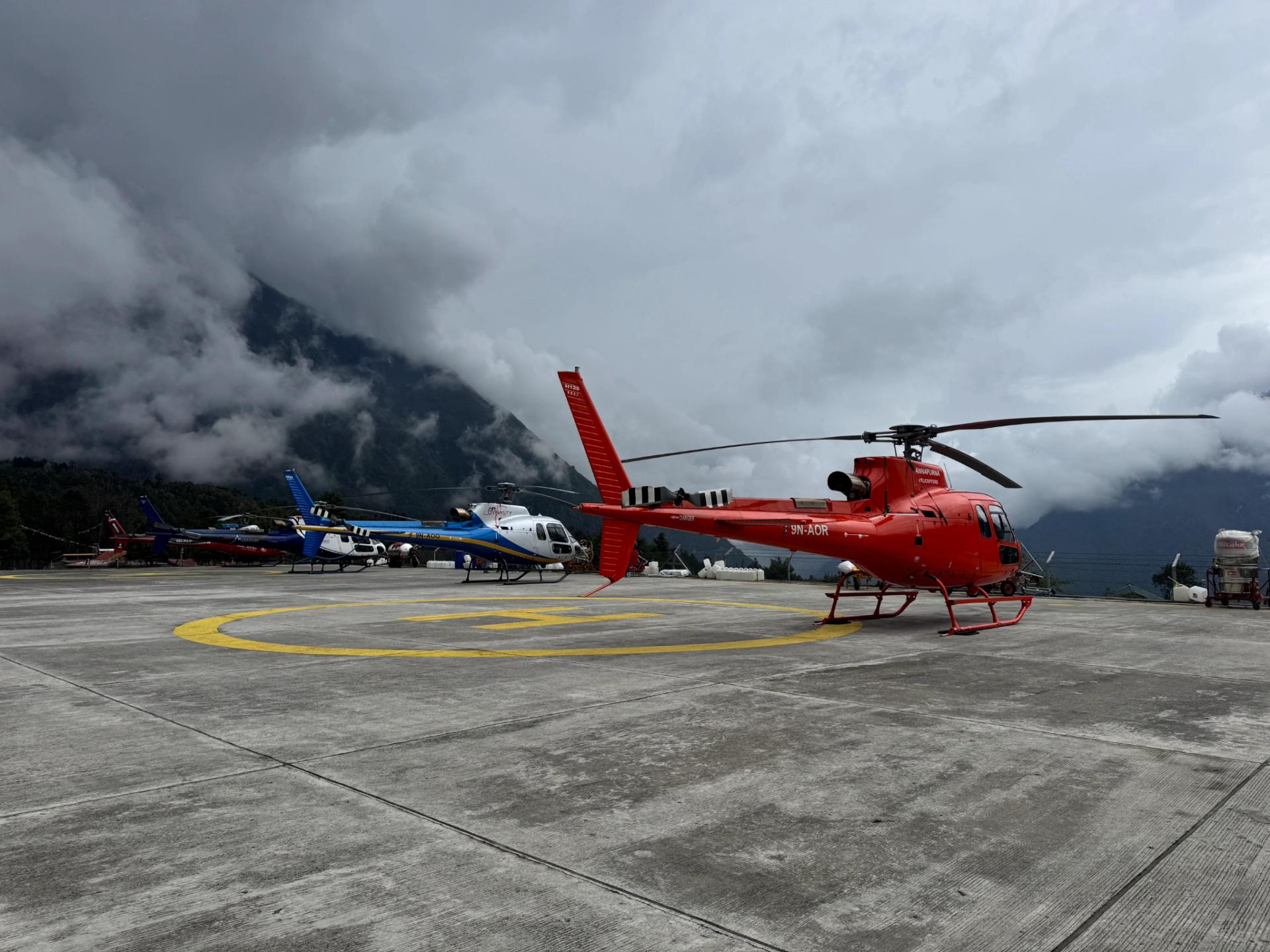
Lukla flights connect Kathmandu and Ramechhap (Manthali) with Tenzing–Hillary Airport, the mountain gateway to the Everest Base Camp trek in Nepal's Khumbu region. Depending on the season, Tara Air, Summit Air and Sita Air operate flights from Tribhuvan International Airport (Kathmandu) or Manthali Airport (Ramechhap). During peak spring and autumn trekking seasons, passengers travel 130–140 km from Kathmandu to Manthali by road before boarding a 15–20-minute flight to Lukla. Outside these seasonal periods, flights operate directly from Kathmandu, taking approximately 30–40 minutes.
Choosing between Kathmandu and Ramechhap flights involves more than comparing airfare and flight duration. Seasonal schedules, pre-dawn road transfers, airline availability, mountain weather and Lukla's challenging runway all influence departure times and potential cancellations. Understanding these differences helps Everest trekkers plan transportation costs, manage flight delays, arrange helicopter alternatives and include sufficient buffer days for a reliable trekking itinerary.
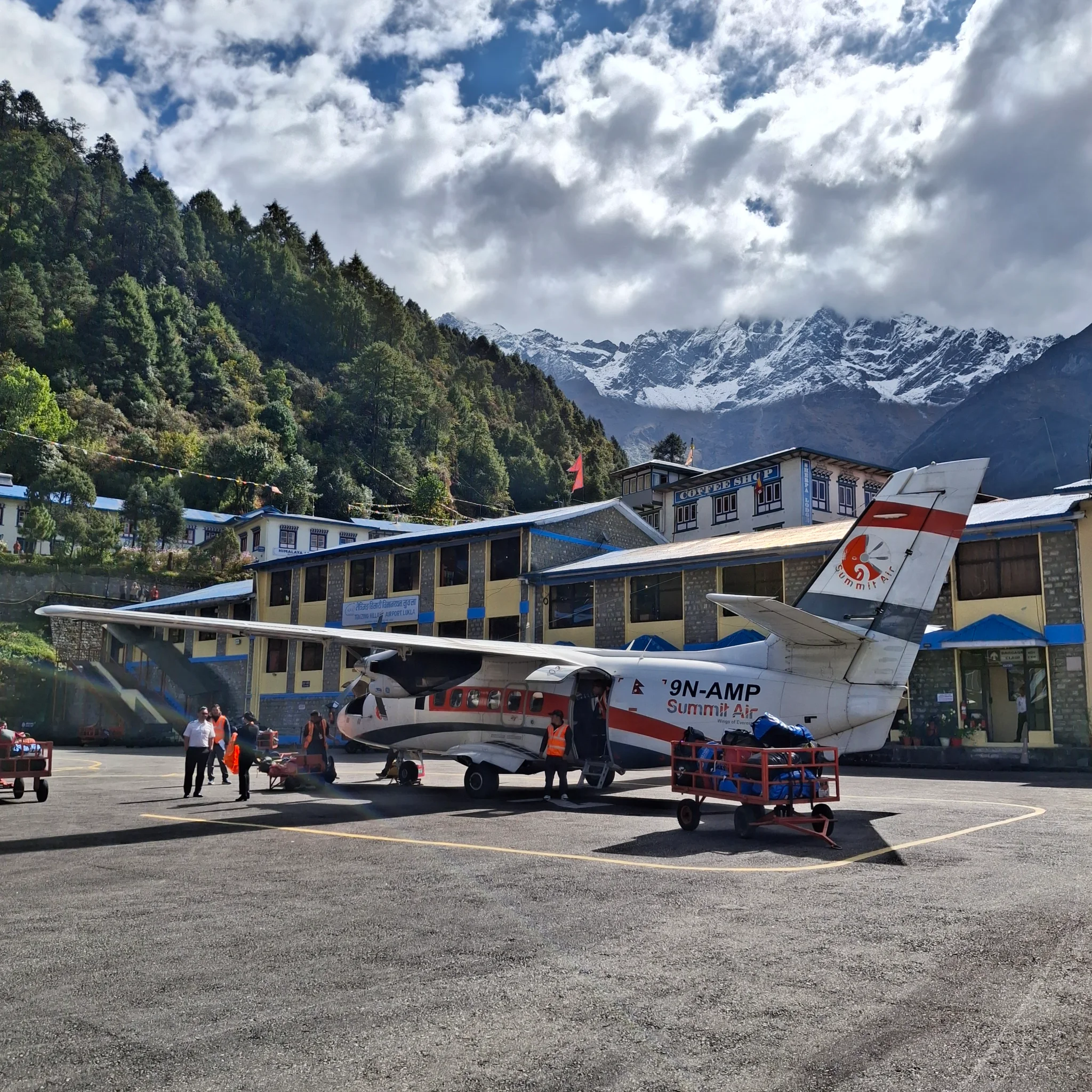
What Are the Main Differences Between Kathmandu and Ramechhap Flights to Lukla?
Ramechhap flights leave from Manthali Airport, 132 km east of Kathmandu, and reach Lukla in 15–20 minutes. Kathmandu flights leave from Tribhuvan International Airport and take 30–40 minutes. Ramechhap adds a 4–5 hour pre-dawn road transfer and lowers the one-way fare by about USD 50.
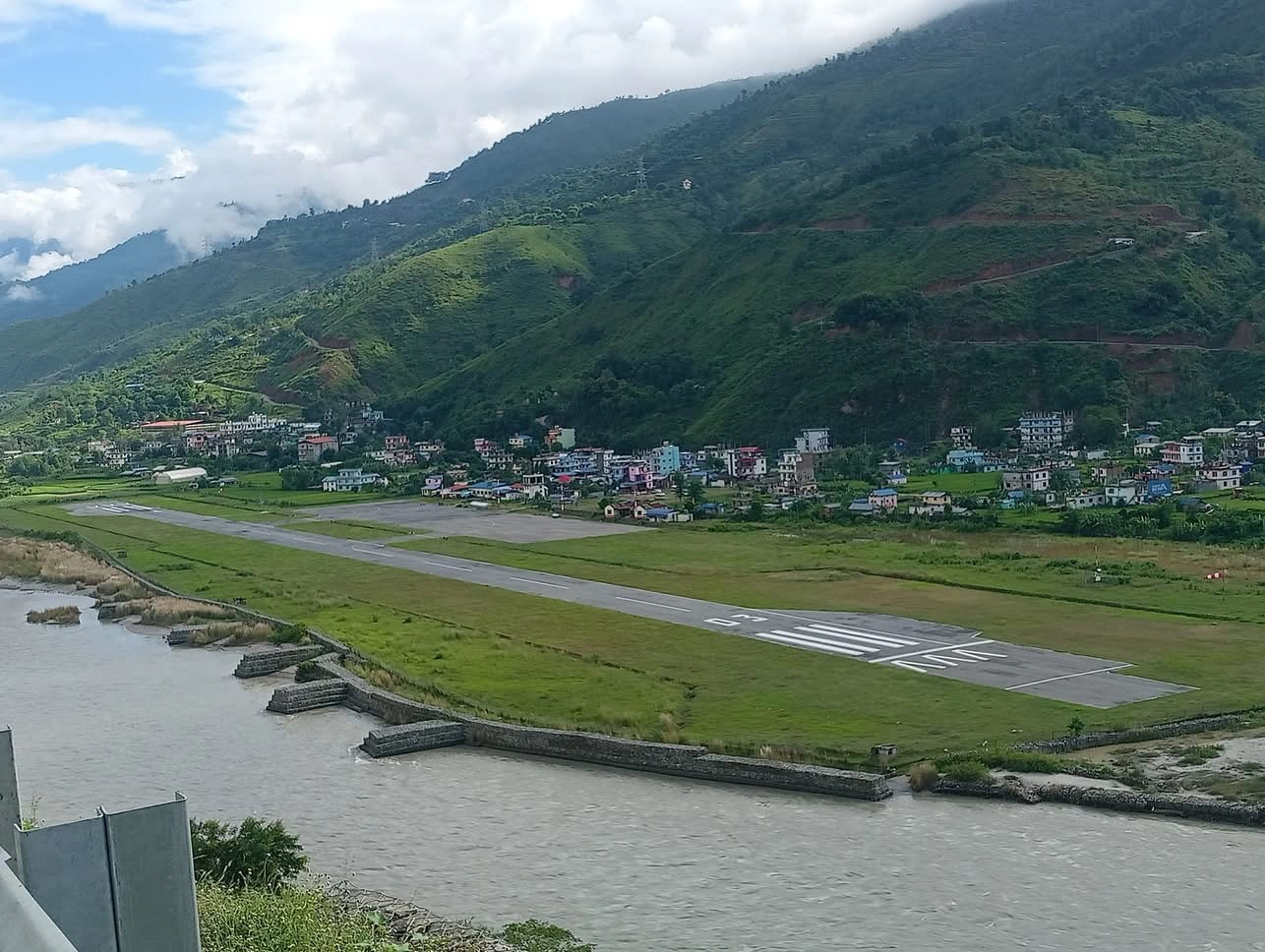
Tribhuvan International Airport (TIA) is Nepal’s only international gateway, at roughly 1,400 m. Manthali Airport is a small domestic airstrip at 474 m in Ramechhap district, owned by the Government of Nepal and operated by CAAN. The aircraft, the airlines and the Lukla runway are identical on both routes. Three things change: the road leg, the fare and the hour you wake up.
How Do Kathmandu–Lukla and Ramechhap–Lukla Flights Compare?
Kathmandu–Lukla is simpler: no road transfer, a 4:30–5:30 AM hotel pick-up and a 30–40 minute flight. Ramechhap–Lukla is cheaper and shorter in the air, but it starts at 12:30–2:00 AM and adds 4–5 hours of road.
The table below compares both routes across 8 attributes for foreign passport holders in 2026.
Attribute | Kathmandu → Lukla | Ramechhap (Manthali) → Lukla |
Months in use | Dec–mid-Mar and mid-May–late Sep | Mid-Mar–mid-May and late Sep–Nov |
Road transfer | None; hotel to airport in about 30 minutes | 130–140 km, 4–5 hours |
Hotel pick-up | 4:30–5:30 AM | 12:30–2:00 AM |
Flight time | 30–40 minutes | 15–20 minutes |
Typical flight window | 6:30 AM–noon | 6:00–10:30 AM |
One-way fare | USD 254–257 | USD 199–210 |
Shared ground transfer | Not applicable | USD 20–30 per person |
Departure elevation | About 1,400 m | 474 m |
The table shows one trade. Ramechhap saves USD 47–55 per flight and 15–20 minutes of air time, and it costs 4–5 hours of road and most of a night’s sleep. Weather at Lukla decides both routes, so neither airport guarantees a departure.
Why Do Lukla Flights Operate from Ramechhap During Certain Seasons?
CAAN moves Lukla flights to Manthali in peak months to relieve the single runway at Tribhuvan International Airport. Spring and autumn pack international jets, domestic services and Lukla rotations into one early-morning window. Manthali has no such queue.
CAAN, the Civil Aviation Authority of Nepal, regulates Nepal’s airlines and operates its domestic airports. The Manthali arrangement has a short history. Lukla flights ran from Ramechhap at scale in 2019, while the runway at TIA was under renovation. On 1 October 2022, Republica reported that CAAN allowed airlines only one Kathmandu–Lukla flight each and moved the rest to Manthali. Tribhuvan Airport spokesperson Teknath Sitaula said the change reduced morning air pressure in Kathmandu. Every peak season since has followed that pattern.
Distance and altitude explain the benefit. Manthali lies 2,371 m below Lukla and 15–20 flight minutes away, so each aircraft completes more rotations before afternoon cloud closes the valley. A 30–40 minute sector from Kathmandu uses more of the same window.
CAAN sets the windows each season, and the dates move. Operators worked to 15 March–15 May and 25 September–30 November in 2026. Ekantipur reported in April 2025 that CAAN ran the Manthali flights from March to May and from the first week of October to 15 November. Plan around the pattern and confirm exact dates when you book.
Which Airport Is More Convenient for Everest Trekking?
Kathmandu is more convenient for sleep and simplicity. Manthali is more convenient for price and for the number of available flights. The month decides, not preference: in peak season, Manthali carries the Lukla schedule.
Three traveller types show where each airport fits.
Families and older trekkers: the 12:30 AM start is the hardest hour of the trek, and a helicopter from Kathmandu or a night in a Manthali lodge removes it
Time-pressed trekkers: Manthali puts you in Lukla earliest, with landings between about 6:30 and 10:00 AM
Budget travellers: Manthali saves USD 34–70 per round trip after shared transfers, and the saving shrinks when one person hires a private jeep
Most trekkers overlook first-day energy. Phakding, the first overnight stop, sits at 2,610 m, only 235 m below Lukla, and the walk takes 3–4 hours. After 2 hours of sleep, that walk feels longer than the numbers say. Arriving in Manthali the afternoon before, sleeping in a lodge and covering the last short leg at dawn gives 6–7 hours of rest and costs one extra night.
What Are the Lukla Flight Schedules from Kathmandu and Ramechhap?
Lukla flights run in the morning only. The first rotations leave Manthali around 6:00 AM and Kathmandu around 6:30 AM, and the dependable window closes between 10:30 AM and noon. Airlines allocate slots day by day and adjust them with the weather.
Morning flying follows the valley’s weather cycle. As the sun warms the Dudh Koshi valley, cloud builds and wind strengthens. Published airport data lists Lukla operations between 6:30 AM and 3:30 PM, yet operators plan every departure for the morning.
The three airlines fly DHC-6 Twin Otter, Dornier 228 and Let L-410 aircraft. Each carries 12–19 passengers, which is why one cancelled rotation removes a small number of seats and one cancelled morning removes hundreds.
What Time Do Morning Flights to Lukla Usually Depart from Kathmandu and Ramechhap?
Ramechhap flights depart between 6:00 and 10:30 AM, most between 7:00 and 9:00 AM. Kathmandu flights depart between 6:30 AM and noon, most between 6:30 and 8:00 AM. Your operator confirms the exact time.
The following table lists the flight window and typical departure time by season and airport.
Season | Departure airport | Flight window | Typical departure |
Mid-March to mid-May | Manthali | 6:00–11:00 AM | 7:00–9:00 AM |
Mid-May to 24 September | Kathmandu | 6:00 AM–noon | 6:30–8:00 AM |
25 September to 30 November | Manthali | 6:00–11:00 AM | 7:00–9:00 AM |
December to mid-March | Kathmandu | 6:00 AM–noon | 6:30–8:00 AM |
The first rotation leaves early on clear days. The Himalayan Times reported on 13 October 2023 that flights began at 6:00 AM once the weather cleared after a five-day halt. Return flights follow the same morning logic. Aircraft land at Manthali, and the vehicle drive back to Kathmandu takes 4–6 hours, so most trekkers reach their Thamel hotel between mid-afternoon and early evening.
How Many Flights Operate to Lukla Each Day from Kathmandu and Ramechhap?
On a clear peak-season day, 50–60 flights serve the Manthali–Lukla corridor. Kathmandu adds one or two. The count falls to a few dozen when cloud closes the valley. Tourism Info Nepal reported the 50–60 range in October 2025.
Republica quoted airline officials in October 2023 saying Lukla receives more than 80 daily flight arrivals on favourable days. The Himalayan Times counted 23 fixed-wing flights from Ramechhap, 2 from Kathmandu and 50 helicopter flights on 13 October 2023, the day weather cleared after five lost days.
Those numbers show capacity, not a guarantee. The Himalayan Times also reported that about 500 trekkers a day were arriving in Ramechhap from Kathmandu during the October 2023 halt. A single cancelled morning therefore builds a queue of 500 people, and between 700 and 1,200 trekkers waited at Manthali at the worst point of that backlog.
Which Months Require Flights from Ramechhap?
March, April, May, October and November require Ramechhap flights, with the exact start and end dates set by CAAN each season. In 2026, operators worked to 15 March–15 May and 25 September–30 November.
The table below maps each month to its 2026–27 departure airport.
Month | Departure airport | Condition |
January, February | Kathmandu | Cold mornings, fog at the airport, few trekkers |
March | Kathmandu to 14th, Manthali from 15th | Spring window opens |
April | Manthali | Peak spring season |
May | Manthali to 15th, Kathmandu after | Spring window closes |
June, July, August | Kathmandu | Monsoon cloud, frequent cancellations |
September | Kathmandu to 24th, Manthali from 25th | Autumn window opens |
October, November | Manthali | Peak autumn season, clearest skies |
December | Kathmandu | Autumn window closed |
Heaven Himalaya plans every March–May and October–November departure around the Manthali route, because the transition weeks shift between seasons. A trip that starts on 12 March can end in the Manthali window, so the return leg matters as much as the outbound date.
When Do Lukla Flights Operate Directly from Kathmandu?
Lukla flights operate directly from Kathmandu from December to mid-March and from mid-May to late September. Winter brings clear but cold mornings. The monsoon from June to August brings heavy cloud and the highest cancellation risk of the year.
In peak months, CAAN’s seasonal order removes scheduled Kathmandu–Lukla service, and operators treat Kathmandu departures as unavailable. The occasional aircraft repositioning flight is not a booking option.
Direct flights suit three kinds of trekker: those who trek in winter, those who accept monsoon cloud for empty trails, and those who book a helicopter from Kathmandu in any month. Monsoon trekkers carry the largest buffer, 3 spare days at each end of the trip.
How Far in Advance Should You Book a Lukla Flight?
Book 3–4 months ahead for October–November and April, and 2–3 months ahead for other months. Operators issue tickets against passport names once you confirm the trek, and early-rotation seats sell first.
Late bookings work when seats open. One Heaven Himalaya guest confirmed an Everest Base Camp trip with a lead time of 1.5 months. That outcome depends on availability, and peak October dates leave little room.
Return flights are the hardest to change. A ticket buys a date, not a departure time, and a name change or date change carries airline charges. Confirm your passport spelling before the operator issues tickets, and keep 2 days of slack after the planned Lukla return.
How Do You Travel from Kathmandu to Ramechhap Airport (Manthali)?
You travel by road: a shared tourist jeep or a private vehicle leaves Thamel between 12:30 and 2:00 AM, follows the Arniko Highway to Dhulikhel, joins the BP Highway to Khurkot and reaches Manthali in 4–5 hours. No scheduled trekker transport runs by air.
Tourism Info Nepal reported in October 2025 that Ramechhap–Kathmandu flights resumed briefly after heavy rain on 3–5 October blocked the BP Highway. Airlines normally give Lukla rotations priority over that sector, so the road remains the plan.
How Long Does the Kathmandu to Ramechhap Drive Take?
The drive takes 4–5 hours in normal conditions. The night leg runs faster than the daytime return, which stretches to 5–6 hours with traffic. Map apps and some rate sheets quote 2–4 hours. Every operator plans with 4–5.
Heavy trucks, hairpin descents and a gorge section hold the average speed near 30 km/h. Festival weeks, road works and landslides add time. Build a 30-minute buffer into the pick-up time and ask the driver to stop only when needed.
What Is the Distance Between Kathmandu and Manthali?
The road distance between Kathmandu and Manthali is 130–140 km, and 132 km is the figure most operators use. A 132 km drive in 4.5 hours gives an average of 29 km/h.
The following table splits the drive into stages, using an operator’s breakdown of the paved route.
Stage | Distance | Time | Road |
Kathmandu to Dhulikhel | 30 km | About 1 hour | Paved Arniko Highway |
Dhulikhel to Khurkot | 70 km | About 2.5 hours | Paved BP Highway |
Khurkot to Manthali | About 32 km | About 1 hour | Paved, climbing |
The stages add up to roughly 4.5 hours before any stop. Dhulikhel is the high point at 1,550 m. The road then descends to the Sun Koshi valley near Khurkot and climbs again toward Manthali at 474 m.
Which Route Do Vehicles Take from Kathmandu to Ramechhap?
Vehicles take the Arniko Highway from Kathmandu through Bhaktapur to Banepa and Dhulikhel, then the BP Highway through Nepalthok to Khurkot and on to Manthali.
The Arniko Highway is the main road from Kathmandu to the Tibet border. The BP Highway (B.P. Koirala Highway) links Dhulikhel with Sindhuli and the Terai, and it is one of Nepal’s main east–west connectors.
The weak link is the Bhakundebesi–Sindhuli stretch of the BP Highway, where the Roshi River repeatedly washes out diversions. When the highway closes, vehicles queue at Dhulikhel and Kavre Bhanjyang on the Kathmandu side and at Mangaltar and Nepalthok on the other.
Are Shared Jeeps and Private Vehicles Available for Kathmandu to Ramechhap Travel?
Yes. Shared tourist jeeps cost USD 20–30 per person, private six-seat jeeps start near USD 150 per vehicle, and public buses take 5–7 hours on a daytime schedule.
Three options cover most trekkers.
Shared jeeps or vans: the cheapest guaranteed pre-dawn option, with pick-up from Thamel and departure once seats fill
Private jeeps: fixed pick-up time, luggage space and the freedom to stop, with the cost split across up to 6 people
Public buses: the lowest fare, but departures from Kalanki and Ratna Park follow no trekker schedule and miss a 6:00 AM flight
Ask whether the quote covers the return from Manthali. Your driver waits at the airport after you land from Lukla, and the vehicle returns to Kathmandu in 4–6 hours.
When Should You Leave Kathmandu for an Early Morning Flight?
Leave between 12:30 and 2:00 AM. Count back from your airport arrival: 5:30 AM for the first rotation, minus 4.5 hours of driving, minus a 30-minute buffer, gives a 12:30 AM departure.
The following table shows departure times for four target arrival times at Manthali.
Target arrival at Manthali | Drive (4.5 hours) | Buffer (30 minutes) | Leave Kathmandu |
5:30 AM | 1:00 AM | 12:30 AM | 12:30 AM |
6:00 AM | 1:30 AM | 1:00 AM | 1:00 AM |
6:30 AM | 2:00 AM | 1:30 AM | 1:30 AM |
7:00 AM | 2:30 AM | 2:00 AM | 2:00 AM |
Operators send the earliest pick-up because the airline decides the order on the day. A 12:30 AM start protects the first rotation. Eat dinner by 6:00 PM, sleep from 7:00 to 11:30 PM and pack the daypack before bed. Passport and medication go on top.
What Are the Road Conditions Between Kathmandu and Ramechhap?
The road is mostly paved two-lane highway with hairpin descents, and the Bhakundebesi–Sindhuli stretch of the BP Highway is under reconstruction. Floods in the Roshi River closed it twice in 2026.
According to The Kathmandu Post on 29 September 2026, floods blocked the BP Highway at eight locations for five days, and it reopened on Tuesday morning with traffic using temporary diversions beside the permanent track. A three-day flood closure had already hit the same corridor in early May 2026. In September 2024, Roshi floods washed out sections between Bhakundebesi and Nepalthok, and contractors have been rebuilding that stretch since.
Road risk concentrates at the monsoon edges, in late September and in May. Operators check the highway 24–48 hours before departure and carry a plan B: a helicopter from Kathmandu, or an earlier drive the day before. Ask your operator who checks the road and at what hour.
Why Are Lukla Flights Delayed or Cancelled?
Weather causes most Lukla delays and cancellations. Low cloud, poor visibility and wind stop visual-only flights into a one-way runway with no go-around. Technical faults, a closed road and a backlog from the previous day add the rest.
Four sections follow: how weather acts, why Lukla is sensitive, what poor visibility does, and how wind, cloud and rain differ.
How Does Weather Affect Flights to Lukla?
Pilots fly to Lukla by sight under visual flight rules (VFR). Cloud, rain or haze that hides the valley closes the corridor, and wind adds a second limit. Three checkpoints decide each flight: the departure airport, the valley corridor and Lukla itself. The first checkpoint to fail controls the day.
Visual flight rules (VFR) mean pilots navigate by seeing terrain, not by instruments. Seasons differ. Autumn after the monsoon gives the clearest skies, and October and November have the best record. Spring carries more haze and afternoon cloud. The monsoon from June to August brings heavy cloud. Winter brings cold clear mornings with occasional fog at Kathmandu and Manthali.
Why Does Lukla Airport Experience Frequent Flight Disruptions?
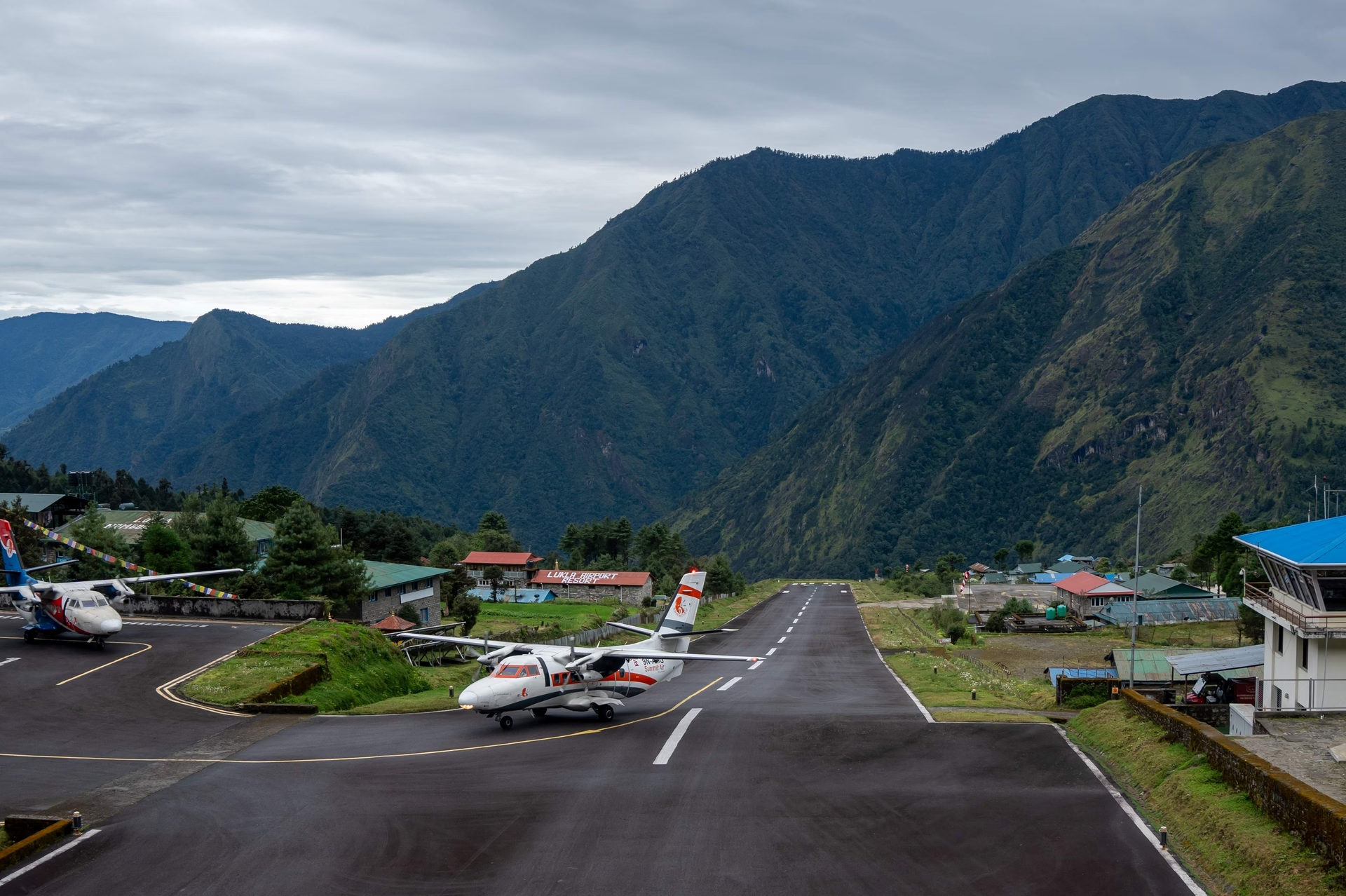
Lukla’s geometry leaves no margin: a 527 m × 30 m runway with an 11.7% gradient at 2,845 m, used in one direction for landing and the opposite for take-off. Aircraft cannot go around, because a mountain wall stands at the uphill end and a drop into the valley at the other.
Aircraft land on runway 06 uphill and take off on runway 24 downhill. Only STOL aircraft and specially authorised crews operate there, in daylight and good weather. Any marginal day ends the operation.
Capacity compounds the weather risk. A peak morning squeezes 50–60 flights into one window, so a grounded aircraft removes seats that no other rotation replaces. The Himalayan Times reported in October 2023 that a Sita Air aircraft stayed grounded at Ramechhap for a technical fault on the first clear day. Flights en route to Lukla also divert to Phaplu Airport, 2,413 m up in the Solu valley, when the landing closes.
What Happens When Visibility Is Poor at Lukla Airport?
Aircraft hold on the ground at Manthali or Kathmandu until pilots receive a report of improved visibility. Aircraft already airborne turn back or divert to Phaplu. A morning hold is not a cancellation: flights launch when the cloud lifts.
On 25 September 2026, The Kathmandu Post reported that poor weather closed five airports, Lukla among them. Sita Air cancelled its entire Friday programme, and Tara Air and Summit Air waited for weather before attempting Lukla. In March 2024, Tara Air’s Ramechhap in-charge confirmed to The Himalayan Times that flights resumed after Lukla reported better conditions. Pilots depend on those ground reports.
Wait at the airport until the airline posts a verdict.
How Do Wind, Clouds, and Rain Affect Lukla Flight Operations?
Wind stops flights because Lukla has no alternate runway. Cloud stops flights because pilots cannot see the valley. Rain stops flights because it arrives with low cloud.
Wind: the single landing direction and the single take-off direction mean aircraft cannot switch runways when the wind shifts. Strong or gusty wind ends operations for the day, and valley wind strengthens as the morning warms.
Cloud: the valley fills as sun warms the slopes. Low cloud hides the approach path, and a thin deck at the wrong height closes the airport for an hour or for five days. Republica reported that heavy cloud grounded all fixed-wing flights for five days before 12 October 2023, leaving helicopters as the only service.
Rain: rain lowers the cloud base and cuts visibility.
Can Flights Be Cancelled Even After Reaching the Lukla Airport?
Yes. A flight can cancel after you reach the Lukla airstrip when your aircraft sits grounded at Manthali, when cloud closes the airport after the first rotations, or when a pilot turns back in the air.
Return flights show the pattern. During a week-long Lukla closure that ended on 31 March 2024, Republica reported that Sita, Tara and Summit aircraft stayed grounded at Manthali. Trekkers waiting to fly out sat in Lukla, and trekkers waiting to fly in sat at Manthali. Some flew helicopters to Surke and others drove to Phaplu.
Two perspectives help. Trekkers at Lukla see only the cloud and the empty runway. Airline staff see aircraft positions, ground reports and the passenger queue, and they release flights in order. Ask your operator’s representative at Lukla for the airline’s status, not the guesthouse’s rumour.
What Happens If Your Lukla Flight Is Cancelled?
The airline cancels the flight, refunds or rebooks the seat without a charge under its published policy, and your trek shifts by at least one day. Your operator then rebooks the next rotation or moves you to a helicopter at your cost.
Under standard STOL airline fare policies for 2026, passengers receive a full refund in every fare category when Tara, Summit, or Sita Air cancels a flight due to weather. A weather cancellation is an airline cancellation. The questions that follow cover your actions, your rebooking options, your refund and your fallback plans.
What Should You Do If Your Lukla Flight Is Delayed or Cancelled?
Stay at the airport until the airline posts a verdict, tell your operator at once, collect a written cancellation certificate and apply the 24–48–72 hour rule.
Six steps keep a lost day from becoming a lost trek.
Confirm the status with your operator before you assume a cancellation
Wait at the airport for the airline’s decision, because late-morning launches happen
Request a written cancellation certificate, which insurers ask for
Rebook the next rotation immediately, because the backlog grows by the hour
Price a helicopter on day 2
Switch plans on day 3
The 24–48–72 hour rule sets the decision clock. On day 1, wait and rebook. On day 2, when fixed-wing flights still stay closed, get a helicopter quote and compare USD 550–700 for a shared seat with the cost of another lost day. On day 3, change the plan. In October 2023, The Himalayan Times reported that many trekkers took a jeep to Phaplu and hiked in from there, a transfer that fills most of a day.
Can You Reschedule a Cancelled Lukla Flight?
Yes. An airline-cancelled flight rebooks without a fee, onto the next rotation with free seats. Voluntary changes cost money: Tara Air does not refund the charges attached to name, date or time changes.
Rebooking speed depends on the backlog. During the five-day halt that ended on 12 October 2023, around 500 trekkers a day kept arriving at Ramechhap, and the backlog cleared over several days. Operators rebook through their own airline contacts, so ask yours how it handles a backlog before you book.
Are Flight Tickets Refundable After Cancellation?
Yes for airline cancellations, partly for voluntary ones. Tara Air’s rules refund 100% when the airline cancels. A passenger who cancels up to 12 hours before departure pays 10% of the base fare. A cancellation inside the check-in window counts as a no-show with no refund.
Card refunds take 10–12 working days. Agents deduct bank and processing charges in some cases, so ask for the net figure before you pay. Trek packages exclude the cost of delays: Heaven Himalaya’s Everest Base Camp terms list extra nights, meals and helicopter flights caused by cancellations as trekker expenses. Travel insurance that covers trip interruption and helicopter evacuation up to 6,000 m recovers part of that cost, and the airline’s cancellation certificate supports the claim.
Should You Keep Extra Buffer Days in Your Everest Trekking Itinerary?
Yes. Keep 2 spare days after the planned Lukla return in March–May and October–November, and 3 spare days in June–August. Never book an international departure on the day you land back from Lukla.
A buffer day costs one Kathmandu hotel night. The alternative costs USD 550–700 for a shared helicopter seat plus a rebooked international ticket. Add 1 spare day before the trek as well: arriving in Kathmandu the day before the flight absorbs a late international connection.
Buffer days also protect the trek itself. A guest review on Heaven Himalaya’s Everest Base Camp page describes a group in Lukla when visibility turned poor; the guide arranged a helicopter to Kathmandu so the group kept its international flights. The planning that made that fix possible started months earlier, with slack in the schedule.
Is a Helicopter Flight a Reliable Alternative to Lukla?
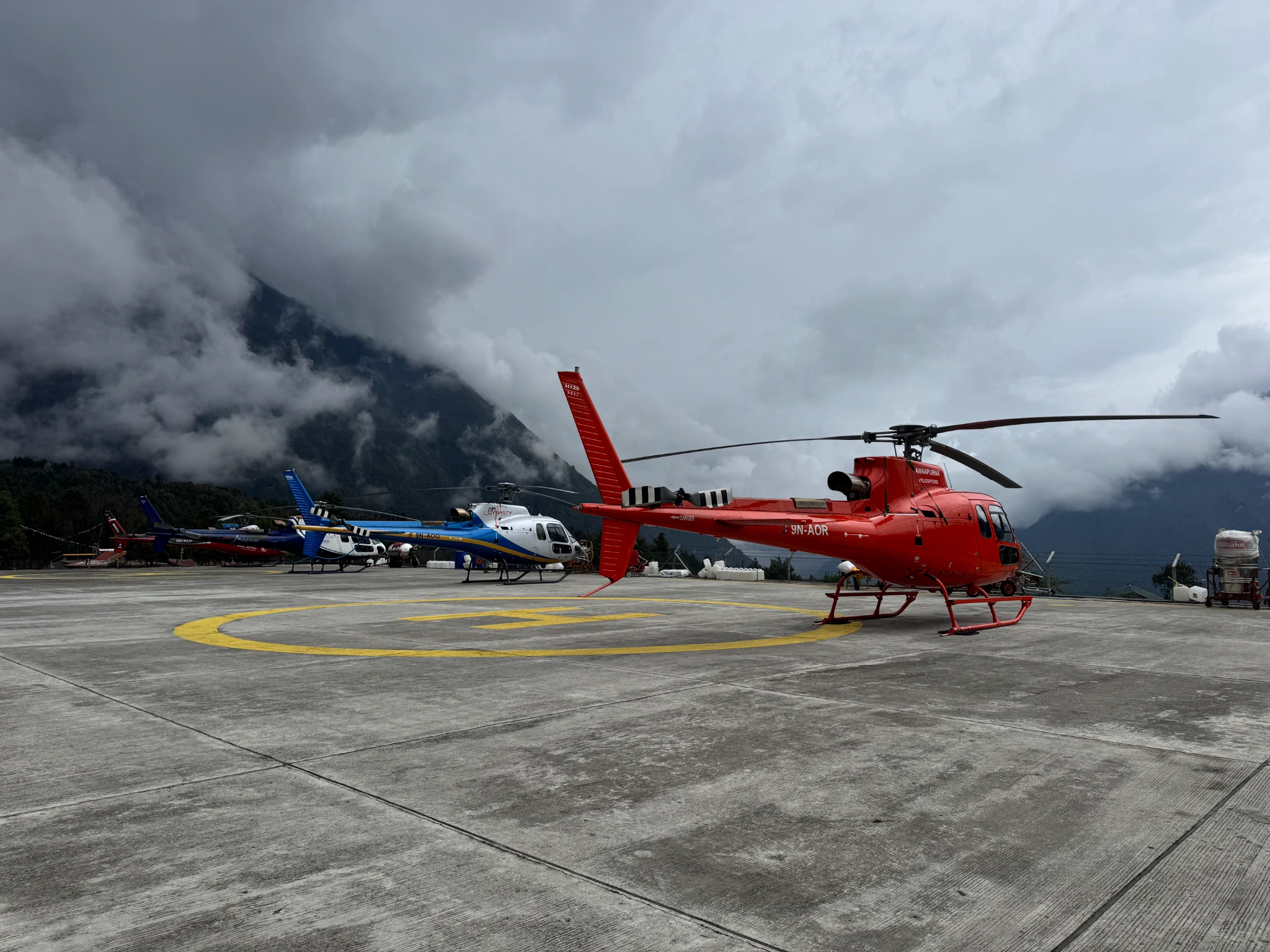
A helicopter is more flexible than a fixed-wing aircraft but not immune to weather. A shared seat costs USD 550–700, a private charter USD 2,500–3,200 for up to 5 passengers, and the flight takes 40–50 minutes from Kathmandu with no Manthali drive.
The evidence favours helicopters on marginal days. Republica reported that during the five-day suspension before 12 October 2023, heavy cloud kept fixed-wing aircraft on the ground while helicopters flew. On 13 October 2023, The Himalayan Times counted 50 helicopter flights against 23 fixed-wing flights from Ramechhap. The limits are real, too. On 25 September 2026, poor visibility closed five airports, and a helicopter cannot land in a cloud-filled valley.
Three trade-offs apply. A shared seat fills only when passengers gather and weight allows. Baggage limits sit near 15 kg. Many insurance policies cover helicopter evacuation but not a convenience flight, so read the wording before you rely on it.
How Much Do Kathmandu–Lukla and Ramechhap–Lukla Flights Cost?
Foreign nationals pay about USD 254–257 one way from Kathmandu and USD 199–210 one way from Ramechhap in 2026. Round trips cost USD 508–514 and USD 398–420. Shared transfers add USD 40–60 for the Manthali round trip.
Airlines set Lukla fares, and every agent sells the same fare for the same date. Older price lists that quote USD 170–190 from Ramechhap use fares from earlier seasons. Ask for a dated written quote.
The following table compares the full round-trip cost of each route for foreign passport holders in USD.
Item | Kathmandu → Lukla | Ramechhap → Lukla |
One-way fare | 254–257 | 199–210 |
Round-trip fare | 508–514 | 398–420 |
Shared transfer, both ways | Not needed | 40–60 |
Round-trip total | 508–514 | 438–480 |
Saving with Ramechhap | Not applicable | 34–70 |
The Manthali route costs 7–14% less, and the saving buys you a pre-dawn start.
Are Lukla Flight Prices Different Between the Two Airports?
Yes. Ramechhap flights cost USD 47–55 less per sector than Kathmandu flights, and the saving falls to USD 17–35 after a shared transfer of USD 20–30.
Group size changes the result. A private six-seat jeep at about USD 150 per vehicle costs USD 25 per person when 6 trekkers share it and USD 150 for a solo traveller. A solo trekker who hires a private jeep pays more than the Kathmandu fare. Nepali and Indian citizens pay separate, lower fares under different fare categories, so the figures here apply to foreign passport holders.
What Additional Costs Should You Expect for the Ramechhap Transfer?
Expect USD 20–30 per person each way for a shared vehicle, plus smaller costs around the pre-dawn start. Heaven Himalaya’s Everest Base Camp package excludes the Manthali drive in peak months and charges it separately.
The table below lists the 6 extra items trekkers meet on the Ramechhap route.
Cost item | Typical cost | Note |
Shared transfer, each way | USD 20–30 per person | Vehicle leaves when full |
Private jeep, each way | From USD 150 per vehicle | Up to 6 passengers |
Manthali lodge night | Varies by lodge | Optional, protects sleep |
Early snacks and water | A few dollars | Manthali offers little food at 5:00 AM |
Excess baggage | Billed per kilogram | Extra bags may fly later |
Extra Kathmandu nights | One hotel night per delay day | Covered by the trekker |
Budget the return transfer as well. Many quotes list one direction only.
What Is Included in a Lukla Flight Ticket?
A Lukla ticket includes a seat on a scheduled flight on your chosen date, a baggage allowance of 10 kg checked plus about 5 kg of hand baggage, and airport charges in all-in fares.
Included items:
Seat: one place on a 12–19 seat STOL aircraft
Baggage: 15 kg combined at most airlines
Taxes: airport tax and fuel charges in an all-in quote
Excluded items:
Transfers: the Manthali road leg
Timing: a guaranteed departure time
Services: meals, insurance and hotel nights
Fallbacks: helicopter flights and rebooking fees for voluntary changes
A ticket buys a date, not a departure time. The airline sets the order on the day.
How Can You Prepare for a Smooth Lukla Flight and Everest Trek?
Carry the right documents, cut luggage to 15 kg and protect the schedule with buffer days. Those 3 preparations remove the avoidable causes of a missed flight, and the weather stays the one variable outside your control.
What Documents and Baggage Allowances Are Required?
You carry a passport, a Nepal visa, your flight ticket, trek permits and insurance. The baggage allowance is 10 kg checked plus about 5 kg of hand baggage on most mountain flights.
Carry 5 documents in the daypack:
Passport valid for at least 6 months
Nepal tourist visa
Printed ticket or e-ticket
Sagarmatha National Park and Khumbu Pasang Lhamu Rural Municipality permits, which your operator arranges
Travel insurance covering helicopter evacuation up to 6,000 m
Weigh the bags at home with a luggage scale. Lithium batteries and power banks travel in hand baggage, and they count toward the hand allowance. Leave the surplus in Thamel: most hotels and operator offices hold luggage while you trek. Extra weight at the airport is billed per kilogram, and an overweight bag can fly on a later flight than you.
What Should You Pack for an Early Morning Lukla Flight?
Pack a daypack with documents, medication, a warm layer, water and snacks. Lukla at 2,845 m is much colder than Manthali at 474 m, and cabins are unheated.
The daypack holds 9 items:
Passport and printed ticket
Prescription medication
Fleece or light down jacket
Water bottle, filled before departure
Snacks, such as nuts, bars and fruit
Headlamp for the dark drive and pre-dawn airstrip
Motion-sickness tablets for the gorge section
Power bank and phone
Nepalese rupees for tea and tips
How Can You Minimize Flight Disruptions Before Your Everest Trek?
You cannot control Lukla weather, but you can cut your exposure with 7 actions. The seven actions below reduce missed connections and lost days.
Choose October or November for the clearest skies, as covered in Heaven Himalaya’s Best Time to Trek in Nepal guide
Book early, because first-rotation seats sell first
Add 2 buffer days after the trek and 1 before it
Buy insurance that covers cancellation, interruption and helicopter evacuation
Sleep before the pick-up, or spend the night before in Manthali
Check the road and the weather forecast 24–48 hours before departure
Keep a plan B ready, such as a helicopter or the walking route from Jiri
The walking route from Jiri removes the flight altogether. It adds about 6 days to the trek, and it is the traditional approach to Everest. Heaven Himalaya runs it as the Jiri to EBC Trek, a 20-day itinerary.
How Can Heaven Himalaya Help You Plan Your Lukla Flight and Everest Trek?
Heaven Himalaya Treks is a Kathmandu-based operator with 13+ years of experience, a 5.0 rating from 160 Tripadvisor reviews and more than 1,000 trekkers guided to Everest Base Camp. The team confirms which airport your dates use, books the flights and sets the pick-up time around the airline’s slot.
The limits matter as much as the services. Lukla flight decisions rest with the airlines and CAAN, and no operator controls the weather. Heaven Himalaya’s terms state that extra nights and helicopter flights after a cancellation are paid by the trekker. What the team controls is planning: buffer days, early pick-ups, helicopter quotes and a guide who handles the rebooking at the airstrip.
Can Heaven Himalaya Arrange Lukla Flights and Kathmandu–Ramechhap Transfers?
Yes. The 14-day Everest Base Camp Trek includes round-trip Lukla flights with departure taxes and private airport transfers. In March–May and October–November, the 4–5 hour Manthali drive is charged separately.
The 14-day itinerary costs USD 1,199–1,580 per person, depending on group size, and includes a licensed guide, one porter for every 2 clients, permits, 2 nights in a 3-star Kathmandu hotel and a duffel bag. Extra luggage stays free in Heaven Himalaya’s Kathmandu office store, which makes the 15 kg flight limit easy to meet. Trekkers who prefer to skip the flight altogether can choose the Jiri route, and trekkers who want a faster exit can add a helicopter return from Gorak Shep. The full cost breakdown sits in the Everest Base Camp Trek Cost 2026/27: Full Price Guide.
Plan your Lukla flight with a local team. Send your dates to info@heavenhimalaya.com or message Ram on WhatsApp or Viber at +977 985 1273867. The team replies with the airport your dates use, the pick-up time and a buffer-day plan. Visit the office at Gitanjali Chowk, Dathu Sadak, Kathmandu, or use Contact Us.
What Should You Know Before Choosing Between Kathmandu and Ramechhap for Lukla Flights?
Your travel month chooses the airport. Lukla flights leave from Manthali (Ramechhap) from 15 March to 15 May and from 25 September to 30 November in 2026, and from Kathmandu in the other months. Manthali costs USD 34–70 less per round trip and adds a 4–5 hour drive that starts around 12:30 AM.
Seven facts frame the decision:
Airport: the month sets it, not your preference
Road: 130–140 km, 4–5 hours, with Roshi River floods closing the BP Highway for 3 days in May 2026 and 5 days in September 2026
Flight: 15–20 minutes from Manthali, 30–40 minutes from Kathmandu
Fare: USD 199–210 from Manthali, USD 254–257 from Kathmandu, one way
Weather: Lukla decides both routes, and no airport guarantees a departure
Refund: a full refund or free rebooking follows an airline cancellation
Buffer: 2 spare days after the trek turn a cancellation into a delay
Questions about your dates? Email info@heavenhimalaya.com and the Heaven Himalaya team will confirm the airport, the schedule and the transfer for your trip.