

Travel Insurance for the Everest Base Camp Trek 2027/28

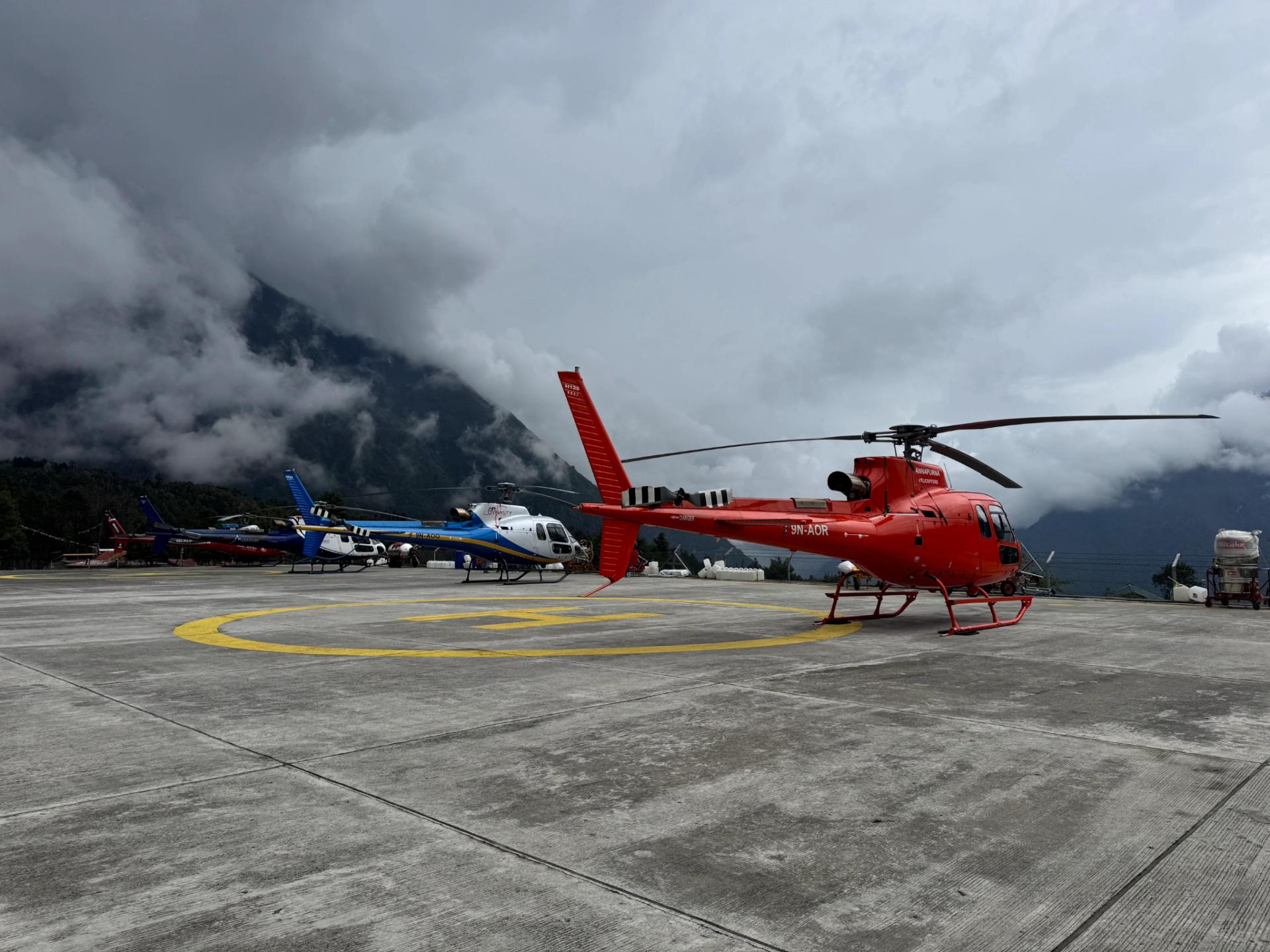
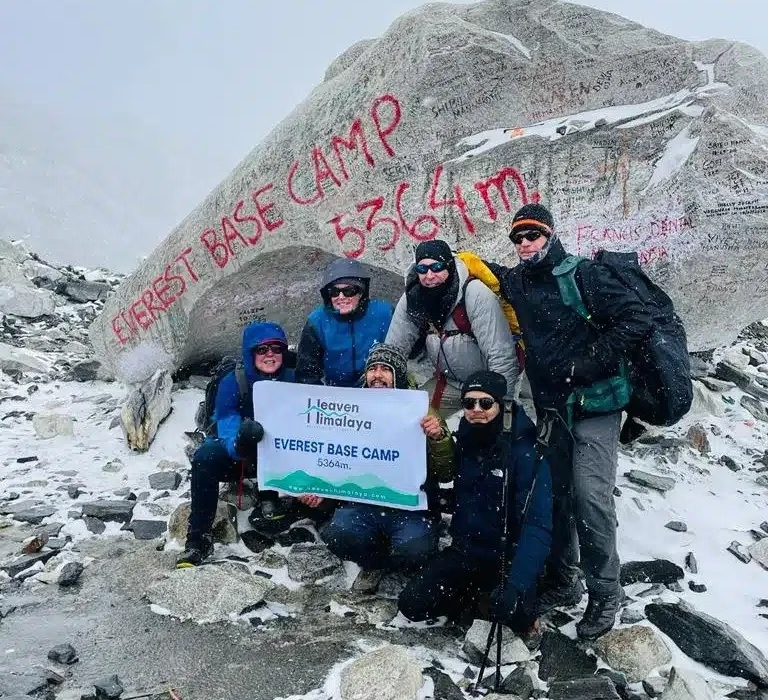
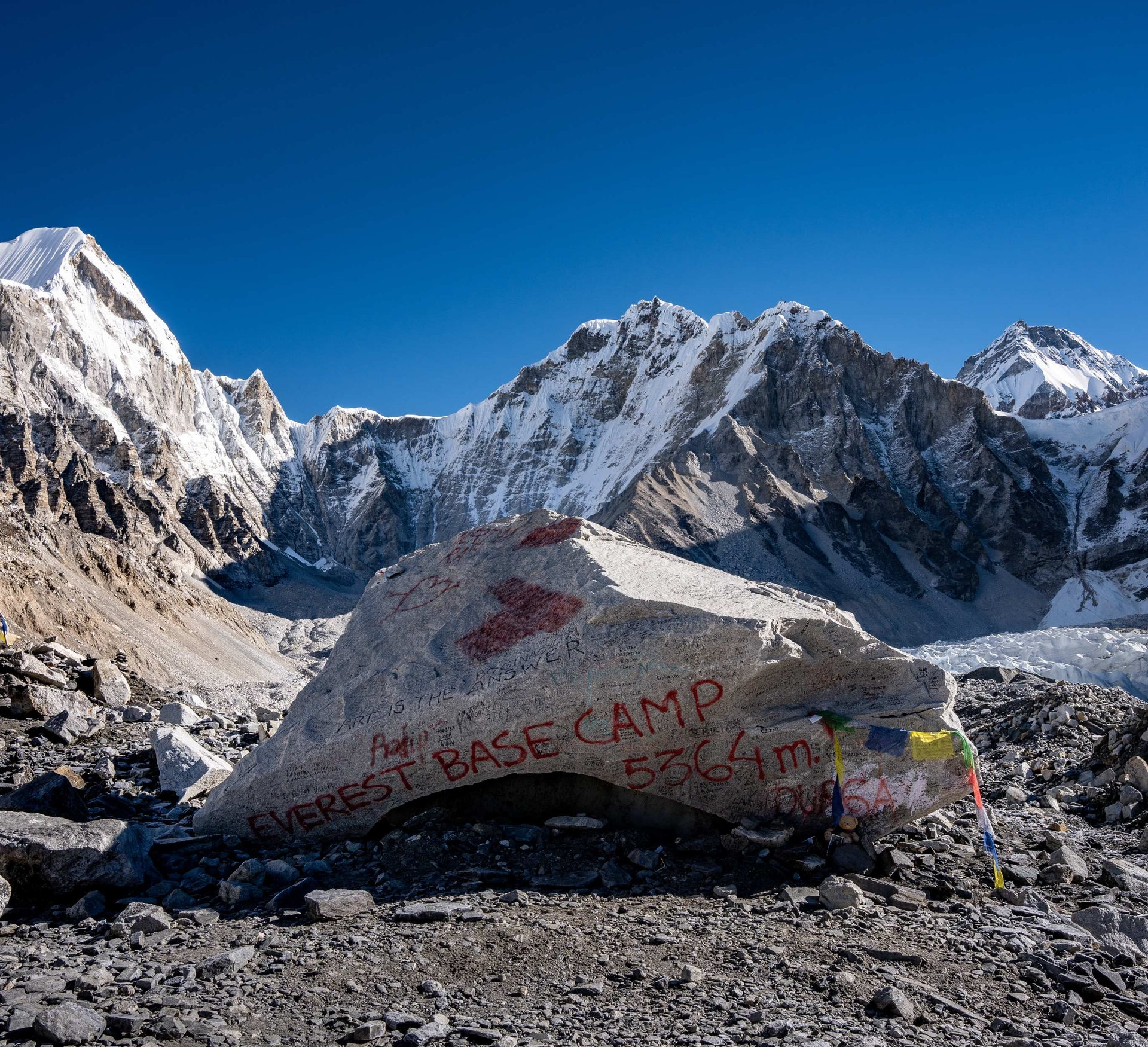
Travel insurance for the Everest Base Camp trek protects trekkers against high-altitude medical emergencies, helicopter evacuation, hospitalization, and unexpected travel expenses in Nepal. A suitable policy must cover trekking up to 6,000 meters, including Everest Base Camp (5,364 m) and Kala Patthar (5,545 m), with clearly defined emergency medical evacuation benefits. Coverage for altitude-related illnesses such as acute mountain sickness (AMS), high-altitude pulmonary edema (HAPE), and high-altitude cerebral edema (HACE) is equally important when trekking through the remote Khumbu region.
Choosing the right Everest Base Camp travel insurance requires comparing altitude limits, medical and evacuation coverage, policy exclusions, and claim procedures. This guide examines 2027 insurance costs and high-altitude coverage from providers such as World Nomads, True Traveller, and SafetyWing. It also explains helicopter rescue arrangements in Nepal, trip cancellation protection, baggage coverage, and the essential policy conditions to verify before starting your Himalayan adventure.
Why Is Travel Insurance Essential for the Everest Base Camp Trek?
Travel insurance is essential because no road reaches Lukla or the trail above it, private helicopter charter costs range from US$4,000 to US$6,000 for upper-Khumbu emergency evacuations (and US$2,500 to US$3,500 from Lukla), and altitude illness can affect anyone regardless of fitness. Registered agencies require policies covering emergency evacuation up to 6,000 m.
Nepal does not routinely check policy documents at Tribhuvan International Airport arrival immigration. However, agencies require proof before trek departure, and insurers enforce strict altitude clauses. A standard 14-day guided package costs roughly US$1,500, whereas an uninsured medical evacuation and hospital stay can quickly exceed that amount.
Everest Base Camp Trek
View detailsWhat Risks Do Trekkers Face on the Everest Base Camp Trek?
Trekkers face 6 main risks on the Everest Base Camp trek: altitude illness, trail injuries, infections, weather, flight disruption, and cold exposure. Each risk maps to a different insurance benefit.
Altitude illness: acute mountain sickness (AMS), high-altitude pulmonary edema (HAPE), and high-altitude cerebral edema (HACE) affect trekkers from about 2,500 m upward.
Trail injuries: sprains, fractures, and falls on loose scree near the Khumbu Glacier, plus collisions with yaks and zopkyo on suspension bridges.
Infections: chest infections from dry, cold air and stomach upsets from lodge food and water.
Weather: snow above Lobuche, wind at Kala Patthar, and winter lows near -17°C.
Flight disruption: peak-season cancellations at Lukla commonly run 1 to 3 consecutive days.
Cold exposure: frostnip on fingers and toes during the pre-dawn Kala Patthar climb.
According to a Himalayan Rescue Association study of trekkers at Pheriche (4,240 m) published in Aviation, Space, and Environmental Medicine, nearly 30% received an AMS diagnosis. The study noted that acclimatization days significantly reduce illness risk. The HRA clinic at Pheriche operates seasonally during peak spring and autumn trekking months.
The risk most trekkers overlook is evacuation timing. Helicopters cannot fly in cloud, so a rescue can wait overnight for a weather window. The call to your insurer's assistance line belongs at the first sign of trouble, not at dawn.
How Can Travel Insurance Protect Against High-Altitude Emergencies?
Travel insurance protects against high-altitude emergencies in 4 ways: it coordinates the rescue through a 24-hour assistance line, guarantees payment to the helicopter operator, pays Kathmandu hospital bills, and flies you home when treatment continues abroad.
The assistance line is the benefit trekkers undervalue most. According to the World Nomads help centre, its emergency assistance team assesses the situation, has medical experts decide whether helicopter evacuation is medically necessary, and arranges the flight through a reputable company with guaranteed payment. You or any member of your travelling party can place that call. A guide or a lodge owner can place it for you.
According to Wilderness Medical Society guidelines, above 3,000 m, sleeping elevation should not increase by more than 500 m per day (with many guides targeting a conservative 300 to 500 m), with a rest day every 3 to 4 days. Immediate descent remains the primary treatment for severe altitude illness like HAPE or HACE.
What Happens If You Need Emergency Helicopter Evacuation?
An emergency helicopter evacuation follows 5 steps: assessment, authorization, dispatch, flight, and hospital admission.
Assess the patient. Your guide checks oxygen saturation and symptoms. During peak seasons, the Himalayan Rescue Association clinic at Pheriche (4,240 m) can evaluate symptoms.
Authorize the flight. You or a companion call the insurer's 24-hour line, and the insurer's doctors judge medical necessity.
Dispatch the helicopter. The assistance company guarantees payment, and an operator flies when the weather allows.
Fly to Kathmandu. Helicopter flights from Gorak Shep or Lobuche to Kathmandu typically take 60 to 75 minutes (about 45 minutes from Lukla), subject to weather and any refueling or shuttle stops.
Admit the patient. A Kathmandu hospital takes over, and the insurer receives itemized invoices.
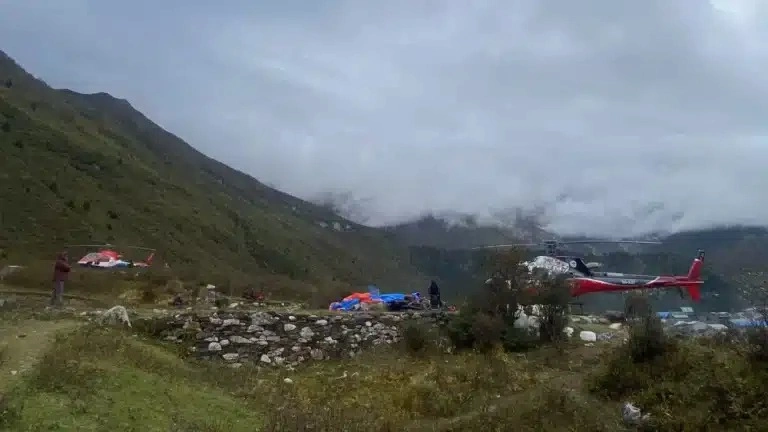
A single-passenger emergency helicopter charter in the upper Khumbu typically costs between US$4,000 and US$6,000 (and US$2,500 to US$3,500 from Lukla). Official CIB and MoCTCA investigation reports from the fake-rescue probe detailed how fraudulent claims involved double-billing and inflated charter invoices reaching US$10,000 to US$12,000.
According to Central Investigation Bureau (CIB) reports and Kathmandu Post coverage, law enforcement and the Ministry of Culture, Tourism and Civil Aviation (MoCTCA) investigated multi-million dollar fraud schemes involving unnecessary airlifts and falsified hospital records. As a result, Nepal authorities and international underwriters implemented strict verification protocols in 2027.
Genuine rescues still save lives. HAPE and HACE demand immediate descent, and a helicopter is the fastest way down. The fraud cases involved minor ailments. Three habits protect you: call the insurer's assistance line yourself, ask for the operator's name, and record your own oxygen readings and symptoms with times.
What Should Travel Insurance Cover for the Everest Base Camp Trek?
A policy for the Everest Base Camp trek must cover 6 benefits: trekking to 6,000 m, named helicopter evacuation, medical expenses and hospitalization, altitude illness, trip cancellation and interruption, and baggage. The first two decide whether the policy works at all. The other four decide how much money you recover.
Does Travel Insurance Cover Trekking Above 5,000 Meters?
Standard travel insurance stops at 3,000 to 4,000 m, so trekking above 5,000 m requires a specialist plan or an upgrade with a 6,000 m ceiling. An altitude ceiling is the highest elevation at which a policy pays claims. Claims that begin above it are excluded.
The following table shows where three common ceilings end on the 14-day Heaven Himalaya itinerary.
Trail point | Itinerary day | Altitude | 3,000 m ceiling | 4,500 m ceiling | 6,000 m ceiling |
Lukla | 2 | 2,860 m | Covered | Covered | Covered |
Namche Bazaar | 3 | 3,440 m | Not covered | Covered | Covered |
Dingboche | 6 | 4,410 m | Not covered | Covered | Covered |
Lobuche | 8 | 4,910 m | Not covered | Not covered | Covered |
Gorak Shep | 9 | 5,164 m | Not covered | Not covered | Covered |
Everest Base Camp | 9 | 5,364 m | Not covered | Not covered | Covered |
Kala Patthar | 10 | 5,545 m | Not covered | Not covered | Covered |
A 3,000 m ceiling ends coverage around Namche Bazaar. A 4,500 m ceiling expires before Thukla (4,620 m) or Lobuche (4,910 m), while acclimatization hikes such as Nagarjun Hill above Dingboche reach 5,050 m. Even a 5,500 m limit falls short of Kala Patthar (5,545 m).
World Nomads covers high-altitude trekking up to 6,000 m depending on your country of residence and chosen plan level (such as the Explorer Plan or specified activity add-ons). Trekking above 6,000 m is excluded, requiring dedicated mountaineering insurance for peaks like Island Peak (6,189 m).
Does Everest Base Camp Trek Insurance Cover Helicopter Rescue?
Everest Base Camp trek insurance covers helicopter rescue only when the policy lists emergency evacuation as a benefit, the insurer's doctors judge the flight medically necessary, and the patient is inside the altitude ceiling. Marketing pages often say "helicopter rescue covered" without those conditions.
Policies distinguish between emergency medical evacuation by helicopter and separate search-and-rescue (locating missing persons). Medical evacuation covers transport to a medical facility when deemed medically necessary, whereas separate search-and-rescue (locating missing persons) is typically excluded.
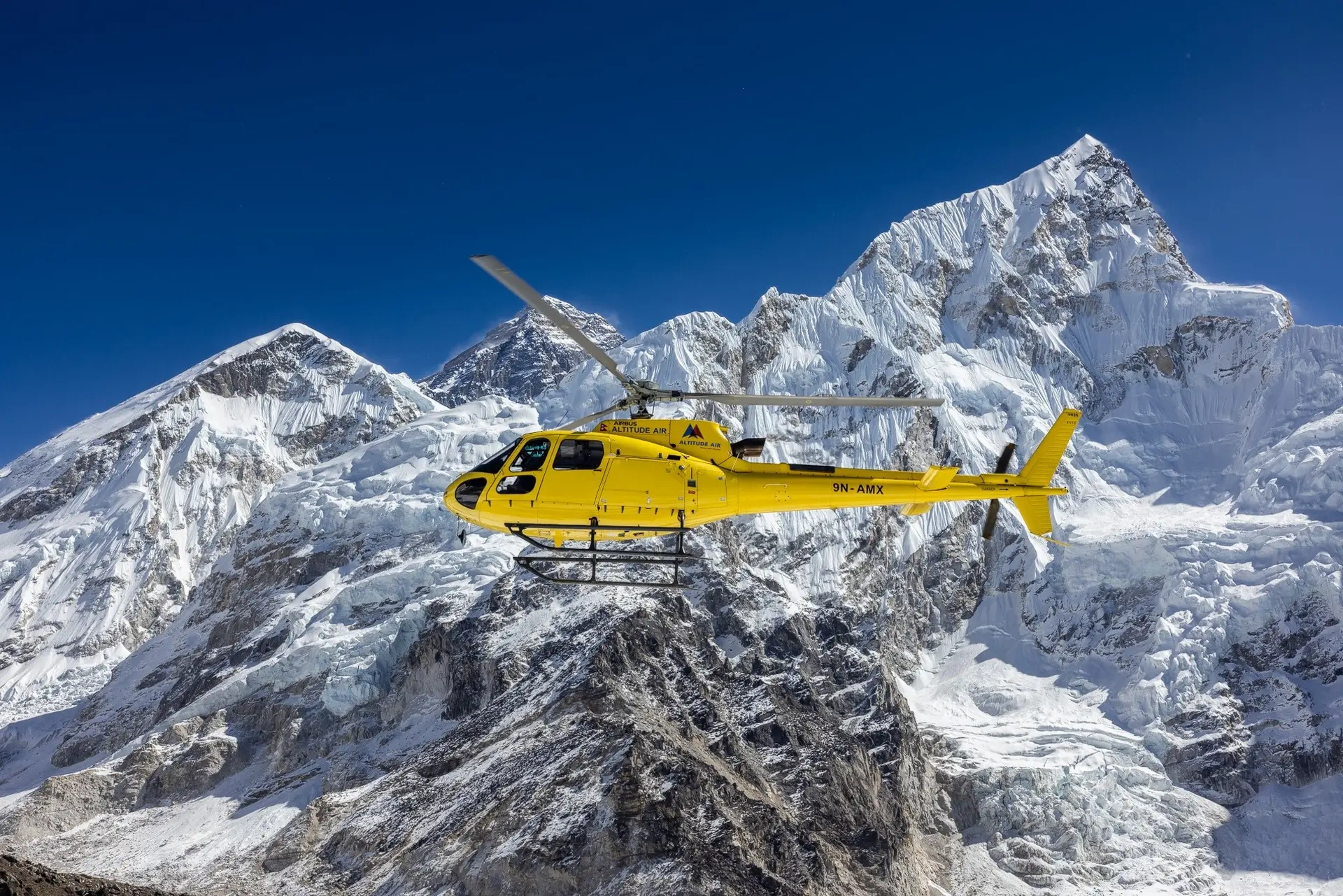
Three more details matter. World Nomads applies a higher excess to Nepal helicopter evacuations than to other destinations. Some policies cap helicopter cover at US$20,000 to US$30,000, which leaves little room for hospital bills and repatriation. A scheduled helicopter return from Gorak Shep is a booking, not a rescue, and no insurer pays for it.
Everest Base Camp Helicopter Return Trek
View detailsAre Medical Expenses and Hospitalization Covered?
Emergency medical expenses and hospitalization are covered when the illness or injury begins inside the altitude ceiling and the insurer's doctors judge the treatment medically necessary. Covered costs include clinic consultations in the Khumbu, oxygen and medication, ambulance transfers, Kathmandu hospital stays, intensive care, and transport home when treatment continues abroad.
Direct billing through the insurer's assistance team spares you the deposit conversation at admission. Without it, you pay first and claim later, so carry a credit card with a high limit.
Following CIB and MoCTCA investigations into hospital billing practices, insurers conduct rigorous audits on Nepal claims. Trekkers should retain itemized medical receipts, diagnostic charts, and official discharge summaries.
Pre-existing conditions are excluded unless you declare them and the insurer accepts them. Look-back periods commonly run 90 to 180 days. Declare asthma, heart conditions, and diabetes at purchase, not at claim time.
Does Travel Insurance Cover Altitude Sickness and HAPE?
Travel insurance covers altitude sickness, HAPE, and HACE when the policy lists high-altitude illness as covered and the illness begins below the altitude ceiling. Nepal operator guides advise choosing a policy that names AMS explicitly.
AMS is the mild form: headache with nausea, dizziness, fatigue, or poor sleep. HAPE is fluid in the lungs, marked by breathlessness at rest, a persistent cough, and falling oxygen saturation. HACE is fluid around the brain, marked by confusion, loss of balance, and drowsiness. HAPE and HACE require immediate descent.
Insurers cover medical treatment for altitude sickness but reject claims arising from intentional disregard of medical advice. Keeping daily oximeter logs and guide notes provides clear documentation if a claim is submitted.
Trekkers on the Everest trail also climb faster than they plan. The Everest Base Camp trek training plan helps build the fitness that makes slow, steady ascent easier.
Are Trip Cancellation and Interruption Covered?
Trip cancellation and interruption benefits refund prepaid, non-refundable costs when a covered reason, such as illness, injury, or a family death, stops you from starting or finishing the trek. Cancellation applies before departure. Interruption applies after you leave home.
One recent Heaven Himalaya traveler fell ill on the way to Namche Bazaar, walked back to Lukla, and flew to Kathmandu while her husband continued to Base Camp. The agency rebuilt her remaining days around Chitwan, Bhaktapur, and Nagarkot. That is the scenario interruption cover exists for: one person leaves, one stays, and prepaid land costs go unused.
Trip cancellation and interruption benefits require specific covered causes. Pre-existing condition waivers or Cancel For Any Reason (CFAR) upgrades must typically be purchased within 14 to 21 days of making your initial deposit.
Flight delays due to weather at Lukla or Ramechhap are handled under travel delay or trip interruption benefits. Buying a voluntary helicopter ticket to bypass weather delays is an out-of-pocket transportation choice, not a covered delay expense.
Does Insurance Cover Lost, Stolen, or Delayed Baggage?
Baggage cover reimburses lost or stolen items up to a per-item and a total limit, and delayed-baggage cover pays for emergency purchases after a wait that commonly ranges from 6 to 24 hours.
Twin Otter and Dornier flights to Lukla enforce a strict luggage allowance of 15 kg total per passenger (typically split as 10 kg checked duffel and 5 kg cabin hand luggage). Excess weight incurs additional fees or may be delayed.
Cameras, phones, and laptops usually carry a per-item limit well below replacement cost, and drones are often excluded. Check the limit before the trek, not after the theft. A theft claim requires a police report, and the Nepal Tourist Police hotline (1144) issues the paperwork in Kathmandu.
Delayed baggage rarely ruins the trek. Boots, down jackets, and sleeping bags are available for rent or sale in Kathmandu, so a delayed bag costs a day, not the trek. Carry boots, medication, and a base layer in your cabin bag. The Packing List for Trekking in Nepal lists the items worth carrying on the plane.
How Much Does Travel Insurance for Everest Base Camp Cost?
Travel insurance for Everest Base Camp costs about US$80 to US$300 per person for a 14- to 30-day policy that includes 6,000 m trekking cover and helicopter evacuation. The following table shows the ranges Nepal trekking operators published in 2027.
Policy length | Reported 2027 range (per person) |
14 days | US$80 to US$180 |
2 to 3 weeks | US$80 to US$200 |
Up to 30 days | US$100 to US$300 |
Policy premiums vary based on age, residency, deductible choices, and coverage limits. Treat cost estimates as general budgeting ranges rather than fixed rates.
What Factors Affect Everest Base Camp Travel Insurance Prices?
Six factors set the price: age, trip length, altitude ceiling, evacuation and medical limits, insured trip cost, and country of residence.
Age: insurers price in age bands, and premiums step up with each band.
Trip length: a 14-day trek priced per day costs less than a 30-day trip with a Kathmandu extension.
Altitude ceiling: the 6,000 m tier costs more than the 4,500 m tier.
Limits: higher medical and evacuation limits raise the premium.
Trip cost: more prepaid, non-refundable spending raises cancellation cover cost.
Residence: plan structures and underwriters differ for residents of the United States, Europe, and Australia.
Policy options and add-ons vary by provider. SafetyWing requires the Adventure Sports Add-on to cover trekking between 4,500 m and 6,000 m. True Traveller offers high-altitude options primarily for UK and EEA residents. Always confirm terms directly with underwriters before purchasing.
How Much Coverage Should You Purchase?
Buy at least US$100,000 of emergency medical cover and at least US$100,000 of evacuation cover, then add trip-cost cover equal to every non-refundable payment you made. Nepal trekking operators converge on the US$100,000 floor.
Ensure policy limits adequately cover helicopter evacuation, hospitalization in Kathmandu, and international medical repatriation. Check whether these benefits share a single limit or operate with separate maximum caps.
When calculating trip cancellation coverage, sum non-refundable agency deposits, international flights, and internal Lukla flights. Gear purchased prior to the trip is generally excluded from cancellation coverage unless specifically insured under baggage limits.
Is Affordable Travel Insurance Suitable for High-Altitude Trekking?
Affordable travel insurance suits high-altitude trekking only when it clears 4 hurdles: a 6,000 m altitude ceiling, named helicopter emergency medical evacuation, an evacuation limit of at least US$100,000, and no blanket exclusion on mountain medical airlifts (even if separate search-and-rescue for locating missing persons is excluded). Most cheap policies fail the first hurdle.
Three cheap options fail in predictable ways. Standard policies and credit-card cover usually stop at 3,000 to 4,000 m. Backpacker plans such as SafetyWing's base tier stop at 4,500 m. A bargain quote usually means the altitude upgrade is missing, and the missing upgrade is where the claim dies.
Before purchasing, send a written inquiry to the insurer: "Does this policy cover emergency medical helicopter evacuation up to 6,000 m, including Gorak Shep (5,164 m) and Kala Patthar (5,545 m), for acute mountain sickness, and what is the specific Nepal excess?" Retain the response for your records.
Everest Base Camp Short Hike
View detailsWhich Travel Insurance Companies Cover the Everest Base Camp Trek?
Five provider types cover the Everest Base Camp trek: specialist adventure insurers, backpacker plans with altitude add-ons, mountaineering club schemes, assistance memberships, and home-country insurers with adventure upgrades. The 2027 fraud case pushed several insurers to tighten Nepal terms, so confirm that the policy lists Nepal and trekking to 6,000 m by name.
Which Insurance Providers Offer High-Altitude Trekking Coverage?
Providers covering high-altitude trekking up to 6,000 m include World Nomads (Explorer plan or country-specific altitude upgrade), True Traveller (Extreme Pack upgrade for UK and EEA residents), and SafetyWing (Nomad Insurance with Adventure Sports Add-on). Alpine club schemes and specialist providers also offer coverage options.
Provider type | Example | Altitude ceiling | Helicopter terms | Watch for |
Specialist adventure plan | World Nomads (Explorer / Country-specific) | 6,000 m | Medically necessary evacuation through the assistance team | Specific plan tier or upgrade required by country |
Backpacker plan with add-on | SafetyWing Nomad Insurance | 4,500 m base; 6,000 m with Adventure Sports Add-on | Emergency medical evacuation covered; excludes helicopter expenses for search and rescue from a mountain | No pre-departure trip cancellation benefit; path rules |
Mountaineering club scheme | Austrian Alpine Club (ÖAV), British Mountaineering Council (BMC) | Varies by membership | Rescue-focused | Membership tier, terms |
Assistance membership | Global Rescue | Service-based | Dispatches evacuation | Pair with a medical policy |
Home-country insurer | National insurers with adventure upgrades | Often 3,000 to 4,500 m by default | Varies | Upgrade availability |
True Traveller offers coverage up to 6,000 m via its Extreme Pack for UK and EEA residents. Alpine club schemes provide rescue-focused cover that must be reviewed against medical caps. Assistance memberships like Global Rescue manage field rescue logistics and should be paired with a comprehensive medical insurance policy.
Does World Nomads Cover Everest Base Camp Trekking?
World Nomads covers hiking and trekking up to 6,000 m, which includes Everest Base Camp (5,364 m) and Kala Patthar (5,545 m), on plans where the trekking activity is included for your country of residence. According to the World Nomads help centre, some plans require an upgrade to reach that altitude.
Helicopter terms deserve a close read. According to the same help page, medical evacuation from the mountains by helicopter may be covered when medically necessary. Nepal carries a higher excess than other destinations. You, or someone in your party, must contact the 24/7 Emergency Assistance team before the helicopter flies, and skipping that call can void cover. The team picks a reputable operator and guarantees payment.
The help page also warns about scams. Some operators and guides claim to have the insurer's go-ahead when they do not, and the trekker receives the bill. Call the assistance line yourself or ask a friend to call.
Exclusions include trekking or camping above 6,000 m, mountaineering, ice climbing, existing medical conditions, and search-and-rescue operations (locating missing persons) as distinct from required emergency medical evacuation by helicopter. World Nomads writes separate policies by country, so read the document for your country of residence.
Does SafetyWing Cover High-Altitude Trekking in Nepal?
SafetyWing Nomad Insurance covers hiking up to 4,500 m under its base plan on recognized trails. Trekking between 4,500 m and 6,000 m requires adding the Adventure Sports Add-on.
On the Everest Base Camp route, SafetyWing's base plan ceiling (4,500 m) ends at Dingboche (4,410 m). The Adventure Sports Add-on is required starting with the Nagarjun Hill acclimatization hike (5,050 m) and proceeding past Thukla (4,620 m) to Lobuche, Gorak Shep, and Everest Base Camp.
SafetyWing covers emergency medical evacuation when medically necessary, but explicitly excludes helicopter expenses for search and rescue from a mountain. This wording gap means an evacuation on a mountain trail could be disputed if treated as search and rescue rather than medical transport. Additionally, SafetyWing Nomad Insurance does not include pre-departure trip cancellation, meaning non-refundable deposits are not covered if you cancel before your start date.
Everest Three High Passes Trek
View detailsHow Can You Compare Travel Insurance Policies?
Compare policies on 7 line items: altitude ceiling, named helicopter evacuation, evacuation limit, medical limit, excess, payment method, and exclusions. The following table sets a pass mark for each line.
Line item | Pass mark for the Everest Base Camp trek |
Altitude ceiling | 6,000 m trekking, confirmed in writing |
Helicopter evacuation | Named benefit for emergency medical evacuation, distinguishing required evacuation from separate search-and-rescue (locating missing persons) which is typically excluded |
Evacuation limit | US$100,000 or more |
Medical limit | US$100,000 or more |
Excess | Stated for Nepal helicopter claims |
Payment method | Insurer pays the operator directly |
Exclusions | No altitude, guide, or route clause that fits your plan badly |
A policy that fails one line is a different product from the one you planned to buy.
How Do You Choose the Right Everest Base Camp Trek Insurance?
Choose Everest Base Camp trek insurance by working backward from your itinerary: list the highest point, the side trips, the helicopter plans, and your health history, then eliminate every policy that fails one of them.
Map the highest point on your route, including side hikes.
Check the altitude ceiling against that point.
Email the insurer the helicopter question from the section above.
Compare the limits and the excess in the table.
Declare health conditions and request the waiver in writing.
Buy within the waiver window.
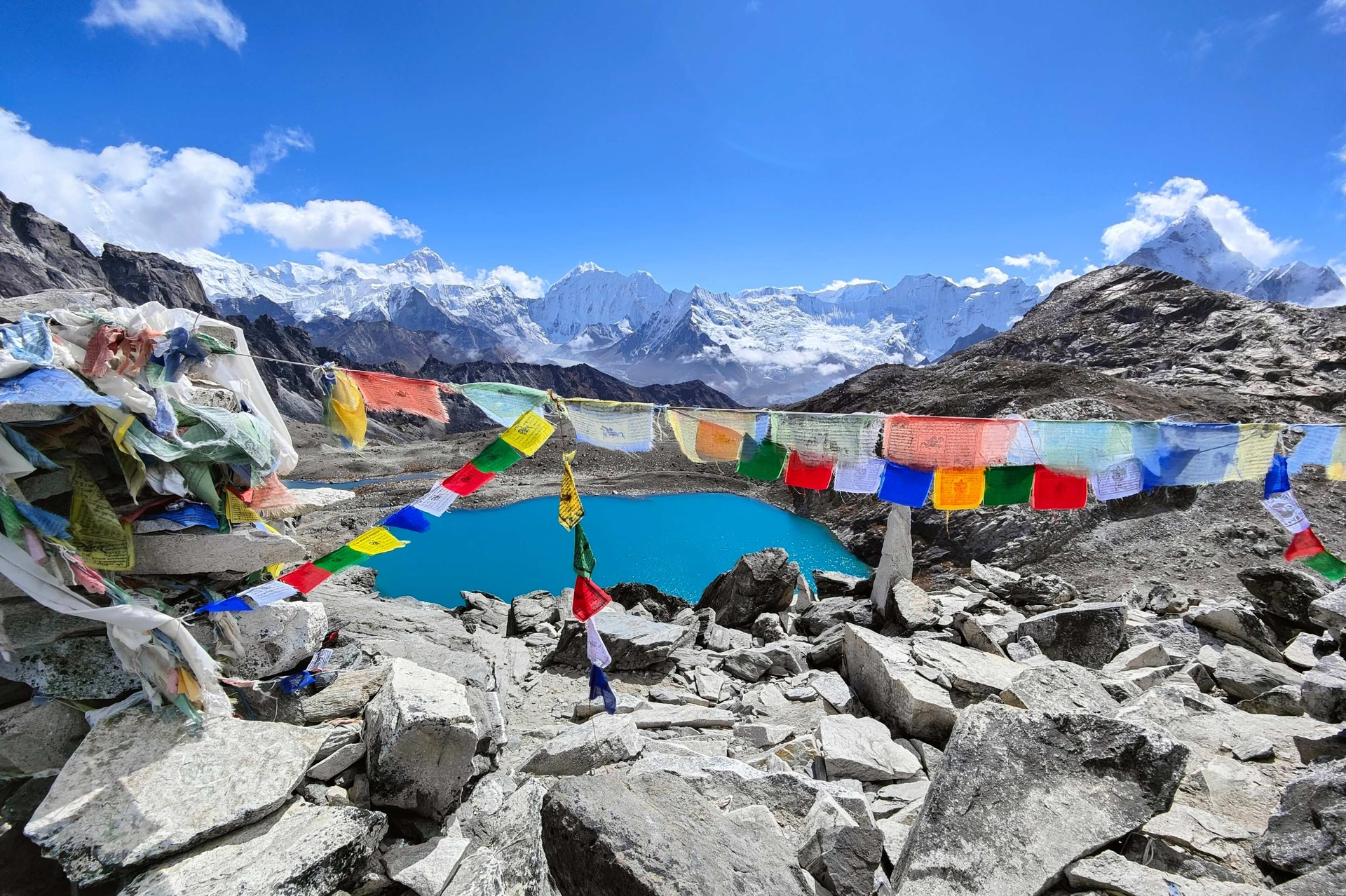
Side trips change the answer. Gokyo Ri reaches 5,357 m and Cho La Pass 5,420 m, so the Everest Three Passes Trek and the Chola Pass route still fit a 6,000 m ceiling. Island Peak climbing does not. Common mistake we see: trekkers buy for Base Camp and then add a side trip after arrival, outside the policy.
What Altitude Limit Should Your Insurance Policy Include?
Your insurance policy must specify an altitude limit of at least 6,000 m for the Everest Base Camp trek. Kala Patthar, the highest point on the standard trekking itinerary, stands at 5,545 m, and Everest Base Camp lies at 5,364 m.
Selecting a 6,000 m limit ensures complete coverage across all high points on the route, including acclimatization side hikes like Nagarjun Hill (5,050 m). Coverage above 6,000 m moves into mountaineering policies.
Climbers need a different policy. Island Peak (6,189 m), Lobuche East (6,119 m), and Mera Peak (6,476 m) sit above the trekking band. The Island Peak Climbing with EBC itinerary requires mountaineering cover, and ropes, ice axes, and crampons void standard trekking policies.
Should Your Policy Include Helicopter Evacuation Coverage?
Yes. A policy for the Everest Base Camp trek must include helicopter evacuation, because helicopters are the primary rescue method above Namche Bazaar and no road reaches Lukla or the trail above it.
Confirm five details before buying:
Named benefit: the policy wording says "emergency evacuation" or "air ambulance", and the benefit is not buried in a brochure line.
Search-and-rescue wording: clear distinction between required emergency medical evacuation by helicopter and separate search-and-rescue (locating missing persons) which is typically excluded.
Payment guarantee: the assistance company pays the operator directly.
Nepal excess: the amount is stated.
Medical decision-maker: the insurer's doctors decide necessity, not a third party.
Policies that mention only "repatriation" or "transport to hospital" without helicopter wording invite disputes. A helicopter return that you book as part of an itinerary falls outside every policy, and it does not lower the altitude exposure on the way up.
Does Your Insurance Cover Independent and Guided Trekkers?
Most policies cover guided and independent trekkers on recognized routes, but some require a registered guide above a set altitude, and SafetyWing requires certified, official paths. Read the wording for any guide clause.
Nepal's own rules are contested. Nepal Tourism Board introduced a mandatory-guide rule in April 2023. The Khumbu Pasang Lhamu Rural Municipality, which governs the Everest region, announced that a guide is not mandatory there, and reports in 2027 still describe enforcement as inconsistent. Sources disagree, so confirm the current rule with your agency before you fly.
Guided trekking also simplifies claims. A licensed agency produces the itinerary, the guide statement, and the permits an insurer asks for. In the wake of the 2027 case, pick an agency with Nepal Tourism Board registration, Trekking Agencies' Association of Nepal membership, and public traveler reviews. Heaven Himalaya advises against trekking alone in high-altitude regions.
What Policy Exclusions Should You Check Before Buying?
Review standard policy exclusions before departure: altitude exceeding policy limits, separate search-and-rescue exclusions (locating missing persons as distinct from emergency medical evacuation by helicopter), pre-existing conditions, alcohol or drug impairment, ignoring medical advice, unapproved evacuation charters, off-route travel, and technical climbing gear.
Exclusion | Why it matters at Everest Base Camp |
Altitude above the ceiling | Claims at Lobuche or Kala Patthar fail on a 4,500 m policy |
Search and rescue | Injured off the main path, you may pay for the search |
Pre-existing conditions | Undeclared asthma or heart conditions void related claims |
Alcohol and drug impairment | Incidents linked to alcohol or drug consumption are excluded |
Ascent against advice | Ignoring a guide's descent call is a classic denial reason |
Unauthorized helicopter flights | No call to the assistance line can void payment |
Off-route travel | Certified-path rules apply on some plans |
Climbing equipment | Ropes, ice axes, and crampons move the activity into mountaineering |
How Can You Buy Travel Insurance for the Everest Base Camp Trek?
Buy Everest Base Camp trek insurance online in 5 steps: select the 6,000 m trekking activity, enter Nepal and exact dates, declare medical conditions, choose limits, and pay by card. The policy certificate arrives by email within minutes, so save it before departure.
When Should You Purchase Your Trekking Insurance?
Purchase your trekking insurance within 14 to 21 days of paying your first trip deposit, and always before you leave home. That window protects cancellation cover and pre-existing condition waivers, and cancellation benefits cannot be bought after the problem appears.
World Nomads lets travelers buy a policy while already on the road. Late purchase only protects against events that happen after the start date, so it fixes an altitude gap, not a lost deposit.
Match the policy dates to the trip with a buffer. Peak-season flights to Lukla leave from Manthali Airport in Ramechhap, a 4 to 5 hour drive from Kathmandu, and weather cancellations of 1 to 3 days are common. Add 3 buffer days at the end so a delayed return does not expire your cover. Heaven Himalaya lists 2027 and 2028 departures, and booking early lets you buy cancellation cover early.
What Documents Are Required to Buy Travel Insurance?
Buying travel insurance requires 6 items: a passport, your date of birth, your country of residence, exact trip dates, the total prepaid trip cost, and a payment card. Declaring medical conditions requires a short health questionnaire, and some insurers ask for a fitness letter from a doctor.
Keep these files ready for the claim stage as well:
Policy certificate and 24-hour assistance number
Passport copy and Nepal entry visa receipt
Agency booking confirmation and day-by-day itinerary
Flight tickets, including Lukla flights
Emergency contact details for a person at home
Save the assistance number in your phone and on paper. Lodge Wi-Fi is unreliable above Namche Bazaar, and a paper copy never runs out of battery.
How Can You File a Claim During an Emergency in Nepal?
File a claim in 7 steps: call the assistance line first, document your condition, keep every invoice, request itemized bills, collect police or clinic reports, submit before the deadline, and track the case number.
Call the insurer's 24-hour line before any helicopter flies, and let the insurer's doctors speak with your guide.
Record oxygen readings, symptoms, and times in a notebook or phone.
Get a written report from the clinic, such as the Himalayan Rescue Association post at Pheriche.
Note the helicopter operator's name, flight date, and flight time.
Keep original receipts, prescriptions, and the hospital discharge summary.
Report theft to the Nepal Tourist Police (1144) and keep the report.
Submit the claim within the policy deadline, commonly 30 to 90 days, and write down the case number.
Always contact your insurer's 24/7 assistance team promptly during a medical emergency. Maintaining complete documentation, including medical notes, oximeter logs, and official receipts, ensures smooth claim processing.
How Can You Prepare for the Everest Base Camp Trek With Heaven Himalaya?
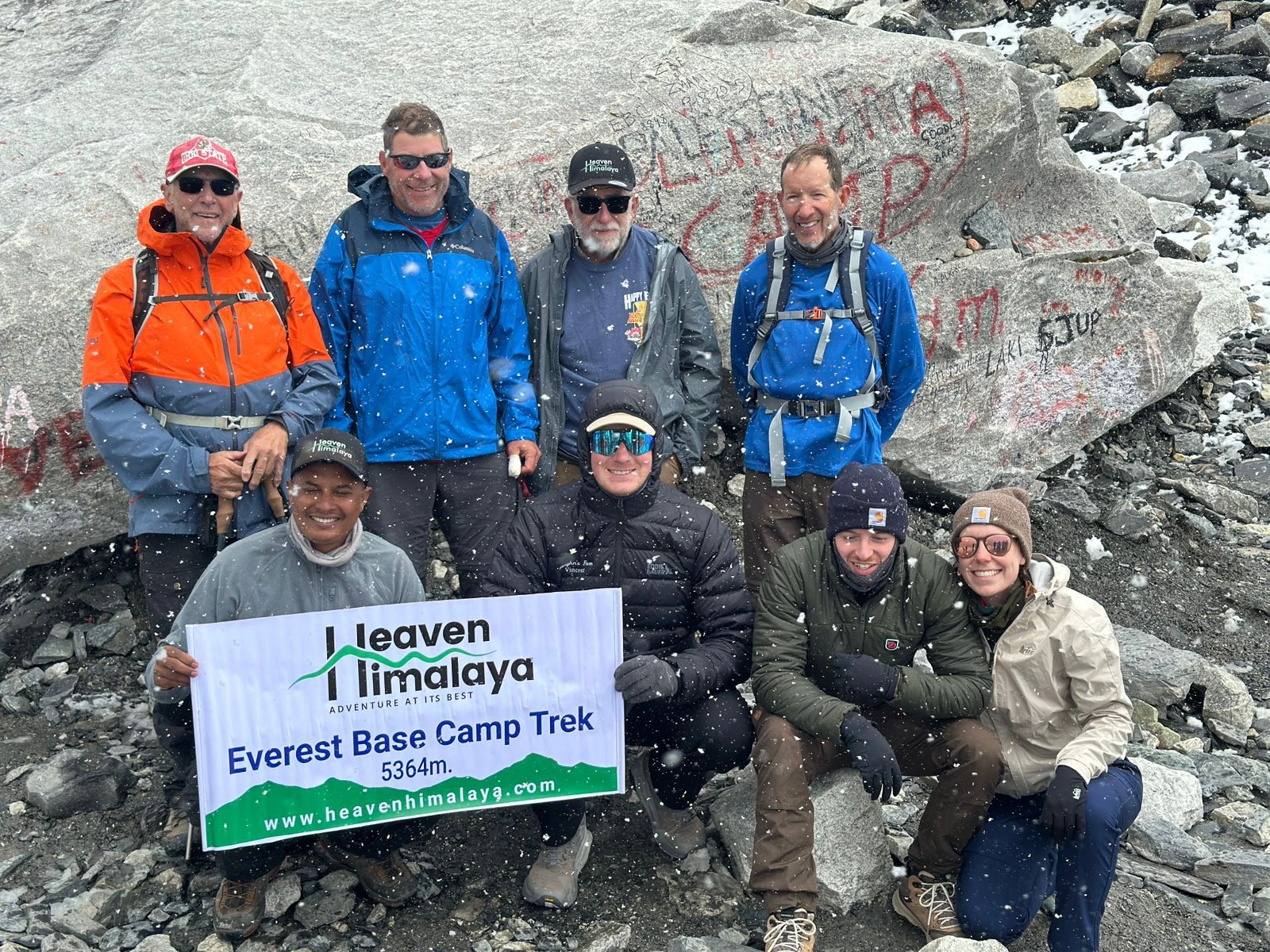
Heaven Himalaya prepares trekkers for the Everest Base Camp trek with a 14-day itinerary that builds in 2 acclimatization days, a licensed guide, an oximeter, and a first-aid kit, while trekkers arrange their own insurance with a 6,000 m evacuation ceiling. The Everest Base Camp Trek package lists travel insurance as an exclusion and requires the policy to cover emergency rescue evacuation from high altitudes up to 6,000 m.
The itinerary incorporates proper acclimatization intervals. Day 4 includes a rest and acclimatization day at Namche Bazaar (3,440 m) with an excursion to Hotel Everest View (3,880 m). Day 7 includes an acclimatization day at Dingboche (4,410 m) with a hike up Nagarjun Hill (5,050 m). Trekkers reach Base Camp on Day 9 and Kala Patthar (5,545 m) on Day 10.
Can Heaven Himalaya Help You Prepare for a Safe Everest Base Camp Trek?
Yes. Heaven Himalaya provides a licensed English-speaking guide, porters, an oximeter, a guide-carried first-aid kit, and emergency rescue assistance arranged around your travel insurance. According to the Everest Base Camp Trek package page, the price also covers the Lukla flights, the Sagarmatha National Park and Khumbu Pasang Lhamu permits, teahouse stays, and accidental insurance for the guide and porters.
Three limits matter for insurance planning. Heaven Himalaya does not cover your personal travel insurance, and it does not cover helicopter rides or extra days caused by flight cancellations. The cost of the 4 to 5 hour drive to Ramechhap in peak months is charged separately. Flight-disruption costs sit outside the package price, and a good travel delay benefit covers delay expenses rather than elective helicopter charters. One recent traveler's group chose to pay out of pocket for a shared helicopter from Lukla to Kathmandu when weather grounded fixed-wing planes, allowing them to keep their international connections.
Fitness and kit shape safety as much as paperwork. The Everest Base Camp trek training plan builds endurance, the Lukla flight information page explains the Ramechhap diversion, and the Packing List for Trekking in Nepal covers gear. Heaven Himalaya is a Nepal-registered agency in Kathmandu.
Planning an Everest Base Camp departure for 2027 or 2028? Message the Heaven Himalaya team on WhatsApp at +977 985 1273867 or through the contact page. Ask for the day-by-day altitude profile, then match it against your insurer's altitude ceiling. See the full Everest Base Camp Trek itinerary and departure dates.
What Are the Key Travel Insurance Considerations for the Everest Base Camp Trek?
The key travel insurance considerations for the Everest Base Camp trek are 7 checks: a 6,000 m ceiling, named helicopter evacuation, limits of at least US$100,000, a call to the assistance line first, purchase within 14 to 21 days of your deposit, 3 buffer days, and a clean paper trail.
Confirm the ceiling. Kala Patthar stands at 5,545 m, and a 6,000 m ceiling clears it by 455 m.
Verify the helicopter wording. Look for a named emergency medical evacuation benefit and a clear distinction from separate search-and-rescue (locating missing persons) which is typically excluded.
Match the limits. Hold at least US$100,000 for medical and US$100,000 for evacuation.
Call first. Phone the insurer's 24-hour line before any flight leaves.
Buy early. Purchase within 14 to 21 days of your first payment.
Add buffer. Cover 3 extra days for Lukla delays.
Keep records. Write down readings, names, times, and invoices.
Following investigation updates in Nepal, insurers enforce rigorous claim verification. Selecting a compliant policy with a 6,000 m altitude ceiling and direct medical evacuation coverage ensures comprehensive protection on the trail.
Travel insurance for the Everest Base Camp trek costs a fraction, often under 5%, of a single upper-Khumbu rescue flight. Buy it as carefully as you train for the trail.
Ready to match your insurance to a real itinerary? The Heaven Himalaya team answers questions about the 14-day Everest Base Camp route, altitude profile, and trip planning at info@heavenhimalaya.com or on WhatsApp at +977 985 1273867.