
EBC Packing List: What to Bring, Rent or Buy in Kathmandu
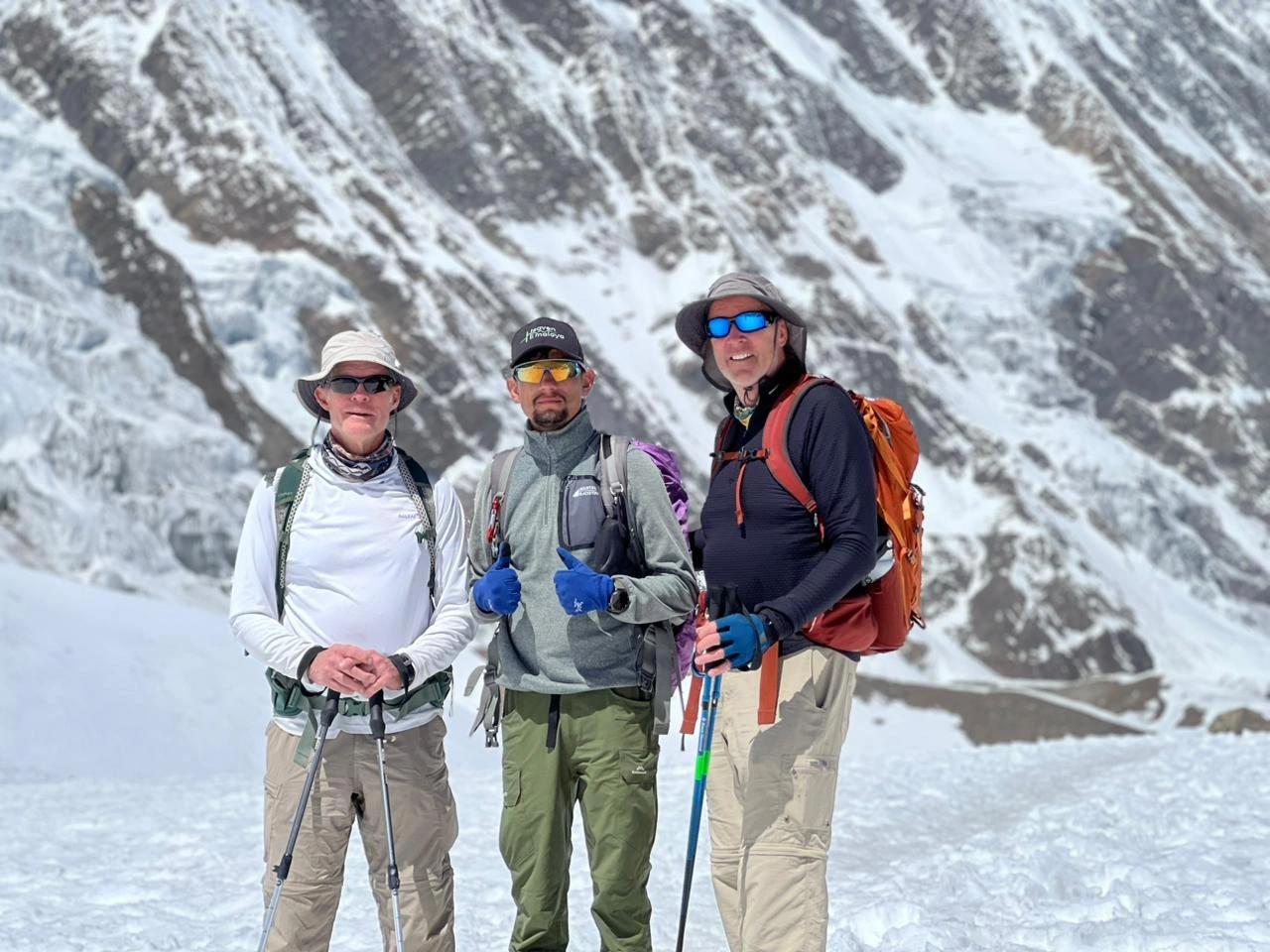
The Everest Base Camp (EBC) packing list covers the essential trekking clothing, footwear, backpacks, sleeping gear, personal hygiene products, first aid supplies, electronics, and travel documents needed for a safe and comfortable journey to 5,364 m. Choosing the right Everest Base Camp trekking gear requires balancing warmth, weather protection, personal comfort, and backpack weight while preparing for changing temperatures, high-altitude conditions, and a 12–14-day trek through Nepal's Khumbu region.
This comprehensive 2026 EBC packing guide explains what to pack, what to rent or buy in Kathmandu, and how to customize your equipment for spring, monsoon, autumn, and winter departures. It covers the 15 kg Lukla flight baggage allowance, seasonal sleeping bag ratings, essential altitude medication, water purification, and practical gear recommendations to help you prepare efficiently without carrying unnecessary weight.
What Essential Clothing Do You Need for the Everest Base Camp Trek?
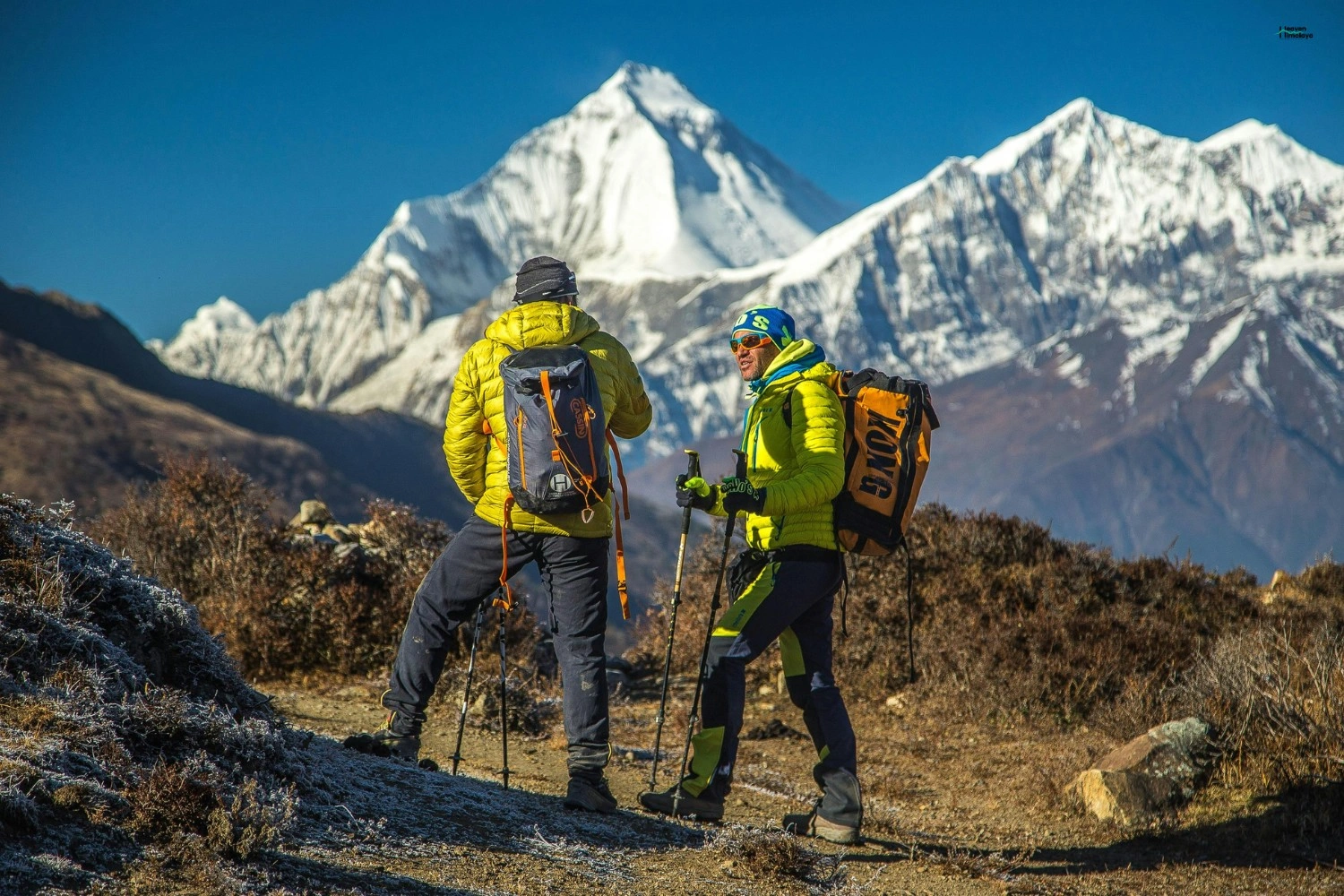
The EBC trek requires 4 clothing layers: a moisture-wicking base layer, a fleece mid-layer, an insulated down jacket, and a waterproof hardshell. Layering works because temperatures swing 25°C between a sunny Namche Bazaar afternoon and a Lobuche night.
A layering system assigns each garment one job: wick sweat, trap heat, or block wind and water. Add a layer before you feel cold. Remove a layer before you sweat.
What Base Layers Should You Pack for Temperature Regulation?
Pack 2 long-sleeve tops, 1 short-sleeve top, and 2 leggings in merino wool or synthetic fabric. Base layers sit against the skin and move sweat away from the body during 5 to 7 hours of daily walking.
Merino wool in 150–200 g/m² weight (GSM, grams per square meter) resists odor across 4 days of wear. Synthetic polyester dries faster but smells sooner. Cotton absorbs sweat, dries slowly, and chills the body, so leave every cotton shirt in Kathmandu.
Add 2 pairs of quick-dry trekking trousers over the leggings. Winter trekkers add 1 pair of 250 GSM thermal bottoms. The mistake most trekkers make: sleeping in the same top they walked in. Keep one set for the trail and one for the night.
Which Insulating Layers Keep You Warm at High Altitudes?
Pack 1 fleece mid-layer (200–300 g/m²) and 1 down jacket with 600 to 800 fill power. The fleece regulates heat while walking. The down jacket handles rest stops, dinners, and the Kala Patthar sunrise at −15°C.
Fill power measures loft: cubic inches filled by one ounce of down. A higher number traps more heat per gram. An 800-fill jacket weighs about 600–800 g and compresses to the size of a 2 L bottle.
Add an insulated synthetic vest from December through February, since synthetic fill keeps warming when damp. Carry the down jacket in the daypack while walking, because sweat collapses down clusters. Put it on at every stop longer than 5 minutes.
What Outerwear Protects You From Wind, Snow and Rain?
Pack a waterproof-breathable hardshell jacket and trousers rated 10,000 mm or higher. A hardshell blocks wind above Dingboche, where gusts cut 5–10°C from the felt temperature, and sheds snow and rain in shoulder seasons.
The 10,000 mm figure is the hydrostatic head: the height of a water column the fabric holds back. Look for underarm zips and full-length leg zips that open over boots. Pack the shell at the top of the daypack.
Softshells breathe better but fail in sustained rain. Monsoon trekkers add a 100 g poncho that covers the daypack. A shell that rides in the duffel protects nothing when clouds close in at Pheriche.
How Many Trekking Socks and Underwear Should You Bring?
Bring 4 to 5 pairs of trekking socks and 4 to 5 pairs of underwear. Lodges above Namche offer no reliable drying, so a 14-day trek runs on rotation: 2 pairs worn, 2 pairs clean, 1 spare.
Choose midweight merino hiking socks, such as 3 pairs for the trail, 1 pair of heavy socks for sleeping, and 1 to 2 optional thin liner socks that cut friction. Choose merino or synthetic briefs, plus 2–3 sports bras for women. Wash small items at Namche and Tengboche, where afternoon sun still dries them.
Above Dingboche, dry damp socks inside your sleeping bag at the foot end. Body heat finishes the job overnight. Never hang wet laundry in an unheated bedroom: it freezes into a board by 2 a.m.
Do You Need Different Clothing for Daytime and Nighttime?
Yes. Pack a separate night set: dry base layer, fleece trousers, heavy socks, down booties, and a beanie. Daytime clothing holds sweat and dust. Night clothing stays clean and dry so the sleeping bag insulates at its rated temperature.
Teahouse bedrooms have no heating. The dining room stove burns from late afternoon into early evening. Change into the night set before leaving that warm room.
Fill a 1 L leak-proof bottle with hot water, wrap it in a sock, and slide it to your feet. One bottle warms the bag for hours. Ask your guide or lodge to fill it after dinner.
What Footwear and Accessories Are Essential for the EBC Trek?
Essential EBC footwear and accessories include 1 pair of broken-in waterproof boots, 1 pair of camp shoes, liner gloves, insulated gloves, a wool beanie, a neck gaiter, and seasonal microspikes. Hands, head, and feet lose heat first above 4,000 m.
A blister on Day 3 slows pace for 10 days. Spend the budget on boots and socks, then rent the bulky items.
Which Trekking Boots Are Best for the Everest Base Camp Trail?
The best EBC boots are waterproof, mid- to high-cut, 3-season to 4-season leather or synthetic boots with a Vibram-type sole and a semi-stiff midsole. Ankle support matters on 8-hour days over moraine and loose stone.
Buy half a size up. Feet swell at altitude, and downhill pressure pushes toes forward. Test the fit with the exact socks you pack. Walk at least 50 km (31 miles) in the boots over 3 to 4 weeks before departure.
Trail runners suit experienced trekkers in dry April and October but fail in snow. Never buy new boots in Kathmandu, and never rent boots: fit and hygiene decide comfort across 130 km of trail.
Do You Need Camp Shoes or Lightweight Sandals?
Yes. Pack lightweight camp shoes: foam clogs, sandals worn with socks, or down booties (300–400 g). Camp shoes rest feet after 6 to 8 hours in boots and cover night bathroom trips and showers.
Teahouse floors are cold timber or concrete, and many bathrooms sit outside the main building. Foam clogs slip on in seconds. Skip flip-flops from November through March, when toes freeze on the walk to the toilet. Winter trekkers pick insulated down booties with a rubber sole.
What Gloves, Hats, and Neck Warmers Should You Pack?
Pack 3 hand items and 3 head items: thin liner gloves, insulated waterproof gloves or mittens, a spare liner pair, plus a sun hat, a wool beanie, and a neck gaiter. Layered hand protection beats one thick pair.
Liner gloves keep fingers working for phone and camera use. Mittens warm hands better than gloves because fingers share heat. Clip a glove leash to the cuffs, since a lost glove at Kala Patthar at 5,545 m is a real problem.
The neck gaiter (a tube of fabric, often called a buff) filters dust in the dry air and reduces the cough that most trekkers call "Khumbu cough". December trekkers add a fleece balaclava. Chemical hand warmers extend a cold morning push.
Are Gaiters and Microspikes Necessary for the EBC Trek?
Gaiters and microspikes are seasonal. Pack both from November through March, carry microspikes only when guides report ice, and skip gaiters in dry April and October. Fresh snow above Lobuche makes traction the deciding factor.
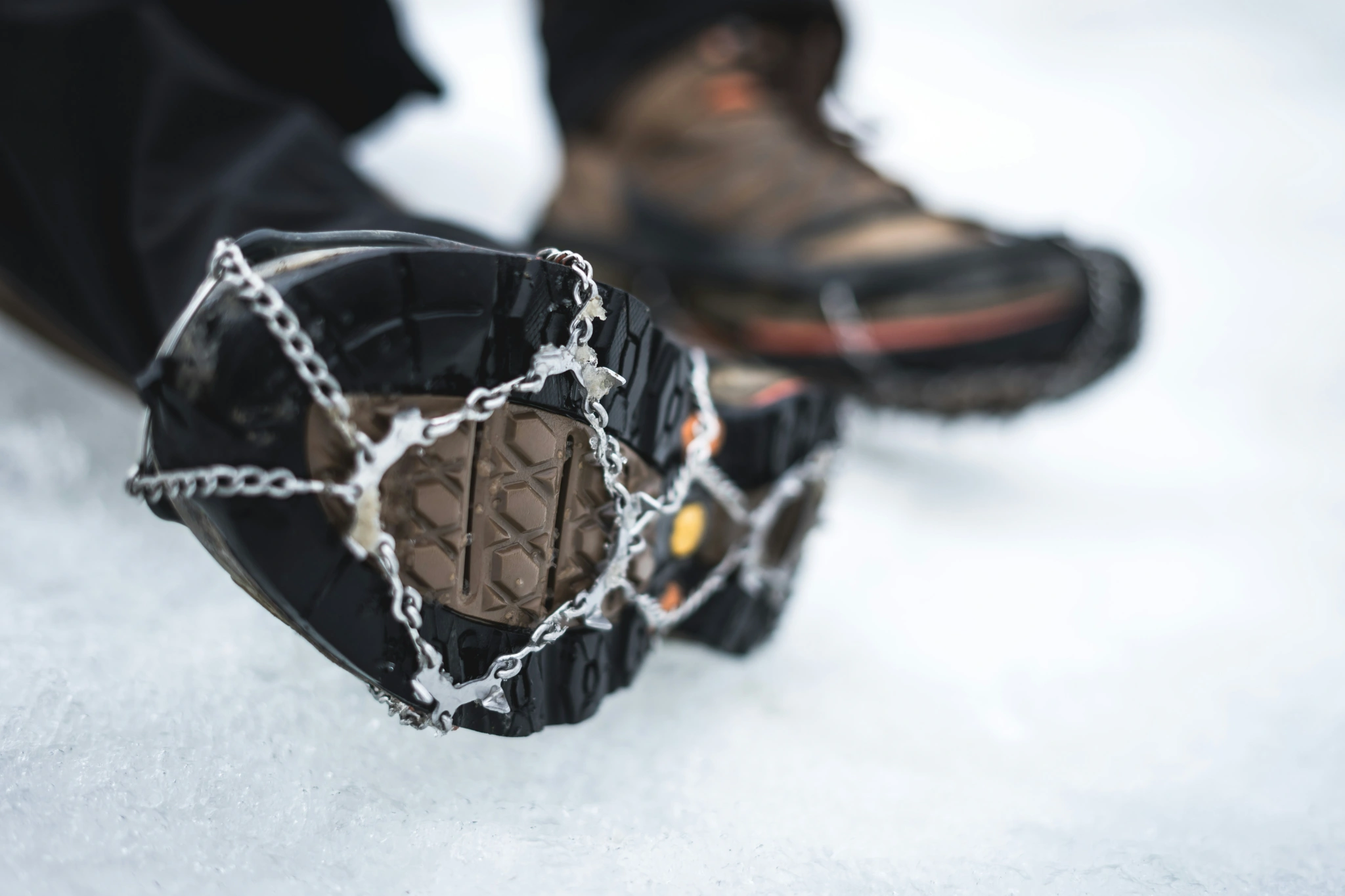
A gaiter is a fabric cuff that covers the boot top and keeps snow, mud, and gravel out. Microspikes are rubber-framed chains with short steel studs that stretch over a boot. Crampons are rigid and unnecessary on the standard EBC trail.
Ice clusters between Lobuche and Gorak Shep and on the Kala Patthar ascent. Rent microspikes in Thamel for about $1–$2 per day.
What Backpack and Sleeping Gear Should You Bring to Everest Base Camp?
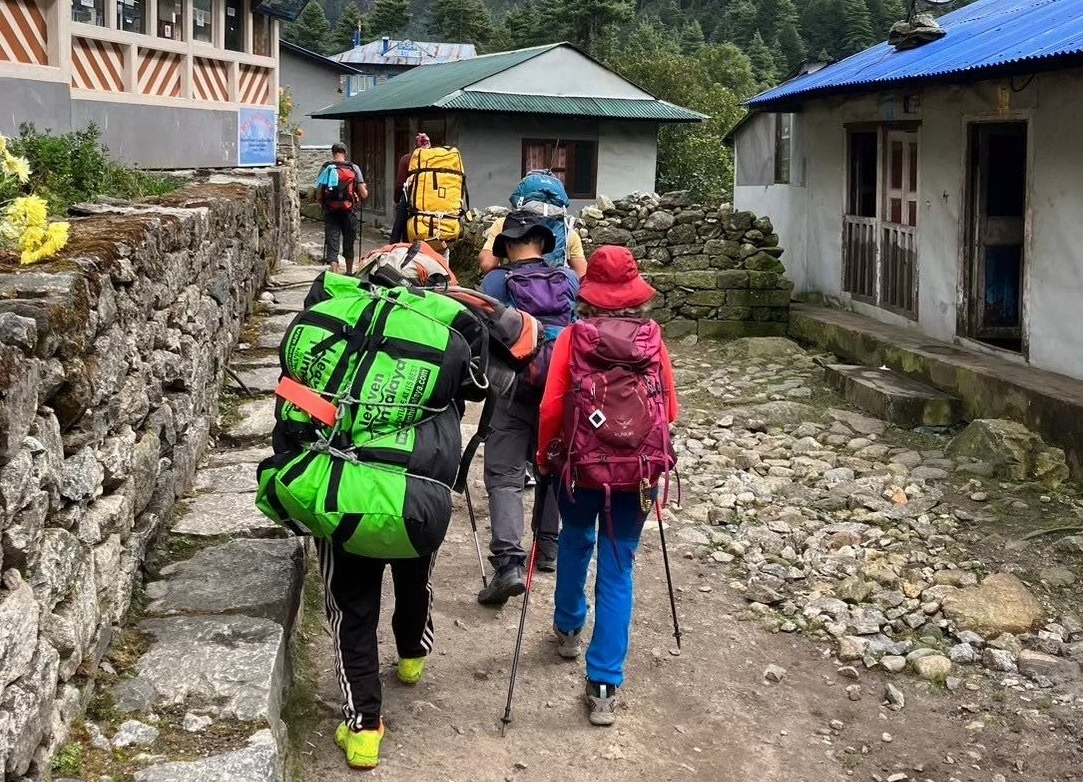
EBC trekking requires 4 carry and sleep items: a 30–35 L daypack, a 70–80 L soft duffel, a sleeping bag rated to −15°C or lower, and optionally trekking poles. Porters carry the duffel. You carry everything else.
What Size Backpack Is Best for the EBC Trek?
A 30–35 L backpack is best for the EBC trek. Porters carry the main load in a duffel, so your backpack holds only what you need between teahouses: water, a down jacket, a shell, snacks, sunscreen, camera, and documents.
Look for a padded hip belt, a chest strap, a rain cover, and two side pockets that hold 1 L bottles. A packed weight of 5–7 kg suits most adults. Heavier packs strain shoulders at 4,500 m and drain energy.
Larger 50–65 L packs tempt overpacking, so choose them only for porterless trekkers, who carry 12–14 kg. Fit the pack in a shop with weight inside it.
Do You Need a Daypack or Duffel Bag?
You need both. The soft duffel (70–80 L, waterproof, no wheels) travels by porter or yak. The daypack stays on your back. Lukla flights cap the pair at 15 kg, split as 10 kg checked and 5 kg carry-on.
Your duffel and you rarely arrive at a lodge at the same time. Pack the daypack as if the duffel were lost for a day: warm layer, rain shell, water, snacks, medication, and headlamp.
The Trekking Agencies' Association of Nepal (TAAN) sets a 20–25 kg ceiling for a porter's total load. Two trekkers often share one porter, so each duffel stays near the 10 kg Lukla checked-bag limit (up to 10–12 kg maximum). Add a padlock and a bright strap.
Which Sleeping Bag Temperature Rating Is Suitable for Everest Base Camp?
A sleeping bag with a −15°C to −20°C comfort-to-limit rating suits March–May and September–November; December–February requires −20°C to −25°C. Teahouse blankets are thin, shared, and unwashed for weeks.
Under ISO 23537 (formerly EN 13537), a bag has 3 ratings: comfort, limit, and extreme. Choose by the comfort rating. The extreme rating describes survival, not sleep.
A silk or fleece liner adds roughly 3–5°C and keeps the bag clean. Rent a −15°C to −20°C bag in Thamel for NPR 150–300 per day. Smell it, zip it, and check the loft before paying.
Are Trekking Poles Worth Packing for the EBC Trail?
Yes. Trekking poles are worth packing for the EBC trail. They reduce knee load on descents, add balance on suspension bridges and snow, and give your arms a share of 600–800 m daily climbs.
Biomechanics studies of downhill walking report up to 25% less compressive force on the knees when walkers use poles. The return from Gorak Shep to Lukla drops 2,300 m, so the saving adds up.
Choose adjustable aluminum poles (100–135 cm) with wrist straps, or rent a pair for NPR 100–200 per day. On narrow bridges, step to the mountain side when yaks approach.
What Toiletries, Personal Care Items and Hygiene Products Should You Pack?
Pack sun protection, a minimal hygiene kit, toilet paper, wet wipes, hand sanitizer, a quick-dry towel, and biodegradable soap. Teahouses supply none of these. Sun protection ranks first because UV radiation climbs with altitude.
According to the World Health Organization, UV radiation rises 10 to 12% for every 1,000 m of altitude above sea level. At 5,000 m, exposure is 50–60% higher than at sea level and roughly 35–40% higher than in Kathmandu (1,400 m). Fresh snow reflects up to 80% of UV, so Lobuche and Gorak Shep punish unprotected skin.
What Sunscreen and Lip Balm Do You Need at High Altitude?
Carry SPF 50+ broad-spectrum sunscreen (50–100 ml) and SPF 30+ lip balm, both in 2 units. Reapply sunscreen every 2 hours, including under the chin, inside the ears, and on the nostrils.
Broad-spectrum sunscreen blocks UVA and UVB rays. A zinc oxide stick protects the nose and cheeks, where wind strips lotion. Keep one tube in a jacket pocket, because cold turns sunscreen to paste.
Pair them with category 4 glacier glasses (UV400, side shields). Snow blindness, medically called photokeratitis, burns the cornea within hours of unprotected snow exposure. Buy sunscreen at home. Namche shops stock it at higher prices.
Which Personal Hygiene Products Are Essential on the Trail?
Essential hygiene products are a toothbrush, 50 ml of toothpaste, moisturizer, foot powder, nail clippers, and menstrual products if relevant. Dry air cracks skin and lips within 3 days.
Pack hand cream and petroleum jelly. Petroleum jelly protects the nostrils from dust and soothes heels. Women pack tampons, pads, or a menstrual cup, plus zip bags for pack-out.
Wear glasses instead of contact lenses, since dust and cold hands make lens handling risky at Gorak Shep. Repack everything in 3 small zip bags.
What Toilet Paper, Wet Wipes and Hand Sanitizer Should You Bring?
Bring 2 rolls of toilet paper, 2 packs of wet wipes, and 2 bottles of 60% alcohol hand sanitizer (50 ml each). Teahouse toilets supply no paper above Lukla.
Flatten the rolls and keep one in the daypack. Use the lodge's trash bin for used paper. Wet wipes belong in the bin too, never in the toilet bowl, since they block pit-toilet drains.
The US Centers for Disease Control and Prevention recommends sanitizer with at least 60% alcohol. Use it before every meal. Gastrointestinal infection is among the most common trek illnesses, and handwashing prevents most cases. Wipes cover the days when frozen taps block washing.
Do You Need Quick-Dry Towels and Biodegradable Soap?
Yes. Pack 1 quick-dry microfiber towel (40 × 80 cm) and 1 small bottle (50 ml) of biodegradable soap. The towel dries within 3 hours indoors and weighs 100 g. The soap serves body, hands, and laundry.
Biodegradable soap breaks down in soil within weeks, but only at distance from water. Wash 60 m (200 feet) from any stream, following Leave No Trace principles. The Dudh Koshi river feeds villages downstream.
Hot showers cost extra, and many trekkers skip them above Dingboche, where a wet head at −10°C invites chills.
What First Aid and Medication Should You Pack for the Everest Base Camp Trek?
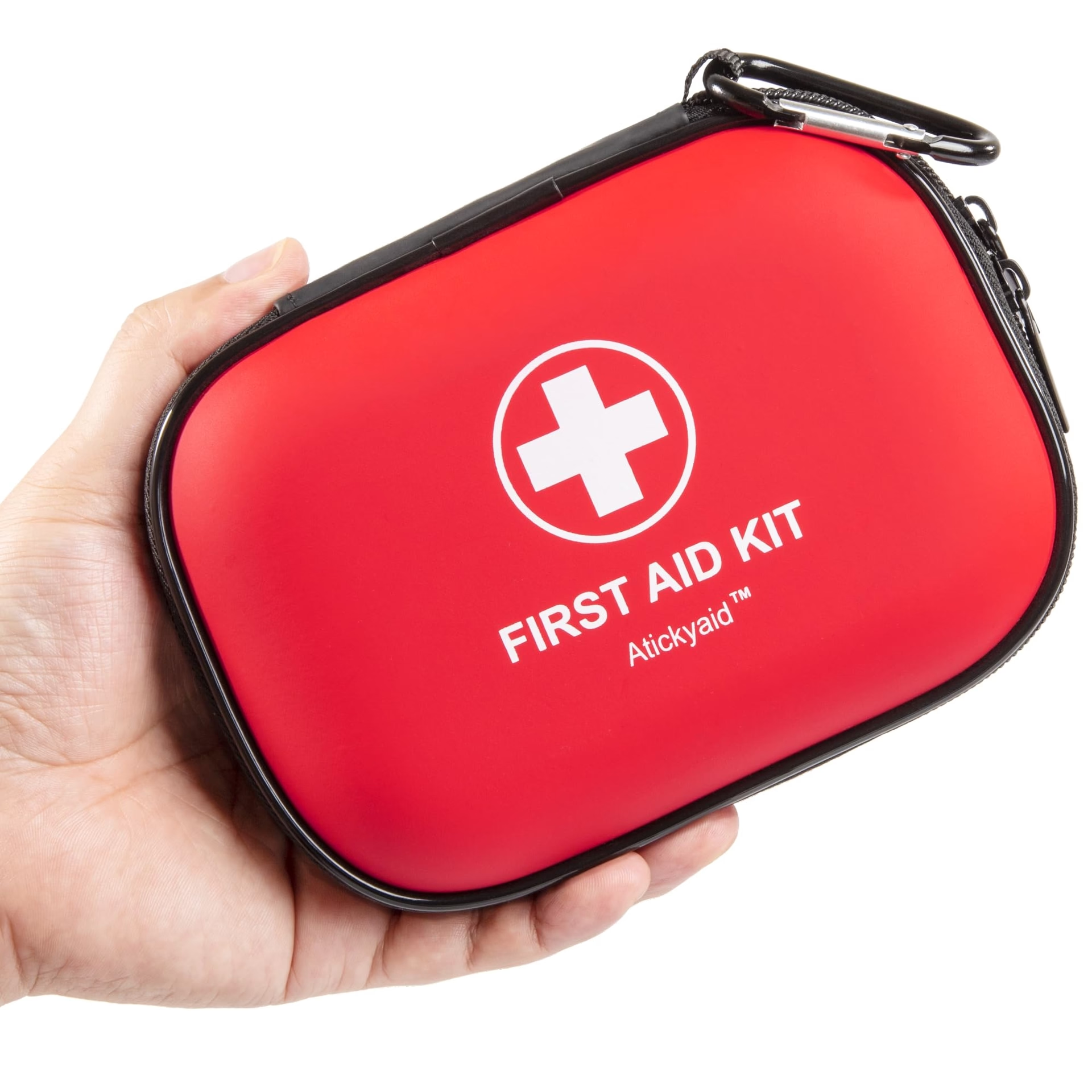
Pack a compact first aid kit (300–500 g), medication for 6 common trek problems, and altitude medication prescribed by a travel doctor. Guides carry a group kit. Your personal kit covers blisters, stomach upsets, headaches, cough, nausea, and poor sleep.
Consult a travel clinic 6 to 8 weeks before departure. This section is general information, not medical advice.
Which Basic First Aid Supplies Should You Carry?
Carry 6 core supplies: hydrocolloid blister plasters, fabric tape, an elastic bandage, antiseptic wipes, adhesive plasters, and tweezers. Blisters cause most trail injuries, so the kit prioritizes foot care.
Pack 10 blister plasters, one 5 cm elastic bandage, 10 assorted plasters, 10 antiseptic wipes, 1 roll of tape, 1 pair of nitrile gloves, small scissors, safety pins, and a 50 g emergency blanket. Everything fits in a pouch the size of a paperback.
Treat hot spots at the first rub, not at the first blister. Stop, dry the foot, and apply plaster or tape. A 2-minute stop on Day 2 prevents a 3-day limp.
What Medications Help Manage Common Trekking Problems?
Carry painkillers, anti-diarrhea tablets, rehydration salts, an antihistamine, throat lozenges, and a prescribed antibiotic. Each answers a predictable problem on the Khumbu trail.
Problem | Medication | Notes |
Headache, muscle pain | Ibuprofen 400 mg, paracetamol 500 mg | Take with food |
Diarrhea | Loperamide 2 mg, oral rehydration salts | Rehydrate first |
Traveler's infection | Antibiotic from a travel clinic | Dose per prescription |
Allergy, itch | Cetirizine 10 mg | Causes drowsiness in some people |
Dry cough, sore throat | Lozenges, saline nasal spray | Neck gaiter helps |
Nausea, acid reflux | Antacid or ondansetron | Prescription varies by country |
The table lists the standard medications, the problem each treats, and the practical note. Follow the label or your clinician's dose. Pack tablets in a labeled zip bag with the generic drug name.
Should You Pack Altitude Sickness Medication?
Yes. Pack acetazolamide (Diamox) 125 mg tablets and discuss dexamethasone with a travel doctor. According to the Wilderness Medical Society, adults take 125 mg of acetazolamide every 12 hours, starting the day before ascent, to prevent acute mountain sickness.
Acute mountain sickness (AMS) produces headache, nausea, dizziness, and fatigue. Medication supports slow ascent; it never replaces it. The Wilderness Medical Society and the CDC both cap the gain in sleeping altitude at 500 m per night above 3,000 m, with an extra rest day every 1,000 m.
Acetazolamide causes finger tingling, frequent urination, and flat-tasting fizzy drinks. Trekkers with a history of severe sulfa allergies (such as anaphylaxis or severe cutaneous reactions) should avoid it, though those with mild allergies should consult their doctor. Test it at home for 2 days. Dexamethasone treats severe altitude illness and requires a prescription.
Descend at once for confusion, stumbling, or breathlessness at rest. The Himalayan Rescue Association aid post in Pheriche (4,371 m) holds altitude talks and treats cases during spring and autumn.
What Emergency and Personal Medical Supplies Should You Bring?
Bring personal prescriptions for the full trek plus 3 days, a printed medication list, emergency contacts, your insurance policy number, a pulse oximeter, and a space blanket. Helicopter evacuation costs thousands of US dollars, so insurance must cover the route.
Verify that the policy covers trekking up to 6,000 m (Kala Patthar sits at 5,545 m) and emergency helicopter evacuation.
A fingertip oximeter weighs 50 g. Many healthy trekkers read 80–90% at Gorak Shep, so trend and symptoms matter more than one number. Inhalers, epinephrine auto-injectors, and spare glasses go in the daypack.
What Electronics and Travel Documents Do You Need for the EBC Trek?
Electronics for EBC include a smartphone or compact camera, a 20,000 mAh power bank, charging cables, a Type C/D/M adapter, and a headlamp. Documents include a passport, visa, 2 permits, insurance, and 4 passport photos. Keep both sets in the daypack.
Cold drains lithium-ion batteries quickly. In 2026, lodge charging costs NPR 200–300 per phone at lower elevations, NPR 300–600 per device above Namche Bazaar, and NPR 500–1,000+ for large power banks. Signal exists at most villages but thins above Dingboche. Plan photography around battery life.
Which Camera, Phone and Charging Accessories Should You Pack?
Pack a smartphone, 1 spare charging cable, 1 microSD card, and a lens cloth. A modern smartphone shoots Everest sunrises well and weighs under 250 g. Add a mirrorless or compact camera only if you shoot seriously.
Sleep with phones, cameras, and batteries inside the sleeping bag, and keep the phone in an inner jacket pocket on the trail. Download offline maps before leaving Kathmandu. Buy a Nepal Telecom (NTC) SIM card at Tribhuvan International Airport for better coverage along the EBC route. Lodge Wi-Fi vouchers cost extra and run slowly.
Do You Need a Power Bank or Solar Charger?
A 20,000 mAh power bank is essential; a solar charger is optional. One 20,000 mAh bank delivers 3 to 4 full smartphone charges and weighs about 400 g.
The power bank holds 74 Wh (20,000 mAh × 3.7 V). International aviation rules cap lithium batteries in cabin baggage at 100 Wh, so 20,000 mAh banks fly legally. Never pack power banks in checked bags.
Solar panels disappoint in the Khumbu: afternoon clouds and valley walls cut output, and a 10 W panel needs about 6 sunny hours to fill one phone. Paying lodge charging fees beats carrying a heavy panel.
Should You Bring a Universal Travel Adapter and Headlamp?
Yes. Bring one universal adapter covering Types C, D, and M, plus a headlamp of 200–400 lumens with spare lithium batteries. Nepal runs on 230 V at 50 Hz, and lodge sockets vary.
Type C is the European two-pin plug, Type D the Indian three-round-pin plug, and Type M its larger cousin. A multiport adapter covers every lodge socket.
The headlamp earns its 90 g. Night toilet trips and pre-dawn Kala Patthar starts at 4:30 a.m. both require hands-free light. Select a red-light mode to protect night vision and your roommates' sleep. Replace batteries before departure, and keep spares warm.
Which Permits, Passport Documents and Travel Insurance Should You Carry?
Carry your passport, Nepal visa, 2 Everest region permits, travel insurance policy, and 4 passport photos. In 2026, foreign trekkers pay NPR 3,000 for the Sagarmatha National Park permit and NPR 3,000 for the Khumbu Pasang Lhamu Rural Municipality permit, about $43 combined.
The Khumbu permit replaced the TIMS card on this route in 2018. Operators usually handle both permits, which are checked at Lukla, Monjo, and other trail checkpoints.
The 2026 visa-on-arrival fees are $30 for 15 days, $50 for 30 days, and $125 for 90 days. Passports need 6 months of remaining validity. Keep originals in a zip bag in the daypack, one photocopy in the duffel, and a digital copy in cloud storage. Carry NPR 3,000–5,000 (about $21–$36) per day in small notes for charging, showers, snacks, and tips, since Namche ATMs run unreliably.
What Food, Snacks and Hydration Equipment Should You Bring?
Pack two 1 L bottles, a purification method, and 10 to 14 high-energy snacks from Kathmandu. Teahouses sell meals and boiled water, but prices climb with every day of porter transport, and appetite fades above 4,000 m.
Altitude suppresses appetite while trekking burns well over 3,000 kcal daily. Snacks bridge that gap.
How Much Water Should You Carry During Daily Trekking?
Carry 2 L of water capacity and drink 3 to 4 L daily. Dry, cold air at altitude increases fluid loss through breathing, and acetazolamide increases urination.
Fill a 1 L bottle at breakfast and a second at lunch. Check urine color: pale yellow signals good hydration, dark yellow signals a deficit. Hot tea, soup, and lemon-ginger drinks count toward the total.
Skip alcohol, which dehydrates and worsens sleep at altitude. Freezing nights turn open bottles into ice. Sleep with a bottle upside down inside the bag, so ice forms at the base, not the cap. At Namche, Panorama Lodge runs a filtered refill station that saves 35,000 single-use bottles per season, according to mountaineering writer Alan Arnette's April 2026 report.
Are Water Bottles or Hydration Bladders Better for EBC?
Water bottles are better than hydration bladders for EBC. Bladder hoses freeze above 4,000 m, bladders leak inside the daypack, and bottles double as hot-water bottles at night.
Pack two 1 L wide-mouth bottles, such as Nalgene-style, with a neoprene insulating sleeve. Wide mouths resist freezing shut and fill easily from kettles. Bottles hold boiling water without warping.
Insulated hose sleeves work to about −5°C, and the route drops well below that from Lobuche. A bottle also shows how much you've drunk at a glance.
Which Water Purification Tablets or Filters Should You Pack?
Pack chlorine dioxide tablets as the primary method. The tablets weigh 20 g, kill bacteria and viruses within 30 minutes, and kill Cryptosporidium within 4 hours, according to CDC guidance.
Cold water slows the chemical reaction, so wait the full time. Lodges sell boiled water, the safest source, and tablets fill the gaps on the trail.
Squeeze filters freeze, and ice cracks the internal membrane. UV pens lose battery life in the cold. Never drink from streams below any settlement.
What High-Energy Snacks Are Worth Bringing From Kathmandu?
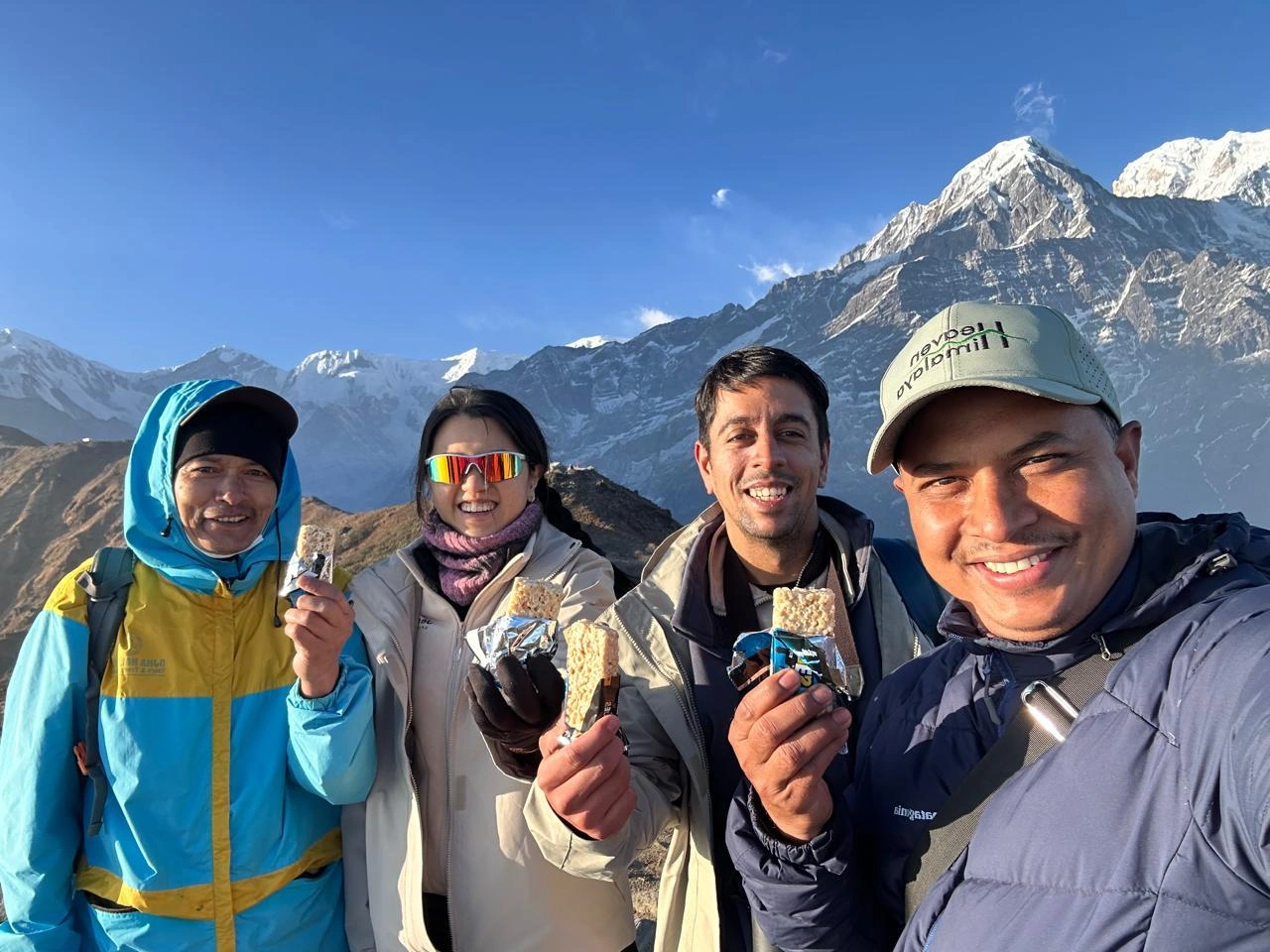
Bring 10 to 14 snacks such as chocolate bars, nut mixes, energy bars, peanut butter sachets, dried fruit, and electrolyte tablets. Each snack delivers 200–300 kcal that stays palatable when appetite drops.
Kathmandu supermarkets sell these at a fraction of Khumbu prices. Choose snacks you already like. Taste changes at altitude, and sweet items dominate cravings. Pack salty crackers or peanuts for balance.
Ginger candy settles nausea, and instant coffee sachets give a warm drink at 4:30 a.m. Guides often advise against meat above Namche, since porters carry it for several days. Order vegetarian dal bhat instead.
What Should You Rent or Buy in Kathmandu Before the EBC Trek?
Rent bulky, seasonal items such as a down jacket, sleeping bag, trekking poles, and duffel in Thamel. Buy fit-critical and hygiene items, such as boots, socks, base layers, gloves, and sunglasses, before you arrive. Renting 4 core items for 16 days costs $51–$109.
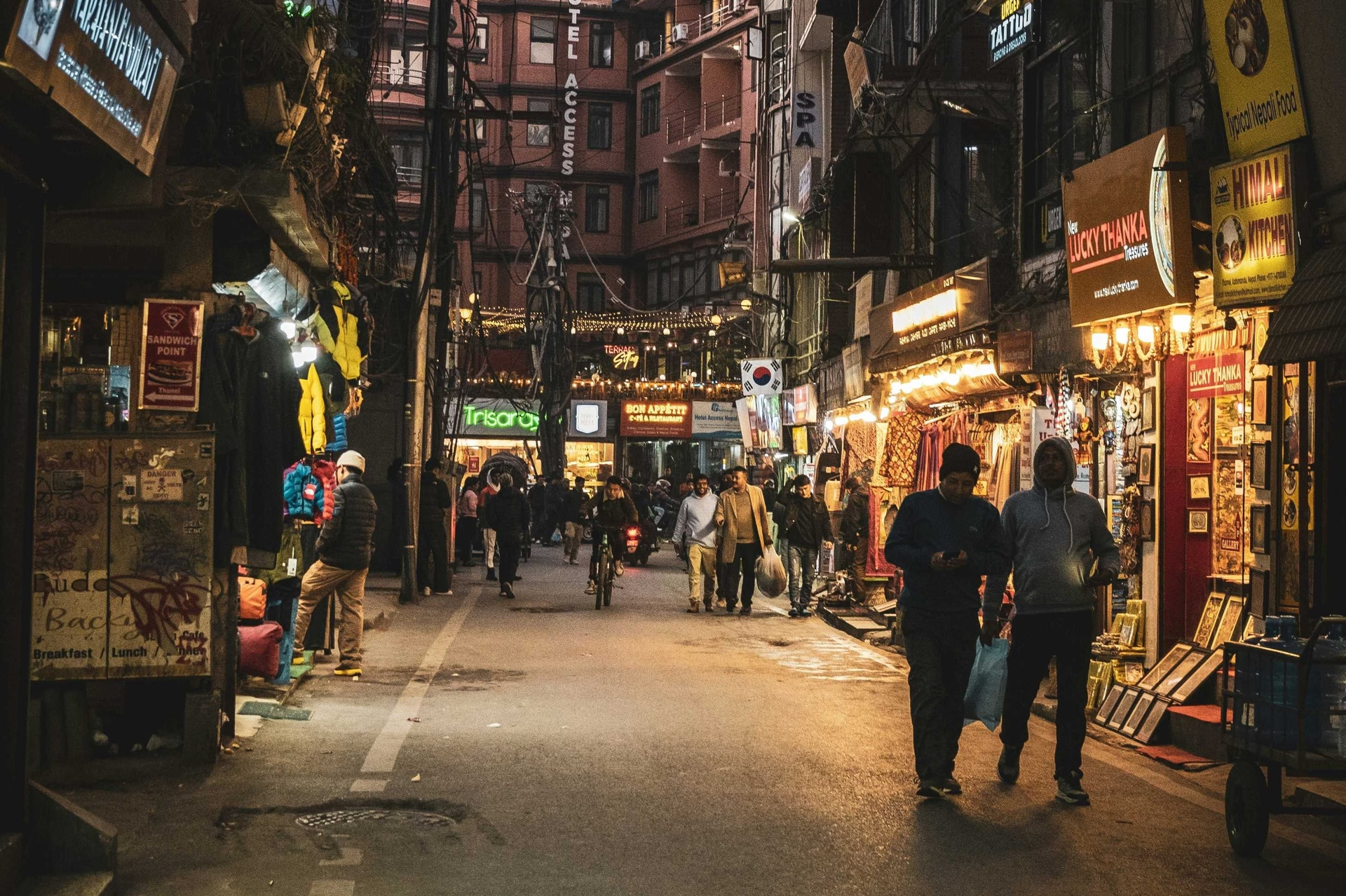
Thamel is the tourist district of Kathmandu and the center of Nepal's gear trade. Shops there rent and sell everything on this list. Quality varies widely, so the next sections cover where to rent, what to inspect, and what to avoid.
Which Trekking Gear Is Worth Renting in Kathmandu?
Rent a down jacket, sleeping bag, trekking poles, and duffel. These items are bulky, used once, and priced $1–2 per day in Thamel against $400–600 for a −20°C down jacket at home.
Also rent microspikes for snow seasons. Reserve peak-season gear (October and April) 2 days ahead.
Inspect before paying. Compress the jacket and watch it recover. Smell the sleeping bag. Zip every zipper. Open and close the pole locks under load. Photograph the item and the deposit slip. Deposits run $50–200 in cash, refunded on return.
What EBC Trekking Equipment Should You Buy Instead of Renting?
Buy boots, socks, base layers, liner gloves, sunglasses, a daypack, a headlamp, and water bottles. Fit and hygiene decide comfort for these items, and rental stock rarely matches either.
Boots and socks must match your foot shape. Base layers touch skin for 14 days. Sunglasses must carry a UV400 certification, and fake lenses damage eyes worse than none. A daypack molds to your back and a headlamp must work every time.
Buy these at home, where returns are possible and selection is wider. Locally made wool hats and gloves from Kathmandu cost $5–15 and last through the trek.
Where Can You Rent or Buy Trekking Gear in Thamel?
Rent and buy trekking gear along Thamel's main lanes, in Jyatha, Chhetrapati, and Paknajol, the northern edge of Thamel. Dozens of shops sit within a 10-minute walk of each other.
Compare 3 shops before committing, checking condition, deposit, and daily rate for the same jacket, bag, and pole. Bring your passport, since many shops request ID. Namche Bazaar hosts roughly 30 gear shops, but prices run 20–30% above Thamel, so treat Namche as the emergency fix.
How Much Does It Cost to Rent or Buy EBC Trekking Equipment?
Renting 4 core items for 16 days costs NPR 7,200–15,200 ($51–$109). Buying local-brand items costs $70–$165, and genuine international brands cost $740–$1,350 at typical US and European retail.
The table below shows daily rental rates in Thamel for 2026, the 16-day rental total (14 trek days plus 2 buffer days for Lukla delays), and buy prices for local-brand and genuine international gear.
Item | Rental per day (NPR) | 16-day rental (USD) | Buy: local brand (USD) | Buy: genuine brand (USD) |
Down jacket | 150–300 | $17–$34 | $20–$50 | $400–$600 |
Sleeping bag (−15 to −20°C) | 150–300 | $17–$34 | $25–$60 | $200–$450 |
Trekking poles (pair) | 100–200 | $11–$23 | $10–$25 | $60–$150 |
Duffel bag (70–80 L) | 50–150 | $6–$17 | $15–$30 | $80–$150 |
Total | 450–950 | $51–$109 | $70–$165 | $740–$1,350 |
The table shows that renting costs roughly 4 to 15% of buying genuine gear. Local-brand purchases carry quality risk. Rental prices rise slightly in October and April, and every shop holds a deposit of $50–200.
How Can You Identify Genuine Quality Trekking Gear in Kathmandu?
Identify genuine gear by checking 5 signs: price, labels, stitching, fill recovery, and zipper quality. A "$400 North Face jacket" sold for $35–50 is counterfeit and carries a dangerously inflated warmth rating.
Read the label for fill power, fill weight, and country of manufacture. Counterfeit labels contain spelling errors and blurry print. Check for straight stitching and flat seams.
Squeeze a down jacket flat and release it. Real down springs back quickly. Quality zippers glide without catching. Ask for the return policy in writing.
How Should You Customize Your EBC Packing List for Trekking Conditions?
Customize your EBC packing list by season, snowfall, and personal cold tolerance. Spring and autumn use a −15°C sleeping bag, while winter requires −20 to −25°C. The 15 kg budget stays constant; only insulation weight and traction change.
What Should You Pack for the Everest Base Camp Trek in Different Seasons?
Pack by season: light layers and a rain shell for spring, rain gear and gaiters for monsoon, the standard list for autumn, and expedition insulation for winter. The table below lists typical Gorak Shep night lows by month.
Season | Months | Typical night low at Gorak Shep | Add | Skip |
Spring | March–May | −10 to −15°C (March), −5 to −10°C (May) | Sun hat, sunscreen | Microspikes (May) |
Monsoon | June–August | Around 0°C | Poncho, gaiters, dry bags | Heavy insulation |
Autumn | September–November | −8 to −12°C (October), −15 to −18°C (November) | Warm hat, extra gloves | Poncho |
Winter | December–February | −20 to −25°C | Expedition parka, balaclava | Poncho, rain gear |
Rainfall at Lukla in August reaches about 446 mm, and flights cancel often. Leeches live in wet forest sections between Lukla and Monjo on wet days, so gaiters earn their weight. Read Best Time to Trek in Nepal to choose the right month.
How Should Your Packing List Change for Cold Weather and Snow?
For cold weather and snow, add 5 items: a −20°C to −25°C sleeping bag, insulated trousers, a balaclava, microspikes, and insulated mittens. December and January nights fall to −25°C, and some lodges above Dingboche close or thin their services.
Carry an 800-fill down parka in place of the standard jacket. Layer an insulated synthetic vest under the shell. Wear 2 pairs of socks: a thin liner and a thick merino. Remove boot insoles and put them inside the sleeping bag to keep them warm.
Pack goggles for windy snow days and allow 1–2 buffer days for fog and icing delays. Review How Difficult Is the Everest Base Camp Trek? before choosing a winter departure.
What Is the Ideal Backpack Weight for the EBC Trek?
The ideal EBC load is 10 kg in the duffel and 5 kg in the daypack, 15 kg in total at the flight. On the trail, the daypack reaches 6–7 kg after adding 2 L of water.
The table below shows a working weight budget. Items worn on the plane, such as boots and a down jacket, do not count against checked weight.
Item group | Location | Weight |
Sleeping bag (rented) | Duffel | 1.8 kg |
Spare clothing and night set | Duffel | 3.0 kg |
Hardshell trousers, fleece, poles | Duffel | 1.5 kg |
Camp shoes, toiletries, towel | Duffel | 1.2 kg |
First aid, snacks, duffel itself | Duffel | 2.5 kg |
Duffel total | 10.0 kg | |
Down jacket, shell, gloves, hat | Daypack | 1.5 kg |
Camera, power bank, headlamp | Daypack | 0.9 kg |
Sunscreen, glasses, documents, snacks | Daypack | 1.1 kg |
Daypack itself, mini first aid | Daypack | 1.5 kg |
Daypack total | 5.0 kg |
Weigh the loaded bags on a luggage scale 2 days before departure. Airlines enforce the limit and refuse extra weight in peak season. Wear boots, fleece, and down jacket on the flight. The Lukla Flights Guide: Kathmandu vs Ramechhap (Manthali) explains the peak-season departure from Manthali.
Which Unnecessary Items Should You Leave at Your Kathmandu Hotel?
Leave 8 item types in Kathmandu: jeans, cotton shirts, laptops, hair dryers, books, hard suitcases, extra pairs of street shoes or boots, and drones. Each adds weight without adding warmth, safety, or enjoyment.
Cotton absorbs sweat and chills, and jeans stay wet. A laptop weighs 1.5 kg. Use an e-reader instead of books.
Drones need government permission in Nepal's national parks, so leave them in the city. Pack a second duffel with these items and ask your hotel or operator to store it. Most Thamel hotels hold trekkers' luggage for free during the trek.
How Can Heaven Himalaya Help You Prepare Your Everest Base Camp Packing List?
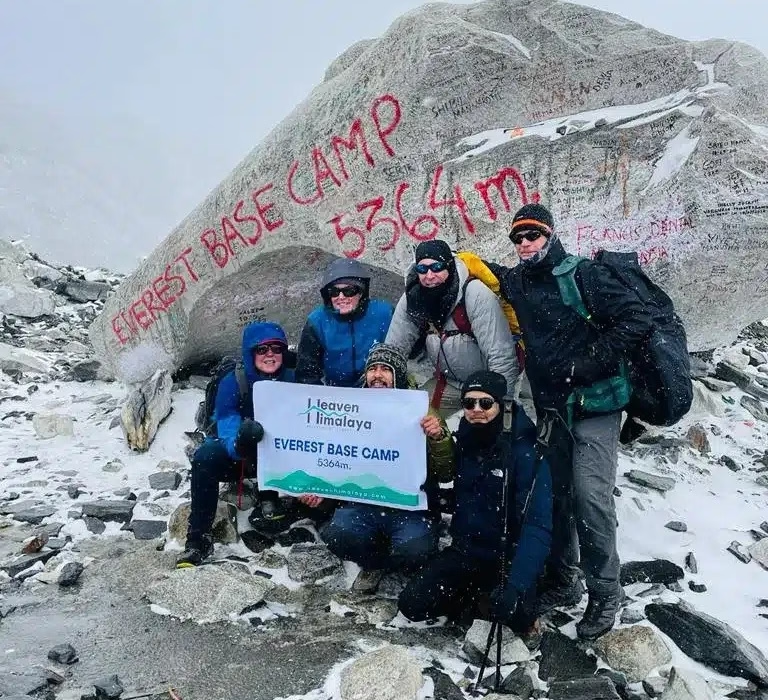
Heaven Himalaya helps you prepare your Everest Base Camp packing list through a pre-trip gear check, rental arrangements, and a Trekking Packing List reference. The team operates from Gitanjali Chowk, Dathu Sadak, Kathmandu.
A pre-trip gear check confirms each item against your trek dates. One July 2026 client review of a Nar Phu trek credits the check with clarifying what to carry and what the guide supplies.
Heaven Himalaya holds a 5.0 rating from 160 reviews on Tripadvisor and works as a direct local operator, so there is no middleman between you and the planning team. The Trekking Packing List page covers general Nepal gear. The Everest Base Camp Trekking package (13 nights, 14 days) details the route this list supports.
Planning help from Heaven Himalaya: Send your dates, height, and medical notes to info@heavenhimalaya.com or WhatsApp +977 985 1273867. The team answers gear questions before you fly.
Can Heaven Himalaya Help You Rent or Buy the Right EBC Trekking Gear?
Yes. Heaven Himalaya arranges rental sleeping bags and trekking poles and advises on which items to rent or buy in Thamel. Trekkers who rent through the team skip shop-by-shop comparison.
A July 2026 client review describes the team arranging a sleeping bag and trekking poles for hire. That saves an afternoon in Thamel. Ask the team about jacket and microspike rentals when you book.
Bring your own boots, socks, base layers, and sunglasses. Everything else is flexible. Contact the team 2 to 3 weeks before departure, so a size or a season-specific item is available when you land in Kathmandu.
What Are the Essential Takeaways for Packing for the Everest Base Camp Trek?
The EBC packing list comes down to 10 rules: stay within 15 kg, layer in 4 steps, break in boots, rent bulky gear, buy fit-critical gear, protect against UV, carry altitude medication, choose bottles over bladders, match insulation to the season, and leave extras in Kathmandu.
Cap flight weight at 15 kg: 10 kg in the duffel and 5 kg in the daypack
Layer in 4 steps: base layer, fleece, down jacket, and hardshell
Break in boots over 50 km before departure
Rent the down jacket, sleeping bag, trekking poles, and duffel in Thamel for $51–$109 total
Buy boots, socks, base layers, and sunglasses before arriving
Protect skin and eyes with SPF 50+ sunscreen and UV400 glacier glasses
Carry acetazolamide, blister plasters, rehydration salts, and a pulse oximeter
Choose two 1 L wide-mouth bottles and chlorine dioxide tablets for water
Match the sleeping bag to the month: −15°C for spring and autumn, −20 to −25°C for winter
Leave jeans, laptops, drones, and extras in Kathmandu
A complete EBC packing list covers 7 categories, 15 kg, and one rule: every item earns its weight. Follow it, and the trail from Lukla to Everest Base Camp stays comfortable from the first step to the last sunrise at Kala Patthar. For more details on planning your trek, including the route, itinerary, permits, and other essential information, read our complete Everest Base Camp Trek Guide.