

How to Choose the Best Company for Everest Base Camp Trek?

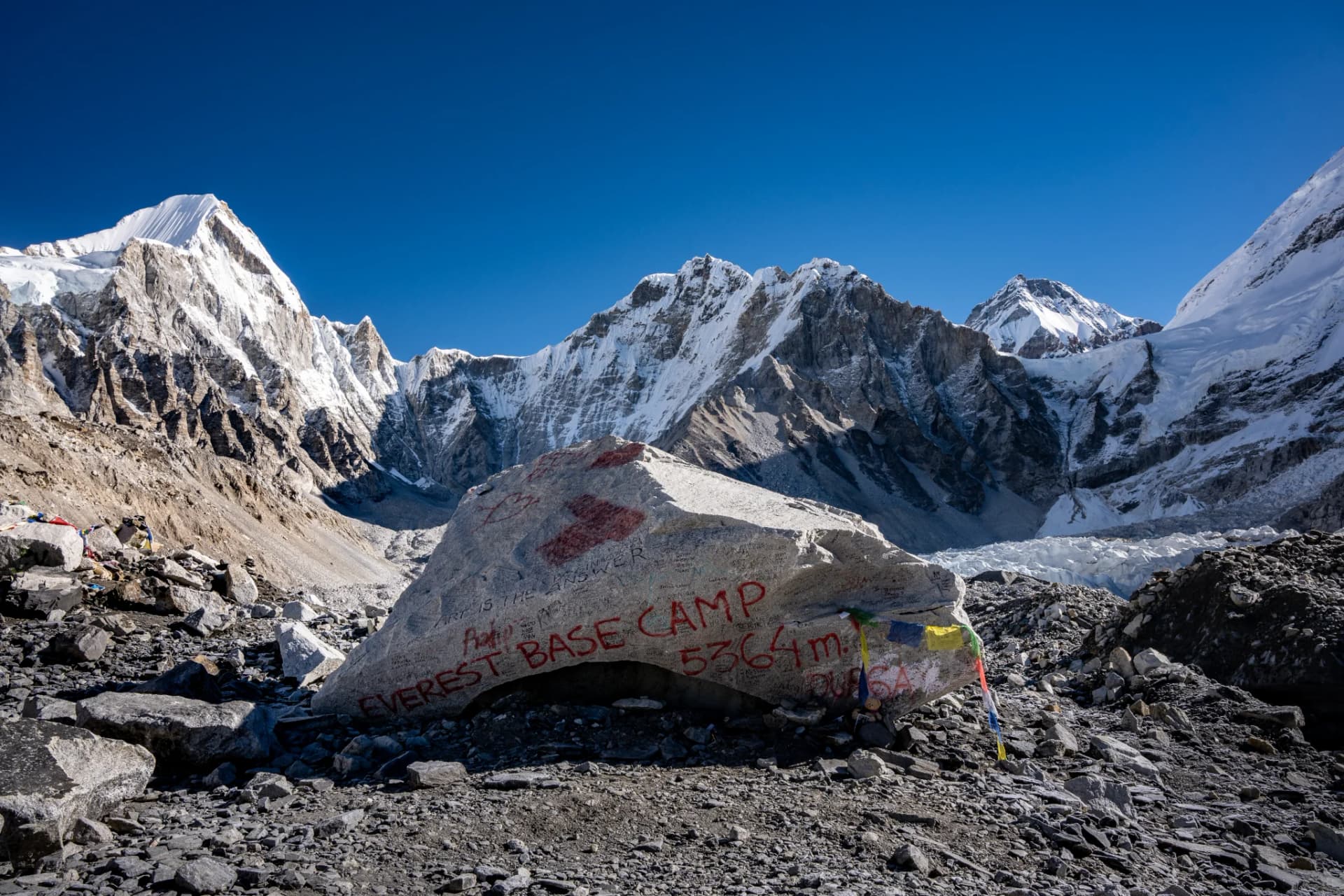
Choosing the best company for the Everest Base Camp trek requires evaluating the experience, safety standards, and local expertise of Nepal-based trekking agencies. A reliable Everest Base Camp trekking company provides licensed guides, well-planned itineraries, proper acclimatization, trekking permits, accommodation, transportation, and professional support throughout the journey to Everest Base Camp (5,364 m) in the Khumbu region.
Beyond the advertised package price, compare trekking companies based on guide qualifications, altitude sickness management, emergency evacuation arrangements, porter welfare, accommodation standards, and transparent booking policies. Understanding these factors helps you identify a trustworthy Everest Base Camp tour operator, avoid hidden costs, assess genuine customer reviews, and choose a trekking package that balances safety, comfort, and budget.
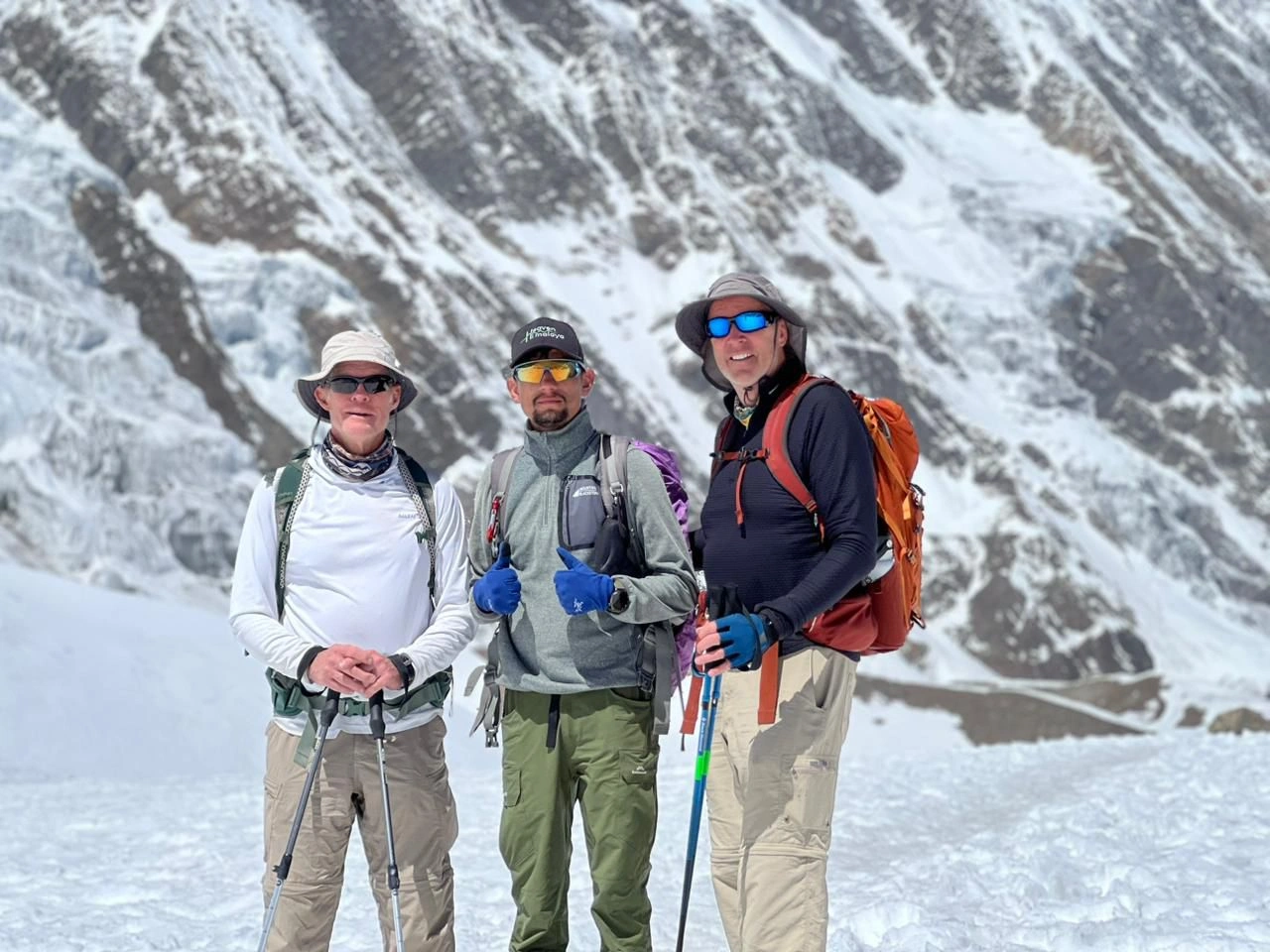
Why Is Choosing the Right Everest Base Camp Trek Company Important?
The right trekking company controls 3 outcomes: your safety at altitudes up to 5,545 m, your pace across 12 to 14 days, and your flexibility when flights, weather, or illness disrupt the plan. A weak company controls the same variables with less skill and thinner margins.
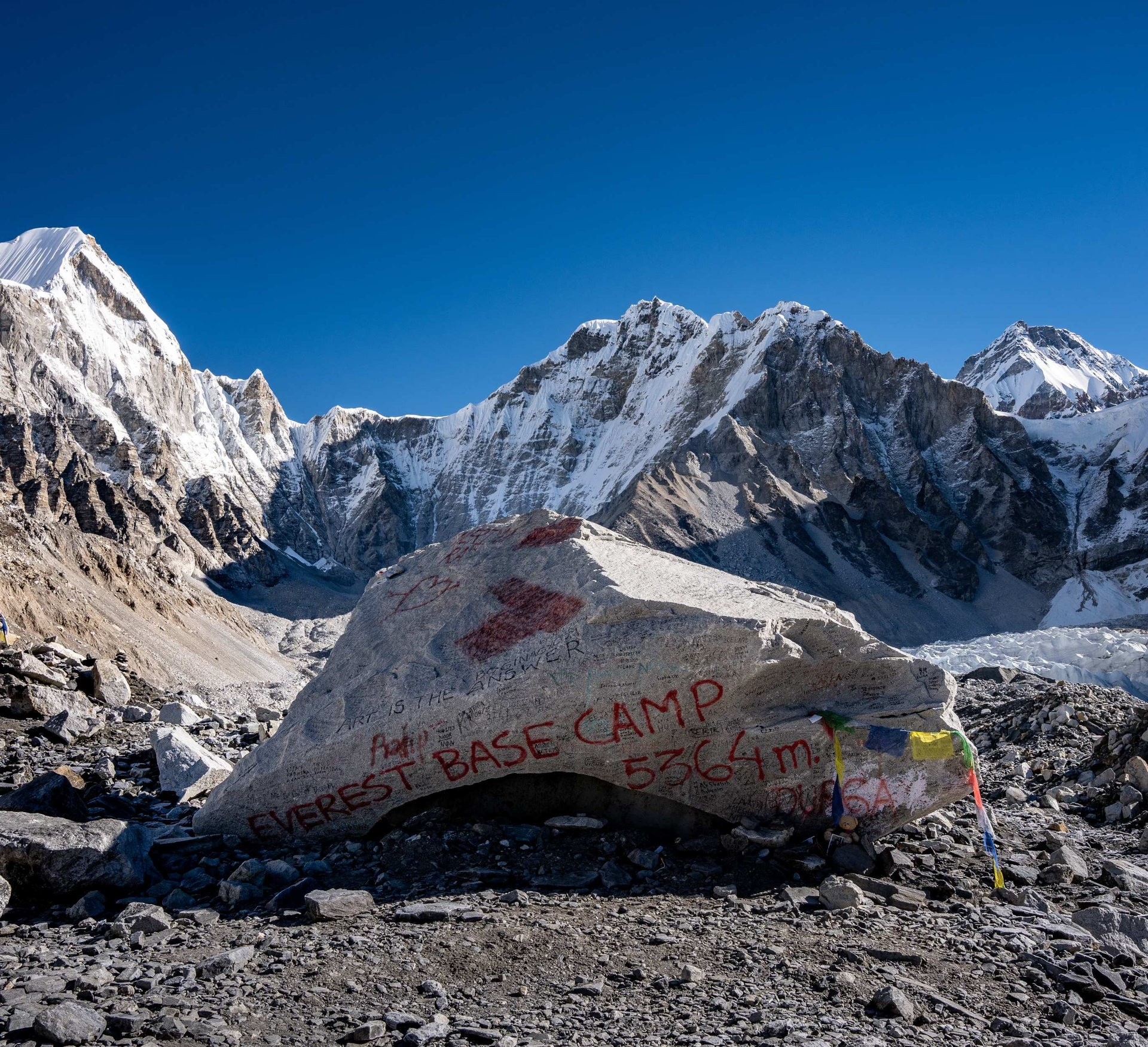
The Everest Base Camp (EBC) trek is a teahouse trek of roughly 130 km round trip from Lukla (2,840 m) to Everest Base Camp (5,364 m) through Sagarmatha National Park in Nepal's Khumbu region. A trekking company, formally a trekking agency, is a Nepal-licensed business that supplies guides, porters, permits, lodging, and flight bookings. The trail is the same for every operator. The decisions made on that trail are not.
Everest Base Camp Trek
View detailsHow Does a Trekking Company Affect Your Everest Base Camp Experience?
A trekking company shapes 6 parts of your trek: itinerary pace, guide quality, lodge selection, flight handling, emergency decisions, and porter treatment. Each one stays invisible until something goes wrong.
Itinerary pace: The company sets rest days and daily altitude gain, which determine how your body adapts.
Guide quality: The company hires, trains, and pays the person who monitors your health every evening.
Lodge selection: The company reserves rooms in Namche Bazaar, Dingboche, Lobuche, and Gorakshep, where beds fill fast in April, May, October, and November.
Flight handling: The company rebooks Lukla seats when weather grounds flights at Tenzing-Hillary Airport.
Emergency decisions: The company authorizes descents and evacuations, and it carries the cost of a slow decision.
Porter treatment: The company sets load limits, wages, clothing, and shelter for the people carrying your duffel.
In real-world use, trekkers notice the guide and the food. They rarely notice lodge pre-booking until a group without reservations sleeps on a dining-room bench in Lobuche.
What Risks Can an Unreliable Trekking Company Create?
An unreliable trekking company creates 6 risks: unlicensed operation, hidden resale layers, compressed itineraries, underqualified guides, insurance-driven evacuation pressure, and porter exploitation.
Unlicensed operation: Some sellers hold no Department of Tourism license and rent a license holder's name on departure day.
Hidden resale layers: A foreign website or marketplace sells your trek, then passes it to a Nepali operator. Each layer adds a margin, and no layer owns the responsibility for your safety.
Compressed itineraries: Companies cut rest days to lower the price per day, which raises altitude-illness risk.
Underqualified guides: A first-season guide with no wilderness first aid training leads a group above 5,000 m.
Evacuation pressure: Guides in a fraud-prone system push trekkers toward unnecessary helicopter flights (see the evacuation section below).
Porter exploitation: Overloaded, under-equipped porters carry bags at 5,000 m for low pay.
The most common mistake we see is the reseller chain. A trekker books through a polished overseas site, pays an extra margin for each layer, and arrives in Kathmandu to meet a guide who has never spoken to the seller. Ask one question before paying: "Which licensed Nepali company operates my trek on the ground, and what is its license number?"
Why Should Safety and Trekking Expertise Be Your Top Priorities?
Safety and trekking expertise must rank first because altitude illness is the leading medical risk on the EBC trail, and only a prepared company manages it well. Acute mountain sickness (AMS) is a cluster of symptoms, including headache, nausea, dizziness, and fatigue, that appears when the body ascends faster than it adapts.
According to a Himalayan Rescue Association and Nepal International Clinic study published in Aviation, Space, and Environmental Medicine in September 1999, 29.8% of 550 trekkers surveyed at Pheriche (4,243 m) met the criteria for AMS. According to a 2022 cohort study of 366 trekkers on the EBC trail in the International Journal of Environmental Research and Public Health, 40.5% experienced at least one medical incident, and almost half of those incidents were AMS. The terrain is not technical. The altitude is the hazard.
Use this weighted scorecard to compare companies. The table below assigns a weight to each decision factor, based on how directly the factor affects your health and your trip.
Decision factor | Weight | What earns full marks |
Safety protocol and guide training | 40% | Written evacuation plan, daily oximeter and symptom checks, wilderness first aid certificates |
Itinerary and acclimatization | 20% | 2 or more rest days, a buffer day for flight delays |
Licensing and track record | 15% | Verified license number, EBC-specific history |
Cost transparency | 15% | Itemized inclusions, exclusions, and peak-season surcharges |
Price | 10% | Within the realistic cost floor (see the cost section) |
Price carries the lowest weight on purpose. A US$150 saving buys little when a missed altitude warning ends the trek at Dingboche.
What Qualifications Should the Best Everest Base Camp Trek Company Have?
The best Everest Base Camp trek company holds 4 qualifications: a valid Nepal trekking agency license, experienced EBC guides, wilderness first aid and altitude training for those guides, and a verifiable record of completed treks. Each qualification is checkable before you pay.
Is the Trekking Company Licensed and Registered in Nepal?
A legitimate Everest Base Camp trek company holds a trekking agency license from Nepal's Department of Tourism, a company registration, and a PAN or VAT number. Nepal issues separate license categories for travel agencies, tour operators, and trekking agencies. Only a trekking agency license covers guided treks in national parks.
Request 4 documents before booking: the trekking agency license number, the company registration certificate, the PAN or VAT number, and proof of membership in the Trekking Agencies' Association of Nepal (TAAN). TAAN membership is voluntary, so its presence signals commitment to industry standards. Note that the Nepal Tourism Board (NTB) is the government authority that regulates tourism, not a membership association for agencies. Check the license number with TAAN or the Department of Tourism. A company with a physical Kathmandu office, a landline, and named owners is easier to hold accountable than a WhatsApp-only seller.
Does the Company Have Experienced Everest Base Camp Trek Guides?
An experienced EBC guide has led at least 20 Everest Base Camp treks, holds a Department of Tourism guide license, and knows the Khumbu trail, its lodges, and its weather patterns. Experience on other Nepal treks does not transfer fully. The Khumbu route crosses 5,000 m, depends on Lukla flights, and has its own medical posts.
Ask for the guide's name before you pay. Many agencies assign a guide 3 days before departure, which means the person you meet at Tribhuvan Airport never appeared in the sales conversation. Ask how many EBC treks the guide completed last year, whether the guide is a full-time employee, and whether the guide has handled an altitude evacuation.
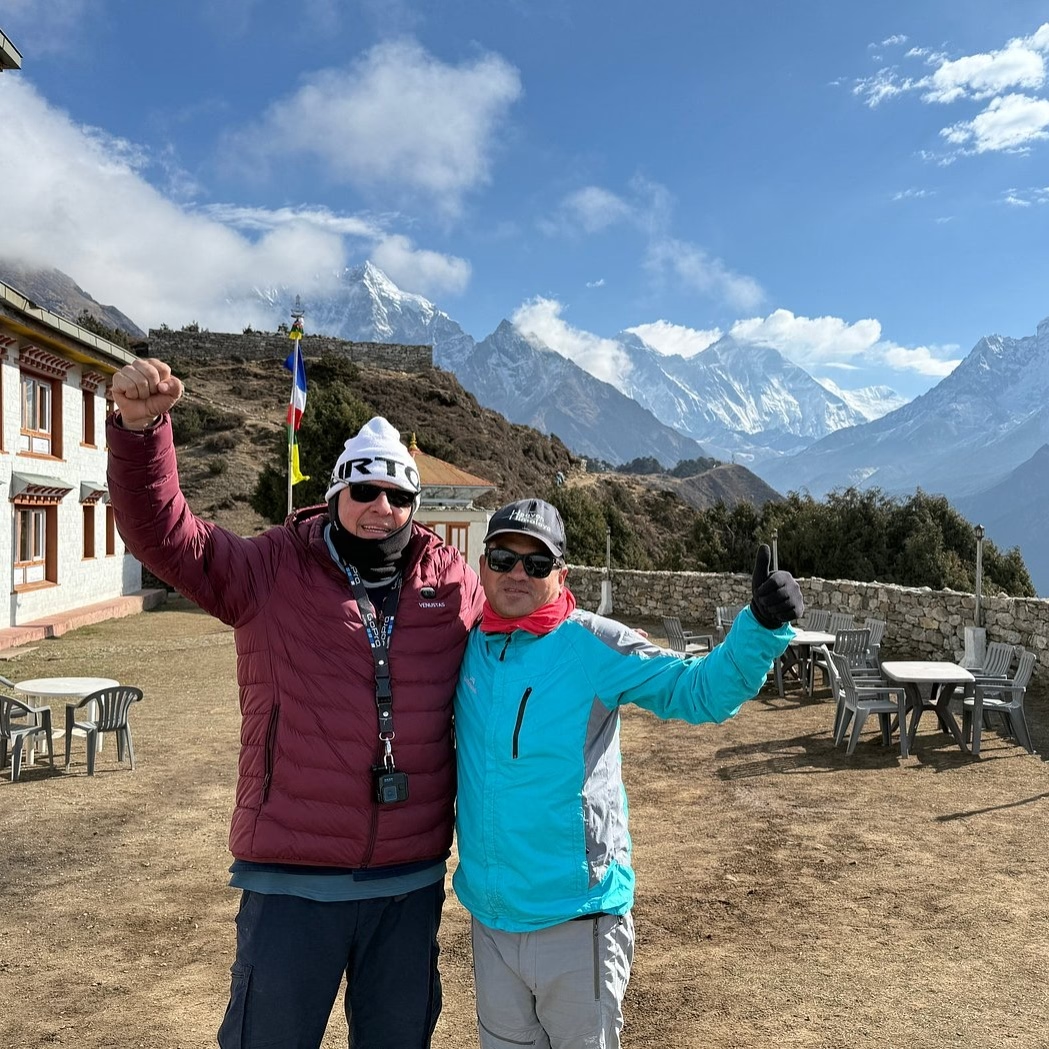
Are the Guides Trained in Wilderness First Aid and Altitude Sickness Management?
Qualified EBC guides hold a wilderness first aid certificate, complete altitude illness training, and follow a daily check routine using a pulse oximeter and the Lake Louise symptom score. Under the Lake Louise 2018 scoring system, AMS requires a headache plus at least one other symptom (gastrointestinal symptoms, fatigue/weakness, or dizziness/lightheadedness) scoring a total of 3 or more points.
Ask to see the certificates. Providers include the Himalayan Rescue Association (HRA) and recognized wilderness medicine schools. A pulse oximeter measures oxygen saturation (SpO2), and resting SpO2 at 4,410 m commonly reads between 80% and 90% in healthy, acclimatizing trekkers. The reading alone does not diagnose anything. A trained guide pairs the number with symptoms, trend, and behavior: a trekker who stops talking, stumbles, or breathes hard at rest needs a descent regardless of the number.
Does the Company Have a Strong Track Record of Successful Everest Base Camp Treks?
A strong track record means a specific count of completed EBC treks, a stated completion rate, and transparent numbers on evacuations and early exits. Vague claims such as "thousands of happy trekkers" carry no information.
Ask 4 questions: How many EBC groups did you run in the last 2 seasons? What percentage of clients reached Base Camp? How many descended early, and why? How many helicopter evacuations did you run? Honest operators explain the early exits. A 100% success rate across 2 seasons contradicts the statistics, because altitude illness and flight disruptions end some trips every year.
Your next step: Send a company 4 emails before booking: license number, guide name, completion rate, and evacuation count. Response speed and specificity reveal operating discipline.
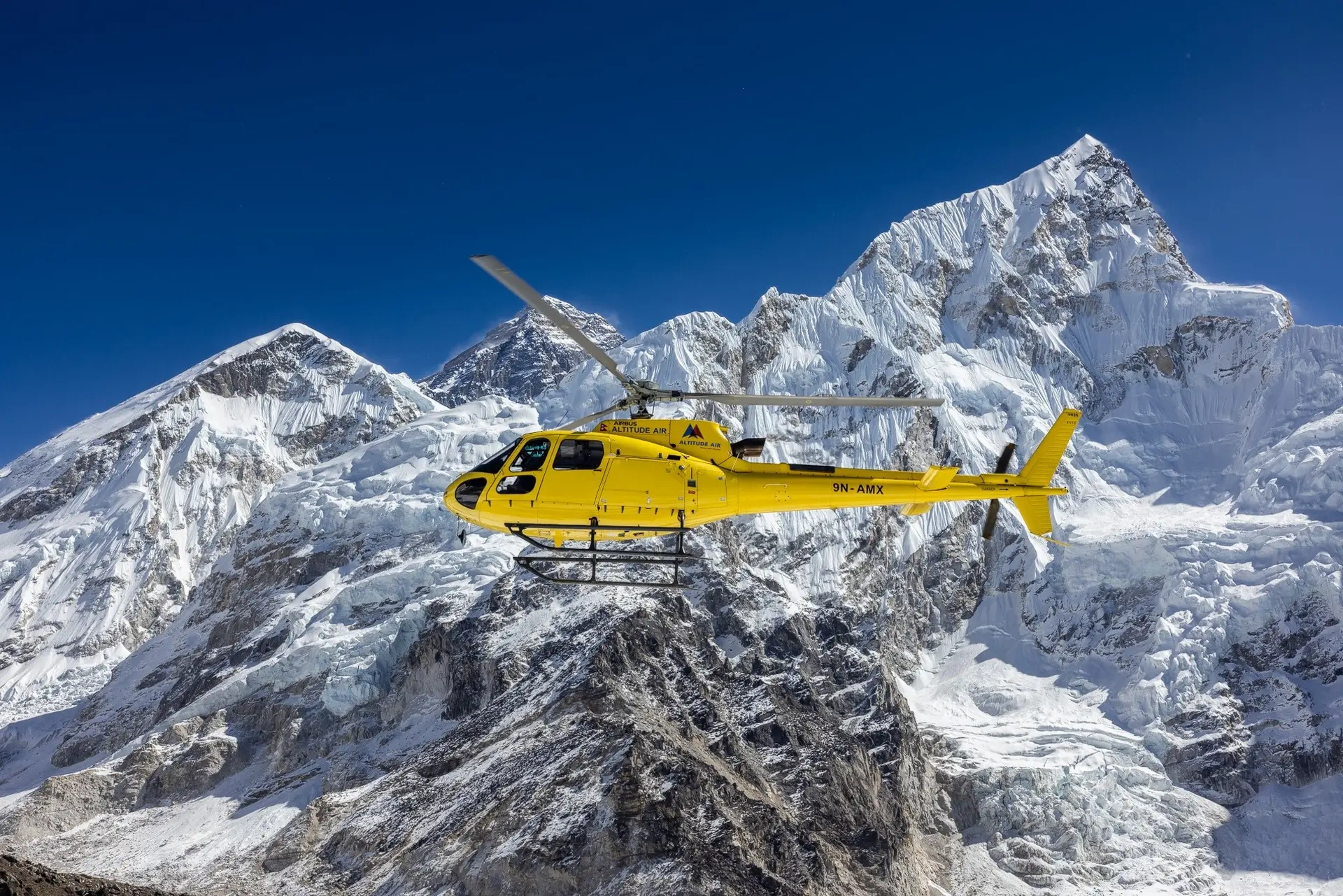
Everest Base Camp Helicopter Return Trek
View detailsHow Can You Compare Everest Base Camp Trek Packages?
Compare Everest Base Camp trek packages on 5 criteria: inclusions, itinerary length, accommodation and meal terms, group format, and acclimatization design. Line up two or three written quotes side by side, and convert each to a price per trekking day.
What Should an Everest Base Camp Trek Package Include?
A complete EBC package includes round-trip Lukla flights, 2 trekking permits, a licensed guide, porter service, teahouse lodging, trail meals, Kathmandu transfers, and basic medical equipment. The table below lists each inclusion and the detail to confirm in writing.
Inclusion | What to confirm |
Kathmandu–Lukla round-trip flight | Departure taxes included; airport (Kathmandu or Ramechhap); who pays the Ramechhap road transfer |
Permits | Sagarmatha National Park entry and Khumbu Pasang Lhamu Rural Municipality permit |
Guide | Licensed, named, English-speaking; assistant guide from 6 trekkers |
Porters | Ratio (1 porter per 2 trekkers is standard); weight limit |
Accommodation | Twin-share teahouses; Kathmandu hotel category and nights |
Meals | Breakfast, lunch, dinner on trek days; whether drinks are included |
Medical | Oximeter, first aid kit, evacuation coordination |
Gear | Duffel bag and sleeping bag loans |
Confirm the permit line in particular. According to 2026 operator and permit-guide sources, the 2 required permits, the Sagarmatha National Park entry permit (NPR 3,000) and the Khumbu Pasang Lhamu Rural Municipality permit (NPR 3,000), cost NPR 6,000 total, which is roughly US$45 to US$50 combined depending on exchange rates. The Khumbu municipality permit is issued at Lukla or Monjo, not in Kathmandu.
How Many Days Should a Good Everest Base Camp Trek Itinerary Cover?
A good Everest Base Camp trek itinerary covers 12 to 14 days from Kathmandu to Kathmandu, with 2 acclimatization days, plus 1 or 2 spare days at the end of your trip for flight delays. Shorter plans compress the acclimatization that protects you.
The strongest evidence comes from Pheriche. The 1999 Himalayan Rescue Association study found that each additional night spent between Lukla (2,840 m) and Pheriche (4,243 m) lowered AMS risk by 18.7%. The Wilderness Medical Society's altitude guidelines support the same logic: above 3,000 m, raise your sleeping elevation by no more than 500 m per night, and take a rest day every 3 to 4 days.
Common formats include:
11-day short treks, which suit trekkers with prior altitude experience and strong fitness.
12- to 14-day standard treks, which suit most first-time trekkers.
16- to 20-day extended routes, which add Gokyo Lakes or the Three High Passes and spread the altitude exposure.
Book your onward flight home 2 to 3 days after the scheduled trek end. Lukla flights cancel in bad weather, and a rushed return costs more than a spare hotel night in Thamel.
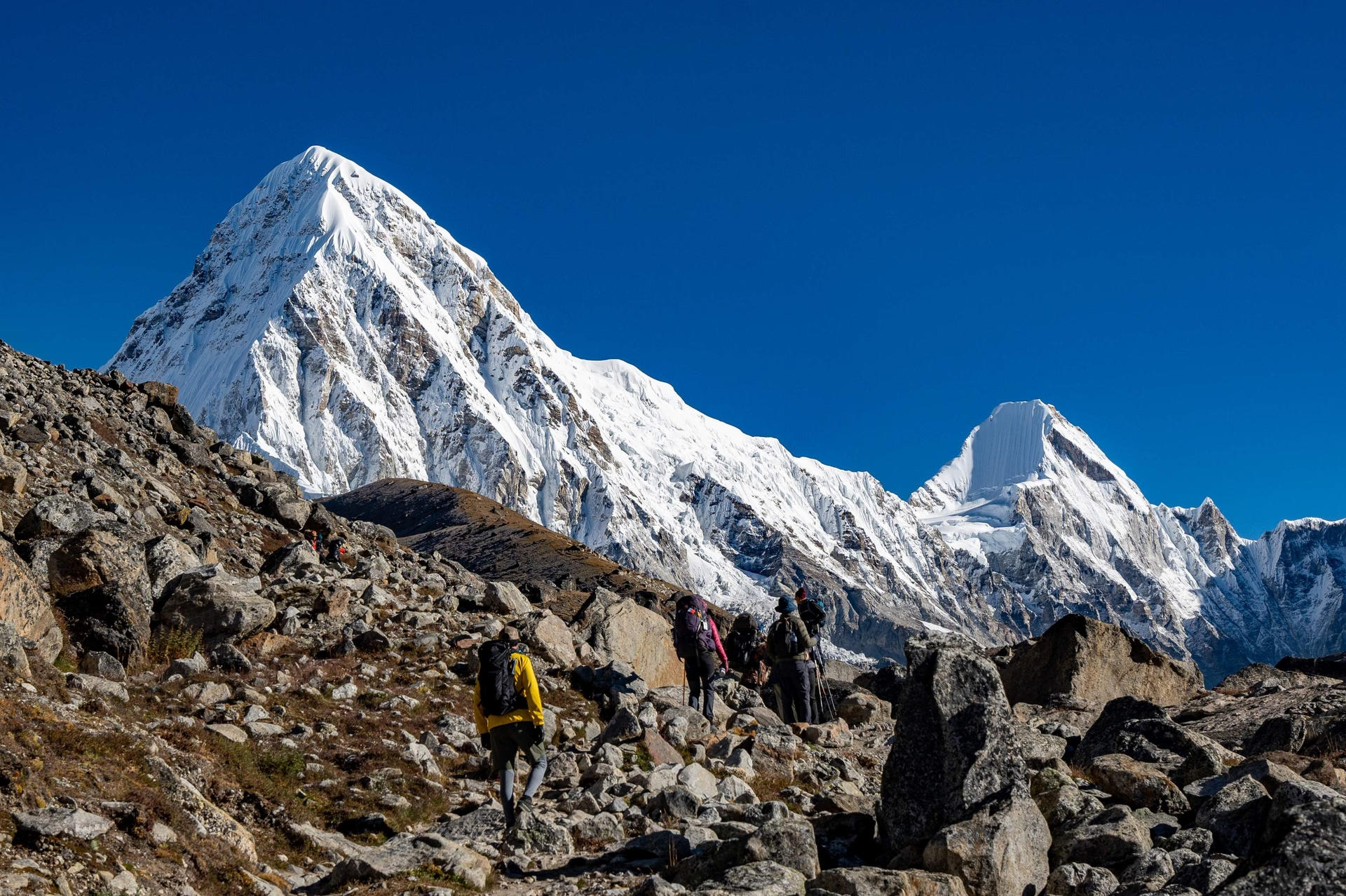
Everest Base Camp Short Hike
View detailsDoes the Everest Base Camp Trek Package Include Accommodation, Meals, Permits, and Transportation?
A transparent package lists accommodation, meals, permits, and transportation line by line, including what happens when flights delay or divert. Standard terms cover twin-share teahouse rooms, 3 meals daily on trail days, 2 permits, airport transfers, and the Lukla flights.
Three details separate clear packages from vague ones. First, the meal plan: "full board" usually covers breakfast, lunch, and dinner on the trail but not tea, coffee, hot water, or bottled water. Second, accommodation upgrades: hot showers, Wi-Fi, and device charging usually cost extra at every lodge, with Wi-Fi packages around US$6 and showers and charging priced per use, rising with altitude. Third, transport: during peak months, Lukla flights depart from Ramechhap's Manthali Airport after a 4- to 5-hour overnight road transfer from Kathmandu. Some operators include that transfer, and others charge it separately.
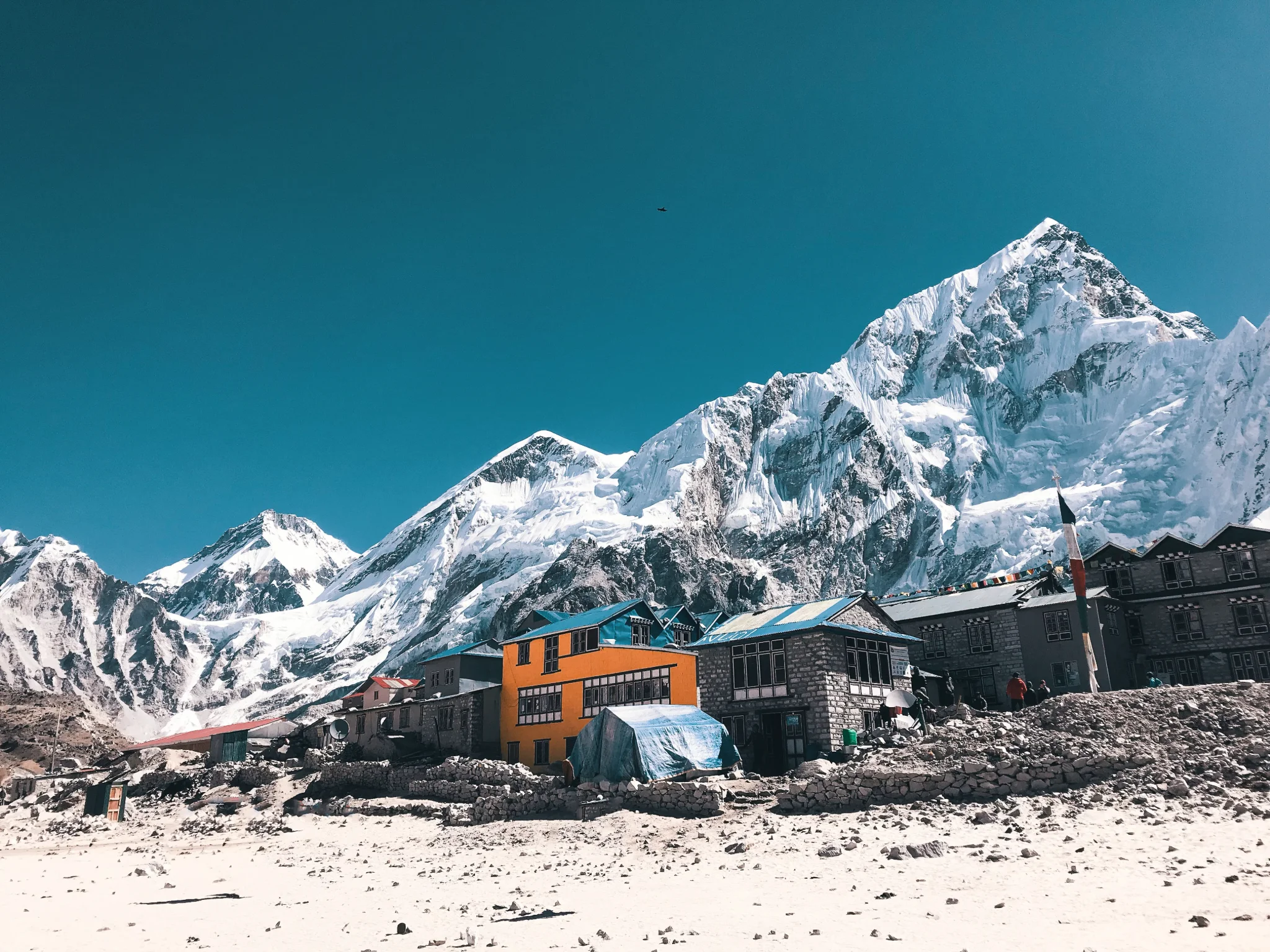
How Do Private and Group Everest Base Camp Trek Packages Compare?
Private packages cost more per person and give you control over pace and dates. Group packages cost less per person and give you company and fixed departures. The right format depends on your fitness, budget, and how much schedule flexibility you want.
Factor | Private trek | Group trek (4–12) |
Price per person | Highest (1 traveler pays the full guide and porter cost) | Lower (the guide cost divides across members) |
Pace | Set by you and the guide | Set by the slowest member |
Dates | Any date | Fixed departures |
Flexibility | Adjust rest days on the trail | Limited changes |
Support | 1 guide per 1 to 4 trekkers | Assistant guide from 6 trekkers |
Groups of 4 to 8 balance cost and attention. For solo travelers, a small group departure often beats a private trek on price, because the guide's wage divides across members.
Are Acclimatization Days Included in the Everest Base Camp Trekking Itinerary?
A sound EBC itinerary includes at least 2 acclimatization days, one at Namche Bazaar (3,440 m) and one at Dingboche (4,410 m) or Pheriche, with a "climb high, sleep low" side hike on each. Acclimatization is the physiological process of adapting to lower oxygen pressure, and it depends on time, not fitness.
Read the itinerary for 3 signals. The rest days must sit at Namche and Dingboche, the 2 points where altitude jumps hardest. Each rest day must include a side hike that gains 300 to 500 m above the lodge before returning to sleep, such as the walk to the Everest View Hotel (3,880 m). The total gain between sleeping points above 3,000 m must stay near 500 m per night.
Treat a package with zero rest days as a red flag, and a package that lists "acclimatization" but moves you to a new lodge that day as marketing, not design.
How Much Does It Cost to Choose an Everest Base Camp Trek Company?
A guided 14-day Everest Base Camp package costs roughly US$1,200 to US$2,300 per person for standard budget to mid-range options in 2026, depending on service tier, group size, and season. Premium and helicopter packages range higher. International flights to Kathmandu are extra, and tips, drinks, and insurance sit outside most quotes.
What Is the Average Cost of an Everest Base Camp Trek Package?
The average Everest Base Camp trek package costs between US$1,500 and US$2,300 per person for a mid-range guided 12- to 14-day trek, including Lukla flights, permits, guide, porter, lodging, and meals. The table below summarizes 2026 price tiers from published operator estimates and marketplace listings.
Service tier | Typical 2026 price (per person) | What it usually covers |
Budget guided | US$1,200–US$1,550 | Basic teahouses, shared guide and porter, larger groups |
Mid-range guided | US$1,500–US$2,300 | Better lodges in Kathmandu, smaller groups, stronger support |
Premium or lodge-based | US$3,000–US$6,000+ | Upgraded lodges, private guide, extra comfort |
Premium with helicopter return | US$4,000–US$8,000+ | Helicopter return from Gorakshep or Kala Patthar area |
Ranges come from Excellent Himalaya Trek & Expedition (2026 estimates) and My Everest Trip (June 2026). TourRadar listings in 2026 show standard EBC packages from US$1,200 to US$1,817. Price alone tells you little until you know what each quote includes.
Why Do Everest Base Camp Trek Prices Vary Between Companies?
Prices vary because of 6 drivers: group size, reseller margins, lodge standard, guide and porter wages and ratios, season, and safety equipment. Each driver is a place where an operator either invests or cuts.
Build the cost floor yourself. A 14-day trek for 4 people in 2026 carries these approximate component costs:
Flights: US$400–US$516 round trip from Kathmandu or Ramechhap to Lukla.
Permits: US$45–US$50.
Guide share: about US$25–US$40 per day, divided across 4.
Porter share: about US$18–US$25 per day, one porter per 2 trekkers.
Lodging and meals: US$350–US$450.
Kathmandu hotel and transfers: US$100–US$150.
The total lands between US$1,150 and US$1,400 per person before any company margin. A solo traveler pays more because one guide's wage lands on one person. Any 14-day quote with flights that sits far below US$1,150 removes something from that list. The question is what.
What Hidden Costs Should You Check Before Booking?
Check for 8 hidden costs before booking: the Ramechhap transfer, hot showers, charging and Wi-Fi, drinks and bottled water, tips, flight-delay extra days, helicopter costs, and travel insurance. The table below sets typical 2026 amounts beside each item.
Hidden cost | Typical amount | Why it surprises trekkers |
Ramechhap road transfer | Varies by operator | Excluded by some operators during peak months |
Hot showers | Priced per use | Price rises with altitude |
Charging and Wi-Fi | About US$3–US$6 for a Wi-Fi package; charging per use | Cold drains batteries faster |
Drinks, bottled water, hot water | Priced per item | Not part of "full board" |
Tips for guide and porter | US$100–US$150 total | Customary, rarely quoted |
Extra days after a flight delay | Hotel and meals for each added day | Weather cancels flights regularly |
Helicopter alternatives | US$2,500–US$4,000 per charter (Kathmandu–Lukla) | Not covered in standard packages |
Travel insurance | Varies | Required, rarely included |
Add your Nepal visa (US$50 for 30 days, US$1 to US$2 per day for a down jacket or sleeping bag), and an emergency cash reserve of a few hundred US dollars.
Does a Cheaper Trek Package Compromise Safety or Service Quality?
A cheaper package does not always compromise safety, but an unusually cheap package removes at least 1 of 4 things: guide pay, porter support, rest days, or insurance for staff. Price correlates with safety only above a floor, and below that floor someone absorbs the savings.
Ask 5 questions about any below-market quote:
What do you pay your guide per day?
How many porters carry the group's bags, and what is the weight limit?
Which nights are rest days?
Does staff accident insurance cover guides and porters?
Which lodges do you book, and when?
An expensive quote does not guarantee safety either. A luxury lodge improves your bed, not your altitude. Pay for guide quality, group size, and itinerary design first.
How Can You Evaluate the Safety Standards of a Trekking Company?
Evaluate a trekking company's safety standards through 4 tests: a written evacuation plan, a documented altitude-illness protocol, trained guides and support staff, and clear insurance and helicopter evacuation terms. Ask for each in writing and compare answers across companies.
Does the Company Have an Emergency Evacuation Plan?
A reliable emergency evacuation plan names who decides, who calls, who pays, and where the helicopter lands. It exists before departure, in writing, and the guide can recite it.
A solid plan covers 5 elements:
Decision authority: the guide recommends descent and the operations manager in Kathmandu authorizes the evacuation.
Triggers: confusion, loss of balance, breathlessness at rest, or worsening symptoms despite rest require immediate descent.
Contacts: a 24-hour Kathmandu operations number and a backup contact.
Landing points: designated helicopter sites at Gorakshep, Pheriche, Namche, and Lukla.
Weather logic: morning flights succeed more often, because clouds build by afternoon, so early decisions save lives.
Mobile coverage exists along the route, but it varies by lodge and weather. Ask what the plan does when the phone fails.
How Does the Company Handle Altitude Sickness and Medical Emergencies?
A good company handles altitude sickness through daily screening, a strict "do not ascend with symptoms" rule, and early descent when symptoms worsen. Three conditions matter: AMS (mild to moderate illness), HAPE (high-altitude pulmonary edema, fluid in the lungs), and HACE (high-altitude cerebral edema, swelling of the brain). HAPE and HACE are life-threatening.
The protocol follows this sequence:
Measure SpO2 and pulse every evening and morning.
Score symptoms with the Lake Louise questionnaire.
Hold the group at the current altitude when AMS symptoms appear.
Descend 300 to 500 m when symptoms worsen or when HAPE or HACE signs appear.
Escalate to evacuation when descent does not stabilize the trekker.
The Himalayan Rescue Association operates a clinic at Pheriche (4,243 m) with seasonal doctors, and your guide uses it as a decision resource. Ask one question: "Will my guide overrule my wish to continue if my symptoms worsen?" The only correct answer is yes.
Does the Trekking Company Provide Trained Guides and Proper Support Staff?
A well-staffed trek provides a licensed lead guide, an assistant guide for groups of 6 or more, and porters at a ratio of 1 porter per 2 trekkers. Staffing determines whether one person monitors your health while another handles a sick teammate.
Check 3 numbers: trekkers per guide, trekkers per porter, and who stays with a trekker who descends. A group of 8 with 1 guide and no assistant puts the whole team's pace on one person. When one trekker must descend, the guide faces an impossible choice between that person and the other seven. Assistant guides solve this, and they cost the operator real money, so low-priced groups often lack one.
Is Travel Insurance and Helicopter Evacuation Assistance Available?
Travel insurance for the EBC trek must cover emergency medical treatment and helicopter evacuation up to 6,000 m, and the company must coordinate with your insurer, not replace the policy. Most operators exclude insurance from the package and require you to buy it. Confirm that your policy lists trekking up to 6,000 m and "emergency evacuation by helicopter" as covered items.
The 2026 fraud case makes documentation essential. According to reports published in the Kathmandu Post on January 27 and March 23, 2026, and Malay Mail on April 2, 2026, Nepal Police Central Investigation Bureau investigated 32 people over alleged staged or inflated rescue claims totaling more than US$19.6 million. Reports indicate that medical and transport providers were alleged to have shared insurance payments with intermediaries and agencies. These remain legal allegations in ongoing proceedings. Genuine emergencies still require evacuation.
Protect yourself with 5 steps:
Call your insurer's emergency line yourself before authorizing a flight when you are able.
Request a written medical assessment from the Pheriche clinic or a doctor.
Keep copies of flight manifests, invoices, and medical records.
Refuse extra paperwork or duplicate billing.
Choose a company that discloses its evacuation procedure and evacuation record.
The decision to descend for real altitude illness is never negotiable. The point of documentation is accuracy, not delay.
What Should You Check About Guides, Porters, and Local Support?
Check 3 things about local support: whether your guide holds a valid license and knows the Everest region, whether the company follows ethical porter welfare practices, and what the guide-to-trekker ratio is. The people on the trail decide most of your outcome.
Are the Trekking Guides Licensed and Familiar With the Everest Region?
Licensed EBC guides carry a Department of Tourism guide license card and have walked the Khumbu trail repeatedly, with knowledge of lodges, weather windows, medical posts, and flight procedures at Lukla. Local origin adds value because Khumbu-region guides know lodge owners and conditions personally.
Nepal's Tourism Board announced on April 1, 2023, that foreign trekkers must hire licensed guides in national parks, conservation areas, and restricted zones. The Khumbu Pasang Lhamu Rural Municipality, which governs the Everest trail, has allowed independent trekkers without guides, so enforcement differs from other regions. Rules shift, and local notices change. The better question is not "Is a guide legally required?" but "Who monitors my altitude symptoms?" Request the guide's license card number and a photo of the card.
Does the Company Follow Ethical Porter Welfare Practices?
Ethical porter welfare means fair wages, weight limits of 20 to 25 kg, proper clothing and shelter, accident insurance, and medical care equal to what trekkers receive. The International Porter Protection Group (IPPG) publishes these standards, and responsible operators follow them.
Ask 4 questions: How much weight does each porter carry? What does the company pay per day? Does the company provide jackets, boots, and sleeping bags to porters? Who pays for a porter's treatment if illness or injury occurs? Porters earn roughly US$18–US$25 per day in 2026 operator estimates. Companies that assign 1 porter per 2 trekkers with a total load limit of 20 to 25 kg allow each trekker a duffel weight limit of about 10 to 12.5 kg. Organizations such as the Kathmandu Environmental Education Project (KEEP), a nonprofit based in Thamel, support porter welfare, and operators affiliated with KEEP signal alignment with those standards.
What Is the Guide-to-Trekker Ratio?
The best guide-to-trekker ratio is 1 guide for 5 or fewer trekkers, with an assistant guide added at 6 or more trekkers and 1 porter for every 2 trekkers. A smaller ratio gives the guide time to check each person every evening.
Group size | Guides | Porters |
1–2 trekkers | 1 lead guide | 1 porter |
3–5 trekkers | 1 lead guide | 2–3 porters |
6–10 trekkers | 1 lead + 1 assistant guide | 3–5 porters |
11–20 trekkers | 1 lead + 2–3 assistants | 6–10 porters |
The table reflects common practice among responsible operators. Verify the ratio in writing and confirm that the assistant guide walks with the group.
How Can You Verify Trekking Company Reviews and Reputation?
Verify trekking company reviews and reputation by checking independent platforms, reading mid-range reviews for service recovery stories, spotting patterns of fake reviews, and speaking directly with former clients.
Where Can You Find Genuine Everest Base Camp Trek Reviews?
Find genuine EBC trek reviews on Tripadvisor, Google Maps, Trustpilot, and marketplace platforms such as TourRadar, and cross-check them against the company's own website.
Use 3 reading habits. Filter for reviews from the last 12 months, because guides, prices, and rules change. Read the 3- and 4-star reviews first, since they describe real friction: a delayed flight, a sick trekker, an unclear invoice. Look for stories where plans broke. A review describing how a company rebooked a Lukla flight or rerouted a sick client tells you more than 20 reviews about sunrise at Kala Patthar.
How Can You Identify Fake Trekking Company Reviews?
Identify fake trekking company reviews by looking for 6 signals: clusters of reviews posted within days, generic wording, missing guide names, one-review profiles, stock or reused photos, and no owner responses to criticism. Genuine reviews contain specific details.
Clustering: 10 or more 5-star reviews appear within a week after a long quiet period.
Generic phrasing: "Great trip, amazing guide, highly recommend" repeats with no names, dates, or places.
Missing names: Real clients usually name the guide and porter.
Thin profiles: The reviewer has posted 1 review in total.
Reused images: A reverse image search shows the photo on another site.
No balance: The company has only 5-star reviews and never replies to complaints.
No single signal proves fraud. A combination of three or more does.
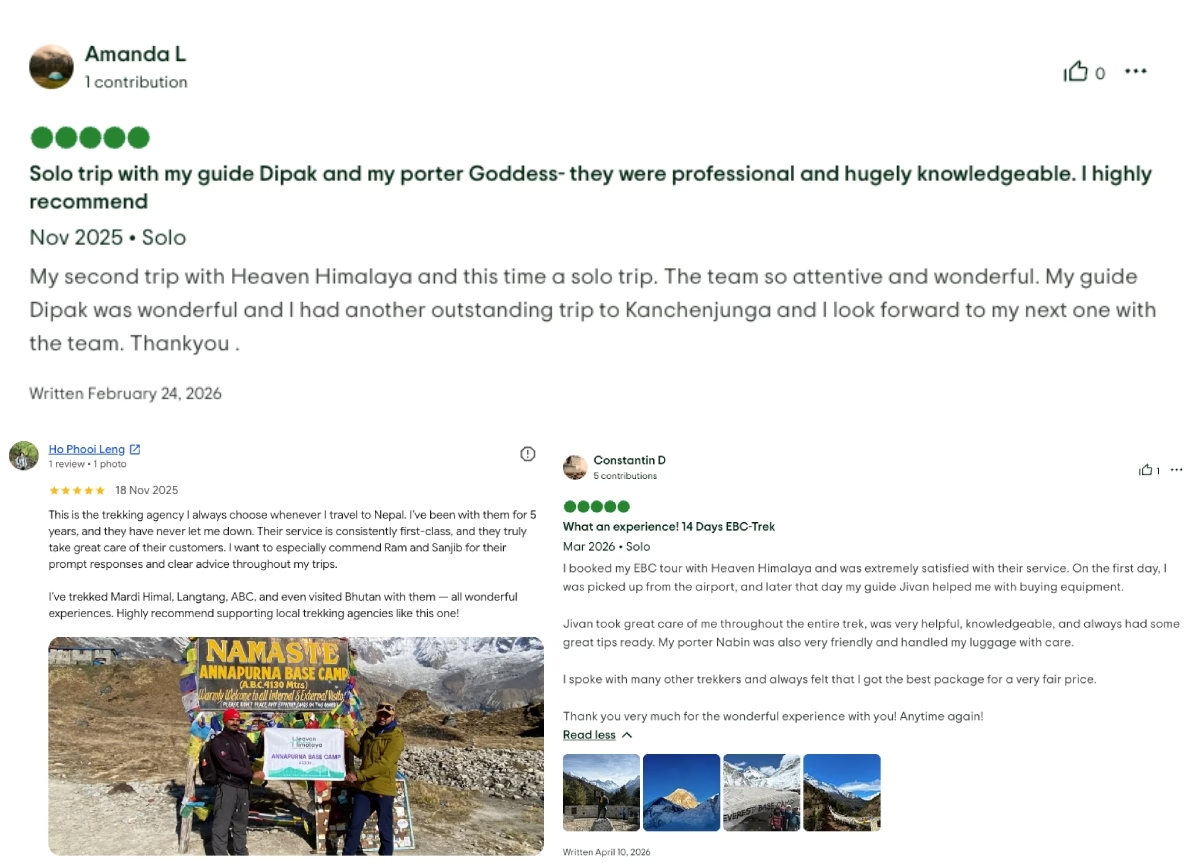
What Questions Should You Ask Previous Clients?
Ask previous clients 8 questions about guide behavior, health management, billing, and recovery from disruption. Request 3 references from the last 12 months, ideally from your own country or a similar trek date.
Did the final invoice match the quote?
Did your guide check your oxygen and symptoms every evening?
How did the company respond when weather or flights changed?
Did anyone in your group become ill, and what happened next?
How were the porters treated?
Did the lodges match the description?
Did the guide ever push the pace against your wishes?
Would you book with this company again?
When Is the Best Time to Book an Everest Base Camp Trek Company?
Book an Everest Base Camp trek company 4 to 6 months before spring or autumn departures, and 2 to 3 months before shoulder-season departures. Early booking secures Lukla seats, lodge rooms, and training time.
Which Trekking Seasons Offer the Best Everest Base Camp Experience?
The best Everest Base Camp seasons are spring (March to May) and autumn (September to November), with October offering the clearest skies. The table below compares the 4 seasons.
Season | Conditions | Trade-offs |
Spring (Mar–May) | Warm days, blooming rhododendrons, climber tents at Base Camp in April and May | Crowded trails, Lukla flights from Ramechhap |
Monsoon (Jun–Aug) | Fewer trekkers, green valleys | Wet, slippery trails, cloud cover, flight disruption |
Autumn (Sep–Nov) | Stable weather, clear mountain views, Mani Rimdu festival at Tengboche | Highest demand, Ramechhap diversions, full lodges |
Winter (Dec–Feb) | Quiet trails, crisp views | Temperatures as low as –17°C, some lodges close |
According to Heaven Himalaya's seasonal guidance and published 2026 flight reports, peak-season Lukla flights operated from Manthali Airport in Ramechhap in spring 2026 and again from late September 2026, with airlines such as Sita, Tara, and Summit running dozens of daily flights in good weather. The Ramechhap route takes about 15 to 20 minutes in the air and 4 to 5 hours by road from Kathmandu, with departures in the small hours of the morning. The Mani Rimdu festival at Tengboche Monastery follows the Tibetan lunar calendar, so ask for the current year's dates if you want to attend.
How Far in Advance Should You Book Your Everest Base Camp Trek?
Book 4 to 6 months ahead for April, May, October, and November, because Lukla seats and teahouse beds sell out first in those months.
Follow this sequence:
Shortlist 3 licensed companies and request itemized written quotes.
Verify license numbers and recent reviews.
Confirm cancellation, rescheduling, and refund terms.
Pay the deposit through a traceable method, never cash to an individual.
Buy insurance covering evacuation to 6,000 m.
Book international flights with a 2- to 3-day buffer after the trek.
Start training 12 weeks out. Heaven Himalaya's Everest Base Camp trek training plan outlines the cardio and strength work that prepares you for 5 to 7 hours of daily walking.
How Can Heaven Himalaya Help You Choose the Right Everest Base Camp Trek?
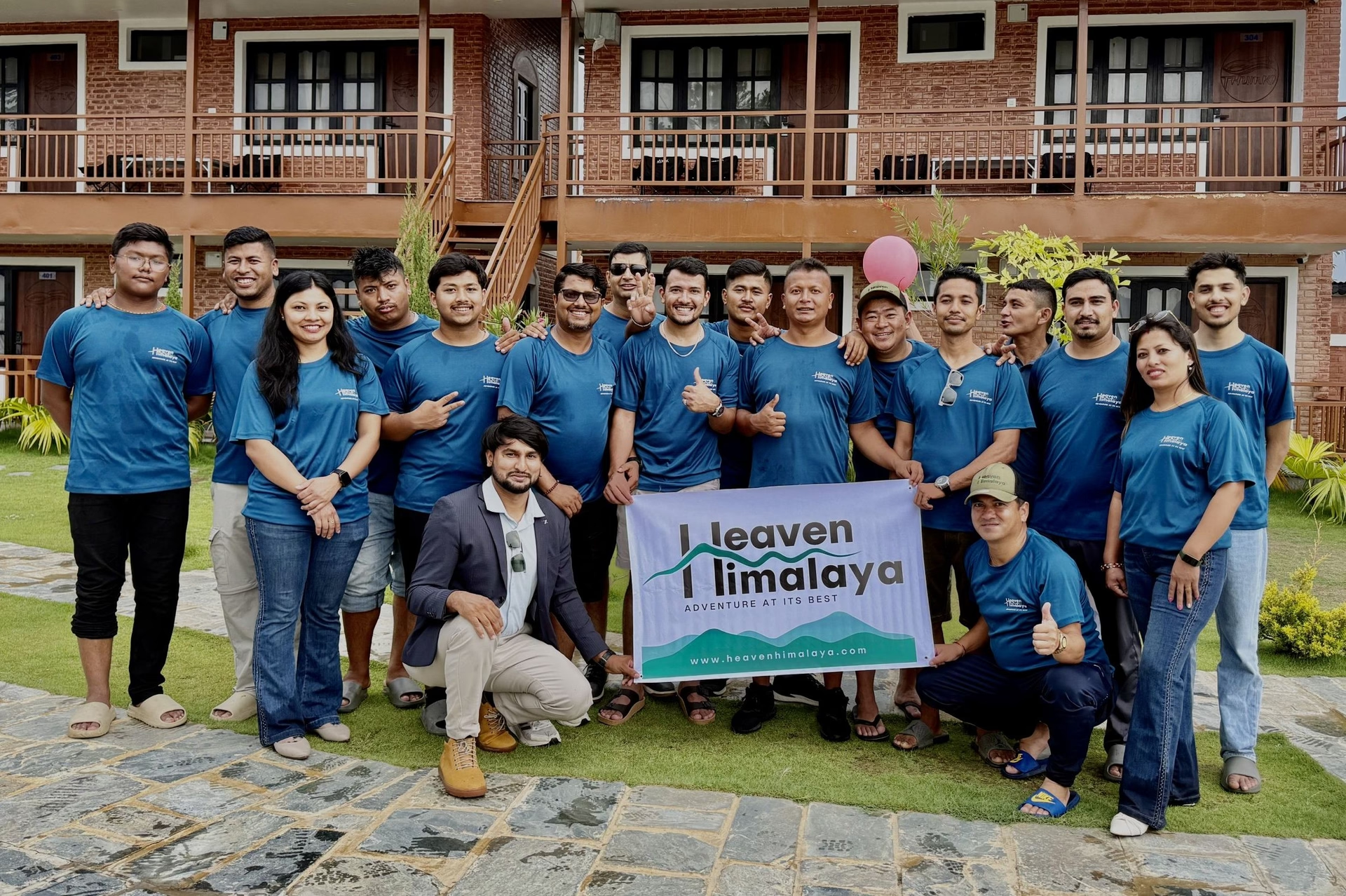
Heaven Himalaya helps you choose the right Everest Base Camp trek by answering every question in this guide in writing: license, guide, itinerary, cost, safety protocol, and booking terms. Heaven Himalaya Treks & Expedition is a Kathmandu-based, Nepali-run trekking company with an office at Gitanjali Chowk, Dathu Sadak, Kathmandu, and a team reachable on WhatsApp at +977 985 1273867.
The company's 14 Days Everest Base Camp Trek runs from Kathmandu to Everest Base Camp (5,364 m) and Kala Patthar (5,545 m), with acclimatization days at Namche Bazaar and Dingboche. Compare it against this guide's checklists, and use the same questions on every other company.
Why Should You Choose Heaven Himalaya for Your Everest Base Camp Trek?
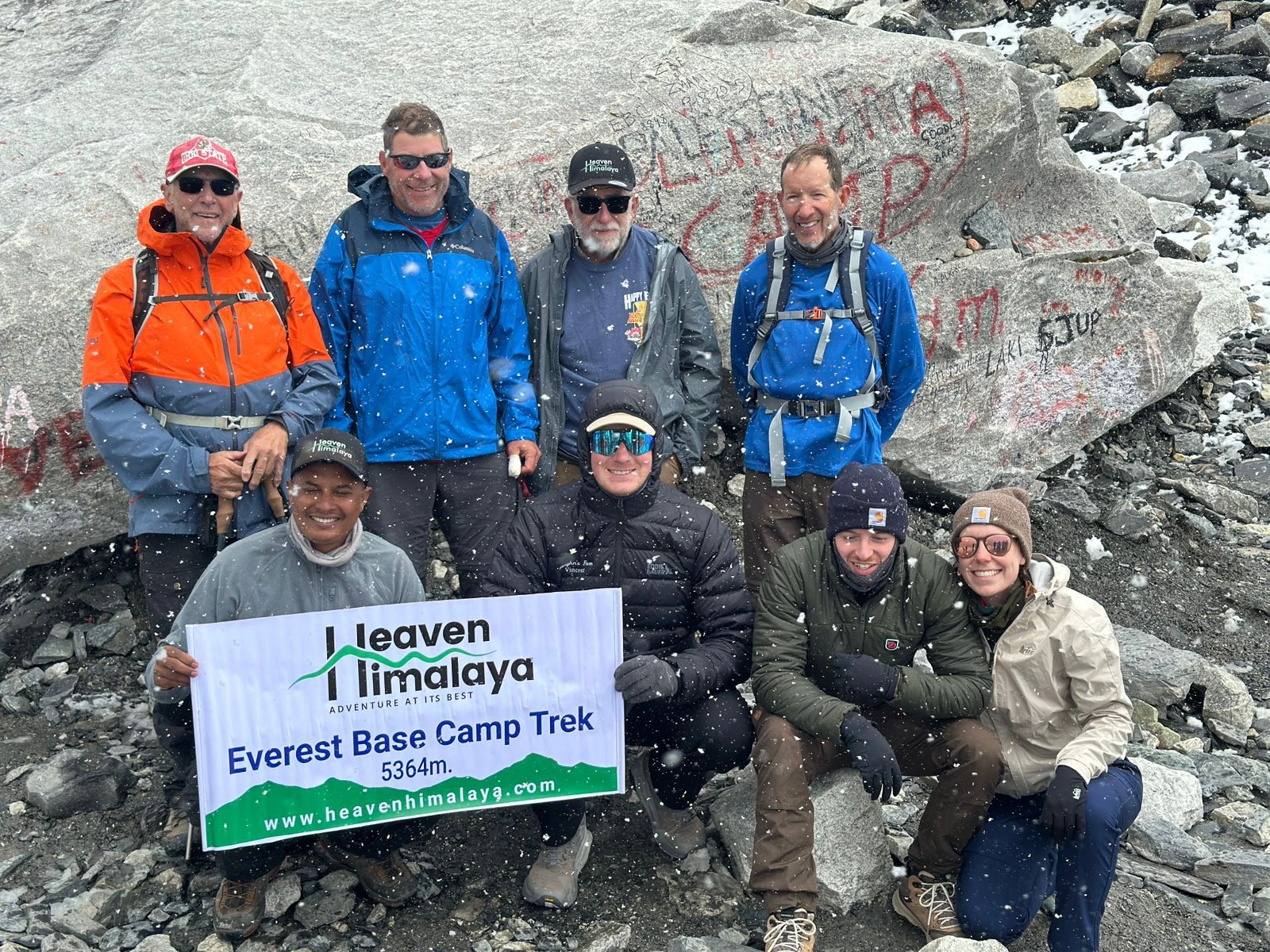
Choose Heaven Himalaya for local ownership, licensed Nepali guides, a clearly itemized package, and a verifiable review record. The company reports 13 or more years of operation, more than 1,000 travelers guided to Everest Base Camp, a 5.0 rating across 160 Tripadvisor reviews, and Tripadvisor Travelers' Choice recognition from 2021 through 2025. You can verify the review record on Tripadvisor and Trustpilot yourself.
The 14-day package includes:
Flights: round-trip Lukla flights with departure taxes.
Permits: Sagarmatha National Park and Khumbu Pasang Lhamu Rural Municipality permits.
Staff: a licensed English-speaking guide, an assistant guide for groups of 6 or more, and porters at 1 per 2 clients.
Stay: twin-share teahouses on the trail and 2 nights in a 3-star Kathmandu hotel.
Meals: breakfast, lunch, and dinner on trek days.
Safety kit: an oximeter, a first aid kit carried by the guide, and emergency rescue assistance arranged with your insurer.
Staff welfare: food, lodging, salary, equipment, and accident insurance for the guide and porters.
The booking page lists per-person pricing from US$1,399 for groups of 14 to 20, with no booking fee. Heaven Himalaya is affiliated with the Nepal Tourism Board, the Trekking Agencies' Association of Nepal, the Nepal Mountaineering Association, and the Kathmandu Environmental Education Project, and its legal documents appear on the website. Ask the team for the license numbers directly, as this guide recommends for every company.
What Should You Consider Before Booking Your Everest Base Camp Trek With Heaven Himalaya?
Consider 5 points before booking with Heaven Himalaya: the trek is a teahouse adventure rather than a luxury holiday, the Ramechhap transfer costs extra in peak months, flight-delay days and helicopter options sit outside the price, travel insurance must cover evacuation to 6,000 m, and personal fitness decides your experience.
Teahouse standard: Rooms are simple and heated only in the dining room. Hot showers, Wi-Fi, and charging cost extra.
Ramechhap transfer: In March, April, May, October, and November, Lukla flights can depart from Manthali Airport, and the road transfer is charged separately.
Delays: The company states that it does not cover helicopter rides or extra days caused by weather, so carry an emergency fund of a few hundred US dollars.
Insurance: Buy a policy that covers emergency evacuation from high altitude up to 6,000 m before you leave home.
Fitness: Plan on 5 to 7 hours of walking per day for 10 to 14 consecutive days.
Heaven Himalaya also publishes a Lukla flight guide for flight-delay planning.
Choosing the best company for the Everest Base Camp trek comes down to evidence, not impressions: a verified license, a named guide, a written evacuation plan, rest days in the right places, and a quote with nothing hidden. Hold every company, Heaven Himalaya included, to that standard.
Ready to compare? Send your preferred dates, group size, and fitness background to the Heaven Himalaya team through the booking guide or by WhatsApp at +977 985 1273867. You receive an itemized written quote, the guide's name, and the evacuation protocol, with no obligation to book.