

Explore Namche Bazaar
Most trekking and expedition journeys in the Everest region begin in Sherpa town. Therefore, Namche is often referred to as a “Gateway to Everest“.
Namche Bazaar is a bustling traveler stop in the Khumbu region and is popular for the market for climbing equipment, exotic traditional artisan works, and Tibetan artifacts. Also, It serves as the central park for small markets, an information hub, several museums, stupas, and sherpa culture.
- Nepal
- 9 Curated Trips
- Elevation: 3440m.
Top Trending Experiences
All-inclusive tours and adventures in Namche Bazaar recommended by experts
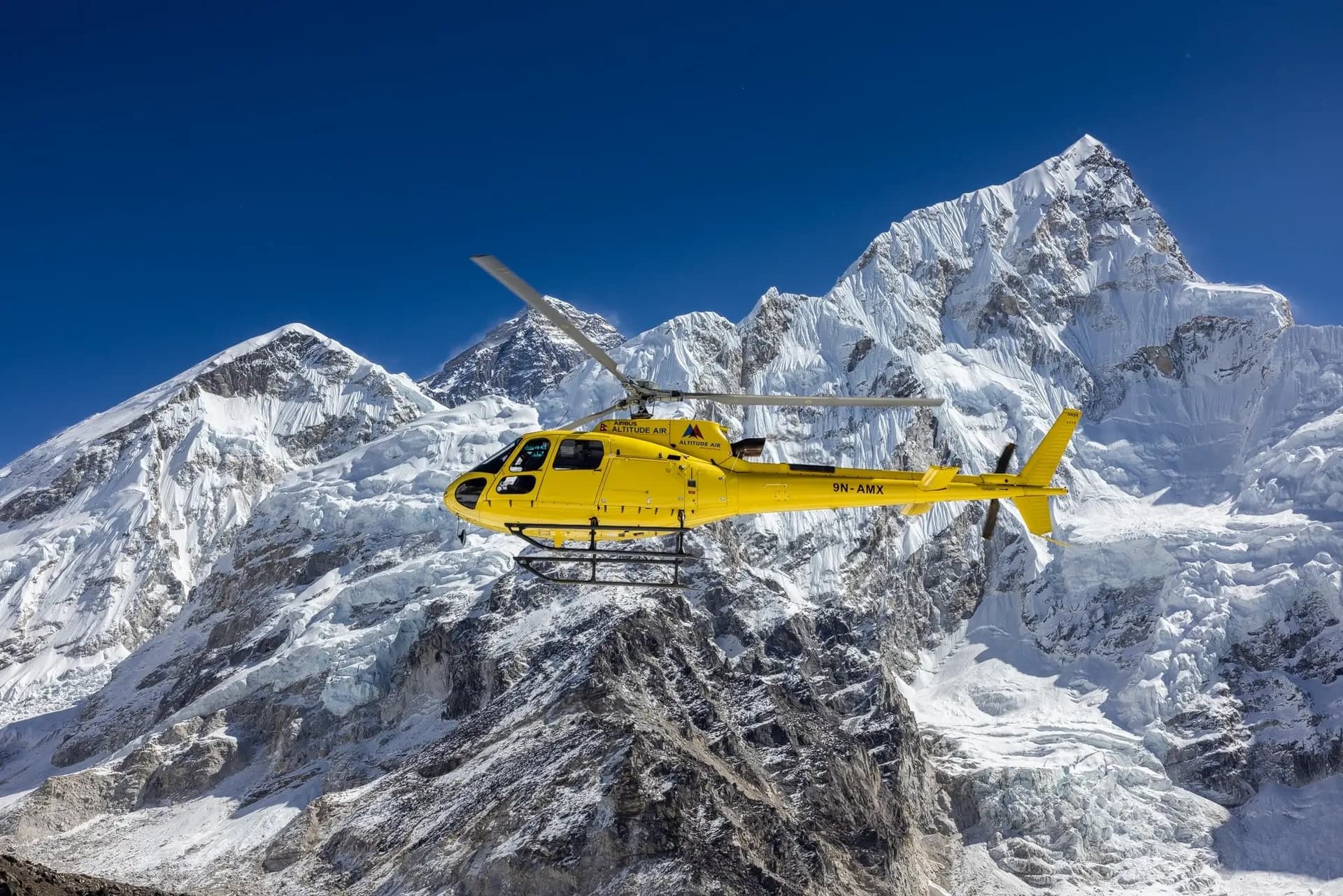
Everest Base Camp Heli Return Trek
- 11 Nights 12 Days
- Easy to Hard
$3,899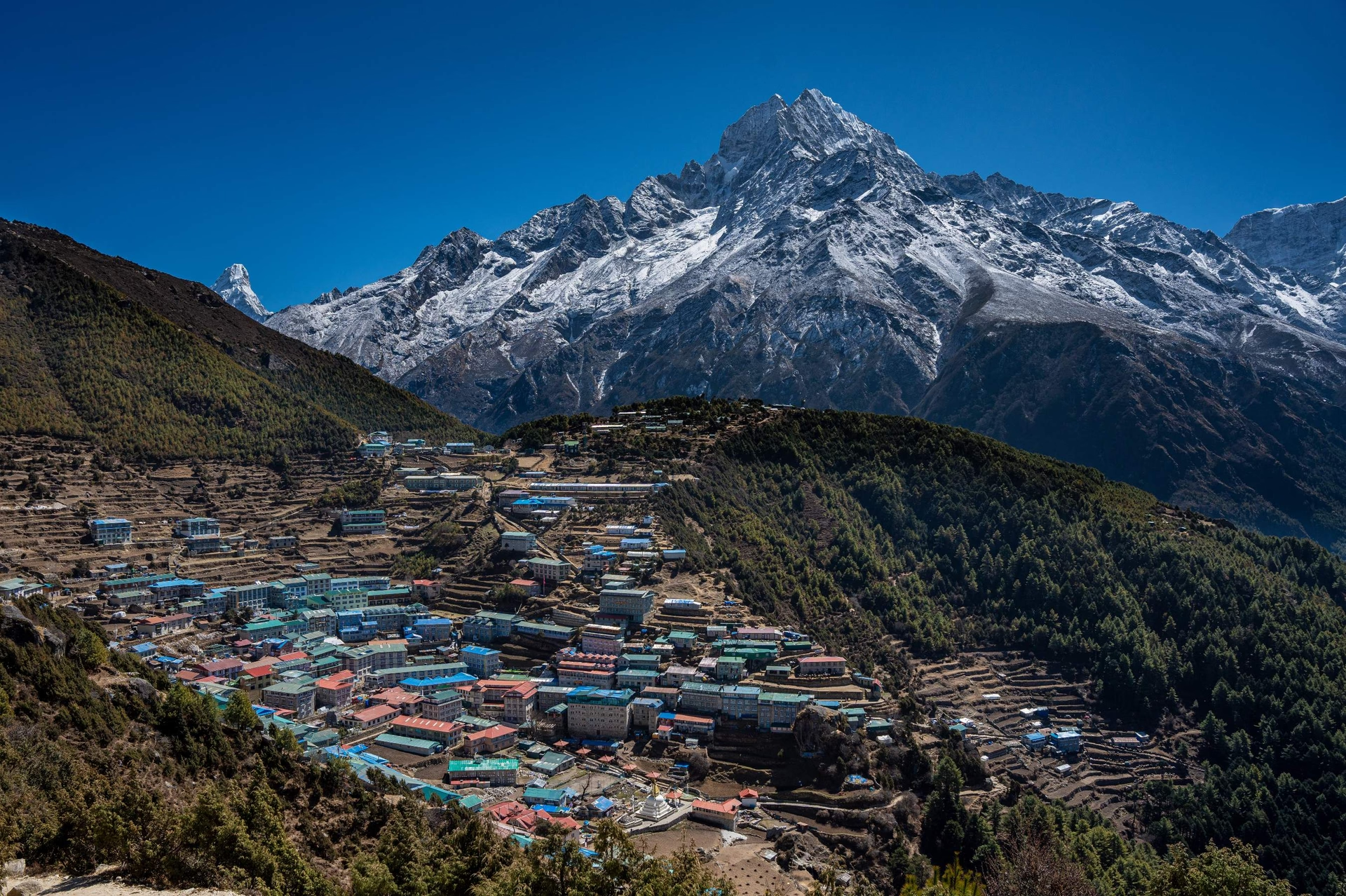
Everest Super Luxury Trek
- 10 Nights 11 Days
- Easy to Hard
$5,199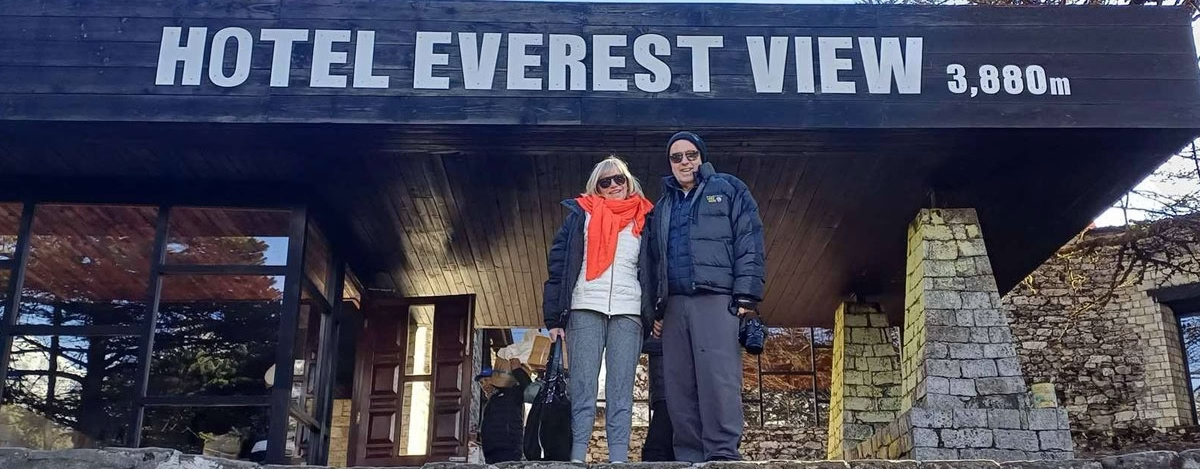
Everest View Trek
- 6 Nights 7 Days
- Easy to Hard
$1,065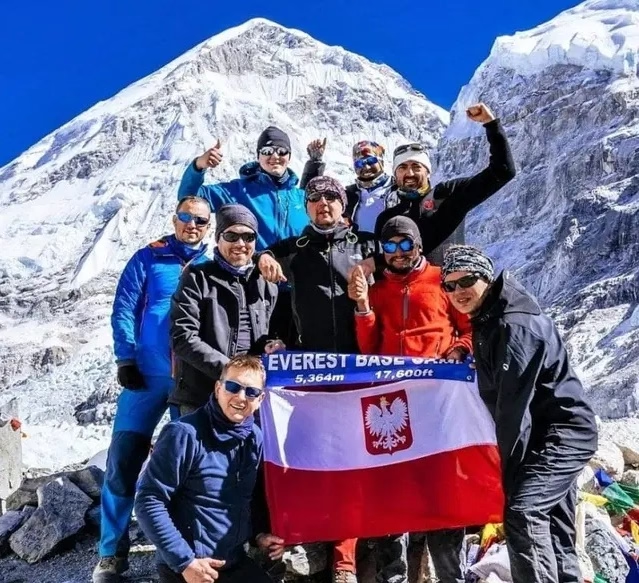 Private Trip5.00 / 01
Everest Base Camp Luxury Trek
- 15 Nights 16 Days
- Easy to Hard
$2,399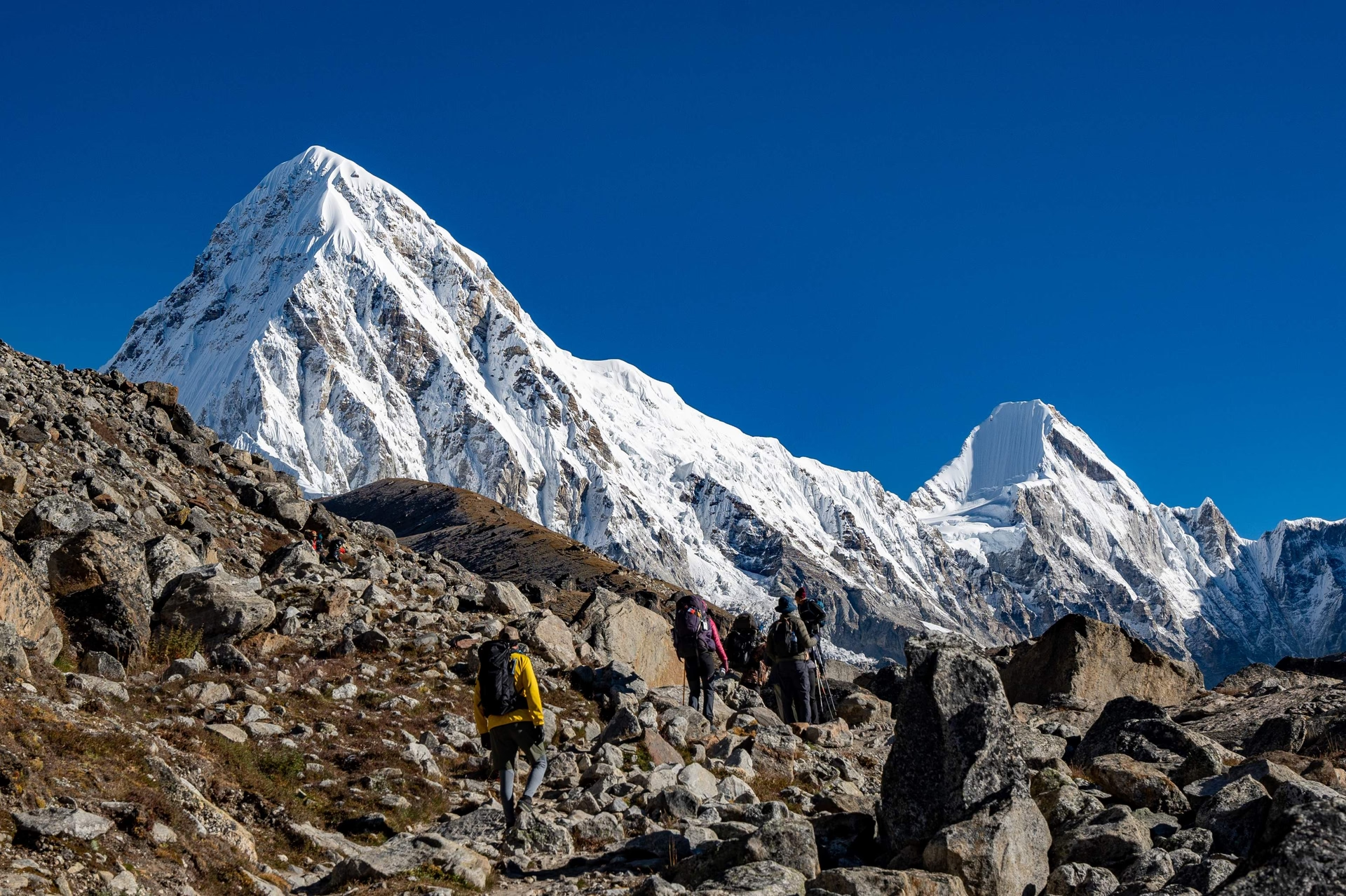 Featured !
Everest Base Camp Short Hike
- 10 Nights 11 Days
- Easy to Hard
$1,099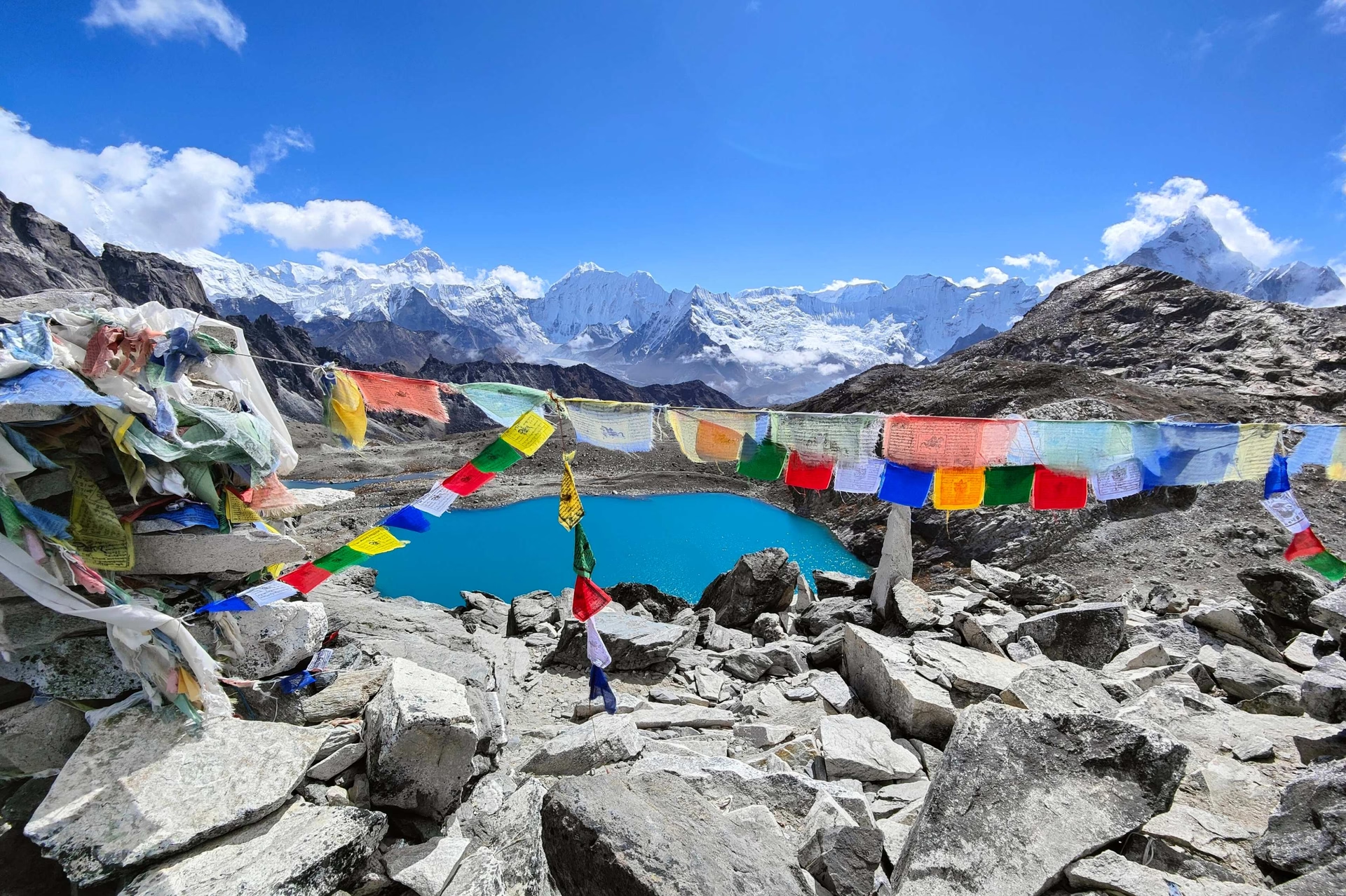 5.00 / 03
Everest Three Passes Trek
- 19 Nights 20 Days
- Easy to Hard
$1,930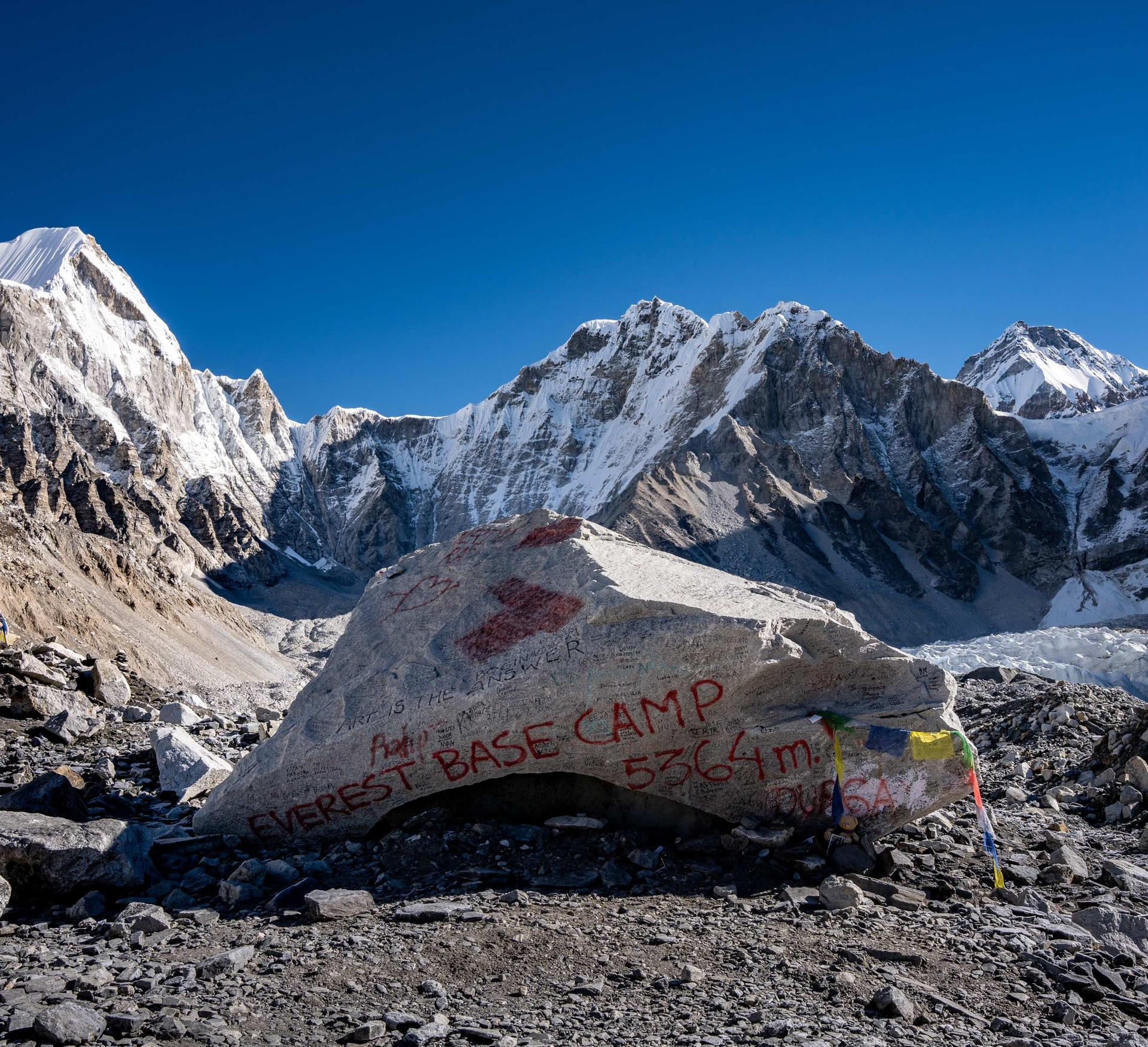 On Sale !5.00 / 24
Everest Base Camp Trekking
- 13 Nights 14 Days
- Easy to Hard
$1,499
Mera Peak Climbing
- 17 Nights 18 Days
- Easy to Hard
$2,349 5.00 / 01
EBC with Island Peak Climbing
- 16 Nights 17 Days
- Easy to Hard
$2,599
Inside Guide to Namche Bazaar
Everything you need to know about Namche Bazaar
Namche Bazaar: Complete Guide to the Gateway of Everest
Namche Bazaar is one of the most fascinating settlements in Nepal's Everest region. Perched high in the Khumbu at around 3,440 meters above sea level, this horseshoe-shaped mountain town is much more than a convenient overnight stop on the way to Everest Base Camp.
For generations, Namche served as an important trading center connecting the Sherpa communities of Khumbu with Tibet. Today, it has evolved into the commercial and tourism heart of the Everest region, filled with mountain lodges, bakeries, cafés, trekking shops, restaurants, banks, monasteries, museums, and traditional Sherpa homes.
Almost every major trekking route in the Khumbu passes through Namche Bazaar. Whether you are trekking to Everest Base Camp, exploring the Gokyo Lakes, attempting the Three High Passes, or simply hiking to the famous Everest viewpoints above the town, Namche becomes an important part of the journey.
It is also one of the most important acclimatization stops in the Everest region. Most trekkers spend at least two nights here before continuing to higher elevations, using the extra day to walk toward Syangboche, Everest View Hotel, Khumjung, or Khunde.
However, Namche deserves to be understood as more than an acclimatization stop.
It is a living Sherpa town with centuries of history, a fascinating transition from Himalayan trade to international tourism, and a culture deeply connected to the mountains surrounding it.
Namche Bazaar Quick Facts
Feature | Information |
Location | Khumbu, Solukhumbu District, Koshi Province, Nepal |
Elevation | Around 3,440 m (11,286 ft), with parts of the town extending higher up the hillside |
Administrative status | Ward 5 of Khumbu Pasanglhamu Rural Municipality |
National Park | Sagarmatha National Park, a UNESCO World Heritage Site |
Main ethnic community | Sherpa |
Population | Around 1,600–1,700 based on records |
Major economy | Tourism, trekking services and trade |
Famous for | Everest trekking, Sherpa culture, acclimatization and mountain views |
Weekly market | Saturday |
Major viewpoint | Everest View Hotel, 3,880 m |
Nearby settlements | Khumjung, Khunde, Syangboche and Thame |
Nearest airport | Tenzing–Hillary Airport, Lukla |
Where is Namche Bazaar?
Namche Bazaar lies in the Khumbu region of Solukhumbu District in northeastern Nepal, inside the boundaries of Sagarmatha National Park.
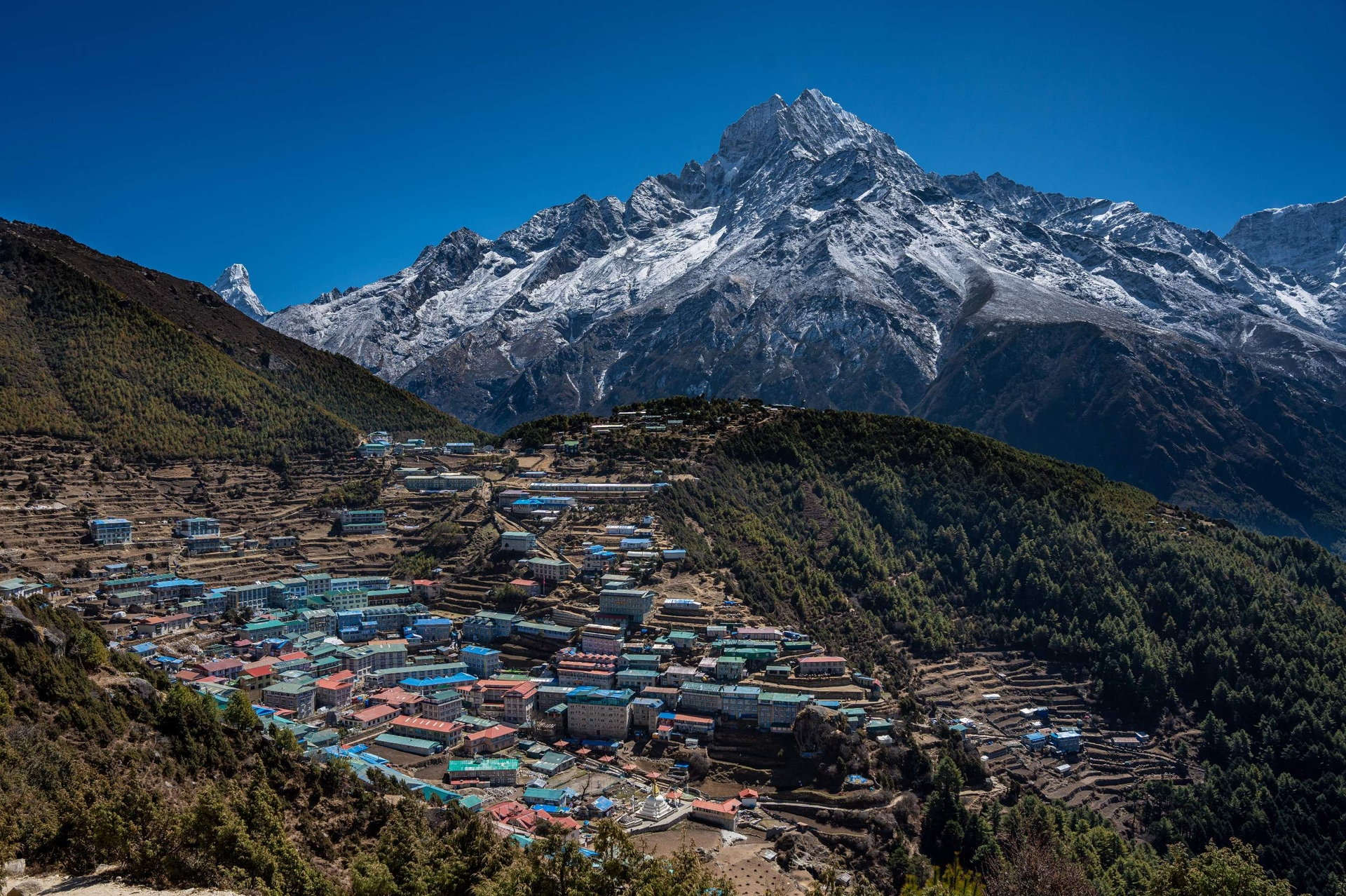
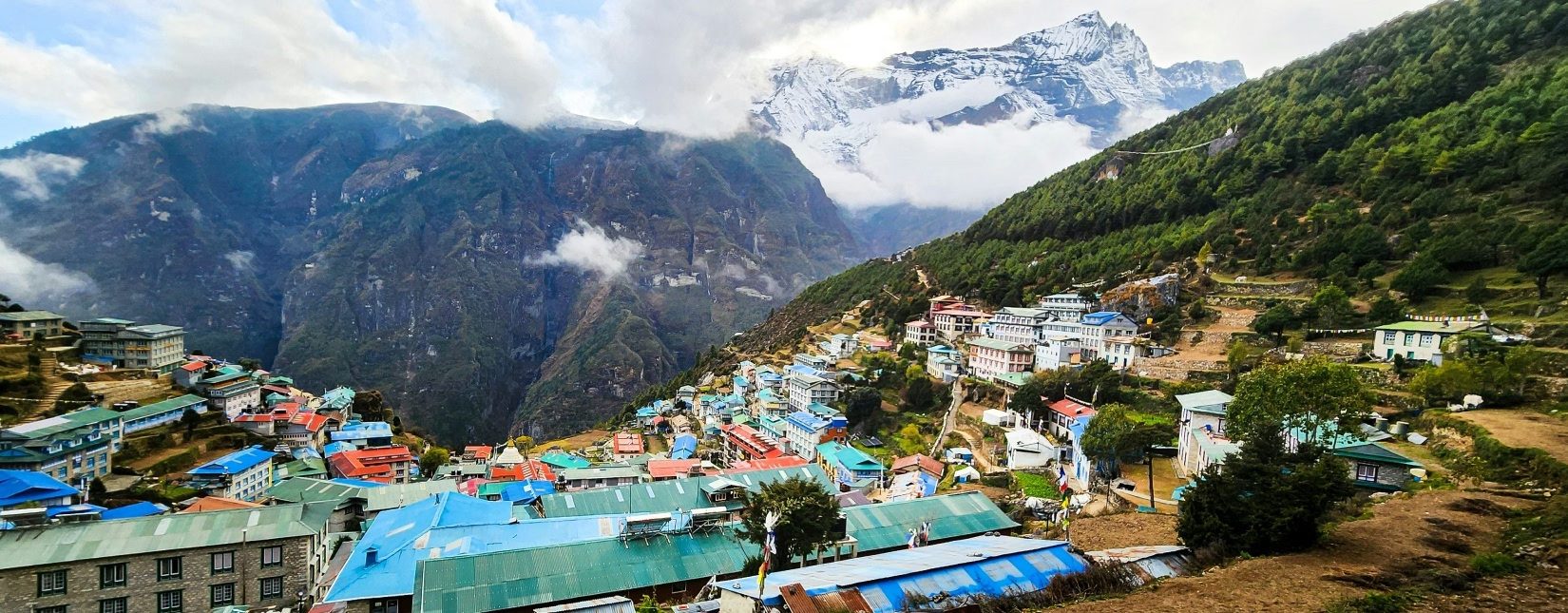
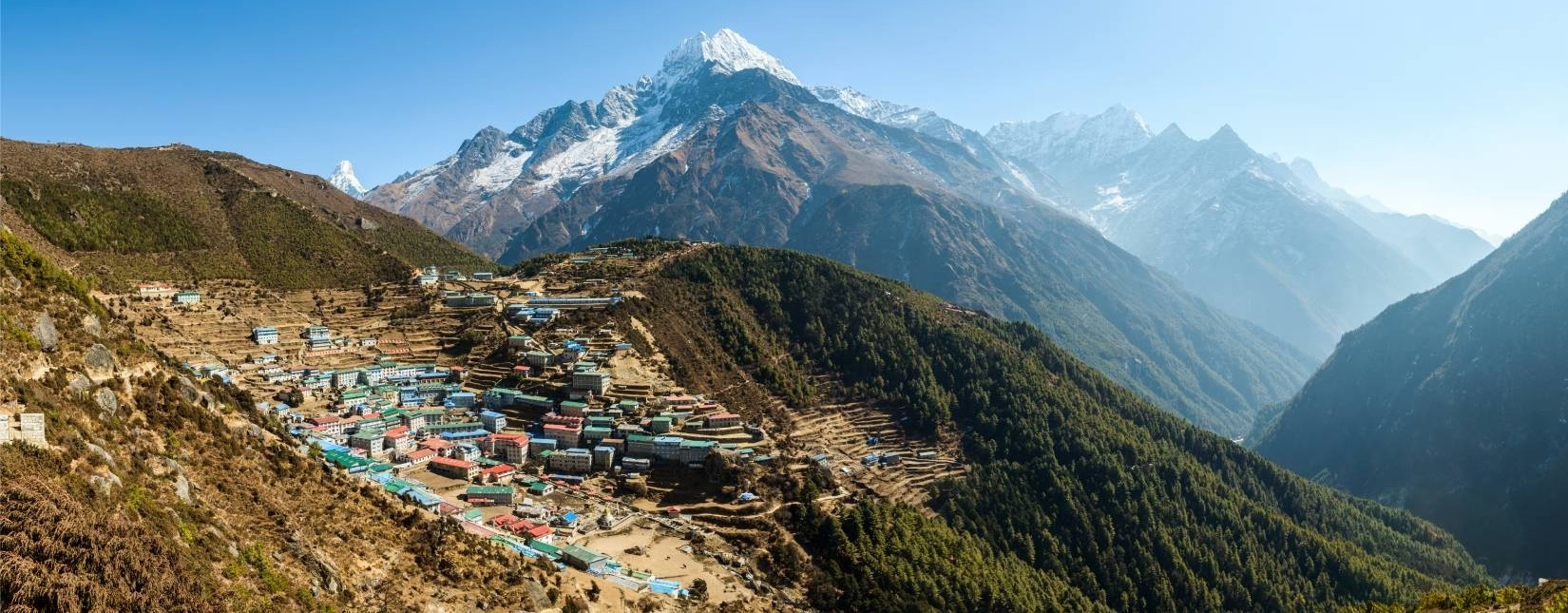
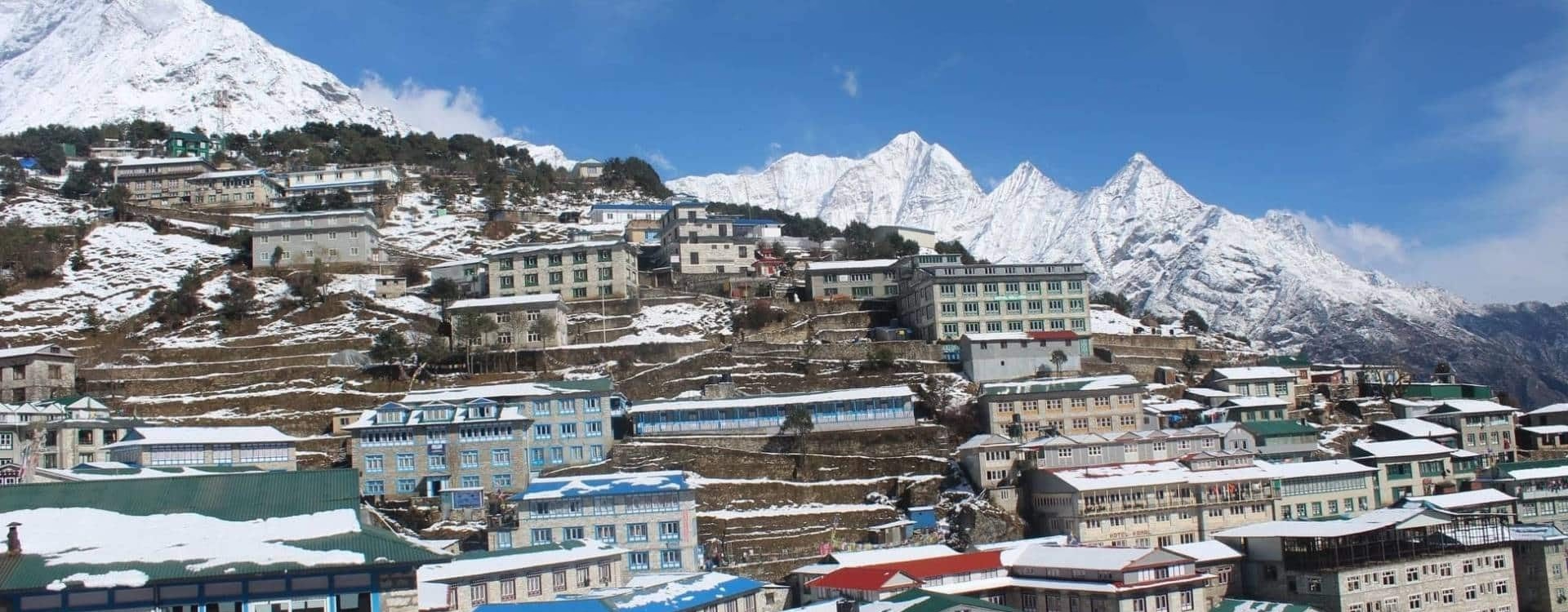
The town sits on the main route leading toward Mount Everest and occupies a natural amphitheater carved into the mountainside. Houses, hotels, cafés, monasteries, and shops rise in terraces around this curved slope, creating the distinctive horseshoe-shaped appearance for which Namche is instantly recognizable.
Kongde Ri rises dramatically to the west of the town, while Thamserku dominates the eastern skyline.
Namche also sits close to the meeting point of the Bhote Koshi and Dudh Koshi river systems, placing it at a natural crossroads between several important valleys of the Khumbu.
This location has been important for centuries.
To the north, trails lead toward Thame and onward toward the historic Nangpa La trade route connecting Nepal with Tibet.
To the northeast, the main trekking trail continues toward Tengboche, Dingboche, Lobuche, Everest Base Camp, and the upper Khumbu.
Other trails connect Namche with Syangboche, Khumjung, Khunde, and eventually the routes toward the Gokyo Valley.
Because of this geography, almost every trekker visiting the main destinations of the Everest region passes through Namche Bazaar at some stage of the journey.
Geography and Landscape of Namche Bazaar
The geography of Namche is one of the reasons the settlement is so memorable.
Rather than sitting on a large piece of flat land, the town has grown vertically along a steep mountain slope.
Buildings climb upward in a series of terraces, almost like seats in a natural stadium. From the upper parts of Namche, you can look across the entire settlement and see its stone houses, colorful roofs, surrounding forests, and mountains rising behind them.
This unusual design is closely connected to the mountain environment.
Flat land is extremely limited in the Khumbu, so communities historically had to make efficient use of the available slopes. Building into the hillside also offered some protection from the wind while allowing residents to use the small areas of flatter land for other purposes.
Namche also sits at an important ecological transition.
The lower trekking route from Lukla passes through greener forests, river valleys, farming settlements, and cultivated land. As trekkers climb toward and above Namche, the environment gradually becomes colder, drier, and more exposed.
Forests become thinner, vegetation becomes lower, and the landscape slowly transforms into the high Himalayan environment associated with the upper Everest region.
That transition is also important from an acclimatization perspective.
At approximately 3,440 meters, Namche is high enough for trekkers to begin adapting seriously to altitude, yet low enough to make it an ideal place to spend an additional night before ascending farther.
Why Is Namche Bazaar So Important?
Namche Bazaar is important because it performs several roles at once.
It is a historic trading town, a center of Sherpa culture, the commercial heart of the Khumbu, an important mountaineering settlement, a trekking hub, and one of the most significant acclimatization stops on the route to Everest Base Camp.
Historical Importance
Long before international trekkers began arriving in the Khumbu, Namche was connected to trade between Nepal and Tibet.
Sherpa traders moved across high Himalayan routes, particularly toward the Nangpa La area, transporting goods such as salt, wool, grain, and livestock products.
This trade helped Namche develop into one of the most commercially important settlements in the region.
Importance to Modern Tourism
Tourism has largely replaced cross-border trading as the town's dominant source of income.
Hotels, lodges, restaurants, trekking shops, cafés, guiding businesses, and other tourism services now form a major part of Namche's economy.
Nevertheless, traditional trade has not disappeared completely. The Saturday market remains an important reminder of Namche's older commercial identity.
Importance for Trekkers
Namche is one of the last places before the higher Khumbu where travelers can find a relatively wide selection of services.
Trekkers can purchase trekking equipment, withdraw money, use the internet, buy food and snacks, visit cafés and bakeries, replace forgotten equipment, seek basic medical assistance, and enjoy comparatively comfortable accommodation.
Most importantly, it is where trekkers generally spend an extra day allowing their bodies to adjust to altitude.
History of Namche Bazaar
Namche's history stretches far beyond the development of trekking tourism.
Sherpa communities have lived in the Khumbu region for centuries, developing livelihoods based around high-altitude agriculture, livestock, yak herding, and trade.
Namche gradually became one of the most important settlements in this network because of its location along the routes connecting the Khumbu with Tibet.
For generations, caravans crossed high Himalayan passes carrying salt, wool, grain, and other goods.
The character of Namche began changing significantly during the twentieth century.
Nepal opened increasingly to international visitors during the 1950s, and the successful ascent of Mount Everest by Tenzing Norgay Sherpa and Sir Edmund Hillary in 1953 brought unprecedented international attention to the Khumbu.
Suddenly, the region was no longer known only to local traders, pilgrims, mountaineers, and explorers.
Trekkers and climbing expeditions began arriving in increasing numbers.
Important Milestones in Namche's Tourism History
1953 – First successful ascent of Everest
Tenzing Norgay Sherpa and Edmund Hillary reached the summit of Mount Everest, drawing enormous international interest toward Everest and the communities surrounding it.
1960s and 1970s – Early tourism development
The first shops and services specifically catering to trekkers and expedition members began appearing in Namche.
1971 – Hotel Everest View
Hotel Everest View opened on the ridge above Namche at approximately 3,880 meters. Its construction at such an altitude was an extraordinary undertaking, and the hotel later became one of the most famous landmarks above Namche.
1976 – Sagarmatha National Park
The establishment of Sagarmatha National Park formally strengthened conservation efforts across the Everest region and helped shape the future development of tourism.
Following decades
Hotels, teahouses, bakeries, trekking shops, restaurants, communication services, and banks gradually appeared throughout Namche.
The town developed into the administrative and commercial center of the modern Khumbu region.
Today, Namche presents an interesting combination of both worlds.
Its economy has transformed dramatically, but its traditional market, monasteries, Sherpa community, and relationship with the surrounding mountains continue to connect the town with its past.
The Sherpa People of Namche Bazaar
To understand Namche Bazaar properly, it is necessary to understand the Sherpa community.
Who Are the Sherpa?
A common misconception among international visitors is that the word "Sherpa" simply means mountain guide or high-altitude porter.
It does not.
Sherpa is an ethnic and cultural identity.
The Sherpa people have lived in the Himalayan region for generations and are particularly associated with the Khumbu and surrounding parts of northeastern Nepal.
The word became internationally associated with mountaineering because Sherpa climbers, guides, porters, and expedition workers became central to the history of Himalayan exploration.
However, Sherpa identity existed long before organized mountaineering.
Origins and Settlement in Khumbu
Sherpa communities trace their origins to migration from the Tibetan plateau into the Himalayan regions of Nepal several centuries ago.
Over generations, Sherpa settlements developed throughout the Khumbu.
Living at high altitude required communities to adapt to a difficult environment where farming opportunities were limited.
Traditional livelihoods therefore developed around a combination of high-altitude agriculture, yak and livestock herding, seasonal movement, and trade with Tibet.
Namche grew into one of the most commercially important settlements because of its position along historic trading routes.
Religion, Language and Community Life
Tibetan Buddhism plays an important role in Sherpa culture.
Visitors walking around Namche and the surrounding villages regularly encounter signs of Buddhist religious traditions.
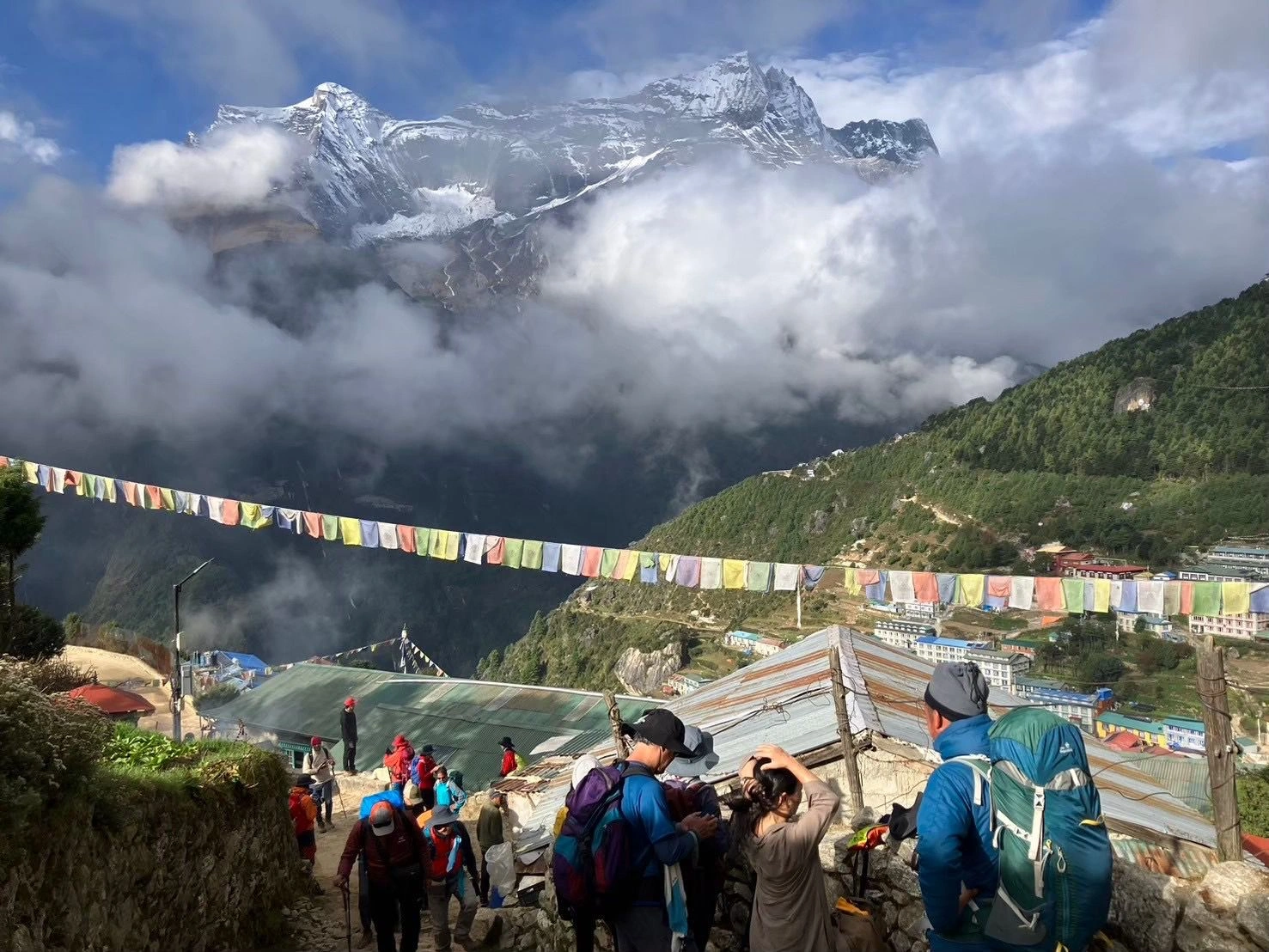
These include prayer flags, prayer wheels, mani stones, monasteries, chortens, sacred images, and household prayer spaces.
These should be treated as cultural and religious objects rather than simply photographic decorations.
The Sherpa language is related to Tibetan and continues to be spoken within the community, alongside Nepali and increasingly English in tourism-related settings.
Historically, community life revolved around agriculture, livestock, trade, family responsibilities, and monasteries.
Traditional Sherpa Houses
Traditional Sherpa architecture developed in response to the climate and practical needs of mountain life.
Stone and timber were commonly used in construction.
A traditional household could contain living and cooking areas, storage spaces, livestock areas, and a dedicated household shrine or prayer space.
Visitors interested in understanding traditional domestic life can visit the Sherpa Culture Museum in Namche, where elements of an older Sherpa household have been recreated.
Traditional Clothing
Traditional Sherpa clothing was designed for cold Himalayan conditions.
Heavy wool garments and Tibetan-influenced styles were historically common.
Today, modern outdoor clothing is widely used in everyday life, especially because of the influence of trekking and tourism.
Traditional clothing is more commonly seen during festivals, religious ceremonies, community events, and formal occasions.
Sherpa Food and Cuisine
Food around Namche reflects a mixture of Sherpa, Tibetan, Nepali, and modern trekking influences.
Traditional and commonly available foods include yak cheese, yak butter, Sherpa-style bread, Tibetan bread, thukpa, momo, dal bhat, Sherpa stew, butter tea, milk tea, and other warm mountain dishes.
Namche's tourism development has dramatically expanded the food available in town.
Today, visitors can eat traditional Himalayan meals in one restaurant and find pizza, pasta, pastries, or espresso coffee in another.
Sherpa Festivals
Sherpa communities celebrate several Buddhist festivals throughout the year.
Because many follow the Tibetan lunar calendar, festival dates can change annually.
Festivals combine religion, community gatherings, traditional clothing, food, music, dance, and monastery ceremonies.
Travelers interested in attending a particular festival should therefore confirm the dates for the specific year of their visit.
Traditional Trade and the Shift to Tourism
Before tourism became dominant, Sherpa families relied on a combination of farming, livestock, and trade.
The trans-Himalayan trading system allowed goods to move between Tibet, Khumbu, and the lower regions of Nepal.
Salt and wool moved south, while grains and other products moved toward the higher mountains.
As cross-border trade declined during the twentieth century, another economy expanded rapidly: tourism.
Trekking, mountaineering, lodges, guiding, and hospitality created new opportunities throughout Khumbu.
Within only a few decades, Namche transformed from a primarily trading settlement into one of Nepal's most important mountain tourism centers.
Sherpas and Mountaineering
Sherpa involvement in mountaineering is internationally known, but their contribution extends far beyond carrying equipment.
Sherpa people work throughout the Everest tourism economy as climbing guides, expedition workers, high-altitude support staff, rescue workers, cooks, porters, lodge owners, restaurant owners, entrepreneurs, trekking-company founders, and community leaders.
Many of Namche's hotels, lodges, cafés, shops, and other tourism enterprises were developed by local Sherpa families.
Understanding that entrepreneurship is important because it presents a much more complete picture of Sherpa involvement in Everest tourism.
Famous Sherpa Mountaineers
Tenzing Norgay Sherpa remains one of the most famous mountaineers associated with Everest after reaching the summit with Edmund Hillary in 1953.
Pasang Lhamu Sherpa became the first Nepali woman to reach the summit of Everest in 1993.
The rural municipality that includes Namche, Khumbu Pasanglhamu Rural Municipality, bears her name.
Numerous other climbers from Sherpa communities throughout Khumbu have achieved important records in Himalayan mountaineering.
Their individual stories deserve much more space than can reasonably be included in a general Namche guide.
Sherpa Hospitality
Hospitality is deeply visible in the teahouse culture of the Khumbu.
For trekkers, interaction with Sherpa families often happens over meals, inside lodge dining rooms, during village walks, and while learning about local customs.
Rather than reducing Sherpa hospitality to a tourism slogan, it is better understood as part of the community-centered culture that has developed in Khumbu over generations.
Best Viewpoints in Namche Bazaar
One of the main reasons trekkers enjoy spending an additional day in Namche is the number of excellent viewpoints within walking distance.
Some can be reached in minutes, while others require several hours of climbing.
Everest View Hotel – 3,880 m
Hotel Everest View is the best-known viewpoint above Namche.
The trail climbs approximately 440 meters from Namche and usually forms part of the classic acclimatization hike.
The climb can feel demanding because of the altitude, but that is also what makes the walk useful for acclimatization.
The idea is to gain elevation during the day and then return to the lower altitude of Namche to sleep.
From the Hotel Everest View area, trekkers can see a spectacular Himalayan panorama that may include Mount Everest, Lhotse, Nuptse, Ama Dablam, Thamserku, and several surrounding peaks.
Clear mornings generally offer the best chance of unobstructed views because cloud can build later in the day.
Syangboche – Around 3,750–3,780 m
Syangboche sits on elevated terrain above Namche and can generally be reached in around an hour.
The area is known for its old airstrip and wide mountain panoramas.
It also lies directly along the route toward Hotel Everest View.
From Syangboche, trekkers can enjoy elevated views over Namche and the surrounding valleys, making it a good option for anyone who wants a shorter acclimatization walk.
Upper Namche Viewpoints
You do not have to hike all the way to Syangboche or Everest View Hotel to enjoy good views.
Several short paths above the main town provide impressive perspectives over the horseshoe-shaped settlement.
These are particularly useful for photographers, trekkers with limited time, travelers feeling tired after arriving from Phakding, and people who simply want a gentle afternoon walk.
Khumjung – Around 3,780–3,790 m
Khumjung combines scenery with Sherpa village life.
The walk from the Namche area generally takes around an hour depending on the chosen trail.
The village is known for several important cultural sites, including Khumjung Monastery and the Hillary School.
Khumjung Monastery is also associated with a famous relic traditionally claimed to be a yeti scalp.
Whether visitors believe the legend or not, it has become one of the unusual cultural stories associated with the village.
Khunde – Around 3,840 m
Khunde lies close to Khumjung and provides a quieter experience than Namche.
The village is also home to Khunde Hospital, established with support associated with Sir Edmund Hillary's work in the region.
Khumjung and Khunde are sometimes referred to together as part of the "Green Valley," recognizable for the green-roofed buildings found throughout the settlements.
Namche Viewpoint Comparison
Viewpoint | Approx. altitude | Approx. walking time | Main attraction | Difficulty |
Upper Namche viewpoint | 3,500 m+ | 20–30 min | Town and mountain views | Easy |
Syangboche | 3,750–3,780 m | Around 1-1.5 hrs | Panorama and old airstrip | Moderate |
Everest View Hotel | 3,880 m | Around 2–3 hrs one way | Everest panorama | Moderate |
Khumjung | 3,780–3,790 m | 1-1.5 hrs | Sherpa village, monastery and school | Easy–Moderate |
Khunde | Around 3,840 m | Around 2-3 hrs | Village and hospital | Moderate |
What Mountains Can You See From Namche Bazaar?
The mountains visible around Namche depend heavily on your exact location and the weather.
Possible peaks include Mount Everest, Lhotse, Nuptse, Ama Dablam, Thamserku, Kongde Ri, Khumbila, Kangtega, Taboche, and Cholatse.
One thing visitors are often surprised to discover is that Everest itself does not dominate the skyline directly from every part of Namche.
From many points in town, only part of Everest or its summit pyramid can be seen.
This makes higher viewpoints such as Syangboche and Hotel Everest View particularly rewarding.
Things to Do in Namche Bazaar
There is much more to do in Namche than simply rest.
During an acclimatization day, you can:
Hike to Hotel Everest View
Explore Syangboche
Visit the Sherpa Culture Museum
Visit the Sagarmatha National Park Visitor Centre
Walk around the main bazaar
Browse trekking and souvenir shops
Visit Namche Monastery
Walk to Khumjung
Visit the Hillary School
Explore Khunde
Visit local cafés and bakeries
Try Sherpa food
Photograph Namche from the upper viewpoints
Experience the Saturday market
Learn about Sherpa mountaineering history
Namche Bazaar Saturday Market
The Saturday market is one of Namche's most important traditions.
Unlike the cafés, trekking shops, and tourism businesses that developed more recently, the market reflects Namche's much older role as a trading settlement.
Historically, traders from surrounding regions and Tibet brought goods into Namche.
Today, merchants and residents continue to gather on Saturday mornings to buy and sell products.
Visitors may see vegetables, food, household goods, clothing, local products, and other necessities.
Many everyday products have to be brought from lower elevations because agriculture at Namche's altitude is limited.
For travelers, the market provides a glimpse into ordinary commercial life beyond trekking tourism.
Museums and Monasteries in Namche
Namche contains several worthwhile cultural attractions.
Sherpa Culture Museum
The Sherpa Culture Museum provides an introduction to traditional Sherpa domestic life.
Displays recreate elements of a traditional house, including living areas, household prayer spaces, storage, and livestock areas.
It is particularly interesting because modern Namche has changed dramatically through tourism.
Sagarmatha National Park Visitor Centre
The visitor center introduces travelers to the ecology, wildlife, conservation history, and mountaineering heritage of Sagarmatha National Park.
It can be a useful stop during an acclimatization day, particularly for anyone interested in understanding the environment they are trekking through.
Namche Monastery
Namche's monastery, sometimes referred to as Khang Bhum, remains an active religious site.
Travelers should approach monasteries respectfully, follow local rules regarding photography, and avoid disturbing religious activities.
How to Reach Namche Bazaar
Namche has no road connection from Kathmandu.
The most common route combines a flight to Lukla with approximately two days of trekking.
Lukla to Namche Bazaar
A standard approach is:
Lukla → Phakding → Monjo → Jorsale → Namche Bazaar
Day 1: Lukla to Phakding
The first day generally covers around 8 kilometers and takes approximately three hours.
The trail mostly descends gradually from Lukla while following the Dudh Koshi valley.
Day 2: Phakding to Namche Bazaar
The second day is considerably more demanding.
Trekkers travel approximately 10–12 kilometers, generally requiring around five to seven hours.
The route passes through settlements including Benkar, Monjo, and Jorsale.
After crossing several suspension bridges, the trail begins the long ascent toward Namche.
The final climb is usually the hardest part of the journey from Lukla.
Alternative Routes to Namche Bazaar
Before flights to Lukla became the standard approach, trekkers commonly approached Everest through Jiri and other lower Solukhumbu settlements.
These routes still exist.
Jiri or Shivalaya
The classic route involves several additional trekking days before reaching the main Khumbu trail. Currently Road system is also in the development process which has not completed yet.
It provides a much longer Everest approach but allows altitude to increase gradually.
Salleri and Lower Solukhumbu
Alternative routes through Salleri and neighboring areas are also possible.
These take considerably longer than flying directly to Lukla.
Namche Bazaar on the Everest Base Camp Trek
Namche is one of the most important stops on a standard Everest Base Camp itinerary.
Most trekkers follow a schedule similar to:
Day 1: Lukla to Phakding
Day 2: Phakding to Namche
Day 3: Acclimatization in Namche
Day 4: Continue toward Tengboche
The extra day can include an Everest View Hotel hike, Syangboche, or the Khumjung–Khunde circuit.
Namche is also the place where many trekkers make their final major preparations.
You can purchase forgotten gear, withdraw additional cash if ATMs are functioning, enjoy more varied food, charge electronics, use the internet, and prepare for the higher and less developed settlements ahead.
Distances and Walking Times From Namche Bazaar
Destination | Approx. distance | Approx. walking time |
Syangboche | 1–2 km | Around 1 hr |
Everest View Hotel | Around 3 km one way | 2–3 hrs one way |
Khumjung | Around 3 km | 45 min–1 hr |
Khunde | Around 3–4 km | Around 2 hrs |
Tengboche | Around 10–11 km | 5–6 hrs |
Thame | Around 9.7 km one way | 3–4 hrs |
Lukla | Around 19–20 km | 7–9 hrs descending |
Gokyo | Multi-day route | Around 3 trekking days |
Walking times vary significantly depending on fitness, acclimatization, weather, trail conditions, and how often you stop.
They should therefore be treated as planning estimates rather than guaranteed timings.
How Many Nights Should You Spend in Namche?
One Night
Although possible on unusually fast itineraries, spending only one night provides little time for proper acclimatization.
Two Nights
Two nights is the standard choice for most Everest Base Camp trekkers.
This provides one complete acclimatization day between arrival and departure.
Three Nights or More
Additional nights can be useful on longer routes such as Gokyo or the Three High Passes.
They can also allow more time for Khumjung, Khunde, Thame, viewpoints, cultural exploration, weather delays, and slower acclimatization.
Acclimatization in Namche Bazaar
Namche is the first major acclimatization point for most trekkers entering the Everest region from Lukla.
The commonly used principle is:
Climb high, sleep low.
Instead of remaining inside the lodge all day, trekkers commonly walk to a higher elevation and return to Namche for the night.
Popular acclimatization hikes include:
Everest View Hotel
Syangboche
Khumjung
Khunde
The purpose is not simply sightseeing.
These walks introduce the body gradually to higher elevations before trekkers continue farther into the Khumbu.
Hotels and Lodges in Namche Bazaar
Namche has one of the largest selections of accommodation anywhere on the Everest trekking route.
Options range from simple family-run teahouses to comfortable lodges and higher-end mountain properties.
Named accommodations include:
Hotel Sherwi Khangba
Panorama Lodge
Hotel Sheryang
Namche Terrace
Mountain Lodges of Nepal
Numerous local teahouses
Charging and Heating
Electricity is generally available, but charging devices can sometimes involve a fee. Many lodges heat the central dining room rather than individual bedrooms.
Wi-Fi
Most larger lodges offer Wi-Fi, although speed and reliability should not be compared with city internet.
Bathrooms and Hot Showers
Accommodation ranges from basic rooms with shared toilets to properties offering attached bathrooms. Hot showers are available at many properties, although there may be an additional charge.
Seasonal Availability
Some smaller businesses may reduce services or close temporarily during quieter winter or monsoon periods.
Restaurants in Namche Bazaar
Namche offers one of the widest selections of food in the Everest region.
Traditional options include dal bhat, momo, thukpa, Sherpa stew, noodles, soups, Tibetan bread, and other Himalayan dishes.
Because Namche has catered to international trekkers for decades, restaurants also serve pizza, pasta, sandwiches, burgers, fried rice, breakfasts, bakery items, and other international comfort foods.
Namche also has pubs and bars where trekkers often gather before or after their journeys into the higher mountains.
Cafés and Bakeries in Namche Bazaar
Finding a proper coffee shop at 3,440 meters can surprise first-time visitors.
Namche has developed a noticeable café culture.
Fresh bread, pastries, cakes, coffee, hot chocolate, and desserts are widely available compared with the simpler food options found higher on the trail.
Current examples include businesses such as Sherpa Barista Bakery & Coffee Shop, HighCamp Cafe, Stupa Cafe, and Yakbuck.
Because businesses can change ownership, names, operating seasons, and opening hours, specific recommendations should always be rechecked before publication or travel.
Shops and Trekking Gear in Namche
Namche is the best place above Lukla for replacing forgotten trekking equipment.
Shops sell items such as trekking poles, gloves, hats, socks, jackets, batteries, chargers, toiletries, snacks, basic first-aid supplies, trekking accessories, souvenirs, handicrafts, and other necessities.
Some items may also be available for rent.
Prices are generally higher than Kathmandu because almost everything has to be transported into the region.
For this reason, trekkers should ideally purchase important equipment before leaving Kathmandu and use Namche primarily for last-minute necessities.
ATMs and Banking in Namche Bazaar
Namche is one of the final places on the Everest route where banking facilities and ATMs can normally be found.
Banking and ATM services have been associated with institutions including Siddhartha Bank, Nabil Bank, Kumari Bank, and other providers.
Nevertheless, trekkers should never depend entirely on Namche's ATMs.
Possible problems include cash shortages, network failure, power interruptions, card compatibility problems, and limited banking hours.
The safest approach is to carry sufficient Nepalese rupees before leaving Kathmandu.
Internet, Mobile Network and Electricity ;
Namche is relatively well connected for a settlement at this altitude.
Many cafés, restaurants, hotels, and lodges offer Wi-Fi.
Mobile signals from major Nepali providers may also be available around Namche, although coverage and speed can vary.
Electricity is available, and charging phones, cameras, watches, and power banks is generally possible.
However, trekkers should remember that conditions become more limited as they travel farther above Namche.
Carrying a power bank can therefore be extremely useful.
Medical Facilities in Namche
Basic medical services are available in and around Namche.
The nearby Khunde Hospital also serves communities throughout the surrounding region.
For trekkers, altitude is one of the most important health considerations at this stage of the journey.
Namche's medical facilities can provide assistance with some minor problems and early concerns, but travelers should not assume that advanced emergency treatment is available locally.
Serious emergencies may require descent or evacuation to a better-equipped medical facility.
Weather and Climate in Namche Bazaar
Weather in Namche varies dramatically by season.
Because of the elevation, mornings and evenings can remain cold even during otherwise pleasant trekking months.
Spring – March to May
Spring is one of the most popular trekking periods.
Daytime conditions are generally milder, while rhododendrons and other vegetation add color to sections of the surrounding trail.
Clear mornings can provide excellent mountain views.
Monsoon – June to August
The summer monsoon brings more clouds and rain.
Mountain visibility becomes less predictable, and trails are quieter.
Afternoon clouds can frequently obscure viewpoints.
Autumn – September to November
Autumn is another major trekking season.
Conditions are often stable, and clear mountain views make this one of the most popular periods for visiting the Khumbu.
October and November are particularly busy trekking months.
Winter – December to February
Winter is cold but often dry.
Daytime sunshine can still be comfortable while nighttime temperatures fall well below freezing.
Trails are quieter, and clear winter skies can provide spectacular mountain views.
Some smaller tourism businesses may reduce operations during the coldest period.
Costs and Prices in Namche Bazaar ;
Namche is more expensive than Kathmandu.
The reason is simple: supplying a mountain settlement at 3,440 meters is difficult.
Food, fuel, construction materials, equipment, and consumer goods must be transported into the Khumbu.
As a result, trekkers should expect to pay more for food, accommodation, bottled or treated water, hot showers, Wi-Fi, charging, coffee, bakery items, and trekking equipment.
Prices also generally rise as trekkers continue farther above Namche.
Rather than relying on exact prices published months or years beforehand, travelers should understand this general pattern and budget accordingly.
Safety in Namche Bazaar
Namche itself is not technically difficult to explore, but altitude deserves respect.
Trekkers should follow the acclimatization schedule provided in their itinerary and pay attention to how they feel.
The purpose of spending additional time in Namche is to avoid ascending too quickly.
Weather is another consideration.
Conditions in the mountains can change rapidly, so suitable clothing should always be carried even during a short viewpoint hike.
Following your guide's advice, drinking enough water, walking at a comfortable pace, and avoiding unnecessary rushing are sensible practices throughout the trek.
What to Pack for Namche Bazaar
Namche does not require completely different equipment from the rest of an Everest trek, but several items are particularly useful.
Bring:
Warm layers
A waterproof outer layer
Sun protection
Gloves
Trekking shoes
Nepalese cash
A power bank
Charging cables
Water bottles
Personal medications
Downloaded copies of important travel information
Even when the daytime weather feels warm, temperatures can fall quickly after sunset.
Where you’ll go
Customize Your Trip
Prefer a tailored itinerary? Let us build the journey of your dreams.