Elevate your Everest experience with a premium EBC Super Luxury Trek, blending the thrill of high-altitude adventure with the comfort of upscale lodges, gourmet dinings, exceptional hospitality, and a scenic helicopter return along the classic EBC trail.
DestinationNepal
Duration11 days
Trip DifficultyModerate
ActivitiesTrek
Max. Elevation5545m.
Group Size2-15
VehicleCar & Flight
MealsB.L.D
Nowadays, the Kathmandu to Lukla flight is often diverted to the Ramechhap/Manthali airport, especially during the peak months of March, April, May, October, and November.
Thus, if you're planning a trip during these months, we will have to drive 4-5 hours from Kathmandu to the Manthali Airport in the Ramechhap district to board the flight to Lukla.During the remaining months (including January, February, June, July, August, September, and December) you will have a normal flight from Kathmandu to Lukla.
Please be aware that Lukla flight decisions solely depend on the airlines and the Civil Aviation Authority in Nepal. Further, weather complications, natural calamities, and airport traffic congestion are some reasons for the delay or cancellation of flights.
Thus, in such cases, you have two options: either take a helicopter ride from Kathmandu or increase the itinerary time frame. The emergency fund we mentioned above comes in handy in such situations. We do not cover the helicopter ride or extra days. We hope the weather is good every day. But if the situation persists and you have no option for either a helicopter ride or extra days, then our team will work with you to arrange alternate plans.
Overview of the Everest Super Luxury Trek
The Everest Super Luxury Trek is not just a journey to the base of the world’s highest mountain. It is an unforgettable experience where your Himalayan adventure meets indulgence. During this trek, you will traverse the legendary trails of the Khumbu, walking across timeless Sherpa villages, serene forests and glacial valleys. Your iconic adventure in the eastern Himalayas will be supported by the comfort of our handpicked luxury lodges, where you can enjoy premium services that come along with the Himalayan hospitality.
Each step of the trek is perfectly balanced between exploration and comfort, no matter which section of the trail you are on. During the day, you will walk on the classic trekking route toward Everest, discovering authentic villages, suspension bridges and breathtaking viewpoints. And, in the evenings, you will rest in luxury lodges with heated rooms, fine dining and attentive services. And when the journey to Everest Base Camp is complete, you will enjoy the ultimate touch of convenience, a scenic helicopter flight back to Kathmandu.
This helicopter flight in the returning part offers a bird’s-eye view of the iconic Himalayan peaks, villages and landscapes that you have trekked through. What makes this trek truly remarkable is that it blends the raw thrill of standing at the foothills of the Himalayas with the support of luxury travel. The Luxury Everest Base Camp Trek With Helicopter Return is an elevated way to explore the Khumbu. This journey is ideal for travelers who want to embrace the adventure of Everest without compromising on comfort, exclusivity or time.
Highlights of the Trek
Scenic flight to Lukla and thrilling heli ride back from Gorakshep that offers unbeatable aerial views of the Everest region
A unique combination of high-altitude trekking and luxury, with premium lodges, curated dining and personalized services throughout the journey
Breathtaking panoramas of Mount Everest, Lhotse, Ama Dablam, Thamserku, Nuptse and other adjacent peaks
Opportunity to immerse in the rich Sherpa culture and hospitality, visiting monasteries, vibrant markets, and centuries-old villages
Trekking through diverse landscapes from lush forests, river and pastures to glacial valleys and alpine ridges
Exploring Tengboche Monastery, the spiritual heart of the Khumbu and other major monasteries in the region
Staying in some of the finest luxury lodges in the Everest region that offer the best services available
An unforgettable experience of hiking to Everest Base Camp (5,364 m) and standing at the foot of the world’s highest mountain
Morning hike to Kala Patthar (5,550 m) for the best sunrise views over Everest, Nuptse and the Khumbu Icefall
A perfect balance of adventure and luxury, designed for trekkers who want to experience the grandeur of Everest without compromising on comfort
Itinerary Outline
Day 01: Arrival in Kathmandu (1,400 m/4,593ft) and transfer to hotel
Day 02: Flight from Kathmandu to Lukla and trek to Phakding (2,610m/8,697ft): Distance 6.5 km, duration 3 to 4 hours
Day 03: Phakding to Namche Bazaar (3,440m/11,286ft) trek: Distance 8 to 9 km, duration 5 to 6 hours
Day 04: Rest and excursion day at Namche (3,440m/11,286ft)
Day 05: Trekking from Namche Bazaar to Deboche (3,820m/12,533ft): Distance 10km, duration 5 to 6 hours
Day 06: Deboche to Dingboche (4,410m/14,469ft): Distance 11km, duration 5 to 6 hours
Day 07: Acclimatization day at Dingboche
Day 08: Trek from Dingboche to Lobuche (4,910m/16,108ft): Distance 8.5km, duration 5 to 6 hours
Day 09: Lobuche to Everest Base Camp (5,364m/17,598ft) via Gorakshep (5,181m/16,994ft): Distance 11.5km, duration 8 to 9 hours
Day 10: Hike to Kala Patthar (5,545m/18,192ft) and helicopter flight back to Kathmandu (1,400m/4,593ft): Distance 3km hike, duration 2 to 3 hours
Day 11: Transfer to Tribhuvan Airport for international transfer
Accommodation in Kathmandu on a twin-sharing basis (3-star hotel or equivalent)
Teahouse/lodge accommodation during the trek
Daily breakfast in Kathmandu
All meals (breakfast, lunch, and dinner) during the trek
Domestic flight from Kathmandu to Lukla
Helicopter flight from Gorakshep/Kala Patthar back to Kathmandu
Experienced and licensed English-speaking trekking guide
Porters to carry luggage during the trek (one porter for two trekkers)
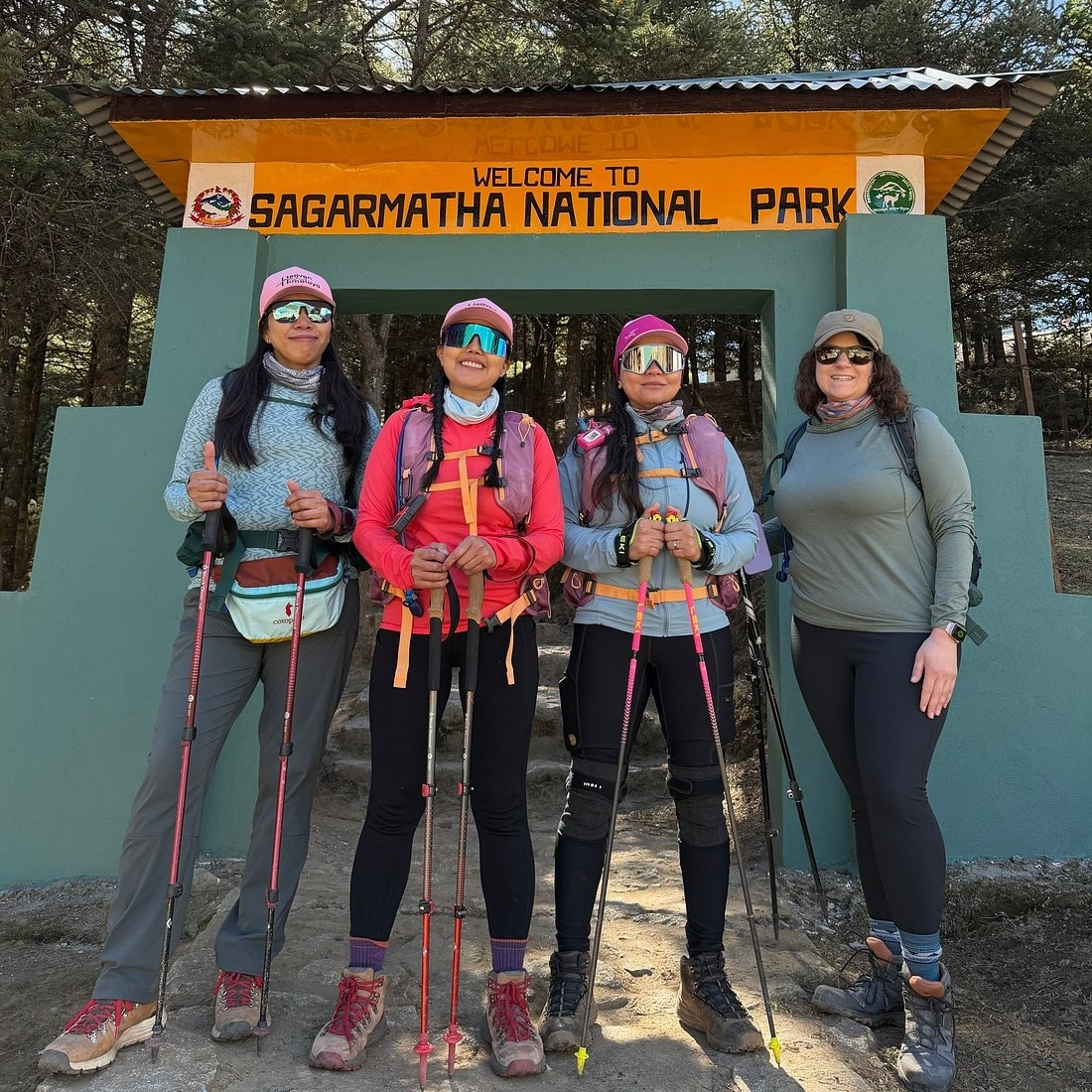
Sagarmatha National Park entry permit
Khumbu Pasang Lhamu Rural Municipality permit
Airport pick-up and drop-off services
First-aid kit carried by the guide
All government taxes and service charges
Exclusions
International flights
Nepal entry visa fees (USD 50 for a tourist visa, and it can be obtained at the airport in Kathmandu on arrival!)
Travel and medical insurance
Lunches and dinners in Kathmandu
Personal expenses (laundry, phone calls, Wi-Fi, battery charging, hot showers, tips, etc.)
Personal trekking equipment and gear
Extra night accommodation in Kathmandu in case of early arrival or delayed departure
Costs due to unforeseen circumstances (weather, flight delays, route changes, etc.)
Optional activities not mentioned in the itinerary
Dates & Availability
Note to Travelers
Our Everest Super Luxury Trek costs include all ground costs, fully personalized benefits, and a free porter. We are a local tour operator, so the quote you get is the best price, with no mid-commission fees.
Kindly note that the start dates are your dates of arrival in Nepal, and your end dates are the dates of your departure from Nepal. Select a date and add several people, and then proceed to make a reservation.
Besides, the trekking fees mentioned here cover your 11-day itinerary. An additional cost will be generated if you have extra days in Kathmandu or would like to add or subtract the number of trekking days.
No fixed group departures right now — run Everest Super Luxury Trekprivately with your own group. Pick a preferred start date and we'll confirm availability.
Loading calendar…
Sold out dates
Group-size discounts will be applied in the next step.
Select a start date from the calendar.
All prices per person, twin share. Subject to availability — Everest Super Luxury Trek dates fill quickly in peak season.
11 days Everest Super Luxury Trek Itinerary
Day 01 :Arrival in Kathmandu (1,400 m) and transfer to hotel
Elevation: 1,400m
Accommodation: Hotel
Meals: Breakfast Included
Your arrival in Kathmandu will mark the start of incredible Himalayan journey. Immediately after stepping out of the airport, the vibrant energy of the city will greet you, which is a mix of busy traffic, ancient temples at street corners and the scent of incense. From the airport, we will directly transfer you to your luxury hotel.
The rest of the day is kept simple. This day of your Everest Luxury Trek itinerary will help you get into the rhythm of this Himalayan country. After check-in, you will have time to rest from the flight. If you arrive earlier in the day, you can explore nearby areas or enjoy the hotel’s facilities. In the evening, your guide will meet you for a short briefing about the trek and answer any last questions. Overnight stay at a luxury hotel in Kathmandu.
Day 02 :Flight from Kathmandu to Lukla (2,860 m) and trek to Phakding (2,640 m): Distance 6.5 km, duration 3 to 4 hours
Elevation: 2,800m
Duration: 25 Mins
Accommodation: Hotel
Meals: Breakfast Included
This morning in your Everest Super Luxury Trek begins early with a short but unforgettable flight to Lukla. Leaving Kathmandu, the plane flies over green hills and valleys before opening up to the first sweeping views of Himalayan giants. The landing itself at Lukla Airport is a thrilling experience and soon you will step out in the cool, fresh mountain air of the Khumbu.
After taking a short break here, you will prepare for your journey ahead. From Lukla, the trail heads toward the northern side. The first section of the trekking route passes through Chheplung Village, which features mani walls, fluttering prayer flags and stone-built houses, giving your first taste of mountain culture. The path on this day’s journey is mostly downhill or on gentle terrain, so it will be seamless to ease into the trek.
As you continue walking further, you will cross Thado Koshi, where you can hear the sound of the river rushing below. Soon after, the trail crosses a suspension bridge and the path weaves along terraced fields and pine forests until you reach Ghat Village. From Ghat, it is just a short and easy walk to Phakding. This riverside settlement surrounded by frosted hills will be your resting stop for tonight.
Day 03 :Phakding to Namche Bazaar (3,440 m) trek: Distance 8 to 9 km, duration 5 to 6 hours
Elevation: 3,440m
Duration: 5-6 hrs
Accommodation: Guesthouse
Meals: Breakfast, Lunch, and Dinner Included
Today’s trekking journey will introduce you to the real rhythm of the Khumbu. Leaving Phakding Village, you will follow the trail alongside the Dudh Koshi River and wind through pine and rhododendron forests. You will first pass Toktok Village, where you can see small waterfalls and terraced farmland. From here, a short walk will lead you to Benkar Village, another quiet Sherpa village with stone houses. The path then continues to a small checkpoint settlement of Chumoa and beyond this village lies Monjo, the official entrance to Sagarmatha National Park.
Your permits will be checked here and as you step through the gate, you will enter one of the most iconic trekking regions in the world. The descending path from here will lead you to Jorsalle Village. This is the last village en route to Namche. This is where most trekkers stop for lunch, as the next section is the hardest climb of the day. After lunch, you will follow the path that crosses a series of suspension bridges, including the Hillary Suspension Bridge. From here, you will begin the long, steep ascent toward Namche. The climb zigzags through pine forests and from patches in between, you will catch glimpses of snow-capped peaks.
Slowly, the trail starts to open up and at the final turn, you will arrive at Namche Bazaar. This bustling Sherpa capital offers everything: bakeries, gear shops, markets and a lively atmosphere as trekkers heading toward different parts of Everest region gather here. Tonight, you will rest at one of the finest luxury lodge available in Namche.
Day 04 :Rest and excursion day at Namche
Elevation: 3,440m
Accommodation: Luxury Lodge
Meals: Breakfast, Lunch, and Dinner Included
By this day of your Everest Luxury Trek Itinerary, you have climbed to a major altitude point. So, you will take a pause here in this vibrant Sherpa capital before heading to the higher altitudes. For the acclimatization hike in the morning, you will head up towards the Hotel Everest View (3,880 m). This is one of the world’s highest-placed hotels. From the terrace of this hotel, you will be able to enjoy the stunning views of Everest, Lhotse, Ama Dablam, and Thamserku.
On the way, you pass through the small airstrip of Syangboche and the Sherpa village of Khumjung. This traditional Sherpa village houses Khumjung Monastery and the Hillary School, founded by Sir Edmund Hillary. It is believed that the monastery preserves ascap that belong to the abominable snowman Yeti. A short detour will bring you to Kunde Village, another Sherpa settlement with Hillary’s hospital.
By afternoon, you will return back to Namche. The rest of the day is yours, you can wander through the lively market, visit the Sherpa Museum, or relax back at your luxury lodge. This extra night here will help your body to adjust and also give you more time to soak in the Sherpa capital.
Day 05 :Trekking from Namche Bazaar to Deboche (3,820 m): Distance 10km, duration 5 to 6 hours
Elevation: 3,820m
Duration: 5-6 hrs
Accommodation: Luxury Lodge
Meals: Breakfast, Lunch, and Dinner Included
Leaving Namche behind, you will follow the trail that clings to the mountainside.Along the balcony path, you will be able to enjoy stunning vistas of Everest, Nuptse, Lhotse and the perfectly symmetrical Ama Dablam. After about two hours of walking, you will reach Kyangjuma Village. From here, the path descends through rhododendron and pine forests to Phunki Tenga. This is a riverside village where you will cross a wooden bridge and this is also a popular stop for lunch.
After taking a break here, you will continue walking on the steep but shaded path that winds through forests. Then, as you keep ascending further, the prayer flags that line the trail will mark your arrival at Tengboche. This village is also home to the famous Tengboche Monastery, the largest monastery in the Khumbu region. The setting here feels unreal, Ama Dablam rises sharply behind the monastery and monks chant and the sweet aroma of incense fills the mountain air.
After exploring the monastery, you will then descend slightly through a forested trail to Deboche. Unlike the busy Tengboche, Deboche is quieter, with lodges nestled among trees and a serene nunnery nearby. Tonight, you will stay in a luxury lodge surrounded by the sound of rustling pines and mountain serenity.
Day 06 :Deboche to Dingboche (4,410 m): Distance 11km, duration 5 to 6 hours
Elevation: 4,410m
Duration: 5-6 hrs
Accommodation: Luxury Lodge
Meals: Breakfast, Lunch, and Dinner Included
From Deboche, your Everest Super Luxury trekking trail continues through forests until you reach Pangboche Village, one of the oldest Sherpa villages in the region. There is also a 300-year-old Pangboche Monastery in the village that offers incredible views of Ama Dablam. As you walk past Pangboche, the trees start to thin out and the trail enters more alpine terrain.
You will then pass through Shomare Village, a small settlement where trekkers often stop for tea or snacks. Here, the trekking trail widens and offers you open views of the Imja Valley and the ridges leading toward Island Peak. Continuing upward, you walk past Orsho Village where paths split two ways. One of the paths leads to Pheriche Village and the other to Dingboche. You will take the Dingboche route and cross a small bridge over the Imja Khola to finally reach your destination.
Dingboche is a picturesque settlement surrounded by stone walls that have been built to protect barley and potato fields from cold winds and grazing yaks. This village feels more spacious than the tightly packed villages below and the views are simply breathtaking. Tonight, your luxury lodge in Dingboche provides you with warm comfort, hearty meals and breathtaking windows that open up to the vast alpine landscape.
Day 07 :Acclimatization day at Dingboche
Elevation: 4,410m
Accommodation: Luxury Lodge
Meals: Breakfast, Lunch, and Dinner Included
Today is another acclimatization day in your Everest Luxury Trek itinerary. Like the acclimatization in Namche, this day is also about active rest. Dingboche sits at 4,410 meters, so to adapt well in this high-altitude region, you will hike to higher ground. Nagarjun Hill (around 5,100 m) is a popular hiking destination on this day.
Although the path in this hiking trail is steep and rocky, as you gain height, the views of Makalu, Lhotse, Ama Dablam, Island Peak, and even Cho Oyu will enchant you. This hike takes a few hours and it is perfect for your lungs and legs to adjust to the new altitude. You will return back to Dingboche by midday. After arriving at the village, you can spend the rest of the day at a slower pace. You can walk through the village, admire the stone walls, surrounding small fields, or just sit outside your lodge watching yaks graze, accompanied by the stunning Himalayas in the backdrop.
Day 08 :Trek from Dingboche to Lobuche (4,910 m): Distance 8.5km, duration 5 to 6 hours
Elevation: 4,910m
Duration: 5-6 hrs
Accommodation: Luxury Lodge
Meals: Breakfast, Lunch, and Dinner Included
After leaving Dingboche, you will continue walking on the path that climbs gradually up the wide valley. Soon, you will arrive at Dughla Village, a small settlement at the basin of the Khumbu Glacier. Most trekkers stop here for tea or lunch before taking on the steep climb ahead. From Dughla, the trail ascends sharply to the Thukla Pass. It is a beautiful ridge that is marked with memorials to climbers who lost their lives on Everest.
After a short break, the trail switches into a rocky path and gradually follows the lateral moraine of the Khumbu Glacier. You continue walking along on the rugged mountain landscape until you reach Lobuche Village, your rest stop for the night. This is a small settlement of lodges that is set against the backdrop of Nuptse. Your stay here is in a luxury lodge that is designed for high-altitude comfort. The lodge will offer hearty food, insulated rooms and warm beds.
Day 09 :Lobuche to Everest Base Camp (5,364 m) via Gorakshep (5,164 m): Distance 11.5km, duration 8 to 9 hours
Elevation: 5,181m
Duration: 3-4 hrs
Accommodation: Luxury Lodge
Meals: Breakfast, Lunch, and Dinner Included
This is the grandest day of your Luxury Everest Base Camp Trek With Helicopter Return. The trail from Lobuche begins with a gradual climb along the Khumbu Glacier’s edge. The path then weaves through the rocky terrain and ice debris. After a couple of hours of trek, you will arrive at Gorakshep, which is the last settlement before Everest Base Camp. Before walking toward the base camp, you will check into your lodge here and drop your luggage.
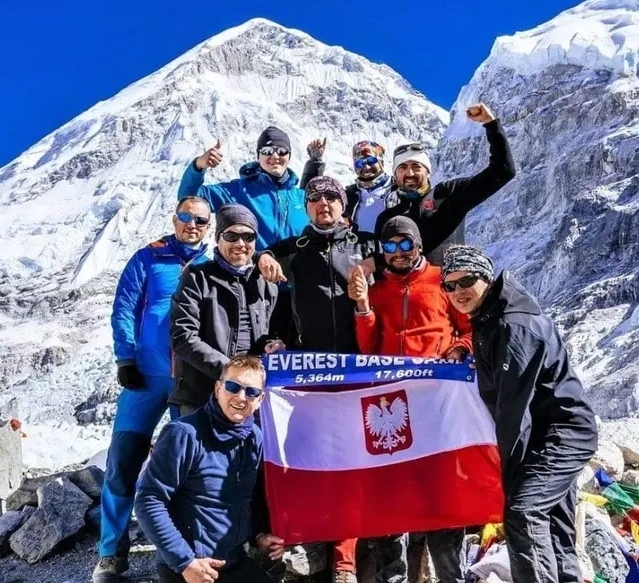
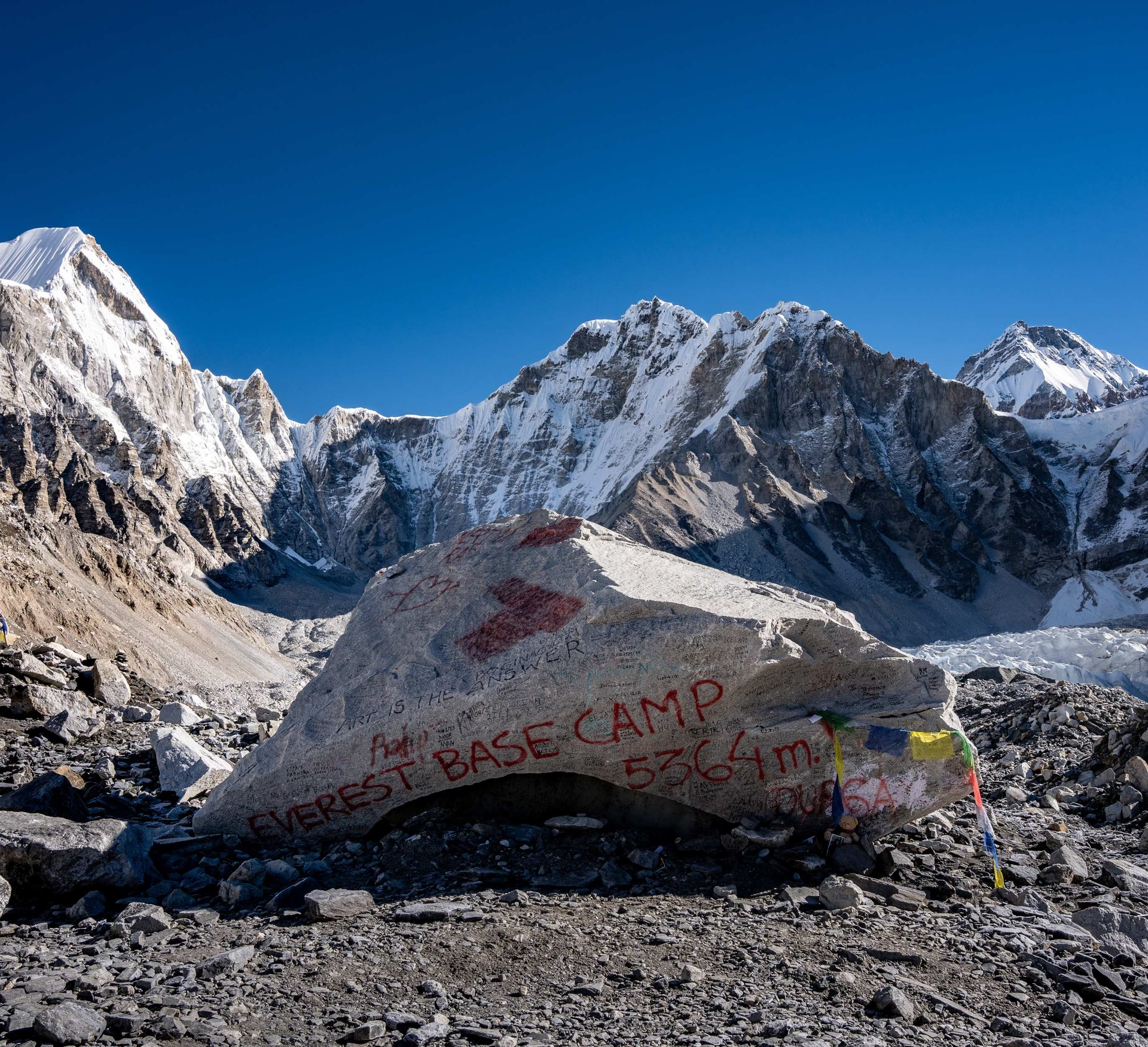
From Gorakshep, the trail to Base Camp is raw and dramatic. You will walk on the rugged path across the glacial moraine, enjoying the views of the Khumbu Icefall looming ahead. The walk is steady but demanding as the thin air conditions make your every movement feel heavier. Finally, after a few hours of walking, you will step onto the Everest Base Camp. Standing here, among the prayer flags and surrounded by the towering giants feels like an otherworldly experience. During the climbing seasons like spring and autumn, this area is filled with colorful tents and the buzz of climbers preparing for their expedition.
You can take your time to soak in the moment, take photographs and feel the scale of the mountains around you. Then, you will trek back to Gorakshep for the night. Your luxury lodge at this altitude offers warmth and rest after a truly unforgettable day of adventure.
Day 10 :Hike to Kala Patthar (5,550 m) and helicopter flight back to Kathmandu: Distance 3km hike, duration 2 to 3 hours
Elevation: 5,550m
Duration: 2-3 hrs
Accommodation: Hotel
Meals: Breakfast, Lunch, and Dinner Included
This is the final day of your Everest Super Luxury Trek itinerary. Your day begins early before dawn. From Gorakshep, you will start the climb toward Kala Patthar. This is the highest point of the trek from where you can enjoy the stunning panorama of the surrounding peaks. The trail is steep, winding up rocky switchbacks, but the reward is unmatched. As the first light of the day hits the Himalayas, the whole panorama comes alive. Everest stands right in front of you; likewise, other peaks like Nuptse, Changtse, Pumori and Ama Dablam glitter in the golden first light of the day.
After soaking in the views and capturing the surreal photographs with your lens, you will then descend back to Gorakshep for breakfast. But instead of retracing the long trail down, in this Everest Luxury Trek, you will take an iconic exit. After breakfast, a private helicopter will lift you directly from Gorakshep and fly over the route that you trekked during the past week.
This helicopter flight add-on is a spectacular experience. You will fly over the glaciers, valleys and villages that took days to cross, now glide beneath you in minutes. Moreover, the bird's-eye perspective of the Himalayas will be an unforgettable sight of your lifetime. The helicopter will take you all the way back to Kathmandu. After landing, you will be transferred to your five-star hotel in the heart of the city. After days in the thin mountain air, the luxury of soft beds, hot showers and world-class dining will certainly feel extraordinary.
Day 11 :Transfer to Tribhuvan Airport for international transfer
Elevation: 1,400m
Accommodation: Hotel
Meals: Breakfast Included
Your Everest Super Luxury Trek comes to a close today. After breakfast, a private vehicle transfers you to Tribhuvan International Airport for your international flight. Although your Himalayan adventure ends here, the memories of luxury in the world’s highest mountains, from Sherpa villages to Base Camp itself, will stay with you forever. Have a safe journey!
Altitude profileMax 5,550 m
Create a Bespoke Itinerary
Customize your Himalayan adventure with personalized itineraries for unforgettable experiences!
Excellent solo Nar Phu Valley Trek with Heaven Himalaya
Just completed the Nar Phu Valley Trek as a solo traveler and couldn't be happier with how it was organized.From the start, communication was clear. A proper pre-trip gear check meant I knew exactly what I needed and what the guide would provide. They arranged a sleeping bag and trekking poles for hire, which saved me carrying my own.Accommodation throughout felt genuine and welcoming rather than touristy, a real Nepalese experience rather than a tourist-trail one. Transport to and from the trailhead was reliable and comfortable.What really stood out was my guide Hari's ability to read my pace. Early on I struggled a bit with the altitude, and he slowed things right down without making it a big deal. Once I'd acclimatized, we picked up the pace significantly. Hari was genuinely flexible day to day depending on how I was feeling, rather than sticking rigidly to a fixed itinerary.I also picked up a stomach bug partway through the trek. Hari talked through the options with me calmly and…
Jojo Y
Second time in Nepal with Heaven Himalaya
This is my second time in Nepal with Heaven Himalaya & I am writing this with gratitude & appreciation for my guide Hari, my porter Arun, as well as the entire team.This was meant to be my birthday trip, I had requested to summit EBC on the actual day of my birthday (29/5/2026), and i made it happen with the help & support of Hari and Arun.Hari has been very thoughtful and attentive throughout the trip, making sure to constantly ask/check if I’m feeling okay as we ascended to higher altitudes.As it got colder higher up on the mountains, Hari thoughtfully delivered hot water to my room every night to help me deal with the extremely cold nights.On my birthday itself, Hari also resourcefully brought a “Happy Birthday” candle which he got from Namche to the summit, and we created our own birthday “cake” using the candle and an apple. That was a very beautiful memory & amazing experience.As I was traveling alone as a female, Hari also did his best to find me the most comfortable accommodat…
CCharlotte B
EBC Hike in May 2026
Last month in May 2026, I did the Everest Base Camp hike with Heaven Himalaya, and it was absolutely amazing. From the start they made everything easy . My guide Bishal, which he said meant thulo in nepali was so helpful and patient; he knew everything about the trail and mountains and also made us laugh all the time.Our porter Krishna was a star! He carried our bags without complaining and always had a smile, telling us funny stories in the evenings. I don't know what we would have done without him.The trek itself was so hard but so worth it. The views are just mindblowing; waking up every morning to see the mountains covered in snow is something I will never forget. Bishal and Krishna made sure we were safe and happy all the way.Reaching Kala Patthar at sunrise was unreal, seeing Everest in the golden light was like a dream. Bishal and Krishna were there with us every step, cheering us on and making it so special.I would absolutely recommend Heaven Himalaya for everyone. They are no…
Tina
Exceptional Service and a Birthday to Remember
They say the mountains humble you, but what I didn't expect was how deeply the people of Nepal would touch my heart.Couldn't have asked for a better crew for our Everest Base Camp - Cho La Pass - Gokyo adventure. From day one, Shankar, Ganesh, Dawa, and Prince treated us with so much kindness, patience, and care that it never felt like we were just another hiking group to them.They became our family in the mountains.Our guide, Shankar, was exceptional. Calm, knowledgeable, dependable, and always looking out for us every step of the way. He knew the mountains like the back of his hand and made us feel safe even during the toughest parts of the trek. When weather conditions in Lukla became unpredictable and visibility was poor, he immediately took action and arranged a helicopter to Kathmandu so we wouldn't miss our international flights. In moments of stress, that level of leadership and quick thinking means everything.It was my birthday during the trek, so I felt incredibly special wh…
Jarin Lam
Unforgettable First Trek to Annapurna Base Camp & Poon Hill
We had an amazing experience with Heaven Himalaya for our first trekking trip to Annapurna Base Camp and Poon Hill. We were actually recommended to them by a friend, and we’re incredibly thankful we chose to go with them. It was truly an unforgettable 2 weeks in Nepal.Our guide, Hari, was attentive, thoughtful, and always made sure we were comfortable and enjoying the journey. He was constantly on the ball, supporting us every step of the way and helping to adjust the itinerary whenever needed. Despite a few slight hiccups during the trip, he remained calm, flexible, and proactive in making arrangements to ensure everything went smoothly.Our porter, Anis, was also incredibly reliable and supportive throughout the trek. He consistently checked in on us and made sure our needs were always taken care of along the way.A special thank you as well to Ram, who was very helpful in coordinating everything behind the scenes and ensuring the trip ran smoothly from start to finish.Beyond the trek…
Dan
Truly Unforgettable!!!
My friend and I booked the 14 day Annapurna Circuit with Tilicho Lake trek. The whole experience was amazing. Ram made it easy to alter the trip to our specific needs. We added flights, cut off 2 days of trekking, requested single rooms, and he quickly got us a quote and booked! Hari was our guide on the trek and he was fantastic! He attended to all our needs and safely guided us for the entire time. He did an excellent job of getting us the best rooms, served our meals every day, and did everything in his power to make sure us old men(63 and 74) made it over the Pass! Our porter, Denise, was equally impressive! I still don't know how he carried our bags for 10 days! Clear blue skies, endless views, majestic mountains, deep river valleys, friendly people, a truly unforgettable trip!!!
Best Time for Everest Luxury Trek
When it comes to doing the Everest Luxury packages, timing matters as much as comfort. The Himalayas do not play by city rules and the seasons here shape everything from the skies, walking trails, views and the overall experience. The two prime Everest Base Camp Trek Best times are considered spring (March to May) and autumn ( September to November).
Spring is the season when the Khumbu Valley comes alive. The hillsides around Namche and Tengboche light up with blooming rhododendrons, the forests feel vibrant and the air carries a freshness. At the higher part of the trail, the skies are clear and the temperatures are manageable even in the nights. This is also the season of Everest expeditions, the base camp buzzes with climbers, colorful tents and the energy of mountaineering life. So, if you want that mix of luxury and adventure without missing out on the liveliness of the mountain culture, the spring season will deliver an unforgettable experience.
Like spring, autumn is another prime season for this trek and this fall season brings a different beauty. The monsoon rain washes the air clean and the skies turn crystal clear. The majestic peaks along the trekking trail like Ama Dablam, Nuptse and Everest shine sharper than ever. The trekking trails are also dry and steady, perfect for long walking days. Autumn is also the season for festivals, the grand celebrations like Dashain, Tihar and Mani Rimdu will add cultural depth to your experience.
What About Off-Season Treks?
Doing the Luxury Everest Base Camp Trek with Helicopter Return in other seasons are possible, but each comes with its own edge. Winter (December to February) offers quiet trails and solitude, but the cold at high-altitude routes can be extreme, especially in the morning and night. Likewise, the heavy snowfall can make traversing much more difficult and challenging.
As for the monsoon (June to early September), it means monsoon rains, muddy trails and cloudy skies. Still, some trekkers venture this trail during this rainy season for a completely offbeat experience. In conclusion, for an Everest Super Luxury Trek where you want both comfort and unforgettable views, spring and autumn are the most ideal choices. These seasons give you the right balance of clear skies, manageable weather and the breathtaking Himalayan vistas.
Everest Super Luxury Trek Difficulty
The Everest Super Luxury 11 Days trek is not a technical climbing adventure. For traversing this route, you will not need ropes, crampons, or mountaineering skills. However, it is important to note that this is still a serious high-altitude journey. What makes it challenging is not the trail itself, but the combination of long walking days and thin mountain air as you rise above 5,000 meters.
On average, you will walk for 5 to 6 hours a day, covering steady distances of 6 to 12 kilometers. The trekking trail are well-trodden, but they are not flat highways. You should expect rocky stretches, forested climbs, suspension bridges swaying high above rivers and steep ascents that will test your endurance. The real challenge in this adventure is the Everest Base Camp elevation. Once you pass Namche Bazaar (3,440 m), every step is slower, every breath feels lighter. By the time you reach Gorakshep (5,164 m) and Kala Patthar (5,545 m), oxygen levels drop by almost half compared to sea level. That is why acclimatization days in Namche and Dingboche are built into our Everest Luxury Trek Itinerary to give your body enough time to adjust to the high-altitude atmosphere.
Now here is where the super luxury factor makes a difference. Unlike standard treks, where you will be sleeping in basic teahouses, in this trekking mode, you will rest in luxury lodges with heated rooms, comfortable beds, nourishing meals and attentive service. That extra comfort means better recovery after long days of walking. And the helicopter return saves you from the demanding multi-day descent. You will push to Everest Base Camp and Kala Patthar, then fly back in style without retracing every step.
So, who’s this trek suitable for? Everest Luxury Packages are perfect for anyone with good fitness, determination and preparation. You don’t need to be an elite athlete, but regular exercise, cardio, hiking, and leg endurance will make the journey much more enjoyable. If you can walk several hours a day with some uphill sections, then you can make the most of this Himalayan adventure.
Accommodation and Food During Trek
One of the biggest differences between the Everest Super Luxury Trek and the standard version is the level of comfort you will get during each day of trek. Normally, trekkers stay in simple teahouses with wooden rooms, thin walls and very basic bedding in the standard Everest Base Camp Trek packages. But in this luxury trekking mode, you will stay in the finest luxury lodges in the Khumbu. These premium lodges are designed to give you warmth, comfort and a touch of elegance even at high altitude.
At lower elevations, like Phakding, Namche Bazaar, and Debuche, you will stay in world-renowned lodges such as the Yeti Mountain Home or Everest Summit Lodges. These lodges are beautifully built with stone and wood that blend the Himalayan tradition with modern comforts. You can expect spacious heated rooms, comfortable beds with thick mattresses, private bathrooms with hot showers and cozy dining halls. Some lodges even provide Wi-Fi, lounges with fireplaces and breathtaking vistas of the Himalayas right from your room’s window.
Likewise, the food on this Everest Luxury Tours also sets it apart from the standard treks. Instead of just basic dal bhat and noodle soups, you will get the chance to enjoy a mix of Nepali, Tibetan and Western cuisine prepared with extra care. At luxury lodges, you will find the menus surprisingly diverse: fresh bakery items, pasta, rice dishes, soups, vegetables, and hearty breakfasts with eggs, bread, tea or coffee. In Namche and other major stops, you will even find gourmet meals and fine dining standards in the middle of the Himalayas.
Packing List – What to Bring?
Even though the Luxury Everest Base Camp Trek With Helicopter Return is a moderately difficult experience, the high-altitude environment, thin air and rapidly changing weather conditions demand proper preparation. Thus, having the right clothing, gear and accessories will ensure that your experience is safe, comfortable and fully enjoyable. With the correct packing list, you can focus on the incredible views and the unique experience of flying close to Everest without worrying about discomfort or high-altitude exposure.
Clothing
Base layers (thermal tops and bottoms)
Moisture-wicking t-shirts and trekking shirts
Long-sleeve trekking shirt
Light fleece or sweater
Insulated down or fleece jacket
Windproof jacket
Rain jacket or poncho
Trekking pants
Lightweight casual pants
Shorts (optional for lower-altitude areas or helicopter stops)
Innerwear/undergarments
Neck gaiter or buff
Sun hat or cap
Gloves (lightweight for cabin + insulated or wool for landing points)
Warm socks
Footwear
Comfortable trekking or hiking boots (well-broken in)
Sports shoes or trainers
Camp slippers or crocs for rest stops
Trekking socks (thin plus woolen or insulated layers)
Sock liners (optional for extra warmth)
Gear and Accessories
Backpack or daypack ( 20 to 30 liters)
Duffel bag
Water bottle or hydration bladder
Lightweight trekking poles
Sunglasses with UV protection
Headlamp or small flashlight
Power bank for devices
Universal adapter
Trekking map, guidebook, or GPS device
Lightweight camera or smartphone with extra memory
Personal Essentials
Toothbrush and travel-size toothpaste
Biodegradable soap and shampoo
Light travel towel
Sunscreen and lip balm with UV protection
Foot powder and personal hygiene products
Hand sanitizer
Toilet paper, tissues, and wet wipes
Insect repellent
Small first aid kit
Personal medications
Snacks or energy bars
Reusable shopping or storage bag
Everest Luxury Tour’s Permit Requirement
Before you join the Everest Luxury Tours, it is important to understand the permit requirements for the region. While traversing on this iconic Himalayan route, you will enter Sagarmatha National Park, a protected UNESCO World Heritage Site. The access to this conserved area is strictly regulated. So, all the trekkers need to obtain two necessary permits to navigate the trekking trail.
Permits Necessary for Everest Base Camp Trek
Sagarmatha National Park Entry Permit (SNP)
Khumbu Pasang Lhamu Rural Municipality Permit
Both national park and rural municipality permit are the primary requirements for anyone to traverse this route. To obtain these essential permits, you will need to provide a copy of your valid passport, passport-sized photographs, insurance and your trek itinerary. The national park permit is issued at the Nepal Tourism Board office in Kathmandu. You can also collect it at the park entry point in Monjo.
As for the rural municipality permit, it can only be collected on the mountainside (i.e. Lukla or Monjo). Don’t worry if you are trekking through a registered agency; they will handle the permit requirements. This way, you can only focus on the trek without worrying about other logistics.
Note: Make sure to always carry a digital copy and at least two printed copies of your permits. Laminating them is recommended to protect them from moisture and tearing due to wrinkles.
Training and Preparation
Although the Everest Luxury Trek Itinerary is not physically taxing or strenuous, proper preparation is still important to make the experience safe and enjoyable. Trekking to high altitudes will expose you to thin air, lower oxygen levels and cold temperatures. Likewise, you will also need to traverse the rugged mountain terrain with frequent ascents and descents. So, to prepare adequately for this journey, we recommend at least 3 to 6 weeks of training timeframe.
If you focus on cardiovascular exercises like jogging, power walking, cycling or swimming, it will be easier for your body to handle altitudes better. Similarly, strength and endurance exercises, especially focused on leg and back muscles, will help you keep up with the demanding trail that gradually winds toward the basin of the Himalayas. Similarly, simple stretches and mobility exercises before the trek can also reduce stiffness and make it easier for you to maintain your balance on the trail.
In addition to working on these aspects, it is best if you add practice hikes to your training programs. Practise hikes will not only prepare you for the rugged mountain terrain carrying your backpack, but they are also most effective option for acclimatization practice.
Mental Preparation
Besides physical preparation, mental preparation also plays an equally important role. The Himalayas can be unpredictable at times. You may have to deal with sudden changes in weather, long walking days, or unexpected delays during your trek. Thus, having the right mindset will help you stay calm and adaptable when you have to face challenges during your Everest Super Luxury Trek. You need to approach the trek with patience, flexibility and a positive outlook. This will ensure that you can fully embrace the journey rather than stress over small discomforts.
It is also important to remember that trekking at high altitudes is also about pacing yourself mentally, not just physically. So, being mentally prepared to maintain a steady pace, take regular breaks and listen to your body will make the journey safe as well as rewarding. Think of this Himalayan adventure not just as a trek, but also as a mindful journey. Your every step on the trail brings you closer to the grandeur of Everest. And maintaining mental clarity will allow you to soak in the landscapes, culture and serenity that surround you.
Group Joining and Private
When planning the Everest Super Luxury Trek, you have two ways to experience the journey: Group Joining or Private Departure. Both of these options follow the same carefully curated luxury itinerary. However, the style of travel and overall experience differ depending on what you prefer.
Group Joining: This trekking mode is ideal if you enjoy the camaraderie of like-minded adventurers. While trekking with a group-shared Everest Luxury Trek you will walk on the trail with a small group of fellow trekkers, which makes the experience social, lively and budget-friendly compared to a private trip. Meals, luxury lodges and helicopter transfers are shared as per the group plan. But, regardless of that, every trekker will enjoy premium comforts and logistics. This trekking option is a wonderful way to build connections with like-minded people while exploring the world’s highest peaks.
Private Departures: On the other hand, private treks are designed for those seeking exclusivity, flexibility and a highly personalized experience. From your arrival in Kathmandu to the heli transfers in the Khumbu, the trek is tailored to meet your preferences. In this trekking mode, you will have a private guide, dedicated porters, and the complete freedom to customize your pacing, lodge choices and even side trips. The private trek ensures complete control over your adventure without compromising on the super-luxury standards.
Both the trekking modes guarantee the same premium lodge network that are carefully chosen for comfort and luxury, as well as safety and expert guidance throughout the trek. The difference lies in how personal or how social you want your journey to be.
Cost Breakdown of Luxury Everest Base Camp Trek With Helicopter Return
The Everest Super Luxury trek cost can vary depending on the trekking mode, luxury category, overall length, helicopter sharing or private charter and the level of personalized services provided by the package. On average, the Luxury Everest Base Camp Trek cost ranges between USD 5,500 to USD 8,000 per person. However, the final price may go higher if you customize the itinerary, choose exclusive upgrades, or request additional side trips in the region or a private Everest sightseeing flight.
Within this price range, the package usually includes five-star hotel accommodation in Kathmandu, premium luxury lodges throughout the trek, all meals with curated dining experiences, professional guides and porters, necessary permits, domestic flights for the initial part and helicopter transfers while returning. For group departures, the helicopter cost may be shared, while in private treks, you can enjoy the chartered heli service for complete exclusivity. So, before booking a package, it is important to review what is covered in the package. This way, you will be able to determine whether the offered value is worth the price or not.
Note: Everest Luxury Packages cost covers just the expenses incurred for the logistics of the trek. Personal expenses like alcoholic beverages, additional snacks, laundry, phone calls, hot showers beyond the included services and tipping for guides or porters are not covered in the package. You will have to budget for them separately.
Altitude Sickness
One of the most important factors that you need to be careful about while trekking in the Everest region is altitude sickness. As the trek gradually climbs from Kathmandu (1,400 m) to Kala Patthar (5,550 m), your body needs time to adapt to the thin air conditions. Even on a luxury trek with helicopter support and premium lodges, the risk of altitude-related symptoms is real if acclimatization is not respected. Common symptoms of AMS include headache, nausea, loss of appetite, dizziness, disturbed sleep and shortness of breath.
While mild cases can be managed with rest, hydration and well-managed pace, ignoring symptoms can lead to more serious conditions such as High Altitude Pulmonary Edema (HAPE) or High Altitude Cerebral Edema (HACE), both of which require immediate descent. The good news is that our Everest Luxury Trek Itinerary is designed with acclimatization in mind. You will enjoy rest days at key villages like Namche Bazaar and Dingboche, which will make it easier for your body to adapt to the high-altitude Himalayan atmosphere.
Moreover, the luxury lodges along the trekking trail will provide you with better nutrition, heated rooms and comfortable rest, all of which support your recovery at altitude. Additionally, your professional guide monitors your health daily and carries basic first-aid, including oxygen cylinders and oximeters, to stay on the safe side.
If at any point altitude sickness becomes severe, helicopter evacuation is available on standby, ensuring your safety and comfort. This is one of the major benefits of choosing a super luxury package. So, with this luxury trekking option, you can travel with peace of mind, knowing that you have immediate access to evacuation services if needed.
Internet, Connectivity and Charging on the Trail
In the remote valleys of the Khumbu, which boast the towering peaks of the world, modern conveniences like internet, phone networks and charging are available even if they are limited. On the Everest Super Luxury Trek, you will have better access to these facilities compared to standard treks. The luxury lodges that we will use on this trekking trail are well equipped to provide reliable services.
Internet and Wi-Fi
Most luxury lodges along the route offer Wi-Fi for internet usage. This option is either included in your package or available at a small additional fee. The Everest region also has a system called Everest Link. It is a prepaid internet card that works in many villages along the trekking route. While the speed is not on par with the city connections, this internet option is good enough to message, browse and even make video calls (when the signal is strong).
Mobile Network
The main mobile networks in Nepal are Ncell and NTC (Nepal Telecom). These network operators also provide coverage in the Everest region. Ncell works well in lower villages like Lukla and Namche. As for the NTC, it provide stronger signals at higher altitudes. However, there can be occasional loss of signal, especially when you are traversing the remote valleys. Don’t worry, your guides will carry satellite phones as a backup; this will ensure safety even in no-network areas.
Charging Facilities
Electricity is available in almost every village, powered either by hydroelectric stations or solar panels. Luxury lodges typically provide in-room charging points, which is a big upgrade compared to standard packages where trekkers often have to pay per charge. Still, carrying a power bank (10,000 to 20,000 mAh) is highly recommended, especially for cameras and phones on long trekking days.
Note: Power can sometimes be unstable in higher regions, so it is best to bring a universal adapter and keep devices in low-power mode. If you are traveling in a group, having at least one solar charger or shared power bank adds extra convenience to your journey.
FAQs
Everest Super Luxury Trek Frequently Asked Questions
General-EBC
What is the Everest Base Camp Trek?
The Everest Base Camp Trek is a world-famous high-altitude trekking journey to the base of Mount Everest (8,848.86m), the highest mountain on Earth. The trail lies in the Khumbu region of Nepal and combines dramatic Himalayan landscapes, traditional Sherpa villages, Buddhist monasteries, suspension bridges, and teahouse trekking culture.
This trek is not just about reaching Base Camp, but also about experiencing the lifestyle of the Everest region, panoramic mountain views, and a gradual ascent into high-altitude terrain above 5,000 meters.
Best time to Trek
Why trek with Heaven Himalaya?
When you choose to book a trek package with Heaven Himalaya, you'll already be ahead of other trekkers in terms of service and benefits. A local mountain trekking guide with extensive knowledge of the routes will accompany you. Booking with us means you'll walk with Sherpa locals and support their livelihood. While foreign companies offer similar trips to Everest Base Camp, they can't do it on their own. They hire government-registered companies like us in Nepal. Booking with them means you'll pay intermediaries' fees out of your pocket. Other perks of travelling with us are:
A focus on clients' safety, with our trip organized with the utmost safety in mind
The best price guarantee.
Free transfers from the airport to the hotel and back in a private vehicle
Trained, government-licensed local guides who have an entire knowledge of local routes.
Support for locals to earn their living through tourism.
An oximeter for monitoring oxygen levels while on a high-altitude trek, guides with medical kits to handle situations that may arise.
Arrangements for sleeping bags and down jackets.
Free storage at the Heaven Himalaya office store for extra luggage during your tour
A duffel bag to transfer your items from luggage to be carried during the journey A free porter to help carry your heavy bags.
What is the best time to trek in Nepal?
Spring (March to May) and autumn (September to November) offer the most stable weather, clear mountain views, and ideal trekking conditions for trekking
Which month is best for Trek?
October is generally considered the best month to trek to EBC as it falls after the monsoon season, bringing stable, dry weather, clear blue skies, and the best mountain visibility. November and April follow closely behind. Since April is a spring month, you can see a variety of flowers blooming along the trekking trails, which is a wonderful sight.
https://heavenhimalaya.com/how-good-is-spring-season-for-trekking-in-nepal/
Is it possible to trek during winter?
Yes, winter trekking is possible. If you can handle the cold and snowy conditions at higher altitudes, you can enjoy the tranquility and solitude of the trails. You also get to witness the Himalayas in their full glory, as the region receives regular snowfall. The biggest perk is that accommodations and meals are available at discounted rates. While spring, summer, and autumn treks in Nepal have their own allure, embarking on a winter trek promises a distinctive and enchanting adventure. So, with proper winter preparation and professional guidance, trekking in winter is absolutely possible. https://heavenhimalaya.com/winter-treks-in-nepal/
Accommodation in Everest
Is it safe to trek to Everest Base Camp?
Trekking to Everest base camp is completely safe if you plan and prepare adequately. However, there are certain risks associated with high-altitude trekking, particularly the risk of altitude sickness. To mitigate this risk, you need to acclimatize well, stay hydrated, walk slowly, and follow the “climb high and sleep low” rule.
When can you trek to Everest Base Camp?
The Everest base camp trek is doable year-round. But the best time for the EBC trek is in spring and autumn when the weather is stable and the temperature is pleasant, perfect for trekking. During this time of the year, the visibility is also excellent, and there is a high chance of getting an unobstructed view of Mt. Everest.
How are toilet facilities on the EBC trail?
Toilet facilities along the Everest base camp trail are generally available at every teahouse. The type of toilet may vary from place to place. Some teahouses have Western-style toilets with manual flushing systems, while others have traditional squat-style toilets with buckets and mugs for flushing. However, it’s important to note that teahouses typically do not provide toilet paper. You should bring your supplies if you require them during the trek.
Are there hot showers on the Everest Base Camp Trek?
Yes, hot showers are generally available at various points along the EBC trek. Most teahouses, especially those in the lower elevations, offer the option of hot showers for an additional fee.
However, as you ascend to higher altitudes, the availability of hot showers can become less reliable and more expensive. In more remote regions of the trek, the facilities are limited and only available at an increased cost.
What extra amenities are available in the Everest region?
In the Everest region, you can access various additional amenities to enhance your trekking experience. Some extra amenities you might encounter are hot showers, electricity for charging devices, Wi-Fi hotspot services, electric blankets, etc. All these services are commonly found in teahouses and hotels, with some additional costs. Be aware that the prices tend to increase for these services as you approach the base camp.
Booking, Deposit & Payment
What payment methods do you accept?
Loading…
What are the Cancellation and Refund Policy ?
Loading…
Can I postpone my trek after booking?
Loading…
How do I book the Everest Region Treks?
Loading…
Visa and Arrival
Can I get a visa on arrival in Nepal?
Loading…
Does Nepal provide a Visa on Arrival?
Loading…
How can I buy a SIM card in Nepal?
Loading…
Where can I exchange money upon arrival in Nepal?
Loading…
Trekkers' Well-Being & Safety
Is emergency helicopter evacuation possible?
Loading…
Is the Trek safe for first-time trekkers?
Loading…
What happens if I become sick during the trek?
Loading…
How do you ensure trekker safety in remote areas?
Loading…
Similar Travel Packages
You may also like these handpicked adventures similar to Island Peak Climbing with EBC for an exceptional travel experience.


.avif&w=1920&q=75)
.avif&w=1920&q=75)