

Wildlife You Can Spot in Nepal in Winter 2026/27

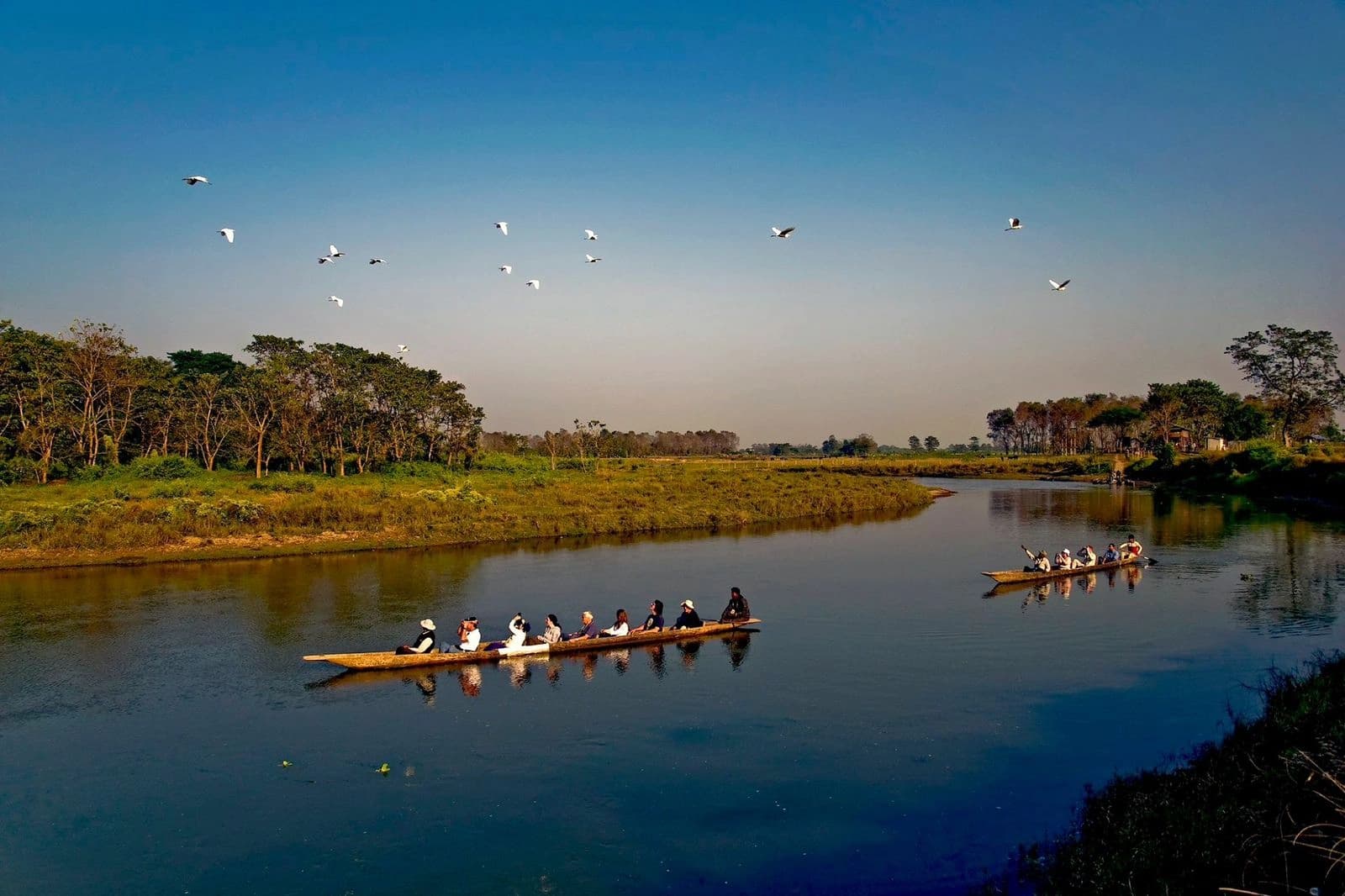
Nepal's winter wildlife includes a diverse range of mammals, birds and reptiles that inhabit its tropical lowlands, subtropical forests, Himalayan mountains and wetlands from December to February. Bengal tigers, one-horned rhinoceroses, Asian elephants, snow leopards, red pandas, Himalayan monals and migratory waterbirds are among the remarkable animals found across the country's national parks and wildlife reserves. Chitwan, Bardia, Koshi Tappu, Langtang and Sagarmatha offer distinct wildlife habitats and viewing opportunities during the colder months.
Winter is an excellent season for wildlife watching in Nepal, as cooler temperatures, thinner vegetation and seasonal animal movements influence wildlife activity and visibility. From jeep safaris and river excursions in the Terai to Himalayan wildlife treks and migratory birdwatching, visitors can experience different ecosystems and observe animals in their natural habitats. Understanding the best viewing locations, animal behavior, weather conditions and wildlife safety practices helps make a winter wildlife trip more rewarding.
Which Wild Animals Are Commonly Seen in Nepal During Winter?
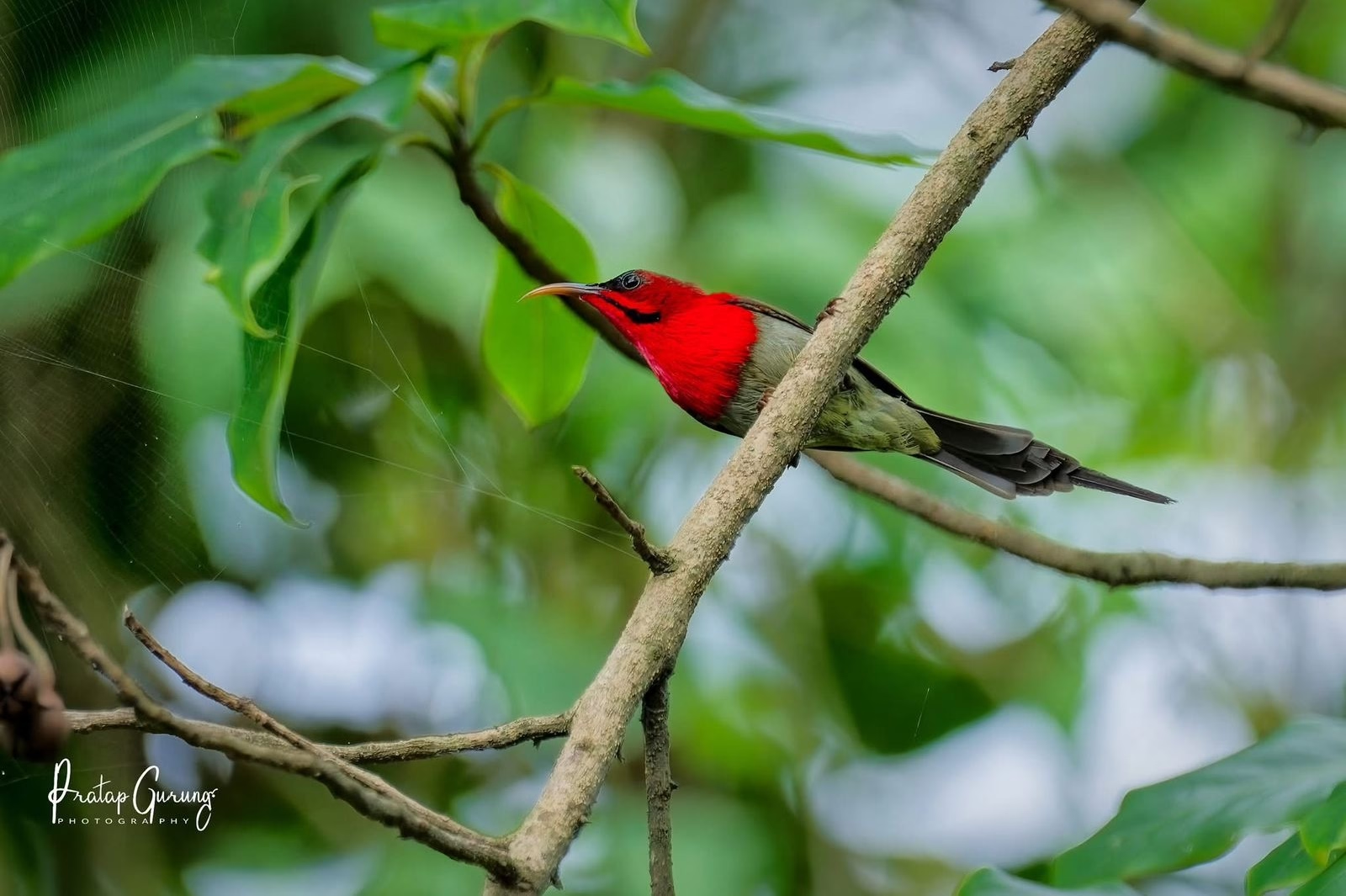
The most commonly seen winter animals in Nepal are one-horned rhinoceroses, spotted deer, wild boar, rhesus macaques, Asian elephants, marsh mugger crocodiles and gharials in the Terai lowlands, plus Himalayan tahr, blue sheep and Himalayan monals at altitude. Bengal tigers, snow leopards and red pandas are rarer.
Nepal splits into two wildlife zones in winter. The Terai is the flat, subtropical belt along the Indian border, where Chitwan, Bardia, Parsa, Banke and Shuklaphanta national parks sit below 1,000 metres. The Himalaya is the high zone above 2,500 metres, where Sagarmatha, Langtang and Shey Phoksundo national parks protect alpine species. Each zone needs its own packing list, its own timing and its own expectations.
The ranking below separates reliable sightings from lucky ones. Rhinos, deer, boar, macaques and crocodilians are routine on a 2-night Terai trip. Elephants, sloth bears, leopards and tigers need more days and more patience. Snow leopards and red pandas need specialist treks. Plan around the species you most want, and treat every extra sighting as a bonus.
Chitwan National Park Tour
View detailsCan You See the Bengal Tiger in Nepal During Winter?
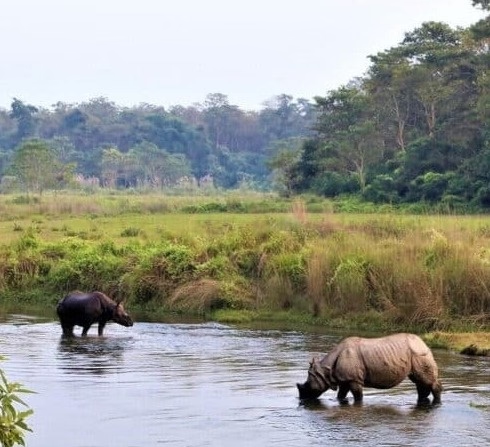
Yes, Bengal tigers live in Nepal's lowland parks all winter, but a sighting is never guaranteed. Nepal counted a record 429 wild tigers in 2026, with 145 in Chitwan, 112 in Bardiya, 71 in Parsa, 51 in Banke and 50 in Shuklaphanta.
The Department of National Parks and Wildlife Conservation announced the figure on 29 July 2026, Global Tiger Day. It rose from 355 in the 2022 census, a gain of 20.8%. Teams used camera traps, which are motion-triggered cameras that photograph each tiger's unique stripe pattern, between 31 December and 23 April.
Growth is uneven. Chitwan is the oldest park (1973) and added 17 tigers. Parsa added 30, Banke 26 and Shuklaphanta 14. Bardiya fell by 13, a drop of about 10%. A Mongabay analysis from August 2026 links the shifts to water: tigers follow permanent ponds and wetlands, and drought along the Geruwa River in Bardiya is one suspected cause.
For visitors, those numbers translate into odds, not promises. A tiger is a solitary ambush predator that holds a territory of at least 20 to 50 square kilometres. On a 2-night safari most people see tracks, scratch marks and hear alarm calls from spotted deer and langurs. Many people see no tiger at all. Book 3 or 4 nights, take the first jeep drive of the morning, and stay quiet at waterholes.
Tigers also kill people. Government data reported by Mongabay show 85 deaths over eight fiscal years, including 10 in 2025-26. Most victims are local residents who enter the forest for grass, firewood or fodder. Tourists travel with licensed naturalist guides, and following the guide keeps the risk very low.
Where Can You Spot One-Horned Rhinoceros in Winter?
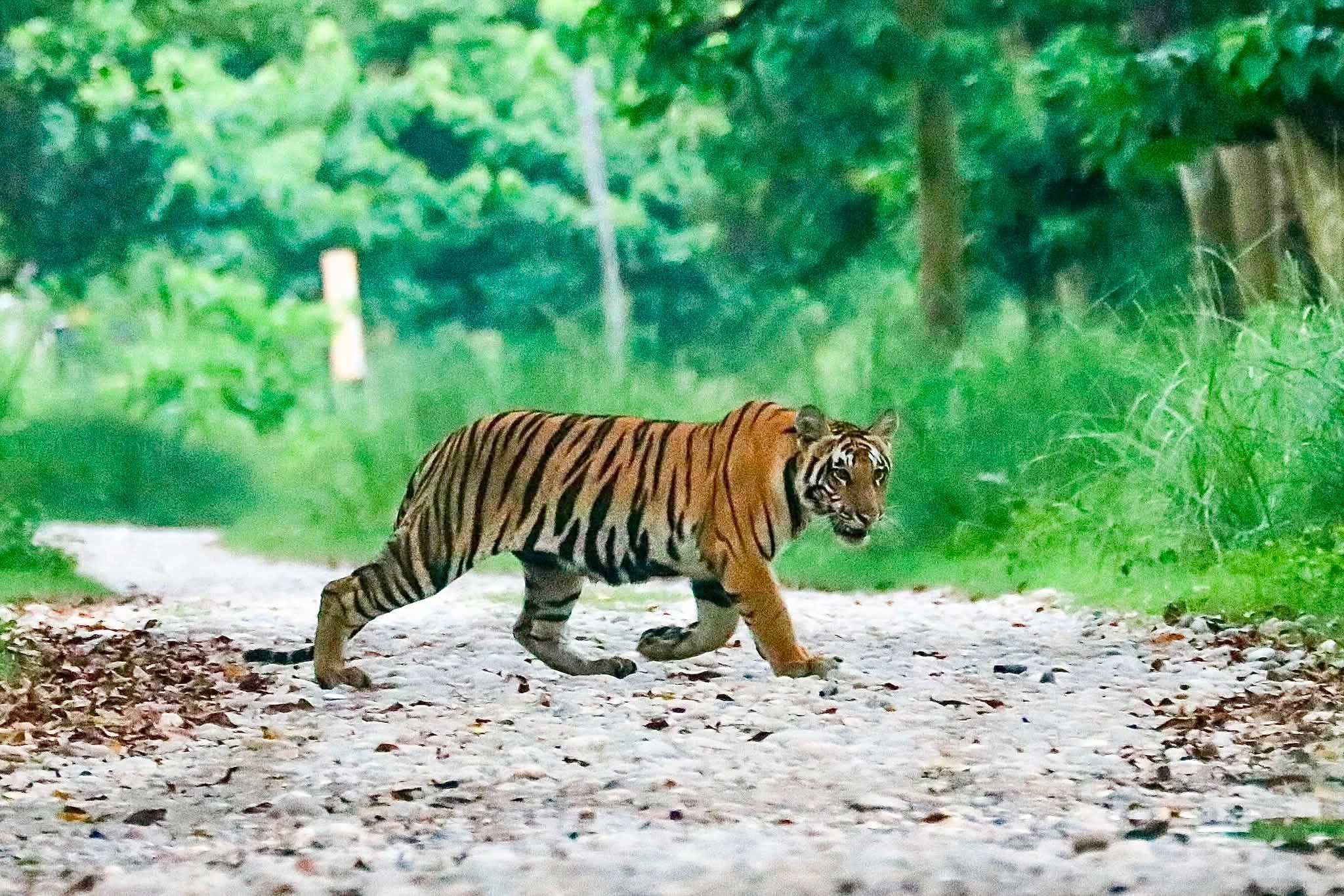
Chitwan National Park is the best place to see one-horned rhinoceroses in winter. Nepal held 752 rhinos at the 2021 census, and 694 of them (92%) lived in Chitwan. Bardiya held 38, Shuklaphanta 17 and Parsa 3.
The greater one-horned rhinoceros (Rhinoceros unicornis) is an armoured grazer that weighs up to 2,000 kilograms. Rhino numbers fell below 100 in the 1960s, all of them in Chitwan. Zero-poaching years in 2011, 2013, 2014 and 2015 helped the population climb to today's 752.
Winter is productive because rhinos feed on short, green grass shoots and wallow in cool water in the morning. On a standard Chitwan trip most visitors see at least one rhino from a jeep or a canoe on the Rapti River. Chitwan's riverside grassland and the Sauraha buffer zone give the highest chance.
The census is overdue. Nepal's rhino survey runs every four to five years, and a 2025 funding shortfall delayed the next one. As of September 2026 a committee is still designing the method, with genetic sampling and camera traps both under review. Chitwan recorded 22 rhino deaths in 2025-26 and 133 over the past five years.
Common mistake we see: visitors expect rhinos near the lodge. Rhinos use tall grass cover at dawn and move to wallows by 9 am. Ask your guide which block was productive the previous day.
Are Asian Elephants Active During Nepal's Winter?
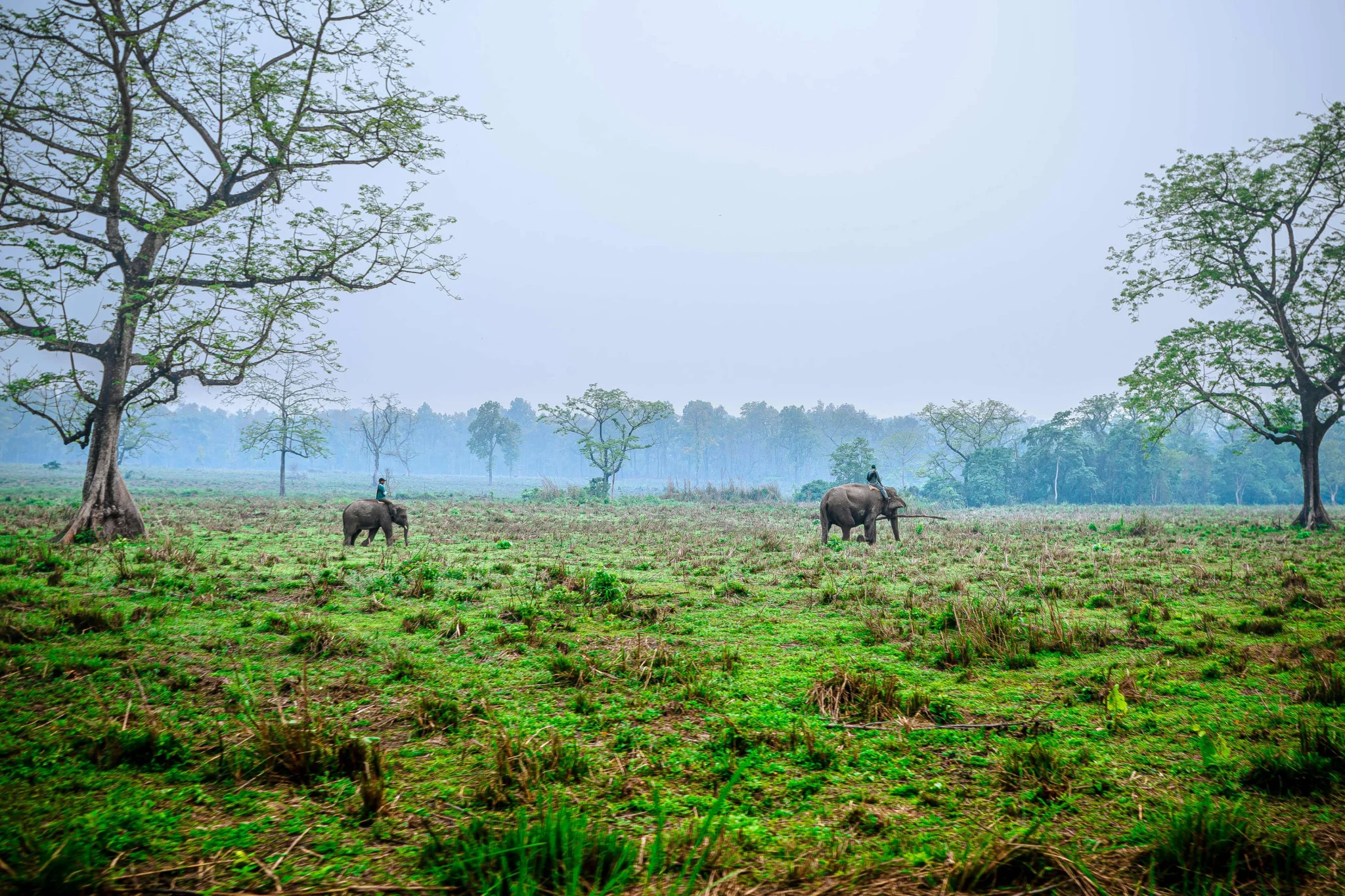
Yes, wild Asian elephants stay active all winter in Chitwan, Bardia, Parsa, Shuklaphanta and Koshi Tappu. The Elephant Conservation Action Plan for Nepal (2025 to 2035) puts the national population at about 230 animals, including resident herds and groups that cross the Indian border.
Asian elephants (Elephas maximus) are the largest land mammals in Nepal. A bull stands 2.5 to 3 metres at the shoulder. Herds use the Terai Arc Landscape, a corridor of forests and grasslands that links Nepal with northern India. They travel seasonally for food, water and mates.
Winter is a movement season. Elephants raid ripening wheat and mustard fields along park edges in January and February, so village roads close to Bardia and Shuklaphanta become the likeliest sightings. A 2021 study in the Journal of Threatened Taxa estimated 227 wild elephants, which aligns closely with the current national action plan figures.
Elephant encounters carry real danger. Stay inside your vehicle, keep at least 100 metres from a bull in musth (a hormonal state that makes males aggressive), and never approach at night. Choose a vehicle or guided on-foot encounter with wild elephants over a ride on a captive one. Welfare concerns around riding keep growing, and the wild encounter is more natural.
Can You See Snow Leopards in Nepal During Winter?
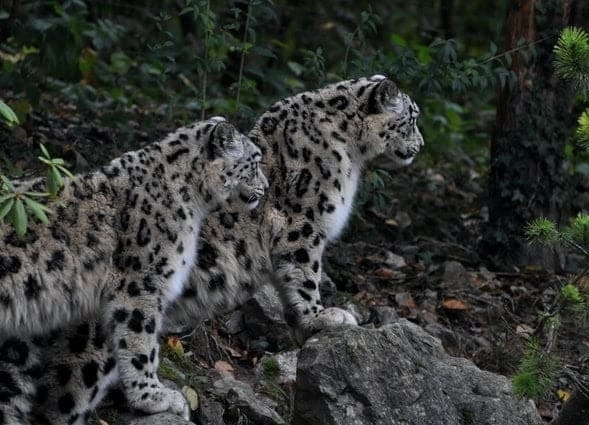
Yes, snow leopards live in Nepal's high mountains all winter. They range between 2,500 and 5,500 metres and follow blue sheep and tahr down to lower slopes in the cold months. Sightings remain rare. A 2025 national assessment estimates 397 snow leopards (range 331 to 476) across Nepal.
The assessment, released in April 2025, compiled camera-trap, genetic and habitat-model data from 2015 to 2024. It covered more than 43% of Nepal's potential habitat and calculated a density of 1.56 animals per 100 square kilometres. Density rises from east to west. Most animals live in the Annapurna range and the trans-Himalayan region beyond it.
The snow leopard (Panthera uncia) is a camouflaged big cat with a long, thick tail used for balance and warmth. It hunts at dawn and dusk and rests in rocky terrain by day. Winter pushes prey onto lower, snow-free slopes, which narrows the search area for patient observers.
We tell every guest the same thing: a snow leopard trek is a wildlife-habitat trek first. You scan ridgelines for 6 to 8 hours a day with a spotting scope, learn to read pugmarks and scrapes, and count the signs. Many successful trips end with fresh tracks, a kill and a photograph from a camera trap rather than a live cat. A live sighting is a bonus.
Which Deer Species Can You Spot in Nepal in Winter?
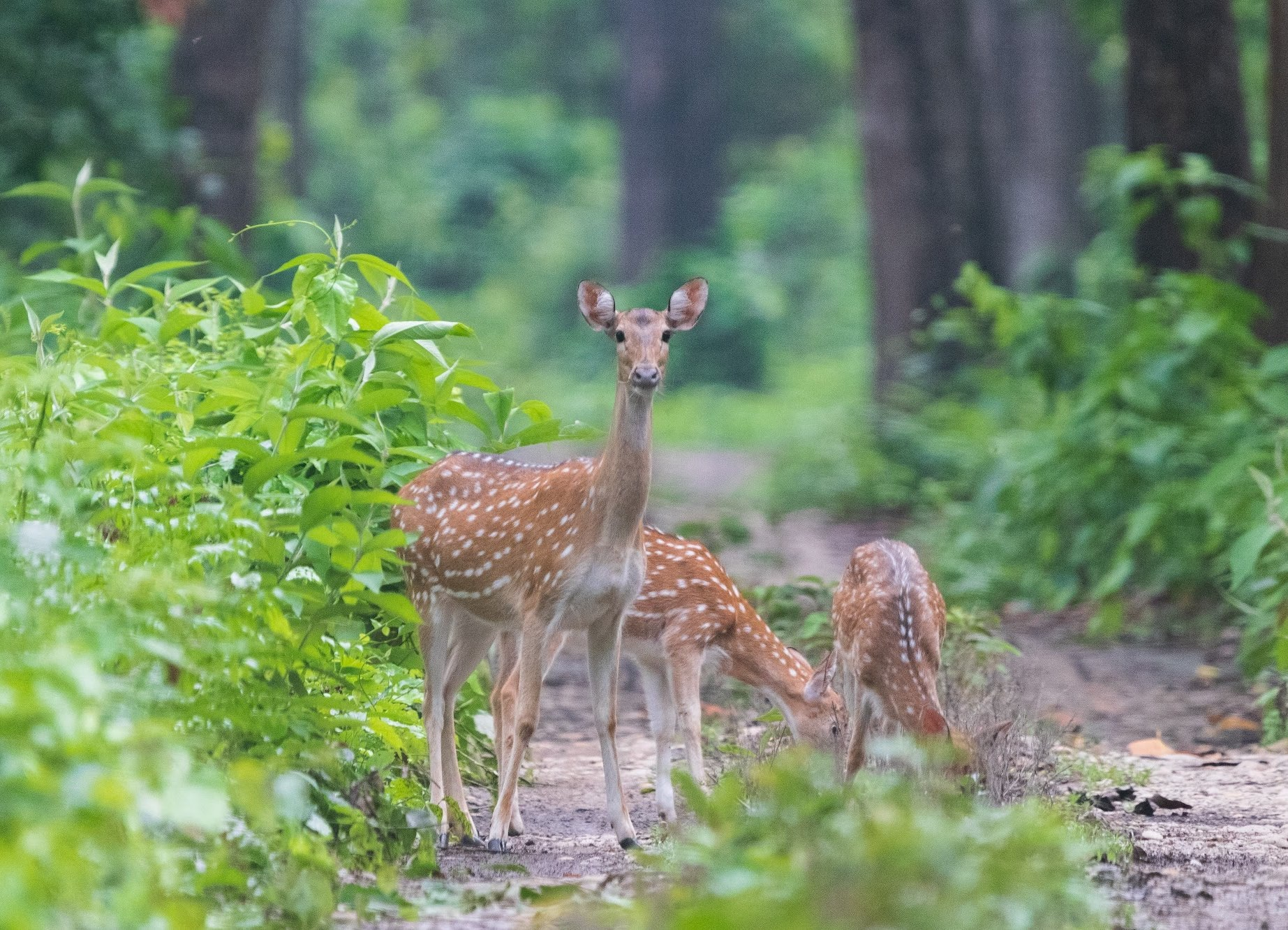
Five deer species are regular winter sightings in Nepal: spotted deer (chital), hog deer, barking deer, sambar and swamp deer (barasingha), plus Himalayan musk deer at altitude. Shuklaphanta holds about 2,323 swamp deer, the largest concentration in Nepal.
Spotted deer are the most visible. They graze in herds of 20 to 80 on riverbank grassland and act as the jungle's alarm system, because their sharp barks warn of tigers and leopards. Hog deer are smaller and hide in tall grass. Barking deer (muntjac) bark like dogs and stay in forest edges. Sambar is the largest, weighing up to 300 kilograms, and prefers forested ravines.
Swamp deer (Rucervus duvaucelii) stand out in Shuklaphanta's Phanta grassland, the largest continuous grassland in Nepal at about 16 square kilometres. Counts show 2,170 animals in 2013, 2,301 in 2014, 2,313 in 2023 and about 2,323 in 2026. The population is stable. The name barasingha means "twelve-tined" and describes the branching antlers of the males.
Himalayan musk deer (Moschus chrysogaster) are small, tusked, solitary and almost impossible to find. Mating season runs from November to January, and males mark paths in the rhododendron and juniper forests of Sagarmatha and Langtang. Dusk walks along quiet trails sometimes reveal one.
Can You Find Red Pandas in Nepal's Winter Forests?
Yes, but they are hard to find. Nepal holds an estimated 500 to 1,000 red pandas across 25 districts. The Panchthar-Ilam-Taplejung corridor in the east holds about a quarter of them. The best viewing months are October to November and March to April.
The red panda (Ailurus fulgens) is a bamboo-eating mammal about the size of a house cat. It lives in temperate forests between 2,200 and 4,800 metres. Roughly 70% of its habitat lies outside protected areas, often in community forests. Roads, hydropower projects and fragmentation cut that habitat.
December to February is not peak season, but winter has one advantage. Red pandas do not hibernate, and bare branches open sightlines. Community-based Forest Guardians survey the species in February, May, August and November, so February is a working month in Ilam and Panchthar. About 15 homestays in the corridor host a few dozen foreign visitors a year.
Langtang National Park also records red pandas, though sightings are uncommon. Plan a winter red panda trip as a forest immersion in cold, misty ridges, with trackers and local guides. Most visitors leave with tracks, droppings under bamboo thickets and local stories rather than a live animal, so the forest walk has to be worth it on its own.
What Other Mammals Can You Encounter in Nepal During Winter?
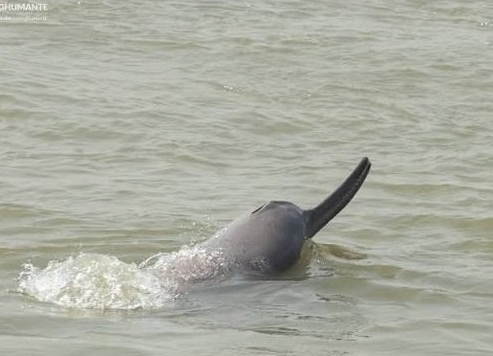
Winter visitors also see leopards, sloth bears, gaur, blue bulls (nilgai), wild boar, rhesus macaques, gray langurs, Himalayan tahr, blue sheep and Ganges river dolphins, along with 2 crocodilian species: gharials and marsh muggers.
Leopards and sloth bears sit among the rewarding extras. Leopards hunt at night near park edges. Sloth bears raid termite mounds with their long claws. Gaur, the world's largest wild cattle, appear in Bardia and Chitwan at dawn. Parsa has more leopards than tigers, and Mongabay's 2026 reporting notes that leopard density there is more than double tiger density.
Reptiles benefit from cool weather. Gharials, fish-eating crocodilians with a long narrow snout, bask on sandbanks in the winter sun. The Rapti and Narayani rivers in Chitwan hold about 265 wild gharials, up roughly 11% in the latest count, with over 2,300 captive-bred animals released since the Kasara breeding centre opened in 1978. Marsh muggers bask next to them. Winter is the best time to see both.
Ganges river dolphins appear in the Karnali and Koshi rivers during the dry season. In the high country, Himalayan tahr (wild goat-antelopes with thick brown coats) and blue sheep (bharal) graze on Sagarmatha's and Shey Phoksundo's steep slopes. Himalayan black bears hibernate through the coldest weeks, so those encounters are rare in January.
Which Birds Can You See in Nepal During Winter?
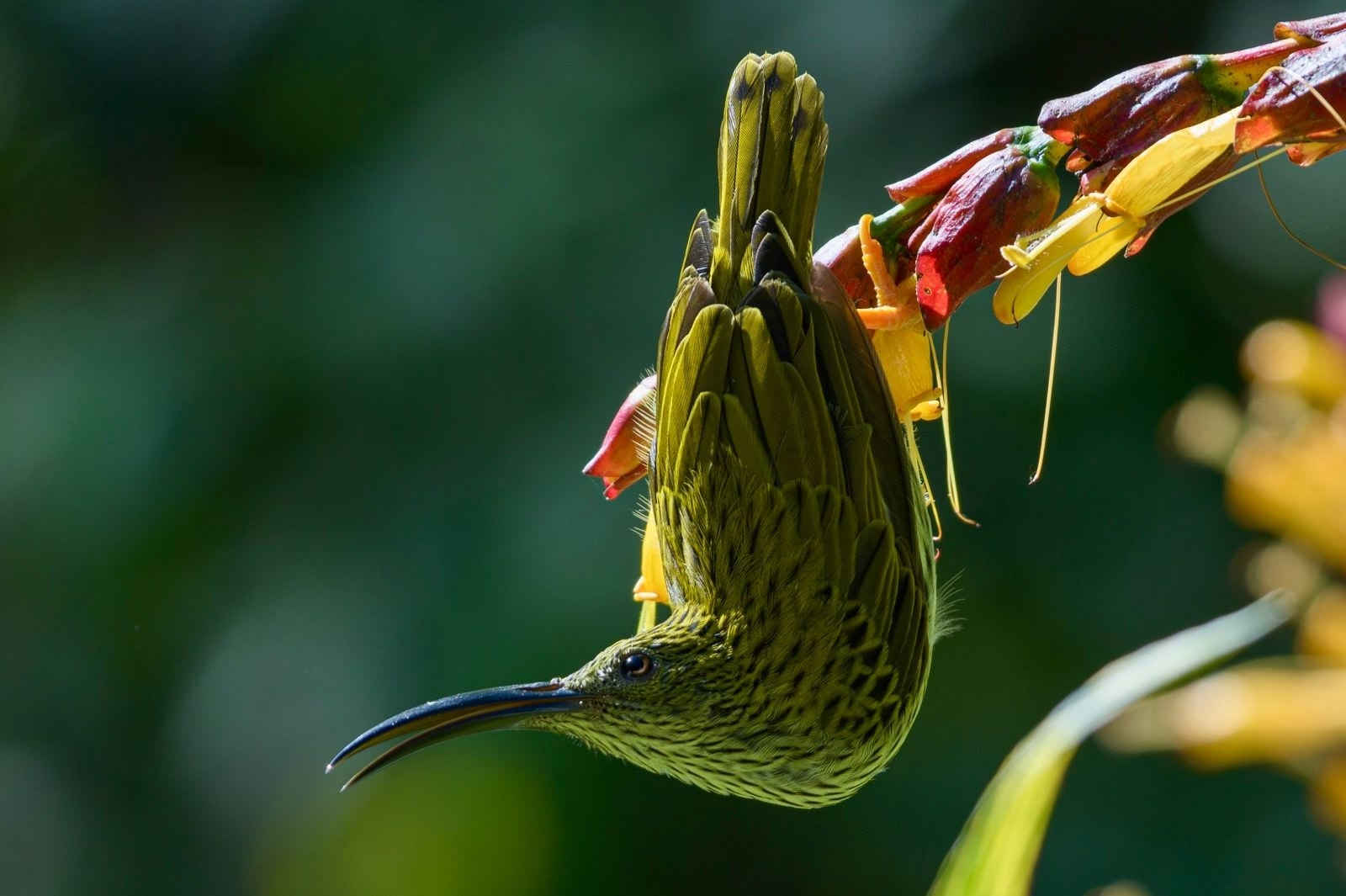
Winter brings 3 bird groups to Nepal: migratory waterfowl from Central Asia and Siberia on Terai wetlands, resident Himalayan pheasants such as the monal at altitude, and raptors including eagles and vultures over open country. January is the peak month for counting them.
Nepal's annual midwinter waterbird census runs every January. The 2026 count covered 78 sites across 18 major wetlands and found fewer than 100,000 aquatic birds, a drop at most key sites. The report blames boating, picnics, loud music, unauthorised fishing, river pollution, shrinking wetlands, invasive weeds and pesticide runoff.
That decline changes how you watch. Choose wetlands with controlled access, keep voices low and stay on the embankment.
Bird Watching Tour in Chitwan
View detailsWhich Migratory Birds Visit Nepal During Winter?
Ruddy shelducks, northern pintails, common teal, gadwalls, red-crested pochards, bar-headed geese and greylag geese are the main winter migrants. They arrive from Siberia and Central Asia between October and December and leave by March.
A migratory bird is a species that breeds in one region and spends the non-breeding season in another. Nepal's lowland rivers and lakes are the wintering end of the Central Asian Flyway, which carries birds from Siberia across the Himalaya to South Asia.
Arrival dates matter. Waterfowl numbers climb through December and peak in January. Spring passage peaks around mid-March, when Koshi Tappu fills with Eurasian migrants moving north. A January trip catches the plateau of the season.
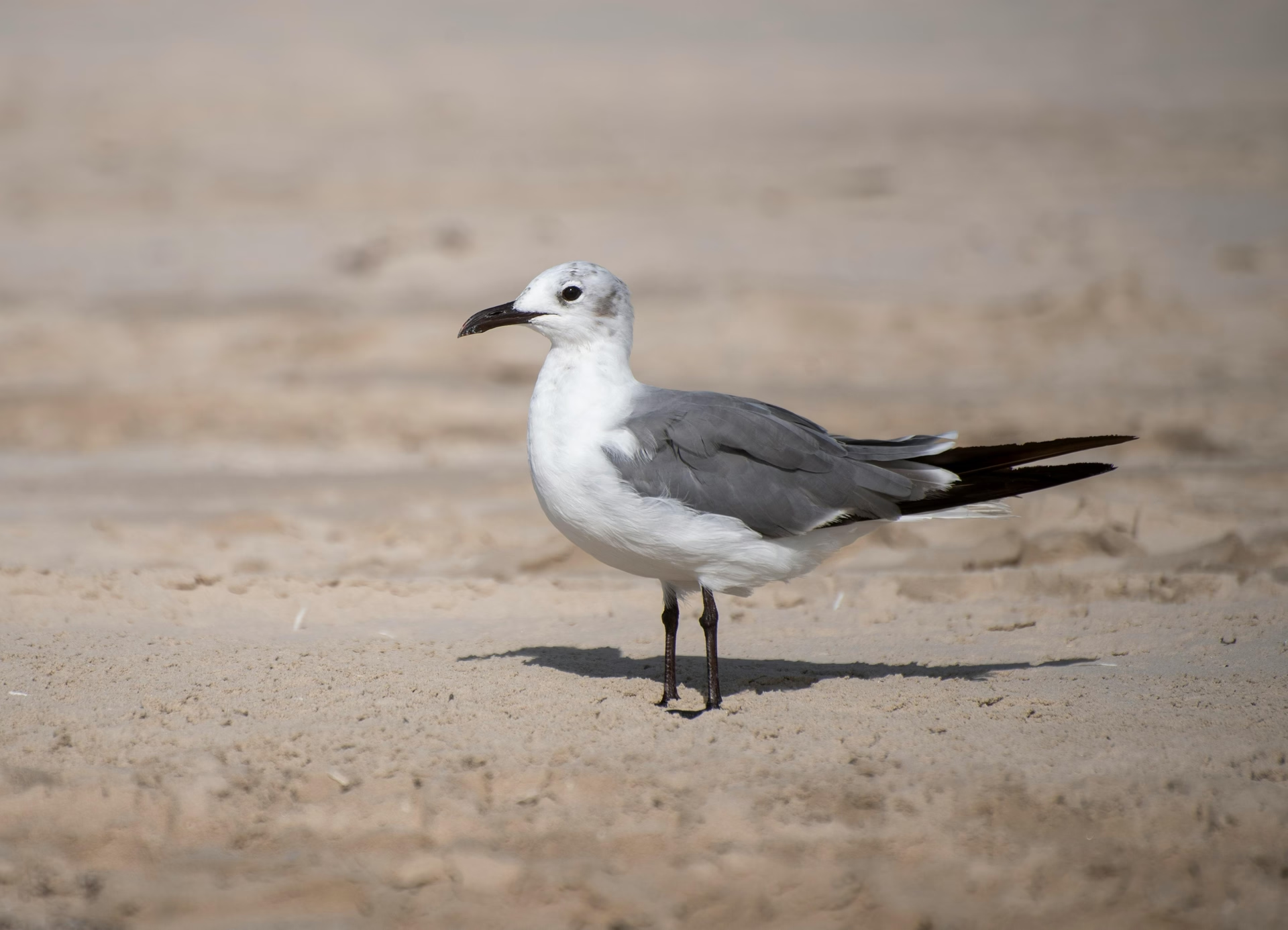
Not every migrant is a duck. Siberian rubythroats, bluethroats, wagtails and Phylloscopus warblers fill reedbeds and scrub. Hill forests near Kathmandu, such as Phulchoki at 2,782 metres, hold wintering thrushes and flycatchers that have moved downslope.
Can You See Himalayan Monals During Winter?
Yes, Himalayan monals stay in Nepal all year and are easier to see in winter. The monal, called danphe and Nepal's national bird, lives between 2,100 and 4,500 metres and drops to lower oak and rhododendron forests when snow covers high meadows.
The Himalayan monal (Lophophorus impejanus) is a pheasant with metallic plumage in green, purple, copper and blue. Males shine in sunlight. Females are brown and camouflaged. The bird digs for tubers and insects with its curved bill, so you find it on snow-free slopes, usually at dawn.
Langtang, Sagarmatha, Rara and the Annapurna region are reliable sites. On trek, scan open hillsides for 30 minutes after sunrise, when the first light hits the slope. Listen first. The male's loud, whistling call carries across the valley before you spot the bird.
Where Can You Spot Bar-Headed Geese in Nepal?
Bar-headed geese winter on Nepal's Terai wetlands, especially in western Chitwan and Nawalpur, along the Banganga River in Kapilvastu and at Koshi Tappu. The January 2026 count found 946 bar-headed geese and 8,523 ruddy shelducks in the western Chitwan and Nawalpur sector.
The bar-headed goose (Anser indicus) is a pale grey goose with two black bars on a white head. It breeds on high Tibetan and Mongolian lakes. Research led by Bangor University and published in Science in 2015 recorded individuals flying above 7,000 metres over the Himalaya.
You find them at dawn on sandbars and shallow river channels. Bring a spotting scope and stay back from the water's edge. A flock that lifts off has been disturbed, and a closer approach ends the observation.
Which Wetland Birds Arrive in Nepal During Winter?
Koshi Barrage, Jagadishpur Reservoir, Ghodaghodi Lake, Chitwan's rivers and Pokhara's lakes receive most winter wetland birds. The 2026 count recorded about 25,000 birds at Chitwan, 37,000 in the Pokhara Valley, 10,282 at Jagadishpur and about 6,000 at Koshi.
The numbers show a shifting map. Koshi fell from about 10,000 birds of 67 species to about 6,000 of 56. Jagadishpur held 12,832 birds of 48 species the previous year, and 23,000 in 2018, a 55% decline over eight years. Pokhara's lakes rose to 37,000 birds, though species counts fell from 55 to 46.
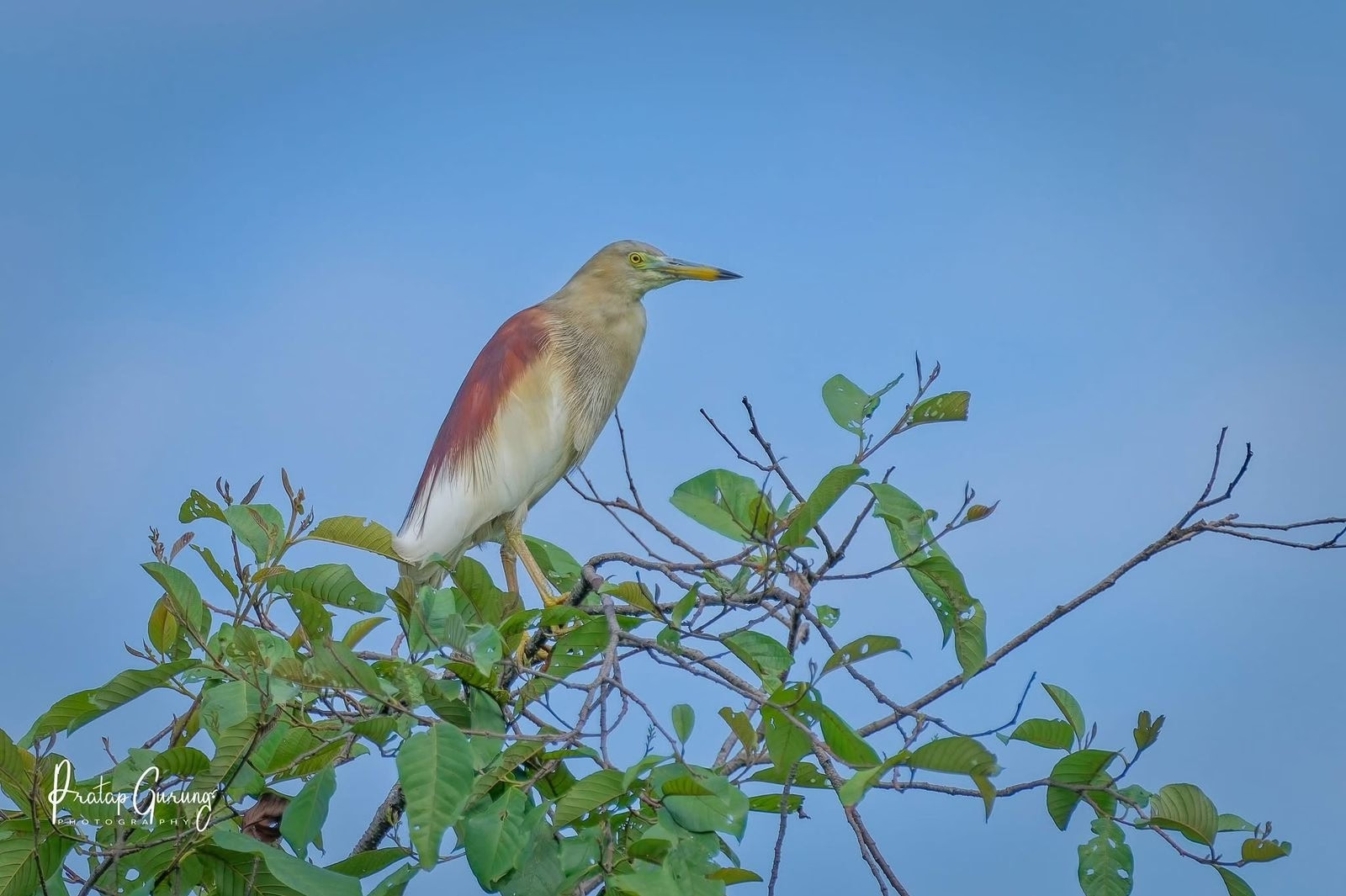
Look for ferruginous ducks, tufted ducks, Eurasian wigeons, indian pond heron, cormorants, great crested grebes and black-necked storks. The cotton pygmy goose, a threatened species with 72 birds recorded at Jagadishpur a year earlier, was absent in 2026.
Can You Spot Eagles, Vultures, and Other Birds of Prey?
Yes, winter is productive for raptors. Steppe eagles, eastern imperial eagles, greater spotted eagles and Pallas's fish eagles use Terai wetlands, while Himalayan griffons, Egyptian vultures and bearded vultures (lammergeiers) use thermals above the hills.
Nepal's resident vultures are in crisis. White-rumped, slender-billed and red-headed vultures are critically endangered after diclofenac, a veterinary painkiller, poisoned carcasses across South Asia. Bird Conservation Nepal runs vulture safe feeding sites, including one at Pithauli in Nawalpur, where you watch birds feed on clean carcasses.
For eagles, scan the edges of reedbeds at midday, when thermals build. Lammergeiers cruise the cliffs of Sagarmatha and Langtang, dropping bones from height to crack them. Keep 200 metres from nests and feeding sites.
What Are the Best Places for Winter Birdwatching in Nepal?
The 5 best winter birdwatching sites in Nepal are Koshi Tappu Wildlife Reserve, Chitwan National Park, Pokhara's lakes, Jagadishpur Reservoir and Ghodaghodi Lake. Phulchoki hill and Shuklaphanta National Park (456 bird species) add forest and grassland species.
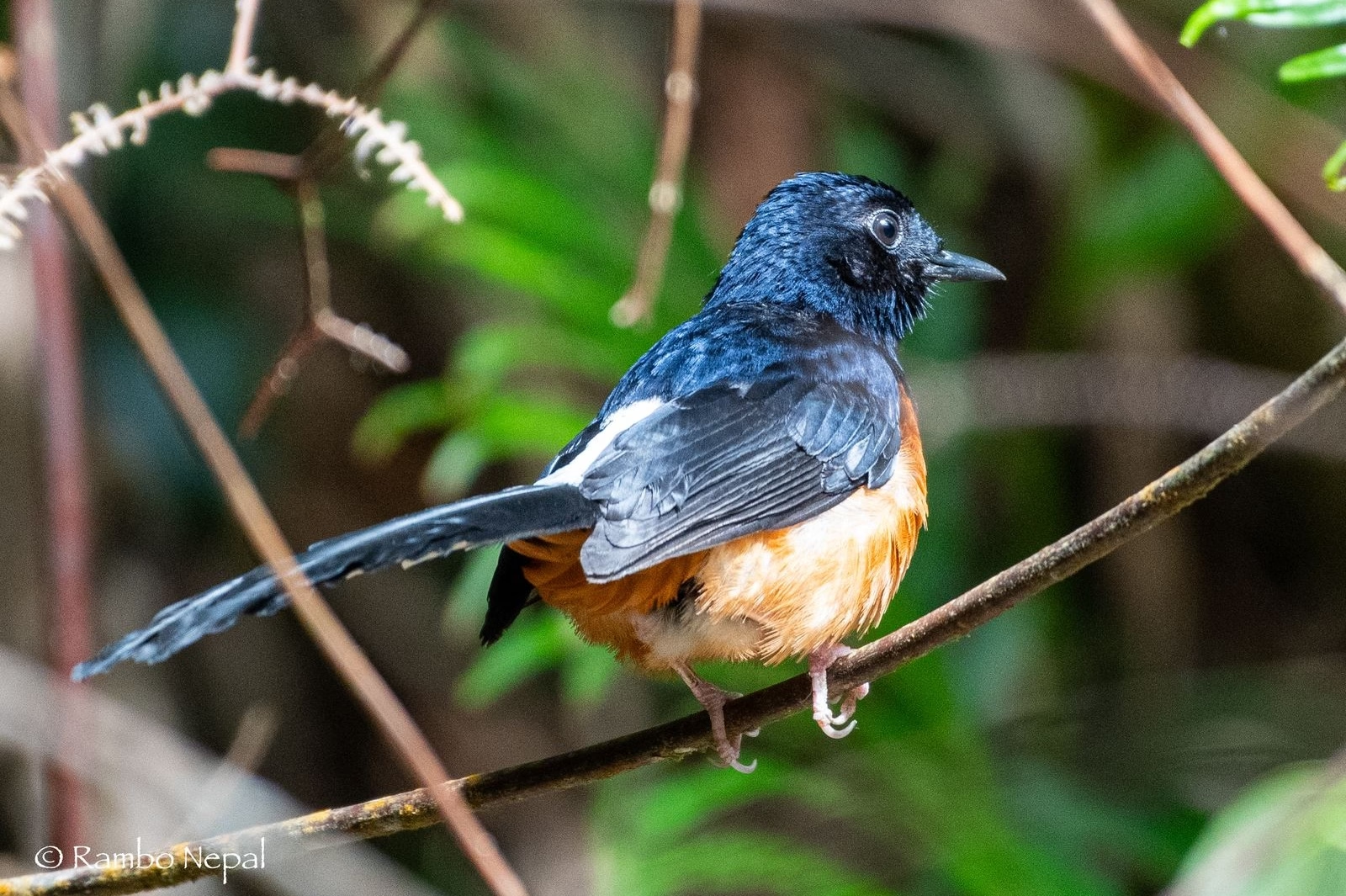
Kathmandu Valley lies at the meeting point of different ecological regions, creating a range of natural habitats within a relatively small area.It has dense forests, river corridors, wetlands, agricultural fields and hillside woodlands that support a great diversity of bird species.
Kathmandu Bird Photography Day Tour
View detailsKoshi Tappu suits dedicated birders who want ducks, waders, raptors and rare gulls on one river system. Chitwan suits mixed trips, because its 600-plus species share the park with rhinos and tigers. Pokhara works for travellers who want birds with mountain views and short walks.
Jagadishpur Reservoir in Kapilvastu and Ghodaghodi Lake in Kailali are both Ramsar sites, meaning internationally recognised wetlands. They are quieter, less visited and better for photographers who dislike crowds. Choose 2 sites for a week, not 5, because each site rewards 2 full mornings.
Where Are the Best Places to See Animals in Nepal During Winter?
The 6 best places for winter wildlife in Nepal are Chitwan, Bardia, Sagarmatha, Shey Phoksundo, Koshi Tappu and Langtang. Chitwan and Bardia lead for tigers, rhinos and elephants. Koshi Tappu leads for birds. The three mountain parks lead for tahr, monals and snow leopards.
Match park to target. A first-time visitor with 4 days picks Chitwan. A tiger-focused returning visitor adds Bardia. A birder starts at Koshi Tappu. A trekker pairs Langtang or Sagarmatha with the tahr and monal. A specialist with 10 days and a high tolerance for cold goes to Shey Phoksundo.
Which Animals Can You See in Chitwan National Park?
Chitwan National Park protects 145 tigers, about 694 rhinos, Asian elephants, gaur, sloth bears, leopards, gharials and more than 600 bird species across 952 square kilometres. Established in 1973, it became a UNESCO World Heritage Site in 1984.
Chitwan is the most accessible Terai park, about 5 to 6 hours by road from Kathmandu or Pokhara. Activities include jeep drives, canoe trips on the Rapti River, guided walks and dawn bird walks.
Winter has a Chitwan-specific quirk. Elephant grass grows 4 to 6 metres tall by December and hides animals. Local communities harvest thatch grass in a short permitted window each winter, and the park later burns or clears sections. Visibility improves from late January. A February trip often beats a December trip for mammals, while December suits birds.
What Wildlife Can You Spot in Bardia National Park?
Bardia National Park, at 968 square kilometres, holds 112 tigers, 38 rhinos, wild elephants, swamp deer, gharials, Ganges river dolphins and blackbuck. Established in 1988, it is quieter and wilder than Chitwan, with far fewer visitors.
Bardia sits in the far west and takes 12 to 14 hours by road from Kathmandu, or a short flight to Nepalgunj followed by a 2-hour drive. That distance filters out crowds, so the jungle stays quiet. The tiger count fell about 10% from 125 in 2022, so book Bardia for atmosphere and elephants first and tiger odds second.
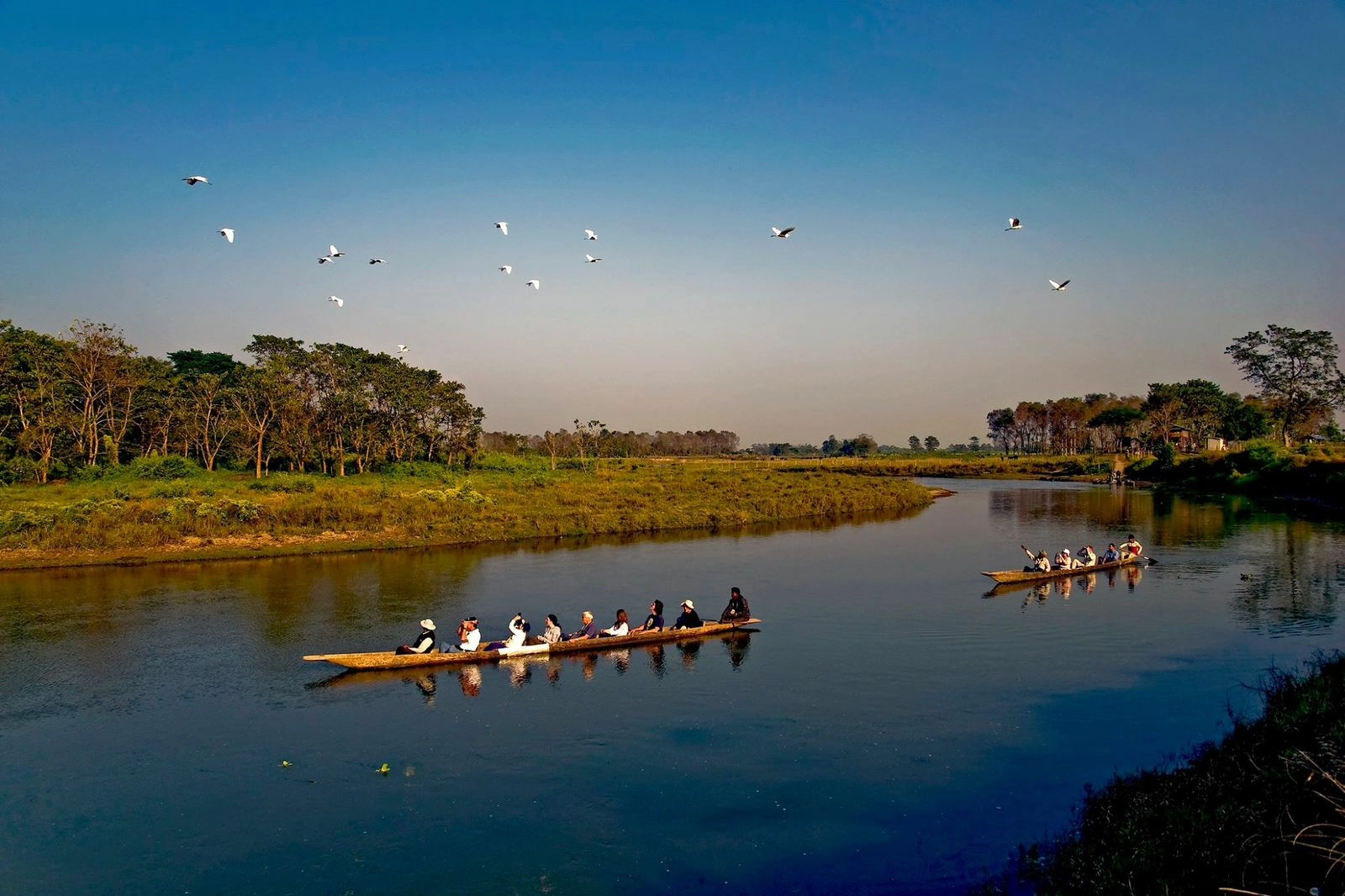
Jeep tracks along the Karnali and Geruwa rivers open long views. Walks follow a naturalist guide through sal forest. The Karnali offers dolphin watching from the riverbank in the dry season. The remoteness is the draw and the main cost.
Which Winter Animals Can You Find in Sagarmatha National Park?
Sagarmatha National Park, covering 1,148 square kilometres around Mount Everest, hosts Himalayan tahr, musk deer, Himalayan monals, snowcocks, lammergeiers and, rarely, snow leopards. Winter nights above Namche Bazaar (3,440 metres) fall to minus 10°C or lower, so only prepared trekkers go.
Tahr graze the steep slopes of the Dudh Koshi valley, often within sight of the trail. Monals feed on open, snow-free hillsides at dawn. Lammergeiers circle the cliffs along the route.
Winter on the Everest trail has real trade-offs. Skies are clear and trails are quiet, but trail sections ice over, lodges thin out at altitude and flights to Lukla cancel for fog. Build 2 buffer days into any winter itinerary.
Can You See Snow Leopards in Shey Phoksundo National Park?
Snow leopards live in Shey Phoksundo National Park, Nepal's largest at 3,555 square kilometres. A 2019 to 2022 survey with 319 camera traps estimated 90 snow leopards, a density of 2.21 per 100 square kilometres. Live sightings remain rare.
The Department of National Parks and Wildlife Conservation and WWF published the figure in February 2024. The 2009 estimate was 110 to 130, so the cameras tell a more cautious story. Prey is the reason the cats stay: more than 4,000 Himalayan tahr, goral and blue sheep live in and around the park.
Shey Phoksundo is remote. Access runs through Juphal airport and a trek to Phoksundo Lake at about 3,600 metres. Snow closes high passes in winter and flights cancel with weather. Build in 3 spare days, hire a guide who knows Dolpa and keep expectations realistic. Wolves, musk deer, blue sheep and bears share the park.
What Wildlife Can You Encounter in Koshi Tappu Wildlife Reserve?
Koshi Tappu Wildlife Reserve covers 176 square kilometres of the Sapta Koshi floodplain and records over 526 bird species. It also holds Nepal's last wild water buffalo (498 animals as per the 2021 census), Ganges river dolphins, gharials, hog deer and wild elephants.
Gazetted in 1976 and designated a Ramsar site in 1987, Koshi Tappu is Nepal's top birding destination. The wild water buffalo (arna) is the reserve's mammal flagship. The population is declining, and sightings need a guide.
Winter means clear skies and cool days. Dawn boat trips on the Koshi River beat any other activity. You see waterfowl, waders, gulls, terns and raptors along sandbars. Pair Koshi Tappu with Chitwan or Pokhara to create a 7-day birding circuit.
Which Animals Can You See in Langtang National Park?
Langtang National Park, 1,710 square kilometres north of Kathmandu, shelters red pandas, Himalayan tahr, musk deer, Himalayan black bears, rhesus macaques, Himalayan monals and a small snow leopard population. It was Nepal's first Himalayan national park, established in 1976.
Langtang is the most convenient mountain wildlife destination. The Syabrubesi trailhead is 7 to 8 hours from Kathmandu by road. The Langtang Valley Trek takes about a week, climbs through oak, rhododendron and juniper forest and reaches Kyanjin Gompa at roughly 3,800 metres.
Winter treks demand preparation. Nights above Langtang village fall well below freezing, and snow cuts the last stages. The reward is quiet trails, tahr on the open slopes and monals in the forest belt. Red pandas live in the bamboo forests of the lower valley, though sightings are uncommon.
Why Is Winter a Good Season for Wildlife Watching in Nepal?
Winter is a good wildlife season in Nepal because cool, dry, clear weather keeps animals active longer, migratory birds peak in January, and Himalayan species move to lower, more visible slopes. The trade-off is fog in the Terai and severe cold in the mountains.
Winter also removes the worst of the monsoon problems: leeches, flooded roads, cancelled safaris and blurred skies. Spring has its own case. Shuklaphanta's best season runs from March to June, when drier grassland pulls animals toward the remaining water. Choose winter for birds and comfort and spring for mammals.
How Does Winter Weather Affect Wildlife Sightings?
Winter weather affects sightings in 3 ways: Terai fog delays or ruins the first hour of a morning drive, cool days keep mammals moving into the late morning, and mountain snow pushes animals toward trails. Terai daytime highs run 15 to 28°C, with mornings near 10°C.
Fog is the main frustration. On dense mornings in Chitwan and Bardia the first hour of a jeep drive yields nothing but silhouettes. Photographers still love it, because fog softens light and turns a rhino into a moody shape. Plan 3 drives, not 1, so one bad morning does not sink the trip.
In the mountains, wind and sudden snow close trails. Himalayan tahr and monals respond by feeding lower and longer, which helps trekkers on valley paths.
Why Do Animals Become Easier to Spot During Winter?
Animals become easier to spot in winter because cold mornings send reptiles to open sandbanks, thinning vegetation and receding rivers concentrate mammals at water, and snow cover forces mountain herbivores down to trailside slopes and open meadows.
Cold-blooded gharials and muggers bask for hours on riverbanks to raise body temperature, which turns the Rapti and Narayani into a reliable reptile show. As the dry season starts, small ponds shrink and tracks multiply around permanent water. A 2025 study cited by Mongabay found that distance to artificial waterholes predicted tiger habitat better than prey density.
Bird visibility rises as leaves fall. Sal forests shed leaves from February, and reedbeds thin after the January grass harvest. A caution: the best mammal visibility belongs to late February and March, not December.
How Do Seasonal Changes Influence Animal Migration in Nepal?
Seasonal changes drive 3 migrations in Nepal: waterfowl fly in from Siberia and Central Asia, high-altitude herbivores descend from 4,000 metres to forested slopes, and elephants cross the Indian border along the Terai Arc Landscape.
Altitudinal migration is a short seasonal move up or down a mountain slope. Tahr, blue sheep, musk deer and monals make it, and snow leopards follow the prey. Latitudinal migration is a long north-south journey, and bar-headed geese, ruddy shelducks and pintails make it.
Transboundary movement adds a third layer. According to Mongabay's 2026 analysis, habitat improvements on the Indian side of the border helped tigers move into Shuklaphanta and Parsa. The same corridors carry elephants. A trade highway through Parsa obstructs that movement.
When and How Can You Spot Wildlife Safely in Nepal During Winter?
You spot wildlife safely in Nepal in winter by travelling with a licensed naturalist guide, entering parks at sunrise, wearing layered neutral clothing, keeping fixed distances and following park rules. Terai trips run best from mid-December to late February.
Safety here means 2 things: protecting yourself from large animals and protecting animals from you. Both come down to preparation and discipline.
What Is the Best Time of Day for Winter Wildlife Watching?
The best time for winter wildlife watching is the first 2 hours after sunrise and the last 2 hours before sunset. Terai mammals and birds feed at these times, and mountain species such as monals and tahr graze at first light.
In the Terai, schedule a morning jeep drive (leaving about 6:30 am, later in dense fog), a midday rest, an afternoon canoe or walk, and a dusk drive when the park allows it. Gharials bask between 10 am and 2 pm. Waterfowl stay active until 10 am.
In the mountains, start walking before dawn with a headlamp and reach a scanning ridge by sunrise. Snow leopards and tahr are both most visible in the hour after first light.
What Clothing and Equipment Do You Need for Winter Wildlife Safaris?
For Terai winter safaris you need 3 layers (thermal base, fleece, windproof shell), neutral colours, 8x42 binoculars and a camera with a 300 mm or longer lens. For Himalayan winter treks you need a down jacket rated to minus 15°C, insulated boots and a spotting scope.
Terai mornings are cold in open jeeps. A beanie, gloves and a buff make a difference at 8°C with wind chill. Olive, khaki and brown reduce your visibility to animals. Bright colours and perfume carry across the jungle.
Cold drains batteries. Carry 2 spare camera batteries and a power bank in an inner pocket, close to your body. Add insect repellent for dusk, a refillable water bottle and a notebook for sightings. Trekkers add microspikes, sunglasses with side shields and a 4-season sleeping bag where lodges provide thin blankets.
What Wildlife Watching Rules Should Visitors Follow?
Visitors follow 6 core rules: stay with your guide, stay in the vehicle at close range, never feed animals, keep noise low, take no litter or plants, and keep fixed distances from animals. Rules apply in every national park, reserve and conservation area.
Walking safaris in Chitwan and Bardia require a licensed naturalist guide. The guide sets the pace, reads wind and tracks, and decides when to retreat. A charging rhino calls for the standard response of moving behind a tree or climbing one, and the guide gives the signal.
Common mistakes we see: standing up in an open jeep next to an elephant, leaning out for a closer photograph, using flash at dusk and asking the driver to follow an animal. Each puts the animal under stress and puts you at risk.
How Can You Photograph Wild Animals Without Disturbing Them?
You photograph wild animals without disturbing them by using a telephoto lens, shooting from your vehicle or hide, turning off flash and shutter sounds, avoiding drones and leaving immediately when an animal shows stress. Stress signs include ear flattening, tail flicking, stamping, staring and moving away.
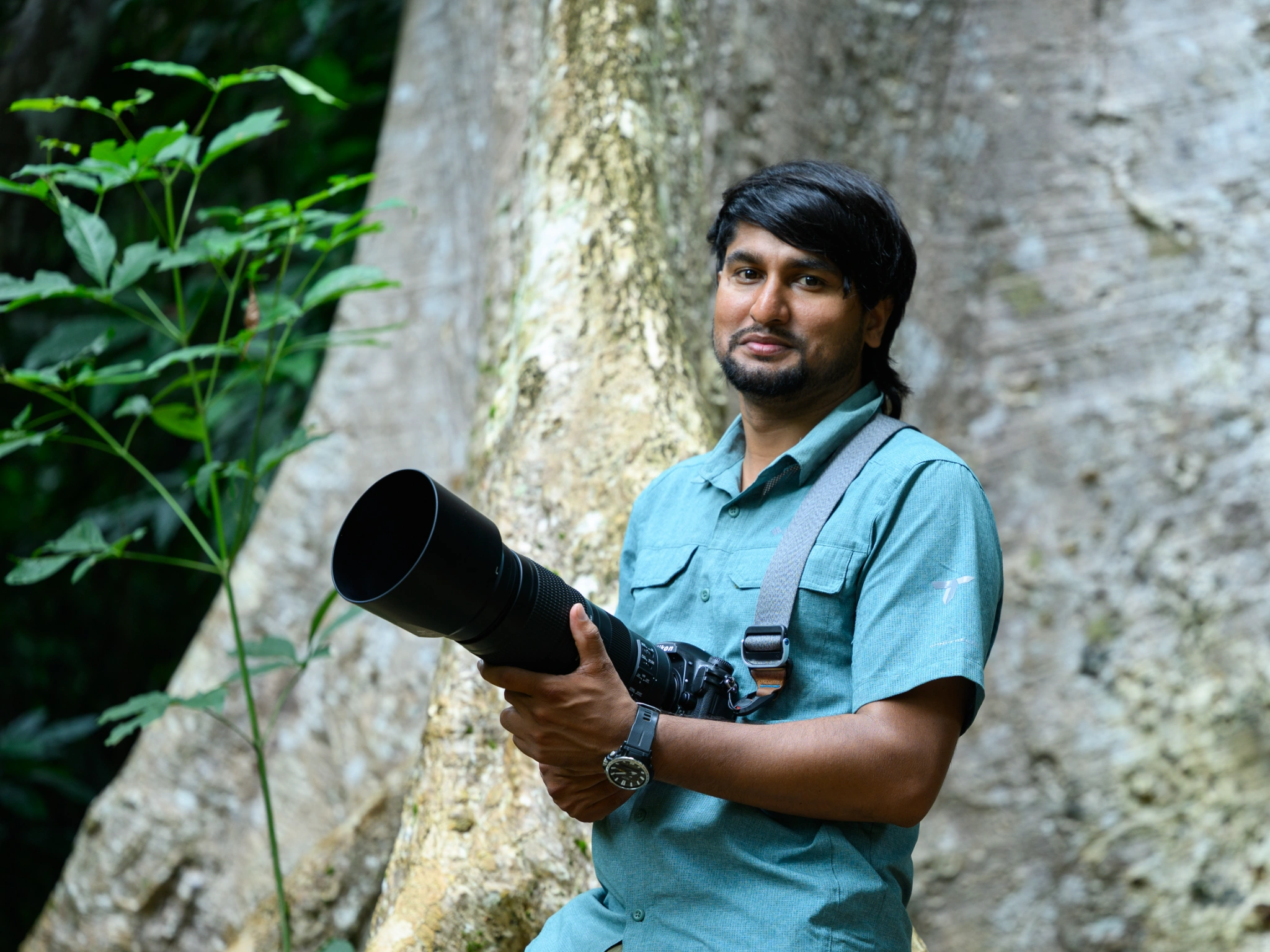
Telephoto reach is the core tool. A 400 mm lens frames a rhino from 60 metres or more. A 600 mm lens fills the frame with a bird at 30 metres. Use silent electronic shutter mode and a beanbag for stability.
Never bait, call or flush animals, a practice that shifts feeding, courtship and rest. Nepal requires government permission for drones in protected areas, and drones frighten birds of prey and waterfowl. Photograph the animal in its habitat rather than chasing the closest crop. Stay put, wait 20 minutes and let behaviour develop.
How Can Heaven Himalaya Help You Experience Nepal's Winter Wildlife?
Heaven Himalaya is a Kathmandu-based adventure company at Gitanjali Chowk, Dathu Sadak. It runs trekking, peak climbing, photo expeditions, helicopter tours and wildlife tours across Nepal. The company has Tripadvisor Travelers' Choice recognition for 2021 to 2025 and a 5.0 rating from 160 reviews at the time of writing. Booking goes direct to the operator, with no middleman commission.
Winter wildlife planning has 4 variables: park, species target, number of nights and cold tolerance. We build each itinerary around those. Wildlife packages generally include nature guides, park entry permits, jeep or boat safaris, lodge stays and transfers from Kathmandu or Pokhara, and we confirm the exact inclusions for each trip when you enquire.
Can Heaven Himalaya Arrange Winter Wildlife Tours and Safaris in Nepal?
Yes. We arrange winter wildlife tours and safaris in Nepal, built around the park and species you choose. Our current wildlife tours include the Chitwan National Park Tour (2 nights, 3 days) and the Nepal Adventure Photography Tour (14 nights, 15 days). Mountain wildlife pairs with the Langtang Valley Trek and the Everest Base Camp Trek. You can see everything on the wildlife tours page.
Questions about dates, species odds or custom itineraries go to info@heavenhimalaya.com or +977 985 1273867 (WhatsApp and Viber). Send your travel month and your top 3 target animals, and we reply with a suggested park, length and packing list.
What Are the Key Takeaways About Animals Seen in Nepal During Winter?
Animals seen in Nepal during winter include tigers, rhinos, elephants, deer, gharials, monals, tahr and migratory waterfowl. December to February suits birds, comfort and Terai safaris. Each target species has a best park and a realistic chance.
Tigers: 429 nationwide in 2026, with the highest counts in Chitwan (145) and Bardiya (112). Sightings need 3 to 4 nights.
Rhinos: 752 at the 2021 census, 694 in Chitwan. A sighting is very likely on a Chitwan trip.
Elephants: about 230 nationwide. Bardia and Shuklaphanta offer the best encounters.
Snow leopards: 397 estimated nationwide, 90 in Shey Phoksundo. Sightings are rare, and tracks are the realistic reward.
Red pandas: 500 to 1,000 nationwide. The east and Langtang hold them, and sightings are uncommon.
Birds: Koshi Tappu, Chitwan and Pokhara lead for waterfowl. Himalayan monals live at 2,100 to 4,500 metres.
Timing: choose December and January for birds and February for mammals.
Safety: use a licensed guide, wear neutral layers and keep your distance.
Plan one park per 3 to 4 nights, book the early morning drives and carry binoculars. Wildlife in Nepal in winter rewards patience and preparation, and every sighting is earned.