

Nepal in September 2026: Weather, Trekking & Travel Tips

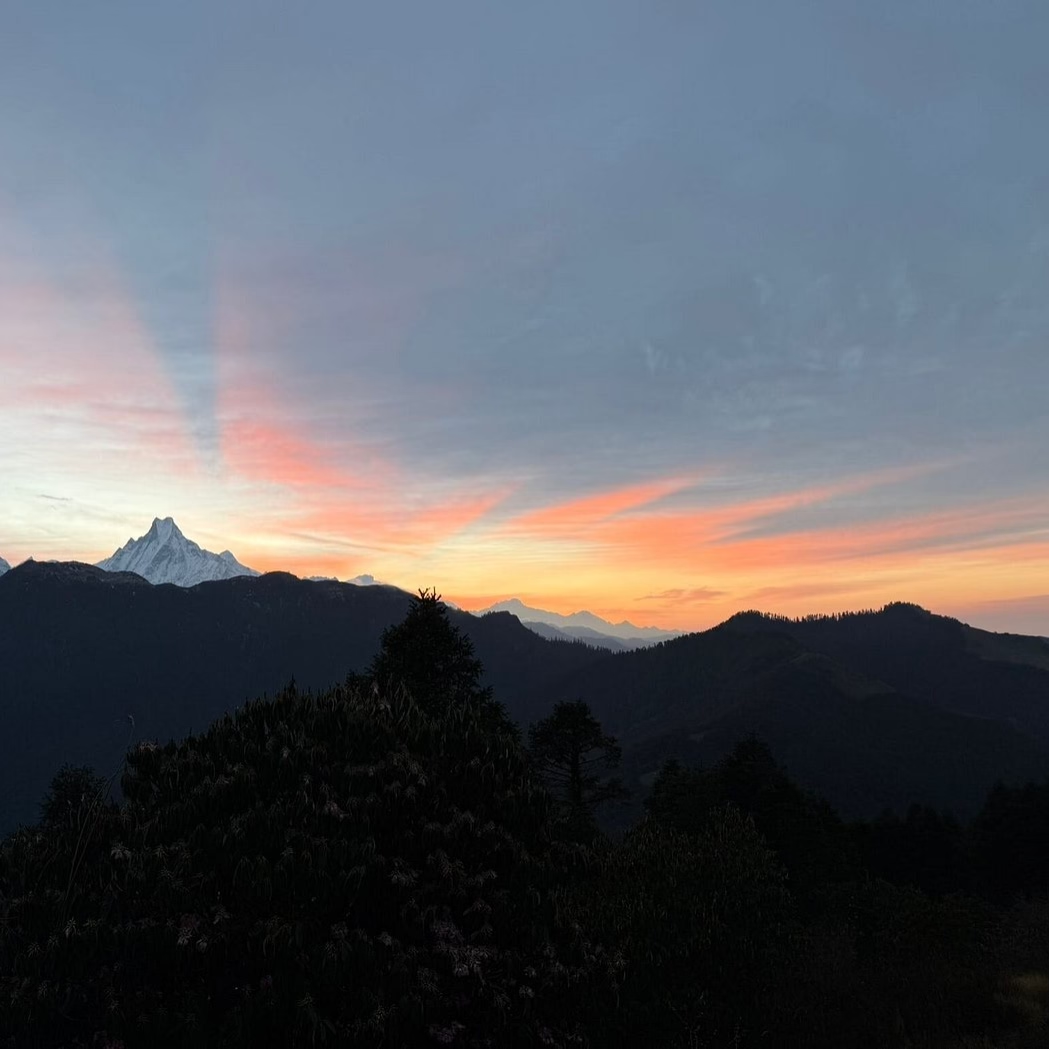
Nepal in September is a transitional travel season when the South Asian monsoon begins to retreat and Nepal shifts from wet summer conditions toward the clearer autumn trekking season. Lower elevations remain warm and humid, while rainfall gradually decreases and the Himalayan landscape becomes exceptionally green, with full-flowing waterfalls, refreshed forests, terraced fields, and increasingly frequent mountain views.
Weather varies sharply by region and altitude: Kathmandu and the central hills remain wetter than rain-shadow areas such as Upper Mustang and Dolpo, while high-altitude routes can still experience snow, cloud, and rapidly changing conditions. The timing within the month matters most, with the second half of September generally offering more reliable trekking conditions than the first half.
September also connects Nepal's trekking, cultural, wildlife, and adventure experiences in a single travel window. Trekkers can consider the Everest Base Camp Trek, Annapurna Circuit, Langtang Valley, Manaslu Circuit, Upper Mustang, and Dolpo according to weather, altitude, and trail conditions, while Kathmandu offers historic temples, Buddhist sites, and festivals such as Teej and Indra Jatra. Pokhara combines Phewa Lake, Davis Falls, caves, viewpoints, and access to the Annapurna region, while Chitwan and Bardia provide monsoon-season wildlife experiences.
Successful September travel requires waterproof clothing, suitable footwear, altitude preparation, trekking permits, reliable guides, weather and trail checks, and buffer days for mountain-flight or road delays. This guide brings together Nepal's September weather, trekking conditions, things to do, festivals, wildlife, packing requirements, permits, transportation, safety considerations, costs, and itinerary planning to help travelers choose the right region and timing for their trip.
What Is the Weather Like in Nepal in September?
Nepal in September experiences the final phase of the South Asian monsoon, with warm temperatures, high humidity, and decreasing, though still significant, rainfall. Temperatures remain mild, skies shift between dramatic clouds and sudden clearings, and the landscape reaches its most intensely green state of the year.
How Warm and Rainy Is Nepal in September?
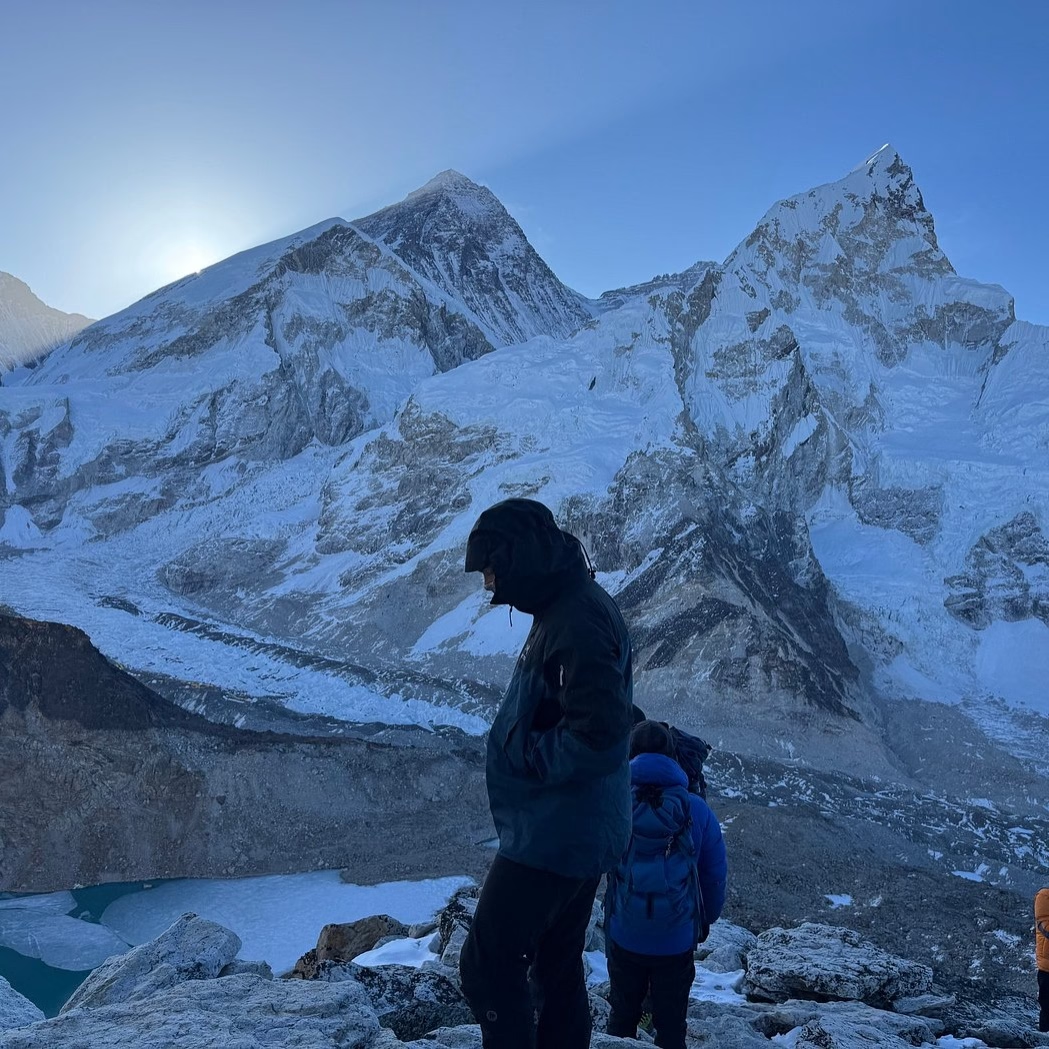
September temperatures across Nepal range from 18°C to 27°C (64°F to 81°F) at low to mid elevations. Humidity levels stay between 80% and 90% throughout the month, making mornings feel muggy but evenings comfortable.
Rainfall in September is lower than the July peak but still substantial. Kathmandu receives approximately 165mm of rainfall in September, compared to 340mm in July. By the final 10 days of September, daily rain frequency drops noticeably. Afternoon showers remain the norm, typically lasting 1 to 3 hours between 2 PM and 6 PM, after which skies often clear for vivid sunsets.
The key insight most travelers miss: early September (September 1–15) feels distinctly wetter than late September (September 16–30). Planning your high-altitude trek arrival for the third or fourth week of September gives you statistically better trail conditions than arriving on September 1.
What Weather Can You Expect in Kathmandu and Pokhara?
The following table shows average conditions for Kathmandu and Pokhara in September, covering temperature range, rainfall, and daily sunshine hours.
City | Avg High (°C) | Avg Low (°C) | Monthly Rainfall (mm) | Daily Sunshine (hrs) |
Kathmandu | 25°C (77°F) | 18°C (64°F) | 165mm | 4–5 hrs |
Pokhara | 27°C (81°F) | 20°C (68°F) | 550mm | 3–4 hrs |
Pokhara receives more rainfall than Kathmandu in September because of its proximity to the Annapurna massif, which traps orographic moisture from the south. The Phewa Lake basin amplifies afternoon cloud formation, so mornings in Pokhara are often clearer than afternoons, the reverse of Kathmandu's typical pattern.
What most guides overlook: Pokhara's Davis Falls reaches peak volume in September, creating a spectacle that disappears almost entirely by November. Visitors who time their Pokhara stay for September see a version of the city that the October crowd never experiences.
How Does September Weather Vary by Altitude?
Altitude determines September conditions more decisively than calendar date. The 3 primary altitude bands produce distinct weather environments:
Below 2,500m (Terai, hill towns, low valleys): Temperatures of 22–30°C (72–86°F), high humidity, frequent rain, leeches active on trails
2,500m to 4,000m (middle Himalayan zone, most popular trekking corridors): Temperatures of 10–20°C (50–68°F), cloud breaks more common, trail conditions vary by drainage and slope aspect
Above 4,000m (high passes, base camps, alpine zones): Temperatures of -5°C to 8°C (23–46°F), snow possible on passes above 5,000m, afternoon thunderstorms form rapidly and move fast
The critical planning implication: trekkers targeting high passes like Thorong La (5,416m) on the Annapurna Circuit or Larkya La (5,160m) on the Manaslu Circuit face genuine snow risk in early September. These passes become significantly more reliable from September 25 onward, as the retreating monsoon reduces high-altitude precipitation by 60–70%.
When Does the Monsoon End in Nepal?
The monsoon's official normal withdrawal date from Nepal is 2 October, according to the Department of Hydrology and Meteorology, though the 2025 season ran eight days past that norm, a reminder that "late September is clear" is a pattern, not a guarantee. Eastern Nepal (the Everest and Kanchenjunga regions) still tends to clear first, with central and western Nepal following days to weeks later. Strong monsoon years (La Niña cycles) push the retreat into early October; average years see the monsoon withdraw by September 25–28.
The retreat does not happen uniformly. Eastern Nepal (the Everest and Kanchenjunga regions) clears first. Central Nepal (Langtang, Annapurna zone) follows within 3–5 days. Western Nepal (Dolpo, Rara Lake) clears last, sometimes holding residual cloud into mid-October.
Travelers who arrive in Nepal on September 20 and spend 2–3 days acclimatizing in Kathmandu before heading to a trailhead land in a near-perfect timing window: the trail is greener than October, crowds are 40–60% lower, and post-monsoon clarity begins within days of their arrival.
Is September a Good Month for Trekking in Nepal?
September is a viable and rewarding trekking month for prepared trekkers, with conditions improving significantly in the second half of the month. Lower crowd density, dramatically green landscapes, and competitive pricing on permits, accommodation, and flights make it a strong alternative to peak October season.
Which Nepal Treks Are Best in September?
The 4 trekking regions most accessible in September are the Everest region, Annapurna region, Langtang Valley, and the rain-shadow areas of Upper Mustang and Dolpo. Each offers a different trade-off between weather reliability, scenery, and physical demand.
Rain-shadow treks, Upper Mustang and Dolpo, sit north of the main Himalayan barrier. They receive less than 250mm of annual rainfall regardless of monsoon strength, making them the most weather-consistent September destinations in Nepal.
Is the Everest Base Camp Trek Suitable in September?
The Everest Base Camp (EBC) Trek is suitable in September, with trail conditions improving substantially after September 15. The 130km route from Lukla to Base Camp at 5,364m passes through Namche Bazaar (3,440m), Tengboche (3,867m), Dingboche (4,410m), and Gorak Shep (5,164m).
September conditions on the EBC Trail include:
Namche Bazaar to Tengboche: Occasional rain, good visibility in mornings, cloud buildup by 1 PM
Above Dingboche (4,410m): Clearer skies, colder nights (-5°C to -10°C), moderate wind
Khumbu Icefall and Base Camp Zone: Late September sees the best September conditions, with Pumori and Nuptse (7,861m) visible on clear mornings
The Khumbu Valley dries out faster than the Annapurna region due to its northeast orientation and lower total monsoon rainfall. Trekkers completing EBC in the last 10 days of September report 70–80% of views comparable to October on clear mornings. For a full month-by-month breakdown of trail conditions, see our detailed guide to the Everest Base Camp trek in September.
What competitors miss: Sagarmatha National Park permits cost NPR 3,000 (approximately USD 22) and the local Khumbu Trek Card costs NPR 2,000. September hikers face zero permit queues, whereas October trekkers sometimes wait 45–60 minutes at Monjo checkpoints.
Is the Annapurna Circuit Suitable in September?
The Annapurna Circuit is partially suitable in September, with the lower and mid-altitude sections accessible but Thorong La Pass (5,416m) carrying increased weather risk before September 22. The full circuit covers 160–230km depending on the road-walking sections avoided, taking 14–20 days to complete.
The Annapurna Circuit splits into 2 distinct weather zones in September:
East side (Besisahar to Manang, up to 3,500m): Lush, wet, manageable. Waterfalls visible at Tal, Chame (2,670m), and Pisang (3,300m). Trail is muddy below 2,500m but passable.
West side (Muktinath to Jomsom, rain-shadow zone): Dry and clear throughout September. Muktinath (3,800m) averages fewer than 3 rain days in September due to its position behind the main Himalayan range, a pattern broken down in detail in our Muktinath weather in September guide.
The Thorong La Pass crossing, the highest and most critical point of the circuit, carries a 25–35% chance of snowfall in early September. That risk drops to under 10% by September 25. Trekkers who time their high camp at Thorong Phedi (4,450m) for the last week of September complete the crossing in conditions nearly identical to October.
Tilicho Lake (4,919m), a detour from Manang, is one of the highest lakes in the world and reaches its most dramatic state in September: clear blue water, snow-dusted banks, and zero other visitors on weekday mornings.
Can You Trek in the Manaslu and Langtang Regions in September?
The Langtang Valley Trek is fully accessible in September, while the Manaslu Circuit becomes increasingly viable from September 20 onward. Both regions offer scenery distinct from Annapurna and Everest, with significantly fewer trekkers.
Langtang Valley: The trail from Syabrubesi (1,550m) to Kyanjin Gompa (3,870m) covers 65km round trip over 7–10 days. September brings full green coverage to the rhododendron forests below 3,000m and fresh snow visible above 5,000m. Langtang Lirung (7,227m) reflects in the Kyanjin Gompa viewpoint ponds on clear mornings. The valley dries out faster than Annapurna due to its north-facing orientation.
Manaslu Circuit: The restricted area permit (USD 100 per week, September through November) limits this trail to guided trekkers only. Larkya La Pass (5,160m), the highest point, carries early-September snow risk comparable to Thorong La. The most reliable September window opens on September 22–25. The circuit covers approximately 177km over 14–18 days and rewards trekkers with the densest Tibetan Buddhist cultural landscape in Nepal outside of Mustang.
What Are the Benefits and Challenges of Trekking in September?
The 5 primary benefits of trekking Nepal in September are:
Fewer trekkers: Lodges along EBC and Annapurna run at 30–40% capacity versus 90–100% in October
Lower costs: Teahouse prices drop 15–25% compared to peak season; guide and porter day rates are negotiable
Maximum greenery: Rhododendron forests, terraced rice paddies, and glacial rivers reach peak visual intensity
Waterfall density: Hundreds of seasonal falls appear only during and immediately after monsoon
Cultural access: Teahouse owners have more time to share local knowledge and stories with guests
The 4 primary challenges trekkers face in September are:
Leeches on trails below 2,500m (preventable with salt sachets and gaiters)
Trail washouts on steeper sections after heavy rain (route checks essential 48 hours before departure)
Cloud-obscured views on mountain-facing sections, particularly before 8 AM and after 2 PM
Flight cancellations to mountain airstrips like Lukla, Jomsom, and Tumlingtar (build 2 buffer days into your itinerary)
What Should You Know Before Traveling to Nepal in September?
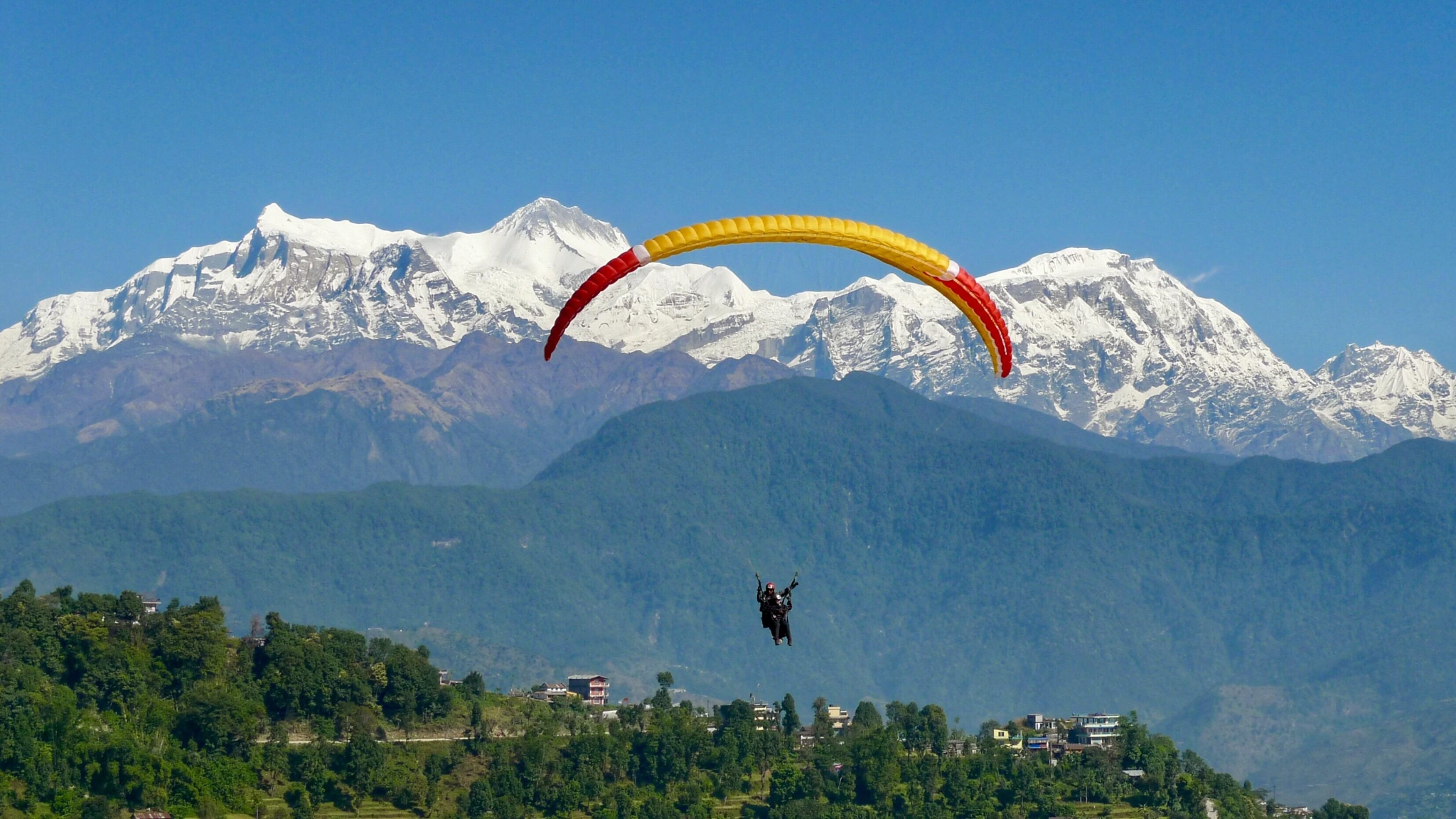
September travel to Nepal requires preparation across 4 areas: packing, rain and trail readiness, transport logistics, and altitude management. Travelers who address all 4 areas report substantially fewer disruptions than those who treat September like a standard trekking season.
What Should You Pack for Nepal in September?
The September Nepal packing list differs from October in 6 specific ways:
Category | September Essentials | Why It Matters |
Rain gear | Waterproof jacket, pack cover, dry bags | Daily afternoon rain guaranteed |
Footwear | Waterproof hiking boots, trail gaiters | Muddy and wet trails up to 2,500m |
Leech protection | Salt sachets, leech-proof socks | Active below 2,500m on all major trails |
Layers | Thermal base, mid-fleece, down jacket | Temperature swings of 15–20°C within single days |
Sun protection | SPF 50+ sunscreen, UV-blocking sunglasses | Post-monsoon sun is intense above 3,000m |
Documents | Printed permits, passport copies, insurance proof | Trail checkpoints require physical documents |
Pack in dry bags inside your trekking pack. Waterproof pack covers fail in sustained sideways rain, an interior dry bag system protects camera equipment, clothing, and sleeping bag inserts even in the heaviest September downpours.
How Should You Prepare for Rain and Muddy Trails?
Trail conditions in September vary by elevation and slope drainage. Below 2,000m, trails accumulate mud that makes descent 40–60% slower than ascent on dry trails. Above 3,500m, surfaces dry within 2–4 hours of rain stopping.
3 practical preparation steps for September trail conditions:
Book teahouses in advance at major trail junctions, as rain days cause all trekkers to stop simultaneously, filling limited accommodation
Start hiking by 6:30 AM to complete technical sections before afternoon cloud and rain arrives
Check local trail reports through Heaven Himalaya's pre-departure briefing or the Nepal Mountaineering Association's daily updates
Trekking poles reduce fall risk on wet, root-covered sections by approximately 60% based on field experience from guide teams operating September treks. Bring adjustable carbon-fiber poles and extend them 5–8cm beyond your standard summer setting for descents.
What Should You Know About Flights and Road Conditions?
Tribhuvan International Airport (Kathmandu) handles international arrivals without monsoon disruption. The complications arise on domestic mountain flights to Lukla, Pokhara, Jomsom, Nepalgunj, and Bharatpur.
Mountain airstrip flights operate under visual flight rules (VFR) only. Persistent cloud cover and low visibility cancel or delay flights to Lukla (for EBC) on average 3–5 days per month in September. The Jomsom airstrip (Mustang approach) cancels even more frequently due to afternoon valley winds.
Road conditions: The Prithvi Highway (Kathmandu–Pokhara) and the Araniko Highway (Kathmandu–Tibet border) both experience landslide closures in September. Check Nepal Road Administration reports 24 hours before overland travel. The Kathmandu–Chitwan road (via Narayanghat) is more reliable but still subject to 2–6 hour delays from monsoon washouts.
Build 2 full buffer days at either end of any mountain itinerary to absorb flight and road delays. Carry sufficient NPR cash (Nepali Rupees) for extended Kathmandu stays, mountain airstrip areas have no ATMs, and most teahouses accept cash only.
How Can You Prepare for Altitude and Changing Weather?
Altitude sickness (Acute Mountain Sickness, AMS) occurs when trekkers ascend faster than their bodies adapt, regardless of fitness level. The standard safe ascent rate above 3,000m is no more than 500m net gain per day, with a rest day every 3rd day.
4 altitude preparation actions before departure:
Consult a travel medicine physician for Diamox (acetazolamide) prescription, taken 125mg twice daily starting 24 hours before ascent above 3,000m
Hydrate at 3–4 liters of water daily throughout the trek, September humidity masks dehydration symptoms
Complete a moderate fitness program of 8 weeks minimum: hiking 2–3 times weekly with a 10kg pack builds trail-specific endurance
Purchase comprehensive travel insurance covering helicopter evacuation (minimum USD 100,000 coverage), helicopter evacuations from EBC Base Camp cost USD 4,000–8,000
The "golden rule" of altitude: descend immediately if you experience confusion, loss of coordination, or persistent severe headache. These 3 symptoms indicate High Altitude Cerebral Edema (HACE), a life-threatening condition that kills within hours without descent.
What Are the Best Things to Do in Nepal in September?
Nepal in September offers 4 categories of distinct experiences: cultural city exploration in Kathmandu, adventure and nature activities near Pokhara, wildlife safaris in the Terai, and high-altitude trekking on cleared trails in late September. Each category suits different travelers and timeframes within the month.
What Can You Do in Kathmandu in September?
Kathmandu's 7 UNESCO World Heritage Sites remain fully accessible regardless of monsoon rain. The city's cultural monuments concentrate within 5km of Thamel, making it possible to visit 3–4 sites in a single day with minimal transport.
The 6 best Kathmandu activities for September visitors are:
Pashupatinath Temple (Hindu sacred site, 5km from city center): September coincides with Teej celebrations, when thousands of women in red saris perform ritual bathing in the Bagmati River, one of Nepal's most visually striking annual events
Boudhanath Stupa (Tibetan Buddhist center): Monsoon clouds behind the 36m stupa create dramatic photography conditions unique to September; evening kora (circumambulation) draws 300–500 devotees nightly
Swayambhunath (Monkey Temple): The 300-step ascent passes rhododendron trees at peak green; sunrise visits between 5:30–7:00 AM offer clear views before cloud builds
Patan Museum (Lalitpur): Nepal's finest collection of Himalayan bronze and stone sculpture, fully indoor and unaffected by rain
Kathmandu Durbar Square: The 55-window palace and Kumari Ghar (living goddess courtyard) are most atmospheric during festival periods
Garden of Dreams (Keshar Mahal): A 6,895 sq m restored Neoclassical garden, the best quiet retreat in the city after rain
What Can You Explore Around Pokhara in September?
Pokhara in September offers a paradox: the Annapurna Range is frequently cloud-covered, but the city itself reaches its most dramatic natural state of the year.
Davis Falls (locally: Patale Chango) drops 20–30m through a limestone fissure at full monsoon volume in September, an awe-inducing sight that the October crowds never see. The falls reduce to a trickle by December.
The 5 best Pokhara September activities are:
Davis Falls: Visit between 8–10 AM before mist obscures the drop
Gupteshwor Mahadev Cave: Directly opposite Davis Falls; the cave system connects underground to the falls with Shiva shrine lighting
Phewa Lake boating: Rent a wooden boat for NPR 500–800 per hour; the reflected green hillside and rain-washed air create unmatched lake photography
World Peace Pagoda (Shanti Stupa, 1,100m): The 45-minute uphill hike through sal forest is best completed before 9 AM for partial Annapurna II (7,937m) and Machhapuchhre (6,993m) views
Begnas Lake (9km east of Pokhara): Less visited than Phewa; September's full water level and green surroundings attract local picnickers and fewer tourists
Which Wildlife Experiences Are Worth Visiting in September?
Nepal's 2 primary wildlife safari destinations, Chitwan National Park and Bardia National Park, operate in September but with modified conditions compared to dry season.
Chitwan National Park (148km southwest of Kathmandu): The park is partially flooded in early September, which concentrates wildlife along elevated ridge lines and forest edges. Elephant-back safaris pause during peak flood periods (September 1–10), but jeep safaris on elevated roads operate throughout. One-horned Asian rhinoceros, Bengal tiger, gharial crocodile, and freshwater Gangetic river dolphin sightings are possible year-round. September tiger sighting rates average 1 confirmed sighting per 3 full-day jeep safaris based on park naturalist records.
Bardia National Park (570km west of Kathmandu): Bardia offers Nepal's densest tiger habitat pedigree, though its population eased slightly to 112 tigers in the government's 2026 National Tiger and Prey Base Survey, even as the country's total climbed to a record 429. September crowds are still 80% lower than the February–March peak, and elevated machans and walking safaris with armed rangers remain the best September viewing method.
What Cultural Experiences Can You Enjoy in Nepal in September?
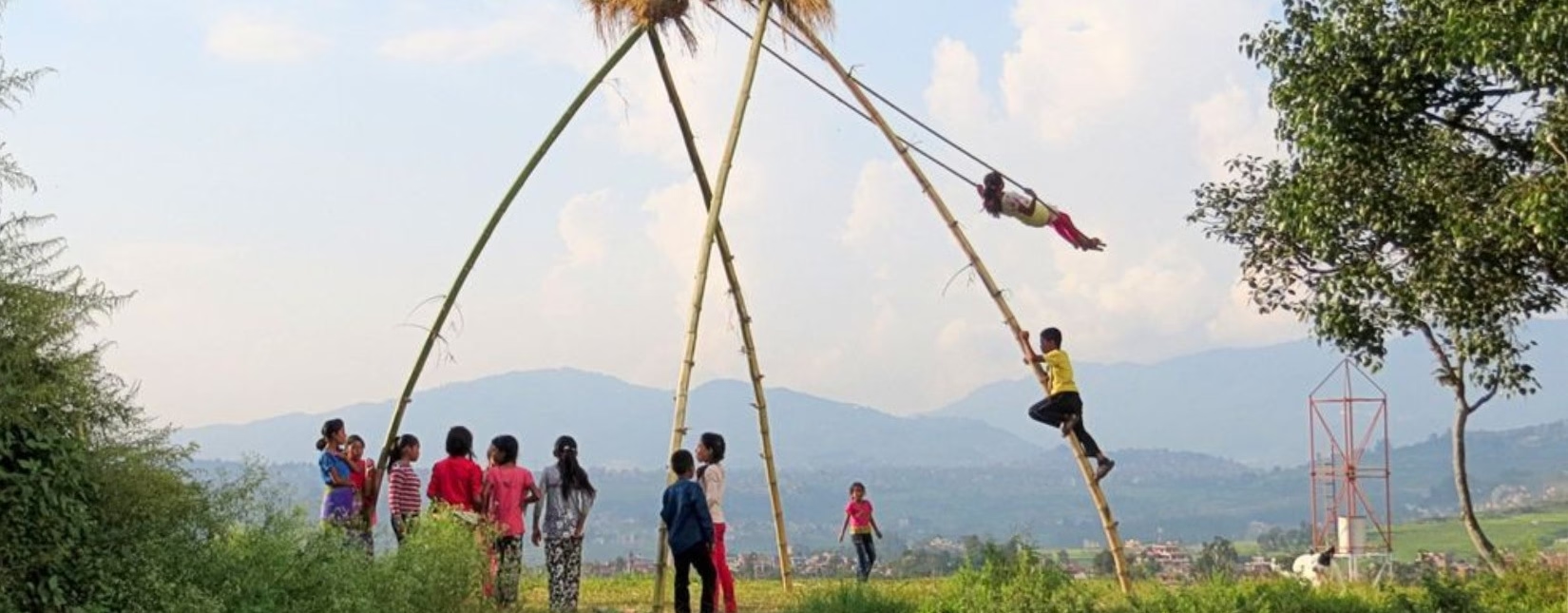
Nepal's September cultural calendar includes 4 major Hindu and Buddhist festivals, the most spiritually significant being Teej, Indra Jatra, Gai Jatra, and the ongoing cycle of Dashain preparations. These celebrations transform Kathmandu's streets in ways that no other month replicates.
Which Nepalese Festivals May You Experience in September?
You can experience many festivals in Nepal in Septemper:
Teej (Haritalika Teej) falls in the Nepali month of Bhadra (August–September), landing in mid-to-late September in 2026. This 3-day women's festival centers on fasting, ritual bathing, and worship of Lord Shiva at Pashupatinath Temple. Women dress in red saris and gold jewelry, forming processions from 4 AM through dawn. Pashupatinath's ghats hold 50,000–100,000 devotees during peak Teej morning hours, an experience of scale and color unmatched in Nepal's annual calendar.
Indra Jatra is an 8-day festival held in Kathmandu Durbar Square in the Nepali month of Bhadra/Ashwin (September). The festival begins with the raising of a 12-meter wooden lingam (Yosingh) pole in Durbar Square and includes the chariot procession of Kumari (the Living Goddess), Ganesh, and Bhairav through old Kathmandu. The chariot procession draws 200,000–300,000 spectators into a 2km street circuit. The Kumari Chariot, pulled by devotees on two thick ropes, passes Basantapur Square 3 times over 3 days.
Gai Jatra (Festival of Sacred Cows) falls 1 day after the full moon of Shrawan (July–August) but its memorial processions extend into September in some communities. Bereaved families lead cows through the streets in honor of members who died during the past year. The festival originated in Kathmandu Valley during the Malla dynasty (12th–18th century) and today combines solemnity with satirical street performance and comedy, a uniquely Newari cultural expression.
Dashain preparations begin in the final days of September, with families cleaning homes, purchasing goats for sacrifice, and installing Kalash (sacred water vessels) on rooftop shrines. The festival itself falls in October, but the anticipatory rituals and market activity, Thamel and Asan bazaar fill with red powder, flower garlands, and ritual supplies, create a sensory richness throughout late September.
What travelers overlook: Attending Indra Jatra's chariot procession requires arriving at Durbar Square by 3 PM on procession days. The crowd density after 5 PM makes photography and movement difficult. Street food vendors around Basantapur sell sel roti (rice doughnut), juju dhau (Bhaktapur king curd), and kwati (mixed bean soup) exclusively during festival days.
How Can You Plan a Safe and Enjoyable Nepal Trip in September?
A safe and enjoyable September Nepal trip requires 5 planning components: pre-departure trail condition verification, correct permit acquisition, guide and porter decisions, weather contingency planning, and health preparation. Missing any one component increases disruption risk disproportionately.
How Can You Check Trekking Conditions Before Departure?
Trail conditions in September change within 24–48 hours of heavy rain. The 4 most reliable sources for pre-departure condition verification are:
Nepal Mountaineering Association (NMA) trail bulletins: published weekly during monsoon season, covering major trail washouts and bridge status
Heaven Himalaya's on-the-ground field reports: updated 2–3 times weekly through September from active guide teams on EBC, Annapurna, and Langtang routes
Department of Immigration, Nepal: for updated permit requirements and restricted area notifications
Trekking Agencies' Association of Nepal (TAAN): maintains a publicly accessible trail status board for all 11 designated trekking regions
Check these 4 sources within 72 hours of any September trek departure. Trail conditions that appeared stable 1 week before departure change rapidly after 48 hours of continuous rain.
What Permits and Documents Do You Need for Trekking?
The required permits vary by trek. The following table shows the 4 major September trekking routes and their permit requirements.
Trek | Permits Required | Approximate Cost (USD) |
Everest Base Camp | Khumbu Pasang Lhamu Trek Card, Sagarmatha National Park permit | USD 15 + USD 22 |
Annapurna Circuit | TIMS, ACAP (Annapurna Conservation Area) | USD 15 + USD 22 |
Manaslu Circuit | TIMS, Manaslu Conservation Area, Restricted Area Permit | USD 15 + USD 15 + USD 100/week |
Langtang Valley | TIMS, Langtang National Park permit | USD 15 + USD 22 |
All permits require a passport-quality photograph (2 copies minimum) and passport copy. The TIMS card and national park permits are issued at the Nepal Tourism Board offices in Kathmandu and at designated entry checkpoints. Restricted area permits (Manaslu, Upper Mustang, Dolpo) are issued only through registered trekking agencies, individual trekkers cannot obtain them directly.
Tourist visas cost USD 30 for 15 days, USD 50 for 30 days, and USD 125 for 90 days, issued on arrival at Tribhuvan International Airport or at land border crossings.
Should You Hire a Guide or Porter for a September Trek?
Hiring a licensed guide for September trekking is the single most impactful safety decision a trekker makes. September's dynamic trail conditions, sudden washouts, temporary bridge collapses, and reroutes, require local knowledge that maps and apps cannot provide.
A licensed Nepali trekking guide costs USD 25–40 per day. A porter (carrying up to 20kg) costs USD 18–25 per day. For a 14-day EBC trek, total guide and porter costs range from USD 600–900, less than the cost of a single helicopter evacuation.
The Manaslu Circuit mandates a licensed guide by law. While experienced hikers once tackled these routes alone, Nepal's 2023 nationwide solo trekking ban requires all hikers in regions like Annapurna to hire a licensed guide or porter through a registered agency, a regulation that is especially vital given September's dynamic trail conditions.
No communication: Teahouses in remote sections have no mobile signal; a guide carries a VHF radio or satellite communicator
Medical assessment: Guides trained in Wilderness First Responder protocols assess AMS symptoms more accurately than self-diagnosis
Route verification: Unmarked September diversions around landslides require route knowledge that takes years of guiding to develop
Porters hired through Heaven Himalaya carry documented insurance and equipment, not always the case with informally hired porters at trailhead towns.
How Can You Handle Delays Caused by Weather?
Weather delays in September fall into 3 categories: domestic flight cancellations, trail closures, and permit access restrictions during cloud events on restricted passes.
Domestic flight delays: Build 2 buffer days at Kathmandu before and after your trekking itinerary. Carry a book, download offline maps and podcasts, and identify 2 Kathmandu activities to fill delay days productively. Lukla flights begin at 6:00 AM, always book the first flight slot to minimize afternoon cloud cancellation risk.
Trail closures: When a section closes, guides reroute via alternative paths that add 2–6 hours to daily stages. Heaven Himalaya's guide network communicates these reroutes via WhatsApp groups updated every 6–12 hours.
High pass restrictions: When snow falls on Thorong La or Larkya La during your planned crossing day, the standard protocol is to wait 24 hours at the last teahouse and attempt the crossing at 4 AM the following morning, before new afternoon snowfall accumulates. Experienced guides carry emergency equipment (rope, snow spikes, emergency bivouac) for precisely this scenario.
Travel insurance with a "trip interruption" clause covering weather-related delays reimburses accommodation and meals during verified delay periods. Confirm this clause is active before departure.
How Can Heaven Himalaya Help You Explore Nepal in September?
Heaven Himalaya designs September-specific Nepal itineraries that account for monsoon timing, trail conditions, festival windows, and altitude acclimatization schedules. The team operates with active field guides across all major trekking regions in September, providing real-time condition data that generic travel planning cannot replicate.
Can Heaven Himalaya Plan a September Trek Around Your Travel Goals?
September travelers arrive with 4 distinct sets of goals: high-altitude trekking with mountain views, cultural immersion in Kathmandu festivals, wildlife safari experiences in the Terai, or a combined itinerary mixing all 3. Heaven Himalaya builds itineraries around each goal profile.
For trekking-focused travelers, the team recommends a late-September departure window (September 20–27 international arrival) that positions trekkers at high camps precisely as the monsoon retreats. This timing delivers the statistically highest ratio of clear-summit-view days per trek dollar spent. Browse our guided Everest Base Camp trekking packages to build a September itinerary around this window.
For cultural travelers, Heaven Himalaya structures Kathmandu stays around Indra Jatra and Teej dates, with pre-booked access to Durbar Square viewpoints and a licensed cultural guide who explains the Newari religious calendar context behind each ceremony.
For combined itineraries, the team sequences 3 days in Chitwan (wildlife), 3 days in Kathmandu (festivals), and 12–16 days on a chosen trek, with a 2-day Pokhara transition that includes Davis Falls and Begnas Lake.
Every Heaven Himalaya September package includes: licensed TIMS-registered guide, full permit acquisition, teahouse pre-booking on all major trails, domestic flight monitoring with rebooking support, and a 24-hour emergency contact line accessible from Nepal's trekking regions.
What Are the Key Takeaways About Visiting Nepal in September?
Nepal in September rewards travelers who prepare specifically for the conditions, and it genuinely underperforms for those who arrive with October expectations applied to September realities.
The 8 core takeaways from this guide:
Temperature is comfortable (18–27°C at low-to-mid elevation), but humidity runs 80–90%, pack moisture-wicking clothing, not just rain gear
The monsoon retreats between September 20–October 5, making the final 10 days of September the month's optimal trekking window
Kathmandu and Pokhara are fully functional and culturally exceptional in September, with Davis Falls, Teej, and Indra Jatra offering experiences unavailable any other month
EBC Trek and Langtang Valley are the most September-reliable major treks; the Annapurna Circuit and Manaslu Circuit become fully suitable from September 22–25
Rain-shadow regions (Upper Mustang, Lower Dolpo) deliver clear, dry September conditions and remain Nepal's most underutilized September trekking secret
Permits, a legally mandated guide, and comprehensive insurance are non-optional in September; dynamic trail conditions quickly expose any gaps in preparation.
Wildlife in Chitwan and Bardia is accessible with modified safari formats; tiger sighting probability remains consistent year-round
September costs 20–35% less than October across domestic flights, teahouse accommodation, and guide rates, making it the highest-value month in Nepal's trekking calendar, though government permit fees remain a fixed price year-round.
The travelers who return from September Nepal calling it their favorite experience share one trait: they arrived knowing what September is, not wishing it were October. Nepal in September is vivid, affordable, uncrowded, and culturally alive. Prepare for it correctly, and it delivers a Himalayan experience that the October crowds never quite access.