

Human Urine Melting Glacier at Everest Base Camp?
Discover how the latest scientific research reveals human urine, fossil fuel use, and tourism are contributing to localized melting at Mount Everest Base Camp.

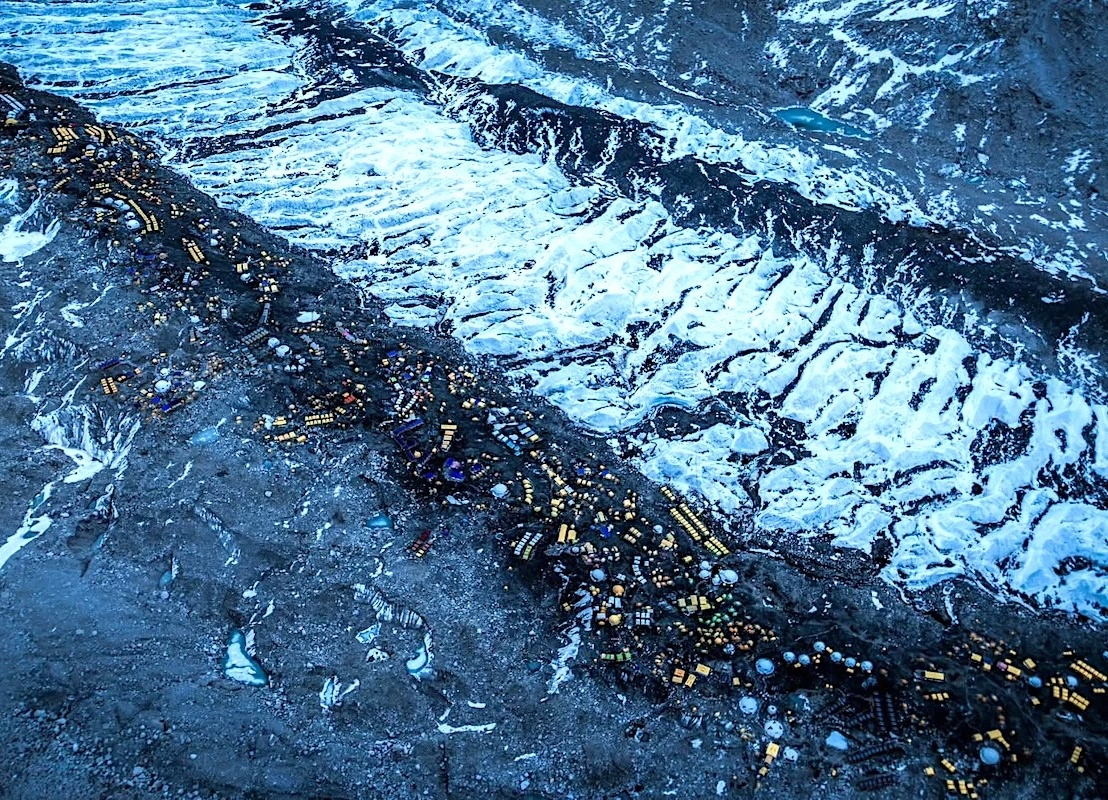
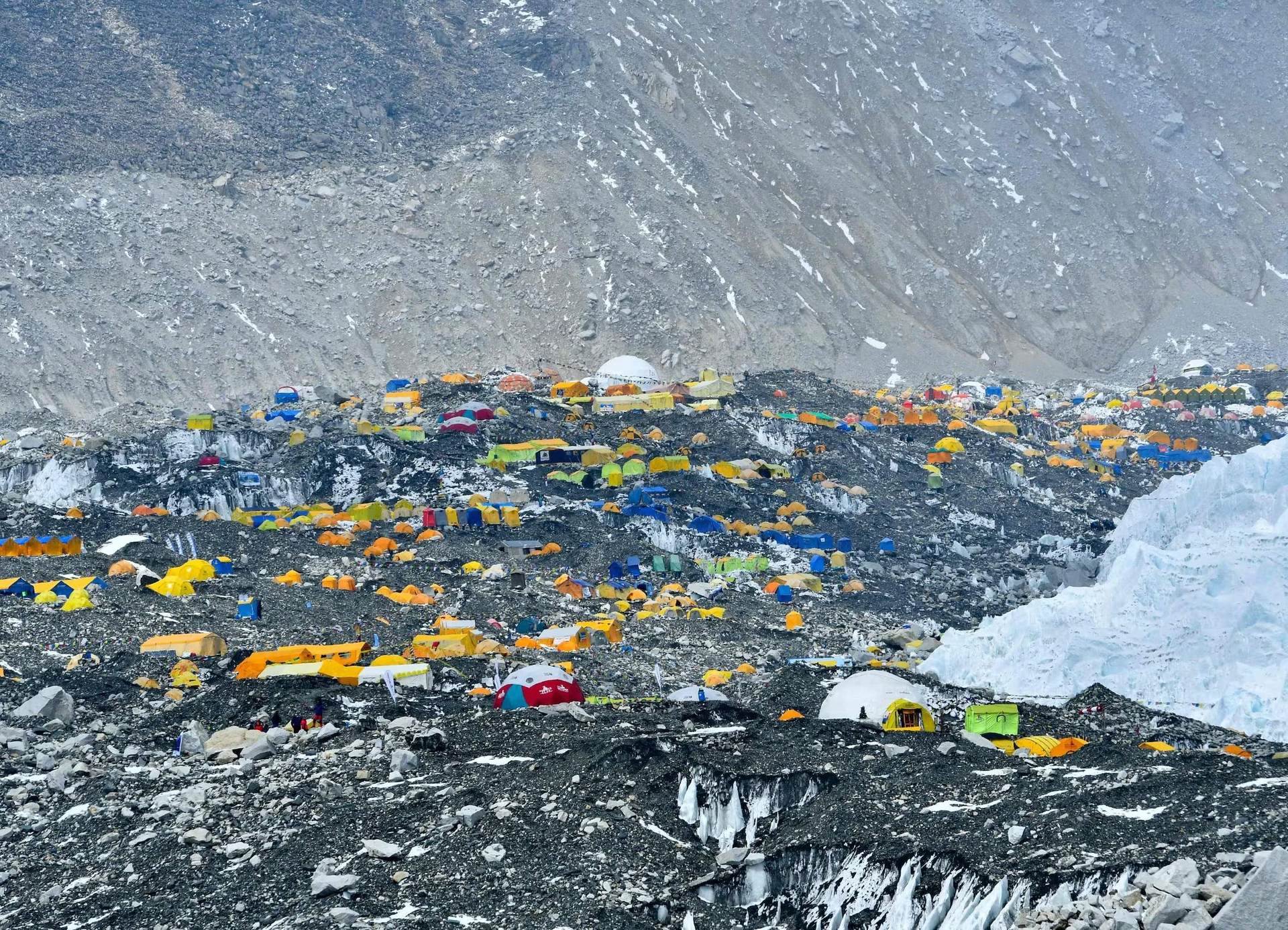
Each spring thousands of climbers go to Everest Base Camp with the aim of reaching the world's highest summit. Under the colourful tents, the busy kitchens, and the expedition camps fitted with satellites lies the Khumbu Glacier, a frozen landscape which is already suffering the effects of climate change. Scientists have now found that the everyday activities at Base Camp, among them something surprising like human urine,may be causing local melting of the glacier.
Scientists have now discovered an unexpected factor responsible for its deterioration.
A recent study has found that the heat from human urine, together with fuel use and other camping activities, is causing the Khumbu Glacier under Everest Base Camp to melt locally. Even though global climate change is still the main cause of the shrinking of the Himalayan glaciers, the researchers estimate that the thousands of climbers and support personnel who stay at Base Camp every spring produce enough heat to cause the melting of about 3 million kilograms (roughly 3,000 tons) of snow and ice during one climbing season. Urine from humans alone is estimated to result in 154 tons of glacier melt.
Scientists, environmentalists, the operators of expeditions, and the Government of Nepal have now begun to discuss the question of whether it is possible to maintain a large seasonal settlement on an active glacier in the future.
Everest Base Camp at a Glance
Feature | Information |
Location | Khumbu Glacier, Sagarmatha National Park, Nepal |
Elevation | Approximately 5,364 meters (17,598 ft) |
Glacier | Khumbu Glacier |
Climbing Season | Primarily April–May |
Average Seasonal Population | More than 2,000 climbers, Sherpas, guides, cooks, and support staff |
Estimated Daily Urine Produced | Over 6,000 liters |
Estimated Ice Melt from Urine | Around 154 tons per climbing season |
Estimated Total Human-Induced Seasonal Melt | Approximately 3 million kg (about 3,000 tons) of snow and ice |
Primary Cause of Glacier Retreat | Global climate change |
Additional Local Factors | Human activity, fossil fuel use, and human waste |
Why the Khumbu Glacier Matters
The Khumbu Glacier is certainly much more than just a well-known spot for mountaineers.This freshwater supports the ecosystems and communities that lie downstream. If the glaciers continue to retreat, the risk of unstable glacial lakes will increase, there will be changes in the seasonal availability of water, and hazards such as ice collapses or glacial lake outburst floods may result.
Scientists also cautions that melting in the area around Base Camp may lead to an ever more uneven glacier surface, which would make it harder to build the camp and could thus raise the risks for climbers and the members of the expedition. Although global warming is still the main factor causing loss of glaciers in the Himalayas, reducing local human impacts is one practical measure that can help in protecting this remarkable landscape.
How Human Activity Is Affecting the Khumbu Glacier
Most people assume glaciers melt only because of rising global temperatures.
While that remains true, researchers have discovered that activities occurring directly on the glacier also matter.
Unlike many mountain camps built on rock or soil, Everest Base Camp sits directly on moving glacial ice. Every tent, kitchen, generator, fuel cylinder, and human activity occurs on the glacier itself.
During a normal climbing season, it's surprising to see Everest Base Camp resembles a small temporary town.
It includes:
Hundreds of expedition tents
Commercial kitchens
Medical facilities
Heated dining tents
Battery charging stations
Satellite communication systems
Internet facilities
Coffee shops
Hot shower facilities
Running this infrastructure requires significant energy, primarily from liquefied petroleum gas (LPG), kerosene, and gasoline. Researchers found that the heat generated from these activities raises local surface temperatures around Base Camp faster than surrounding sections of the glacier. Satellite observations from 1991–2023 showed the Base Camp area warming at roughly twice the rate of nearby glacier surfaces.
The Surprising Role of Human Urine
Perhaps the most surprising finding from the study involves something almost nobody considered before, human urine.
At high altitude, climbers lose water rapidly through breathing and physical exertion. To avoid dehydration and altitude-related illnesses, they are encouraged to drink large amounts of water throughout the day.
As a result, researchers estimate that more than 6,000 liters of urine are produced every day during the spring climbing season.
Solid human waste is generally collected and transported downhill for proper disposal. However, most climbers urinate directly onto the glacier, where the liquid transfers heat into the surrounding snow and ice before freezing or draining away. Researchers calculated that this heat contributes to the melting of approximately 154 tons of glacier ice during a single climbing season.
Importantly, scientists stress that urine is not the main reason the Khumbu Glacier is melting. Instead, it represents one localized source of additional heat alongside fuel use and other human activities, while global climate change remains the dominant driver of glacier retreat.
More Than Urine: Other Sources of Glacier Melt
Although the urine finding attracted global attention, the researchers emphasize that it is only one part of the story. Most of the additional melting comes from the energy required to operate Everest Base Camp.
Human Activity | Impact on the Khumbu Glacier |
Fossil fuel use | Generates significant heat for cooking, heating, and electricity |
Human urine | Transfers heat directly to glacier ice, contributing to localized melting |
Large seasonal population | Increases overall environmental pressure |
Heated shelters | Adds additional localized warming |
Infrastructure built directly on glacier | Concentrates human activity on fragile ice |
Satellite Evidence Confirms the Trend
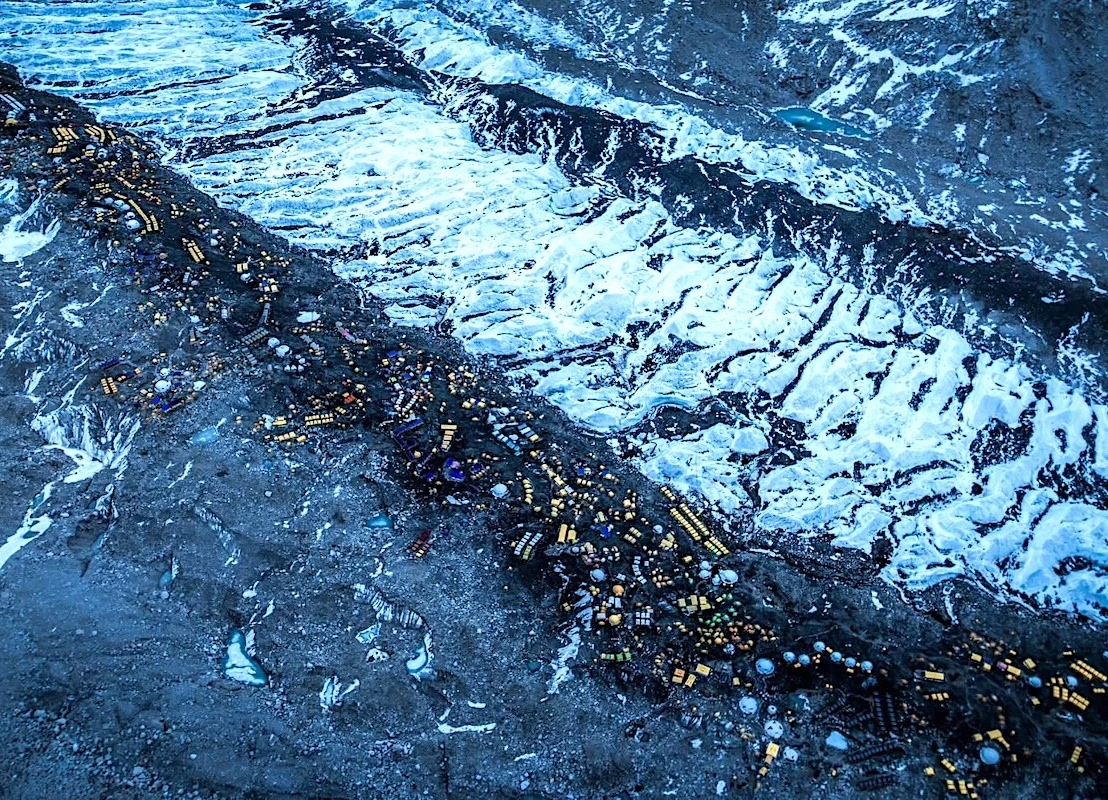
To understand whether human activity was affecting the glacier, scientists examined every usable cloud-free Landsat thermal satellite image collected between 1991 and 2023.
The findings were striking.
Instead of warming at the same rate as nearby glacier surfaces, the Base Camp area consistently warmed much faster.
Area Studied | Warming Trend |
|---|---|
Everest Base Camp | Approximately twice the warming rate |
Nearby snow-covered glacier | Lower warming rate |
Glacier-free surrounding area | Used as a comparison reference |
Researchers believe this difference reflects the concentration of tents, fuel use, infrastructure, and continuous human activity at Base Camp.
Climate Change Remains the Biggest Threat
Even though human urine has attracted global attention, the researchers stress that it should not divert attention from the main issue.
The main reason why the Khumbu Glacier is retreating is global climate change; over many years rising temperatures in the Himalayas have speeded up the loss of glaciers and the local effects of tourism contribute to this pressure without taking its place.
The significance of the study is that it proves the effects of human activities at Base Camp can be measured and controlled. When authorities and expedition operators reduce these local impacts, they will be able to help in slowing down the additional stress on the glacier while the rest of the world is still working to deal with climate change.
Can Everest Base Camp Be Protected?
Can Everest Base Camp continue to operate on the Khumbu Glacier without causing further environmental damage?
For many years Everest Base Camp has formed the centre of Himalayan mountaineering, it being the place where climbers get ready for their attempts to reach the summit, where the Sherpas arrange the expeditions, and where scientists carry out their research. Yet as tourism and commercial expeditions keep on expanding, the glacier underneath the camp is coming under greater pressure. Researchers maintain that although Everest Base Camp is still one of the most famous places in the world, its long-term sustainability lies in reducing its environmental impact.
Is Everest Base Camp Sustainable?
Scientists behind the recent study believe that the current model of operating a large seasonal settlement directly on the glacier is becoming increasingly difficult to sustain.
The combination of:
Rising global temperatures
Heavy fossil fuel consumption
Continuous human activity
Human urine discharged onto the glacier creates localized warming that adds to the glacier's natural retreat.
The researchers even suggest that, in the future, relocating Everest Base Camp to more stable ground could reduce pressure on the Khumbu Glacier while improving safety and logistics. Such a move would require careful planning, as the camp supports thousands of climbers, Sherpas, guides, and support staff every spring.
What Is Nepal Doing?
Nepal has already introduced several measures to reduce pollution on Mount Everest.
These include:
Requiring climbers to bring back a minimum amount of solid human waste
Strengthening waste collection and disposal systems
Conducting annual clean-up campaigns on Everest
Promoting environmentally responsible expedition practices
Encouraging research into sustainable waste management at high altitude
Despite these efforts, liquid waste remains a major challenge because collecting and transporting thousands of liters of urine each day is far more complicated than handling solid waste. Researchers say additional innovation will be needed to manage this issue effectively.
How Trekkers and Climbers Can Help
Protecting Everest Base Camp is a shared responsibility. Every visitor can contribute to preserving the fragile environment by following sustainable practices.
Responsible Travel Checklist
Action | Why It Matters |
Choose eco-conscious expedition operators | Reduces environmental impact |
Follow all waste disposal rules | Prevents glacier pollution |
Minimize fuel and energy consumption | Lowers localized heat generation |
Carry reusable bottles and equipment | Reduces plastic waste |
Respect protected areas | Helps preserve the Himalayan ecosystem |
Support local conservation initiatives | Benefits both communities and the environment |
Even small actions become significant when thousands of people visit the same glacier every year.
Everest Base Camp Trek
View detailsFinal Thoughts
Everest Base Camp has become one of the most recognizable destinations on Earth, attracting thousands of adventurers each year. The latest findings serve as a reminder that even remote environments are influenced by human presence. While climate change remains the greatest threat to Himalayan glaciers, reducing local impacts at Base Camp could play an important role in preserving the Khumbu Glacier for future generations.