

10 UNESCO World Heritage Sites in Nepal

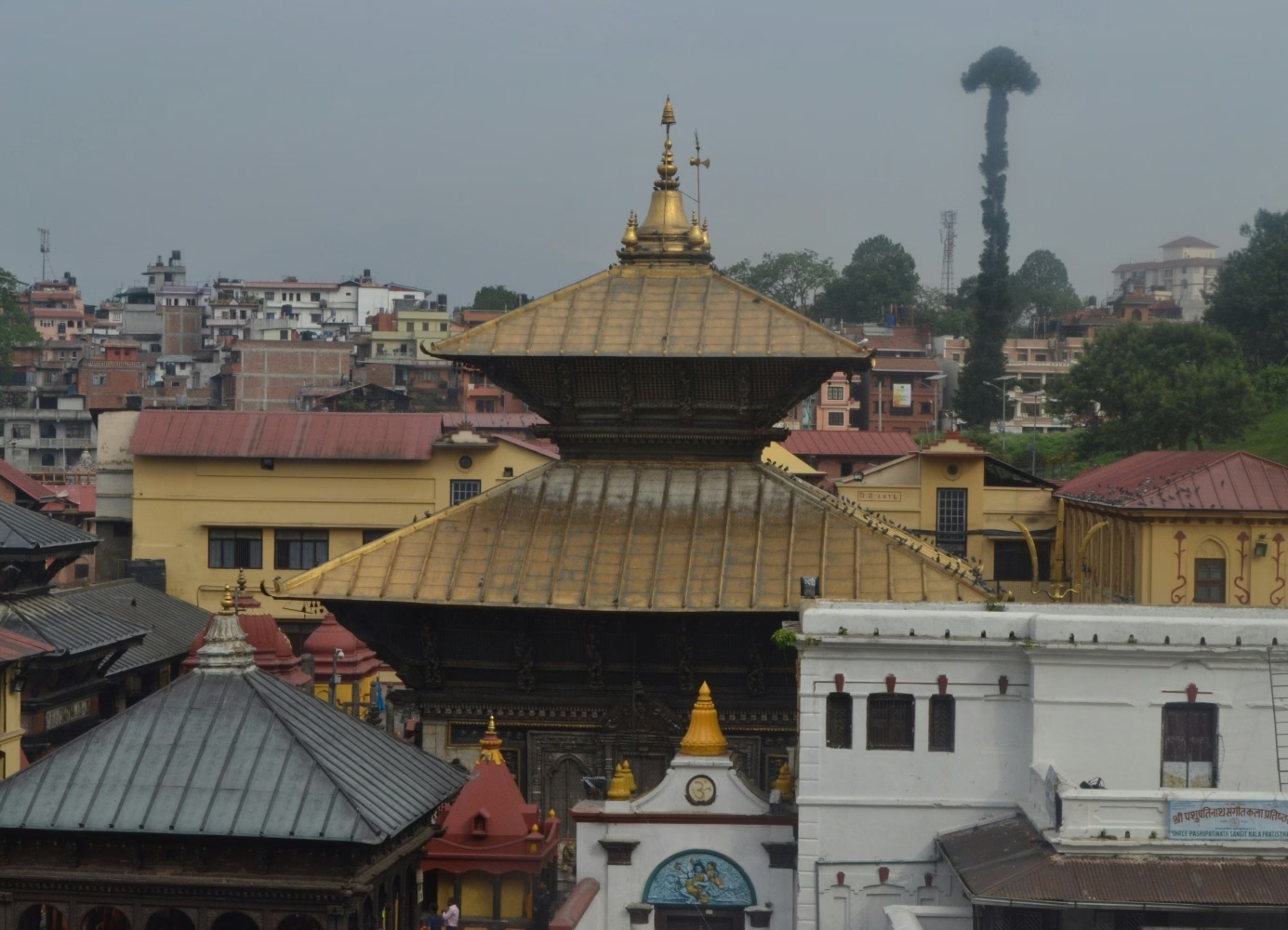
Nepal’s UNESCO World Heritage Sites showcase the country’s exceptional cultural heritage, sacred religious landmarks, historic architecture, and protected natural landscapes. The four UNESCO World Heritage properties encompass 10 visitable sites, including seven monument zones in the Kathmandu Valley, the birthplace of Lord Buddha at Lumbini, Sagarmatha National Park in the Everest region, and Chitwan National Park in the Terai.
From the ancient Hindu shrines of Pashupatinath and Changu Narayan to the Buddhist stupas of Swayambhunath and Boudhanath, the royal squares of Kathmandu, Patan, and Bhaktapur, and the extraordinary mountain and wildlife ecosystems of the Himalayas and Terai, these destinations reveal Nepal’s rich history, living traditions, and natural diversity.
This complete 2026 guide to UNESCO World Heritage Sites in Nepal explores the historical significance, religious importance, architectural highlights, major attractions, and conservation efforts associated with all 10 sites. Discover practical information about the best time to visit, entrance fees, transportation, local customs, and essential permits for cultural sightseeing, Buddhist pilgrimages, Chitwan wildlife safaris, and trekking in Sagarmatha National Park, including the Everest Base Camp route.
Whether you are interested in ancient temples, traditional Newari culture, sacred Buddhist monuments, endangered wildlife, or spectacular Himalayan landscapes, this guide helps you understand each destination and plan a rewarding journey through Nepal’s most significant cultural and natural heritage sites.
1. Pashupatinath Temple
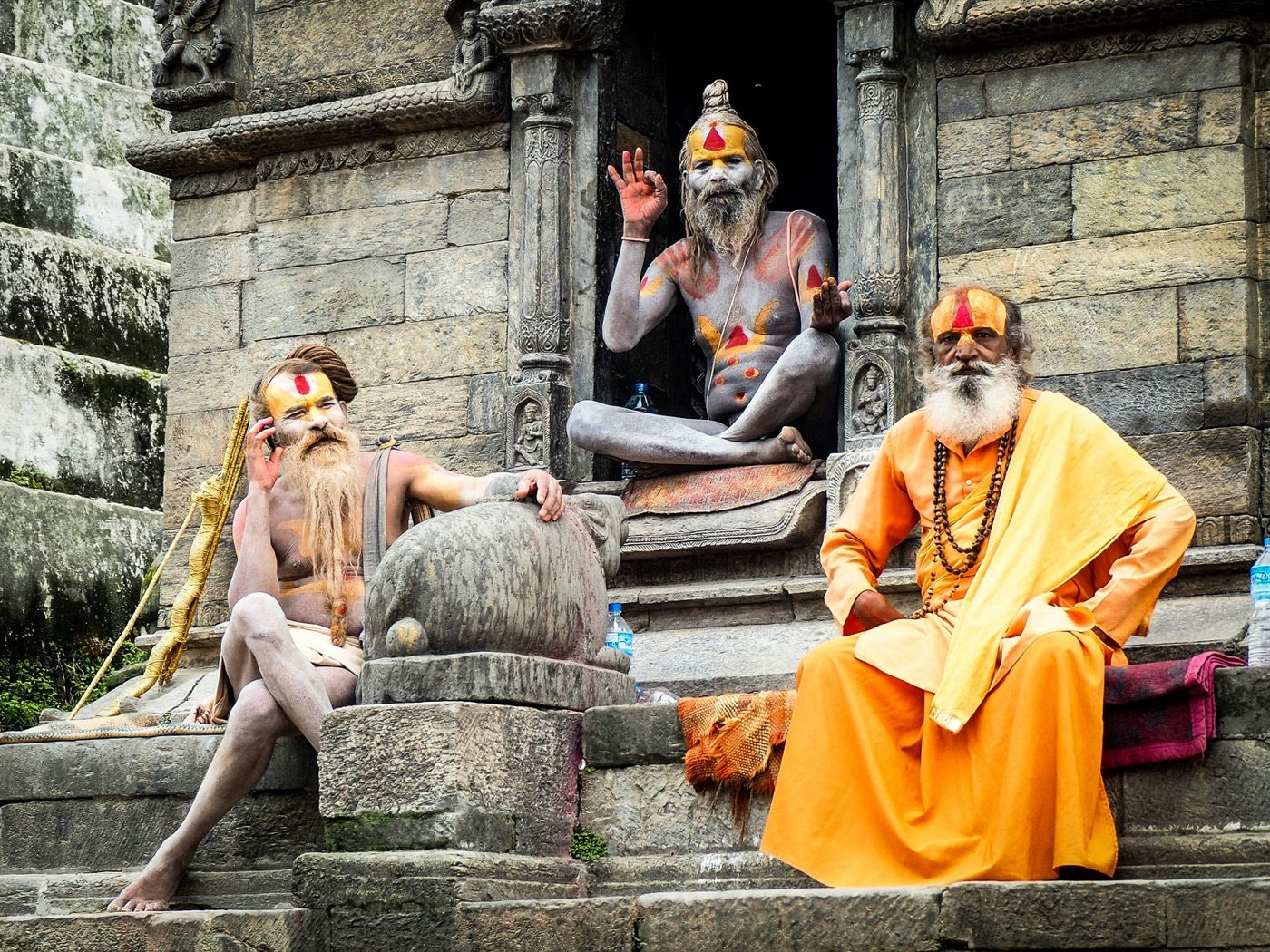
Pashupatinath Temple is a Hindu temple complex on the Bagmati River, dedicated to Shiva as Pashupati, "Lord of All Living Beings." It sits about 5 km east of central Kathmandu.
Why Is Pashupatinath Temple Important to Hindu Pilgrims?
Pashupatinath ranks as the holiest Shiva shrine in Nepal and is revered in Hindu tradition as the upper half (head) of the Shiva manifestation whose torso lies at the Kedarnath Jyotirlinga in India. Devotees from Nepal and India come to worship, bathe in the Bagmati, and perform last rites.
Legend says Shiva took the form of a deer in the forest on the river's east bank. A Licchavi inscription installed by King Jayadeva II in 733 CE credits his ancestor King Supushpa Deva with building the original five-storey temple. Termite damage forced King Bhupalendra Malla to commission a full rebuild in 1692 CE, producing the gilded two-tiered pagoda standing today. Maha Shivaratri ( 6 March 2027) draws hundreds of thousands of devotees and sadhus each late winter.
What Are the Main Attractions at Pashupatinath Temple?
The 5 main attractions are the gilded main pagoda, the Bagmati cremation ghats, the Gorakhnath and Pandra Shivalaya shrines, the east-bank terraces, and the evening aarati ceremony.
Non-Hindus cannot enter the inner sanctum, but the golden roof and the large Nandi (Shiva's bull) statue are visible from the east bank. Cremations take place daily on the riverside ghats. Sadhus, the ash-smeared ascetics of Shaivism, gather around the Ram Temple and the terraces. The evening aarati starts around 6 PM, costs nothing, and lights the ghats with lamps and chanting.
In real-world use, the east bank gives a better visit than the crowded main gate. Climb the steps to the Mrigasthali forest viewpoint and look back across the river.
When Is the Best Time to Visit Pashupatinath Temple?
The best time is October to March, in the early morning before 8 AM or at dusk for the aarati. Cool, clear weather suits the ghats, and morning light favors photography.
Choose Maha Shivaratri for the festival at full scale, with dense crowds and slow movement. Choose a weekday in November for a calmer visit. The ticket office closes earlier than the complex, so buy tickets before late afternoon.
What Are the Pashupatinath Temple Etiquette and Visitor Rules?
The 6 core rules are: dress modestly, skip leather near the sanctum, stay outside the main temple if you are not Hindu, photograph only outside the inner temple, stay silent during cremations, and buy tickets at the official counter. Foreign visitors pay NPR 1,000.
Monkeys snatch food and sunglasses, so keep bags closed. Agree on a donation before photographing a sadhu, because many expect payment. Avoid unofficial "security" ticket booths across the river. Taxis from Thamel commonly quote NPR 600 to 800, so settle the fare before boarding.
2. Swayambhunath Stupa
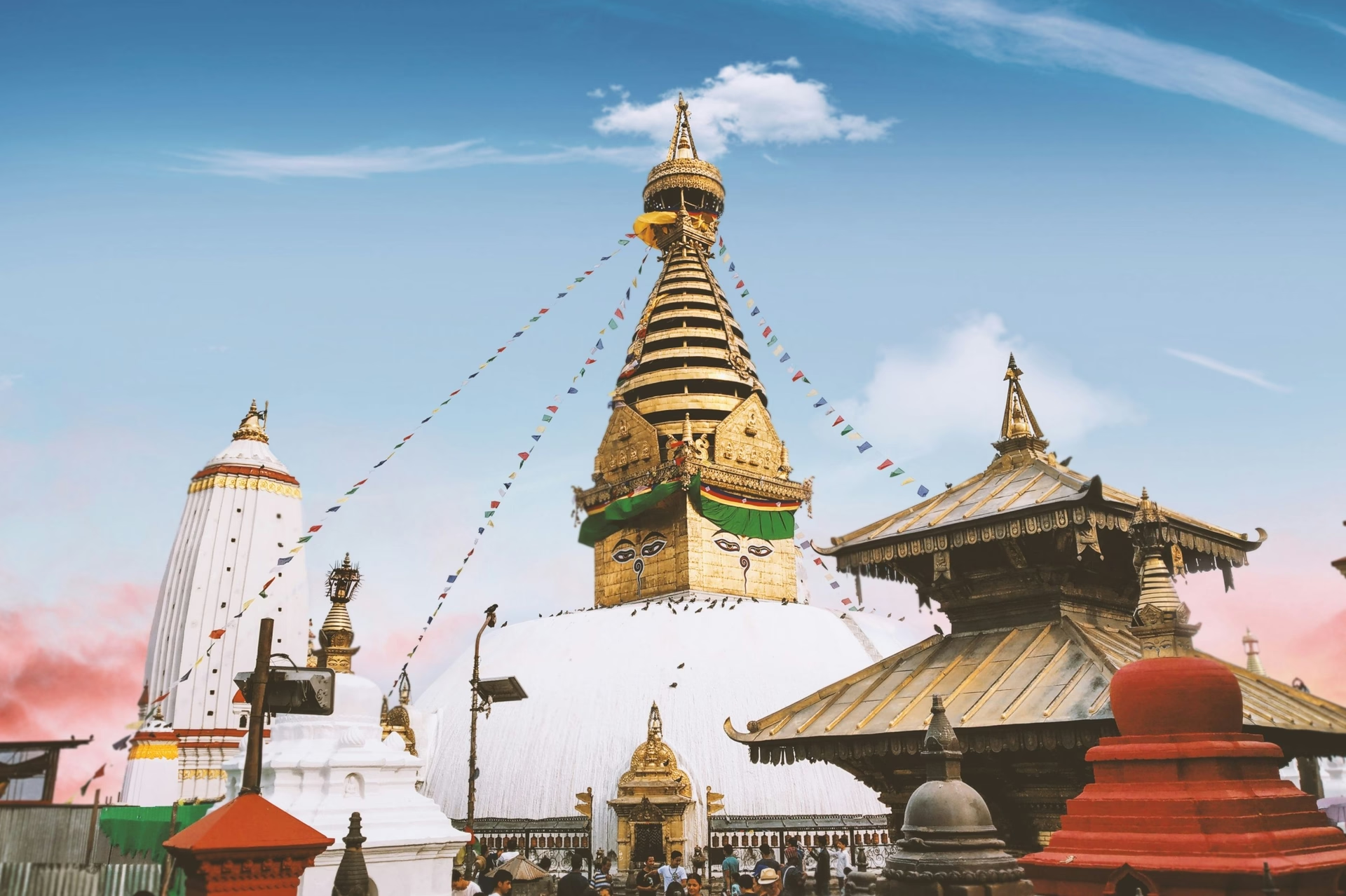
Swayambhunath is a hilltop Buddhist stupa 77 m above the Kathmandu Valley floor, about 3 km west of central Kathmandu. Its name means "self-existent," and visitors call it the Monkey Temple after its resident rhesus macaques.
What Is the Religious and Historical Significance of Swayambhunath Stupa?
Swayambhunath is one of the oldest Buddhist sites in Nepal, with devotion dating back at least 2,500 years and a 5th-century inscription that already calls the stupa ancient. Newar Buddhists and Tibetan Buddhists both worship here.
According to the valley's founding legend, the Kathmandu Valley was once a lake. The bodhisattva Manjushri cut the Chobar Gorge to drain it, and a lotus bearing the self-arisen Buddha light settled on this hill. The site blends Vajrayana Buddhism with Hindu devotion: both Newar Buddhist and Hindu families worship Harati Ajima (Harati Devi), the protector of children and goddess of smallpox, at a two-tiered pagoda directly beside the main stupa.
What Can You See at Swayambhunath Stupa?
The 5 main sights are the whitewashed dome, the gilded 13-tier spire, four pairs of Buddha eyes, the Anantapur and Pratapur shikhara towers, and the giant vajra at the top of the eastern stairway.
The Buddha eyes face the 4 cardinal directions, and prayer wheels line the path around the dome. The 2015 earthquake destroyed Anantapur, and crews repaired it in 2019. The hilltop also gives a wide view over the valley. Resident monkeys are sacred to the site, so keep snacks out of sight on the stairs.
How Many Steps Lead to Swayambhunath Stupa?
365 stone steps lead up the eastern stairway, one for each day of the year. The climb takes 15 to 20 minutes and passes Buddha statues, prayer wheels, and monkeys.
A road on the western side lets taxis reach a much shorter climb. Most travelers take the eastern stairs up for the pilgrim's approach and a taxi back down. Wear shoes with grip, since wet stone turns slick.
What Is the Best Time to Visit Swayambhunath Stupa?
The best time is 6 to 8 AM between October and November, when valley skies are clear and morning puja is underway. Tour buses arrive from about 9 AM.
The site opens around 5 AM, and foreign visitors pay NPR 200. Buddha Purnima in May draws large crowds of local pilgrims, which suits visitors who want a festival atmosphere. Monsoon cloud from June to September often blocks the valley view.
3. Boudhanath Stupa
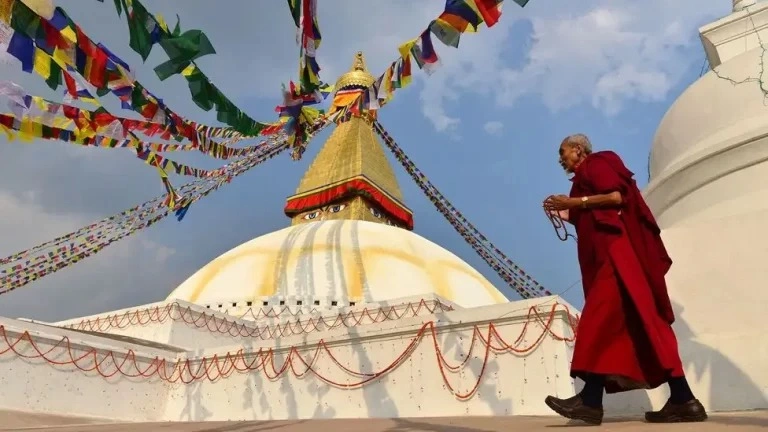
Boudhanath is a Buddhist stupa 36 m tall, among the largest spherical stupas in the world, about 7 km northeast of central Kathmandu. It anchors the Tibetan exile community in Nepal.
Why Is Boudhanath Stupa Important to Tibetan Buddhism?
Boudhanath is the most important Tibetan Buddhist pilgrimage site outside Tibet, with more than 50 monasteries (gompas) around the plaza. Tibetan communities settled here in large numbers after 1959.
Tradition dates the original stupa to the 7th century CE. One story credits the Tibetan emperor Songtsen Gampo, and another credits a woman named Kangma, who sold her horse to fund construction. Malla-era kings added the medieval base platforms. Monasteries around the plaza represent the 4 main Tibetan schools: Nyingma, Kagyu, Sakya, and Gelug.
What Do the Buddha Eyes on Boudhanath Stupa Symbolize?
The Buddha eyes symbolize the all-seeing wisdom of the Buddha, and the curled mark between them is the Nepali numeral 1, representing unity and the single path to enlightenment. The eyes face the 4 cardinal directions.
A third eye above the pair marks insight beyond ordinary sight. The 13 tiers of the spire represent the 13 stages on the path to enlightenment, and a gilded parasol crowns the top.
What Can Visitors Experience Around Boudhanath Stupa?
Visitors can walk the kora (the clockwise circuit), spin prayer wheels, light butter lamps, tour monasteries, and eat at rooftop cafés overlooking the dome.
Monastery halls generally open 7 AM to noon and 2 to 6 PM, and visitors remove shoes before entering. Rooftop cafés serve Tibetan butter tea and momos from about 6 AM. At dusk the plaza lights up and the evening kora fills with pilgrims chanting "Om Mani Padme Hum." Losar, the Tibetan New Year, falls in February or March and fills the plaza with prayer flags and ceremonial dances. Kopan Monastery, on the hill above, runs courses for international students.
Common mistake: arriving at midday, when harsh light and tour groups flatten the atmosphere.
When Is the Best Time to Visit Boudhanath Stupa?
The best time is 5:30 to 7:30 AM for the monks' morning kora, or 6 to 8 PM for the lit evening circuit. October to March gives the clearest skies.
The ticket office opens around 7 AM, but early arrivals usually walk in first. Foreign visitors pay NPR 400 (about US$3). The 2015 earthquake caused only a large base crack and metalwork damage, and workers completed repairs in 2016. Walk from Pashupatinath (20 to 30 minutes) to combine both sites in one morning.
4. Kathmandu Durbar Square
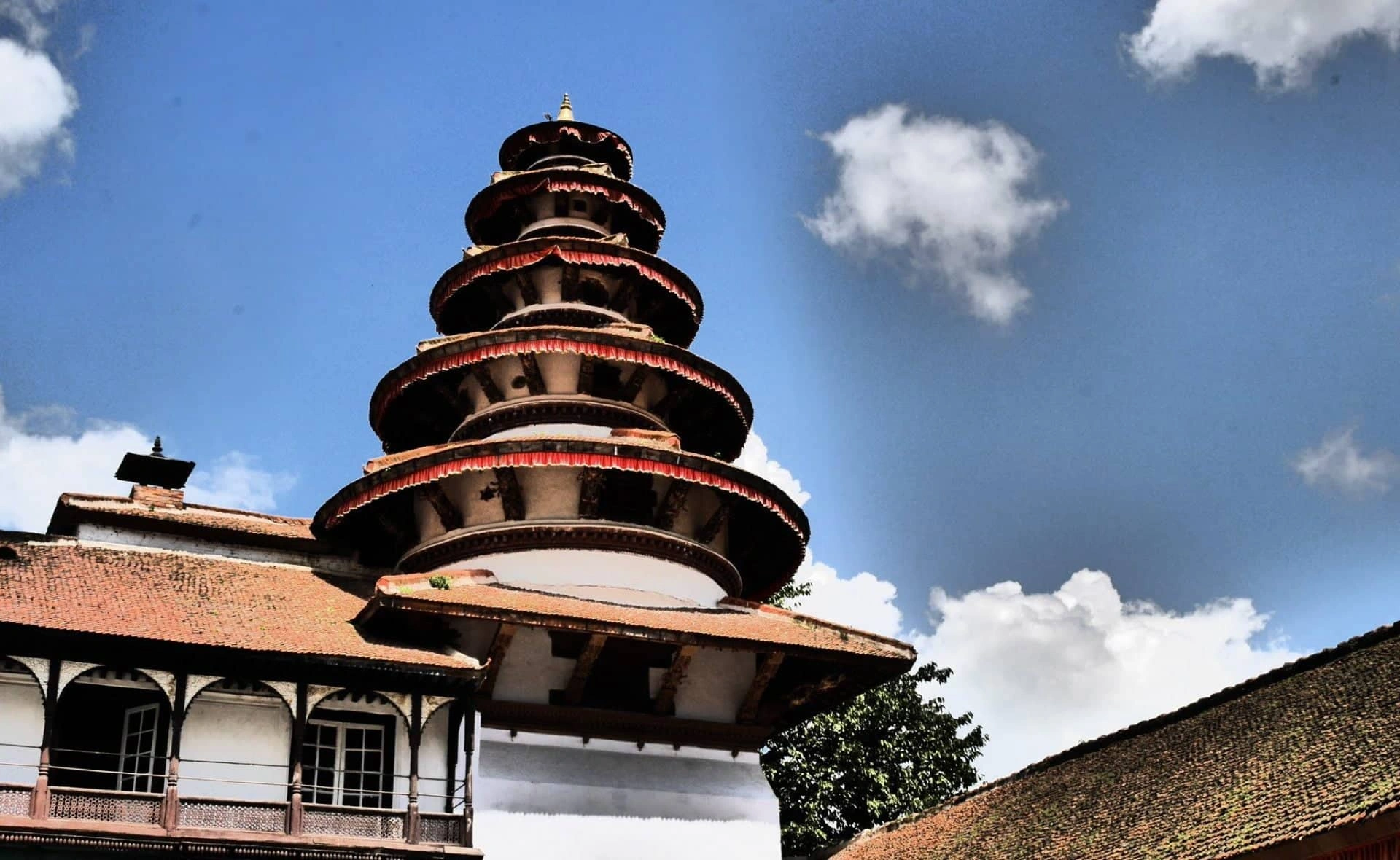
Kathmandu Durbar Square, also called Hanuman Dhoka, is the historic palace complex of the Malla and Shah kings in the old city center. "Durbar" means palace, and "Hanuman Dhoka" refers to the palace gate guarded by a statue of the monkey god Hanuman.
What Is the Historical Significance of Kathmandu Durbar Square?
Kathmandu Durbar Square served as the royal seat of the Malla kings from the 12th to the 18th century and of the Shah kings from 1768, and Nepal's monarchs were crowned here. Most surviving temples date from the 16th and 17th centuries.
Prithvi Narayan Shah conquered the valley in 1768 and built the nine-story Nautalle Durbar to mark the unification of Nepal. The square hosts Indra Jatra every September, when the Kumari's chariot rolls through the streets. The city's name derives from Kasthamandap, the wooden pavilion at the square's edge.
Which Famous Temples and Monuments Are in Kathmandu Durbar Square?
The 6 landmark monuments are Kasthamandap, Taleju Temple, Trailokya Mohan, Kal Bhairav, the Hanuman Dhoka palace, and the Kumari Ghar.
Kasthamandap fell in 2015 and officially reopened in April 2022. Trailokya Mohan, a Vishnu temple built in 1680, completed reconstruction in 2023. Kal Bhairav is a large stone image of a wrathful form of Shiva from the 17th century. Taleju Temple, built in 1564 for the royal family's patron goddess, opens to the public only on one day each year during Dashain, the autumn festival.
What Is the Kumari Ghar and Why Is It Famous?
The Kumari Ghar is the palace-house of the Kumari, a prepubescent girl worshipped as a living goddess and an incarnation of Taleju. King Jaya Prakash Malla built it in 1757.
Priests select the Kumari from the Newar Shakya community after testing for 32 physical attributes, and she serves until puberty. Visitors enter the carved courtyard and wait for her appearance at an upper window. Photography of the Kumari is prohibited, and a small donation is customary. The Kumari Ghar stood through the 2015 earthquake.
How Did the 2015 Earthquake Affect Kathmandu Durbar Square?
The 25 April 2015 earthquake destroyed Kasthamandap, Trailokya Mohan, and Maju Deval (rebuilt by 2024), and damaged the Hanuman Dhoka palace. Nearby Dharahara (Bhimsen Tower) also collapsed; its modern replacement tower was structurally topped out in 2021 and opened to the public in September 2024.
Rebuilding relied on traditional timber, brick, and lime mortar. Not every structure is complete, so scaffolding still appears around parts of the palace. Foreign visitors pay NPR 1,000, and the fees fund continued conservation.
5. Patan Durbar Square
Patan Durbar Square is the palace square of Lalitpur, the oldest of the 3 valley kingdoms, 5 km south of Kathmandu across the Bagmati River. Lalitpur's nickname, "City of Fine Arts," reflects its metalwork and stone-carving heritage.
What Are the Must-See Attractions in Patan Durbar Square?
The 5 must-see attractions are Krishna Mandir, Bhimsen Temple, the Patan Museum, Sundari Chowk with Tusha Hiti, and the nearby Golden Temple. Most of the architecture dates from the 17th century under King Siddhi Narsingh Malla and his son Srinivasa Malla.
Bhimsen Temple, built in 1680, carries 3 gilded windows and honors the patron god of merchants. Sundari Chowk holds Tusha Hiti, a sunken royal bath. The Patan Museum occupies part of the old palace and displays temple bronzes and religious art around the Keshav Narayan Chowk courtyard. The Golden Temple (Hiranya Varna Mahavihar), a 12th-century Buddhist monastery, stands about 5 minutes' walk north.
Why Is Krishna Mandir an Important Heritage Monument?
Krishna Mandir is a stone temple completed in 1637, topped with 21 pinnacles, and carved with scenes from the Mahabharata and the Ramayana. King Siddhi Narsingh Malla commissioned it.
Above its open ground-floor colonnade, the temple holds 3 upper levels of worship: the main Krishna shrine on the first floor, Shiva on the second floor, and a pavilion associated with Lokeshwar (the Buddhist bodhisattva of compassion) on the third floor. That layering reflects the religious blending typical of Newar culture. Few Nepali temples use stone throughout, so Krishna Mandir stands apart from the timber-and-brick pagodas around it. Janmashtami (August or September) fills it with devotees.
What Traditional Crafts Can You Discover in Patan?
Patan is known for 4 traditional crafts: lost-wax bronze casting, repoussé metalwork, thangka painting, and woodcarving. Newar artisans, many from the Shakya and Bajracharya communities, have practiced these crafts for centuries.
In lost-wax casting, craftsmen shape a wax model, wrap it in clay, melt out the wax, and pour in molten bronze or copper. Workshops around Kwa Bahal produce Buddha statues, prayer bowls, and temple fittings. Watch the process in a working studio rather than a shop front, and buy directly from the artisan.
How Much Time Do You Need to Explore Patan Durbar Square?
Allow 2 hours for the square alone and 4 to 5 hours with the Patan Museum, the Golden Temple, and Mahabouddha. Foreign visitors pay NPR 1,000 (SAARC visitors pay NPR 250) for a combined ticket that covers both Patan Durbar Square and the Patan Museum.
Mahabouddha, the terracotta "Temple of a Thousand Buddhas," sits in a quiet courtyard just a 5-minute walk (350 m) southeast of the square. A morning start works best, and courtyard cafés around Mul Chowk offer shade for an afternoon break.
6. Bhaktapur Durbar Square
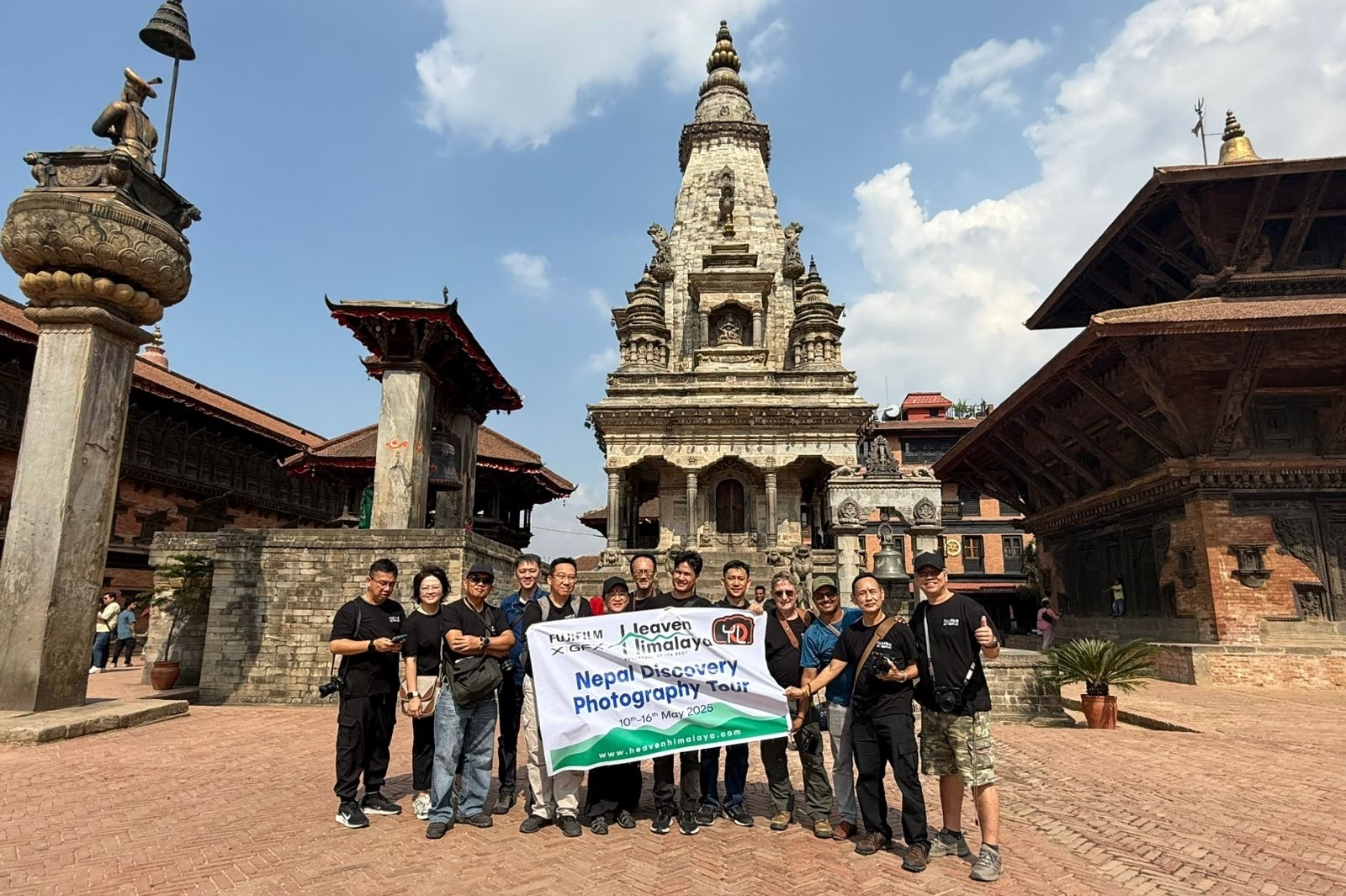
Bhaktapur Durbar Square is the medieval palace square of Bhaktapur, "City of Devotees," 13 km east of Kathmandu. Bhaktapur is the best-preserved of the 3 old Malla capitals and still operates as a working Newar community.
Which Historic Monuments Should You Visit in Bhaktapur Durbar Square?
The 6 monuments to prioritize are the 55-Window Palace, the Golden Gate, Nyatapola Temple, Bhairabnath Temple, Vatsala Durga Temple, and Dattatreya Square. The 2015 earthquake damaged several, and most are restored.
The Golden Gate (Sun Dhoka), dated 1753, is the finest repoussé gateway in the valley. Vatsala Durga, a stone shikhara temple, collapsed in 2015 and was rebuilt by 2021. Dattatreya Square, a short walk east, holds the Peacock Window, a masterpiece of Newar woodcarving.
Why Are the 55-Window Palace and Nyatapola Temple Famous?
The 55-Window Palace is famous for its 55 carved wooden windows, and Nyatapola is famous for standing 30 m tall on five storeys, the tallest pagoda in Nepal. King Bhupatindra Malla (reigned 1696 to 1722) built or expanded both.
Nyatapola dates to 1702. Ten guardians line its steps in ascending order of strength: wrestlers, elephants, lions, griffins, and the goddesses Baghini and Singhini. Each pair carries ten times the power of the pair below. Local accounts say the temple has survived every major earthquake, and it stood through 2015. Only priests enter the shrine at the top, so visitors admire it from the plaza.
What Traditional Newari Foods Can You Try in Bhaktapur?
The 5 essential Newari foods are juju dhau (king curd), bara (lentil pancake), chatamari (rice crepe), yomari (steamed rice dumpling), and kwati (mixed bean soup). Order them at small Newari restaurants (bhojanalaya) rather than tourist cafés.
Juju dhau is thick, sweet buffalo-milk yoghurt set in unglazed clay bowls. Chatamari, often called "Newari pizza," carries minced meat or egg. Yomari, filled with molasses and sesame, appears around the December festival Yomari Punhi. Kwati, a soup of 9 sprouted beans, is cooked in August for Janai Purnima.
How Can You Experience Local Culture in Bhaktapur?
Visitors experience Bhaktapur's culture by watching potters in Pottery Square, joining Bisket Jatra in April, staying overnight, and walking the back lanes. The city's guthi system (community trusts) still runs its festivals and temple upkeep.
Potters shape clay on hand-turned wheels and dry the pots in the open square. Bisket Jatra, the Nepali New Year festival in mid-April, features a chariot procession and a tug-of-war between two neighborhoods. Day-trippers leave by late afternoon, so an overnight stay in a restored Newari guesthouse gives you the quiet morning and evening streets. The foreign visitor ticket costs NPR 1,800, and the square is open 7 AM to 7 PM.
7. Changu Narayan Temple
Changu Narayan is a Hindu temple dedicated to Vishnu on a hilltop about 18 km east of central Kathmandu and 5 km north of Bhaktapur. The hill overlooks the Manohara River, and the temple stands in a small Newar village of the same name.
What Is the History of Changu Narayan Temple?
Changu Narayan is one of the oldest Vishnu temples in the Kathmandu Valley, with origins traced to the 4th century CE and an inscribed pillar from 464 CE. King Manadeva of the Licchavi dynasty erected that pillar.
Legend links the hill to a princess named Champak, who gave the area its name. The present double-roofed pagoda dates from the early 18th century, after a fire. The 2015 earthquake severely damaged the main temple and collapsed surrounding structures like the Kileshwar Mahadev shrine and priests' rest houses, which Nepal's Department of Archaeology and heritage conservation partners subsequently restored.
Why Are the Changu Narayan Temple's Ancient Stone Inscriptions Significant?
The Manadeva pillar inscription (464 CE) is among the oldest known inscriptions in Nepal, and it names the king and records his devotion to Vishnu. Historians use it as an anchor for dated Licchavi history.
The Sanskrit text and its Gupta-style script link the valley to the wider Sanskrit tradition of northern India. The pillar stands in the temple courtyard near a kneeling Garuda statue. Garuda Narayan, a 7th-century image of Vishnu riding Garuda, appears on the Nepali 10-rupee note.
What Architectural Features Make Changu Narayan Temple Unique?
The 4 distinctive features are the double-roofed pagoda design, the Dashavatara carvings on the roof struts, the gilded doors and torana, and the Licchavi sculptures in the courtyard. A wide plinth helps the structure resist earthquakes.
The Dashavatara, the 10 incarnations of Vishnu, appear on carved struts that support the roof. Pillars topped with a conch (shankha) and a wheel (chakra) mark Vishnu's emblems. The Vishnu Vikrantha sculpture shows Vishnu striding across the cosmos in 3 steps. Foreign visitors pay NPR 400 (about US$3), and SAARC visitors pay NPR 100.
How Can You Reach Changu Narayan Temple From Kathmandu?
Changu Narayan sits about 18 km east of Kathmandu by road: a taxi takes 45 to 60 minutes, and a local bus or taxi from Bhaktapur takes 15 to 20 minutes. Walkers can reach it from Bhaktapur on a trail of about 6 km.
Agree on a taxi fare before departure, or hire a driver for a half-day that includes Bhaktapur. The classic hike runs downhill from Nagarkot to Changu Narayan in 4 to 5 hours. Combine both sites in one day: Changu in the morning, then Bhaktapur for lunch and the afternoon.
8. Lumbini
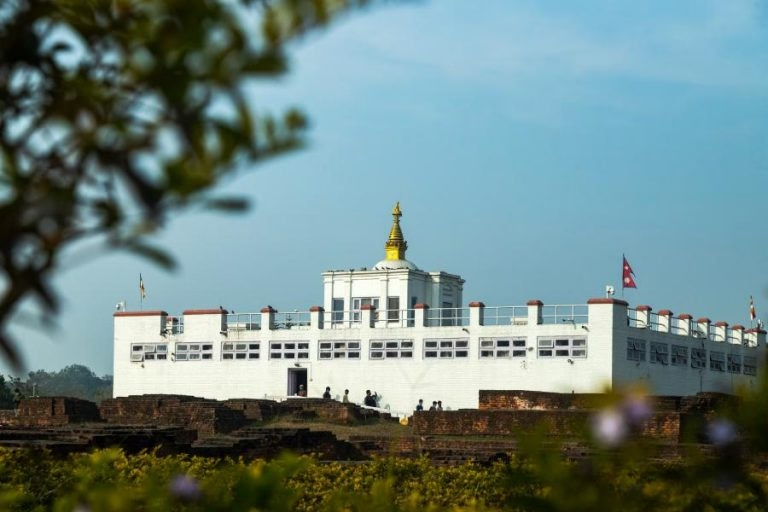
Lumbini is the birthplace of Siddhartha Gautama, the Buddha, in the Terai plains of southwestern Nepal near the Indian border. It ranks among the 4 principal Buddhist pilgrimage sites, alongside Bodh Gaya, Sarnath, and Kushinagar.
What Are the Main Attractions Inside Lumbini's Sacred Garden?
The 5 main attractions are the Maya Devi Temple, the marker stone, the Ashoka Pillar, the Puskarini sacred pond, and the Bodhi tree. The garden lies at the south end of the Lumbini Development Zone, a rectangle planned by Japanese architect Kenzo Tange in 1978.
Emperor Ashoka erected the pillar in 249 BCE and carved an inscription recording that the Buddha was born here. Queen Maya Devi is said to have bathed in the Puskarini pond before giving birth, and bathing is now prohibited. A Bodhi tree covered in prayer flags stands beside the pond. Visitors remove shoes in the garden.
Why Is the Maya Devi Temple Important to Buddhist Pilgrims?
The Maya Devi Temple marks the spot where the Buddha was born around the 6th century BCE, and a marker stone inside identifies the location. Photography is prohibited inside.
According to a 2013 study in the journal Antiquity by an archaeological team led by Robin Coningham of Durham University, excavation beneath the temple revealed a timber structure from the 6th century BCE. That finding places Buddhist-era activity at the birthplace in line with early dating of the Buddha's life. Pilgrims circle the temple, chant, and meditate under the Bodhi tree. Foreign visitors pay an entry fee of NPR 700 (NPR 400 for SAARC nationals, plus optional camera permit fees) at the Maya Devi Temple counter to support Lumbini Development Trust conservation.
What Can You Explore in Lumbini's Monastic Zone?
The Monastic Zone holds 2 sections: the east zone for Theravada monasteries and the west zone for Mahayana and Vajrayana monasteries. Each country built its temple in its national style.
The east zone includes the Myanmar Golden Temple, the Royal Thai Monastery, and the Sri Lankan monastery. The west zone includes the German, Chinese, Korean, and Tibetan monasteries. The Eternal Peace Flame burns along the route between the zones, and the Japanese-built World Peace Pagoda stands at the zone's edge. Rent a bicycle for about NPR 200 per day or hire a rickshaw for about NPR 1,200 for a 6-hour tour. A full circuit takes 6 to 8 hours.
When Is the Best Time to Visit Lumbini?
The best time is October to March, when daytime temperatures stay between 15°C and 28°C. April to June brings heat above 40°C, and monsoon rain runs from June to September.
December and January bring morning fog, so plan the Sacred Garden for late morning. Buddha Jayanti in May draws the largest pilgrim crowds in the hottest weather. Gautam Buddha International Airport in Bhairahawa sits about 30 minutes from the site, and the bus from Kathmandu or Pokhara takes 6 to 9 hours.
9. Sagarmatha National Park
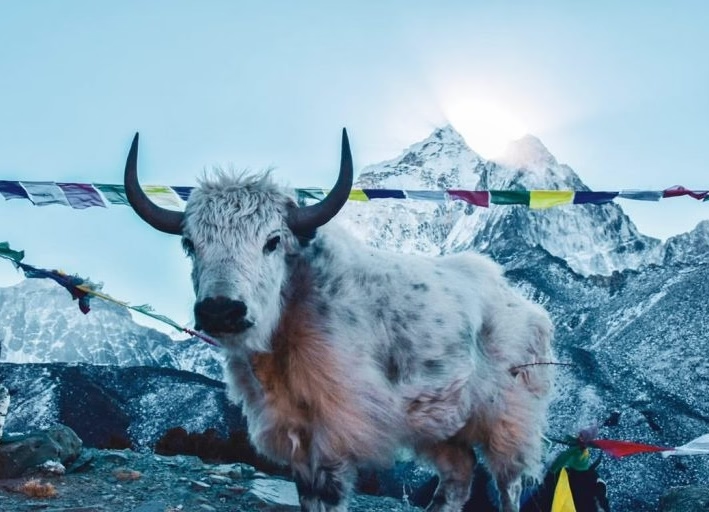
Sagarmatha National Park is a Himalayan park of 1,148 km² in the Khumbu region of northeastern Nepal that contains Mount Everest (Sagarmatha in Nepali, Chomolungma in Tibetan). UNESCO inscribed it in 1979 as a natural site.
Why Is Sagarmatha National Park Important for Mount Everest?
Sagarmatha National Park protects the Nepali side of Mount Everest, the world's highest peak at 8,848.86 m, along with the Sherpa communities and high-altitude ecosystems around it. Nepal and China jointly announced that height in December 2020.
The park's skyline includes Lhotse (8,516 m) and Cho Oyu (8,188 m). Edmund Hillary and Tenzing Norgay summited Everest from this valley in 1953. Sherpa villages such as Namche Bazaar (3,440 m) and Khumjung form the cultural base for expeditions, and Tengboche Monastery (3,867 m) hosts the Mani Rimdu festival each autumn.
What Wildlife and Natural Landscapes Can You Discover in the Sagarmatha National Park?
Sagarmatha supports Himalayan tahr, musk deer, snow leopard, red panda, Himalayan black bear, and the Himalayan monal, Nepal's national bird. UNESCO records 118 bird species in the park.
Forests of pine, fir, juniper, and rhododendron grow below 4,000 m, then give way to alpine scrub, glacial moraine, and ice. The Ngozumpa Glacier, the longest in Nepal, feeds the Gokyo Lakes, a Ramsar wetland site. Visitors see tahr and monal on the lower trails far more often than snow leopards, which stay rare and elusive.
Which Trekking Routes Explore Sagarmatha National Park?
The 4 main routes are the Everest Base Camp trek (12 to 14 days), the Gokyo Lakes trek (10 to 12 days), the Three High Passes trek (18 to 21 days), and the Jiri-to-Everest trek (about 20 days).
Everest Base Camp sits at 5,364 m, and Kala Patthar (5,545 m) gives the classic Everest view. The Gokyo route climbs Gokyo Ri (5,357 m) above turquoise glacial lakes and draws fewer trekkers. The Three High Passes trek crosses Kongma La (5,535 m), Cho La (5,420 m), and Renjo La (5,360 m). The Jiri route adds 6 to 7 days of lower walking and acclimatizes the body gradually. In peak seasons, many Lukla flights depart from Manthali (Ramechhap), so confirm the departure airport with your operator.
When Is the Best Time to Trek in Sagarmatha National Park?
The best times are March to May and September to November, with October and November offering the clearest views. Spring brings blooming rhododendrons, and autumn brings stable weather.
December to February is cold, with night temperatures below -15°C at higher camps, and some lodges close above Dingboche. June to August brings monsoon cloud, leeches on lower trails, and flight cancellations. April and May coincide with the Everest climbing season, so base camp holds expedition tents.
What Permits and Preparations Are Required for Everest Region Trekking?
Everest region trekkers need 2 permits: the Sagarmatha National Park entry permit (NPR 3,000 inclusive of 13% VAT, about US$22) and the Khumbu Pasang Lhamu Rural Municipality entry permit (NPR 3,000, about US$22, for up to 4 weeks). The municipality card replaces TIMS on the standard Khumbu route.
Collect the park permit at the Nepal Tourism Board counter in Kathmandu or at Monjo, and the municipality permit at Lukla or Monjo. Valid travel insurance covering helicopter evacuation is a condition for permits. Nepal's rule since 1 April 2023 requires foreign trekkers in national parks to hire a licensed guide from a registered agency, and the Khumbu municipality has operated under a local exemption whose current status you confirm before departure. A guide from a registered agency is the safest route.
According to the Wilderness Medical Society, above 3,000 m, raise your sleeping altitude by no more than 500 m per day and take a rest day every 3 to 4 days. Spend 2 nights in Namche Bazaar and 2 in Dingboche. Train for 8 to 12 weeks beforehand, and pack layers, a -15°C sleeping bag, and water purification tablets. Carry NPR cash, budgeting US$30 to 50 per day, because ATMs above Namche Bazaar do not exist.
10. Chitwan National Park
Chitwan National Park is a 952 km² reserve of subtropical forest, grassland, and river in Nepal's central Terai lowlands. Nepal established it in 1973 as its first national park, and UNESCO inscribed it in 1984.
What Wildlife Can You See in Chitwan National Park?
Chitwan shelters the greater one-horned rhinoceros (694 counted in 2021), the Bengal tiger (145 counted in 2026), gharial, sloth bear, leopard, wild elephant, and more than 500 bird species. Rhino sightings are common, and tiger sightings are rare.
According to Nepal's 2026 national tiger census, reported by The Kathmandu Post in July 2026, the national count rose to 429 from 355 in 2022. Chitwan and its surroundings recorded 145 tigers, up from 128, while Bardiya fell from 125 to 112. The 2021 rhino census counted 752 rhinos nationwide. A new rhino count ran in 2026, and official results are pending. Gharial, the fish-eating crocodilian, bask on Rapti River banks in the cool season.
Which Safari Activities Can You Experience in Chitwan National Park?
The 5 main activities are jeep safaris, guided jungle walks, canoe rides on the Rapti River, visits to the government elephant breeding center, and Tharu village tours. A licensed guide is mandatory for jungle activities.
Typical 2026 prices in Sauraha: shared half-day jeep safari NPR 2,500 to 4,000, Rapti River dugout canoe ride NPR 1,500 to 2,500 (45 to 60 minutes), guided half-day jungle walk NPR 2,500 to 4,000, and the Khorsor Elephant Breeding Center entry fee NPR 100 to 150. The park permit costs NPR 2,000 per day for foreigners, NPR 1,000 for SAARC visitors, and NPR 150 for Nepalis. Animal-welfare groups discourage elephant rides, so choose jeeps or walks. For a better tiger chance, book 2 to 3 nights deep in the jungle, or visit Bardia National Park, which is harder to reach.
When Is the Best Time to Visit Chitwan National Park?
The best time is October to March, when cool, dry weather opens the trails and animals gather near water. Prices run 20% to 30% higher from October to February.
Villagers harvest thatch grass in late January, which improves visibility in February and March. March and April are hot but offer good rhino sightings near waterholes at lower prices. June to September brings monsoon rain, high rivers, and limited jungle access. Use mosquito repellent year-round, since malaria and dengue occur in the Terai.
What Conservation Efforts Protect Chitwan's Endangered Wildlife?
Four efforts protect Chitwan's wildlife: Nepal Army anti-poaching patrols, buffer-zone community programs, gharial breeding, and rhino translocation to other parks. Together they lifted Nepal's rhinos from under 100 in the 1960s to 752 in 2021.
Nepal has recorded several zero-poaching years for rhinos since 2011. The buffer zone, created in 1996, returns a share of park revenue to local communities, which gives villagers a financial stake in conservation. The Gharial Breeding Center at Kasara raises gharial for release into the Rapti and Narayani rivers. Nepal's tigers rose from 121 in 2009 to 355 in 2022 and 429 in 2026. Human-wildlife conflict still challenges the buffer-zone villages.
How Can You Explore Nepal's UNESCO World Heritage Sites With Heaven Himalaya?
Heaven Himalaya plans guided journeys to Nepal's UNESCO World Heritage Sites, from Kathmandu Valley tours to Lumbini and Chitwan extensions and Himalayan treks in the Everest region. Three itinerary patterns cover most travelers.
Plan a 5-day Kathmandu Valley heritage loop: Pashupatinath and Boudhanath, Swayambhunath and Kathmandu Durbar Square, Patan, Bhaktapur, and Changu Narayan.
Add a 9-day culture-and-wildlife route: extend the valley loop with Lumbini and Chitwan.
Choose a 14-day Everest trek: acclimatize in Namche, reach Base Camp, and finish with a valley day.
A local guide adds the stories behind the carvings, the access rules, and the best hours at each site. Permits, domestic flights, and insurance paperwork also run more smoothly through a registered agency.
Can Heaven Himalaya Help You Plan a Cultural Tour or Himalayan Trek?
Yes, Heaven Himalaya plans both cultural tours and Himalayan treks, and each itinerary adjusts to your dates, pace, and interests. Share your travel month, trip length, and fitness level, and the team builds a route around them.
Plan your Nepal heritage journey. Tell Heaven Himalaya which sites interest you most, and request a custom itinerary for a cultural tour, a wildlife extension, or an Everest region trek.
What Are the Key Takeaways About Nepal's UNESCO World Heritage Sites?
Nepal's 4 UNESCO World Heritage properties form 10 sites: Pashupatinath, Swayambhunath, Boudhanath, Kathmandu Durbar Square, Patan Durbar Square, Bhaktapur Durbar Square, Changu Narayan, Lumbini, Sagarmatha, and Chitwan. October to March suits 9 of the 10, and Sagarmatha also opens in spring.
Visit early: Swayambhunath, Boudhanath, and Pashupatinath reward dawn arrivals.
Carry cash: ticket counters, rickshaws, and Everest permits run on NPR.
Expect restoration: Kathmandu Durbar Square still shows 2015 earthquake repair work.
Confirm fees: municipal heritage tariffs and Sacred Garden camera fees can shift without prior notice.
Hire licensed guides: Chitwan requires them, and Everest regulations favor them.
Follow local etiquette: dress modestly, remove shoes, and skip photos where signs prohibit them.
The 2026 tiger census shows Nepal's natural World Heritage Sites recovering, with 429 tigers nationwide and 145 around Chitwan. The monument zones follow the same pattern, as Kasthamandap, Trailokya Mohan, and Vatsala Durga stand again. Nepal's UNESCO World Heritage Sites reward travelers who plan for season, access rules, and local custom.