

7 Classic Tours in Nepal: Culture, Cities & Himalayas

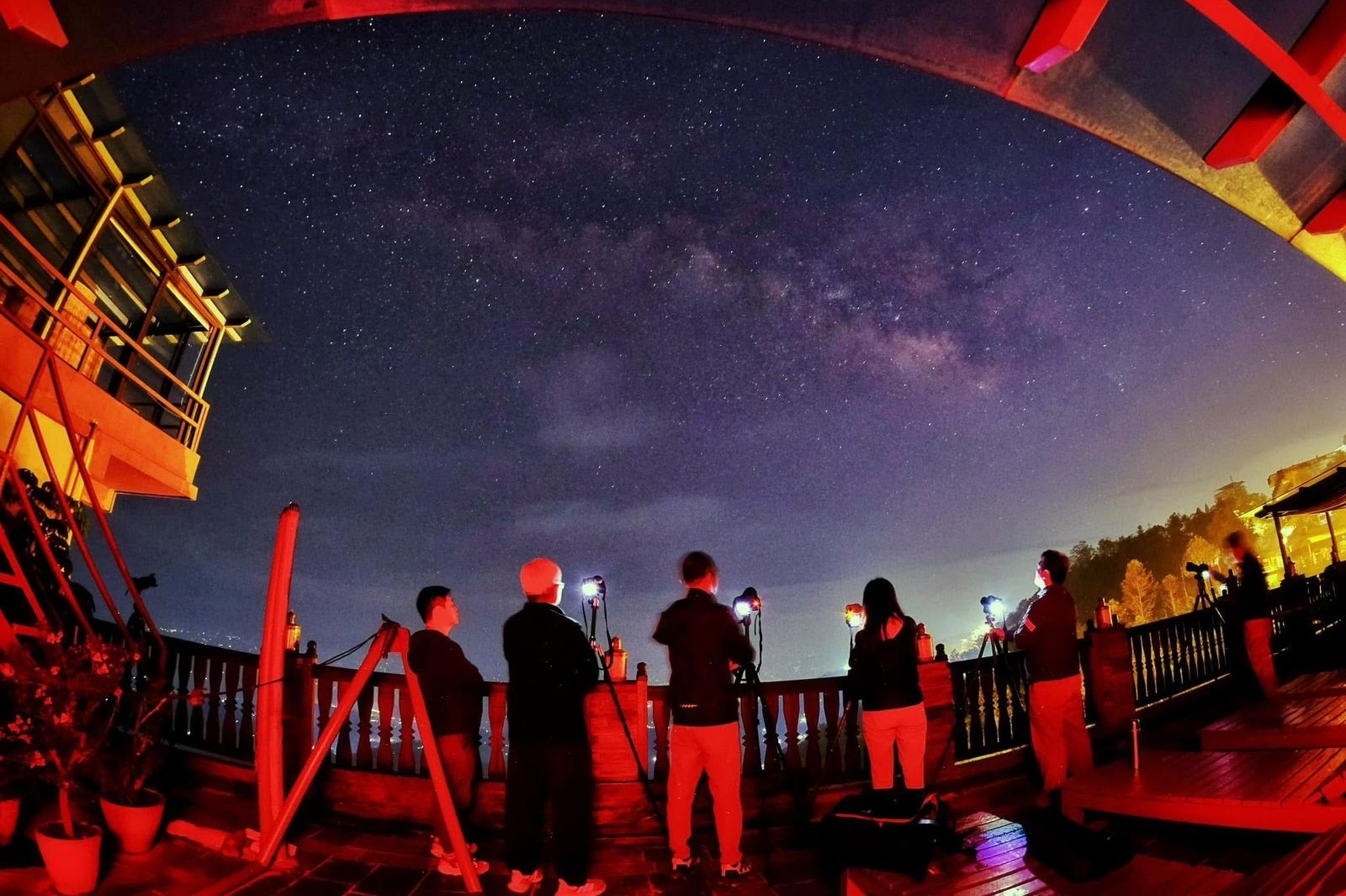
Classic tours in Nepal combine the country's UNESCO heritage, Himalayan landscapes, mountain cultures, wildlife, and adventure activities into seven established travel experiences: City & Cultural Tours, Multi-City Tours, Adventure & Scenic Tours, Everest Region Tours, Annapurna Region Tours, Langtang Region Tours, and Manaslu Region Tours.
The experiences range from short Kathmandu Valley sightseeing and Pokhara–Chitwan itineraries to high-altitude treks through Sagarmatha National Park, Annapurna Conservation Area, Langtang National Park, and Manaslu Conservation Area. Travelers can explore medieval Newar cities, Buddhist and Hindu pilgrimage sites, Himalayan viewpoints, national parks, Sherpa and Tamang villages, glacial valleys, high mountain passes, and peaks including Everest, Annapurna I, and Manaslu.
Choosing the right classic Nepal tour depends on available days, physical fitness, altitude tolerance, travel goals, preferred season, and appetite for adventure. City and multi-city tours suit travelers seeking culture, scenery, wildlife, and comfortable itineraries, while Everest, Annapurna, Langtang, and Manaslu offer progressively different trekking experiences based on elevation, trail difficulty, remoteness, and duration.
This guide compares all seven tours with practical route information, trekking days, elevations, difficulty levels, major attractions, best seasons, permit requirements, travel logistics, and costs, including 2026 permit information, so travelers can identify the Nepal tour that best fits their time, experience, and interests.
1. City & Cultural Tours in Nepal
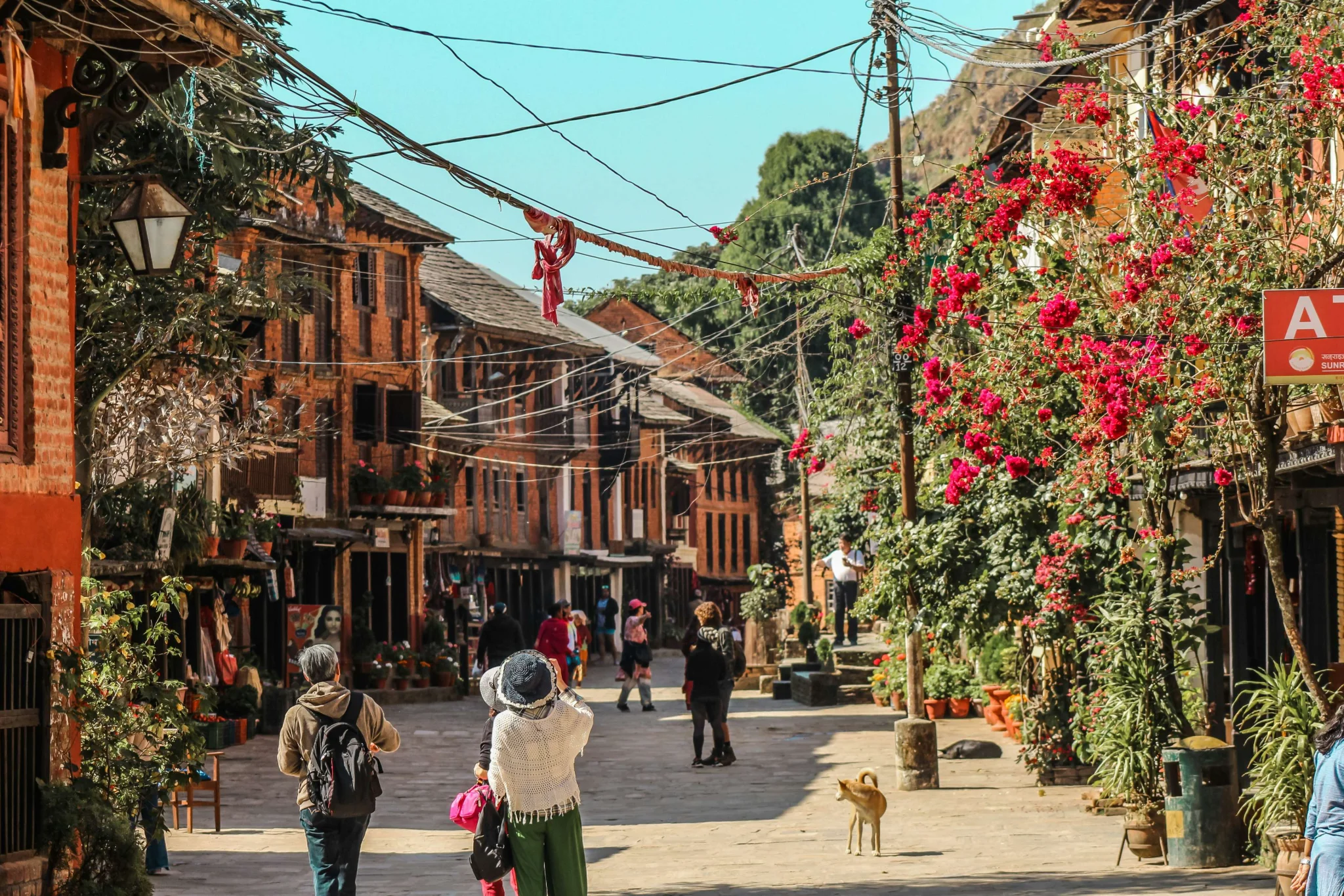
A City & Cultural Tour in Nepal covers the Kathmandu Valley's 3 historic royal cities and its sacred monuments. It runs 3 to 5 days, involves almost no walking difficulty, and suits first-time visitors, families, and travellers arriving before or after a trek.
Which Historic Cities Should You Visit on a City & Cultural Tour in Nepal?
Kathmandu, Patan, and Bhaktapur are the 3 historic cities to visit. All three were medieval Newar kingdoms. Kathmandu is the capital and the largest. Patan (also called Lalitpur) sits across the Bagmati River and holds the finest metalwork. Bhaktapur lies about 13 km east and preserves the most intact medieval street plan.
Allocate one full day per city. The most common mistake we see is cramming all 3 into a single day, which leaves 4 hours in traffic and 2 hours at each square.
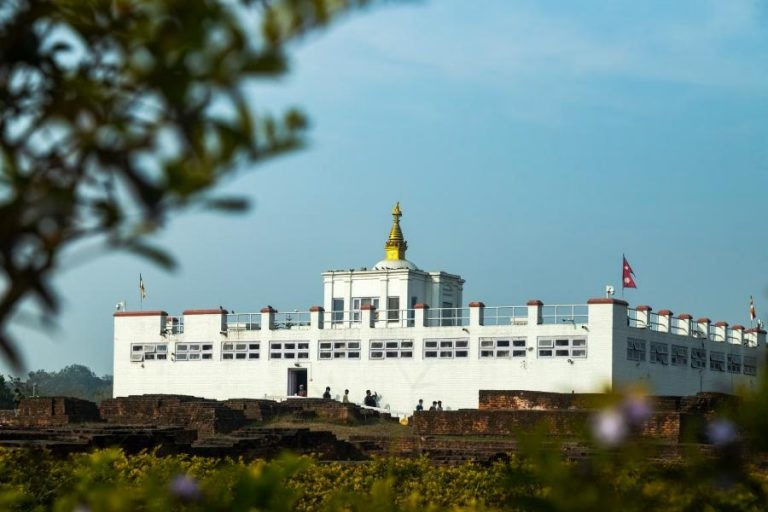
Add Lumbini, the birthplace of the Buddha, as a fourth stop. A 30-to-35-minute flight from Kathmandu to Bhairahawa plus a 40-minute drive reaches it, and Lumbini adds a calm Buddhist counterpoint to the Hindu-Newar valley.
What UNESCO World Heritage Sites Can You Explore in Kathmandu Valley?
Kathmandu Valley holds 7 UNESCO World Heritage monument zones: Kathmandu Durbar Square, Patan Durbar Square, Bhaktapur Durbar Square, Swayambhunath, Boudhanath, Pashupatinath, and Changu Narayan. UNESCO inscribed the valley in 1979.
Swayambhunath is a hilltop stupa reached by a steep stairway of about 365 steps. Boudhanath is among the largest stupas in the world and the centre of Tibetan Buddhist life in Nepal. Pashupatinath is a Shiva temple complex with cremation ghats on the Bagmati. Only Hindus enter the main sanctum. Changu Narayan is the valley's oldest Vishnu temple, on a ridge above Bhaktapur.
Entry fees for foreigners are stated below.
Kathmandu Durbar Square: NPR 1,000, valid for one day.
Patan Durbar Square: NPR 1,000, with a free 7-day extension on showing your passport.
Bhaktapur Durbar Square: NPR 1,800, covering the whole city.
The 25 April 2015 earthquake (magnitude 7.8) damaged all 3 squares. Restoration continues, so scaffolding appears around some temples.
What Cultural Experiences Can You Enjoy in Kathmandu, Bhaktapur, and Patan?
The 5 strongest cultural experiences are the Kumari house in Kathmandu, metal casting in Patan, pottery in Bhaktapur, Boudhanath's dawn circuit, and an evening aarti at Pashupatinath. Each one puts you inside a living tradition rather than in front of a monument.
The Kumari is a young girl worshipped as a living goddess, and she appears briefly at her window in Kathmandu's Kumari Ghar. Patan's workshops still cast Buddha statues by the lost-wax method. Bhaktapur's Pottery Square lets you try a wheel yourself, and juju dhau, a creamy "king of curd" served in clay bowls, is the local treat. Boudhanath at 6:00 am fills with Tibetan pilgrims walking the kora (the clockwise circuit around the stupa). Pashupatinath's evening ceremony takes place on the Bagmati's banks.
In real-world use, a local Newar guide changes the day. Guides explain iconography, festival calendars, and etiquette that signage never covers.
When Is the Best Time to Take a City & Cultural Tour in Nepal?
October to November and March to April are the best months for a City & Cultural Tour in Nepal. Skies stay clear, daytime temperatures reach 20–28°C, and festivals fill the squares.
The data confirms the pattern. October 2025 recorded 128,443 arrivals against 70,193 in July. July sits in the monsoon (June to August), when rain interrupts outdoor sightseeing.
Festivals add depth. Dashain (October) is Nepal's largest festival. Tihar, the festival of lights, follows in October or November. Bisket Jatra in Bhaktapur happens in April. Festival days close roads and raise hotel prices by 20–40%, so book 3 months ahead. December to February is cold at night (2–5°C in the valley) but offers the sharpest mountain views from Nagarkot.
2. Multi-City Tours in Nepal
A Multi-City Tour in Nepal links 3 or more destinations, usually Kathmandu, Pokhara, and Chitwan, by road or short domestic flight. It balances heritage, lakes, mountains, and wildlife in 7 to 10 days.
Which Nepalese Cities Are Best Combined in a Multi-City Tour?
Kathmandu, Pokhara, and Chitwan form the best-combined trio for a Multi-City Tour in Nepal. Kathmandu delivers heritage, Pokhara delivers lakeside mountain scenery, and Chitwan delivers wildlife. Together they cover culture, landscape, and nature without repeating an experience.
Three secondary stops extend the loop. Lumbini adds Buddhist pilgrimage. Bandipur, a preserved Newar hill town between Kathmandu and Pokhara, adds a quiet overnight. Nagarkot adds a sunrise viewpoint 32 km from Kathmandu.
Choose the trio for 7 days. Add one secondary stop for every extra 2 days.
How Can You Combine Kathmandu, Pokhara, and Chitwan in One Tour?
Combine them in the order Kathmandu, Chitwan, Pokhara, then fly Pokhara to Kathmandu. This sequence finishes in the mountain city and replaces the final 6-to-8-hour drive with a 25-to-30-minute flight.
The road legs run as follows.
Kathmandu to Chitwan: about 5–6 hours by road.
Chitwan to Pokhara: about 4–5 hours by road.
Pokhara to Kathmandu: 25–30 minutes by air, or 6–8 hours by road.
What most travellers overlook is the reverse trap: ending in Chitwan forces a long drive back to Kathmandu on the day of an international flight. Mountain flights from Pokhara also leave in the morning, so weather delays matter. Keep a buffer night in Kathmandu before any departure.
What Attractions Can You Experience Across Multiple Nepalese Cities?
Across the 3 core cities you experience heritage squares, a Himalayan lake, and a jungle national park. Each city's signature attraction differs completely from the others.
Kathmandu supplies the UNESCO sites above. Pokhara (822 m) supplies Phewa Lake boating, the Sarangkot sunrise viewpoint, the World Peace Pagoda, and the International Mountain Museum. The Annapurna range stands 25–30 km north of the lake.
Chitwan National Park supplies the wildlife, and a Chitwan National Park tour is the simplest way to add it to your route. Foreigners pay NPR 2,000 per day for park entry. The 2021 National Rhino Count put Nepal's one-horned rhinoceros population at 752, 694 of them in Chitwan National Park alone, per the Department of National Parks and Wildlife Conservation (DNPWC's National Rhino Count 2021). Rhinos appear on most safaris. Tigers remain rare.
The 2022 census counted 128 tigers in Chitwan; Nepal's National Tiger and Prey Base Survey 2026, now puts that figure at 145, part of a nationwide total of 429 tigers, nearly quadruple Nepal's 2010 count. Rhinos appear on most safaris; tigers remain rare but increasingly present.
How Many Days Do You Need for a Multi-City Tour in Nepal?
A Multi-City Tour in Nepal takes 7 days at minimum and 10 days for a relaxed pace. The 3-city loop needs 5 travel-and-sightseeing days plus buffer.
The table below shows day counts for 3 trip lengths, with the stops included in each.
Trip length | Stops | Pace |
5 days | Kathmandu (2), Pokhara (2), flight back (1) | Fast, no Chitwan |
7 days | Kathmandu (2), Chitwan (2), Pokhara (2), flight (1) | Balanced |
10 days | Adds Bandipur, Nagarkot, or Lumbini (3) | Relaxed |
The 7-day plan is the best value because it includes all 3 anchors. Plan visa length at the same time. The visa on arrival costs US 30 for 15 days , US 50 for 30 days, or US$125 for 90 days, all multiple entry. A 15-day visa covers any Multi-City Tour.
3. Adventure & Scenic Tours in Nepal
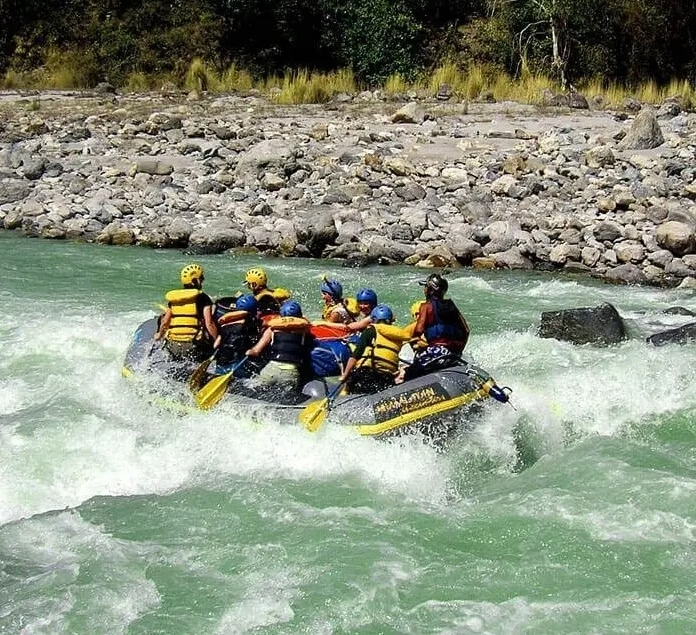
An Adventure & Scenic Tour in Nepal combines Himalayan viewpoints with active experiences such as paragliding, rafting, and wildlife safaris. It runs 5 to 10 days and suits travellers who want thrills without multi-day trekking.
Which Adventure Activities Can You Enjoy on Tours in Nepal?
Six adventure activities lead the list: paragliding, white-water rafting, bungee jumping, mountain flights, zip-lining, and jungle safaris. Pokhara concentrates most of them within 30 minutes of the lakeside.
Paragliding launches from Sarangkot (about 1,590 m) and lasts 20–30 minutes.
Rafting runs on the Trishuli, Seti, Bhote Koshi, and Karnali rivers.
Bungee jumping drops 160 m over the Bhote Koshi gorge.
Mountain flights leave Kathmandu for a roughly 1-hour Himalayan panorama, including Everest, at around US$200 per person.
Zip-lining in Pokhara runs about 1.8 km.
Jungle safaris operate in Chitwan and Bardia.
Book activities through a licensed operator and verify insurance cover before you fly. Standard travel insurance often excludes paragliding and rafting above Grade 3.
Where Can You Find Nepal's Best Mountain and Scenic Landscapes?
Nepal's best scenic landscapes sit in Pokhara, Nagarkot, Poon Hill, and Rara Lake. Each delivers a different view of the Himalaya.
Pokhara gives the closest large-peak view in Asia: Annapurna I, Dhaulagiri, and the fishtail peak of Machapuchare rise from a 800 m lake valley. Nagarkot offers a sunrise panorama of the Langtang range and, on clear days, a distant Everest. Poon Hill (3,210 m) delivers an Annapurna–Dhaulagiri sunrise after a 4-to-5-day walk. Rara Lake (2,990 m), Nepal's largest lake, sits in the far northwest and requires a flight to Nepalgunj and Talcha.
Scenic quality depends on season. October and November give the most reliable visibility after the monsoon washes the dust from the air.
What Can You Expect From Rafting, Paragliding, and Wildlife Adventures?
Rafting grades run from Grade 2 on the Trishuli to Grade 4–5 on the Bhote Koshi, tandem paragliding needs no experience, and wildlife safaris deliver rhino sightings on most trips. Grading sets the expectation for each.
Trishuli is a gentle 1-day float (Grade 2–3) between Kathmandu and Pokhara, and our river rafting tour is a good first step for beginners. Seti offers 2-to-3-day scenic rafting in warm water. Bhote Koshi is the steep, cold, high-adrenaline option. Tandem paragliding places you with a certified pilot, and morning thermals (October to November, February to April) give the longest flights, often over Phewa Lake.
On safari, a jeep covers more ground. A guided walk gets you close to birds and smaller mammals. Choose both over 2 days. Chitwan and Bardia are the 2 main lowland parks.
Which Adventure & Scenic Tour Is Best for First-Time Visitors to Nepal?
A 6-to-7-day Kathmandu, Pokhara, and Chitwan loop with one paragliding flight, one Trishuli raft day, and one jungle safari is the best Adventure & Scenic Tour for first-time visitors. It keeps risk low and variety high.
Skip Bhote Koshi on the first visit. Cold water and Grade 4–5 rapids punish inexperience. Build the tour around easy-to-moderate activities, then scale up on a return trip. The same tour allows an optional 4-day Poon Hill walk instead of Chitwan for travellers who want a taste of trekking.
Check the season before you commit. Paragliding grounds in monsoon weeks, and Trishuli runs fast and brown from July to August.
4. Everest Region Tours
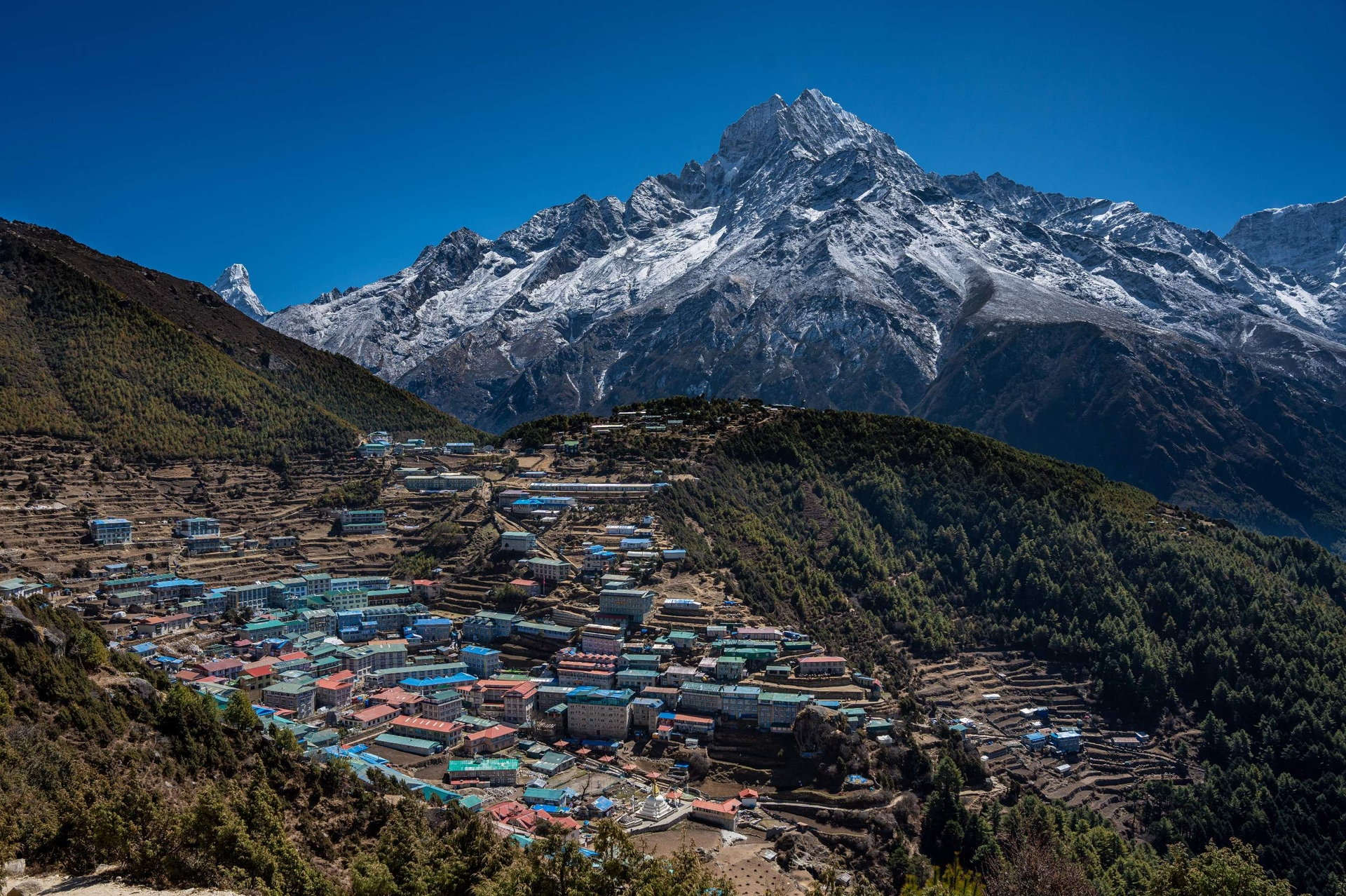
Everest Region Tours cover the Khumbu valley in northeast Nepal, where the Sherpa homeland meets Sagarmatha National Park. Routes range from 5-day scenic treks to 20-day high-pass circuits, and the region holds the highest accessible trails on Earth.
Which Everest Region Tour Options Are Available Beyond Mount Everest Base Camp?
Five Everest region tours exist beyond Base Camp: Everest View Trek, Gokyo Lakes Trek, Three Passes Trek, Island Peak climb, and Mera Peak climb. Each trades some crowd density for different scenery or challenge.
Everest View Trek: 5–7 days to Namche Bazaar and the Everest View Hotel (3,880 m). It is the shortest and gentlest option.
Gokyo Lakes Trek: 11–13 days to turquoise glacial lakes and Gokyo Ri (5,357 m).
Three Passes Trek: 18–20 days over Kongma La (5,535 m), Cho La (5,420 m), and Renjo La (5,360 m).
Island Peak (6,189 m) and Mera Peak (6,476 m): trekking-peak climbs requiring a Nepal Mountaineering Association permit.
The Gokyo route gives a better summit view than the standard Base Camp trail and carries about half the foot traffic.
Permits matter here. Foreign trekkers pay about NPR 5,000–6,000 (roughly US$37–45) for the Sagarmatha National Park permit plus the Khumbu Pasang Lhamu municipality permit, and no TIMS card applies.
What Can You See and Experience on an Everest Base Camp Trek?
An Everest Base Camp trek reaches 5,364 m and passes Namche Bazaar, Tengboche Monastery, Dingboche, and Gorak Shep, with a pre-dawn climb to Kala Patthar (5,643 m) for the best view of Everest. The trek takes 12–14 days.
The route starts with a 30-to-40-minute flight from Lukla (2,860 m). Namche (3,440 m) is the Sherpa trading hub. Tengboche (3,867 m) holds the region's largest monastery. Gorak Shep (5,164 m) is the last settlement before Base Camp.
Here is what most people overlook: Base Camp itself does not show Everest's summit. The Khumbu Icefall and neighbouring ridges block it. Kala Patthar gives the classic view of Everest at 8,848.86 m. Plan your summit-view morning around Kala Patthar, not Base Camp.
In peak months, most Lukla flights operate from Ramechhap (Manthali) Airport, a 4-to-5-hour drive from Kathmandu. Confirm the departure airport in advance.
How Difficult Are Tours in the Everest Region?
Everest region tours rate moderate to hard because altitude, not technical terrain, sets the difficulty. Trails follow stone paths and suspension bridges with no climbing gear. Daily walking runs 5–7 hours.
The 3 factors that determine difficulty are altitude, duration, and weather. Everest View is moderate. Base Camp is moderate to hard. Gokyo is hard. Three Passes is very hard, with glacier crossings and 5,000 m+ nights.
Train for 8–12 weeks before departure. Include hill hikes carrying a 6–8 kg pack, stair work, and 3 cardio sessions per week. Common mistakes we see include arriving untrained and rushing the itinerary to save two days. A longer itinerary raises success rates more than any gear purchase.
When Is the Best Season for an Everest Region Tour?
March to May and September to November are the best seasons for an Everest region tour. Spring brings blooming rhododendrons and stable weather. Autumn brings the clearest skies and the highest trail traffic.
October is the peak. Teahouses fill, and rooms in Namche and Dingboche sell out without advance booking. Spring is warmer but hazier at high altitude. December to February offers solitude and sharp visibility, with night temperatures reaching −15°C at Gorak Shep. June to August brings monsoon cloud, leeches at low elevations, and frequent Lukla flight cancellations.
Choose autumn for views, spring for flowers, and late November for fewer people.
What Should You Know About Altitude and Acclimatization in the Everest Region?
Altitude sickness (acute mountain sickness, AMS) affects trekkers who ascend too fast above 3,000 m, and acclimatization is the only reliable prevention. Symptoms include headache, nausea, dizziness, and fatigue.
According to the Wilderness Medical Society, above 3,000 m the sleeping elevation rises by no more than 300–500 m per day, with a rest day every 3–4 days. Standard Base Camp itineraries build in 2 rest days, at Namche and Dingboche. Climb high during the day and sleep low at night.
Drink 3–4 litres of water daily. Avoid alcohol above Namche. Discuss acetazolamide with your doctor before travel. Descend immediately when symptoms worsen. Severe forms, high-altitude pulmonary edema (HAPE) and cerebral edema (HACE), require descent and evacuation. For symptoms, prevention, and treatment in more depth, read our guide to altitude sickness. Buy insurance that covers helicopter evacuation up to 6,000 m.
5. Annapurna Region Tours
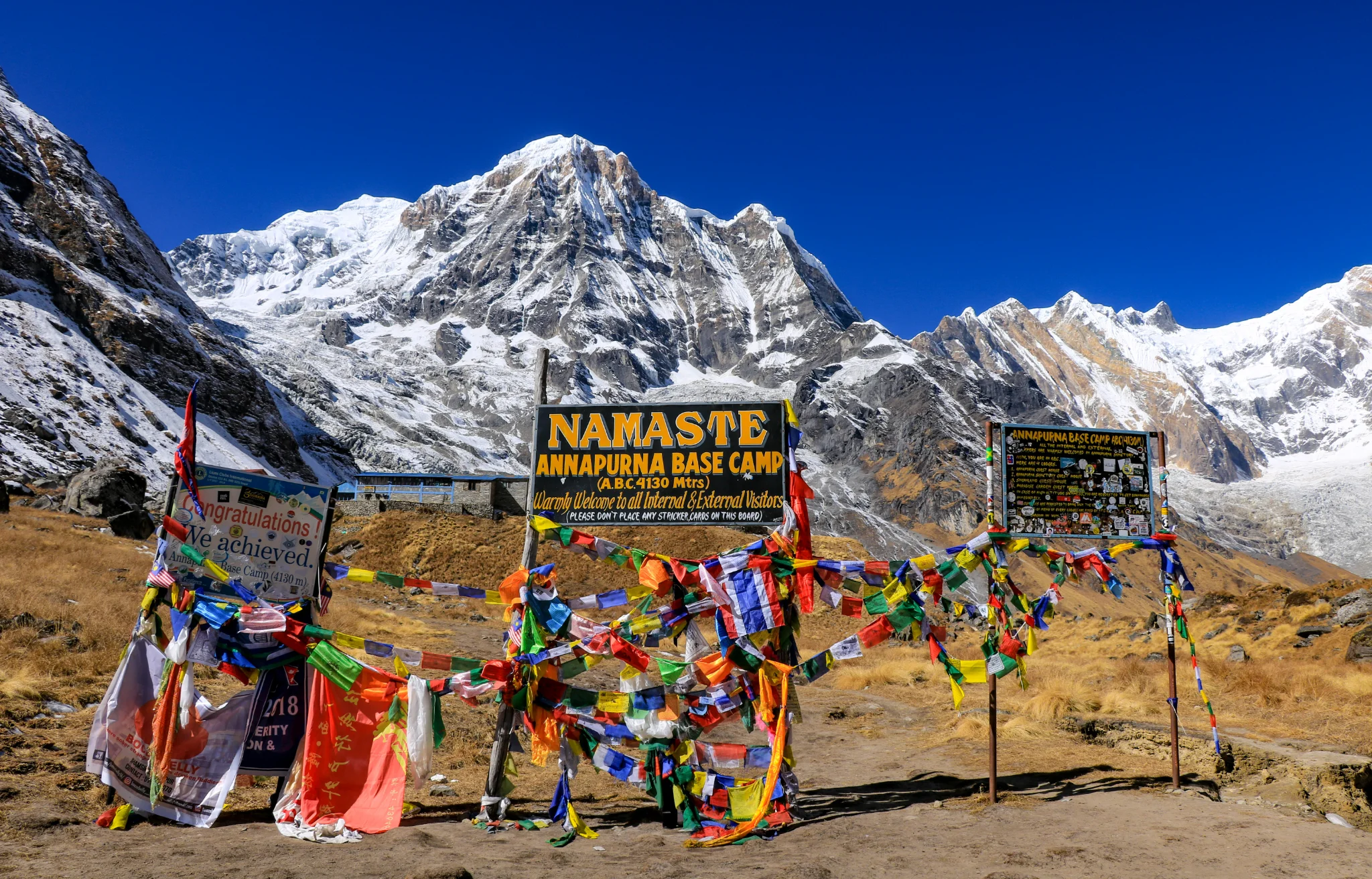
Annapurna Region Tours cover the Annapurna Conservation Area in north-central Nepal, entered from Pokhara or Besisahar. The region offers 5 distinct routes from 4-day viewpoint walks to an 18-day circuit.
Which Annapurna Region Tours Are Best for Different Types of Travelers?
Poon Hill suits first-timers, Mardi Himal suits quiet-trail seekers, Annapurna Base Camp suits fit hikers, and the Annapurna Circuit suits experienced trekkers. Choose by duration and altitude tolerance.
The table below compares 4 main routes by days, peak elevation, and traveller type.
Route | Days | Peak elevation | Best for |
Poon Hill | 4–5 | 3,210 m | First-time trekkers, families |
Mardi Himal | 5–7 | about 4,500 m | Quieter ridge walking |
Annapurna Base Camp (ABC) | 7–12 | 4,130 m | Fit hikers, peak amphitheatre |
Annapurna Circuit | 12–18 | 5,416 m (Thorong La) | Experienced, high-pass trekkers |
Poon Hill has the best effort-to-reward ratio in Nepal, which makes the Poon Hill trek the easiest way into the Annapurna region. The circuit has the highest prestige and the highest altitude risk.
What Can You Experience on the Annapurna Circuit and Annapurna Base Camp Routes?
The Annapurna Circuit crosses Thorong La (5,416 m) and descends the Kali Gandaki gorge, while Annapurna Base Camp enters a glacial amphitheatre ringed by 7,000 m peaks. The two routes feel completely different.
The Circuit moves from subtropical rice terraces through pine forests to the arid Manang valley and Tibetan-style Muktinath. The Kali Gandaki valley is often described as the deepest gorge in the world. Marpha is known for apple brandy. Road construction has altered the lower sections, so most trekkers use jeeps for the first 1–2 days and walk the high sections.
ABC starts in Gurung villages such as Ghandruk, climbs through bamboo and rhododendron forest, and ends at 4,130 m beneath Annapurna I. Machapuchare Base Camp sits at about 3,700 m on the way up.
Which Mountains and Landscapes Can You See in the Annapurna Region?
The Annapurna region shows Annapurna I (8,091 m), Dhaulagiri (8,167 m), Annapurna South (7,219 m), and Machapuchare (6,993 m). Annapurna I was the first 8,000 m peak ever climbed, by a French expedition in 1950.
Machapuchare, the "Fishtail," is considered sacred, and climbing it has been prohibited since 1957. No one has stood on its summit. Dhaulagiri rises across the Kali Gandaki from Annapurna and forms the gorge's western wall.
The Annapurna Conservation Area spans 7,629 km² and was established in 1986. The National Trust for Nature Conservation manages it. Landscapes shift from 800 m subtropical valleys to alpine meadows and trans-Himalayan desert within 12 days of walking.
When Is the Best Time to Explore the Annapurna Region?
October to November and March to April are the best months to explore the Annapurna region. Autumn gives the steadiest weather, and spring brings rhododendron blooms to Ghorepani and Ghandruk.
Match the route to the month. Run the Circuit in October or November, when Thorong La stays clear of heavy snow. Run Poon Hill or Mardi Himal in February or March for lower-altitude clarity. December to February suits the lower routes only, since Thorong La can close under snow. During the monsoon, the northern rain-shadow side (Muktinath, Upper Mustang) stays dry while the south side turns wet.
ACAP costs NPR 3,000 for foreign nationals regardless of trek length. Annapurna checkpoints verify the ACAP permit.
How Difficult Are Annapurna Region Tours?
Annapurna tours range from easy-moderate on Poon Hill to hard on the Circuit. Stairs, not altitude, define the difficulty of Poon Hill and ABC.
Poon Hill involves around 3,000 stone steps on day 2, which strain knees. Trekking poles cut that load. ABC adds steady climbing and a final stretch above 3,500 m that requires acclimatization. Mardi Himal follows a narrow ridge with steep drop-offs. The Circuit adds a 1,000 m ascent from Thorong Phedi to the pass and demands a pre-dawn start.
Rate your fitness against the route. Choose Poon Hill for 4 days of effort, ABC for 10, and the Circuit for 15 or more. Add a rest day at Manang (3,540 m) on every Circuit itinerary.
6. Langtang Region Tours
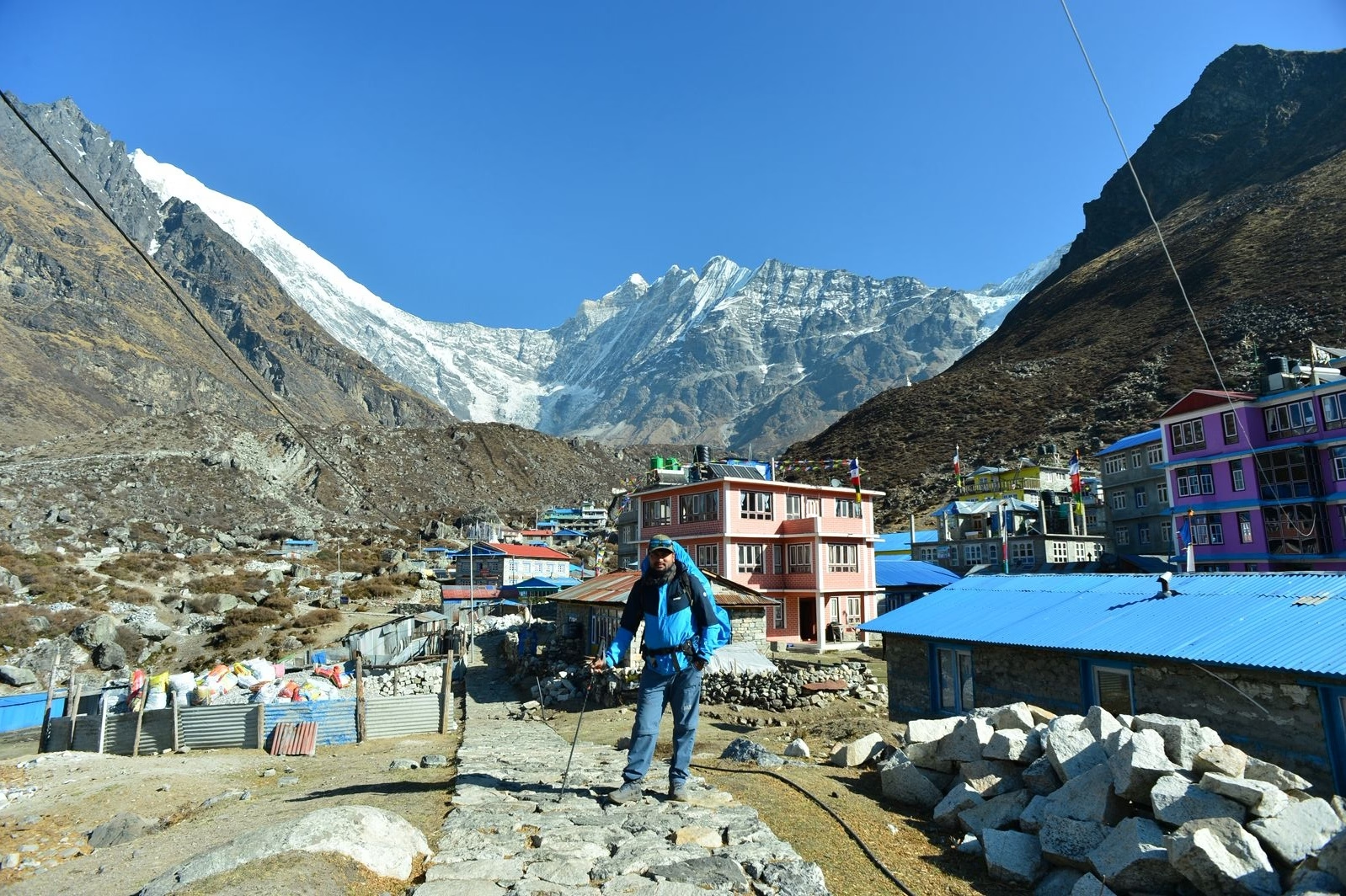
Langtang Region Tours cover the Langtang National Park north of Kathmandu, reached by a single road to Syabrubesi. The standard Langtang Valley trek runs 7 to 9 days and tops out at 3,870 m, with an optional 4,984 m summit day.
Why Is the Langtang Region a Popular Choice for Himalayan Tours?
The Langtang region is popular because it is the closest Himalayan trek to Kathmandu, needs no flight, and costs less than Everest or Annapurna. A 7-to-8-hour drive reaches the trailhead at Syabrubesi.
Langtang National Park, established in 1976, was Nepal's first Himalayan national park and covers 1,710 km². The valley is home to Tamang communities, red pandas, Himalayan tahr, and langur monkeys. The 2015 earthquake destroyed the original Langtang village, and the community has rebuilt it. Choosing Langtang supports that recovery.
Langtang suits travellers with 8 to 10 days, a moderate fitness level, and a preference for a cultural trek over a record-altitude one. Our Langtang Valley trek is built for exactly that profile.
What Can You See and Experience on a Langtang Valley Trek?
A Langtang Valley trek follows the Langtang Khola from Syabrubesi (1,460 m) to Kyanjin Gompa (3,870 m), with side hikes to Kyanjin Ri (4,773 m) and Tserko Ri (4,984 m). Langtang Lirung (7,227 m) dominates the upper valley.
The trail passes Lama Hotel and Langtang village (3,430 m) through rhododendron and oak forest, then opens into yak pastures. Kyanjin Gompa has a small cheese factory where you taste fresh yak cheese. Tserko Ri, a 5-to-7-hour round trip from Kyanjin, gives a panoramic view of the Langtang range and the Tibetan border peaks.
In practice, add one acclimatization day at Kyanjin before the Tserko Ri climb. Skipping it is the most common reason trekkers turn back below the summit.
Which Cultural and Natural Attractions Are Found in the Langtang Region?
The key attractions are Tamang villages, Buddhist mani walls, the holy lakes of Gosaikunda, and Himalayan wildlife. Culture and nature overlap on the same trail.
Tamang culture is Tibetan Buddhist. Expect prayer flags, chortens, and mani walls (stone walls carved with mantras) along the path. Gosaikunda (4,380 m) is a Hindu pilgrimage site, and thousands visit during the Janai Purnima festival in August. The Gosaikunda extension adds 4–5 days and crosses Laurebina La (4,610 m). Helambu is a lower-altitude alternative through Sherpa and Tamang villages.
On the natural side, the park shelters red pandas, Himalayan black bears, musk deer, and over 250 bird species. Early morning walks maximise sightings.
When Is the Best Time for a Langtang Region Tour?
March to May and October to November are the best times for a Langtang region tour. Spring brings blooming rhododendrons, and autumn gives clear mountain views.
Winter trekking is possible, with cold nights at Kyanjin and occasional snow on the upper trail. The monsoon brings leeches and landslides on the Syabrubesi road, which can strand a vehicle for hours. Check road conditions in July and August.
Langtang's lower altitude extends the season compared with Everest. A Langtang Valley trek in early December gives clear skies and quiet lodges.
How Difficult Are Langtang Region Tours?
Langtang Valley is a moderate trek because it stays below 4,000 m on the main route and involves no technical terrain. The challenge comes from steep early ascents and cumulative days.
Day 1 from Syabrubesi to Lama Hotel gains about 1,000 m, and the climb surprises untrained trekkers. The subsequent days gain 500–700 m each. The optional Tserko Ri day adds 1,100 m from Kyanjin and is the hardest single day. Gosaikunda via Laurebina La is the most demanding extension.
Langtang National Park costs NPR 3,000 and a guided TIMS card costs NPR 2,000 (NPR 1,000 for SAARC nationals), and Langtang enforces the nationwide solo-trekking ban. Book through a registered agency so permits and a licensed guide are included.
7. Manaslu Region Tours
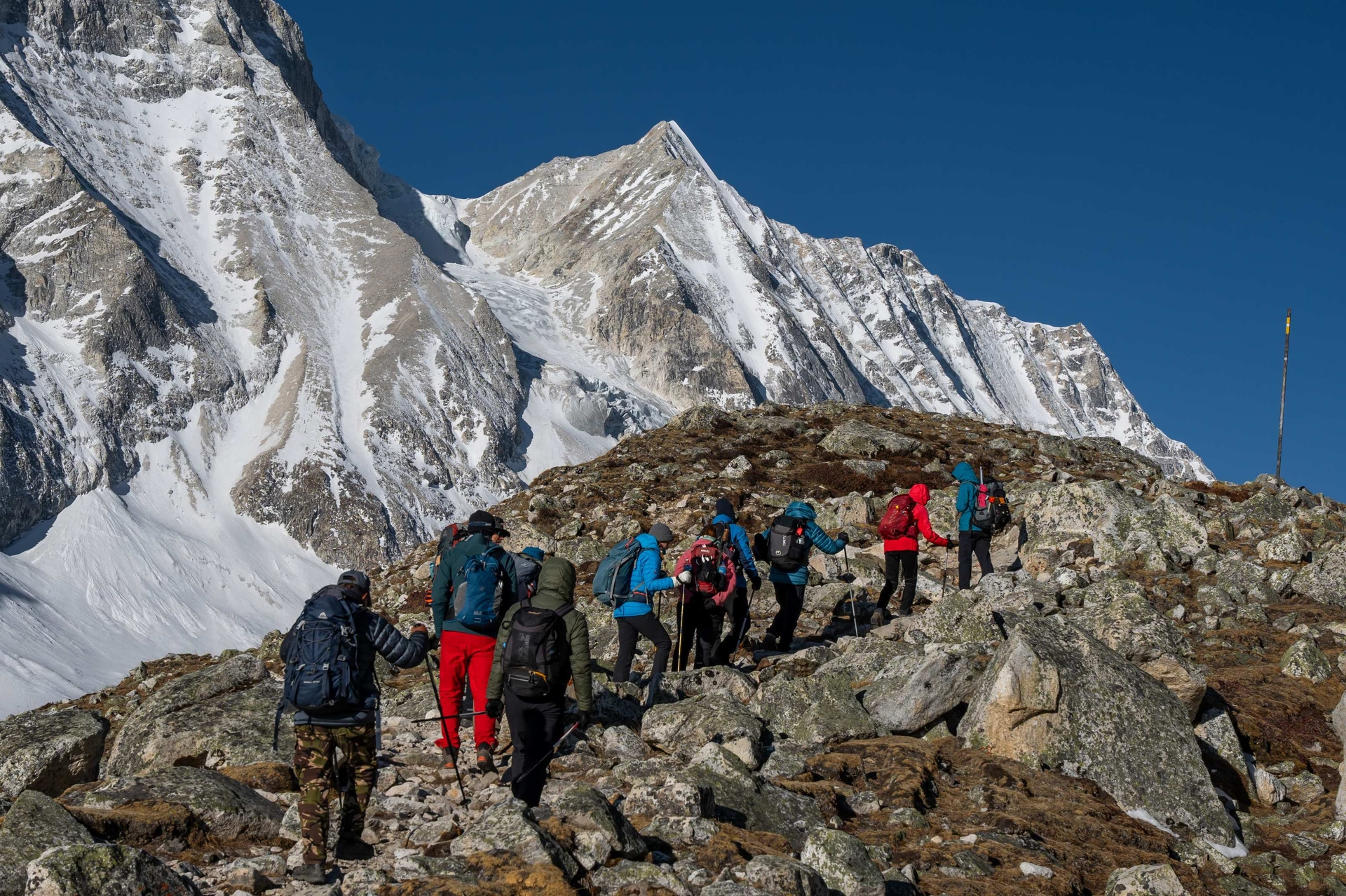
Manaslu Region Tours cover the Manaslu Conservation Area in central Nepal, a restricted region that requires special permits and a guide. The Manaslu Circuit runs 14 to 18 days, crosses Larkya La at 5,106 m, and rewards trekkers with some of the least-crowded trails among the classics.
Why Should You Choose a Tour in the Manaslu Region?
Choose Manaslu for remote villages, Tibetan Buddhist culture, a high-pass crossing, and lighter trail traffic than Annapurna or Everest. The restricted-area system limits numbers.
Manaslu (8,163 m) is the eighth-highest mountain on Earth. A Japanese expedition made the first ascent in 1956. The Circuit loops about 177 km around it, from the Budhi Gandaki gorge to the Marsyangdi valley. Unlike the Annapurna Circuit, the Manaslu trail remains largely road-free in its upper sections.
Manaslu suits trekkers with prior multi-day experience, 14 days available, and a willingness to accept simpler teahouses. Our guided Manaslu Circuit trek handles the restricted-area permits for you.
What Can You Experience on the Manaslu Circuit Trek?
The Manaslu Circuit runs from Soti Khola through Jagat, Deng, Namrung, Lho, Samagaon, and Samdo to Dharamsala, then over Larkya La (5,106 m) to Bimthang and Dharapani. Trekkers walk 14–18 days.
The first days follow the Budhi Gandaki through subtropical forest and terraced villages. Above Namrung, culture shifts to Tibetan Buddhism, with monasteries, chortens, and yak herds. Samagaon (3,530 m) is the main acclimatization base, with side trips to Pungyen Gompa and Birendra Tal. The Larkya La crossing starts at 3:00 am from Dharamsala (4,460 m) and takes 8–10 hours.
Teahouses are simpler than in Everest or Annapurna. Bring a warm sleeping bag rated to −10°C.
Which Mountains, Villages, and Landscapes Can You See Around Manaslu?
Around Manaslu you see Manaslu (8,163 m), Himalchuli (7,893 m), Ngadi Chuli (7,871 m), and Larkya Peak (6,249 m), plus the villages of Lho, Sho, Samagaon, and Samdo. The landscapes rise from warm gorge to glacial high pass.
Manaslu Conservation Area covers 1,663 km² and was established in 1998. The area shelters snow leopards, Himalayan tahr, and blue sheep. Villages here follow a Tibetan-influenced lifestyle, with stone houses, barley fields, and monasteries. The Tsum Valley extension adds 7–10 days to the trek and a second restricted-area permit.
Photographers favour the Lho and Sama sunrise views, where Manaslu glows pink above the village roofs.
When Is the Best Time to Visit the Manaslu Region?
September to November is the best time to visit the Manaslu region, with March to May as the secondary window. Autumn gives the stablest weather for the Larkya La crossing.
Permit costs follow the season. Autumn fees are higher than Dec–Aug fees (see the next section). Winter snow can close Larkya La, and monsoon landslides affect the Soti Khola road. Spring offers rhododendron colour at lower elevations and cooler temperatures at altitude.
Book 2–3 months ahead for autumn departures, since restricted-area permits and licensed guides fill early.
What Permits and Trekking Requirements Apply to Manaslu Region Tours?
Manaslu requires a Restricted Area Permit (RAP), a Manaslu Conservation Area Permit (MCAP), an Annapurna Conservation Area Permit (ACAP), a local municipality permit, and a licensed guide from a registered Nepali agency. Independent trekking is not allowed.
The RAP costs US 100 for the first 7 days in September–November, then US 15 per extra day, and US 75 for the first 7 days in December–August, then US 10 per extra day. MCAP and ACAP cost NPR 3,000 each, and the local municipality permit costs NPR 1,000. A 14-day October trek totals about US$255–265 per person for permits and the local fee, excluding guide and transport.
A Restricted Area Permit (RAP) strictly requires a minimum of two foreign trekkers and a mandatory licensed guide; solo trekkers must coordinate with an agency to join another permit group. Your agency arranges all permits and checkpoint registration at Jagat and Philim.
How Can You Choose the Right Classic Nepal Tour With Heaven Himalaya?
Choose by 3 variables: days available, fitness level, and travel goal. The right classic tour is the one that fits your calendar and body, not the one with the biggest name.
The table below maps 7 tours to trip length, difficulty, and ideal traveller.
Tour | Days | Difficulty | Best for |
City & Cultural | 3–5 | Easy | Heritage, first visit |
Multi-City | 7–10 | Easy | Variety, families |
Adventure & Scenic | 5–10 | Easy–moderate | Active, short on time |
Everest | 5–20 | Moderate–very hard | Iconic peaks, Sherpa culture |
Annapurna | 4–18 | Easy–hard | Flexible, all levels |
Langtang | 7–9 | Moderate | Close to Kathmandu, culture |
Manaslu | 14–18 | Hard | Remote, experienced trekkers |
Pair 2 tours for a complete trip. A 4-day City & Cultural Tour plus a 9-day Langtang trek fills 14 days. A 7-day Multi-City Tour plus a 12-day Everest Base Camp trek fills 21.
Plan with Heaven Himalaya: Tell us your dates, fitness level, and must-see list, and we match you to one of these 7 routes with a day-by-day plan.
Can Heaven Himalaya Help You Plan a Tour Around Your Nepal Travel Goals?
Yes. Heaven Himalaya plans classic Nepal tours around your dates, budget, and goals, and handles permits, licensed guides, accommodation, and acclimatization schedules. We build the itinerary around you and adjust it in the field when weather or health changes the plan.
Here is what we manage on every departure.
Arrange all permits, including RAP, ACAP, MCAP, and park entry
Assign licensed, first-aid-trained guides
Schedule rest days according to altitude-gain guidelines
Confirm domestic flights, and prepare backup road or helicopter options
Verify that your insurance covers the altitude and activities you select
Common mistakes we see include booking too few days, skipping acclimatization, and buying insurance that excludes trekking above 4,000 m. We correct each of these before you pay a deposit.
Start your plan: Send us your travel window and goals. We reply with a recommended tour, a day count, and a permit cost estimate.
What Are the Key Takeaways About the Classic Tours in Nepal?
The 7 classic tours in Nepal cover heritage, wildlife, adventure, and 4 Himalayan regions, and the right one depends on your days, fitness, and goals. Remember these 7 points.
Start with City & Cultural Tours for 3–5 days of UNESCO heritage in Kathmandu, Patan, and Bhaktapur.
Pick Multi-City Tours for a 7-day loop through Kathmandu, Chitwan, and Pokhara.
Choose Adventure & Scenic Tours for paragliding, rafting, and safaris with low risk.
Plan Everest tours for 12–14 days and build in 2 rest days for acclimatization.
Select Annapurna tours by route, from the 4-day Poon Hill walk to the 18-day Circuit.
Book Langtang for a moderate 7-to-9-day trek 7–8 hours from Kathmandu.
Reserve Manaslu 2–3 months ahead for permits, a licensed guide, and the Larkya La crossing.
According to the Nepal Tourism Board, Nepal welcomed 1,158,459 international visitors in 2025, reaching 96.8% of 2019 levels. Travel in October–November or March–May for the clearest conditions across all classic tours in Nepal. Confirm current permit fees with your agency before departure, since fees and rules change between seasons.